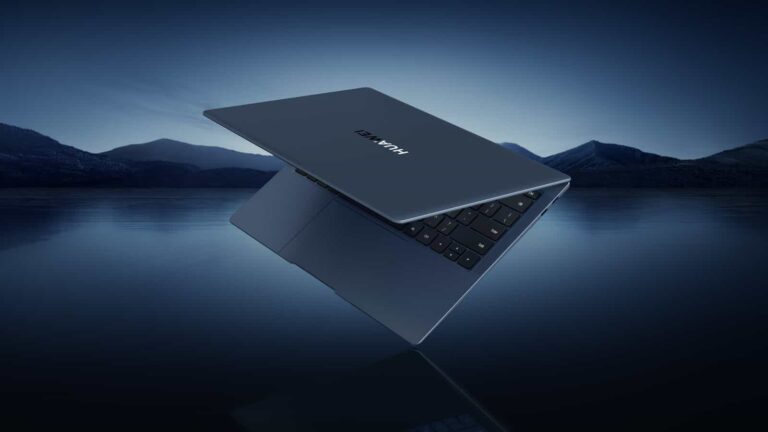
Huawei has announced a new version of its flagship laptop, the MateBook X Pro (2023). It is very similar to last year’s model, but it comes with upgraded internals, of course. The star of the show is the 13th Gen Intel Core i7 SoC.
The Huawei MateBook X Pro (2023) is here as the company’s flagship laptop
Let’s get that out of the way first. The 13th Gen Intel Core i7 SoC fuels this laptop, while Huawei also included 16GB of RAM here. You’re getting 1TB of storage on the inside too, and the Intel Iris Xe graphics.
This is basically an ultrabook, more than a laptop. It’s not only quite thin, but it weighs only 1.26 grams. It’s made out of magnesium, which is widely used in the aviation industry. It’s a very portable laptop.
Despite its lightweight design, and thin profile, this thing still packs a 14.2-inch 3120 x 2080 display with a 90Hz refrsh rate. Huawei included a Real Color FullView display here, and the MateBook X Pro offers a 92.5% screen-to-body ratio. It offers a color accuracy of ΔE < 1 in both the P3 and sRGB color gamuts.
The Huawei MateBook X Pro is also TÜV Rheinland certified. It has the Eye Comfort 3.0 certification. This laptop also introduces the magnetically controlled nano optical AR layer, it’s here to reduce reflections by up to 60%.
Both its RAM and storage are expandable
Now, despite the fact the laptop comes with 16GB of RAM, you can expand that to up to 32GB. Something similar can be said for its storage too. The device comes with 1TB, but it’s expandable up to 2TB.
The MateBook X Pro also comes with the so-called Metaline Antenna, which should improve connectivity on the device. It is capable of long range connections with a range of up to 270 meters. It’s also worth noting that Windows 11 OS comes pre-installed on the device.
The device has six speakers, a fingerprint scanner, and supports Bluetooth 5.2. It comes with two Thunderbolt 4 ports, two USB-C ports, and an audio jack. A 60Wh battery is also included.
This laptop will become available in Europe starting tomorrow, June 1. It’ll be priced at €2,199, and available via Huawei ecommerce and select retail partners. You’ll be able to get it in Ink Blue or White color options.
We take a look at a fine totalling millions aimed at financial services company OneMain.
A series of security errors and mishaps has cost personal loan provider OneMain $4.25m in penalties, issued by the New York State department of financial services. The fines, coming at the end of a detailed investigation into how security practices at the company were determined to be below-par, serve as a timely warning to other organisations.
OneMain experienced “at least” three security incidents over three years, from 2018 to 2020. The business is a licensed lender and mortgage servicer and as SC Magazine notes, financial entities should adhere to a framework of security requirements. These requirements include that best practices are evident at all times to ensure both consumer data and internal systems are safe from harm. From the DFS release:
…OneMain Financial Group LLC (“OneMain”) will pay a $4.25 million penalty to New York State for violations of DFS’s Cybersecurity Regulation (23 NYCRR Part 500). OneMain failed to effectively manage third-party service provider risk, manage access privileges, and maintain a formal application security development methodology, significantly increasing the company’s vulnerability to cybersecurity events.
Unfortunately for OneMain, the New York State investigation highlighted several major issues which resulted in the eventual settlement. Going back to the release for some examples:
…OneMain permitted local administrative users to share accounts, compromising the ability to identify malicious actors, and also permitted those accounts to use the default password provided by OneMain at the time of user onboarding, increasing the risk of unauthorized access.
Use of default passwords is bad enough, but SC Magazine also notes that a file containing passwords was stored in a folder named “PASSWORDS”. Add to this that access restrictions were not good enough, and you have a recipe for disaster.
The release continues:
The Department’s investigation further found that OneMain’s application security policy lacked a formalized methodology addressing all phases of the company’s software development life cycle. Instead, OneMain used a non-formalized project administration framework it had developed in-house that failed to address certain key software development life cycle phases, a consequence of which was increased vulnerability to cybersecurity events.
Failing to have any sort of coherent strategy for software life cycles is never going to end well. Whether a business ignores Windows updates, or even maintaining security for bespoke setups and software, the possibility of falling victim to an attack can only ever go up as time passes.
So far we’ve seen issues with default passwords, data storage, and software life cycle management. This alone would be bad enough. However, the next issue pulled up as evidence of the fine-worthy practices may well be the worst of the bunch. We go once more to the release:
OneMain did not conduct timely due diligence for certain high- and medium-risk vendors, despite the existence of a third-party vendor management policy requiring that each vendor undergo an assessment to determine the vendor’s risk rating and the appropriate level of due diligence OneMain should perform on the vendor. OneMain further failed to appropriately adjust several vendors’ risk scores even after the occurrence of multiple cybersecurity events precipitated by the vendors’ improper handling of non-public information and poor cybersecurity controls.
What this means is that OneMain worked with various third-party vendors without doing their due diligence in terms of potential security threats. This is despite many of the vendors being flagged as medium to high risk.
With all of this in mind, it’s perhaps easy to see why the New York State DFS started down the road to such a fine. Even so, The Record notes that OneMain reported $1.09 billion in revenue for the first quarter of 2023. While we can ponder if a few million in fines makes much of a difference overall, OneMain has agreed to “engage in further significant remediation measures”. It remains to be seen what the consequences will be should they not stick to the plan.
Malwarebytes EDR and MDR removes all remnants of ransomware and prevents you from getting reinfected. Want to learn more about how we can help protect your business? Get a free trial below.
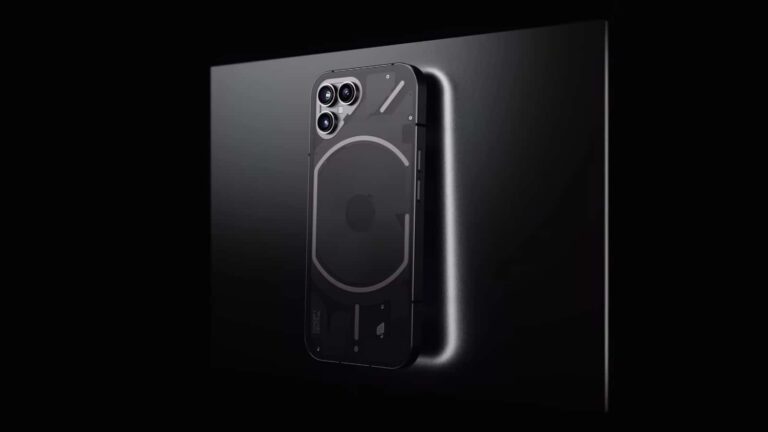
It’s hard to believe that it’s almost been a year. The Nothing Phone (1) launched in July last year, and we’re expecting a July launch this year as well. Ahead of the launch, Carl Pei revealed how many updates the Nothing Phone (2) we’ll receive.
The number of software updates a phone will receive is very important. As phones get more powerful, people are more likely to hold onto their phones for longer. However, it’s rather frustrating when a fully capable phone loses its software support early in the game. So, we’re all wondering what Carl Pei has planned for his phones.
We now know how many software updates the Nothing Phone (2) will receive
We’re currently following leaks and rumors regarding the Nothing Phone (2), and we have been for some time. The Nothing Phone (1) proved to be a popular phone, and we’re all excited about the next iteration.
We don’t know everything there is to know about this phone, but we do know the update schedule for it. Carl Pei announced that the Nothing Phone (2) will receive three years of major Android updates. The phone will receive updates up to Android 16 W. The support for this phone won’t stop there, as it will receive an additional year of security updates.
This puts Nothing one year behind Samsung. The Korean Brand’s phones launching this year will lose software support with Android 17.
As for the other information about the Nothing Phone (2), details are trickling in. We do know that this phone will be launching globally in July, and we expect it to also land in the US market.
As for the processor, Nothing seems to have selected a flagship processor rather than the upper-tier mid-range processor from its predecessor. Rumors point to this phone using the flagship-grade Snapdragon 8+ Gen 1. It’s not the latest and greatest, but it will still give the phone some very powerful performance. We’re all excited about what else this phone will have to offer. Stay tuned for more news.
Making a recent headline in the tech world is Block Party’s exit from Twitter after a major change to the media company. The reason behind this exit revolves around the recent Twitter API change. Block Party took to their Twitter account to announce their exit from the social media platform, a tough move for the company.
For its operations, Block Party relied on Twitter’s API and over the past four years this has been free. But now the social media company is restricting the use of its API to only users that pay a set amount monthly. This change is forcing a ton of third-party Twitter apps to leave the platform due to the high cost of monthly payments.
Twitter is now charging up to $42,000 monthly for access to using their API service. Well, that outrageous price is for enterprises, as the basic tier pricing starts at $100 per month. Due to the high price, Twitter is demanding the usage of its API, and services like Block Party are exiting the platform.
What is next for users after Block Party exits Twitter due to the API change
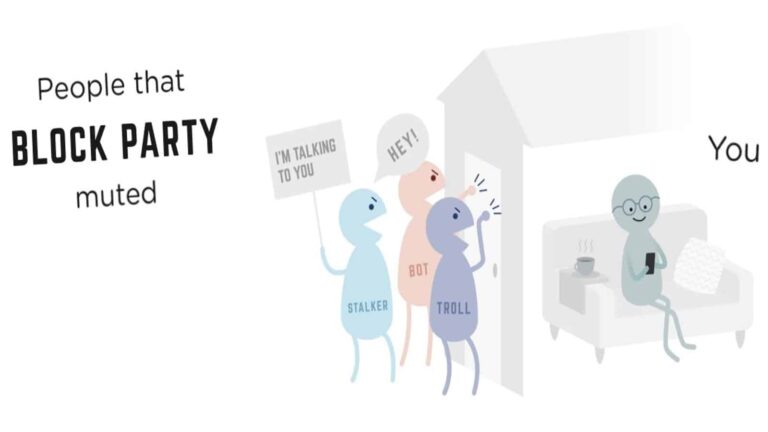
Block Party is an anti-harassment service that helps Twitter users stay clear of other users they don’t like. This service makes things easier for users when it comes to blocking accounts that might share ideas they don’t conform with. With this service, Twitter users can block certain users that post, like or even retweet troubling tweets.
Ever since this feature rolled out to the public, it has been able to help Twitter users block out harmful content. Offering various tiers for users, each with features that make it stand out and help users regardless of their needs. But now, all the things Twitter users love about this service will no longer be accessible.
Ever since Twitter changed its API service early this year, Block Party has managed to stay on the platform. But according to them, their blocking service for Twitter is going into an indefinite hiatus starting today. This means that the service will be on break from Twitter for an unknown period, possibly till the API issue is sorted out.
However, this is not the end of Block Party as a company as they will still serve users but not using Twitter’s API any more. They are now rolling out a browser extension known as Privacy Party, which can be put to use by Twitter users. This browser extension will protect Twitter users from harassers and scammers that are lurking on the social media platform.
So previous users of the Block Party service on Twitter can sign in to Privacy Party with their email accounts. This new service is currently rolling out to more browsers for wider access regardless of the browser in use. In the coming months, this service will be more readily available to users around the world.
The Common Vulnerabilities and Exposures (CVE) database lists publicly disclosed computer security flaws. The CVE we are going to discuss is listed as CVE-2023-32369, which allows an app to modify protected parts of the macOS file system.
At the time there were no other details provided. This is usual and done to give users ample time to implement the necessary patches. But now Microsoft has published a blogpost that provides details about the vulnerability and how it was discovered during a routine malware hunt.
The updates may already have reached you in your regular update routines, but it doesn’t hurt to check if your device is at the latest update level. If not, you can follow the instructions on how to update macOS on Mac.
libxpc is a closed source project that is part of XPC, which is the enhanced inter-process communication (IPC) framework used in macOS/iOS. In computer science, IPC refers specifically to the mechanisms an operating system provides to allow processes to manage shared data.
One of the security related functions of libxpc is System Integrity Protection (SIP). SIP is a security technology designed to help prevent potentially malicious software from modifying protected files and folders on your Mac. System Integrity Protection restricts the root user account and limits the actions that the root user can perform on protected parts of the Mac operating system. SIP is enabled by default on all modern macOS software releases.
This means that only certain processes—signed by Apple—have special entitlements to write to protected parts of macOS. This includes things like Apple software updates and Apple installers.
The Microsoft security engineers that are credited in the Apple security content however, found a flaw that allowed attackers with root permissions to add a malicious payload to SIP’s exclusions list and launch it. Because they managed to pull this off by abusing the macOS Migration Assistant utility, they named the vulnerability Migraine.
Successfully exploiting this vulnerability would allow an attacker that had somehow managed to obtain root privileges to install a rootkit which would be protected by SIP. SIP can only be disabled by following this procedure:
Because SIP is controlled through the Mac’s NVRAM, enabling or disabling SIP affects all versions of the Mac operating system that are installed on the system. NVRAM (nonvolatile random-access memory) is a small amount of memory that your Mac uses to store certain settings and access them quickly.
We don’t just report on vulnerabilities—we identify them, and prioritize action.
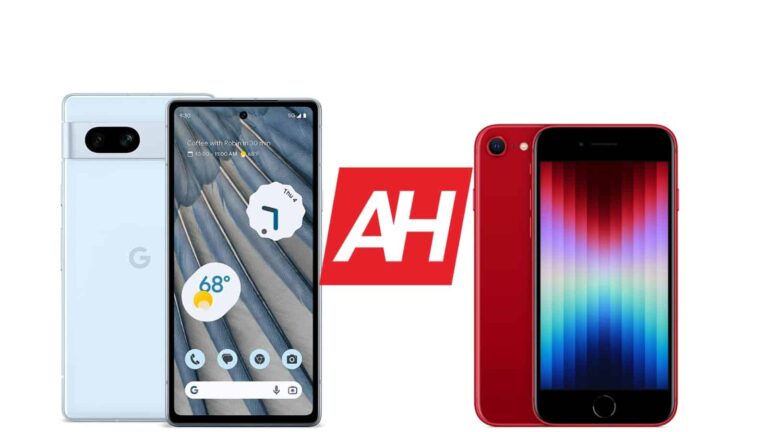
If you’re on a budget, and you also don’t like large phones, well, we have just the comparison for you. This time around, we’ll compare the Google Pixel 7a vs Apple iPhone SE (2022). Granted, these two phones are immensely different. That goes for their size, design, internals, and more. They do have one thing in common, however, they’re quite affordable. The iPhone Se (2022) is a small phone, while the Pixel 7a is considered to be compact. The size difference between them is huge, though.
This comparison is a bit odd, but it does make sense, to a degree. We’ll first list the specs of both phones, and will then move to compare their designs, displays, performance, battery life, cameras, and audio performance. This should be an interesting one, that’s for sure. Let’s get to it, shall we?
As you can see, these two phones look immensely different in comparison. The iPhone SE (2022) has that old iPhone 8 design, its top and bottom bezels are very thick, while the phone also has a solid-state home button on the front. The Pixel 7a has much thinner top and bottom bezels, and no buttons on the front. It does, however, have a display camera hole at the top of its displays.
The Pixel 7a has a more rectangular shape, while the iPhone SE (2022) corners are rounded quite a bit. Both phones come with an aluminum frame. The Pixel 7a has plastic on the back, while there’s glass on the back of the iPhone SE (2022). Their back sides also look quite different. The Pixel 7a has a camera visor covered by metal, which hosts two cameras. There’s a single camera on the back of the iPhone SE (2022).
The iPhone SE has a much smaller display, and it’s a lot smaller overall. It’s a lot shorter, narrower, and even noticeably thinner than the Pixel 7a. On top of all that, it’s also a lot lighter at 144 grams, compared to 193.5 grams of the Pixel 7a. Both smartphones do offer water and dust resistance. They even have the same IP rating, we’re looking at IP67 rating here. They are both well built, but the Pixel 7a looks way more modern.
Google Pixel 7a vs Apple iPhone SE (2022): Display
There is a 6.1-inch fullHD+ (2400 x 1080) display on the Google Pixel 7a. That display is flat, and it supports HDR content. It’s a 90Hz display, as this phone does offer a high refresh rate. The panel has a 20:9 aspect ratio, and it’s protected by the Gorilla Glass 3. Granted, that’s not the best protection out there.
The iPhone SE (2022) features a 4.7-inch 1334 x 750 Retina IPS LCD display. This panel has an aspect ratio of 16:9, and it comes with Ion-strengthened glass protection. Much like the Pixel 7a’s display, this one is also flat. It does offer lower ppi than the Pixel 7a, though, 326 vs 429 on Google’s mid-ranger.
The Pixel 7a’s display is better in almost every way. It’s not only sharper, but it’s an OLED panel with more vivid colors, and deeper blacks. Do note that the iPhone SE (2022)’s display is not bad, per se. Its sharpness is enough for that size, and for an IPS LCD panel, it’s not bad. Still, it cannot measure up to the Pixel 7a. The Pixel 7a also has a high refresh rate, not to mention that it does get a bit brighter when you need it to. Touch response is good on both phones. Neither device has the best display protection, so you may want to use a screen protector.
Google Pixel 7a vs Apple iPhone SE (2022): Performance
The Pixel 7a is fueled by the Google Tensor G2. That is the same chip that fuels Google’s current-gen flagships. The company also included 8GB of LPDDR5 RAM here, and 128GB of UFS 3.1 flash storage. The Apple A15 Bionic SoC fuels the iPhone SE (2022), while the phone has 4GB of RAM and NVMe flash storage.
Having said that, both of these phones are quite powerful. They both perform admirably on a day-to-day basis. We did not notice any noticeable lag or anything of the sort. What we did notice, however, is that the iPhone SE (2022) does better when it comes to truly demanding games. The Tensor G2 is not really made for gaming, even though it does a great job in that department too. All in all, chances are you’ll be happy with the performance regardless of which phone you get.
Google Pixel 7a vs Apple iPhone SE (2022): Battery
The Pixel 7a includes a 4,385mAh battery, while the iPhone SE (2022) sports a 2,018mAh battery. Apple’s iPhones usually have smaller battery packs than Android phones. That usually doesn’t have to mean anything, but in this case, it does. Despite the fact the iPhone SE (2022) is very small, and has a rather limited display, this battery pack is simply not enough to offer good battery life. Well, not even close to it.
We’ve been able to get 7+ hours of screen-on-time from the Pixel 7a, on a regular basis, with juice left in the tank. The iPhone SE (2022) can’t really come near that. The battery life is actually really poor, around 3-4 hours of screen-on-time. That can go higher if you’re really careful, but with proper usage, the battery life is really poor. That is a limitation of the tiny battery Apple used.
The Pixel 7a supports 18W wired, and 7.5W wireless charging. The iPhone SE (2022) offers 20W wired, and 7.5W wireless charging. In other words, neither phone offers proper fast charging, but considering the battery size in the iPhone SE (2022), 20W wired charging is more than enough. Neither of these two phones includes a charger in the box, by the way. You’ll need to get your own, if you don’t have one already.
Google Pixel 7a vs Apple iPhone SE (2022): Cameras
The Google Pixel 7a has a 64-megapixel main camera, and a 13-megapixel ultrawide camera (120-degree FoV). The iPhone SE (2022), on the other hand, includes a single 12-megapixel camera on the back. During the day, both cameras do a good job. The colors are better on the Pixel 7a, though, while it also does a better job with tricky HDR photos. Other than that, both do a good job. It’s worth noting that the Pixel 7a provides more contrasty photos, though.
In low light, it’s an easy win for the Pixel 7a. It manages to balance out photos just right. The photos end up looking a bit brighter than in real life, but with more than enough details, and usually well-balanced. The iPhone SE (2022) doesn’t even include a night mode, and truth be said, its low light images are not great. They tend to lack detail, brightness, and are usually more grainy than they should be.
The iPhone SE (2022) doesn’t have an ultrawide camera, so that’s not something we can compare here. The one on the Pixel 7a is quite useful, though, and it does a good job of keeping up with the main camera’s color profile. The video recording is not great on either phone, to be quite honest. The Pixel 7a does include a more capable selfie camera, though.
Audio
The Pixel 7a includes a set of stereo speakers, as does the iPhone SE (2022). The thing is, the Pixel 7a’s speakers are better. The sound output is clearer, and the speakers are also louder. The difference is noticeable.
You will not find an audio jack on either of these two phones. You’ll have to resort to their charging ports (Type-C USB and Lightning port, respectively), or go for a wireless connection. The Pixel 7a supports Bluetooth 5.3, while the iPhone SE (2022) is limited to Bluetooth 5.0.
Though Slack is known as a popular tool for office communication, the company faces backlash over the app’s lack of privacy measures. Now, a consortium of organizations is calling for Slack to introduce encrypted messaging to the platform.
The call for Slack to introduce end-to-end encryption (E2EE)
More than 90 organizations have signed a petition asking for end-to-end encryption. As TechRadar reports, privacy lobbyists are descending on Slack headquarters today to raise awareness of the lack of privacy on the platform.
Backed by Mozilla and Tor, the request details the breadth of users calling for greater privacy measures on the app.
“We are businesses, organizations, communities, and individuals who depend on tools like Slack to connect online. We are activists organizing for change; journalists who communicate with sources and about sensitive stories; nonprofits providing care and support for our communities; companies that need to streamline our processes and share ideas; students, creators, gamers, alumni, artists, athletes, and other communities that use the Internet to connect with people all over the world.”
In the petition, the group cites requests as far back as 2015 for Slack to introduce end-to-end encryption. Additionally, they argue that the company is known to favor profits over privacy.
Encrypted messaging and privacy
The group is raising concerns about the lack of encrypted messaging on the platform. The group cites that this may lead to hackers and law enforcement getting unauthorized access to users’ DMs.
The consortium is also calling attention to the lack of blocking and reporting tools on the app, which are necessary security measures against abuse.
With encrypted messaging and security being priorities for users, TechRadar notes that many users opt to use platforms such as WhatsApp or Signal. Both apps are known to prioritize privacy, with Facebook Messenger committing to encryption as well.
Overall, as the petition notes, “safety should be a built-in feature of all technology.”
As a long-time Android user, the Gboard virtual QWERTY has always been my keyboard choice especially since everything I need is just a tap away. Earlier this year Google slowly started to rollout a revised customizable toolbar for Gboard and now the dissemination of the update has picked up speed. If you’re a member of the Gboard Beta program and have version 13 running, you should have the revised Gboard toolbar on your Android phone right now.
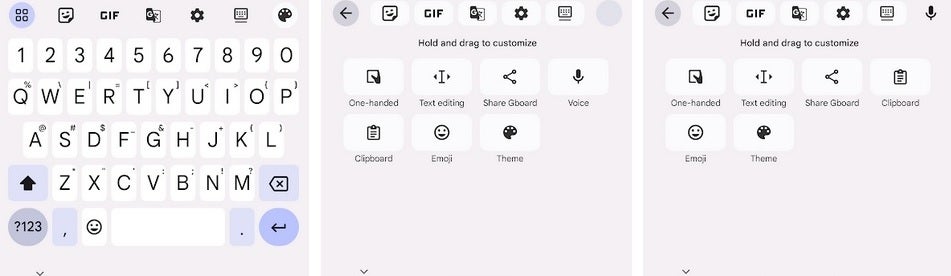
Fortunately, I am a Beta member (I’ll explain how you can find out if you are and how to join) and my Pixel 6 Pro is running Gboard version 13 so I so have the new toolbar on the app. Instead of the ellipses that used to take you to different features, with the update you’ll find a round circle icon with four squares inside on the left side of the toolbar above the top row of keys on the QWERTY. Tap on that and you’ll be able to customize the toolbar to include six icons that you are a tap away.
Update to Gboard allows users to customize the toolbar
Let’s say that your Gboard toolboard currently includes Stickers, GIFs, Google Translate, Settings, Floating (to have the QWERTY float on your display), and Theme. But you want to replace the Theme icon with the Voice icon. So after you tap the round circle icon with four squares inside, long-press on the Theme icon and drag it down to under the heading that says “Hold and drag to customize.” You then long-press on the Voice icon and drag it to where the Theme icon previously was. Release your finger, and that is all there is to it.
Now, to check which version of Gboard that you’re running, go to Settings and in the Search settings bar at the top of the screen, type in Gboard. Go to the bottom of the screen and tap on Gboard App info. At the very bottom of the display you will see the version of the app you’re running. Again, you want it to be version 13 or higher with the Beta designation at the end.
You need to be a Gboard Beta tester to customize the toolbar now
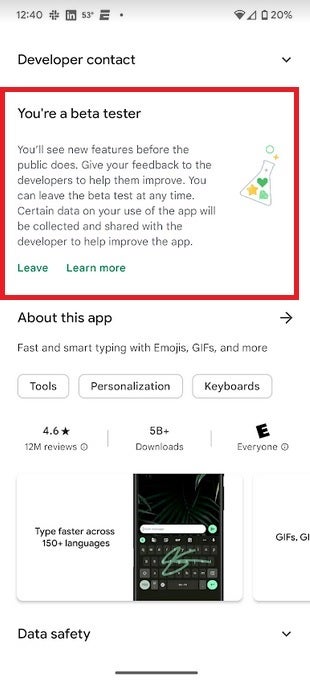
If you want to see if more Gboard Beta testers are being accepted by Google, open up the listing on the Play Store and scroll down. If Google is still accepting Beta testers for the app, you’ll see a place on the Play Store listing asking if you want to be a Beta tester for the app.
The update does allow you to customize the Gboard toolbar to have the features you use the most right at your fingertips. And eventually, the new Gboard toolbar will be available for all Android users of the app.
Catholic health system and nonprofit hospital chain CommonSpirit Health has said that a ransomware attack it suffered in October 2022 cost the company US$160 million.
Ransomware attacks against healthcare companies are becoming all too common, with one in 42 healthcare organizations worldwide being the victim of ransomware attacks in the final quarter of 2022. With the average cost of a ransomware attack in the US reaching $9.44mn in 2022, the impact of these cyber attacks can be widespread and devastating.
The ransomware attack occurred on October 2, 2022, and forced CommonSpirit Health to take its systems offline, impacting more than 100 CommonSpirit facilities across the United States. During the attack, the personal data of more than 623,700 patients was exposed.
Following a forensic investigation into the cyber attack, it was discovered that malicious actors first gained unauthorized access to CommonSpirit’s network on September 16, 2022. The hackers were removed on October 3 following the discovery of cyber security incident.
The attack was initially thought to have cost the company $150mn, however on May 25, 2023, CommonSpirit updated their estimate to $160mn. The healthcare organization cited business interruption, remediating costs and other expenses relating to the business as the reason for the cost.
CommonSpirit is facing two class action lawsuits related to the ransomware attack. Both lawsuits, which were filed with the US District Court for the Northern District of Illinois and in Washington state, allege that CommonSpirit was negligent and failed to implement appropriate cyber security safety measures, leading to the exposure of confidential information.
Related articles
Learn more about ransomware and cyber attacks against medical organizations by reading the following resources:
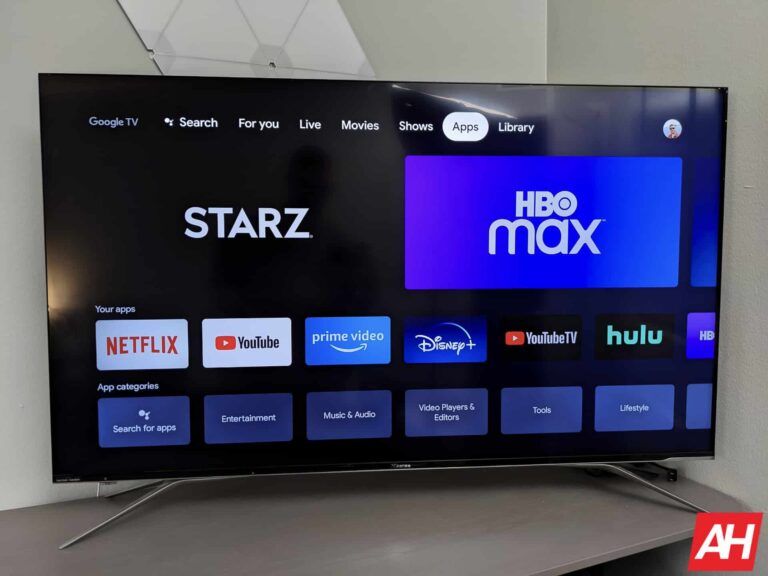
The April 2023 patch is now available for Chromecast with Google TV, 9to5google reports.
As the streaming market is growing, Google is also putting more focus on its streaming devices to prepare them for the competition. Industry experts predicted that the video streaming market could hit $416.84 Billion by 2030 (via Bloomberg). Google already revealed that over 150 million monthly active devices are running on Google TV and Android TV.
Last month, the tech giant promised an update for Chromecast that brings app hibernation. The feature could free up storage on your device by archiving inactive apps. Google also claimed the size of Google TV apps is reduced by 25% through using Android App Bundles.
Chromecast with Google TV is now getting an April 2023 patch to become even better and offer a smooth user experience. The update package is dubbed “STTE.230319.008.R1” and weighs 140MB. The Chromecast with Google TV 4K is about to get the update, but the HD model might also be eligible for it. So if you have an HD TV, keep your eyed on the available updates.
Chromecast with Google TV is getting its April 2023 patch
According to the changelog entries, the April 2023 patch fixes some bugs and brings performance improvements to Chromecast with Google TV. Additionally, it updates the Android security patch to Apr 2023.
The April 2023 update is now available for eligible devices. If you want to check if it’s rolled out to your device, follow Settings > System > About > System update.
Google’s timeline for releasing patches for Chromecast is somehow weird. Back in early April, the company rolled out a second January 2023 security patch for Chromecast with Google TV 4K and HD. That package also brought minor performance improvements and an updated Android security patch level.
While the Chromecast with Google TV users continues to get updates, Google has just announced the first-generation Chromecast will no longer get any updates. The device was first introduced in 2023 and continued to get updates from the company for almost a decade.