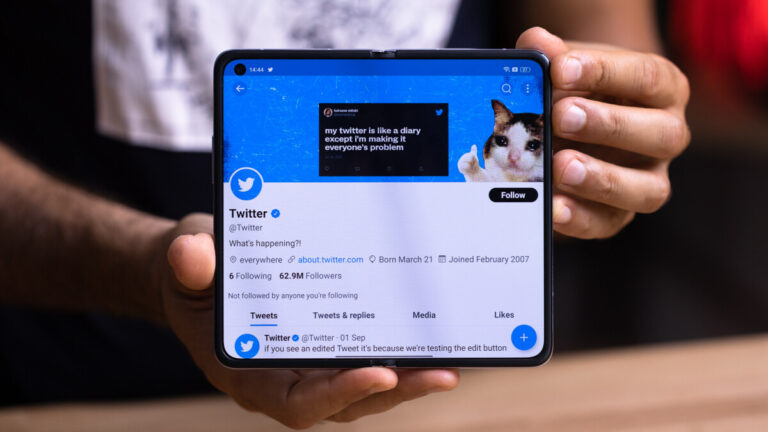
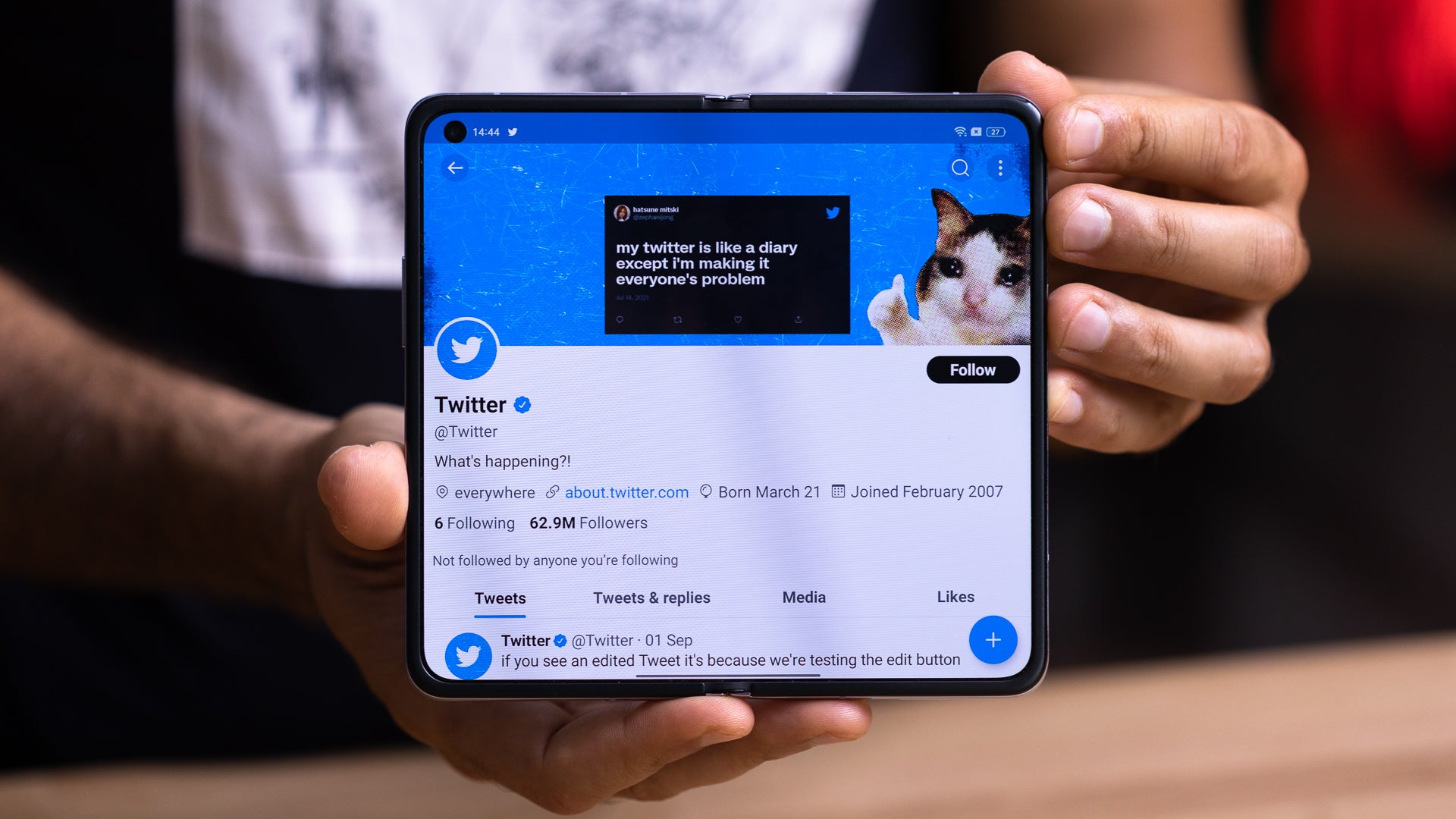
Current, but outgoing, Twitter CEO and all around boss of the popular social network —Elon Musk —recently appointed a new CEO to take his place on Twitter while he takes on a different role within the company. However, as the new CEO isn’t scheduled to start for the next few weeks, Elon has already begun to make moves in the direction that he wants to take the company in.
As reported by Axios, Twitter appears to have made its first acquisition in the form of the recruitment startup, Laskie. Laskie is a relatively unknown, two year old company, that focuses on matching candidates with tech jobs. Needless to say, this potential acquisition opens up a world of possibilities on how Twitter could emerge as a destination for job seekers.
Details, or even confirmation, of the acquisition are yet to be revealed. However, much speculation is already taking place on how owning a tech recruitment company could be an advantage to Twitter. One common thought is that Twitter could use its extensive user base and real-time communication capabilities to facilitate connections between job seekers and employers.
Currently, the crown in that space is held by LinkedIn, which is the world’s largest professional network on the internet. However, Twitter’s built-in networking capabilities can be a huge advantage for job seekers. The platform’s ability to connect people across industries and geographies could help individuals expand their professional networks and tap into hidden job opportunities. Employers, on the other hand, can leverage Twitter’s extensive reach to target a diverse pool of talent and discover candidates with unique skill sets.
It remains to be seen which steps will follow this reported acquisition, if confirmed. Musk has made his feelings clear on the fact that he wants to transform Twitter into “X, the everything app,” and the world is very curious to see how exactly this will play out.
The ‘RA Group’ is a recently emerged ransomware organization that is actively attacking the following companies in the United States and South Korea:-
Pharmaceutical companies
Insurance companies
Wealth management companies
Manufacturing companies
Cybersecurity researchers at Cisco Talos observed them employing the common ‘double-extortion’ technique by establishing a data leak website on the dark web to disclose compromised information and compel victims into paying the ransom.
RA Hacker Group
After going online on April 22nd, 2023, the ransomware group began publishing their first victims’ details on April 27th, displaying sample files, data types, and data links.
While apart from this, RA Group utilizes an encryptor derived from the leaked source code of the now-defunct Babuk ransomware.
Sentinel Labs recently disclosed that, following the leakage of Babuk ransomware source code on a Russian hacker forum in September 2021, at least nine ransomware groups had employed it to extend their attack surface to the following platforms:-
Apart from the ransomware groups identified in Sentinel Labs’ report, Cisco Talos has documented a timeline of attacks by various groups utilizing ransomware offshoots from the Babuk source code, such as:-
Rook
Night Sky
Pandora
Nokoyawa
Cheerscrypt
AstraLocker 2.0
ESXiArgs
RA Group distinguishes itself by employing custom ransom notes tailored for each targeted organization, along with using victim-specific executable names.
In contrast, their ransomware targets all logical drives and network shares, except for essential Windows system folders like boot and Program Files, encrypting specific directories.
RA Group employs intermittent encryption to prevent rendering the victim’s system inoperable and increase the chances of receiving ransom payments.
This risky technique alternates between encrypting and not encrypting sections of files, potentially enabling partial data recovery.
During the encryption process, RA Group’s encryptor employs the following two algorithms:-
curve25519
eSTREAM cipher hc-128
RA Group appends the “.GAGUP” file extension to encrypted files and ensures that volume shadow copies and Recycle Bin contents are deleted, making data restoration more challenging.
Ransom Payment Note
RA Group’s ransom note, named ‘How To Restore Your Files.txt,’ instructs the victim to communicate with the threat actors through the qTox messenger application to discuss the ransom payment.
In addition to providing a link to a repository with stolen files as evidence of the data breach, the ransom note specifies that if the victim does not initiate contact within three days, the RA Group will expose the stolen files of the victim.
Due to its recent emergence and limited number of victims, the methods employed by this ransomware operation to breach systems and propagate across networks remain unclear.
We take a look at yet another ransomware group making use of leaked Babuk code.
The bones of long gone ransomware group Babuk continue to rattle in the breeze, in the form of reused code. Researchers from Cisco Talos have named this new team the “RA Group”, a ransomware collective which may have only been up and running since last month.
The leaked builder has proven to be very useful for those in the ransomware realm, and people wanting to get in on the act. Its versatility and relative ease of use ensures that—sadly—we’ll likely be seeing Babuk lurking at the edges of ransomware development for a long time to come.
Our latest Babuk beneficiary, the RA Group, already has four known compromises in the US and South Korea. According to Talos, like many other forms of ransomware, the attacks are based around double extortion tactics. This is where the target isn’t just stuck with encrypted, inaccessible files, they’re also threatened with the stolen data being leaked should the ransom not be paid.
In this case, RA Group is sticking with the tried and tested leak portal technique. Watching confidential information be spilled across the internet for download is certainly one way to encourage a business to pay up, and an effective tactic. Talos reports that the main leak site is undergoing various cosmetic tweaks and alterations, confirming the impression that this is all very new indeed.
If you’re unfortunate enough to end up on the leak portal, your details are organised like so:
Organisation name
A list of stolen data / file size
Organisation URL
Customised ransom notes are used for compromised entities, with three days given to pay up or risk the data being made public. When the three day mark is reached, “sample files” are made public. After 7 days, everything goes public.
A list of the stolen data is also provided in the ransom note, which isn’t something you see all the time. There’s no better way to show you mean business than explain exactly what you’ve done to supplier, tax, and financial information across every compromised desktop. Talos notes that the impacted organisation is also mentioned inside the code of the executable too.
Should your data eventually end up for sale, the below message may eventually provide lots of sleepless nights:
If you want to buy this data, please contact us by qtox
qTox is an instant messaging tool billed as being secure and private, particularly with regard to avoiding having your Government listening in on what you might be saying. Ransomware groups using instant message to communicate with victims is fairly common, and they often make use of secure tools to do so.
Prevent intrusions. Stop threats early before they can even infiltrate or infect your endpoints. Use endpoint security software that can prevent exploits and malware used to deliver ransomware.
Detect intrusions. Make it harder for intruders to operate inside your organization by segmenting networks and assigning access rights prudently. Use EDR or MDR to detect unusual activity before an attack occurs.
Stop malicious encryption. Deploy Endpoint Detection and Response software like Malwarebytes EDR that uses multiple different detection techniques to identify ransomware, and ransomware rollback to restore damaged system files.
Create offsite, offline backups. Keep backups offsite and offline, beyond the reach of attackers. Test them regularly to make sure you can restore essential business functions swiftly.
Don’t get attacked twice. Once you’ve isolated the outbreak and stopped the first attack, you must remove every trace of the attackers, their malware, their tools, and their methods of entry, to avoid being attacked again.
Malwarebytes EDR and MDR removes all remnants of ransomware and prevents you from getting reinfected. Want to learn more about how we can help protect your business? Get a free trial below.
The Google Pixel 7a launched quite recently during Google I/O 2023, and it became Google’s brand new mid-range offering. We’ve already compared it to several devices at this point, and the next in line is a mid-ranger from Samsung. In this article, we’ll compare the Google Pixel 7a vs Samsung Galaxy A54. These two phones do have similar price tags, and are kind of direct competitors, especially in the US. So, it’ll be interesting to see how they compare.
We’ll first list their specifications, and will then move to compare their designs, displays, performance, battery life, cameras, and audio performance. These two phones are quite different, both in terms of the design, and their internals. That ought to make for an interesting comparison. Let’s get to it.
Both of these phones feature a centered display camera at the top of their displays, and have flat displays. That’s where similarities end, though. The Pixel 7a has a more squarish shape, while the Galaxy A54 includes considerably rounded corners. Its display corners are also more rounded than the ones on the Pixel 7a. Both smartphones do include physical buttons on the right-hand side, but the order is different. The Pixel 7a has a power key above the volume rocker buttons, while it’s the other way around on the Galaxy A54.
If we flip them around, you’ll see even more differences. The Pixel 7a has a camera visor on the back, which is covered by metal. The Galaxy A54 includes three separate camera islands on the back, which are vertically oriented in the top-left corner. The Pixel 7a comes with a frame made out of metal, and a plastic back. The Galaxy A54 is the other way around, it includes a plastic frame, with a glass back (Gorilla Glass 5).
The Pixel 7a is considerably smaller, so it’s easier to use with one hand. It’s noticeably shorter, a lot narrower, and slightly thicker. It is also lighter than the Galaxy A54, but not by much. It weighs 193.5 grams, compared to 202 grams of the Galaxy A54. Both smartphones are IP67 certified for water and dust resistance. They are both slippery, so keep that in mind. The Pixel 7a is easier to grip, however, due to its size. They both feel like well-built pieces of tech.
Google Pixel 7a vs Samsung Galaxy A54: Display
There is a 6.1-inch fullHD+ (2400 x 1080) 90Hz OLED display included on the Pixel 7a. That display supports HDR content, and it is flat. You will notice that the bottom bezel is thicker than the rest of them, and the display ratio is 20:9. This panel is protected by the Gorilla Glass 3. That is not the most modern or the best protection, so it would be wise to use a screen protector here.
The Galaxy A54, on the flip side, has a 6.4-inch fullHD+ (2340 x 1080) Super AMOLED display. This panel is also flat, and it has a 120Hz refresh rate. It supports HDR10+ content, and gets up to 1,000 nits of peak brightness. This display has an aspect ratio of 19.5:9, and a slightly higher screen-to-body ratio. Its bezels are also not uniform, and the Gorilla Glass 5 protects this panel. That’s a considerably better option than Gorilla Glass 3.
Both of these displays are quite good. They have good viewing angles, and are quite vivid. The blacks are deep, to respectable levels, and the touch response is also good. Both displays are more than sharp enough. They also get similarly bright. The Galaxy A54 does have the advantage of a higher refresh rate, which you’ll notice during usage, and it also comes with better display protection.
Google Pixel 7a vs Samsung Galaxy A54: Performance
The Google Pixel 7a is fueled by the Google Tensor G2 SoC. The phone also includes 8GB of LPDDR5 RAM and 128GB of UFS 3.1 flash storage. The Galaxy A54 is fueled by the Exynos 1380 processor, while it comes in 6GB and 8GB LPDDR5 RAM variants with either 128GB or 256GB of UFS 3.1 flash storage. The Tensor G2 is the more powerful processor here. Does that reflect on performance, though?
Well, for regular, everyday stuff, both smartphones do a great job. Both are quite snappy, and do everything you’d want them to rather fast. We could nitpick here, but there’s really no need to. Both are fast in opening apps, multitasking, browsing, and so on. The difference can be seen when it comes to gaming, however. The Tensor G2 is not really made for gaming, but it still does a better job than the Exynos 1380.
The Pixel 7a has proven capable of playing basically anything we threw at it, including Genshin Impact, though it doesn’t perform at the same level as some Snapdragon 8+ Gen 1 and Snapdragon 8 Gen 2 phones. That is to be expected. The Galaxy A54 is below that level too, and below what the Pixel 7a has to offer. Don’t get me wrong, you can play games with both phones, without a problem, but the Pixel 7a will ultimately offer better performance.
Google Pixel 7a vs Samsung Galaxy A54: Battery
Out of the two, the Pixel 7a has a smaller battery, but that is to be expected considering the fact it has a smaller display, and a lower display refresh rate too. The Pixel 7a has a 4,385mAh battery, while the Galaxy A54 comes with a 5,000mAh unit. Having said that, we’ve had some issues with the Pixel 7a battery life at first, but it stabilized since our initial usage, and it’s now quite good, actually.
Getting around 7 hours of screen-on-time from the phone is not a problem, though your mileage may vary, of course. The Galaxy A54 does go beyond that, however. You can cross the 8-hour screen-on-time, well, some of you will be able to. Your usage, apps that you have installed, and your location (cell signal) will play a huge role when it comes to battery life. So, your results may be vastly different from what we’ve seen.
Now, do note that neither phone comes with a charger. The Pixel 7a does support 18W wired charging though, and 7.5W wireless charging. The Galaxy A54 offers support for 25W wired charging, and no wireless charging. The wireless charging on the Pixel 7a is very slow, so chances are you won’t be using it all that much, unless you’re charging overnight, of course. The phone’s wired charging is not particularly fast either. That goes for both devices, actually.
Google Pixel 7a vs Samsung Galaxy A54: Cameras
There is a 64-megapixel main camera on the back of the Pixel 7a, and a 13-megapixel ultrawide camera. The Galaxy A53, on the other hand, has a 50-megapixel main camera, a 12-megapixel ultrawide camera, and a 5-megapixel macro camera. Spoiler alert, the Pixel 7a is the better camera smartphone here, and it’s not even close. That actually goes for video recording too, but let’s take it one step at a time.
Images from the Pixel 7a end up looking more balanced, with better dynamic range and white balance. The Galaxy A54 images do not exactly look washed out, but in comparison with the Pixel 7a, it may seem that way. Both phones do capture plenty of detail, but the colors look richer on the Pixel 7a. In low light, the Pixel 7a manages to capture more detail, as the images end up looking less blurry than on the Galaxy A54, and also show more color at the same time.
The video is more stable on the Pixel 7a, even though the footage looks good on both, if we disregard the stabilization factor. Even if we talk about the front-facing cameras, the Pixel 7a comes out on top. The bokeh effect from its front-facing camera looks more realistic, and the images look richer and overall better. The Pixel 7a is not the best camera smartphone out there, not at all, but it does beat the Galaxy A54, at least in our opinion.
Audio
You will find a set of stereo speakers on both of these devices. Those speakers are good on both phones, they’re loud and offer good sound. If we had to nitpick, however, we’d side with the Galaxy A54 here. Its speakers are a bit louder, and do offer slightly more bass.
You will not find an audio jack on either of these two smartphones. You can always use their Type-C ports to connect wired headphones, though. If you opt for a Bluetooth connection, do note that both phones are equipped with Bluetooth 5.3.
Lawmakers in the EU parliament are working on a new bill that aims to prevent misleading product labeling and increase durability. The bill also wants to stop the company’s misleading environmental claims.
The EU parliament has taken serious steps in the last few years to make products more durable and sustainable across the continent. Establishing a standard charging port for tech devices sold in the EU is one of those actions that hopes to reduce e-waste. As well as prevent customers from paying extra to buy a charger when purchasing a new smartphone or tablet.
The lawmakers in the green continent now want to go even greener. By banning misleading ads and generic environmental claims and increasing products durability. The proposed bill aims to empower customers for the “green transition” and encourage companies to launch more sustainable products.
The EU parliament regulates product labeling to prevent false environmental claims
According to the bill details, companies across the EU can no longer make generic claims like “environmentally friendly,” “natural,” “biodegradable,” “climate neutral,” or “eco” if their products can’t uphold these claims. Additionally, any claim based solely on carbon offsetting schemes will be banned in the EU.
The MEPs put forward even more restrictions on product labeling. Making a claim about a product, if that claim is true about a part of the product, will be forbidden.
The EU lawmakers also want to fight early obsolescence in order to make products last longer. As per the new legislation, any design feature limiting a product’s durability or leading to permanent malfunction is not allowed in the continent.
The MEPs further say that a company should not limit a product’s functionality if the consumer wants to use third-party accessories. The seller should also inform buyers of any repair restrictions.
The MEP Biljana Borzan says this legislation will no longer allow the industry to “profit from making consumer goods that break just as the guarantee period is over.” The parliament will soon start negotiations with member states to turn the legislation into a law. Of course, the bill could face opposition from particular companies.
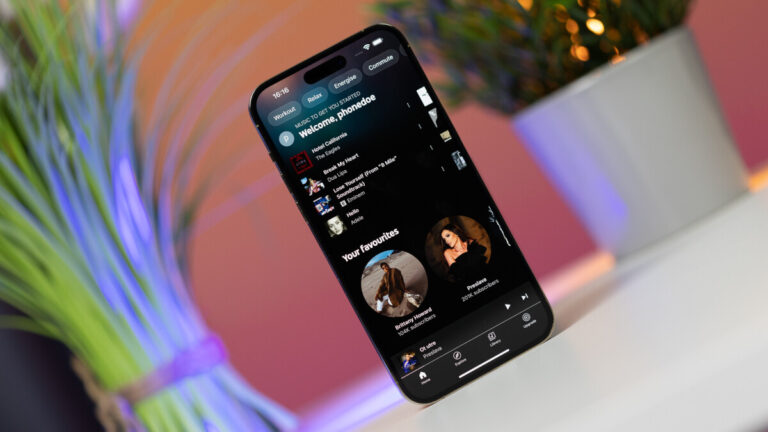
YouTube Music is consistently enhancing its user experience by introducing new features, and in its latest feat to do just that, the music streaming service has recently rolled out an update that recommends albums it thinks may be of interest to you.
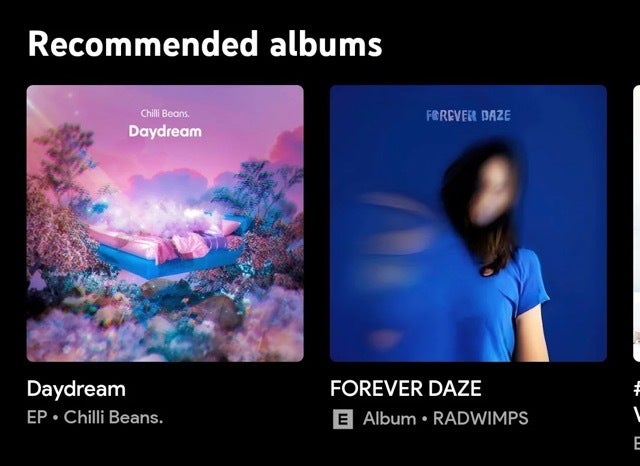
This feature was first spotted by a keen-eyed user who then shared his findings on the r/YoutubeMusic subreddit. This was then shared by Android Police whose team then confirmed they were seeing the new “Recommended Albums” section in their YouTube Music home page.
It appears as a horizontally scrolling carousel that showcases personalized album recommendations based on the user’s listening habits. The feature appears on both the web and mobile versions of the app, providing music listeners with a tool to broaden their horizons and explore new sounds that may have otherwise missed.
It is very similar to the “New releases” and “Recommended playlists” carousel where it takes into consideration the user’s preferred artists, their listening history, and the music they’ve saved to their library. By taking all of these elements into account, the platform is able to curate a personalized and tailored music experience for each individual user.
Image Source – u/cancerkol – Reddit
This follows many recent updates to YouTube Music, where Google is obviously making a concerted effort to make the app comparable or better than the competition. An example of this is the recent rollout of Podcasts on the platform, as well as better sharing and real-time lyrics — the latter which has yet to roll out to yours truly.
The latest enhancements made to YouTube Music represent a promising step forward for the music streaming platform. Though a minor feature, having the service recommend artists, albums, or playlists that I may have not discovered otherwise, is a worthy addition considering Google already knows my music tastes based on my YouTube watch history.
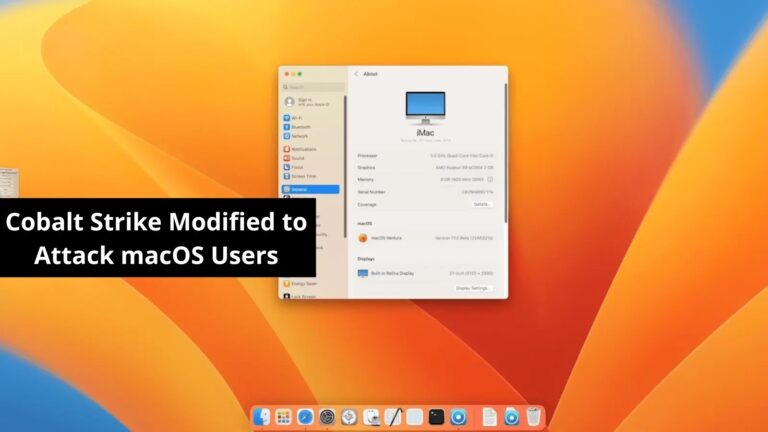
Geacon, a Cobalt Strike implementation written in Golang, is likely to attract the attention of threat actors looking for vulnerable macOS devices.
Threat actors have been employing Cobalt Strike to breach Windows PCs for years, despite the infosec industry’s ongoing efforts to stop it.
SentinelOne’s results confirm this after it saw an increase in the number of Geacon payloads that have been detected on VirusTotal lately.
“While some of these are likely red-team operations, others bear the characteristics of genuine malicious attacks,” SentinelOne reports.
Fortra created Cobalt Strike, a well-known red teaming and adversary simulation tool. Due to their many capabilities, threat actors have long misused illegally cracked versions of the software.
While Cobalt Strike’s post-exploitation activity has mostly targeted Windows, assaults against macOS are rather uncommon.
Geacon was a promising Cobalt Strike port that first surfaced on GitHub, but it didn’t seem like many hackers were interested in it.
SentinelOne notes that this changed in April as a result of two Geacon forks—Geacon Plus, a free and publicly accessible version, and Geacon Pro, a private, paid version—being uploaded on GitHub by unidentified Chinese developers.
Mach-O payloads for the free version of the fork have reportedly been in development since November 2022, according to historical data from Virus Total.
The Geacon fork has been added to the ‘404 Starlink project,’ a public GitHub repository dedicated to red-team pen-testing tools that have been maintained by the Zhizhi Chuangyu Laboratory since 2020.
This addition contributed to the Geacon fork’s rise in popularity and appears to have attracted users with malicious intent.
Malicious Geacon Deployment
Two VirusTotal submissions from the dates of April 5 and April 11 contained two instances of malicious Geacon deployment, according to SentinelOne.
The first one is an AppleScript applet file with the name “Xu Yiqing’s Resume_20230320.app,” which checks to see if a macOS system is supported before downloading one unsigned “Geacon Plus” payload from a command and control (C2) server with a Chinese IP address.
The user is shown a two-page decoy document that is integrated into the Geacon binary before it starts its beaconing activity. An individual named “Xu Yiqing”‘s resume is visible in an opened PDF document.
Geacon Decoy PDF
“The compiled Geacon binary has a multitude of functions for tasks such as network communications, encryption, decryption, downloading further payloads, and exfiltrating data”, researchers explain.
The second payload is a trojanized version of the SecureLink application used for secure remote support called SecureLink.app and SecureLink_Client, including a copy of “Geacon Pro.”
The binary in this instance only supports Mac OS X 10.9 (Mavericks) and subsequent versions, which are Intel-based systems.
File details
The app asks for access to the computer’s microphone, camera, contacts, images, reminders, and administrator rights upon launch, even though these features are typically covered by Apple’s Transparency, Consent, and Control (TCC) privacy framework.
Although these are exceedingly hazardous permissions, the kind of fake application allows for the user’s suspicion to be allayed, which deceives them into approving the app’s request.
Access permission details
Final Words
Researchers say enterprise security teams can benefit from attack simulation tools such as Cobalt Strike and its macOS Go adaption, Geacon.
“It is quite likely that some of the activity we are observing around this tool is legitimate red team use, but it is also likely that genuine threat actors will make use of the public and possibly even the private forks of Geacon now available to them,” researchers.
Google Fiber has launched its 20-gig internet plan for at least eight organizations that want to test it, CNET reports.
Having a 20-gig internet service at home might seem like a daydream for most Internet users worldwide. But Google is working to make this dream come true by launching a test program for its 20-gig product. The company has already launched 5-gig and 8-gig tiers, but a 20-gig service would certainly be a hallmark of the technology.
According to the company’s announcement, the service is currently under testing in the School of Science and Engineering at the University of Missouri-Kansas City. Google is now asking eight more organizations to join the program to stretch the service to its full extent.
Google Fiber is looking for eight organizations to test its 20-gig internet service
The tech giant further explains that these organizations could be businesses, non-profits, and educational institutions. Additionally, they should be located in Austin, Huntsville, Raleigh-Durham, and Salt Lake City. Google currently doesn’t charge selected organizations and puts them in its Trusted Tester program.
The organizations willing to participate in the program can fill out an form. Of course, they should meet certain qualifications like downloading or uploading massive datasets, conducting research that really needs significantly more bandwidth, and working on developing a tech that needs enormous bandwidth.
Google Fiber is rapidly growing in the United States and even managed to become a rival for AT&T and Verizon tiers. Google’s fiber internet will also arrive in Logan, Utah, in 2024 after the company signed a license agreement with the city. More cities are expected to join the program in the coming years.
The race for offering high-speed internet is going to a whole new level, and Google wants to stay caught up with rivals. China, the biggest internet market in the world, has recently tested a 6G network with a data speed of 100Gbps. This was also the first successful wireless transmission in the world at the terahertz (THz) frequency level.
Google’s chatbot Bard is steadily improving as time goes on. During Google I/O, Google unveiled several new additions to Bard that really make it a compelling chatbot. The improvements don’t stop there, as a recent update gives Bard improved summarizing and sourcing abilities, according to 9To5Google.
Right now, Google Bard is catching up to ChatGPT in the AI chatbot race. In some respects, it actually lapped OpenAI’s chatbot. If you want a rundown of things that Google Bard can do that ChatGPT can’t, click here.
Google Bard is better at sourcing and summarizing content
Most modern AI chatbots have the ability to give a summary of articles. This is something that ChatGPT can do, but it’s limited and its ability. If you still want to give it a try, click here. The thing about ChatGPT is that it’s limited to events that happen before 2021.
This is where Bart has a leg up on ChatGPT. Since Bard is powered by Google, and since Google is basically the internet, it has a live feed of up-to-date information. Thus, it’s able to summarize articles more proficiently.
If you ask Barb to summarize an article and paste the link, you’ll get a response back with a few parts to it. Firstly, you’ll get a rough overview of the article. Next, you’ll get several bullet points that highlight the main points in the article. After that, you’ll get a short closing paragraph.
So far, just know that the company is still working on this feature. There’s a chance that Bard will not properly summarize the article and give you inaccurate information.
Sourcing
Next, Bard will improve its sourcing capabilities. Microsoft’s Bing AI lists the sources of where it got its information at the bottom of the response. Each Source is hyperlinked, so you can go straight to the source if you want.
This is something that Bart does, but it doesn’t do this quite as often as Bing AI. Hopefully, we will see it doing this more in the future.
Instagram has recently rolled out a highly anticipated feature that allows users to express themselves through GIFs in the comments section. This move comes after years of user requests for the platform to integrate this popular form of communication.
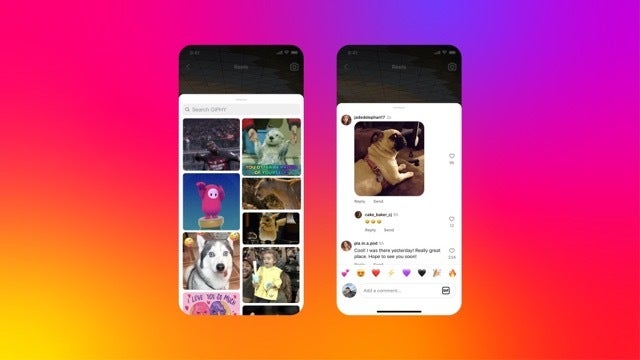
The new feature was announced via the Instagram channel of Adam Mosseri, who currently heads the company. The announcement was shared with a voice note accompanied by an image showcasing how a GIF has been inserted into a comment by using GIPHY. It was also included in a post today on Meta’s Newsroom.
Image Source – Meta
In the voice note, Mosseri expressed some regret for not bringing this feature to Instagram users sooner and called this a “finally feature.” He acknowledged that this should have been available a long time ago, but they were just now able to launch.
We also launched GIFs in comments which I like to think of as a “finally feature.” One of those features which probably should have launched a long time ago and we finally managed to get out the door. So, sorry it took so long, but enjoy GIFs in comments.
The feature will be available globally for both Android and iOS effective immediately, although it might be a staged rollout so don’t despair if you don’t have it yet. You’ll know the feature is available to you if you see a GIF icon on the bottom right of the “Add a comment” field when commenting on a post.
Additionally, Instagram will be beefing up the Reels editor so that you can split a single clip into two clips, speed up or slow down your clips, or swap clips out without affecting the timing. These particular improvements to Reels will be rolling out globally in the next few weeks.
Incorporating GIFs into your comments can be an excellent method of infusing a touch of personality and humor in posts as well as a very imaginative way to engage with your social circle. Meanwhile, Instagram continues to build new features into its platform that are very TikTok-esque, further proving that it is serious about competing and establishing itself as the go-to social network for media sharing.