Google Pixel 7 Pro vs Xiaomi 13 Ultra

0
[ad_1]

The Xiaomi 13 Ultra is the company’s latest and greatest smartphone offering. In this article, we’ll pitch it against the very best of Google. We’ll compare the Google Pixel 7 Pro vs Xiaomi 13 Ultra. The Pixel 7 Pro is not exactly brand new, it launched in October last year, but it’s still the best Google has to offer. Both of these smartphones are great in their own way, so it’ll be interesting to see how they compare.

They are quite a bit different, though. That not only goes for their design, but also their software. The Xiaomi 13 Ultra launched only in China thus far, even though it’s coming to global markets. The variant we checked out is made for the China market, though, so keep that in mind. We did sideload Google services without a problem. In any case, we’ll first list the specs of both phones, and will then compare them across a number of categories.

Specs

Google Pixel 7 ProXiaomi 13 Ultra
Screen size6.7-inch QHD+ curved OLED LTPO display (120Hz refresh rate, 1,500 nits peak brightness)6.73-inch QHD+ LTPO AMOLED display (curved, 120Hz adaptive refresh rate, 2,600 nits peak brightness)
Screen resolution3120 x 14403120 x 1440
SoCGoogle Tensor G2Qualcomm Snapdragon 8 Gen 2
RAM12GB (LPDDR5)12GB (LPDDR5X)
Storage128GB/256GB/512GB, non-expandable (UFS 3.1)256GB/512GB, non-expandable (UFS 4.0)
Rear cameras50MP (Samsung ISOCELL GN1 sensor, 1.2um pixel size, f/1.85 aperture, 82-degree FoV)
12MP (ultrawide, 1.25um pixel size, f/2.2 aperture, 125.8-degree FoV, lens correction)
48MP (telephoto, 0.7um pixel size, f/3.5 aperture, 20.6-degree FoV, 5x optical zoom, Super Res Zoom up to 30x)
50.3MP (Sony’s IMX989 1-inch sensor, f/1.9-f/4.0 aperture, 23mm lens, 1.6um pixel size, multi-directional PDAF, Laser AF, OIS)
50MP (ultrawide, 122-degree FoV, f/1.8 aperture, 12mm lens, dual-pixel PDAF)
50 MP (telephoto, f/1.8 aperture, 75mm lens, 3.2x optical zoom, dual-pixel PDAF)
50MP (periscope telephoto, 5x optical zoom, dual-pixel PDAF, OIS, 120mm lens)
Front cameras10.8MP (1.22um pixel size, f/2.2 aperture, 92.8-degree FoV, Fixed Focus)32MP (wide angle)
Battery5,000mAh, non-removable, 23W wired charging, 23W wireless charging, reverse wireless charger
Charger not included
5,000mAh, non-removable, 90W wired charging, 50W wireless charging, 10W reverse wireless charging
Charger included
Dimensions162.9 x 76.6 x 8.9mm163.2 x 74.6 x 9.1mm
Weight212 grams227 grams
Connectivity5G, LTE, NFC, Bluetooth 5.2, Wi-Fi, USB Type-C5G, LTE, NFC, Bluetooth 5.3, Wi-Fi, USB Type-C
SecurityFace Unlock
In-display fingerprint scanner (optical)
OSAndroid 13Android 13
MIUI 14
Price$899/$999/$1,099CNY5,999 ($872)+
BuyGoogleChina only for now

Google Pixel 7 Pro vs Xiaomi 13 Ultra: Design

These two phones do look quite a bit different. Well, if you look at them from the front, they’re far more similar than they actually are. The Google Pixel 7 Pro is made out of metal and glass. It has the Gorilla Glass Victus on the back, and its frame is made out of aluminum. The Xiaomi 13 Ultra is made out of metal, while there is a vegan leather backplate included on its back. There’s actually a lot to talk about here.

The back side of the Pixel 7 Pro is equally thick in all areas, save for the camera visor. The Xiaomi 13 Ultra’s is not. It’s thicker in the portion around the camera, as the backplate’s thickness gradually increases towards the upper portion. This is a design choice by Xiaomi, to avoid having an extremely thick camera oreo. The company did have to find a way to include four 50-megapixel cameras in there, including a 1-inch camera. Its vegan leather backplate also doesn’t curve into the frame, it cuts off before that point. It’s an interesting look, and the first such implementation we’ve seen.

Both phones have curved displays, thin bezels, and a centered display camera hole. The Pixel 7 Pro does have slightly sharper corners, and a camera visor on the back. That visor connects to the frame on both the left and right sides, and it’s covered by metal. The Xiaomi 13 Ultra includes a huge, circular camera island on the back, which is centered in the upper portion of the phone’s back.

The Xiaomi 13 Ultra is slightly taller and a bit narrower than the Pixel 7 Pro. It’s also slightly thicker, and a bit heavier too. The Xiaomi 13 Ultra is considerably less slippery compared to the Pixel 7 Pro. Both smartphones do come with IP68 certification for water and dust resistance. Both feel really well-built, and like premium pieces of tech, as you’d expect. Neither phone is easy to use with one hand, not at all. They’re not only huge, but also quite bulky at the same time.

Google Pixel 7 Pro vs Xiaomi 13 Ultra: Display

The Google Pixel 7 Pro features a 6.7-inch QHD+ (3120 x 1440) LTPO AMOLED display. This panel is curved, and it has a 120Hz refresh rate. It supports HDR10+ content, and gets up to 1,500 nits of brightness at its peak. We’re looking at a 19.5:9 aspect ratio here, while the Gorilla Glass Victus protects the display.

google pixel 7 pro AM AH 02 1
Google Pixel 7 Pro display

On the other hand, the Xiaomi 13 Ultra has a 6.73-inch QHD+ (3200 x 1440) LTPO AMOLED display. This panel is also curved, and it supports a refresh rate of up to 120Hz. Dolby Vision is supported, as is HDR10+ content. This panel gets considerably brighter than the Pixel 7 Pro’s, at 2,600 nits of peak brightness. At the time of writing this article, this was technically the brightest display on the market. It has a 20:9 aspect ratio, and it’s protected by the Gorilla Glass Victus.

Both of these displays are great. They offer vivid colors with deep blacks, and really good viewing angles. The touch response is good too. The Xiaomi 13 Ultra does have the advantage from the brightness standpoint, though. This display is great for outdoor use, especially when the sun is shining. The difference is quite noticeable between the two, actually. If that’s not a concern for you, either display will serve you great.

Google Pixel 7 Pro vs Xiaomi 13 Ultra: Performance

Google’s flagship handset is fueled by the Google Tensor G2 SoC. In addition to that, Google included 12GB of LPDDR5 RAM here, in addition to UFS 3.1 flash storage. The Xiaomi 13 Ultra comes with the Snapdragon 8 Gen 2 SoC from Qualcomm. That SoC is backed by up to 16GB of LPDDR5X RAM and UFS 4.0 flash storage. The Xiaomi 13 Ultra does come with a more powerful SoC, and newer/better RAM and storage units.

Is this the difference you’ll notice during usage? Well, yes and no. If you use them side by side, you will notice the added speed of the Snapdragon 8 Gen 2 during day-to-day usage, sure. The Pixel 7 Pro is plenty fast and fluid on its own, though, and that chip on the inside is quite capable. Sure, it is a bit slower than the Snapdragon 8 Gen 2, but as long as you’re not using them side by side, you won’t really care, to be quite honest.

Things do change when gaming is concerned, though. The Xiaomi 13 Ultra is far better in the gaming department, especially when it comes to truly demanding games. The Tensor G2 wasn’t really made for gaming, or the Pixel 7 Pro. So, if you’re planning to play demanding games on your phone, the Xiaomi 13 Ultra is definitely the better choice. For the vast majority of games, however, the Pixel 7 Pro will serve you just fine too.

Google Pixel 7 Pro vs Xiaomi 13 Ultra: Battery

There is a 5,000mAh battery pack inside each of these two smartphones. They do not offer the same battery life, though, not at all. The Pixel 7 Pro has been rather finicky when it comes to battery consumption for us. At times it was great, and then at times it was rather average over the months we’ve seen it. At the moment, it provides up to 7 hours of screen-on-time, most of the time.

We’re still in the process of testing the Xiaomi 13 Ultra, and for now, it does do better in the battery life department than the Pixel 7 Pro. It’s nowhere near the levels of the Galaxy S23 Ultra and OnePlus 11, though. I’m able to reach the 7.5-8-hour mark, though. Do note that gaming is not really included in that equation, and I do take a lot of pictures on a daily basis. Your mileage may vary, though, due to different usage of different apps, with different signal strengths.

When charging is concerned, the Xiaomi 13 Ultra obliterates the Pixel 7 Pro. It supports 90W wired, 50W wireless, and 10W reverse wireless charging. The Pixel 7 Pro supports 23W wired, 23W wireless, and 5W reverse wireless charging. On top of all that, the Xiaomi 13 Ultra does come with a 90W charger in the box, while the Pixel 7 Pro doesn’t include a charger at all, only a charging cable.

Google Pixel 7 Pro vs Xiaomi 13 Ultra: Cameras

The Pixel 7 Pro has a 50-megapixel main camera, a 12-megapixel ultrawide unit (126-degree FoV), and a 48-megapixel telephoto camera (5x optical zoom). The Xiaomi 13 Ultra, on the flip side, comes with a 50.3-megapixel main camera (1-inch camera sensor, variable aperture), a 50-megapixel ultrawide unit (122-degree FoV), a 50-megapixel telephoto camera (3.2x optical zoom), and a 50-megapixel periscope telephoto unit (5x optical zoom, 100x digital zoom).

AH Xiaomi 13 Ultra image 20
Xiaomi 13 Ultra rear cameras

When it comes to camera hardware, the Xiaomi 13 Ultra dwarfs the Pixel 7 Pro. In fact, the Xiaomi 13 Ultra could be the most powerful smartphone in the market, when it comes to camera hardware. The Pixel 7 Pro does provide outstanding results with its setup, due to Google’s excellent image processing. Now, these two phones do provide entirely different results, and are more or less aimed at different people.

The Pixel 7 Pro does all it can to process images the right way, and it’s arguably one of the best when it comes to that. The pictures end up looking great as a result, punchy, sharp, and everything in between. The Xiaomi 13 Ultra relies on its excellent hardware more, and thus images do look more natural, and the colors simply pop as well. The images do look sharper in low light, while being less processed at the same time. They also look more natural in low light. The Pixel 7 Pro low light photos do look outstanding, but they don’t really look like they were taken in low-light conditions sometimes. That may be the look you prefer, though. It’s all a matter of preference.

We did enjoy the Xiaomi 13 Ultra’s telephoto camera due to the excellent portrait mode it offers. While the ultrawide camera does an excellent job of keeping up with the main unit. Even the telephoto images in low light are nothing to scoff at. The Xiaomi 13 Ultra also has that periscope telephoto camera for crazy zoom ranges, unlike the Pixel 7 Pro. The video recording is better on the Xiaomi 13 Ultra, it’s more stable, and looks more natural at the same time.

Both of these smartphones are outstanding for taking pictures. It all depends on what you need from a phone in that regard. The results are considerably different. The Xiaomi 13 Ultra is definitely more professional-feeling, and more versatile at the same time. The Pixel 7 Pro is excellent for point-and-shoot usage, and thus may suit more people.

Audio

You will find a set of stereo speakers on both of these phones. On the Pixel 7 Pro, the main speaker sits at the bottom, while the secondary unit is located under the earpiece grille. The Xiaomi 13 Ultra speakers sit at the top and bottom of the phone. Xiaomi’s flagship offers richer sound, and these speakers are also louder. There’s also more bass included. The difference is not huge, though, as the Pixel 7 Pro is solid in that regard too.

Neither of the two devices has a 3.5mm headphone jack. You’ll need to use a dongle or Type-C headphones for wired connections. If you prefer wireless headphones, however, you’ll be glad to know that the Pixel 7 Pro and Xiaomi 13 Ultra offer Bluetooth 5.2 and Bluetooth 5.3, respectively.


[ad_2]
Source link

BMW expands Digital Key Plus support to Android phones

0
[ad_1]

After introducing Digital Key Plus for iOS last year, which enabled users to remotely lock, unlock, and start their cars from their iPhone and Apple Watch, BMW is finally expanding the feature to select Android phones, including the Pixel 7 Pro, Pixel 6 Pro, Galaxy S23 Plus/Ultra, Galaxy S22 Plus/Ultra, Galaxy S21 Plus/Ultra, Z Fold 3, Z Fold 4, and the Note 20 Ultra. However, Samsung phone users will need to use the Samsung Wallet app to access the feature.

Setting up the Digital Key Plus feature is simple and can be done through the My BMW app. Once set up, users can program the vehicle to unlock as they approach it. Eliminating the need to search for keys. Similarly, users can also program the car to lock automatically as they walk away from it. Ensuring that the vehicle remains secure. This can be especially helpful for users who leave their car in a hurry to get things from their house before leaving.

Furthermore, to ensure that other members of the household can also access the car, users can share their key with up to five other people who have a compatible Android or iOS phone.

Security Measures

Speaking on security, BMW stated that since they use the precise location data from the ultra-wideband (UWB) technology, it virtually eliminates the risk of relay attacks that may attempt to jam or intercept the radio signals in between.

“BMW worked in collaboration with key partners to develop the corresponding specification and established it as a global standard for the automotive industry via the Car Connectivity Consortium (CCC),” says BMW.

While this expansion of Digital Key Plus is a step in the right direction, it is important to note that the feature on Android is only compatible with BMW vehicles manufactured from November 2022. However, the company has promised to extend support to older vehicles with future software updates.


[ad_2]
Source link

Hackers Abuse Eval PHP WordPress Plugin To Deploy Backdoors

0
[ad_1]

Researchers found active exploitation of the Eval PHP WordPress plugin to deploy backdoors on target websites. Since the plugin remained abandoned for some time, it became trivial for the threat actors to abuse its inherent vulnerabilities.

Eval PHP WordPress Plugin Abuse For Backdoors

A recent post from Sucuri elaborated on a malicious campaign actively exploiting the outdated Eval PHP plugin for installing backdoors.

As explained (and as evident from the plugin’s official page), Eval PHP received its last major update 11 years ago. The plugin seemed to facilitate WordPress admins in adding PHP codes to an article or blog, disabling PHP error messages, and performing other related functionalities. With time, the plugin stopped receiving updates from its developer, eventually remaining as an abandoned plugin in the WordPress repository.

However, despite remaining dormant for a decade, Sucuri observed a sudden spike in its number of installations in April 2023. Hence, they delved deeper, only to unveil the malicious campaign exploiting the plugin.

Briefly, the researchers noticed that the threat actors are using the Eval PHP plugin to infect websites with backdoors. For this, they first sneakily install the vulnerable plugin on a target website. This step remains easy given the plugin’s availability on the official WordPress plugin repository.

This timeline matched with the researchers’ observations regarding an ongoing malicious campaign compromising websites with backdoors.

As Sucuri explained, the attackers tried to create draft posts on target websites to execute malicious PHP backdoors. In some cases, the attackers even created drafts with admin accounts.

Check Your Websites For Eval PHP

According to the researchers, the most effective way for WordPress admins to detect a compromise on their websites is to look for the presence of Eval PHP, especially if they didn’t install this plugin themselves. Having this plugin on a website clearly shows a compromised state, with the potential presence of backdoors.

Besides, Sucuri also recommends securing admin accounts with 2FA, keeping the site updated with the latest patches, and running a robust WAF to avoid malicious exploitation.

Let us know your thoughts in the comments.


[ad_2]
Source link

GuLoader returns with a rotten shipment

0
[ad_1]

We take a look at a GuLoader campaign which comes bundled with an Italian language fake shipment email.

GuLoader, a perennial favourite of email-based malware campaigns since 2019, has been seen in the wild once again. GuLoader is a downloader with a chequered history, dating back to somewhere around 2011 in various forms. Two years ago it was one of our most seen malspam attachments.

Malspam chart 2020Most popular attachments by tags in Malwarebytes email telemetry

We also saw it during the pandemic, masquerading as a health e-book sent from the World Health Organisation.

GuLoader is typically used to load in the payload for the campaign in question. It often arrives in a ZIP file, and once opened and the file inside is executed the malicious activity begins. It may attempt to download data stealers, trojans, generic forms of malware…whatever is required. On top of this, GuLoader is designed to evade network detection and sneak past sandbox technology. For example, it may recognise being loaded up inside a virtual testing machine and refuse to load.

In this case, we have a bogus shipping notification written in Italian.

GuLoader Detected

This is somewhat humorous given GuLoader’s Italian origins. The mail, titled “Shipment Notification”, reads as follows:

Dear Customer,

We are pleased to inform you that the shipment to you by Mastrotto Express has begun. For shipping details, please see the attached file. For convenience, we summarise the details of the shipment:

Shipping number:

Delivery note number:

Number of packages:

Weight:

Volume:

We inform you that the email was automatically generated by a server, please do not reply, thanks for your cooperation.

In this example, GuLoader is not hidden inside a Zip file. Instead, the attachment is an .ISO file. An .ISO is designed to be a copy of a DVD, a CD, and other related forms of media. If you ever spent some time backing up your CD collection to a computer, you probably have a lot of these in a folder somewhere.

The file (or image, as they’re also sometimes called) would then be mounted as a virtual drive to gain access to the content. You could also just use a program like WinZip to open the files. However you do it, in this case the only thing waiting inside is GuLoader taking the form of a fake .JPG file. Note the .EXE (executable) extension in the below screenshot. Pretending that an executable is an image by giving it a double extension is an incredibly old trick. On the other hand, it works!

GuLoader-double-extension

How to avoid fake parcel scams

  • Check your orders. The email isn’t going anywhere, and neither is your order. You have plenty of time to see if you recognise parcel details, and also the delivery network. 
  • Avoid attachments. So-called invoices or shipping details enclosed in a ZIP file should be treated with suspicion.
  • Watch out for a sense of urgency. Be wary of anything applying pressure to make you perform a task. A missing payment and only 24 hours to make it? A time-sensitive refund? Mysterious shipping charges? All are designed to hurry you into making a decision.
  • If in doubt, make contact with the company directly via official channels.

Thanks to Jerome for sending over.


Malwarebytes removes all remnants of ransomware and prevents you from getting reinfected. Want to learn more about how we can help protect your business? Get a free trial below.

TRY NOW


[ad_2]
Source link

Show your love of Roblox with these co-branded Razer accessories

0
[ad_1]

Razer has done plenty of collaborations for accessories before, but never any for Roblox. That is until today, when Razer has now officially announced some new Roblox-themed accessories that you can outfit your PC gaming setup with.

The collection includes three different accessories, the Blackwidow V3 gaming keyboard, the Barracuda X wireless headphones, and the Orochi V2 mobile gaming mouse. All three accessories have distinctive Roblox design elements, like the Roblox logo and a series of block shapes across the product. The Roblox Edition accessories are also a little more expensive than the standard models.

The Black Widow V3 normally costs $139.99, but the Roblox Edition will set you back $179.99. And if you’re going for the Orochi V2 and/or Barracuda X, those will set you back $89.99 and $129.99 respectively. Whereas the standard models are $69.99 and $99.99. If you’re really into Roblox, it might also be worth picking up all three. As each one comes with a little something extra.

Razer Roblox Edition accessories come with in-game rewards

Those who play Roblox and are active within its many worlds may want to think about picking these accessories up. As they come with in-game rewards. Each one comes with a unique in-game item that can be redeemed for use.

So picking all of them ensures you get all three items. The Blackwidow V3 comes with a pair of virtual Razer Cyberwings, the Orochi V2 comes with a virtual Razer Cyberpack, and the Barracuda X comes with a virtual Razer Cyber Helmet. Other than the designs, price, and free in-game items, these are no different than the standard versions. Functionally they’re the exact same.

But if you really love Roblox are play it often enough, then these are some good pickups. You can find all three at Razer’s website and select retailers, though officially they won’t launch until April 28.

Razer Roblox Edition Accessories


[ad_2]
Source link

The US administration takes the initiative for 6G development

0
[ad_1]

The US administration wants to hold a meeting to discuss the 6G development in the country, Phonearena (via CNN) reports.

While many countries are still struggling with expanding 5G, the United States wants to get ahead of everyone else and become the leader of 6G. Today, over 60% of Americans have high-speed 5G coverage at home, and the number is growing every month. The 6G, however, could give the US a competitive advantage over rivals like China.

The meeting will be held on Friday this week in the White House. Business leaders, government officials, and academics are invited to participate and discuss the pathways and strategies for 6G development. The biggest wireless carriers in the country, like AT&T and Verizon, could have an important role in this program.

The White House reportedly wants to “take the lessons learned from 5G about the importance of early involvement and resilience.” The learned lessons will apply to building a 6G network that “optimizes performance, accessibility, and security.”

The US administration wants to outperform China in 6G development

The 6G race between the United States and China is strategic for countries. Every country that could successfully establish the first 6G network can shape the standards and patent necessary technologies. The White House meeting on 6G also coincides with China’s recent test of ultra-fast wireless Internet with 300Gbps download speed.

Additionally, the major Chinese companies working on 6G – Huawei and ZTE- are banned from operating in the United States. So the US is concerned that China could use 6G patents to reinforce its influence in other countries and for espionage purposes. China is currently holding 26.8% of 5G patents.

The United States and China are not alone in developing 6G. South Korea has recently announced its plans to establish a 6G experience in 2028. The country was initially supposed to launch 6G in 2030. Likewise, South Korea aims to gain 30% of 6G patents.

Artificial intelligence, semiconductors, and 6G are the top three battlefields for world superpowers. Any superpower that wants to continue its dominance must be at the forefront of developing these. Otherwise, it will be doomed.


[ad_2]
Source link

Spotify saw a surprising rise of subscribers, but its lone-wolf status prevented it from making a turnover

0
[ad_1]
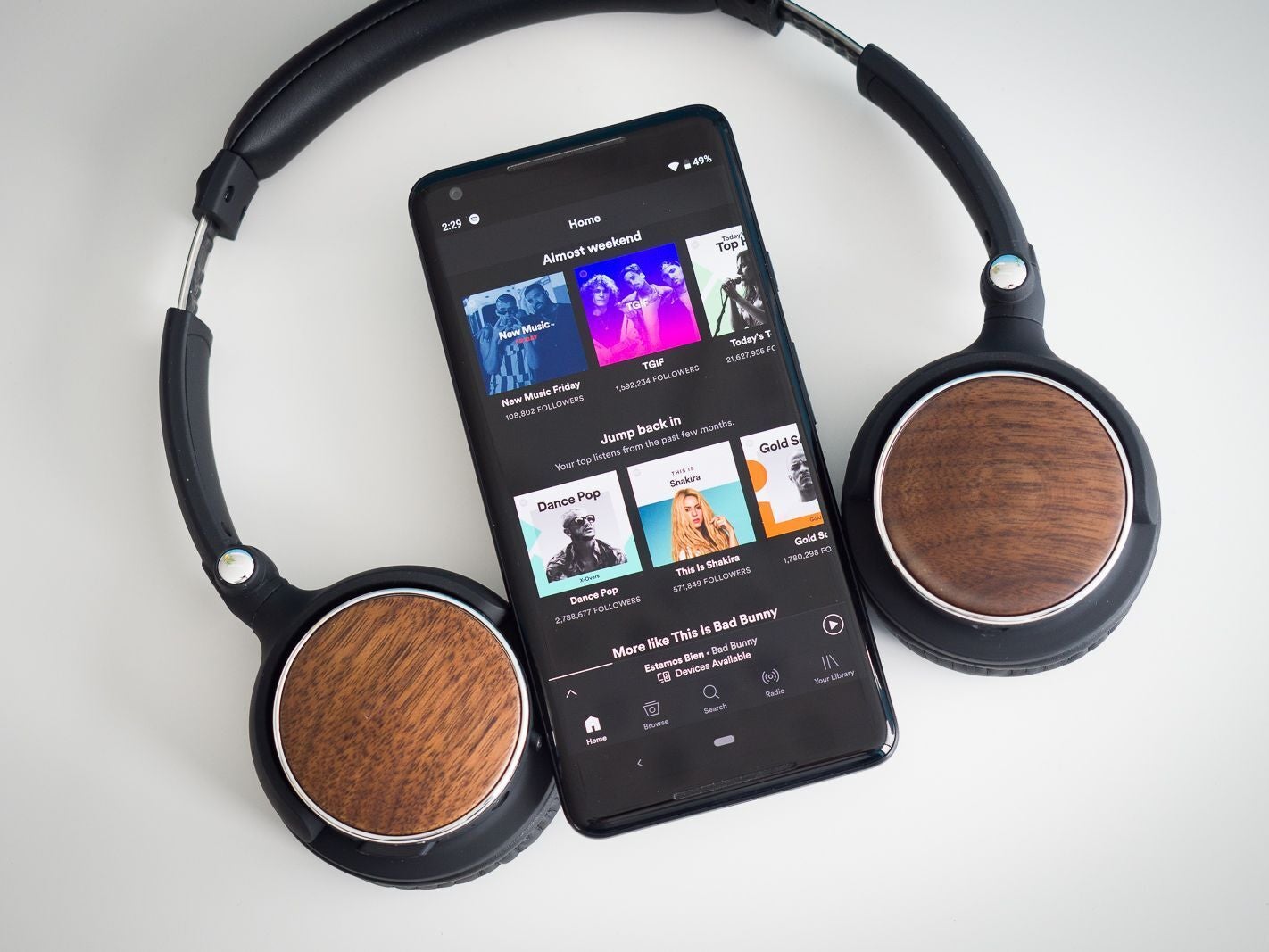
Spotify is a music streaming staple at this point. Everyone has heard of it and most of us have used it at some point in our lives. Heck, most of us probably even have it installed on some of the best smartphones around.

The app’s popularity is growing, even despite the presence of competition such as Apple Music, Amazon Prime and Google’s YouTube Music. But if that is the case, why are we seeing reports like this one from the Wall Street Journal, which comments on the fact that Spotify is losing money?

That doesn’t necessarily mean that they are losing subscribers, though. In fact, the report details that the first quarter of 2023 has been one of the strongest for Spotify in years. Subscriber count has grown to 515 million (a 22% increase), so what gives?

Well, it might be more so a case of “what takes”.

Spotify, as a company, reported a loss of $248 million for the very same quarter and save a handful of examples, this seems to be a trend. And Spotify’s execs very much have this coming every time, but despite that the company’s goals continue to be growth and innovation, instead of financial stability.

That being said, this time around, it is sort of ironic. After all, this very quarter, Spotify laid off 6% of its staff — about 600 employees — in an attempt to save some money. Well, we can’t say how much the company actually saved, but with this overall context, it sounds like the company was trying to lose less money instead.

So, what can be the reason for this? Well, sustainability is a thing. Unlike Apple, Google and Amazon, who are offering music streaming as part of their overall ecosystems, Spotify relies solely on its singular service in order to stay afloat.

Sure, the company is expanding into podcasts and audiobooks in limited regions, but will that change anything? Only time will tell. Hopefully, the company’s continuous efforts to improve will result in a more financially stable year… Eventually.


[ad_2]
Source link

PoC Exploit Code Released for Critical Papercut Flaw

0
[ad_1]

Threat actors are actively taking advantage of critical vulnerabilities present in the PaperCut MF/NG print management software. 

This exploitation aims to plant Atera remote management software onto the targeted servers to gain control over them. From more than 70,000 companies globally, it has over 100 million active users. 

The vulnerabilities affecting the PaperCut MF/NG print management software are tracked as follows:-

Remote threat actors can exploit these vulnerabilities to gain unauthorized access and execute arbitrary code on PaperCut servers that have been compromised.

These flaws can be exploited without user interaction and are relatively easy to carry out, granting the attacker SYSTEM privileges. Recently, in the Shodan search engine, it has been observed that around 1700 PaperCut servers were exposed to the internet.

PoC Exploit Code

PaperCut MF and PaperCut NG versions 20.1.7, 21.2.11, and 22.0.9, and later releases, have addressed both vulnerabilities. 

That’s why security experts strongly advise users to upgrade to any of these patched versions to mitigate the risks associated with these flaws.

Horizon3 has recently released technical information, and a proof-of-concept (PoC) exploit for CVE-2023-27350. 

Attackers can leverage this exploit to bypass authentication and execute arbitrary code on PaperCut servers that have not been patched.

By misusing the ‘Scripting’ feature for printers, the RCE exploit enables cybercriminals to achieve remote code execution.

Although Huntress has developed a PoC exploit to illustrate the danger associated with the ongoing attacks, they have not made it publicly available.

Currently, unpatched PaperCut servers are under attack, and the exploit code developed by Horizon3 is expected to be adopted by other threat actors for launching similar attacks in the future.

The CVE-2023-27350 vulnerability has been included in the list of actively exploited vulnerabilities by CISA.

Not only that, but even CISA has directed all federal agencies to secure their systems within the next three weeks, by May 12, 2023, to prevent further exploitation.

To prevent remote exploitation of the PaperCut servers, Huntress urged administrators to immediately implement the necessary security measures that cannot currently patch their PaperCut servers. 

During the analysis, experts at Horizon3 identified a JAR that contains the SetupCompleted class in:-

  • C:\Program Files\PaperCut NG\server\lib\pcng-server-web-19.2.7.jar

In the SetupCompleted flow, the session of the anonymous user is unintentionally authenticated due to an error in the code. 

While this function is triggered only after a user’s password is validated via a login process. In web applications, this type of vulnerability is dubbed:-

Huntress revealed that among the Windows machines with PaperCut installed in the customer environments they safeguard, approximately 1,000 were identified. 

As per their observation, nearly 900 of those machines were still unpatched, and only one had been patched among the three macOS machines they monitored.

Organizations using PaperCut must ensure they have installed either PaperCut MF or NG versions 20.1.7, 21.2.11, or 22.0.9 to prevent exploitation.

Building Your Malware Defense Strategy – Download Free E-Book

Related Read:


[ad_2]
Source link

Best Roborock Robot Vacuums – April 2023

0
[ad_1]

Roborock has silently become one of the best robot vacuum makers in the world. Starting off as a company that made robot vacuums for Xiaomi and then branching out into making its own under its own name. These days, most reviewers (including ourselves) would recommend a Roborock robot vacuum over almost any other robot vacuum on the market.

As Roborock’s portfolio has grown, it has become a bit tougher to figure out which robot vacuum is the best for you. And should you spend $700 on the top-of-the-line Roborock vacuum, or maybe spend around $300 for a cheaper one. Well, we’re here to help, with our list of the best Roborock robot vacuums. We’ve tested the majority of these, so we do know first-hand, how good (or bad) these robot vacuums are.

Best Roborock Robot Vacuums

Roborock essentially has two lines of robot vacuums. There is the E series which is your cheaper robot vacuums and mostly uses a gyroscope system to map out your home. Then there is the S series which uses LiDAR to map out your home. The S series is generally more expensive, and also offers more features, as well as more suction.

Roborock S8 Pro Ultra

61E BnJPCOL AC SL1500

  • Price: $1,599
  • Where to buy: Amazon

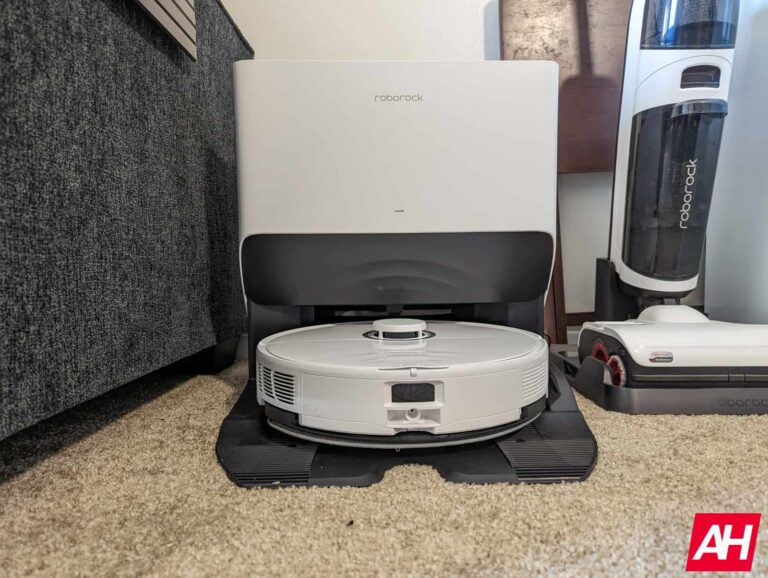
This is the newest robot vacuum from Roborock and it’s the best one yet. We reviewed it pretty recently and it was an amazing robot vacuum. This one boosts the suction up to 6000Pa. That’s nearly 3x any other robot vacuum (besides the S7 MaxV). It now comes with dual rubber brushes, allowing it to get closer to the ground and pick up more dirt and debries. Along with the sonic mop.

It also comes with the Ultra dock, which will allow the robot vacuum to empty the dustbin, as well as clean the mop and refill the water tank.

Roborock S8 Pro Ultra – Amazon

Roborock S7 MaxV

614Nh3yjuL AC SL1500

  • Price: $859
  • Where to buy: Amazon

The Roborock S7 MaxV is the latest robot vacuum from the company, and it kind of merges the S7 and the S6 MaxV together to form the ultimate robot vacuum. It offers up the Sonic Mopping and VibraRise that debuted on the S7, for some really great cleaning. And Roborock also has a new cleaner that you can use with the mop to actually clean your floors with soap and water.

It also added the stereo cameras and ReactiveAI 2.0. Which allows the S7 MaxV to avoid obstacles, like cables, cords, scales, shoes and even pet waste. It can also be used to spy on your kids or pets when you’re not home. Which is rather unique. Roborock also more than doubled the suction power on the S7 MaxV, to 5,100Pa. So it’s plenty powerful for everything you might need.

Roborock S7 MaxV – Amazon

Roborock S7

roborock s7

At CES 2021, Roborock announced the S7, and it brings a lot of really cool features along with it.

With the Roborock S7, you’re getting a new mop that is going to vibrate more, making it easier to get dried messes off of the floor. Additionally, it uses VibraRise technology to completely lift the mop off of the floor when it is on carpet, or headed back to the dock.

Roborock has also improved the suction on the S7, with 2500Pa. That is as strong as the S6 MaxV listed below.

It’s a great all-around robot vacuum, and the best that Roborock has made to-date. And you can read our review here.

Roborock has also launched the S7+ which is a bundled version of the S7. Which also comes with the auto-empty dock.

Roborock S7 – Amazon

Roborock S6 Maxv

61w8D3KTY1L AC SL1000

  • Price: $749
  • Where to buy: Amazon

The Roborock S6 Maxv is hands-down the best robot vacuum on the market today, and it’s not even the most expensive.

With the Roborock S6 Maxv, there are a few features that really make it stand out from the crowd. First up is the stereo camera on the front. This camera is used to help the S6 Maxv avoid obstacles like cords, shoes, scales and even dog poop. It also works with the LiDAR setup on the S6 Maxv to better map out your home.

It also sports some pretty powerful suction. We’re looking at 2500Pa, which is about 25% more than its predecessor and the rest of the market. So that it is not going to leave any dirt, dust or other debris on the floor.

Roborock S6 Maxv – Amazon

Roborock S4

711gOmVNNuL AC SL1500 1420x1467 1

  • Price: $299
  • Where to buy: Amazon

Most people want to spend as little as possible on something like a vacuum, but also want it to work well. And the Roborock S4 fits that bill. It’s under $300 right now, but still offers a really great experience.

It uses LiDAR to map out your home still, so it can clean everywhere without missing any spots. It offers some pretty powerful suction at 2000Pa, that’s strong enough to pick up AA batteries.

Roborock also includes the ability to do selective cleaning, so you can choose to clean a specific area, and not the entire house. Or set no-go zones.

With the Roborock S4, you’re going to get about two and a half hours of cleaning time. Before you need to recharge it. Which is pretty nice. Finally, it is compatible with the Roborock app, for automated cleaning and ability to use Amazon Alexa or Google Assistant.

Roborock S4 – Amazon

Roborock S6 Pure

51frAzIeYXL AC SL1000

The Roborock S6 Pure is one of the more high-end robot vacuums from Roborock. It uses a precision LiDAR navigation and a Z-shape cleaning route. This makes sure that it does not miss any spots, and gives it a detailed map of your home. This also allows it to do individual room and spot cleaning. The S6 Pure also offers up multi-floor mapping, , and you can also use No-Go Zones for the robot vacuum.

It boasts 2000Pa suction, and automatic carpet boost. So it’ll use more suction when it is in a room that has carpet, which is where you’ll need the extra boost anyways.

Additionally, the S6 Pure does mopping too. With a 180ml adjustable water tank included. That’s enough to clean up to 1610 square-feet of home.

Roborock S6 Pure – Amazon

Roborock S6

71EZytE2egL AC SL1500

Similar to almost every other S series Roborock robot vacuum on this best of list, the S6 does offer up LiDAR navigation and does map out your home. It uses the mapping to know where it needs to clean and where it has already cleaned.

The Roborock S6 also boasts 2000Pa of suction, which is really great for those that have pets or kids that routinely make a mess. As you’re able to easily clean up after them without lifting a finger.

With the Roborock App, you will be able to control when and where the S6 will clean. As well as connect it to either Amazon Alexa or Google Assistant (or both), so you can use your voice to control it.

Roborock S6 – Amazon

Roborock E4

best roborock vacuums

The Roborock E4 is a bit different from the other robot vacuums on this best list. For one, it doesn’t use LiDAR. It uses a gyroscope system, which you can see is at the front of the top of the robot vacuum. It’s not as precise as the S series vacuums on this list, but it does a good job. Still allows for mapping and cleans in a Z-shaped pattern.

Surprisingly, it does still boast 2000Pa suction with automatic carpet boost. So you can get up all of the hair, dust and dirt that might be on your floors. It also as a 5200mAh capacity battery, which can clean up to 2152 square-feet. That’s going to be enough power to clean most people’s home in one go around.

It does still work with the Roborock app with support for Amazon Alexa and Google Assistant too.

Roborock E4 – Amazon

Roborock E35

best roborock vacuums

Much like the Roborock E4, the E35 also uses a dual-gyro system, that will track where it needs to clean and map out your home.

It also has a pretty large battery, around 5200mAh, which is going to offer around 2.5 hours of cleaning time. There is also pretty good suction here, rated at 2000Pa as well.

Now this is an older Roborock vacuum, so it uses the Xiaomi Mi Home app instead of the Roborock app. The functionality is the same, you just won’t get to use the shiny new Roborock app unfortunately.

Roborock E35 – Amazon

Roborock S4 Max

best roborock vacuums

The S4 Max is the newest robot vacuum from Roborock, having been released in October 2020.

With the S4 Max, you’re getting the LiDAR navigation that you’d expect on the S series. But where Roborock cut corners to make this cheaper, is removing the mopping module. So this is purely a robot vacuum. It does also still boast 2000Pa for suction. Allowing it to pick up everything up off of your floors.

It works with the Roborock App as you might expect. And it does also support Amazon Alexa and Google Assistant for voice assistants. The app allows you to schedule when to start cleaning, as well as having it start cleaning, where to clean and much more. It also lets you know when it’s time to replace the filter, and clean the brushes and sensors. Which is a really nice touch.

Roborock S4 Max – Amazon


[ad_2]
Source link

5 New Features Coming to the iPhone 15 Pro

0
[ad_1]

Apple is expected to announce the iPhone 15 lineup (which includes the iPhone 15 Pro) in September. And you can check out our entire preview of the upcoming phones here. But what new features are coming to the iPhone 15 Pro this year? Well, we have rounded up five of the biggest features coming to the iPhone 15 Pro later this year.

While these are all based on rumors, a lot of them are very likely to be accurate, like the new A17 Bionic chipset. Since the iPhone 14 Pro came with the A16 Bionic, it’s pretty easy to say that it will be the A17 Bionic this year.

iPhone 15 Pro probable final design 1

Thinner bezels

This is a feature that we see on just about every new phone. But Apple seems to be taking it to the extreme this year. According to a few tipsters, the iPhone 15 Pro is going to sport bezels that are just 1.51mm thick. That would break the record for the thinnest bezels on any smartphone.

Now the real question is, would this result in a larger screen, and/or potentially change the aspect ratio of the display. It’s unclear at this time. But thinner bezels should mean for an overall smaller footprint for the Pro Max version.

3nm A17 Bionic Chipset

Of course, the chipset in the iPhone 15 Pro is going to be the A17 Bionic, but will it be a 3nm chipset? Many leaks and rumors are pointing to this being the case. Currently, the iPhone 14 Pro which is running the A16 Bionic, is on a 4nm process. So making the A17 Bionic even smaller could spell better performance, with better battery life. Two things we love to hear.

If it is a 3nm chipset (which the M3 for Mac is also rumored to be a 3nm process), it’s likely coming from TSMC. Which has stated that the chipset would use about 35% less energy, while also providing even better performance. It’ll also likely add some better performance for photography and of course battery life. The processor is a big part in whether battery life is good or not.

New Action button

There’s been a lot of talk, this cycle, about Apple removing the mute switch. A feature that has been available since the very first iPhone. It’s something that iPhone users use quite often actually. But it appears now that Apple might actually be turning it into an Action Button. Similar to what is available on the Apple Watch Ultra.

This comes from the tipster analyst941 on Twitter. The Action Button could be used for a few different things, like force-restarting the iPhone, turning it off, adjusting the focus and capturing photos in the camera app and other things. If it’s anything like the Action Button on the Apple Watch Ultra, you would be able to map it to other apps and features. Which could be cool to have a shortcut to quickly jump into the camera.

Apparently, the original plan here was to have the iPhone 15 Pro go with solid-state buttons. However, analyst Ming-Chi Kuo has stated that technical issues have forced Apple to ditch that idea for this upcoming iPhone release.

iPhone 15 Pro Burgandy Feature 2

Periscope Lens

Despite upgrading the main camera on the Pro models with the iPhone 14 last year, Apple is rumored to be upgrading another camera lens with the iPhone 15 Pro. It’s rumored to be getting a Periscope Lens, which would likely replace the telephoto lens on the current camera setup.

Currently, Apple provides a 3x optical zoom on the iPhone 14 Pro, but with a Periscope Lens, that could jump to 5x or more likely, 10x. That would help them compete with the Galaxy S23 Ultra and the Pixel 7 Pro, but not quite up to the zoom levels of the Galaxy S23 Ultra – which can do up to 100x.

It’s likely that Apple could include this on the Pro Max version only. Apple did something similar with the iPhone 12, where it got all new cameras, but only on the Pro Max model. And with the iPhone 13 series, all models got the upgraded camera sensors.

USB-C finally

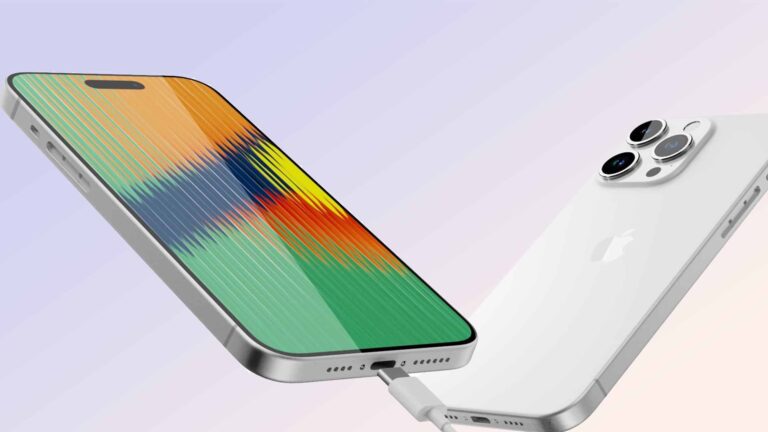
Thanks to the European Union, Apple is going to be adding USB-C to the iPhone, finally. But it’s not all good news. There are some, very few, rumors of the USB-C port only being for European models. This is fairly unlikely, as that means Apple would need to make two totally different iPhones for different regions of the world.

The other bad news is that transfer speeds may not be as fast as they should be. There are conflicting rumors here that the iPhone 15 lineup would use USB-C with USB 2.0 standards. Making the transfer speeds about the same as Lightning is currently. While other rumors state that the Pro models would get USB 3.2, which would offer much faster transfer speeds.

Now, I don’t know about you, but I can’t remember the last time I transferred files from a phone over a USB cable. So those transfer speeds aren’t super important, most likely. But hopefully, Apple will increase the charging speeds. 15W is looking mighty slow in 2023.


[ad_2]
Source link