Instead of using his time and military training for good, 21-year-old Josiah Garcia decided to become a hired gun—and failed in an epic way.
A member of the Air National Guard is facing federal charges after applying for a job online as an assassin. According to a Justice Department press release, Josiah Ernesto Garcia from Hermitage, Tennessee, was arrested by an undercover federal agent at a park on April 12, 2023.
The FBI affidavit says Garcia was looking for a good-paying job to support his family. He reportedly told the undercover agent:
“Im [sic] looking for a job, that pays well, related to my military experience (Shooting and Killing the marked target) so I can support my kid on the way. What can I say, I enjoy doing what I do, so if I can find a job that is similar to it, (such as this one) put me in coach!”
He is alleged to have started looking for “contract mercenary jobs” in mid-February, eventually coming across RentAHitman.com, a website for a cybersecurity startup that later turned into a parody site, after receiving inquiries about murder-for-hire services. The site contains false testimonials, a form where people can request hit services, and a career inquiry page for anyone wanting to apply as a hired killer.
Completely missing numerous red flags, Garcia reportedly applied to become a hitman. He then made several follow-up messages to the site’s administrator, and provided his identification documents and a resume that indicated he had been in the Air National Guard since 2021, where he reportedly earned the nickname “Reaper” for his excellent marksmanship.
The FBI eventually intervened and set up a sting to capture Garcia. An undercover agent disguised as a recruiter offered Garcia a hit on an individual for $5,000. They meet at a park, and the agent handed Garcia information about a fictitious target that included photographs, fake information, and a downpayment of $2,500.
“Defendant met with an FBI undercover agent and participated in detailed discussions expressing his interest in torturing and killing people for money,” the affidavit says. “After being offered many opportunities to withdraw from the employment offer, [D]efendant accepted payment to kill a person.”
After receiving the packet and the money, Garcia asked the agent if he needed to provide a photo of the dead body. He was swiftly arrested and charged with “the use of interstate facilities in the commission of murder-for-hire.” Subsequently, the FBI searched Garcia’s home and recovered his AR-15 rifle.
After waiving his Miranda rights, Garcia reportedly told investigators “he had second thoughts about the hitman job and changed his mind,” after getting a job offer from Vanderbilt University Medical Center. The affidavit says that “Garcia stated that he was meeting the UCE [undercover employee] to tell him he had changed his mind and did not want to do this kind of work. Garcia stated that he was going to call the UCE when he got to his car and leave the money on the curb for the UCE to pick up.”
According to the charge, Garcia faces up to 10 years in prison if convicted.
Malwarebytes removes all remnants of ransomware and prevents you from getting reinfected. Want to learn more about how we can help protect your business? Get a free trial below.
The Xiaomi 13 Ultra launched quite recently, and we’ve already compared it to its ‘Pro’ sibling. Well, it’s time for another comparison, but this time around with another ‘Ultra’ phone. We’ll compare the Samsung Galaxy S23 Ultra vs Xiaomi 13 Ultra. These two phones are not that similar, actually. They do share some specs, but for the most part, they’re quite different. Even the in-hand feel is considerably different.
We’ll first list their specifications, and following that, we’ll compare their designs, displays, performance, battery life, cameras, and audio performance. Both of these phones have a lot to offer, but they do it in different ways, basically. Before we begin, do note that only the Chinese Xiaomi 13 Ultra variant launched thus far, so that’s the model that we’ve been able to check out. That being said, let’s get started.
Specs
Samsung Galaxy S23 Ultra
Xiaomi 13 Ultra
Screen size
6.8-inch QHD+ Dynamic AMOLED 2X display (curved, 120Hz adaptive refresh rate, LTPO, down to 1Hz, 1,750 nits peak brightness)
Samsung Galaxy S23 Ultra vs Xiaomi 13 Ultra: Design
The Samsung Galaxy S23 Ultra and Xiaomi 13 Ultra do look quite different. The Galaxy S23 Ultra is flat at the top and bottom, but its left and right sides are heavily curved. The Xiaomi 13 Ultra frame is flattish all around, but its corners are rounded, unlike the ones on the Galaxy S23 Ultra. The Xiaomi 13 Ultra’s front and back sides do curve into the frame. It has vegan leather on the back, which does not curve to the sides, actually. It’s positioned higher in the upper portion of the phone’s back due to the camera bump, and it does not go all the way to the sides. It’s actually a different approach than any other we’ve seen thus far.
The Galaxy S23 Ultra, on the other hand, has glass on the back, which goes all the way to the frame on the sides. It’s a seamless transition. The Galaxy S23 Ultra is much more slippery than the Xiaomi 13 Ultra, due to the way it’s built, and due to the materials used. Both phones have curved displays, and a centered display camera hole. The bezels are quite thin on both, while the physical buttons are located on the right-hand side.
The differences are easily noticeable when you flip them over too. The Galaxy S23 Ultra does not have a camera island, unlike the Xiaomi 13 Ultra. Every single camera protrudes directly from the backplate on the Galaxy S23 Ultra. These are two completely different approaches to design.
They are quite similar when it comes to height, but the Galaxy S23 Ultra is quite a bit wider. They’re very similar in the thickness department too, but Samsung’s flagship is a bit thinner, and also slightly heavier. They both do feel hefty in the hand, but also premium at the same time. They’re both also IP68 certified for water and dust resistance.
Samsung Galaxy S23 Ultra vs Xiaomi 13 Ultra: Display
The Galaxy S23 Ultra features a 6.8-inch QHD+ (3088 x 1080) Dynamic AMOLED 2X display. This panel is curved, and it supports an adaptive refresh rate (1-120Hz). HDR10+ is supported, while the display can get up to 1,750 nits of peak brightness. The Gorilla Glass Victus 2 protects this display, in case you were wondering.
Samsung Galaxy S23 Ultra display
The Xiaomi 13 Ultra, on the other hand, also has a curved display. Its panel measures 6.73 inches, and it’s a QHD+ (3200 x 1440) panel as well. It has a different 20:9 aspect ratio, and it’s also an LTPO panel (1-120Hz). This display supports HDR10+ and Dolby Vision, and it gets up to 2,600 nits of brightness at its peak. It’s protected by the Gorilla Glass Victus.
Both of these displays are outstanding, and some of the best in the business. They’re not both made by Samsung, though. The one in the Xiaomi 13 Ultra comes from a collab between China Star and Xiaomi. They both show vivid colors, offer great viewing angles, and touch response also feels really good when you use them. They’re both more than sharp enough, and get immensely bright. You can use either one in direct sunlight with no issues. Chances are you’ll be happy with either one of these displays.
Samsung Galaxy S23 Ultra vs Xiaomi 13 Ultra: Performance
The Galaxy S23 Ultra is fueled by the Snapdragon 8 Gen 2 for Galaxy SoC. The Xiaomi 13 Ultra utilizes the Snapdragon 8 Gen 2 processor. The difference in the two is simply in the clock speed, the ‘for Galaxy’ variant is clocked a bit higher. Both phones offer LPDDR5X RAM, though the Xiaomi 13 Ultra goes up to 16GB, while the Galaxy S23 Ultra is set at 12GB. UFS 4.0 flash storage is utilized by both phones, in every model, actually.
So, they both feature top-of-the-line specs. Do they both offer great performance too? Well, yes, they’re both extremely smooth. That goes for both simple tasks, and more demanding ones. Yes, it goes for gaming too, as both phones can handle the most demanding titles, and not get too warm while doing it. We did not notice any drop off in performance or anything of the sort.
Once again, do note that we’ve been using the Chinese model of the Xiaomi 13 Ultra, as the global one is not yet available. The software is a different story because of it, but we won’t get into that. You’d be better off waiting for the global model, that’s for sure. As far as sheer smoothness in performance is concerned, both of them are outstanding.
Samsung Galaxy S23 Ultra vs Xiaomi 13 Ultra: Battery
Both of these phones include a 5,000mAh battery on the inside. The Galaxy S23 Ultra is one of the best smartphones for battery life we’ve seen, at least as far as high-end smartphones are concerned. We’ve been able to comfortably go over the 10-hour screen-on-time on this phone, and then some. I’m still in my early usage days of the Xiaomi 13 Ultra, but the phone seems to have a really good battery life too. Not to the level of the Galaxy S23 Ultra, though. Also, do note that I had to sideload Google services on the phone, as this is a model made for China.
Having said that, stating specific battery stats is never a good idea. Your mileage will vary either way. Each of us use our phones in different ways, with different apps, and have different signal strengths. I don’t believe that you’ll be disappointed with the battery life on either one of these two phones, though, that’s for sure. Waiting for the Xiaomi 13 Ultra with global software may be a good call, though.
In terms of charging, well, the Xiaomi 13 Ultra definitely outshines the Galaxy S23 Ultra. Xiaomi’s flagship offers 90W wired, 50W wireless, and 10W reverse wireless charging. On top of that, it comes with a 90W charger in the box. The Galaxy S23 Ultra supports 45W wired, 15W wireless, and 4.5W reverse wireless charger. It does not include a charger in the box, though.
Samsung Galaxy S23 Ultra vs Xiaomi 13 Ultra: Cameras
The two devices have an entirely different approaches to photography. The Galaxy S23 Ultra includes a 200-megapixel main camera, a 12-megapixel ultrawide unit (120-degree FoV), a 10-megapixel telephoto camera (3x optical zoom), and a 10-megapixel periscope telephoto camera (f/4.9 aperture, 10x optical zoom). The Xiaomi 13 Ultra features a 50.3-megapixel main camera (1-inch sensor, f/1.9-f/4.0 variable aperture). In addition to that, it includes a 50-megapixel ultrawide camera (122-degree FoV), a 50-megapixel telephoto unit (3.2x optical zoom), and a 50-megapixel periscope telephoto camera (5x optical, 100x digital zoom).
Xiaomi 13 Ultra rear cameras
We’re still in the middle of testing the Xiaomi 13 Ultra’s camera capabilities, but already have a great idea as to what you’ll get. The approaches to photography are entirely different. The Galaxy S23 Ultra has a lot more aggressive image processing thrown into the mix, which can result in some oversharpening, especially if we’re pixel-peeping. That’s great in some situations. On the flip side, the Xiaomi 13 Ultra will provide you with images that use less sharpening (mainly due to that huge 1-inch camera), and Leica-style photos with pronounced colors.
The Xiaomi 13 Ultra is not afraid to keep images closer to real life, which especially goes for shadows and whatnot. It’s also something you’ll notice in low light. The images look outstanding, but a bit darker than what most of you are used to. The Galaxy S23 Ultra goes the opposite route, it loves to brighten up the shadows. Both do a great job in HDR situations, but once again, different. The natural bokeh from that 1-inch camera sensor will be present, and the phone won’t do much processing in the highlights that are blurred up. The Galaxy S23 Ultra will, like most other phones.
We could talk about the cameras for a long time, but this should give you a good idea. Ultrawide and telephoto cameras are great on both phones, and do a great job of following the main camera when it comes to style and colors. The Xiaomi 13 Ultra does include much larger sensors, and we did slightly prefer the results from both ultrawide and telephoto cameras on the device. They do offer entirely different results, so, it’s a matter of preference. We still need to further test the periscope camera on the Xiaomi 13 Ultra, but it’ll be able to keep up with what the Galaxy S23 Ultra offers. The video recording does seem to be more reliable on the Galaxy S23 Ultra, at least at first glance, though the Xiaomi 13 Ultra is excellent in that aspect too.
Audio
Both devices do feature stereo speakers, and those speakers are actually great on both phones. The Galaxy S23 Ultra’s does get slightly louder, but the difference is not that big. Both sets of speakers are detailed, well-tuned, and even provide some bass.
An audio jack is not included on either phone. You’ll have to use their Type-C ports for wired audio connections. If you prefer a wireless connection, you’ll be glad to know that both phones support Bluetooth 5.3.
Samsung Chairman Lee Jae-yong is reportedly planning to meet with the CEOs of Google, Apple, Amazon, and Microsoft next month. According to the Korean media, the meetings will be part of Lee’s upcoming three-week business tour to the US. The tour could begin as early as this weekend and end in the second week of May.
Samsung Chairman to embark on a lengthy US tour this weekend to meet tech CEOs
Lee’s lengthy business trip to the US will include several meetings and conferences in various parts of the nation. He will begin the tour with a business roundtable of an economic mission for “intergovernmental negotiations related to the US Semiconductor Support Act”. The Samsung chief will inform US government officials of the company’s current semiconductor situation and vision.
Following that meeting, Lee plans to visit its various industry partners in the US. In the first week of May, the Samsung Chairman will visit Verizon and other US telcos to discuss business strategies. The Korean firm has a strong presence in the telecommunications equipment business. It signed a $6.6 billion supply contract with Verizon in 2020. The company is also in talks with T-Mobile for a similar business opportunity.
Lee Jae-yong is then expected to visit the headquarters of Massachusetts-based biotechnology company Moderna. The firm has a close relationship with Samsung’s biotechnology arm Samsung Biologics. The latter helped Moderna in the production of its COVID-19 vaccine a few years back (via Hankyung).
Finally, in the second week of May, Lee will meet with the CEOs of Google, Apple, Amazon, and Microsoft. While Google and Apple compete against Samsung in various businesses, including smartphones, they are also among its biggest customers. The Korean firm supplies displays, semiconductors, and more components to the two rivals. All modern iPhones feature Samsung-made displays, while Google’s Pixels smartphones use Samsung-made Tensor processors.
Amazon and Microsoft are also among Samsung’s biggest customers. They source most of their memory chip needs from the South Korean behemoth. The market for memory chips has seen a steep decline in recent months, severely affecting Samsung’s profits. Lee Jae-yong would be looking to strengthen its partnerships with two of the world’s top three cloud companies to ensure it stays at the top of the game and is ready to pounce on the opportunity once demand grows.
The South Korean President is also visiting the US next week
As said earlier, Lee is expected to fly to the US as early as this weekend. He reportedly wants to accompany South Korean President Yoon Seok-yeol during the latter’s visit to the US next week. Yoon will be in the US from April 24-29 for a summit with US President Joe Biden. This will be the first US visit by a South Korean leader since Lee Myung-bak in 2011.
Messaging app Telegram has just announced numerous improvements coming to its users in the following days. Shareable chat folder, custom wallpapers, better bots, fast scrolling for attachments, and many other new features and improvements are part of the latest Telegram update.
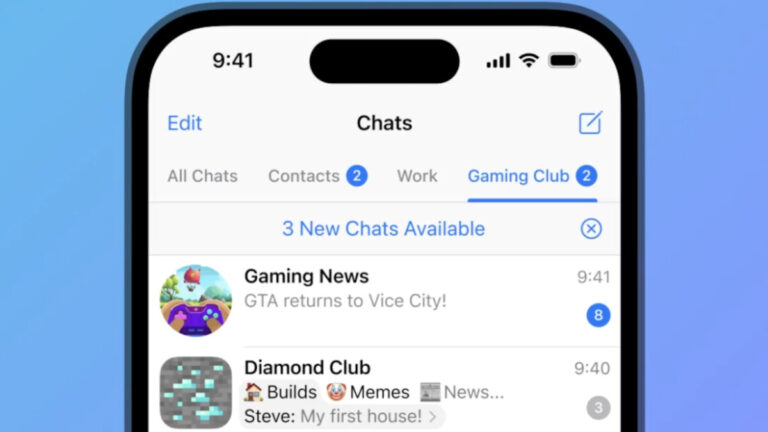
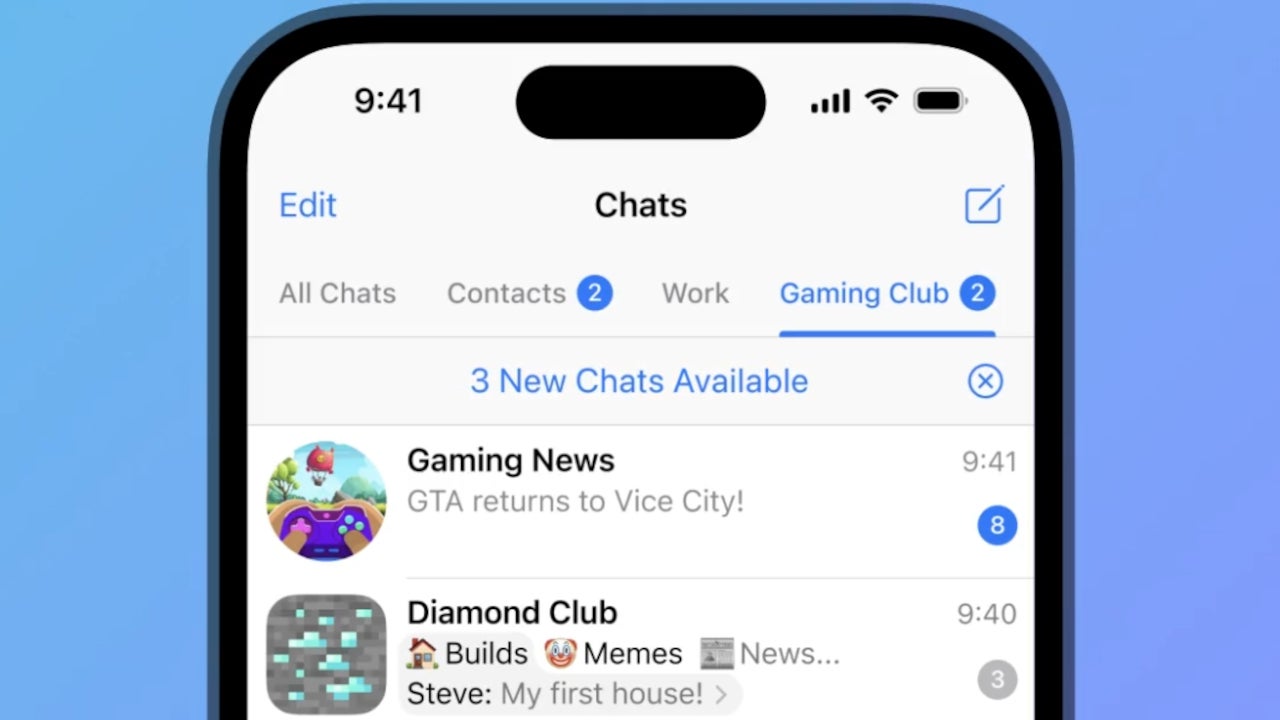
Starting with the latest version of Telegram, users will be able to share entire chat folders with just one link. It makes it infinitely easier to invite friends to groups, collections of news channels, and more. Not to mention that each chat folder supports multiple invite links allowing access to different chats.
Now you can create custom wallpapers from your favorite photos and color combinations. These can be used in specific chats. Simply use the “Set Wallpaper” setting from the three dots menu on Android or open a profile and tap “Change Wallpaper” from the three dots menu on iOS.
The latest Telegram update brings better bots, the developer announced today. They are now able to host web apps, which can be launched in any chat. Additionally, Telegram revealed that web apps can now support collaboration and multiplayer features for members when launched in a group.
As mentioned earlier, the update makes scrolling for attachments faster, just like Shared Media. Finally, the update brings numerous improvements to various interfaces. For example, the Send When Online interface now requires fewer taps. Also, Telegram users can now create groups without adding members immediately, which comes in handy if they want to set up permissions and pin one or more messages first.
More importantly, in groups of under 100 members that have topics enabled, you’ll now be able to see what time your messages were read by other group members. A much-needed quality-of-life improvement.
If you’re using one of the newest iPhones, you’ll be happy to know that profile pictures in Telegram have a new animation when scrolling on profiles and info pages.
A recent report from CISA (US Cybersecurity and Infrastructure Security Agency) revealed that the APT 28 group was responsible for exploiting Cisco routers with poor maintenance using CVE-2017-6742.
CVE-2017-6742 Attack: Reconnaissance with RCE in Cisco
SNMP (Simple Network Management Protocol) is a networking protocol used by network administrators for monitoring and configuring devices remotely.
From an attacker’s perspective, this protocol can extract sensitive information. If the protocol on a device is vulnerable, it can be used to penetrate the network.
However, CVE-2017-6742 is a remote code execution bug on the SNMP protocol of Cisco routers.
As of June 2017, Cisco released patches along with an advisory that had information on workarounds like access limitation to trusted hosts or disabling SNMP management information.
Along with CISA, the NCSC (UK National Cyber Security Center), the NSA (US National Security Agency), and the Federal Bureau of Investigation (FBI) claims that APT 28 is operated by the General Staff Main Intelligence (GRU) 85th Special Service Centre (GTsSS) Military Intelligence Unit 26155.
As per the report from CISA, APT28 had been using commercial code repositories and post-exploit frameworks for gaining access and deploying malware.
The report states, “As of 2021, APT28 has been observed using commercially available code repositories, and post-exploit frameworks such as Empire. This included the use of Powershell Empire, in addition to Python versions of Empire.”
The report also stated that the APT28 threat actor used this CVE-2017-6742 to exploit SNMP and deploy the malware they use to extract information via TFTP (Trivial File Transfer Protocol).
The malware was also used to enable unauthenticated access through a backdoor. The malware used by this group is Jaguar Tooth Malware.
APT 28 is known to be a highly skilled threat actor, as mentioned by the CISA. The group had names like Fancy Bear, STRONTIUM, Pawn Storm, the Sednit Gang, and Sofacy).
History of Activities by APT28
APT28 was responsible for a cyber attack on the German parliament in 2015, resulting in data theft and disruption of email accounts belonging to the German Members of Parliament and the vice-chancellor.
APT28 also attempted to attack the OPCW (Organisation for the Prohibition of Chemical Weapons) in 2018 to collapse the Chemical Weapon independent analysis by GRU.
Indicators of Compromise
There are multiple Indicators of Compromise for this attack on Cisco routers which can be found on the malware analysis page of Jaguar Tooth malware.
Access was gained to perform reconnaissance on victim devices. Further detail of how this was achieved is available in the MITRE ATT&CK section of the Jaguar Tooth MAR.
APT28 exploited default/well-known community strings in SNMP as outlined in CVE-2017-6742 (Cisco Bug ID: CSCve54313).
Access was gained to perform reconnaissance on victim devices. Further detail of how this was achieved in available in the MITRE ATT&CK section of the Jaguar Tooth MAR.
In December, Facebook decided to pay $725 million to settle a class action lawsuit. Facebook users in the US can now claim their slice of the pie.
US-based Facebook users can now claim a piece of the enormous settlement payment by Meta, Facebook’s parent company, over the Cambridge Analytica scandal. This news follows Meta agreeing to pay $725 million in December 2022 to settle the longstanding class action lawsuit filed by Lauren Price in 2018.
Price accused the company of unlawful business practices concerning its use and distribution of users’ personal data. Price was a Facebook user for eight years before the scandal happened. Her lawsuit asked for $500 million.
As part of the settlement, US Facebook users—those still active and those who have already deleted their accounts—will be compensated financially. CNN points potentially affected and eligible users to this claim form.
It takes only a few minutes to complete. Although the form asks for personal information, it clarifies that what users provide “will be processed only for purposes of effectuating the settlement.”
Because of the amounts of money involved, and the personal information required to make a claim, readers are advised to be careful of imposter claim forms and websites asking for their details.
Furthermore, claimants are advised to whitelist the email address, confirmation@facebookuserprivacysettlement.com, to ensure they receive future correspondence from the settlement administrator should they need to get in touch.
As to how much each claimant might get, it depends on the number of submitted valid claims and how long claimants were Facebook users.
“We pursued a settlement as it’s in the best interest of our community and shareholders,” said Dina Luce, Meta spokesperson, in a statement following the settlement agreement in December. “Over the last three years we revamped our approach to privacy and implemented a comprehensive privacy program. We look forward to continuing to build services people love and trust with privacy at the forefront.”
Malwarebytes removes all remnants of ransomware and prevents you from getting reinfected. Want to learn more about how we can help protect your business? Get a free trial below.
Samsung has reportedly developed a new processor for its smartwatches. Sources have told SamMobile that the upcoming Galaxy Watch 6 series will ship with an unannounced Exynos W980 chipset. The Korean firm will probably officially announce the chipset closer to the watch’s launch later this year.
Galaxy Watch 6’s Exynos W980 is about ten percent faster
Samsung has used the same processor in the past two generations of its smartwatches. The Galaxy Watch 4 and Galaxy Watch 5 series are powered by the Exynos W920, a 5nm chipset featuring two ARM Cortex-A55 CPU cores, an ARM Mali-G68 GPU, an integrated 4G LTE modem, and a Global Navigation Satellite System (GNSS) L1. It appears the company won’t use this chipset for the third year in a row. The Galaxy Watch 6 series will get a new and improved processor.
According to the new report, the Exynos W980 is more than ten percent faster than the Exynos W920. The publication doesn’t yet have access to the CPU and GPU details of the unannounced chipset, though. So it’s unclear what else has changed. We’ll have to wait for more details to emerge before we can tell if it’s the same chipset with an overclocked CPU and GPU or if Samsung has developed a new semiconductor chip from scratch.
While we hope it’s a completely new chip, there’s also a possibility that it’s a re-branded Exynos W920 with performance improvements. That’s based on the recent rumors that Samsung has made major changes to its 5nm chip fabrication process. Industry insiders claim that the changes would bring a notable performance boost to the new manufacturing lot of existing Exynos chips. The Exynos W980 could be an Exynos W920 manufactured on the improved process node.
Either way, it appears the Galaxy Watch 6 series would offer much better performance than Samsung’s current smartwatches. We are also expecting improved power efficiency. On top of that, the new watches are seemingly getting bigger batteries too. All of this should allow for much-improved battery life. On the aesthetic side of things, the new watches will reportedly feature bigger screens with slimmer bezels. The vanilla Galaxy Watch 6 may get a curved screen while the Galaxy Watch 6 Classic will bring back the iconic physical rotating bezel.
Samsung will launch the new smartwatches in the second half of 2023
The Galaxy Watch 6 series is still a few months away. Samsung isn’t expected to unveil the new smartwatches before August of this year. The launch event should also bring the Galaxy Z Fold 5 and Galaxy Z Flip 5 foldables and a new pair of TWS earbuds. As usual, leaks about these devices should come more frequently as the launch draws closer. We may also hear more about the Exynos W980 in the coming months. Stay tuned and we will keep you updated.
Google CEO Sundar Pichai announced the merging of Google Brain and DeepMind teams. The resulting team, now called Google DeepMind, is tasked with boosting the company’s AI efforts.
Maybe few people could predict a simple AI chatbot called ChatGPT would challenge a tech giant and the biggest search engine in the world. ChatGPT’s threat prompted Google to act quickly and launch a rival, Bard. Google Bard still needs to catch up to ChatGPT in many ways. That’s why Google is now joining forces to take the competition to a whole new level.
Back in March, Google tasked the Assistant team to work on Bard. Now, the company is merging Google Brain and DeepMind to form Google DeepMind. The new team will focus on developing AI products and improving Bard. DeepMind CEO Demis Hassabis will be the head of Google DeepMind, and he’s tasked with powering the next generation of Google products and services.
In a letter to employees, Hassabis said they need to tackle some of the hardest scientific and engineering challenges of the time in order to build a more capable AI. He added, “We need to work with greater speed, stronger collaboration, and execution, and simplify the way we make decisions to focus on achieving the biggest impact.”
Google DeepMind wants to unify the company’s AI efforts
Pichai said this initiative would “significantly accelerate our progress in AI.” The tech giant acquired DeepMind in 2014, and its in-house Brain department has been researching AI for years. Both teams have developed multiple AI-driven services for Google, including AlphaGo, Transformers, word2vec, etc.
Jeff Dean, former SVP of Google Research and Health, will also serve as Chief Scientist to Google DeepMind. He reports directly to the CEO. Pichai says Dean would lead the future of Google AI research and head up the company’s most critical and strategic technical AI projects, including multimodal AI models.
Google is not alone in competing with ChatGPT. Elon Musk has recently launched a new AI company, X.AI, to develop the so-called TruthGPT. The Chinese tech giant Alibaba is also working on a domestic version of ChatGPT.
Microsoft also stole the show by integrating ChatGPT into its Bing search engine. The latest reports suggest that Samsung might switch the default search engine of its products to Bing and ditch Google.
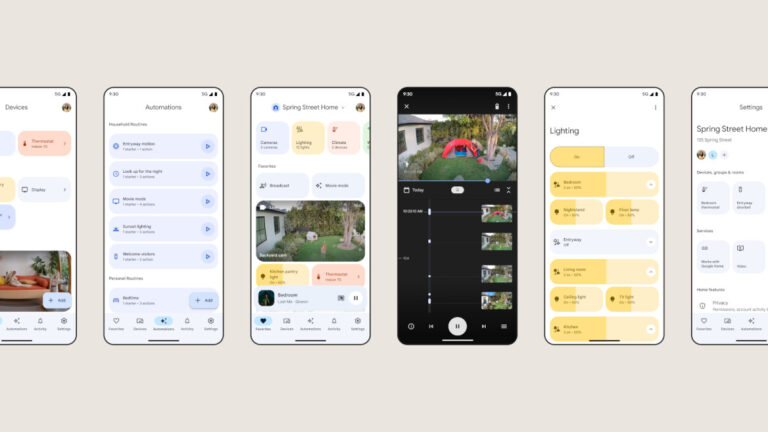
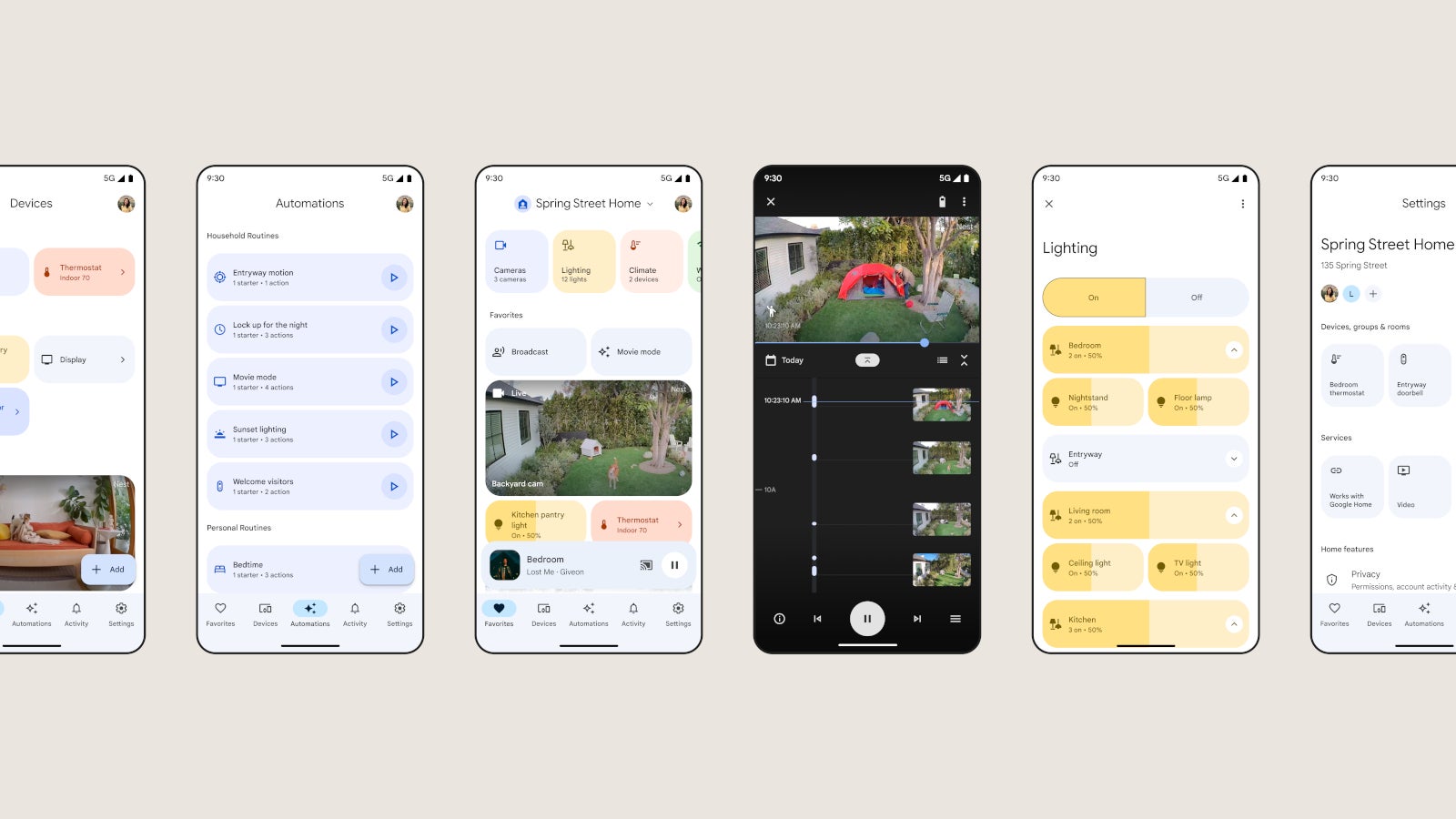
After a successful public testing of the new Home app released back in November, Google announced some of the improvements it decided to bring to those enrolled in the Public Preview program. Thanks to the feedback received, Google has been able to roll out numerous updated and important improvements over the last few months, and some of them are ready for primetime.First off, the option to reorder your favorites for a custom home view is now rolling out for Public Preview users. If you’re part of the testing program, you’ll be able to take advantage of the new feature starting this week. It will allow you to rearrange anything that’s pinned to your Favorites tab.
Another important improvement added to the Home app is related to cameras. Google confirmed it has kicked off the rollout of improvements to the speed of live view for cameras, as well as how quickly users can access their camera recordings. This wouldn’t have been possible without the feedback received from Home app users since the testing began almost six months ago.
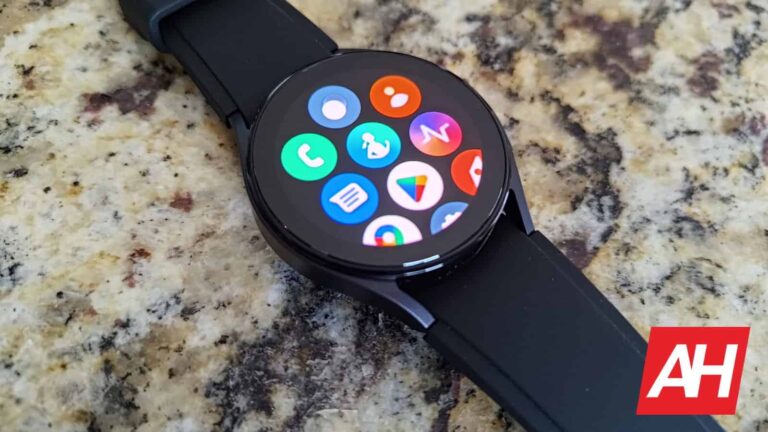
Last but not least, Google announced that new features are coming to the Public Preview of the Home app for Wear OS. Those who own Nest cameras and doorbells will be pleased to learn that they will start receiving notifications that include images on their Wear OS watches. It will make it much easier to figure out what’s happening at a glance. The new feature will be available for all Nest cameras and doorbells launched in 2021 or later.
Keep in mind that you have to use the new Home app to benefit from the new features, so make sure to sign up for the preview program if you didn’t already. Since Google is happy with the results of the Public Preview program, expect more new features to be released in the coming weeks.
ESET researchers have recently discovered that Linux users targeted with malware in the new “Operation DreamJob” Lazarus campaign for the first time.
The group behind DreamJob deploys social engineering tactics with the guise of fake job offers as lures to compromise its targets.
Experts could reconstruct the complete sequence by tracing the chain from a false HSBC job offer in a ZIP file to the distribution of the SimplexTea Linux backdoor via an OpenDrive cloud storage account.
This North Korea-linked threat actor’s use of Linux malware in this operation is publicly mentioned for the first time. This discovery also enabled experts to confirm that Lazarus was responsible for the 3CX supply-chain attack.
3CX Supply-chain Attack
Many companies rely on 3CX for their phone systems service, as it is one of the leading international providers of VoIP and telephone services.
There are more than 600,000 customers available to 3CX, and in the following sectors, it also has more than 12,000,000 users:-
Aerospace
Healthcare
Hospitality
The discovery of malicious code in the desktop application for Windows and macOS was made in March 2023.
While this allowed the downloading and running of arbitrary code on all machines with the installed application by a group of attackers.
As a result, the 3CX software was hacked, and external attackers used it to distribute malware to specific customers as part of a supply-chain attack.
Here Below we have mentioned the timeline:-
Operation Dream Job
The group behind Operation Dream Job (aka DeathNote or NukeSped) uses fake job offers to trick people into downloading malware in multiple attack waves.
At the moment, it’s unclear how the ZIP file was distributed, but spear-phishing or direct messages on LinkedIn are the suspected methods.
These social engineering attacks deceive victims into downloading files that infect their computers with malware by posing as employment-related documents, ESET Says.
Apart from this, the backdoor written in C++ has the same appearance as the one previously associated with the group called BADCALL, it’s another Windows trojan.
The ZIP archive that is in question is distributed via spearphishing or direct messages on LinkedIn and the archive is named:-
A Linux binary written in Go is hidden inside the archive, which is named with a Unicode character to appear as a PDF file.
The filename’s extension isn’t “.pdf” because the apparent dot is a U+2024 Unicode character that serves as a leader dot.
The leader dot in the filename was likely a trick to fool the file manager into running the file as an executable rather than a PDF, leading to unintended execution upon double-clicking.
Double-clicking the file launches the OdicLoader malware, which downloads a second-stage malware from a private repository on OpenDrive while displaying a fake PDF document as a decoy.
OdicLoader delivers the SimplexTea payload, which it drops at ~/.config/guiconfigd/SimplexTea, and alters the user’s ~/.bash_profile to ensure that SimplexTea runs with Bash and remains silenced during new shell sessions.
Supply-chain attacks are a favored method of malware distribution for their stealthiness, and Lazarus used this technique in 2020 to target South Korean users of WIZVERA VeraPort software.
Previous Operation DreamJob attacks by Lazarus were incredibly lucrative, resulting in the group’s theft of $620 million from Axie Infinity.
The techniques and similarities observed in the recent 3CX hack align with the Lazarus group’s typical modus operandi and toolset, indicating their strong involvement.
Moreover, the notorious group Lazarus has claimed another high-profile win with their recent supply-chain attack on 3CX.