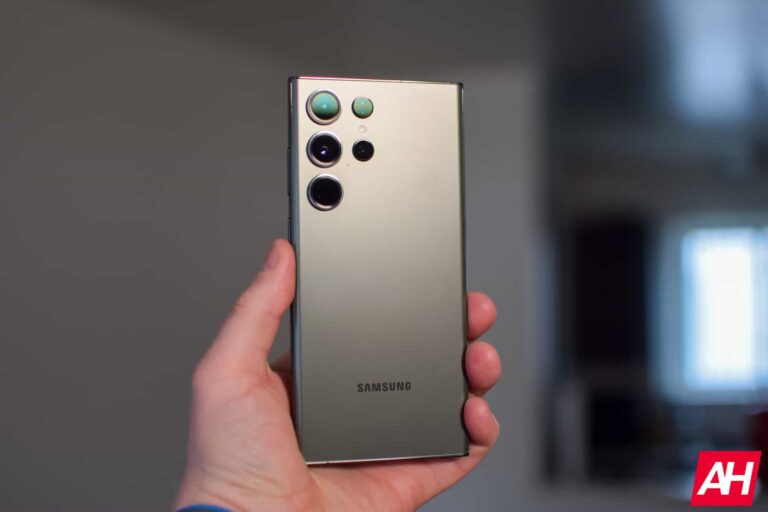
Samsung recently pushed a massive camera update to the Galaxy S23 series, adding a few new features and fixing some bugs and performance issues. However, one major HDR-related issue remained unfixed. The new flagships still produce images with a weird halo effect around subjects. Thankfully, a fix for this problem isn’t too far off. According to renowned Samsung insider Ice Universe, the next update for the Galaxy S23 series will deal with this issue.
Galaxy S23 users have been reporting this abnormal halo effect since day one. As you can see in the image below, the plant and flowers have a light outline across the borders. The outlines are more visible in low-light images but regular daylight images have this HDR problem as well. This isn’t normal and shouldn’t be there, particularly in a phone that costs north of $1,000, even going beyond $1,500 if you want the maxed-out variant.
Samsung was expected to fix this issue with the recent update, but it didn’t. The update was huge and contained plenty of changes, including the fix for an occasional green line issue. Samsung also fixed color banding issues in high-resolution modes (50MP and 200MP) and improved the sharpness of photos and videos taken in low-light conditions. Last but not least, it improved the camera speed and autofocus and fixed a face recognition issue.
The latest Galaxy S23 update was initially released in Samsung’s homeland South Korea but has since expanded to other markets as well, including Europe and the US. Samsung pushed the April security patch to the new flagships with this camera update. The fix for the halo effect will probably arrive with the May security patch in a few weeks. We will let you know when the rollout begins.
Galaxy S23 and Galaxy S23+ may have a camera hardware issue
While this abnormal halo effect is getting a fix soon, Samsung may have a bigger problem regarding the Galaxy S23 camera. Particularly the one found on the base model and the Galaxy S23+. Many users have found that these two phones can’t keep the entire scene in focus and produce images with blurry patches. This appears to be a hardware problem. The issue doesn’t exist on the Galaxy S23 Ultra.
As of this writing, Samsung hasn’t acknowledged this problem and has maintained that there’s nothing wrong with the Galaxy S23 and Galaxy S23+ camera hardware. But with reports mounting, the company may soon be forced to come forward and explain what is happening.
The iPad is arguably the best tablet on the market, whether you’re an Android or iPhone user, it’s the best tablet. For Android users, it’s arguably the best since all of the Google apps are also available on it. And Android tablets kinda suck these days. Though Google is looking to change that.
But if you just bought a new iPad, you might be wondering what the best accessories are to buy for it. Luckily we have you covered there. We have rounded up the best accessories that you can buy. And most of these are available for all iPads. That includes the iPad, iPad Air, iPad Mini and iPad Pro.
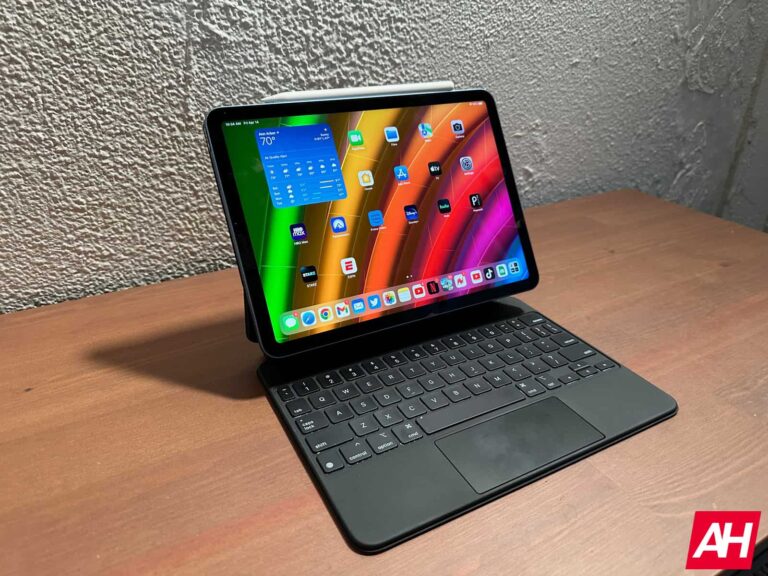
The Logitech Combo Touch is one of my favorite keyboards available for the iPad. And that’s because it is detachable. So you can detach the keyboard from the case on your iPad, and still use your iPad with the kickstand. Making it very versatile. It is not cheap, but it is cheaper than Apple’s options. So there’s that.
This keyboard is available for the iPad Pro in both 11 and 12.9-inch models. As well as the iPad Air 4th and 5th Gen models. It does work with the regular iPad, but not the redesigned 10th generation model, unfortunately.
If you don’t already own a pair of AirPods, you should buy a pair. They sound fantastic, and also work flawlessly (most of the time) with Apple products including the iPad.
These are the new second-generation AirPods Pro. Which offer up MagSafe charging among a few other things. MagSafe is really nice to have, as you can just put them down on a MagSafe charger and not worry about it sliding off. This mdoel also includes another pair of eartips, now offering XS, S, M and L.
AirPods Pro do offer up to 6 hours of continuous playback. And the case can charge them a few times. These also include personalized spatial audio with dynamic head tracking, as well as Dolby Atmos.
I know, I know, $35 is a lot for a USB-C cable. Especially when one comes with your iPad. But this cable is still great to pick up and have with you. That’s because it’s a longer cable, coming in at 8-foot long. It’s also branded and has a strap that can keep it together. This makes it great for taking on trips with you. Just toss it in your bag and you’re good to go.
This is an accessory that everyone should have. It’s an adjustable metal stand for the iPad. And it does work with all iPads, in both landscape and portrait mode. Satechi does offer this in a number of different colors as well.
You can put this next to your computer and use SideCar on your iPad with ease. As well as using it as a computer with a wireless keyboard. The possibilities here are endless, and for $40, it’s worth having around.
This is a new keyboard that Apple announced with the redesigned, iPad 10th generation in the fall of 2022. It, unfortunately, is only available for the 10th Gen iPad. But we think it will be made available to the other iPads, eventually.
This is basically the same as the Magic Keyboard for the iPad Air and iPad Pro, but with three main differences. It has a built-in kickstand. It also detaches from the keyboard. And the Keyboard also has a row of function keys, which is really useful on an iPad.
The Apple Pencil (2nd Generation) is a great accessory for your new iPad. It works with all iPads, except for the regular iPad. It connects to the side of the iPad to sync and charge. It doesn’t take long to charge, either, since it does have a pretty small battery inside.
Apple Pencil is great to use with a variety of drawing apps, as well as for taking notes and so much more. I use mine all the time on my iPad Air to take notes within the Notes app and the newer Freeform app that’s available on all of Apple’s products.
If you’re looking for a stand, and are willing to spend a bit more, then the Twelve South HoverBar Duo is a really good option. This one allows you to mount it on a table, or shelf, as well as just stand it on your desk. The extra arm gives you more flexibility on how you want it to sit on your desk.
The weighted base keeps it from tipping over, which is a good look from Twelve South. This also allows you to get it up to a good height to use next to your Mac for SideCar. Which the iPad is great for SideCar. Finally, the Twelve South HoverBar Duo does come in two colors – black and white.
Montana is just a signature away from becoming the first state to ban TikTok. After the bill to ban the short-form video app passed Montana’s House by a 54-43 tally, the legislation heads to the desk of Governor Greg Gianforte. If Gianforte signs the bill, TikTok will not be allowed to operate within the state of Montana, and app stores in the state will be banned from offering to download it.
TikTok could be banned in Montana if the governor signs one piece of legislation
If the governor does affix his signature to SB419, as the bill is known, the ban on TikTok would begin in January. While TikTok is the target of the bill, as written it would be app stores in violation of the law that could start accumulating huge fines at the rate of $10,000 per day. Individuals in Montana who are TikTok users would not face any fines or incarceration for using the TikTok app.
The Montana House of Representatives passed a bill that bans TikTok in the state
Brooke Stroyke, a spokesperson for the governor, said, “The governor will carefully consider any bill the legislature sends to his desk.” Back in December, Gianforte banned TikTok from being used on devices owned by the state government, and a month later he convinced Montana University to do the same-which it did.
TikTok released a statement citing the First Amendment while hinting about a possible lawsuit. “The bill’s champions have admitted that they have no feasible plan for operationalizing this attempt to censor American voices and that the bill’s constitutionality will be decided by the courts,” said TikTok spokesperson Brooke Oberwetter. “We will continue to fight for TikTok users and creators in Montana whose livelihoods and First Amendment rights are threatened by this egregious government overreach.”
The bill also mentions TikTok’s “dangerous content” and “dangerous challenges.” Syracuse University associate professor and First Amendment scholar Lynn Greenky said that the legislation is so vague, it is “virtually unenforceable.”
Besides being worried about the content spread to Americans by some TikTok creators, the U.S. government is concerned about the company that owns TikTok, a Chinese firm called ByteDance. As with any Chinese tech company, ByteDance can be forced to turn over data it has collected from American TikTok users to the Chinese Communist Party (CCP). Last year it was discovered that the iOS version of TikTok had an in-app keyboard that collects keystrokes.
Both the Trump and Biden administrations have called on ByteDance to spin off the U.S. operations of TikTok to an American company. Interestingly, the version of TikTok available in China, Douyin, is also owned by ByteDance. But that is where the similarities end as Douyin is involved in e-commerce and stays clear of the controversial content found on TikTok through censorship by the Chinese government.
Over half of the 50 U.S. states are seeking to restrain the use of TikTok
TikTok has responded to U.S. requests for ByteDance to sell off TikTok’s U.S. operations by coming up with “Project Texas” which would create a firewall around U.S. data. But that will not be enough to satisfy lawmakers. More than half of the 50 states in the U.S. are seeking to restrain the use of TikTok. This worries Morgan Reed, president of The App Association which gets half of its funding from Apple.
Reed worries that “While it might begin with TikTok, it clearly won’t end there.” A a technology industry group called NetChoice that TikTok is a member of, said Friday that SB419 violates the US constitution. Carl Szabo, NetChoice’s vice president and general counsel, said, “This move from the Montana legislature sets a dangerous precedent that the government can try to ban any business it doesn’t like without clear evidence of wrongdoing.
Szabo added, “The US Constitution clearly forbids lawmakers from passing laws to criminalize a specific individual or business. Gov. Greg Gianforte should veto this clearly unconstitutional law.” And the ACLU also got into the act by writing a letter that said, “SB 419 is censorship — it would unjustly cut Montanans off from a platform where they speak out and exchange ideas everyday, and it would set an alarming precedent for excessive government control over how Montanans use the internet.”
Prevent port scanning attacks with Malwarebytes for Business.
Compromised IP addresses and domains—otherwise legitimate sites that are exploited by hackers without the owner’s knowledge—are frequently utilized to conduct port scanning attacks.
Port scanning involves systematically scanning a computer network for open ports, which can then be exploited by threat actors to gain unauthorized access or gather information about the system’s vulnerabilities.
In this article, we will explain the two biggest threats utilizing port scanning attacks, RDP attacks and Mirai botnets, and how businesses can protect themselves using Malwarebytes for Business.
Compromised detections: RDP attacks and Mirai botnets
Cybercriminals typically conduct reconnaissance on the target port before using what are called dictionary attacks, entering and trying out known usernames and passwords to see if any of the combinations grant access.
The two most common detections of compromised IP addresses are systems scanning for open RDP (Remote Desktop Protocol) ports and IoT (Internet of Things) botnets, such as Mirai.
Remote Desktop Protocol is exactly what the name implies, a tool for remotely controlling a PC that gives you all the power and control you would have if you were actually sitting behind it—which is what makes it so dangerous in the wrong hands. In fact, one of the primary attack vectors for ransomware attacks has been the Remote Desktop Protocol (RDP).
RDP port scanners, often found in the form of compromised servers, scan the internet for open RDP ports by trying the default port for RDP, TCP 3389. The cybercriminals that control the compromised server then try to brute-force their way in, repeatedly entering common username and password combos to find RDP login credentials.
Other than RDP, cybercriminals often perform port scans for various other network protocols, including FTP (20/21), POP3 (110/995), IMAP (143/993), SMTP (25/465/587), and SQL (1433/1434/3306). Gaining access through RDP and other network protocols allows attackers to infiltrate systems and deploy various malware.
Mirai, on the other hand, is a botnet primarily composed of Internet of Things (IoT) devices such as IP cameras, routers, and other internet-connected devices. Mirai actively scans the internet for open telnet servers on ports 23 or 2323, and, upon discovering one, attempts authentication using known default credentials. Such credentials are easy to find in many IoT devices—they’re often the prepackaged combination of “admin” and “admin” for both username and password whenever customers first purchase a product to set it up.
If successful in its malicious login attempts, Mirai compromises the device and integrates it into the existing botnet.
In addition to launching DDoS attacks, botnets like Mirai can aid hackers in weakening website security, stealing credit card information, and distributing spam.
Protecting your business with Malwarebytes for Business
Malwarebytes for Business offers a comprehensive solution to monitor and manage threats, including detections from compromised IP addresses scanning for and attacking open ports.
For example, Malwarebytes blocks the IP address 5.39.37.10as it is associated with the Mirai botnet, and81.198.240.73 because it has been found to be involved in RDP probes or attacks.
Brute Force Protection policies in Nebula, our cloud-hosted security platform, can be configured to specify which protocols to protect, the ports used (default or custom), and create trigger rules. If set to monitor and detect, the policy will not block the ports. However, if set to block, it will utilize the Windows Firewall to block communications based on the configured rules.
When a block is implemented, the offending IP address will be placed in a “jail” for a predetermined duration, such as 30 minutes as shown in the example screenshot above. Blocks last a max of 60 minutes because IP addresses might be reassigned to legitimate users, or an attacker may leverage a legitimate user’s IP address.
There are two kinds of inbound connections that Malwarebytes can detect, Blocked Inbound Connections and Found Inbound Connections.
Blocked inbound connections
Detections with the following fields reported typically occur when a port is open and exposed to the internet:
Type: Inbound Connection
Action Taken: Blocked
These detections are prevented by the Web Protection real-time protection layer. When these detections occur, it means the IP address being blocked is scanning or attempting to force its way into the endpoint using different ports.
Malwarebytes blocks IP addresses that have a history of abuse and is correctly preventing malicious connections.
Found inbound connections
Detections with the following fields reported are typically a result of having open ports in the router or firewall:
These detections occur based on your Brute Force Protection trigger rule settings specified in the Nebula policy.
Configuring Brute Force Protection in Nebula
To configure Brute Force Protection in Nebula:
On the left navigation menu, go to Configure > Policies.
Select a policy, then select the Brute Force Protection tab.
Select the following protocols for your workstations or servers:
Workstation and server protocols: Check mark the RDP protocol.
Server-only protocols: Check mark the FTP, IMAP, MSSQL, POP3, SMTP, or SSH protocols.
Configure custom port settings based on your endpoint environment and protocol requirements.
Create a Trigger rule based on the number of failed remote login attempts within a certain minute range across all enabled protocols. Choose to either block the IP address or monitor anddetect the event when the trigger threshold is reached.
Optionally, enable the option to Prevent private network connections from being blocked.
When enabled, endpoints within private network address ranges will not trigger Brute Force Protection due to failed login attempts. This excludes the following network ranges:
10.0.0.0/8 (10.0.0.0-10.255.255.255)
172.16.0.0/12 (172.16.0.0-172.31.255.255)
192.168.0.0/16 (192.168.0.0-192.168.255.255)
127.0.0.0/8 (127.0.0.0-127.255.255.255)
Click Save at the top-right of your policy.
Safeguarding your business from compromised threats
By leveraging Malwarebytes for Business’ advanced threat detection and protection capabilities, businesses can effectively protect themselves against attacks that result from compromised IP addresses and domains, including RDP attacks (and attacks against other network protocols) and IoT botnets. Configuring Brute Force Protection in Nebula allows companies to stay one step ahead of cybercriminals and ensure the safety of their networks and data.
Protection from port scanning attacks is only one aspect of Malwarebytes for Business’ multi-layered approached to defense, which includes an all-in-one endpoint security portfolio that combines 21 layers of protection.
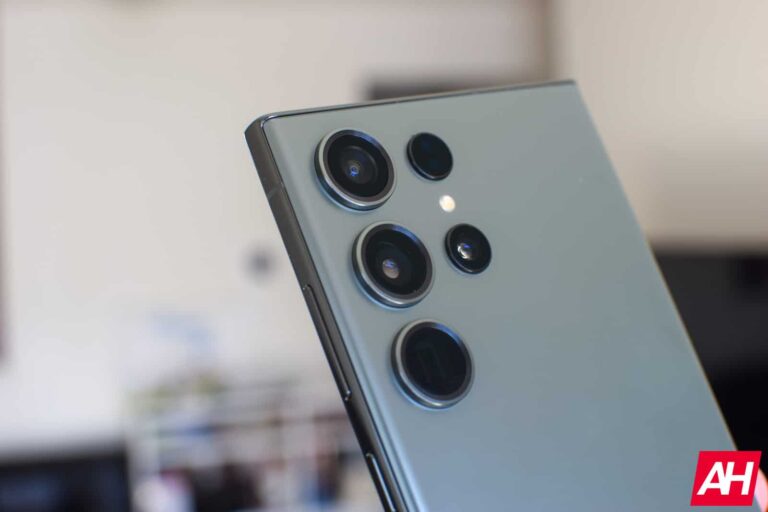
Samsung may launch the Galaxy S24 Ultra with fewer cameras on the back. Two reputed tipsters have confirmed that the device will lack a 3X zoom camera. It will only get a 10X periscope telephoto zoom camera, along with a primary shooter and an ultrawide lens. The periscope lens will be a new sensor with variable zoom capabilities.
Rumors about the Galaxy S24 Ultra coming with a new zoom camera have been doing rounds on the internet well before Samsung launched the Galaxy S23 series. We heard that the company is planning to add variable or continuous optical zoom, something that is mostly limited to DSLRs or professional cameras today. Smartphone cameras only offer optical zoom at fixed magnification levels. Images taken between those fixed levels use digital zoom, which affects quality.
LG recently announced a mobile camera with continuous optical zoom capabilities from 4X to 9X magnification levels. It appears Samsung is going one better next year. It will reportedly offer 3X to 10X continuous zoom on the Galaxy S24 Ultra. This essentially means a single lens will do the job of both zoom cameras found on the Galaxy S23 Ultra. Moreover, it will also offer digital zoom at all magnification levels up to 10X, something the current Ultra can’t do.
The 200MP primary camera of the Galaxy S23 Ultra captures lossless photos up to 3X magnification despite using digital zoom, though. So Samsung doesn’t need to go below that for optical zoom. Instead, it may focus on improving the main camera. As for the base Galaxy S24 and Galaxy S24+, it’s unclear whether they will also get the new zoom camera or if Samsung will stick with the current 3X solution. They are said to feature the same 50MP primary camera (ISOCELL GN3) as the 2023 models.
Galaxy S25 Ultra may bring a new 200MP camera
After focusing on the zoom side of things on the Galaxy S24 series, Samsung is expected to improve the primary camera with the Galaxy S25 series in 2025. According to the latest rumor, the company will finally retire the ISOCELL GN3 and equip the Galaxy S25 and Galaxy S25+ with a new main camera. The Galaxy S25 Ultra, meanwhile, will get a new 200MP camera with “lots of new technology,” including nanophotonics. It will reportedly be the world’s first image sensor built on a 17nm process node.
That said, it’s way too early for Galaxy S25 rumors. Perhaps Galaxy S24 rumors too. While the latest information comes from reliable sources, companies don’t always proceed with their initial plans and change courses along the way. It’s better to take this information with caution. Stick around and we will keep you posted with the latest Galaxy S24 and Galaxy S25 rumors.
Samsung Foundry is one of the largest chip manufacturers in the world, but the new Intel and Arm partnership sets out to challenge this. This partnership will aim to produce smartphone chips for widespread use across a good amount of Android devices. Well, smartphones will be the starting point for this semiconductor partnership, as in the future more products might be rolled out.
For a long time, Samsung has stayed at the top of its game in the semiconductor industry. But they still struggle to design an in-house chip that can level up to the competition. In recent times, Samsung’s Foundry has kicked off the development of the 3nm chip fabrication process.
But Intel and Arm have their eyes on the price in the smartphone chip industry. The two firms popular with the production of chips for computers, smart connected devices and CPUs in various devices are now gunning for Samsung’s plan. This will improve competition in the semiconductor manufacturing industry, hence rolling out products that might improve overall device performance.
Intel and Arm partnership to bring new low-power compute SoCs to the industry
Intel took to their online newsroom to announce their newly established partnership. This partnership will bring the Intel 18A process to light, helping chip designers to build low-power compute system-on-chips (SoCs). According to Intel, the first stop for itself and Arm would be the manufacturing of chips for smartphones and other similar devices.
The Intel 18A process brings breakthroughs in transistor technology, which can step up the performance of smartphones. According to Intel, the technology here improves upon the performance and power of chips that it rolls out. Chip designers without access to a fab can now rely on this Intel and Arm partnership to manufacture their designs into working chips.
From Arm’s side of the partnership, there will come a focus on energy efficiency. Additionally, considering that one company in this partnership is American and the other European, they can work together to meet a ton of regulations. This will make the chips they manufacture meet a wide range of standards, making them great for user consumption.
Intel will rely on its investments in the IDM 2.0 strategy to make this partnership sustainable. Smartphone processor OEMs would be able to turn to Intel and Arm for their services. This will produce chips that use ARM-based CPU cores for better performance.
This partnership might also work its way into the production of automotive, Internet of Things (IoT), data centres, and aerospace chips. But for now, the focus will be on smartphone processors for chip designers around the world. Considering the achievements of Intel and Arm, anyone can expect a lot from this partnership.
If you just bought a new Apple Watch, it’s a good idea to get a couple of bands for it. So you can switch up the look a bit. Now that we are on the Series 8 of the Apple Watch, there’s a ton of great bands out there that you can pick up. These include nylon bands, silicon, leather, metal, and really everything in between.
So in this article, we are going to round up the best Apple Watch bands currently available. Keep in mind that Apple Watches that are 38mm 41mm and 42mm all use the same bands. While the 43mm, 44mm and 45mm watches use the same bands. And for those with the Apple Watch Ultra, the 45mm bands will work on that 49mm watch. However you might see a small gap between the end of the width of the band, and the casing.
Best Apple Watch Bands
Here are the best Apple Watch Bands that are currently available. We will continue to update this every month.
This is basically the “default” Apple Watch band. It’s the band that most likely came with your Apple Watch. It’s not a bad band, but it is one of the most common ones. Apple does sell the Sport Band in a ton of colors, and they do release new colors every year (sometimes multiple times a year).
It’s a silicon band, so it’s great for using while working out, and it’s pretty adjustable.
This is technically a knock off of the Alpine Loop that Apple sells, and it’s about a tenth of the price. But the difference here is that it comes in a lot more colors, including black and blue, which Apple doesn’t sell.
This will work with all sizes of the Apple Watch, unlike what Apple sells. They do offer different sizes on the Amazon listing. I actually have this band on my Apple Watch Ultra myself, in blue and it’s incredible.
Much like the entry above, these are also knockoffs from Apple’s own Trail Loop. But these are available in more colors and sizes. And a whole lot cheaper. Whereas Apple sells these for about $100 each, you can get two for under $13.
The Trail Loop is a velcro band that makes infinitely adjustable, so you can adjust it as much as you’ like. It’s another one of my favorites for the Apple Watch.
If you’re familiar with Nomad’s other leather goods, then you know what to expect from this. This is a Horween Leather watch band from Nomad, which explains the price. If you want a cheaper leather band, Nomad does have this in regular leather for $54.95.
The great thing about this band is once the leather patinas it’s going to look incredible. And really make your Apple Watch look unique. It’s available in both sizes for the Apple Watch and is compatible with the Ultra.
Let’s start off with the bad news here, this one will only work on the Ultra. Since it is made for the 49mm casing here. But the Ocean Band is available in yellow, midnight and white. This band is made for those that like to do a lot of water excising, like diving and swimming and such.
This is another very popular band for the Apple Watch. It’s made of nylon, which looks great and will stand the test of time. It also uses velcro, so it is infinitely adjustable.
Like with the Sport Band, the Sport Loop also gets new colors with each release. So there are a ton of great color options available for the Sport Loop right now.
The Leather Link from Apple is another popular one. This one has magnets inside, so there’s no actual buckle. It uses the strong magnets to stay on your wrist. It also looks absolutely stunning. It’s available in a slew of colors too. This does work with all versions of the Apple Watch too, even the Apple Watch Ultra.
If you’re worried about damaging your Apple Watch, worry no longer. SUPCASE has you covered. Now, this is going to make your Apple Watch a whole lot larger, but you won’t see any scratches on your screen, so there’s that.
This does come with the case and the band. So it’s a pretty good value for $22.
Apple also has its own metal band, the Milanese Loop. This one looks really classy on the Apple Watch, especially if you opted for the stainless steel version of the Apple Watch.
The Milanese Loop comes in four colors: Graphite, Silver, Gold and Graphic. It’s available in all sizes too, and will also work on the Apple Watch Ultra.
Additionally, this one uses magnets to keep the band on your wrist. So there’s no buckles here, giving you a pretty minimal look on your wrist.
ChatGPT-4 is out, and it’s proven to be a step above its predecessor in every way. Since GPT-4 was in testing before GPT-3 even became available to the public, you’d expect OpenAI to be working on the next iteration as we speak However, OpenAI is not training ChatGPT-5 just yet, according to The Verge.
If you’re curious about ChatGPT and what it can do, you can check out our rundown here. It goes over what it is, what it can do, and what it can’t do. You can try out ChatGPT for free today; however, GPT-4 is only available to paying subscribers.
OpenAI won’t train ChatGPT-5 for a while
OpenAI’s CEO Sam Altman recently spoke at MIT, and he was asked about this open letter that has been making the rounds in the tech world. Basically, the letter requested that companies cease the development of AI systems more powerful than ChatGPT-4.
Altman responded and gave us a little bit of information about what the company is currently working on. For starters, he said that OpenAI is not working on ChatGPT-5 and it won’t train it for some time.
While this is true, it doesn’t mean that the company is staying still. As you can imagine, OpenAI will continue to work on ChatGPT-4 and make improvements. Remember that there was a ChatGPT3.5. We’re not sure if the company is going to do the same with version 4.
Aside from that, Altman said that the company is also working on several other projects at the moment. He didn’t elaborate on them, but we can guess that one of them is DALL-E.
The open letter does speak about a concern that we all feel. AI is advancing at a rapid pace, and we can bet that it’s already put several people out of a job. Image generators step on artists’/photographers’ toes, AI music is a threat to musicians, and so on. We’ll just have to see how far companies will take AI and its effects on different industries.
Xiaomi announced quite a few Redmi phones globally not long ago. I am, of course, talking about the Redmi Note 12 series. We’re here to review the two most powerful phones from the lineup, the Redmi Note 12 Pro 5G and Redmi Note 12 Pro+ 5G. I’ll refer to them both without the ‘5G’ part from now on, just to keep things simpler. ‘5G’ is, however, included in their official names.
Considering that the Redmi Note 12 Pro and Pro+ are very similar in many ways, we’ve decided to review them both in the same article. These two phones are literally identical in the display, processor, RAM (some variants), and some other categories. Heck, even three out of four cameras on each phone are identical. There are some differences, though. There’s a reason the more powerful unit has the ‘+’ moniker attached to its name. Having said that, let’s dive in, shall we?
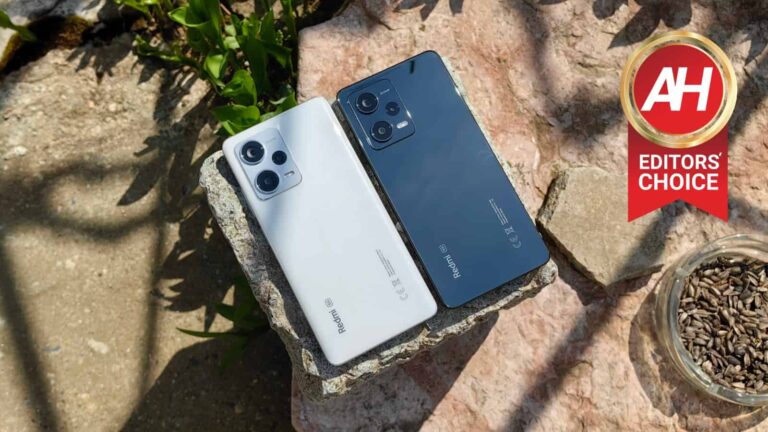
The Redmi Note 12 Pro and Pro+ look basically the same, at least at first glance. There are some differences to note here. The Redmi Note 12 Pro has a flat glass back, while the one on the ‘+’ model is slightly curved towards the sides. The frame is flat on the sides, of both phones. You will find a glass back on both phones, while their frames are made out of plastic, though that’s not something you’ll actually notice. I had to look it up, as it didn’t feel like it upon first use. Both phones feel really good in the hand, actually, and not cheap at all.
They have thin bezels, and a side-facing fingerprint scanner which works great
You’ll notice that they both have very thin bezels, and a centered display camera hole up top. They include flat displays, and all of their physical buttons are on the right-hand side. You’ll notice that the volume up and down buttons sit above the power/lock key. Speaking of which, that power/lock key doubles as a fingerprint scanner, which works really well on both phones. A camera island with three sensors is included on the back of each phone. They do look very similar, but a different main camera is in use here. More on that later on in the review.
They’re very similar-looking
You’ll also notice the ‘Redmi’ logo on the back of each phone. They are very similar design-wise, and that’s not a bad thing. They even have a similar in-hand feel, actually, though you’ll notice the extra heft of the Pro+ model. It weighs 208 grams, compared to 187 grams of the Redmi Note 12 Pro. They are almost identical in terms of height, width, and thickness. The Pro+ model is slightly thicker, less than a millimeter. It’s also worth noting that they’re both IP53 splash and dust resistant.
Accessories
You will find a case in the box with each of these phones. Xiaomi includes a regular gel/silicone case in there, which is see-through. Quite honestly, that’s a nice inclusion, and a great first-hand solution, until you find a case that suits your style a bit more. Some people do prefer these gel cases, so if that’s the case, these ones are not bad at all.
Redmi Note 12 Pro 5G & Pro+ 5G Review: Display
These two phones utilize the exact same display. You’ll find a 6.67-inch fullHD+ (2400 x 1080) OLED panel on each of the two phones. That display is flat, and it offers a 120Hz refresh rate. Dolby Vision is also supported, as is HDR10+ content. The display gets up to 900 nits of peak brightness. That is okay, but it’s nowhere near the brightest flagship smartphones out there, and it could be a problem if you use your phone in direct sunlight often.
Both displays also have the same protection, the Gorilla Glass 5 lies on the front. That is not the most modern solution, but a good solution nonetheless. I’ve had great experiences with Gorilla Glass 5 throughout the years, as it’s a lot less scratch-resistant than the Gorilla Glass 3 that OEMs love to include in budget phones. So, you shouldn’t really be worried about Gorilla Glass 5, not at all.
The displays are vivid, sharp, and overall quite good
This display can jump between 30 and 120Hz refresh rate as needed, and it supports a 240Hz touch sampling rate. The display is actually good. It’s not great, mainly due to its brightness, but it’s what you’d expect at this price range, maybe even better than what you’d expect. The colors are vivid, and the viewing angles are not bad either. The touch response is also quite good, and so on. You really can’t fault it for many things, that’s for sure. There are even manual controls for it, within the software.
Redmi Note 12 Pro 5G & Pro+ 5G Review: Performance
When it comes to performance, it’s identical between these two phones, at least in our experience. That is not surprising, as they’re both fueled by the MediaTek Dimensity 1080 SoC. That’s a 6nm processor, it’s backed by LPDDR4X RAM and UFS 2.2 flash storage. Both of our units include 12GB of RAM, by the way, which is the upper level of offered variants. The Redmi Note 12 Pro also comes with 6GB and 8GB of RAM, while the Pro+ model is offered in an 8GB RAM variant, on top of the 12GB RAM one.
Benchmark-wise, they do offer similar performance
In terms of benchmarks, both phones had similar performance, which is also not surprising, considering the specs. They’re right in line with the Galaxy A54, and similar mid-tier phones. That’s not a bad thing, not at all. The Redmi Note 12 Pro and Pro+ actually offered really, really good performance. That goes for general use and gaming alike. They’re very responsive, and great even when you’re juggling between several apps. There was a stutter here and there, but not something worth noting, to be quite honest. Overall, the performance was very fluid, I was even a bit surprised. This chip does bring a number of improvements over what the Redmi Note 11 series offered, especially in the gaming department, so I guess that’s not a major surprise.
They didn’t get too hot at any point, not even during gaming
Even when I was testing out some games, the two phones never got hot. They did get warm, but not hot. Truth be said, I did not play games for hours, but I did try out some more graphically-intensive titles just to see how will things go. I even left the screen on for a period of time, to see how the phones react. That did not really mess with the performance at all, nor the heat. I have to say I was a bit impressed in that regard. The software also played a role in the performance, but we’ll talk about that later on.
Redmi Note 12 Pro 5G & Pro+ 5G Review: Battery
In addition to various other identical components, both of these phones also include the same batteries. You’ll find a 5,000mAh battery inside each of them. You’d assume the battery life is also identical, on the account of the same display, SoC, RAM, and storage, right? Well, no, not really. It is comparable, but the Redmi Note 12 Pro had more juice during our testing. It offered around 15% better battery life. Use cases were very similar with both, by the way. Most of you don’t need to worry about running out of juice before the end of the day, though, on either phone. The battery life is really good overall, even with some light gaming. Getting over 6-7 hours shouldn’t be a problem, depending on your usage, signal, and so on, of course. Just do note that these two phones don’t do all that great on standby. They have above average battery drain.
The Redmi Note 12 Pro+ offers considerably faster charging
Now, they do differ in the charging department. The Redmi Note 12 Pro supports 67W charging, while the Redmi Note 12 Pro+ 5G comes with 120W charging support. Both include the necessary charging bricks, and neither supports wireless charging. When it comes to the charging speed, the Redmi Note 12 Pro+ can reach a full charge in half an hour. In that same time, the Redmi Note 12 Pro reached 77% charge in our testing. Charging it to 100% will take you around 55 minutes, so almost twice as much as the Redmi Note 12 Pro+. Still, that’s not bad at all.
Redmi Note 12 Pro 5G & Pro+ 5G Review: Camera
These two phones have the same ultrawide, macro, and selfie cameras. They do differ in the main camera sector, though. The Redmi Note 12 Pro has a 50-megapixel main camera (f/1.9 aperture, OIS, PDAF, 1.0um pixel size), while the Redmi Note 12 Pro+ includes a 200-megapixel main snapper (f/1.7 aperture, OIS, 0.56um pixel size, PDAF). Both phones include an 8-megapixel ultrawide unit (120-degree FoV), and a 2-megapixel macro camera on the back. A single 16-megapixel camera sits on the front.
The Redmi Note 12 Pro daytime shots are above average
By default, the Redmi Note 12 Pro provides 12.5-megapixel images out of that 50-megapixel sensor. During the day, the photos look good. There’s plenty of detail in them, and they’re quite contrasty and vivid. Maybe even a bit too vivid at times, and the optional AI mode boosts that even further at times. We’ve used that mode too, in some shots, though most of them are shot without it. The photos can look a bit overprocessed, but let’s not nitpick. For a mid-range phone, this is great.
Low light shots are not bad either
In low light, the phone will decide on its own when to turn on the Night Mode. That goes for the main camera only, though. For a mid-range camera, this phone does a great job in low light. It has good exposure, preserves enough detail, and even keeps the noise in check. Even the dynamic range is not bad, which is also surprising. If you opt to use the dedicated night mode, you’ll get brighter shots.
The 2x shots are okay, but not as good as the shots taken with the main camera. The same goes for portrait shots, they’re okay, but the edge detection is not great. The ultrawide camera does a good job in good lighting, which managed to surprise me considering the hardware on offer. Still, they look even more artificial than the photos from the main camera. Still, they’re good enough. In terms of the 2-megapixel macro camera, well… I don’t appreciate OEMs using them at all. Those sensors are simply too tiny. Still, those images can be useful, at times, but only if there’s enough light in the scene.
Redmi Note 12 Pro camera samples:
The Redmi Note 12 Pro+ has great daytime shots
The Redmi Note 12 Pro+ provides 12-megapixel images by default, from its 200-megapixel camera. This camera also does a great job in good lighting. It provides plenty of detail, and only the foliage can look a bit oversharpened. The photos look less artificial than what the Redmi Note 12 Pro offers. They do lean on the higher contrast side of things, but that’s not exactly a bad thing, in my opinion.
The 2x photos look good, but are not as sharp as the ones provided by the main camera. You can get similar results by cropping the main photo, though slightly worse, truth be said. The ultrawide camera does a good job in good lighting. It keeps the noise out of the picture for the most part, and the dynamic range is also okay. They’re not as detailed as shots from the main camera, but that is to be expected. The macro shots are very similar to the ones from the Redmi Note 12 Pro, which is to say they look surprisingly good for a 2-megapixel camera, as long as you take them during the daytime. The portrait mode performance is similar to what the Redmi Note 12 offers.
The phone holds its own in low light too, even matches some flagship devices
These low-light photos look even better than the ones on the Redmi Note 12 Pro. The dynamic range is great, and the exposure is also good. The colors look nice in low light shots, and the photos are detailed enough. It can even stand side-by-side with some flagships, but only those that don’t have top-of-the-line cameras. Keep in mind this is a mid-range phone, and we’re observing photo quality with that in mind. Auto night mode is supported, but only on the main camera.
Video recording on both phones is okay, but nothing to write home about. It cannot really compete with flagship smartphones, but it’s more than usable, good even. That goes for both the stabilization and the footage itself.
Redmi Note 12 Pro+ camera samples:
Redmi Note 12 Pro 5G & Pro+ 5G Review: Software
The software experience is basically the same across these two phones. They both come with Android 12, on top of which you’ll find MIUI 14. Yes, you read that right, Android 13 is not included here, but you’re getting the latest version of MIUI still. Xiaomi has a special approach to updates, so… you’re essentially getting the best the company has to offer, but not on the latest version of Android. MIUI likes to take a different approach to things, as many of you already know.
Only 8 apps can’t be removed
Speaking of approach, many of you are probably wondering what’s the situation with bloatware. Well, good, actually. There are only 8 apps that you cannot remove. Needless to say, that’s great, as in previous versions, there were plenty of them that had to sit there and basically be in the way. Speaking of unused apps, Xiaomi did present a rather interesting feature in MIUI 14. This version includes automatic compression for apps that you’re not using.
Some MIUI 14 features are still missing
Now, MIUI 14 did get a ton of polish over MIUI 13, mostly performance-related. It does work really well, to be quite honest, but some features are still not there. I was trying to find the animated character widgets, but they’re not there. The same goes for the duplicate file merger, and a number of other features. Still, the vast majority of features you’d expect are here, including the enlarged folders many OEMs are utilizing these days.
MIUI 14 is truly customizable
MIUI 14 is filled with customization. For example, the notification shade is split from the notification shade by default, but you can change that. You can get a more regular Android experience with ease. There are a lot of such options in the settings, actually. There are even customization options for the recent apps screen. Yes, you can also launch floating windows in MIUI 14, and a useful Sidebar is also included in the OS.
Xiaomi also includes its own image editing and video editing tools, which are feature-rich. The Security app the company provides also has a ton of features, and it can help you clean up your phone, or set some boundaries. There is also the remote app to utilize in collaboration with an IR blaster up top, and so on. All in all, the experience was great for us, even though we did stumble upon a bug or two. The OS froze at one point on the Redmi Note 12 Pro, but went back to normal two seconds later. On the Redmi Note 12 Pro+, the notification shade refused to lower for a couple of seconds. That happened only once across our usage, though, so… it’s odd, but not that annoying by any means. Overall, MIUI is much better than it was before.
Redmi Note 12 Pro 5G & Pro+ 5G Review: Should you buy either of them?
Xiaomi’s Redmi sub-brand is well-known for offering great value, and these two phones are no exception. They do offer a lot of the asking price, and with everything considered, it’s not difficult to recommend them. The Redmi Note 12 Pro+ is the better phone of the two, but the difference is really not big. So, you can easily get away with getting the Redmi Note 12 Pro and calling it a day. You’ll be saving some cash, and getting a phone which is truly capable. If you do need a brighter display and a bit different camera experience, however, the Redmi Note 12 Pro+ is a great choice.
You should buy the Redmi Note 12 Pro 5G & Pro+ 5G if:
You don’t want to break the bank, but still want value
You need good performance
You love taking pictures, and are looking for an affordable phone to do that with
You need an IR blaster
You appreciate having a good screen on a phone
You want truly fast charging in a mid-range device
You appreciate good speakers
You shouldn’t buy the Redmi Note 12 Pro 5G & Pro+ 5G if:
Hyundai reported a data breach that impacted car owners in Italy and France and people who booked their test drives. The company has warned that hackers accessed customers’ data.
Hyundai owns roughly 3% of the market shares in Italy and France, selling nearly half a million vehicles a year in Europe.
As per Twitter reports, the following data has been exposed.
Physical addresses
E-mail addresses
Telephone numbers
Vehicle data (Chassis numbers)
Just received an email from @Hyundai_Italia (@Hyundai_Global) notifying me about a data breach for my account. Looks like a third party accessed their databases containing sensitive data.
As an Engineer primarily dealing with security and infrastructure, I’m so disappointed! pic.twitter.com/d04vXasadH
The breach notification released by Hyundai also mentioned that the threat actor did not steal any financial data or identification numbers.
Hyundai Italy said, “Our IT investigations confirmed that some of our customer data may indeed have been impacted. Specifically, the data includes contact information (such as emails, addresses and telephone numbers) and vehicle data (such as chassis numbers). Neither financial data nor official identification numbers were affected.”
In addition, Hyundai warned their customers that there might be phishing and social engineering attempts, asking them to be vigilant about any unsolicited emails and SMS text that appears to have originated from Hyundai.
As per Hyundai France’s reports, the exposed data has gone to a certain extent, adding First Name, Last name, DOB, telephone, Customer name, postal address, and chassis number.
“As soon as we were notified of the incident, we immediately launched an investigation and implemented all measures to contain it. We turned to the best cybersecurity specialists and our lawyers to support us in handling the incident.”
“We promptly informed the Guarantor for the Protection of Personal Data and among the various security measures adopted, we blocked the server concerned and permanently removed it from the network. We are continuing to work with our IT teams to ensure our systems maintain a high standard of security.”
Hyundai has indicated that both of their data breaches have been informed to the data protection authorities of Europe. They are working with their cyber security and IT teams to rectify this issue.
At this stage, it cannot be concluded how many customers could be affected by this breach, how long the intrusion lasted, or what counties were affected. Further reports from Hyundai will clarify these questions.