Samsung‘s 2023 Galaxy A lineup may soon welcome a new member. The company has already confirmed that it is readying the Galaxy A24. It has even put up official support pages for the unannounced device, which has been subject to a handful of leaks in recent weeks. As we wait for the phone’s official launch, a major leak has now revealed basically everything. There’s detailed specs of the device, along with a tentative launch timeframe and expected price.
Galaxy A24 rumored specs
The Galaxy A24 is a mid-range device featuring a 6.5-inch Full HD+ display (1080 x 2408 pixels) with a 90Hz refresh rate. The display is said to boast a peak brightness of 1,000 nits but there are contradicting reports over whether it’s a Super AMOLED panel or an LCD screen. Samsung will reportedly equip the handset with MediaTek’s Helio G99 processor, 4GB of RAM, and 128GB of internal storage. It may also offer the phone in other memory configurations. The device supports microSD cards of up to 1TB capacity.
This phone features three cameras on the back, including a 50MP primary shooter. Samsung is expected to offer OIS (Optical Image Stabilization) here. The main camera sits alongside a 5MP ultrawide lens and a 2MP macro camera. On the front, the Galaxy A24 gets a 13MP camera. The device can record 1080p videos at 30fps (frames per second) with front and rear cameras. A 5,000mAh battery with 15W charging, a side-mounted fingerprint scanner, a 3.5mm headphone jack, and Android 13 complete the package.
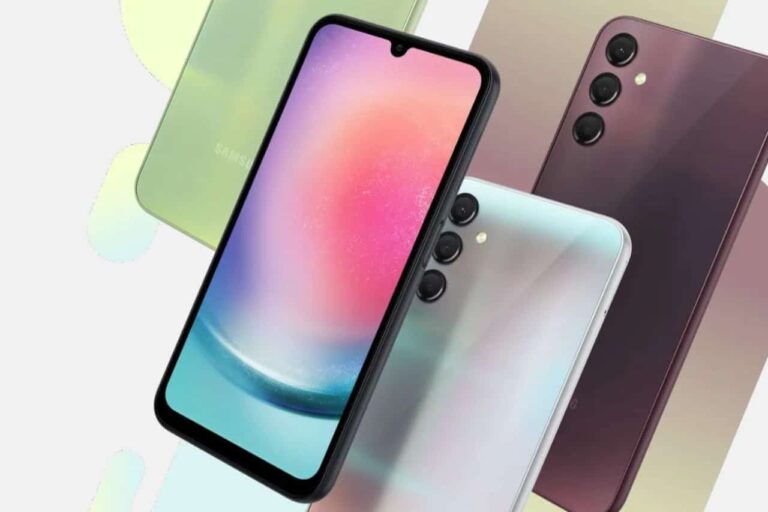
Looking from the back, the Galaxy A24 looks identical to all other Galaxy smartphones Samsung has launched so far in 2023 (11 models in total). We have a vertically aligned camera module with no separate housing. The flat rear panel and frame are made of plastic. Flipping it around, we find a notched display with quite chunky bezels around it, particularly the chin. While the latest leak only shows the phone in black and green colors (see images below), we have also seen its renders in silver and burgundy colors in the past.
Launch date and price
Samsung is expected to launch the Galaxy A24 later this month. We still don’t have a precise date to share with you, but it looks like the new mid-range device will arrive in at least a few markets by the end of April. The Korean firm may price it under $200 (around ₹16,000 in India). Stay tuned for information about the Galaxy A24’s official launch.
Google CEO Sundar Pichai has confirmed that GPT-style conversational AI would be added to the search. Speaking with The Wall Street Journal, Pichai asserted that users could ask questions from Google and engage with LLMs.
Google has been the dominant power of the Internet search business for many years, and no rival could threaten the company’s reign. With ChatGPT, however, everything changed, and Google’s dominance was in danger. Microsoft seized the opportunity to invest in ChatGPT and integrate it into its search engine Bing. Bing is now using GPT-4, which is the most advanced language model developed by OpenAI.
With Microsoft empowering its search business with ChatGPT, Google also wants to bring conversational AI to its search product. The company CEO says he saw AI not as a threat but as a way to expand the search business. “The opportunity space, if anything, is bigger than before,” Pichai added.
Google search will soon get GPT-style conversational AI
Given that Google holds 93.4% of the worldwide Internet search share, adding conversational AI to the search product will significantly impact the Internet and user behavior. Users are using ChatGPT to revoke parking tickets and many other things that Google Search is now incapable of.
But with conversational AI and the amount of data Google gathers, the company’s search business capabilities will tremendously increase. Microsoft stole the show with ChatGPT-powered Bing, but Google will undoubtedly catch up.
Bard was Google’s first initiative to compete with ChatGPT, but it must be integrated with search products. It also lags behind ChatGPT in many ways, but the company CEO promised an upgrade last week that adds a more advanced language model to Bard.
World tech leaders recently wrote an open letter to warn that the AI race has become “out of control” and that all AI experiments should be halted for six months. Google CEO, however, said he isn’t worried about AI safety because “you have to anticipate this and evolve to meet that moment.” He also added the topic needs a lot of debate.
For the third time in the last six months, internal Uber data has been compromised. This latest incident is the result of a supply chain attack.
Uber, yet again, has become a victim of data theft following a third-party breach. This time, threat actors have aimed at the company’s law firm, Genova Burns. Data of Uber’s drivers may have been swiped during the security incident.
According to the letter sent to affected drivers, the firm became aware of “suspicious activity relating to our internal information systems” on January 31, 2023. It immediately engaged with hired experts to investigate. Data was extracted between the 23rd and the 31st. The firm also contacted Uber regarding the breach after discovering that driver data was affected.
The Register, who first reported the incident, shares the below statement from an Uber spokesperson regarding the attack against Genova Burns:
Impacted information held by Genova Burns included information of certain drivers who had completed trips in New Jersey, including social security number and/or tax identification number. These drivers have been notified that their social security number and/or tax identification number have been potentially impacted and offered complimentary credit monitoring and identity protection services.
Genova Burns indicates that they are not aware of any actual or attempted misuse of the information, and confirmed that they are taking additional steps to improve security and better protect against similar incidents in the future.
The firm also promises to take “additional steps to improve security and better help protect against similar incidents in the future.” It didn’t elaborate on those steps, however.
No Uber customer data was touched in the attack. Affected drivers, as per usual, get one year free of identity monitor services as compensation, according to The Register.
Uber is no stranger to supply chain attacks. In December, threat actors raided data from Teqtivity, a vendor that provides asset management and tracking services for the company. 77,000 Uber employee data were later on leaked.
Malwarebytes removes all remnants of ransomware and prevents you from getting reinfected. Want to learn more about how we can help protect your business? Get a free trial below.
There are plenty of great flagship phones on offer in the market, and we’re here to compare two such devices. In this article, we’ll compare the OnePlus 11 vs Apple iPhone 14 Pro Max. Both of these phones are the best offerings from their respective companies at the moment. Before we get into it, do note that the OnePlus 11 is considerably more affordable than the iPhone 14 Pro Max.
We’ll first list their specifications, and will then go to compare them across a number of different categories. We’ll take a look at their designs, talk about their displays, and compare their performance. Then we’ll move to the battery life and charging, cameras, and audio performance. Having said that, let’s get started!
Specs
OnePlus 11
Apple iPhone 14 Pro Max
Screen size
6.7-inch QHD+ LTPO3 Fluid AMOLED display (120Hz refresh rate, curved, 1,300 nits peak brightness, LTPO down to 1Hz)
These two phones do differ quite a bit design-wise. Both phones are made out of metal and glass, but are sculpted differently, and both metal and glass materials are different too. The OnePlus 11 combines an aluminum frame with the Gorilla Glass 5 on the back. The iPhone 14 Pro Max has a frame made out of stainless steel, while Corning made the glass backplate for the phone, but we don’t have the details for it.
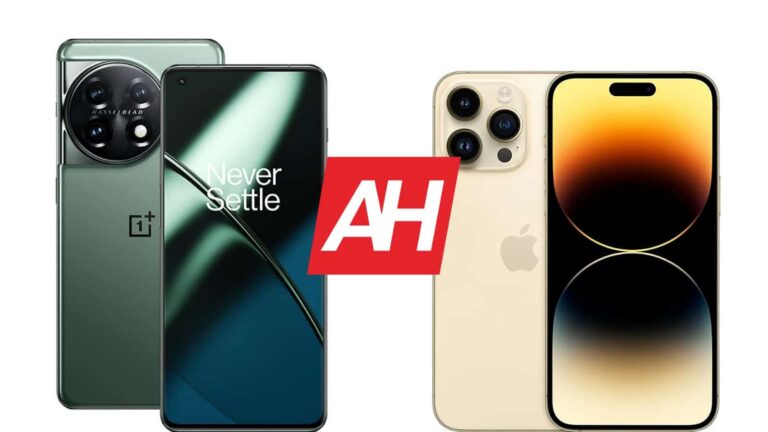
The OnePlus 11 is quite a curvy phone. Not only is its display curved, but so is its backplate, and frame. The iPhone 14 Pro Max has a flat display, a flat back, and its sides (frame) are also flat, all around. The bezels are very thin on both phones. The OnePlus 11 does have a display camera hole in the top-left corner, while the iPhone 14 Pro Max includes a pill-shaped cutout, which is centered at the top.
If we flip them around, you’ll notice different-looking camera islands. Both are located in the top-left corner, however, and both host three camera sensors. The OnePlus 11 is a bit taller, and noticeably narrower than the iPhone 14 Pro Max. It is slightly thicker, and considerably lighter. The OnePlus 11 weighs 205 grams, while the iPhone 14 Pro Max weighs 240 grams. Both phones feel truly premium in the hand, though they’re extremely slippery.
OnePlus 11 vs Apple iPhone 14 Pro Max: Display
The OnePlus 11 includes a 6.7-inch QHD+ (3216 x 1440) LTPO3 Fluid AMOLED display. That panel is curved, and it can project up to 1 billion colors. It offers a 120Hz refresh rate, and has Dolby Vision and HDR10+ support. This panel does get up to 1,300 nits of brightness at its peak. We’re looking at a 20:9 display aspect ratio here, while the Gorilla Glass Victus protects it.
On the other hand, the iPhone 14 Pro Max, hosts a 6.7-inch 2796 x 1290 LTPO Super Retina XDR OLED display. That panel has a 120Hz refresh rate, and it supports HDR10 content. Dolby Vision is also supported, while this panel gets noticeably brighter than the OnePlus 11’s at 2,000 nits of peak brightness. We’re looking at a 19.5:9 display aspect ratio here, while the Ceramic Shield glass protects the display.
Both of these displays are excellent, there’s no way around it. They’re not only plenty sharp, but have great viewing angles, and are quite vivid. The blacks are deep on both panels too. The iPhone 14 Pro Max’s display does have one major advantage, its brightness. It’s easier to use in direct sunlight, though the OnePlus 11 is on par in pretty much every other way.
OnePlus 11 vs Apple iPhone 14 Pro Max: Performance
The OnePlus 11 is fueled by the Snapdragon 8 Gen 2 SoC. It also includes up to 16GB of LPDDR5X RAM, and UFS 4.0 flash storage. The iPhone 14 Pro Max comes with the Apple A16 Bionic processor, along with 6GB of RAM, and NVMe storage. Both of these smartphones are immensely powerful on paper. Does that translate to actual performance? Well, yes, it does, in both cases.
No matter what you do on these two phones, smoothness is the keyword. During regular, everyday tasks, both phones fly. No matter if you’re multitasking, consuming multimedia, editing images, processing videos, or something else entirely. Even when it comes to games, both phones shine. Even the most demanding games on their respective app stores shouldn’t give you much trouble.
OnePlus 11 vs Apple iPhone 14 Pro Max: Battery
A 5,000mAh battery is included inside the OnePlus 11. The iPhone 14 Pro Max, on the other hand, has a 4,323mAh battery. And yes, both smartphones offer great battery life, to say the least. We’ve managed to cross the 10-hour screen-on-time mark with the OnePlus 11 a number of times. The iPhone 14 Pro Max’s battery life wasn’t exactly on the level of the iPhone 13 Pro Max at launch, it still isn’t, but it’s much improved. It can now go the distance too, though during our usage, it flew a bit under the OnePlus 11 and Galaxy S23 Ultra.
Both of these smartphones offer outstanding battery life, some of the best you can get in flagship phones. Do note that your mileage may vary considerably, as your usage will be different, plus there are more factors to it. If you’re gaming, of course, the battery life could be significantly different. One thing is for sure, both of these phones offer extraordinary battery life.
When it comes to charging, the iPhone 14 Pro Max is all but extraordinary. It supports 20W wired, 15W MagSafe wireless, and 7.5W Qi wireless charging. On top of that, it doesn’t include a charging brick in the box. The OnePlus 11, however, supports 100W wired (80W in the US) charging, and comes with a charging brick. Unfortunately, wireless charging is not included here.
OnePlus 11 vs Apple iPhone 14 Pro Max: Cameras
You will find a 50-megapixel main camera, a 48-megapixel ultrawide camera (115-degree FoV), and a 32-megapixel telephoto unit (2x optical zoom) on the OnePlus 11. The iPhone 14 Pro Max comes with a 48-megapixel main camera, a 12-megapixel ultrawide unit (120-degree FoV), and a 12-megapixel telephoto camera (3x optical zoom). Both phones are well-equipped in terms of camera hardware, and they actually do provide great results.
The pictures from these two phones do look different, but in both cases, they look great. The OnePlus 11 tends to provide more vivid photos, while the ones from the iPhone 14 Pro Max are closer to real life. You can change that via iPhone’s shooting styles, though. In any case, both phones deliver very detailed photos, which are well-balanced. The iPhone 14 Pro Max does have issues with highlights at times, usually during demanding HDR situations. That’s not a common occurrence, though.
In low light, they both do a great job. The colors OnePlus 11 provides are excellent, and that device usually delivers images that brighten up the shadows quite a bit. The iPhone 14 Pro Max tends to keep things closer to real life, but also does an excellent job. In general, the iPhone 14 Pro Max has a slightly faster shutter speed, and does a better job with videos.
Audio
You will find a set of stereo speakers on both of these phones. They both do a good job, as the sound is more than loud enough, and also quite detailed. You also do get some bass in both cases, and the sound is well-balanced. Neither phone does provide the best speakers we’ve seen, though, but not many people will have complaints here.
An audio jack is not provided by either phone. You will have to use their charging ports if you’d like to connect your headphones via a wire. If you prefer to do it wirelessly, you will be glad to hear that Bluetooth 5.3 is supported on both devices.
If you find autoplay media content annoying while browsing, then this feature to block it using Microsoft’s Edge browser will catch your fancy. With this new feature, you can set your browser to block all autoplay media content. So you don’t need to worry about those annoying videos that keep popping up while you are browsing.
Microsoft beat Google Chrome to launch this useful feature for users around the world. This feature is one of the most recent additions to the Edge browser for insiders. Those currently testing this new feature will be able to block all autoplay videos to improve their browsing experience.
Netizens around the world have hoped to be able to get rid of autoplay media content while browsing. Finally, they will be able to see their wishes come to pass while using the Edge browser. If you want to get early access to this feature, here is everything you need to know.
Microsoft’s Edge browser now lets you block autoplay media content
Microsoft has finally listened to the voice of its users and is now offering “strict blocking of media autoplay.” This new feature will come in handy to a ton of Microsoft Chromium-based Edge browser users around the world. Well, there are a few things that you need to take into mind before jumping to your feet with joy.
For now, this feature is not available to all Edge users around the world. Only select users can make use of the autoplay media content blocking. These users are those that have access to Edge Canary, this is the channel that brings all new features to users for testing.
So, you can say that this new feature is currently in its beta testing phase. If you do not have access to the latest Canary release, then you will have to wait for the global release to make use of this feature. Once available, you will be able to access this feature on the settings page under the Cookie and Site Permissions settings.
At the moment, there is no timeline for the launch of this new feature to the Microsoft Chromium-based Edge browser. Google Chrome users will also need to hope that their browsers also adopt this feature soon. With it, you will have no reason to worry about seeing those annoying videos that pop up while you are surfing the internet.
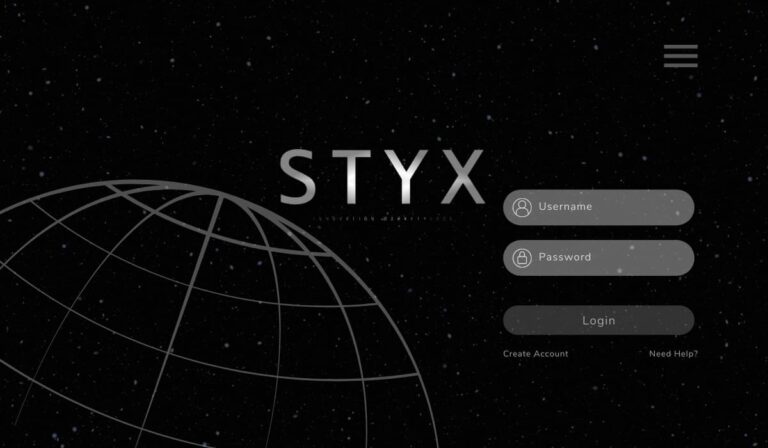
The emergence of Styx serves as evidence that despite the efforts of authorities to take down Dark Web marketplaces, new markets and platforms will continue to surface.
Recently, the seizure of the prominent Dark Web marketplace Genesis’s Clearnet domain was reported. Now, another equally notorious marketplace has emerged, known as Styx.
Resecurity’s cybersecurity researchers have identified Styx as a new Dark Webmarket that specializes in a wide range of illegal services, including identity theft, financial fraud, and money laundering.
This article will delve into the details of Styx, including how it works, what it sells, and the need for enhanced security measures to safeguard against its illicit activities.
Styx, which was announced in 2022, was officially launched in January 2023. It has quickly gained popularity among cybercriminals, and it has established an escrow module to enable secure transactions.
Styx users have access to a wide array of illegal services through the portal, including data dumps, stolen or fake IDs, DDoS, cash-out services, banking trojans, SIM cards, anti-fraud filters, and 2FA/MFA bypass solutions.
The marketplace also has a dedicated section for Trusted Sellers, which may be vendors vetted by marketplace administrators. However, details on how Styx operates are scarce, but researchers believe that it finds potential buyers through Telegram contacts and utilizes automated bots for security.
One of Styx’s main attractions is the availability of stolen online banking credentials, e-commerce and cryptocurrency accounts, and stolen credit card data. It also offers tools for committing VCC/virtual credit card and digital bank fraud.
Some vendors even sell personally identifiable information (PII), including stolen social security numbers (SSNs) and business, SSNs, and ID data of victims based in various countries such as the USA, UK, Canada, the Netherlands, and others.
Additionally, Styx offers fake IDs, forged documents, tools for committing money laundering for scammers and business email compromise (BEC), cybercrime and digital frauds, and email/telephone flooding services at varying prices ranging from $4 to $150 per day.
According to Resecurity’s report, the platform also hosts cash-out shops that offer “clean” funds through PayPal and Apple Pay business accounts with merchant terminals.
Notably, money laundering is one of the site’s specialities, with known vendors offering this service for individual users starting from $15,000 and for businesses starting from $75,000, with Verta keeping a 50% share of the laundered amount.
Researchers have also identified a group of trending cash-out vendors that charge commissions based on the exact BIN of the card and brand of gift card.
Screenshots from the marketplace (Credit: Resecurity)
Styx has quickly gained traction as a hub for various illicit activities, following the seizure of Genesis. This underscores the need for e-commerce systems, digital banks, and payment portals to enhance their know-your-customer (KYC) checks and implement stringent fraud protections to safeguard against data breaches and illicit activities.
As Styx and other similar Dark Web marketplaces continue to operate, it is crucial for organizations and individuals to prioritize cybersecurity measures to protect sensitive information and mitigate the risks associated with illegal online activities.
Samsung has released the April 2023 Android security patch for a few more Galaxy devices in the US. The latest security update is now rolling out to the Galaxy S21 series, Galaxy Z Fold 3, and Galaxy Z Flip 3. The company has already pushed the new SMR (Security Maintenance Release) to the Galaxy Z Fold 4, Galaxy Z Flip 4, Galaxy S22 series, Galaxy Note 20 series, and Galaxy A53 5G stateside.
As of this writing, the April SMR is only available for the factory-unlocked variants of the Galaxy S21, Galaxy Z Fold 3, and Galaxy Z Flip 3 in the US. The new firmware build numbers for the Galaxy S21, Galaxy S21+, and Galaxy S21 Ultra is G99*U1UEU6EWCA. The new firmware version for the 2021 Fold model is F926U1TBS3FWC9 and the Flip model is F711U1TBS4FWC9. None of these devices is receiving any major user-facing change or new feature. The update is all about security fixes for this month.
The April update for the Galaxy S21 trio, Galaxy Z Fold 3, and Galaxy Z Flip 3 is yet to be available outside the US. Samsung will likely widely release this update over the next few days, also covering the carrier-locked units stateside. The update for the Galaxy Note 20 series and Galaxy A53 5G is also currently exclusive to the US. The Galaxy S22 series, meanwhile, is also receiving the April SMR in Latin America. A global rollout for all of these devices should be just around the corner.
Samsung has also released the latest security update for the Galaxy S23 series, Galaxy S20 series, Galaxy A52, and Galaxy A22 5G. But these updates haven’t reached the US yet. The latest Galaxy flagships are receiving a host of camera-related changes, improvements, and new features with this release. We will let you know when the rollout begins stateside. You can also manually check for updates from the Software update section of the Settings app on your phone.
The April security update for Galaxy devices patches more than 60 vulnerabilities
This month’s security update for Samsung’s Galaxy devices patches more than 70 vulnerabilities. Around 50 of those are Android OS patches from Google and other partner vendors. Google labeled four of them as critical flaws. The 23 Galaxy-specific patches include one critical vulnerability that allowed local attackers to access protected data. It affected Galaxy smartphones and tablets running Android 11, Android 12, and Android 13. Installing the latest security update will keep your device safe from all of these vulnerabilities.
It’s no surprise that AI chatbots like ChatGPT and Bard require vast amounts of data and computing power to function, which is why small companies in this AI revolution are struggling to compete with tech giants like Google and Microsoft. Now in an effort to solve this issue, Amazon Web Services (AWS) has launched a new accelerator program for generative AI startups, which will run for ten weeks and provide participants with access to AI models, tools, machine learning stack optimization, and go-to-market advice.
As part of the program, each startup will receive up to $300,000 in AWS credits to assist in building their company and at the end, startups will also have the opportunity to pitch their ideas to potential investors during a Demo Day in San Francisco. And although the program is open to all AI startups with registrations available worldwide till April 17th, Amazon recommends candidates should have a testing product ready for demonstration.
“We want to empower companies applying generative AI to solutions from legal and marketing, to software engineering, green energy, and life sciences, including drug discovery,” says Amazon.
Advancing Innovation in Generative AI
While Amazon has been slower than other tech giants to invest in AI, the company aims to act as a catalyst that advances innovation in generative AI and forms partnerships. Talking on this topic, Rob Ferguson, AWS’ global head of AI/ML Startups, stated that he believes generative AI is a transformative technology that unlocks new developments and creativity. And AWS is investing in three layers of the generative AI stack to take the technology out of research and make it available to developers of all skill levels and customers of any size.
However, Amazon is not the only company investing in AI as Salesforce recently launched a $250 million investment fund for generative AI startups. Either way, it’s evident that AI is transforming the tech industry, and AWS’ accelerator program is a step towards bringing the technology to more startups.
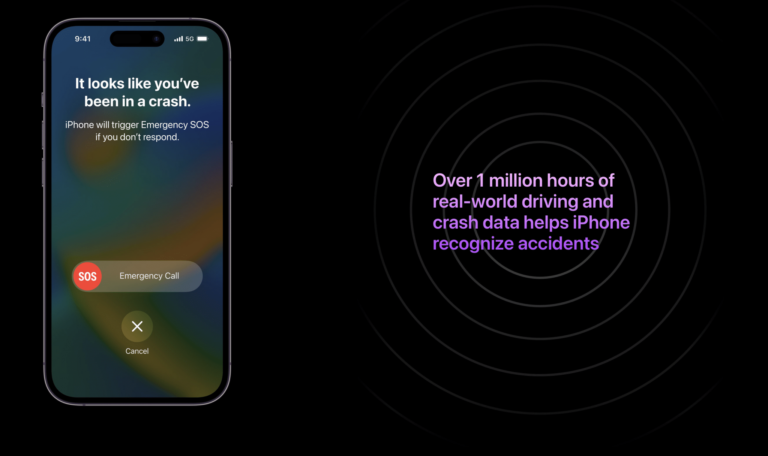
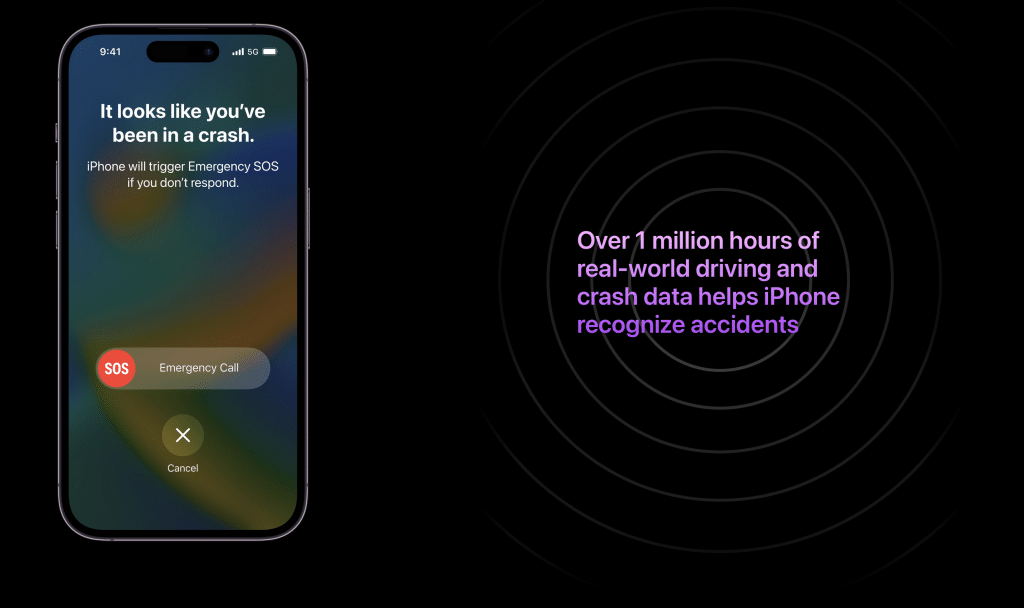
Apple’s recent Crash Detection support document directs users not to hang up on operators during random crash detection calls.
In September 2022, Apple introduced the iPhone 14 models and the latest Apple Watches alongside a new Crash Detection functionality.
It’s a feature designed to detect severe car crashes such as rollovers, rear-end collisions, side impacts, and front impacts. If your Apple device detects these collisions, it automatically contacts emergency services for help.
Apple’s Crash Detection works. Indeed, the feature has already saved lives.
Unfortunately, several users have also complained about accidentally triggering the feature in non-emergency situations. For example, early reports revealed that the iPhone 14’s Crash Detection unintentionally calls 911 during roller coaster rides.
But that was months ago.
After several iOS 16 updates, Apple has somewhat optimized Crash Detection on the iPhone 14 lineup. Earlier this week, the company rolled out a support document with recommendations for users that accidentally trigger the feature.
“If the call has been made, but you don’t need emergency services, don’t hang up,” says Apple. Wait until a responder answers, then explain that you don’t need help.”
There’s more!
A Quick Look at the Accidental Crash Detection Support Document
Besides the new recommendation, a line that urges users to cancel a call during the timer period is now noticeably absent in the support document. The line reads:” If you don’t need to contact emergency services, tap Cancel and confirm that you don’t need emergency services.”
Similarly, the Crash Detection support site also recommends that users dismiss a crash detection alert if they can. “If you’re able, you can choose to call emergency services or dismiss the alert,” says the Cupertino-based tech giant.
Again, Crash Detection only works on the iPhone 14 and iPhone 14 Pro models with the latest iOS version. However, the feature is also available on the Apple Watch Series 8, Apple Watch SE (second generation), and Apple Watch Ultra with the latest watchOS version.
Samsung has signed a multi-year extension of its partnership with AMD. The company plans to bring the latter’s Radeon graphics technology to more Exynos processors in the future. Rumors are that Samsung will use AMD-powered graphics in both mid-range and high-end chipsets.
Samsung and AMD extend their partnership
Samsung’s Exynos processors don’t have a very good reputation in the market. Particularly, its flagship chipsets have been consistently underperforming rivaling solutions from Qualcomm for the past few years. The latter’s Snapdragon chips are better at everything from raw CPU and GPU performance to thermal and power management.
In 2019, Samsung decided to fundamentally change its Exynos processors. The company stopped making custom CPU cores and started using stock cores from ARM. It also moved away from ARM’s Mali GPUs and teamed up with AMD to bring its Radeon graphics technology to mobile processors. After a couple of years of work behind the scenes, Samsung unveiled the Xclipse 920 GPU based on the AMD RDNA 2 architecture in early 2022. It was the industry’s first mobile GPU with hardware-accelerated ray tracing and variable rate shading.
Samsung integrated the Xclipse 920 GPU with its Exynos 2200 processor that powered the Galaxy S22 flagships in some regions last year. However, the AMD-powered graphics solution still left a lot to be desired. It did offer better ray tracing in games, but the Snapdragon 8 Gen 1’s Adreno 730 GPU delivered better overall graphics performance. The Korean firm hasn’t launched a new Exynos processor with AMD graphics since. But this partnership extension suggests the two firms are still working on the project.
“Together with AMD, Samsung has been revolutionizing mobile graphics, including our recent collaboration that brought ray tracing capability to mobile processors for the first time in the industry,” said Seogjun Lee, an Executive Vice President at Samsung. “Drawing on our technological know-how in designing ultra-low-power solutions, we will continue to drive ongoing innovation in the mobile graphics space”. Hopefully, the two companies have identified the problems and worked out solutions to improve performance.
Samsung’s Exynos 2400 flagship chipset may feature AMD graphics
It’s unclear when Samsung will launch its second mobile processor with an AMD GPU. As things stand, the Exynos 2400 appears to be the best bet. The new chipset will succeed the Exynos 2200 after the Korean firm skipped the Exynos 2300. It is expected to arrive later this year.
There’s little chance of the Exynos 2400 powering the Galaxy S24 series, though. Samsung exclusively used Qualcomm’s Snapdragon 8 Gen 2 for Galaxy in the Galaxy S23 series this year and will likely do the same next year. It may supply the new Exynos processor to Chinese vendors like Xiaomi, Oppo, and Vivo. Samsung is also working on custom processors for Galaxy devices. The first-gen solution may debut in 2025. It remains to be seen whether those chipsets use AMD graphics.