The company behind My Cloud and SanDisk says it has experienced a security incident. Little is still known about what happened and who attacked it.
Western Digital, a big brand in digital storage, says it has suffered a “network security incident—potentially ransomware—which resulted in a breach and some system disruptions in its business operations.
The company identified the incident on March 26 and said an unnamed third party unlawfully accessed several computer systems to steal data. The investigation is ongoing and Western Digital has yet to learn how much was taken.
Since the incident, Western Digital’s consumer cloud and backup service My Cloud has experienced outages, preventing customers from accessing their files. My Cloud Home, My Cloud Home Duo, My Cloud OS5, SanDisk ibi, and SanDisk Ixpand Wireless Charger all experienced service interruptions.
Westen Digital said in its press release:
“The Company is implementing proactive measures to secure its business operations including taking systems and services offline and will continue taking additional steps as appropriate. As part of its remediation efforts, Western Digital is actively working to restore impacted infrastructure and services. Based on the investigation to date, the Company believes the unauthorized party obtained certain data from its systems and is working to understand the nature and scope of that data.”
Western Digital is a billion-dollar company, making it a target for criminals aiming to cash in. In the first quarter of 2023 alone, it received a revenue of $3.1B.
We’ll update this story as we learn more.
Malwarebytes removes all remnants of ransomware and prevents you from getting reinfected. Want to learn more about how we can help protect your business? Get a free trial below.
The Samsung Galaxy Z Fold 5 and Galaxy Z Flip 5 are expected to arrive later this year, and a new rumor just shared some camera info. This information comes from Yogesh Brar, a tipster.
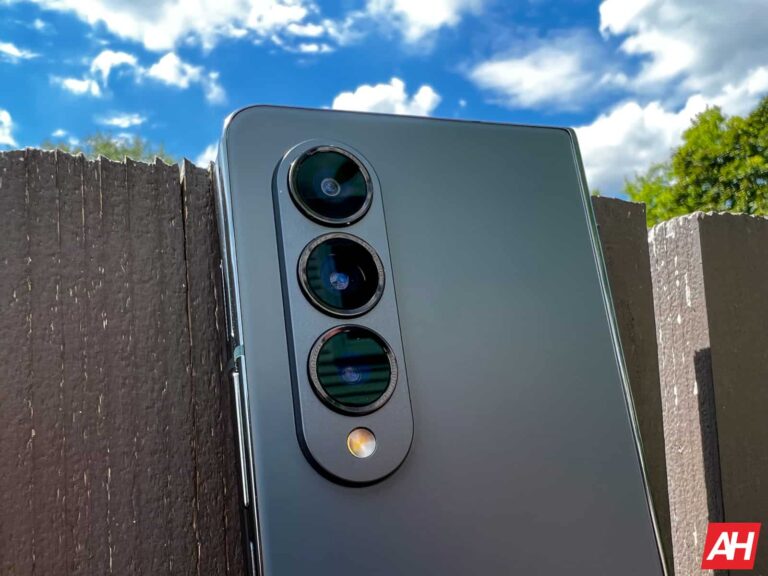
The Galaxy Z Fold 5 & Flip 5 camera info leaks to reveal different sensors will be used
He claims that the Galaxy Z Fold 5 will feature a 50-megapixel main camera, a 12-megapixel ultrawide camera, and a 10-megapixel telephoto camera. The Galaxy Z Flip 5, on the other hand, will allegedly include a 12-megapixel main camera, and a 12-megapixel ultrawide unit.
Some of you will immediately notice that the Galaxy Z Fold 4 and Flip 4 have the same setups. The thing is, the tipster says that both phones will include new image sensors. He did not share any additional info, though.
We’re not sure if that means that all sensors will be different, or some of them, but the cameras won’t be identical to the ones on their predecessors. Well, at least based on this information.
The tipster also added that an “improved hinge” is coming, along with “larger outer displays”. That’s something we knew already, as it has been in the rumor mill for a long time now. On top of that, both phones will be fueled by the “Qualcomm Snapdragon for Galaxy”.
The Snapdragon 8 Gen 2 for Galaxy will likely fuel both phones
It remains to be seen if only the Galaxy Z Fold 5 will include the Snapdragon 8 Gen 2 SoC, or will the Galaxy Z Flip 5 get it too. We presume it’ll be the latter, as the Galaxy Z Flip 4 includes its predecessor, the Snapdragon 8+ Gen 1.
That being said, both phones are expected to fold flat this time around. That is mainly thanks to the new hinge Samsung will use in both phones. The crease should also be less pronounced, while both devices will retain some sort of water resistance.
Chances are that both of these phones will launch in August this year. Samsung usually hosts its second Unpacked event in August, so there you have it.
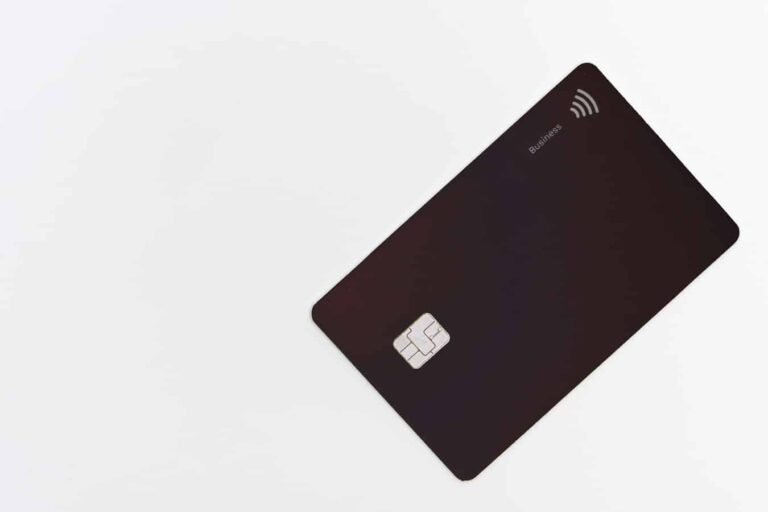
Tokenization replaces sensitive card data with jumbled letters and numbers that will be of no use to cybercriminals if they discover them. Hackers break into business computer systems, steal credit card information and use it to extort thousands of dollars. What if hackers end up with meaningless numbers and letters instead of your name, card number, expiration date, and other valuable information? The loss of confidential data is ensured by payment security tools and credit card tokenization, this is an important and most effective way for payment systems to reliably protect confidential bank card data.
What is tokenization and what does it mean?
To tokenize something usually means replacing it with something that represents the original but is useless outside of a certain context. For a better understanding, it is worth giving an example. You went to a carnival and got special coins to play with. Each coin is worth a certain amount while you are in the carnival, you can use coins as money, and with these coins, you can buy balls, video games, or some interesting accessories. But once you leave the carnival venue, these coins can no longer be used. They have no value. How does credit card tokenization work? You buy something from a seller that uses tokenization. In the tokenization system, card data is recorded and replaced with a random string of numbers and letters.
Merchant systems are often the weakest link in the chain of computer networks associated with credit card purchases. The large-scale data breaches that everyone hears about in the news often occur at merchants who store credit card data, not at the banks or payment networks that process bank card transactions. The confidential card data itself is stored on servers with much greater security. A token is a reference to that data. A hacker who steals parts of information that is tokenized is wasting time, credit card tokenization providers provide an adequate level of security during online payments, and customers are reliably protected and can be exposed to hacker cyber attacks.
EMV technology and its application
The EMV chips embedded in modern credit cards work on the same principle. For each purchase, the chip generates a one-time code. It’s worth noting that EMV chips only work for face-to-face transactions. When an online merchant uses tokenization, card data benefits from the protection provided by EMV chips. Think of your smartphone as a system that actively uses the principles of tokenization. Apple Pay, Google Pay, and other digital wallets work with tokenization systems. Your credit card is not actually “stored” in your digital wallet. Token associated with card data. These tokens do not work as trading tokens, but the concept is the same.
Forms of payment tokens
There are three key forms of payment tokenization, each suitable for different use cases. The payment card number is converted into a unique code and stored in the secure environment of the merchant or payment processor. This type of tokenization is mainly actively used for recurring payments and subscription billing. Pay in one click. Merchants and payment systems trade tokens that are created when users link their bank accounts to merchant accounts. These tokens allow the user to identify himself in the payment processing system. E-commerce companies that cater to repeat customers have enabled and prefer one-click payment tokenization. Mobile payment. With the help of tokens, a payment card can be converted into several independent payments. For example, a physical card may have separate labels for different devices. Tokenization is primarily used in NFC mobile wallets such as Apple Pay and Android Pay.
Who benefits from credit card tokenization?
Everyone except hackers. Let’s start with the user. A data breach may be inevitable, but if there is a data breach at the merchant you use your card with, tokenization will greatly reduce the problem. For merchants, credit card issuers, and payment networks, tokenization significantly reduces fraud and significantly lowers the cost of doing business. Blockchain fans and marketers continue to actively support the enthusiasm for tokenization, the active growth of which is well-known to everyone. The phenomenon of tokenization provides an appropriate level of security to every customer who actively buys and sells online.
Various data breaches and cyber-attacks are common threats to online businesses. Vulnerability to these risks increases when it comes to digital payments. However, tokens can be a key solution to significantly reduce the risk of any online payment fraud. Tokenization of payments can greatly benefit various business companies in ensuring proper security. Payment tokenization replaces confidential information with non-confidential information. Payment companies actively use tokens to securely transmit confidential data, replacing them with a unique sequence of numbers and letters. These combinations are stored separately from the token and cannot be restored to the original data without special keys that cannot be accessed by outsiders.
Payment tokens help securely identify customers and are used by e-commerce merchants and other businesses that need to share sensitive customer data. Note that the token itself contains absolutely no sensitive user information. Use secure web tokens to provide bank details to merchants in open banking services. Instead of sharing confidential information, merchants are provided with completely secure tokens that are used to identify users and share information necessary for successful online payments. Users can link their bank accounts to the trading platform and pay for goods and services in one click. After this process, merchants and payment initiation service providers exchange secure tokens to initiate payments based on confidential data. Tokens allow merchants to identify customers without repeatedly requesting the same payment information for each payment. Various payment service providers are also actively using tokens for the secure transfer of card data for successful online payment. A debit card token transaction looks like this:
The owner of the bank card initiates the purchase and provides card data on the seller’s website;
Bank card data is exchanged for a series of random numbers (tokens) and sent to the receiving bank;
The receiving bank sends the token to the card security system;
After successful authorization, the cardholder’s data is stored in the bank’s virtual safe. The token is tied to the cardholder’s bank account number;
The bank carefully checks the availability of the necessary funds and approves or rejects the operation;
Once the transaction is confirmed, the unique tokens of the current and future transactions are returned to the merchant.
All this happens in the background, so the tokenization process does not affect the user interaction.
Tokenization – where does it come from and where does it go?
The popularity of cryptocurrencies is due to two key factors: their functionality and speculation. A key feature is that with the advent of blockchain, it has become possible to verify transactions across a network of distributed computers. Of course, some coins reward miners whose transactions have been approved by the network, and the miners sell these coins to users who want to use the network. Today, when you create a token or tokenize something, you create it on a blockchain (usually Ethereum) and thus pay for the cryptocurrency of the blockchain. Then came the second factor that made cryptocurrencies so popular: speculation. Blockchain works very well when people understand that the world economy will be built on blockchain in the future, or see the demand in this field and understand how tokenization processes are happening in this field. Of course, the demand is high and the market attracts them.
Now that you know what drives the demand for cryptocurrencies, it is worth answering the following basic questions: What is the need for and why is tokenization being actively used now? Tokenization is a form of corporate digitization based on decentralized technology. It consists of its creation or strict distribution for specific projects, companies, or (specific) individuals. The development and adaptation of blockchain technology through smart contracts have increased the possibility of tokenization, which can be actively used to create all types of assets, which allows and at the same time reduces the costs of their further transfer. Tokenization shares several key features with crowdfunding. You also need to understand what a smart contract is. Tokens are like money in computer games, not just virtual numbers in a virtual wallet. A smart contract is a self-executing contract that an issuer can enter into with a token holder.
B2C companies have more potential than B2B companies. A booming industry is a good sign. It may not be solar energy or artificial intelligence, but the more profitable it seems to investors, the more willing they will be to invest in this field and tokenization in general. The company must make a profit. You must make attractive offers to investors. For example, if your company rents office space, investors may not be comfortable with a 3% annual return on investment. The most important thing is the company’s brand and the owner’s brand. Business scalability. There should be a large market for products and services. If you are running a niche business, scaling your business may be difficult (in some cases), in which case tokenization and its successful implementation may not make sense. Tokenization remains a capital market based on the same principles as the active management of various business processes.
Why is tokenization important for online payments?
One of the key reasons why tokenization is important for online payments is the proper level of security. Tokenization adds a layer of security to digital transactions. This is a common problem in the digital world that online sellers often fall victim to. Another key benefit is a hassle-free online payment process for customers. Businesses with repeat customers can enhance their experience with account-linking features. Customers can purchase with just one click, ensuring a smooth and efficient checkout process without compromising data security. Active exchange of data using tokens has much more benefits than the obvious security advantage.
Key benefits of tokenization for various businesses and their customers include that tokenization significantly increases conversion rates. Account linking is supported by tokens that securely store user data for future purchases. This feature allows users to securely link their bank account to a retailer’s online store and pay for their order with a single click. It provides users with a simple checkout process and keeps their data safe, which increases conversion. Tokenization ensures compliance with current business rules.
The use of tokens ensures the level of compliance with the current standard PCI DSS (Payment Card Industry Data Security Standard). This is because merchants and third parties do not store confidential information about cardholders, only tokens. PCI compliance can be expensive for businesses, so working with a secure payment processor can reduce compliance costs. Tokenization provides a high level of security. As mentioned earlier, tokens are one of the most important security elements in the payments industry. If a fraudster steals your token, it is securely stored on another server and cannot be linked to any valuable information.
What is the key difference between tokenization and encryption?
The key difference between tokens and encrypted data is that tokens exchange data for an unrelated code, while data encryption uses algorithms to temporarily encode data. Encryption is actively used to protect confidential information. Each character is replaced by another character using an encryption algorithm. When the data reaches its destination, it is decrypted using a password or key. The encrypted code can be changed, but the algorithm cannot be traced back to the initial location of the token. The PCI Security Standards Council recognizes encryption as a sensitive issue and imposes stricter compliance obligations on companies that prefer encryption over tokenization. If you use a physical card for a variety of transactions, encryption is one of the most reliable ways to protect your card data. Tokenization is a more secure option for cardless payments. Some companies use both encryption and tokenization for maximum security.
The popular VPN service Mullvad has now stepped in with another privacy venture. In collaboration with Tor, Mullvad VPN has launched the Mullvad browser – its very own privacy-focused web browser for the public.
Mullvad VPN And Tor Launched A Private Browser
Announcing the move via a blog post, Mullvad VPN has shared details about its new product.
As elaborated, the Mullvad browser is a standalone, open-source, web browser that ensures the utmost privacy to the end-user. Unlike conventional browsers like Google Chrome, the Mullvad browser is similar to the Brave browser, protecting users from intrusive online tracking.
Specifically, the Mullvad browser is a spinoff of the Tor browser with a simplistic touch. It has a user-friendly interface, easy-to-grasp options, and inbuilt support for VPN instead of running on the Tor network. However, it doesn’t come with a built-in VPN (unlike Opera), instead, supports Mullvad VPN or any other VPN service to spoof users’ IPs. While it remains possible to use the browser without a VPN, doing so won’t hide the users’ IP.
Nonetheless, the other privacy features will remain active even without VPN. That’s because Mullvad has many features disabled by default, such as Firefox Sync, password management, Deceptive Content and Dangerous Software Protection (popular in Chrome), fingerprint blockers with spoofed time zone, and white spaces around websites.
But it doesn’t mean using Mullvad will be an awkward experience. Users can still make changes to it, install add-ons (though the provider doesn’t recommend it), and download files.
Mullvad VPN developed this browser together with the Tor Project, leveraging their expertise to develop a browser that runs on a VPN. It is available for free for all users, including non-Mullvad VPN subscribers. Users can also use this browser with any other VPN service of their choice. Currently, the browser supports desktop systems (Windows, macOS, and Linux) without smartphone support, and is available for download here.
TikTok has been fined by a UK data protection watchdog after its investigation shows the company failed to get parental consent.
TikTok has been ordered to pay a fine of $15.6M (£12.7M) for failing to protect 1.4 million UK children under the age of 13 from accessing its platform in 2020. The Information Commissioner’s Office (ICO), the UK’s data protection watchdog, imposed the fine after finding the company used children’s data without parental consent.
According to the ICO, the company may have used the data for tracking and profiling purposes. It may have also presented children with content deemed potentially harmful or inappropriate.
“There are laws in place to make sure our children are as safe in the digital world as they are in the physical world. TikTok did not abide by those laws,” said John Edwards, information commissioner for the ICO.
“TikTok should have known better. TikTok should have done better.”
Edwards told BBC News that TikTok had “taken no steps” to get parents’ consent.
“If you’ve been looking at content which is not appropriate for your age, that can get more and more extreme. It can be quite harmful for people who are not old enough to fully appreciate the implications and to make appropriate choices.”
In an interview with the BBC, Prof Sonia Livingstone, a researcher who studies children’s digital rights and experiences at the London School of Economics and Political Science, said she was happy the ICO had taken action against TikTok but fears the fine could be “shrugged off as the cost of doing business,” implying that nothing much might change with how TikTok operates.
“Let’s hope TikTok reviews its practices thoroughly and make sure that it respects children’s privacy and safety proactively in the future,” she said.
A TikTok spokesperson said the company invests “heavily to help keep under 13s off the platform and our 40,000-strong safety team works around the clock to help keep the platform safe for our community.”
“We will continue to review the decision and are considering next steps,” the spokesperson added.
The ICO gave TikTok 28 days to appeal the fine.
Malwarebytes removes all remnants of ransomware and prevents you from getting reinfected. Want to learn more about how we can help protect your business? Get a free trial below.
WhatsApp for Android may soon switch to a bottom navigation bar. The Meta-owned messaging platform is currently working on this major UI redesign. The in-development change was spotted within the latest beta version of the app by the folks over at WABetaInfo. It isn’t available to users yet, not even to beta testers.
While most apps offer similar UI on Android and iOS, WhatsApp is not among those. The world’s most popular messaging app has a bottom navigation bar on iPhones but the Android version has it at the top. It isn’t a problem for most users, but those who frequently switch platforms may find this inconsistency across the two platforms a bit annoying. The company is seemingly preparing to fix it, giving the Android version an iOS-like look and not the other way around.
WABetaInfo spotted this change within version 2.23.8.4 of WhatsApp beta for Android. The publication confirms that the new UI is still in development and isn’t live on the said beta version of the app for users. But they could grab a screenshot of the proposed change by digging deep into the APK file. As you can see in the attached image below, the redesigned UI places four buttons at the bottom of the screen. The new UI has Chats, Communities, Status, and Calls from left to right in that order.
The current top navigation bar has Communities on the extreme left, followed by Chats, Status, and Calls. The topmost panel with the WhatsApp logo and the camera, search, and more buttons is unchanged, though. Overall, the redesign brings Android and iOS versions of the WhatsApp app closer in terms of interface. It isn’t entirely a copied UI across the two platforms, but both follow the same design philosophy. Most Google apps also have a bottom navigation bar.
WhatsApp is still working on this UI redesign for its Android app
As mentioned earlier, a bottom navigation bar for WhatsApp’s Android app is currently in development. There’s no timeline regarding its public release. But if everything goes well, beta testers may get the new UI within the next few weeks, followed by a stable rollout. We recommend keeping the app updated to get all the latest changes and new features. The company is also working on fingerprint locking of individual chats, new poll settings, and more changes.
Do you make use of the PayPal Here POS service for your transaction needs? If you do, then it is important to know that this service has been discontinued by the company. This improvement is coming 11 years after the service came into existence.
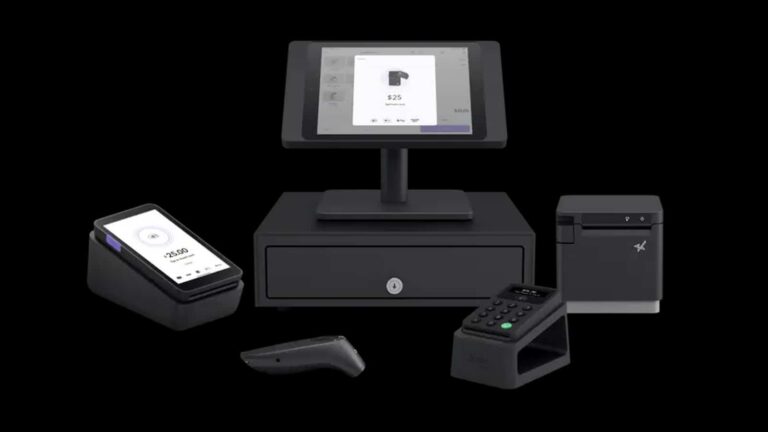
Customers that make use of this payment service will need to switch over to a new platform. This new platform is available thanks to one of PayPal’s acquisitions. With this platform, users can still make payments using their PayPal Debit card on the company’s own POS machine.
What is this new POS payment platform from PayPal, and how can you make use of it? What now happens to the PayPal Here POS service that you made use of for your business activities? These are just a few questions that are on the mind of users of the PayPal Here POS service.
Zettle card transaction platform service will replace the PayPal Here POS service
Back in 2018, PayPal purchased iZettle, a Swedish financial technology company. This purchase cost PayPal $2.2 billion, which is double the start-up company’s valuation at the time of the purchase. PayPal aimed to increase its presence among physical retailers, who were seeking out ways to receive cashless payments from their customers.
Before this purchase, iZettle was present in over 12 countries, mainly in Europe and Latin America. But now, under PayPal’s control, it is about to establish its presence in more countries. Zettle will replace the PayPal Here POS service for businesses around the globe.
Starting with the US, from April 3rd the Here POS products from the machines to the apps will stop working. PayPal’s customers in this region are now required to switch over to the new Zettle POS service. This comes with new POS machines, payment terminals, and even a new app.
Businesses hoping to make this switch will pay a total of $199 for the all-in-one payment terminal and $40 for the barcode scanner. For smaller businesses, $29 will get them their first Zettle card reader. But they will pay $79 each if they need to purchase more than one card reader.
The app to keep track of payments will also be available for download to existing and new users. As for businesses with the all-in-one payment, they will get the app alongside the touch screen card reader. There is a long list of payment types that the new Zettle platform accepts, bringing secure and safely encrypted transactions.
Additionally, if you recently purchased a PayPal Here POS device, you might be at a loss. PayPal advises that businesses dispose of all Here POS devices properly, and switch to using the Zettle POS service. The deadline for all refunds of the Here POS devices ended in February 2023.
YouTube is investigating and warning users of a new phishing scam that has been using its authentic no-reply@youtube.com email address to lure users into giving away their login credentials.
YouTube, one of the world’s largest video-sharing platforms with billions of users, has become a target for phishing attacks. Scammers have found a new way to trap YouTubers through the platform’s Share Video by Email feature, which sends out phishing emails that look authentic. YouTube has become aware of this trend and is warning users to be cautious.
In a recent tweet, YouTube revealed details about a phishing scam where emails are being sent from an authentic YouTube account. The malicious email appears to be sent directly from YouTube, with the email address no-reply@youtube.com.
Social media content creator Kevin Breeze alerted YouTube about the new phishing scam and tweeted that it is not a spoofed email but rather an abuse of the video-sharing system. This suggests that scammers are exploiting the platform’s sharing system to send these emails.
The phishing email content is similar to those seen in previous phishing scams, containing a YouTube video and a message informing users about YouTube’s new monetization policy and new rules.
The email also includes a Google Drive link that has a password to open it. To instil urgency, users are told they have only 7 days to review and respond, otherwise their YouTube access will be restricted.
If users open the document and enter the required information, they may actually lose access to their YouTube account because it will be hijacked by scammers. This is especially concerning as most YouTube users log in using their Gmail accounts. If their YouTube account gets hijacked, their Gmail data will also be stolen.
⚠️ heads up: we’re seeing reports of a phishing attempt showing no-reply@youtube.com as the sender
be cautious & don’t download/access any file if you get this email (see below)
To stay safe, users are advised to be cautious and vigilant. They should avoid responding to messages sent by unknown senders, review emails carefully even if they are sent from the company’s official email address, and enable two-factor authentication.
In a comment to Hackread.com, Vonny Gamot, Head of EMEA at online protection company, McAfee said “Although the sender address appears to look legitimate, there are some tell-tale signs that the email is a scam. The 7-day countdown is a classic tactic from cybercriminals who often try to create a sense of urgency in a bid to make people act quickly without double-checking.”
Vonny emphasised that “You should never feel pressured into acting and always hover over any links before clicking on them to ensure the URL is correct as secure websites begin with “HTTPS,” not just “HTTP.”
“That extra “s” in HTTPS stands for “secure,” which means that it uses a secure protocol for transmitting sensitive information like passwords and credit card numbers. It often appears as a little padlock icon in the address bar of your browser,” Vonny added. “If ever in doubt over the legitimacy of an email or link, don’t engage with it and go direct to the source.”
Additionally, users are encouraged to use the best antivirus software to protect their devices against malware. YouTube may also need to temporarily disable the Share Video by Email feature to prevent exploitation by hackers.
This new phishing scam is a reminder that even the most popular and trusted platforms are not immune to cyber threats. It’s important for users to be aware and take steps to protect themselves from these types of attacks.
Google has released an Android update that fixes two critical remote code execution (RCE) vulnerabilities, and one vulnerability that has been exploited in the wild.
In the April 2023 Android security bulletin, Google announced security updates which include fixes for two critical remote code execution (RCE) vulnerabilities and one vulnerability that has been exploited in the wild. The vulnerabilities are impacting Android systems running versions 11, 12, 12L, and 13. Users should update as soon as they can.
You can find your Android’s version number, security update level, and Google Play system level in your Settings app. You should get notifications when updates are available for you, but you can also check for updates.
For most phones it works like this: Under About phone or About device you can tap on Software updates to check if there are new updates available for your device, although there may be slight differences based on the brand, type, and Android version of your device.
Two critical vulnerabilities
Google never discloses a lot of details about these vulnerabilities. Access to bug details and links are usually restricted until the majority of users are updated with a fix. Here’s what we know so far:
CVE-2023-21085: A vulnerability in the System component which allows a remote attacker to execute arbitrary code. The vulnerability exists due to improper input validation within the System component. A remote attacker can trick the victim to open a specially crafted file and execute arbitrary code.
When a program is unable to perform a proper verification of input, using unintended input can influence program data flow handling. Attackers can abuse this by creating input data that can cause changes of control flow, arbitrary control of a resource, or arbitrary code execution.
CVE-2023-21096: Another vulnerability in the System component which allows a remote attacker to execute arbitrary code. The vulnerability exists due to improper input validation within the System component. A remote attacker can trick the victim to open a specially crafted file and execute arbitrary code.
One vulnerability exploited in the wild
CVE-2022-38181: A vulnerability in the Arm Mali GPU kernel driver allows unprivileged users to access freed memory because GPU memory operations are mishandled. This use-after-free (UAF) vulnerability allows a local application to escalate privileges on the system. A local application can trigger memory corruption and execute arbitrary code with elevated privileges. This vulnerability is known to be exploited in targeted attacks and was first spotted in November 2022.
UAF is a type of vulnerability that is the result of the incorrect use of dynamic memory during a program’s operation. If, after freeing a memory location, a program does not clear the pointer to that memory, an attacker can use the error to manipulate the program. Referencing memory after it has been freed can cause a program to crash, use unexpected values, or execute code. By using dynamic memory allocated to a program with higher privileges, the attacker can use those privileges to execute his code.
We don’t just report on vulnerabilities—we identify them, and prioritize action.
This time around, we’re comparing two relatively compact flagship-grade phones, the Apple iPhone 14 Pro vs Xiaomi 13. The Xiaomi 13 is larger than the iPhone 14 Pro, but still, the difference is not that big at all. These are both great choices for those of you who don’t want to carry around huge phones. Still, the two devices are a lot different, which should make this comparison rather interesting.
We’ll first list their specs, and will then move to compare them across a number of other categories. We’ll compare their designs, displays, performance, battery life, cameras, and audio performance. The two phones not only look different, but do come with a rather different set of specs, and of course, entirely different software. Let’s get started, shall we?
Specs
Apple iPhone 14 Pro
Xiaomi 13
Screen size
6.1-inch LTPO Super Retina XDR OLED display (120Hz refresh rate)
Both of these phones are made out of metal and glass. The iPhone 14 Pro combines a stainless steel frame with a “Corning-made glass” on the back, we still don’t know the details. The Xiaomi 13 combines an aluminum frame with the Gorilla Glass 5 on the back. Do note that the Xiaomi 13 also comes in a silicone polymer variant, which includes a different backplate. In any case, the iPhone 14 Pro is heavier than the Xiaomi 13, and the main reason is its stainless steel frame.
Apple’s compact flagship weighs 206 grams, compared to 185 or 189 grams of the Xiaomi 13 (depending on the variant). The iPhone 14 Pro is a bit shorter than the Xiaomi 13, while it has the exact same width, and the two phones are almost identical in terms of thickness too. Now, the bezels are very thin on both phones, and both devices have a flat display. The Xiaomi 13 includes a display camera hole, which is centered up top. The iPhone 14 Pro has a pill-shaped cutout at the top.
Both phones have flat sides, though they’re more pronounced on the iPhone 14 Pro. The iPhone 14 Pro also has a flat back, while the Xiaomi 13’s backplate curves into the frame at the very edges, making the phone more pleasant to hold. Both devices do have rounded corners, and rounded display corners too. You will find three cameras on the back of both phones, but with different designs. Apple has its own, easily-recognizable camera island design at this point. Xiaomi came up with something considerably more subtle for the Xiaomi 13 series.
You’re getting an IP68 certification on both devices. They’re both water and dust resistant. The Xiaomi 13 is more pleasant to hold in the hand, and it’s also noticeably lighter at the same time. Both are very slippery, though, so using a case may not be a bad idea. Needless to say, the silicone polymer variant of the Xiaomi 13 is less slippery than the rest.
Apple iPhone 14 Pro vs Xiaomi 13: Display
The iPhone 14 Pro features a 6.1-inch fullHD+ (2556 x 1179) LTPO Super Retina XDR OLED display. That display is flat, and it supports an adaptive refresh rate of up to 120Hz. It also supports HDR10 content, and Dolby Vision too. This panel gets immensely bright at 2,000 nits of peak brightness. We’re looking at a 19.5:9 aspect ratio here, while the iPhone 14 Pro’s display is protected by the Ceramic Shield glass.
The Xiaomi 13, on the other hand, has a 6.36-inch fullHD+ (2400 x 1080) AMOLED display. This panel is also flat, and it has support for both HDR10+ and Dolby Vision. It can also get immensely bright at 1,900 nits of peak brightness. The Xiaomi 13’s display has a 20:9 aspect ratio, and it’s protected by the Gorilla Glass 5 from Corning.
Now, both of these panels are excellent. They’re more than sharp enough, and have excellent viewing angles. They’re vivid, and the blacks are deep. On top of everything, the touch response is really good too. We don’t have any complaints whatsoever, as the displays also get more than bright enough outdoors. If you need a more compact phone for use in direct sunlight, these two won’t disappoint.
Apple iPhone 14 Pro vs Xiaomi 13: Performance
The iPhone 14 Pro is fueled by the Apple A16 Bionic processor. The phone also comes with 6GB of RAM, and NVMe flash storage. The Xiaomi 13, on the flip side, ships with the Snapdragon 8 Gen 2 processor. In addition to that, Xiaomi included up to 12GB of LPDDR5X RAM and U FS 4.0 flash storage. Do note that only the 128GB storage model has UFS 3.1 flash storage.
Do these specs equal great performance on both phones? Well, yes, they do. Both smartphones are quite snappy and responsive during everyday tasks. The same goes for gaming, by the way, you can run the most demanding games on both of these phones. Do note that the Xiaomi 13 ships with MIUI 14 on top of Android 13, and it still needs some optimization. But, overall, it’s a great implementation of Android with plenty of customization options. These two phones have entirely different approaches to software, but both of them perform admirably.
Apple iPhone 14 Pro vs Xiaomi 13: Battery
The iPhone 14 Pro has a 3,200mAh battery, while the Xiaomi 13 incorporates a 4,500mAh unit. Do note that iOS devices usually need smaller batteries, not to mention that the Xiaomi 13 has a larger display. Having said that, the battery life on both of these phones is good, but the iPhone 14 Pro offers more in that regard. Getting over the 7-hour screen-on-time mark is not a problem at all, while the Xiaomi 13 is in the same ballpark, but not quite there. It’s usually closer to 6 hours of screen-on-time.
Do note that your mileage may differ, though, of course. You are using different apps, have different usage habits, different signal strengths, and so on. So, who knows, you may be able to pull out even more juice from both phones. We’re just glad to see that the Xiaomi 13 is better in the battery life department than its predecessor. The Snapdragon 8 Gen 2 definitely has something to do with that.
When it comes to charging, these two phones are not even on the same playing field. The Xiaomi 13 completely obliterates the iPhone 14 Pro. It supports 67W wired, 50W wireless, and 10W reverse wireless charging. On top of that, it comes with a charger in the box. The iPhone 14 Pro supports 20W wired, 15W MagSafe wireless, and 7.5W Qi wireless charging. It does not include a charger in the box.
Apple iPhone 14 Pro vs Xiaomi 13: Cameras
The iPhone 14 Pro packs in a 48-megapixel main camera, a 12-megapixel ultrawide camera (120-degree FoV), and a 12-megapixel telephoto unit (3x optical zoom). The Xiaomi 13, on the flip side, has a 50-megapixel main camera, a 12-megapixel ultrawide unit (120-degree FoV), and a 10-megapixel telephoto camera (3.2x optical zoom). Both phones provide really good images, actually.
You’ll be glad to hear that Xiaomi managed to considerably improve the handling of white balance with this phone, compared to its predecessor. The Xiaomi 13 actually does a great job in HDR situations, and the photos end up looking pleasant. You can even choose between two shooting modes with different color presets. The images end up looking sharp and vibrant, and also well-balanced. The iPhone 14 Pro tends to provide more true-to-life images, though it still tends to struggle with highlights in demanding HDR situations, but only at times. Other than that, it’s an excellent performer.
In low light, the Xiaomi 13 tends to brighten up the shadows more than the iPhone 14 Pro, but both do a good job. The end results do end up looking different, however. Ultrawide cameras do more than a decent job on both phones, while the iPhone 14 Pro handles portrait photography better, and the same goes for video recording. Overall, chances are you’ll be happy with the performance of both phones.
Audio
You will find a set of stereo speakers on both of these phones. The ones on the iPhone 14 Pro do sound a bit better, though, at least to us. They do seem to have a bit of a wider soundstage. The difference is not that big, though, and both sets of speakers are loud enough.
Having said that, there is no audio jack on either phone. You can use their charging ports to connect your headphones via a cable, though. If you prefer a wireless connection, both devices are equipped with Bluetooth 5.3.