The phishing attack commences by sending malicious emails disguised as financial files, such as invoices.
The cybersecurity researchers at SentinelOne have observed a new phishing campaign in which attackers are abusing the Windows User Account Control (UAC) bypass to distribute the DBatLoader and Remcos RAT malware. The primary targets of this campaign are organizations in Eastern Europe.
New Phishing Campaign Delivering Remcos RAT
According to SentinelOne, scammers are using DBatLoader malware loader to distribute Remcos RAT to businesses and institutions across Eastern Europe. The attackers use emails that seem to have come from authentic sources, such as reputed institutions in their target regions, to lure victims.
When they are successful in luring users into clicking on the malicious link included in the email’s content, the attackers easily leverage the malware loader, bypass Windows UAC, and drop Remcos RAT.
How Does the Attack Occur?
The attack commences by sending phishing emails disguised as financial files, such as invoices. These emails include a tar.lz archive containing the DBatLoader executable.
The phishing email as seen by SentinelOne
When the victim checks this email, they are lured into opening the DBatLoader’s initial stage payload, which is disguised as a LibreOffice, PDF, or MS Office document. Once this is done, the second-stage payload is retrieved from Google Drive or Microsoft OneDrive, one of which has been active for at least a month.
“When a user decompresses the attachment and runs the executable within, DBatLoader downloads and executes an obfuscated second-stage payload data from a public cloud location,” said SentinelOne’s Aleksandar Milenkoski.
According to SentinelOne’s blog post, the RAT is loaded only when DBatLoader executes a Windows batch script through a Windows UAC evasion technique involving DLL hijacking and mocking trusted directories. Through easinvoker.exe, Windows automatically elevates the process without issuing a UAC prompt when located in a trusted directory—the mock %SystemRoot%System32 directory.
About Remcos RAT and DBatLoader
DBatLoader abuses public cloud infrastructure for hosting its malware-loading capabilities. Remcos is a feature-rich RAT, which is frequently used by cybercriminals in espionage campaigns and is typically distributed via phishing emails.
Ukrainian CERT recently reported about Remcos-based phishing campaigns targeting state institutions for conducting espionage. In this instance, the attackers used password-protected archives as malicious email attachments.
This malware can collect keystrokes, video, audio, screenshots, and device or system-related information. Moreover, it can also deliver additional malware to the system.
It’s March. And for sports fans, that means one thing – March Madness. But before we get to the NCAA Tournament, we have a ton of conference championships. Including this one for the Big East.
The Big East is a conference with 11 teams, so the bracket does look a bit odd. But that also means that a handful of teams get to skip the first round of games. And after a long basketball season, that is definitely good to have. The number one seed here in the Big East is Marquette. With Xavier, Creighton and UConn rounding out the top four. This is a conference, that historically, has a pretty big presence in the NCAA Tournament.
Here’s how you can watch the Big East Men’s Basketball Tournament this year.
What’s the Big East bracket?
The bracket has been announced, and since it does have 11 teams, some teams do get to skip out on the first round. Here’s the full bracket.
As you can see, five teams skip the first round. With the first round having three games, and then four in the second round. So Marquette, Xavier and Creighton don’t know exactly who they are playing just yet. This is bound to be a great tournament, though.
When is the Big East Tournament?
The Big East Men’s Basketball Tournament will kick off at 3PM ET on Wednesday, March 8 with the number eight seed St. John’s taking on the number nine seed Butler. All of the games will be on FS1, including the Championship game on March 11.
Like most of the tournaments, the Big East Tournament will take place on subsequent days. And in order to win the tournament, your team needs to win at least three games. If they are a six seed or lower, they’ll need to win four. That many wins in as many days can be pretty tough, but an automatic bid to the NCAA Tournament is on the line here.
Where can I watch the Big East Tournament?
The 2023 Big East Men’s Basketball Tournament will air on FS1. Some games might get moved over to FS2, depending on what other games and tournaments FS1 is set to air. Remember, that since these are all being played at the same arena – Madison Square Garden in New York City – that these games won’t overlap. And that can also mean that some might get pushed back.
Sling TV
Sling TV is going to be the best place to watch the Big East Men’s Basketball Tournament. It does have FS1 (as well as FS2) available in the Sling Blue package. Which is normally $40 per month, but right now they are running a promo where you can get it 50% off for the first month. That makes it just $20 and you can cancel after March Madness is over.
Sling TV does offer a 7 day free trial, and you can sign up for it here.
YouTube TV
YouTube TV is our second option for watching the Big East Men’s Basketball Tournament. That’s because it is quite a bit more expensive than Sling TV, at $65 per month. But you are getting all of the channels for this tournament and almost every other basketball tournament – including the NCAA Tournament later this month. On top of that, YouTube TV does offer unlimited cloud DVR, so you can record to watch later on.
YouTube TV does offer a free trial and you can sign up here.
Hulu + Live TV
Hulu + Live TV is a good option, if you don’t like Sling TV or YouTube TV. It’s not that we don’t like Hulu + Live TV, it’s just more expensive and doesn’t offer a whole lot more. For $70 per month, you can get FS1, along with most of the NCAA Tournament channels, to experience March Madness. It also has unlimited cloud DVR like YouTube TV.
Hulu does offer a free trial for Live TV, which you can sign up for right here.
When is Selection Sunday?
Selection Sunday is happening on March 12. That will be following the conclusion of Sunday’s conference championship games. Typically, CBS airs the Selection Sunday show between 6PM and 8PM ET. Though sometimes it can run a bit late if the 4PM games go into overtime.
During the show, we’ll find out who is in the NCAA Tournament this year, and who is not. While we have “experts” doing bracketology all year long, we kind of have a good idea of who is in and who’s not, the committee can still surprise us. It’ll also be interesting to see who gets to play who.
Keep in mind that conference tournament winners do get an automatic bid into the NCAA Tournament. So 32 teams will already be in the field, and the committee will need to add another 36 teams. As well as seeding them in the correct order. With four regions of 16 teams. Along with the first four games, there’s a total of 68 teams that get into the tournament. And the excitement of March Madness is upon us.
For the NCAA Tournament, the First Four games will take place in Dayton, OH on March 14-15. With the first and second rounds taking place March 16-19. The regionals happening from March 23-26. And the Final Four happening on April 1, with the National Championship on April 3 at NRG Stadium in Houston.
At this point, is it any wonder that WhatsApp is one of the first-choice IM (instant messaging) apps out there? It is available on both Android and iOS, it has end-to-end encryption for extra security and — most notably — it is constantly getting updated with new features.
But people don’t just use WhatsApp for themselves — numerous businesses opt to have a WhatSapp communication channel open, so that customers can get in touch more easily. While that sounds awesome, it also means that their info is public and as such, not every caller is a customer, per say.
Luckily, WhatsApp realizes the value of this utilization of its app, and as such is reportedly working on a feature to help users handle spam calls more effectively. This information comes courtesy of WABetaInfo and it describes how one toggle can take care of all of this spam-related hassle.
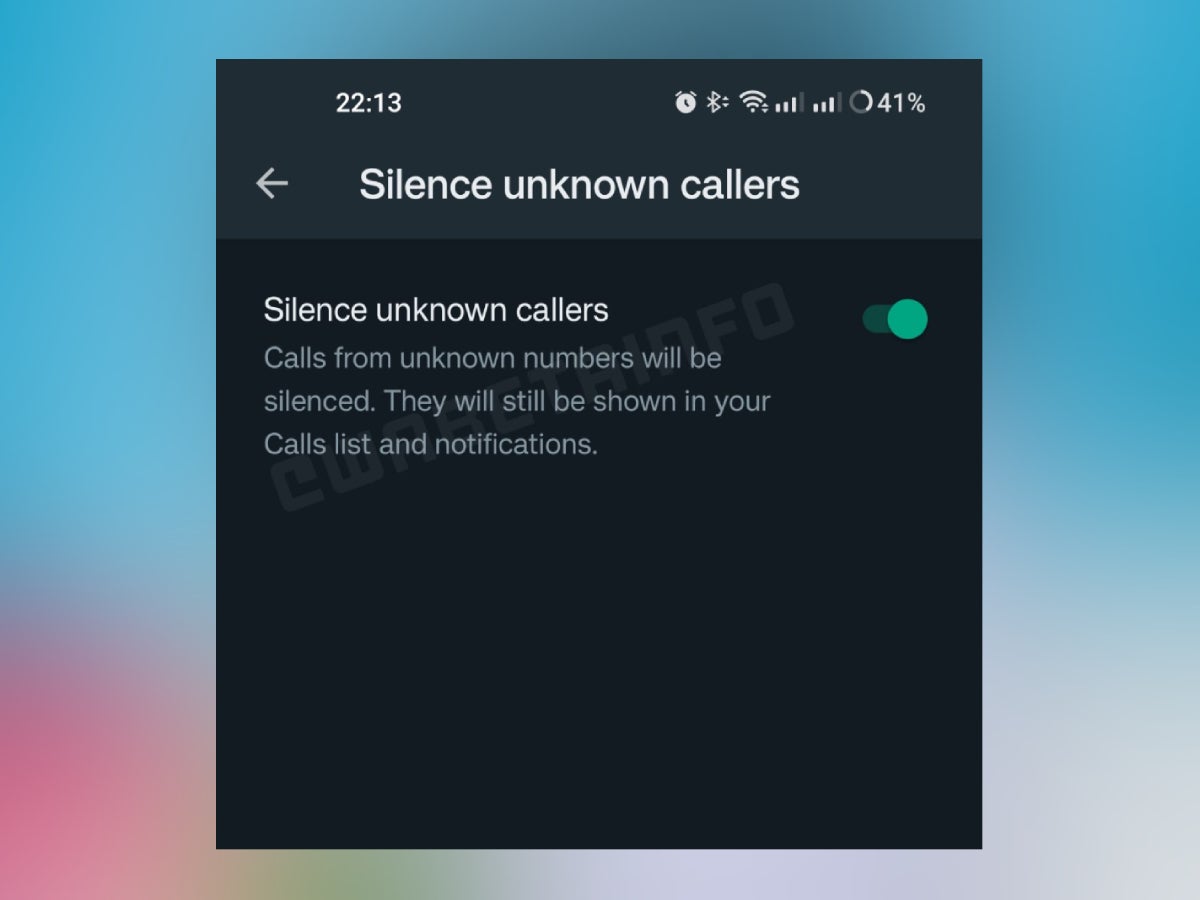
All of the power is behind this one, simple toggle.
The WABetaInfo team has managed to uncover development traces of this new feature through the latest release of the WhatsApp beta program on Android. By the looks of things, the way this is intended to function is as follows: users can mute calls from unknown callers. Simple as that!
That, however, wouldn’t be helpful for businesses, right? As such, WhatsApp will still let users keep a record on who has called, just in case there is ever a need to call back. Said records will be kept in the Call List and Notification Center, just as with any other call.
Right now, the feature is still under development, so we don’t really have a release date for this one. But by the sound of things, it will be worth the wait, as it will not only help alleviate the stress of spam calls, but also help with combating scammers and trolls.
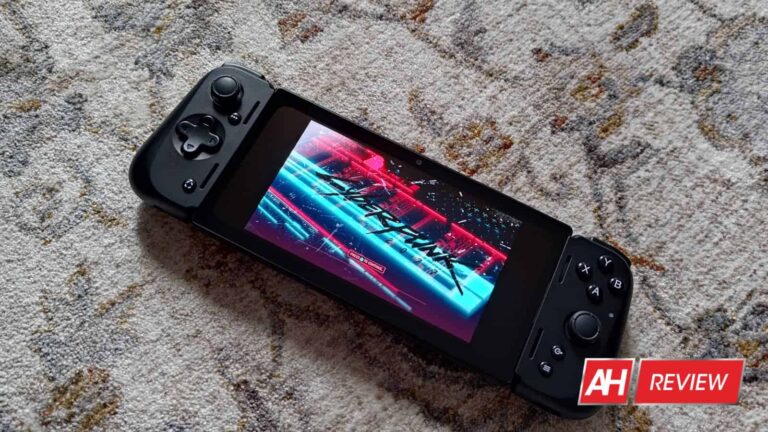
I’ll admit, The Razer Edge 5G wasn’t quite what I imagined it to be when Razer first teased it last year. What I thought would be a gaming handheld more akin to Logitech’s G Cloud, turned out to be a gaming tablet bundled with a Razer Kishi V2 Pro controller. It’s still a gaming handheld, but not one solid unit like I thought it was going to be.
Turns out, though, that this is a good thing. Because Razer packed the Edge 5G (and the Edge Wi-Fi) with some powerful enough components to handle demanding mobile games too. And in my personal experience, these are almost always better with touch controls. And it’s a lot easier to use those touch controls on a tablet device than on something like the G Cloud. Which does also have a touchscreen. The Edge 5G is in all honesty, one of the coolest gaming devices the company has released in years.
Yes, it makes some great keyboards, and its gaming laptops are usually top-notch if you can get over the insanely high price tag. But those are more of the same. More of something Razer has been offering for years. Newer models of hardware it releases on an annual basis. The Edge 5G, is a new gaming device category for the company if you don’t factor in the original Edge from over a decade ago – a handheld gaming PC. It is however a similar idea. Even if it’s meant for cloud gaming as opposed to local PC gaming.
I’ve been using this thing for over a month and I absolutely love it. And it’s been the sole reason I’ve gotten back into games like Control, because it plays so well on mobile via GeForce NOW. And that AMOLED display really does amp the visuals up. Is Razer’s Edge 5G really all it’s cracked up to be though?
The Razer Edge 5G gets a big boost from Verizon
Razer’s execution of the Edge 5G (in partnership with Verizon) is what really makes the device a compelling piece of hardware. But Verizon is doing some heavy lifting here. Unfettered access to your cloud games no matter where you are. Although, you are still limited in some ways. If you don’t have Wi-Fi access, you’ll need to rely on Verizon’s 5G mobile internet. Which, can also sometimes be spotty. If it’s not available in your area, then the device defaults to 4G LTE. Which isn’t exactly a great experience for cloud gaming.
Some areas of my apartment will get a 5G connection just fine while others, 4G LTE is the only option. And after many attempts to play games using the LTE, it’s become clear that it just doesn’t have the speed or reliability to make cloud gaming work. That being said, if you can connect the Edge to 5G, gaming is great. And in most of my sessions over mobile internet, I didn’t experience any dropped connections and visuals were just fine.
I will say though that it still did seem to perform a little better over Wi-Fi. And if you’re using apps like Steam Link, you’ll need to be on the same network as your PC anyway. But when you can play games using the 5G connection, it’s a pretty surreal experience. Being able to sit in traffic (not while you’re the driver of course) and play games you’d normally play on your PC or console at home.
While the Verizon 5G support isn’t the only notable part of this device, I really feel like it sets the Edge apart from the G Cloud, and any other similar devices that may come out in the future.
Better performance means less battery life
It’s the unfortunate way of things. The Edge 5G has a great display. Which helps games look more vivid. But that higher resolution display and faster frame rate do cause the battery life to take a hit.
This is only amplified with the Snapdragon G3x Gen 1 mobile platform inside. It’s a more powerful chipset that delivers better performance in games like Genshin Impact. But that also means an increase in battery drain. I was getting around 7-8 hours of battery life on average. Which isn’t terrible but it’s only a little more than half of what you get on the G Cloud.
You’ll have to be ok with these concessions if you want the uptick in performance and the ability to play over 5G. Though honestly, that might be worth it if you want a device dedicated to just cloud and mobile gaming. And that’s not really a bad thing to want if you want to keep games off of your phone for the most part.
Just like with gaming phones, you’ll also notice that the better performance does lead to a warmer device, albeit not by much. Though I think Razer also does a pretty good job here with the Edge’s cooling tech. Also worth noting is that while I did notice the device getting a little warm from time to time, it didn’t get nearly as warm as the ROG Phone 6 Pro can. And I never really had any issues with the Edge 5G’s fans spinning up.
When it comes down to it, 7-8 hours of battery life is going to be more than enough for some gamers. And if you need to you can always keep it plugged in for the passthrough charging.
The design is undeniably Razer
Razer’s products have a defining look. A style that hasn’t changed a whole lot in quite some time. And really, there’s nothing wrong with that because why fix what isn’t broken? When it comes to the style of the Edge 5G, I’m comparing it more to the likes of Razer’s gaming laptops. And in the past, its phones and older Edge tablet that ran on Windows.
It’s a box slab with very subtle rounded edges and draped in a matte black coating. And if you’re a fan of this look (I certainly am), you’re going to love the look of the Edge 5G. Because it carries that same design. Thankfully, there’s no Razer Chroma RGB here. Don’t get me wrong. I love Chroma RGB. But there’s a time and place for it. And I just don’t think it’s necessary to have on this kind of device.
On a gaming laptop, sure. Because you’re sort of meant to play games on a laptop while it’s plugged in. Where the RGB isn’t going to impact the battery life. However, the Edge 5G is intended to be an entirely mobile device that is much more portable than a gaming laptop. And Chroma would just eat up power.
Plus, you wouldn’t really be able to show it off most of the time anyways. If you’re using the Edge 5G for its intended purpose – cloud gaming – then it’ll be nestled in between the two sides of the Kishi V2 Pro. And the only logical place to have Chroma would be on the tri-snake logo that gets covered up.
Chroma aside, the Edge has a sleek look to it whether it’s sitting in the Kishi V2 Pro or not. And it’s fairly comfortable to hold. Though I will admit I do think the G Cloud is more comfortable for longer gaming sessions, as there’s just a little less to hold onto with the Razer Edge 5G’s setup.
Let’s talk about the elephant in the room – the price
Look, at $599, the 5G model of the Razer Edge is not cheap. That’s essentially the cost of a new phone. Which you could also use for cloud games, Android games, and slap into a Kishi V2 controller if you wanted physical controls for some of them.
But there’s still something to be said for having a dedicated device for handheld cloud gaming that isn’t your phone. Especially if you want a less powerful phone mostly for calls, texts, photos, and the occasional internet browsing. The Edge 5G serves the purpose of being a powerful Android tablet that can play demanding mobile games and cloud games. All without having to drain down the battery life of what is essentially your lifeline these days.
Again, though, $599 is a lot to ask. And I think Razer and Verizon know that. It doesn’t mean that’s going to impact their decision on the price point. Just that they’re aware of the price tag being costly and being confident that it’s worth it. In my opinion, the Edge 5G is certainly a niche product. Cloud gaming, despite it being pretty darn good these days, is still new. And there’s more work to be done to make it a more seamless experience comparable to local PC and console gaming.
But there are going to be people who want a device like this. And are willing to pay the premium if it means they can play cloud games anywhere thanks to Verizon’s 5G internet. So yes, $599 is a lot, but if you do want to play cloud games and not use your phone for it, you might as well do so with the best option out there. You can also get the Razer Edge 5G for as low as $10 a month for 36 months ($360) if you sign up for a new line on Verizon, which makes it cheaper than the Wi-Fi model at full retail.
Should you buy the Razer Edge 5G?
I’m not going to sit here and pretend that this is a device everyone needs to have for handheld gaming. For many, in fact probably most, a smartphone with decent hardware components will be fine. Especially at this price tag. But don’t let that deter you if you want something made specifically for cloud gaming.
Razer and Verizon have created a great gaming handheld. And it’s definitely fun to use. That being said, the Razer Edge 5G isn’t worth it for some consumers. There’s just no reason to buy one if you already have a phone that plays mobile games with decent quality. And if your phone is also 5G, then you already have a device for cloud gaming on mobile internet too. For those who do want a separate device for this however, the Razer Edge 5G could be a great fit.
Buy the Razer Edge 5G if:
You want a dedicated gaming handheld with 5G support
You live in an area with a strong 5G connection or travel to one often
The price doesn’t scare you off
Don’t buy the Razer Edge 5G if:
Your phone is more than capable of handling local and cloud games and you don’t need a dedicated cloud gaming machine
Researchers found a few vulnerabilities affecting TPM 2.0, exploiting which could risk device security and expose sensitive data. An adversary could exploit the flaws to gain elevated privileges and execute malicious functions such as manipulating cryptographic keys.
TPM 2.0 Vulnerabilities Risked Security
The researcher Francisco Falcon and Ivan Arce from Quarkslab discovered two severe vulnerabilities in the Trusted Platform Module (TPM) 2.0.
TPM is a tamper-resistant hardware security measure that empowers operating systems to ensure security via cryptographic keys. While numerous TPM iterations exist and empower various devices, TPM 2.0 became much more popular after Microsoft made it necessary for devices to run Windows 11 – the latest version.
Although TPM 2.0 is relatively new, still, it supports billions of the latest computers. And that means any vulnerabilities here directly impact the security of those devices.
According to the CERT Coordination Center (CERT/CC) advisory, the two vulnerabilities that the researchers found include,
CVE-2023-1017 – an out-of-bounds write vulnerability in the CryptParameterDecryption routine that would enable an attacker to write 2-byte data past the TPM2.0 command. Exploiting this vulnerability could allow triggering DoS and code execution.
CVE-2023-1018 – an out-of-bounds read flaw in the CryptParameterDecryption routine, allowing 2-byte data read past the TPM2.0 command, eventually exposing sensitive data.
Regarding the impact of these vulnerabilities, the TPM developer, Trusted Computing Group (TCG), also confirmed that exploiting the bugs could allow information disclosure and privilege escalation.
Vulnerabilities Patched
Following this discovery, the researchers reported the matter to the CERT Coordination Center (CERT/CC) and TCG, who then communicated the issue to the TPM vendors.
Despite the prompt bug report, only a few vendors have yet acknowledged the impact of these vulnerabilities.
From its end, TCG has released an update to their Errata for TPM2.0 Library Specification with the instructions for patching the vulnerabilities. Users must apply the relevant hardware and software security updates to receive the patches. OEMs and OS vendors may also need to upgrade the TPM chip firmware, alongside resetting the TPM to factory settings, to address the issues.
Sure, big updates and major features are always welcome. However, we can also appreciate the little changes to apps’ interfaces. Google is working on bringing new read icons to Google Messages, according to 9To5Google. This will replace the words with little icons.
When you’re using Google Messages, you’ll be able to see the status of the messages that you send. It will let you know when the message is sending, when it’s delivered, and when it’s been read. It’s a good way to keep up with the person you texted.
Google Messages will change the read message icons
This is going to be a small change to the app. Before the update, the app will tell you in words whether the message is sending, delivered, and read. However, after the update, it will show little icons.
When the message is sending, the icon will be a stopwatch, and it will turn into a circle and checkmark when it’s sent. When delivered, the icon will turn into two circles with checkmarks. Lastly, when the message is read, you’ll see those circles fill in.
This approach isn’t as straightforward as the words, but it’s an interesting change to the UI. This is still rolling out, so there’s a chance that you won’t see it just yet. You’ll still want to check for an update, however.
If you want to check for the update, you can search for Google Messages on the Google Play Store. You can also hold your finger on the Google Messages icon, and tap on the App Info icon (the “i” inside of the circle). On the resulting page, tap on the App Details button. This will take you to the Google Play page for the app.
There, check and see if there’s the green Update button. If you don’t see the button, then you’ll just want to wait a couple of days for the update to hit your phone.
All iPhone 15 models, both base and ‘Pro’ ones, will include a Dynamic Island. All of them will also offer a Type-C port. The base iPhone 15 models, however, won’t support ProMotion or offer the Always-On Display feature, it seems.
Base iPhone 15 units won’t get advanced displays or related features, like ProMotion
This was to be expected, and it refers to the iPhone 15 and iPhone 15 Plus. This comes from Naver, a South Korean publication. ProMotion, for those of you out of the loop, refers to the 120Hz panel. To be more accurate, to 1-120Hz LTPO panel which debuted on the iPhone 14 Pro series.
The iPhone 13 Pro and Pro Max were the first iPhones to offer 120Hz displays, or as Apple refers to them, ProMotion. The iPhone 14 Pro and Pro Max, on the other hand, were the first to offer the AOD function, when it comes to Apple devices, of course.
Based on this report, neither of the two display functionalities will trickle down to base iPhone 15 models. The iPhone 15 Pro and iPhone 15 Pro Max, on the other hand, will offer them, of course.
The iPhone 15 & iPhone 15 Plus will probably utilize 60Hz panels
Apple will, almost certainly, stick with 60Hz displays on the iPhone 15 series. That is not something that the report mentioned, but it’s most likely what will happen. Even budget Android phones have 90Hz displays these days, but Apple doesn’t seem to care much about that. Granted, Apple does a great job of optimizing its 60Hz panels, and the vast majority of people getting those devices won’t care
All four or five iPhone 15 models will launch in September this year. Why 5? Well, the iPhone 15 Ultra is rumored to be either the fifth phone, or the ‘Pro Max’ with a different name. It remains to be seen if either of those rumors is accurate.
If you need me to explain YouTube to you, I’d be more interested in hearing your backstory first. Jokes aside — everyone knows Google’s video streaming platform nowadays, and most people use it as creators or viewers. We’re on there too!
Last year, though, YouTube challenged its influencer’s patience with the introduction of a controversial set of community guidelines. They were so rough on creators, that even occasional f-bomb slip ups could lead to a video getting completely demonetized. Just in case — that means that the user who uploaded the video wouldn’t be able to make money off it.
Today, however, the Big G made an announcement through its blog — and this is where we hear the collective sigh of relief — that they are rolling back some of the harsh regulations. More importantly, in its own words, Google stated that “moderate profanity” is now allowed.
While it is possible to abuse such a set of rules, most creators are just happy to not be on constant self-monitoring.
In typical Google fashion, while this is great news, it doesn’t help much when trying to figure out what “moderate” profanity precisely means, but at least they give us specific rules regarding the f-word. For example, creators aren’t allowed to use it in the first seven seconds of the video or excessively throughout the content, but a casual mention here and there should be fine.
Wow, that explanation is incredibly absurd, but hey — this is people’s earnings we’re talking about.
These new rules also extend to musical contents, meaning — lyrics, but the platform will still not allow users to utilize profanity in their thumbnails or titles. And that, we feel, is for the better. After all, modern day street-talk is one thing, but providing visual examples feels like a bit too much.
Excessive usage of negatively impactive language will, ultimately, still be penalized by the system through demonetization. The same is expected to happen to videos that fit the above mentioned criteria, that falls on the visual side of things. And that was your daily sample of the theoretical self-talk that the Google-bot does, when it scowlers the platform for profanity.
But what does all of this mean for you, the end-user and consumer of this theoretical risky video content? Well, you’re about to hear a lot less bleeps and more real talk from your favorite creators. While we can’t say if that is good or bad, we’re happy to see that YouTube won’t be taking away their money for minor, casual mishaps.
A new information stealer has been recently found by cybersecurity researchers at Morphisec which is called “SYS01stealer.” This stealer primarily targets entities from the following critical infrastructures:-
Infrastructure employees
Manufacturing companies
Other critical sectors
The Morphisec intelligence team has been tracking this advanced information stealer since November 2022. As part of this campaign, the threat actors are using Google ads and bogus Facebook profiles to target Facebook business accounts and advertise things such as:-
Games
Adult content
Cracked software
Movies/Series
In this way, they lure the victim and make them download malicious files. In the attack, sensitive information is intended to be stolen, including the following:-
Login data
Cookies
Facebook ad account information
Facebook business account information
It was initially believed that the campaign was linked to the Ducktail cybercrime operation, which was financially motivated.
Hackers Using Facebook Ads
In order to begin the attack, a fake Facebook profile or advertisement is used as a lure to lure victims into clicking on a URL. By clicking on this URL, the attackers make the victim download a ZIP file that is supposed to have the following items:-
Application
Game
Movie/Series
There are two parts under which the complete infection chain is divided, and they are as follows:-
The loader
The Inno-Setup installer
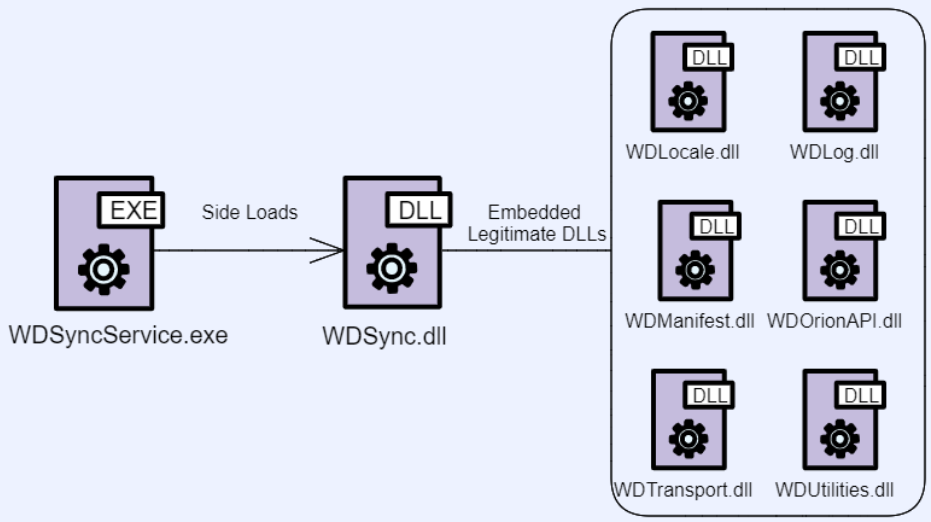
Loaders are normally legitimate C# applications that might be vulnerable to a side-loading vulnerability due to their side-loading behavior. A malicious DLL file is hidden within the application, which is eventually side-loaded for infection.
It was found that Western Digital’s WDSyncService.exe and Garmin’s ElevatedInstaller.exe were some of the applications that were exploited to side-load the malicious DLL file.
While apart from this, the Python and Rust-based intermediate executables are sometimes deployed through side-loaded DLL.
It is important to remember that no matter what approach is taken to reach the delivery of an installer, all roads lead there. Here the SYS01stealer is a PHP-based malware that is dropped and executed by this installer.
Browsers Affected
The stealer stealthily harvests the Facebook cookies from the web browsers that run on Chromium, which is the most popular browser. And here below we have mentioned the names of web browsers that are based on Chromium:-
Google Chrome
Microsoft Edge
Brave
Opera
Vivaldi
As a result, all of the victim’s Facebook information is transferred to a remote server, as well as arbitrary files are downloaded and executed.
In addition to this, it has the following capabilities:
Connect the C2 server to the infected host and upload the files.
Follow the commands and instructions provided by the server.
As soon as a new version is released, it will update itself.
Recommendation
In order to trick Windows systems into loading malicious code, DLL side-loading is an extremely effective technique. During the loading process of an application in memory, if the order of search isn’t adhered to, the malicious file will be loaded in preference to the legitimate file.
This allows threat actors to execute malicious payloads even when legitimate, trusted applications are hijacked.
It is important to implement a zero-trust policy and limit the user’s rights when it comes to downloading and installing programs in order to help prevent the SYS01 stealer.
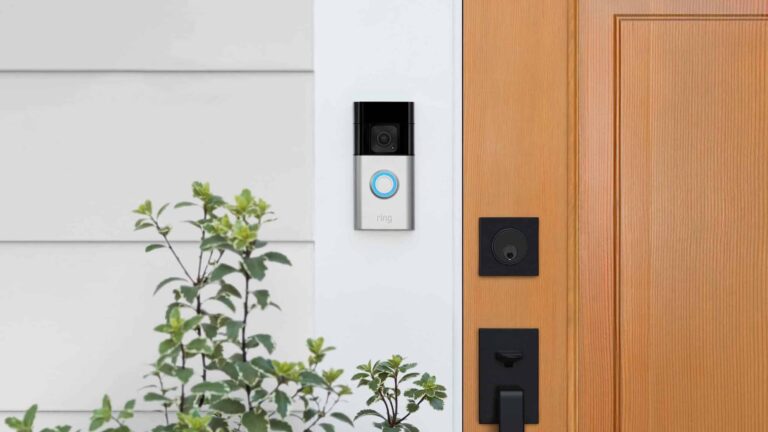
It’s been a little while since Ring introduced a new video doorbell, and now we finally have a new one. The Ring Battery Doorbell Plus. So as you can tell, this is not a wired-only doorbell, so this one’s going to cost a bit more. It does launch at $179. Similar to its other battery doorbells.
This is the next-generation video doorbell for Ring. Which is also the first to include a 150-degree by 150-degree field-of-view. That’s going to allow you to have a head-to-toe view of all of your visitors. That includes pets and kids, all the way up to adults. The expanded view does also help with Package Alerts, and makes them more useful. Keep in mind that Package Alerts is included in the Ring Protect plan only.
The resolution here has been upgraded as well, now sitting at 1536p. The weird resolution is due to the camera’s view basically being a square. But this is the highest resolution of any Ring Video Doorbell to date.
It has all the usual Ring doorbell features you’d expect
In addition to the wider field-of-view and higher resolution, the new Battery Doorbell Plus does have all of the features you’d expect from Ring. Like Advanced Motion Detection, Privacy Zones, Quick Replies, Live View and Two-Way Talk among other things. So if you’re already a Ring Video Doorbell user, you’re going to love this one.
With the Ring Protect plan, you’ll be able to get even more out of this doorbell. Including video recordings being stored for up to 30 days. Which is a really nice feature to have.
The Ring Battery Doorbell Plus is going to go up for pre-orders starting today. They will start shipping on April 5, 2023. The price is set at $179 and it’s available on Ring and Amazon’s websites. The price might sound steep, but it is the same price as its previous non-Pro doorbells started out at.