Spotify, one of the world’s top music streaming services with over 615 million users, is well-known for its personalized experience and features like the end-of-year Wrapped. Now, the company is enhancing this experience with the new My Spotify.
Spotify’s newest feature is like having Wrapped all year long
The Swedish company announced that users will notice new home page banners and personalized app messages highlighting their My Spotify listening habits. The rollout of My Spotify will kick off in the US, Canada, UK, Ireland, Australia, and New Zealand over the next few weeks.
Spotify’s world-class personalization is at the heart of this campaign, celebrating the unique relationship between each listener and their Spotify. Our goal is to capture those hyper-personal moments that occur when fans use Spotify. With our products and features, we strive to connect fans with the audio they love in a way that can’t be found anywhere else.
– Marc Hazan, VP of Marketing and Partnerships at Spotify, June 2024
Listeners will spot new banners and personalized messages revealing their listening habits. They can dive into unique Spotify features like daylist, DJ, Blend, Daily Mix, and the Made For You hub – a go-to spot packed with playlists, podcasts, features, and recommendations tailored just for them.
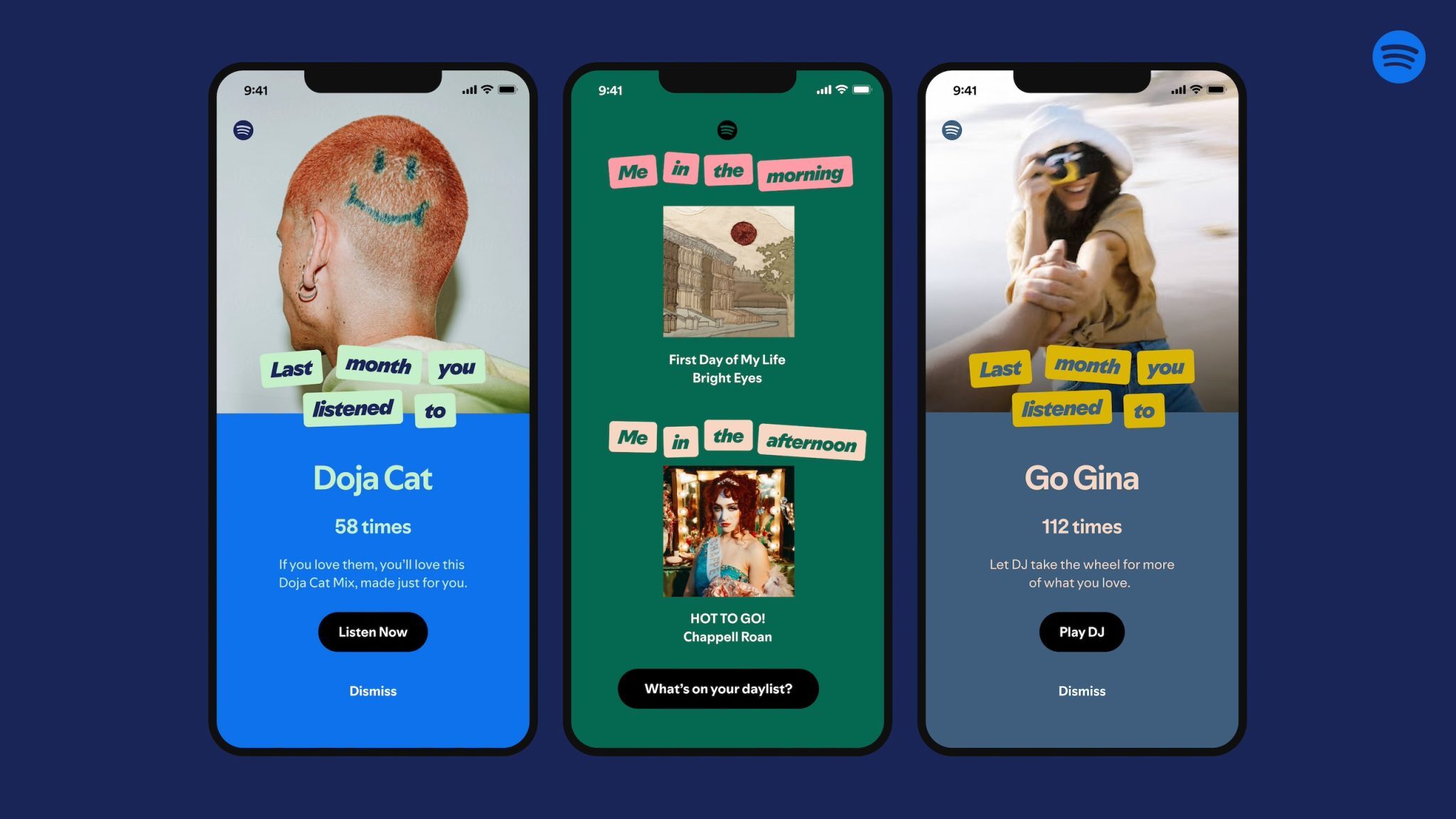
My Spotify will also suggest playlists tailored to your daily listening habits | Image credit – Spotify
The new feature is all about your personal listening habits. Screenshots from Spotify show various banners, like one saying, “Last month you listened to Doja Cat 58 times,” and encouraging you to check out a curated Doja Cat mix. Another screenshot suggests a DJ mix of Go Gina because you played her tracks multiple times last month.
The new campaign is open to everyone, not just Premium subscribers. However, it is still unclear when it will roll out to countries beyond the ones already mentioned above.
Introducing new features like this is a smart move for Spotify, especially after the recent subscription price hike. In the US, Spotify Premium is set to increase by $1, bringing the monthly cost to $12, starting next month.
Officers have made two arrests in connection with using a “text message blaster,” believed to have been used to send thousands of smishing messages posing as banks and other official organizations.
These messages targeted unsuspecting members of the public.
Unprecedented Use of Illegitimate Telephone Mast
In what is considered the first case in the UK, an illegitimate telephone mast was allegedly used as an “SMS blaster.”
This device enabled the perpetrators to send messages that bypassed mobile phone networks’ systems to block suspicious text messages.
Analyze any MaliciousURL, Files & Emails & Configuration With ANY RUN : Start your Analysis
According to City of London Police blogs, The first arrest was made on May 9 in Manchester, followed by a second on May 23 in London.
Huayong Xu, 32, of Alton Road, Croydon, was charged on May 23 with possession of articles for use in fraud and was remanded in custody.
He is scheduled to appear at Inner London Crown Court on June 26. The other arrested individual was released on bail.
The Dedicated Card and Payment Crime Unit (DCPCU) officers collaborated with mobile network operators, Ofcom, and the National Cyber Security Centre (NCSC) to tackle this sophisticated crime.
Temporary Detective Chief Inspector David Vint, head of the DCPCU, emphasized the increasing complexity of such fraudulent activities.
“The criminals committing these types of crimes are only getting smarter, working in more complex ways to trick unknowing members of the public and steal whatever they can get their hands on. It is vital we work with partners to help prevent the public from falling victim to fraud,” said Vint.
Vint also provided crucial advice to the public, reminding them that banks or other official authorities will never ask for personal information via text or phone.
He urged anyone who receives a suspicious text message to report it by forwarding it to 7726.
Steps to Protect Yourself from Phishing Text Messages:
Report Suspicious Texts: Most phone providers allow customers to report suspicious text messages for free by forwarding them to 7726. This enables providers to investigate and potentially block the sender if found to be malicious.
Immediate Action if Scammed: If you’ve lost money or provided financial information due to a phishing scam, notify your bank immediately and report it to Action Fraud at actionfraud.police.uk or by calling 0300 123 2040. In Scotland, contact Police Scotland on 101.
This case highlights the evolving tactics of cybercriminals and underscores the importance of public vigilance and inter-agency cooperation in combating fraud.
Looking for Full Data Breach Protection? Try Cynet's All-in-One Cybersecurity Platform for MSPs: Try Free Demo
180-degree security cameras cover a massive area, which is the reason they are preferred for video surveillance.
In this article, we will discuss what a 180-degree camera is and how does it works. We will explain their types and some important factors you need to consider while buying them. We have also hand-picked some of the best cameras to save you time.
What is a 180-degree IP camera?
A 180-degree IP camera offers 180-degree field of view. It covers a wider area, which is why you need fewer cameras for surveillance.
Some of these cameras can pan and tilt over a range, while some cameras have dual lenses, and the final image of both lenses is combined through a stitching algorithm. That’s how you get a 180-degree field of view.
Other than that, all features are almost similar to common IP cameras.
Types of 180 Degree Security Camera
We can categorize 180-degree security camera on the basis of their usage, wiring, and lens type. Let’s see how they differ.
Indoor vs. Outdoor 180 Degree Security Cameras
Indoor security cameras are used to monitor babies, pets, and the elderly. They are also great for keeping an eye on the kids. They are specifically designed for indoor purposes. They might lack weatherproofing, warning & alarm systems, etc.
On the other hand, outdoor 180-degree cameras cover a massive outdoor area. They can withstand weather conditions, deter intruders, etc.
Wired vs. Wireless 180 Degree Wide Angle Security Camera
Wired 180-degree cameras require wire for power and networking. If it’s a PoE camera, you need an Ethernet cable. If it’s a Wi-Fi camera, you need to connect it to a nearby AC supply.
Wireless 180-degree cameras are battery-powered, and they last for a long time after full charge. Secondly, they use Wi-Fi or 4G for networking, so no wire is needed. They are easier to install.
Panoramic vs. Fisheye 180 Degree Camera
Panoramic cameras capture images through multiple lenses, and finally, the image is joined to create a 180-degree view. There is minimal distortion, and the resolution is exceptional.
On the other hand, fisheye cameras offer a wider view, which looks oval or circular. You will experience more distortion and lower resolution. However, they eliminate blind spots.
What to Consider When Choosing 180 Degree Security Cameras
Here are some important factors and features to consider while selecting a 180-degree security camera.
Image Quality
For clear images and exceptional details, you should go with a 4K security camera. It unveils intricate details, such as license plates and facial features.
Night vision is a must to capture clear images at night and in low-light conditions. You can go with colored and black-and-white night vision, and some cameras offer both.
Field of View
Check the field of view to ensure the camera offers a 180-degree view. If it is a pan and tilt camera, you can check the range of the movement.
Smart Detection
The camera should have smart detection to detect animals, vehicles, and persons. It should send instant and accurate alerts to your devices.
Durability and Weather Resistance
The build quality of the camera should be excellent to last for a long time and prevent tampering and damage. It should also prevent water and dust from getting into it and perform in all weather conditions.
Best 180 Degree Security Camera Recommendation
After careful evaluation, we have hand-picked some of the best 180-degree security cameras you try for optimal security.
Reolink Argus 4 Pro
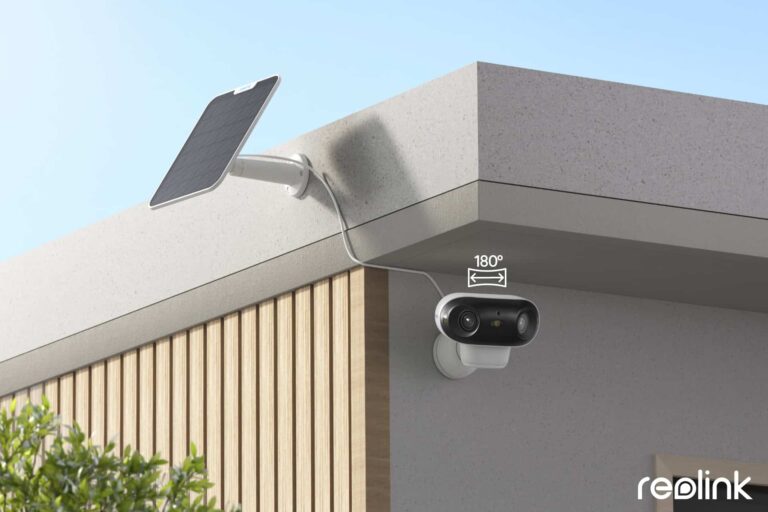
Reolink Argus 4 Pro is a state-of-the-art dual-lens camera that records 180⁰ super wide view. It gathers more details in one frame and helps you cover a wider area. It is equipped with Reolink ColorX technology that contains an F1.0 aperture to capture more light at night and offer better videos with extra illumination.
Key Features:
– 4K UHD 180° Blindspot-Free View: The dual-lens design of the Argus 4 Pro captures a wide area with its 180° field of view, ensuring no blind spots are left.
– Color Vision Day and Night: The advanced sensor and large aperture lens ensure vibrant colors and sharp images throughout the night, significantly enhancing nighttime surveillance capabilities.
– 30% more battery life: The Argus 4 Pro’s use of ColorX technology not only enhances night vision capabilities but also significantly improves energy efficiency. By avoiding the typical power consumption associated with infrared night vision cameras, it saves up to 2 watts per hour.
– Wi-Fi 6 Ready, Smooth 4K Streaming: With its fast speed and uninterrupted connection, elevate your home security to a new level without any limitations.
– Enhanced Smart Detection with Accurate Alerts: Argus 4 Pro features a 180° ultra-wide-angle PIR sensor, perfectly complementing its wide field of view for comprehensive detection.
Reolink Duo 3 PoE
Duo 3 is a PoE camera for 24/7 continuous surveillance. It contains a dual lens to capture a 180⁰ panoramic view. It summarizes a 15s video in one picture to give you more details in a frame. It can smartly detect persons, vehicles, and pets and even deter intruders through the warning system.
Pros: – 4K 16MP offers incredible details in the videos – Flexible and versatile storage options – Dual night vision to work in all scenarios – Wider cover with motion tracking
Cons: – Need to wire Ethernet
Reolink Go PT Ultra
This is a standalone camera ideal for remote locations. It is completely wireless and does not require Wi-Fi. You need to insert a SIM card for 4G, and it can be powered using a small solar panel. It offers a wider pan and tilt range to offer 360⁰view with incredible clarity.
Pros: – Offers smart detection and double-warning – Battery lasts for a long time – Works in all weather conditions – Dual night vision modes – Easy to install
Cons: – Weatherproof but not IP-67 rated
FAQs
1. Do security cameras have 180-degree view?
Not all security cameras offer a 180-degree view. For that, there must be an appropriate lens or multiple lenses. Some cameras also capture a 180-degree view through pan and tilt movements.
2. How do 180-degree cameras work?
180-degree cameras have more than one lens, so each captures a different image. Finally, the images are joined through an algorithm to create a 180-degree view. However, some cameras need to rotate left, right, up, and down to capture a wider view.
3. What is the maximum angle of a CCTV camera?
The maximum angle of most CCTV cameras is 180 degrees. But some cameras also offer a 360-degree field of view through pan and tilt movements.
Conclusion
180-degree cameras cover a wider area compared to the common ones. If you install these, you will need fewer cameras, and you can capture more details in one frame. We have explained the important factors you need to consider while buying these cameras. If you want to save time, you can consider the recommendations we have shared. These hand-picked 180-degree cameras offer optimal security with advanced features.
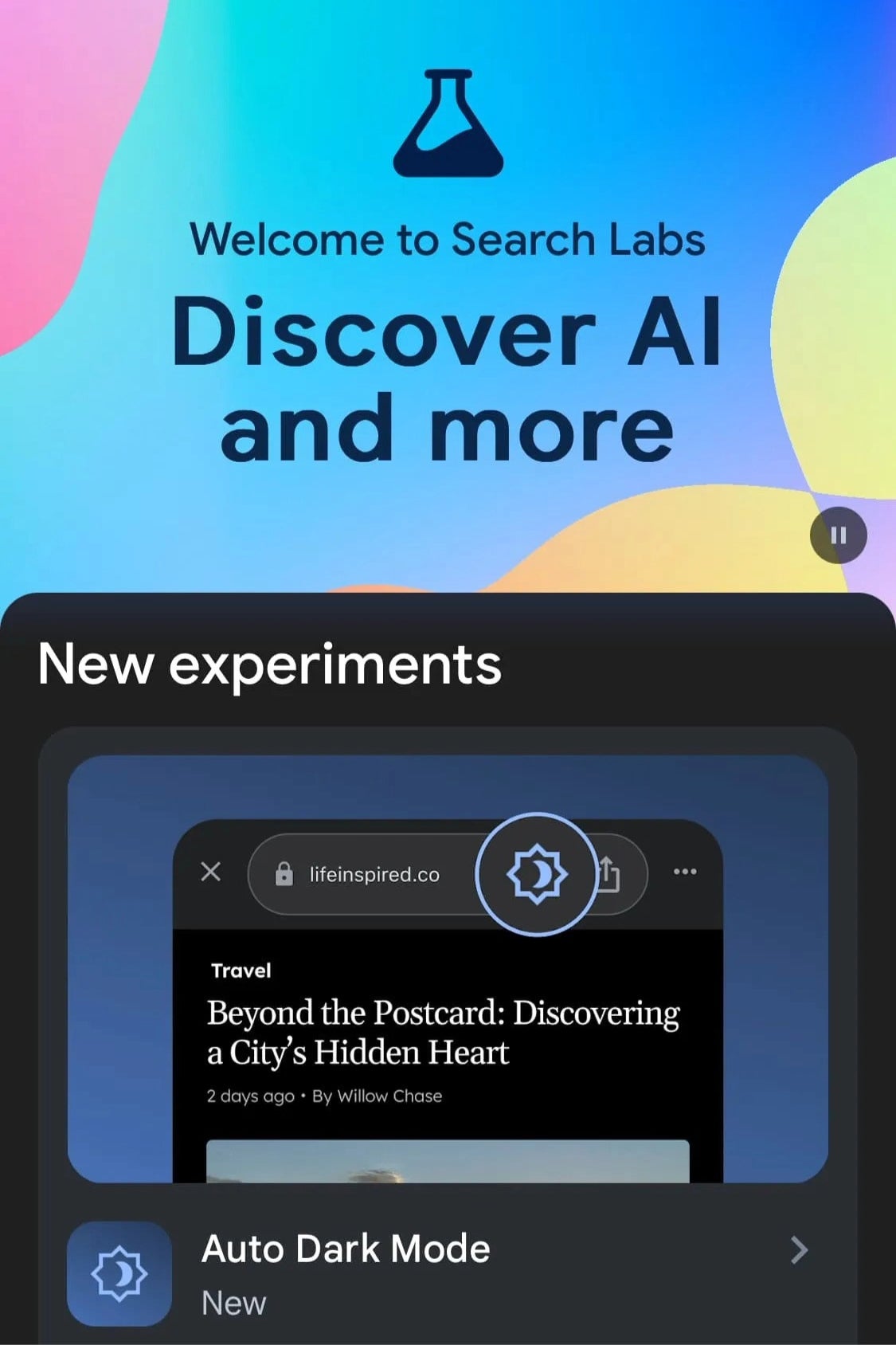
Google Search Labs is a program that allows users to try out and provide feedback on new, experimental features for Google Search. It is basically a way for Google to get real-world input on how people interact with and respond to potential changes to the search experience. And while lately, Search Labs primarily focuses on generative AI, Google also experiments with various features, such as Auto Dark Mode on the iPhone.According to 9to5Google, a reliable source for Google news, the tech giant’s Google app on iOS is testing a new Search Labs experiment. This feature lets users enable dark mode on any website they visit or:
Stay in dark mode no matter what website you are on. Turn on dark mode on your device to activate this experience so all the websites you visit match your app’s dark theme.
Just so you know, the Google app on iPhone works like a browser with its own tab system. If you are part of the Labs program, once you enable the experiment, Auto Dark Mode kicks in for all compatible websites by default. You can easily switch it off using a new sun icon in the address bar on the right.
Image Credit–9to5Google
In the screenshots from the source, its site is shown in light mode first. The second image shows the native night theme, and the last one displays Google’s Auto Dark Mode. This mode is mostly gray, not pure black.
Google warns that:
Quality of the conversion to dark mode may vary. Experiment does not apply to websites with an existing dark theme.
Auto Dark Mode is only available in the iOS Google app and isn’t showing up on Android yet. Of course, just because Google is testing this feature doesn’t mean it is a sure thing. However, given the stats and user preferences, it’s likely we will see a broader rollout of Dark Mode in the Google app.
Dark mode is becoming the go-to for mobile users, and Google is definitely paying attention. Stats show that dark mode usage has increased by 47% since Android and iOS introduced system-wide options. Plus, over 80% of mobile users say they prefer dark mode because it helps reduce eye strain.
Spotify raised its subscription prices in the US last July, increasing the Premium individual plan by $1 to $10.99. This was just two years after a similar price hike for the Family plan in 2021. Now, a year later, Spotify is bumping up prices again. This time, all plans, including Premium Duo and Family, are affected.
The price hike affects all Spotify plans
Beginning in July 2024, Spotify Premium will see a $1 increase, bringing its price to $11.99. Meanwhile, the Premium Duo plan will experience a $2 hike, raising its cost to $16.99. The Family plan will undergo the biggest increase, jumping $3 from $16.99 to $19.99.
New users trying out Spotify will pay the current rate for the first month of their trial. After that, they will start getting charged at the higher price from their next billing cycle. Wondering why Spotify is hiking its premium plan prices again? Well, the company says:
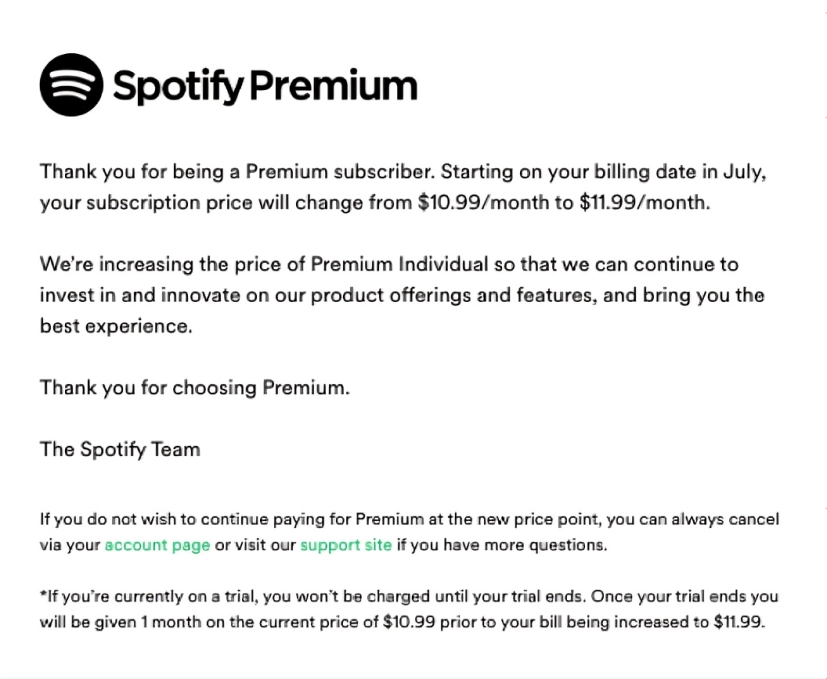
We’re increasing the price of Premium Individual plan so that we can continue to invest in and innovate on our product offerings and features, and bring you the best experience.
The email Spotify will send its current users telling them about the price hike (Image Credit–Spotify)
Spotify dropped the news about the price hike in a blog post and plans to send emails to its current users. This bump in the US comes hot on the heels of a similar move in key global markets like the UK and Australia, announced just recently.
T-Mobile is trying to make life easier for its customers by bringing new features to the T Life app that was released earlier this year.
T Life started as an app for managing perks and also included some account management features. The company has slowly been adding more capabilities to it, including the option of managing your Home Internet Gateway remotely. Of course, we have seen some unwelcome changes too, like the app getting plastered with ads, but T-Mobile is not alone in showing ads in its app, so we can hardly blame the company for having a revenue stream.
The app is evolving into something much bigger and could become the one-stop solution for all things T-Mobile.
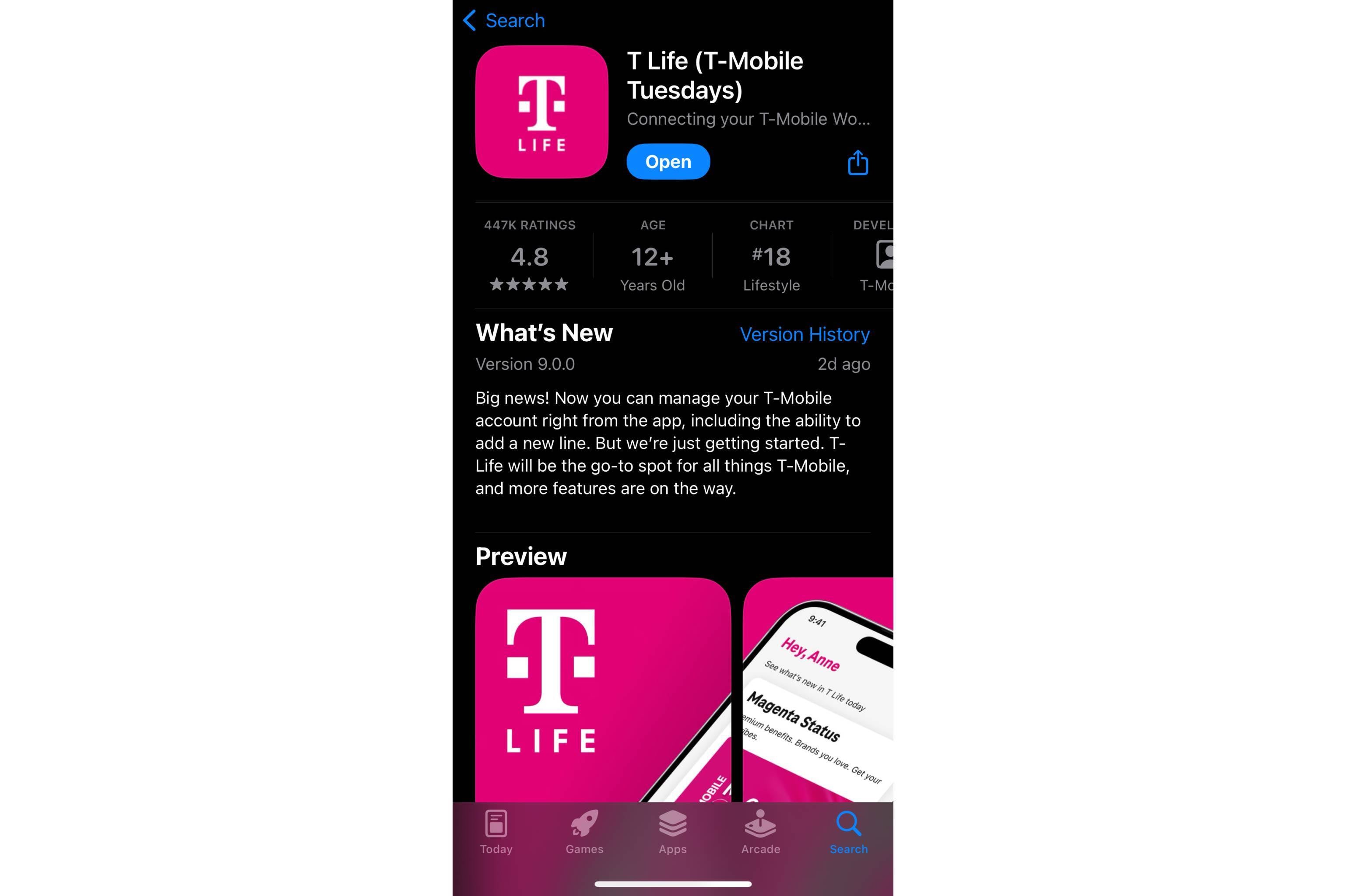
The latest update to T Life’s iOS app brings more features to it. The updated app lets you manage your T-Mobile account and even lets you add a new line.
T-Mobile also says that T Life will soon be the go-to spot for everything and it’s preparing more features for the app.
The Mobile Report explored the app, highlighting all the changes for us. You can now access information by going to the “Manage” tab on the bottom right of the T Life app. The level of detail shown depends on the credentials used to log in, so you will only be able to see everything if you are a primary user.
You can view information like bill balance, due date, and line info. When you tap on the arrow in “More billing and payment options,” you are taken to a website-based view of payments. You get options like changing payment info, setting up payment arrangements, and viewing bill breakdowns.
If you select “Data used,” you’ll be shown a smartphone browser-friendly view of line usage. Other than that, the tab also lets you add people or lines to your account, manage device payment plans, and add your “Magenta Pass” to your iOS Wallet app.
Android users need not feel left out as the Android version is also being updated.
Telegram, the popular messaging app, has just unveiled a range of exciting new features designed to enhance the chatting experience. These updates were announced via a post on the platform’s blog last week.
The most eye-catching addition is the introduction of animated message effects. Users can now add playful animations to their messages, ranging from hearts and flames to a variety of other fun options. These effects trigger when the recipient opens the message, adding an extra layer of expression and personality to conversations. Telegram Premium subscribers will have access to an even wider selection of animated effects, while non-Premium subscribers will be limited to use up to six.
Beyond animated messages, Telegram has made some significant improvements to media captions. Users now have the option to position captions above media, which is particularly useful for memes and images where the caption is integral to understanding the content.
For those who frequently interact with phone numbers within chats, Telegram has streamlined the process. Tapping on a phone number now presents a convenient menu with quick options to send a message, initiate a call, or add the number to your contacts.
New Telegram updates | Credit: Telegram
Hashtags, a staple of social media, have also received an upgrade. Now, when you tap on a hashtag, you’ll not only see relevant messages from your chats but also from large public channels. This expansion of hashtag functionality makes it easier to discover trending topics and connect with broader communities.Telegram has also acknowledged the preference for concise messaging by introducing collapsible quote blocks. This feature allows users to hide longer quotes or text fragments within a collapsible block, making chats less cluttered and easier to navigate. Those interested in reading the full quote can simply expand the block.
Finally, Telegram users on macOS can now enjoy enhanced video calls with new dynamic backgrounds and animations. These visual improvements not only make calls more visually appealing, but also claim to consume fewer system resources.
Telegram’s latest update introduces a wide array of features that cater to various user preferences, enhancing both the functionality and aesthetic appeal of the app.
While Google Calendar might not be the most exciting app in your arsenal, it is undoubtedly one of the most useful. Many of us rely on it for remembering birthdays, and Google seems to be making that even easier with a feature found tucked away in the code of version 2024.21.0-637471596.
Currently, adding a birthday involves multiple steps like creating an event, adjusting settings, and ensuring it repeats annually. Alternatively, you could also add birthday information to a contact, which will populate within the Google birthday calendar that is available as a separate entity. However, hidden within the latest Google Calendar update is a new “Birthday” button that streamlines the process.
This unassuming button, discovered by Android Authority, could be a game-changer. It automatically transforms a manual birthday entry into a yearly recurring event, eliminating the need for manual adjustments. There’s even an option to include the person’s birth year, although its exact purpose remains a mystery. Speculations range from displaying the person’s age to potentially incorporating a countdown feature.
Credit: Android Authority
The update also seems to encourage users to add more birthdays to their calendar, ensuring they never miss a special day. However, it’s important to note that this feature is not yet active within the app. It’s unclear whether or when Google will officially roll it out to users.
Assuming that switching from Event to Birthday when adding an entry into Calendar gives you the opportunity to link to an existing contact, which appears to be the case, this could be a much easier way to add new birthdays. This would eliminate the need to switch between Calendar and Contacts and making the whole process a one-click situation.
The hidden “Birthday” button showcases Google’s commitment to refining its apps, even those that often go unnoticed. As we await the official launch of this feature, it’s exciting to see how Google continues to enhance the functionality of its tools and services, making our digital lives a little easier.
YouTube continues to add new experimental features that elevate the power of AI. After launching Dream Track, a suite of experimental tools specifically developed to help creators make unique music for their Shorts, YouTube released a couple of new features that augment the power of Dream Track.
Last month, YouTube introduced the ability to add AI-generated instrumental-only soundtracks with Dream Track for Shorts. Since the first Dream Track test feature launched by YouTube last year only allowed users to create soundtracks using the AI-generated voices of artists, it made sense for the company to roll out a similar feature but for instrumental-only soundtracks.
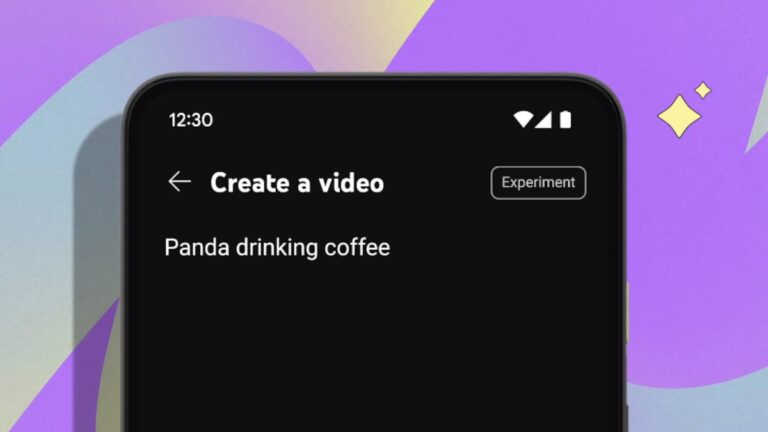
Starting this week, a very limited number of YouTube creators will be able to test yet another experimental feature related to Dream Track. This time it has nothing to do with music, as Dream Screen uses AI to generate image green screen backgrounds for Shorts.
YouTube creators who already in the experimental group and want to check out the new feature can access it by following the guide provided by YouTube. To actually use the feature, simply type an idea into the tool to generate new images to include in your Shorts.
Although Dream Screen is only available for a small number of Shorts creators, YouTube says that it will roll out the feature to more creators later this year.
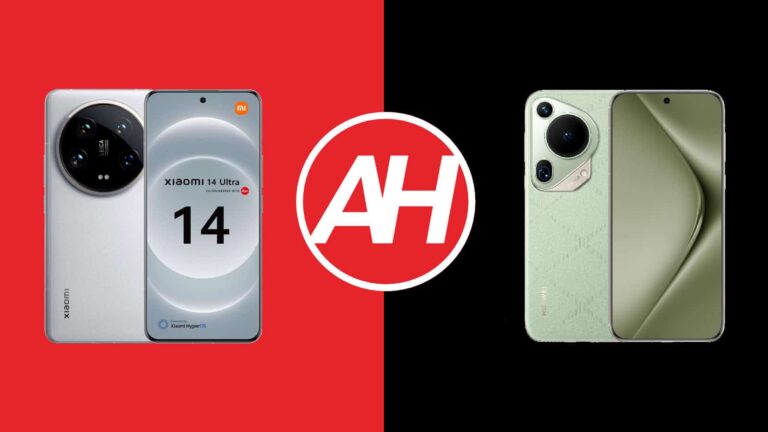
This time around, we’re comparing two Chinese flagships, the Xiaomi 14 Ultra vs Huawei Pura 70 Ultra. Both of these phones were announced this year, and both are considered to be amongst the best camera smartphones on the market. These two phones do differ in a number of ways, though. In this article, we’ll compare them, and hopefully give you a good idea of their differences, so that you can make a better purchasing decision.
As per usual, their specs are first in line. We’ll list them, and following that, we’ll talk about their designs, displays, performance, battery life, camera performance, and audio output. Before we get into it, however, do note that both phones come in global variants, but the Huawei Pura 70 Ultra doesn’t come with Google services. It has Huawei’s services. With that being said, let’s get down to it.
Specs
Xiaomi 14 Ultra vs Huawei Pura 70 Ultra, respectively
As you can see, these two phones look entirely different. There are some similarities on the front when you look at them straight on, but that’s an illusion. Let’s go one step at a time. Both phones do have flat displays with a centered display camera hole, however, the Huawei Pura 70 Ultra has quad-curved glass on top of it. It feels different to use. The bezels are very thin on both smartphones and uniform too. Both phones come with a frame made out of aluminum, even though the Xiaomi 14 Ultra has a titanium version in China.
Both of these phones also come with vegan leather aka eco-leather backplates. The back of the Huawei Pura 70 Ultra is quad-curved, the same as the phone’s front, they’re proportional. The Xiaomi 14 Ultra’s curves towards the sides. The Xiaomi 14 Ultra has a large camera oreo on the back, which is centered in the upper portion of its back. The Huawei Pura 70 Ultra has a camera island in the top-left corner, and it looks… different.
Both smartphones have their physical keys on the right-hand side. They are also similar in terms of height and weight, while the Xiaomi 14 Ultra is a bit thicker. The Huawei Pura 70 Ultra is slightly heavier, but you will notice that. In fact, that phone felt lighter in the hand due to its design. That quad-curved backplate with eco-leather definitely helped. The phone was a joy to hold and use. The ergonomics of the Xiaomi 14 Ultra have also been improved compared to the Xiaomi 13 Ultra, but the Huawei Pura 70 Ultra is the more comfortable phone to hold and use. Both devices do offer an IP68 certification for water and dust resistance.
Xiaomi 14 Ultra vs Huawei Pura 70 Ultra: Display
The Xiaomi 14 Ultra has a 6.73-inch QHD+ (3200 x 1440) LTPO AMOLED display. That panel is flat, and it has an adaptive refresh rate of up to 120Hz. Dolby Vision is supported here, and the same goes for HDR10+ content. The peak brightness of this panel is 3,000 nits. The display aspect ratio is 20:9, and the screen-to-body ratio is around 89%. The Xiaomi Shield Glass protects the Xiaomi 14 Ultra’s display.
Huawei Pura 70 Ultra
The Huawei Pura features a 6.8-inch 2844 x 1260 LTPO OLED display. That panel is flat, and it has an adaptive refresh rate of up to 120Hz. IT can project up to 1 billion colors and supports HDR content. The peak brightness of this panel is 2,500 nits. The Huawei Pura 70 Ultra’s screen-to-body ratio is around 89%, while the Kunlun Glass (Basalt–tempered) protects this display.
Both of these displays are outstanding. They are not only immensely bright when needed, but offer vivid colors and great viewing angles. The touch response is also very good on both smartphones, and the blacks are deep. You’ll realize that both displays are also more than sharp enough. You can always nitpick when it comes to displays, but the fact is, these two panels are both great and on the same level.
Xiaomi 14 Ultra vs Huawei Pura 70 Ultra: Performance
The Xiaomi 14 Ultra is fueled by the Snapdragon 8 Gen 3 processor. The phone also includes 16GB of LPDDR5X RAM and 512GB of storage in its global variant. Some additional options are available in China, exclusively. The Huawei Pura 70 Ultra, on the other hand, is fueled by the Kirin 9010 processor. It comes with 16GB of LPDDR5X RAM and 512GB or 1TB of UFS 4.0 flash storage.
Just to be clear, the Snapdragon 8 Gen 3 is a 4nm chip, and it’s considerably more powerful than the 7nm Kirin 9010. Huawei has been affected by the US ban quite a bit, and the company returned to making its own chips with SMIC’s help. The Kirin 9010 may not be the most modern chip, but it does a great job fueling the Pura 70 Ultra. Both of these phones actually perform admirably.
You will notice the difference in benchmarks, sure, and the same goes for gaming when it comes to more demanding games. However, in regular day-to-day performance, there’s not much difference. Both smartphones do a fantastic job, and the same goes for intense multitasking, and so on. The Huawei Pura 70 Ultra feels like a flagship smartphone in terms of performance. If you are a gamer, however, the Xiaomi 14 Ultra is definitely the better choice.
Xiaomi 14 Ultra vs Huawei Pura 70 Ultra: Battery
The global Xiaomi 14 Ultra variant comes with a 5,000mAh battery. Its Chinese counterpart includes a 5,300mAh unit. The Huawei Pura 70 Ultra includes a 5,200mAh battery in all models. You’ll be glad to know that both of these smartphones offer great battery life, actually. We’ve been able to easily go through a full day of use on a single charge. Getting well over 7 hours of screen-on-time was possible on both phones.
Do note that gaming was not calculated into regular use days, but we did not spare either phone. They both do a great job in the battery life department and if you need to push them even further, there are battery-saving options available too. You will likely never need, those, however. Both gaming and intense camera use do affect battery life quite a bit, as they do on pretty much every phone, so keep that in mind. Chances are you’ll be happy with the battery life these two phones offer, though, regardless of your usage. Your mileage may vary, though, of course, each of us uses our phones in different ways, with different apps, and so on.
When the charging is concerned, both offer some great options. The Huawei Pura 70 Ultra does edge out the Xiaomi 14 Ultra. Why? Well, it offers faster reverse wireless charging, and also reverse wired charging too. The Xiaomi 14 Ultra supports 90W wired, 80W wireless, and 10W reverse wireless charging. Huawei’s flagship supports 100W wired, 80W wireless, 20W reverse wireless, and 18W reverse wired charging. Both smartphones do come with a charger included in the box.
Xiaomi 14 Ultra vs Huawei Pura 70 Ultra: Cameras
The Xiaomi 14 Ultra has four cameras on the back, while the Huawei Pura 70 Ultra has three. Don’t let the camera count fool you, as both of these phones offer outstanding camera performance. The Xiaomi 14 Ultra includes a 50-megapixel main camera (variable aperture), a 50-megapixel ultrawide unit (122-degree FoV), a 50-megapixel telephoto camera (3.2x optical zoom), and a 50-megapixel periscope telephoto camera (5x optical zoom).
Xiaomi 14 Ultra
The Huawei Pura 70 Ultra, on the flip side, has a 50-megapixel main camera (variable aperture, sensor-shift OIS, retractable lens), a 50-megapixel ultrawide camera, and a 50-megapixel periscope telephoto camera (3.5x optical zoom, macro). Both smartphones do their best to keep photos looking close to what you actually see while adding a layer of processing on top of it to make them look vivid and nice at the same time.
Both smartphones do a fantastic job too, actually. The images end up looking sharp and well-balanced, and they both have a great grip of control under HDR conditions too. The Huawei Pura 70 Ultra does have a bit stronger warm tint to it, purposely. Their telephoto and ultrawide cameras do a great job of keeping up with the main camera in terms of colors, though the prowess of the main cameras is visible, especially in low light. In low light, both smartphones offer plenty of details, and manage to control noise really well.
One thing that it’s worth noting is that the Huawei Pura 70 Ultra was more reliable during our testing. It rarely got the balance wrong. The Xiaomi 14 Ultra did great too, but the Huawei Pura 70 Ultra did have the edge in that regard. The Xiaomi 14 Ultra does win the video performance comparison, however.
Audio
Both of these devices offer a set of stereo speakers. Both of them offer good sound output, and they’re well-balanced. The Xiaomi 14 Ultra does have the advantage of having louder speakers, though, noticeably louder. The ones on the Huawei Pura 70 Ultra are not dim, but the difference is noticeable.
Neither phone has an audio jack. You can always utilize their Type-C ports if you need to connect your wired headphones, though. If you’d like to go wireless, however, Bluetooth 5.4 is supported on the Xiaomi 14 Ultra, while Huawei’s handset supports Bluetooth 5.2.