Samsung‘s smartphone factory in Vietnam has reached a remarkable milestone. Located in the Thai Nguyen province of the Southeast Asian country, the factory has produced a billion mobile devices in its lifetime. It churned out the one billionth product, a Galaxy S24 Ultra, on Wednesday, April 17. SEVT (Samsung Electronics Vietnam Thai Nguyen), as the factory is known, organized an event to celebrate the milestone.
Samsung factory produces one billion devices in ten years
Established in 2013, SEVT is one of Samsung’s largest factories globally. Along with Galaxy phones, the factory makes various other products such as smartwatches, TWS earbuds, and chargers. It recently produced its one billionth product, achieving a remarkable milestone ten years after its inception. “This is an extremely impressive and proud milestone that few phone factories in the world have achieved,” the company said in a press release.
The celebratory event was attended by SEVT’s General Director Mr. Park Sung Ho. General Directors of five other Samsung factories in Vietnam, representatives of the Trade Union executive committee, management levels, and employee representatives of SEVT functional departments were also present during the ceremony. The company played a video recreating the journey from the first to one billionth product at the event.
Samsung also made special trophies marking the history of milestones from 100 million to 900 million products. Automated mobile robots brought the trophies to the stage. According to the company, SEVT manufactured its 100 millionth product in 2015. It was a Galaxy Note 5. The Galaxy S7 in 2016, S8 in 2017, S9 in 2018, S10 in 2019, and S20 in 2020 respectively marked the milestones from 200 million to 600 million products.
The 700 millionth product manufactured by SEVT was a Galaxy Note 20. The Galaxy Z Flip 3 earned the distinction of being the 800 millionth product, while the honor of the 900 millionth product went to the Galaxy S22 Ultra. The Galaxy S24 Ultra fittingly achieved the huge milestone of the one billionth device churned out by Samsung’s massive factory in Vietnam. It is the best smartphone to come out of the Korean firm’s doors yet.
Samsung has five more factories in Vietnam
Vietnam is a huge manufacturing hub for Samsung. It operates five more factories in the county. Its Bac Ninh factory, which kicked off the Korean firm’s heavy investments in Vietnam in 2008, has already produced more than 1.13 billion products. The company also has a retail unit and a Research and Development Center in the capital city of Hanoi.
“Samsung started producing the first mobile phone in 1988. To date, the total output of Samsung phones produced globally is more than 6 billion products. The time to reach the number of the first 1 billion Samsung phone products in the world was 21 years, but for SEVT alone, it only took 10 years to achieve that output. That is enough to show the strength and pride of our legal entity,” Ho said (Google translated from Vietnamese).
Artificial intelligence (AI) is rapidly transforming industries, and IT and cybersecurity are no exception. While some fear AI replacing human workers, the reality is far more subtle. AI will undoubtedly automate tasks, but it will also create entirely new job opportunities in both the IT and cybersecurity sectors.
According to the cybersecurity and IT certification exam practice platform Examice, the IT sector has become more lucrative than ever before due to the sudden emergence of AI applications. This growth has caused the need for skilled professionals capable of managing and securing AI-driven systems.
ISC2’s AI Cyber 2024 study also reveals a strong sense of optimism among respondents, with 82% expressing belief in AI’s potential to enhance job efficiency. Additionally, 56% anticipate AI streamlining certain job tasks, thereby allowing more time for tasks of higher value. However, there is a general concern among 75% of respondents regarding the potential misuse of AI for cyberattacks and other malicious purposes.
This article explores how AI will impact these fields and the skills that will be most in demand in the coming years.
AI’s Impact on IT
AI’s integration into IT optimises operational tasks and promotes innovation, allowing IT professionals to focus on more strategic initiatives. Here are three key impacts of AI on the IT sector:
Automation of Mundane Tasks: AI will take over repetitive tasks like server management, software configuration, and basic troubleshooting. This will free up IT professionals to focus on more strategic initiatives like cloud migration, data center optimization, and user experience design.
Enhanced Network Management: AI-powered tools will proactively monitor networks, identify potential issues, and even take corrective actions before problems arise. This will lead to increased network uptime and efficiency.
The Rise of AI-powered Support: Chatbots and virtual assistants powered by AI will handle routine user inquiries, freeing up IT staff to address more complex issues.
New Opportunities in IT
While adding innovation to the Information Technology sector AI is also creating new opportunities for professionals, job seekers and entrepreneurs. Here are three among countless opportunities that professionals are already taking advantage of, thanks to AI:
AI Integration Specialists: Businesses will need specialists to integrate AI solutions into existing IT infrastructure and ensure seamless operation.
Data Scientists and Analysts: The vast amount of data generated by AI systems will require skilled data scientists to analyze it and extract valuable insights.
IT Security Specialists for AI: As AI becomes more prevalent, securing these systems against cyberattacks will be crucial. This will create a demand for IT security professionals with expertise in AI vulnerabilities.
AI and Cybersecurity
Cybersecurity is already a lucrative sector. While hackers can earn big bucks, they also protect and serve their countries by protecting their critical infrastructure from devastating cyber attacks.
It is also a fact that as the cybersecurity sector grows the same can be said about cyber attacks and cyber criminals. Here are 6 key things AI can or is already helping organisations with:
AI-powered Threat Detection: AI can analyze network traffic patterns and identify malicious activity with greater accuracy and speed than traditional methods. This will be crucial in the fight against increasingly sophisticated cyberattacks.
Vulnerability Detection: AI can continuously scan systems for vulnerabilities and recommend patches before attackers can exploit them.
AI-driven Phishing Detection: AI can analyze emails and identify subtle language cues that might indicate a phishing attempt.
Expertise in AI Security: Understanding how AI systems work and the specific security challenges they pose will be essential.
Human-AI Collaboration: Security professionals will need to be adept at working alongside AI tools to leverage their combined strengths.
Strong Analytical Skills: The ability to analyze data and identify security threats will remain a critical skill.
The Future is Bright
The rise of AI will undoubtedly change the future of the IT and cybersecurity sectors. However, these changes will not lead to widespread job displacement. Instead, AI will create new opportunities for professionals who are willing to adapt and develop the skills needed to thrive in this evolving environment.
However, cybercriminals are also monitoring the rise of AI. Malicious versions of AI chatbots, such as WormGPT and FraudGPT, are prime examples. Therefore, authorities must take necessary measures to prevent the misuse of AI, while simultaneously fostering its beneficial applications in the IT and cybersecurity domains.
Huawei rebranded one of its flagship smartphone series recently. The company rebranded the ‘Huawei P’ series to ‘Huawei Pura’ series. A couple of days after that, the company announced the Huawei Pura 70 series of devices. The Huawei Pura 70 Ultra is the most powerful smartphone in that series. That’s the phone we’re here to talk about. It easily stands out compared to its siblings, even though the other three devices are also rather compelling.
The company announced the Huawei Pura 70, Pura 70 Pro, Pura 70 Pro+, and Pura 70 Ultra handsets. The Huawei Pura 70 Ultra does stand apart with its design, a bit, and it also has the best camera setup out of the bunch. In this article, we’ll try to give you as much information about it as possible. Before we start, though, do note that the phone launched in China only, at least for now. A global launch is expected in the near future. Having said that, let’s get to it.
Huawei Pura 70 Ultra specs
The Huawei Pura 70 Ultra has the most powerful specifications in the series. It is fueled by the all-new Kirin 9010 SoC. That is Huawei’s new chip made in collaboration with SMIC. Huawei still has not shared all the details about it, but we presume it’s made on the same 7nm process as the Kirin 9000S. This is a 12-core processor with a slightly more powerful GPU, though. In addition to that, Huawei also included 16GB of LPDDR5X RAM inside of this phone. Users can choose between 512GB and 1TB of internal storage. Do note that the storage is not expandable, though.
A large LTPO AMOLED display is included
A 6.8-inch display is included here, and it offers a resolution of 2844 x 1260 pixels. This is an LTPO AMOLED display with a refresh rate of up to 120Hz (1-120Hz). The display has a high-frequency PWM dimming (1440Hz) and also offers a 300Hz touch sampling rate. The display comes rounded on all sides, but it’s technically a flat display, only the glass is curved. The ppi here is 460, and the panel itself is protected by the Kunlun glass which has proven to be very effective on past Huawei flagships.
The phone supports blazing fast charging & 20W reverse wireless charging
A 5,200mAh battery sits inside the Huawei Pura 70 Ultra. The phone supports 100W wired, 80W wireless, and 20W reverse wireless charging. The charger does come included in the box, in case you were wondering, and so does a case for the device. The Huawei Pura 70 Ultra is also IP68 certified for water and dust resistance. It supports Bluetooth 5.2, and comes with USB 3.1 Gen 1 Type-C port at the bottom.
its camera setup is one of its main upsides
The camera setup is particularly interesting here. Huawei’s flagships are well-known for their camera prowess, even since the collaboration with Leica became a thing of the past. The Huawei Pura 70 Ultra includes a 50-megapixel main camera, which is retractable. Yes, it’s physically retractable. The retracting mechanism has been tested for 300,000 cycles, so it’s more than robust enough. The main camera offers a multi-stop aperture ranging from f/1.6 to f/4.0. It also supports sensor shift anti-shake, with OIS, of course. Huawei also used a 1-inch camera sensor here. The company did not list which one on its detailed spec sheet, but the Sony IM989 was rumored, so it’s likely that one.
Huawei included a very capable macro telephoto camera on the back
In addition to the main camera, ultrawide and macro telephoto cameras are also included. A 40-megapixel ultrawide camera sits on the back and offers an f/2.2 aperture. A 50-megapixel macro telephoto camera is also included here. It has an f/2.1 aperture, OIS support, and it has a 5cm macro mode. This camera supports a 3.5x optical zoom and offers focal lengths of 22.5mm, 13mm, and 90mm. 100x digital zoom is also supported here. 4K video recording is supported in general, and so is fullHD super slow-motion recording at 960fps. A 13-megapixel camera sits on the phone’s front side, and it’s an ultrawide unit with an f/2.4 aperture lens.
The Huawei Pura 70 Ultra measures 162.6 x 75.1 x 8.4mm, and weighs 226 grams.
What materials did Huawei use, and what the phone looks like?
The Huawei Pura 70 Ultra is made out of metal and vegan leather. Huawei used aluminum for the phone’s frame, and you will find vegan leather aka eco leather aka silicon polymer on the phone’s back. On the front, you’ll see a flat display with curved glass on top of it. That glass is curved on all four sides, actually. The phone’s backside is also curved on all sides, as it’s proportional to the front.
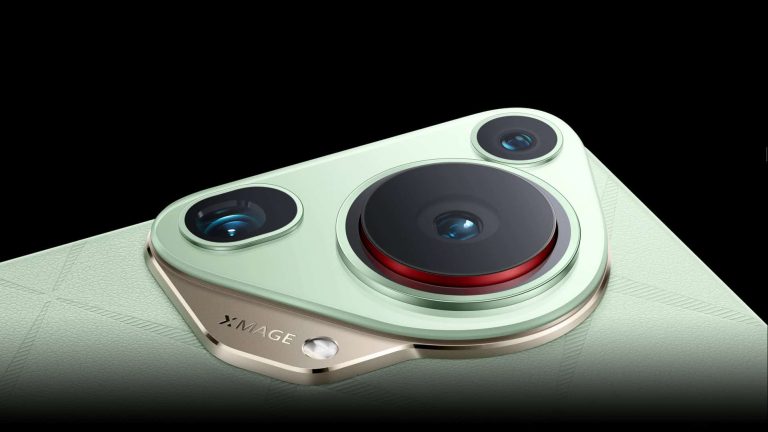
The phone should provide you with plenty of grip thanks to eco leather on the back. Well, more than a glass phone would, that’s for sure. All four color variants of the phone use the same materials. Now, you’ll also notice a triangle-shaped camera island on the back, but all of its corners are rounded. That’s Huawei’s new camera island design, and the one on the ‘Ultra’ model is the largest. The XMAGE branding and the LED flash are placed outside of that camera module. All the physical buttons sit on the phone’s right-hand side.
How much does the Huawei Pura 70 Ultra cost?
The Huawei Pura 70 Ultra comes in two variants in China. It is on offer with 512GB and 1TB of storage. Both of those variants come with 16GB of RAM. The 512GB storage model is available for CNY9,999 ($1,381), while the model with 1TB of storage is priced at CNY10,999 ($1,519). Do note that the price tags will be considerably different if this handset ends up launching in markets outside of China… and it almost certainly will.
Where can I buy the Huawei Pura 70 Ultra?
The Huawei Pura 70 Ultra has only launched in China, for now. The same goes for all three of its siblings. A global launch is expected in the near future, though Huawei still hasn’t confirmed anything about it. Once the phone becomes globally available, if that happens, we’ll update this section with more information. Until then, only users in China can experience the Huawei Pura 70 Ultra. Well, you can also import it, but that’s not something we’d suggest. Wait for a possible global launch.
What colors does the Huawei Pura 70 Ultra come in?
The Huawei Pura 70 Ultra comes in four color options. Those colors are green, brown, white, and black. Huawei does have special names for all of them, though. Do note that they’ve been translated via Google Translate, though. The names are Chanson Green, Mocha Brown, Starburst White, and Starburst Black, respectively. If the phone ends up launching globally, it’s possible that not all of these colors will be available. Huawei could also use different names for them for global markets.
Does Huawei Pura 70 Ultra comes with Google services?
No, it does not. As many of you know by now, Huawei has been banned by the US in a number fo ways. The company is not allowed to use Google services on its devices, and thus Huawei uses its own services, HMS. Do note that considering Google services are not allowed, you’re not getting the Google Play Store here, nor any of Google’s apps. You’ll need to use an emulator to get them running, such as GSpace. Huawei does include its own app store here, though, AppGallery. The same will be the case with the global model if it ever gets launched. The global model will include a global version of AppGallery, though.
What are the Huawei Pura 70 Ultra’s main selling points?
The Huawei Pura 70 Ultra seems to be a rather compelling phone on paper, for a number of reasons. We’ll go over some of the phone’s main selling points below, some of its most interesting aspects.
Outstanding camera setup
The phone has a truly great camera setup. There are three cameras included on the back, but they offer all the functionality you’ll need, really. The main focus is on the phone’s main camera, which is retractable. Huawei opted for a 1-inch camera sensor here, likely the Sony IMX989, and added variable aperture to it (f/1.6-f/4.0), not to mention sensor shift anti-shake. On top of that, a 40-megapixel ultrawide camera is on offer and a 50-megapixel macro telephoto camera. You can get as close as 5cm in order for this camera to properly zoom in on an object, while 3.5x optical zoom is supported too. This camera can zoom in up to 100x, in case you were wondering.
Blazing fast wired & wireless charging
The Huawei Pura 70 Ultra offers extremely fast charging, in case you end up needing it halfway through your day. The phone supports 100W wired charging, which can charge this phone in no time. In addition to that, 50W wireless charging is also supported. A 100W charging brick is included in the package, though you’ll need to get a proper wireless charger in order to take advantage of wireless charging.
Faster reverse wireless charging
Another charging-related detail that is worth noting is reverse wireless charging. We separated this because it’s rather unusual. You often see 5W and 10W reverse wireless charging on phones. The same cannot be said for 20W reverse wireless charging, and yet the Huawei Pura 70 Ultra offers exactly that. This smartphone can be used as a proper wireless charging bank if you end up needing it.
The phone’s design
Based on Huawei’s previous smartphone with similar aesthetics, we’re rather confident the phone will be very comfortable to hold and use. The front and back sides are proportionally curved, on all sides. The thing is, only the glass on the front is curved, and considering that vegan leather is used on the back, the phone won’t be all that slippery. From the looks standpoint, the phone also looks very nice, and its bezels seem to be uniform.
Google-free experience
Some of you actually want a proper Google-free experience, and the Huawei Pura 70 Ultra is basically THE phone to deliver that. It doesn’t come with Google services, and the same will be the case for its global model if it becomes available. If that does happen, then this point is even more true. You can use Huawei’s AppGallery and app repositories and stay free of Google entirely, should you choose to do so. That’s not an option for many people in global markets, but if you prefer it, this is the way to go.
What cases are available for the Huawei Pura 70 Ultra?
Huawei is listing some cases for the Huawei Pura 70 Ultra, on its website in China. The question is whether they’ll be available in other markets if this phone goes global. It remains to be seen. In any case, three cases are listed, Magnetic Protective Case, Micropump Liquid Cooling Case, and Cloud Leather Protective Case. You can check out all those cases in the gallery below.
We’ve only included a single color option for each case, but more than one are available. The Magnetic Protective Case comes in brown, black, and green colors. The Micropump Liquid Cooling Case comes in black only. The Cloud Leather Protective Case is available in white, green, purple, and rose red colors.
The Magnetic Protective Case comes with a leather back, and it’s very thin. It has magnetic functionality as it comes with a magnetic ring on the inside. The Micropump Liquid Cooling Case actually has cooling built-in, believe it or not. And last, but not least, the Cloud Leather Protective Case comes with a leather back, and it’s very, very soft. It’s like having additional pillowy padding on the back.
Should I buy the Huawei Pura 70 Ultra?
Should you get the Huawei Pura 70 Ultra? Well, I’d say not yet, unless you live in China. If the phone ends up reaching global markets at some point, and you can live without Google, or you wish to do so, then it may be a great choice. Just keep in mind that the AppGallery is still limited when it comes to apps, at least compared to the Google Play Store. We can’t wait to test out the cameras on this device, as past Huawei flagships were commendable, to say the least.
Earlier this month, the Meta Quest 3 headset was reported to receive the lying down mode with the Meta Quest OS v64 update. This feature makes it more comfortable to work with more static content such as streaming videos.
HDR videos on Meta Quest 3 are currently only available in 4K
Now, with the latest 1.54 version update of the YouTube VR app, Meta Quest devices get the ability to play 8K (4320p) videos. However, 8K videos are limited to SDR (Standard Dynamic Range) content. The update is also only available to the Meta Quest 3 as of this writing. So, Meta Quest 3 users with YouTube VR app version 1.54 or above can now enjoy SDR videos in 8K resolution.
You can search for 8K videos on the YouTube VR app and play one. You will then need to go to the video settings and set the resolution to 4320p. HDR (High Dynamic Range) videos won’t show the 4320p option, at least for now. Notably, you can stream 360-degree 8K videos as well. Although, there isn’t a ton of of 8K content on the platform yet.
Reportedly, the support for 8K videos on YouTube may not come to the previous two Meta Quest VR headsets due to their lower screen resolution. An 8K image is roughly about 33MP. The Meta Quest 3 offers a screen resolution of 2064 x 2208 pixels. It’s still only about 4.5MP but as Ars Technica noted, it’s a “huge leap” as compared to its predecessors. Speaking of the predecessors, the Meta Quest 2 and the Meta Quest Pro, the screen resolution is 1832×1920 (only about 3.5MP). The computing power of the older chips may also be insufficient to support the new feature.
Despite the lower resolution, 8K videos appear relatively sharper on Quest 3
It’s important to note that the display in the Meta Quest 3 also has a much lower number of pixels than what’s required for representing an 8K image or video properly. It’s even lower than 4K. However, as Nicholas Sutrich from Android Central noted, it still offers a clearer image.
The Meta Quest headset boasts the Snapdragon XR2 Gen 2 chipset, which according to Qualcomm, offers a 2.5x boost in GPU performance. Alongside these improvements, Meta is also working on a new product to enhance classroom learning with its Quest headsets.
WhatsApp has a habit of tinkering with its design, often rolling out little test changes to small groups of users. One of these recent experiments involved capitalizing the “online” and “typing” status indicators that you would normally see at the top of the chat window. It was a subtle change, but it seems users weren’t thrilled with it, and eventually caused WhatsApp to roll the change back entirely.
As reported by The Independent, WhatsApp admitted this was just a design variation they were testing, but didn’t say how many people were part of the experiment. The company also admitted to now be backtracking on this design choice and ditching the uppercase letters, although also not explaining why they are doing that either. For now, it appears that the familiar lowercase indicators are here to stay.
Turns out, a lot of users disliked the change. Plenty of other chat apps use lowercase indicators, such as Telegram or even Meta’s own Facebook Messenger, which is probably what made WhatsApp’s sudden switch to capitals felt jarring to some. It disrupted the look and feel they were used to, and some even complained the capital ‘O’ in “Online” blended too closely with the profile picture preview.
Whether it was the negative feedback or something else entirely, WhatsApp pulling the plug on this particular experiment should hopefully please the users that found it bothersome. It was a minor change, but sometimes the little things matter, particularly when it’s a chat app as popular as WhatsApp is. Could the uppercase indicators make a comeback? It’s not entirely impossible. But for now, WhatsApp users can breathe a sigh of relief as those familiar lowercase letters are back.
Many of you are quite familiar with Google’s #BestFriendsForever ads. We end up following iPhone’s and Pixel’s shenanigans in these ads. In a brand new ad, iPhone and Pixel pay a visit to Coachella.
iPhone & Pixel visit Coachella in Google’s latest #BestFriendsForever ad
The ad has been published on YouTube, and you can check it out below the article. It has a duration of 1:21, and once again it highlights Pixel’s features that iPhone doesn’t have. That’s usually what we end up seeing in these ads… portrayed in a fun way.
In the ad, an iPhone asks a Pixel to take a picture, so that everyone can see that iPhone is at Coachella. It has to be a picture at sunset, though. Now, iPhone keeps on rambling for far too long, trying to decide how to take a picture, and the sun goes does in the meantime.
While iPhone is rambling, talking about how it wants to jump up in the air in the picture, Pixel actually takes a picture. Then iPhone proceeds to ask why did Pixel do that, as iPhone didn’t jump up.
Pixel uses the Magic Editor to impress iPhone
That’s where the promo part starts. Pixel proceeds to remind iPhone that it has very useful AI features that can basically move him up in the air if necessary, and change the background too… so that it looks more like a sunset. It can do all that thanks to the Magic Editor.
It’s yet another entertaining ad in which Google does poke fun at Apple, and entertains everyone while doing it. This one is quite timely as well, with Coachella being a part of it.
We’re getting to see more and more such ads from Google, as people seem to enjoy them very much. YouTube comments are usually fun to read as well, in case you’re interested.
After years of poor show, Samsung‘s flagship Exynos processors might make a remarkable comeback next year. Rumors say the Exynos 2500 will be more power efficient than Qualcomm’s Snapdragon 8 Gen 4. Both are 3nm solutions but manufactured by two different foundries. Samsung will probably use both chips in its Galaxy S25 series.
Galaxy S25’s Exynos 2500 could offer better efficiency than Snapdragon 8 Gen 4
For years, Samsung’s Exynos chips have performed worse than competing Snapdragon solutions. They lagged in almost all areas, including raw performance, power efficiency, and thermal management. The company even dropped custom CPU cores and moved to stock ARM cores but to no avail. As the performance gap widened, it skipped the Exynos 2300 and exclusively used the Snapdragon 8 Gen 2 on the Galaxy S23 series.
The Korean firm came back with a notably improved Exynos 2400 used on the Galaxy S24 series. The new chip closed the performance gap to its Snapdragon counterpart, the Snapdragon 8 Gen 3. Samsung is expected to further improve its game with the Exynos 2500 next year. The upcoming solution is said to feature Google’s TPU for improved AI capabilities. It will also bring CPU and GPU improvements.
Samsung will fabricate the Exynos 2500 on its second-generation 3nm process node. According to X tipster @PandaFlashPro, this will help make it more power efficient than the Snapdragon 8 Gen 4. The latter is manufactured by TSMC on its second-gen 3nm process. The Taiwanese firm is using the existing FinFET transistor architecture for its 3nm chips, while Samsung has upgraded to the more advanced GAA architecture.
The Exynos 2400, which is a 4nm chip, is already quite efficient. Coupled with improvements from Samsung, the Exynos 2500 could be a real energy saver. It might offer a significant performance boost without adding much to power consumption. Samsung’s next flagship processor appears on track to give rivals like the Snapdragon 8 Gen 4 a run for their money. It will be a remarkable turnaround from the Korean firm.
The new Exynos chip may come in two variants
Samsung reportedly plans to develop two variants of the Exynos 2500. The standard version, identified as Exynos 2500-A, will be an octa-core chip for the Galaxy S25 series. The company might optimize it for the new flagships from the ground up. The other version, Exynos 2500-B, will reportedly feature ten CPU cores (deca-core) and power the next generation of flagship Android tablets and Windows laptops from Samsung. The CPU configuration and speed of either variant is not known.
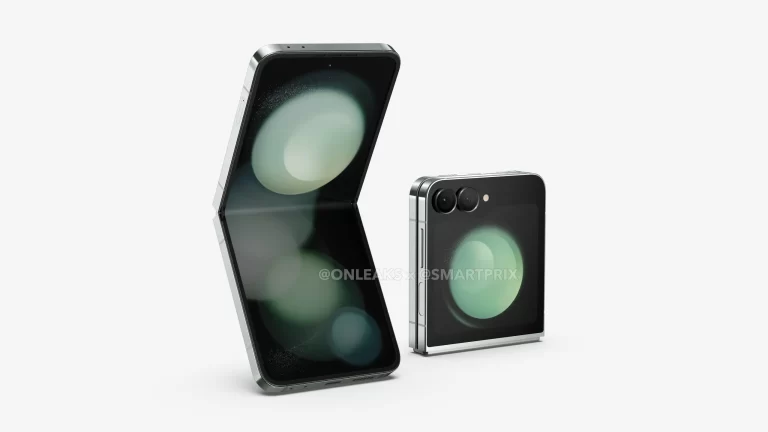
The development of Samsung’s next-gen foldables is in full swing. The company is preparing to launch the Galaxy Z Fold 6 and Galaxy Z Flip 6 sometime in July this year. Leaks have already revealed a thing or two about the devices. The US version of the Flip model has just surfaced on a benchmarking platform to confirm its processor. It appears to deliver impressive GPU performance.
Galaxy Z Flip 6 spotted on Geekbench with impressive GPU performance
Samsung has always used Qualcomm’s latest flagship chipsets in its foldables. It will be no different this year, a Geekbench listing for the Galaxy Z Flip 6 reveals. The device appeared on the benchmarking platform with the model number SM-F741U, which is its US version. The global version should be SM-F741B. As usual, the listing doesn’t explicitly mention the chipset, but there are enough clues.
It is an octa-core processor featuring one super core clocked at 3.40GHz, three mid-cores at 3.15GHz, two more mid-cores at 2.96GHz, and two efficiency cores at 2.27GHz. This is none other than the Samsung-exclusive variant of the Snapdragon 8 Gen 3. The chipset powers the Galaxy S24 Ultra globally and the Galaxy S24 and Galaxy S24+ in some markets, including Europe and India.
While we expected the Galaxy Z Flip 6 to feature the Snapdragon 8 Gen 3 For Galaxy chipset, its GPU score caught us by surprise. The foldable’s Adreno 750 GPU helped it achieve a Vulkan score of 15,084 on Geekbench v6. As noted by SamMobile, this is similar to the Galaxy S24 Ultra. Since the latter is a bigger phone with a larger cooling system, this is an impressive GPU performance from the new Flip.
That said, the lack of a large cooling system could affect the Galaxy Z Flip 6’s sustained performance. It may have to rely on CPU and GPU throttling to keep the temperature in check when used continuously for a long time. The device may not be ideal for long hours of graphic-intense gaming, but it shouldn’t stutter during heavy usage such as video editing and AI processing.
The new Flip could come in a 12GB RAM variant
This Geekbench listing for the Galaxy Z Flip 6 reveals 8GB of RAM. However, it may not be the only RAM variant of the phone. Since Samsung has started 12GB RAM on its mid-range devices, the new foldable should also come in a 12GB RAM variant. The new Flip will run Android 14 out of the box, likely with One UI 6.1.1 on top. Stay tuned for more leaks and rumors about the upcoming Samsung foldables.
Meta is adding a real-time AI image generation feature to WhatsApp. This feature allows users to create and share images directly within their chats based on simple text descriptions.
The Verge reports that the feature is currently in beta testing, with initial availability limited to users in the United States. To use the AI image generation tool, users will likely need to opt into the beta program and may access it through a dedicated button within the chat interface.
How the real-time AI image generation tool works
The process is straightforward. Users simply type a text prompt into their chat, and Llama 3 conjures an image that matches the description. Like texting a friend “Imagine a cat riding a skateboard on the moon!” and receiving an image that perfectly depicts that scene. The possibilities for creative expression and playful interaction are endless.
This functionality is powered by Meta’s AI model, Llama 3. Released this month, Llama 3 boasts a significant leap in capabilities compared to its predecessors. It can not only generate images and animations but can also answer your questions and complete tasks you ask it to do.
Meta extends availability to Meta AI for the web
Beyond WhatsApp, real-time image generation is also available to US users through Meta AI for the web. This comes as part of a broader rollout of AI features across all of Meta’s apps, including WhatsApp, Instagram, Facebook, and Messenger.
Meta’s adoption of AI image generation marks a significant shift in messaging app interaction, but some concerns remain. Crucial to user adoption will be the accuracy and quality of the generated images. Additionally, the potential for misuse, such as creating deepfakes or offensive content, necessitates robust safeguards. Meta will need to ensure responsible use of this powerful technology.
As Meta refines the technology and addresses privacy issues, this feature has the potential to fundamentally change the way we interact within messaging platforms.
In banking and business, you need to know how your investments are doing and what they are made of to get the best results and make smart decisions. Portfolio analysis is a powerful tool that helps people and companies figure out how much money their assets are making, what their pros and cons are, and how to change their plans in a smart way to reach their financial goals.
This piece will explain everything you need to know about portfolio analysis tools, including what they’re for, how they work, and how buyers can make more money by using them.
What is Portfolio Analysis?
The orderly process of looking at how well, how risky, and how diverse a person or business’s investments are is called portfolio analysis. It involves looking at the portfolio’s overall risk, finding out how assets are related and correlated, and looking at the results that different asset types produce. The main goals of portfolio analysis are to make sure that the right assets are assigned, that the portfolio performs as well as possible, and that it fits the investor’s goals and risk tolerance.
Objectives of Portfolio Analysis
1. Performance Evaluation: By comparing investments to relevant benchmarks and monitoring the achievement of financial objectives, portfolio analysis assists investors in assessing the past performance of their holdings.
2. Risk Assessment: By looking at the portfolio’s risk profile, investors can get an idea of how much risk they are exposed to, find possible sources of risk, and judge how well their risk management strategies are working.
3. Diversification Analysis: Portfolio analysis can help investors find the best way to divide up their assets, while also taking into account their financial goals, investment timeline, and risk tolerance.
4. Asset Allocation: When looking at an investor’s financial goals, investment timeline, and risk tolerance, portfolio analysis can help them find the best asset allocation plan.
5. Rebalancing: Using portfolio analysis, investors may be able to find ways to adjust their portfolio by changing the way their assets are allocated to keep the risk-return profile they want.
Leveraging Investment Portfolio Analysis Tool for Better Profit
Using tools for portfolio analysis could help you make smart investment choices. Let’s talk about it:
Performance Tracking: Users of financial portfolio analysis tools can keep an eye on how their stocks are doing in real-time by comparing them to relevant standards and previous data. This tool lets investors keep track of their progress toward their financial goals and make changes to their plans as needed.
Risk Assessment: These tools help buyers figure out how risky their investments are by looking at things like volatility, association, and possible bad results. As long as investors know how risky their assets are, they can use risk management methods to keep their cash safe.
Asset Allocation: Investors can find out how they have spread their money across different types of assets, businesses, and regions by using tools that analyze investment accounts. By seeing how the portfolio is put together, investors can find areas where they are over- or under-exposed and make changes to their assets.
Diversification Analysis: These tools check the financial diversity of the portfolio to make sure it’s not too focused on just a few stocks or businesses. Diversification is one of the most important things you can do to lower risk and boost results. Investment portfolio research tools can help you do it.
Scenario Analysis: Investors can model different market events with the help of advanced technologies and see how they will affect their investments. Modeling different possible outcomes can help investors figure out how resistant their assets are to changes in the market.
Methodologies of Portfolio Analysis
There are different techniques and methods used in portfolio analysis, and each one has its purpose and way of giving information about the portfolio. The following are examples of common techniques:
1. Modern Portfolio Theory (MPT): MPT is a popular method for portfolio analysis that places a strong emphasis on the value of diversity and the connection between risk and return. It assists investors in building effective portfolios that provide the best returns for a certain degree of risk.
2. Risk-Return Analysis: This approach evaluates the risk-return characteristics of the portfolio by looking at the past performance of individual assets and how they correlate with market benchmarks.
3. Sector and Asset Class Analysis: Investors may spot regions of overexposure or underrepresentation and decide on diversification by looking at the portfolio’s composition of various asset classes and industries.
4. Scenario Analysis: Using this method, one may examine the possible risks and possibilities under fluctuating market circumstances by simulating various scenarios and evaluating their influence on the portfolio.
Benefits of Portfolio Analysis
Find out right now why you should use portfolio analysis:
Informed Decision-Making: By giving investors insightful information on the performance and makeup of their assets, portfolio analysis enables them to make data-driven choices that support their financial objectives.
Risk Management: Investors may safeguard their assets from market volatility and unanticipated occurrences by implementing proper risk management measures when they have a clear grasp of the risk exposure of their portfolio.
Improved Returns: Investors may find chances to optimize the performance of their portfolio, rebalance assets, and modify the asset allocation to maximize returns by using portfolio analysis.
Goal Alignment: By ensuring that their investment plan is in line with their time horizon, risk tolerance, and financial objectives, investors may remain on track to meet their objectives with the use of portfolio analysis.
Conclusion
A good way for buyers to get a good idea of their investment portfolio’s results, dangers, and variety is to do a portfolio analysis. By carefully looking over their stocks, investors can make smart decisions, get the best results, and learn important things about how well their investment plan is working.
No matter how much experience you have, taking the time to look over your account may help you reach your financial goals and feel confident in your ability to handle the constantly changing financial markets.