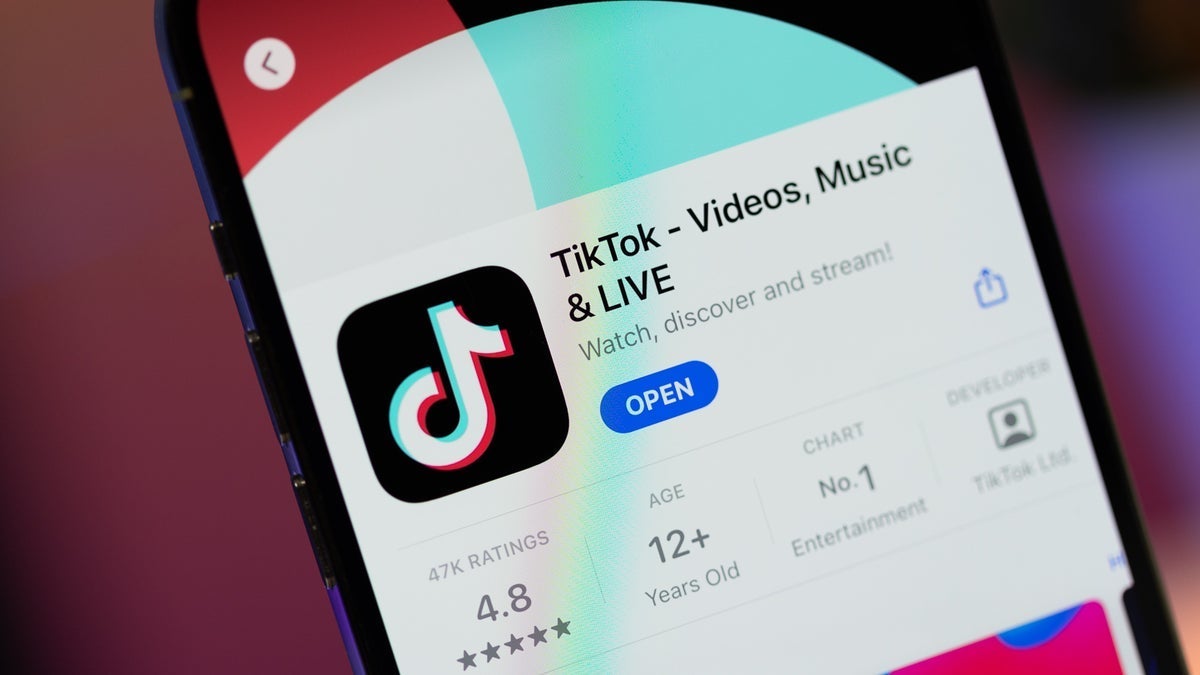
TikTok’s popularity among European politicians rises despite security fears, reads a recent report by Reuters.
And can you blame them? After all, politicians care about votes: and if you want votes, you need young people. If you need young people – you know where this is going, don’t you – you need TikTok, end of story.
The report outlines Simon Harris’ TikTok usage. When he became Ireland’s prime minister-in-waiting in March, he turned to a favored platform of his: TikTok. Ireland’ youngest taoiseach (a local word for “Irish prime minister”) made a “Thank you” video for his 95,000 followers.
Harris is just one of the many European politicians who are embracing TikTok. That’s a trend – European politicians are turning to TikTok, believing that the importance of connecting with younger voters surpasses the alleged security worries.
Germany’s security agencies, for example, have warned against using the app over concerns it could share data with China’s government or be used to influence users.
Similar fears have haunted US lawmakers for years – that’s why less than a month ago, the US House of Representatives voted in favor of a bill that could ban TikTok in the United States.
The goal is ByteDance to sell its interests in the viral short video app, or face a ban in the US. If everything goes to plan (the bill passes and Joe Biden signs it), ByteDance will have a 165-day deadline to divest from TikTok. Should it not pass the control of TikTok to an American-based company, US app stores (like Apple’s, Google’s and Samsung’s) would be prohibited from offering TikTok in the country.
Overseas, the EU’s turn to TikTok isn’t without a cause – European elections draw near and younger votes are needed. Apart from early adopter Harris, who operates a TikTok account since 2021, another notable example is French President Emmanuel Macron, who boasts 4 million followers since joining TikTok in 2020.In Germany, the embrace of TikTok by senior politicians is a newer trend, with Health Minister Karl Lauterbach becoming the country’s first minister to open an account in March. “Revolution at TikTok: it starts today,” he said. Chancellor Olaf Scholz in February also suggested his government open a TikTok account.
The TikTok generation is extremely important for Germany, as 16-year-olds over there can vote in the June European elections.
Also, TikTok is seen as a major news source for younger people.
The Vedalia Advanced Persistent Threat (APT) group, also known by its alias Konni, has been distributing malware using an innovative technique involving oversized LNK files.
This method marks an evolution in the group’s operational tactics, aiming to bypass conventional security measures and compromise targeted systems.
Broadcom recently published a blog post stating that the Vedalia APT group has utilized huge LNK files in their latest malware campaign.
DocumentRun Free ThreatScan on Your Mailbox
Trustifi’s Advanced threat protection prevents the widest spectrum of sophisticated attacks before they reach a user’s mailbox. Try Trustifi Free Threat Scan with Sophisticated AI-Powered Email Protection .
Key Highlights of the Campaign
Innovative Delivery Mechanism: The Vedalia APT group has ingeniously utilized LNK files with double extensions, effectively masking the malicious .lnk extension.
This tactic deceives users into believing the files are harmless, increasing the likelihood of execution.
Obscuration through Whitespace: A notable characteristic of these LNK files is the excessive use of whitespace.
This technique is designed to hide the malicious command lines embedded within, making detection by security software and analysts more challenging.
Bypassing Security Defenses: The embedded command line script within the LNK files is crafted to search for and execute PowerShell commands.
This approach is specifically chosen to evade detection mechanisms. It leverages PowerShell’s legitimate system functions to locate and deploy the embedded malicious files and payload.
File-based
CL.Downloader!gen20
Scr.Mallnk!gen13
Trojan.Gen.NPE
WS.Malware.1
Implications and Recommendations
The Vedalia APT group’s adoption of oversized LNK files for malware delivery underscores the evolving landscape of cyber threats.
Organizations and individuals are advised to remain vigilant, update their security solutions, and educate users about the risks of opening files from unknown sources.
This campaign by the Vedalia APT group serves as a reminder of the continuous innovation among cyber adversaries.
By staying informed and proactive, organizations can better defend against these sophisticated threats, safeguarding their digital assets and the integrity of their systems.
Secure your emails in a heartbeat! Take Trustifi free 30-second assessment and get matched with your ideal email security vendor - Try Here
A new update is coming to the Galaxy S24 Ultra, and it is expected to fix many camera problems, it seems. This information comes from Ice Universe, one of the best-known tipsters around.
Next Galaxy S24 Ultra update is expected to fix quite a few camera problems
As per usual, he is heavily invested in the works of Samsung, and its devices. He went to X (formerly known as Twitter) to share the news with his followers. He promised this update will fix many camera problems, or at least it’s expected to.
The tipster did delve deeper into it, a bit deeper. He said that the update will bring improved telephoto image quality. On top of that, it will fix inaccurate white balance and “abnormal red color”.
What he doesn’t know is when exactly the update will land. He was not provided with that information. The tipster is hoping that the update will land in April, though. It remains to be seen.
Samsung has plenty of competition this time around
The OPPO Find X7 Ultra, Xiaomi 14 Ultra, and Vivo X100 Pro come to mind first, that’s for sure. Those are the phones that will get mentioned in camera debates these days. If you throw the Pixel 8 Pro into the mix, and also the iPhone 15 Pro Max and the OnePlus 12, things become even more interesting.
It is worth noting that Huawei is expected to announce its new flagships in the near future too. The Huawei P70 series is coming, and based on what we’ve heard about the upcoming camera setups, Huawei will also compete, very much so.
All of that makes it hard for Samsung to truly stand out, The company needs to do everything in their power to properly optimize the Galaxy S24 Ultra’s camera output. It seems like that’s exactly what Samsung is trying to do.
A path traversal vulnerability was discovered in the Java versions of multiple CData products when using the embedded Jetty server, allowing remote attackers to potentially access sensitive information and perform limited actions on the system.
The vulnerability arises from the interplay between how the embedded Jetty server and CData servlets handle incoming requests, creating a path traversal issue where an attacker can manipulate the path to access unintended directories on the system.
An attacker can exploit a path traversal vulnerability in CData Sync versions before 23.4.8843, which stems from unintended Jetty behavior when processing servlet mappings and security constraints in the web.xml file.
Jetty’s handling of backslashes (\) in URIs differs from other servers, allowing attackers to bypass restrictions, while the lack of proper session checks on certain endpoints makes it possible to perform unauthorized actions after exploiting the path traversal.
DocumentStop Advanced Phishing Attack With AI
Trustifi’s Advanced threat protection prevents the widest spectrum of sophisticated attacks before they reach a user’s mailbox. Stopping 99% of phishing attacks missed by
other email security solutions. .
CData API Server versions prior to 23.4.8844 for Java with the embedded Jetty server are vulnerable to a path traversal attack (CVE-2024-31848), which allows unauthenticated remote attackers to exploit improper path validation to access arbitrary files on the system.
It could potentially grant complete administrative control of the application, as the Common Vulnerability Scoring System (CVSS) assigns a score of 9.8, reflecting the critical severity of this exploit.
CData Connect, a Java application running on the embedded Jetty server prior to version 23.4.8846, is vulnerable to a critical path traversal attack (CVE-2024-31849).
The weakness allows unauthenticated, remote attackers to exploit the application’s directory traversal functionality to gain complete administrative access.
With a CVSS base score of 9.8, vulnerability poses a serious risk and immediate patching is recommended.
Regular Request
When using the embedded Jetty server, CData Arc, a Java application with versions prior to 23.4.8839, is vulnerable to a path traversal attack that a remote, unauthenticated attacker can use to access sensitive data and potentially carry out limited actions on the system.
According to Tenable, the attacker can manipulate the path to access files outside the intended directory structure, expose sensitive data, or allow unauthorized modifications. Z
With Path Traversal
CData Sync, a data integration software, is vulnerable to a path traversal attack (CVE-2024-31851) when using the embedded Jetty server in its Java version prior to 23.4.8843.
A remote, unauthenticated attacker could take advantage of this flaw to access sensitive data and potentially carry out limited actions on the system.
The Common Vulnerability Scoring System (CVSS) assigns a base score of 8.6 to this vulnerability, reflecting its high severity.
The security vulnerability was found in CData products, where accessing “/src/getSettings.rsb” could expose sensitive data, which was disclosed to CData on March 4th, 2024, and acknowledged two days later, while CData released updates to address this vulnerability on March 25th, 2024, and a public advisory was published on April 5th, 2024.
Secure your emails in a heartbeat! Take Trustifi free 30-second assessment and get matched with your ideal email security vendor - Try Here
Qualcomm is readying a new processor for Windows laptops, a fresh leak has revealed. Called Snapdragon X Plus, it will be a more affordable version of the Snapdragon X Elite launched in October 2023. The company is testing two variants of the new chip likely with plans to release it later this year.
Qualcomm is testing the Snapdragon X Plus with an integrated 5G modem
Six months into its launch, the Snapdragon X Elite has yet to power any Windows machine. However, it may not be long before we see devices with the powerful ARM-based CPU from Qualcomm. The company has positioned it at the top tier of the Windows world—the same level as Apple’s M series chips for MacBooks. Early impressions are that it beats Apple’s latest M3 chips and Intel’s Core Ultra CPUs in power and performance.
As we wait for Windows PCs powered by the Snapdragon X Elite, Qualcomm appears to be working on a slightly less powerful version of the chip for more affordable devices. A few weeks ago, the German publication WinFuture discovered “concrete evidence” of four variants of the Snapdragon X Plus in Qualcomm’s pipeline. It has just learned that the company has been internally testing two of those for several months.
The two chips have internal identification numbers X1P44100 and X1P46100. The prefix “X1P” strongly indicates the “Snapdragon X Plus” branding (the Elite version is X1E). Qualcomm has been testing the chips with an integrated Snapdragon X65 5G modem for cellular connectivity. Unfortunately, no other information is available. Not even anything confirming that the chip is inferior to the Elite version. It’s an assumption based on the name.
That said, the publication speculates that the base of the Snapdragon X Plus may be the same chip as the Elite, which also has the same integrated 5G modem. Qualcomm could make it a deca-core (10 CPU cores) setup instead of 12 cores, though. It also planned an octa-core (8 cores) version but appears to have dropped the idea. The X series uses custom Oryon CPU cores developed by Nuvia, which Qualcomm acquired in 2021.
The new chip may debut later this year
Qualcomm’s Snapdragon X Plus chipset for Windows laptops may debut later this year. The company may unveil it at its next Snapdragon Summit in October (the Elite debuted at the same event last year). The event will also bring its next-gen smartphone processor, the Snapdragon 8 Gen 4. It will be Qualcomm’s first 3nm chip and will power the next generation of Android flagships, including Samsung’s Galaxy S25 Ultra.
Duolingo is like having a language-learning buddy right in your pocket. This app lets you dive into learning a new language at your own pace, whenever and wherever you want. Imagine having a fun and interactive way to pick up Spanish, French, or any other language you’ve been itching to learn.Instead of boring textbooks or stuffy classrooms, Duolingo spices things up with games and challenges. You’ll tackle bite-sized lessons that feel more like playing than studying. It’s all about matching words, completing sentences, and even speaking out loud to practice your pronunciation.
You can choose from a bunch of different languages, from the super popular ones to the more niche ones, such as Japanese, Hebrew, and Arabic, which you might not find elsewhere. Plus, you can track your progress, earn rewards, and even compete with friends to keep things interesting. The basic version is free, but if you want to dig deep, there’s a subscription called Super Duolingo that offers an ad-free experience with the option to review your mistakes.
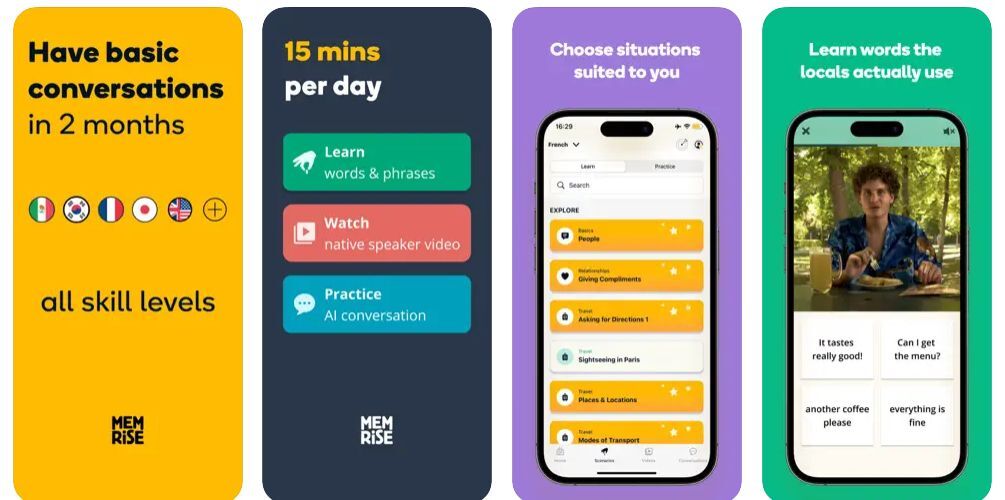
Memrise is another language-learning app that’s gained popularity for its unique approach to teaching languages. Similar to Duolingo, Memrise offers courses in various languages, but it stands out with its focus on vocabulary acquisition through mnemonic techniques.The app utilizes spaced repetition and mnemonic devices to help users remember words and phrases more effectively. Mnemonics are memory aids, like visual imagery or associations with familiar words, that make it easier to recall new vocabulary. Memrise incorporates these techniques into its lessons, making language learning more engaging and memorable.
Memrise also offers features like interactive games, listening exercises, and pronunciation practice to enhance the learning process. Like Duolingo, it’s designed to be convenient and accessible, allowing users to learn at their own pace, anytime and anywhere.
LingoDeer
LingoDeer is yet another language-learning app that offers interactive lessons in various languages, but primarily focusing on Asian languages such as Japanese, Korean, Chinese, and Vietnamese.
What sets LingoDeer apart is its structured approach to language learning, which is tailored specifically to the grammar and vocabulary of each language it teaches. The app provides step-by-step lessons that cover essential language skills, including reading, writing, listening, and speaking.
One of the key features of LingoDeer is its clear explanations of grammar points and language concepts, which are presented in a way that’s easy to understand and remember. The app also incorporates a variety of interactive exercises and quizzes to reinforce learning and help users practice what they’ve learned.
The basic version is free, but you can buy different tiers of premium access, starting from a monthly subscription for $14.99 and going all the way up to a lifetime membership for $299 (often slashed down to $159.99).
Babbel
Babbel is one of the oldest language-learning tools on the internet, and it takes its name from the Babbel fish in the popular science-fiction book “The Hitchhiker’s Guide to the Galaxy.” The app does what other similar apps do but focuses more on the practical side of things, teaching you language skills that you can use in real-life situations.
That’s not to say that Babbel doesn’t offer a complete set of language learning tools, such as vocabulary, grammar, pronunciation, and cultural insights. It’s just that if you need to learn a couple of useful phrases for an upcoming short trip abroad, Babbel might be the right one for you.
Babbel also utilizes speech recognition technology to help you practice your pronunciation and ensure you’re speaking accurately, so you don’t make locals laugh on that upcoming trip. Plus, the app’s personalized review feature helps reinforce what you’ve learned, so it sticks with you for the long term.
Just like the other apps on that list, Babbel is free with some in-app purchases and subscriptions, starting at $8.99/mo.
Beelinguapp
Tired of the same repetitive language learning apps that use gamification and other similar techniques to make you come back and do your lessons? Prepare for something completely different! Beelinguapp is a unique language-learning app that offers an innovative approach to learning languages through reading. Imagine Beelinguapp as your cozy reading nook, where you can dive into captivating stories and articles while effortlessly picking up a new language.
Here’s the magic: Beelinguapp lets you choose from a library of texts in different languages, so you can find something that piques your interest, whether it’s a thrilling story or a fascinating article. You get to read these texts side by side, with the original language on one side and a translation in your native language on the other.
Additionally, Beelinguapp offers audio recordings of the texts, allowing users to listen to native speakers read the text aloud. This feature helps improve pronunciation and listening comprehension skills. It’s one of the more organic ways of learning a language, and for some people, it might work better than puzzles, games, and achievements.
Bonus: Brilliant
Learning a language is fun and all, but what about learning something different? How about delving into the deep and complex world of quantum physics or mathematics if you feel up for the challenge? There’s no need to go back to Uni and start a major in astronomy. There’s an app for that, and it’s called Brilliant.
Actually, Brilliant is a whole learning platform with a strong focus on math, science, and computer science, but before you click away, this platform is designed to explain complex subjects as intuitively as possible. It also provides learning at different levels, starting with beginner and going all the way up to expert, and it also features a range of interactive puzzles, quizzes, and challenges that encourage users to think creatively and apply their knowledge to real-world scenarios.
The downside is that the app requires a subscription. There’s a trial version that offers a glimpse at what you might achieve with the Problems of the Week feature, but if you want to get access to all the courses at a deeper level, you need to get Brilliant Premium.
A list of topics we covered in the week of April 1 to April 7 of 2024
Last week on Malwarebytes Labs:
Stay safe!
Our business solutions remove all remnants of ransomware and prevent you from getting reinfected. Want to learn more about how we can help protect your business? Get a free trial below.
Google keeps working on improving its app for Android and iOS. Now, Android Police reports that the company is developing a new toggle to switch between Search and Gemini AI for Android. The toggle already exists in the iOS version, and it’s long overdue for the Android version of the app.
Google working on a toggle for Gemini for its Android app
So far, generative AI has made its way into multiple Google services, including Gmail. Recently, the Google app on iOS got a useful toggle that allows you to switch between a standard search and using Gemini AI. However, the Android app doesn’t have the toggle.
This might change soon though, based on evidence found within an under-development version of the app. Leaker AssembleDebug has found the new toggle in the Google app for Android. The version of the app isn’t clear, but screenshots and videos show it works similarly to the iOS version.
So far, it is unclear when the toggle will be officially released. It could take weeks or even months for Google to refine it. Firstly, users on the beta version of the Google app should be getting a feel of it.
As for right now, Android users can access Gemini through the standalone app, while iOS users can access it directly via the Google app.
Izzy, a tech enthusiast and a key part of the PhoneArena team, specializes in delivering the latest mobile tech news and finding the best tech deals. Her interests extend to cybersecurity, phone design innovations, and camera capabilities. Outside her professional life, Izzy, a literature master’s degree holder, enjoys reading, painting, and learning languages. She’s also a personal growth advocate, believing in the power of experience and gratitude. Whether it’s walking her Chihuahua or singing her heart out, Izzy embraces life with passion and curiosity.
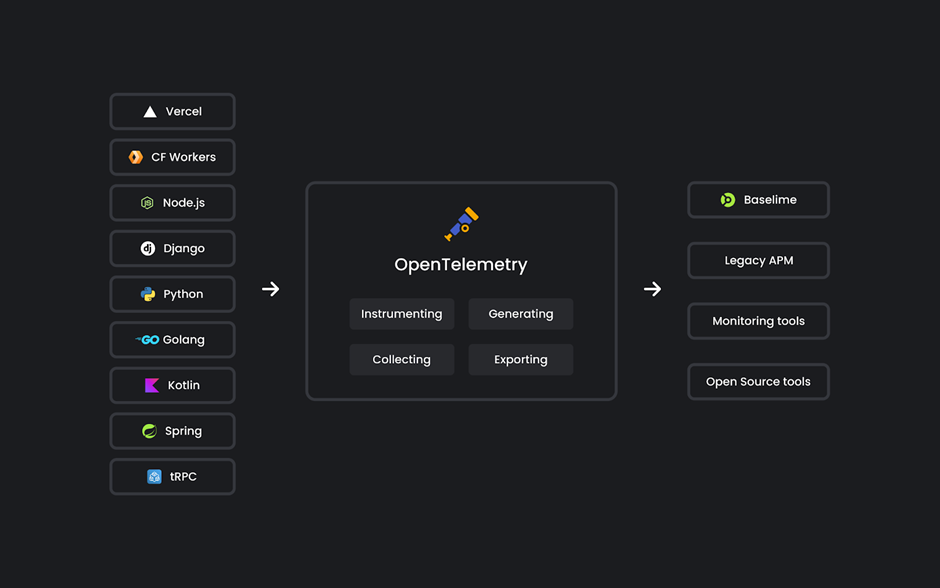
Cloudflare has announced its acquisition of Baselime, a pioneering observability platform designed to simplify the complexities of serverless application development.
This acquisition marks a milestone in Cloudflare’s journey towards creating a more intuitive and efficient cloud computing environment.
It leverages Baselime’s innovative approach to solving the behavior of distributed systems.
Revolutionizing Serverless Computing
The cloud computing paradigm has radically transformed over the past few years, with serverless architectures taking center stage.
This shift has enabled developers to build applications with remarkable speed and flexibility, eliminating the need to manage underlying infrastructure.
Cloudflare has been at the forefront of this revolution, offering services that simplify the development process for serverless applications.
However, the adoption of serverless technologies has introduced new challenges, particularly in understanding and managing the behavior of distributed systems.
Baseline was founded to address these challenges, providing developers with the tools to build, ship, and learn from their serverless applications effectively.
Cloudflare recently tweeted that they have integrated Baselime into their developer ecosystem.
Baselime’s observability capabilities makes it easier for developers to resolve issues with their serverless applications.https://t.co/akoL1CwZoI
— Cloudflare Developers (@CloudflareDev) April 5, 2024
A Synergistic Partnership
Cloudflare and Baselime’s synergy is evident in their commitment to enhancing the developer experience in the cloud.
DocumentRun Free ThreatScan on Your Mailbox
Trustifi’s Advanced threat protection prevents the widest spectrum of sophisticated attacks before they reach a user’s mailbox. Try Trustifi Free Threat Scan with Sophisticated AI-Powered Email Protection .
Cloudflare’s extensive portfolio of cloud computing services, including Workers, D1, R2, Queues, KV, Durable Objects, and AI, complements Baselime’s observability platform, which is designed to provide deep insights into the behavior of cloud applications.
By integrating Baselime’s capabilities into the Cloudflare ecosystem, developers will access built-in observability for every aspect of their serverless applications, from Workers to AI calls.
This integration promises to streamline the development process, enabling developers to detect, troubleshoot, and resolve issues in production quickly.
Core Concepts Behind Baselime’s Success
High Cardinality and Dimensionality
Baselime’s approach to observability is built on high cardinality and dimensionality, allowing developers to navigate their applications’ complexities easily.
Baseline offers a comprehensive view of application behavior by enabling detailed analysis of logs and distributed tracing with OpenTelemetry, facilitating faster and more accurate resolution of issues.
OpenTelemetry Integration
The adoption of OpenTelemetry, a set of standards for instrumenting applications, has been a game-changer for Baselime.
This integration gives developers a holistic view of their applications, from HTTP API performance to database query efficiency.
Cloudflare’s commitment to embedding OpenTelemetry directly into its Workers’ runtime further enhances the observability capabilities available to developers.
Baselime is a native OpenTelemetry built from the ground up to leverage OpenTelemetry data.
At the heart of Baselime’s philosophy is the belief that observability should not only be about collecting data but also about improving the developer experience.
By offering an exploratory solution that surfaces insights and facilitates real-time error tracking, Baselime aims to reduce the friction associated with traditional observability tools, making it easier for developers to identify and resolve issues.
As Cloudflare and Baselime embark on this exciting new chapter, the focus remains on pushing the boundaries of modern observability.
Integrating Baselime’s core capabilities into the Cloudflare ecosystem is just the beginning.
Plans include introducing advanced AI capabilities, direct codebase connections, and enhanced observability for large language models.
Secure your emails in a heartbeat! Take Trustifi free 30-second assessment and get matched with your ideal email security vendor - Try Here
For optimal security, auto-tracking security cameras are preferred. This exceptional feature offers more details of the incident that happened and the persons involved. But the question is: which security camera should you choose from dozens of options?
In this article, we will explore auto-tracking security cameras and the benefits they offer to help you understand whether you need them or not. We will also share the top picks you can go with for incredible features and surveillance.
What is Auto Tracking Security Camera?
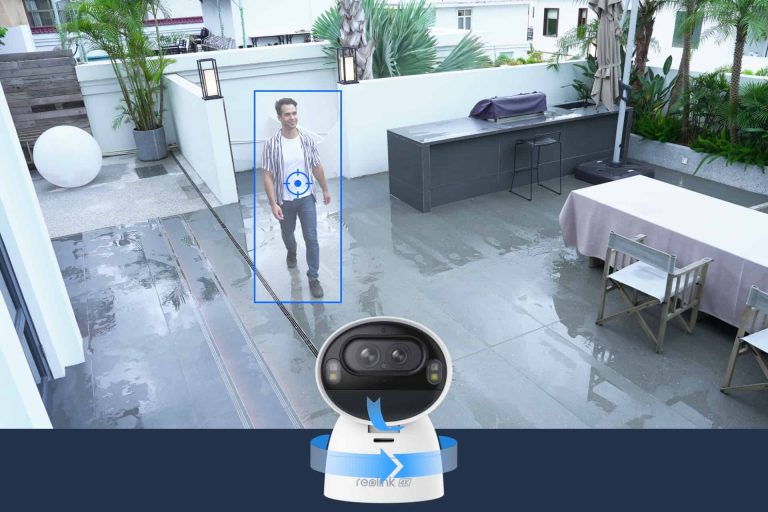
An auto tracking security camera is equipped with a special feature called auto-tracking. It can automatically detect persons, pets, and vehicles using advanced sensors and algorithms. After detection, it starts tracking the movement. It captures the object’s movement within its field of view so you can understand what happened.
Some PTZ cameras can pan and tilt according to the object’s movement. They cover a wider area than normal cameras and reduce blind spots.
Benefits of Using Auto Tracking Security Camera
Auto-tracking cameras are preferred due to the following benefits.
Enhanced Surveillance Coverage
Auto-tracking cameras can cover a wider area and track every movement of the object. They focus on the right thing and offer better surveillance of the area.
If there is a PTZ feature, the cameras can rotate left, right, up, and down to a certain extent. They can rotate along with the object and capture more details of its movement.
If you install auto-tracking PTZ cameras, you will need fewer cameras than normal cameras. Some cameras even have an auto-patrol option that automatically rotates the camera between certain points.
Improved Accuracy
The cameras can move with the object to capture every detail of its movement. They reduce the blind spots, which is the common reason for no detection. They are equipped with advanced sensors and algorithms. So they can accurately detect the movement and start tracking.
Active Monitoring and Real-time Response
Auto-tracking cameras capture everything during the day and night. They also have color night vision or black-and-white to offer clear videos in low-light conditions.
You can actively monitor the movement of objects in the area. They accurately detect moving objects and send instant alerts to your device. You can check the live preview of the camera from any location and anytime through your smartphone.
Improved Incident Response Capabilities
After detecting any object, you get a notification in real-time. It is possible to prevent incidents and take action at the right time.
The cameras also have warning systems. They can turn on spotlights and ring the siren to deter intruders. Moreover, you can also talk to the person in front of the camera through two-way audio. There are microphones and speakers in the camera that facilitate communication through mobile applications.
Reolink Innovation in Auto Tracking Security Camera
Reolink has taken auto-tracking to the next level. They have introduced three tracking modes in their certain cameras.
The first mode is Digital Tracking. The camera tracks the object when it is within the range of the wide-angle lens. It does not pan or tilt if the object moves out of the range. It is recommended for a small area with a field of view less than 100⁰.
The second mode is Digital Tracking First. The camera starts to pan when the object reaches the edge of the wide-angle lens. It is recommended for large areas with more than 100⁰ field of view and within a 10m distance.
The third mode is PT Tracking First. The camera starts to pan and tilt when the object reaches the edge of the telephoto lens. It keeps the object at the center of the view. It is suitable for areas with more than 100⁰ field of view and within 10-15m distance.
Best Auto Tracking Security Camera: Unveiling the Top Models
Wireless Auto Tracking Security Camera – Argus Track
Reolink Argus Track is a 4K battery/solar-powered camera with auto-zoom. It tracks the motion of moving objects and zooms into them automatically to capture close-up views and important details.
You can see the normal and zoomed tracking video on the screen. Its PTZ offers 355⁰ pan and 50⁰ tilt, and 6X zoom for intricate details. Even at night, it captures true colors with optimal clarity.
It is a dual-band Wi-Fi camera for a smooth and stable viewing experience. It has a built-in rechargeable battery, so you can use the camera anywhere. It can also be connected to a solar panel and work as a standalone device.
Pros:
– Accurate detection of persons, vehicles, and pets – Instant alerts on your devices – Double-warning system to deter intruders – 355⁰ pan, 50⁰ tilt, and 6X hybrid zoom; a perfect PTZ camera – 10 minutes of solar charge offers 24 hours of uninterrupted performance – Compatible with Google Home
Cons:
– Not IP67 rated but still weatherproof for harsh conditions
Auto Tracking Outdoor Security Camera – E1 Outdoor Pro
Reolink E1 Outdoor Pro is a 4K Wi-Fi 6 PTZ camera. Its Wi-Fi 6 compatibility ensures low latency, super-fast transfer, and higher stability.
It offers 4K clear videos and 3X zoom to unveil intricate details. Its 355⁰ pan and 50⁰ tilt cover a wider area. It can do auto-tracking and capture every movement of the object. It also allows you to adjust the pan and tilt manually.
Pros: – Excellent colors and clarity at night – Equipped with spotlights and a siren to prevent theft – Real-time alerts and audio communication – Customized motion zones to send accurate alerts
Cons: – Requires a power cord (DC), so it is not suitable for places without power supply outlets nearby
Auto Tracking Security Camera System – RLK12-800WTM4
RLK12-800WTM4 is a complete auto-tracking security camera system with four cameras and one NVR.
All cameras offer 4K videos with normal and zoomed views. They use dual-band Wi-Fi for a smoother visual experience.
The NVR has 2TB storage, which can be expanded to 16 TB. It can connect up to 12 cameras, which makes scaling easier.
Pros: – Covers a wider area – Dual-tracking of the object for normal and close-up view – Gives clear videos at night through color night vision – Stable and fast dual-band Wi-Fi – Secure storage
Cons: – Not Wi-Fi 6, but it offers incredible speed and stability
FAQs
1. Are all PTZ cameras auto-tracking?
No, not all PTZ cameras have auto-tracking. The PTZ of some cameras has to be adjusted manually. It is better to look for the auto-tracking feature before buying.
2. What is intelligent tracking on a security camera?
Intelligent tracking uses advanced algorithms. It uses AI to detect objects and distinguish between persons, vehicles, and pets. After detection, it starts tracking the object and sends an instant alert to devices.
3. What is auto-tracking mode?
The auto-tracking mode automatically detects the movement of objects. It follows the movement within its field of view and captures every detail.
Conclusion
Auto-tracking security cameras are ideal for optimal surveillance and security. They can detect the motion of objects and start tracking movement. You can see the details of every movement along with instant alerts on the devices. They can cover a wider area and offer fine details of the object through zoom. They can also deter intruders and help you take action at the right time. Instead of a normal camera, you should go with auto-tracking. We have shared some of the best auto-tracking cameras you can select for incredible features and performance.