Many typical smartphone users might not be familiar with the name Fairphone. This is a small and pretty niche smartphone company that manufactures modular smartphones. These are phones with parts that are easily replaceable so that they can last much longer than traditional smartphones. It has a goal to reduce e-waste, and it’s a pretty strong player in the sustainable smartphone market. Well, Fairphone is planning on expanding to more markets.
The thinking behind Fairphone is to provide smartphones for people to use for many years longer than traditional smartphones. This mentality will reduce e-waste, as people will hold on to their phones for longer rather than tossing them after two or three years.
Of the sustainable smartphone market, Fairphone is one of the bigger players. While major companies such as Apple and Samsung tout using recycled materials, sustainable smartphones are an entity all their own.
Fairphone wants to expand to more markets
While Fairphone is a pretty popular brand, it’s available to a pretty limited market. Its phones are only available in a few markets, and the US is not included in that list.
However, the company has been making a push to make its products available to other markets. This push was initiated by the company’s new boss Reinier Hendriks. So far, the company has made its phones available in countries such as Austria, Switzerland, and Great Britain. We can only expect this list to grow as time goes on. Making these phones available to more markets will further push the company’s dream of sustainable technology.
These phones could also get cheaper
Another area where the company will see changes is the pricing. The Fairphone 5 currently retails for €699. It’s rocking a chip that’s similar to a Snapdragon 700 series chip. Other than that, it has a 1080p+ OLED display that runs at 90Hz, 8GB of RAM, 256GB of storage, Etc. €699 is a pretty steep asking price for specs such as those. It’s not outlandish, but it’s starting to approach lower Flagship level prices for mid-range level performance.
Well, under the new direction, Hendriks wants to bring the price down substantially. If the company does so, we should be looking at a price closer to €400. That’s a much more reasonable price for the specs.
However, that will be a difficult task, as the company still needs to make a profit. So, Fairphone is going to be locking down some Partnerships with manufacturers and software partners. Hopefully, we will be seeing these phones in more markets.
One of the most important topics pertaining to AI technology is regulation. Governments need to make sure that major AI companies don’t run rampant with the technology. Well, governments are still scrambling to set up some sort of strict regulations surrounding AI in the companies that produce it. Speaking of regulations, Google and Alphabet CEO Sundar Pichai spoke at the Business, Government & Society Forum at Stanford Graduate School of Business, and he stated that he wants AI to help Google comply with government regulations.
Recently, the United States government has unveiled some strict rules for government agencies that use AI tools. These rules will dictate how agencies use AI systems. They will also prohibit agencies from using AI tools that impose on American citizens’ rights or safety. Also, these rules will force agencies to be transparent with the models that they’re using and how they’re using people’s data. Lastly, these rules will require agencies to hire AI professionals, and this will include hiring a Chief AI officer. These rules will go into effect shortly.
Google wants AI to help it comply with regulations
Right now, regulations regarding AI Technologies are starting to take form. The EU is the first government to bring forth actual laws against AI, and other countries are coming up with their own rules and regulations.
Speaking at the Stanford School of Business, Sundar Pichai gave his take on regulations. He talked about the difference between over-regulation and under-regulation and other key aspects of AI technology. Below, you will be able to see his full section of the forum.
“The way I think about AI is, what part of AI will make it easier for us to comply with regulation at scale?” Pichai said during the forum, “AI is an opportunity there as well.” This is something that definitely raises some questions. We’re all wondering what Google wants to do to help it boost its AI footprint while keeping within regulation.
We are all unsure, but we know that Google is going to be using artificial intelligence for many of its tasks going forward. The only question is whether this will have a positive or negative effect on the company and the tech industry at large.
According to 9to5Google, an email blast was sent last night to some users which included some official information on when the “Find My Device” network would be launching to the masses. Although the settings began to appear yesterday on Android devices for some users with the beta version of Google Play Services installed, the settings weren’t actually working. Now, it looks like we have a more accurate timeline on when the switch will be flipped.
The email contained the following verbiage: “You’ll get a notification on your Android devices when this feature is turned on in 3 days. Until then, you can opt out of the network through Find My Device on the web.” Based on the date the email was sent, it’s looking like the service will likely launch on Monday, April 8th, as it is unlikely for Google to launch a new service over the weekend.
In case you are out of the loop, last year, Google unveiled the Android Find My Device network to assist users in locating lost or stolen smartphones. However, concerns about stalking using tracking devices such as AirTags prompted Google and Apple to collaborate on a solution, delaying the launch of the Find My Device network. Now, with Apple getting ready to deliver these new anti-stalking features with the iOS 17.5 update, Google no longer has to wait.
Considering that this email was only received by a very small number of users, it is possible it was never meant to be sent out. We don’t know if this means that the launch date on the email is incorrect, or if someone just pressed “send” by mistake. Either way, we are excited to see this finally come to pass and a proper “Find My Device” network finally be put in place for Android users.
The breach, confirmed by AT&T on March 30, 2024, included full name, email address, mailing address, phone number, social security number, date of birth, AT&T account number, and passcode.
This sensitive data puts millions of individuals at risk of identity theft, fraud, and other financial crimes.
DocumentRun Free ThreatScan on Your Mailbox
Trustifi’s Advanced threat protection prevents the widest spectrum of sophisticated attacks before they reach a user’s mailbox. Try Trustifi Free Threat Scan with Sophisticated AI-Powered Email Protection .
Details Of The Breach Remain Unclear
While AT&T has acknowledged the breach, details surrounding the incident remain unclear.
The company has not disclosed how the attackers gained access to its systems or for how long the breach may have been ongoing.
Cybersecurity researchers assume that the breach might be linked to a similar incident reported in January 2021, which AT&T never officially acknowledged.
Customers affected by the breach are filing lawsuits against AT&T, alleging negligence and breach of contract.
The lawsuits claim that AT&T failed to implement adequate security measures to protect customer data, making them vulnerable to the attack.
Additionally, the lawsuits argue that AT&T violated its contractual obligations to safeguard customer information.
“It has come to our attention that a number of AT&T passcodes have been compromised. We are reaching out to all 7.6M impacted customers and, as a safety precaution, have reset their passwords.
In addition, we are emailing and mailing letters to individuals with compromised sensitive personal information separately and offering complimentary identity theft and credit monitoring services”, reads the Listener notice.
Is Your Network Under Attack? - Read CISO’s Guide to Avoiding the Next Breach - Download Free Guide
It seems each week brings news of another attack – millions drained from DeFi protocols, NFTs swiped, and Web3 users financially wrecked. So much so that the promise of this technology feels tainted for many users – particularly those who just read the news headline and assume the worst.
But behind the scenes, an elite group of Web3 security brands have been toiling away on next-gen protections to turn the tide. We are talking about blockchain’s unspoken heroes – the brilliant builders creating complex security infrastructure, fraud-detecting AI, and hardened protocols to make the decentralized web broadly safe and ready for mainstream adoption.
However, engineering chops alone don’t cut it nowadays. Even cyber defenders need savvy marketing behind them if they want to snag users and lock down funding from weary crypto investors.
That’s why many of the leading security brands quietly partner with crypto marketing agencies in the background. Aligned with specialists who understand Web3’s intricacies, these teams boost awareness of the robust safety solutions they’re pioneering. Just as crucially, the agencies give them a mega-phone to spotlight past breaches and clarify why next-gen protections must be priority #1 going forward.
In this article, we want to pull back the curtain on five agencies that are already making this happen for some of the industry’s pioneers. Let’s explore why their marketing might well determine if Web3 can overcome its somewhat shaky reputation.
Top 5 Crypto Marketing Agencies for Web3 Security Brands
Now, let’s get into the list of the top five crypto marketing agencies for Web3 security brands.
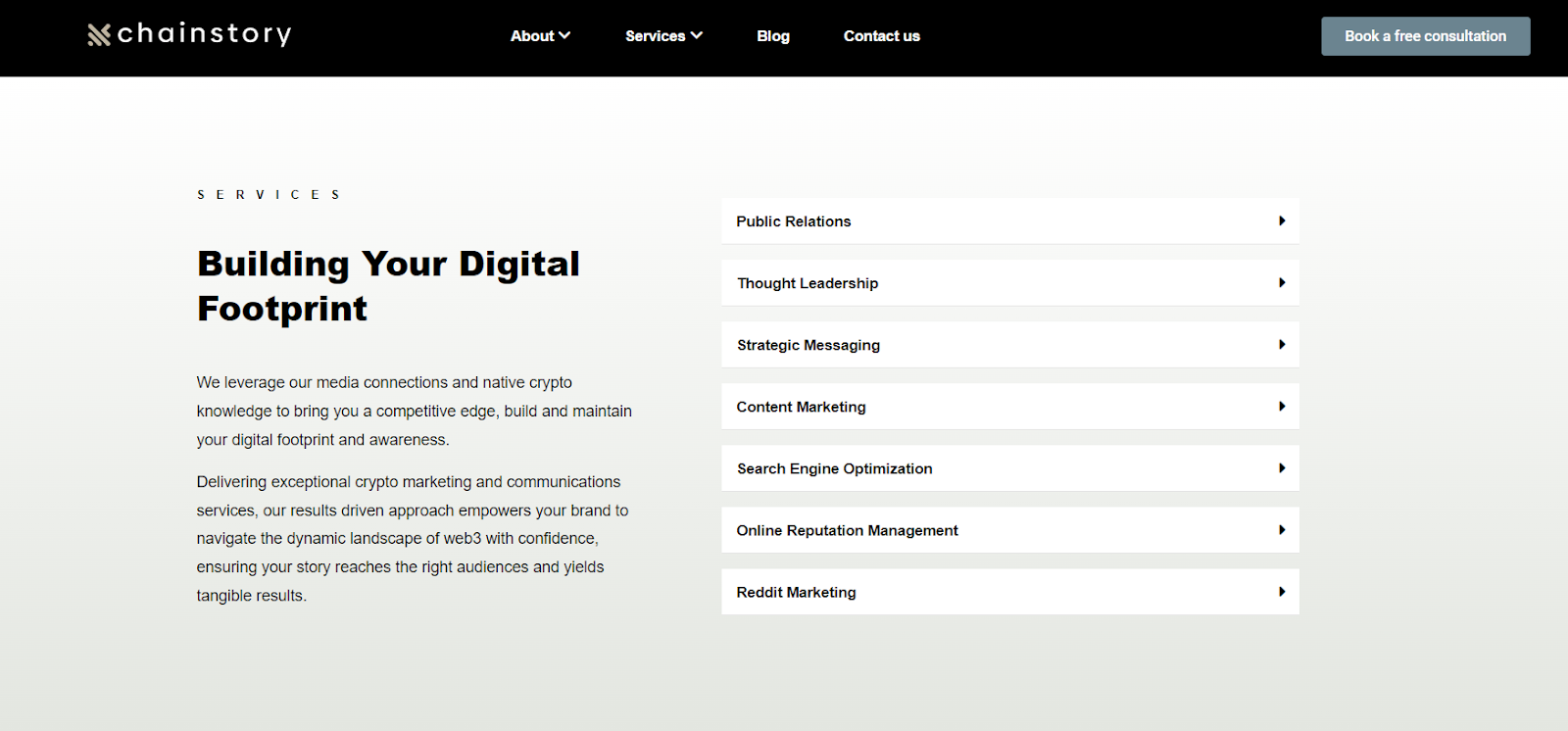
Chainstory
Expertise: Blockchain PR using storytelling & strategic content marketing.
As a results-driven crypto marketing agency, Chainstory delivers strategic PR and communications guidance built for impact with blockchain audiences. Since 2016, Chainstory’s special sauce has been the art of storytelling and narrative-shaping.
That’s an invaluable asset for forward-thinking security brands aiming to convey the pressing importance of their protections in simple yet profound terms as Web3 adoption accelerates. In essence, Chainstory helps these businesses translate complex cybersecurity problems into compelling stories the average crypto user can quickly grasp and connect with on an emotional level.
Chainstory has already been able to put out client commentary in mainstream media discussing relevant scams and exploit stories on outlets like CNBC, Reuters and TechCrunch. This external validation helps establish thought leadership benefits and raise awareness – and thanks to their pricing model, you only pay for what they deliver.
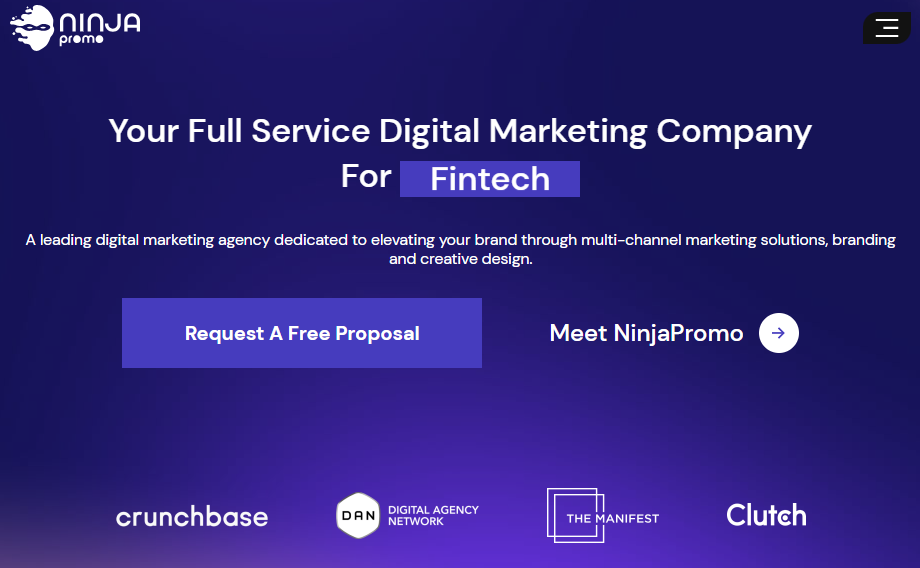
NinjaPromo
Expertise: Paid advertising and media campaigns
While a full-service marketing agency operating across several industries, NinjaPromofocuses the majority of its Web3 marketing efforts on data-driven advertising campaigns and influencer initiatives engineered to deliver measurable results. The agency deploys precision paid campaigns across platforms to expand awareness and adoption for blockchain companies.
Rather than general hype, NinjaPromo emphasizes transparency on key performance indicators—reporting hard metrics like whitepaper downloads, email sign-ups, social engagements and referral traffic to showcase campaign effectiveness.
With its seasoned team and strategic expertise, NinjaPromo could greatly benefit security innovators looking to accelerate technology rollouts and partnerships. Targeted ads nudging ideal engineers/developers down the conversion funnel can fast-track go-to-market. While not Web3-centric, NinjaPromo possesses the formula to help Web3 security brands gain more visibility.
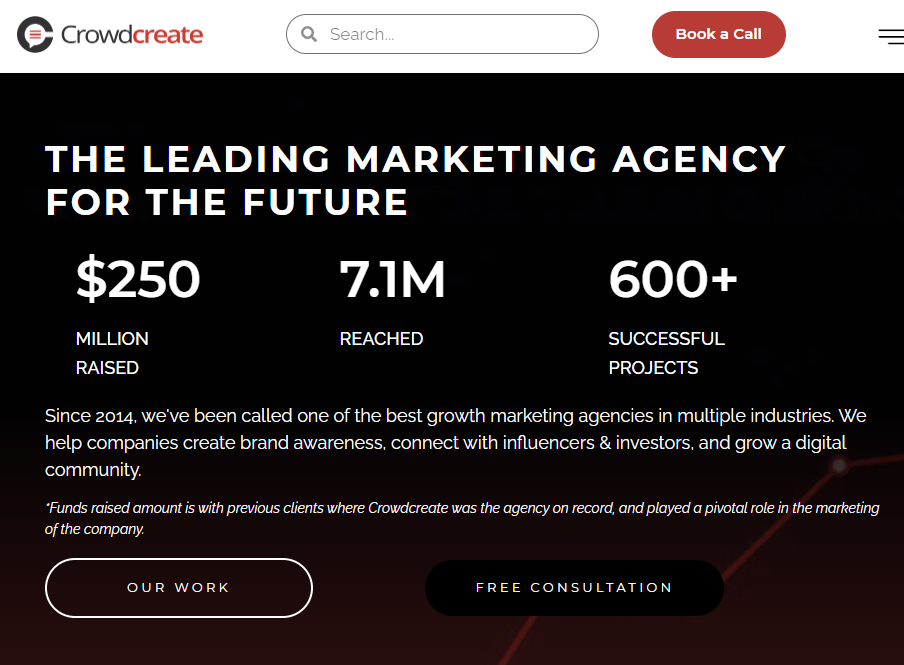
Crowdcreate
Expertise: Investor relations and fundraising
As a leading marketing agency across crypto, gaming, eCommerce, and real estate, Crowdcreate has built up an extensive Rolodex of active blockchain investors and strategic relationships with funding partners like venture capital firms and crypto hedge funds.
To date, much of their focus has centered on helping Web3 brands shape investment narratives, create decks, and run fundraising campaigns to access capital from their network. The same playbook could be run to support Web3 security enterprises pursuing their mission-critical work.
With Crowdcreate’s connections and fundraising machinery, Web3 companies could potentially gain backing to scale tools protecting Web3 users from catastrophic losses. Crowdcreate has the team and the experience to help craft stories conveying why security deserves more support than short-term speculation.
Coinbound
Expertise: Community management and content marketing
When it comes to getting attention in the crowded Web3 space, community engagement is huge. Building those human connections and nurturing super fans can be the difference between a brand that fizzles out and one that thrives. This is one of Coinbound’s major strengths.
Whether it’s hosting vibrant AMAs, creating informative content, or moderating online discussions, Coinbound helps brands put their best face forward and resonate with audiences in their native digital habitats. That visibility and approachability lead to higher levels of trust and advocacy.
Now for Web3 security brands specifically, nurturing these communities holds even greater significance. By establishing themselves as visible protectors and educators around risks in the Web3 ecosystem, security brands can position themselves as anchors of safety amidst uncertainty. And platforms like Coinbound offer proven strategies to make that happen.
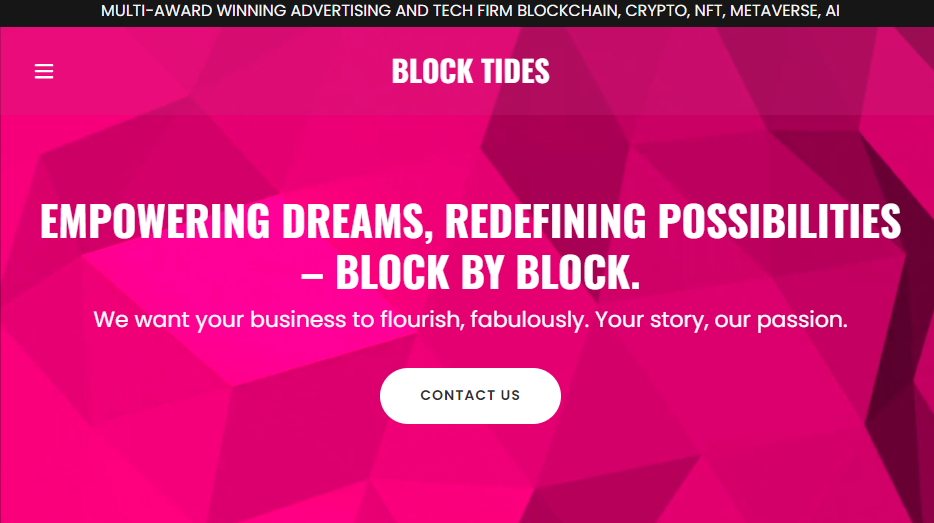
Block Tides
Expertise: Asia-specific
Expanding into Asia can feel like entering into a new world for many Western Web3 brands. Between fragmented communities, language barriers, cultural nuances and navigating local regulations – breaking in isn’t easy. But that’s where leveraging a specialist like Block Tides can pay dividends.
These guys live and breathe Asia’s Web3 and AI ecosystem. They understand the unique needs of Web3 companies trying to gain footholds across this diverse region. For cybersecurity brands in particular, Block Tides recognizes building trust requires specialized localization and engagement.
As a full-service agency, Block Tides brings extensive capabilities to the table – covering all aspects of digital marketing and beyond. Their offerings span core elements like social media management and influencer collaborations to amplify brand recognition. But the team also handles technical initiatives as well – even supporting software/product launches.
How Can a Crypto Marketing Agency Help Web3 Security Brands?
Let’s face it, Web3 security brands have more than enough on their plates to protect networks, fight hackers, and build robust infrastructure. Marketing often takes a backseat to those crucial priorities. But getting the word out is vital. These brands still need to flex their reputation, showcase reliability, and connect with the right communities.
We asked the comparison website Best Crypto Marketing Agencyto break down some of the ways crypto marketing agencies can help Web3 security brands, they added:
Branding & Messaging: Agencies know how to make security tools pop for crypto insider audiences – highlighting slick features and next-gen code for locking down wallets, DeFi platforms and NFT markets. Their messaging cuts through the hype to reach VCs, developers, and the engineers calling the shots.
Content Creation: High-quality articles, videos and visuals from marketing experts spotlight major events and trends while underscoring why advanced protocols from their clients provide such crucial protection. This content cements their reputation as thought leaders.
Community Building: Agencies rally diehard security devs, engineers and cyber experts by creating online forums and channels for them to chime in. This forms a vocal army of advocates repping their favourite Web3 security platforms.
Media Coverage & Partnerships: With access to industry connections, security brands score writeups in blockchain publications, a cameo in crypto influencer videos, and ink partnerships with respected players in the space. Heightened visibility and co-signs accelerate success.
Regulatory Guidance: Rules around Web3 are always changing across regions. Agencies ensure compliance legwork is handled, freeing up security leaders to deliver groundbreaking code instead of paperwork.
Things to Keep in Mind When Choosing A Web3 Marketing Agency
As a Web3 security innovator, choosing the right marketing partner is crucial. You need an agency that truly understands the distinct challenges of establishing trust and relevance in the decentralized landscape. Here are a few must-haves to ensure your agency aligns with your specific needs:
Technical Communication – Can your agency effectively convey highly complex cybersecurity concepts to both investor and engineer audiences? Simplifying messaging around the urgency of your protections is vital.
Web3 Experience – Have they specifically supported any Web3 security brands before or do they merely dabble in blockchain? You need an agency well-versed in the industry issues facing users right now.
Key Media Relationships – Does your potential agency have existing connections with influential media platforms? Those relationships can prove invaluable for boosting brand awareness.
Results-Focus – Rather than vague promises, you need an agency that embraces transparency around campaign analytics and reporting. This keeps everyone accountable while highlighting what concrete actions move the needle.
Bespoke Strategies – Out-of-the-box campaigns won’t differentiate you in the decentralized world. Make sure your agency develops highly customised go-to-market plans aligned to your specific offerings.
Parting Words
Cybersecurity trailblazers play an integral yet often overlooked role in securing the decentralized future. Their ingenious code protects the dreams and financial freedoms of millions of Web3 users worldwide.
However, many in the crypto community remain unaware such vital protections even exist. By collaborating with marketing agencies closely attuned to the security threats now engulfing crypto, these unspoken heroes can finally step into the spotlight.
Strategic outreach and messaging can broadcast how their platforms deflate the hype around crypto scams by engineering ironclad protections behind the scenes. Ultimately, savvy marketing will convey why these teams deserve investor backing to scale essential infrastructure that benefits everyone.
FAQs
Q. Why do Web3 security brands need marketing help if their technology is so innovative?
A: Even game-changing cybersecurity toolswon’t gain traction on technology alone. Strategic marketing is crucial for getting products and software into the hands of developers, while also establishing brands as trusted leaders that investors want to back.
Q: What results can a marketing agency realistically deliver for a new security startup?
A: The right agency can significantly expand visibility and credibility amongst key Web3 audiences. We’re talking partnership opportunities, media coverage, community growth and heightened interest from potential customers and VCs.
Q: How hands-on are these agencies? Will they just execute or collaborate closely with our team?
A: The best agencies function as true partners, working closely alongside your executives and engineers to deeply understand your offerings before developing high-alignment strategies. Communication should be continual.
Q: How can we vet agencies to ensure they truly understand cybersecurity in Web3?
A: Ask probing questions about their experience helping security brands in the past. Check whether staff have worked with blockchain businesses themselves. Validate their technical knowledge across vulnerabilities, exploits, and cryptography topics relevant to your protections.
Q: This sounds expensive. What does pricing look like?
A: Packages vary based on the services chosen and the reputation of the agency. Some charge upfront, but others offer results-based pricing based on what they can deliver. It’s up to you which model best suits your budget.
For a while, Samsung has offered an augmented photo experience on Galaxy phones using the Expert RAW app. This gives users more powerful tools than the standard Samsung camera app, and it’s undoubtedly helped plenty of smartphone photographers get the most from their cameras. Well, the company just released a new update for the Expert RAW app, and it brings lossless photos.
If you are familiar with lossless audio, then you should understand the concept of lossless photos. After you take a picture, the image data is processed and compressed in order to conserve space. Lossless photos will skip this additional processing and save the RAW photo data to your phone as an image file. This gives users more flexibility when editing. Since smartphone technology has developed to the point where it’s encroaching on professional photography, this makes sense.
Expert RAW now brings lossless images
Samsung’s Expert RAW application is available for certain flagship Galaxy devices. You can get the app if you have a Galaxy S20 Ultra, Galaxy Note 20 Ultra, Galaxy Z Fold 2 or newer, or a Galaxy S21 or newer. You can download it from the Galaxy Store.
The company just pushed out the latest version of the app, which is version 3.0.05.12. It brings some additions to the application, and one of the major additions is lossless photography. To activate the feature, open the Expert RAW app, and tap on the Settings button. You will see the toggle for lossless photos near the top of the Settings screen.
After updating the Galaxy S24+ (Review) we have here at Android Headlines, we saw that the lossless image option was automatically enabled. That could be a bit of an issue, as we will explain later in the article.
One thing to note is that this feature is not guaranteed to work on all of your camera sensors. On the Galaxy S24+, you can use the feature in both 12-megapixel mode and 24-megapixel mode. However, you cannot use it in the 50-megapixel mode.
The issue
So, why is it an issue that this could possibly be enabled by default? Well, lossless images take up a lot of space. One image we took with the Galaxy S24+ in the 24-megapixel mode produced a file that was 38MB large. So, if you’re planning on going on an extended photo shoot, you could wind up using hundreds of megabytes if not a few gigabytes.
If you don’t see this option for your phone, and you have an eligible device, go to the Galaxy Store and see if you have an update available.
Smart ring maker Oura has introduced “Oura Labs” and released the “Symptom Radar” feature. The new section will have experimental features that users can choose to activate and test.
The Symptom Radar is one of the first features in the newly introduced Oura Labs section. It promises to monitor vital signs and alert users about physiological strain.
What are Oura Labs and Symptom Radar?
Oura is one of the few companies that has managed to create a loyal smart ring user base. Its commercially available products are packed with sensors inside a sleek and fashionable accessory.
The Oura Ring competes with Google Fitbit and dozens of other smart bands and smartwatches. Following Google’s footsteps, Oura has introduced Oura Labs. As the name indicates, the new section will include experimental features that Oura may remove, redesign, or eventually add to the main app.
Oura is using the Oura Labs section to test products with its willing users and gather vital data as well as ascertain user feedback. Needless to say, all the features inside Oura Labs are strictly opt-in. Speaking about the feature, Shyamal Patel, Oura’s head of Science reportedly said,
“Oura Labs is our approach to recreate internal engagement for new features with users in a structured and formal way. With this feature, you will have a dedicated space in the app where you can go and start engaging with these new concepts we are building. Users will get to see a lot of early-stage ideas in Oura Labs.”
The Symptom Radar is the only addition to Oura Labs. It is supposed to be a monitoring system. It utilizes multiple sensors to look out for early signs of “physiological strain”, claims the company.
Is Symptom Radar a diagnostic tool that will detect illness?
According to Oura, the Symptom Radar feature, “notifies users of significant changes in biometric trends like temperature, respiratory rate, resting heart rate, and heart rate variability”.
When users receive a notification from Symptom Radar, they can either enable Rest Mode or lower their daily activity goal. The latter essentially tells the app that the user is prioritizing rest and well-being.
There could be several triggers for Symptom Radar to issue an alert such as excessive workouts, poor sleep cycles, and erratic behavior patterns. However, creeping illness would be the most obvious reason.
Oura has categorically noted that Symptom Radar is not a “diagnostic feature”. As evident from the feature’s disclaimer, it tries to help users, “better understand” their “body’s signals”. Incidentally, such wording ostensibly allows Oura to skip seeking FDA approval.
The AhnLab Security Intelligence Center (ASEC) has detected a sophisticated cyberattack targeting users of the popular text and code editor, Notepad++.
Hackers have successfully manipulated a default plugin within the Notepad++ package, potentially compromising the security of countless systems.
The plugin in question, “mimeTools.dll,” is a standard component of Notepad++ that provides encoding functionalities, such as Base64.
It is automatically included and loaded when Notepad++ is run, which the attackers have exploited to their advantage.
By altering the mimeTools.dll file, they disguised the malicious code as a legitimate part of the Notepad++ package.
Malicious vs Official Package
This type of attack, known as DLL Hijacking, takes advantage of the plugin’s automatic loading to execute the embedded malicious code without the user’s knowledge.
DocumentRun Free ThreatScan on Your Mailbox
Trustifi’s Advanced threat protection prevents the widest spectrum of sophisticated attacks before they reach a user’s mailbox. Try Trustifi Free Threat Scan with Sophisticated AI-Powered Email Protection .
Attack Flow
Launching the Notepad++.exe file triggers the loading of the compromised mimeTools.dll, activating the hidden malware.
The attackers have embedded encrypted malicious shell code within the mimeTools.dll and the code necessary to decrypt and execute it.
ASEC’s investigation revealed that the file named “certificate.pem” within the altered package contains the malicious shell code.
Despite the infection, the plugin’s original functionalities remain intact, with only the DllEntryPoint showing altered code.
This means that the malicious activities begin when the DLL is loaded, regardless of whether the user attempts to use any specific plugin feature.
Execution Flow
The execution flow of the malware is as follows: upon running Notepad++, the infected mimeTools.dll is loaded, which then decrypts and executes the shell code from the certificate.pem file.
Subsequent stages of the attack involve further decryption and execution of additional shell code, facilitated by communication with a command and control (C2) server.
The C2 server, initially disguised as a Wiki site—giving rise to the malware’s nickname “WikiLoader“—has since been found to display a WordPress login page.
At the time of analysis, the additional shell code at the specified offset in the C2 server’s response was empty.
However, the potential for further malicious activities remains a significant concern.
The URLs of the C2 server are still accessible, indicating that the threat actors could update the payload or change their tactics anytime.
The discovery of this malware serves as a stark reminder of the importance of downloading software exclusively from official distribution sites.
Users are urged to exercise extreme caution when dealing with cracked versions or software from unknown sources.
ASEC has provided the following indicators of compromise (IoCs) for users to check their systems:
MD5 hashes of the compromised package files and individual components.
The URLs of the C2 server involved in the attack.
The security community is actively working to address this threat, and users of Notepad++ are strongly advised to verify their installations’ integrity and update their software from the official Notepad++ website.
It is also recommended that a complete system scan be run using a reputable antivirus program to ensure no remnants of the malware remain.
This incident underscores the ever-evolving nature of cyber threats and the need for constant vigilance in the digital age. Users and organizations must stay informed and adopt robust security practices to protect against such insidious attacks.
Stay updated on Cybersecurity news, Whitepapers, and Infographics. Follow us on LinkedIn & Twitter.
Google plans to release Android 15 later this year, packed with several useful features. One particularly noteworthy addition is the Private Space feature. Think of it as Google’s version of Samsung’s Secure Folder but with a few enhancements. Private Space essentially creates a separate, locked profile within the operating system, making it easy to hide applications.
Tech journalist Mishaal Rahman first brought attention to this feature in December 2023. Initially, it offered improved control over your private space’s visibility. However, since then, Private Space has undergone significant modifications. While it’s not yet available in Android 15 Developer Preview 2 or Android 14 QPR3 Beta 2.1, it’s expected to go live in stable Android 15.
An APK Teardown shows the setup process and functionality of the Private Space
With the release of Android 14 QPR3 Beta 2.1, Rahman executed the APK Teardown of the Private Space feature (via Android Authority). This report showcases the setup process and functionality of Private Space, providing users with insights into its workings. As such, you’ll want to take this news with a grain of salt.
The setup process begins by introducing Private Space as a built-in feature of Android 15. That means users will no longer have to rely on a third-party app locker. Data transmission from one locker to another is not possible, ensuring data security. Additionally, the data is accessible from any PC to which it is connected.
The following setup page asks users to create a separate Google Account to store private data. This mechanism ensures that the data is not leaked due to certain actions of the user.
The final step is to set the password. Users can use an existing lock screen or create a new one, choosing from options such as a PIN, Pattern, or Password. While fingerprint registration is an option for unlocking Private Space, a backup password is still required.
Android 15′ Private Space accessibility
Accessing Private Space settings is straightforward, located under Settings > Security & privacy > Private Space. Here, users can set the timing for automatic content locking, prevent apps from appearing in the app list, and toggle sensitive information visibility on the lock screen and in notifications.
The Pixel Launcher app’s quick support for installing apps in Private Space indicates the feature is getting substantial attention. Following extensive testing, the Private Space feature will officially launch with Android 15.
Apple, known for its innovative technology and elegant aesthetics, is reportedly developing personal robots as its next secret project. This decision follows the triumph of FaceTime, indicating a transition towards enhanced and engaging experiences for customers.
As per a report from Mark Gurman at Bloomberg, Apple is venturing into the realm of personal robotics, exploring the potential for integrating cutting-edge robotics into common devices. However, the specifics of these endeavors are currently undisclosed. The teasers of groundbreaking ideas are emerging, offering a sneak peek into the future of tech within our households.
Apple robotics project glimpse
Business Insider has disclosed that Apple is currently investigating the concept of a mobile robot that can follow users around their homes. Furthermore, the tech giant is developing a tabletop home device that utilizes robotics to move a display, providing an innovative and engaging user experience.
The tabletop robotics project, while more advanced than the mobile bot, has encountered obstacles throughout its development. It has been alternately included and excluded from Apple’s product roadmap several times, demonstrating the difficulties in launching innovative products. Nevertheless, Apple persists in its dedication to pushing the limits of technology.
Tesla’s influence in the field
Tesla’s innovations in robotics have raised the bar in the industry, inspiring companies such as Apple to aim for excellence. With a keen emphasis on AI and smart home technology, Apple is seeking to integrate robotics into everyday products to improve user experiences and help with daily tasks.
Promising developments
Apple’s latest job posting hints at a bright future for the company, with a focus on robotics and AI in upcoming products. The tech world looks forward to how new technologies will impact daily life as Apple explores personal robotics further.
To wrap up, Apple’s entry into the realm of personal robotics signals an exciting new era for the company. Prioritizing innovation and user satisfaction, Apple is set to transform the way we engage with technology within our households. As the field progresses, anticipate further breakthroughs in robotics and AI, shaping a more pleasant and engaging world for everyone.