Adobe has recently denied all the allegations that claimed its in-app AI tools are secretly scanning user documents. In a statement issued to Windows Latest, Adobe confirmed that the generative AI tool doesn’t scan documents unless they engage with the AI assistant and manually turn on the feature.
The controversy sparked after security reporter Brian Krebs posted a screenshot of an email sent by Adobe to some of its users. A part of the email mentions that AI Assistant in the Acrobat and Acrobat Reader app uses AI technology to understand the user’s query and answers based on the content in the opened PDF.
That’s not all, a help page’s documentation shared by Adobe on its official website points in the same direction. A part of the documentation with the heading ‘Turn off generative AI features’ mentions that the generative AI features in the alleged apps (Acrobat and Acrobat Reader) are turned on by default. However, there’s a mention of the user’s ability to disable the features if they wish to.
The controversy gained further spark on social platforms like Reddit where users posted the screen grab shared by Brian. They expressed their concern about the same and talked about how it could affect their privacy and security.
Adobe says its AI tool doesn’t scan your documents by default
That said, Adobe was quick enough to address the confusion and responded to Windows Latest when they inquired about the matter. The company says that the alleged apps have AI tools turned on by default. But, that doesn’t mean it will scan all your documents. The AI tool within its apps only scans documents when a user agrees to the terms and engages with the AI to summarize them.
Deepak Bharadwaj, the VP of Adobe’s Product Management for Document Cloud addressed the matter in an email to Windows Latest. He mentioned that Adobe designed its AI tools to respect user’s privacy. And, it doesn’t in any case scan the documents unless a user consents.
Soon, WhatsApp could allow you to quickly add a “Like” reaction to status updates thanks to a new simplified button. This is similar to implementations already present on other social platforms and messaging apps.
It’s pretty clear that the “Stories” format is quite popular, so much so that several of the most popular social apps have implemented it. Basically, it is text, an image, or a video that you can upload and that will be visible to your contacts for a limited period of time (normally 24 hours). Over time, apps that implemented the format added new ways to interact with updates, such as quick buttons that allow you to react, or even directly respond to them.
WhatsApp is working on a simplified “Like” button for status updates
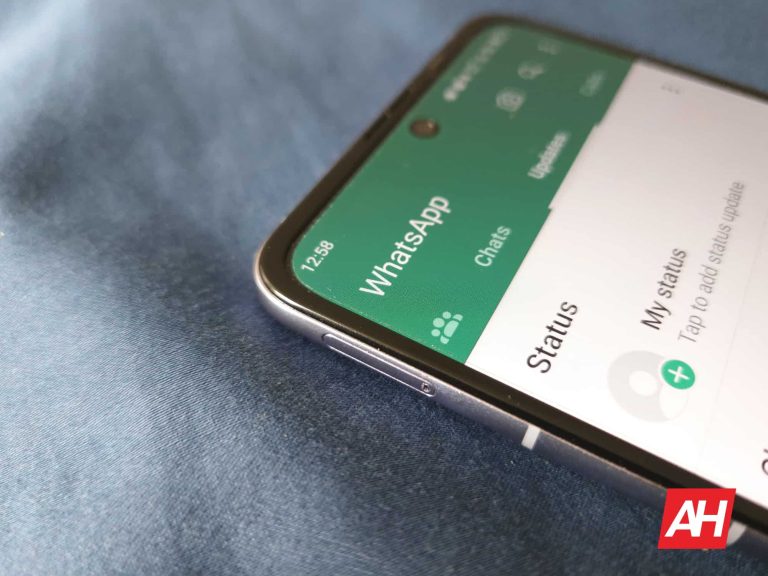
Now, according to a recent report, the WhatsApp dev team is working on a feature that will allow you to “Like” the status updates of your contacts. This will be possible thanks to a heart-shaped button that will appear next to the text box when you are going to reply to a status update. If you’re an Instagram user, you’ll probably find this quite familiar.
The new “Like” button for status updates. Source: TheSpAndroid
Currently, the feature is partially implemented in the latest beta 2.24.8.6. The source indicates that, while you can enable the new feature, it is not yet fully functional. When you try to use the simplified WhatsApp heart button in its current state, nothing will happen. However, based on the operation of the button present on Instagram, it is possible that the other party will receive a notification indicating that you liked their status update.
It’s noteworthy that the app already lets you react to status updates from your contacts with certain predefined emojis. These appear just above the text box when you are going to respond to a new status. But, the simplified “Like” button will be right next to the text box, more within reach of your thumb, making the process easier. The new feature will probably seek to enhance the use of reactions to status updates and make them as common as they are in Instagram Stories.
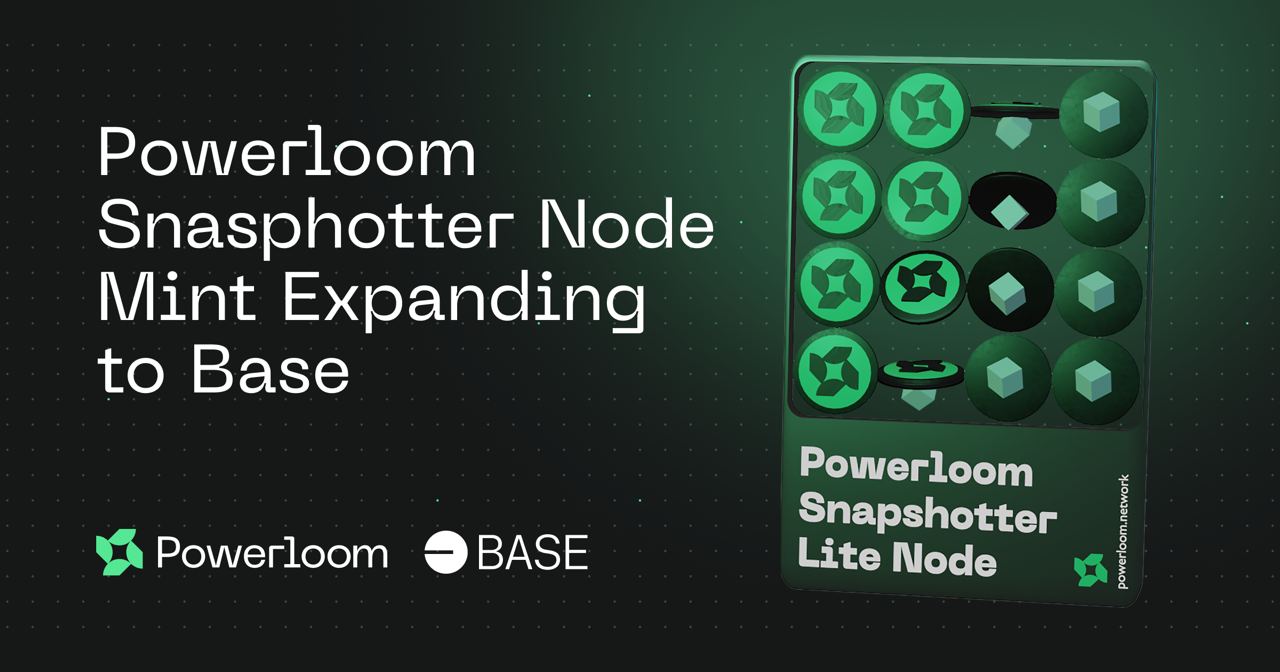
Powerloom, a leading composable data network that enables protocols to index and query blockchain data in a decentralized manner, today announces its expansion to the Base ecosystem by introducing the first node mint on Base, an Ethereum Layer-2 scaling solution incubated by Coinbase.
The Base expansion comes as Powerloom celebrates the successful minting of over 5,200, marking a significant milestone in its commitment to providing actionable on-chain data across the L1 and L2 networks.
Powerloom’s strategic extension to Base heralds the first opportunity for Base users to mint a data node, offering a novel pathway to contribute to and benefit from on-chain data. The expansion will shape how data is captured and utilized across the Base ecosystem, especially with Powerloom’s one-click setup for Snapshotter Lite Nodes, which eliminates the need for dedicated infrastructure and significantly simplifies participation.
Swaroop Hegde, the Co-founder of Powerloom, said, “Reaching over 5200 Snapshotter Lite nodes is a milestone that signifies trust and growth in Powerloom’s mission. As we expand into the Base ecosystem, we’re growing from a tech standpoint and building the community. This step is pivotal as we continue to democratize on-chain data access. The future is exciting, and this is just the beginning.”
The Base expansion includes Base and other L2 solutions, with tech optimizations such as the Optimism Stack integration and enhanced participation options for Snapshotters in various data markets across the Base ecosystem.
Snapshots and Data Markets
Snapshots are on-chain data points captured by Snapshotter Lite Nodes from diverse data markets within the ecosystem, mainly focusing on DEX token pairs/pools like the USDC – ETH pair on DEXes like Uniswap (V2) and Aave.
Snapshotters are the backbone of the Powerloom ecosystem, capturing data from the blockchain and various data markets on-chain. The Lite version of the Node is tailored to be user-friendly and requires minimal technical experience.
In the last 30 days alone, Powerloom’s network generated over 250 million snapshots, with a daily increase to approximately 10 million snapshots, underscoring the scale and impact of its operations.
Powerloom is the go-to source for large, scalable, and credible data sets, ideal for building rich data products like dashboards. The network participants maintain integrity and reliability, ensuring every piece of data is accurate, thoroughly validated in consensus-backed computation, and further validated so developers can build with peace of mind. Powerloom’s data markets seamlessly integrate pre-computed, validated, and readily consumable APIs for the DeFi protocols and smart contracts for any use case.
The future looks promising as Powerloom expands its capabilities and ecosystem partnerships. With plans to broaden its reach to Base and other L2 solutions, technical optimizations, and increased data market participation, Powerloom is well-positioned to lead in the blockchain data infrastructure space.
About Powerloom
Powerloom is a leading on-chain data protocol that serves the evolving data needs of smart contract-based applications like DeFi, GameFi, NFTs, and more. The platform incentivizes participating peers to reach a consensus on state transitions and event emissions observations across many smart contracts.
Powerloom unlocks the power of on-chain data, enabling developers to build complex dashboards, smart bots, advanced aggregators, and insightful trackers with data integrity and adaptability. Every data point in every dataset generated by Powerloom is peer-validated, backed by consensus, and present on IPFS for complete transparency and trust.
Samsung‘s Galaxy A53, Galaxy A52, and Galaxy A51 are receiving a new update in the US. No, it isn’t One UI 6.1 or the April security patch. The company is pushing the March security patch to the devices. The former two should get One UI 6.1 in a few weeks or months, while the latter is no longer eligible for feature updates.
Galaxy A53’s March update goes nationwide in the US
The Galaxy A53 was one of Samsung’s first mid-range phones to receive the March security update in the US. However, the company initially rolled out the new SMR (Security Maintenance Release) to only the carrier-locked variants of the device. It is now widely available for unlocked units nationwide. The update comes with the firmware build number A536U1UES8DXC2.
Last month’s security update is also rolling out to carrier-locked and unlocked variants of the Galaxy A52 in the US. The new build numbers for the phones are A526USQSCFXC8 and A526U1UESCFXC6, respectively. Like its successor, this phone is also only getting new security fixes with no additional changes. The March SMR has more than 60 patches, including a few critical Android OS fixes.
The Galaxy A51 is another Samsung phone widely getting the March SMR in the US. The Korean firm is pushing the update nationwide for both variants across all wireless networks. The update for this model bears firmware versions A516USQSEGXC3 and A516U1UESCGXC3, respectively. The changelog remains the same. There aren’t any new features or improvements in tow.
In fact, as said earlier, the Galaxy A51 will not receive feature updates anymore. Debuted with Android 10, the device picked up updates to Android 11, Android 12, and Android 13. That is all it will ever get. Samsung may soon cease security patches as well. It is about time Galaxy A51 users upgrade to a newer model. The company recently launched the Galaxy A55 but doesn’t plan to bring it to the US.
One UI 6.1 is rolling out to older Galaxy devices
The Galaxy A51 may be done getting feature updates but the Galaxy A53 and Galaxy A52 still have a lot of life left in them. These phones should soon get One UI 6.1 with a host of new features. Debuted with the Galaxy S24 series, Samsung has already pushed the new One UI version to its 2023 flagship offerings, including the latest foldables and S series. Eligible mid-range models may get it over the next few weeks.
Apple has just introduced a novel AI model that is promising to improve Siri by making it almost as smart as ChatGPT and other top AI tools. In their recent paper, titled “ReALM: Reference Resolution As Language Modeling,” Apple researchers explain how its AI system intends to increase response accuracy by using contextual information on a device’s screen and ongoing tasks.
Apple introduces a better AI Model to enhance Siri’s performance and rival GPT-4
The central aim is for Siri to understand user queries better regarding elements such as displayed images, background music, or active tasks. According to DigiTimesAsia, this contextual awareness makes this AI surpass GPT-4, an eminent large language model for “reference resolution”.
This development is a significant leap forward for Siri which has previously been a less intelligent and underperforming assistant compared to others. If it can rival leading AI models, Siri would ultimately lose its label as a subpar assistant and give users a more sophisticated experience.
It’s worth mentioning that this accomplishment is remarkable considering the reputation of other companies’ AI assistants. Similarly, Samsung’s Bixby has been performing poorly, but even this voice assistant is moving towards incorporating generative AI features.
By competing with GPT-4, Apple underlines how much ground the company has gained with its on-device AI, positioning itself among major players in the field of artificial intelligence. While mainly focusing on one task in particular, the research does have great implications for Siri’s overall performance.
Curiously enough, even Apple’s smallest language model performs comparably well against GPT-4, demonstrating the impact of its investigations in developing AI technology. According to the company, there is room for further enhancement especially when dealing with hard questions that require fine-grained positional understanding.
Apple plans to introduce this new AI model with iOS 18
Apple’s artificial intelligence technology will likely integrate with iOS 18. The WWDC 2024 event scheduled for June is expected to unveil Apple’s latest software updates and may include improved Siri features. Greg Joswiak, the Senior Vice President of Worldwide Marketing at Apple has hinted at the ground-breaking nature of this year’s conference.
Apple continuously improves Siri’s AI and users should expect more intelligent and responsive digital assistants. Here, Apple’s progress reveals its determination to compete and outdo other players on AI grounds thus promising a lot of excitement over machine learning adoption in future iOS releases.
Today, Congressman Eric Swalwell, CA-14, announced that he has partnered with Wolfsbane.ai to help prevent his 2024 election campaign content from being used to create AI clones and deepfakes.
Wolfsbane.ai will use its patent-pending technology to encode Rep. Swalwell’s campaign videos and audio with a countermeasure that makes it difficult to create AI clones with that content.
Rep. Swalwell is the first political figure to use Wolfsbane.ai and take an active step to ensure that his campaign content is not used to create clones and fakes that can be used for misinformation. “Ensuring the integrity of our democratic process is of paramount importance,” said Swalwell.
“Embracing cutting-edge tools such as Wolfsbane.ai to prevent deepfakes is not just an option; it’s a necessity in safeguarding elections against fraud and misinformation.”
Rep. Swalwell is ranking member of the Cybersecurity and Infrastructure Protection Congressional Subcommittee where he has stressed the dangers of AI-generated deepfakes in spreading election misinformation. Rep.
Swalwell is not merely talking about preventing deepfakes, he is taking active steps to ensure that his own voice and likeness are protected using the latest technology advancements. “AI is a potent technology,” said Swalwell.
“If used irresponsibly, it can hijack the likeness and voice of public figures to undermine their credibility and spread disinformation. Wolfsbane.ai will mitigate the risks of this happening to me.”
One of the advancements in the fight against AI deepfakes is Wolfsbane.ai. Wolfsbane.ai is a recently launched service offered by Play Cubed: A company founded by content protection pioneers Randy Saaf and Octavio Herrera as well as Fazri Zubair and Noah Edelman.
Wolfsbane.ai allows customers to protect their content, voice, IP and identity from unauthorized AI cloning and deepfakes. Before publishing any content, Wolfsbane.ai customers can use a simple interface to upload and quickly process it; once done that content is protected by the Wolfsbane countermeasure and the user can publish their content with peace-of-mind.
Wolfsbane.ai’s patent-pending encoding technology offers a robust defense, designed to effectively combat a wide spectrum of AI cloning tools.
Wolfsbane.ai is being used by music artists, entertainment companies, content creators, and individuals but the company is very focused on working with campaigns as well as government officials.
“We are proud to be working with Rep. Swalwell’s campaign” said Play Cubed CEO Randy Saaf. “We think our technology can be an effective tool in the fight against AI fakes during this important election year.”
About Swalwell for Congress:
Elected in 2012 to Congress, representing the East Bay in Northern California, Eric Swalwell served eight years on the House Intelligence Committee where he was the chairman and ranking member overseeing the CIA.
On the Intelligence Committee, Eric helped lead the House Investigation into Russia’s interference in the 2016 election, and later, the first and second impeachments of Donald Trump.
As a member of the House Democrats’ leadership team, Eric was on the House Floor on January 6. A week after the attack, Eric was appointed as a House Impeachment Manager for the former president’s Senate trial.
Eric currently serves on the House Judiciary and Homeland Security Committees. He is also Chairman Emeritus and founder of Future Forum, a group of young Democratic members focused on issues and opportunities for millennial Americans.
Eric is also founder and co-chair of the bipartisan Critical Materials Caucus, and Personalized Medicine Caucus. Every day Eric strives to make sure if you work hard it adds up to doing better for yourself and dreaming bigger for your family.
About Play Cubed/Wolfsbane.ai
Play Cubed provides AI Content Protection services via its patent-pending technology Wolfsbane.ai.
Play Cubed is founded by Randy Saaf, Octavio Herrera, Fazri Zubair, and Noah Edelman. Our team has been together for over 8 years, with Randy and Octavio having worked together for over 20 years. Randy and Octavio are proven entrepreneurs with two successful exits valuing nearly $400M.
Randy and Octavio are content protection pioneers, having co-founded P2P anti-piracy provider MediaDefender in 2000. MediaDefender was used by every major music label and movie studio and was acquired by ARTISTDirect in 2005.
The Play Cubed team also has a successful history of developing enabling technologies used by top companies such as Major League Baseball, NBA, CBS, ESPN, Mattel, Universal Music, Sony Music, Lionsgate, and many more.
Washington, DC, United States, April 2nd, 2024, CyberNewsWire
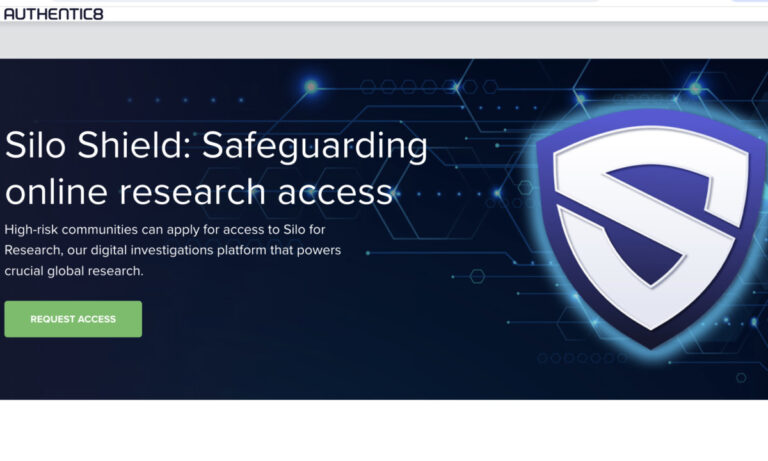
Authentic8, provider of the leading OSINT research platform Silo for Research, today launched their Silo Shield Program to enhance online security for high-risk communities. Also today, the U.S. Cybersecurity and Infrastructure Security Agency (CISA) launched a webpage listing free tools and services to strengthen defenses of high-risk communities, including Authentic8’s new Silo Shield Program.
These “high-risk” communities — non-governmental organizations, journalists, and academics — face digital risks that are existential threats to their missions, as they are targeted by some of the world’s most capable advanced persistent threats (APTs). The new Silo Shield Program enables eligible persons to apply for access to Authentic8’s Silo for Research platform, which provides a secure solution to collect publicly available information. Securely collecting web-based information is essential for these groups to carry out research, investigations, and advocacy.
“In an era where adversaries threaten those striving for social change and transparency, Authentic8 is proud to launch the Silo Shield Program. This pioneering initiative offers robust online protection for high-risk communities at the forefront of pushing boundaries and challenging the status quo. While we have supported similar organizations for years, recent work with CISA prompted us to formalize and expand access to those at risk,” says Ramesh Rajagopal, CEO and co-founder of Authentic8.
High-risk communities eligible to apply to the Silo Shield Program include:
Journalists focusing on topics like security, transparency and global affairs who perform online research and may be targeted by adversaries as a part of their work.
Activists and non-profit groups are eligible for Silo Shield as they work to safeguard human rights, prevent abuse and effect justice, as they rely on online research to uncover and document abuses, legal violations and advocacy opportunities.
Academics in fields like security, political science, sociology and environmental studies, whose research on global issues demands access to information across geographical boundaries — often in restrictive environments — are eligible.
Humanitarian aid organizations, including those focusing on direct support, anti-corruption efforts and digital freedom are eligible for Silo Shield, as their efforts to compile evidence, vet suppliers and aid recipients, and communicate safely online are critical to their missions.
“Our commitment to high-risk communities is more than just a promise; it’s a mission to arm them with the tools they need to conduct their vital work securely and confidently. We are proud to enable their access to global online resources without fear of adversary surveillance or compromise,” says Matt Ashburn, a former CIA cyber officer and White House NSC Director who now serves as Authentic8’s vice president of Customer Success.
Through the Joint Cyber Defense Collaborative (JCDC), Authentic8 collaborated with CISA on their High-Risk Communities Protection effort to elevate awareness of the cyber threats that high-risk communities experience and resources available to mitigate them. CISA’s High-Risk Communities webpage serves as a one-stop-shop for cybersecurity guidance and free or discounted tools and resources that are tailored to meet the needs of high-risk organizations that want to improve their cybersecurity baseline.
For more information on the Silo Shield program or the Silo for Research digital investigations platform, visit https://authentic8.com.
Contact
Head of Strategic Initiatives Abel Vandegrift Authentic8 [email protected]
Verizon 5G Home Internet is what the future of 5G looks like. There’s been a lot of talk about what 5G is going to be able to deliver, but other than faster internet on our mobile devices, we haven’t really seen that future. But Verizon’s 5G Home Internet is part of that future.
The real question is what exactly is Verizon 5G Home Internet? Obviously from the name, it sounds a lot like it’s a home internet connection, that is powered by 5G. And well, on the surface, that is exactly what it is. In this article, we are going to answer all of your questions about Verizon 5G Home Internet, and help you decide whether it is right for you.
What is Verizon 5G Home Internet?
Verizon 5G Home Internet is exactly what it sounds like, internet delivered to your home’s router via 5G. That means that where you live in relation to Verizon’s towers will greatly influence how fast your internet is. But it also means that you don’t have any wires for the router, other than power. So you can set it up anywhere in your home.
Of course, the best spot to set up your new Verizon 5G Home Internet router is going to be near a window, so it has a direct line of sight to the towers outside.
This is a fixed wireless connection, like satellite internet. Which has typically been pretty slow, but that’s not the case with Verizon – mostly because of 5G. Now that Verizon has rolled out C-Band 5G, you’re bound to get several hundred Megabits from your Verizon 5G Home Internet connection.
Verizon has two plans for its 5G Home Internet service. There’s 5G Home and 5G Home Plus. They are mostly the same, with the only real difference being the fact that 5G Home plus offers a 3-year price guarantee versus 2-years, and you get Verizon Cloud Unlimited included. Verizon also offers some bigger promotions for the 5G Home Plus plan.
Verizon 5G Home is priced at $60/month without autopay, $50/month with autopay, or $25/month with select 5G Mobile plans. Those select 5G plans include 5G Play More, 5G Do More and 5G Get More. Basically, not the cheapest 5G plan.
Then there is the 5G Home plus which will be $80/month without autopay, $70/month with autopay or $35/month with select 5G mobile plans – the same plans as mentioned above. That is quite a bit cheaper than a traditional ISP, which will charge you around $100 per month for the same service. So it’s not hard to see why so many people are interested in Verizon 5G Home Internet.
Do I get a discount for being a Verizon Wireless customer?
Yes, you do get a discount with a compatible Verizon 5G mobile plan. That is about half the price of the regular autopay price. Allowing you to get home internet for as low as $25/month. Which is not too shabby at all.
Keep in mind that you need to have a compatible 5G mobile plan: 5G Play More, 5G Do More or 5G Get More. And you need to have autopay turned on to get these prices.
Does Verizon offer any promotions for switching?
Yes, Verizon will help cover the cost of early termination fees from your existing ISP. That is up to $500 in credits for early termination fees. Basically, you’d still need to pay those fees to your current ISP. But after you have done so, submit your bill to Verizon, and they will issue you a bill credit for that amount – up to $500.
But be careful here, because if you or Verizon decides to cancel your Verizon 5G Home Internet plan within 90 days, the credit will be charged back to your final bill. This is not crazy, as most carriers and ISPs will do this, as they don’t want you to switch and get the credit then leave right away.
Verizon is also offering a few other perks right now. On the 5G Home plan, you will get Disney+ on us for 6 months, One month of 5G Home on us, a Verizon Stream TV device on us, and Sling TV for two months on us. On the 5G Home Plus plan, those perks are a bit better. Giving you Disney+ for 12 months on us, $300 off Stream TV Soundbar (regular price is $399), One month of 5G Home Plus on Us, Verizon Stream TV device on us, and two months of Sling TV on us.
Nope. No data caps at all on Verizon’s 5G Home Internet.
Now on older versions of this service, that ran on 4G LTE, there were some speed caps, so you didn’t usually see it past 50Mbps. But with 5G, Verizon has no caps on here whatsoever. You can get up to about 980Mbps speeds on these WiFi 6 routers from Verizon, and use as much as you want.
This is good news, as we’ve started to see ISPs remove their data caps in recent years – of course a big part of that was everyone being forced to work from home for the past couple of years. AT&T has removed its caps, at least on Fiber connections. And Comcast has also removed it in a lot of areas.
What kind of speeds can we expect from Verizon 5G Home Internet?
The biggest catch for Verizon 5G Home Internet is going to be speed. Since it’s relying on its 5G network, you never know if you’re going to get 50Mbps, or 900Mbps. And it also depends on your area.
Verizon does say that you can get up to 980Mbps on this service, however when I put in my address, it states that download speeds are between 85 and 300Mbps. Which is still a pretty big gap, going from okay service to pretty good.
With the rollout of C-Band, as long as you’re in a C-Band area, you’ll likely see a few hundred Mbps on Verizon 5G Home Internet. We’ve seen some people pulling down around 200-400Mbps consistently with C-Band on Verizon 5G Home Internet. And if you live in a mmWave area, you’ll see even faster speeds.
There’s a lot more factors here with Verizon 5G Home Internet and its speeds, compared to fiber from AT&T or Comcast.
Verizon does not offer a map for 5G Home Internet, but you can check availability here. It is available in most major metro areas at this point, and a lot of those areas do also offer 5G Ultra Wideband, so you’re able to get even faster speeds.
On top of that, Verizon is continuing to expand its 5G Home Internet footprint across the US. So if you don’t have coverage now, you likely will in the coming months.
Update: On February 15, 2023, Verizon announced that 5G Home Internet was expanding two new areas. This includes:
Colorado Springs, Colorado
Monroe County, New York
Bradenton, Florida
West Palm Beach-area, Florida
How easy is it to setup Verizon 5G Home Internet?
It’s pretty easy to set up actually. Verizon touts that it is plug and play self-setup. Once you get your router, unbox it and open the My Verizon app. It’ll walk you through setup, which takes less than 5 minutes. That’s the kind of setup that we can all get behind.
Should I switch to Verizon?
If you don’t need a solid gigabit connection, then Verizon’s 5G Home Internet service is a really good, and cheap option. If you work from home, you may want to try it out first, instead of just up and switching. Depending on the work you do from home, it may not be fast enough for you – yet.
Luckily, Verizon does give you the first month free. So you can try it out for no money out of your pocket.
Right now, several governments are trying to find a way of mitigating the risks associated with AI technology. So far, their efforts have all pretty much been separate. However, the US and the UK are teaming up to test the safety of AI models.
So far, there’s been very little collaboration between different geographic locations when it comes to AI. The US has its own way of doing things, the UK has its own way, China has its own way, Etc. At this point, we have no idea if this sort of fragmentation will have a detrimental effect on our efforts to keep AI safe. This is just one of the things we’re going to have to figure out the hard way.
The US and UK are working together to test AI safety
This seems to be the first major collaboration between governments across seas to help assess the dangers of AI. Over in the UK, there is an AI Safety Institute, and there is also one for me in the US. Well, these two institutes will work together to test “the most advanced AI models.” This is an official partnership, as both governments signed a Memorandum of Understanding (MOU).
So, both institutes will work together and share information regarding their studies. Along with that, it appears that the two institutes will also want to perform tests on a publicly available AI model. We’re not sure what model this will be, but we’re sure that it will be a model that will affect many users. We don’t know what sort of tests these institutes will perform. However, we’re pretty sure that they will be standard red teaming tests.
This is the first collaboration such as this regarding AI, and hopefully, it’s not the last. The US and the UK are planning on collaborating with other countries to help test AI.
This is probably the best method
We’re all used to different countries and continents doing things differently. However, when it comes to AI technology, that may not be the best approach. Regardless of geographic location, AI poses the same threat. The best thing would be for countries to band together and standardize AI technology across the board. Coming up with a global standard for AI technology that is properly regulated could ensure that AI does not get out of control.
If you spend as much time as I do watching YouTube videos, and your television is one of the devices you happen to watch them on, you’ll be glad to know that your experience is about to get better. No more fumbling with that TV remote trying to find the exact moment in the video where that iconic line, or that cinematic shot, was shown. YouTube is now incorporating key moments on its TV app that will work similar to chapter marks on a DVD, only better.
YouTube’s CEO, Neal Mohan, recently announced a cool new feature: auto-generated key moments. What that means is that there will no longer be a need to scrub through videos hoping to land on the good stuff. Now you can instantly jump to the most exciting, important, or hilarious parts.
We know viewers love to watch YouTube in the living room, and we’re continuing to innovate to make the experience on TV even better. Now you can easily access auto generated key moments from any video. Check it out the next time you watch YouTube on your TV… pic.twitter.com/qRTHw695aX
When watching YouTube on your TV, you will be able to open the video progress bar and little white markers will appear. Those are the “key moments” that YouTube is pointing out for you. You can then use your remote’s arrow keys to quickly skip between them, and YouTube will even show a little thumbnail and description. Hopefully this means that you’ll no longer have to sit through rambling intros or less interesting sections.
This is reminiscent of the “chapters” that many YouTube creators already use and manually add to their videos, except that this feature automates the process and fills the gap when creators don’t have time to do it themselves. It also follows another YouTube feature currently being tested where double tapping to skip ahead in a video takes you to the most exciting parts of the video instead, according to user data. This latter, however, is a YouTube Premium-exclusive experiment.
This update shows YouTube is paying attention to how people actually use its service. Watching hours-long videos on your TV takes dedication. This feature shows that YouTube wants to make that experience smoother, helping viewers find the content they’re most excited about without the hassle.




.webp)