Cybercriminals Beta Test New Attack to Bypass AI Security

0
[ad_1]
Cybercriminals Beta Test New Attack to Bypass AI Security

Hackers develop a new attack (Conversation Overflow) to bypass AI security. Learn how this technique fools Machine Learning and what businesses can do to stay protected.

A recent discovery by SlashNext threat researchers reveals a dangerous cyberattack method termed “Conversation Overflow.” This technique involves cloaked emails designed to bypass machine learning (ML) security controls, allowing malicious payloads to infiltrate enterprise networks.

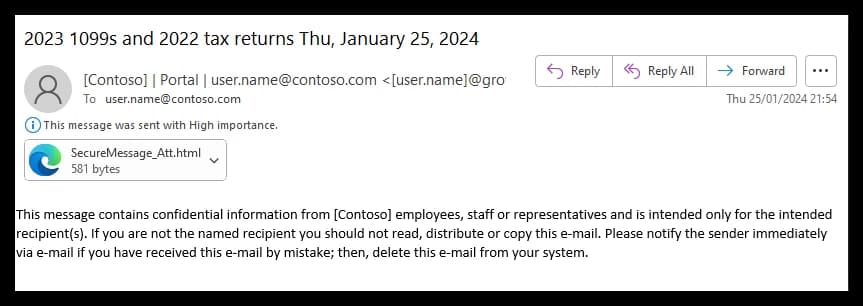
In a typical Conversation Overflow attack, cybercriminals employ cloaked emails designed to deceive ML tools into categorizing them as harmless. These emails contain two distinct sections: one visible to the recipient, prompting them to take action such as entering credentials or clicking links and another hidden portion filled with innocuous text.

Threat actors exploit ML algorithms by strategically inserting blank spaces to separate these sections, often focusing on deviations from “known good” communications rather than identifying malicious content.

According to SlashNext’s research shared with Hackread.com ahead of publication on Tuesday, this novel approach poses a significant challenge to traditional cybersecurity measures, which rely on databases of “known bad” signatures. Unlike these methods, ML systems analyze patterns to detect anomalies, making them susceptible to manipulation by attackers mimicking legitimate communication styles.

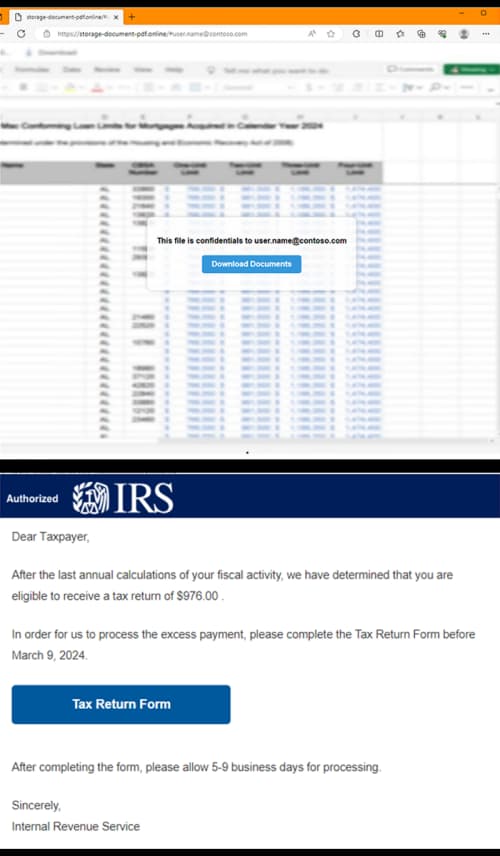
Once a Conversation Overflow attack breaches security defences, attackers can deliver seemingly genuine messages requesting credential reauthentication, particularly targeting high-level executives. The stolen credentials are then sold on dark web forums, highlighting the lucrative nature of such cybercrime.

Cybercriminals Beta Test New Attack to Bypass AI Security

SlashNext threat researchers express deep concern regarding the potential ramifications of this attack becoming widespread. There is a significant risk that cybercriminals are actively developing an entirely new toolkit, which could exacerbate the impact of such attacks, potentially leading to devastating consequences for organizations and individuals alike.

“This is not your same old credential harvesting attack, because it is smart enough to confuse certain sophisticated AI and ML engines. From these findings, we should conclude that cyber crooks are morphing their attack techniques in this dawning age of AI security. As a result, we are concerned that this development reveals an entirely new toolkit being refined by criminal hacker groups in real-time today.”

SlashNext

The implications of this discovery are profound, signalling a shift in cybercriminal tactics to exploit vulnerabilities in AI and ML-driven security platforms. As cyber criminals adapt and refine their techniques, it becomes increasingly imperative for organizations to remain vigilant and proactive in fortifying their defences.


[ad_2]
Source link
Novel Script-Based Attack That Leverages PowerShell And VBScript

0
[ad_1]

A new campaign has been identified as DEEP#GOSU is likely linked to the Kimsuky group, and it employs a new script-based attack chain that uses numerous PowerShell and VBScript stagers to stealthily infect systems. 

Its features included data exfiltration, keylogging, clipboard monitoring, dynamic payload execution, and persistence via scheduled activities, self-executing PowerShell scripts using jobs, and RAT software for complete remote access.

“The malware payloads used in the DEEP#GOSU represents a sophisticated, multi-stage threat designed to operate stealthily on Windows systems especially from a network-monitoring standpoint”, Securonix Threat Research Team shared with Cyber Security News.

Analysis Of New DEEP#GOSU Attack Campaign

The DEEP#GOSU campaign’s malware most likely gets into the system through standard channels, such as when a user opens a malicious email attachment that contains a zip file with a single file that is disguised by the extension: pdf.lnk

Document

Free Webinar : Mitigating Vulnerability & 0-day Threats

Alert Fatigue that helps no one as security teams need to triage 100s of vulnerabilities.:

  • The problem of vulnerability fatigue today
  • Difference between CVSS-specific vulnerability vs risk-based vulnerability
  • Evaluating vulnerabilities based on the business impact/risk
  • Automation to reduce alert fatigue and enhance security posture significantly

AcuRisQ, that helps you to quantify risk accurately:

Given the command’s astounding length, it is evident that the PowerShell that is being performed is capable of carrying out several intricate tasks.

Furthermore, this shortcut file is larger than it first appears, coming in at around 2.2 MB.

pdf.lnk – command line execution

“The embedded PowerShell script contained within the shortcut file is designed to take byte data from itself, which extracts embedded files, AESDecrypt and executes further malicious code downloaded from the internet (/step2/ps.bin) and clean up traces of its execution”, researchers said.

Upon closer inspection, it looks like the shortcut file has an embedded PDF that has been concatenated after tens of thousands of “A” letters.

Those characters could be an attempt to inflate the file size to avoid AV detection.

Consequently, a concatenated PDF file is attached to the shortcut file. The PowerShell code has a clever function that accomplishes several tasks. 

The fact that there isn’t actually a PDF file in the original zip file that is provided to the victim makes this method quite sophisticated. 

The user doesn’t need to worry about anything unexpected happening because they are instantly presented with a PDF file when they click the PDF lure (shortcut file).

The PDF lure document, which is written in Korean, purports to be a statement about the death of Choi Yul’s son, the late CEO of Korean Airlines, in a car accident.

The remainder includes the funeral home’s information and dates.

PDF Lure Document

The PowerShell script that is attached to the shortcut file is intended to locate and silently run the malicious.lnk file that has been specifically crafted, extract and run the embedded PDF lure document, authenticate, decrypt, and run additional malicious code that has been downloaded from Dropbox, and finally remove any evidence of its execution.

Researchers saw the invocation of a lengthy string that was encoded in Base64.

Decoding the text reveals a VBScript code section that is intended to communicate with particular online APIs to establish a connection to Dropbox once more.

VBScript/PowerShell Execution

This campaign uses a combination of previously known TTPs and recycled code, in addition to some novel stagers.

Although the Kimsuky group had previously targeted South Korean victims, it is clear from the tradecraft that the group has switched to utilizing a new script-based attack chain.

Hence, be cautious when responding to unwanted emails, especially if they seem unexpected or urgent, as many malware infections start outside of the company.

Stay updated on Cybersecurity news, Whitepapers, and Infographics. Follow us on LinkedIn & Twitter.


[ad_2]
Source link
Release date, specs, price & more

0
[ad_1]

The Samsung Galaxy S25 series is expected to arrive in early 2025, and the Galaxy S25 is the base model in that equation. Once again, we’re expected to see three devices as part of the series, the Galaxy S25, Galaxy S25+, and Galaxy S25 Ultra. At the time of writing this article, it’s still very early, and the arrival of these phones is quite far away. Still, we’ll set up the article, talk about what we (think we) know thus far, and try to fill in the gaps.

Some information did surface thus far, despite the fact it’s still very early. Some changes are expected, in fact, we’ll likely see quite a few changes compared to last year… at least as far as the vanilla model is concerned. That’s the variant we’ll focus on here. Having said that, let’s get to it.

This article will be regularly updated with new information on the Samsung Galaxy S25 (this is a preview article) — both official teasers and credible leaks, rumors, and insider claims — as it becomes available in the run-up to the release of the upcoming Android smartphone. This is the initial publishing of this article.

When will the Samsung Galaxy S25 be released?

Considering it’s still early, we didn’t really get a release date estimate for the Galaxy S25. However, the Galaxy S24 series launched on January 17, while the Galaxy S23 series arrived on February 1. It’s safe to assume that the Galaxy S25 series will launch in Q1 2025. We actually expect them to arrive in January, around the same time as the Galaxy S24 series did this year. So either early January or mid-January. Yes, all three smartphones will be launching at the same time.

What models are coming?

Three Galaxy S25 series devices are almost certainly coming, the Galaxy S25, Galaxy S25+, and Galaxy S25 Ultra. With that in mind, we still don’t have details on RAM and storage setups or anything like that. We’re not even sure that those three phones are coming, but everything points in that direction. We also believe that Samsung will stick to vanilla, Plus, and Ultra names as well. One rumor even suggested that we may get Exynos-powered models only, without the Snapdragon variants, which is interesting, though probably not true. Chances are we’ll see both Exynos and Snapdragon Galaxy S25 variants.

How much will the Samsung Galaxy S25 cost?

No info regarding the Galaxy S25 price tag surfaced thus far, but chances are the prices will stay the same. The Galaxy S24 was priced at $799.99 at launch, while the ‘Plus’ and ‘Ultra’ models started at $999.99 and $1,129.99, respectively. It’s easily possible Samsung will stick with that price tag. We don’t think that a discount is coming, while a slight price bump is possible, but it probably won’t happen. That’s just an educated guess at this point, though, we’ll have to wait for some actual information on this.

What will the Samsung Galaxy S25 look like?

Samsung has been utilizing the same design language for years now. Many people think it’s time for a change, and it may finally arrive with the Galaxy S25 series. A recent report, which talked about the Galaxy S25 in specific, clearly said that a different design is coming. No details were revealed as part of it, but we won’t see a small difference here, it seems, Samsung may actually redesign the Galaxy S25. We’re not sure what that means, but the company will likely stick with a metal + glass build.

In addition to that, it was said that a larger display would be used on the phone. Instead of a 6.2-inch panel, the company is expected to utilize a 6.36-inch display on the phone. That display size is the same as the Xiaomi 14 offers. That will make the phone larger, but still rather compact. We’re not sure what that means for the ‘Plus’ and ‘Ultra’ models, though. The Galaxy S24 Ultra’s display can’t really get that much bigger without seriously stepping over the norm, it’s already huge. Perhaps this size increase will be for the Galaxy S25 only, or the Galaxy S25 and Galaxy S25 Plus models.

Chances are that the Galaxy S25 will retain a flat display. In fact, there’s a good chance that all three phones will have flat displays, as do the Galaxy S24 models. Furthermore, we’re also expecting to see uniform bezels on all three models, with very thin bezels. If a redesign truly is coming, chances are we’ll see a different-looking camera setup on the back of the Galaxy S25. The Galaxy S25 Plus will likely offer the same exact look but in a larger package.

What specs will the Samsung Galaxy S25 have?

We’re far from having every piece of the puzzle in terms of specs, but some tidbits did surface already. One rumor suggested that the Galaxy S25 series will run an Exynos chip globally. That basically means that Samsung would ditch the Snapdragon 8 Gen 4, and we don’t really see that happening, at least not yet. Chances are that it won’t be happening, even though it’s a possibility. The Snapdragon 8 Gen 3 is still ahead of the Exynos 2400 that fuels the Galaxy S24 in some markets. We don’t really see Samsung making that jump, at least not yet, maybe with the Galaxy S26 series.

As already mentioned in the last section, the Galaxy S25 will feature a larger display, a 6.36-inch panel. It could still be a fullHD+ panel, though. One thing is for sure, all three phones will include LTPO AMOLED displays with adaptive refresh rates (1-120Hz). The ‘Plus’ and ‘Ultra’ models will likely offer a higher resolution than the Galaxy S25. We’re expecting the Gorilla Armor protection to be available on all three phones. That way reflections won’t be an issue whatsoever.

It will hopefully use LPDDR5X & UFS 4.0 in all variants

In terms of RAM and storage, chances are Samsung will use LPDDR5X RAM and UFS 4.0 flash storage on all models. It’s about time we got a RAM bump, though. The Galaxy S24 arrived with 8GB of RAM for its base model, and we’re expecting Samsung to bump that up to 12GB of RAM with the Galaxy S25. Let’s hope that LPDDR5X RAM and UFS 4.0 will be used in all variants. Samsung has a habit of not doing that. The base Galaxy S24, for example, utilizes UFS 3.1 flash storage, instead of UFS 4.0.

In regards to cameras, that is still a mystery, for the most part. There was one report that teased big camera upgrades for the Galaxy S25 Ultra. The phone is said to get an improved 200MP main camera and a new ultrawide unit. Another report suggested that the Galaxy S25 and Galaxy S25+ will switch to Sony cameras, though still retain the same 50-megapixel cameras as the Galaxy S22 series. It’s still early, though, things could change.

Should you wait to buy the Samsung Galaxy S25?

Should you wait to get the Galaxy S25, or get the Galaxy S24? Well, the Galaxy S25 launch is still quite far away. We’re about 10 months away from it at this point, so if you need a phone now, getting the current-gen model may be a good idea. That could change moving forward, though, as more information about the next-gen models surfaced. If Samsung really plans to make significant design changes, let’s hope that considerable internal upgrades are also in the cards.


[ad_2]
Source link

Nvidia just unveiled Blackwell, it’s new AI processor

0
[ad_1]

Right now, the race to create AGI is happening on different fronts. We’re all familiar with the AI companies looking to create the software. However, we also can’t forget about the companies building the hardware to power this powerful AI. According to a new report, Nvidia just unveiled the new Blackwell processor, and the CEOs of major AI companies are all for it.

Behind every successful AI model is a powerful AI chip that’s powering it. Nvidia has been selling its powerful GPUs to eager companies wanting to bring the next paradigm shift in AI. Because of this, Nvidia became a $2 trillion company in a short amount of time. So, the company is the go-to company for powerful AI chips.

Nvidia unveils its new Blackwell AI processor

There’s no doubt that Nvidia has been working hard behind the scenes to make the next best AI chip. Well, the newest trip is called Blackwell, and it’s named after famed mathematician David Harold Blackwell.

Being a new piece of tech, the Blackwell processor brings some impressive numbers to the table. According to the company, this new processor can facilitate AI models with more than a trillion parameters. That’s a massive leap, and it’s sure going to come in handy because AI models are getting more powerful by the second it seems.

Aside from that, these chips have new tensor cores to power them. Also, this new chip will greatly reduce energy consumption by consuming 25% less energy. That adds up to massive energy savings because this ship will be used in tandem with many others of the same chip to train AI models.

The company actually stated that the chips are only optimized for artificial intelligence. These chips could also be handy in fields such as “data processing, engineering simulation, electric design automation, computer edit drug design, [and] Quantum computing.” So, these chips can serve more than one purpose. However, we are certain that the majority of orders for this chip will be for training AI models.

The CEOs of companies such as Meta, X AI, Google, Microsoft, Amazon, and OpenAI have expressed their admiration for this chip. So, you can bet that these are potential customers.

As for when we will see this chip in action, we’re not quite certain. In the announcement, Nvidia stated that Blackwell-powered products will be available for partners later this year. So, we’re just going to have to wait to see when these chips come out.


[ad_2]
Source link

Google Calendar to replace appointment slots with appointment schedules for Workspace users

0
[ad_1]

Google Calendar is making a significant change to how users schedule appointments. The older “appointment slots” feature will be phased out in favor of the newer and more robust “appointment schedules” tool. This transition is set for completion on July 18th, 2024.

Google announced the change by stating it’s found that “appointment schedules” offer a more streamlined, user-friendly method of managing appointment bookings. Furthermore, this tool offers several advantages over the older system by including some new features such as the below:

  • Professional Booking Pages: Easily create polished pages where others can schedule time with you.
  • Availability Customization: Precisely define when you’re available for appointments.
  • Scheduling Buffers: Automatically include breaks between appointments.
  • Appointment Limits: Set a maximum number of appointments per day.

Image Credit: Google

If you are a Google Workspace user and are currently making use of appointment slots, now would be a good time to begin to familiarize yourself with appointment schedules. This is so that when the transition is complete, you are not caught off-guard. That said, Google is encouraging all Workspace users to explore the new features and create any new appointments with this system moving forward.

Note that this is for now a Google Workspace feature, meaning that this does not apply to personal Google accounts. Furthermore, those enrolled in the Google Workspace Business Starter tier will now gain access to appointment scheduling, which was not included in this plan before. Additionally, members of the following tiers will get additional premium features, such as being able to create multiple schedules: Google Workspace Individual, Business Standard and Plus, Enterprise Standard and Plus, Education Fundamentals, Education Standard, Education Plus, the Teaching and Learning Upgrade, Nonprofits and Google One Premium.Existing appointment slots will continue to function until July 18th, 2024, so there won’t be a lapse in service. After that date, though, all scheduling will need to take place within the appointment schedules system, but the rollout will take approximately two weeks to be completed.

[ad_2]
Source link

OnePlus Nord CE4 memory, storage & charging specs confirmed

0
[ad_1]

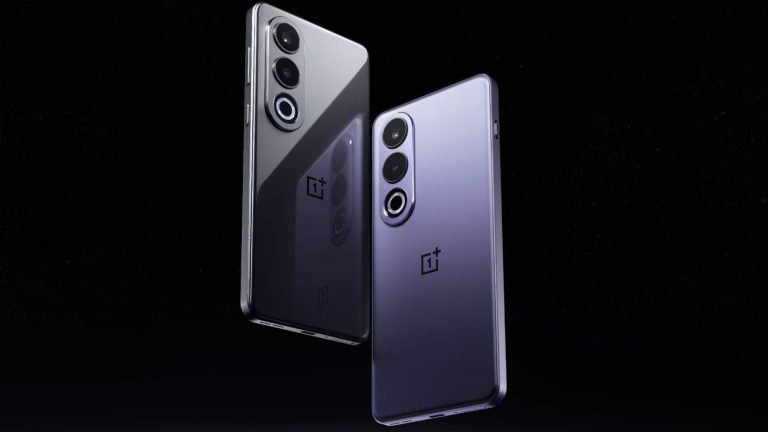
OnePlus has just confirmed some new details for its upcoming budget phone. The OnePlus Nord CE4 memory, storage, and charging specs have been confirmed.

The OnePlus Nord CE4 memory, storage & charging specs have been confirmed

These confirmations came from microsite dedicated to this phone. OnePlus said that the OnePlus Nord CE4 will be the “fastest charging Nord ever”. That means it’s possible that it will support 100W wired charging, just like the OnePlus 12 and OnePlus 12R.

https://twitter.com/OnePlus_IN/status/1769686017567498461

What about RAM and storage? Well, the phone will include 8GB of RAM and 256GB of internal storage. That will probably be the only RAM variant, but we may get a 128GB storage version too. You will be able to expand the storage, by the way, up to an additional 1TB of storage. Virtual RAM expansion will also be at your disposal. The company will use LPDDR4X RAM and UFS 3.1 flash storage, by the way.

We also know that the phone will utilize the Snapdragon 7 Gen 3 SoC

In addition to this, we do know that the phone will be fueled by the Snapdragon 7 Gen 3 SoC. We also know that it will arrive in two color options. Dark Chrome and Celadon Marble colors will be on offer.

The device also popped up on Geekbench, in addition to details that OnePlus shared. It managed to score 1,135 points in the single-core, and 3,307 points in the multi-core test.

This listing also confirms that the phone will include 8GB of RAM. Android 14 will come pre-installed on the device, as expected. OnePlus’ OxygenOS will also be included on top, of course.

If you’re wondering when will it launch, well, we know that too. The OnePlus Nord CE4 will become official on April 1. It will arrive to India first, but it may make its way to other markets, it remains to be seen. This phone will be quite affordable.


[ad_2]
Source link

OpenAI will release an ‘amazing new model’ this year

0
[ad_1]

Right now, OpenAI has one of the most powerful AI models on the planet called GPT-4. It’s a model that’s powering a ton of AI services including Microsoft’s Copilot. However, the world of technology never sleeps, and we are always looking toward the next big thing. Well, during a recent podcast interview, OpenAI CEO Sam Altman expressed that the company is releasing a new model this year. However, we have no idea what it will be called.

The interview itself was just over 1 hour and 55 minutes long. During the interview, Lex Fridman talked to Altman about ChatGPT, Sora, the future of OpenAI, and artificial intelligence in general. If you are interested in watching the whole interview, the link will be posted below.

OpenAI may release a new model this year

As stated before, GPT-4 is a powerful model. It has tons of AI capabilities, and it’s incredibly smart. So, one can only imagine how powerful the next iteration will be. It’s facing some tough competition now with Google probably being its biggest competitor. However, we can’t forget about other companies like Anthropic. Recently, Anthropic launched Claude 3, and this model has some serious AI power. Also, Elon Musk announced that Grok, the AI model developed by xAI, is now open source.

The host, Lex Fridman, asked Altman when GPT-5 is coming out. The answer that he gave was a bit confusing. At first, he said that he didn’t know. He even sealed the deal by saying “That’s the honest answer,” afterward. However, after a second-long pause, he stated that OpenAI will release “an amazing new model this year.”

At this point, we don’t know if this model will be the next iteration of GPT-4 or something completely different. OpenAI produces more than just ChatGPT. The company also produces the image generator DALL-E and the video generator Sora. Who knows if OpenAI will release new models for those platforms? Only time will tell.

If you are excited about what OpenAI produces, then you’ll be happy to know that Sam Altman said that OpenAI will release “many different things” over the coming months. We are not sure what those will be, however. In any case, it’s only March, so we have the majority of the year left to wait.


[ad_2]
Source link

WhatsApp on Android may soon be getting voice message transcription like on iOS

0
[ad_1]

For nearly a year, iOS users have enjoyed the convenience of transcribing WhatsApp voice messages. Now, it’s looking like WhatsApp is working to bring the same functionality to Android, and its users may soon get the same time-saving feature.

TheSpAndroid‘s @AssembleDebug completed an APK breakdown that reveals there is code in WhatsApp Beta for Android (version 2.24.7.7) that indicates this feature is in development. Furthermore, the code also reveals that enabling transcription will require a 150MB download, suggesting that the feature relies on your device’s speech recognition software.

The feature is expected to be located within the Settings > Chats menu, mirroring the feature’s location on iOS devices. End-to-end encryption will also apply to voice transcripts, meaning that your privacy will remain intact even when your voice messages are turned into text.

When will this feature be available?

The feature could not be activated yet, leaving only the strings in the code to go off of. This means that screenshots could not be gathered, which strongly suggests that this feature is still in its very early stages. However, WhatsApp’s timeline for new features can often be unpredictable, so while there is no specific date for when this feature will become widely available, it could appear in future WhatsApp beta releases at any time.Once released, this move will put WhatsApp on a more even footing with rivals like Telegram and Google Messages, which already offer transcription tools on Android. However, it is unclear if there will be limitations on the use of this feature. While Google Messages has a free transcription service, Telegram limits non-premium users to a few transcripts per week.

It will be interesting to see how WhatsApp decides to implement this feature and if they will follow a similar model or offer it without restrictions. This could potentially impact the user experience and determine how successful the feature will be in attracting new users to the platform.


[ad_2]
Source link

Microsoft Deprecate 1024-bit RSA Keys in Windows

0
[ad_1]

Microsoft has announced an important update for Windows users worldwide in a continuous effort to bolster security and performance.

As part of its latest security enhancements, Microsoft is phasing out the support for 1024-bit RSA encryption keys within the Windows operating system.

This move aims to encourage the adoption of more robust encryption standards and ensure that Windows users benefit from the highest levels of security.

Understanding the Change

RSA encryption keys are a fundamental component of digital security, used to secure communications and ensure the integrity of information.

However, with advancements in computing power and cryptographic research, 1024-bit RSA keys have become increasingly vulnerable to sophisticated cyber-attacks.

Recognizing this, Microsoft has decided to deprecate these keys in favor of more robust encryption methods.

Document

Free Webinar : Mitigating Vulnerability & 0-day Threats

Alert Fatigue that helps no one as security teams need to triage 100s of vulnerabilities.:

  • The problem of vulnerability fatigue today
  • Difference between CVSS-specific vulnerability vs risk-based vulnerability
  • Evaluating vulnerabilities based on the business impact/risk
  • Automation to reduce alert fatigue and enhance security posture significantly

AcuRisQ, that helps you to quantify risk accurately:

Impact on Windows Users

The deprecation of 1024-bit RSA keys signifies a shift towards stronger, more secure encryption standards, such as 2048-bit RSA keys or even more advanced encryption technologies.

Windows users, especially in enterprise environments, are advised to review their current security protocols and upgrade their encryption keys accordingly.

This transition is crucial for maintaining the confidentiality and integrity of sensitive data.

“This deprecation focuses on ensuring that all RSA certificates used for TLS server authentication must have key lengths greater than or equal to 2048 bits to be considered valid by Windows.” Microsoft said.

Timeline and Next Steps

Microsoft has outlined a phased approach to this deprecation, allowing users and organizations ample time to adjust their security practices.

Detailed timelines and guidelines will be provided through official Windows update channels and the Microsoft Security Response Center.

Users are encouraged to stay informed about the latest updates and to begin planning for the necessary adjustments to their security setups.

The deprecation of 1024-bit RSA keys in Windows marks a significant step forward in Microsoft’s commitment to cybersecurity.

By advocating for more robust encryption standards, Microsoft aims to protect users from emerging threats and ensure a secure digital environment.

Windows users are urged to update their encryption practices proactively, thereby contributing to a safer, more secure computing experience.


[ad_2]
Source link

5 Types of Crypto You Didn’t Know Existed

0
[ad_1]
5 Types of Crypto You Didn’t Know Existed

When you think of cryptocurrency, what springs to mind for you? For a lot of us, cryptocurrency conjures up images of Bitcoin and Ether, which are quite ‘traditional’ cryptos in every sense of the word. But as we know, the crypto industry is nothing if not dynamic and all sorts of tokens exist for consumers.

If you planning to get started with crypto (or are already on your crypto journey), you should know about the many options in the market. From the creative to the controversial to the downright bizarre, here are some of the unique types of crypto you should know about.

AI Crypto

AI is probably the most trendy technology these days, so it comes as no surprise that cryptocurrency has found itself in the mix with the creation of AI cryptos. These tokens are those that incorporate AI technology into their processes or whose underlying blockchain project leverages AI.

If you look into AI crypto, you’ll see a plethora of these applications. Some blockchains have AI systems integrated into them to detect fraudulent transactions and some projects offer AI-infused experiences such as metaverses to users. Either way, AI is used to deliver a better experience to users and as time goes on, we can expect AI crypto to be a constant feature within the industry.

As Kane Pepi says, “The AI crypto industry is still nascent, and as such, we can expect many more innovative products to come out in the near future – fueled by the success of projects such as Fetch.ai and SingularityNET”.

Meme Tokens

This is perhaps one of the more entertaining types of cryptos. If you’re on the internet, then you know all about memes and how they bring people together. But did you know that there are cryptos based on memes? There is Dogecoin, which is based on the Shiba Inu dog meme, as well as SHIBA, BONK, and several other tokens. There is also the PEPE token, based on the Pepe the Frog meme. 

Honestly, for every popular meme online, there is probably at least one token based on it. And these tokens are doing quite well. Dogecoin, for example, has a market cap of over $24 billion. For any lover of memes, there will be many options in the market to invest in. 

Privacy Tokens

One of the reasons why people love using cryptocurrency is because transactions completed on a blockchain can be done with more control and privacy than with fiat currency. Nothing quite exemplifies that like privacy cryptos. 

Typically, crypto transactions are recorded on a public blockchain and can be viewed by anyone, even if the identity of the user is kept secret. Privacy tokens go a step further as these transactions cannot be viewed or traced by anyone. Naturally, they are the go-to option for crypto users who want maximum privacy. 

They have also been quite controversial as some have been used for crime in the past and some users believe they are too much of a risk. 

Gaming Tokens

Blockchain has been used in the gaming space for years now and this has given rise to a class of tokens used just for gaming. If you take a look at the average blockchain gaming project, you’ll probably come across its native token. These tokens can be used to buy in-game items, upgrade characters, engage with other users, staked, and so on. 

One thing that is also very unique about these tokens is that they typically cannot be used outside of the gaming projects that they are attached to. Still, they have proven to be quite valuable to gaming fans and thus, have retained their popularity. 

CBDCs

One of the core features of traditional cryptos is that they are currencies issued by other people and institutions besides central banks. But believe it or not, there are cryptocurrencies issued by central banks of various countries. 

As crypto became more popular, several countries decided that it would be beneficial to release official digital versions of their national fiat currencies. China, The Bahamas, the British Virgin Islands, and more have released central bank digital currencies (CBDCs) and others like Canada and the US are in various stages of developing their own. 

These currencies can be used for domestic payments and transfers and seem to act as a middle-ground for crypto sceptics. China, for example, has banned third-party cryptos but was willing to create the digital yuan.

Conclusion 

To get the best experience out of your crypto use, you should know about the different types of cryptos, even those you would not have imagined. From cryptos issued by central banks to those based entirely on memes, the industry has a lot to offer consumers and this is ever-growing.

These tokens show the creativity within the industry and how, with the power to create currencies, everyday people and experts alike are virtually unlimited in what they can do. Consider if any of the above tokens would meet your needs for privacy, community, entertainment, security, and anything else. 

  1. The Future of MATIC and What to Expect in 2024
  2. Navigating the new frontier of cryptocurrency futures
  3. What the Bitcoin ETF Approval Mean for the Crypto Market
  4. Enhancing Blockchain Randomness To Eliminate Trust Issues
  5. Exploring the Phenomenal Rise of Ethereum as a Digital Asset

[ad_2]
Source link