Unsurprisingly, the Phone by Google dialer app is losing the Nearby Places search feature on Android. The change was announced by Google at the beginning of February, and the decision is now being enforced.
As spotted by 9to5google, the ability to search for businesses in the Phone by Google app has been removed. Instead of the “Search contacts & places” field at the top of the app, Google has added a “Search contacts” field that allows users to search for contacts, not places.
Not only that, but it looks like “Nearby Places” has been completely removed from the settings too, but this makes sense since this feature was supposed to use your location when searching for places.
According to Google, the decision to remove the Nearby Places search was based on the fact that “only a very small number of people use this feature.” Additionally, Google claims that the “vast majority of users go to Google Search or Maps when seeking business-related phone numbers.”
When it revealed the change to the Phone by Google app, the search giant said that the feature will be removed “in the coming months.” Well, it looks like the latest update is turning words into reality, so expect to lose this feature very soon if you didn’t already.
Sandu Boris Diaconu, a 31-year-old Moldovan national, has been sentenced to 42 months in federal prison for his role in operating a notorious dark web marketplace known as E-Root.
The sentencing was carried out by U.S. Senior District Judge James Moody, Jr. in Tampa, Florida, marking a pivotal moment in the fight against the illicit trade of compromised computer credentials on the dark web.
Diaconu’s guilty plea on December 1, 2023, came after charges of conspiracy to commit access device and computer fraud, along with possession of 15 or more unauthorized access devices.
His involvement in the E-Root Marketplace, a platform that facilitated the sale of access to compromised computers worldwide, including servers belonging to companies and individuals in the United States, has drawn significant attention from law enforcement agencies.
Document
Mitigating Vulnerability & 0-day Threats
Alert Fatigue that helps no one as security teams need to triage 100s of vulnerabilities.:
The problem of vulnerability fatigue today
Difference between CVSS-specific vulnerability vs risk-based vulnerability
Evaluating vulnerabilities based on the business impact/risk
Automation to reduce alert fatigue and enhance security posture significantly
AcuRisQ, that helps you to quantify risk accurately:
The E-Root Marketplace, under Diaconu’s administration, operated across a widely distributed network, employing measures to conceal the identities of its administrators, buyers, and sellers.
Compromised Computer Credentials
This marketplace allowed buyers to search for compromised computer credentials, such as Remote Desktop Protocol (RDP) and Secure Shell (SSH) access, based on various criteria, including price, geographic location, internet service provider, and operating system.
The operation of E-Root and its subsequent takedown is a testament to the collaborative efforts of international law enforcement agencies. Diaconu’s extradition from the United Kingdom in May 2021, following his arrest while attempting to leave the country, underscores the global reach and commitment to dismantling cybercriminal networks.
According to court documents, the E-Root Marketplace was instrumental in the sale of more than 350,000 compromised computer credentials, affecting victims across the globe and spanning all industries.
The marketplace’s operations have been linked to ransomware attacks and stolen identity tax fraud schemes, highlighting the extensive damage and risk posed by such illicit online platforms.
The sentencing of Diaconu is a clear message to cybercriminals about the serious consequences of engaging in the illicit sale of compromised computer credentials.
The U.S. Department of Justice, along with international partners, remains steadfast in its pursuit to disrupt and dismantle dark web marketplaces that threaten the security and privacy of individuals and businesses worldwide.
This case also emphasizes the importance of cybersecurity vigilance and the need for individuals and organizations to protect their digital assets against unauthorized access and exploitation.
As cybercriminals continue to evolve their tactics, the collaborative efforts of law enforcement and cybersecurity professionals are crucial in safeguarding against the pervasive threat of cybercrime.
With Perimeter81 malware protection, you can block malware, including Trojans, ransomware, spyware, rootkits, worms, and zero-day exploits. All are incredibly harmful and can wreak havoc on your network.
Stay updated on Cybersecurity news, Whitepapers, and Infographics. Follow us on LinkedIn & Twitter.
A new variant of StopCrypt ransomware has been discovered. It executes multi-stage shellcodes before launching a final payload containing the file encryption code.
This malware uses several techniques, such as detection evasion, a time-delaying loop of 600 million iterations, and several other mechanisms.
Moreover, the ransomware also uses scheduled tasks for its payload execution with command-line arguments, which are executed every five minutes.
Technical Analysis
According to the reports shared with Cyber Security News, the malware infection cycle begins with creating a string of msim32.dll, but it is not even used in the ransomware execution process.
Millions of iterations have been set up for a time-delay loop in which the same data is copied to a location with an incremental iteration value.
Similar techniques have been analyzed to be used throughout the malware execution to evade detection.
The evasion is due to the artificial extension time of the malicious code.
Incremental Iteration code (Source: SonicWall)
After this, the code allocates memory, using the LocalAlloc API and VirtualProtect to change the permissions of the memory block to READ, WRITE, and EXECUTE.
First Stage Payload
This stage resolves the required API using the Kernel_GetProcAddress API.
The ransomware creates API function calls by creating the function names or strings that contain the API names directly on the stack.
This is done as a replacement for using straightforward API calls that are easily detected and identified.
The addresses resolved by the malware are for the following APIs:
GlobalAlloc
VirtualAlloc
SetLastError
Sleep
CreateToolHelp32Snapshot
Module32First
CloseHandle
CreateToolhelp32Snapshot is used in the malware code along with all of its modules to take a snapshot of the current process.
Moreover, the information about the first module of the process is extracted using Module32First API.
Snapshot code with all its modules (Source: SonicWall)
Second Stage Payload
The second stage of the malware performs the primary task of the shellcode, which is process hollowing.
The API functions created in this phase are resolved to the following addresses:
MessageBoxA
GetMessageExtraInfo
WinExec
CreateFileA
WriteFile
CloseHandle
CreateProcessA
GetThreadContext
VirtualAlloc
VirtualAllocEx
VirtualFree
ReadProcessMemory
WriteProcessMemory
SetThreadContext
ResumeThread
WaitForSingleObject
GetModuleFileNameA
GetCommandLineA
NtUnmapViewOfSection
NtWriteVirtualMemory
RegisterClassExA
CreateWindowExA
PostMessageA
GetMessageA
DefWindowProcA
GetFileAttributesA
GetStartupInfoA
VirtualProtectEx
The ransomware also checks the FileAttributes of a non-existent file for unknown purposes, which is speculated to be used to identify specific systems where the file might be present.
After certain operations, the ransomware calls the VirtualAlloc API to allocate memory with READ and WRITE permissions and store the path returned by the GetModuleFileNameA API.
Following this, the kernel32.GetStartupInfoA API is called for extracting startup information.
Final Payload
During the final process, the ransomware launches a resumed process with the parameter “Admin IsNotAutoStart IsNotTask” after which the ransomware creates a new directory in the C:\\Users\<user_name>\AppData\Local and copies the current malware image into it.
Further, it launches the icacls.exe process, the command-line utility used to view and modify access control lists (ACLs) in Windows.
The command used for executing icacls.exe denies the group permission to delete the specified file for “Everyone,” which prevents the ability to delete the malware.
Scheduled task (Source: SonicWall)
Additionally, the malware creates a scheduled task to execute a copy of the final payload with a command line argument -Task—every 5 minutes.
The ransomware encrypts the files and adds the .msjd extension to them, while putting a ransomware note under the name _readme.txt on every encrypted folder.
Ransom note (Source: SonicWall)
Indicators Of Compromise
GAV: StopCrypt.RSM (Trojan)
Are you from SOC and DFIR Teams? – Analyse Malware Incidents & get live Access with ANY.RUN -> Start Now for Free.
Stay updated on Cybersecurity news, Whitepapers, and Infographics. Follow us on LinkedIn & Twitter.
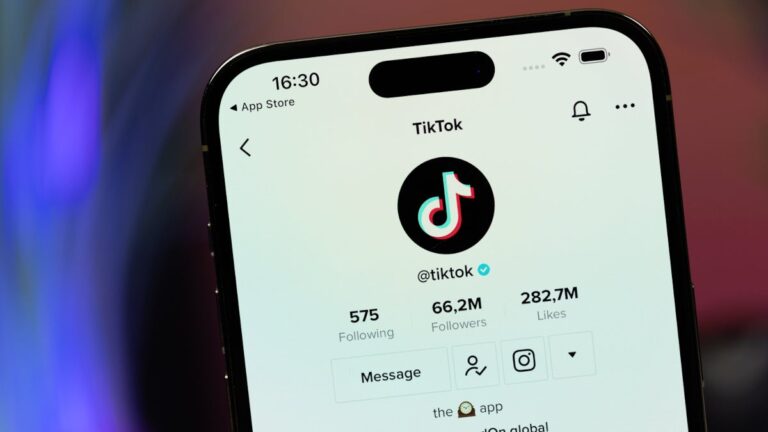
Even though the U.S. government is working on legislation that would ban TikTok in the country (unless current parent ByteDance divests itself of the platform), there is no denying that the app is a huge success in the states. U.S. revenue totaled $16 billion last year and with strong results like that, if ByteDance does decide to sell its stake in TikTok, it could ask for and receive a larger sum than it originally expected.
The Financial Times cited five sources familiar with TikTok’s financial situation who said that not only was the $16 billion in revenue generated in 2023 the highest total in TikTok’s U.S. history, but the amount could push the value of the platform to a figure as high as $150 billion. What makes a divestiture of TikTok easy for ByteDance to stomach is the fact that most of the Chinese company’s revenue comes from its operations located in China. Since ByteDance is not a public company, its financial records are private.
ByteDance had total revenue of $120 billion last year, up 40% from 2022’s top-line number. And while ByteDance did have profits of $28 billion last year, TikTok is still spilling red ink which is something that any potential buyer is going to have to consider when formulating a bid. ByteDance is believed to have a close relationship with the Communist Chinese government and there is concern that TikTok collects U.S. user’s personal information and sends it to a server sitting on a desk in Beijing.
TikTok generated $16 billion in revenue from the U.S. last year
The Protecting Americans from Foreign Adversary Controlled Applications Act, which would ban TikTok in the U.S. unless divested by ByteDance, passed the House by a 352-65 margin. The bill is targeted at TikTok, but could also impact other apps that collect user profiles from U.S. users and are “controlled by a foreign adversary.” This means that such apps cannot be “subject to the direction or control” of someone in Russia, China, North Korea, or Iran.
The bill now moves to the Senate where it is expected to have a harder time passing. If it does, the House and Senate reconcile any differences between their bills and vote. If the bill passes both the House and Senate, the next stop is the president’s desk and President Biden has said that he will sign the bill if it reaches his desk.
China, on the other hand, is opposed to a forced sale of TikTok although Beijing will have to sign off on any deal reached to buy the platform from ByteDance.
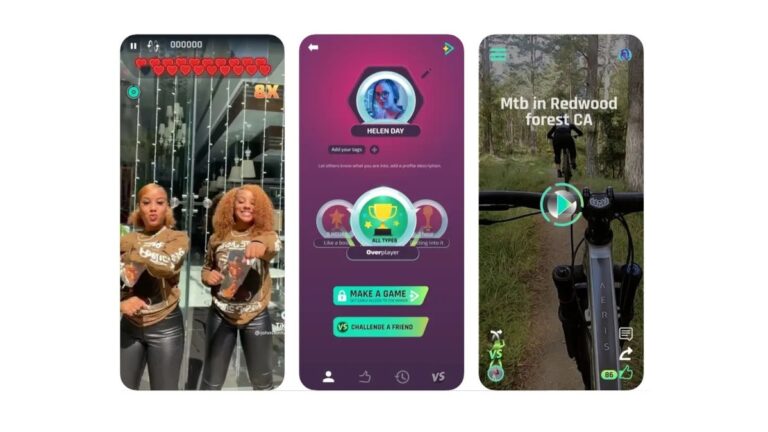
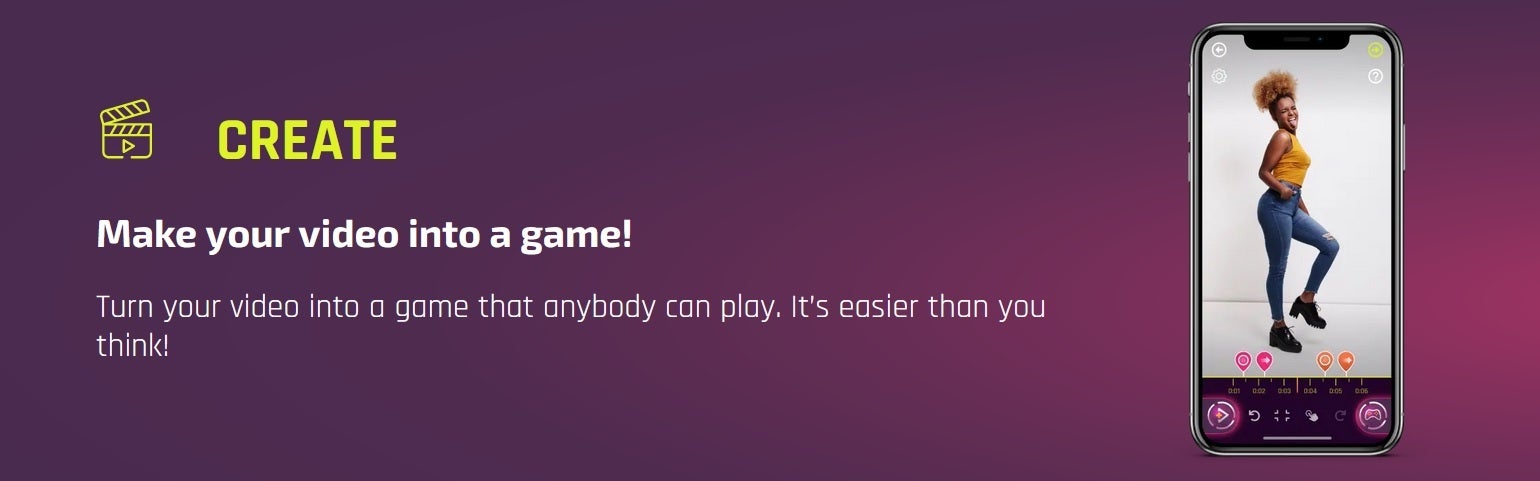
A company called Overplay recently got the opportunity to find a Shark Tank investor willing to join others who have funded the company. The firm will turn your video into a game using AI. The process is simple. Record a video on your smartphone and then upload the video to the Overplay platform. Overplay then turns the video into a mobile game without any coding required. Yes, without knowing a lick of coding, you can create a mobile game to share with friends. You can even try games made by other Overplay users.
The Overplay app is already available on the iOS App Store for the iPhone and the Google Play Store for Android handsets. Co-founder Dan Projansky says, “With Overplay, content creators and brands can seamlessly create games from their videos and connect with their followers in ways never seen before.” The other co-founder, Caroline Strzalka added, “This marks the beginning of a new era in digital content creation. The opportunities for the creative sector are endless.”
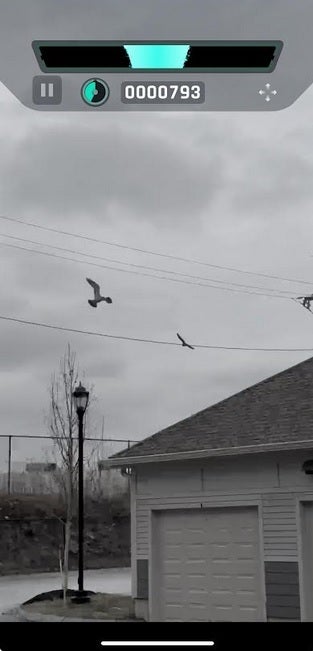
With Overplay, a video I took of birds flying became a mobile game
Over 1 million games have been played on Overplay and it has tallied more than 150,000 alpha app downloads. Perhaps it was not a surprise, but the Shark most well-versed in technology, Mark Cuban, was the only bidder for the company and agreed to invest $500,000 for 4% equity. Cuban will also get paid $500,000 for content creation and promotion.
Overplay will turn a video into a mobile game without any coding experience required
I installed the Overplay app and turned a video I took a few weeks ago of birds flying near my home into a video game. The goal of the game was to tap on the bird while in flight and points were awarded for each hit. And my coding knowledge is practically zilch.
While Overplay might turn those who passively watch videos into game players, we could see the platform used by advertisers to promote their brand and products by turning a simple video into a fun video game. This might be the best use of the platform since an addictive mobile game would be an easy way to keep a brand name in the minds of consumers.
Pro-Palestinian hackers calling themselves “Handala Hack” claim to have accessed 740GB of data from the messaging app Viber, including source code – Viber denies the breach but is investigating – Users are advised to change passwords.
Messaging app Viber is facing a potential data breach after a pro-Palestinian hacktivist group, Handala Hack, claimed responsibility for accessing its servers and stealing a trove of data.
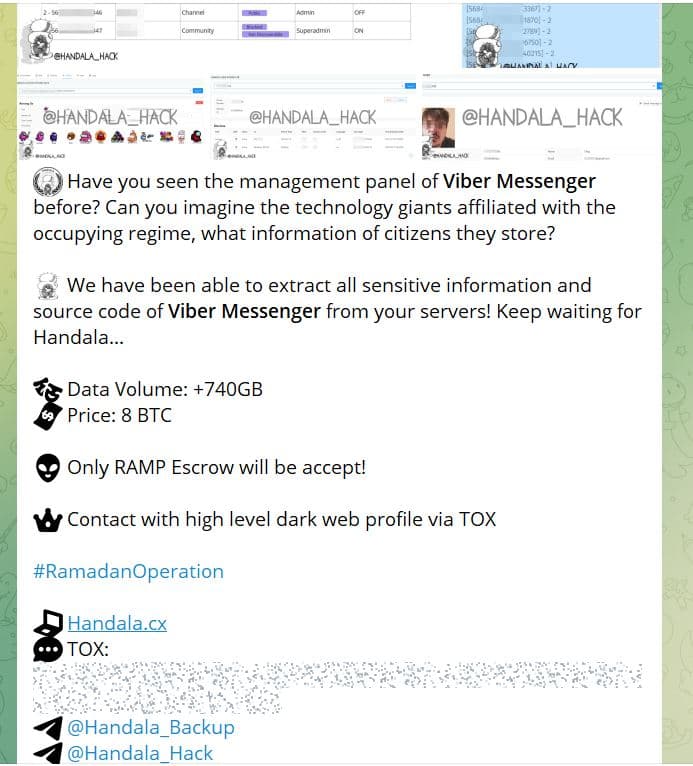
In its Telegram post, Handala Hack alleged they stole over 740GB of data, including Viber’s source code. The group demands a ransom of 8 Bitcoin, or $583,000, for the stolen information.
“Have you seen the management panel of Viber Messenger before? Can you imagine the technology giants affiliated with the occupying regime, what information of citizens they store?” the group’s post read. As seen by Hackread.com, the claim was accompanied by an image allegedly showing a directory listing.
Handala Hack group on Telegram (Screenshot credit: Hackread.com)
Viber, a messaging app introduced in 2010 and acquired by Japanese multinational firm Rakuten in 2014 for $900 million, has responded to the hackers’ claims.
The company has denied any evidence of intrusion into its systems or data compromise but confirmed that it has already launched an investigation to verify if a security breach has occurred.
“We are aware of the claim and are investigating the validity of the alleged breach with utmost urgency,” the company said. “The security of our users’ data is our top priority,” the company reiterated.
If confirmed, this could be one of the largest data breaches in recent history. Experts opine that this breach, potentially involving personal messages, call logs, contact details, and financial information, can devastate Viber users.
Handala Hack is a controversial group known for targeting Israeli entities and their allies to support the Palestinian cause. It has been active since establishing its Telegram channel in December 2023 and later joining Breach Forums.
Handala Hack group on Breach Forums (Screenshot credit: Hackread.com)
This group claims to have targeted Israeli infrastructure, healthcare providers, community centers, tech companies, media outlets, and defence contractors with sophisticated techniques.
Some of these techniques include phishing emails mimicking F5 BIG-IP zero-day security updates and SQL injection attacks, compromising databases and highlighting their intent to disrupt political messages through cyber means. Their claimed targets include Hadarom Port, Home Medics, Rosh Ha’ayin Municipal Society, and DRS RADA Technologies.
Whether verified or not, the incident involving Viber raises questions about the app’s data security practices. Viber needs to address user concerns by clearly explaining the situation and any potential risks to user data.
In the meantime, Viber users should exercise caution and change their passwords, be cautious of phishing attempts, and stay informed about any updates regarding the alleged data breach by checking Viber’s official channels.
In a sophisticated cyberattack campaign, malicious actors impersonating Colombian government agencies target individuals across Latin America.
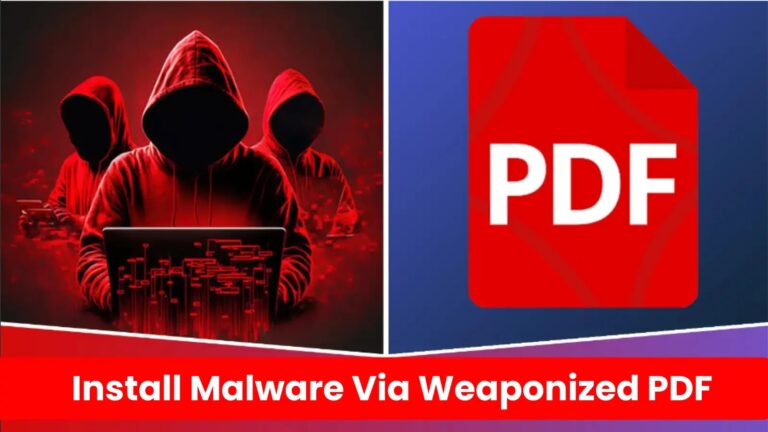
The attackers are distributing emails containing PDF attachments, falsely accusing recipients of traffic violations or other legal infractions.
These deceptive communications are designed to coerce victims into downloading an archive that harbors a VBS script, initiating a multi-stage infection process.
Upon execution, the obfuscated VBS script triggers a PowerShell script, retrieving the final malware payload from legitimate online storage services through a two-step request process.
🚨 An ongoing campaign targeting #LATAM: Attackers are forcing users to initiate infections 🚨
The #attackers impersonate Colombian government agencies (e.g., COLOMBIANA DE MUNICIPIOS) by sending PDFs, accusing the recipients of traffic violations or other legal issues.
According to the ANY.RUN report was shared with GBHackers on Security; initially, the script acquires the payload’s address from resources such as textbin.net. It then proceeds to download and execute the payload from the provided address, which could be hosted on various platforms including cdn.discordapp(.)com, pasteio(.)com, hidrive.ionos.com, and wtools.io.
The attackers’ execution chain follows a sequence from PDF to ZIP, then to VBS and PowerShell, and finally to the executable file (EXE).
The culminating payload is identified as one of several known remote access trojans (RATs), specifically AsyncRAT, njRAT, or Remcos.
These malicious programs are notorious for their ability to provide unauthorized remote access to the infected systems, posing significant risks to the victims’ privacy and data security.
Here are some notable samples of this campaign: 1, 2, 3, 4.
sample 1
This campaign has been meticulously documented, with over 50 operation samples being analyzed.
Cybersecurity professionals and researchers are encouraged to consult the TI Lookup tool for detailed information on these samples, aiding in identifying and mitigating threats related to this campaign.
Document
Integrate ANY.RUN in Your Company for Effective Malware Analysis
Are you from SOC, Threat Research, or DFIR departments? If so, you can join an online community of 400,000 independent security researchers:
Real-time Detection
Interactive Malware Analysis
Easy to Learn by New Security Team members
Get detailed reports with maximum data
Set Up Virtual Machine in Linux & all Windows OS Versions
Interact with Malware Safely
If you want to test all these features now with completely free access to the sandbox:
The technique demonstrated by the attackers in this campaign is not exclusive to Latin American targets and may be adapted for use against various targets in other regions.
The cybersecurity community is urged to remain vigilant and employ robust security measures to protect against such sophisticated threats.
Are you from SOC and DFIR Teams? – Analyse Malware Incidents & get live Access with ANY.RUN -> Start Now for Free.
A new vulnerability, CVE-2023-5528, has been discovered with Kubernetes. This vulnerability is associated with a command injection vulnerability that leads to remote code execution with SYSTEM-level privileges on the compromised Windows node. The severity for this vulnerability has been given as 7.2 (High).
Several prerequisites are required for a threat actor to exploit this vulnerability, including applying malicious YAML files to the cluster, access to create a persistent volume that can be utilized during the command injection process, and some level of user privilege on the affected Kubernetes cluster.
Two additional vulnerabilities with the same underlying cause were identified subsequent to the identification of this one: an insecure function call and inadequate user input sanitization.
Alert Fatigue that helps no one as security teams need to triage 100s of vulnerabilities.:
The problem of vulnerability fatigue today
Difference between CVSS-specific vulnerability vs risk-based vulnerability
Evaluating vulnerabilities based on the business impact/risk
Automation to reduce alert fatigue and enhance security posture significantly
AcuRisQ, that helps you to quantify risk accurately:
Technical Analysis
According to the Akamai report shared with Cyber Security News, this vulnerability is linked with another previously disclosed vulnerability, CVE-2023-3676, related to another command injection vulnerability.
Both of these vulnerabilities were present on the Kubernetes cluster due to insecure function calls and a lack of user input sanitization.
Further analysis revealed that these command injections existed because of the lack of sanitization on the subPath parameter in YAML files, which uses the Kubelet service to execute commands with SYSTEM-level privileges.
In addition, there was an insecure function MountSensitive() with a cmd line call to “exec.command”.
Vulnerable cmd line code (Source: Akamai)
This function makes a symlink between the location of the volume on the node and the location inside the pod.
However, since it uses a Windows command prompt, the cmd terminal concatenation can be utilized to execute additional commands alongside the original parameter.
Local Volume And Persistent Volume
The exploitation involves the use of local volume type and persistent volume.
Local volumes are used to allow users to mount disk partitions inside a path, whereas persistent volumes are storage resources that a cluster admin can create to provide a storage space that will last even after the lifetime of the pod.
Once a persistentVolume is created, users can ask for storage space using a persistentVolumeClaim function.
It is worth denoting that Kubernetes uses YAML files for almost all of the functions inside the Kubernetes.
Hence, in this case, the local.path parameter inside a YAML file can be supplied with malicious commands executed during the mounting process.
This vulnerability can be exploited on default installations of Kubernetes (earlier than version 1.28.4), and was tested against both on-prem deployments and Azure Kubernetes Service.
Patch Analysis And Mitigation Steps
Kubernetes has acted swiftly upon this vulnerability and has deleted the cmd line function. They have replaced it with a native Go function that only performs the symlink operation.
This vulnerability affects the Kubernetes version earlier than 1.28.4. It is recommended that organizations upgrade their Kubernetes to the latest version to prevent the exploitation of this vulnerability.
The below command can be executed to check if your Kubernetes has been affected.
root@controller:~/$ kubectl get nodes -o wide –show-labels | grep “os=windows”
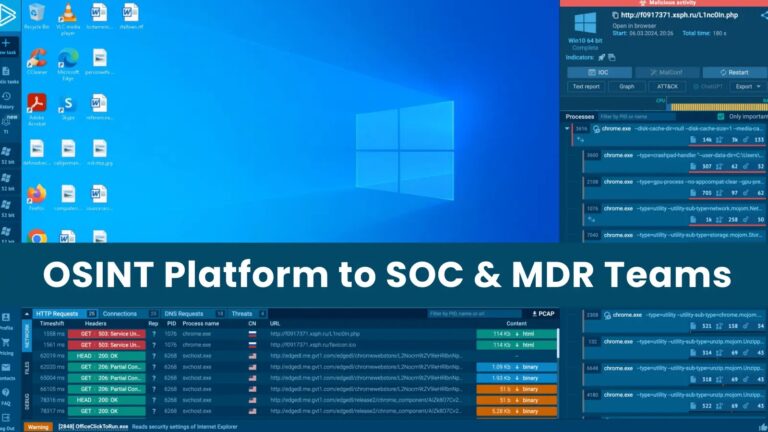
ANY.RUN now integrates with OpenCTI, a cyber threat intelligence platform that allows automatic enrichment of OpenCTI observations with malware data directly from ANY.RUN analysis.
Users can access indicators like TTPs, hashes, IPs, and domains without manual data source checks.
The data from interactive analysis sessions within the ANY.RUN sandbox can further enrich the observations that centralize threat analysis information from various sources for efficient investigation.
Document
Integrate ANY.RUN in Your Company for Effective Malware Analysis
Are you from SOC, Threat Research, or DFIR departments? If so, you can join an online community of 400,000 independent security researchers:
Real-time Detection
Interactive Malware Analysis
Easy to Learn by New Security Team members
Get detailed reports with maximum data
Set Up Virtual Machine in Linux & all Windows OS Versions
Interact with Malware Safely
If you want to test all these features now with completely free access to the sandbox:
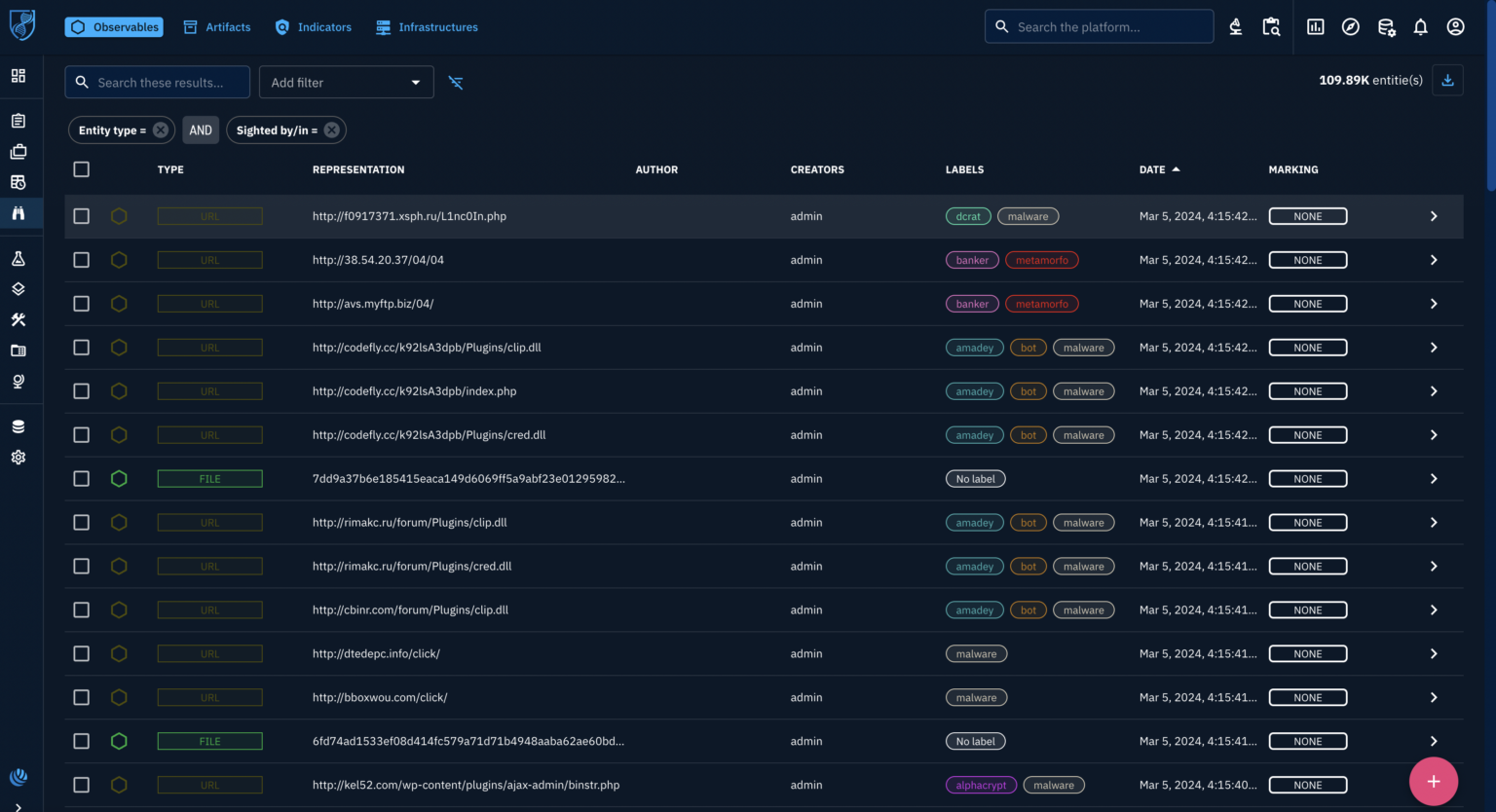
OpenCTI observations with data from ANY.RUN sandbox
OpenCTI, a Threat Intelligence Platform (TIP), ingests threat data from various sources (feeds, sandboxes) using connectors and stores this data as “observations” (indicators like IPs and hashes).
Specifically, OpenCTI offers connectors for:
MITRE ATT&CK: facilitates mapping collected data to known attack techniques.
ANY.RUN Sandbox: allows adding details from sandbox analysis (malware family, maliciousness scores) to observations.
OpenCTI interface
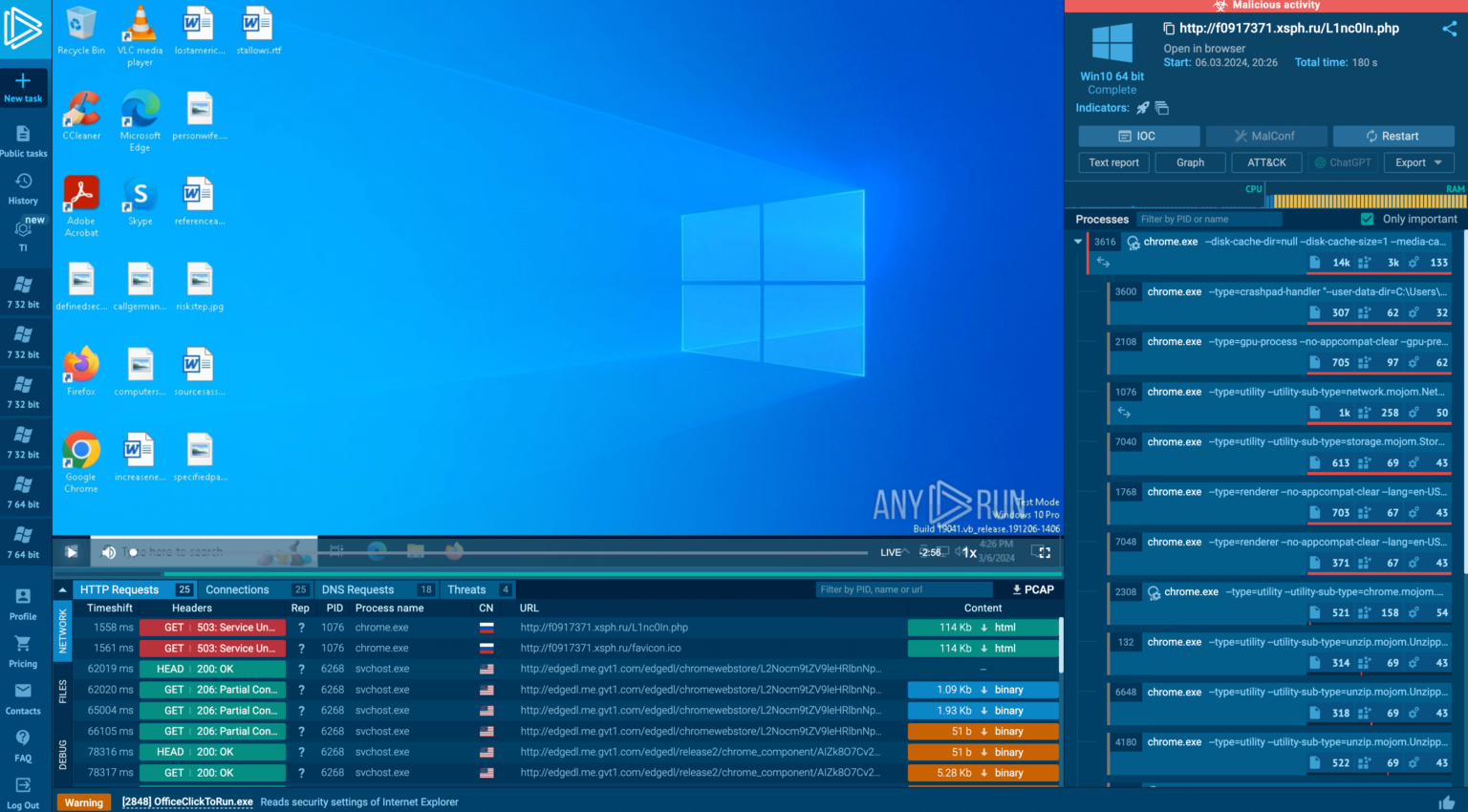
ANY.RUN is a cloud-based malware sandbox service that analyzes suspicious files in a safe virtual environment, offers real-time detection using pre-defined rules and allows interactive analysis for in-depth investigation.
During this analysis, Its enrichment connector for OpenCTI streamlines threat analysis by automatically investigating suspicious files and when enriching an observation (potential threat evidence) in OpenCTI, it can leverage the connector to submit the file to ANY.RUN’s cloud sandbox.
It creates a safe virtual environment to analyze the file’s behavior and then extracts Indicators of Compromise (IOCs) like URLs, domains, and network activity from the analysis.
Details, including extracted IOCs and behavioral observations, are then fed back and attached to the corresponding observation within OpenCTI. This effectively transforms the observation into a full-fledged OpenCTI indicator, providing valuable context for further investigation.
Then, with the enriched information readily available, can seamlessly integrate it with the SIEM or SOAR systems, triggering automated incident response procedures and enabling security teams to address potential threats swiftly.
Analyze suspicious files in OpenCTI with ANY.RUN.
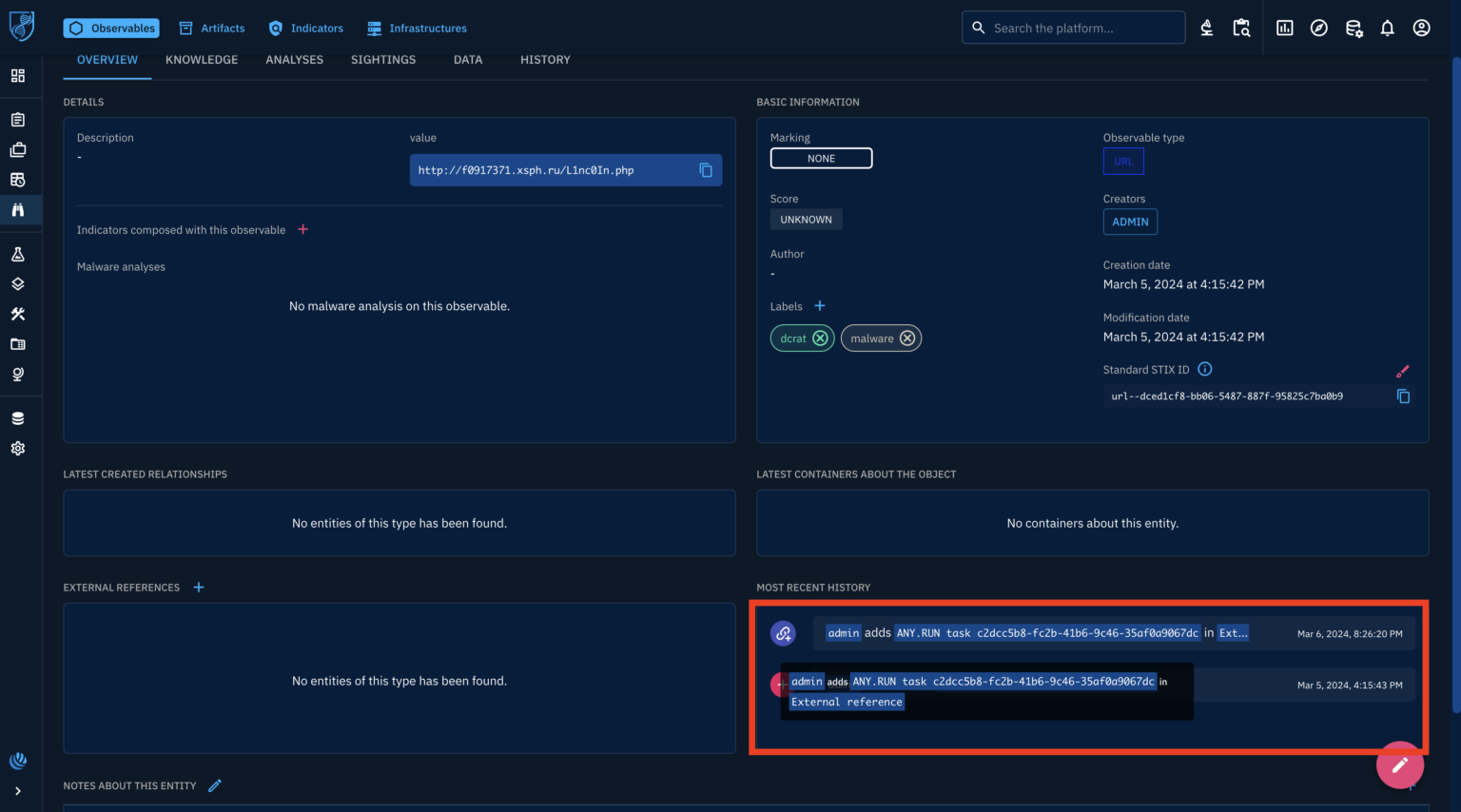
OpenCTI users can utilize the ANY.RUN enrichment connector to analyze suspicious observables (indicators) like URLs. By selecting an observable and clicking the enrichment button, they can choose the ANY.RUN connector.
This triggers an automated analysis in the background. Once completed, the observable details are enriched with findings that include creating relationships between the perceptible and identified Tactics, Techniques, and Procedures (TTPs) used by the potential malware.
An external reference links to the specific ANY.RUN sandbox analysis report for further manual investigation.
What is ANY.RUN?
ANY.RUNis a cloud-based malware lab that does most of the work for security teams. 400,000 professionals use ANY.RUN platform every day to look into events and speed up threat research on Linux and Windows cloud VMs.
Advantages of ANY.RUN
Real-time Detection: ANY.RUN can find malware and instantly identify many malware families using YARA and Suricata rules within about 40 seconds of posting a file.
Interactive Malware Analysis: ANY.RUN differs from many automated options because it lets you connect with the virtual machine from your browser. This live feature helps stop zero-day vulnerabilities and advanced malware that can get past signature-based protection.
Value for money: ANY.RUN’s cloud-based nature makes it a cost-effective option for businesses since your DevOps team doesn’t have to do any setup or support work.
Best for onboarding new security team members: ANY. RUN’s easy-to-use interface allows even new SOC researchers to quickly learn to examine malware and identify signs of compromise (IOCs).
Are you from SOC and DFIR Teams? – Analyse Malware Incidents & get live Access with ANY.RUN -> Start Now for Free
5G first became available in 2020, and now, four years later, it’s available virtually everywhere in the United States. Verizon first built out its 5G network with mmWave before turning on Sub-6 and then adding C-Band. So depending on where you are located, you might see 5G, or 5G UW in your status bar. Verizon’s 5G network is pretty incredible; we’ve seen speeds topping 2Gbps in our own testing.
As we noted in our “What is 5G” post, there are a few layers to 5G, which includes a low-band network, which is what is nationwide. And then there is mmWave, which is the ultra high-band network that offers the crazy gigabit speeds that you’ve seen in YouTube videos. Combining those two together will give users great speed and excellent coverage.
We all know that Verizon has 5G; if you’ve watched TV or YouTube in the past year, you’ve seen countless commercials about it. But how much does it cost you? Where is it available? And is it worth upgrading to a 5G phone right now? We’ll aim to answer those questions and much more here. This is everything you need to know.
Does my area have 5G?
Most likely.
Verizon’s 5G network covers around 230 million customers in over 2,700 cities, which covers the majority of the US. But let’s keep in mind that Verizon does have 5G and then 5G Ultra Wideband (which is their mmWave network). The latter doesn’t cover as many Americans, and you won’t find out indoors either. So do keep that in mind here.
As always, you can check out Verizon’s coverage map by clicking here.
As you can see in the map above, there are a small number of 5G Ultra Wideband networks across the country, mostly consisting of larger cities like Seattle, New York City, Albuquerque, Detroit, Denver, and a number of others.
5G vs 5G Ultra Wideband
As we have covered before, there is a difference in the two flavors of 5G that Verizon offers. 5G is essentially using the same spectrum as the current 4G LTE network. This is why if you have 5G in your area, you are likely seeing speeds similar to 4G LTE. That’s not unique to Verizon either; it’s the same case for AT&T and T-Mobile.
However, with 5G Ultra Wideband, you’re going to see much faster speeds. We’ve done some testing and have gotten over 2Gbps on Verizon on the UWB network. It uses mmWave, which is an ultra high-band spectrum, offering crazy speeds but pretty terrible coverage. The way coverage works is that the lower band spectrum offers better coverage but slower speeds, and the higher band has better speed but less coverage. This is why most carriers combine these two for 5G.
Additionally, if you are inside, you won’t get access to 5G Ultra Wideband. That is because the coverage is pretty weak and can’t penetrate through buildings. Heck, if there’s a tree in the way, you will get knocked off of the 5G UWB network or if the wind is too strong. Which is pretty funny since many people seem to think it can cause cancer. But that’s a rant for another time.
In the future, Verizon will be combining the 5G and 5G UWB networks, so you will get these gigabit speeds indoors, virtually anywhere. But that will take a few years, likely around 2025.
5G Ultra Wideband is available in these cities
As mentioned, 5G Ultra Wideband is available in a number of cities already; here’s the full list:
Akron, OH
Albuquerque, NM
Anaheim, CA
Ann Arbor, MI
Arlington, TX
Athens, GA
Atlanta, GA
Baltimore, MD
Boise, ID
Boston, MA
Charlotte, NC
Chicago, IL
Cincinnati, OH
Cleveland, OH
Colorado Springs, CO
Columbia, SC
Columbus, OH
Dallas, TX
Dayton, OH
Denver, CO
Des Moines, IA
Detroit, MI
Durham, NC
El Paso, TX
Fort Wayne, IN
Fremont, CA
Fresno, CA
Grand Rapids, MI
Greensboro, NC
Hampton Roads, VA
Harrisburg, PA
Hartford, CT
Hoboken, NJ
Houston, TX
San Antonio, TX
Indianapolis, IN
Jacksonville, FL
Jersey City, NJ
Kansas City, MO
Knoxville, TN
Las Vegas, NV
Little Rock, AR
Los Angeles, CA
Louisville, KY
Memphis, TN
Miami, FL
Milwaukee, WI
Minneapolis, MN
Nashville, TN
New Orleans, LA
New York, NY
Norfolk, VA
Oklahoma City, OK
Omaha, NE
Orlando, FL (Sept 9)
Panama City, FL
Philadelphia, PA
Phoenix, AZ
Providence, RI
Raleigh, NC
Richmond, VA
Riverside, CA
Sacramento, CA
Salt Lake City, UT
San Diego, CA
San Francisco, CA
San Jose, CA
Sarasota, FL
Scranton, PA
Sioux Falls, SD
Spokane, WA
St. Louis, MO
St. Paul, MN
St. Petersburg, FL
Syracuse, NY
Tacoma, WA
Tampa, FL
Tucson, AZ,
Washington D.C.
C-Band is coming
Verizon announced at CES 2022 that it would be launching its C-Band network in over 1,700 cities, covering 100 million Americans by the end of January 2022. Verizon has not yet released a list of which cities will be getting C-Band.
C-Band is basically the mid-tier of 5G. It’s going to give you much faster speeds than 4G LTE offered, but not quite the same speeds as the mmWave network that is available in many downtown areas and at many arenas/stadiums.
C-Band launched on January 19, 2022, and Verizon has continued to build C-Band out nationwide.
Can I use 5G as my home internet?
We would recommend against using 5G as your ISP provider unless you get Verizon 5G Home. That is because the faster speeds are virtually impossible to get indoors, as we have already outlined. Which means you won’t be getting great speeds.
Verizon 5G Home Products
However, there is Verizon 5G Home. Verizon’s home internet service runs on a fixed 5G network. It costs $50 per month for existing Verizon Wireless customers and $70 for those that are not. This makes this very competitive with other ISPs out there like Cox, Comcast, AT&T, and even Verizon Fiber.
These are the cities where Verizon 5G Home is available right now:
Birmingham, AL
Phoenix, AZ
Tucson, AZ
Fremont, CA
Los Angeles, CA
Orange County, CA
Riverside, CA
Sacramento, CA
San Diego, CA
San Francisco, CA
San Jose, CA
Denver, CO
Hartford, CT
Jacksonville, FL
Miami, FL
Orlando, FL
Pensacola, FL
Sarasota, FL
Tampa, FL
Atlanta, GA
Des Moines, IA
Chicago, IL
Fort Wayne, IN
Indianapolis, IN
Louisville, KY
New Orleans, LA
Detroit, MI
Minneapolis, MN
Saint Paul, MN
Kansas City, MO
St Louis, MO
Charlotte, NC
Greensboro, NC
Raleigh, NC
Omaha, NE
Las Vegas, NV
Niagara Falls, NY
Cincinatti, OH
Cleveland, OH
Columbus, OH
Dayton, OH
Scranton, PA
Memphis, TN
Arlington, TX
Dallas, TX
Houston, TX
San Antonio, TX
Salt Lake City, UT
Seattle, WA
Tacoma, WA
Milwaukee, WI
How fast can 5G be on Verizon?
Speeds on Verizon’s 5G network can vary drastically. On its nationwide 5G network, using Sub-6, you’ll get around 100Mbps to 300Mbps, depending on the area. Which doesn’t sound all that impressive, nor is it what Verizon and other carriers have been promising with 5G.
The speeds come from the mmWave network. We have done speed tests where we have gotten 1.8Gbps up to about 2.5Gbps. Now yes, that is pretty insane on a smartphone and probably overkill for most people, but it is going to be incredible to download games or seasons on Netflix, etc. Once mmWave is rolled out everywhere with Sub-6, you should consistently get over a gigabit of speed, even while indoors. But that will take a few years.
Why do I need 5G speeds?
Most people see 5G speed tests and wonder, “Why do I need that much speed on a phone?” Well, the question you should be asking is “Why not?”. 5G is mostly about speed but more about latency. And with carriers expanding beyond smartphones, the latency is going to be important for things like VR and autonomous driving. As they will be able to stream virtual reality, or give directions to your self-driving car instantly.
Don’t forget that we asked these same questions with 4G LTE and said that 3G was “fast enough”. Well, we now know that is definitely not true. Seeing as 3G topped out at around 5Mbps (or around 42Mbps if you were on T-Mobile with HSPA+). Imagine trying to watch YouTube at 5Mbps these days. Yeah, it wouldn’t be fun.
As the internet evolves, we need faster speeds, and that’s why 5G matters. While getting a gigabit of speed is a bit insane right now, it won’t be in the next 5-10 years as things evolve and take advantage of this speed. The biggest use-case for it right now is, of course, downloading Netflix movies and TV shows in seconds. And we do mean seconds.
Let’s just hope that carriers don’t go back to data caps and keep unlimited data. Otherwise, you’ll blow through that cap in no time.
What phones support 5G on Verizon?
Pretty much every phone that Verizon sells right now is 5G capable and will support both 5G and 5G Ultra Wideband. So any phone you buy from Verizon will work on its 5G network, and there’s nothing to worry about there.
The issues come with unlocked phones. A good number of unlocked phones do not support mmWave or Verizon’s 5G Ultra Wideband network. And that’s because Verizon is virtually the only carrier using mmWave right now (that will change in the coming months and years, though). So if you buy an unlocked 5G phone to use on Verizon, make sure that it has UWB, or you won’t get lightning-fast speeds from Verizon’s 5G Ultra Wideband network.
It will still work on Verizon’s network, you just won’t get those crazy insane speeds that everyone posts about. The Google Pixel 5 supports UWB, as well as the Galaxy S21 series and a number of other phones, which you can buy elsewhere.
Should I upgrade to get 5G now?
Our recommendation is no. Verizon’s nationwide 5G network is not that much faster than its 4G LTE network, and in some areas it is actually slower. And since you can only really use the 5G Ultra Wideband network while outside, it doesn’t make a lot of sense to upgrade solely for 5G.
Having said that, if you are upgrading, you might as well get a 5G phone. Especially if you are planning to keep it for a few years. But don’t let 5G be the sole reason why you upgrade to a new phone. It’s just not worth it right now. That will of course change in the future, as Verizon continues to build out its 5G network.
What Verizon plans support 5G?
All of Verizon’s plans include 5G connectivity. However, the entry-level plan – Start Unlimited – does not include 5G Ultra Wideband. But you can access it for $10 more per month. And at that point, you might as well upgrade to the Play More or Do More Unlimited plan, which is $10 more and includes 5G Ultra Wideband connectivity at no extra charge.
You’ll also note that the Just Kids plan doesn’t have 5G UWB connectivity at all. This is because it is a smaller plan, hence the $35 price tag, if you get four lines. Since speeds are capped at 5Mbps.
Verizon 5G Unlimited Plans
The best plan for 5G on Verizon is going to be the Play More or Get More Unlimited plan. Unless you’d rather have Verizon Cloud Storage included and plan to add Connected devices like smartwatches and tablets to your account. Play More and Get More Unlimited plans to get the Disney+ bundle included (that’s Disney+, Hulu, and ESPN+) and Discovery+ for 12 months. The Get More Unlimited plan includes Apple Music, 50% off unlimited connected device plans, and 600GB of Verizon Cloud Storage.
It’s also important to note here that you will need to “upgrade” your plan if you upgrade from a 4G LTE phone to a 5G phone. Even though the plan is essentially the same in terms of perks and price, it only adds 5G to your plan. It’s strange that you have to physically upgrade your plan on Verizon’s website when you upgrade your phone, but it’s pretty simple. So, if you upgrade to a 5G phone and wonder why you’re not getting 5G on Verizon, that is most likely why.
Update: Verizon has retired the plans above. While they are still available for those on those plans, there is a new set of plans as outlined below.
All of Verizon’s myPlan offerings include 5G. However, Unlimited Welcome only offers regular 5G (basically, Sub-6). While the Unlimited Plus and Unlimited Ultimate plans will offer you 5G Ultra Wideband, which includes C-Band and mmWave. So important to keep that all in mind.
Is Verizon 5G worth it in 2024?
It actually is. If you live in a big city or frequent areas that are pretty dense, getting a 5G phone and a 5G plan from Verizon will make a huge difference. Verizon’s C-Band is available in a lot of major cities, and you can easily get over 500Mbps download with C-Band, making it worthwhile. mmWave is mostly used in stadiums, downtown areas, malls, and such, where there are large crowds of people, so it’s not as ubiquitous, but it does offer some insanely fast speeds.
If you’re someone who lives out in the boonies or in the middle of nowhere, then you are probably fine sticking with 4G LTE or, at the very least, upgrading to the Unlimited Welcome plan, which has Sub-6 5G.



.webp)
.webp)
.webp)
.webp)






.webp)
.webp)