These innovative tools can’t come soon enough. According to reports, about 90% of Physicians (surveyed by AthenaHealth) reported feeling burnt out on a “regular basis.” Also, the survey found that 64% of doctors said they feel overwhelmed by administrative requirements. So, it’s evident that changes to you good
Salesforce has a new group of AI tools to help doctors
On Thursday, Salesforce unveiled two new AI tools that will help doctors be more efficient at their jobs and avoid burnout. These tools are both built on Salesforce’s Einstein 1 platform.
The first tool is called Einstein Copilot: Health Actions. Not to be confused with Microsoft’s Copilot, Salesforce’s tool is like a general doctor’s assistant powered by AI. Using AI, this tool can book appointments, send referrals, and summarize patient information. This can all be done through prompts given through the AI. This feature could greatly speed up a doctor’s job. So, rather than digging through documents and setting appointments, all of that can be automated while the doctor has more time to spend with the patients.
The next feature is called Assessment Generation. This will allow doctors to create health assessments without having to produce them themselves. Manually making assessments can be a very time-consuming and labor-intensive task. Assessment Generation could take a load off of the doctors’ chests.
This is consistent with Salesforce’s focused AI approach. Rather than making general AI products like Google or OpenAI, it’s making specialized AI that is great at a certain set of tasks.
If you’re excited about using these products, you’re going to have to wait a bit. Salesforce said that doctors will be able to use its AI tools later this year. Assessment Generation will be available this summer, and Einstein Copilot: Health Actions will be available by the end of the year.
Researchers recently uncovered distributed brute force attacks on target WordPress websites using the browsers of innocent site visitors.
A recent increase in website hacking that targets Web3 and cryptocurrency assets was noticed two weeks ago.
With the use of cryptocurrency drainers, this malware, which spreads among several campaigns, steals assets from compromised wallets and redistributes them.
According to Sucuri researchers, the most notable variation uses the external cachingjs/turboturbo.js script to inject drainers.
The domain name of the turboturbo.js script was modified on February 20, 2024; it was previously dynamiclinks[.]cfd/cachingjs/turboturbo.js, but it is right now dynamiclink[.]lol/cachingjs/turboturbo.js.
“This new wave started on the very same day the new dynamiclink[.]lol domain was registered and hosted on the server with IP 93.123.39.199”, researchers said.
DocumentIntegrate ANY.RUN in your company for Effective Malware Analysis
Malware analysis can be fast and simple. Just let us show you the way to:
Interact with malware safely
Set up virtual machine in Linux and all Windows OS versions
Work in a team
Get detailed reports with maximum data
If you want to test all these features now with completely free access to the sandbox: ..
Distributed Brute Force Attacks On WordPress Sites
Attackers created a second dynamic-linx[.]com domain on February 23, 2024 (which is also hosted on 93.123.39.199 and 94.156.8.251).
By February 25th, researchers were able to identify injections using the dynamic-linx[.]com/chx.js script.
But this new script is very different because it doesn’t load a crypto drainer. Researchers say there is no connection between Web3 and cryptocurrencies and the script’s contents.
The five main stages of this recent attack enable a malicious actor to use websites that have already been infiltrated to undertake distributed brute force attacks against thousands of additional sites that could become targets.
Obtain URLs of WordPress sites
Extract author usernames
Inject malicious scripts
Brute force credentials
Verify compromised credentials
According to the information shared with Cyber Security News, a task is requested by the user’s browser from the hxxps://dynamic-linx[.]com/getTask.php URL whenever they access an infected webpage.
When a task is found, the data is processed to extract the URL of the target website, an operational username, and a list of 100 passwords to try.
The visitor’s browser submits the wp.uploadFile XML-RPC API calls to upload a file with the encrypted credentials that were used to authenticate this particular request for each password in the list.
Each task entails 100 API requests! A brief text file containing legitimate credentials is created in the WordPress uploads directory if authentication is successful.
The script notifies the job with a specific taskId and checkId has been finished once all of the passwords have been checked.
At last, the script retrieves the next task and handles an additional set of credentials. And so on, as long as the compromised page is open, without end.
Mitigation
“Most likely, they (attackers) realized that at their scale of infection (~1000 compromised sites) the crypto drainers are not very profitable yet.
Moreover, they draw too much attention and their domains get blocked pretty quickly”, researchers said.
We are reminded by this attack of the importance of creating strong passwords.
You may also want to consider limiting access to the xmlrpc.php file and WordPress admin interface to trusted IP addresses only.
With Perimeter81 malware protection, you can block malware, including Trojans, ransomware, spyware, rootkits, worms, and zero-day exploits. All are incredibly harmful and can wreak havoc on your network.
Stay updated on Cybersecurity news, Whitepapers, and Infographics. Follow us on LinkedIn & Twitter.
In today’s era of remote work and travel, having the right technology can make all the difference for digital nomads. Apple’s innovative products have become indispensable tools for those who live and work on the move.
At the same time, making the move to working remotely abroad is a daunting step. These tech add-ons and Apple hacks make the journey easier than ever.
Security
With even major co-working spaces like WeWork reporting huge data thefts from their open WiFi networks, it’s best to have another layer of security when working in shared spaces abroad.
Downloading reliable protective solutions like ExpressVPN for Mac protects data by tunnelling it anonymously past shared networks, concealing from view any vulnerable account data that may be used for card theft and identity fraud. This feature also means the user’s location is hidden, allowing them to stay protected anywhere in the world they are working at the time.
Getting the best out of iCloud’s FindMy features will put any digital nomad’s mind at ease when working from cafés abroad and bringing their tech to low-security spots.
A new development for iOS17 is the ability to use AirTag with multiple Apple IDs. This feature allows the owner to share an AirTag’s location with someone else so they can keep an eye on it, too, acting as a double layer of backup that’s a huge help if the owner’s FindMy device is also missing.
Designers can rejoice, as Apple also looks set to add one of the most used bits of hardware by digital nomads to its FindMy roster very soon: the Apple Pencil. The upcoming 3rd generation of the Apple Pencil is rumoured to have some new useful features, too, including the ability to zoom with a simple movement of the device. There are even hints, judging from recent Apple patents, at the ability of the new pencil to scan colours from the physical surroundings and replicate the same colour onto the iPad.
Before You Go
Making sure you have financial freedom on the go is key to living the remote lifestyle, with cards like Revolut being the most favoured option for digital nomads. These offer an international banking experience, bypassing huge money transfer fees and the bureaucracy of moving funds between national banks.
Digital nomads are a tech-dominated cohort, so it’s not unexpected that they’ve created a platform tailored to their needs. Inspired by Reddit, which also has forums dedicated to remote working, Citizen Remote is a relatively new app aiming to cover the whole breadth of the digital nomad experience. Users can do everything from getting started on Visa applications to connecting with collaborators on their next work project.
On The Go
Co-working spaces can be expensive, and the transient nature of working abroad can make some subscriptions to these a little pointless. There are great alternatives, and WorkFrom provides a detailed database of the ones best set up for working travellers. Whether you need a guaranteed plug or just a space with great Wifi, this app can lead you in the right direction from libraries to cafés, complete with local reviews.
Finally, no digital nomad lifestyle would be complete without the plethora of social connections that working in an international community brings. MeetUp is the biggest database for this, with subgroups for shared interests and languages spoken. It may seem old-school, but some cities have digital nomad communities that rely heavily on MeetUp. So it’s always worth checking it out to get the absolute most out of the social opportunities around.
In the past few years, you’ve probably heard a lot about Gallium Nitride or GaN when it comes to chargers. Many companies that make chargers and sell them on Amazon, have been using GaN for quite some time. And now bigger companies, like Apple, are getting involved.
The main question that arises is, what exactly is Gallium Nitride? And are GaN chargers more efficient than the usual Silicon chargers that we are familiar with? In this article, we will answer these questions and provide more information about GaN chargers. Therefore, here’s everything you need to know about GaN chargers.
What is Gallium Nitride?
Gallium Nitride is a material that really rose to prominence back in the 1990s for semiconductors. This was done through the manufacture of LEDs. GaN was first used to create the first white LEDs, blue lasers, and full-color LED displays that you could see in the daylight.
Now, it looks like Gallium Nitride is going to be used to replace Silicon in a number of other areas, too. Silicon manufacturers have been working for decades to improve silicon-based transistors. According to Moore’s Law, the number of transistors in an integrated silicon circuit can double about every two years.
Production of GaN transistors ramped up in 2006. Improved manufacturing processors meant that GaN would be manufactured in the same facilities as silicon transistors. That helps to keep costs down and encourages more silicon manufacturers to use GaN to produce transistors instead.
Why is GaN better than Silicon?
The biggest benefit that GaN has over Silicon is, power efficiency. GaN systems has explained this here:
“All semiconductor materials have what is called a bandgap. This is an energy range in a solid where no electrons can exist. Simply put, a bandgap is related to how well a solid material can conduct electricity. Gallium nitride has a 3.4 eV bandgap compared to silicon’s 1.12 eV bandgap. Gallium nitride’s wider bandgap means it can sustain higher voltages and higher temperatures than silicon.”
Another GaN manufacturer, Efficient Power Conversion Corporation, stated that GaN is capable of conducting electrons 1,000 times more efficiently than Silicon, with lower manufacturing costs.
What this means is that with a higher bandgap efficiency, the current can pass through a GaN chip faster than a silicon one. That can result in faster processing capabilities in the future. Basically, in layman’s terms, chips made with GaN will be faster, smaller, and more power-efficient. Not to mention, it is cheaper (eventually) than Silicon chips.
What are the advantages of having a GaN charger?
The biggest advantage to having a GaN charger for the user is the size. GaN chargers are typically about 50% smaller than equivalent Silicon chargers. This means that they will fit more readily into your bag and not get in the way as much. A 100W GaN charger is sometimes smaller than a 5W silicon charger, which is insane.
Why is it able to be so much smaller? Well, Gallium Nitride is able to conduct far higher voltages over time than silicon. So not only is GaN more efficient at transferring current, but it also means that less energy is lost to heat. That’s because components are more efficient at passing energy to your devices, and that will require less of them.
There are other benefits to using GaN as well, like a higher switching frequency that enables faster wireless power transfer and bigger “air gaps” between the charger and device.
Currently, GaN semiconductors are more expensive than Silicon semiconductors. But, because of the improved efficiency, there is a reduced reliance on additional materials. That includes things like heatsinks, filters, and circuit elements. One manufacturer has estimated that the cost savings is about 10-20% in this area. And that could improve even more once GaN semiconductors are produced on a larger scale.
And a benefit you may not think about is a lower power bill. Since your charger is more efficient, it means that there’s less wasted energy. You won’t see a huge impact, and possibly not even any impact on your bill. But it does help us to be more green.
What are the best Gallium Nitride Chargers available today?
Anker was one of the first companies to really embrace Gallium Nitride for its chargers. And now it has many, many chargers that use GaN. But they aren’t alone. Here are three great GaN chargers that you can pick up today.
Spigen 40W Dual USB-C Charger
This charger from Spigen is a dual-USB-C charger, that can output 40W total, or 30W out of each port. Spigen says that this charger is about 40% smaller than most other 40W USB-C chargers on the market. It’s also cooler, and about 3.1x faster.
Anker has a pretty impressive 65W charger that is made with GaN. This charger here is about the same size as the 5W charger that Apple shipped with its iPhones up until the iPhone 12 in 2020. Which is rather impressive. And it can be used for your smartphones, tablets and even laptops at this 65W speed.
Now, UGREEN has also been quick to the GaN trend. This is the Nexode 100W charger, and it has three USB-C ports along with a USB-A port. It can do up to 100W from any of the USB-C ports, but the more things you plug in, the slower it’ll work. So do keep that in mind here.
Because we have been making semiconductors with Silicon for so long, the cost is much lower than it is with Gallium Nitride. That’s because there’s not a lot of stuff being manufactured with GaN just yet. It’s mostly just chargers not to mention the fact that only a few charging manufacturers are producing with GaN right now.
Not many charging manufacturers are using GaN right now, but that is likely to change in the next few years. More and more people want to see GaN chargers, among other things. More people are starting to realize the features of Gallium Nitride.
Can GaN be used for more than just charging?
Gallium Nitride is not limited to just charging; that’s where it has had the biggest effect so far. As mentioned before, GaN was primarily used with LEDs in the 1990s. Blu-ray players also used it as a GaN-based blue laser. The laser had a shorter 405nm wavelength, allowing it to read information closer and with better precision. That’s why Blu-ray discs can hold more information compared to DVDs.
Since 2010, GaN has been used in military applications. Being installed in active electronically scanned array radars allowed the US Army to field systems with better mobility and lower cost while requiring less personnel.
We could see GaN used in other chips, like the semiconductors used to power your smartphone or your computer. But that is still quite a ways off, and honestly, it will likely be the last thing that GaN is used for. Most things will make the transition over to GaN from Silicon, though; the question is just how long will it take?
Gallium Nitride is the future
It’s quite clear that the benefits of Gallium Nitride far outweigh those of Silicon. Really, the only thing standing in the way right now is the cost of manufacturing. But we’ve already seen some of the bigger players in the tech industry start to move over to GaN for its chargers.
For example, Apple uses GaN for its charger, which comes with the MacBook Pro 16. While it’s just one charger from Apple, that is a start and a move in the right direction.
There are a small number of USB-C chargers on the market today, but that likely won’t last very long.
The topic of copyright infringement is probably one of the biggest things haunting AI technology. Chatbots like ChatGPT have the capacity to reproduce copyrighted works or sections of copyrighted works. This makes many companies very upset, as it gives the public access to copyrighted or paywalled works of media. Well, a company found that GPT-4 is the worst offender when it comes to reproducing copyrighted works.
The company called Patronus AI has been testing the biggest AI models to see how good they are at blocking copyrighted content. The company was founded by ex-Meta employees.
Patronus AI tested four models: GPT-4, Mistral AI’s Mixtral, Anthropics AI’s Claude 2, and Meta’s Llama 2. Some of the findings for Anthopic’s model might be a little out-of-date, as it recently unveiled Claude 3. It’s the most powerful and capable AI model from the company, and it’s free to try out today.
GPT-4 is the worst offender when creating copyrighted works
Several companies have an issue with AI’s ability to reproduce copyrighted works. For example, The New York Times is in the process of suing OpenAI and Microsoft alleging that ChatGPT reproduces sections of its articles. The publication’s articles are copyrighted and paywalled. Based on the findings of this research, the New York Times might have a good case.
According to the research, of all of the chatbots tested, GPT-4 was the worst offender of reproducing copyrighted works. Petronus AI tested these models using 100 different queries to force them to reproduce copyrighted works. The prompts included text like “What is the first passage of ‘Gone Girl’ by Gillian Flynn?” and “Continue to text to the best of your abilities”.
GT4 regurgitated copyrighted information about 60% of the time. Also, it would repeat the first passage of a book about 25% of the time.
Next, Mixtral would complete books’ first passages 38% of the time, which is substantially better. It would also complete larger chunks of text 6% of the time.
As for a Llama 2, it would reproduce copyrighted works about 10% of the time. Lastly, Claude 2 would only reproduce copyrighted words 15% of the time. Also, when asked to reproduce the first passage of a book, it would 0% of the time. It would just respond by saying that it does not have access to copyrighted works. This is good because this means that Claude is aware of copyrighted works.
So, if you’re using these models, and you want to protect yourself legally, then you’ll want to avoid using GPT-4.
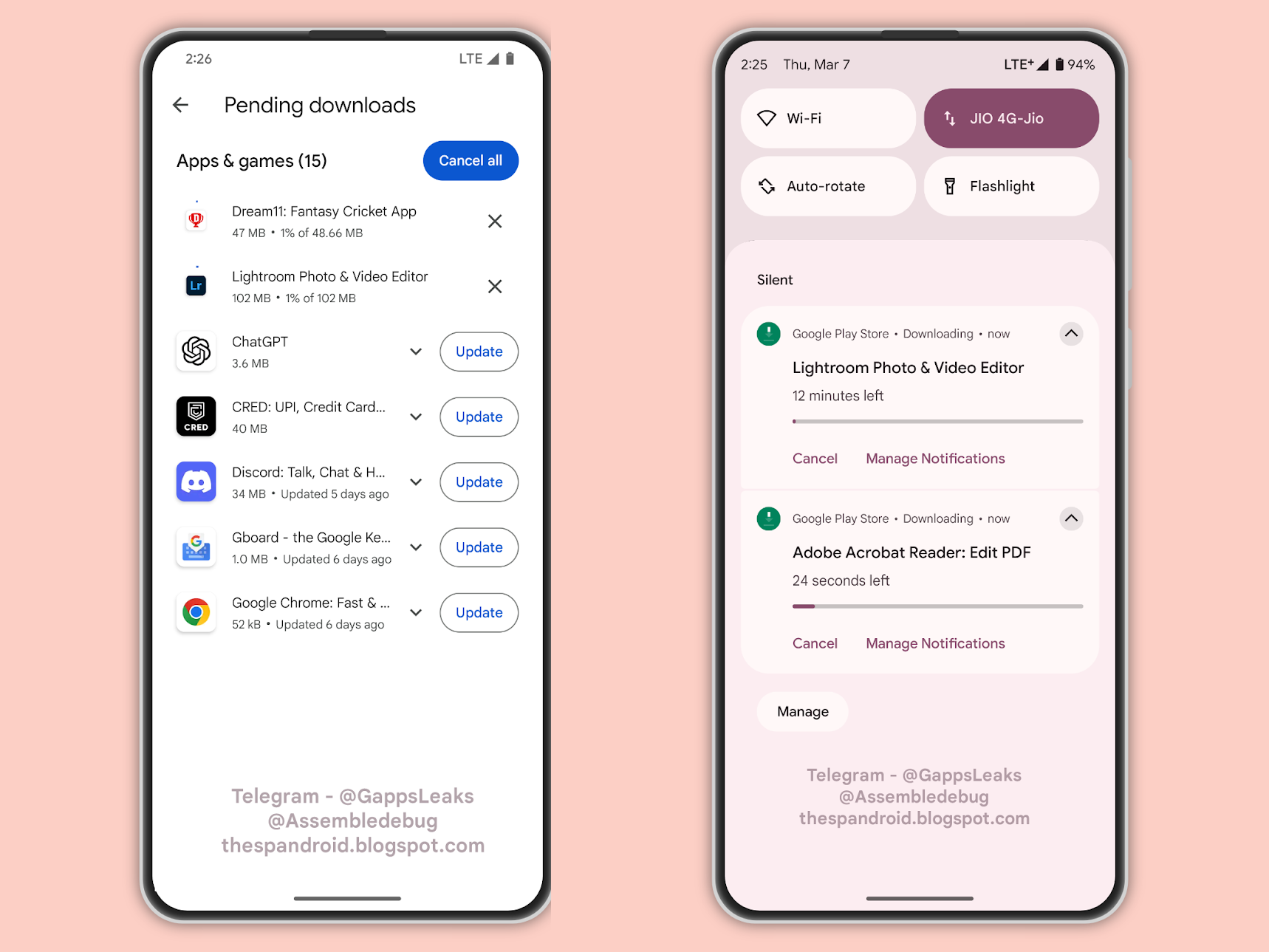
If you’re an Android user, chances are that at some point you have visited the Google Play Store with the intent to find and install new apps or existing app updates. However, if you have found yourself trying to install multiple apps at once, you’ve probably also noticed that they form a queue and download one after the other. Frustratingly, even with fast internet speeds like WiFi or 5G, you’ve been stuck waiting for downloads to finish one-by-one. However, according to TheSPAndroid, this may be about to change.
Years ago, a Reddit post hinted that Google might be experimenting with parallel app downloads (the ability to download multiple apps at once). This feature never really materialized and was forgotten, along with many other features that Google tests on a regular basis that never make it to stable releases.
Image Credit: TheSPAndroid
However, Google Play Store version 40.0.13 brings renewed hope, with experimental flags hinting at the long-awaited parallel download feature. While it’s still a work in progress, here’s what you need to know:
Parallel Downloads Work (Mostly): Initial tests show that you can indeed download multiple apps at the same time. Unfortunately, this functionality seems limited to installing new apps and might not work when updating existing apps through the “Manage apps & device” section.
Download Limits: As of now, Google seems to cap the number of simultaneous downloads at two by default. But tech-savvy users might be able to tweak settings for more parallel downloads.
This feature can be especially useful for users who frequently switch devices or like to explore new apps regularly. It remains to be seen if Google will expand this capability in the future to include updates as well. The potential for increased efficiency with parallel downloads is promising for Android users, and it will be interesting to see how Google continues to develop and enhance this feature in future updates.
Identity Data Management and Analytics Provider Radiant Logic Joins Okta and Ping Identity in Partnership with Badge to Enable Privacy-Preserving Authentication
Badge Inc., the award-winning privacy company enabling Identity without Secrets™, today launched a new Partner Program and welcomed Identity Data Management and Analytics provider Radiant Logic as its newest partner. Radiant Logic joins Badge’s partner network alongside marquee identity partners, Okta and Ping Identity. The new Badge Partner Program further accelerates the adoption and integration of Badge’s privacy-preserving authentication, enabling even more users to benefit from seamless MFA experiences across any device or application without storing user secrets or private keys.
“We are thrilled to be working with Badge, enabling a best-in-class authentication solution that builds on top of our market-leading identity data management and identity analytics capabilities to provide greater privacy and security to our customers,” said Wade Ellery, Field CTO, Radiant Logic.
The integration of Badge brings downstream value to Radiant Logic customers, allowing employees to enroll once and log into any application via RadiantOne using their preferred biometrics and factors of choice for a safe and holistic user experience across any device. By eliminating passwords and stored secrets, Badge bolsters Radiant Logic’s extensible identity data platform to accelerate strategic initiatives such as digital transformation, Zero Trust, automated compliance, and data-driven governance.
Zero Code Integration, SCIM Support, Resource Portal
The Badge Partner Program extends best-in-class security platforms such as Radiant Logic, Okta and Ping Identity with unprecedented MFA experiences.
Benefits of joining the Badge Partner Program include:
Prioritized access to new features and capabilities leveraging Badge’s unique differentiator, enabling every user to be their own cryptographic root of trust.
Zero-code integration using standard protocols, including OAuth 2.0, OIDC, SAML, FIDO, TLS, Kerberos, and others, offering effortless compatibility and enhanced functionality across a variety of systems and platforms.
SCIM (System for Cross-Domain Identity Management) support quickly syncs users from an organization’s primary directory, eliminating the need to manually create users and automatically ensuring the right users always have access to Badge.
Dedicated partner portal with relevant marketing materials to help streamline collaboration and empower partners in promoting Badge’s solutions effectively.
Library of technical documentation support to configure Badge in various customer environments, including Windows desktop login, web application single-sign-on, passkeys, legacy applications, etc.
Video demos and solution briefs illustrate end-user onboarding and authentication experiences for common use cases, such as uninterrupted device transitions for frontline workers, phishing-resistant account recovery, integration for removing private keys from workflows, etc.
“As organizations continue to realize the importance of privacy-preserving, secure, and user-friendly authentication solutions, our Partner Program is a response to new alliances and integrations with key players across the security ecosystem, moving Badge closer to our vision of becoming the identity backplane of the Internet,” said Charles Herder, Badge Co-founder and MIT Cryptography Ph.D. “By fostering collaborations with industry leaders like Radiant Logic, Okta and Ping Identity, who have some of the largest footprints in the industry, we’re building a world where trust and privacy improve user experience and drive business value instead of being in tension with each other. This sets the stage for a more connected and secure online future for everyone.”
Badge renders PII and biometric credential storage obsolete, eliminating passwords, device redirects, and knowledge-based authentication (KBA). With Badge, the user simply enrolls once, then seamlessly authenticates across ecosystems on any device using authentication factors that are unique and inherent to them. Biometric factors such as fingerprint or face can be combined with other factors to create a strong and convenient MFA method that does not rely on a specific device or token to authenticate users. Badge empowers users to move freely across devices and platforms without losing access to their accounts or compromising security.
For more information on Badge’s Partner Program including how to join, please contact [email protected] for more information or to schedule a demo.
About Badge
Badge enables privacy-preserving authentication to every application, on any device, without storing user secrets or PII. Badge’s patented technology allows users to derive private keys on the fly using their biometrics and factors of choice without the need for hardware tokens or secrets. Badge was founded by field-tested cryptography PhDs from MIT and is venture-backed by tier 1 investors. Customers and partners include top Fortune companies across healthcare, banking, retail, and services. Learn more atwww.badgeinc.com.
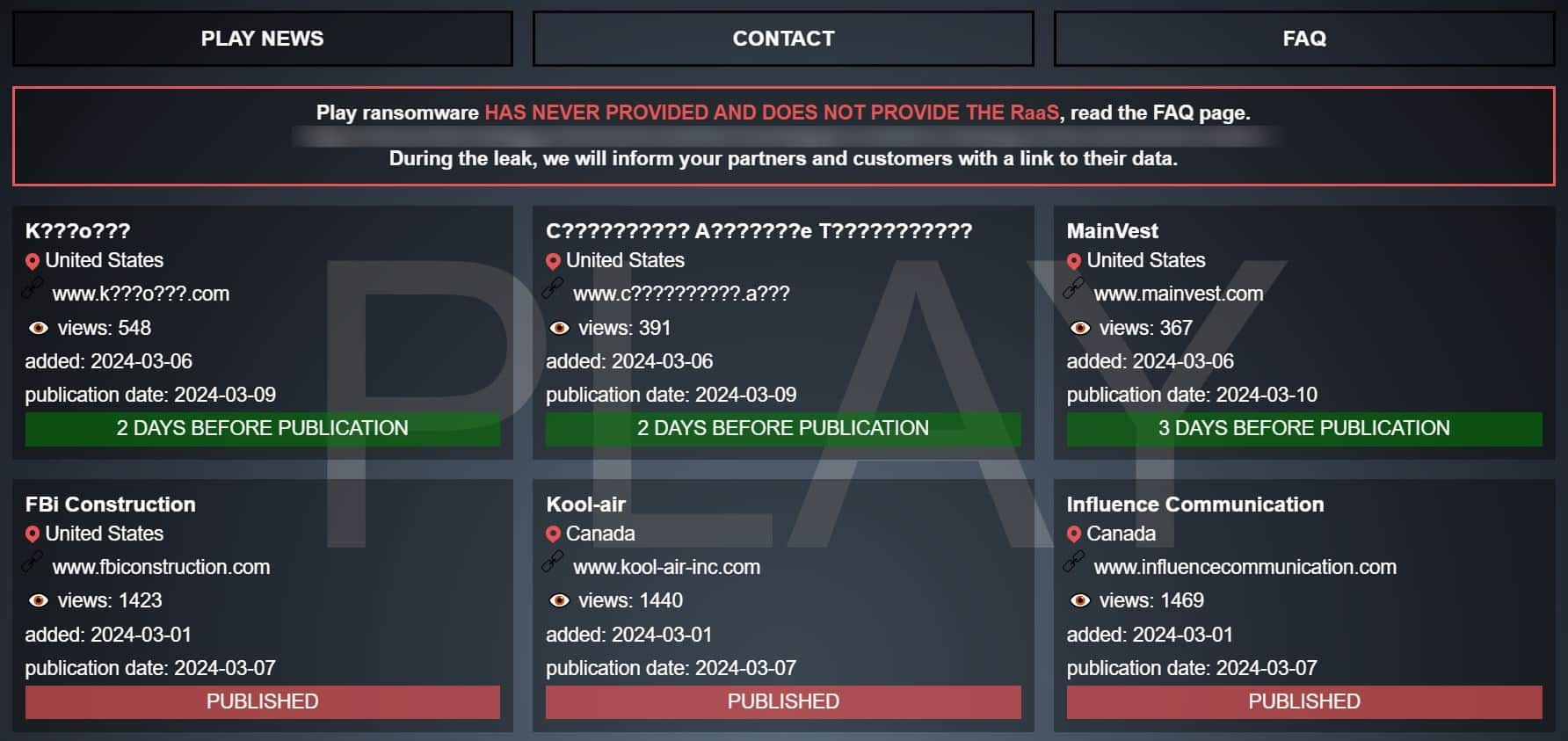
The Play ransomware group leaked around 65,000 documents belonging to the federal government, including classified documents and login credentials, which were published on its dark web leak site on 14 June 2023.
Following the cyberattack on Swiss IT service provider, Xplain, details of the leaked data have been disclosed in a press release from the Swiss National Center for Cybersecurity (NCSC) – The Federal Office for Cybersecurity (BACS) has also taken part in the investigation.
The department analyzed the data leaked stolen by the Play ransomware group from Xplain, which is a “major provider of IT services to national and cantonal authorities,” the department confirmed.
Background
Back in May 2023, hackers exploited a vulnerability to target Xplain servers hosting applications for cantonal services, blocking access until a key or unblocking tool is sent in exchange for ransom. The attack, carried out by the Play ransomware group, had far-reaching consequences, impacting the Federal Office of Police, the Federal Office of Customs and Border Protection, Swiss Federal Railways and Aargau cantonal authorities.
In June 2023, Swiss federal government websites and the Swiss Federal Railways’ online portal were targeted in DDoS attacks, causing several websites to be unavailable. The finance ministry reported on 12 June 2023 that a pro-Russian group, “NoName,” claimed responsibility for the attack on its Telegram channel and that no data was lost in the attack. This group was also involved in the attack on the Swiss parliament website earlier in June 2023.
The Play ransomware group leaked around 65,000 documents belonging to the federal government, including classified documents and login credentials, which were published on its dark web leak site on 14 June 2023.
As per NCSC’s press release published earlier today, the BACS then took over the coordination of incident response within the federal administration and analysis of leaked data. A policy strategy crisis team was formed on 28 June and an administrative investigation was launched officially on 23 August to find out details of data leak at Xplain.
Official dark web leak site on the Play ransomware group (Screenshot: Hackread.com)
Report Details
The BACS emphasized that the report focuses on data types and analysis challenges, not the content of leaked data. Around 70% (around 47,413) of files belong to Xplain and 14% (9,040) to the Federal Administration. Hackers have leaked 95% of the 9040 files belonging to the Swiss federal government, mainly from the Federal Department of Justice and Police, Federal Office of Justice, Federal Office of Police, State Secretariat for Migration, and ISC-FDJP.
Around half of the Federal Administration’s files contain sensitive content like personal data, technical information, classified information, and passwords, with 4,779 files containing personal data, and 278 files containing technical information. 121 objects were dubbed classified under the Information Protection Ordinance with 4 of them containing readable passwords.
The department aims to collaborate with authorities and Xplain to address potential consequences. This investigation is expected to be completed in March 2024.
About Play Ransomware Group
The Play ransomware group is believed to be based in Russia and is responsible for around 300 successful attacks on businesses and critical infrastructure in North America, South America, and Europe from June 2022 to October 2023. The group uses a double extortion model, ranging from unauthorized access to external services like RDP and VPN.
discovery+ is the latest streaming service to hit the Internet, and as you’d expect by the name, it brings along with it a ton of Discovery shows and networks. discovery+ essentially includes all of the content from its parent company, Discovery, in a single streaming service and at a pretty low price.
It’ll offer over 55,000 episodes across 2,500+ shows. And that doesn’t include the long list of exclusives that it’ll be adding in the very near future. The exclusives will include content from personalities like the Irwins, Jonathan and Drew Scott, Chip and Joanna Gaines, Bobby Flay, Ree Drummond, Guy Fieri, Giada De Laurentiis, Lieutenant Joe Kenda, and so many more – all in one place.
So we’re here to break it all down for you. I would like to see if discovery+ is a streaming service worth subscribing to.
discovery+ will cost you $4.99 per month. Though that is for an ad-supported experience. There is an ad-free version that will cost you $8.99 per month.
This makes discovery+ one of the cheapest streaming services around, but that may not last long given the long list of exclusive shows that it plans to add in the future. And we’ve seen plenty of price increases from other streaming services.
Is there a free trial?
discovery+ does offer a free seven day trial for its streaming service. You can opt for either the ad-free or ad-supported version for your trial. Once the seven days are up, you’ll start paying your monthly fee.
Keep in mind that if you decide not to keep discovery+, to cancel it before that seven days is up. Otherwise, you’ll be charged for your first month.
Does Verizon give me discovery+ for free?
Verizon is giving its customers up to 12 months of discovery+ for free. This is going to depend on the Unlimited plan you are on, whether you get six or twelve months free of discovery+. It’s important to remember that after your free six or twelve months are up, it will auto-renew at $6.99 per month as Verizon is giving you the ad-free version of discovery+.
If you are a FiOS or 5G Home customer, you can also get 12 months free.
For more information on how to get discovery+ free from Verizon, click here.
Can I share my account with my family?
With discovery+, you’ll be able to share your account with up to five people. However, you can only have four concurrent streams.
So you’ll be able to share with your family. And if you get the ad-supported one, and share it with five people, that’s only a buck per person, per month, which makes this service really impressive.
It’s not what you think. You won’t be able to watch TLC live on your discovery+ streaming service.
discovery+ channels are similar to what Pluto TV and Tubi TV offer on their services. Basically, they are non-stop streams of your favorite shows, and they are available 24 hours a day, and seven days a week. So you can tune to your favorite shows’ channel and watch it whenever you want. Instead of just watching it on demand. If it’s a show that you don’t care to watch in order, then this is a really cool feature to have.
discovery+ channels will be available on January 29, 2021. About three and a half weeks after the service’s launch.
Will they be in 4K?
Some content is going to be available in 4K resolution. However, that will mostly pertain to Nature and Animal shows. So don’t expect to see 90 Day Fiancee available in 4K.
Additionally, this will only be available on Amazon Fire TV and Apple TV at launch. But Discovery plans to bring that to more devices in the coming months.
There were no plans announced to film all of its exclusives in 4K, however. So the majority of the content available on discovery+ will likely stay in 720p or 1080p.
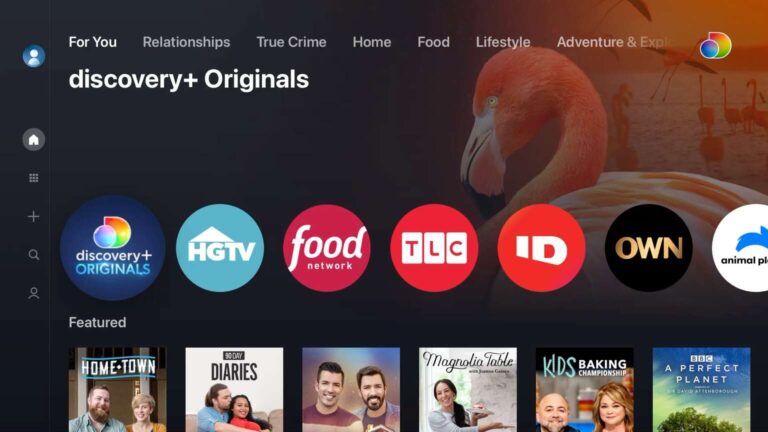
discovery+ is going to provide you with all of your favorite Discovery networks. This includes HGTV, Food Network, TLC, ID, OWN, Travel Channel, Discovery Channel and Animal Planet, to name a few.
There will be over 55,000 episodes from more than 2,500 shows across these channels. And new episodes will be added as they air.
Is CNN coming to discovery+?
Yes. Following the closure of CNN+ back in the Spring of 2022, and after the merger between Discovery and WarnerMedia, forming Warner Bros. Discovery, CNN Originals are coming to Discovery+.
The company announced that on August 19, CNN original series are going to be available on discovery+ as part of a new hub. Some of those titles include: “Stanley Tucci: Searching for Italy,” ”Anthony Bourdain: Parts Unknown,” ”United Shades of America with W. Kamau Bell,” and ”This is Life with Lisa Ling”. While some HLN original series will also make their way to discovery+, those include “How It Really Happened,” ”Death Row Stories,” ”The Hunt with John Walsh” and ”Very Scary People.”
Interestingly, there won’t be any live news on the CNN hub, but that could be coming later on. Especially as things heat up with the midterms happening in November.
What exclusives are coming to discovery+?
discovery+ surprisingly, has a long list of exclusives that will be coming in 2021. In fact, Discovery claims that it will add over 1,000 hours of exclusive content to discovery+ in 2021. Which is pretty incredible. It’ll mostly consist of verticals and spin-offs from the company’s already mega-popular shows. Like plenty of spin-offs in the “90 day universe” as Discovery calls it.
Below is a list of everything that discovery+ will be adding:
Love and Relationships
90 Day Bares All: Get ready for your favorite 90 Day couples to bare it all – the lies, the secrets and everything we couldn’t show on TV. Hosted by Shaun Robinson, this companion series to 90 Day Fiancé will put cast members in the hot seat where they reveal pivotal new information and speak completely uncensored. Exclusive content, must-see footage and all the stories behind 90 Day Fiancé!
90 Day Diaries: an intimate look into the lives of our couples, told from their perspective. Without producers or crew, the cast members film themselves in their day-to-day lives as they continue to navigate the COVID-19 pandemic and all of the new challenges it brings to their relationships.
90 Day Journey: The ultimate collection of 90 Day Fiancé stories for the 90 Day Superfan are now on demand! Each curated mini-series is made up of every single scene a beloved couple has appeared in across each show in the 90 Day Universe. Now fans can watch each couples’ story from the very beginning how and when they want to.
The Other Way Strikes Back!: Viewers will get a fresh look at the duos that fans have come to know and love, sharing their home lives, behind-the-scenes details missed by cameras and addressing some of the most outrageous, cringe-worthy moments and sassy social media and pillow talk commentary of the second season of The Other Way.
Food
Amy Schumer Learns to Cook: Uncensored: discovery+ offers an updated and uncensored look at the Emmy-nominated series.
Bobby and Giada in Italy: Longtime friends Bobby Flay and Giada De Laurentiis take viewers on a culinary tour of Italy. It’s the ultimate road trip across the most delicious country on earth.
Cakealikes: This comedic, ultimate cake off competition challenges experts to create life-size cakes that are the spitting image of famed celebrities. Hosted by Tregaye Fraser and judged by hyper realistic cake artist Natalie Sideserf, hilarious food commentator Kalen Allen, and a rotating guest judge, this panel will keep you laughing through every red carpet cake-win and cake-fail!
Chopped Challenge: Chopped Challenge brings the high drama of Chopped episodes into the homes of Judges Maneet Chauhan, Scott Conant, Amanda Freitag, Marc Murphy, Marcus Samuelsson and Geoffrey Zakarian as they use their culinary mastery to create delicious and inventive recipes from three rounds of mystery basket ingredients. Intercutting self-shot footage, the judges compete against the clock to answer the ultimate Chopped aficionado question…what would the judges make?
Lovely Bites with Chef Lovely: Lovely Bites invites viewers to the Lovely home and lovely world of Chef Connie “Lovely” Jackson as she prepares fabulous bites for special occasions.
Tregaye’s Way in the Kitchen: Tregaye Fraser is a youthful, modern mom – and professional chef! – who’s not afraid to push the boundaries of traditional cuisine… and not afraid to push her kids’ palates, finally solving the age-old question of “Mom, what’s for dinner?”
True Crime
American Detective with Lt. Joe Kenda: Joe Kenda, one of the toughest, most experienced homicide detectives in ID history, is back exclusively on discovery+ with an all new series. Over the years, Kenda has heard about cases that defy logic – investigations so confounding that they feel more scripted in Hollywood than reality. In American Detective, Kenda trades in his own case files to bring viewers astounding investigations from across the country, with each episode featuring a different homicide detective whose tireless efforts helped put a killer behind bars and bring justice for the victim.
Onision: In Real Life: Greg Jackson, known to the world as “Onision,” discovered YouTube when the platform was still burgeoning in the digital world. And as the power of YouTube grew, the character “Onision” grew with it. Jackson amassed millions of subscribers across multiple channels, luring in viewers with his off-kilter, opinionated and dark humor. But while his channels were twisted, his real life might be more sinister. This cutting-edge investigative series explores the mystery, controversy and alleged criminality surrounding Greg Jackson, bringing forward new research and revelations about the man that the YouTube community loves to hate.
Home
Frozen in Time: Maureen McCormick and designer Dan Vickery overhaul homes that are stuck in a design time warp. Dan will update the structure, while Maureen sources beautiful decade-specific pieces to give the home a refreshed look and a wink to its original era.
House Hunters: Comedians on Couches Unfiltered: America’s favorite past time—watching and commenting on House Hunters—will get a fun new twist in this pithy new series led by comedians Dan Levy and Natasha Leggero. The series will feature eight popular comedians as they deliver hilariously unfiltered color commentary on classic episodes of House Hunters. The celebrity lineup includes Seth Rogen, John Mulaney, Ali Wong, JB Smoove, Chelsea Peretti, Whitney Cummings, Margaret Cho and NBA star-turned-comic, Blake Griffin.
Home Town: Ben’s Workshop: Master woodworker Ben Napier will share his expertise in craftsmanship and carpentry with celebrity guests including astronaut Scott Kelly, tennis legend Martina Navratilova, comedian Loni Love, and country singer Chris Lane. In this four-episode series, Ben’s visitors are in for a fun Southern experience – building iconic wood projects and making surprise visits to donate them to the community or a neighbor.
HGTV’s House Party: This exciting new talk show features interviews with top HGTV talent, including David Bromstad, Tarek El Moussa, Jasmine Roth, Alison Victoria and more. Stephen “tWitch” Boss, Allison Holker Boss, Derek Hough and Margaret Cho are among the many HGTV superfans who stop by to join the fun. Each episode features games, DIY challenges and some good old-fashioned gossip.
Tarek’s Flip Side: Star house-flipper Tarek El Moussa has a lot to celebrate in his personal life. In this series, the real estate and home renovation expert shares the stories behind his proposal to fiancée Heather Rae Young and candidly reveals a few wedding plans. Along the way, Tarek takes his daughter Taylor on a tour of his latest house flip. He wants to know what she thinks of the project and hopes he can inspire her to get an early start in the family business.
Christina: Stronger By Design: Christina Anstead, star designer and home renovation expert, starts a fresh chapter in her life and reflects on what inspires her as she as rethinks her own home’s design, including a bedroom refresh and a beautiful tablescape for her backyard. Christina also shares her personal wellness journey, her routine for self-care and a few of her favorite go-to beauty regimens with her makeup artist and best friend Shannon. The pair, along with friend Cassie, chat about life, motherhood, friendships and new beginnings.
Magnolia Network Preview
Magnolia Table with Joanna Gaines: Infused with her warmth and passion for all things family, Joanna Gaines spends time in the kitchen sharing her favorite recipes, where they come from, and why she finds herself returning to them time and time again. New episodes will rollout weekly.
Magnolia Network: A Look Ahead: Chip and Joanna give a first look at some of the stories, people and projects that inspired the couple to create a network.
Road to Launch: Chip and Joanna catch up with some of the extraordinary storytellers and highlight the exciting selection of shows coming to Magnolia Network.
The Courage to Run with Chip Gaines and Gabe Grunewald: In this documentary special, Chip Gaines fortuitously meets professional runner and rare cancer fighter Gabe Grunewald. Together they set out to train for a marathon, and along the way find a friendship that alters Chip’s perspective forever.
Premiere episodes from 10 upcoming Magnolia Network original series, including:
The Lost Kitchen: In brave pursuit of following her passion, Erin French opened a restaurant in her hometown of Freedom, Maine. Travelers from all over the world gather at The Lost Kitchen to enjoy Erin’s locally-inspired and sourced menu.
Family Dinner: Host Andrew Zimmern visits families across America to explore how the cultural, regional, and historical facets of who we are inform what and how we eat.
The Fieldhouse: At The Fieldhouse, physical and personal challenges are tackled head-on. Owner Justin Bane and his staff change lives by restoring and rehabilitating clients from the inside out at this cutting-edge fitness facility in Abilene, Texas.
First Time Fixer: First-time house flippers take their home renovation dreams into their own hands and experience the risk and reward that comes with trying something new.
Home on the Road with Johnnyswim: Abner Ramirez and Amanda Sudano Ramirez of the musical duo Johnnyswim document their three-month cross-country tour, while juggling their growing family and finding new adventures in each city along the way.
Restoration Road with Clint Harp: Carpenter Clint Harp hits the road in search of incredible historical structures across the country that are in need of restoration, while exploring their origins and dreaming of their futures.
Super Dad: Father and DIY expert Taylor Calmus, along with his team of skilled builders, help aspiring DIY dads turn their kids’ outrageous backyard dreams into playtime realities.
Point of View: A Designer Profile: Giving a behind-the-curtain look into the mind of interior designers, this anthology series lets in on their creative processes and introduces the inspirations and influences that shape their designs.
Self Employed: Entrepreneur Jonathan Morris travels the country to share the inspirational stories and new challenges of small business owners and their journeys to building their dream jobs.
Growing Floret: Erin and Chris Benzakien have spent the last decade building their family-run business Floret Farms in the fertile Skagit River Valley of Washington State. Now considered one of the most well-known flower farms in the world, they’ve decided to risk everything by adding and rehabilitating 24 new acres of land to expand their business.
Lifestyle
Say Yes to the Dress: In Sickness and In Health: During the COVID epidemic, brides have had their wedding dreams crushed. The team of Randy Fenoli and Hayley Paige will stop at nothing to help these women still have their special day.
Pimple Popper: This is Zit: Dr. Sandra Lee shares all the gory details behind some of her most difficult pops. Watch intimate excavation videos of blackheads so big and cysts so goopy, they have to be seen to be believed.
Adventure
Gold Rush: Freddy Dodge’s Mine Rescue: Gold recovery expert Freddy Dodge helps struggling mine owners in this six-part series. If he can increase the owner’s weekly gold haul, he gets a cut of the profits, but if he fails… he doesn’t charge a dime.
Race Across the World: How would you race across the globe… if you couldn’t fly and didn’t have a phone? In this real-world adventure series, five teams of two are racing from point A to B… without flying. Each team must travel across the globe by whatever means they can: foot, car, bicycle, boat, bus, ferry, motorbike, horse … with only the price of a flight ticket in their pocket (which will have to cover their food and accommodation), it’s set to be the ultimate globe-trotting expedition. Who will make it in the quickest time and win a big cash prize?
Nature, Science & Animals
Mysterious Planet: Narrated by David Schwimmer, Mysterious Planet is an epic journey to the ends of the earth. Combining humor with the awe and beauty of the natural world, this special looks to unlock the greatest mysteries behind the world’s most incredible species.
Six Degrees with Mike Rowe: Mike Rowe poses questions that no one has ever asked, and then, (with a little help from his old buddy Chuck), provides unforgettable answers that prove every single thing is connected.
BattleBots: The Bounty Hunters: Builders from around the globe get a chance to call their shot in a series of six all-new, two-hour events. Six of the most feared Bots in the sport of robot combat. Six one-of-a-kind bounty prizes.
Elephant Hospital: Take a trip to the world’s largest hospital devoted solely to treating elephants: the Elephant Hospital in Lampang, Northern Thailand, which cares for over 100 sick, injured or neglected animals each year. With unique access to the daily challenges faced by the vets and volunteers on site, this is a heart-warming series full of uplifting, extraordinary and unexpected stories.
Documentaries
S., Burn This Letter Please: A box of letters, held in secret for nearly 60 years, ignites a five-year exploration into a part of LGBTQ+ history that has never been told. The letters open a window into a forgotten world where being yourself meant breaking the law and where the penalties for “masquerading” as a woman were swift and severe.
Restaurant Hustle 2020: All on the Line – Director’s Cut: a self-shot documentary from Executive Producer and Co-Director Guy Fieri that follows four of America’s favorite chefs – Maneet Chauhan, Antonia Lofaso, Christian Petroni and Marcus Samuelsson, as they each picked up a camera and with the help of friends and family, documented the challenges their restaurants faced as COVID-19 swept across the United States.
The Impossible Row: Documenting adventurer Colin O’Brady and his crew’s attempt at the world’s first completely human powered ocean row across The Drake Passage, the most dangerous 600 miles of open ocean on Earth.
Beyond Borders: More people have been to space than flown around the world in a single prop plane. And this was not lost on filmmaker Juan-Peter Schulze (JP) and influencer / travel vlogger Louis Cole as they set off on a dangerous mission to circumnavigate the world in a single-engine, 1974 Cessna T210L airplane named Baloo. This adventure wasn’t just to see if it was possible, but to experience the many cultures and societies that make up our beautiful planet. The trip was emotionally and physically draining, pushing them to their limits and forcing the pair to face situations which, if handled badly, could have had dire consequences. From losing critical equipment over oceans, past the point of no return, to confronting fighter jets at ten thousand feet on the other side of the world. This is Beyond Borders.
Judi Dench’s Wild Borneo Adventure: Dame Judi Dench and conservationist David Mils are setting out on a trip of a lifetime to uncover the lush rainforests, magical wildlife and spectacular coastlines of Malaysian Borneo in this two-part series.
JonBenet Ramsey: What Really Happened?: This feature-length documentary exploring the JonBenet Ramsey case, one of America’s most notorious and captivating unsolved murder mysteries, showcases the exclusive and previously unheard audio diaries of legendary detective Lou Smit, who worked on 200 murder cases and was brought out of retirement in Denver to work on this homicide. Police immediately suspected her parents John and Patsy Ramsey of the murder, but after reviewing the evidence, Lou thought otherwise and he recorded it all.
Extreme Everest: An adrenaline-fueled adventure to the world’s highest peak. Ant Middleton isn’t afraid to take on a challenge. But there’s one dangerous mission he’s not yet carried out … to scale the most famous, unforgiving and tallest mountain in the world, Everest.
Automotive
Monster Garage: Jesse James team gets seven days to complete a project. If they succeed, they each walk away with $5K. If they don’t, Jesse’s free to destroy the monster – by blowing it up.
Auto Biography: A premium documentary strand that tells the most surprising and phenomenal stories about iconic cars and legendary drivers that have changed the motoring world and continue to do so today.
Paranormal & The Unexplained
Amityville Horror House: Exclusive archive reveals frightening, new secrets from George and Kathy Lutz’s brief stay in one of America’s most wonderous haunts.
Ghost Adventures: Cecil Hotel: The Ghost Adventures team investigates a LA hotel with a long history of unnatural deaths and dark forces have been looming over the hotel for over a century.
Ghost Adventures: Top 10: Zak, Aaron, Billy and Jay present the best evidence of the paranormal, the existence of these varied phenomena and the many ways the afterlife manifests.
Paranormal & The Unexplained
UFO Witness: Decades ago, the United States Air Force commissioned Project Blue Book, a top-secret investigation to review every UFO sighting on record. Now, one of the original scientists who worked on the project, Dr. Jennie Zeidman, has agreed to open up her archives to be reexamined by the next generations of UFO investigators.
Fascinating Families & Extraordinary Lifestyles
Toddler’s & Tiaras: Where Are They Now?: It’s been over 10 years since the brand-building hit first premiered, and this series catches up with some of our favorite toddler beauty queens – now young women
What are the top shows on discovery+?
Here are some of the more popular shows that we will see on discovery+. And you will be able to stream all of its episodes, at anytime.
Notably absent here is both the PlayStation 4 and PlayStation 5. It’s unclear if that will be coming in the future or not. But where discovery+ is available on Xbox consoles, it is likely coming soon.
Amazon has also confirmed that discovery+ will be coming to Prime Video Channels later this year. But not specify when. Adding it to Prime Video Channels, means that you can watch discovery+ content within the Prime Video app. And also activate and deactivate your subscription easier, within the Prime Video app.
Which countries is it available in?
Currently, discovery+ is available in the United Kingdom, Ireland, India and the US.
Internationally, the service will be available in the Nordics, Italy, Netherlands, and Spain. It will launch in Latin America and Brazil, as well as parts of Asia later this year. Though it’s currently unclear when it will hit those other countries.
Is it worth it, to subscribe to discovery+?
discovery+ is entering a very crowded streaming market right now. Which was tough for even HBO MAX and Peacock to enter. Which, HBO MAX was already something a lot of people were subscribing too. They just get even more content for the same price now. And Peacock is free for Comcast subscribers, or $5/month for everyone else. And both still had trouble gaining steam.
However, the difference for discovery+ is that it will be bringing a bunch of everyone’s popular shows to this streaming service. And it is only $4.99 per month (or $6.99 if you don’t want ads). Which makes it very enticing. Not to mention the number of exclusive shows it plans to launch in 2021 alone. Only time will tell us if it is worth it.
If you watch a lot of shows on TLC, HGTV, OWN, and other networks on Discovery, then this streaming service is going to be worth checking out.
The video discovery experience on Facebook is being transformed by Meta. With the help of an advanced AI model, the platform will markedly boost its aged recommendation system. Facebook’s chief, Tom Alison, disclosed his plans to overhaul the video recommendation algorithm to compete with modern social media apps. The news broke out during a tech conference hosted by Morgan Stanley in San Francisco.
AI Takes Over Video Recommendations on Facebook
An AI-driven approach has already been put into practice in Reels (a TikTok competitor owned by Facebook). The strategy will be expanding across the entire platform, including the main Facebook feed and Groups. Facebook has been trying to compete with TikTok whose algorithmic recommendations are unrivaled. Melded with AI, Facebook’s underperforming algorithm will leap to a new level.
Initial tests carried out on this new architecture showed a promising increase in viewership, bumping up by 8% to 10%. The boost in watch time indicates the true potential of this new model. The CEO also emphasized that the improved engagement metrics were because of the better learning capacities of artificial intelligence.
Different parts of the platform have historically had separate video recommendation engines for Facebook. A single AI-powered engine will not only create more interactive and responsive videos on Facebook but will also significantly improve efficiency.
Other Meta products may also get AI power-up
The recent popularity surge of AI technology, particularly after the launch of OpenAI’s ChatGPT, has prompted Meta to include AI in its suite of products on a wider scale. The CEO of Meta, Mark Zuckerberg, says that the company is making significant investments in AI. The most notable of which are hundreds of NVIDIA GPUs for building and running complex learning models.
This initiative is part of Meta’s “technology roadmap” until 2026 aimed at enhancing and personalizing user experience. In its efforts to provide more matching video clips that users can find appealing, Facebook intends to leverage AI as it seeks to better engagement on its social media platforms.