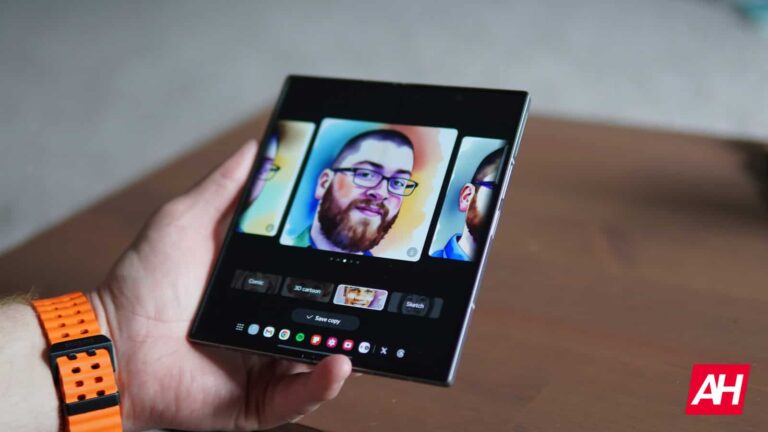
Samsung’s Galaxy AI was announced earlier this year with the Galaxy S24 series. Now, with the new Galaxy Z Flip 6 and Fold 6, Samsung is bringing even more AI features to its phones, including an AI Portrait Studio. This is actually a pretty fun tool to have in your photo editor, as it can transform your selfies into cartoons, comics, watercolors, or sketches. And it’s actually super easy to do.
What is AI Portrait Studio?
AI Portrait Studio is a new feature within the Generative Edit suite in Galaxy AI. It’s only available in Samsung’s Gallery app. For now, it can transform your selfies into a comic, 3D cartoon, watercolor, or sketch. We fully expect Samsung to add more in the future.
Currently, you can’t do regular edits in the AI Portrait Studio, like brightening the foreground or background or changing the beauty filter. That will likely come in the future. Though some of that you can do already without AI.
How to use AI Portrait Studio?
To get started, first take a selfie or a picture of someone else.
Next, open that photo in the Gallery app.
From here, you’ll want to tap on the Generative Edit icon at the bottom of the screen.
Once that loads up, you’ll see a button called “Portrait Studio” on your picture itself. Tap on that.
Here, you’ll see four options at the bottom: Comic, 3D Cartoon, Watercolor, and Sketch. Tap on the one you want to generate. Then tap on the blue and green generate button at the bottom.
After a few seconds, it’ll provide you with four options that you can select and download. If you don’t like any of them, you can tap on “Generate” again at the end of the pictures that it provided.
You can repeat that for each option in the AI Portrait Studio, there’s really no limit on how many times you can do this, as you might have expected.
And that’s it. That’s the AI Portrait Studio in Galaxy AI.
Malicious Python packages uploaded by “dsfsdfds” to PyPI infiltrated user systems by exfiltrating sensitive data to a Telegram bot likely linked to Iraqi cybercriminals.
Active since 2022 and containing more than 90,000 Arabic messages, it has functioned as both a command-and-control center and an underground marketplace for social media manipulation tools.
It highlights a broader cybercriminal network, emphasizing the need for in-depth investigation and collaboration within cybersecurity communities.
A malicious script scans the victim’s file system, particularly the root directory and DCIM folder, targeting files with extensions like .py, .php, .zip, .png, .jpg, and .jpeg.
Once found, the script transmits both file paths and the actual data (files and photos) to the attacker’s Telegram bot without the user’s awareness. This is achieved through a hardcoded Telegram bot token and chat ID within the script, revealing the attacker’s infrastructure details.
Analysis of the exfiltrated data revealed hardcoded credentials for a Telegram bot used by the attackers.
Exploiting these credentials, researchers gained direct access to the bot and observed a significant activity history stretching back to at least 2022.
The messages, primarily in Arabic, provided clues about the bot operator’s location and operations. By analyzing message language and content with tools like GitHub’s TeleTracker, researchers identified the operator as likely being based in Iraq.
The bot’s activity suggested it was part of a network of bots controlled by the same actor.
Initially, the bot functioned as an underground marketplace, offering various illicit services, which included purchasing social media engagement metrics like views and followers, spam services, and discounted subscriptions to streaming platforms like Netflix.
An investigation into a malicious Python package revealed a hidden Telegram bot, while further analysis of the bot’s message history uncovered evidence of a broader cybercriminal operation.
The messages hinted at financial theft and appeared to originate from compromised systems, suggesting the packages were a successful initial attack vector and highlighting the need for a deep investigation into cybersecurity.
In reality, the malicious packages that appeared to be isolated did in fact serve as the entry point to a more complex criminal network that was based on Telegram.
Researchers at Checkmarx uncovered malicious Python packages on PyPI that exfiltrated user data to a Telegram bot. This exposed a larger Iraqi cybercriminal network and highlighted the dangers of a compromised developer machine.
In an enterprise setting, such a breach could provide attackers with an initial foothold to launch further attacks within the organization’s network.
Avoid these four Python packages: testbrojct2, proxyfullscraper, proxyalhttp, and proxyfullscrapers, as they are identified as malicious by exploiting the PyPI repository to install them on unsuspecting systems.
Once installed, they scrape the files, including potentially sensitive ones like Python scripts, images, and compressed archives, and the stolen data is then sent to a Telegram bot controlled by cybercriminals, which exposes the system to a variety of threats, depending on the criminals’ goals, which could include financial fraud or further system compromise.
Protect Your Business Emails From Spoofing, Phishing & BEC with AI-Powered Security | Free Demo
Ulefone’s Armor Pad 3 Pro isn’t your average Android tablet. Built to conquer extreme conditions, it’s a testament to rugged innovation. Its adjustable dual 1100-lumen LED lights, massive 33,280mAh battery with 66W charging, reverse charging, and IP68/IP69K and MIL-STD-810H-grade durability are unparalleled. It even offers an HDMI port, adding a new dimension to its usability. The company recently released a video showcasing its applications across various scenarios.
Built-in HDMI port expands the Ulephone Armor Pad 3 Pro’s usability
Whether you’re a construction worker on a dusty job site, a hiker scaling a mountain peak, or simply someone who’s clumsy with electronics, the Ulephone Armor Pad 3 Pro is suitable for everyone. It’s certified to withstand drops, dust infiltration, and complete submersion in water. No more worrying about accidental spills or unexpected downpours. But toughness isn’t everything, and Ulephone knows that. The Armor Pad 3 Pro is a powerhouse of a tablet.
It has MediaTek’s MT8788 processor paired with 16GB of RAM and 256GB of storage. This ensures smooth operation for even the most demanding tasks. Shuffling between apps, streaming HD content, or playing graphic-intensive games—this Ulephone tablet handles it all with ease. Its built-in LED lights and gigantic battery with reverse charging support add to its versatility. You have emergency lights and power backup for other mobile devices. How cool is that?
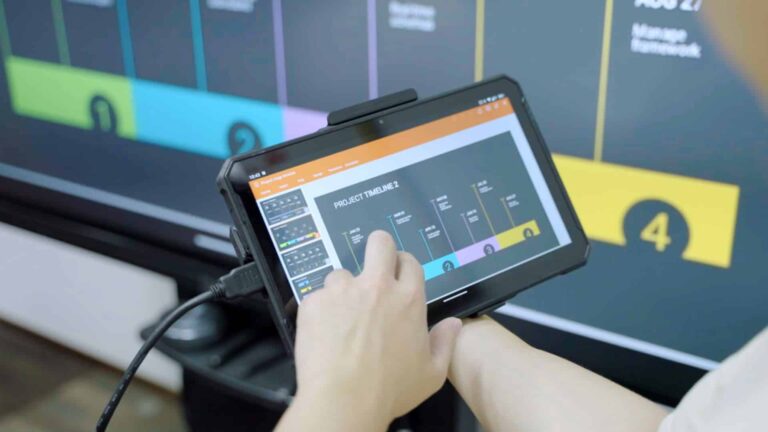
Then comes the real game-changer, the Armor Pad 3 Pro’s built-in HDMI port. It elevates your tablet experience to a whole new level. You can connect the device to a larger screen for a detailed view of files and information, perfect for presentations or complex spreadsheets, editing high-resolution photos and videos with superior precision, real-time collaboration with colleagues and clients, and content consumption, all while maintaining controls from the tablet.
All of this at an affordable price
Ulephone’s Armor Pad 3 Pro also packs a 50MP rear camera, a 32MP selfie camera (both cameras support 1080p video recording), Corning Gorilla Glass 5 display protection, microSD card support of up to 2GB, dual stereo speakers, a side-mounted fingerprint scanner, 3.5mm headphone jack, dual-SIM slot, in-box charger, GPS, and NFC. If anything, Android 13 out-of-the-box and the lack of 5G cellular connectivity could be a dealbreaker.
However, Ulephone is known for making tech affordable, and the Armor Pad 3 Pro maintains the philosophy. Usually priced at $560, this impressive tablet is available for as low as $252 (excluding taxes) with free shipping. Head to the official Ulephone website for more information. The tablet is shipped globally via AliExpress. You get additional discounts if you order multiple units.
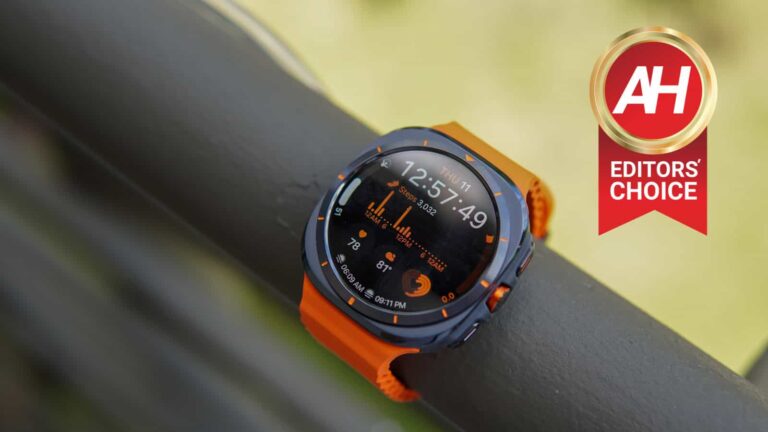
The Samsung Galaxy Watch Ultra has been a pretty polarizing watch since it first started leaking, ahead of Unpacked. Even after it was officially announced, it was still quite polarizing in the tech community. Many believed that Samsung straight up copied this watch from Apple, including yours truly. But the more time I spend with it, the less I think they straight up copied it entirely, and just copied a few aspects. Though, it is quite obvious who Samsung is marketing this watch towards.
After Unpacked ended, I picked up my review units from Samsung, and I’ve been wearing the Galaxy Watch Ultra ever since. It’s actually one of the two products I was most excited for – the other being the Galaxy Ring, which I don’t yet have, as Samsung is having issues keeping it in stock. Why? Well, I’ve grown bored of the Apple Watch Ultra, specifically its fitness tracking. And wanted to switch back over to Wear OS, but OnePlus’ OHealth isn’t quite as robust as Apple’s Fitness features. The Pixel Watch is more robust with Fitbit being included, but the battery life is not great. That leaves Samsung, who does have pretty good battery life on its watches.
And I have to say, my complaints on the Galaxy Watch Ultra are pretty few and far between after two weeks. So let’s talk about the good, bad and the ugly in this full review of the Galaxy Watch Ultra.
Samsung Galaxy Watch Ultra Review: Design and Bands
While it seemed like Samsung decided to take the square shape of the Apple Watch and put it underneath its round display, that’s not quite the deal here. Samsung used this squircle casing to include cushions around the outside. This helps to make the watch more durable, as this is being marketed towards the more outdoorsy type of user. That’s also why it has the Sapphire Crystal Display and a much brighter screen.
Honestly, I really dig this design of the Galaxy Watch Ultra. All of your buttons are on the right side (unless you decided to wear it the other way), including the Home and Back buttons, but in the middle is now a new Quick Button. This can be customized, but by default, it opens up the workouts menu, so you can start a workout. But it can also be used to open the stopwatch, flashlight or turn on water lock. Unfortunately, its not anymore customizable than that. I would have liked to see Google Wallet as an option here, or Samsung Wallet. As an Apple Watch user for the past few years, I’ve gotten really used to being able to double tap a button to open Apple Pay. I can map Google or Samsung Wallet to the Home button for a double press, however, so it’s not all bad.
The entire watch is in a titanium casing, which looks great, and is far better than the sort of shiny case that the Galaxy Watch 6 Classic was available in – specifically that silver one. Underneath the watch is the new BioActive Sensor, which does a really good job at measuring everything more accurately. The Apple Watch is incredibly accurate with heart rate tracking, and the Galaxy Watch Ultra is about as accurate now thanks to this new sensor.
Galaxy Watch Ultra is more rugged than other Galaxy Watches, and that’s evident by the MIL-STD-810H certification. So if you’re bike riding and fall, the Galaxy Watch Ultra should hold up just fine. Samsung did specifically test the Galaxy Watch Ultra for “high/low temperatures, altitude, humidity, immersion, salt, fog, dust, vibration and drops”.
The new band connector is not good
Samsung changed how bands connect to the Galaxy Watch Ultra, which means traditional bands won’t work with this. It’s kind of similar to how the Pixel Watch works, with the exception of, it’s worse. It’s tougher to remove bands, versus the regular Watch 7 and earlier models. Thankfully, I only have one band, so I’m not removing them all that often. And there’s only three bands available from Samsung right now. I do wish Samsung had kept the old mechanism, but this is likely to make it look more seamless.
I do have the orange Marine band here, which at first, I didn’t like. I’m not a big fan of orange, but I like the design; this has also grown on me. I do prefer this more silicone-style band because it means I don’t need to change it when I’m working out or jumping in the pool. While I do like leather bands, those really can’t get wet. So I have to be more careful about taking off my watch then. It’s fairly comfortable, and it’s easy to sleep with for sleep tracking too.
Samsung Galaxy Watch Ultra Review: Display
Despite being a 47-mm watch, the Galaxy Watch Ultra has the exact same display size as the 44-mm Galaxy Watch 7: a 1.5-inch 480×480 display. The difference is that the Galaxy Watch Ultra can reach 3,000 nits.
Now, while wearing this watch, I can say that this never really hit 3,000 nits. As that is going to be under the most extreme circumstances, but I can say that I had no problems viewing this outdoors in direct sunlight. It was plenty bright, and I do keep it on auto-brightness, which allowed it to adjust pretty quickly.
I do wish the Samsung had made the display larger, especially since this is a pretty large 47mm case. But that also would have used up more battery than the current 1.5-inch display does.
As far as the actual display goes, it looks great. Color reproduction is on par with what you’d expect from a Samsung AMOLED display – which this is. Of course, you won’t be using this to watch videos on YouTube, but for the usual stuff it looks great.
Samsung Galaxy Watch Ultra Review: Performance
With the Galaxy Watch Ultra, Samsung is debuting its new wearable chipset – Exynos W1000, which is clocked at 1.6GHz and actually powers the Galaxy Watch 7 as well. While I did review the Galaxy Watch 6 Classic last year but didn’t use it all year long, it’s hard to measure how much better this new processor is compared to the old one. But I can say there have been no hiccups or lag whatsoever with this chipset. Of course, having 2GB of RAM and now double the storage at 32GB definitely helps in that regard.
The vibration motor inside this watch is quite good as well. I typically keep everything on mute or vibrate, so having a good vibration motor is important for me, so I know when I’m getting notifications, even when I’m not near my phone. It’s also been good at auto-starting workouts, tracking my heart rate, and everything else you’d want from a smartwatch.
Then there’s the gestures. Samsung has a few gestures which include a double tap of your index finger and thumb, and another that is a knock-knock motion. The double pinch is not customizable and is used to answer calls, dismiss alerts, launch apps, control your music, and also take photos as a remote shutter. To be honest, I haven’t used this one all that much. I did use it to dismiss a few notifications, but that’s pretty much it.
The knock knock gesture I have used a lot more. For a few days, I did have it set to the Google Wallet app, which makes it super simple to open it up and tap to pay, especially if you only have one hand free. With this gesture, Samsung lets you pick from a few features like opening recent apps, Doing exercises, turning on the flashlight, or adding a reminder, but you can also select apps to use here. A good one here is to open Spotify or whatever music streaming service you use. My only complaint with this is, that it is a little too easy to trigger this gesture. I’ve been sitting at my desk typing away, like writing this review, and it triggers the gesture to open Google Wallet.
All in all, performance on this Galaxy Watch Ultra is quite good, while not destroying the battery, which is also good.
Samsung Galaxy Watch Ultra Review: Battery life and Charging
Battery life on Samsung smartwatches have been pretty decent for quite some time now. But much like with the Galaxy Z Fold 6, they’ve kind stagnated here. Samsung equipped the Galaxy Watch Ultra with the same 590mAh capacity battery as the Galaxy Watch 6 Classic, despite being a larger watch. Samsung claims that you’ll get about 48 hours of usage with Always-On Display turned on, and up to 100 hours in power saving mode. Which seems pretty accurate in my testing.
With AOD turned on, I was normally getting between two full days and two and a half days. So that’s about 48-60 hours. That depends on how many notifications I’ve gotten, how many workouts its tracked, etc.
Now with AOD turned off, I was generally able to get past 72 hours, but not quite to 96 hours – which would be four full days. This was all without using Power Saving Mode, which I’m pretty positive would get you well above the 100 hour mark. So battery life is good here, though I was expecting a bit more given the large watch case here.
When it comes to charging, watches are still pretty slow at charging. A full charge here is about an hour, maybe a little longer depending on some variables that are out of your hands. Though one issue I do have with charging comes down to the BioActive sensor. Because of this new sensor, the charging mechanism had to move a bit. So older Galaxy Watch chargers won’t work, and reverse wireless charging doesn’t work. So you couldn’t charge this on the back of your Samsung phone, unfortunately. Not a huge deal, unless you had multiple chargers at home and at work already. But at least there is still a charger in the box – just not a wall adapter.
Samsung Galaxy Watch Ultra Review: Software, Fitness and Health tracking
Now for the meat and potatoes of this review, the software. That’s truly what makes or breaks a smartwatch, especially on the health and fitness side of things. This is the first watch to launch with Wear OS 5, which Samsung is a huge partner with Google for, and has been for a few years now. I don’t notice a lot of differences here compared to Wear OS 4, other than the new Watch Face Format, which means a lot of third-party watch faces do not work. But that’s fine for me, because I really like the ‘Ultra Info Board’ watch face that Samsung has used in most of its marketing.
You see, for me, I like having lots of complications on my watch face. To check my steps, how many calories I’ve burned, active minutes, and of course the weather. And if I can do all of this by just raising my wrist, that makes things so much easier. Which is possible with this watch face. Obviously, having this many complications is going to drain your battery life, but I haven’t noticed a huge difference between this and a watch face with only a couple of complications.
Samsung has tripled the number of LEDs on the Galaxy Watch Ultra which is going to allow it to improve accuracy during an intense workout, and I’ve found that to be pretty true. The Apple Watch is known for being extremely accurate for recording your heart rate, and wearing both for a workout, the numbers were very similar. The addition of dual-band GPS is also a huge upgrade, especially for runners, hikers and cyclists.
With the Galaxy Watch 7 and Ultra this year, Samsung brought Galaxy AI over to its wearables. It’s Health Assist, and honestly it’s pretty useful. It’s not overbearing like some AI features on phones these days. Essentially it gives you tips and insights on how you’ve been performing. So if your goal is to lose weight, Galaxy AI will tell you that you need to be more active, get more sleep, and eat less calories. Samsung stresses that this is for wellness only and not to diagnose anything.
This is also used for the Energy Score, which is new this year. This is similar to what others like Garmin and WHOOP have been providing for a while. This is a daily measurement of your physical and mental readiness for the day. It uses analysis of your sleep, activity, and heart rate to calculate your score out of 100. I’m typically in the upper 80s and had a few days in the 90s. However, when I was flying back from New York City after Unpacked my flight was delayed – I didn’t get home til 4 AM – my energy score was much lower, around 51, likely due to the lack of sleep. It’s not the end all be all, but if you’re feeling tired in the morning, this can help you understand why.
Finally, there’s the Sleep Apnea feature. The FDA has authorized the use of this feature in the US, so it is going to be pretty accurate. Basically, to test for this, you need to wear your watch pretty snugly on your wrist for two nights. The app will then tell you if you have sleep apnea or not. Now, I knew I didn’t have it, since I generally sleep very well and have no problems going to sleep, so the results did not surprise me.
The Galaxy Watch Ultra is just such a good, well-rounded fitness tracking device for your wrist, and it really does a lot more than some of the competition out there these days. And without a subscription, I’mlooking at you, Fitbit.
Should you buy the Samsung Galaxy Watch Ultra?
Now the million dollar question, or more accurately the six-hundred-fourty-nine dollar question, should you buy it? It depends on what watch you have now, and what you use your watch for. For most people, I’d say no you don’t need the Galaxy Watch Ultra. Unless you’re into the more hardcore sports and workouts like hiking, running and cycling, where you likely need the more rugged build of the Galaxy Watch Ultra and the added screen brightness, I’d say get the Galaxy Watch 6 Classic.
The reason for this is, there’s not much difference besides the new BioActive Sensor, MIL-STD-810H certification and the brighter display on the Galaxy Watch Ultra. The Galaxy Watch 6 Classic is also much cheaper, even with LTE. Since they both have the same size display and battery, and of course the Classic also has that rotating bezel that everyone loves.
You should buy the Samsung Galaxy Watch Ultra if:
You are a hiker, cyclist or runner.
You need a more rugged smartwatch.
You like the design of the Galaxy Watch Ultra.
You should not buy the Samsung Galaxy Watch Ultra if:
Despite having simple gameplay, the new Telegram clicker game Hamster Kombat has become very well-liked among gamers who use cryptocurrencies because of the potential rewards of a brand-new cryptocoin that the developers intend to launch.
The game’s success has spawned numerous copycats with similar names, icons, and gameplay mechanics. While these imitations appear benign, they aim to profit from in-app advertising.
The popularity of Hamster Kombat has created openings for cybercriminals. Fake app stores target Android users, offering malware disguised as the game that bombards them with ads.
Windows users are at risk from GitHub repositories distributing malicious farm bots and auto-clickers laced with Lumma Stealer malware for credential theft.
In-game screenshot of Hamster Kombat
Researchers discovered malware distributed through unofficial channels, including fake Hamster Kombat apps and game automation tools that actually steal user information, targeting both Android and Windows devices, highlighting the risks of downloading apps from unofficial sources.
The game’s token, HMSTR, will be distributed on The Open Network (TON) based on in-game performance metrics like profit per hour, unlike Notcoin’s airdrop, which rewarded total score, emulating Notcoin’s successful token launch on TON in May 2024 and aiming to replicate its achievement in the crypto-gaming space.
It has been found that Android malware, including spyware (Ratel) and fake app stores with unwanted ads, might encounter repositories containing Lumma Stealer cryptors.
While the game itself seems safe, cybersecurity experts warn of potential financial risks associated with “play-to-earn” mechanics.
Malicious Hamster Kombat access requests
ESET researchers discovered Ratel, an Android spyware disguised as Hamster Kombat, on Telegram, which steals notifications and sends SMS messages to steal money from the victim.
It hides notifications from over 200 apps to prevent the victim from discovering suspicious activities. Ratel also communicates with a C&C server to receive instructions and potentially upload intercepted notifications.
Notification exfiltrated to C&C server
Hamster Kombat, a popular Telegram clicker game with a promised cryptocoin, has attracted malicious actors, while Android spyware Ratel disguised as Hamster Kombat on Telegram steals notifications and sends SMS messages.
Fake app stores impersonating legitimate ones also deliver unwanted advertisements.
For Windows users, GitHub repositories offering farm bots and autoclickers contain Lumma Stealer malware, which steals cryptocurrency wallets, user credentials, and other sensitive information.
Fake websites impersonating an app store interface
Lumma Stealer malware uses different encryption methods for C++, Go, and Python applications.
The C++ variant embeds RC4 encrypted Lumma Stealer and injects it into RegAsm.exe.
The Go variant uses AES-GCM encryption and leverages obfuscated code from go_libpeconv to perform process hollowing.
The Python variant presents a fake installer, downloads a password-protected archive containing a cryptor with Lumma Stealer upon user consent, and sends timestamps to a C&C server that likely forwards the data to the operators’ Telegram account.
Protect Your Business Emails From Spoofing, Phishing & BEC with AI-Powered Security | Free Demo
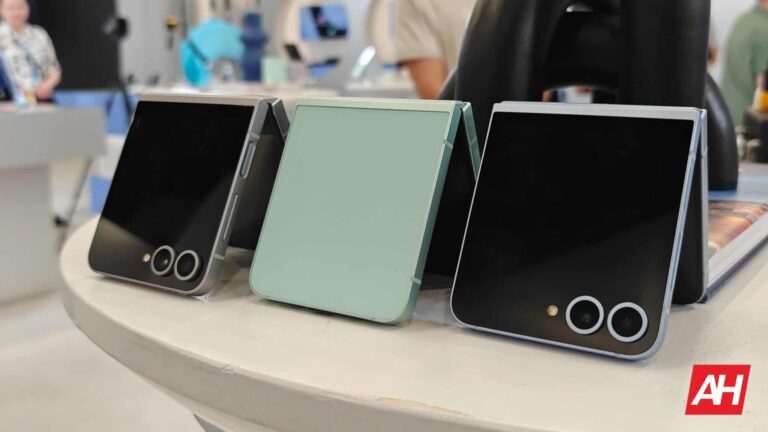
The Samsung Galaxy Z Flip 6 is the best flip phone the company has made to date. As it should be. Companies should continue pushing forward instead of going backwards. The Galaxy Z Flip 6 this year gains a few upgrades, mostly pertaining to the camera.
With the Galaxy Z Flip 6, Samsung has upgraded the main sensor to a 50-megapixel camera. Now, that might not sound like a big deal, but this means that the Galaxy Z Flip 6 does get a 2x optical zoom option, as it can crop into that large 50-megapixel sensor for lossless zoom. Samsung has also improved the hinge here, making it stronger, thinner, and more durable. Like the Samsung Galaxy Z Fold 6, the Flip 6 also has dust resistance for the first time – now IP48.
The battery has received a pretty big upgrade here too, now pushing to 4,000mAh capacity. Keeping it right on par with the Motorola Razr+ (Razr 50 Ultra outside of the US).
The price of the Galaxy Z Flip 6 did go up this year, but there are loads of promos that you can take advantage of that can get you the phone for almost free. And who doesn’t love free? Here are the best Galaxy Z Flip 6 deals available right now.
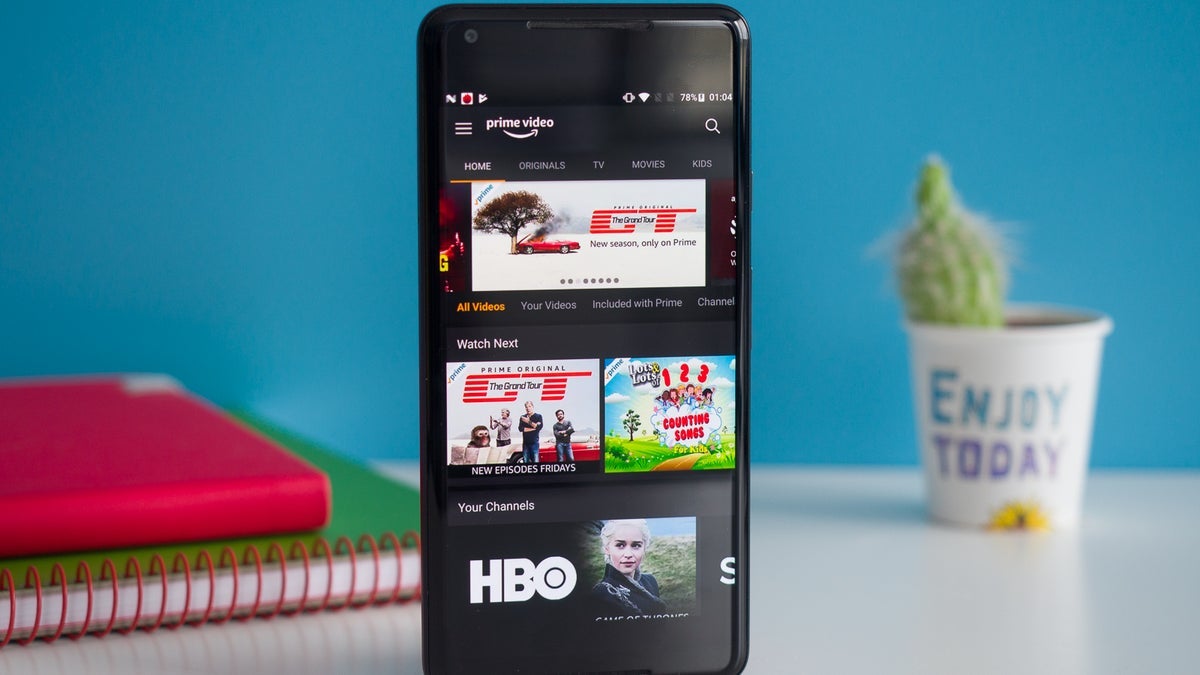
A new Prime Video update is now rolling out, addressing one of the biggest criticisms the service was getting – that it’s hard to distinguish what’s included in your subscription. You needed to first click on it to find out. But now, we get this very useful update which will make it easier for you to know which feature is free and which isn’t. The new interface is also simpler and more personalized, which should help you find something to watch faster.
Prime Video is one of the benefits of an Amazon Prime subscription. However, not many people were using it, probably because it wasn’t obvious what you could watch with your subscription and what needed additional payment to watch. The service is now becoming more relevant with improvements in the content and price increases in the competition.
And now, Amazon is releasing an update to fix the annoying issue with the pricing. You should now be able to see more easily what is included with the Prime membership and what you need to pay extra for. With the update, logos for Prime and add-on subscription services (like Max, Paramount+, Starz, MGM+, and Crunchyroll) will appear on the title cards of a movie or TV show. Those should indicate which service the content is available on.
If a title requires additional payment, a yellow shopping bag icon will indicate this.
You also get a new “Prime” destination in the navigation area that lets you browse movies, TV shows, and others, that are available at no additional cost with a Prime membership.
Free doesn’t mean ad-free though, so do keep that in mind.
The. new update also brings a a navigation bar with single-click access to titles; an improved way of browsing, signing up for, and managing add-on subscriptions; and personalized content recommendations powered by generative AI.
The update is now rolling out globally, and according to Amazon, should take a few weeks to reach everyone. I personally find this update one of the most useful updates Amazon Prime Video has gotten recently. It is very annoying to finally find a title you’re interested in and then, when clicking on it, you find out it’s not included in your Prime membership. This update will make things easier, and hopefully, Prime Video will become more popular thanks to that.
Izzy, a tech enthusiast and a key part of the PhoneArena team, specializes in delivering the latest mobile tech news and finding the best tech deals. Her interests extend to cybersecurity, phone design innovations, and camera capabilities. Outside her professional life, Izzy, a literature master’s degree holder, enjoys reading, painting, and learning languages. She’s also a personal growth advocate, believing in the power of experience and gratitude. Whether it’s walking her Chihuahua or singing her heart out, Izzy embraces life with passion and curiosity.
A rudimentary ransomware targets Turkish businesses through phishing emails with “.ru” domain sender addresses. Clicking a PDF attachment’s link triggers downloading a malicious executable from a compromised GitHub account.
The executable encrypts crucial files with the “.shadowroot” extension, highlighting a wider trend of ransomware attacks using phishing emails to deploy payloads, demonstrating the ongoing threat to various industries globally.
malicious URL from pdf
The analyzed executable is a malicious 32-bit Borland Delphi 4.0 binary that drops several files, including RootDesign.exe and Uninstall.exe, which are likely components of a malware program designed to infiltrate a system and carry out malicious activities.
DotNet Confuser, which is an open-source obfuscator for.NET applications, provides additional protection for RootDesign.exe in particular that is being protected.
Packer info
Based on the obfuscation that is applied by DotNet Confuser, it becomes more difficult for conventional security software to recognize RootDesign.exe as a potential threat.
The dropper, PDF.FaturaDetay_202407.exe, employs nested PowerShell commands to execute RootDesign.exe in a hidden mode. PowerShell is a scripting language built into the Windows operating system that can be used to automate tasks and execute programs.
Obfuscated function and class name
By nesting PowerShell commands, the malware authors can achieve a level of indirection that makes it more difficult to trace the execution flow and identify the ultimate payload (RootDesign.exe) being launched.
According to ForcePoint, running RootDesign.exe in hidden mode further conceals its activity from the user, making it even more challenging to detect and remove the malware.
An attacker executed a malicious script disguised as a command prompt command, which leverages PowerShell to launch a hidden process (RootDesign.exe), likely located in a directory named “The Dream.”.
This process creates several mutexes, which are synchronization objects used to control access to shared resources, whose names (_SHuassist.mtx, Local\ZonesCacheCounterMutex, Local\ZonesLockedCacheCounterMutex) suggest the malware might target specific system functions.
The malware then injects copies of itself into memory with new process IDs (PIDs), creating a recursive thread structure, which is an indication of a ransomware attack that aims to encrypt files on the compromised system.
Encrypted files with the ShadowRoot extension
RootDesign.exe, a.NET-compiled malware, logs its activity, initiates a ransomware attack, and recursively encrypts critical system files with a custom “.ShadowRoot” extension, dropping ransom notes and causing high memory usage due to its self-replication behavior.
The malware creates a command-and-control channel via SMTP on port 587 to an email address that is probably under the attackers’ control and uses the common AESCryptoServiceProvider class for encryption.
While no direct crypto wallet information is provided, the ransom note instructs victims to contact a suspicious email likely used for communication and potential decryption tool/payment processing.
Protect Your Business Emails From Spoofing, Phishing & BEC with AI-Powered Security | Free Demo
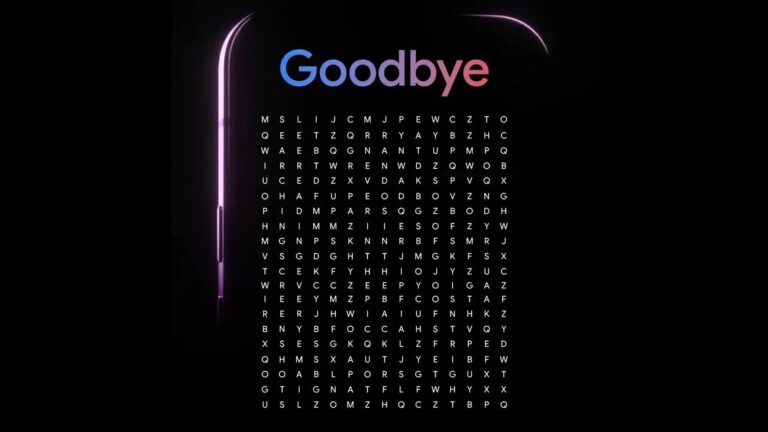
We just saw two short and sweet teasers showing off the upcoming Pixel 9 Pro and Pixel 9 Pro Fold. These were, unsurprisingly AI-focused. Well, Google just released another teaser showing off the former, and this one pushes you to use YOUR intelligence. The latest Pixel 9 Pro teaser has a word search.
If you didn’t see the previous teasers, you’re not missing much, especially if you’ve seen all of the recent leaks of the phone. We see the phones in all their Google-y glory, but they both start by talking about AI. This makes us worry if Google is going to make its next Pixel event (which is happening on August 13) be an AI event with the Pixel phones making a cameo. We’ll find out, so mark your calendars!
Google releases Pixel 9 Pro teaser with a word search
We all know the feeling of standing at the checkout line at the grocery store and flipping through the word search books. Well, Google wants us to all have that feeling again. Shortly after its video teasers, the company made a new post on Meta Threads. This post retains much the same visual aesthetic of the video ads. We see the silhouette of the phone. Rather than being filled with a Gemini prompt, it’s full of a word search.
Chalk this up as one of Google’s fun and quirky advertisements that encourage users to get involved. The tagline of the post is, “Can you find the reasons you should break up with your phone?” Well, can you? Google is betting big bucks on its AI to move this phone. It’s hoping to win you over with Gemini.
Sneak peek at a feature
This word search actually gives us a sneak peek at some of the features we should expect coming from the company. For example, just glancing at the word search, we see “searching screenshots”. This is a feature that’s been likened to Windows Recall. That’s the controversial feature that would have Windows take screenshots of everything you do on your computer and allow you to search them to recall what you were doing. Google’s feature is much different and less creepy. It will allow Gemini to search for content in your screenshots.
For more features, feel free to look at the word search and see what you should be excited about. The event is going down on August 13th, 10 AM EST.
Samsung may have just achieved a significant milestone in the AI chip market. Nvidia, the world’s biggest AI chip brand, has reportedly certified its high bandwidth memory (HBM) chips. The Korean firm’s HBM3 chips have received Nvidia’s approval for use in China. Its more advanced HBM3E solutions are still pending the Nvidia certification.
Samsung secures a big AI win with Nvidia certification for its HBM3 chips
The semiconductor industry is experiencing overwhelming growth due to the AI boom. As companies set out to establish AI data centers, training hubs, and peripheral infrastructure, chip demand and prices have surged exponentially. Riding on this growth, Samsung expects a staggering 1,450% increase in its quarterly operating profit in Q2 2024. The Korean firm is the world’s biggest supplier of memory chips.
However, it has been lagging in a key area, limiting its growth. Samsung’s HBM chips lacked Nvidia’s certification, blocking their use in leading AI processors. The company has been seeking this certification for a long time, and it has finally received it. Unfortunately, the job is still far from done for the Korean biggie. According to Reuters, Nvidia has only cleared Samsung’s HBM3 chips for use in its less sophisticated H20 AI chip.
Developed for the Chinese market, the H20 is made in compliance with export restrictions set by the US government. It isn’t the most powerful AI chip out there. Ideally, Samsung would want to supply its HBM3 chips for Nvidia’s advanced AI processors. Its compatriot SK Hynix has already gained an upper hand in this segment. Samsung would also be itching to obtain Nvidia’s approval for its HBM3E chips.
Nonetheless, it’s a step in the right direction for Samsung. The new report says it could start supplying HBM3 chips to Nvidia in August. It is unclear if the American chipmaker is still testing Samsung’s HBM3 and HBM3E chips for global use or if the chips have already failed to meet its requirements. There have been rumors that the HBM3E solutions have heat and efficiency issues, though Samsung has rubbished the claims.
There is a shortage of HBM3 chips
HBM chips are critical for AI processors. They provide the processors with massive amounts of fast memory that allow them to perform complex AI tasks quickly. Samsung is one of the only three makers of HMB chips, alongside SK Hynix and Micron. The latter two have already received Nvidia’s approval for global use. But, the AI boom is so huge that there is still a shortage of these chips. Nvidia would be keen to get Samsung onboard, but it won’t approve the chips unless the Korean firm meets its standards. It is up to Samsung to step up its game.







.webp)
.webp)
.webp)
.webp)

.webp)
.webp)
.webp)