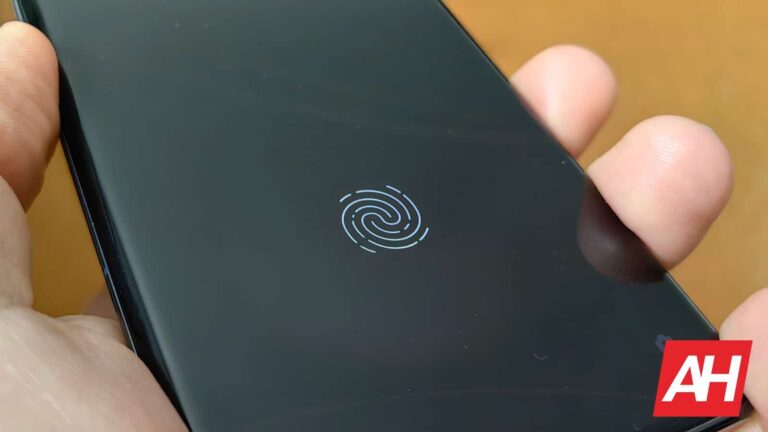
The OnePlus 13 & Xiaomi 15 series are said to use ultrasonic in-display fingerprint scanners
Both companies have been using in-display fingerprint scanners for a while. The thing is, both have been relying on optical in-display fingerprint scanners. That will change with the next generation of flagship phones, though, it seems.
Ultrasonic in-display fingerprint scanners are more advanced and more secure at the same time. There are a number of advantages, so it’s great to see that both companies are planning to take a step forward.
They’re not only more secure but can be activated while the display is off by simply playing your finger around the area where the scanner is placed. You don’t need to previously tap the display. They’re usually also more accurate, and so on.
Do note that both companies are allegedly testing such fingerprint scanners for the aforementioned devices. Still, nothing guarantees that they’ll actually be used. So we’ll have to wait in order to be sure.
The Xiaomi 15 will keep a flat display, while the ‘Ultra’ will utilize a curved one
One of the tipsters also mentioned that the Xiaomi 15 will keep a flat display. The Xiaomi 15 Ultra will go for a curved display just like its predecessor, it is said. That’s not surprising at all, Xiaomi is sticking with its practice.
Lawsuits against Elon Musk’s X are coming from left and right. In one of the recent cases, the company’s former executives have filed a lawsuit, demanding roughly $128 million in severance payments. These executives were laid off after Musk took over the Twitter platform (later rebranded to X) in 2022.
Following Musk’s takeover, he drastically changed Twitter by firing the company’s top executives, including former CEO Parag Agrawal, CFO Ned Segal, chief legal officer Vijaya Gadde, and general counsel Sean Edgett. The lawsuit claims that Musk had a “special ire” against these executives because of their role in the billionaire’s legal battle with Twitter when he wanted to cancel the deal.
X should pay roughly $128 million in severance payments to its former executives
As the lawsuit reads, these executives have not yet received their severance payment from their former company. The total payment is around $128 million. Parag Agrawal demands $57.4 million in severance payments, while Segal’s payments are $44.5 million.
Gadde and Edgett are also entitled to $20 million and $6.8 million in severance benefits, respectively. Agrawal, Segal, and Gadde have also filed a separate lawsuit against Musk over some unpaid legal bills.
Plaintiffs also accuse Elon Musk of making up a “fake cause” to lay them off and avoid paying severance payments. Additionally, Twitter’s former executives cited a story from Musk’s biographer, Walter Isaacson. He revealed in his book that Musk was in a rush to close Twitter’s deal a day early.
This was supposedly because the billionaire aimed to fire those executives “for cause” before they could use their stock options to stay longer at the company. As Isaacson says, this tactic saved Musk around $200 million.
X’s unpaid severance benefits could exceed $628 million
“Musk doesn’t pay his bills, believes the rules don’t apply to him, and uses his wealth and power to run roughshod over anyone who disagrees with him,” the lawsuit notes. “Because Musk decided he didn’t want to pay Plaintiffs’ severance benefits, he simply fired them without reason, then made up fake cause and appointed employees of his various companies to uphold his decision.”
X is also facing another lawsuit from its former employees over unpaid severance. This lawsuit is said to be up to $500 million.
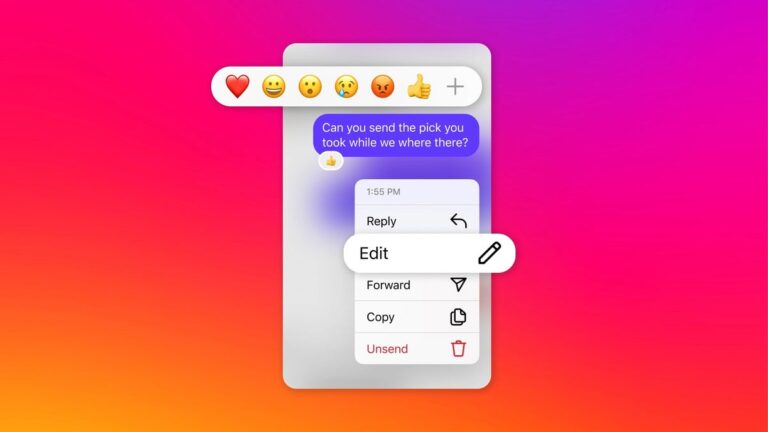
Have you ever wished you could take a message back or noticed a typo right after hitting send? Fortunately, many popular messaging apps like WhatsApp and Telegram already offer the option to edit your messages after sending them. Now, Instagram is finally jumping on board with this feature.
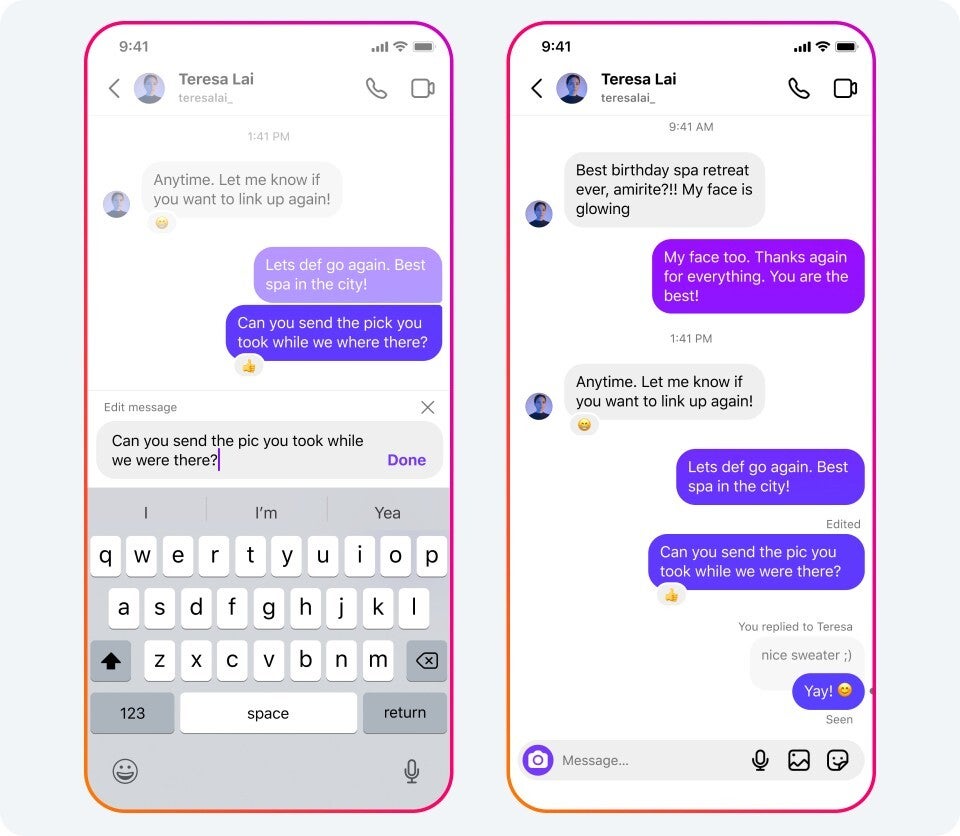
Meta has recently released a software update for the Instagram app, bringing the long-awaited feature of editing direct messages (DMs). However, there’s a catch: you only have a 15-minute window to make any changes. To edit a message, simply press and hold on the sent message, then select “edit” from the dropdown menu.
The new Edit feature in action (Image Credit–Meta)
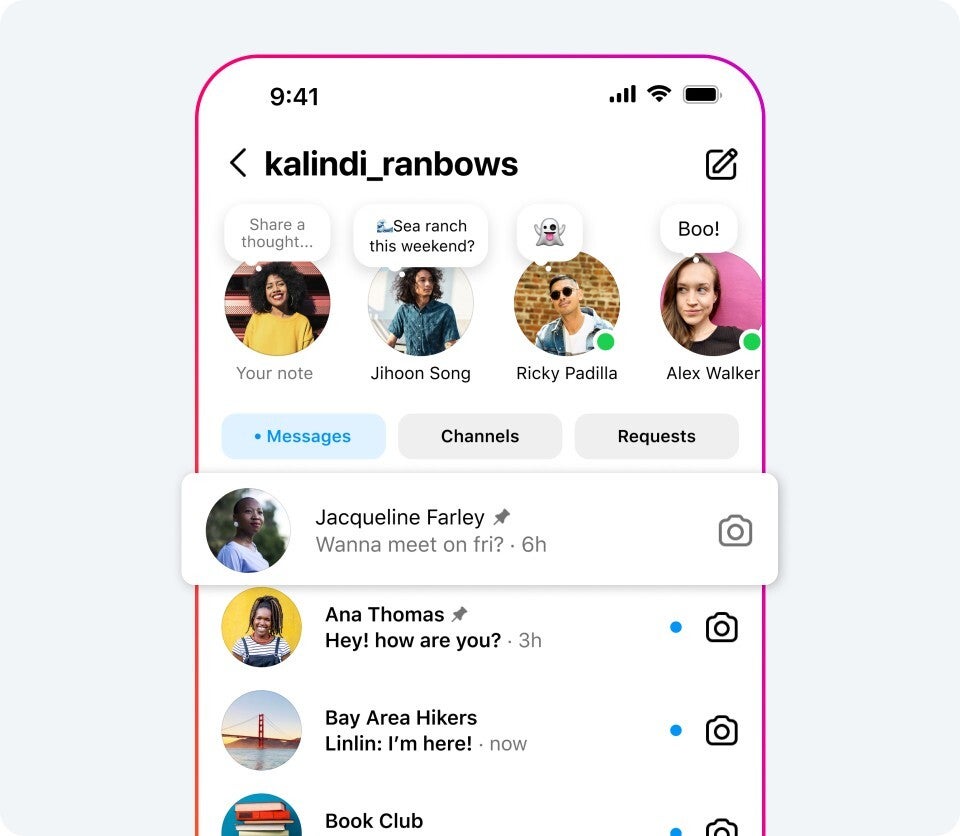
Alongside the editing feature, the recent update also introduces the option to pin up to three of your favorite direct messages at the top of your feed. This is particularly handy for ongoing conversations. To pin a conversation, hold down the conversation tab, locate the dropdown menu, and tap “pin” to prioritize it.
Pin chats at the top of your feed (Image Credit–Meta)
In addition to these changes, the update brings an easier way to manage read receipts. You can now toggle read receipts on or off for all your chats or choose specific ones according to your preference. This gives you greater control over whether others are notified when you’ve read their messages.
To turn it on or off for all chats:
Go to account settings
Tap Messages and story replies
Tap Show read receipts
Toggle read receipts on or off for all of your chats.
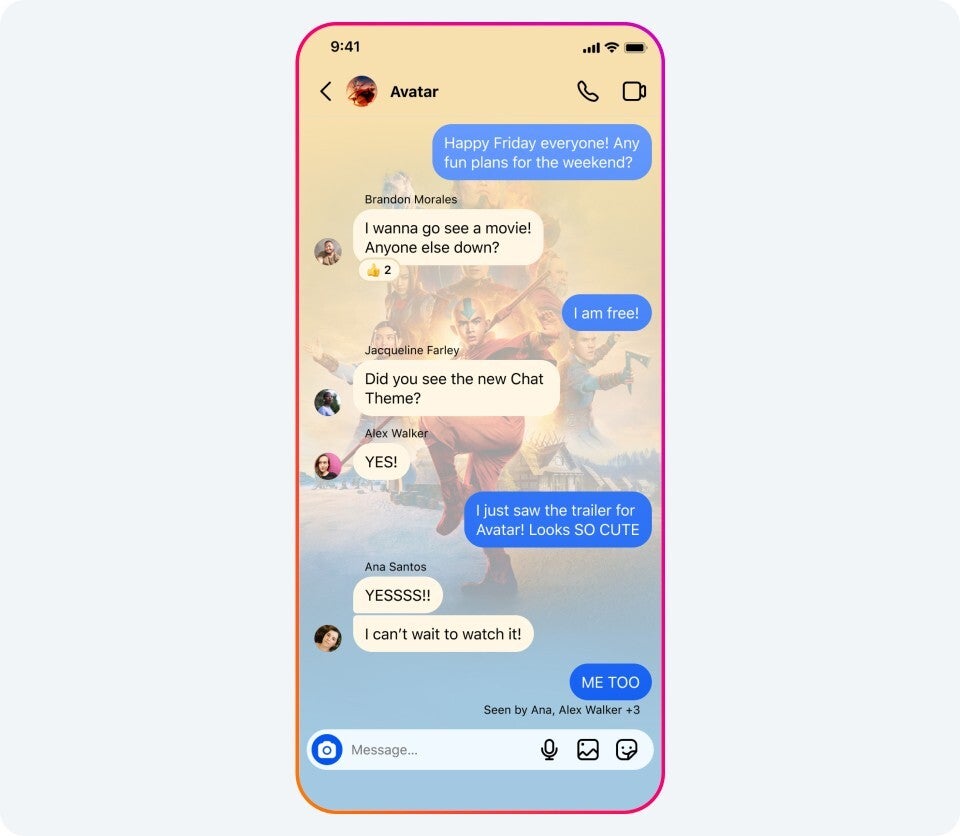
The update also adds some changes to chat themes. There are new DM themes, including trending ones tied to Dune: Part Two or Avatar: The Last Airbender. To switch the theme for a chat, tap the chat name at the top, go into themes, and choose one. Alternatively, you can just press and hold anywhere on the background of an open chat.
Avatar: The Last Airbender theme (Image Credit–Meta)
The update also lets you save your favorite stickers in your DMs for quick access. Just press and hold the sticker you want to save and you’ll find it at the top next time you go to stickers.
28 OPPO devices are getting Android 14 this month, globally, and the rollout started
Do note that the rollout is staged, so you may not get it straight away. Still, Android 14 is coming, alongside ColorOS 14. Some of the company’s higher-end phones are on this list, but there are a ton of cheaper devices too.
When it comes to the newest devices, the OPPO Find N3 and OPPO Find N3 Flip are listed first. We’ve already received an update for the OPPO Find N3 yesterday, so it’s definitely rolling out to global units.
In addition to those two phones, the OPPO Find N2 Flip is also getting it, and the Find X5 Pro and Find X5 too. Even the OPPO Find X3 Pro is listed here, and even older OPPO flagship.
Quite a few Reno devices are listed here too
When it comes to the Reno series, quite a few devices are listed. The OPPO Reno10 Pro+ 5G, Reno10 Pro 5G, and Reno10 5G are here. The same goes for the Reno8 Pro 5G, Reno8 5G, Reno8, REno8 T 5G, and Reno8 T. The Reno7 is also mentioned. That’s basically it as far as Reno devices are concerned.
The rest of the list includes the OPPO F23 5G, F21s Pro, F21 Pro, K10 5G, A98 5G, A78 5G, A77 5G, A77s, A77, A58, A57, A38, and the OPPO A18. That is it as far as global units are concerned. One India-specific update is also mentioned, the OPPO A78.
The changelog will differ from one device to the other
The changelog between the devices will not be the same, of course. All of them will get some improvements for Android 14 directly from Google. As far as ColorOS 14-specific features are concerned, they do differ from device to device.
The OPPO Find N3, in particular, received Aqua Dynamics with morphing forms, a File Dock
“Don’t drink and drive” and now, here’s another rule: “Don’t phone and drive”. Since humans are not to be trusted with either rule, Android Auto will help us. It’s not clear when built-in breathalyzers are coming to our vehicles, but Android Auto is now enforcing the “Don’t phone and drive” with its latest feature: it bans certain apps.Tom’s Guide shares a finding from the German SmartDroid about the recently updated version 11.4 of Android Auto. Now, certain apps that are “restricted”, will display a small “P” (as “Parked”) bubble in the bottom right corner of the app icon. Before this, users who tried to access stationary-only apps would receive an error message if their car was in motion, the story goes.
This “P” icon has appeared more and more frequently on gaming or video streaming apps on Android Auto, like GameSnacks, a collection of touchscreen games for AA users.
Alongside the launch of its version 11.4, Android Auto can now summarize long text messages that can be listened to while driving. The only caveat is that messages containing more than 40 words will be paraphrased, while anything under that will be read in its entirety.
The AI-boosted Android Auto can also suggest relevant replies and actions, so you can simply tap once to send a message, share your ETA or start a call.
Let’s say that someone sends you a “Where the hell are you?” while you’re driving. As you don’t want to distract yourself, you’ll be able to just push a button and your Expected Time of Arrival (ETA) will be sent to the one who’s so obsessed with you.
Threat actors known as CACTUS orchestrated a sophisticated attack on two companies simultaneously, exploiting a software vulnerability within 24 hours of its disclosure.
This coordinated ransomware attack highlighted organizations’ growing risks in the digital landscape.
The attack involved intricate steps, including infiltrating networks, implanting remote access tools, encrypting workstations, and targeting virtualization infrastructure across different servers.
virtualization infrastructure
Rapid Exploitation of Vulnerabilities
The attack began less than 24 hours after disclosing a critical vulnerability in the Ivanti MobileIron Sentry, identified as CVE-2023-38035, with a CVSS score of 9.8.
This flaw allowed attackers to bypass authentication controls and execute code remotely.
The rapid weaponization of this vulnerability underscores a growing trend among cybercriminals to exploit software bugs swiftly, often before organizations can patch them.
ransomware group had targeted only Windows workloads
CACTUS’s operation was not only swift but also meticulously coordinated.
The hackers initially infiltrated one organization’s network before moving on to another company within the same group.
Despite the companies operating independently with separate networks, the attackers managed to exploit the interconnectedness of some machines to launch simultaneous attacks on both entities.
The assault was multifaceted, involving data exfiltration and the encryption of workstations and virtual machines, including domain controllers.
Recently, Bitdefender Labs collaborated in an investigation that unfortunately confirms two significant predictions made for 2024: the swift proliferation of opportunistic ransomware and the growing sophistication of cyber attacks.
Key Points:
Rapid Response: CACTUS swiftly capitalized on a Remote Code Execution (RCE) vulnerability, emphasizing the need for organizations to address such threats promptly.
Meticulous Coordination: The attack was meticulously planned, with synchronized actions on both companies within a five-minute window
Expanded Target Scope: CACTUS expanded its targets beyond Windows workloads to include ESXi and Hyper-V hosts, showcasing a broader focus
Forensic Expertise: The affected companies sought forensic expertise from Bitdefender Labs instead of paying the ransom, demonstrating a proactive approach to handling cyber threats
Expanding Targets and Sophisticated Tactics
Traditionally focusing on Windows workloads, CACTUS has expanded its scope to include ESXi and Hyper-V hosts, indicating a broader targeting strategy.
The group employed various remote access tools and tunnels, demonstrating high sophistication in maintaining persistence within compromised networks.
This operation’s success was partly due to using legitimate tools for remote access, such as AnyDesk, and the exploitation of security servers as gateways for further attacks.
The CACTUS ransomware attack is a stark reminder of the evolving threat landscape and the need for organizations to remain vigilant.
It emphasizes the criticality of promptly addressing known vulnerabilities and the benefits of employing robust cybersecurity defenses.
As cybercriminals continue to refine their tactics, the collaborative efforts of security professionals and the adoption of advanced protection technologies will be paramount in safeguarding against such sophisticated threats.
You can block malware, including Trojans, ransomware, spyware, rootkits, worms, and zero-day exploits, with Perimeter81 malware protection. All are incredibly harmful, can wreak havoc, and damage your network.
Stay updated on Cybersecurity news, Whitepapers, and Infographics. Follow us on LinkedIn & Twitter
It seems a bit weird to cover news about the Xiaomi 15 Pro when the Xiaomi 14 Pro is still relatively new. However, the rumor mill doesn’t stop, and there’s some news about the next generation that might put current phones to shame. According to a new leak, the Xiaomi 15 Pro could have the smallest bezels of any phone.
Obviously, you’ll want to take this news cautiously. This phone is still the better part of a year away, so there’s no telling what could change between now and then. If anything does change, we will keep you updated on it.
The Xiaomi 15 Pro could have extremely tiny bezels
Right now, phone companies have been at war to defeat the bezels. Today, phone bezels are much thinner than they were before the LG G6 revolutionized smartphone displays. Since then, bezels have gotten significantly thinner. With phones like the iPhone 15 and the Galaxy S24 series, bezels are pretty much gone. However, Xiaomi wants to make bezels pretty much unnoticeable.
According to @negativeonehero on X, the Xiaomi 15 Pro could have bezels measuring only .6mm. To put that into perspective, it’s less than half the size of the iPhone 15 Pros 1.5 mm bezels. This could truly make for a bezel-less experience, and it will give the Xiaomi 15 Pro something above the rest of the smartphone market.
Along with that, the leaker showed us some more notable specs of this phone. For starters, Xiaomi 15 Pro could use an ultrasonic fingerprint scanner. This will contrast the optical fingerprint scanner that’s currently in the Xiaomi 14 Pro. Ultrasonic fingerprint scanners are much better than optical fingerprint scanners when it comes to speed and accuracy.
Next, the leak pointed to the camera technology, and it included that this phone could have a periscopic zoom lens. That would greatly increase the camera’s zoom reach.
Satellite communication
What’s probably one of the most significant details in this leak is the satellite communication. Right now, phones are just starting to implement satellite communications. It allows phones to communicate directly with satellites rather than having to communicate with land-based towers. Satellite-based communication aims to make dead zones and signal loss a thing of the past. The leak didn’t dive into details, but it did point to satellite communication as a potential feature.
The Xiaomi 15 Pro could be released sometime in October. If so, then it will be launching sooner in the year than the Xiaomi 14 Pro.
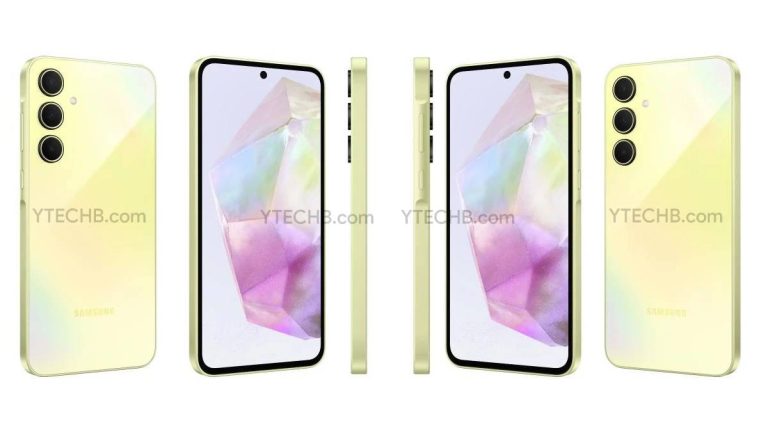
A few days back, we exclusively leaked the detailed specs of Samsung’s upcoming mid-range smartphone, the Galaxy A35. We also previously shared exclusive official renders of the phone. It has now leaked in another set of renders courtesy of YtechB. The publication has also published a complete spec round-up for the device.
New Galaxy A35 leak hints at its nearing launch
Samsung plans to release the Galaxy A35 in four colors: Awesome Ice Blue, Awesome Lemon, Awesome Lilac, and Awesome Navy. The new renders show the device in all of these colors. The handset features a standard Galaxy design with a flat frame, punch-hole display, and bump-less camera layout. The frame is slightly raised around the power and volume buttons. Samsung calls it the Key Island design.
Design aside, the punch-hole display measures 6.6 inches diagonally. It is a Super AMOLED panel with a Full HD+ (1080 X 2340 pixels) resolution and a 120Hz refresh rate. Its brightness levels are not known. The display has notable bezels all around, signaling a mid-range device. Both physical keys are on the right side, something Samsung keeps consistent across the Galaxy family.
The tiny hole on the top of the display houses a 13MP front-facing camera for selfies and video calls. On the back, there are three cameras aligned vertically in the top left corner. The Galaxy A35 gives you a 50MP primary shooter, an 8MP ultrawide lens, and a 5MP macro camera. The device can record UHD 4K (3840 x 2160) videos at 30fps with its main camera. The selfie camera can record FHD (1920 x 1080) videos.
Powering this setup is Samsung’s Exynos 1380 processor, which debuted last year with the Galaxy A54. The company will pair the chipset with 6GB/8GB RAM and 128GB/256GB storage. The Galaxy A35 also features an under-display fingerprint scanner, IP67 dust and water resistance, stereo speakers, a microSD slot, and Android 14. The package includes a 5,000mAh battery with 25W charging.
It will arrive alongside the Galaxy A55
Samsung will launch the Galaxy A35 alongside the Galaxy A55 soon. Rumors say the mid-range duo will go official on March 11. Leaks have revealed the design and specs of the latter as well. The duo may arrive with a starting price of €389 and €450, respectively, in Europe. If the reported launch date is accurate, expect Samsung to start teasing the new devices in the coming days. We will let you know as soon as we have more information.
Google Maps not only helps you get from point “A” to point “B” quickly and safely, the app will also show you where you can grab a good meal, find a room to spend the night, catch a movie or some live entertainment, and visit the local landmarks once you arrive at “B.” Google Maps still feels the competition from the sometimes superior Apple Maps which excels at telling a driver exactly when to turn (for example, “turn left at the next stop sign” rather than Google Map’s “turn left in 3/4 of a mile”).
And of course, Google Maps still has to deal with competition from the crowdsourced navigation app Waze, which is also owned by Google. Waze is all about the journey helping you evade construction, traffic, bad weather, and the smokey hiding in the woods near the interstate exit. Those with an Android phone are most likely going to use Google Maps, but I would suggest that iPhone users give Apple Maps a tryout because you might be pleasantly surprised.
Google tests marking entrances on buildings you zoom-in to on Google Maps
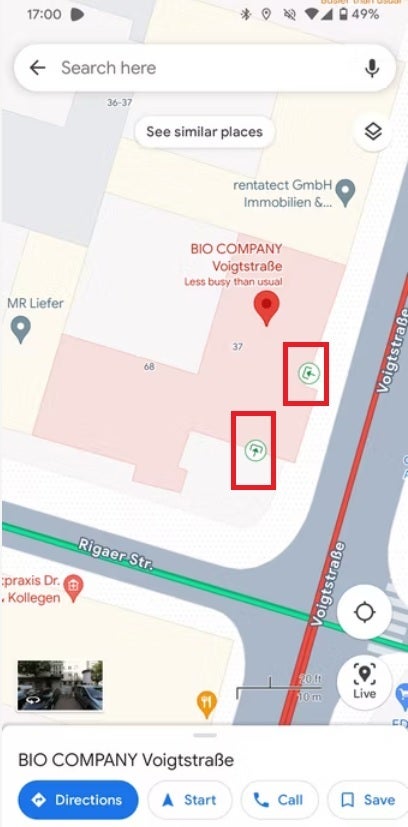
Having said that, Google is testing a feature that will show entrances on a building when that building is selected on a map and you zoom in on the building. The entrances are marked by a round white circle with an arrow pointing at half a rectangle indicating an open door. Android Police looked for the entrances on Google Maps in certain cities such as New York, Las Vegas, San Francisco, and Berlin. Looking at supermarkets, office buildings, cafes, and restaurants it found the entrances marked for some locations and not for others.
This would suggest that Google is still working on this new feature. With some buildings, the entrances are marked with a green arrow inside a white circle. Hopefully, this feature will soon be available to all Android users because getting the directions to a building is one thing. Finding out where to go to enter that building is another. Knowing where the entrance to a building is might help you find a parking spot near the entrance.
Android Police spotted the entrances on Google Maps for Android version 11.17.0101 on a Pixel 7a. So far it has not appeared on the Google Maps app version 11.115.0100 running on my Pixel 6 Pro running the latest Android 14 QPR beta release.
The web player for YouTube Music is getting a redesign to make it look exactly as it does on Android. This is the sort of design parity that’s come to be expected of Google. Even if not right away, at some point Google usually brings things together so the designs match as much as they can.
For YouTube Music, the redesign should be rolling out to the web player to match the looks of what you see on Android. The most notable change users will see is the larger play button that sits smack dab in the middle of the user interface now, just below the album artwork that’s also now larger.
This is as opposed to the play bar that sat at the bottom where the playback controls used to be. The shift moves the playback controls to just under the album artwork and then puts the tabs for lyrics, related, and up next below those controls. This gives things a more streamlined look and also declutters the user interface a bit. Having said that it does remove a few things. Like the cast button. This feature isn’t gone. However, it’s no longer on the now-playing page. That being said, things are simpler to use.
The timeline scrubber is way easier to click on now because it’s bigger.
The YouTube Music web player redesign is still rolling out
While some users already see the redesign in their own browsers, it’s not fully released. Google has been pushing it out to users over the past few weeks according to 9To5Google. So there’s definitely a chance you’ll see it if you load up the player in your own browser.
However, we couldn’t replicate it in our own browsers. So the rollout doesn’t appear to be complete just yet. That may be a good thing or a bad thing for you depending on how you feel about the new design. Either way, keep an eye out for the change if you use YouTube Music on the web. This change to the visuals follows the rollout of the web app that Google started pushing out around February 27. This was about a week before rumors of a downloadable web app surfaced.