More than a year after it was announced at CES 2023, Google and Spotify are finally bringing Spotify Connect integration to Android’s media player notification. At MWC 2024, Google again announced the upcoming feature, which will allow users to easily switch between devices when listening to music on Spotify.
You can now control Spotify using Android’s media switcher
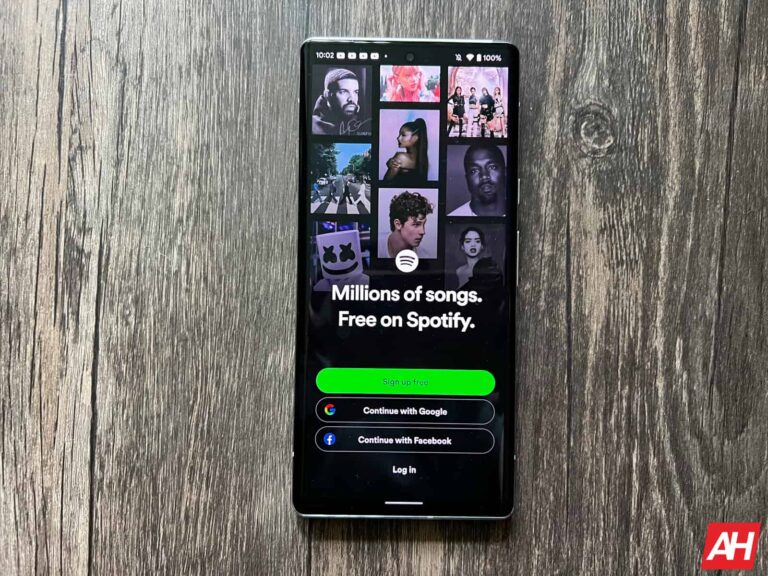
With this new integration, Spotify listeners can use the output switcher option within the Android media notification to change where their music is playing. With a tap on the notification, users can send their Spotify playlist or podcast from their phone to other nearby speakers that support Spotify Connect. This turns an Android device into a remote control for Spotify, allowing playback control without having to open the app itself.
Output device suggestions will be contextual, showing options relevant to the user based on their location, time of day, and proximity to connected speakers on the same Wi-Fi. For example, commuters can start a playlist on their phone during the morning commute and seamlessly switch to a smart speaker in the kitchen with a single tap when they get home. Parents can pause the kids’ Spotify session in the playroom from the couch without interrupting what they’re doing.
The delay in bringing this feature to light is unusual. Spotify is usually quick to adapt to new Android features. It suggests that there were likely technical hurdles behind the scenes that took longer to overcome than expected.
Now that both Google and Spotify have reaffirmed their commitment to the partnership, we can expect the feature to begin rolling out to Android 14 devices worldwide in the coming weeks. This will improve the listening experience for many Spotify users.
OnePlus launched its first smartwatch in 2021. And the company knows it was terrible. If you look at our review of the OnePlus Watch, you don’t even need to read it to understand how bad it was. The title says, “OnePlus Watch Review: Your Money Is Better Spent Elsewhere”. Thankfully, OnePlus took all of the feedback from the original OnePlus Watch and went back to the drawing board. This is why it was three years before a new model was released. But finally, here it is.
This review is going to start out on a brighter note than the original OnePlus Watch Review by saying that this might be my favorite smartwatch, period. It does so many things well and improves on a lot of the things that Samsung does with its Galaxy Watch models. On top of that, it’s priced right. It’s just $299, which is an incredible price for a watch made of stainless steel and a sapphire crystal display.
Now, let’s dig deeper into the review of the OnePlus Watch 2 and tell you the good, the bad, and the ugly. Spoiler alert: there’s not much that’s bad or ugly here.
OnePlus Watch 2 Review: Design and Build Quality
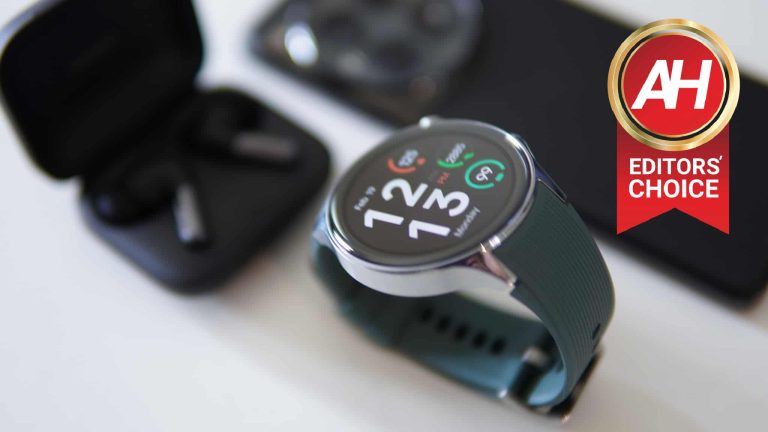
The OnePlus Watch 2 is simply stunning. It’s one of my favorite-looking watches on the market today. It has a stainless steel frame with a display that uses Sapphire Crystal. So that should tell you a lot about durability. Since Sapphire Crystal is so strong, it’s virtually impossible to scratch. OnePlus did get this certified for MIL-STD-810H spec, which is the highest durability certification you can get. This is great for biking, hiking, and more. It’s also rated at IP68 and 5ATM for water resistance, so you can wear it in the pool. These are things we wouldn’t normally expect from OnePlus. Some of you might be old enough to remember when OnePlus did not get IP ratings for its phones because it was “too costly.”
The display is rated at over eight on the Mohs hardness scale. Sapphire Crystal is one of the hardest materials around, second only to diamond. Now, we did not do any type of scratch tests here; we’ll leave that to JerryRigEverything. But in normal day-to-day usage, we have not encountered any scratches.
OnePlus offers the Watch 2 in two colors: Radiant Steel and Black Steel. The model we have here is the Radiant Steel, which is basically silver. One of the first things I was worried about when OnePlus told me this was a stainless steel body was the fingerprints. As someone who has used the iPhone Pro models over the last couple of years and the stainless steel Apple Watch, I know just how bad the fingerprints can get. The good news here? It’s not so bad. Fingerprints do still show up, but not nearly as bad as I thought they could. Most of the fingerprints show up on the side, near the buttons. If that’s something that’s still going to bother you, Black Steel might be the better option for you.
One of the interesting aspects of the design here is the flat right side of the watch, where the crown and side button are located. When looking head-on at the watch, you really don’t notice it. The side kinda melts right into the circular watch face, with the buttons sticking out on either side, as you’d expect. Honestly, I really like this design decision. With other watches that have the crown at the center of the side, I often press it by mistake. That has never happened with the OnePlus Watch 2. And they are both still easy to use and press when needed.
The downside to OnePlus using such premium materials is the weight. This is a 47mm x 46mm x 12.1mm watch, and it weighs 80 grams with the included strap or 49 grams without it. That’s roughly a 47mm watch face, putting it right in the middle of the 45mm Apple Watch Stainless Steel and the 49mm Apple Watch Ultra. The Apple Watch Ultra is 61.3g without the strap, while the Stainless Steel model (45mm) is 51.5 grams without the strap. So, the weight is pretty similar, but the OnePlus Watch 2 feels heavier on my wrist, and this comes from someone who has been wearing an Apple Watch Ultra on that wrist for almost two years.
Could it be that the OnePlus Watch 2 is denser than the Apple Watch Ultra, and that’s why it feels heavier? Who knows. But that is something to keep in mind if you plan on buying this one.
The band is surprisingly very comfortable to wear. I’d say it’s one of the most comfortable stock bands I’ve ever used on a smartwatch. Apple’s bands are pretty comfortable too, though I’m not a big fan of their sport loops. The OnePlus Watch 2 band is a silicon band with a nice texture on the front that makes it look more high-end. The silicon material is a good idea for OnePlus since it allows people to dress it up and also use it for workouts. It’s not a leather band and won’t get destroyed when you sweat a little bit.
On the bright side, if the included band is not your cup of tea, you can swap them out and use any 22mm band you want. That’s the same watch bands you’ll find on traditional watches too. The good news here is that OnePlus did not go with a proprietary connection like some other smartwatches have done.
The design and build quality is impressive here. Making it one of the best looking smartwatches on the market, even with the thick bezel around the display.
OnePlus Watch 2 Review: Display
The display on the OnePlus Watch 2 is a stunning 466×466 resolution circular display that measures about 1.43 inches. This is an AMOLED display that refreshes at 60Hz. It gets plenty bright, with a high brightness mode (HBM) of 1,000 nits. I’ve taken this outside quite a few times to walk the dog, run some errands, and such over the two weeks I’ve had it, and it’s great outdoors. It’s easy to see, even with brighter tiles like the weather, on the display. And that’s really all you can ask from a smartwatch display is the ability to see it outdoors.
It is an AMOLED display. However, you can see the display ends, and the bezel starts here, unfortunately. The bezels are pretty large, and they likely melt into the frame a bit more on the black steel color. But on the Radiant Steel color that we have here, it’s more apparent. And to be honest, it does not bother me at all. If this were a smaller watch, say a 40mm or 42mm watch, then the bezels might bother me more since the display would be much smaller. But at 47mm, it’s much less of a problem.
The display is super responsive, and I have to say, it’s stunning. I sometimes catch myself just looking at the OnePlus Watch 2 because it’s just such a stunning display.
OnePlus Watch 2 Review: Performance
For performance, OnePlus is doing something a bit different from the rest of the competition. It uses two different chipsets, which helps it offer a much longer battery life compared to the competition. Inside the OnePlus Watch 2 is the Snapdragon W5 chipset, as well as a BES2700, which runs the RTOS that is also included here.
The Snapdragon W5 is the same chipset that powers the Google Pixel Watch 2 that debuted last fall. Performance was pretty good on the Pixel Watch 2, and that is also the case with the OnePlus Watch 2. The Snapdragon W5 powers the Wear OS portion of the watch, and it is incredibly snappy. Moving throughout the OS, opening apps and even tracking workouts, the Snapdragon W5 doesn’t miss a beat.
The BES2700, which runs RTOS, is what helps the OnePlus Watch 2 last so long on a charge. This chipset is always on and uses RTOS to handle background activity and daily tasks. Only really moving to the Snapdragon W5 chipset when it needs heavy lifting, like running Wear OS apps. OnePlus says that they’ve spent countless hours tweaking the architecture to help develop the most power-efficient smartwatch yet. And they’ve done it. When navigating through the OS and even opening apps, you never really notice that it’s switching chipsets. That’s just how good this dual-SoC is.
Additionally, OnePlus has included 2GB of RAM and 32GB of storage. That’s going to be plenty of space to run multiple apps, and install tons of apps on your wrist. Neither the watch nor the watch shows you how much storage is used, so it’s tough to say how much storage space you’ll really need. But the largest app on my OnePlus Watch 2 right now is the Google app and it’s only using about 50MB right now. So that should be plenty of space.
OnePlus Watch 2 Review: Battery life and Charging
OnePlus said that the main reason for not using Wear OS on their first smartwatch was battery life. And it’s true. At the time, most Wear OS smartwatches struggled to hit a full 24 hours of battery life. You see, with wearables, you can’t just pack in a larger and larger battery, as that makes the watch or fitness tracker bigger and heavier. So what OnePlus did with the Watch 2 is they designed a dual-engine architecture, which basically uses two chipsets that will help preserve battery life.
On the OnePlus Watch 2, there’s a BES2700 chipset that runs RTOS, which handles all of the easy stuff. Like the always-on display, background activity, and daily tasks. Then there’s the Qualcomm Snapdragon W5 processor, which does the heavy lifting, like opening and running Wear OS apps. This helps the OnePlus Watch 2 to last for 100 hours, according to OnePlus, and it can last up to 12 days with Power Saver Mode activated.
Okay, those numbers are from lab tests. How do they relate to the real world? Well, I’ve been using the OnePlus Watch 2 for two weeks, which is connected to the OnePlus 12. And in those two weeks, I’ve charged the watch three times. That means it’s getting well over four days of usage. One battery cycle actually lasted me about five days, and I still had around 15% left.
This battery life smokes just about every other smartwatch on the market these days – and no, I’m not comparing it to hybrid watches like what Fossil and Withings have. The next closest is the Galaxy Watch 6 Classic, which Samsung claims is getting 30-40 hours of usage, and in our review, it was right around 36 hours. That’s a day and a half. The OnePlus Watch 2 is more than triple that, which is really impressive.
Charging is incredibly fast
OnePlus has brought its VOOC Fast Charging tech over to the Watch 2, though it’s not quite as fast as the OnePlus 12’s charging as you might expect. Instead, it charges at 7.5W. Now, the downside here is that there’s no brick in the box, just the USB charger, which is a USB-A charger.
The bright side here is that the charging puck is not attached to the cable and uses a USB-C to USB-A cable. So, if you really wanted to, you could use a USB-C to USB-C cable; however, it will charge much slower. In my testing, it charged at about 2W over USB-C compared to the max of 7.5W over USB-A.
OnePlus says that you can get a full charge in about an hour with the included cable. In our experience, that’s pretty accurate. While we did not charge it from dead to 100%, we did charge from around 4% to 100% and found it took about 58 minutes. That is still incredibly fast. Compared to the Apple Watch Ultra, which takes an hour and a half, though it does have an 8% larger battery. The Galaxy Watch 6 will take about an hour and 20 minutes, and it has a smaller 425mAh battery inside.
On top of that, if you just need a top-up, that’ll take only 10 minutes. So if you need to charge it really quickly, slap it on the charger, go take a shower, and when you’re finished, you’ll have enough juice to get through the day. Not too shabby.
OnePlus Watch 2 Review: Software
When it comes to the software, one thing that I really appreciate about the OnePlus Watch 2 is that it’s all in a single app. Most watches will have a companion app that lives on your phone, as well as a separate Health app for tracking your health and fitness. OnePlus decided to have a single app, and doing both was the better look.
The downside to that is the health and fitness section is not as feature-rich as, say, Fitbit, Apple Fitness/Health, or Samsung Health. It does give you most of the basics here, though, which is good to see. All of this is done in the OHealth app. The first tab is your Health data. This includes your daily activity, heart rate, sleep, stress, and SpO2, as well as your workout records. The next tab is fitness, and that’s where you’ll track your workouts. The third tab is devices, where you change your settings, Watch Faces, etc.
The app itself is nice and clean. I really like the app myself, compared to the many others I’ve used. It keeps it clean without cluttering the page with a lot of stuff that you might not be interested in.
Now, let’s talk about the software on the watch. It’s a Wear OS 4 watch. If you’ve used the Galaxy Watch 6 or Pixel Watch 2, you know what to expect here. You can long-press on the watch face to change it, or swipe up to see notifications and down for your quick settings. That’s the opposite of the Apple Watch, which has taken a bit of learning for me. Swipe left and right for your tiles, which is a feature that I absolutely love about Wear OS. Being able to swipe left to right to see the weather is amazing. Since I live in Michigan, where it’s Winter in the morning and almost Summer in the afternoon, I do tend to check the weather quite often.
If you press the crown, you’ll either go home or open the app “drawer”. Which is a slightly different experience compared to the Samsung Galaxy Watch 6 and the Google Pixel Watch. Samsung uses a scrollable list of icons, Google has a scrollable list of icons with the names of the apps, while OnePlus basically went with the honeycomb layout that Apple has used on its watches. To be honest, I don’t hate it. You have four big apps in the center, with apps all around it. So most of your apps are in focus, without having to do much moving around. You can change this to a Grid View like Samsung has or a List View like Google uses. Just head into Settings on the Watch itself, then tap on General > App View.
OnePlus also has a ton of great-looking watch faces. However, since this is Wear OS, there are a bunch more available in the Google Play Store. So your customization of the watch faces is pretty much endless with this one.
The entire operating system on the OnePlus Watch 2 is so good. It’s smooth, not a single hiccup, and it’s only going to get better as the watch continues to learn how I use it. It’s by far my favorite Android-based smartwatch right now.
Should you buy the OnePlus Watch 2?
After spending two weeks with the OnePlus Watch 2, it’s really hard not to recommend this smartwatch. Interestingly enough, it just does everything right and fixes all of my complaints about the Galaxy Watch 6. The major complaint was the battery life. Not only that, OnePlus made this a fast-charging watch, too, so you can really use this to track your sleep as well as your activity all day long. Not too bad.
At its regular price of $299, the OnePlus Watch 2 is also super competitive in the market right now. The Galaxy Watch 6 is priced at $299 as well, the Pixel Watch 2 is $349, and the Apple Watch Series 9 starts at $399. Though on the Apple Watch side, it’d be better to compare it to the Stainless Steel model, which is $699, since OnePlus is only offering this as a stainless steel option.
If you are in the market for a new smartwatch and want something that doesn’t need to be charged every day, then the OnePlus Watch 2 is definitely the one to get. It’ll work with any Android device, however if you use an iPhone, you’ll be out of luck.
It has come to light that a group known as Anonymous Sudan is actively promoting a new Distributed Denial of Service (DDoS) botnet service named “Skynet-GodzillaBotnet.”
An advertisement circulating online showcases a red dragon logo with the word “SKYNET.”
The service is being marketed as a powerful tool for executing DDoS attacks, with the group claiming to have enhanced its capabilities by merging its power with another entity.
The advertisement promises potential buyers that they will receive “the full power, 100%” upon purchasing the service.
DocumentLive Account Takeover Attack Simulation
Live attack simulation Webinar demonstrates various ways in which account takeover can happen and practices to protect your websites and APIs against ATO attacks.
The advertisement spotted in Daily Dark Web clearly outlined that it offered access to the botnet for $100 for one day, $600 for one week, and $1700 for one month.
Furthermore, there is a mention of a limited-time offer set to expire on the 28th of February, suggesting that the promotion was initiated around February 26, 2024.
Anonymous Sudan’s attacks are not new to the cyber landscape. They are known for their aggressive Web DDoS attacks, which include alternating waves of UDP and SYN floods.
These attacks are launched from tens of thousands of unique source IP addresses, with UDP traffic capable of reaching up to 600Gbps and HTTPS request floods peaking at several million requests per second
The promotion of such services by Anonymous Sudan is alarming and highlights the ongoing threat posed by cybercriminals who seek to disrupt and damage online services and infrastructure.
DDoS attacks are illegal and can have severe consequences for the targeted organizations, often leading to significant downtime and financial losses.
Authorities and cybersecurity experts are urging businesses and online service providers to be vigilant and implement robust security measures to protect against such malicious activities.
Monitoring network traffic, employing DDoS mitigation strategies, and collaborating with internet service providers to defend against these potent cyber threats are crucial.
Promoting the “Skynet-GodzillaBotnet” by Anonymous Sudan is a stark reminder of the persistent and evolving nature of cyber threats.
Organizations must remain proactive in their cybersecurity efforts to safeguard against the disruptive and damaging effects of DDoS attacks.
You can block malware, including Trojans, ransomware, spyware, rootkits, worms, and zero-day exploits, with Perimeter81 malware protection. All are extremely harmful, can wreak havoc, and damage your network.
Stay updated on Cybersecurity news, Whitepapers, and Infographics. Follow us on LinkedIn & Twitter.
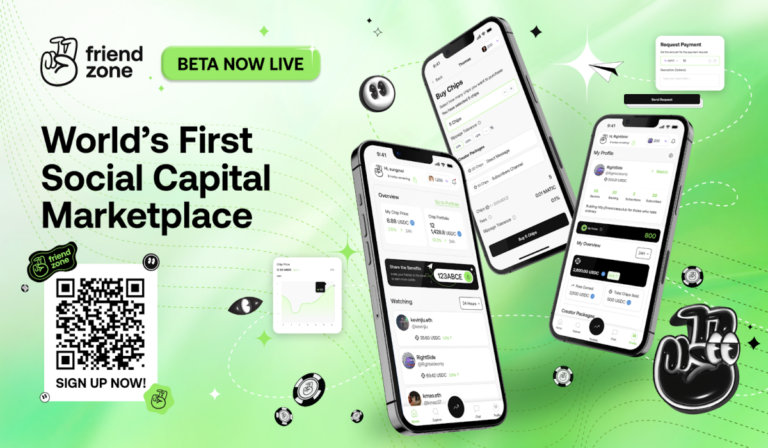
British Virgin Islands, 26 February 2024 – Friendzone, the sustainable and scalable Web3 platform redefining Social Finance (SocialFi) on the blockchain, has officially launched on the Polygon Proof-of-Stake network. The launch of the Social Capital Marketplace is the first of many key milestones for Friendzone in its mission to become the number #1 social media dApp in the Web3 industry.
Friendzone is an entirely novel decentralized protocol that marries the engagement of traditional social media with the unique financial rewards enabled by Web3 technology, paving the way for the creation of more empowering online communities. In this way, Friendzone is much more than just another SocialFi platform.
It represents a paradigm shift that not only recognizes social media presence and influence but rewards it in tangible and monetizable ways. It promises to redefine the social media industry as a place where every interaction can potentially generate value, empowering content creators and users alike to monetize their online experiences seamlessly.
The launch on Polygon PoS coincides with the closure of a significant funding round led by angel investors including Kain Warwick (Founder of Synthetix), Kieran Warwick (Founder of Illuvium), Danny Wilson (CFO of Illuvium), Thomas Aslanian (Product & Token Lead of Immutable), Anton Buenavista (Founding Team Pendle Finance), Jackson Chan (Co-Founder of PHD Capital) and many other incredible angels with experience at Synthetix, Pendle Finance, Bybit, Metastreet Labs and Renzo Protocol.
Alongside the round, which brings Friendzone’s total amount raised to more than USD 750,000, the startup is pleased to welcome the aforementioned investors, plus TN Lee (Co-Founder of Pendle Finance) and John Park (Partner at Sparklabs) to its growing advisory board.
Lifting SocialFi To The Next Level
Although Friendzone is competing in an increasingly crowded SocialFi space, its platform is differentiated from others through its nuanced incentive and protocol design. Friendzone is uniquely focused on overcoming the scalability and liquidity challenges that have hampered the growth of first-generation SocialFi platforms, setting it up to become the first protocol of its kind to go mainstream.
Friendzone has designed its protocol economics around an adaptive bonding curve that takes into account market feedback in real-time, ensuring that its token valuation is always fair, with continuous access for both small and large networks. Through this mechanism, it promotes sustained engagement and network growth without being constrained by the accessibility and liquidity bottlenecks that have held back alternative SocialFi protocols.
With its custom creator controls, Friendzone empowers everyone to be a creator with the ability to customize their social media activity and create tailored offerings ranging from public events to private groups, where they can set terms and prices that better reflect the value they provide.
Besides the purchase and sale of its “Creator Chips”, Friendzone incorporates a staking feature into its tokenomics model that takes into account both the quantity and duration of the user’s stake. It’s inspired by Curve’s veCRV model and aims to ensure a more equitable distribution of each creator’s revenue, incentivizing network users to actively contribute to the success of every creator with a share of their rewards.
Through these novel innovations, Friendzone promises to transcend the emotional incentives of traditional social media networks by integrating powerful financial incentives enabled only with crypto, amplifying its network effects to enhance user engagement and fairly reward participation on the platform and all integrated decentralized applications existing today.
A Progressive Rollout
Friendzone has generated enormous interest before its launch on Polygon PoS, with more than 5,000 whitelisted users signed up. To ensure stability during its incentivized beta rollout, the protocol is capping the number of users allowed onto the network in batches of 1000. The plan is to progressively onboard more users as the project demonstrates its worth and evolves from its beta stage, where it will be closely monitored for bugs and refined to provide an optimal user experience.
The initial 1000 users selected to participate in the launch can now head to X, formerly known as Twitter, to claim their Friendzone handles, which will be the same as their X handles.
During the initial launch period, Friendzone will also integrate a new points system into its protocol, enabling early adopters who beta test the product to begin accumulating points to enhance their rewards and reputations on the platform.
“We are immensely proud to launch Friendzone with the support of the Polygon ecosystem, a collaboration that marks a significant milestone in our journey. The Polygon PoS Network’s exceptional scalability, speed, and security offer the perfect foundation for Friendzone, enabling us to redefine social media engagement and monetization in the Web3 space.
The commitment to innovation and the success of projects built on Polygon PoS is unparalleled. This strategic relationship is a testament to our shared vision of empowering users and creators in a disruptive decentralized digital economy.” said Kevin Lu, CEO & Co-Founder of Friendzone.
Friendzone is delighted to bring its collaboration with the Polygon ecosystem to the next level, tapping into its powerful ecosystem and leveraging its expertise to explore new use cases and accelerate innovation in the SocialFi space. Friendzone is poised to unleash new dynamics and explore uncharted waters on Polygon PoS as it seeks to bring more value to users in the nascent decentralized social media industry.
The Polygon ecosystem has already distinguished itself in the blockchain arena with its strong ethos of innovation and a litany of unparalleled strategic brand collaborations, making it an ideal landing spot for Friendzone. The protocol’s integration with the Polygon network enables it to make plans toward tapping into an innovative zkEVM-based Layer-2 architecture that will be instrumental in accelerating its growth as it scales its network and expands its user base.
The Polygon networks are home to some of the most dynamic and diverse ecosystems of groundbreaking dApps and communities in the blockchain world, providing further opportunities to collaborate, innovate and bring SocialFi into the mainstream.
“Friendzone represents the first of its kind in the SocialFi space, pioneering a new era of social media that rewards engagement with real value. We are proud to have Friendzone build on Polygon PoS and to work closely with their team to achieve our mutual goals. Their innovative approach to integrating social interactions with value incentives sets a new standard in the industry. This collaboration underscores Polygon’s dedication to supporting groundbreaking projects that push the boundaries of what’s possible in Web3 and beyond.” said SungMo Park, Head of BD APAC at Polygon Labs.
Today’s launch and funding round represents the first of many milestones to come for Friendzone, laying the groundwork for a truly interoperable protocol that will provide a scalable foundation to support the monetization layer of on-chain social graphs.
About Friendzone
Friendzone is the premier social Web3 platform introducing real-time adaptive pricing and native reward distribution to ensure fair and dynamic value exchange, tailored to a creator’s reputation and community support. The platform is the first to incentivize sustained engagement and offers creators extensive control over content monetization, promoting a robust and inclusive digital circular economy at scale.
Friendzone is supported by a dedicated team of core contributors and advisors from industry-leading entities such as Synthetix, Band Protocol, Koinly, Immutable, Pendle Finance, Cyball, and Sparklabs.
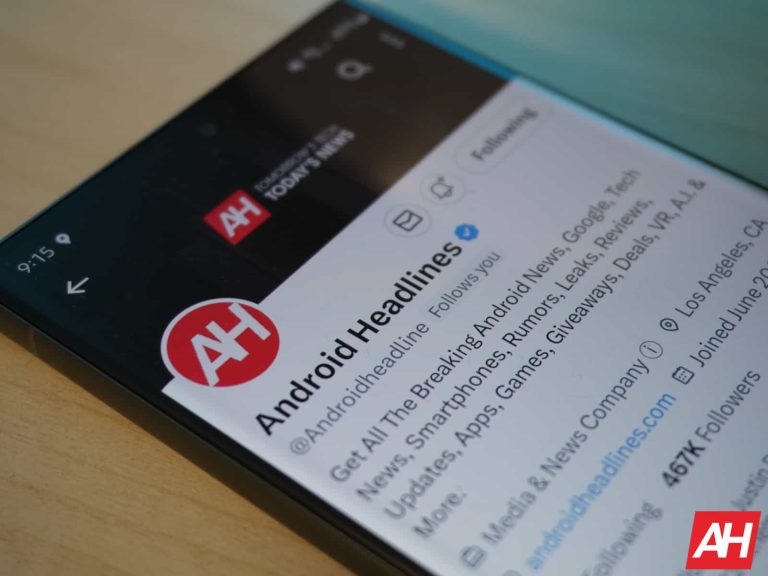
This happens all the time; we want to track down a certain post on X, and we’re constantly met with irrelevant results. Well, the company has a new solution to help you better search for posts on the platform. According to a new report, X is coming out with search filters to help you track down that one post you just got to share.
Right now, the new search filters are available to a very limited selection of people. For starters, this is a new useful feature coming to X, so it’s obviously making it to X Premium subscribers. So, if you want to enjoy this feature, you will need to subscribe to X Premium, which starts at $3/month for the most basic tier. Also, it’s only available for iOS users at the moment.
However, it’s not all bad news. This feature is going to come to an Android eventually, as is the natural order of things. Also, that’s plans to trickle this feature down to free users eventually.
New search filters are coming to X
If you don’t have a chance to like, repost, or bookmark an X post, you run the risk of never being able to see it again. Life moves fast on a social media feed, and X is constantly serving you up posts. So, if you are on the search for a specific post… well, we all know the needle/haystack analogy.
However, according to a post on X, the company is coming out with some search filters to help you better search for specific posts. Looking at the screenshot, we see that you’ll be able to filter your search by who made the post, when it was posted, what language it was posted in, and the post activity. There are also toggles on the bottom that allow you to include posts by users that are near you and exclude replies from the search.
So, if you use an Apple iPhone or if you’re an X Premium subscriber, then you can go ahead and update your app to try out this feature for yourself. If you are an Android user or a free X user, you’re still going to have to wait. Lastly, if you have no idea what X Premium is, then you should check out our rundown of the X Premium tiers.
In his latest Power On newsletter, Bloomberg’s Mark Gurman reports that the iOS 18 redesign will indeed happen. The reliable analyst also revealed details about the next macOS version. The next-generation software is expected to be revealed at Apple’s annual WWDC event in June. Previously, a sketchy rumor claimed that the iOS 18’s revamped design could be inspired by visionOS.
Apple indeed working on iOS 18 redesign per a reliable analyst
In his newsletter, Gurman says that Apple is working on updating the design of the iOS as early as this year. However, it will not be entirely revamped and similar to the visionOS that powers Apple’s mixed-reality headset. Still, the analyst agrees that the company could take some design cues from the Vision Pro’s software.
The sketchy rumor also revealed that Apple may borrow visual design elements from the visionOS and incorporate them into iOS. visionOS has rounded app icons, shadows, depth, 3D buttons, and translucent elements. A revamped iOS 18 mirroring the visionOS may not be the case because the latter is unique to a platform that focusses on passthrough video. Additionally, the windows are always floating and overlapping a complex background. Hence, the concept may not apply to iOS.
Apple has not significantly refreshed the design of iOS in years. The latest development from Gurman comes after he had previously stated that iOS 18 will be the biggest and the most ambitious update. It will also be packed with generative AI features.
macOS also said to get a revamp
Alongside this year’s iOS 18, Gurman also reveals that Apple has started early work on the next operating system for Mac. The latest version is macOS 14 Sonoma released last year. The analyst says that the next-generation software with changes could be released in 2025 or 2026. The Cupertino-based tech giant last refreshed the macOS with a major redesign in 2020 with Big Sur.
We, as a civilization, have just cultivated app developers – it hasn’t even been 30 years since the first mobile app emerged in 1997 – the Snake game for Nokia is believed by many to be the app pioneer. It seems that we should call it a day and leave behind those poor mobile code wizards who’ll have to find another sort of occupation.That’s if T-Mobile’s futuristic idea for an app-less phone becomes a reality:
I can tell you that in 5–10 years from now, nobody from us will use apps anymore.
That’s what Deutsche Telekom CEO Tim Hoettges said in a keynote presentation at the MWC tech conference in Barcelona (via Reuters).
Avid PhoneArena readers have already come across this heretic app-less phone idea in our MWC article that outlined what’s to expect from the ongoing mobile technology forum in Spain.
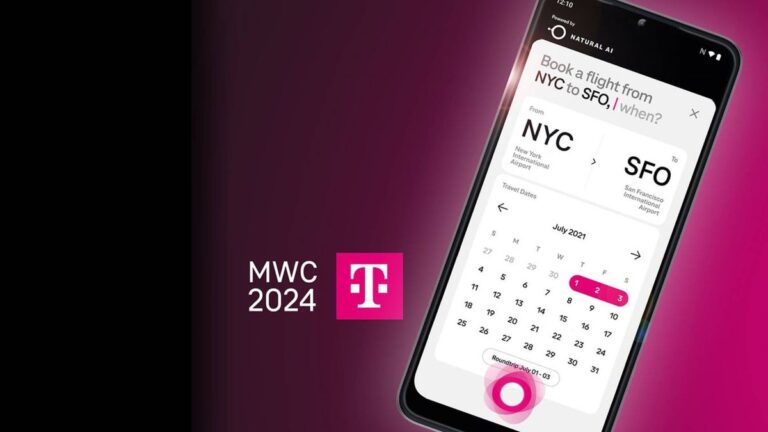
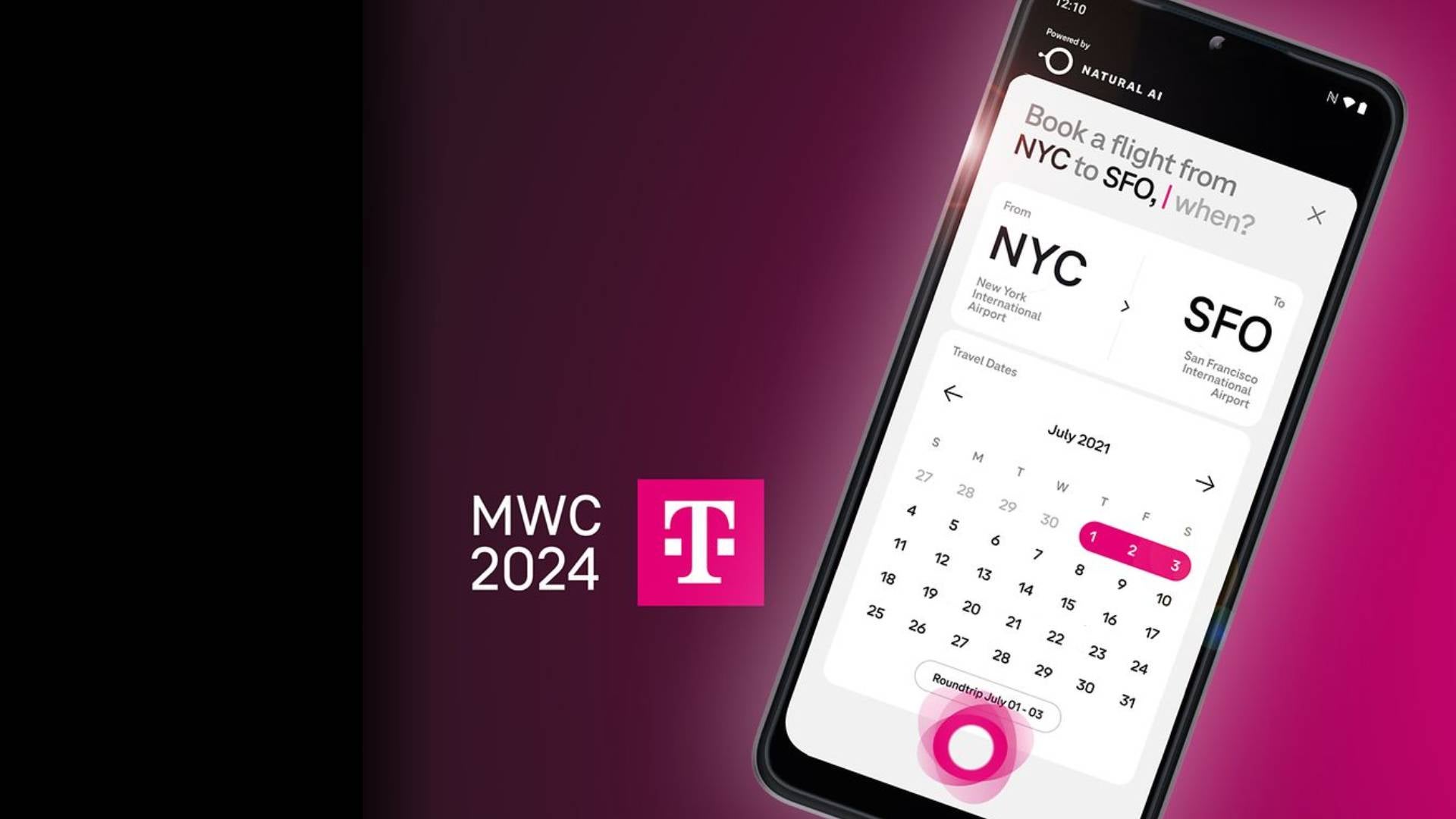
The German company (that’s also T-Mobile‘s largest shareholder) said the concept device, called “T-phone” device, will have an app-free user interface developed in collaboration with partners Qualcomm and Brain.ai.
The “T-Phone” (not T-Bone) will rely on artificial intelligence rather than standard apps to handle users’ specific needs.
“Like a concierge, the assistant understands your goals and takes care of the details”, claims the company, and says the phone will be able to book you a flight simply by voice command. The showcase uses concrete examples to demonstrate how an AI smartphone can make life easier when planning trips, shopping, creating video or editing photos.
Using AI, it takes over the functions of a wide range of apps and can carry out all daily tasks that would normally require several applications on the device. The concierge can be controlled effortlessly and intuitively via voice and text.
Jon Abrahamson, Chief Product & Digital Officer of Deutsche Telekom, is convinced: “Artificial intelligence and Large Language Models (LLM) will soon be an integral part of mobile devices. We will use them to improve and simplify the lives of our customers. Our vision is a magenta concierge for an app-free smartphone. A real everyday companion that fulfills needs and simplifies digital life”.
Scattered Spider is a threat group responsible for attacking several organizations since May 2022 by using techniques like social engineering, ransomware, extortion, SIM Swapping and many other tactics.
There were also reports that this threat group was affiliated with the BlackCat ransomware since mid-2023.
Their most notable attacks that made it to the media include the compromise of Twilio in August 2022, Caesars Entertainment, and MGM Resorts in 2023.
However, this threat group has been constantly evolving with tactics, techniques, and procedures for their operations.
Scattered SpiderAttack
According to the reports shared with Cyber Security News, Scattered Spider’s activities overlap with other intrusion set activities like 0ktapus, Scatter Swine, UNC3944, Octo Tempest, Muddled Libra, and many others.
The threat group is reported to consist of 17- to 22-year-old native English-speaking individuals who reside in Western countries.
Between March and July 2022, this threat group compromised over 130 unique organizations in several industries, including technology, telecommunications, and cryptocurrency.
Targeted Industries (Source: Sekoia)
Reports from Microsoft stated that this threat group also used personal information like residential addresses or relative names to threaten their victims into giving corporate credentials.
Once they gain access to the corporate networks, they perform a review of internal documents to collect details about the processes and procedures.
Later, they use this information to expand their scope and access sensitive systems and data.
In an advanced attack scenario, the threat group is using double-extortion tactics by deploying the BlackCat ransomware into the victim’s environment.
From Initial Access Broken To Ransomware Affiliate
During their early stages in 2022, Scattered Spider activities were associated with using intrusion sets to gain initial access to the organization’s accounts via social engineering.
Once they gather initial access information and other credentials, they sell it to other criminals for money.
Timeline of Scattered Spider (Source: Sekoia)
In mid-2023, Scattered Spider joined BlackCat ransomware operations and began to deploy ransomware payloads on Windows and Linux systems.
Further, they evolved into performing data exfiltration, extortion, and other attacking methods.
In late 2023, the threat group expanded its targets to Manufacturing, Hospitality, Law, Gaming, Natural resources, Financial services, and many others.
As of February 2024, the victims of Scattered Spider includes,
True Corporation
Zendesk
Squarespace
Walmart
Linkedin
Costco
Cellular Sales
Grubhub
Samsung
Gitlab
Fireblocks
Sinch
Roblox
Us Cellular
Apple
Binance
Verizon
Aflac
Bell
Allstate
Athene
Indicators Of Compromise
Phishing Domains
Phishing Servers
You can block malware, including Trojans, ransomware, spyware, rootkits, worms, and zero-day exploits, with Perimeter81 malware protection. All are extremely harmful, can wreak havoc, and damage your network.
Stay updated on Cybersecurity news, Whitepapers, and Infographics. Follow us on LinkedIn & Twitter.
Avast, a popular antivirus software, has been fined $16.5 million for selling user browsing data despite claims of protecting privacy. The FTC accused them of misleading users and selling sensitive information without consent. Avast agreed to settle, stop selling data, and delete user information.
The US Federal Trade Commission (FTC) has imposed a $16.5 million fine on Avast Limited, Avast Software, and Jumpshot for deceiving users by claiming its software would eliminate web tracking but doing the tracking itself.
It is worth noting that, the Prague, Czech Republic-based anti-malware and cybersecurity vendor stored the data indefinitely and sold it without consumers’ consent or notice while promising users exemplary privacy protection.
This development reflects the continuation of the FTC’s crackdown on companies involved in deceptive data privacy practices. In January 2024, it reached a settlement with Outlogic to prevent selling information for tracking user locations and banned InMarket from selling precise user locations.
The FTC’s Director of Consumer Protection, Samuel Levine, criticized Avast’s bait-and-switch surveillance tactics for violating consumer privacy.
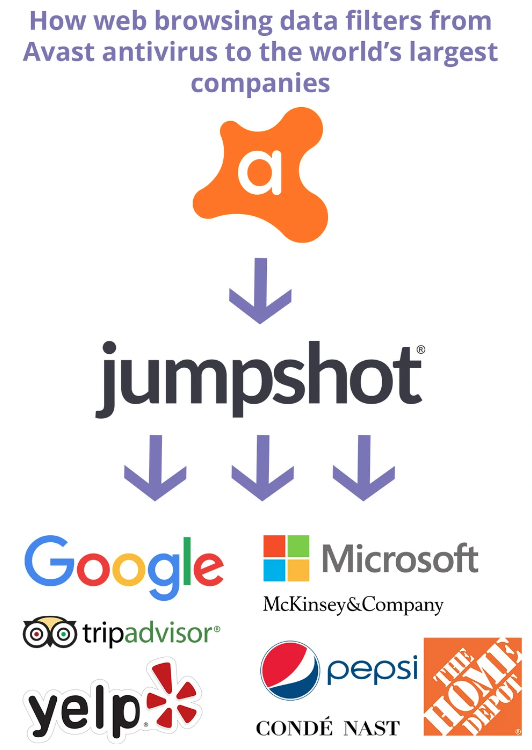
In its complaint, available here (PDF), the FTC revealed that cybersecurity software company Avast collected consumers’ browsing information through its browser extensions and antivirus software, including Avast Extensions, Avast Secure Browser, Avast Mobile Software, and Avast Desktop Software. The FTC accused Avast of selling its data to over 100 third parties via Jumpshot.
For your information, in 2013, Avast acquired competitor Jumpshot, rebranded as an analytics company, and sold browsing information collected from consumers from 2014 to 2020 through it. The FTC accused Jumpshot of offering products that enabled user tracking and associating browsing histories with third-party information.
Jumpshot entered a contract with Omnicom, offering an “All Clicks Feed” for 50% of customers in the US, UK, Mexico, Australia, Canada, and Germany, and earned millions in gross revenues. Avast’s dubious data privacy practices were exposed in 2020 in a joint investigation, leading to the shutdown of Jumpshot.
Reportedly, the company collected data on religious beliefs, health concerns, political views, locations, and financial status from 2014 to 2020. The FTC found Avast failed to adequately anonymize browsing information despite the company claiming otherwise.
FTC also discovered that Avast sold data with unique identifiers for each browser, which exposed crucial data like visited websites, timestamps, user location, and the type of device and browser.
Avast agreed to settle the case with the FTC, paying $16.5 million. The order also requires Avast to stop selling or licensing browsing data to advertisers, delete all data obtained by Jumpshot, and notify affected customers of the sale.
How Jumpshot functioned
Avast’s spokesperson, Jeff Monney, reaffirmed the company’s commitment to protecting and empowering users’ digital lives, citing disagreement on the allegations while opting for a settlement.
Data privacy violations can lead to significant financial consequences for companies like Avast, including fines, lawsuits, lost business, reputational damage, and negative press coverage. Regulatory bodies enforce data privacy laws and can sue companies, resulting in further financial losses and legal costs, as evident in Avast’s case.
It’s the first day of Mobile World Congress 2024 and ZTE has announced a range of new devices, one of which is the nubia Pad 3D II. This is the company’s second-generation 3D tablet that boasts the capability to generate 3D imagery without the need for 3D glasses. Think about the way you would typically consume 3D content. You go to the movies, and you get a pair of 3D glasses which you put on and you enjoy the show. In some cases, the experience can feel a little out of this world. The movie is more immersive thanks to the glasses that help the pictures on the screen appear as if they’re jumping out at you. The key component here is the glasses. You need these for the content to appear 3D.
The nubia Pad 3D II is setting out to do that without the need for glasses. The aim is you can look straight at the display, and images and video can pop out of it like you would expect. Another good example of what this looks like is the giant 3D billboard in New York City’s Times Square.
The nubia Pad 3D II is powered by 5G and AI technologies
3D phones and tablets aren’t entirely new. But ZTE’s nubia Pad 3D II does offer some unique features that set it apart. ZTE says this is the world’s first 3D tablet to also feature 5G capabilities and AI enhancements. On the AI side of things, the tablet is powered by an AI processing engine. ZTE doesn’t go into much detail on this. However, it does state that the processing engine helps to boost the 3D visual experience.
According to ZTE, the image processing algorithms are paired with unique liquid crystal lenses for more realistic images. These lead to big benefits over the previous model of this device. With an 80% improvement in the resolution of the 3D images. What’s more, the brightness has also been boosted by 100%. So you end up with brighter, more high-resolution images in a 3D view.
Improvements in the overall 3D experience go further as well. For example, ZTE says that 3D Crosstalk, 3D color, and 3D power efficiency have all been optimized. Of course, none of this really matters if the content you’re watching isn’t 3D, right? Not entirely.
That’s because the nubia Pad 3D II also supports Neovision 3D Anytime technology. This essentially lets you take 2D content and turn it into content that’s 3D. The conversion is possible with multiple types of content including pictures and games. On top of that, the 2D to 3D conversion happens in real-time ZTE says.
Specs, pricing, and availability
In terms of specs, the nubia Pad 3D II is well-equipped. It has a 12.1-inch display with a 2.5K resolution and a 144Hz refresh rate. It also has a 10,000 mAh capacity battery with 66W fast charging. Not to mention a Qualcomm Snapdragon 8 Gen 2 mobile platform and 512GB of storage. If you’ve been searching for a 3D device, this might be it. There’s no mention of a price or availability though. For now, consumers will have to settle for knowing it’s out there.
The nubia Pad 3D II and ZTE’s other announcements are all part of the company’s motto at MWC 2024 “unfolding the intelligent future.”






.webp)
.webp)
.webp)
.webp)