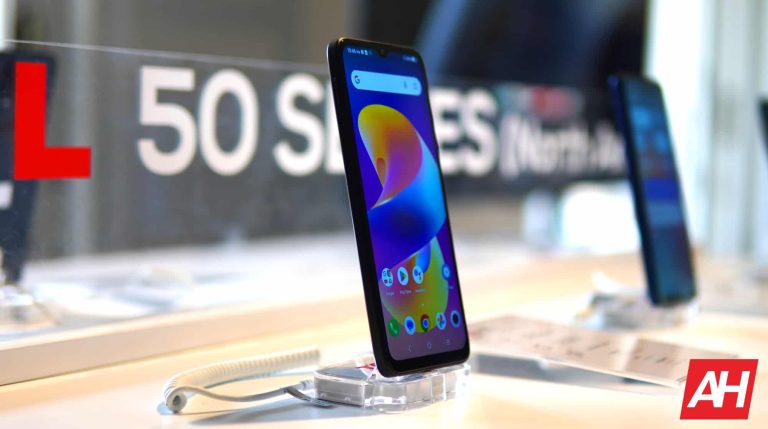
TCL unveils its new TCL 50 series of phones at MWC 2024

0
[ad_1]

The Mobile World Congress, MWC, is finally happening, and companies are showcasing some of their best technological breakthroughs and potential products. Also, we’re seeing a few familiar faces. In the case of TCL, the company just gave us a look at its latest TCL 50 series phones at MWC. It previously announced these devices at CES earlier this year, but it’s providing more information on these devices.

TCL unveils its 50 Series phones during MWC

This year, TCL is releasing a whopping seven phones! Many of them are your typical mid-range handsets, but some of them actually stand out. However, let’s start off with the more basic devices.

TCL 50 LE ($99)

TCL 50 LE Press Image

This is the entry-level phone. It comes with a 6.6-inch 720p+ display that has a 90Hz refresh rate. As for the internals, it has 4 GB of RAM that’s backed up by 64GB of storage. Rounding out the specs, it has a 4,000mAh battery.

TCL 50 5G (€149)

TCL 50 5G Press Image

This device comes with a 6.6-inch display with a 720p+ resolution and a 90Hz refresh rate. As for the internals, this phone uses a MediaTek MT6835 SoC, and it comes with 4GB/6GB of RAM and 128GB/256GB of storage. Rounding out the specs, we have a 50MP camera accompanied by a 5MP ultrawide camera and a 5010mAh battery.

This device is meant to be a simple phone to get the job done. It’s not meant to give you the most powerful experience, but it provides you with a solid user experience with a nice display at a low price.

TCL XE 5G ($149)

TCL 50 xe 5g Press Image

Next up, we have the TCL XE 5G. It has a smaller  6.6-inch inch display with a 720p+ resolution. It uses a MediaTek Dimensity 6100 SoC with 4GB of RAM and 128GB of storage. For the camera, it has a 50MP main camera accompanied by a 5MP Ultra-wide camera, and it comes with a 5010 mAh battery.

This one is for people who want a little bit more power, and it don’t mind sacrificing screen resolution.

TCL 50 SE (€149)

TCL 50 SE Press Image

This phone has a large 6.78-inch display, and it has a sharper 1080p+ resolution. It’s using The MediaTek Helio G88 SoC, and it comes with 4GB of RAM (expandable to 8GB with storage) with 128GB of storage. It’s rocking a 50MP main camera, and it comes with the same 5010mAh battery as the others.

The phone comes with Android 14, and it will get the update to Android 15. It’s unfortunate to see it only getting one update. In any case, this phone is meant to give you a slightly more powerful experience with a sharper display. The display uses NXTVISION technology. This makes the colors and contrast pop when you’re watching videos or playing games.

TCL XL 5G ($169)

TCL 50 XL 5G Press Image

One of the more robust devices on this list it’s a TCL XL 5G. This one has a large 6.78-inch display with a 1080p+ resolution and a smooth 120Hz refresh rate. It comes with 128GB of storage and an octa-core processor. The TCL XL 5G comes with a 50MP main camera, and it has a large 5,010mAh battery.

This phone is for people who want a more powerful phone with a more robust viewing experience as well.

TCL 50 XE NXTPAPER 5G ($199)

TCL 50 XE NXTPAPER 5G Press Image

This is one of the phones that stand out. TCL is known for having its NXTPAPER display technology. It makes the display extremely similar to paper. It eliminates harmful blue light by 61%, making for a more comfortable viewing experience. Also, it has anti-glare technology that makes it much easier to view in bright daylight.

This phone comes with a 6.6-in 720p+ display that runs at 90Hz. As for the processor, it phone uses the MediaTek MT6835 23E + SoC. It has 4GB/8GB of RAM (this phone uses RAM expansion through storage, so, with the expansion, we’re looking at 12GB/16GB of RAM), and 128GB/256GB of storage. Rounding out the specs, this phone has a 50MP main camera and a 5010mAh battery.

TCL 50 XL NXTPAPER 5G ($299)

TCL 50 XL NXTPAPER 5G Press Image

Rounding out the list, we have the most advanced of the NXTPAPER phones. This phone has a large 6.7-inch NXTPAPER display with a 1080p+ resolution and a 120Hz refresh rate. This phone has 6GB of RAM with 128GB of storage. Just like the other phones, it has a 50MP camera and a 5010mAh battery.

All of these phones are going to hit the market during Q2 2024 with the exception of the NXTPAPER phones. These phones will hit the market during Q3 2024.


[ad_2]
Source link

TCL unveils the new LINKKEY K511 during MWC

0
[ad_1]

The Mobile World Congress is going on now, and TCL is one of the companies showcasing technology. Along with showing off some new NXTPAPER tablets, and the new TCL 50 Series, the company is showcasing some devices to help bring 5G to your computer. TCL just announced the LINKKEY IK511 during MWC

TCL also announced a very nice set of tablets at MWC. These are the NXTPAPER 10 and the NXTPAPER 14 Pro. These will all use the NXTPAPER 3.0 technology. This technology is a priority TCL technology, and it makes for a better viewing experience. It filters out 61% of the harmful blue light that can have a negative effect on your vision. Also, it heavily reduces glare in bright environments.

TCL announces the new LINKKEY IK511 5G dongle at MWC

TCL’s LINKKEY series of devices is all about bringing connectivity to more devices. The new LINKKEY IK511 is the latest 5G dongle that you would plug directly into your computer to give it internet access. This is incredibly useful, as it gives your computer internet access even if you’re not around a Wi-Fi connection.

The device itself is small enough to fit in the pocket. When you need to use it, all you have to do is plug it into one of your computer’s USB ports. Since it supports Plug-and-Play, there’s very minimal setup needed to work.

The LINKKEY IK511 is one of the world’s first internet dongles to use the 5G RedCap standard. Basically, this standard reduces costs and power consumption compared to other standards. This means that you’ll be able to enjoy consuming internet content for longer.

Along with this device, TCL  also announced the LINKKEY IK512. This device is a bit more advanced, as it’s designed for bandwidth-intensive scenarios. It can reach speeds up to 2.46Gbps, which is incredible for a USB dongle.

Unfortunately, we don’t have the pressing information on the LINKKEY IK511. However, we know that the LINKKEY IK512 will be available in Europe in Q4 this year.


[ad_2]
Source link

A Chatgpt-Powered AI Tool for Ethical Hackers

0
[ad_1]
HackerGPT

HackerGPT is a cutting-edge AI tool designed explicitly for the cybersecurity sector, particularly beneficial for individuals involved in ethical hacking, such as bug bounty hunters.

This advanced assistant is at the cutting edge of cyber intelligence, offering a vast repository of hacking methods, tools, and tactics. More than a mere repository of information, HackerGPT actively engages with users, aiding them through the complexities of cybersecurity.

There are several ChatGPT-powered tools, such as OSINVGPT, PentestGPT, WormGPT, and BurpGPT, that have already been developed for the cyber security community, and HackerGPT is writing a new chapter for the same.

Document
Analyse Shopisticated Malware with ANY.RUN

More than 300,000 analysts use ANY.RUN is a malware analysis sandbox worldwide. Join the community to conduct in-depth investigations into the top threats and collect detailed reports on their behavior..

What is the Purpose of HackerGPT:

It leverages the capabilities of ChatGPT, enhanced with specialized training data, to assist in various cybersecurity tasks, including network and mobile hacking, and understand different hacking tactics without resorting to unethical practices like jailbreaking.

HackerGPT generates responses to user queries in real-time, adhering to ethical guidelines. It supports both GPT-3 and GPT-4 models, providing users with access to a wide range of hacking techniques and methodologies.

The tool is available for use via a web browser, with plans to develop an app version in the future. It offers a 14-day trial with unlimited messages and faster response times.

HackerGPT aims to streamline the hacking process, making it significantly easier for cybersecurity professionals to generate payloads, understand attack vectors, and communicate complex technical results effectively.

This AI-powered assistant is seen as a valuable resource for enhancing security evaluations and facilitating the understanding of potential risks and countermeasures among both technical and non-technical stakeholders

Recently, HackerGPT released 2.0, and the beta is now available here.

Functionality of HackerGPT:

Upon posing a query to HackerGPT, the process begins with authentication of the user and management of query allowances, which differ for free and premium users.

The system then probes its extensive database to find the most relevant information to the query. For non-English inquiries, translation is employed to ensure the database search is effective.

If a suitable match is discovered, it is integrated into the AI’s response mechanism. The query is securely transmitted to OpenAI or OpenRouter for processing, ensuring no personal data is included. The response you receive depends on the module in use:

  • HackerGPT Module: A customized version of Mixtral 8x7B with semantic search capabilities tailored to our database.
  • GPT-4 Turbo: The most recent innovation from OpenAI, enhanced with our specialized prompts.
Document
Is Your Company Network Under Cyber Attack?

What to know before purchasing a cloud-based, converged network security solution.Prevent malware from infecting your network at the delivery stage by intercepting malicious files in transit from their source to the target device’s web browser..

Guidelines for Issues:
The “Issues” section is strictly for problems directly related to the codebase. We’ve noticed an influx of non-codebase-related issues, such as feature requests or cloud provider problems. Please consult the “Help” section under the “Discussions” tab for setup-related queries. Issues not pertinent to the codebase are typically closed promptly.

Engagement in Discussions:
We strongly encourage active participation in the “Discussions” tab! It’s an excellent platform for asking questions, exchanging ideas, and seeking assistance. Chances are, others might have the same question if you have a question.

Updating Process:
To update your local Chatbot UI repository, navigate to the root directory in your terminal and execute:

npm run update

For hosted instances, you’ll also need to run:

npm run db-push

This will apply the latest migrations to your live database.

Setting Up Locally:
To set up your own instance of Chatbot UI locally, follow these steps:

  1. Clone the Repository:
git clone https://github.com/mckaywrigley/chatbot-ui.git
  1. Install Dependencies:

Navigate to the root directory of your local Chatbot UI repository and run:

npm install
  1. Install Supabase & Run Locally:

Supabase is chosen for its ease of use, open-source nature, and free tier for hosted instances. It replaces local browser storage, addressing security concerns, storage limitations, and enabling multi-modal use cases.

  • Install Docker: Necessary for running Supabase locally. Download it for free from the official site.
  • Install Supabase CLI: Use Homebrew for macOS/Linux or Scoop for Windows.
  • Start Supabase: Execute supabase start in your terminal at the root of the Chatbot UI repository.
  • Fill in Secrets: Copy the .env.local.example file to .env.local and populate it with values obtained from supabase status.
  1. Optional Local Model Installation:

For local models, follow the instructions provided for Ollama installation.

  1. Run the App Locally:

Finally, run npm run chat in your terminal. Your local instance should now be accessible at http://localhost:3000.

Setting Up a Hosted Instance:

To deploy your Chatbot UI instance in the cloud, follow the local setup steps here . Then, create a separate repository for your hosted instance and push your code to GitHub.

Set up the backend with Supabase by creating a new project and configuring authentication. Connect to the hosted database and configure the frontend with Vercel, adding necessary environment variables. Deploy, and your hosted Chatbot UI instance should be live and accessible through the Vercel-provided URL. You can read the complete GitHub repository here.


[ad_2]
Source link

Google Play Console shares Galaxy A55 specs & design early

0
[ad_1]

Samsung is all set to launch a couple of new Galaxy A series smartphones in the coming weeks. One of these will be the Galaxy A55, which has already been the subject of several leaks before the launch. We’ve already exclusively shared official renders of the device last month. Also, the Galaxy A55 has already received numerous certifications. Now, the Google Play Console has joined the club and revealed the Galaxy A55 specs & design details.

Samsung Galaxy A55 specs & design spotted in the Google Play Console listing

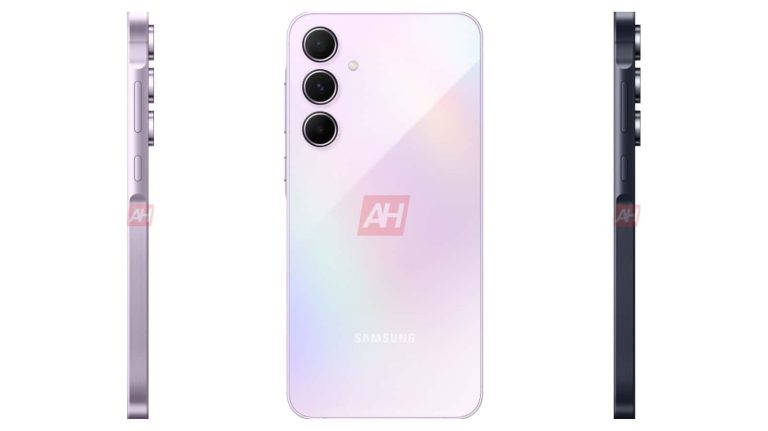
The key specs and design of the upcoming Galaxy A55 have been revealed via the Google Play Console listing. The device’s design on the Play Console aligns with the earlier leaked live photos and renders. The handset will have a punch-hole design and a vertically aligned triple primary camera setup at the rear. In addition, the photo reveals the handset will feature minimal bezels. Also, the images show that the phone’s volume rocker & power buttons will be placed on the right side.

Samsung Galaxy A55 Play Console Design

Furthermore, the key specifications of the Galaxy A55 have surfaced in the Play Console listing. They are in line with the earlier listings on Geekbench and other certification sites, apart from the leaks from other sources. Notably, the specs and design indicate that the Samsung Galaxy A55 will be a premium mid-range offering.

The Galaxy A55 could feature the Exynos 1480 SoC and 8GB of RAM

As per the Google Play Console, the Galaxy A55 will be backed by the Exynos 1480 processor. Furthermore, the listing indicates that the octa-core chipset will be paired with the Samsung Xclipse 530 GPU. Notably, this combination paired with 8GB of RAM suggests that the handset will provide substantial processing power. Also, the Play Console certification has revealed that the phone will boot Android 14 out of the box. However, it’s not clear if it will have the brand’s OneUI 6.0 or OneUI 6.1 interface.

Samsung Galaxy A55 Play Console

Furthermore, the Play Console certification suggests that the Galaxy A55 will offer a resolution of 2,340 x 1,080 pixels. The screen panel will have a screen density of 450ppi. While the listing hasn’t revealed the screen size, earlier leaks have indicated it could be a 6.5-inch FHD display. No other details about the device have been revealed by the Play Console listing.

However, earlier leaks indicated that the Galaxy A55 will have up to 12GB of RAM and up to 256GB of storage. The handset will provide a high refresh rate of 120Hz and the Gorilla Glass 5 protection over the screen. As for other features, it will have 50MP+12MP+5MP triple primary cameras, a 32MP selfie snapper, and a 5,000mAh battery.

Samsung is expected to launch the Galaxy A55 5G in the second quarter of this year, which starts in April. Notably, the handset’s predecessor, the Galaxy A54, was launched in the first half of March 2023. Since almost every detail is leaked regarding the device, we can expect an official announcement in the coming weeks, so stay tuned.


[ad_2]
Source link

Lenovo introduces Transparent Display Laptop at MWC 2024

0
[ad_1]

Lenovo is at MWC Barcelona this year with a new proof-of-concept that looks really cool. It’s their transparent laptop, which was rumored and even leaked out ahead of MWC Barcelona. But now it is here. It’s going by the name “ThinkBook Transparent Display Laptop.” It uses a Micro-LED transparent display and transparent keyboard to blend digital content with the physical environment.

The ThinkBook Transparent Display Laptop also has a borderless screen, which makes it look like your content is just floating there, almost like you’re in VR, but without a heavy headset.

Lenovo says that the “brilliance of this laptop lies in its intelligent integration of the virtual and real.” It uses Artificial Intelligence Generated Content or AIGC; the transparent screen is able to open up new ways for work collaboration and efficiency by enabling interaction with physical objects and overlaying digital information to create unique user-generated content.

Micro-LED offers a ton of advantages in the development of transparent displays. We’ve seen transparent displays already this year from Samsung and LG at CES using Micro-LED, but this is the first time we’ve seen it on a laptop. It sports high color saturation, combined with exceptional contrast and 1000-nit brightness on the screen. All of which work to allow for optimal visibility both indoors and outdoors.

Lenovo claims that this laptop is not only a “good proof of concept but showcases a futuristic perspective on AI PCs.” Currently, Lenovo has no plans to sell this laptop, unfortunately, as it remains a proof of concept only.

Lenovo brings AI PCs to businesses with new ThinkPad Laptops

Everywhere you turn, someone or some company is talking about AI, and that includes Lenovo. It is unleashing a handful of other laptops at MWC Barcelona this year, which they claim will bring “a new generation of AI PCs for business.” This includes the ThinkPad T14 Gen 5, ThinkPad T14s Gen 5, ThinkPad T16 Gen 3, ThinkPad X12 Detachable Gen 2, and the ThinkBook 14 2-in-1 Gen 4.

The ThinkPad T14, T14s, and T16 Gen 5 are the company’s latest additions to its class of Lenovo AI business workhorse laptops and include the latest Intel Core Ultra processors with VPro. These laptops also include a stunning design, along with Lenovo’s Communications Bar that has a 5-megapixel camera, noise-canceling microphones, and also works as a lip to make opening the laptop with one hand much easier.

The ThinkPad X12 Detachable Gen 2 is the second-generation detachable Windows tablet form factor from Lenovo, and it also offers Intel Core Ultra processors inside. It includes ThinkPad durability and an integrated AI engine for highly mobile professionals.

Finally, we have the ThinkBook 14 2-in-1 Gen 4 which is a versatile laptop updated with the company’s new drop hinge. It has also been updated with the latest Intel Core Ultra processors in a thin-and-light design. It boasts a 14-inch display with a 90% screen-to-body ratio. And it weighs under four pounds.

Here’s the pricing and availability for everything else. The ThinkPad T14 (Intel) Gen 5 will be available in April starting at $1,199, while the AMD model will come in May starting at $949. The ThinkPad 14s will also launch in April, starting at $1,399. While the ThinkPad T16 Gen 3 will launch in April at $1,219. The incredible ThinkPad X12 Detachable Gen 2 will be available in April as well for $1,399. And finally, the ThinkBook 14 2-in-1 Gen 4 will launch next month, starting at $1,169.


[ad_2]
Source link

Motorola will use Corning Gorilla Glass on all its 2024 phones

0
[ad_1]

Motorola is partnering up with Corning to feature Gorilla Glass on its future devices, ensuring that customers who buy Motorola phones will have some peace of mind when it comes to display protection. Motorola officially announced the news on February 25 as part of Mobile World Congress. The event officially opens up on February 26, but today is press day, and it often contains a few announcements from various brands. In Motorola’s case, the company is getting a head start on the details as it won’t be as busy.

If you’re unfamiliar with Corning Gorilla Glass, it’s become the standard for mobile devices. Not all mobile devices have it of course. But the ones that do tend to have tougher displays. Corning makes different types of Gorilla Glass as well and uses it across a range of different product types. Including smartphones, tablets, smartwatches, and even Lenovo’s laptops. Lenovo also owns Motorola. So it isn’t too surprising to see a partnership between Lenovo and Corning expand to Motorola smartphones.

That being said, these certainly won’t be the first Motorola smartphones to come with Gorilla Glass over the display panels. In fact, Motorola even has some currently available devices that feature it.

All Motorola phones in 2024 will have Gorilla Glass, starting in the second half of the year

The big difference between Motorola’s current setup and the one that’s part of this announcement is that Gorilla Glass will now be on every single Motorola phone. Not just a few, all of them. Motorola says this will begin with phones that are released in the second half of the year. So it’ll still be a little while before all of the phones coming from the brand come with it.

Motorola doesn’t mention anything about phones coming out beyond 2024. So it’s unclear if any of its 2025 portfolio will come with the tougher glass as well. But it’s hard to imagine that it wouldn’t as Lenovo has a multi-year partnership. Motorola truly believes in the benefits of Gorilla Glass too. “Consumers today continue to demand reliability and durability without compromising on sleek, modern design. By using Corning Gorilla Glass across all Motorola franchises, we aim to lead the industry by ensuring that every consumer has access to the durability and peace of mind that comes with this cutting-edge technology,” said Motorola’s Head of Customer Experience Ruben Castano.

And there you have it. Peace of mind and reliability. While Gorilla Glass isn’t damage-proof, it does an excellent job of preventing cracks, scuffs, and scratches from everyday mishaps.


[ad_2]
Source link

Motorola’s Smart Connect enables content sharing across devices

0
[ad_1]

Today as part of Mobile World Congress, Motorola and Lenovo are announcing a new software called Smart Connect. You can think of it as a unification software for content sharing because that’s exactly what it is. Smart Connect is all about making your life easier and helping you streamline your workflow and entertainment.

But that’s really just the essence of what it is in its simplest terms. Smart Connect opens up a whole of possibilities for everybody who uses Motorola and Lenovo devices. From students to professionals to content creators, and yes even gamers. What does it do exactly? Well, that’s the magic of it. With Smart Connect, you can share your content across all of your screens. Say you have a Lenovo laptop, for example. But you also have a Lenovo tablet and a Motorola smartphone.

The software makes it effortless to bring up those tasks on any one of the devices you own. Motorola does note that your device does need to be compatible, though. For now, this will be limited to Lenovo laptops, and on some tablets and Motorola smartphones. The tablets and smartphones will be “select models, but Lenovo laptop owners are pretty much good as long as it’s a Lenovo laptop with Windows 10 or later.

Motorola and Lenovo make multi-device experiences seamless with Smart Connect

So the Smart Connect software sounds cool in theory but you might be wondering what it actually does for you. It offers quite a few features. This includes a smart clipboard, swiping to stream video, an instant hotspot, and even notification sync. There are more features as well, such as a webcam and a share hub feature, and something that Motorola and Lenovo are calling Cross Control.

Cross Control might be one of the more convenient features. Especially if you’re someone who uses multiple devices for work or anything else, and you dislike clutter or needless complexity. Cross Control makes it possible for you to use a single mouse and keyboard for controlling your PC, smartphone, and tablet. Now you can already do this technically. You could use a Bluetooth keyboard that will connect to all three of them. But that’s not really what Cross Control is about.

What it really does is allow you to use one mouse and keyboard across all three of those devices at the same time. So you can be working on a document on your PC, but then move the mouse cursor over to your tablet and get a file stored there that you want on the PC document. All the while interacting with a video call on your phone.

Another neat feature is the swipe-to-stream function. Say you’re watching your favorite show on your smartphone while commuting home, but then want to transition to your PC because it’s a bigger screen. No problem. With Smart Connect, you can swipe your content from your phone to your PC and continue watching where you left off. All without an interruption. And that’s the key detail. Without an interruption. No reloading the website version of a service after closing out the app on your phone. Just swipe and the content continues playing on a new screen.

Motorola and Lenovo will launch this new software in the coming months, and details about device compatibility will be announced around the same time.


[ad_2]
Source link

Google gives its conclusive arguments for search monopoly trial

0
[ad_1]

Google has presented its final arguments to a federal judge in Washington, D.C., defending itself against accusations of operating an unlawful monopoly in search. The company filed its posttrial brief in response to the US Department of Justice’s claims that Google used exclusionary contracts to stifle competition in the search market.

Users and partners choose Google Search based on its quality, says Google

According to Google, evidence from the trial conclusively demonstrates its position as the highest quality and most popular search engine in the United States. It includes overwhelming preference from partners who choose to preload Google Search as the default engine.

However, Google reportedly pays billions to companies like Apple to place their search engine as the default in their devices. Google is a massive company at this point and their massive spending power enables them to do it. DOJ sees this practice as anticompetitive as it practically locks out rival search engines and in turn, harms the competition. Witnesses at the trial included executives from Google Search competitors like Microsoft and DuckDuckGo. They testified that Google’s alleged monopoly in search prevented them from gaining the necessary search volume to become robust alternatives.

Google sees this as punishing a successful company, not protecting the competition

Google contends that the DOJ aims to punish and hinder it from competing for revenue share. It would ultimately harm competition and consumers. The company asserts that punishing a successful innovator harms competition and is contrary to antitrust law.

The case is expected to conclude with closing arguments in May, following a multi-week trial that ended in late 2023. Additionally, Google will face the DOJ later this year in another legal battle. It will be about the company’s advertising technology business and claims of illegal monopolization.

The dispute between Google and the DOJ underscores the ongoing debate over competition in the tech industry and the extent of Google’s dominance in search. The outcome of this Google vs DOJ antitrust trial could have significant implications for the future regulation of large tech companies and the competitiveness of the search market.


[ad_2]
Source link

HONOR Magic6 Pro makes its global debut, Porsche Design model teased

0
[ad_1]

HONOR had plenty to say during its press event in Barcelona today. Today is the MWC press day, and HONOR is one of the highlights when it comes to the smartphone world, that’s for sure. During the press event, the global HONOR Magic6 Pro model was announced, while the Porsche Design HONOR Magic6 RSR was teased. It’s coming next month.

The HONOR Magic6 Pro has arrived to global markets

Just to be clear, the HONOR Magic6 Pro did launch in China last month, while this is the first time HONOR directly mentioned the ‘Porsche Edition’ model. Both of those handsets will be available in global variants.

Those two phones are not the only devices the company mentioned during the event but are the two that we’ll focus on in this article. The HONOR Pad 9 and HONOR MagicBook Pro 16 also got announced, as did the Porsche Design HONOR Magic V2 RSR (for global markets). We’ll talk about those in a separate piece.

The HONOR Magic6 Pro and Porsche Design HONOR Magic6 RSR will likely share the internals, but look a bit different on the outside. We’ll have to wait until next month to get the full details on the Porsche Design HONOR Magic6 RSR.

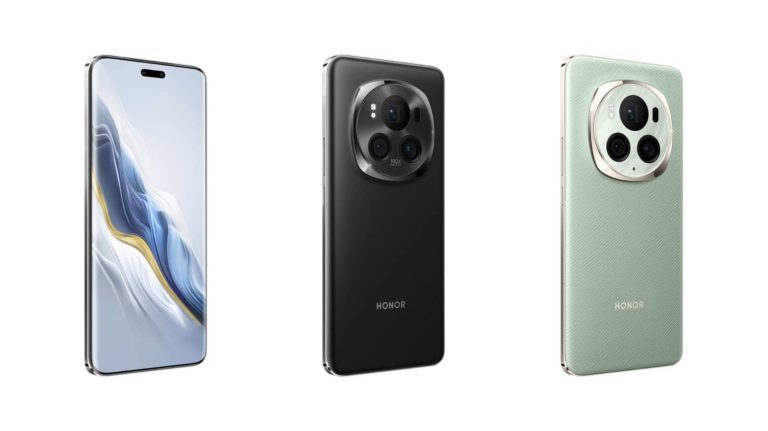
The global HONOR Magic6 Pro model comes in Black (glass) and Epi Green (vegan leather) variants. We believe that the Porsche Edition model will launch in Agate Gray color, just like the Magic V2 variant.

HONOR’s MagicOS 8.0 comes pre-installed on both phones

The HONOR Magic6 Pro comes with Android 14 and Huawei’s new MagicOS 8.0 on top of it. AI is a huge part of the experience here, and HONOR also highlights ‘Magic Capsule’ and ‘Magic Portal’ additions.

The HONOR Magic6 Pro series devices do have a Dynamic Island-like functionality. In other words, they do have some software functionality that ties into that pill-shaped cutout at the top of the display.

Magic Portal, on the other hand, supports over 100 most frequently used apps globally, says the company. It can, for example, recognize addresses in a text message and direct users to Google Maps. That’s just one example.

LlaMA 2 comes included on the devices

HONOR also brought on-device AI with open-source LlaMA 2 inside the HONOR Magic6 Pro. Thanks to that, the phone can complete functions such as “Q&A, text creation, and reading comprehension in an offline environment”.

The HONOR Magic6 Pro has the so-called ‘Falcon Camera System’, and they do look very sleek. There is a curved display on the front, with uniform bezels, which are quite thin, and a pill-shaped camera cutout.

The phone feature a 6.8-inch 2800 x 1280 LTPO AMOLED display. That panel has an adaptive refresh rate, as its refresh rate can go from 1 to 120Hz. The theoretical peak brightness is 5,000 nits, and the display aspect ratio is 19.5:9.

The Snapdragon 8 Gen 3 is included, along with a silicon-carbon battery

The Snapdragon 8 Gen 3 processor fuels HONOR Magic6 Pro, while you’re getting 12GB of RAM here. HONOR also includes up to 512GB of storage on the inside. HONOR opted for LPDDR5X RAM and UFS 4.0 flash storage here.

You will find a 5,600mAh battery on the inside. That is a second-generation silicon-carbon battery. It has a higher density than regular lithium batteries, and it can handle extreme temperatures better.

This smartphone also supports 80W wired and 66W wireless charging. Both reverse wireless and reverse wired charging are also supported. One thing to note is that you won’t be getting a charger in the box, unfortunately.

AH HONOR Magic6 Pro global launch event

A truly powerful camera setup sits on the back

A 50-megapixel main camera (f/1.4-f/2.0 variable aperture, OIS, PDAF, Laser autofocus) sits on the back. A 50-megapixel ultrawide camera (f/2.0 aperture, 122-degree FoV) is also included, as is a 180-megapixel periscope telephoto unit (f/2.6 aperture, OIS, PDAF, 2.5x optical zoom). On the front, you’ll find a 50-megapixel unit (f/2.0 aperture), and a ToF 3D camera for facial scanning.

HONOR did include a set of stereo speakers here as well, and the same goes for Bluetooth 5.3. Wi-Fi 7 support is also included, as is an IR blaster. The phone has an in-display fingerprint scanner (optical), while it also supports advanced facial scanning. It is IP68-certified for water and dust resistance too.

The HONOR Magic6 Pro measures 162.5 x 75.8 x 8.9mm, while it weighs 225 or 229 grams, depending on the model. The vegan leather variant is the lighter of the two.

The HONOR Magic6 Pro will be priced at €1,299 in Europe. Pre-orders kick off today, while the phone will go on sale on March 1.

HONOR Magic6 Pro in Black:

HONOR Magic6 Pro in Epi Green:


[ad_2]
Source link

Xiaomi 14 Ultra teardown has surfaced following its global launch

0
[ad_1]

The highly anticipated Xiaomi 14 Ultra has made its global debut at MWC 2024 in Barcelona, where all major details about the device are now official. Just after its official global announcement, a white Chinese model of the Xiaomi 14 Ultra has already been dissected and analyzed in a comprehensive teardown video posted on the WekiHome YouTube channel.

In the teardown video reveals the individual components and highlights key upgrades compared to its predecessor, the Xiaomi 13 Ultra. Notable improvements include the replacement of components such as the Sony Lytia LYT-900 sensor, featuring a step-less variable aperture, which enhances the camera capabilities of the device.

The video showcases the camera components in detail, accompanied by sample photos taken with the new Leica camera. Additionally, the updated photography kit now doubles as a charger and boasts more hardware buttons than its predecessor.

Xiaomi has improved the long-range zoom on the Xiaomi 14 Ultra

Comparative photos demonstrate the advancements in long-range zoom shots achieved by the “Ultra-Zoom” feature from ASIP, further emphasizing the enhanced photography capabilities of the Xiaomi 14 Ultra.

Following the component examination, the video proceeds to conduct a battery charging test, revealing that the device’s 5300 mAh battery can recharge at a maximum of 73.6 watts via USB-C, achieving a full charge in just 41 minutes. Display measurements indicate impressive brightness levels, with the AMOLED display reaching up to 1045 nits in full-screen mode.

Performance tests of the Snapdragon 8 Gen 3 powered flagship, particularly in gaming scenarios, demonstrate that the Xiaomi 14 Ultra maintains temperature and power consumption within acceptable limits across most games. However, Genshin Impact proves to be a more demanding challenge in certain instances.

The video also shows the reassembly process of the Xiaomi 14 Ultra, providing a glimpse into the process of putting together the device after the thorough teardown and testing procedures or a repair.

Overall, the teardown and testing video offers an insightful preview of the Xiaomi 14 Ultra’s features and performance, building anticipation for its official global launch at the Mobile World Congress 2024.


[ad_2]
Source link