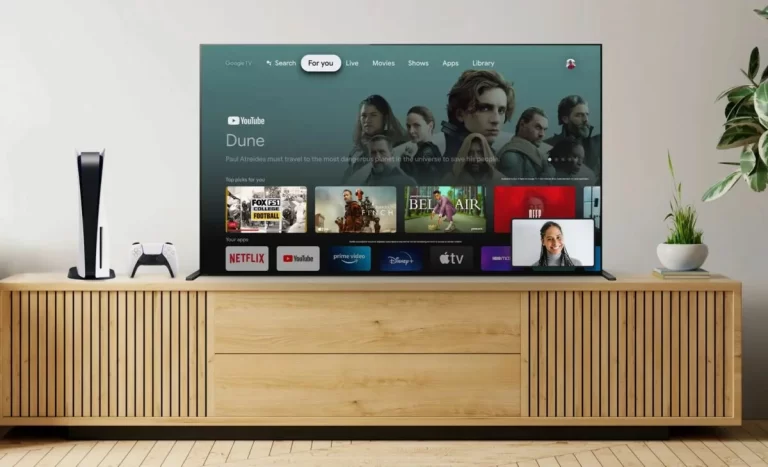
Google TV is undoubtedly among the top one-stop solutions for all your entertainment needs. Google has been constantly updating it with numerous services. But, not many of them stick around for a long time, and it is happening again. Google is reportedly limiting the purchase of TV shows to YouTube. This also means you can no longer purchase TV shows directly within the Google TV platforms as well as its mobile app.
Google TV users can no longer purchase TV shows from within the platform
This decision will apparently simplify how users purchase TV shows on Google TV. Google took the support page of Google TV to describe these changes. It adds “With these changes, you will no longer be able to purchase TV episodes and seasons from Google TV on Google TV devices, Android TV devices, and the Google TV Mobile app. You can continue to purchase TV shows from YouTube depending on country availability.”
Not to forget, the ability to purchase movies and TV shows using YouTube isn’t something that we haven’t heard of. Additionally, you could also check all your previous Google TV purchases on the video streaming platform.
Don’t worry! All your previous purchases are safe
Although you won’t be able to purchase TV shows, you’d be happy to hear that all your previous purchases are safe. The Google TV support page also talks about the same. It reads “You’ll still be able to access all of your previously purchased movies and TV shows (including active rentals and entire TV seasons, regardless of where the purchase was made) on Google TV devices, Android TV devices, the Google TV mobile app for Android and the iOS app, and YouTube.”
Google has already started rolling out this change and it could appear for all users in the coming weeks. That said, some users could still purchase shows on Google TV using the Google TV app. However, this will change soon.
Going forward, users will be able to purchase TV shows within the YouTube app on their TV. The best part is that you can also access those contents on your YouTube app. It would be interesting to see if Google disregards the Google TV mobile app completely in the future or works towards new features to keep it relevant down the line.
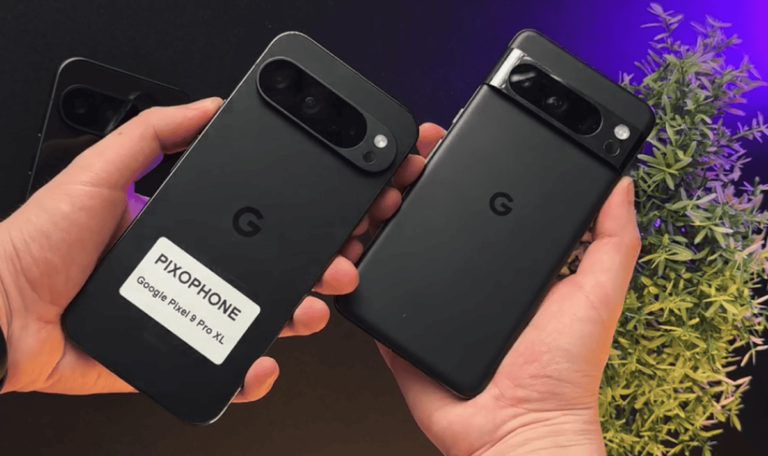
Just how different is the design of the Google Pixel 9 Pro XL when compared to its current flagship? To be honest, not much. The major difference here is making everything flat. Seeing the sides of the phone, as well as the sides of the camera bar are now flat, it honestly doesn’t look like a huge difference here.
Thanks to the TikTok user @pixo_unpacking, we can see a short video showing the two phones side-by-side. What’s even better is that they are both Black or Obsidian color.
The phone itself looks to be about the same size as the Pixel 8 Pro. Obivously, making the entire phone flat does change the shape and size a little bit. But we are expecting it to retain the 6.7-inch display that the Pro and XL models before it, have had.
The good news here is that the Pixel 9 Pro XL is matte all around. That includes the camera bump. One of my biggest complaints with the Pixel 8 Pro is the glossy and almost mirror-like finish on the camera bar for the Bay color. Hopefully, this year it won’t scratch as easily.
Pixel 9 Pro XL will go official on August 13
Google is holding its Made by Google event early this year, on August 13. That’s almost two months earlier than normal, and we expect the Pixel 9 Pro XL to be among the devices announced this time around. Google has already confirmed two of the potentially four phones we expect to see: Pixel 9 Pro and Pixel 9 Pro Fold. We also expect to see a regular Pixel 9 and then this Pixel 9 Pro XL.
On top of that, we should also be seeing two new Pixel Watches this year. There’s Pixel Watch 3 and Pixel Watch 3 XL, which we shared exclusive renders of last month. Of course, there’s always the potential for a new pair of earbuds, since the Pixel Buds Pro were launched in 2021, so it’s time for a new pair.
Capturing the perfect moment on your Galaxy Z Fold 6’s expansive screen doesn’t have to be a puzzle. Mastering the art of screenshots is essential, whether you want to share a funny meme, save an important recipe, or document a high score.
With its unique folding design, the Galaxy Z Fold 6 offers several intuitive ways to snag that screen grab. From classic button combinations to handy gestures and even S Pen tricks, you have a variety of options to choose from. In this guide, we’ll walk you through each method step-by-step, ensuring you can effortlessly capture and share your favorite digital moments.
No matter your tech expertise, we’ll make sure you become a screenshot pro in no time. So, unfold your Galaxy Z Fold 6, and let’s dive into the world of capturing your screen’s magic.
How to take a Screenshot on Samsung Galaxy Z Fold 6
It’s pretty simple to take a screenshot on the Galaxy Z Fold 6, but it is a tiny bit different from other Android smartphones. So here’s how you do it.
Simply press the volume down and power button together. Press them for a short time, about a second.
Then let go, and you’ll see the animation for a screenshot. Along with a toolbar for editing and sharing your screenshot.
That’s literally it. You can crop, draw and more on your screenshot when you press the edit button on that toolbar. So you only share a part of your screen and not the entire thing.
The default settings on the Galaxy Z Fold 6 will put you into the power menu if you press and hold the volume down and power buttons together. Which is why you need to only tap these together for a second. Otherwise, you’ll be taken to the power menu for powering off, restart or emergency call. You can change that in the settings.
Additional ways to take a screenshot
There are two other ways to take a screenshot on Samsung smartphones. The Galaxy Z Fold 6 also makes it easier to grab a screenshot. Here are those two ways.
Palm Swipe
This is a method that Samsung has had available for quite some time. But essentially, you can use your palm to swipe across the screen and grab an image. You will need to turn this on, and here’s how to do that:
Jump into Settings.
Tap on Advanced Features.
Then tap on Motions and Gestures.
You’ll see an option for “Palm swipe to capture”, it’ll be towards the bottom. Tap on the toggle there.
If you tap on the option, you will be given more information on how this feature works.
And that’s it. It’s just that easy to enable Palm Swipe to capture. Now, this one can be a bit tricky for other Samsung smartphones, particularly the curved display phones. But since the Galaxy Z Fold 6 is not curved, it’s not as difficult. Just make sure to swipe from edge to edge. You can opt to do left-to-right or right-to-left.
This is likely not the easiest way to take a screenshot on the Galaxy Z Fold 6, but it is a different way of doing it.
Assistant Menu
Now, if neither of the above options work for you, particularly if you like to use your phone with one hand, this option is going to be great for you.
Head into Settings.
Then tap on Accessibility.
Now tap on “Interaction and dexterity”
Finally, tap on “Assistant Menu” and turn that on.
This turns on a new Assistant Menu, which brings a floating button that can be moved virtually anywhere on the screen. When you tap on it, it will expand to show a number of different options, including your navigation buttons, power button, volume, screenshots, and more. Just tap on the “screenshots” button to take a screenshot.
This is a really great feature to have for doing other things on your phone too. Particularly if you can’t reach the top of the phone, or other parts of the phone. Especially since the Galaxy Z Fold 6 has such a tall Cover Display. And then there’s a lip on the main display. Making this a bit tougher.
And that’s it. That is all of the ways you can take a screenshot on the Samsung Galaxy Z Fold 6.
Disgruntled T-Mobile customers are filing a lawsuit against the carrier due to the recent price hike on old plans. The company has been facing user backlash over the decision for a while, but now things could escalate. Recently, T-Mobile was also accused of selling used phones as new in some stores.
In May, T-Mobile confirmed a price increase on price-protected plans. The situation bothered many people who contracted a plan with the promise of maintaining the same price for life. They felt deceived by the carrier for not complying with what was signed. However, the company has not yet faced legal action.
T-Mobile to face a lawsuit related to a price hike on old price-protected plans
That said, T-Mobile customers organized to file a lawsuit related to the price hike on the old “protected” plans. The plans affected by the increase are ONE, Magenta Max, Magenta, Magenta Amplified, Magenta 55+, Magneta Military, and Simple-Choice. Now, users have to pay between $2 and $5 more than what they paid before.
Although no legal action had been taken before, many users have been sending complaints to the FCC and FTC. The National Advertising Division’s (NAD) even recommended that T-Mobile stop promoting the Price Lock policy. Meanwhile, T-Mobile’s public position has always been that the price increase is within the laws, although with arguments that were not very convincing to users.
The lawsuit was filed by T-Mobile customers in Georgia, Nevada, New Jersey, and Pennsylvania. According to the report, the plaintiffs claim that the carrier violated the Consumer Protection Law, New Jersey’s Consumer Fraud Act, and the Pennsylvania Unfair Trade Practices Law. Interestingly, T-Mobile’s own AI-powered bot trained on its internal policies “thinks” the company broke its price lock promise.
There is still no response from T-Mobile to the lawsuit. We will have to wait and see how events develop in the coming weeks.
Samsung is investigating new form factors to boost the AI capabilities of its mobile devices. The company has adopted an AI-focused approach on its Galaxy phones with the help of Google. Now, it seems that Samsung considers that phones with different designs will help make better use of AI features.
Future Samsung Galaxy phones will combine AI and new form factors
TM Roh, President of Samsung Mobile, spoke about the company’s plans for future products. Samsung wants to combine new form factors with the power of AI to enable new possibilities. Roh said: “When you think about ordinary users of traditional smartphones, our current hardware can satisfy those scenarios quite sufficiently. So maybe hardware performance and hardware features have peaked.”
So, the company believes that current smartphone designs have reached their limits. There is not much more that can be done to offer new experiences that excite the public. For example, changes as radical as phones with physical keyboards to a fully touch format. Also the reduction of bezels to move to a real full-screen experience. This would be solved with new form factors, and Samsung is working on it.
However, Samsung does not want to limit itself to simply offering new designs. The format of future Galaxy phones will seek to enable new AI-powered usage possibilities. That is, to offer features that are only possible by combining both AI and new form factors. In this regard, Roh also said: “But at the same time, this new era of mobile AI calls for new hardware requirements, new performance, new form factors, opening up for new possibilities, so that mobile AI can be better leveraged with new requirements in hardware.”
Modern display technologies would enable the new form factors
Probably, Galaxy phones with new form factors will be part of the Galaxy Z lineup. After all, traditional phones have very little room for improvement beyond making them thinner, reducing bezels, or miniaturizing components. However, folding screen-based devices are another story, as they allow formats such as tri-fold phones. There are also expandable screens, and even rollable ones. Overall, there are many possibilities to explore in the segment.
Samsung is one of the companies that has been investigating tri-fold phones. The company has some device concepts with this design format. A tri-fold phone allows you to offer even larger screens than current foldable phones, but in a device that you can still carry in your pocket while folded. Products like the Galaxy Z Fold 6 offer a “mini tablet” experience when unfolded. However, a tri-fold device enables even larger screens, closer to a modern tablet.
Huawei would launch the first commercial tri-fold phone
Huawei is said to be the first manufacturer to launch a tri-fold phone later this year. It is possible that we will see a response from Samsung (and other manufacturers) as early as 2025. However, there is nothing official about this yet.
Recently, some third-party stores associated with T-Mobile, such as Arch Telecom, were accused of applying shady sales strategies. For example, some could be repackaging returned phones to sell them as new. There were also accusations of a toxic work environment and humiliating treatment of employees. Now, Arch Telecom has responded to the situation through an email addressed to its employees.
The Mobile Report got a copy of the email sent to Arch Telecom employees. The communication includes some points with which employees do not agree. For instance, the company cites satisfactory sales performance as proof that it is on the right path. This contradicts several reports on Reddit about employees being forced to use shady sales practices.
T-Mobile partner company sends email to employees about shady sales claims
That said, the email admits that Arch Telecom management has observed “instances where receipts and/or accounts do not match customers’ transactional experiences and expectations delivered in-store.” So, they recommend some ethical practices to apply with clients. For example, breaking down all charges transparently when purchasing devices or signing up for plans. Also clearly present features to the customer during upgrades to avoid unexpected charges, in addition to not requiring the customer to add “BTS” products when a promo does not specify it.
The email invites employees to “recommit” to the proper technical sales.” This is kind of contradictory to the initial claims of sales being done in the correct way. Anyway, the company says that employees can report to HR when they receive instructions for implementing practical shady sales.
GroupMe logs with alleged humiliation of employees reportedly deleted
Reports from T-Mobile’s partner company employees mention some shady sales practices demanded by the management, such as adding fees for unrequired services to every quote. Regarding the toxic work environment, there are reports of employees being shamed on GroupMe for poor performance. GroupMe is a group messaging service from Microsoft. Arch Telecom management would be exposing employees who do not meet their expectations.
Following public reports, anonymous Arch Telecom employees stated that the company is deleting all GroupMe logs. This particular issue wasn’t addressed in the email. The employees also suggest that there is much more behind that has not been told, like potential burning of receipts. If the situation continues to escalate, reports with more details will likely emerge soon. T-Mobile does not need more public damage to its image, especially after the user backlash of recent months for increasing prices on old plans.
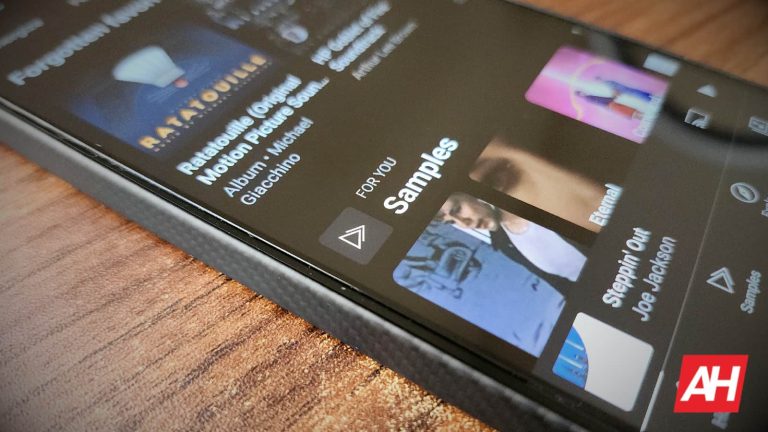
Google has been actively experimenting with YouTube Music lately. More recently, the music streaming platform introduced new features like “Mark as Played” and “Sound Search.” But, earlier this month there were a few reports that hinted towards artist’s page redesign on YouTube Music. Now, it looks like the redesigned artist page on YouTube Music is now rolling out on Android and iOS.
YouTube Music is now rolling out a redesigned artist page on Android and iOS
The news comes via 9to5Google which spotted the redesigned layout of the artist page on YouTube Music. Talking of changes, the latest redesign adds the artist’s name on the left side along with the subscriber count. Additionally, you’ll see a pill-shaped subscribe button so that you never miss any new music from your favorite artist. The previously enlarged-pill-shaped radio and shuffle button are now circular and leverage small touch targets.
Talking of the button placements, the circular radio and shuffle button accompany on the same line the new subscribe button but are placed on the extreme right. Since the “Latest Release” card is something that generally grabs listeners’ attention, it is visible above the “Top Songs” section and the rest of the artist page feed.
Image credit: 9to5Google
Overall, the new look of the artist page serves a modernized look and feel. This also allows users to notice every bit of detail at a glance. Worth noting that the latest redesign of the artist page on YouTube Music offers a similar vibe to the redesigned album and playlist pages that saw a few changes in 2022. Android and iOS users can see the artist page redesign on YouTube Music via server-side updates which are rolling out gradually.
YouTube Music is also getting a “Badges” feature, but it could be exclusive to premium users
Let’s not forget that YouTube Music is also getting a new feature called “Badges.” You can find the new section between “Your Recap” and “Paid memberships.” As 9to5Google notes, every YouTube Music user is currently seeing the “You don’t have any badges yet” message as seen in the image below. It appears that the feature could be exclusive to YouTube Premium users. Whenever it is available, “Badges” will be available on the profile page of YouTube Music alongside your other listening stats.
Threat actors often attack cloud services for several illicit purposes. Google Cloud is targeted due to its extensive and powerful resources, which could be abused for a multitude of malicious activities.
The vast amounts of data and computing power that Google Cloud services provide often lure threat actors. Due to the complexity of cloud environments, this can also enable them to go undetected.
The Google Cloud Threat Horizons recently unveiled that hackers have been actively abusing the Google Cloud for phishing.
Google Cloud For Phishing
The Google Cloud Threat Horizons Report, drawn from various Google teams, such as TAG and Mandiant, discloses strategic intelligence concerning cloud security threats across providers.
It points out serverless computing as a transformative concept that could be fragile.
Three key areas of focus for cloud security professionals need to be considered when developing strategies to address emerging serverless cloud threats. These include mitigating risks deriving from customer misconfigurations while taking advantage of expandability and reduced operational overheads.
Here below, we have mentioned the considerations that need to be prioritized:-
Compromised credentials
Exploited misconfiguration
Distribution of malware
In H1 2024, Google Cloud Office of the Cloud CISO conducted a deep investigation into cloud security incidents based on data from a Google Security Operations Center.
The research showed that weak or no password remained the first major path to illicit entry, while misconfigurations hit over 30% of cases and mostly involved free service account keys.
Initial Access Vectors of Concern (H1 2024) (Source – Google Threat Horizon)
Cryptomining continued to be the principal motive for intrusions at 59%, slightly down from 65% in H2 2023.
Observed Impact of Intrusion (H1 2024) (Source – Google Threat Horizon)
These discoveries are significant as they show how serverless computing can help with some configuration-related vulnerabilities and why it is important in a comprehensive defense-in-depth strategy.
In this respect, the analysis highlights how organizations should prioritize credential management over other issues, observe strict configurations, and adopt serverless architectures to improve their cloud security maturity models against emerging threats.
Serverless computing, though it offers many benefits, requires a security-first approach from its beginning.
This analysis by Mandiant over two years has indicated crucial risks that serverless architecture faces across cloud providers.
These comprise hard-coded and clear-text secrets that can result in unauthorized access, threat actors taking advantage of serverless infrastructure to carry out malicious activities, which could use its scalability against it to launch attacks, unsafe design and development practices introducing vulnerabilities as well as misconfigured back-end services exposing sensitive data or functionalities.
Organizations must take robust security measures to tackle these specific threats and properly handle serverless technology.
During the years 2023-2024, two threat actors “PINEAPPLE” and “FLUXROOT” used Google Cloud services to deliver malware that was aimed mainly at people living in Latin America.
The Google teams reacted by setting up detection capabilities, obstructing the malicious URLs, and suspending associated projects, which dramatically shortened the campaign’s efficacy.
Mitigations
Here below, we have mentioned all the mitigations:-
Manage high-privilege accounts strictly.
Apply least privilege principles.
Implement malware detection controls.
Collaborate with CISA for malware analysis.
Monitor for leaked credentials.
Develop credential reset playbooks.
Use Container Threat Detection.
Avoid untrusted containers.
Configure Cloud Functions network settings.
Control network ingress and egress for Cloud Run.
Protect Your Business Emails From Spoofing, Phishing & BEC with AI-Powered Security | Free Demo
For more than a year, Google has said it would phase out the third-party tracking cookies that power much of its advertising business online, proposing new ideas that would allegedly preserve user privacy while still providing businesses with steady revenue streams.
This week, Google tossed much of that work aside.
In an update about Google’s Privacy Sandbox, the tech giant said that due to feedback from authorities and other stakeholders in advertising, it is looking at a new path forward in finding the balance between privacy and an ad-supported internet.
The underlying grounds for the difficulty in finding the balance are not hard to understand. The effectiveness of advertising is determined by whether you’re able to reach your target audience, but the processes involved in determining whether a website visitor belongs to your target audience or not often means that the website publisher gathers information about said visitor, which can quickly become a privacy issue.
The common method to track a visitor’s online behavior was and still involves third-party cookies. You can look at them as small files that your browser drags along the internet while sites record your interests and online behavior in them. They are the reason why you suddenly see advertisements for an article you have looked at in an online store.
When the advertising industry collectively decided they needed something better than cookies, Google introduced the Privacy Sandbox as a “secure environment for personalization that also protects user privacy.” The idea was to get rid of third-party cookies altogether.
Later, Google started experimenting with FLoC, or “Federated Learning of Cohorts.” FLoC aimed to become a privacy-focused solution intent on delivering relevant ads by clustering large groups of people with similar interests. This way, user behavior would be processed as anonymized accounts, grouped by interests. Most importantly, user information would processed on-device rather than broadcast across the web.
The idea was to get rid of third-party cookies by 2022, but the implementation of FLoC caused so much push-back from privacy experts that Google abandoned the idea.
Then Google came up with Topics, an idea based on Privacy Sandbox where the user does not get tracked based on the sites they visit, but where each site displays contextual advertising, which means the ads match with the content on the page. But Google had to ask websites not to abuse the topics API and other browser developers showed no interest in adopting the API.
Despite Google Chrome’s browser market share (>60%), it does not have the influence needed to persuade its competitors. And the pressure is on, since other browsers like Safari and Firefox went ahead and already started blocking third-party cookies. Ironic, because the push to eliminate third-party cookies was set in motion by Google and now it’s lagging behind.
So, Google is back with a new path for the Privacy Sandbox. It proposes:
“An updated approach that elevates user choice. Instead of deprecating third-party cookies, we would introduce a new experience in Chrome that lets people make an informed choice that applies across their web browsing, and they’d be able to adjust that choice at any time.”
Strengthened with a new feature called IP Protection in Chrome’s Incognito Mode, this should protect the user from being identified by third parties as a potential target IP address for web-wide cross-site tracking.
Does that mean there will be yet another prompt asking the user what they want? It looks like it. But first, Google intends to put out its feelers to find out what regulators and the advertising industry have to say about this new approach.
We have a feeling that this will not be the end of this saga, and we will keep our readers informed about new developments.
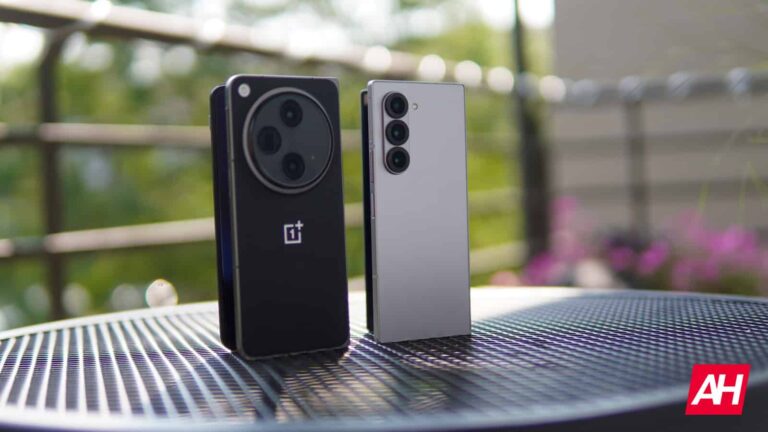
Ever since Unpacked, I’ve been using the Galaxy Z Fold 6 as my daily driver. It’s a great foldable, with some really meaningful changes this year. But it’s still not enough to take me away from the OnePlus Open.
Samsung has slowly made the cover display wider and wider on the Galaxy Z Fold series. However, it is still fairly narrow. That is not the reason why I’m switching back, however. There are two main reasons: battery life and the cameras. With OnePlus’ first foldable, they really hit a home run. Now yes, it’s technically not their first foldable, as this is basically the OPPO Find N3 with a different name and logo, which is OPPO’s third-generation of foldables. And they’ve learned a lot. The Find N2 looked much different than the Find N3, actually. However, Samsung hasn’t really made any drastic changes to the Fold since the Fold 2, when they made the cover display full-screen.
There’s no denying that Samsung has some of the best foldable software out there. Pop-up and multi-window, just to name a few, are great features to have on a foldable like the Galaxy Z Fold 6, not to mention the S Pen support. Though, as someone who has never really used the S Pen, that’s not really a selling point for me.
OnePlus single-handily one-upped Samsung with its foldable software last year with a new feature called Open Canvas. And it’s a feature that I really wish OnePlus would put on its phones, too. The best way to describe it is that you are getting more screen real estate than you actually have as you’re able to push apps off screen, and switch back to them with ease. You can even have a Tweetdeck-like layout but for apps, with three of them side-by-side-by-side. It’s my favorite software feature on any phone these days. Honestly, I can’t wait to see what OnePlus/OPPO will do next.
Samsung’s battery life has become stagnant
The Galaxy Z Fold 6 has the same size battery as the Galaxy Z Fold 3 (which is actually smaller than the Fold 2). That’s pretty unacceptable when the Fold doesn’t really have that large of a battery anyways. It’s a 4,400mAh capacity battery. The OnePlus Open has a 4,805mAh capacity battery, Pixel Fold is 4,821mAh, and you really don’t want us to compare to some of the Chinese competition. Companies like HONOR are starting to use new battery tech, called Silicon Carbon which allows for a much more dense battery in the same space. So the new Magic V3 that was announced in China this month (global launch at IFA) has a 5,150mAh capacity battery. There are also rumors of the next OnePlus Open having a whopping 6,000mAh capacity battery inside. Yet Samsung is sticking to 4,400mAh.
One the one hand, I can kind of understand why Samsung is sticking to this same battery size. The debacle with the Galaxy Note 7 a few years ago has really scarred them over the years, and it’s why I think Samsung hasn’t really upped its charging speeds – still stuck at 25W. However, Samsung used to push the boundaries. They used to be a leader in innovation. Now they are just stagnating, and actually losing their foldable market lead, with newcomers launching foldables, even in the US, like Google and OnePlus, or Motorola on the flip phone side.
I’m not one to say that a company needs to do a complete redesign of its phone every year. That’s dumb and a waste of money. But we do need to see more iteration than we have been, especially in the battery department. Yes, the processor is getting better optimized and more energy efficient over the years, but battery life is largely the same on the Fold 6 as it was on the Fold 3. That’s unacceptable.
Especially when you compare it to the OnePlus Open, which has a larger battery and quite a bit better battery life. Before I get into screen-on-time numbers, it’s important to remember that I don’t use my phone the same way every day. Some days I might spend a lot of time on Twitter, others it might be TikTok or Reddit. But on average, I get about 6 hours of screen-on time with the Galaxy Z Fold 6. That sounds pretty respectable, right? Until you see the OnePlus Open. At 6 hours of screen-on time, it generally still has about 30-40% left, while the Galaxy Z Fold 6 is begging you to turn on battery-saver mode.
Obviously, these numbers are even more variable with foldables since you have two screens, and the larger internal display uses a lot more battery than the outer display. But the bottom line here is that the nearly year-old OnePlus Open is still far better than the Galaxy Z Fold 6 in terms of battery life.
At least the cameras aren’t as old as the battery capacity, right?
Well, they aren’t. But that’s not necessarily a good thing. Samsung upgraded the Fold’s cameras with the Galaxy Z Fold 4 in 2022, and is using those same cameras on the Galaxy Z Fold 6 in 2024. These cameras are somewhat respectable, but when you’re paying $1,899 for a phone, they should be much better.
Here, we’re looking at a 50-megapixel main sensor, a 12-megapixel ultrawide and a 10-megapixel telephoto sensors. They put out okay pictures, but again, for the price, we need better than just “okay.” And honestly, if it weren’t for the OnePlus Open, I’d probably be okay with these cameras. Most foldables do have older camera setups, partly due to space and partly to try and keep costs down. But OnePlus put perhaps the best camera setup (at the time) of any phone and put it into a foldable, which makes it hard to (ironically) settle for the Galaxy Z Fold 6’s cameras.
You see, the Pixel Fold launched with relatively similar cameras to the Pixel 7a, which was kind of crazy, considering the price difference. HONOR’s Magic V2 had pretty sub-par cameras, especially when compared to the Magic 6 Pro. Then came OnePlus and OPPO with the Open/Find N3 with an incredible camera setup (that also made its way to the OnePlus 12 earlier this year). This includes a 48-megapixel primary camera, a 48-megapixel ultrawide, and a 64-megapixel telephoto sensor. These have provided some truly incredible photos and video on this phone over the past 9-10 months that I’ve had it. And it’s hard to give that up for the Galaxy Z Fold 6. Additionally, OnePlus (like the iPhone) lets you shoot at 35mm, which is a really great focal length providing incredible bokeh effects, naturally without using AI.
In fact, the OnePlus Open handled all of the hands-on pictures and videos I shot ahead of Unpacked earlier this month. And I had no complaints, other than how hot the phone got. Keep in mind, it was nearly 100 degrees in New York City that day, plus using the camera for about an hour or so. Which really takes its toll on the thermals.
Nearly a year later, and the OnePlus Open is still the king of foldables
Now, before you start saying I’m a fanboy or whatever, I haven’t really been a big OnePlus user for the past few years. I’ve actually been using an iPhone as my daily driver, and using a Pixel as my secondary phone (unless I was in the middle of reviewing something). The OnePlus Open is the first OnePlus phone I’ve used well beyond the review period, since the OnePlus One. It’s just that good. And it’s hard to go back to a phone without a folding screen, once you’ve used one for a long period of time.
So far, no other company has been able to touch the OnePlus Open in terms of battery life, camera quality, and the build. But we do have some new contenders. The aforementioned HONOR Magic V3 is one of them. The HONOR Magic V3 has a larger display, and battery, while being even thinner at just 9.3mm folded or 4.4mm unfolded and weighing just 226 grams. That’s less than the Galaxy S24 Ultra. Its cameras are also set to be some of the best on a foldable, which we’ll find out more in a month or so when we get our review unit.
Then there’s the Xiaomi Mix Fold 4, which also has a larger display and is also thinner and lighter than the OnePlus Open. Weighing in at 226 grams, and measuring 9.5mm when folded, or 4.6mm unfolded. So there’s competition on the horizon, but we’ll see if it can dethrone the OnePlus Open soon.







%20(Source%20-%20Google%20Threat%20Horizon).webp)
%20(Source%20-%20Google%20Threat%20Horizon).webp)