Is T-Mobile and its app-less phone about to make app developers obsolete?

0

[ad_1]

We, as a civilization, have just cultivated app developers – it hasn’t even been 30 years since the first mobile app emerged in 1997 – the Snake game for Nokia is believed by many to be the app pioneer. It seems that we should call it a day and leave behind those poor mobile code wizards who’ll have to find another sort of occupation.That’s if T-Mobile’s futuristic idea for an app-less phone becomes a reality:

That’s what Deutsche Telekom CEO Tim Hoettges said in a keynote presentation at the MWC tech conference in Barcelona (via Reuters).

Avid PhoneArena readers have already come across this heretic app-less phone idea in our MWC article that outlined what’s to expect from the ongoing mobile technology forum in Spain.

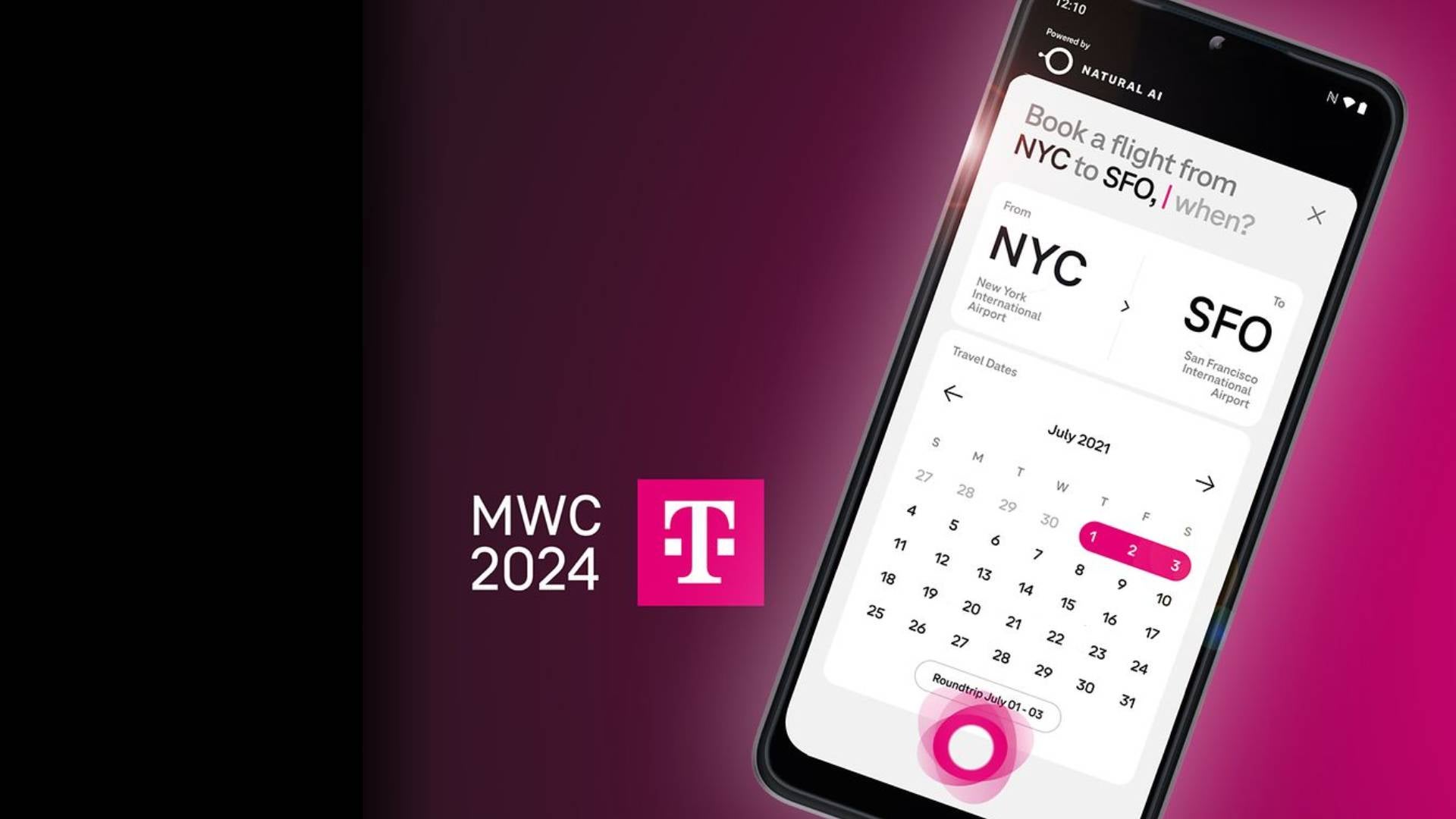
The German company (that’s also T-Mobile‘s largest shareholder) said the concept device, called “T-phone” device, will have an app-free user interface developed in collaboration with partners Qualcomm and Brain.ai.

The “T-Phone” (not T-Bone) will rely on artificial intelligence rather than standard apps to handle users’ specific needs.

“Like a concierge, the assistant understands your goals and takes care of the details”, claims the company, and says the phone will be able to book you a flight simply by voice command. The showcase uses concrete examples to demonstrate how an AI smartphone can make life easier when planning trips, shopping, creating video or editing photos.

Jon Abrahamson, Chief Product & Digital Officer of Deutsche Telekom, is convinced: “Artificial intelligence and Large Language Models (LLM) will soon be an integral part of mobile devices. We will use them to improve and simplify the lives of our customers. Our vision is a magenta concierge for an app-free smartphone. A real everyday companion that fulfills needs and simplifies digital life”.

[ad_2]

Source link

Scattered Spider Advanced Techniques : High-profile Attacks

0

[ad_1]

Scattered Spider is a threat group responsible for attacking several organizations since May 2022 by using techniques like social engineering, ransomware, extortion, SIM Swapping and many other tactics.

There were also reports that this threat group was affiliated with the BlackCat ransomware since mid-2023.

Their most notable attacks that made it to the media include the compromise of Twilio in August 2022, Caesars Entertainment, and MGM Resorts in 2023.

However, this threat group has been constantly evolving with tactics, techniques, and procedures for their operations.

Scattered Spider Attack

According to the reports shared with Cyber Security News, Scattered Spider’s activities overlap with other intrusion set activities like 0ktapus, Scatter Swine, UNC3944, Octo Tempest, Muddled Libra, and many others.

The threat group is reported to consist of 17- to 22-year-old native English-speaking individuals who reside in Western countries.

Between March and July 2022, this threat group compromised over 130 unique organizations in several industries, including technology, telecommunications, and cryptocurrency. 

Targeted Industries (Source: Sekoia)

Reports from Microsoft stated that this threat group also used personal information like residential addresses or relative names to threaten their victims into giving corporate credentials.

Once they gain access to the corporate networks, they perform a review of internal documents to collect details about the processes and procedures.

Later, they use this information to expand their scope and access sensitive systems and data.

In an advanced attack scenario, the threat group is using double-extortion tactics by deploying the BlackCat ransomware into the victim’s environment.

From Initial Access Broken To Ransomware Affiliate

During their early stages in 2022, Scattered Spider activities were associated with using intrusion sets to gain initial access to the organization’s accounts via social engineering.

Once they gather initial access information and other credentials, they sell it to other criminals for money. 

Timeline of Scattered Spider (Source: Sekoia)

In mid-2023, Scattered Spider joined BlackCat ransomware operations and began to deploy ransomware payloads on Windows and Linux systems.

Further, they evolved into performing data exfiltration, extortion, and other attacking methods. 

In late 2023, the threat group expanded its targets to Manufacturing, Hospitality, Law, Gaming, Natural resources, Financial services, and many others.

As of February 2024, the victims of Scattered Spider includes,

  • True Corporation
  • Zendesk
  • Squarespace
  • Walmart
  • Linkedin
  • Costco
  • Cellular Sales
  • Grubhub
  • Samsung
  • Gitlab
  • Fireblocks
  • Sinch
  • Roblox
  • Us Cellular
  • Apple
  • Binance
  • Verizon
  • Aflac
  • Bell
  • Allstate
  • Athene

Indicators Of Compromise

Phishing Domains

Phishing Servers

You can block malware, including Trojans, ransomware, spyware, rootkits, worms, and zero-day exploits, with Perimeter81 malware protection. All are extremely harmful, can wreak havoc, and damage your network.

Stay updated on Cybersecurity news, Whitepapers, and Infographics. Follow us on LinkedIn & Twitter.


[ad_2]

Source link

Avast Fined Millions for Selling User Browsing Data

0

[ad_1]

Avast, a popular antivirus software, has been fined $16.5 million for selling user browsing data despite claims of protecting privacy. The FTC accused them of misleading users and selling sensitive information without consent. Avast agreed to settle, stop selling data, and delete user information.

The US Federal Trade Commission (FTC) has imposed a $16.5 million fine on Avast Limited, Avast Software, and Jumpshot for deceiving users by claiming its software would eliminate web tracking but doing the tracking itself.

It is worth noting that, the Prague, Czech Republic-based anti-malware and cybersecurity vendor stored the data indefinitely and sold it without consumers’ consent or notice while promising users exemplary privacy protection.

This development reflects the continuation of the FTC’s crackdown on companies involved in deceptive data privacy practices. In January 2024, it reached a settlement with Outlogic to prevent selling information for tracking user locations and banned InMarket from selling precise user locations.

The FTC’s Director of Consumer Protection, Samuel Levine, criticized Avast’s bait-and-switch surveillance tactics for violating consumer privacy.

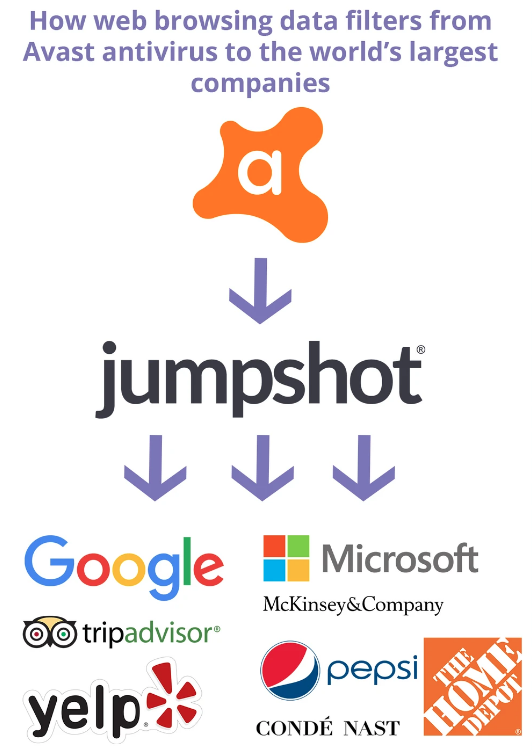
In its complaint, available here (PDF), the FTC revealed that cybersecurity software company Avast collected consumers’ browsing information through its browser extensions and antivirus software, including Avast Extensions, Avast Secure Browser, Avast Mobile Software, and Avast Desktop Software. The FTC accused Avast of selling its data to over 100 third parties via Jumpshot.

For your information, in 2013, Avast acquired competitor Jumpshot, rebranded as an analytics company, and sold browsing information collected from consumers from 2014 to 2020 through it. The FTC accused Jumpshot of offering products that enabled user tracking and associating browsing histories with third-party information.

Jumpshot entered a contract with Omnicom, offering an “All Clicks Feed” for 50% of customers in the US, UK, Mexico, Australia, Canada, and Germany, and earned millions in gross revenues. Avast’s dubious data privacy practices were exposed in 2020 in a joint investigation, leading to the shutdown of Jumpshot.

Reportedly, the company collected data on religious beliefs, health concerns, political views, locations, and financial status from 2014 to 2020. The FTC found Avast failed to adequately anonymize browsing information despite the company claiming otherwise.

FTC also discovered that Avast sold data with unique identifiers for each browser, which exposed crucial data like visited websites, timestamps, user location, and the type of device and browser.

Avast agreed to settle the case with the FTC, paying $16.5 million. The order also requires Avast to stop selling or licensing browsing data to advertisers, delete all data obtained by Jumpshot, and notify affected customers of the sale.

New report suggests anti-virus firm Avast is selling user data to 3rd parties
How Jumpshot functioned

Avast’s spokesperson, Jeff Monney, reaffirmed the company’s commitment to protecting and empowering users’ digital lives, citing disagreement on the allegations while opting for a settlement.

Data privacy violations can lead to significant financial consequences for companies like Avast, including fines, lawsuits, lost business, reputational damage, and negative press coverage. Regulatory bodies enforce data privacy laws and can sue companies, resulting in further financial losses and legal costs, as evident in Avast’s case.

  1. HelloFresh Fined £140,000 for 80 Million Spam Messages
  2. Unreleased Music Stolen and Sold on Dark Web: Hacker Fined
  3. Google Incognito Mode: New Disclaimer Reveals Data Tracking
  4. Meta Fined €265 million in Facebook Data Scraping Case in the EU
  5. Sephora Fined $1.2 Million for Breaching CCPA and Selling User Data
  6. Apple and Samsung fined millions for slowing down old smartphones


[ad_2]

Source link

ZTE announces eyewear-free 3D tablet at MWC 2024

0

[ad_1]

It’s the first day of Mobile World Congress 2024 and ZTE has announced a range of new devices, one of which is the nubia Pad 3D II. This is the company’s second-generation 3D tablet that boasts the capability to generate 3D imagery without the need for 3D glasses. Think about the way you would typically consume 3D content. You go to the movies, and you get a pair of 3D glasses which you put on and you enjoy the show. In some cases, the experience can feel a little out of this world. The movie is more immersive thanks to the glasses that help the pictures on the screen appear as if they’re jumping out at you. The key component here is the glasses. You need these for the content to appear 3D.

The nubia Pad 3D II is setting out to do that without the need for glasses. The aim is you can look straight at the display, and images and video can pop out of it like you would expect. Another good example of what this looks like is the giant 3D billboard in New York City’s Times Square.

The nubia Pad 3D II is powered by 5G and AI technologies

3D phones and tablets aren’t entirely new. But ZTE’s nubia Pad 3D II does offer some unique features that set it apart. ZTE says this is the world’s first 3D tablet to also feature 5G capabilities and AI enhancements. On the AI side of things, the tablet is powered by an AI processing engine. ZTE doesn’t go into much detail on this. However, it does state that the processing engine helps to boost the 3D visual experience.

According to ZTE, the image processing algorithms are paired with unique liquid crystal lenses for more realistic images. These lead to big benefits over the previous model of this device. With an 80% improvement in the resolution of the 3D images. What’s more, the brightness has also been boosted by 100%. So you end up with brighter, more high-resolution images in a 3D view.

Improvements in the overall 3D experience go further as well. For example, ZTE says that 3D Crosstalk, 3D color, and 3D power efficiency have all been optimized. Of course, none of this really matters if the content you’re watching isn’t 3D, right? Not entirely.

That’s because the nubia Pad 3D II also supports Neovision 3D Anytime technology. This essentially lets you take 2D content and turn it into content that’s 3D. The conversion is possible with multiple types of content including pictures and games. On top of that, the 2D to 3D conversion happens in real-time ZTE says.

Specs, pricing, and availability

In terms of specs, the nubia Pad 3D II is well-equipped. It has a 12.1-inch display with a 2.5K resolution and a 144Hz refresh rate. It also has a 10,000 mAh capacity battery with 66W fast charging. Not to mention a Qualcomm Snapdragon 8 Gen 2 mobile platform and 512GB of storage. If you’ve been searching for a 3D device, this might be it. There’s no mention of a price or availability though. For now, consumers will have to settle for knowing it’s out there.

The nubia Pad 3D II and ZTE’s other announcements are all part of the company’s motto at MWC 2024 “unfolding the intelligent future.”

[ad_2]

Source link

Microsoft introduces PyRIT to help streamline red teaming AI models

0

[ad_1]

One of the biggest issues with AI is getting results that are harmful or offensive to certain people. AI is more than capable of to ruffling the of feathers of many groups of people, but this is where red teaming comes in. Microsoft just released a new tool called PyRIT that will help people and companies with their red teaming.

In the case of AI, red teaming is the act of forcing an AI model to produce offensive content. People will throw different prompts at it and try their hardest to make the chatbot say something that could easily get a YouTuber canceled. They do this in order to find out the chatbot’s weak points and where the company should make changes. AI chatbots get their information from the internet, and a lot of the time, the internet isn’t a kind place.

Microsoft introduced PyRIT, a tool to help people with red teaming

As you can guess, red teaming is strictly a human process. It takes a human being to know if a chatbot is saying something harmful about certain people. However, as chatbots get more advanced and vacuum up more information, red teaming can get more difficult.

Well, in a bit of a surprising move, it appears that Microsoft wants to fight fire with fire using its new tool called PyRIT (Python Risk Identification Toolkit). PyRIT is an automated tool that can help people with red teaming. Ironically, this tool uses machine learning to help ascertain the outputs generated by AI models.

So, many people might have issues with that, as it seems that Microsoft is using AI to grade AI. However, it’s unlikely that Microsoft will make this a fully automated tool. In a blog post, Microsoft stated that “PyRIT is not a replacement for manual red teaming of generative AI systems. Instead, it augments an AI red teamer’s existing domain expertise and automates the tedious tasks for them.”

So, it’s mostly a tool meant to assist with the red teaming efforts and not completely take the human element out of it.

What features does PyRIT have?

PyRIT is compatible with several existing area models, and it’s possible to use this tool with image and video inputs as well. It’s able to simulate repeated attacks and dangerous prompts to help get a better idea of what can cause a chatbot to produce harmful content.

The toolkit also comes with a scoring system. It will use machine learning to give a score to the chatbot’s outputs so that you have a better understanding of how bad the outputs are.

Along with helping identify where chatbots can improve in terms of inclusive responses, PyRIT will also help identify cybersecurity risks. This is great because cybersecurity is another major issue with generative AI.

If you are excited about using PyRIT,  you can access it via the Project’s official GitHub.

[ad_2]

Source link

ThreatHunter.ai Halts Hundreds of Attacks in the past 48 hours: Combating Ransomware and Nation-State Cyber Threats Head-On – Latest Hacking News

0

[ad_1]

The current large surge in cyber threats has left many organizations grappling for security so ThreatHunter.ai is taking decisive action. Recognizing the critical juncture at which the digital world stands, ThreatHunter.ai is now offering their cutting-edge cybersecurity services free of charge to all organizations for 30 days, irrespective of their current cybersecurity measures. 

James McMurry, Founder of ThreatHunter.ai, reflects on the urgency of the situation, “In the past 48 hours alone, we have stopped hundreds of actual attacks and performed mitigations for our customers. Yet, the frequency and sophistication of these attacks are escalating at an alarming rate. Our mission is clear: to extend our protective reach to every organization in need, ensuring that the digital frontier is safe for all.”

Drawing on recent events and the resilient nature of cyber threats, as highlighted in an insightful piece on the LockBit ransomware saga, it’s evident that the cybersecurity landscape is more volatile than ever. The LockBit group’s audacity in bouncing back after a significant takedown operation underlines the persistent and evolving threat posed by cybercriminals. 

ThreatHunter.ai, with its elite team of threat hunters, engineers, and cybersecurity experts, employs the ARGOS platform to provide real-time threat detection and mitigation. Our AI and ML-driven technologies have been pivotal in safeguarding organizations from the ever-evolving tactics of cyber adversaries.

“We see the problem getting larger, with cyber threats becoming more sophisticated by the day. Offering our services for free for 30 days is our way of bolstering the defenses of organizations across the globe. It’s a call to action for everyone, and to show that ThreatHunter.ai is much more than all the MDR’s offering automated alerts, we actually will stop threats, and how our team operates as part of our customers cyber team,” McMurry emphasizes.

This initiative is not just about offering a temporary solution; it’s about raising awareness and driving home the point that in the face of rising cyber threats, complacency is not an option.

Organizations interested in taking advantage of ThreatHunter.ai’s complimentary 30 day of services are encouraged to reach out immediately. Together, we can turn the tide against the cyber threats that loom large over our connected world.

About ThreatHunter.ai

ThreatHunter.ai is at the forefront of cybersecurity, specializing in real-time detection, analysis, and mitigation of cyber threats. Powered by the innovative ARGOS platform, our approach combines advanced AI and ML technologies with the expertise of the industry’s most skilled professionals. We are dedicated to defending the digital infrastructure against the complex landscape of cyber threats, ensuring peace of mind for businesses and governments worldwide.

ThreatHunter.ai, a 100% Service-Disabled Veteran Owned Small Business, is a leading provider of AI-driven threat hunting solutions. Its advanced machine learning algorithms and expert analysis help organizations detect, identify, and respond to cyber threats. Its solutions are designed to supplement existing security resources and provide a fresh perspective on how to address today’s complex cyber threats.

Don’t miss the opportunity to safeguard your organization with the unparalleled cybersecurity protection offered by ThreatHunter.ai. Visit our website at www.threathunter.ai to explore our unique approach, learn more about our cutting-edge solutions, and discover how we can empower your business to stay ahead of cyber threats.

To speak with our experts or schedule a personalized demo, reach out to our sales team at [email protected] or call 714.515.4011. Take action today and ensure the security and resilience of your digital infrastructure.


Contact

Marketing and Media Manager

Lydia Coulter

ThreatHunter.ai

[email protected]

7145154011

[ad_2]

Source link

All of Xiaomi’s new products detailed in promo videos

0

[ad_1]

Xiaomi announced quite a few new gadgets yesterday. You can now check all of Xiaomi’s new products in a video format, as the company has shared promo videos for all of them.

All of Xiaomi’s new products get shown off in the company’s promo videos

The Xiaomi 14 Ultra and Xiaomi 14 are shown here, and the same goes for the Xiaomi Watch 2. The Xiaomi Smart Band 8 Pro is detailed in one video, and so is the Xiaomi Watch S3. As a bonus, we’ve also included a video of the Xiaomi SU7 which was shared a week ago. That car is also on display in Barcelona.

All of these products have been shown off for global markets over at MWC 2024 in Barcelona. Xiaomi announced them yesterday. Some of them launched in China already, but for some, this was the initial launch. Either way, they’re new for consumers outside of Xiaomi’s homeland.

Just to be clear, the Xiaomi SU7 is the company’s first electric car. It was announced in China, but it’s not yet available. Also, Xiaomi did not share any global availability details, and chances are it won’t do it at MWC 2024.

You’ll find 7 videos in total here

You’ll find 7 videos in total below the article. They have durations from 25 seconds to a minute and 42 seconds, depending on the products. All of these videos will give you a better look at the devices, and some even share more details about them.

The Xiaomi 14 Ultra managed to steal the thunder yesterday, as expected. That is the company’s brand new flagship smartphone, and it launched in China a couple of days ago.

It has a powerful quad 50-megapixel camera setup on the back, with Leica optics. The Snapdragon 8 Gen 3 is in use, not to mention that a top-of-the-line display is used and that the phone supports blazing fast wired and wireless charging. There’s a lot to like here, that’s for sure. If you’d like to know more about the device, click here.

[ad_2]

Source link

A Google exec thinks its biggest AI models could be on phones next year

0

[ad_1]

Right now, Gemini Pro and Gemini Ultra exist in large data centers and can only access them through the web while Gemini Nano is small enough to be squeezed into a phone. However, according to at least one high-level Google executive, this may not be the case for long. A VP at Google believes that the company’s largest language models could make it to phones sometime next year.

In case you don’t know, Gemini Nano is currently on smartphones such as the Google Pixel 8 Pro and the Galaxy S24 series. Recently, several MediaTek Dimensity processes gained compatibility with Gemini Nano. Because of this, people are able to use on-device generative AI like text creation and translation. More devices will gain on-device generative AI as time goes on.

Google execs believe that some of its largest language models could be on phones next year

Large language models are gigantic in size and much too big to be able to fit on mobile hardware. However, Brian Rakowski, vice president of product management for Google’s Pixel unit, begs to differ. He believes that some of Google’s larger language models will be able to fit on phones at some point next year. 2024 has just gotten started, so there’s still plenty of time between now and next year.

“Gemini Nano is performing at a level that our online models were at less than one year ago,”  he told CNBC. “You can do a lot with these distilled small versions of the models on device.”

This makes sense, as we’ve been able to see some pretty powerful generative AI being shown off by our smartphones. A great example of this would be the Samsung Galaxy AI tools. There are several tools that generate text and translate spoken words with great proficiency.

Technology is only going to advance as more companies pour billions of dollars into AI technology. So, there’s no telling what sort of AI we’ll see on our phones next year. For all we know, AI models as powerful as Gemini Ultra could be landing on the Pixel 10 series

[ad_2]

Source link

WhatsApp stickers to get an animated boost with Lottie support

0

[ad_1]

For the 3 billion people who use WhatsApp, a small but nice upgrade is on the way – improved stickers with clear and detailed animations.

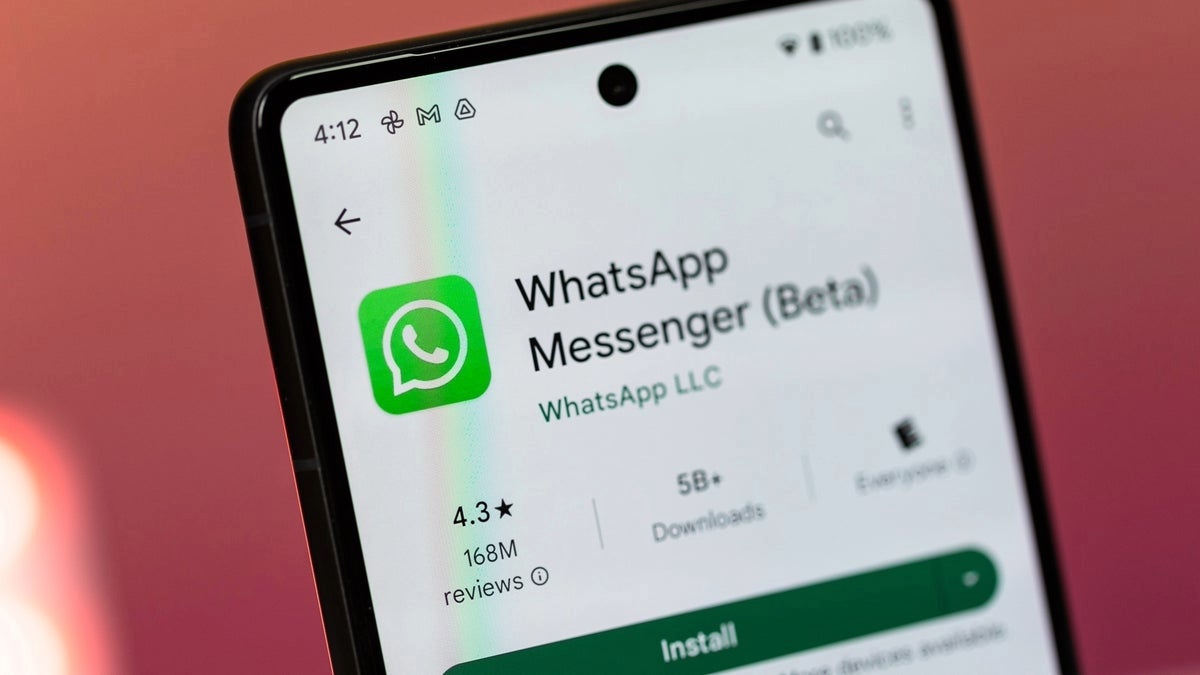
According to WABetaInfo, the go-to source for WhatsApp updates, the latest beta for Android version 2.24.5.10 from the Google Play Store reveals that the app is working on support for animated stickers built on the Lottie framework. These will complement the basic WebP-based stickers already available.

WhatsApp is making stickers more exciting by adding Lottie support while still making sure they work well with WebP, a popular image format known for being efficient and high-quality. Lottie allows for more intricate and dynamic animations compared to WebP images.

Lottie makes stickers on WhatsApp more interesting by adding movements, transitions, and effects. Plus, you can make them bigger or smaller without losing any quality, so they look great on all types of screens and chats. Unlike traditional animation formats like GIFs, Lottie uses vector graphics, which can be scaled to any size without pixelation, ensuring crispness on different screens.

The feature to share Lottie stickers is currently under development and will be available in a future update of the app. In addition to implementing Lottie support for stickers, WhatsApp is also working on support for animated emojis.

Messaging apps are evolving beyond text, images, and videos. Many apps now support GIFs, customizable sticker packs, and new Unicode emoji additions. For example, Google Messages, a key rival of WhatsApp, recently introduced a new feature called Screen Effects (for now, for beta users). This feature adds animations in the background of a message when specific phrases are sent or received, emphasizing the message’s intent.

As artificial intelligence becomes more prevalent in apps and devices, new ways of reacting and interacting are on the horizon. Meta, for instance, has already introduced AI stickers to Instagram, Facebook Stories, Messenger, and WhatsApp, offering users even more expressive options.

[ad_2]

Source link

Battling Ransomware & Nation-State Cyber Threats

0

[ad_1]

Brea, California, February 26th, 2024, Cyberwire – The current large surge in cyber threats has left many organizations grappling for security so ThreatHunter.ai is taking decisive action. Recognizing the critical juncture at which the digital world stands, ThreatHunter.ai is now offering its cutting-edge cybersecurity services free of charge to all organizations for 30 days, irrespective of their current cybersecurity measures. 

James McMurry, Founder of ThreatHunter.ai, reflects on the situation’s urgency: “In the past 48 hours alone, we have stopped hundreds of actual attacks and performed mitigations for our customers. Yet, the frequency and sophistication of these attacks are escalating at an alarming rate. Our mission is clear: to extend our protective reach to every organization in need, ensuring that the digital frontier is safe for all.”

Drawing on recent events and the resilient nature of cyber threats, as highlighted in an insightful piece on the LockBit ransomware saga, it’s evident that the cybersecurity landscape is more volatile than ever. The LockBit group’s audacity in bouncing back after a significant takedown operation underlines the persistent and evolving threat posed by cybercriminals. 

ThreatHunter.ai, with its elite team of threat hunters, engineers, and cybersecurity experts, employs the ARGOS platform to provide real-time threat detection and mitigation. Our AI and ML-driven technologies have been pivotal in safeguarding organizations from the ever-evolving tactics of cyber adversaries.

“We see the problem getting larger, with cyber threats becoming more sophisticated by the day. Offering our services for free for 30 days is our way of bolstering the defences of organizations across the globe. It’s a call to action for everyone, and to show that ThreatHunter.ai is much more than all the MDRs offering automated alerts, we actually will stop threats, and how our team operates as part of our customers’ cyber team,” McMurry emphasizes.

This initiative is not just about offering a temporary solution; it’s about raising awareness and driving home the point that in the face of rising cyber threats, complacency is not an option.

Organizations interested in taking advantage of ThreatHunter.ai’s complimentary 30-day services are encouraged to reach out immediately. Together, we can turn the tide against the cyber threats that loom large over our connected world.

About ThreatHunter.ai

ThreatHunter.ai is at the forefront of cybersecurity, specializing in real-time detection, analysis, and mitigation of cyber threats. Powered by the innovative ARGOS platform, our approach combines advanced AI and ML technologies with the expertise of the industry’s most skilled professionals. We are dedicated to defending the digital infrastructure against the complex landscape of cyber threats, ensuring peace of mind for businesses and governments worldwide.

ThreatHunter.ai, a 100% Service-Disabled Veteran Owned Small Business, is a leading provider of AI-driven threat-hunting solutions. Its advanced machine learning algorithms and expert analysis help organizations detect, identify, and respond to cyber threats. Its solutions are designed to supplement existing security resources and provide a fresh perspective on how to address today’s complex cyber threats.

Don’t miss the opportunity to safeguard your organization with the unparalleled cybersecurity protection offered by ThreatHunter.ai. Visit our website at www.threathunter.ai to explore our unique approach, learn more about our cutting-edge solutions, and discover how we can empower your business to stay ahead of cyber threats.

To speak with our experts or schedule a personalized demo, reach out to our sales team at [email protected] or call 714.515.4011. Take action today and ensure the security and resilience of your digital infrastructure.

Contact


[ad_2]

Source link