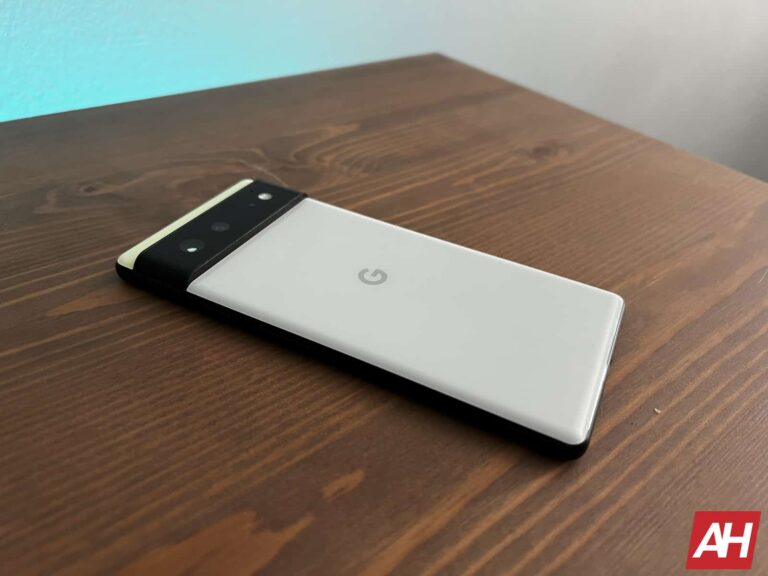
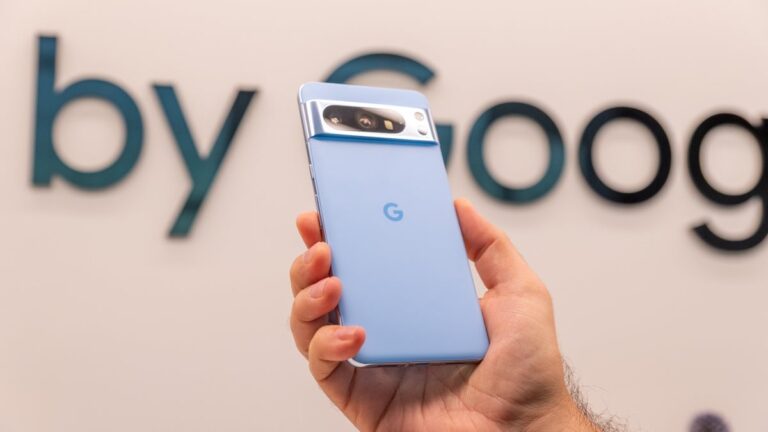
Lawsuits and complaints against Pixel series devices have no end. In the most recent case, a Pixel 6 Pro owner has filed a lawsuit due to overheating issues. The plaintiff, Jennifer Hyatt, alleged that the phone becomes too hot during everyday use.
As Law360 reports, the lawsuit filed with a California court by Hyatt states that the Pixel 6 Pro overheats to the point that it becomes too hot to hold. It also adds the plaintiff bought the $900 phone from a Verizon Wireless store in December 2021.
The customer reportedly selected the Pixel 6 Pro “because the Products were advertised as being normal, usable phones” and labeled as the “smartest, fastest, and most secure Pixel phones.”
Google Pixel 6 Pro reportedly has considerable overheating issues
However, right after buying the phone, Hyatt was supposedly “shocked to discover” that it had become too hot to hold. The lawsuit notes that the Pixel 6 Pro shut down features or stopped working due to overheating. The plaintiff complains the device was advertised as “a functional working phone.” But the overheating defect made it “functionally useless and unreliable.”
The customer has also requested numerous replacement phones from Verizon. But all the phones had the same issue. The case now alleges that Hyatt is financially damaged as she didn’t receive the product she was expecting and paid for.
Google’s false advertisements for Pixel 6 Pro could be a violation of California’s Consumers Legal Remedies Act, False Advertising Law, Unfair Competition Law, and the Song-Beverly Consumer Warranty Act.
Moreover, the lawsuit accuses Google of sweeping the issue under the rug before selling the phone and proceeding with selling defective devices without notifying customers. It would be interesting to learn if Sundar Pichai has ever encountered the issue while using his 20 phones.
The plaintiff now demands Google to recall all defective Pixel 6 Pro devices. She also wants the company to compensate for damages it caused to buyers.
Google has not yet commented on the matter. Meanwhile, this is not the first time a Pixel series phones has encountered overheating issues. The owners of the Google Pixel 5a, Pixel 6, and Pixel 7 series have all reported similar problems.
HONOR’s eye-tracking tech actually moves a car back and forth in this test
The HONOR Magic6 Pro’s eye-tracking tech is used for this, actually. The test has been conducted in a controlled facility not available to the public, and the video is embedded below the article.
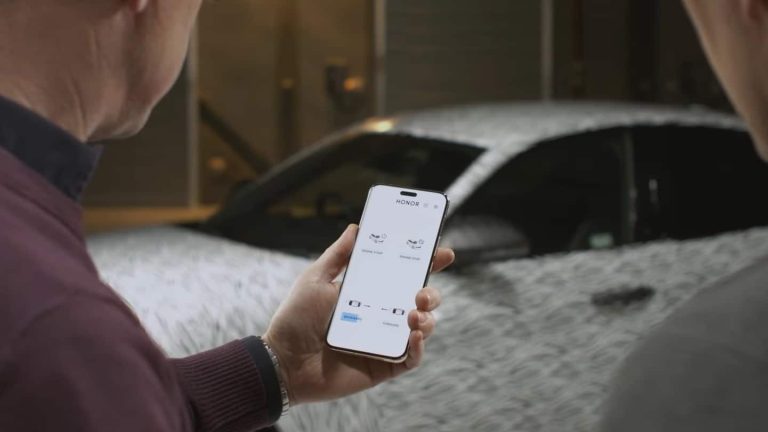
HONOR wanted to demonstrate how its eye-tracking tech, with some help from AI, can do some interesting things, like control a car. James Brighton, a UK-based automotive engineering expert, was asked to be in this video and show you all how this works.
By using this eye-tracking tech, it’s possible to turn this car’s engine off and on. It can also move the car back and forth. Just by gazing at a control button on the screen for a couple of seconds, you can achieve this.
All of this is made possible via a custom app, and the eye-tracking tech on the HONOR Magic6 Pro
This is all done via an app created for this purpose. There are four functions in there, engine on, engine off, move forward, and move back. Now, you can simply press the button, or you can use your eyes to do a specific command.
All you need to do is stare at a specific command for a couple of seconds, and the phone realizes what you want to do. The sensor on the front realizes what the person is looking at, and the AI simply improves that feature.
This test was done to show off the potential of eye-tracking, really. This is only the beginning, but HONOR wanted to emphasize that there are various possibilities for it. The technology is quite capable already, and various integrations could take place moving forward.
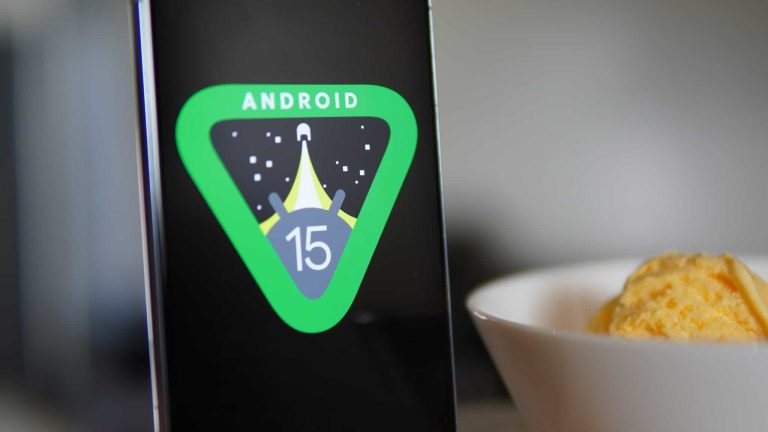
Google has paused downloads of Android 15 Developer Preview 1 (DP1) due to a bug. The company says an issue with sideloading OTA images is leading to a “Device is corrupted” message on the screen for some users. It has temporarily halted downloads for OTA images until the issue is fixed. The firm recommends that developers flash a factory image to test devices.
Android 15 DP1 downloads halted due to a bug
Last week, Google released Android 15 DP1 for eligible Pixel devices—Pixel 6 series through Pixel 8 series, Pixel Fold, and Pixel Tablet. It gave developers and enthusiasts an early taste of the next Android version. The company has introduced a few new features, including app continuity for the foldable. It lets users continue using an app on the cover screen after folding the device.
However, less than a week after the initial rollout, Google has temporarily suspended downloads for Android 15 DP1 OTA images due to a bug. According to the company, it is a known issue with sideloading the DP1 build. It can “sometimes cause the device to show a ‘Device is corrupted’ message after sideloading is completed.” Owing to the potential disruption the issue can cause, it has disabled downloads for OTA images.
Google says downloads will be resumed after it addresses the problem. In the meantime, developers can flash a factory image to test devices. Note that “flashing to a Developer Preview build from a production build—or going back to a production build from a Developer Preview build—requires a full device reset that removes all user data on the device.” So, make sure to back up the data from your Pixel before you proceed.
As far as the resumption of downloads is concerned, there is no word on that yet. Google doesn’t tell how long it will take to fix the issue with sideloading OTA images. Since Developer Preview builds are primarily meant for developers, this doesn’t affect normal users. However, if the problem persists for a long, it could delay the arrival of Android 15 beta and stable builds down the line.
There are many more known issues
This is the first build of Android 15 available to the public. Unsurprisingly, it is far from stable with a lot of known issues. Google has detailed them all in the official release notes for Android 15 DP1. The company will fix those issues with subsequent releases. There will be one more DP build before we enter the beta stage. Google plans four beta builds, one each in April, May, June, and July. The stable Android 15 update will arrive between August and October.
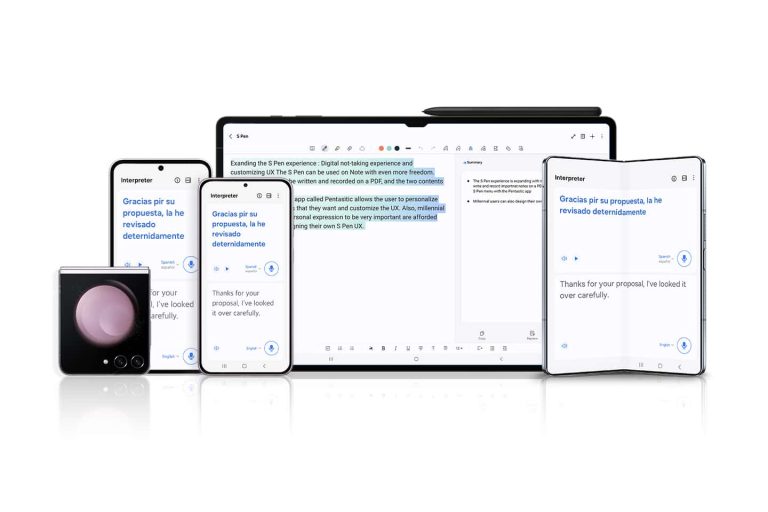
Samsung has just announced that One UI 6.1 will start rolling out next month to a number of older Samsung smartphones and tablets, which will also bring Galaxy AI to these devices.
Unfortunately, the update isn’t set to roll out until “late March,” but things could always change, and it could speed up as well.
Samsung says that the Galaxy S23 Series, Galaxy S23 FE, Galaxy Z Fold 5, Galaxy Z Flip 5, and Galaxy Tab S9 series are all getting the update, which includes all of the Galaxy AI features announced at Unpacked in January.
What Galaxy AI features are coming?
Samsung has also detailed which features are also coming to these devices as part of Galaxy AI. These include Circle to Search with Google, Live Translate, Interpreter, Chat Assist, and Generative Edit.
Circle to Search with Google is one of my favorite AI features so far, and it is very similar to the Google Lens features Google rolled out many years ago. Basically, you can long-press on the home button or at the bottom of your screen and then circle or highlight what you want to search. Then, you can get your search results as an overlay without needing to juggle different apps.
Live Translate and Interpreter are some really cool features to use when traveling. Live Translate can translate a phone call for you in almost real-time. There’s a bit of a lag between each end of the call as it is translating what is being said. The interpreter does translation over a split screen. So if you’re sitting next to someone who speaks a different language, you can easily communicate with them.
Following up with those features is Chat Assist. This feature is only available via the Samsung Keyboard, unfortunately, but it lets you adjust your message tone and translate messages into 13 different languages. And finally, there’s Generative Edit. This lets you edit your photos on your Galaxy device and use Generative AI to add to the photo, too.
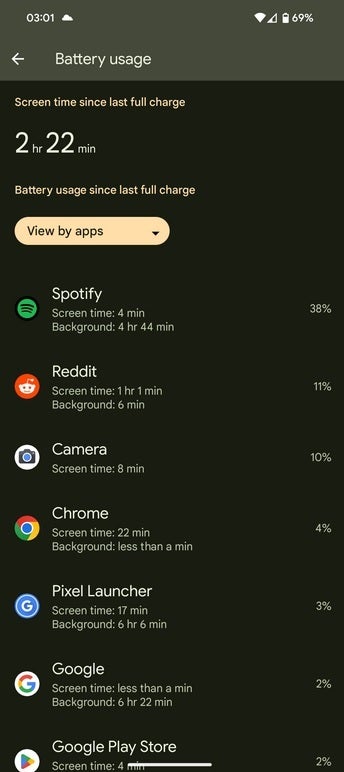
Music streaming app Spotify is the Pixel battery’s Green Kryptonite according to a Spotify user posting on the app’s community forum. With a username of Jimbobler, he writes that on the first day of using his brand new Pixel 8 Pro, Spotify drained a whopping 38% of the phone’s battery with just 4 minutes of screen time and 4 hours and 44 minutes of background activity. He was listening to some music and podcasts for two hours before closing the app.
He also says that the phone was “warm to the touch” for several hours after he installed it on the phone. He noted that once he toggled the button that prevents the app from running in the background, the Pixel 8 Pro got instantly cooler. The post led other Spotify users to comment and one mentioned that streaming Spotify rival Audible on his Pixel 3a consumed only10% of the battery life that Spotify did over an equivalent amount of time.
Spotify drains the battery on a brand new Pixel 8 Pro
After another Pixel 8 Pro user complained about the rapid battery drain on his phone when the Spotify app is running, a Spotify moderator suggested that a clean reinstall of the app be attempted to get rid of any cached files that “might be causing trouble.” He links to the Spotify reinstall support page which explains what to do.
If you have a Pixel phone running Android 6.0 or later, you can try a rapid reinstall by following these directions:
Go to your phone’s Settings.
Select Apps.
Select Spotify from the list of apps.
Tap Uninstall.
Go to Google Play and install the Spotify app.
If that doesn’t work, you can try a clean reinstall by following these directions:
Go to your phone’s Settings.
Select Apps.
Select Spotify from the list of apps.
Tap Storage / Storage & cache memory.
Find and tap Clear storage and Clear cache.
Return to the previous screen and tap Uninstall.
In the phone’s Files (or File Manager, My Files, etc) app:
Go to Internal Storage>Android>data. If you see a com.spotify.music folder, delete it.
If you’re using an SD card, go to SD Card>Android>data. If you see a com.spotify.music folder, delete it.
Restart your device.
Go to Google Play and install the Spotify app.
Also, make sure that your Pixel is running the latest version of Android, and if not, update your phone. Make sure that you don’t have the Battery Saver feature enabled when using Spotify.
If this continues, Pixel users experiencing a draining battery while streaming Spotify might need to move on from the app and try another music streamer.
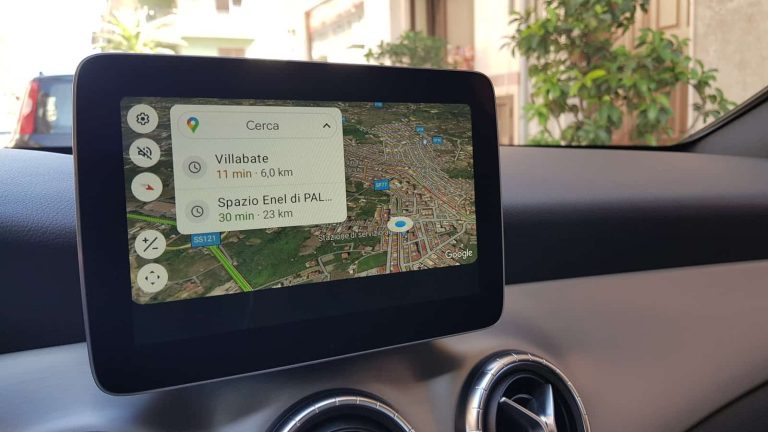
Android Auto AI Message Summaries is a new component of the well-liked in-car infotainment system that aims to improve user experience on Android-based vehicles and encourage safer driving practices. Before the broader feature expansion, Google explained how it works on your Assistant-enabled Android device.
To keep users connected while driving, the Android Auto AI Message Summaries relies on artificial intelligence (AI) to deliver concise and educational summaries of incoming messages. Google previously said Android Auto can “automatically summarize long texts or busy group chats while you’re driving.”
First, the features come as part of Google Assistant perks for Android Auto. At the beginning of the support document, Google says, “You can receive message summaries of long messages on your Assistant-enabled Android device.”
This message could mean users will be able to hear the summaries of their messages on earbuds and headphones. Google also notes the feature isn’t available for all devices, regions, countries, and languages.
Android Auto AI Message Summaries can summarize your long messages while driving
Google is offering ways to opt-in to the feature. First, the manual way requires users to go into the Android Auto Settings > Notifications > turn on Play AI message summaries.
The second way is more straightforward. Once the Message Summary is available and prompts on the device for the first time, users must permit by saying “Yes” or decline it by saying “No.” You can later reactivate it in settings on the phone and Android Auto. The minimum message length requirement for the Message Summary is above 40 words.
It’s worth noting the feature summarizes long messages once the user taps Play Aloud. “Otherwise, the Assistant reads the message without summarization. If there are multiple conversations from different senders or apps, the Assistant reads them one by one.” Google added. Android Auto is also able to suggest relevant replies to messages.
Finally, Google notes that the feature might have some mistakes. And the data won’t be used to train the Large Language Model (LLM).
The European Union (EU) has launched a formal investigation into TikTok over a suspected breach of the Digital Services Act (DSA). The Commission suspects that the social media app may have failed to abide by its rules aimed at protecting children, among other things. It opened legal proceedings following a preliminary investigation, an analysis of the risk assessment report from the firm, and its replies to the Commission’s requests for information.
TikTok under investigation over suspected breach of child protection laws
The EU’s investigation into TikTok will focus on areas such as the protection of minors, age verification, screen time limits, default privacy settings, ad transparency, data access for researchers, risk management of addictive design, rabbit hole effect, and harmful content. The Commission will look into the firm’s measures for the privacy, safety, and security of minors, including the default privacy settings and functioning of its recommendation systems.
It will also look at whether TikTok is complying with DSA obligations to provide a searchable and reliable repository for ads shown to its users. Additionally, the firm will be under scrutiny over its measures to increase the transparency of its platform. “The investigation concerns suspected shortcomings in giving researchers access to TikTok’s publicly accessible data as mandated by Article 40 of the DSA,” the European Commission said in a press release.
TikTok’s “addictive” design is also under investigation from the EU. The European lawmakers want to determine if there are any “actual or foreseeable negative effects stemming from the design of TikTok’s system.” They suspect its algorithmic system “may stimulate behavioral addictions and/or create so-called ‘rabbit hole effects’.” Last but not least, the EU will investigate TikTok’s measures to prevent access by minors to inappropriate content.
TikTok faces massive fine if found guilty
The European Commission will carry out an in-depth investigation into all of this as a matter of priority. If found guilty in one or more accounts of breaching DSA rules, which apply to all online intermediaries in the EU since February 17, TikTok’s Chinese owner ByteDance could face fines of up to 6% of its global turnover.
The firm, meanwhile, says it actively works with industry experts to keep young people on its platform safe. It is looking forward to explaining its privacy measures and systems to European lawmakers. “TikTok has pioneered features and settings to protect teens and keep under 13s off the platform, issues the whole industry is grappling with,” a TikTok spokesperson said. It may take some time before the investigation concludes.
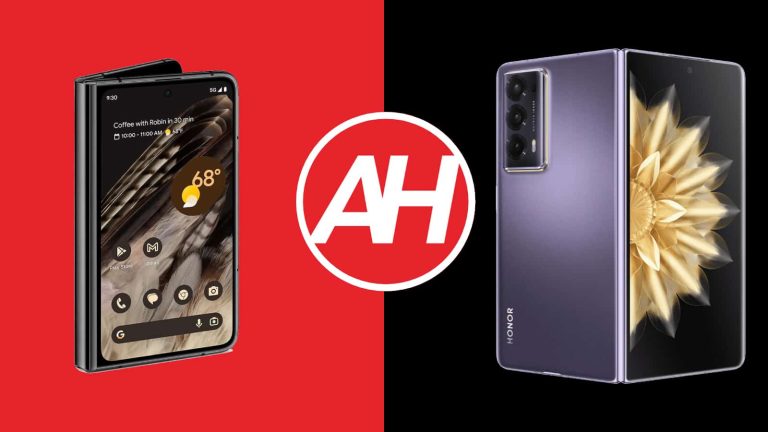
Both Google and HONOR have flagship-grade foldables that managed to attract a lot of attention since launch. In this article, we’ll compare those two devices, the Google Pixel Fold vs HONOR Magic V2. Both of them originally launched last year, but the Magic V2 arrived to global markets this year. They are both book-style foldables, but they are also entirely different at the same time.
The Pixel Fold is considerably wider and shorter, as it aims for a more landscape-like orientation when unfolded. That’s only one of the hardware differences, though. As per usual, we’ll first list their specifications and will then move to compare the two phones across a number of other categories. We’ll compare their designs, displays, performance, battery life, cameras, and audio performance.
The moment you take a look at the two phones, you’ll notice immense differences. If you end up handling both, you’ll realize they’re even more different than you thought. Both of these phones are made out of metal and glass, though the Magic V2 also comes in a variant with a vegan leather backplate. The Google Pixel is a lot shorter, and quite a bit wider too. It’s also noticeably thicker than the HONOR Magic V2. On top of all that, it’s also a lot heavier at 283 grams, compared to 231/237 grams (depending on the variant) of the Magic V2. The difference is huge, actually.
Both phones have a centered display camera hole on their cover displays. The HONOR Magic V2 also has a hole punch on the main display, while the Pixel Fold does not. It does, however, have considerably thicker bezels on the main display, and the camera is hidden in them. Speaking of the main display, the crease on the Pixel Fold is a lot more noticeable than on the HONOR Magic V2.
The Pixel Fold’s camera island looks completely different in comparison to the HONOR Magic V2. Both phones do pack three cameras in them, however. A fingerprint scanner is placed on the right-hand side of both phones, as their power/lock buttons double as fingerprint scanners. The Pixel Fold comes with an IPX8 certification for water resistance, while the HONOR Magic V2 does not offer any such certification.
In the hand, the two phones feel entirely different. The HONOR Magic V2 actually feels like a regular slab phone when folded, and expands into a great-looking tablet. The Pixel Fold feels very heavy in the hand, and it’s also quite thick when folded, especially if you compare it to the HONOR Magic V2. The HONOR Magic V2 kind of feels more premium because of all that, it also has a great-feeling folding/unfolding mechanism. Both phones are extremely slippery, though, though the vegan leather Magic V2 model does change things up a bit.
Google Pixel Fold vs HONOR Magic V2: Display
The Google Pixel Fold comes with a 7.6-inch 1840 x 2208 main Foldable AMOLED display. That display has a 120Hz refresh rate and supports HDR10+ content. Its brightness goes all the way up to 1,450 nits. The cover display measures 5.8 inches, and it offers a resolution of 2092 x 1080. That display has an aspect ratio of 17.4:9, and it supports HDR content. It also offers a 120Hz resolution, and its brightness goes up to 1,550 nits. This display is protected by the Gorilla Glass Victus.
Google Pixel Fold
The HONOR Magic V2, on the flip side, features a 7.92-inch 2156 x 2344 Foldable LTPO OLED display. That panel can project 1 billion colors, and it supports HDR10+ content. It is IMAX Enhanced, and it supports a 120Hz refresh rate. The peak brightness on it is 1,600 nits. The cover display measures 6.43 inches, and it has a resolution of 2376 x 1060. That is an LTPO OLED panel, and it can project up to 1 billion colors. It has a 120Hz refresh rate and supports HDR10+ content. This panel is protected by nanocrystal glass 2.0, and it has a 20:9 aspect ratio. This cover panel has a max brightness of 2,500 nits.
The main displays on both phones are good, but we prefer the one on the Magic V2 for two reasons. First, it’s less reflective than the one on the Pixel Fold, and the crease is much less noticeable. They’re both quite vivid, though, and have great viewing angles. The touch response is good on both, and the blacks are deep. The Magic V2’s panels are also a bit brighter, which doesn’t hurt at all. On top of all that, the bezels around the HONOR Magic V2’s main panel are considerably thinner.
Google Pixel Fold vs HONOR Magic V2: Performance
The Google Pixel Fold is fueled by the Google Tensor G2 processor. That is a 5nm chip, by the way. Google is also using 12GB of LPDDR5 RAM inside of this phone, and UFS 3.1 flash storage. The HONOR Magic V2, on the other hand, is fueled by the Snapdragon 8 Gen 2 processor. It is equipped with 16GB of LPDDR5X RAM and UFS 4.0 flash storage is used by the company.
The HONOR Magic V2 actually does have an edge based on the specs alone. It has a more powerful processor, and also newer and faster RAM and storage. Does that reflect in actual usage, though? Well, if you do compare them side by side, you will notice that the Magic V2 is a bit snappier. However, you really have to look for it, as the Google Pixel Fold does a great job with performance. Both phones do a great job with multimedia consumption, multitasking, launching apps, image processing, and anything else you can think of.
When it comes to games, the HONOR Magic V2 is a better choice. Not only did HONOR built-in some software related to gaming, but the phone’s chip is simply better for games in general. You won’t really notice the difference with games that are not graphically demanding, but once you fire up Genshin Impact or something similar to it, you will see that the HONOR Magic V2 does a better job. The Google Tensor G2 is not really made for gaming, so… it makes sense. Don’t get me wrong, though, you can totally use the Pixel Fold for playing games if you want to, but the performance won’t be on par with the Magic V2.
Google Pixel Fold vs HONOR Magic V2: Battery
The Google Pixel Fold includes a 4,821mAh battery, while the HONOR Magic V2 has a 5,000mAh unit. HONOR actually used a silicon-carbon battery inside of its foldable handset. That battery has higher density, and it’s more resistant to operation under extreme conditions. The fact that it has a higher density enabled HONOR to use such a high battery capacity in such a compact body.
That being said, both phones are capable of crossing the 7-hour screen-on-time mark, though we’ve noticed that the battery life was not as consistent on the Pixel Fold. In fact, it was not often that we were able to get to that 7-hour screen-on-time mark. The phone was usually dancing between 6 and 6.5 hours for us. The HONOR Magic V2 was almost always able to cross the 7-hour screen-on-time mark, however. It offered a better battery in our experience. The mileage may vary for you, though. Do note that we played games only for testing purposes, and the phones were connected to Wi-Fi on most days, with periods on 5G with a good signal.
The Pixel Fold supports 21W wired and 7.5W wireless charging. The HONOR Magic V2, on the other hand, supports 66W wired, and 5W reverse wired charging. Needless to say, the HONOR Magic V2 charges a lot faster than the Pixel Fold. On top of that, it comes with a charger in the box, unlike Google’s foldable handset.
Google Pixel Fold vs HONOR Magic V2: Cameras
The Google Pixel Fold includes a 48-megapixel main camera, in addition to a 10.8-megapixel ultrawide unit (121-degree FoV), and a 10.8-megapixel telephoto camera (5x optical zoom). The HONOR Magic V2, on the other hand, has a 50-megapixel main camera, a 50-megapixel ultrawide unit, and a 20-megapixel telephoto camera (2.5x optical zoom).
HONOR Magic V2
Now, both of these phones do offer good camera performance, but the results are quite different. The Pixel Fold has the benefit of Google’s image processing, and the images have that contrasty look. They seem processed but in a good way. The HONOR Magic V2 does tend to use sharpening a bit more, which is something you’ll notice when you pixel peep. It prefers to offer bright and nice-looking images which mostly lean towards warmer colors, unlike the Pixel Fold.
In low light, both smartphones do a really good job, though we did prefer the results from the Pixel Fold. It was simply more consistent in low-light environments. Something similar can be said for its telephoto camera overall, even though the Magic V2 did take better images at specific zoom ranges (mostly between 2.5-5x). Ultrawide and telephoto camera on both phones can hold their own in low light, but the Pixel Fold did a better job most of the time.
Audio
Both of these phones include stereo speakers. Those speakers are good on both devices. They’re loud enough, and yet don’t show signs of distortion, even at higher volumes. We’ve heard considerably louder speakers, but these two sets are more than loud enough, they’re also well-balanced.
You will not get an audio jack on either of these two smartphones. They do include Type-C ports at the bottom, so you can use those for wired audio connections. Alternatively. The Pixel Fold and HONOR Magic V2 also offer Bluetooth 5.2 and Bluetooth 5.3, respectively.
Google Gemini has been touted as a useful tool for individuals looking to inject some generative AI into their lives. However, generative AI has a ton of potential to help business owners. Because of this, Google unveiled some new plans for Gemini that will greatly benefit business and enterprise customers. These, of course, are our Gemini Business and Gemini Enterprise.
As a quick rundown of what Gemma is, Gemma is Google’s new family of AI models that are small and efficient enough to fit on your computer. Look at the link above to learn more about Gemma and how it can supercharge your AI development.
Google unveils new Business and Enterprise plans for Gemini
The potential for AI to positively affect businesses is immense. So, Google has some very useful plans for people looking to get even more out of Gemini. Firstly, Duet AI for Google Workspace is now called Gemini for Google Workspace. This is the umbrella that the two plans are going to be under. With any of these plans, you’ll get features like better data protection. This means that the conversations you have with Gemini will not be shared with advertisers or used to train the models. Also, your conversations will not be reviewed by humans or shared with other organizations.
This is extremely important, as many businesses are going to be using Gemini for Workspace, and they’re going to be sharing some rather sensitive information. This is information that companies do not want to have shared with other organizations.
Plan details
The first plan is called Gemini Business. This is the more affordable of the two plans, and it extends these features and protections to teams and organizations of all sizes. It’s powerful enough to bring useful AI to companies that are getting started off with AI. So, if your company is newer, or if it’s just getting started with generative AI, this is the plan to get. It cost $20/month.
Next up, we have Gemini Enterprise. This replaces duet AI for workspace Enterprise. This is a plan that’s for larger companies like multi-million dollar Enterprises. It offers the most powerful version of Gemini available and can facilitate many more users. So, if you have a major brand, and you want to add serious generative AI power to it, then this is the plant again. This plan costs $30/month.
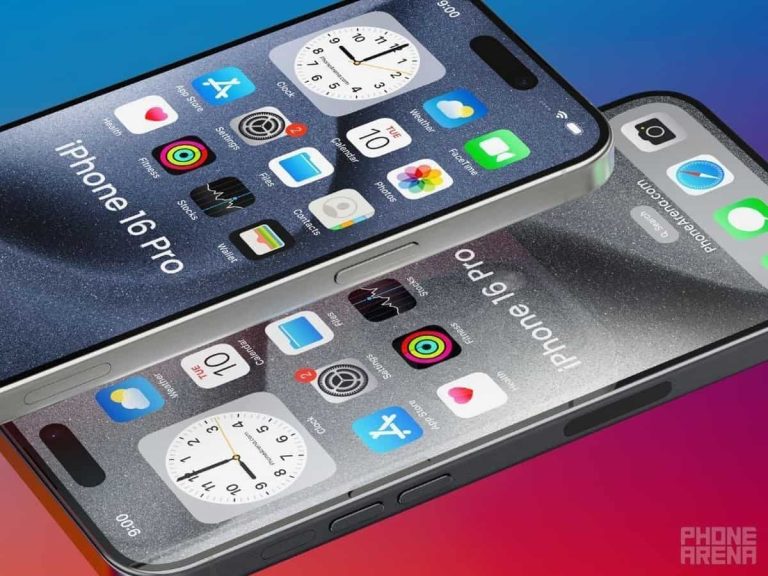
Apple is gearing up for the launch of its highly anticipated iPhone 16 models. The iPhone 16 series is slated for release in September of this year. With a slew of upgrades in store, including redesigned camera layouts and improved AI features, the iPhone 16 is shaping up to be a considerable upgrade from its predecessors. Recent leaks suggest that Apple is planning a significant design change for the iPhone 16 lineup, with leaked screen protectors revealing even thinner bezels compared to the iPhone 15 series.
Images of leaked screen protectors depict the strikingly slim bezels of the iPhone 16
Image: Majin Bu
The iPhone 15 Pro models already boast some of the slimmest bezels in the smartphone market. However, Apple aims to push the boundaries further by trimming down the bezels on the standard iPhone 16 models. According to leaks from tipster Majin Bu on X, the bezel size on the iPhone 16 could become significantly thinner than its predecessors.
It indicates a major design overhaul from Apple. It’s worth noting that Apple has previously reduced bezel sizes with each new iteration of its flagship iPhones. While these leaks provide insight into the direction Apple is taking with the iPhone 16’s design, it’s essential to approach them with caution, as they are yet to confirm the final design.
The camera layout on the iPhone 16 lineup could also see a redesign
Beyond hardware upgrades, the iPhone 16 series will also be the first to integrate Apple’s AI features with the launch of iOS 18 later this year. While specifics about these artificial intelligence-based enhancements remain under wraps, you can expect considerable enhancements in the performance and user experience of the iPhone 16 lineup.
Nonetheless, there’s still time for Apple to make adjustments and refinements to the lineup. As such, eager consumers will have to wait for official announcements from Apple to get a definitive look at what the iPhone 16 will offer.