There are several instant messaging apps available, such as WhatsApp, Telegram, and others. However, one app that prioritizes user privacy is Signal. And now, Signal is upping the game by adding usernames, so if you don’t like sharing your phone number with people, you’ll love this. However, the feature is in the beta version and is yet to roll out for others.
Signal is introducing usernames
Signal will let you pick a unique username that you can share with others and initiate conversations. Once the feature rolls out to everyone, you can head to Settings > Profile and create a username for you. Next up, you can also create a QR code or link that directs others to you in the app. Take note, others can also type your username into the chat bar and shoot a message.
Signal explains that the username you choose isn’t permanent and won’t be seen by the people you’re chatting with. It’s important to understand that your username isn’t the same as the name others see in chats; instead, it’s a convenient way to start a conversation without giving out your phone number.
You’ll (still) need a phone number
Signal usernames differ from account names on other platforms because they don’t serve as login credentials. Instead, they offer a way for people to connect with you quickly without needing your phone number. You still need a phone number to sign up for the app, but you can choose whether to share it or not.
Additionally, Signal will automatically hide your phone number by default for users who haven’t saved it in their phone contacts. You can adjust this setting by going to your privacy settings and selecting “Who can see my number.”
These features will soon make it to the stable version of Signal.
It seems like everyday, Google’s Gemini is taking a step closer to being a replacement for Google Assistant. Today, Google’s most advanced AI model has just taken another step forward. According to sources, Gemini now has the ability to create reminders using Google Tasks.
Right now, you can use the Gemini app on your phone, and it could also be used as a light assistant. You can set it as your default assistant, and summon it when you need quick help. Because of this, it feels less likely that Google Assistant will be a mainstay in Android for much longer. Since it’s powered by generative AI, Gemini can be much more helpful when it comes to gathering information. However, Google has not publicly expressed any plans to replace Google Assistant with Gemini. We’re just going to have to wait.
You can use Gemini to make reminders in Google Tasks
Right now, Google is working long and hard to make Gemini a useful assistant on your phone. Many of the assistant tasks are missing from Gemini, so the experience feels a bit fragmented. One of the features missing was the ability to create reminders using Google Tasks. However, according to a new report, Google has finally brought this functionality.
If you summon Gemini Advanced and ask it to remind you to do something, the chatbot will tap Google Assistant to set up a task for you through Google Tasks. It will then make the task for you and set it at the proper date and time. So, if you’ve gone all in with Gemini on your phone, you know that you have the ability to set reminders again.
At this point, this feature is still rolling out. There’s still a chance that you could get an error message or a fake acknowledgment that Google has set the reminder. This is what happened to us at Android Headlines from trying to use this feature. However, the folks at 9To5Google have been able to see this feature in action. So, it all depends on when the feature makes it to you. Just make sure that you have the Google Tasks app installed on your phone.
Google completed its rebrand of Bard AI earlier this month, along with the launch of the new Gemini Android app and a new Google One tier created for those that wanted to take advantage of the new Gemini Advanced and its most capable AI model, Ultra 1.0. This new Google One tier, aptly named “Google One AI Premium”, also gave users access to 2TB of storage, as well as other Google One benefits.
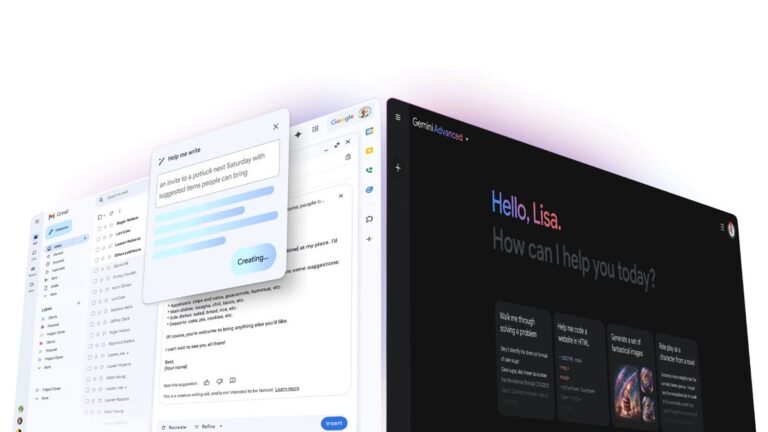
Gemini’s Ultra 1.0 LLM model has been praised for introducing new advances to the world of AI, such as improved processing efficiency, advanced comprehension of instructions and programs, and better problem-solving skills. The model is said to be able to analyze and explain data, as well as write high-quality code in many programming languages. All of this will now compliment your experience in Workspace apps, without having to switch apps or tabs.
Google also wants you to know that, as outlined in its AI data privacy principles, Gemini in Google Workspace does not use your personal and/or business information to train or improve its AI models without your permission. This is important to note in this age of AI where the lines of where privacy begins and ends can sometimes become very blurry.
Source: Google
Gemini in Gmail, Docs, Slides, Sheets, and Meet is starting to roll out today for AI Premium members across more than 150 countries in English. Just like at launch, AI Premium subscribers also enjoy Gemini Advanced, 2TB of storage that can be used across all Google services (like Google Photos and Drive), and other Google One perks for $19.99 a month, with an introductory two months for free.
Security Onion Solutions has recently rolled out the latest version of its network security monitoring tool, Security Onion 2.4.50.
This updated version comes equipped with an array of new features and bug fixes, making it an even more critical tool for enterprise security management, threat hunting, and network security monitoring.
DocumentLive Account Takeover Attack Simulation
Live attack simulation Webinar demonstrates various ways in which account takeover can happen and practices to protect your websites and APIs against ATO attacks.
New Features and Enhancements
The release of Security Onion 2.4.50 marks a pivotal moment for the cybersecurity community. Among the notable new features is adding the Suricata PCAP module to Sensoroni, although it is currently disabled by default.
Security Onion 2.4.50 Released for Defenders With New Features (Source: security onion)
This module is expected to enhance network traffic analysis capabilities, providing defenders with more granular data for threat detection and analysis.
Another significant enhancement is introducing a new SOC action designed to show process ancestry. This feature will allow security operations center (SOC) analysts to trace the origins of processes, a critical capability for uncovering stealthy attacks and understanding attack chains.
Doug Burks, the founder of Security Onion Solutions, took to LinkedIn and Twitter to announce the release, emphasizing that Security Onion is developed “by defenders, for defenders.”
This community-driven approach ensures that the platform remains responsive to the evolving needs of cybersecurity professionals.
The development team, including Josh Brower, Jason Ertel, Wes Lambert, Corey Ogburn, Josh Patterson, and Mike Reeves, received special thanks for their hard work in making this release possible.
Additionally, the contribution of GitHub user petiepooo, who submitted pull requests and helped answer questions on the Security Onion Discussions site, was highlighted.
Impact on Cybersecurity Practices
Security Onion 2.4.50 is set to have a profound impact on cybersecurity practices. Providing advanced tools for log management, threat hunting, and security monitoring enables organizations to detect and respond to threats more effectively.
The platform integrates seamlessly with various security tools, including Suricata, Zeek, and Wazuh, making it a versatile solution for defending against sophisticated cyber threats.
The release of Security Onion 2.4.50 is a testament to the ongoing commitment of Security Onion Solutions to provide the cybersecurity community with powerful, open-source tools for defending against cyber threats.
Its new features and improvements make Security Onion indispensable for SOC analysts, network administrators, and security professionals worldwide. Users are encouraged to download the latest version and explore its enhanced capabilities for a more secure cyber environment.
You can block malware, including Trojans, ransomware, spyware, rootkits, worms, and zero-day exploits, with Perimeter81 malware protection. All are extremely harmful, can wreak havoc, and damage your network.
New “Migo” malware targets Linux servers, exploiting Redis for cryptojacking. Using a user-mode rootkit, hides its activity, making detection difficult. Secure your Redis servers and stay alert!
A sophisticated Linux malware campaign has been discovered targeting Redis, a popular data store system, to gain initial access using “System Weakening Commands,” revealed Cado Security Labs.
Cado researchers disclosed that the malware, dubbed Migo, exploits Redis for cryptojacking. The attackers execute commands on their target’s Redis servers to disable configuration options and make them vulnerable before deploying the payload.
The primary payload, Migo, is a Golang ELF binary that retrieves an XMRig installer from GitHub. Redis system weakening commands are used to disable configuration options, such as protected mode and replica-read-only, using CLI commands to execute malicious payloads from external sources like Pastebin to mine cryptocurrency in the background.
For your information, Protected mode is a Redis server operating mode introduced in version 3.2.0 to mitigate potential network exposure. It only accepts connections from the loopback interface and is likely disabled at initial access to allow attackers to send additional commands.
Conversely, the replica-read-only feature in Redis prevents accidental writes to replicas that may result in out-of-sync. Cado researchers report exploitation of this feature for malicious payload delivery, with Migo attackers likely disabling it for future Redis server exploitation.
Migo uses compile-time obfuscation and a user-mode rootkit ‘libprocesshider,’ to hide processes and artefacts, making it difficult for security analysts to detect and mitigate the threat. Once the miner is installed, Migo sets XMRig’s configuration to query system information, including logged-in users and resource limits.
“It also sets the number of Huge Pages available on the system to 128, using the vm.nr_hugepages parameter. These actions are fairly typical for cryptojacking malware,” Matt Muir, Cado Security’s security researcher noted in a blog post.
It executes shell commands to copy the binary, disable SELinux, identify uninstallation scripts, execute the miner, kill competing processes, register persistence, and prevent outbound traffic to specific IP addresses and domains.
Moreover, Migo relies on systemd service and timer for persistence and the developers have obfuscated symbols and strings in the pclntab structure to complicate the malware analysis process. The involvement of a user-mode rootkit also complicates post-incident forensics of compromised hosts, and libprocesshider hides on-disk artefacts.
Migo’s emergence shows that cloud-focused attackers are continually refining their techniques and focused on exploiting web-facing services. They used Redis system weakening commands to disable security features, a move not previously reported in campaigns exploiting Redis for initial access, researchers concluded.
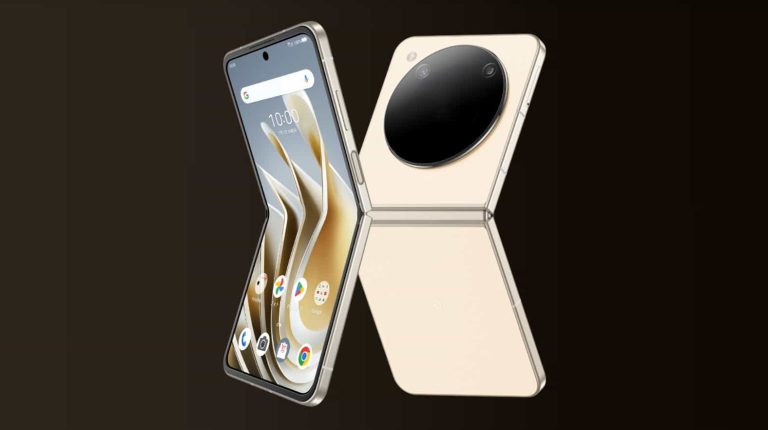
ZTE has just made foldable smartphones incredibly affordable. The Chinese firm collaborated with Japanese telecom company Y!mobile, a subsidiary of SoftBank Group, to launch a clamshell folding phone at just $420. The ZTE Libero Flip is available for pre-order in Japan, with sales beginning on February 29. There is no word yet on the global release of the world’s cheapest foldable.
The ZTE Libero Flip made mid-range foldables a thing
Foldable phones are generally more expensive than regular smartphones. Before ZTE entered the scene, the lowest launch price for a foldable was $699 for Motorola’s Razr 2023. If you want a more refined product, Samsung’s Galaxy Z Flip 5 is your best bet but costs $999. Of course, you can grab these phones at a lower price with offers and promotions, but that’s a different matter.
ZTE’s Libero Flip has a launch price of 63,000 yen in Japan, which is equivalent to $420. With offers, you can grab this foldable at just 39,800 yen or roughly $265. This is ridiculously affordable for a foldable phone, no matter the manufacturer. There is little chance the phone will arrive in the US or most other global markets, but hardly anyone imagined a brand-new foldable to be available at around $400 in 2024.
The device packs a decent set of specs too. Nothing magical, but acceptable for a foldable at this price range. You get Qualcomm’s Snapdragon 7 Gen 1 chipset paired with 6GB RAM and 128GB storage. The ZTE Libero Flip sports a 6.9-inch AMOLED display with a 2790×1188 pixels resolution on the inside and a 1.43-inch circular panel (466×466 pixels) on the outside. The secondary display can be used for notifications, whether, calls, and camera viewfinder.
Speaking of cameras, ZTE’s first foldable has a 50MP primary shooter and a 2MP depth sensor on the back. You also get a 16MP selfie camera here. The device sits rigid at various angles, so you can take hands-free photos. Other key specs include a 4,310mAh battery, 33W charging, side-mounted fingerprint scanner, Wi-Fi 6, Bluetooth v5.2, IP42 dust and water resistance, and Android 13. The device measures just 7.3mm in thickness when unfolded. You can find the full spec sheet here.
Samsung may also have a mid-range foldable in the works
Rumors say Samsung will launch three new foldables this year. Alongside the Galaxy Z Flip 6 and Galaxy Z Fold 6, we could see an affordable model priced similarly to the ZTE Libero Flip. Details are scarce but the Korean firm does seem to have this device in the pipeline. Either the plan will materialize this year or we will have to wait longer for it; only time will tell. Samsung’s next-gen foldables should arrive in July.
This new chipset will be used in most flagship smartphones that will launch in 2022. So it’s important to see what all this new chipset is actually capable of. Because, the chipset is what opens the door for these new smartphones to debut new features, like AI Video Bokeh.
So, here’s everything you need to know about the new chipset from Qualcomm.
Why the new naming scheme?
Qualcomm opted to use a new naming scheme with the Snapdragon 8 Gen 1 this year. Instead of going with the Snapdragon 898 which many were expecting. Qualcomm decided it was important to make its processors easier to decipher. Instead of using a three-digit number for each processor, it’ll now have the series, plus the generation after it.
This new naming scheme is going to be starting with the Snapdragon 8 series, but will trickle down to the Snapdragon 4, 6 and 7 series too.
240 12MP Photos in one second 3.2 Gigapixels per second 4 stops of dynamic range 8K HDR + 64MP 18-bit RAW 5X Better Night Mode Dedicated Bokeh Engine
200MP single shot 84MP single with zero shutter lag 64MP+25MP with zero shutter lag Triple 24MP with zero shutter lag Hybrid AF 10-bit HEIF image capture HDR video multi-frame noise reduction Real-time object classification, segmentation, and replacement
Video Capture
8K HDR @ 30fps 4K UHD @ 120fps 720p @ 960fps
8K @ 30fps 4K UHD @ 120fps 720p @ 960fps
Video Playback
8K 4K HDR up to 120fps H.265 and VP9 video decoder 360 degree
8K 4K HDR up to 120fps H.265 and VP9 video decoder 360 degree
First Available
Q4 2021
Q1 2021
What’s new in the Snapdragon 8 Gen 1?
For the Snapdragon 8 Gen 1, there’s a number of things that Qualcomm is focusing on. But it’s all of the usual talking points. That includes AI, Camera and 5G or WiFi 6E. Let’s talk about each of these new features in the new Snapdragon 8 Gen 1.
Faster and more advanced AI
Qualcomm calls it “AI for All”. With the Snapdragon 8 Gen 1, it has released its seventh-generation Qualcomm AI Engine, which is the fastest and more advanced engine ever. So that smartphone makers are able to use the AI to capture depth-defying images with the Leica Leitz Look mode. You can also analyze and intelligently group and prioritize your notifications with natural language processing from Hugging Face.
What does this mean for smartphone users? Well, it means that the artificial intelligence in your phone is going to get faster and get smarter. Google is one that uses AI for a lot of different things in its Pixel smartphones, but since they use Tensor now, this won’t matter for Pixel users. However, for Samsung, Xiaomi and others, it will make a big difference.
What is Snapdragon Sight?
Instead of talking about the ISP inside the Snapdragon 8 Gen 1, Qualcomm is bundling all of the camera features under a brand – Snapdragon Sight. This is a collection of premium camera features and technologies that include their first ever 18-bit ISP.
This is going to allow you to capture photos and videos in extreme dynamic range with vivid color and clarity. And this will be the first time that you can record in 8K HDR video quality, from a smartphone.
The new 18-bit ISP is able to capture over 4,000x more camera data than the 14-bit predecessor in the Snapdragon 888. It also has staggering capture speeds at up to 3.2 Gigapixels per second.
There’s also a dedicated Bokeh Engine available for 4K Video Capture with Snapdragon Sight. Which will work with AI Video Bokeh making for some really cool and cinematic videos, all taken with your smartphone.
Qualcomm has also made it so that the front-facing camera can be always-on, since it is the fourth ISP in the sensing hub. This is going to improve security, the ability to unlock your phone with face unlock. And it’ll also be able to determine if someone is looking over your shoulder.
Basically, the Snapdragon 8 Gen 1 is going to bring some really big changes to the flagship smartphones coming in 2022.
The next era of 5G
Once again, Qualcomm has released its most advanced 5G platform ever, with the Snapdragon 8 Gen 1. The fourth-generation Snapdragon X65 6G Modem-RF system, which offers unparalleled speeds and supports more networks, frequencies and bandwidths globally.
This is the world’s first 10-Gigabit 5G Modem-RF solution. It’s also the world’s first 3GPP Release 16 5G solution. And the world’s first 5G uplink carrier aggregation for unprecedented upload speeds.
This new modem does offer mmWave and Sub-6 5G support, as well as standalone and non-standalone modes, FDD and TDD. Which means that it is going to work better around the world. Not just in the US.
For mmWave it offers 1000MHz bandwidth, 8 carriers and 2×2 MIMO. For Sub-6 it’s 300MHz bandwidth and 4×4 MIMO. Finally, Qualcomm supports Global 5G multi-SIM with the new Snapdragon X65 5G Modem-RF System.
So what does this mean for consumers? Well, this means that we will see even fewer mmWave models of phones next year. 5G speeds will be faster, in areas that have faster speeds, and it will work for traveling from country to country. Like 4G LTE was doing prior to the launch of 5G.
WiFi 6E and WiFi 6-ready
The Snapdragon 888 5G did support WiFi 6E and WiFi 6 last year, but now, with the Snapdragon 8 Gen 1, you’re getting even better support. This is all thanks to the Qualcomm FastConnect 6900 System. It supports the following WiFi standards:
WiFi 6E, WiFi 6 (802.11ax)
WiFi 5 (802.11ac)
WiFi 2.4 (802.11a/g/b/n)
WiFi spectral bands: 2.4GHz, 5GHz and 6GHz.
Qualcomm quotes the peak speed on the FastConnect 6900 to be about 3.6Gbps. Which is likely way faster than anyone will actually get from a WiFi network right now. Considering the fact that Gigabit WiFi is still pretty scarce across the US.
This is all important as it means you’re getting faster speeds on your smartphone with the Snapdragon 8 Gen 1, as well as being less likely to drop connection from your WiFi network.
Snapdragon Elite Gaming continues to impress
With Snapdragon Elite Gaming in the Snapdragon 8 Gen 1, Qualcomm is claiming that you will get ultra-smooth responsiveness and color rich HDR scenes. That represents a huge step forward in the mobile gaming arena.
Qualcomm has also added the Adreno Frame Motion Engine, which means you’re getting more frames while using less power. That’s always a good thing. Qualcomm claims that you’ll get “desktop level capabilities” out of this new Adreno GPU on the Snapdragon 8 Gen 1.
Qualcomm’s new Snapdragon Studios has been working with a number of game publishers to adopt these new features that are part of Snapdragon Elite Gaming. That includes Epic Games, Tencent, Ubisoft, NetEase Games, Niantic, EA, 2K, Roblox, Netmarble, Gameloft, Square Enix, Sony, Microsoft and many others. So you’re likely to see a lot of games that will support these new features.
What this means for consumers is that you’re going to be able to have an even more impressive gaming experience on your phone. Giving you even less reasons to get a console like the PlayStation 5 or the Xbox Series X.
When can we expect the first smartphones with the Snapdragon 8 Gen 1?
As usual, Qualcomm did not specify who or what phone would be first with this new chipset. However, Qualcomm did mention that we will see it in a smartphone before the end of 2021. Given the fact that there’s really only a couple of weeks left in the year, it’s going to be very soon.
We have a feeling that it will be a Xiaomi smartphone. Since the Xiaomi MI 12 series is set to debut in December. So it’ll likely be the Mi 12 Ultra. We also expect to see this in the Samsung Galaxy S22 in the beginning of 2022.
A new cybersecurity threat targeting Facebook advertisers in Vietnam, known as VietCredCare, has emerged.
This information stealer has been active since at least August 2022 and is designed to hijack corporate Facebook accounts by automatically filtering out Facebook session cookies and credentials from compromised devices.
The malware assesses whether the stolen accounts manage business profiles and if they maintain a positive Meta ad credit balance.
DocumentLive Account Takeover Attack Simulation
Live attack simulation Webinar demonstrates various ways in which account takeover can happen and practices to protect your websites and APIs against ATO attacks.
How VietCredCare Operates
VietCredCare is distributed through links to bogus sites on social media posts and instant messaging platforms, masquerading as legitimate software like Microsoft Office or Acrobat Reader.
Once installed, it can extract credentials, cookies, and session IDs from web browsers, including Google Chrome, Microsoft Edge, and Cốc Cốc, a browser focusing on the Vietnamese market, Group-IB said.
How VietCredCare Operates
The malware is notable for its ability to retrieve a victim’s IP address, check if a Facebook account is a business profile, and assess whether the account currently manages ads.
It also takes steps to evade detection by disabling the Windows Antimalware Scan Interface (AMSI) and adding itself to the Windows Defender Antivirus exclusion list.
VietCredCare’s core functionality to filter out Facebook credentials puts organizations at risk of reputational and financial damages if their sensitive accounts are compromised, reads the report.
Credentials belonging to several government agencies, universities, e-commerce platforms, banks, and Vietnamese companies have been siphoned via the stealer malware.
The threat actors then use the stolen Facebook accounts to post political content or propagate phishing and affiliate scams for financial gain.
This large-scale malware distribution scheme facilitates the takeover of corporate Facebook accounts, targeting Vietnamese individuals who manage the Facebook profiles of prominent businesses and organizations.
Stealer-as-a-Service Model
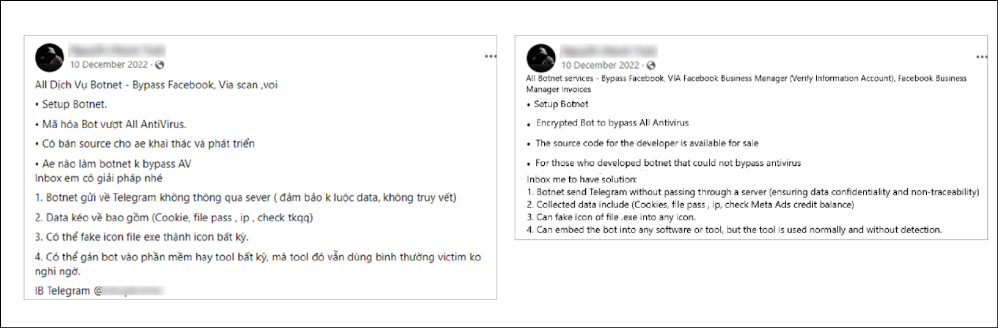
VietCredCare is offered to other aspiring cybercriminals under the stealer-as-a-service model and is advertised on Facebook, YouTube, and Telegram.
It is managed by Vietnamese-speaking individuals.
Example of an advertisement for VietCredCare posted on Facebook
Customers can purchase access to a botnet managed by the malware’s developers or procure access to the source code for resale or personal use.
They are also provided a bespoke Telegram bot to control the exfiltration and delivery of credentials from an infected device.
Protecting Against VietCredCare
Organizations and individuals must be vigilant and take preventive measures against malware-based attacks.
This includes regular software updates, the use of antivirus software, and strong passwords.
It is also crucial to be cautious when clicking links or downloading attachments from unknown sources, as these could potentially contain malware like VietCredCare.
In conclusion, VietCredCare is a sophisticated malware that significantly threatens businesses and their online presence.
The ability of this malware to target and steal credentials from business-related Facebook accounts underscores the need for enhanced cybersecurity measures and awareness among users and organizations alike.
You can block malware, including Trojans, ransomware, spyware, rootkits, worms, and zero-day exploits, with Perimeter81 malware protection. All are extremely harmful, can wreak havoc, and damage your network.
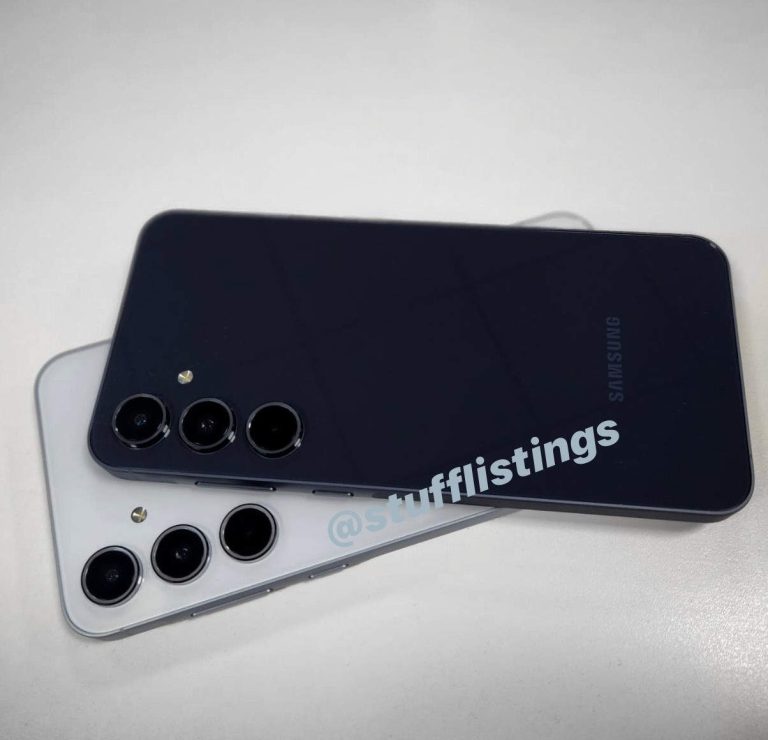
We’ve been following rumors surrounding Samsung’s upcoming mid-range phones, the Galaxy A55 and Galaxy A35. Well, we just got a big leak of the Galaxy A55 with live images showing this device in the flesh. Unsurprisingly, the design will look quite familiar.
At this point, we’re still dealing with leaked information, as Samsung has yet to officially announce these phones. So, you’ll want to take this news with a grain of salt. Any bit of information can change between now and the official launch date. So you’ll want to keep that in mind.
New live images of the Galaxy A55 leave very little to the imagination
The Galaxy A Series has been the next best thing to the Galaxy S series of phones… Well, that was until Samsung started releasing its Galaxy S FE phones. In any case, you’re still getting a compelling device with the Galaxy A series phone. Right now, we’re following links and rumors regarding the Galaxy A55. This is going to be the next premium mid-range phone from the company, and people who use the Galaxy A phones will be excited.
In the leaked images we have pasted below, we see that this phone is taking on the design aesthetic of the Galaxy S Series phones. So, we see the camera lenses extending individually from the body of the phone rather than being held within a camera bumper. This is the design aesthetic first introduced with the Galaxy S22 Ultra. Now, pretty much every phone, with the exception of the Galaxy Z Fold phones, has launched with this design.
This includes the Galaxy S24 series phones. The Galaxy S24 Ultra (Review) is the most powerful Galaxy phone today, and it comes with a ton of AI features. The Galaxy S24+ (Review) is also an extremely powerful device, and it comes with most of the AI features that come with the Ultra.
Rumored specs
For the Galaxy A55’s specs, they’re still rumored. However, they seem pretty accurate. They come from @stufflistings on X. According to the rumor, the Galaxy A55 will come with a 50-megapixel main camera accompanied by a 12-pixel camera and a 5-megapixel camera. Up front, we’re looking at a 16-megapixel selfie camera.
For the internals, we only have one spec, and that’s the fact that it could have up to 12GB of RAM. That’s very significant for a mid-range device. That’s more than the RAM in the base Galaxy S24.
One differentiator in terms of the design will be the new “Key Island”. This is a raised section of the frame that will house the power and volume buttons. It doesn’t really serve much of a purpose other than making the phone look slightly different.
Other than that, we see that this phone will have a flat frame, which is reminiscent of the Galaxy S24 phones. The frames on the Galaxy S23 phones were slightly rounded. However, the flat frame may make the Galaxy A55 feel a little bit more refined.
Battery health on every smartphone starts degrading after years of usage. Apple’s iPhones have significantly lagged in the battery department owing to smaller capacities. In a surprising development, the Cupertino-based tech giant has now confirmed that the latest-generation iPhone 15 series has long-lasting battery health. This is more than what Apple previously estimated.
Apple confirms iPhone 15 series has extended battery lifespan
On its official support page, Apple updated the battery lifespan expectations for the iPhone 15 and iPhone 15 Pro models. It says that all iPhone 15 models are designed to retain 80 percent of their original capacity after 1,000 complete charge cycles. This is twice as long compared to previous estimates of 500 charge cycles.
It’s worth noting that the exact capacity percentage and the battery’s wear depend on factors like regular usage and charging patterns. Apple says that a complete charge cycle is when the full 100 percent of the battery capacity has been used. Meanwhile, it is considered a half-charge cycle if the percentage levels go from 100 to 50.
Apple also told 9to5Mac that the iPhone 15’s testing involved charging and discharging the battery 1000 times under specific circumstances similar to real-world use cases. The extended battery lifespan is attributed to continuous improvement in battery components and power management over the years.
Batteries on older iPhones still have the originally estimated lifespan
The revised estimates make the iPhone 15’s battery health lifespan the longest and better than previous-generation models. However, older iPhone models are said to retain 80 percent of their original battery capacity after 500 charge cycles. However, Apple confirmed that it is investigating older models and if the estimates require any revision. Those who are expecting their charge cycles to go up should have their fingers crossed. This is because the battery longevity gets extended and you won’t need to replace it once it hits the 80 percent mark.
Users can check their iPhone battery by Settings > Battery > Battery Health & Charging. Meanwhile, this is not easily viewable on Android. Samsung and Google do not make any claims with respect to battery health.