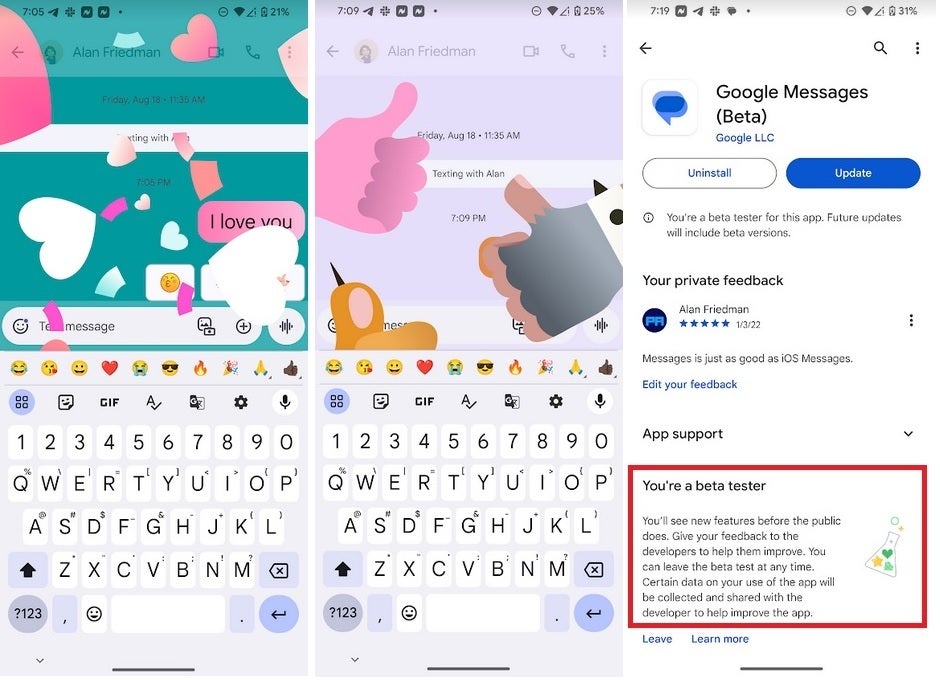
A new feature has been added to Google Messages that really drives home the point that you’re trying to make with a text message. Called Screen Effects, it delivers animation in the background of a message when certain phrases are sent or received. The animation takes up the entire background, and while the feature has only a small number of trigger phrases at the moment, you can only see this in action if you are a beta tester for the Google Messages app.
Luckily, I am a beta tester for Google Messages so Screen Effects works for me. For example, I texted the phrase “I Love You” and hearts appeared in the background until a dove flew north leaving a white trail which became the regular background for the app. The entire animated effect ran for about 10 seconds. If you type “Sounds good,” multiple giant thumbs up appear all over the background.
Google says that there are more than 15 phrases that trigger a Screen Effect on Google Messages and they work whether you are messaging another Android-toting RCS user, or an Android user connected to the SMS platform using a non-RCS messaging app. If Screen Effects is too much for you (and granted, they are not for everyone), we’d love to tell you how to disable it on the app. Except that you cannot disable the feature.
Screen effects for I Love You and Sounds Good. The feature is now available to those registered as a Google Messages beta tester
If Google is still accepting users to be beta testers for Google Messages, go to the Play Store listing for the Google Messages app, choose “Become a Tester,” and follow the instructions. Back in the day when I used Android as my daily driver 99% of the time, I made sure to become a beta tester for core Google apps because you’re sure to get a head start on receiving new features like Screen Effects.
The Play Store listing for Google Messages will also let you know if you’re already a beta tester for the app. On the listing, if you are already registered as a beta tester for Google Messages, you’ll see a paragraph with the heading, “You’re a beta tester.”
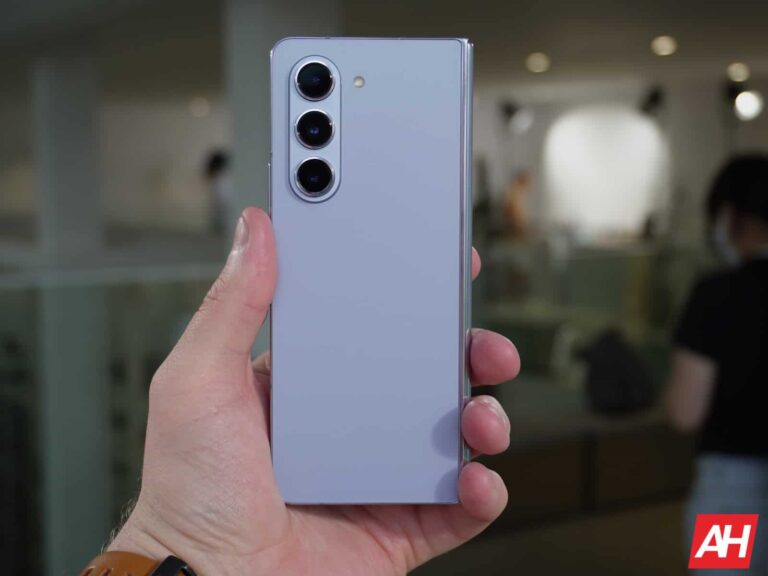
A few days back, Samsung obtained a regulatory certification for the Galaxy Z Flip 6’s batteries. The next-gen Fold has also joined the party. Korean certification agency Safety Korea recently certified one of the batteries for the Galaxy Z Fold 6. A live photo published on its website revealed a pull tab for easy removal of the battery.
The Galaxy Z Fold 6’s battery is certified with a pull tab
Samsung usually begins collecting regulatory approvals for key components for its upcoming devices a few months ahead of the launch. The Galaxy Z Fold 6 and Galaxy Z Flip 6 are expected to debut in late July or early August, so it is about time the company embarks on this journey. As expected, it has started collecting the certifications for the foldable duo.
Safety Korea certified a battery pack for the Galaxy Z Fold 6 with the model number EB-BF957ABY L (the device bears the model number SM-F956). It appears to be the smaller of the two batteries that will go inside the foldable, though we can’t confirm until we see the other unit. The certification doesn’t reveal the battery capacity, while the attached image is too blurry to reveal its mAh rating.
However, we can see a pull tab over it, so removing the battery will require less force. While this isn’t a new concept, Samsung was relatively slow to adopt it. The company has been guilty of attaching batteries with an extensive amount of adhesive, making replacements harder. Thankfully, it is no longer doing that. This fits well into the Korean firm’s self-repair program for Galaxy devices.
We expect to see more leaks, rumors, and certification listings for the Galaxy Z Fold 6 in the coming months. There are already rumors that Samsung will equip it with a 200MP primary camera, the same as the Galaxy S24 Ultra. This camera upgrade may block the way for a bigger battery, though. The new Fold may feature an unchanged 4,400mAh battery (combined capacity of two units).
The Flip model could get a bigger battery
The Galaxy Z Flip 6’s batteries were recently certified by India’s BIS (Bureau of Indian Standards) with model numbers EB-BF742ABE and EB-BF742ABY (the device bears the model number SM-F741). While the listing didn’t reveal more information, leaks have hinted at a combined rated battery capacity of 3887mAh for the phone. Its typical capacity could be 4,000mAh. The Flip 5 has a rated battery capacity of 3591mAh and a typical capacity of 3,700mAh.
We’ve gotten to the point where AI can create entire productions without any human intervention. If you thought things were looking realistic before, just wait until you see what OpenAI just unveiled. According to sources, OpenAI just showed off a new text-to-video generator called Sora, and it may fool some people.
AI technology seems to be taking major steps, as Google just unveiled its new model called Gemini 1.5. This is the new model from the company that improves upon Gemini 1.0 in several ways. It greatly increased the context window along with improvements. It’s currently rolling out for early testing.
OpenAI unveiled its text-to-video generator called Sora
You’ve probably already seen the video of a young couple walking along a snowy path in Japan. Only, there’s no couple and there’s no snowy path. Every frame of this video was generated by AI. To the average Joe, this would look like a typical drone video. Everything in it is extremely realistic.
This is called Sora, and it’s set to take AI video generation to the next level. It’s able to take text-based prompts and convert them into videos up to one minute long. The output looks hyper-realistic, albeit with several instances of AI jankiness. However, the jankiness is so minimal that you’ll need to scrutinize just about every detail in order to spot it. It’s not like the famous Will Smith Eating Spaghetti video that surfaced last year.
In case you’re wondering, no, you can’t get your hands on it and start popping out videos. Right now, Sora is only available to a set of red-teamers within the company, so it’s not available to the public. The company is planning on distributing this tool to artists, filmmakers, and designers for feedback. We’re not sure when OpenAI is going to bring this tool to the public.
The threat is obvious
Many of the examples that are shown off on the OpenAI site have some sort of AI tell like hands deforming, objects disappearing, and whatever the heck is going on with the example of a team of people digging up a chair.
Obviously, this poses a huge threat to filmmakers. The site has a section talking about how the company plans to use this technology safely, but it’s hard to take any AI company at its word with all that’s happened so far. It’s tough to know how many filmmakers are going to lose their jobs or how much misinformation is going to float around after this. We’re just going to have to wait and see.
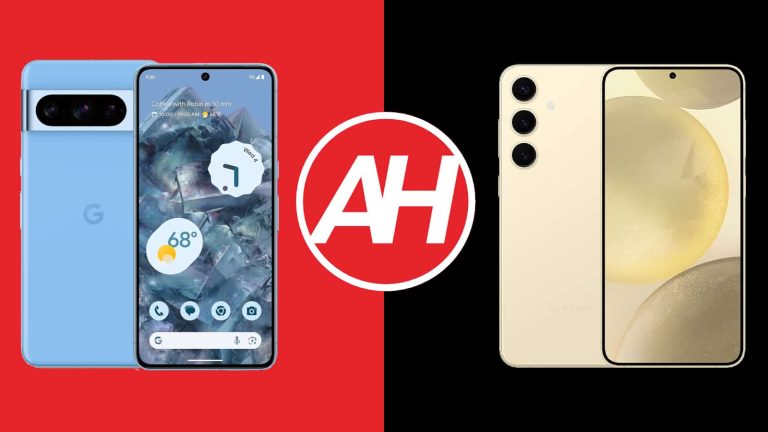
We’ve already compared the best of Google and the best of Samsung. The thing is, Samsung announced two immensely powerful large-format smartphones this year. The Galaxy S24 Ultra is the top-end model, while only a step below is the Galaxy S24+. In this article, we’ll compare the Google Pixel 8 Pro vs Samsung Galaxy S24+. These two phones actually have the same display size, and both are high-end models.
They are quite different, however, and that should make for an interesting comparison. We’ll first list their specifications, as we usually do in comparisons, and then we’ll move to design, display, performance, battery life, cameras, and audio performance. We do hope that this comparison will help you make a purchasing decision, in case you’re trying to decide which one to get. Let’s get going…
Specs
Google Pixel 8 Pro vs Samsung Galaxy S24+, respectively
From the front, the two devices do look quite similar. They both have very thin, uniform bezels, and a centered display camera hole. Their displays are flat, and their corners are also rounded. We’re looking at slightly different display aspect ratios here, but more on that later. When we flip them over, however, things change drastically. The Google Pixel 8 Pro includes a camera visor on the back, which connects to the left and right sides of the frame. That visor is covered by metal, and there are three cameras in there. It does protrude on the back quite a bit and can be a good place to anchor your finger, depending on the size of your hands.
The Galaxy S24+, on the other hand, has three separate camera islands, tiny ones. That’s because each of the cameras protrudes from the back on its own. All three cameras sit in the top-left corner, and they’re vertically aligned. Both phones are predominantly flat on the back, though they do curve towards the edges, for comfort/ergonomics. Both phones are made out of aluminum and glass, by the way.
You’ll find all physical buttons on the right-hand side of both phones, their layout is a bit different. On the Pixel 8 Pro the power/lock button sits above the volume up and down buttons. It’s the other way around on the Galaxy S24+. The Google Pixel 8 Pro is a bit taller, wider, and thicker, but the difference is not that big. It is also 17 grams heavier at 213 grams, compared to 196 grams of the Galaxy S24+.
Both phones are quite slippery in the hand, though they’re comfortable to hold. They do feel entirely different in the hand, so it would be great if you could try them both out before making a decision. They’re both IP68 certified for water and dust resistance, which is always nice to see. Both of them also have Gorilla Glass Victus 2 on the back.
Google Pixel 8 Pro vs Samsung Galaxy S24+: Display
The Google Pixel 8 Pro features a 6.7-inch 2992 x 1344 LTPO OLED display. That panel is flat, and its refresh rate goes up to 120Hz. HDR10+ content is supported here, and the display goes up to 1,600 nits when it comes to brightness. The display aspect ratio here is 20:9, and the display is protected by the Gorilla Glass Victus 2. The screen-to-body ratio is around 87%, which is lower than the Galaxy S24+’s 91% (approximately).
Samsung Galaxy S24+
The Galaxy S24+, on the other hand, has a 6.7-inch QHD+ (3120 x 1440) Dynamic LTPO AMOLED 2X display. That display also supports HDR10+ content, and its maximum refresh rate is 120Hz. This display is also flat, and it has an aspect ratio of 19.5:9. The peak brightness on the Galaxy S24+’s display is 2,600 nits, while the panel is protected by the Gorilla Glass Victus 2 from Corning.
There’s not much to complain about when it comes to either of these displays. They’re both very sharp and vivid, while the blacks are deep. The viewing angles are great, and the touch response is also good. They’re very fluid when it comes to scrolling and various other actions thanks to their high refresh rates, and they also do get quite bright. They’re both easily usable in direct sunlight, so brightness is not something you should worry about. You’ll be more than happy with either one of these two panels.
Google Pixel 8 Pro vs Samsung Galaxy S24+: Performance
The Google Pixel 8 Pro is equipped with the Google Tensor G3 processor. That is a 4nm chip, and it is paired with 12GB of LPDDR5X RAM. Google is also using UFS 3.1 flash storage inside of this phone. The Samsung Galaxy S24+, on the other hand, is fueled by the Snapdragon 8 Gen 3 for Galaxy SoC in most markets, but in some markets, it uses the Exynos 2400 processor from Samsung instead.
Do note that we’ve only used the Snapdragon 8 Gen 3 variant of the Galaxy S24+, so we cannot really comment on the performance of the Exynos variant. Both of these phones do a great job on the performance side of things. They’re quite snappy during regular use, regardless of what you’re doing. Even multitasking is up to par on both phones, though the Galaxy S24+ did feel a bit smoother in direct comparison.
When gaming is concerned, the Galaxy S24+ does do a better job. It managed to run the most demanding titles noticeably smoother, games like Genshin Impact. It also got less warm during the process. The Pixel 8 Pro is not really a smartphone made for gaming, though it did a good job. If you’re not planning to play truly demanding games, though, either one of these two smartphones will do just fine.
Google Pixel 8 Pro vs Samsung Galaxy S24+: Battery
A 5,050mAh battery sits inside the Google Pixel 8 Pro. A 4,900mAh unit can be found inside the Galaxy S24+. They both do offer good battery life, but one of them reigns supreme. The Galaxy S24+ did a better job in the battery department for us, and it was also more consistent at the same time. The Pixel 8 Pro had periods of consistency, but at times it showed rather odd results in daily usage, it was not exactly consistent.
Most of the time we were able to get to the 7-hour screen-on-time mark on the Pixel 8 Pro, without gaming. The Galaxy S24+ managed to get over the 8-hour screen-on-time mark during similar usage. If we throw gaming into the equation, those numbers do go down. Do note that both phones were mainly used on Wi-Fi, and we did not exactly spare them. So they can provide good battery life. Your mileage may vary, of course, as there are simply too many variables included.
In terms of charging, the Google Pixel 8 Pro offers 30W wired, 23W wireless, and 5W reverse wireless charging. The Galaxy S24+ supports 45W wired, 15W wireless, and 4.5W reverse wireless charging. Neither device comes with a charger in the box, so do note that. Do note that charging does slow down on both smartphones after the 50% mark, so they may not charge as fast as you’d think (up to 100%).
Google Pixel 8 Pro vs Samsung Galaxy S24+: Cameras
Google’s handset has a 50-megapixel main camera, a 48-megapixel ultrawide camera (126-degree FoV), and a 48-megapixel telephoto unit (5x optical zoom). The Galaxy S24+, on the flip side, includes a 50-megapixel main camera, a 12-megapixel ultrawide unit (120-degree FoV), and a 10-megapixel telephoto camera (3x optical zoom). They both have good hardware, albeit different sensors and lenses.
The images they provide are notably different. The Pixel 8 Pro loves to produce contrasty images that are usually very detailed. It does a great job in HDR conditions, and in low light as well. The Galaxy S24+ does not punch out as saturated images as its predecessor did, which is a good thing. They’re more balanced now, while also being detailed, and presentable at the same time. They still look good, even though they can’t really measure up to the Pixel 8 Pro and some other flagships.
Ultrawide cameras do a good job of keeping up with the color science of the main cameras, for the most part. The drop in quality is obvious, though, especially in low light. The Pixel 8 Pro does a better job when it comes to telephoto shots, especially if you go over 3x or 4x. The Galaxy S24+ can do a better job at around 3x, it all depends on the scene.
Audio
Both devices do include stereo speakers. Those speakers are good on both sides, though the ones on the Galaxy S24+ are a bit louder. You’ll get more than enough details out of both sets of speakers, though.
What you will not find on either one of these phones is an audio jack. They do have Type-C ports which you can use to connect your headphones via a wire. They also support Bluetooth 5.3 connectivity which you can use for wireless audio.
On Thursday, Microsoft and its Xbox division had quite a bit of news to share on the official Xbox Podcast. Including the teasing of the next-gen Xbox, which is going to deliver “the largest technical leap.”
Xbox President Sarah Bond stated, “We’ve got more to come. There’s some exciting stuff coming out in hardware that we’re going to share this holiday. We’re also invested in the next-generation roadmap. What we’re really focused on there is delivering the largest technical leap you will have ever seen in a hardware generation, which makes it better for players and better for creators and the visions that they’re building.”
The Verge is also reporting that Microsoft Gaming CEO Phil Spencer teased that the Xbox hardware teams are thinking about building different kinds of hardware. Spencer said his team is “really thinking about creating hardware that sells to gamers because of the unique aspects of the hardware. It’s kind of an unleashing of the creative capability of our hardware team that I’m really excited about.”
Microsoft is also teasing an Xbox handheld
If you read between the lines, you’ll see that Xbox is also teasing “different types of devices” in an Xbox blog post published today. This isn’t the first time we’ve heard about an Xbox handheld, but this is the first time that Microsoft has hinted towards it. Spencer did say that he is a “big fan of handhelds. I’m a big fan, but nothing to announce.” Spencer also admits that there is a lot of work to do on the Windows side for handheld gaming PCs still.
However, before the next-generation Xbox and this handheld come our way, it sounds like the disc-less Xbox Series X that leaked, along with the new controller, could be a thing. Xbox said in a blog post today that “we have a robust and innovative multi-year hardware roadmap including more console and controller options for you this holiday.” Which sounds like a fall announcement or maybe even a summer announcement is on the horizon.
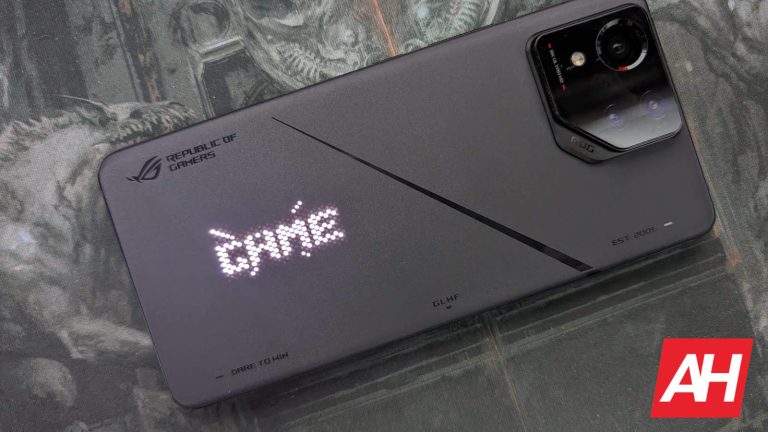
A new major phone that’s just released, so it’s time for it to go through the ringer. The Asus ROG Phone 8 Pro recently came out, and Zack Nelson from JerryRigEverything has put it through his durability test. During the video, we also got a look at the inside of the phone.
The Asus ROG Phone 8 is the latest gaming phone from the company, and it was highly reviewed here at Android Headlines. If you want to see why we love this phone so much, check out our Asus ROG Phone 8 Pro review.
The Asus ROG Phone 8 Pro goes through a durability test
For the most part, this is a pretty typical durability test. The screen scratched at a level six with deeper grooves out of level 7, the frame is made of metal, and the display lasts about 20 seconds under the lighter before the pixels start to die.
However, the peak of these videos is usually the bend test. Asus’s ROG Phones have failed the past to bend tests, and that never sits right with users. This time around, bending from the back and the front resulted in some pretty troubling flexing, but the phone did ultimately survive the test. It didn’t survive as well as the Galaxy S24 Ultra (Review), but it was able to earn Jack’s stamp of approval. However, the back glass did shatter at one point.
All in all, the ROG Phone 8 Pro survived the test, but you will still want to be careful with this phone. Just don’t bend the phone with all of your strength, and you should be fine.
As for the teardown, we were able to see the intricate cooling system that this phone uses. Just like the OnePlus 12 (Review), this phone uses a rather large vapor chamber cooling system. It’s not as large as the cooling system in the OnePlus 12, but it’s still very robust.
Microsoft has finally released some new numbers on subscribers for Xbox Game Pass. After more than two years, Microsoft has announced that it has now surpassed 34 million subscribers. That’s up nearly 36% from the last number Microsoft gave in 2022, of around 25 million.
Previously, Microsoft Gaming CEO Phil Spencer admitted that he had been seeing growth slow for Xbox Game Pass on consoles, saying “I’ve seen growth slow down, mainly because at some point you’ve reached everybody on console that wants to subscribe.” Then Microsoft expanded Xbox Game Pass to PCs, and now we’re seeing growth once again. However, this isn’t a number that Microsoft touts routinely, so hard to really see how the growth is looking right now.
Microsoft has an ambitious goal of getting 100 million Xbox Game Pass subscribers by 2030. Obviously, they are still pretty far off from that right now, but the good news is, it’s only 2024. They’ve got six years to hit that goal. However, they are only a third of the way there.
This number means people aren’t flocking to Game Pass for Xbox Cloud Gaming on mobile devices
Xbox has really expanded Game Pass over the years, it’s not available on PC as well as mobile devices. But this 34 million number means that we aren’t seeing users flock to Game Pass for Xbox Cloud Gaming on mobile devices. It’s also reflective of the fact that Xbox Series S and X haven’t been selling as well as the PlayStation 5 and PS5 Slim.
Remember, that Microsoft’s goal isn’t to convert everyone into a Game Pass subscriber, instead, Spencer stated that “it’s a good business for us today, Game Pass, but in no way is there a plan that says ‘Okay, everybody needs to become a Game Pass subscriber.’”
Xbox Game Pass starts at $9.99 per month. So if everyone got the lowest tier plan, that’s $340 million per month Microsoft is making from just this one service.
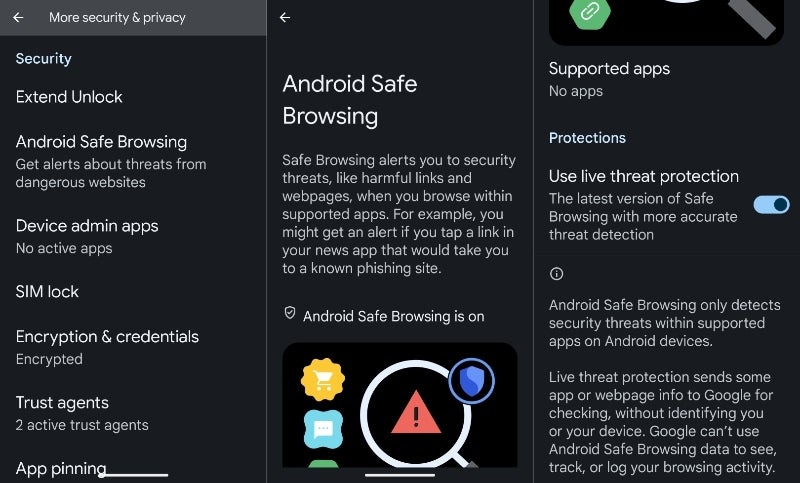
If you use a Samsung Galaxy or Google Pixel phone, you will now be able to benefit from a new “Android Safe Browsing” feature within your apps. This new tool is yet another Android security boost in Google’s arsenal against increasingly sneaky malware and phishing scams.
As explained by Android expert Mishaal Rahman on his post uncovering the feature, “Android Safe Browsing alerts you to security threats, like harmful links and webpages, when you browse within supported apps. For example, you might get an alert if you tap a link in your news app that would take you to a known phishing site.” Essentially, its function is to add a layer of protection when tapping on a web link within an app.
If I had to compare it to something, it would be like the warnings you get in the Chrome browser when you’re about to navigate to a dodgy link. Android Safe Browsing works similarly by tapping into Google’s extensive database of known threats. At the moment, no apps appear for me under supported apps, suggesting that — as per Mishaal’s observations — this requires apps to utilize the “SafetyNet” Safe Browsing API, which lets apps determine if a URL has been marked as a known threat by Google.
Image Source: Phone Arena
So far, this new feature has been spotted by navigating to Settings > Security & privacy > More security & privacy on Pixel devices and Settings > Security & Privacy on Samsung Galaxy devices. However, the roll-out seems to be phased and controlled by Google’s servers, which would explain why not everyone has it yet.
Although this seems like a feature every Android phone should get, it is currently unclear whether this will a Pixel and Galaxy exclusive. Right now it looks like most phones using Google Play Services should eventually get this update, not just specific devices, so exclusivity is hopefully not an issue.
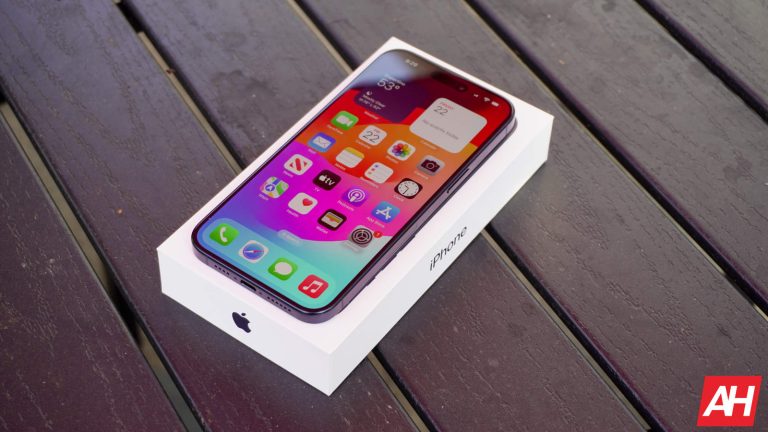
As much as Android users make fun of the iPhone for being late to certain features, specs, and technologies, they can’t help but switch to the iPhone in droves.
According to CIRP (Consumer Intelligence Research Partners, LLC), in 2023, 13% of all iPhone buyers in the US were switching from Android to iOS. Now, that is down from 2022, which had a record high of 15%. But that’s higher than 2021 and 2020 and matches the 2019 percentage.
It’s important to stress that this research is only based on the US market. Where the iPhone is actually powerful compared to the rest of the world. In the US, Apple enjoys a market share of just above 60%. Whereas, worldwide, that falls to just below 25%.
Why are so many Android users switching to iPhone?
While we can’t speak for those Android users switching to iPhones, I do have a bit of an anecdote here. I switched to the iPhone in 2020. The main reason why I did it was to check out the competition and try something new. I’ve been at Android Headlines and reviewed just about every significant flagship since 2012, so I wanted to try something different. And now it’s hard to go back.
Of course, part of that is by design. Apple’s so-called “walled garden”. Apple wants you to get used to its features and how well its ecosystem works together across multiple devices. And they also make it pretty tough to switch out of iOS.
Additionally, over the last few years, Apple has added quite a few features to iOS that Android users absolutely love. Like the App Library, while not perfect, it does allow you to not have every single app on your home screen. You can also make other apps default, like Google Maps instead of Apple Maps or Google Chrome instead of Safari (though every web browser is still basically Safari with a skin on top), among a few other things.
Obviously, there’s one other reason that we should mention here. And that’s iMessage. The blue bubble versus green bubble war has been alive and well here in the US for many years. Adults and teenagers get pressured into getting an iPhone so they will no longer be a green bubble on their friends’ iPhones and ruin the group chats. That is most likely the biggest reason for Android users switching to iPhones, though we’ll likely never know.
Samsung may be making Galaxy S24 users wait longer for the first update, other eligible models are getting the February 2024 update quite fast. It has already updated over 20 Galaxy devices to the latest security patch. A few more are joining the party today. Namely, the Galaxy S22 series and Galaxy A54 are picking up the new security update. Samsung has also expanded the patch globally for the Galaxy S20, Galaxy Note 20, and Galaxy A53.
Galaxy S22 series grabs Samsung’s February 2024 update
As of this writing, the February 2024 security patch is available for the Galaxy S22 series in Europe. The devices are receiving the new update with the firmware build number S908BXXS7DXAC. A screenshot posted on X by @Tarunvats33 shows that the OTA (over the air) package weighs just over 255MB for the Ultra model. The OTA download file should weigh similarly for the other two Galaxy S22 models.
Samsung should soon bring this update to the Galaxy S22, Galaxy S22+, and Galaxy S22 Ultra in other markets, including the US. As the official changelog confirms, the latest firmware release for the 2022 flagship trio doesn’t contain anything more than this month’s security fixes. There are 69 security patches in total this month, including fixes for three critical Android OS vulnerabilities and eight Galaxy-specific vulnerabilities.
All of these fixes are also rolling out to the Galaxy A54. Once again, Samsung has begun the rollout in Europe, with a global release expected soon. Users in Europe are getting firmware version A546BXXS6BXA8 with the update. It is the same story as far as the changelog or content is concerned. The update doesn’t bring anything extra. Samsung may soon release One UI 6.1 for the Galaxy S22 and Galaxy A54 with a bunch of new features and improvements.
Wider rollout for the Galaxy S20, Note 20, and Galaxy A53
A few days back, Samsung released the February security patch for the Galaxy S20 series, Galaxy Note 20 series, and Galaxy A53 in the US. These devices are now getting the latest security updates in more markets, including Europe. The updates are available for both 4G/LTE and 5G models of the two 2020 flagship lineups (only 5G models were released in the US). It shouldn’t be long before the updates go global.
The Galaxy S20 and Galaxy Note 20 series won’t get Samsung’s One UI 6.1 update. These phones are done getting feature updates—they didn’t even receive Android 14. However, the Galaxy A53 still has a lot of life left in it. The 2022 premium mid-range phone arrived with Android 12 and will receive updates up to Android 16. It should pick up One UI 6.1 later this year.