Some of the biggest leaders in sports – Disney, Fox, and Warner Bros Discovery – announced a joint venture for a mega-sports streaming service earlier this month. Since that announcement, we’ve been hearing from Pay TV providers as well as local TV providers about what this new venture could mean for their business.
Last week, we heard from Gray TV that they were not too fond of the joint streaming service unless they were to get paid. Gray TV gave some pretty compelling reasons in their statement, too, like the fact that local sports are streamed via local channels and broadcasters pay for these broadcasts. For Disney, Fox, and WBD to take that away without any monetary compensation would result in job losses for local economies.
Now, larger Pay TV services like Comcast, Charter, and DirecTV are making their voices heard. The primary question the three have is whether they’ll be able to offer the same skinny bundle of linear networks that Disney, WBD, and Fox announced as part of this streaming service, which includes ABC, ESPN, ESPN2, TNT, TBS, Fox, FS1, and FS2, among a few other cable channels that showcase sports.
If Pay TV providers are able to offer a skinny bundle with these sports services to customers, then there’s likely to be little pushback. However, if they aren’t able to and have to carry these channels in their basic cable subscription, which will likely cost much more than the joint service, there’s going to be quite a bit of pushback.
Disney, Warner Bros Discovery, and Fox all rely on Pay TV for a bulk of their revenue
It’s doubtful that the joint sports streaming service will allow Pay TV providers to offer a competitive skinny bundle. The three companies get a majority of their revenue from Pay TV through these deals that they’ve struck with Pay TV providers. Disney, for example, forces Pay TV providers to carry all of their channels instead of just some. So YouTube TV would need to carry all 14 of Disney’s channels, versus just carrying the handful of ESPN channels – which cost the most to carry.
Obviously, some Pay TV providers can benefit indirectly from this new venture, but it would likely cause a lot more cable TV cancellations, which is kind of the point of this service. Sports streaming has been pretty lacking over the last few years. But for companies like Comcast and Charter, this would mean more broadband sales, as this streaming service is going to need high-speed internet. So not only more internet subscribers but more people paying for the higher-speed packages, which would bring in more profit for those companies.
It’s still in the early stages of this service, though it is expected to launch in the fall of 2024. So Disney, Warner Bros Discovery, and Fox are going to need to figure things out pretty quickly. This is likely expected to launch in time for the NBA and NHL 2024-25 seasons, which start around October.
The new TicTacToe Dropper has been observed dropping additional threats onto Windows devices, including AgentTesla and LokiBot.
Fortinet’s FortiGuard Labs Threat Research Team has identified a group of malware droppers used in delivering final-stage payloads throughout 2023. The group is named ‘TicTacToe dropper’ due to a common Polish string, ‘Kolko_i_krzyzyk’, which translates to TicTacToe in English.
These droppers obfuscate final payloads during load and initial execution, including Leonem, AgentTesla, SnakeLogger, LokiBot, Remcos, RemLoader, Sabsik, Taskun, Androm and Upatre.
Timeline (FortiGuard)
According to FortiGuard, the TicTacToe dropper has distributed multiple final-stage remote access tools (RATs) in the last 12 months and the final payloads feature several common characteristics, including multi-stage layered payloads, .NET executables/libraries, payload obfuscation using SmartAssembly software, DLL files nesting, and reflective loading.
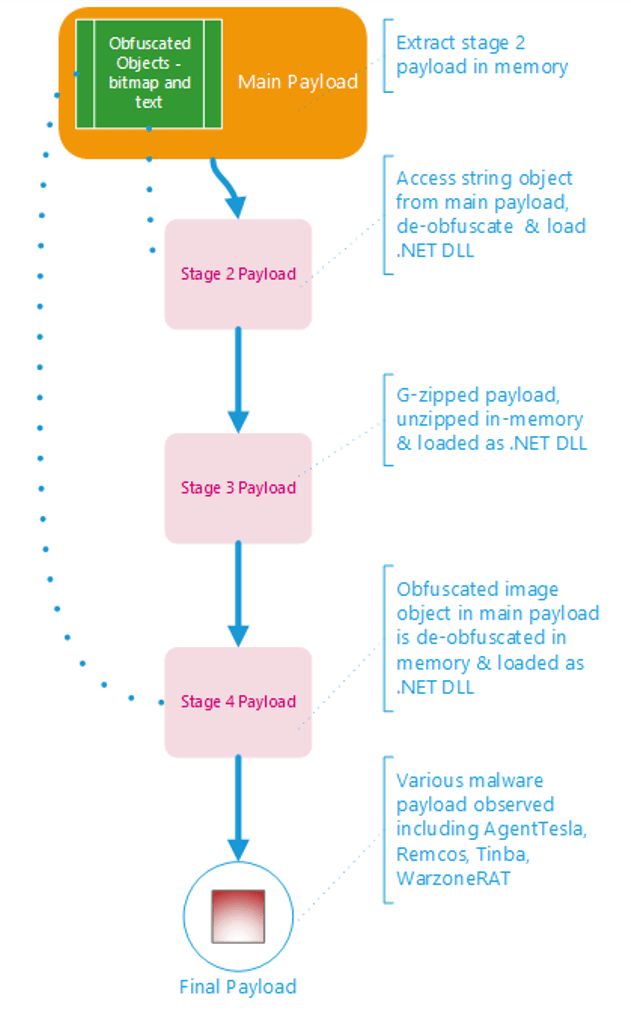
In this campaign, malware executable is typically delivered via a .iso file, a technique often used to avoid detection by antivirus software and as a mark-of-the-web bypass technique. The executable contains multiple DLL file layers, which are extracted at runtime and loaded directly into memory.
TicTacToe Dropper Targets Windows
The medium severity level loader mainly affects Microsoft Windows platforms, potentially leading to compromised credentials and enabling further malicious activities, wrote Amey Gat and Mark Robson in FortiGuard’s blog post published on 14 February 2024.
Samples from early 2023 contained the strings TicTacToe, while later campaigns had different strings and different final-stage payloads. This suggests the tool is constantly developing and developers are trying to evade string-based analysis.
The first sample was a 32-bit executable called ‘ALco.exe’, which extracts and loads a.NET PE DLL file named ‘Hadval.dll’ or ‘stage2 payload’. The file is obfuscated with DeepSea version 4.1, causing unreadable function names and code flow obfuscation.
Use of de4dot tool
The de4dot tool, an open-source (GPLv3) .NET de-obfuscator and unpacker, utilized in the attack, successfully circumvents certain DeepSea obfuscation techniques, resulting in the de-obfuscation of a significant portion of the Hadval.dll file.
This file is responsible for extracting a gzip blob, which, upon decompression, unveils an additional 32-bit PE DLL file and another .NET library. The stage 3 payload, internally named ‘cruiser.dll’, is protected by SmartAssembly software.
The cruiser.dll file contained a class named ‘Munoz’ that creates a copy of the executable in the temp folder. The code from stage 3 extracts, loads, and executes the stage 4 payload from the bitmap object ‘dZAu’. Another DLL file, ‘Farinell2.dll’, is obfuscated with a custom obfuscator.
Payload (FortiGuard)
AgentTesla
A separate TicTacToe dropper sample was earlier analyzed, which dropped AgentTesla, a well-known RAT. This 32-bit.NET executable used an identical technique to load code stored in the resource element of the file.
The stage 2 payload had the internal name ‘Pendulum.dll’ and the stage 3 payload had the name ‘cruiser.dll.’ The stage 3 payload extracted the stage 4 payload from the bitmap object ‘faLa’ with the final payload being AgentTesla.
For mitigating the threat, researchers believe hash-based detections are effective for known campaigns. However, a behaviour-based endpoint security tool is required for new campaigns given the dynamic nature of this malware. EDR technology like FortiEDR can effectively detect anomalous behaviour.
The OnePlus 12R officially became available yesterday, with pre-orders having arrived in the past few days. It’s a rather impressive phone; in fact, we called it “The Best $500 phone you can buy” in our review. But the phone isn’t the best if it can’t connect to your network.
We received a couple of tips today about the OnePlus 12R not being able to connect to Verizon’s network. Basically, some of the IMEI’s not being whitelisted for Verizon’s network since Verizon doesn’t sell the phone, but it does work on its network. We reached out to OnePlus for clarification:
“The OnePlus 12R is able to work with all major carriers and on all major 5G networks in the U.S., including Verizon. We are currently investigating unexpected cases that users may be having with Verizon’s network and are working with the carrier to resolve the issue as soon as possible.”
While it’s a nuisance for those who just got a shiny new phone and it can’t be used when there’s no WiFi right now, OnePlus is on it and working with Verizon to rectify the issue. Fingers crossed that the issue is fixed sooner rather than later.
OnePlus has invested heavily in making its phones compatible with all three US networks
Over the past couple of years, OnePlus has invested quite heavily in making sure that their phones all work on AT&T, T-Mobile, and Verizon at launch. So that issues like this don’t arise. But this was an unexpected issue for OnePlus, and they’re on top of it; that’s the good news.
The issue with Verizon is that all unlocked phones need to be certified to work on its network. The OnePlus 12R is certified for its network. However, it appears that some IMEIs were not added to its database and, therefore, cannot be activated on its network. This isn’t the first time we’ve seen this happen with Verizon; it has happened with other unlocked devices in the past. And is something to think about when buying an unlocked device to use on Verizon (especially on Visible, its own MVNO).
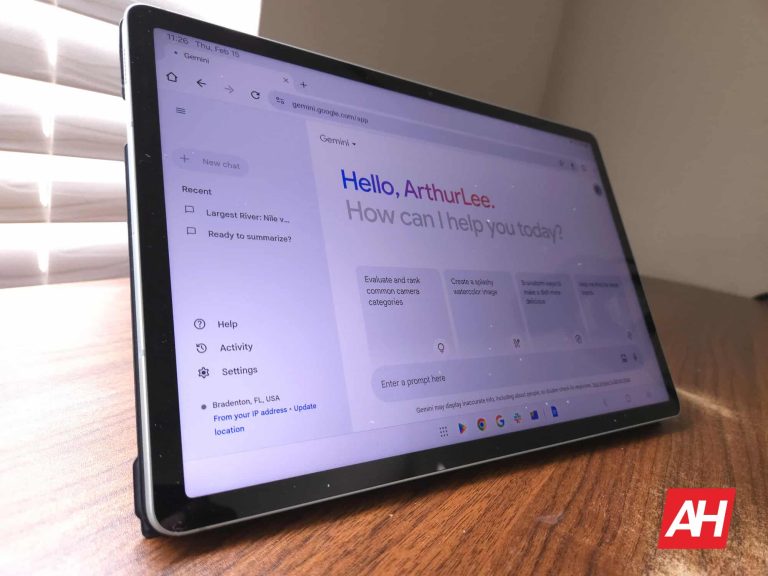
Google recently released Gemini, its most powerful AI model. It swiftly overtook the role of Google’s flagship AI model, replacing Bard completely. While Gemini is only two months old, Google has introduced us to Gemini 1.5, the next generation in the company’s AI tech.
If you’ve been under a rock for the past couple of weeks, then you’ll need a little refresher. Google Bard is gone; the company replaced it with Gemini. You can access it through the website and through the official app. Also, if you’re looking for a more advanced version of the model, you can try out Gemini Advanced. This is the chatbot that uses the Gemini Ultra model.
So, with Bard gone, it looks like Google has its sights set on replacing Google Assistant eventually. We’re not sure when this is going to happen, but we’re already seeing signs of this happening. For example, you can now use the Gemini app as a replacement for the Google Assistant on your phone.
Google introduced Gemini 1.5 with an insane context window
Being the 1.5 version of Gemini, you can expect an experience much more powerful than version 1.0. The company announced this new model through a Google blog post. Both the CEO of Google (Sundar Pichai) and the CEO of Google DeepMind (Demis Hassabis) explained why Gemini 1.5 is superior to the first model.
What’s a context window? What are tokens?
Before hopping into what makes this iteration more powerful, here’s a refresher on context windows and tokens. A token is a bit of information that can be processed by a model. It could be a section of a word, a bit of audio, a bit of a video, or a bit of an image. For example, a word as simple as “Toaster” is made up of a handful of tokens.
A model can only understand a certain number of tokens at a time. The number of tokens a model can understand at a time is called the context window. The larger the context window, the larger your query can be.
Say, you paste your college report into Gemini to summarize, and your report is 2,000 words long, (let’s just say that equates to 5,000 tokens). As long as the context window is larger than 5,000 tokens, then Gemini can understand every bit of information in your report.
Gemini 1.5 could have a tremendous context window
The most significant change is the massive context window. The company is rolling out Gemini 1.5 Pro for early testing, and it has an impressive context window of 128,000 tokens. To put that into perspective, Gemini 1.0 has a context window of 32,000. That’s 4x as many tokens.
It doesn’t stop there, as a small group of testers will gain access to a version of Gemini 1.5 with a context window of up to 1 million tokens. With a window like that, you can feed it a 700,000-word novel, 30,000 lines of code, 11 hours of audio, or an hour of video, and it will understand every bit of it. With that many tokens, you can fit the first four books of Stephen King’s Dark Tower series into it. That’s more than 609,000 words and 2,000 pages.
Google even said that it had tested up to 10 million tokens internally, but that won’t be making it to the public anytime soon. In any case, it’s great to see that Google is pushing the envelope with AI technology so far and so quickly.
Other improvements
Along with the increased context window, you can expect other improvements like better reasoning, better learning skills, better ethics, and many more. The blog post goes into much more detail. So, if you’re an AI enthusiast, then you’ll want to read the blog post. It dives into more of what’s powering this AI model.
An advanced phishing attack typically involves sophisticated tactics such as compelling email and website replicas that are often tailored to specific targets.
These attacks may use social engineering techniques to manipulate victims into revealing sensitive information and installing malware.
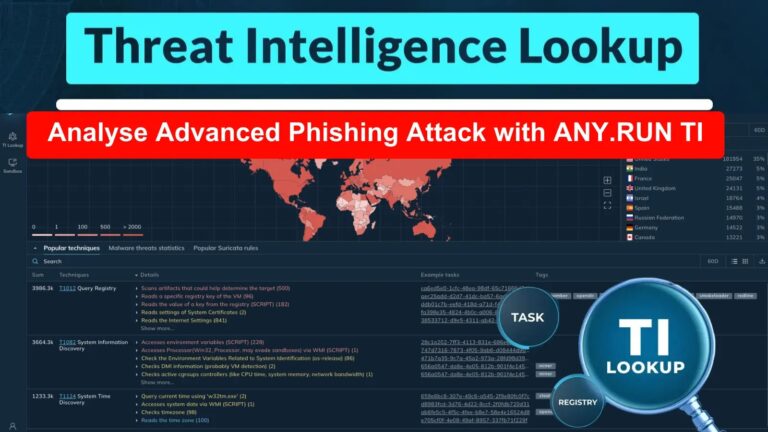
Cybersecurity researchers at ANY.RUN recently unveiled a proper guide to analyzing an advanced phishing attack with Threat Intelligence Lookup.
ANY.RUN Threat Intelligence Lookup provides contextual search online and via API. We index and analyze data from millions of public interactive analytical sessions, or “tasks,” that our community of over 300,000 academics and 300 organizations performs in the ANY.RUN sandbox.
Technical Analysis
Multitudes of opportunities can be unlocked with the help of this new tool that helps maximize threat intelligence. The search capabilities of this new tool enhance the search abilities and provide precise security incident responses.
The online Threat Intel Lookup service of ANY.RUN with API access scans millions of community tasks which links the isolated indicators to specific threats for your security team.
Search results
Even with the help of Threat Intel Lookup, you can also check the new IP in logs. Besides this, it also enables us to find sandbox matches fast, often naming malware families and providing related data like ports, URLs, and hashes.
DocumentANY.RUN Threat Intelligence Lookup
Threat Intelligence Lookup centralized repository of millions of IOCs extracted from ANY.RUN’s extensive database of interactive malware analysis sessions. ANY.RUN Threat Intelligence: Search for linked IOCs using over 30 fields .
How to Explain a Strange Command Line
In an event, the employee alerted security of a phishing attempt, which opened a suspicious Office attachment that enabled Macros, which triggered the alarm.
While examining the IDR logs, cybersecurity analysts discovered the highlighted PowerShell process with $codigo. Analysts without Threat Intelligence Lookup might search online, wasting time.
Searching ‘ImagePath:powershell’ AND ‘CommandLine:$codigo’ reveals multiple $codigo-related command lines. The events tab shows ‘stegocampaign’ tags that suggest a possible cyberattack.
Moreover, cybersecurity researchers affirmed that they are progressing aggressively, but they still need more refinement to their search.
IDR logs hint at a suspicious connection on port 2404, which is uncommon in their network.
The updated search reveals fewer tasks which is mostly tied to Remcos malware, a notorious Remote Access Trojan often utilizing PowerShell.
Finding the Family of Malware
Researchers are making progress, but they still need to fine-tune their search. Based on the information from the IDR logs, it appears that a machine that is potentially infected is connected to port 2404. This port is not commonly used in our network infrastructure.
Threat Intelligence Lookup uncovers malicious IPs linked to the tasks that aid in further investigating malware behavior.
Confirm Remcos’ presence by merging the network rule name with the IP (RuleName: remcos AND DestinationIp: 107.172.31.178). While the ANY.RUN’s Threat Intelligence Lookup entrusts cybersecurity analysts,.
Utilizing IP Address for Investigating Remcos
Write a query combining a network rule name with the IP address associated with port 2404. In addition, researchers narrow down the search to display tasks from the past week. This is how it will appear: Rule name: “remcos” and destination IP: “107.172.31.178”
The example above shows one way that ANY.RUN’s Threat Intelligence Lookup can be very useful for cybersecurity experts.
Currently, it’s offering a trial with 20 search queries for existing Searcher plans or above clients. However, you can reach ANY.RUN for customer plans and subscriptions.
For many households, energy costs represent a significant part of their overall budget. And when customers want to discuss their bills or look for ways to save money, scammers are just a phone call away.
Enter the utility scam, where crooks pretend to be your utility company so they can threaten and extort as much money from you as they can.
This scam has been going on for years and usually starts with an unexpected phone call and, in some cases, a visit to your door. Obviously the phone call side of the scam is much more scalable and means the scam can be done from overseas.
However, criminals know that victims are more likely to be tricked if they were the ones who initiated the call. In a recent investigation, we discovered a prolific campaign of fraudulent ads shown to users via Google searches. To give an idea of scale, the number of ads we found exceeds what we have found in previous malvertising cases.
This blog post has two purposes: the first one is to draw awareness to this problem by showing how it works. Secondly, we’ve collected and shared as many ads and fake sites as we could in the hope that action will be taken, with hopefully some cost for the scammers.
Fraudulent utility scam ads
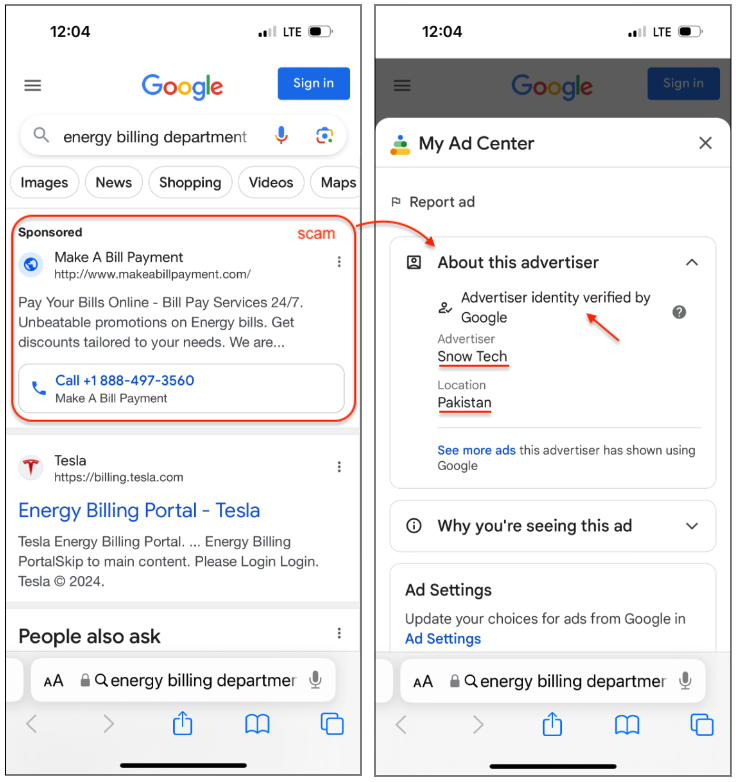
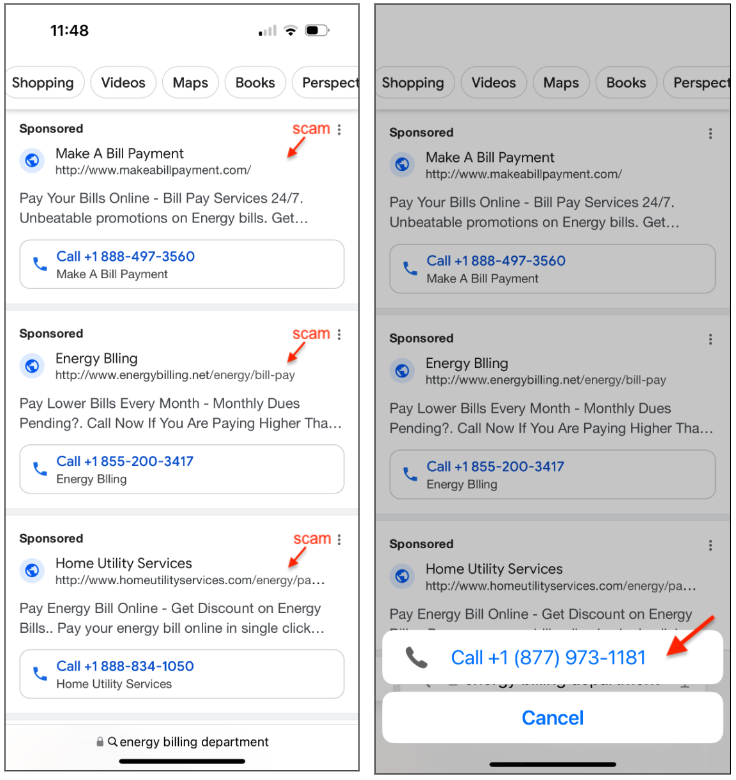
The scam begins when a user searches for keywords related to their energy bill. The ads are shown to mobile devices only, which makes sense given how often people use their phones. Also, the ads are geolocated, so that they are relevant to the user’s location.
We found 28 advertisers with over 300 ads, most of them registered by individuals from Pakistan. We have also seen legitimate but hacked advertiser accounts belonging to US entities that were abused. We didn’t investigate further into the whereabouts and identities of the scammers, but we should note that Pakistan is a possible location.
In most cases, tapping on the ad will not open a new website, but instead will prompt you to dial a phone number. This is exactly what the crooks want as many people will have no idea that an ad approved by Google could possibly be fraudulent.
The utility scam often works by threatening and scaring victims into making poor decisions. An unpaid bill, or an offer that is too good to be true and must be accepted immediately are some of their tactics. Once you’ve made that phone call, you’re already in their hands and very close to losing a significant amount of money.
The scammers may even redirect you to their website to “prove” that they are legitimate. Those sites are often credible enough for a victim to feel like they are doing the right thing, but that couldn’t be further from the truth.
Large scamming infrastructure
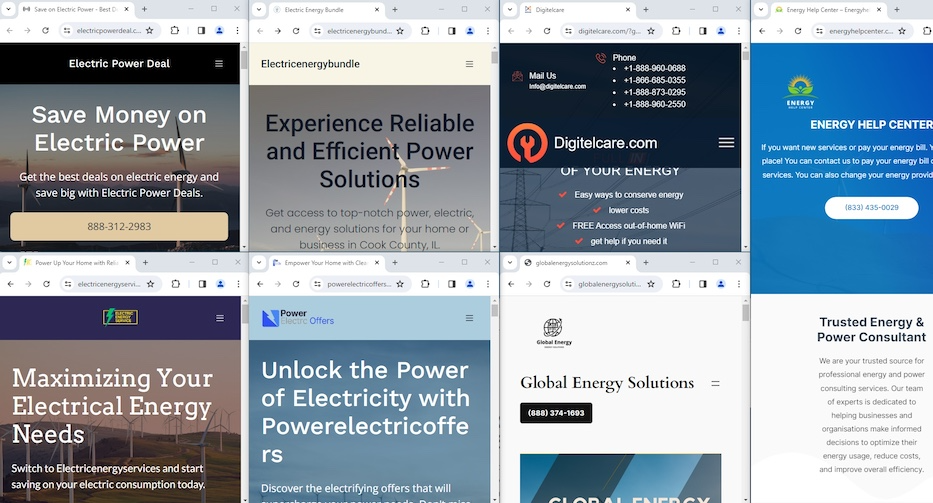
The crooks have registered dozens of different domains names and built templates that appear related to energy or utility savings. The sites are quite simple and consist of one main page with some customer-centric text and one or multiple phone numbers.
We can usually deduce they are fraudulent by looking up their registration date as well as connecting them with search ads.
However, that might not be enough to have them suspended without going through the whole process of calling the scammers, recording the interaction and showing that evidence. This type of investigation requires time and resources to be done properly. Perhaps one of the many scambaiters out there will look into it in the future.
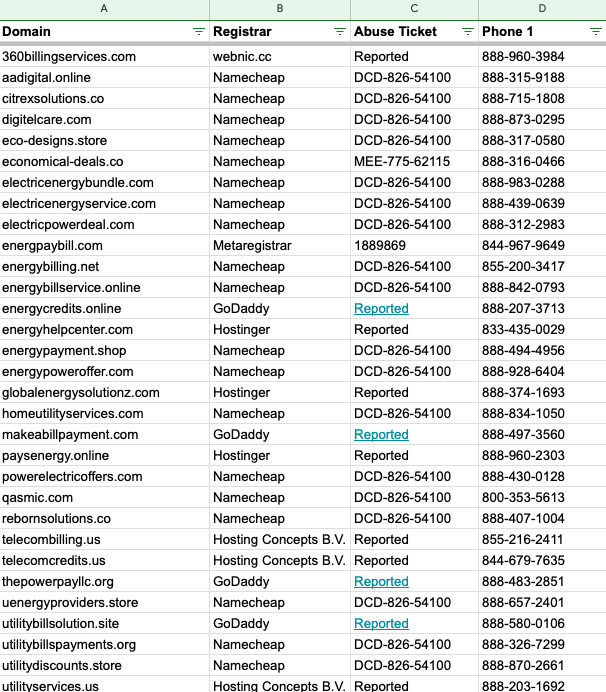
In the meantime, we have tracked and reported as many domains as we could to the relevant registrars in the hope that some may take action and suspend them.
Keep your identity and money safe from scammers
This scam is widespread, and so our advice right now is to avoid clicking on any ad from search as the malicious ads largely outnumber the legitimate ones. You can tell it’s an ad as it will be labelled “Sponsored” or “Ad”.
Here are some additional tips:
Watch out for a sense of urgency. Scammers will often threaten to cut your power immediately. This and similar scare tactics are meant to pressure you into making hasty decisions. Take the time to look things up or speak to a friend before you do anything.
Never disclose personal details over the phone without being absolutely certain you are talking to the right person. If in doubt, hang up the phone and look for the official phone number from your energy company, perhaps from a past bill. Do not trust any phone number that appears on an online ad.
Beware requests for money transfers or prepaid cards. These are a huge sign you are dealing with criminals. Again, take your time to think it over even if just for a few hours. Scammers tend to be so impatient they will make all sorts of claims to act right now, which should be a dead giveaway.
Contact your bank immediately if you think you’ve been scammed and wired money,. Change all your passwords and add a notice with your utility company that someone may attempt to impersonate you.
Report the scam to the proper authorities, which may be the FTC.
Malwarebytes protection
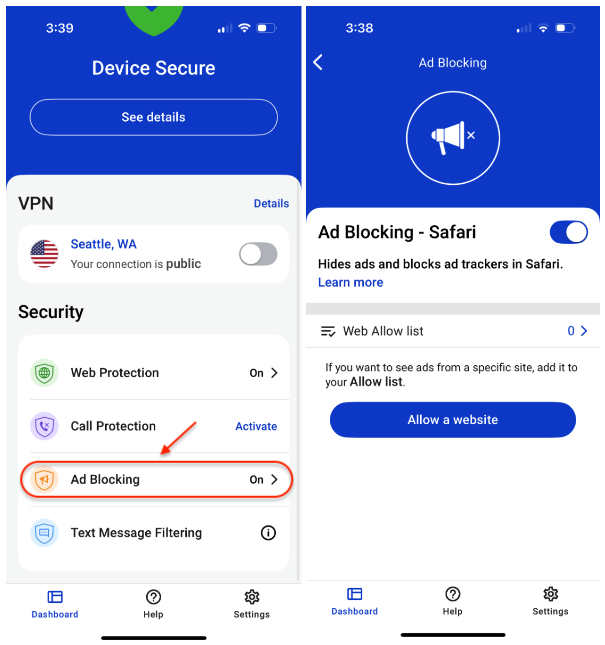
Malwarebytes is working with its partners to go after these scammers. We also provide protection if you are using our iOS app via the ad blocking feature which will disable search ads and other ads that may be targeting you.
Galaxy S24 users may have to wait another week for the first software update. While Samsung has already announced the update, the rollout won’t begin right away. Not even in the next few days. The company told 9to5Google that the first update will start hitting the Galaxy S24, Galaxy S24+, and Galaxy S24 Ultra on February 22.
This update will fix a few bugs on the Galaxy S24 lineup
Samsung unveiled the Galaxy S24 series on January 17 and immediately opened pre-orders in most major markets. Early buyers started receiving the phones a week later. Considering the company’s history, users expected an update to fine-tune the software experience and iron out a few bugs by the first week of February.
However, two weeks into February, there was no sign of an update. In the meantime, users discovered several quirky bugs with the devices. Some Galaxy S24 users weren’t happy with the vividness of screen colors, while others expressed disappointment with the camera performance. There have been reports of motion blur, shutter lag, weird animation effects while zooming, and image shifting. A few users also noticed grainy display issues.
All this while, Samsung kept mum. Yesterday, it finally announced that the first update for the Galaxy S24 trio is on the way. The company detailed a few bug fixes but failed to specify a release date. It only said that the update would roll out in February, which was a vague timeline. We still expected the rollout to begin in a few days. After all, users have been waiting for this update for over two weeks.
Unfortunately, that doesn’t seem to be happening. In an emailed statement to 9to5Google, Samsung revealed that the first update for the Galaxy S24, Galaxy S24+, and Galaxy S24 Ultra will roll out starting on February 22, i.e., a week later. Since updates are released in batches, some users may have to wait even longer. We won’t be surprised if some Galaxy S24 owners hit March waiting for the first update.
It will address screen vividness and camera issues
According to Samsung, this update will let users manually adjust the vividness of their screen colors. It will also improve the camera performance of the Galaxy S24 trio. The company has promised improvements for the zoom functions, Portrait Mode, Nightography, rear camera videos, and more. If you are using any of the latest Samsung flagships, head over to Settings > Software update > Download and install to check for updates.
The baseball season is right around the corner; Spring Training starts in exactly one week. With Opening Day set for March 28. So, the MLB has just announced pricing and new features for MLB.TV for the 2024 season. You can also sign up right now.
First off, let’s talk pricing. MLB.TV will remain at the same price as last year, which is $149.99 for the season or $29.99 per month throughout the season. Obviously, it is cheaper to pay for it all at once. Unless you’re only interested in a month or two of baseball, if you are only interested in a single team, you can get a single-team package for $129 for the season.
Keep in mind that with MLB.TV, you are unable to watch the games of the team you are in the market for. So, for instance, I live in the Metro Detroit area and thus can’t watch MLB.TV for the Tigers games since I’m technically “in-market” for them. MLB.TV is a good option if you have moved elsewhere but still want to watch your team(s) and you can’t go through local stations and RSNs.
What’s new on MLB.TV for 2024?
The MLB is announcing a few new features for MLB.TV this year. Which includes expanded access to MLB.TV’s multiview option. This will let audiences watch up to four MLB games at the same time. It will be available on Apple TV, Amazon Fire TV, and Google TV devices.
The league is also introducing a new “Catchup Mode” this year, which will allow fans to join the stream of a game late to view a customized highlight reel that lets them see the biggest plays and moments from the game so far. This is somewhat similar to what YouTube TV already does.
The last feature that MLB.TV is adding this year is an expansion of its on-demand catalog with new episodes of originals like “Carded” and “Inside Stitch”. This will take fans behind the scenes with their favorite teams and players to learn what it’s really like to play in the majors.
February 15, 2024 – Nexo, the leading institution for digital assets, announced a partnership with Sift, the Leader in Digital Trust & Safety. By working with Sift, Nexo will be able to revolutionize its approach to fraud prevention, enhancing digital security measures and ensuring a safer, smoother, quicker, and more reliable experience for the company’s over 6 million users.
Nexo will utilize Sift’s industry-leading Payment Protection and Account Defense products, leveraging their advanced artificial intelligence, machine learning (ML) technology, and real-time intelligence to provide robust protection against a wide array of account and payment fraud challenges.
Payment Protection will enhance Nexo’s platform with state-of-the-art payment fraud prevention, resulting in faster transaction approvals, and improved protection of customer funds. In parallel, Sift’s Account Defense will secure user accounts by preventing account takeovers, thus accelerating Nexo’s operational efficiency, and reducing losses associated with compromised accounts.
Nexo also gains access to Sift’s Global Data Network, its consortium of customers, including dozens of the world’s top crypto exchanges. The insights gleaned from the Global Data Network will allow Nexo to prevent fraud more accurately and quickly, and reduce friction for legitimate users.
This initiative places Nexo at the forefront of identifying and preventing complex fraud patterns, enhancing the accuracy and speed of its response, and fostering trust and confidence in the blockchain space.
“The synergistic alliance between Sift and Nexo demonstrates our unwavering commitment to a user-centric ethos, harmonized with strong security and anti-fraud protocols. By harnessing Sift’s cutting-edge technology and comprehensive platform for managing digital risk, Nexo is equipped to adeptly prevent fraud while creating a streamlined experience for our users,” said Savina Boncheva, Head of Compliance at Nexo.
“The crypto community is a magnet for organized fraud actors seeking financial gain,” said Armen Najarian, Chief Marketing Officer at Sift. “By joining Sift’s global data consortium and leveraging our AI-based risk decisioning platform, crypto exchanges like Nexo can greatly reduce fraud and create better experiences for legitimate users. We’re pleased to welcome Nexo to the Sift customer community and look forward to a successful and long-term partnership.”
Nexo is dedicated to continuously improving its security measures, and raising the bar for the entire industry. The partnership with Sift represents a significant step forward in Nexo’s journey towards a safer, more secure digital environment for its users.
About Nexo
Nexo is the world’s leading digital assets institution. The company’s mission is to maximize the value and utility of digital assets by offering a comprehensive suite of products that include advanced trading solutions for retail and institutional clients, aggregation of liquidity from leading venues, and flexible, asset-backed credit lines.
In 2022, the enterprise launched its investment arm Nexo Ventures, which now boasts over 60 portfolio companies. Nexo has processed $130+ billion for 6,000,000+ satisfied users across more than 200 jurisdictions.
Media Contact for Nexo
About Sift
Sift is the leader in Digital Trust & Safety, empowering digital disruptors to Fortune 500 companies to unlock new revenue without risk. Sift dynamically prevents fraud and abuse through industry-leading technology and expertise, an unrivalled global data network of one trillion (1T) events per year, and a commitment to long-term customer partnerships. Global brands such as DoorDash, Yelp, and Poshmark rely on Sift to gain a competitive advantage in their markets. Visit us at sift.com.
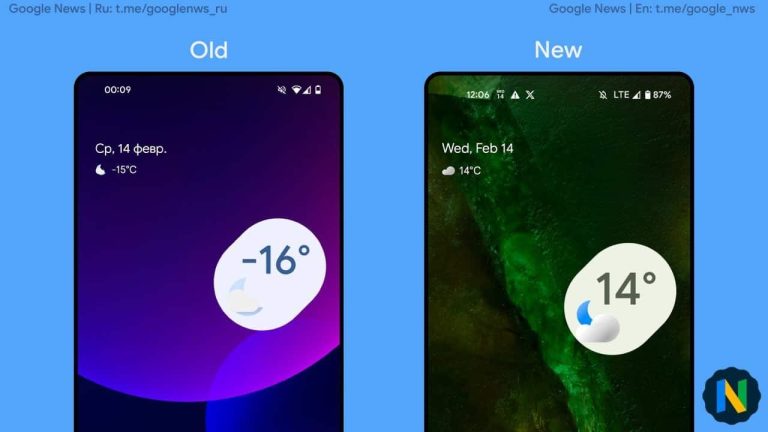
Are you bored of seeing the same old weather symbols on the home screen of your phone? Google has recently released updated weather icons in its “At a Glance” and Weather widgets. Your weather forecasting experience will be improved by these new symbols, which have a modern and eye-catching appearance. Keep reading to learn how this new update will enhance your daily weather tracking. Now, let us go into more detail in this post.
Google also seems to be supporting the updated weather icons on the Weather app and the At a Glance widget. It may make it to non-Pixel devices, as stated in the Google News channel on Telegram. The new icons may show up for you at different times, as is typical with Google changes, which appear to be a phased deployment.
What are the “At a Glance” and Weather Widgets?
Before delving into the new weather icons, let us take a moment to look at the Google “At a Glance” and Weather widgets. Essential information like the weather, upcoming calendar events, and traffic updates show up in the “At a Glance” widget, which sits at the top of your home screen. However, the Weather widget offers hourly and daily predictions, along with a more comprehensive weather forecast.
A Fresh Look: Updated Weather Icons
When you are on the go and need to quickly comprehend the forecast, Google recognizes the value of having weather symbols that are clear and easy to interpret. To make the experience more aesthetically pleasing, they have updated the weather symbols in light of this. The purpose of these symbols is to correctly depict weather conditions and be instantly recognizable.
Not only do the redesigned weather icons look fantastic, but they also significantly improve the user experience. Google has produced symbols that effectively convey weather conditions by combining color, form, and animation. Whether it is a clear afternoon, a bright day, or pouring rain, you can now rely on the weather indicators on your screen to provide precise information.
The new icons have a more three-dimensional appearance and seem less flat, as shown in the image above. Furthermore, you may get a better representation of the new icons on your home screen weather widget in the image above, which is based on the redesigned weather app, after the update has rolled out to your device.
After the Pixel Tablet (Review) and Pixel Fold (Review) launched in the middle of 2023, the company upgraded its Weather app. In September of the same year, the revised version became available for phones. Google’s At a Glance widget got a Material You makeover in the same month. However, this only affected the optional widget that the Google app offered. But it did not affect the At-a-Glance “Smartspace” that was incorporated into Pixel phones.