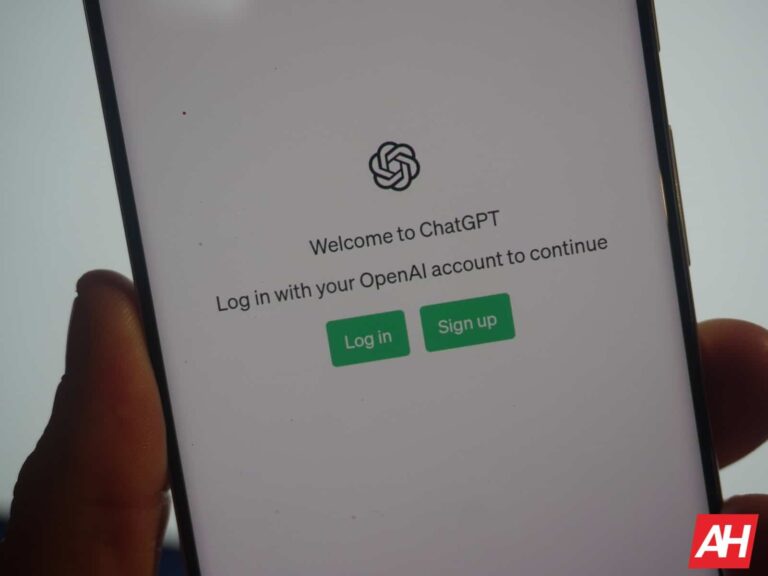
OpenAI is still dealing with chats being leaked

0
[ad_1]

Large language models (LLMs) running AI chatbots are probably some of the largest repositories of information from across the internet. This information could be innocuous or very sensitive. OpenAI, the company behind ChatGPT, is now dealing with the additional drama of leaked conversations spilling beans on some sensitive information.

It’s important to know that this is still a developing story. So, it’s very possible that new details could arise and completely change the trajectory of this recent drama. For the time being, there are two parts to the story.

OpenAI is still dealing with leaked conversations through ChatGPT

The first part of the story involves an ArsTechnica reader showing some pretty troubling screenshots. According to the publication, the reader in question uses ChatGPT extensively. Well, after logging on to the service one day, the reader noticed several conversations there that seemed to materialize out of nowhere. They did not have these conversations with ChatGPT.

That’s weird enough, but things get worse when we realize the contents of the conversations. One of the conversations involved a worker at a pharmacy using ChatGPT to troubleshoot a drug portal. Looking at the redacted conversation, it’s evident that the worker was very frustrated.

However, what’s more shocking about the conversation is that the workers seemed to have unloaded a ton of sensitive information in the conversation. This includes several usernames and passwords along with the name of the portal that they were using. So, in the wrong hands, this could prove devastating for the pharmacy in question and any people who rely on their medication.

ChatGPT leaked conversation

This is only one of the conversations that were leaked through ChatGPT and we’re not entirely sure how widespread this is. In any case, this is not something that anyone wants to see. Even though they’re not supposed to, people sometimes tend to put some sensitive information into their chatbot conversations.

OpenAI responded

Now for the second part of the story. Right off the bat, this seems like a very devastating turn of events. However, it appears that the ArsTechnica publication came a bit too early. Android Authority reached out to OpenAI about the situation, and the company responded.

“ArsTechnica published before our fraud and security teams were able to finish their investigation, and their reporting is unfortunately inaccurate. Based on our findings, the users’ account login credentials were compromised and a bad actor then used the account. The chat history and files being displayed are conversations from misuse of this account, and was not a case of ChatGPT showing another users’ history.”

So, it appears that ChatGPT is not haphazardly passing out conversations to other users like it’s dealing out poker cards. The user in question seems to have been hacked by a bad actor. This unknown hacker then leaked the conversations.

While we have no evidence to dispute OpenAI, the explanation sounds a bit odd, rather, it seems incomplete. The bad actor chose to leak the conversations to random people- that seems weird. In any case, it seems that ChatGPT is not arbitrarily leaking conversations to other ChatGPT users. Obviously, there’s more to this bad actor story, but users should, hopefully, rest assured.

It’s important not to share personal information with any AI chatbot. You never know where that data ends up. Unfortunately for the pharmacy worker, the login credentials are now on OpenAI servers,

Will keep you updated on this story as more details come out.


[ad_2]
Source link

Galaxy S24 series’ AOD appears dimmer and has a yellowish tone

0
[ad_1]

Early impressions about the Galaxy S24 series from SamMobile talk about some imperfections of the series’ certain display aspects. Preliminary insights indicate concerns regarding a dimmer Always On Display (AOD) and a “dulled” Vivid color profile across the Galaxy S24, Galaxy S24+, and the Galaxy S24 Ultra. The “Vivid” color profile on the Galaxy S24 series reportedly has little difference in vibrancy when compared to the “Natural” one.

The observation revolves around the Always On Display, which is noticeably dimmer on the Galaxy S24 compared to its predecessors, the Galaxy S22 and Galaxy S23 series. This difference remains consistent whether using the new AOD wallpaper mode or the traditional AOD configuration. While the folks at Sammobile consider it as a potential adjustment to conserve battery life, it does raise concerns about the AOD’s readability at a glance, especially in brighter scenarios which contradicts its intended purpose.

Samsung may fix the inconsistent color profile and AOD of the Galaxy S24 series with a future software update

Close inspection of the Always On Display in the Galaxy S24 series reveals a yellow tint, irrespective of the AOD wallpaper, Eye Comfort Shield, or Adaptive Color Tone settings. This unexpected hue may raise questions about whether these shifts in the AOD’s calibration are intentional or an issue that the company will fix in the future.

The Galaxy S24 series comes with the same color profiles for its Super AMOLED displays as its predecessors – “Vivid” and “Natural.” However, early findings suggest a departure from the difference in saturation seen between the two profiles in previous Samsung flagships. On the Galaxy S24, the “Vivid” and “Natural” color profiles appear very similar. Actually, the Vivid option seems noticeably toned down compared to its predecessors. This departure from the vibrant color profile leads to concerns about meeting user expectations in this regard.

While folks at SamMobile mentioned the unusual color calibration in the Always On Display and “Vivid” color profile, they underscored that the Super AMOLED screens on the Galaxy S24 series overall deliver an impressive visual experience. The devices reportedly maintain sufficient brightness when required.


[ad_2]
Source link

Samsung will charge for Galaxy AI, but it thinks that people won’t mind

0
[ad_1]

Galaxy AI fans just had their bubbles burst in a big way. Not too long ago, the company announced that all of the cool and amazing AI features we saw during Galaxy Unpacked will be available to use for free…. until the end of 2025. This sparked an uproar throughout the Galaxy Community, as there’s a lot of confusion surrounding this announcement. Well, Samsung is confident that people will pay for Galaxy AI features.

There are a few things to note. We are still nearly two years from the cutoff date, so anything could change in the intervening time. Also, we are still very much in the dark on a lot of details. All we know is that all the features will be free to use until the end of 2025. We have no idea how Samsung is going to eventually monetize its AI features. This leaves us all with questions that probably will not be answered until the end of 2025.

Check out these phones on Best Buy

Samsung believes that people would want to pay for Galaxy AI features

To be quite frank, we’re not sure that even Samsung knows what’s going to happen at this point. The company has been pretty hush-hush about this news, only reiterating its statement when asked for comment. However, a recent interview with the Economic Times shines a little bit of light on Samsung’s mentality.

TM Roh, the president of Samsung Telecommunications, said in a statement:

“According to our analysis, there are various needs for mobile AI. So, there will be consumers who will be satisfied with using the AI capabilities for free. Then there could also be customers who wish for even more powerful AI capabilities, and even pay for them. So, in the future decision making, we will take all these factors into consideration.”

What Samsung’s statement could mean

The statement brings a few things to the surface. For starters, as noted by DroidLife, Samsung could possibly be looking to charge for augmented AI capabilities while leaving many of the core AI features, the ones we’re seeing now, free for users. Maybe the paid Galaxy AI features will be powered by a more advanced AI model. That seems very feasible, but it’s speculation.

Another thing this statement reveals is that Samsung is still feeling this whole thing out. In the quote, we see the statement “…in the future decision making, we will take all these factors into consideration.”

It sounds like the company is not set in stone quite yet on its decision. This makes sense, as this is the first time Samsung has offered advanced generative AI features on its phones. The company doesn’t really have any data on how people are using Galaxy AI. At the time of writing this article, pre-orders are still shipping to users, and many of them won’t even land in hands until March.

So, the company doesn’t really have concrete user data on how people are using these features, which ones people are using the most, which ones people aren’t using, and so on. Samsung is going to have to take these two years to get the raw customer data and come up with a business plan for what it’s going to charge. So, only time will tell how Samsung is going to tell what the company is planning on doing.


[ad_2]
Source link

How to use Circle to Search on Android

0
[ad_1]

With the Galaxy S24 series, Samsung debuted a slew of new AI features, including Circle to Search, which is powered by Google. This is a feature that is now rolling out to the Google Pixel 8 series, so there are five phones in the world with it right now. It’s a pretty unique feature and one that is definitely going to save you a ton of time.

Circle to Search is exactly what it sounds like. This feature lets you circle anything on your screen and search it. This could be a phone from a review, a dress that someone’s wearing, a hat, or even something as small as a belt. It also works on text. And it allows you to search without leaving the app that you’re currently in, which is what makes this even more impressive and useful.

This is pretty similar to Google Lens. Think of Lens but on steroids. That’s really what Circle to Search is. Now let’s talk about how to use it.

What phones have Circle to Search?

Circle to Search launched on the Galaxy S24 series, but has since rolled out to the Pixel 8 series. And we’d expect many more to get this feature in the coming weeks and months. Here’s the current list of devices that support Circle to Search:

How to use Circle to Search

The first thing you’ll need to do is, turn on Circle to Search. Now, on the Galaxy S24 series, this was enabled by default, but others might need you to explicitly turn this one. To do this, head into Settings, tap on Display, and then Navigation Bar, so you can toggle on Circle to Search.

Screenshot 20240130 124745 Settings Large

The next step is activating it. After you’ve found something you want to search for, long-press on the gesture bar at the bottom of the screen, or home button if you’re using software keys. From there, you’ll see a new overlay pop up, which adds a bit of a tint to the screen, with a Google search bar at the bottom. You can of course, tap on the search bar to search, but where’s the fun in that?

Screenshot 20240130 123216 Google Large

From there, circle what you want to search. So in this example, we’re circling the Google Pixel 8 in Mint from our recent TikTok video.

Screenshot 20240130 123225 Google Large

It’ll take a second to search for what you circled, then provide you with results. When you circle a photo of something, it’ll show you pictures from YouTube, Instagram, TikTok, Twitter, etc, first before going down to actual links to websites, videos, and more.

Just tap on any of the results to head to that result. Just like you’re using Google Search on any other platform.

Now, once you’re done with Circle to Search, just tap the back button or swipe in to go back, and you can go back to what you were doing.

@androidheadlines

Circle to Search is gonna be game changing. I’ve already used this feature a ton om Galaxy S24 Ultra. #google #search #galaxys24 #galaxys24ultra #tiktok #tech @SamsungUS

♬ Aesthetic – Tollan Kim

Adding to your search

Circling things is pretty cool and all, but you can take this a step further. You can add to your search, so that Google is searching for that picture plus what you’re asking for. So using the example above, I circled a box of the Pixel 8 in Mint. Then asked, “What is the price?”. Google was able to give me pricing, but it thinks this is the Pixel 7. So it’s not 100% accurate, but it does give you the specs, price, and where you can buy it. Making it very helpful.

Screenshot 20240130 123930 Google Large

Now I tried the same thing on an image of the Galaxy Z Flip 5 from an article on Androidheadlines.com and it worked almost flawlessly. Generative AI was able to give me the specs and a bit about the Galaxy Z Flip 5, as well as prices at a few retailers, including Samsung at the very top.

Screenshot 20240130 124141 Google Large

It’s not perfect, but this ability to add to your search is really useful.

And that’s Circle to Search. It’s a big upgrade to Google Lens and one that I’m definitely going to be using all the time.


[ad_2]
Source link

Apple’s Vision Pro hits 200,000 preorders ahead of the official launch

0
[ad_1]

Apple‘s much-anticipated Vision Pro headset has reportedly reached around 200,000 preorders, according to MacRumors, citing an insider familiar with the company’s sales figures. Scheduled for an official launch in the United States this Friday, the headset quickly sold out during the early ordering phase, with shipping times slipping from February to March within hours of becoming available on January 19.

TF International Securities analyst Min-Chi Kuo, known for expertise in Apple’s supply chain, initially estimated sales to be between 160,000 and 180,000 units based on preorder inventory and shipping timelines. Kuo accurately predicted the swift sell-out, attributing it to a smaller initial shipment and the headset’s premium price point of $3,499. Despite the strong start, Kuo suggested that demand might taper off after the initial rush, characterizing the Vision Pro as a “very niche product” for now.

Apple’s Vision Pro headset delves into a new product category

The Apple Vision Pro marks a significant milestone for Apple as it delves into a new product category for the first time since the introduction of the Apple Watch in 2014. Positioned as a mixed-reality ‘special computing’ headset, the device aims to seamlessly blend users’ virtual experiences with their real-world surroundings. Early reviews have been largely positive, emphasizing the innovative technology; however, the hefty price tag has sparked discussions among consumers and tech enthusiasts.

With the Vision Pro, Apple is gearing up for its most substantial hardware launch in a decade. As stores prepare for the release, free demos are expected to attract those curious to experience the technology firsthand.

While the headset targets a specific audience, Apple’s foray into mixed reality signals the company’s commitment to pushing technological boundaries and exploring new frontiers. The Apple Vision Pro headset represents a pivotal step for Apple, not only in terms of innovation but also as a potential driver for future advancements in the realm of mixed reality.


[ad_2]
Source link

Now, more folks at home can manage you Nest’s Digital Wellbeing settings

0
[ad_1]

For a while, Google has offered its Digital Wellbeing suite of tools to users. These tools allow you to use your digital devices more safely. Digital Wellbeing on a Nest device places restrictions on what kind of media people will hear. Well, thanks to a new update, more people in your household can adjust the Digital Wellbeing settings on your Nest Hub.

Sometimes, it can be tough to keep an eye on the kind of content streaming through your Google Nest Hub. Sometimes, some unsavory lyrics or videos can come through among other things, and that’s not something that concerned parents want. Along with filters, Digital Wellbeing can also let you schedule times for the Nest device to be active. If you have a Google Nest Hub or speaker, then you might want to look into using the Digital Wellbeing platform.

More people can adjust Digital Wellbeing settings for Nest Hub devices

Digital Wellbeing is great, but there is one drawback; only one person is allowed to make changes to settings. That’s the person who set up the account. So, if you wanted to add a new filter or change a schedule, you would have to wait until the account holder does it for you. This is, obviously, rather frustrating.

However, according to a slight change in the Google Nest help page, the company is letting up on its restrictions and allowing other household members to adjust the Digital Wellbeing settings. We’re pretty sure that Google will still have to recognize your voice to allow you to adjust settings. The company did not outright state that. Hopefully, that’s the case, as you don’t want a random stranger being able to make changes to such a crucial part of the Google Nest experience.

Google said that this change is rolling out this month. Well, seeing as there are only two days left in this month, chances are that you have gotten the update.


[ad_2]
Source link

Excessive Expansion Vulnerabilities Leave Jenkins Servers Open to Attacks

0
[ad_1]

The Jenkins Security team was notified of the reported issues in November 2023, which were confirmed and fixed by the vendor the same month and fixed in January 2024.

Sonar’s Vulnerability Research Team has discovered security vulnerabilities in Jenkins, an open-source CI/CD software. These vulnerabilities, which the company refers to as ‘Excessive Expansion,’ allow unauthorized attackers to read and execute arbitrary code on the server, potentially escalating privileges to admins.

For your information, Jenkins is a popular automation server used to automate the software development lifecycle, with a market share of 44% in 2023. The potential impact of security vulnerabilities on end-users is, therefore, significant.

Two vulnerabilities were identified in Jenkins software tracked as CVE-2024-23897 and CVE-2024-23898. The first leverages the “expandAtFiles” functionality to allow arbitrary file reading and code execution, and the second allows arbitrary command execution by manipulating users to visit malicious links.

The vulnerabilities stem from the way Jenkins handles user-supplied data. CVE-2024-23897 allows unauthorized adversaries with “overall/read” permission to read arbitrary files on the Jenkins controller file system. However, even without these permissions, they can read the first few lines of files due to the built-in command line interface (CLI) that uses the args4j library to parse command arguments and options on the Jenkins controller.

This allows attackers to expand arguments from a file on the Jenkins instance and potentially leak file contents. The default character encoding allows attackers with Overall/Read permission to read entire files, and those without the permission can read the first few lines. Unfortunately, this feature is enabled by default, and disabling it isn’t an option in Jenkins 2.441 and LTS 2.426.2 or earlier versions.

Unauthenticated attackers can access the system with Read permission if they meet certain conditions, including enabling legacy mode authorization, signup feature, and “Allow anonymous read access” configuration. This allows users to access the basic Jenkins API, object APIs, people directory, and agents, while administrators can access everything on a Jenkins instance. Researchers successfully read files without plugins, but couldn’t identify plugins that can increase line count.

CVE-2024-23898 is a high-severity, cross-site WebSocket hijacking (CSWSH) vulnerability, which allows attackers to execute CLI commands by manipulating victims to click on links. Modern web browsers, like Safari and Firefox, have a “lax by default” policy to protect against a vulnerability but it isn’t strictly enforced.

Due to potential bypass techniques and outdated browsers, this vulnerability is assigned a High severity classification. Browsers don’t enforce SOP and CORS policies on WebSockets, as they work over WS(WebSocket) or WSS(WebSocketSecure) protocols. WebSockets can be used by any website to invoke Jenkins-CLI commands with the victim’s identity, similar to CSRF vulnerabilities without Jenkins-crumb or Origin header check.

The Jenkins Security team was notified of the reported issues in November 2023, which were confirmed and fixed by the vendor the same month and fixed in January 2024. The vendor fixed CVE-2024-23897 and CVE-2024-23898 by enabling secure configuration and origin verification for WebSocket endpoints, allowing administrators to override the default behaviour. Developers/users must immediately apply patches released in Jenkins versions 2.442 and LTS 2.426.3.

For insights, we reached out to John Gallagher, Vice President of Viakoo Labs at Viakoo who stated that “The urgency behind users patching their Jenkins servers immediately is driven by POC exploits already being published on GitHub, and the severity level is extremely high.”  

“With this CVE, agile development teams using Jenkins are ideal vehicles for introducing and spreading vulnerabilities; that’s the real risk here.  If successful, threat actors could use this exploit to infect many independent software distributions,” John explained.

“As with many open-source projects, patching is difficult because the size of teams using it tends to be small, their time pressure being agile is great, and there may be a false belief that other layers of security will offer protection. Having an accurate application inventory and automated patching solutions will reduce the time that threat actors can exploit this CVE,” he warned.

  1. Ivanti VPN Zero-Day Flaws Fuel Widespread Cyber Attacks
  2. Hackers can hijack your Bosch Thermostat and Install Malware
  3. Critical “PixieFail” Flaws Expose Millions of Devices to Cyberattacks
  4. TeamViewer Exploited to Obtain Remote Access, Deploy Ransomware
  5. Windows Defender SmartScreen Flaw Exploited with Phemedrone Stealer

[ad_2]
Source link

Samsung Galaxy S24 Ultra, Z Fold 5 may get a life-saving feature

0
[ad_1]

Apple and Google already offer a life-saving car crash detection feature in their smartphones. This could soon make its way to Samsung’s latest-generation Galaxy S24 Ultra and the Galaxy Z Fold 5. The feature has been spotted by Android Police’s Mishaal Rahmaan. This suggests that the South Korean brand could be working on car crash detection that may be released in the near future on the two Galaxy devices.

 Galaxy S24 Ultra, Z Fold 5 may detect if you’re involved in car crash

Smartphones come with sensors like an accelerometer, a gyroscope, and more. These are capable of powering features like autorotation and advanced ones like earthquake detection alerts. Rahmaan explains that the car crash detection feature utilizes and analyzes sensor data from motion sensors along with GPS and a microphone on a smartphone.

Rahmaan spotted a ‘Car Crash Detect Wakeup’ sensor while exploring the Tasker app on his Galaxy Z Fold 5. He also found this on the recently launched Galaxy S24 Ultra. The sensor is reportedly a composite sensor which is a type of virtual sensor that gathers data from physical sensors and fuses it via the Android Sensor Hub.

This discovery led to another finding of a hidden app called ‘MoccaMobile’ buried inside the OneUI 6.1. It contains code that is responsible for starting and stopping the functionality of the car crash detection sensor. Notably, this app is also found in the older OneUI builds on the Z Fold 5, S23 Ultra, and S24 Ultra. The S23 Ultra does not even have the car crash detect wakeup sensor.

Car crash detection could save lives

Samsung has not made any official announcements about its plans to introduce a car crash detection feature on the Galaxy S24 Ultra and the Z Fold 5. Both phones are popular flagships among buyers across the world and they also support the required hardware. The South Korean brand could also be testing this feature for a future release because it is challenging to implement.

Car crash detection detects if the user has been in an accident. It automatically calls emergency services or notifies their contacts. It can be crucial when the user cannot help themself. Hence the feature will be a beneficial addition for Galaxy S24 Ultra and Z Fold 5 users.


[ad_2]
Source link

FBI Warns of Tech Support Courier Scam Aiming at Cash and Metals

0
[ad_1]

The FBI has issued a warning about a growing tech support courier scam, specifically targeting senior citizens, to abscond with their cash and valuable metals.

The Federal Bureau of Investigation’s (FBI) Internet Crime Complaint Center (IC3) has released a Public Service Announcement (PSA), warning that users are being tricked into handing over their funds for safekeeping, often in the form of cash or metals in a new kind of scam that blends online and offline methods.

The IC3 reported $5 million in losses from May to December 2023, attributed to scammers posing as tech support or US government officials to gain users’ trust.

The IC3 states that scammers can also use multiple identities to trick victims into believing their financial accounts are at risk, instructing them to liquidate their assets or purchase precious metals. The scam combines on-and-offline techniques to obtain victims’ hard-earned money, with some victims wired directly to a metal dealer.

This malicious scheme starts with threat actors/scammers convincing victims, typically senior citizens, that their bank accounts have either been hacked or could be targeted by cybercriminals. This generates a sense of urgency.

According to the alert, after convincing the victim to get the cash or precious metals, the scammers send couriers to collect it from them, claiming they will safeguard them in a protected account. However, victims never receive a response and lose their money. To make this exchange seem legitimate, scammers can share a passcode with the victims.

FBI Warns of Tech Support Courier Scam Aiming at Cash and Metals

Such scams are becoming increasingly widespread and law enforcement agencies keep warning users about them. A recent trend noticed in this regard is the incorporation of unorthodox and novel ways of deception to install malware or steal funds, indicating that scammers are expanding their deception boundaries substantially.

For instance, in July 2023, the Department of the Army Criminal Investigation Division reported that US military personnel were receiving unsolicited smartwatches, which could connect to Wi-Fi networks and establish unauthorized connections with their cell phones, potentially exposing sensitive personal data. In its press release, the department noted that the devices contained malicious software, including malware, which allowed the sender to access saved data, including banking information, contacts, and account details. 

Another innovative attack was identified by Trustwave SpiderLabs in March 2020. In this unique attack, a compromised USB dongle was used to target businesses. The FBI issued a warning, stating that Fin7 is the cybercrime syndicate behind this notorious scheme involving infected USB devices.

To avoid becoming victims of such scams, the FBI advises the public to protect personal information, avoid handing over cash or metals to strangers, avoid clicking on pop-ups, unsolicited messages, or downloading software, and never allow unknown individuals to access their computers.

“The US Government and legitimate businesses will never request you purchase gold or other precious metals,” the FBI noted.

  1. Hackers used fake job website to scam jobless US veterans
  2. US military personnel defrauded into losing $822m via scams
  3. Chinese Scammers Use Fake Loan Apps for Money Laundering
  4. New Phishing Scam Targets Digital Payment and Online Banking Users
  5. “Wire bank transfer” malware phishing scam hits SWIFT banking system

[ad_2]
Source link

Aembit Teams Up with CrowdStrike for Secure Workload Access

0
[ad_1]

Silver Spring, Maryland, January 30th, 2024, Cyberwire – Aembit Becomes the First Workload IAM Platform to Integrate with the Industry-Leading CrowdStrike Falcon Platform to Drive Workload Conditional Access.

Aembit, the Workload Identity and Access Management (IAM) platform that enables DevOps and security teams to discover, manage, enforce and audit access between workloads, today announced the availability of a new integration with the industry-leading CrowdStrike Falcon® platform to give enterprises the ability to dynamically manage and enforce conditional access policies based on the real-time security posture of their applications and services.

This integration signifies a significant leap in Aembit’s mission to empower organizations to apply Zero Trust principles to make workload-to-workload access more secure and manageable.

Workload IAM transforms enterprise security by securing workload-to-workload access through policy-driven, identity-based, and secretless access controls, moving away from the legacy unmanaged, secrets-based approach.

Through this partnership, the Aembit Workload IAM solution checks to see if a CrowdStrike Falcon agent is running on the workload and evaluates its real-time security posture to drive workload access decisions to applications and data. With this approach, now enterprises can protect their workloads from unauthorized access, even against the backdrop of changing conditions and dynamic access requirements. Additional customer benefits from this partnership include:

  • Managed Workload-to-Workload Access: Enforce and manage workload access to other applications, SaaS services, and third-party APIs based on identity and policy set by the security team, driving down risk.
  • Seamless Deployment: Drive consolidation by effortlessly integrating the Aembit Workload IAM Platform with the Falcon platform in a few clicks, providing a unified experience for managing workload identities while understanding workload security posture.
  • Zero Trust Security Model: Embrace a Zero Trust approach, ensuring that every access request, regardless of the source, is verified before granting access rights. Aembit’s solution enforces the principle of least privilege based on identity, policy, and workload security posture, minimizing potential security vulnerabilities.
  • Visibility and Monitoring: Gain extensive visibility into workload identities and access permissions, enabling swift detection and response to potential security threats. Monitor and audit access logs based on identity for comprehensive security oversight.

This industry-first collaboration builds on the recent CrowdStrike Falcon Fund strategic investment in Aembit, underscoring the global cybersecurity leader’s commitment to fostering innovation within the space. The investment reflects the recognition of the growing demands for securing workload access.

Aembit Workload IAM is available in the CrowdStrike Marketplace, a one-stop destination and world-class ecosystem of third-party products. See more here.

Supporting Quotes:

“Today’s attacks are increasingly identity-based, which is why enforcing identity protection across the enterprise at every layer is critical for modern security. The CrowdStrike Falcon platform is rapidly becoming the centre of the cybersecurity ecosystem. This integration with Aembit enables organizations to secure machine identities as part of a holistic approach to security.” said Daniel Bernard, chief business officer at CrowdStrike.

“The launch of the Aembit Workload IAM Platform on the CrowdStrike Marketplace represents a significant advancement in our joint mission to securely manage workload-to-workload access,” said David Goldschlag, CEO and co-founder at Aembit.

“We are excited to bring the power of Aembit’s Workload IAM to the CrowdStrike Marketplace. This collaboration enables us to deliver Zero Trust for workload access in a way that simplifies and automates the evolving security challenges faced by DevOps and DevSecOps teams,” said Apurva Dave, CMO at Aembit.

Press Contact

Apurva Dave

Chief Marketing Officer

[email protected]

About Aembit

Aembit is the Workload Identity and Access Management (IAM) Platform that lets every business safely build its next generation of applications by inherently trusting how it connects to partners, customers, and cloud services. Aembit provides seamless and secure access from your workloads to the services they depend on, like APIs, databases, and cloud resources, while simplifying application development, delivery, compliance, and audit.

Contact

Chief Marketing Officer
Apurva Dave
Aembit
[email protected]
(202) 525-6661


[ad_2]
Source link