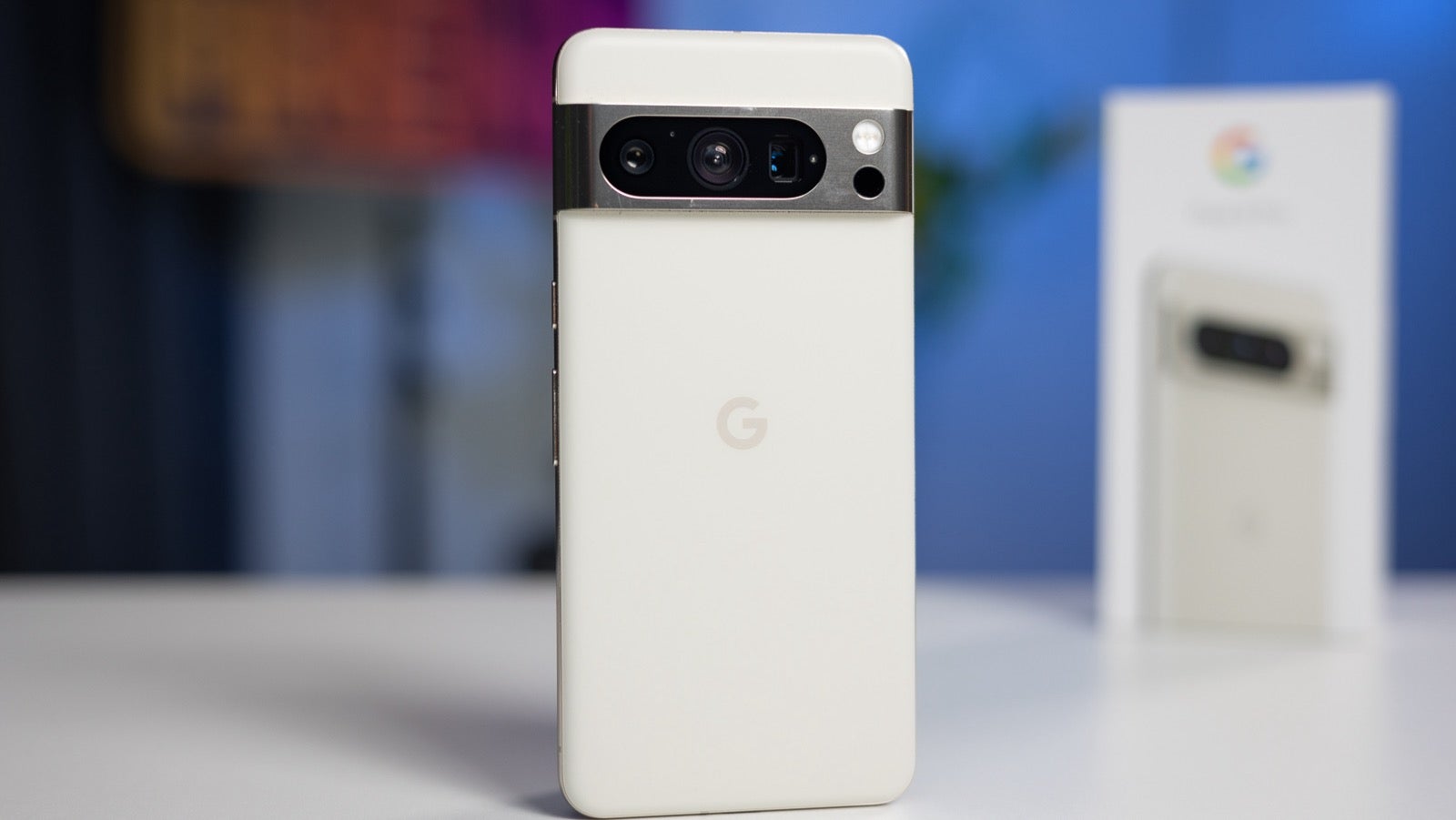
In the latest January Feature Drop for the Google Pixel 8 Pro, Google introduces a noteworthy upgrade to the smartphone’s thermometer, enabling it to measure body temperature. The Google Pixel 8 Pro’s infrared sensor was initially designed for object temperature measurement. However, now it offers a contactless way to gauge body temperature. Google Health’s team, working diligently to integrate health tools into Pixel phones, developed this feature, aiming for convenience, accuracy, and hygiene.
Google Pixel 8 Pro’s thermometer sensor works with a remarkable precision of ±0.3°C
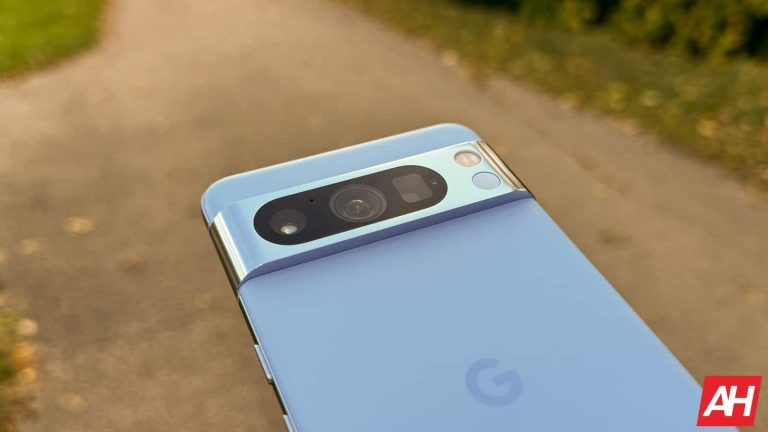
The Pixel 8 Pro’s body thermometer sensor is positioned near the rear camera, allowing users to scan their temporal artery by sweeping the phone across the forehead. Google considers this method more accurate than traditional forehead thermometers, providing a temperature range of 96.9°F – 104°F (36.1°C – 40°C) with a remarkable precision of ±0.3°C. The company’s clinical trials confirm the accuracy of this feature when compared to an FDA-cleared temporal artery thermometer.
To enhance the user experience, the Pixel 8 Pro incorporates the LDAF (laser detection autofocus) sensor. It detects the phone’s proximity to the forehead before initiating a measurement. This ensures optimal positioning for accurate readings. Additionally, haptic feedback and audio instructions guide users through the process, making it user-friendly.
The Pixel 8 Pro’s infrared sensor boasts a wide field of view (over 130 degrees) and requires the phone to be within half an inch of the skin for accurate readings. The team emphasizes the contactless nature of the measurement. It prevents the spread of germs, addressing concerns related to hygiene.
FDA has finally approved this thermometer function
Google underwent a rigorous FDA De Novo classification process for the thermometer feature, ensuring it meets the standards of regulated medical devices. This involved a clinical validation study with a large number of participants, focusing on accuracy, safety, and ease of use. The approval underscores the thermometer’s reliability and its ability to function without an internet connection. It makes body temperature measurement accessible even when you don’t have access to any thermometer but your phone.
Windows 11 has seen some critique for its bloat since its launch, so NTDEV has released a version of it that is only 100MB in size. This miraculous accomplishment isn’t the first time NTDEV has compressed Windows 11. But this recent project of his, though fascinating, isn’t really made for actual use. Naturally, only so much can be squeezed out in 100MB, and this version of Windows 11 is more CLI, less Windows.
What do you get in a 100MB version of Windows 11?
So, what exactly do you get in such a small version of Windows 11? Not a whole lot, understandably enough. NTDEV’s newest project is more of a show of his skills than an actual operating system. For starters, the entirety of the Windows 11 GUI has been completely removed. All you get is a command line interface, which is sure to be quite nostalgic for users who have been around since the DOS era.
To operate this version of Windows, you’ll need to learn how to navigate a CLI. Commands, paths, executing executables, it’s essentially DOS. Though you do get the compatibility of Windows 11 for applications. Even users who disliked the GUI of Windows 11 would probably prefer it over no GUI at all. Obviously, security measures have all been removed too. There are no updates, no live threat detection, and no scans for malware. It might not have a lot of practical use in the real world, but it’s still a remarkable achievement sure to get praise from techies.
NTDEV Windows 11 projects
As is evident from this recent take on Windows 11 from NTDEV, the YouTuber likes to push his skills to the limit. Before this, he released Tiny11, which was a much lighter version of Windows 11. Tiny11 reduced a lot of the bloat, as well as a lot of the hardware requirements needed to run Windows 11. This was a more practical project, something that actually sees use.
After releasing it, NTDEV kept working on Tiny11 for a bit. For example, back in November of 2023, Tiny11 saw an update. This update not only reduced the size even more, it added support for Copilot as well as Windows 11 updates. NTDEV has done similar things in the past for other versions of Windows as well. Tiny10 is a streamlined, bloat-free version of Windows 10 similar to Tiny11. Tiny10 is a great choice for people limited to very old hardware.
As Microsoft continues to add more to its software, some users become more wary. Tiny10, Tiny11, and now this 100MB version are sure to inspire more projects like these. And there will always be a subset of the population that will cling to the good old days.
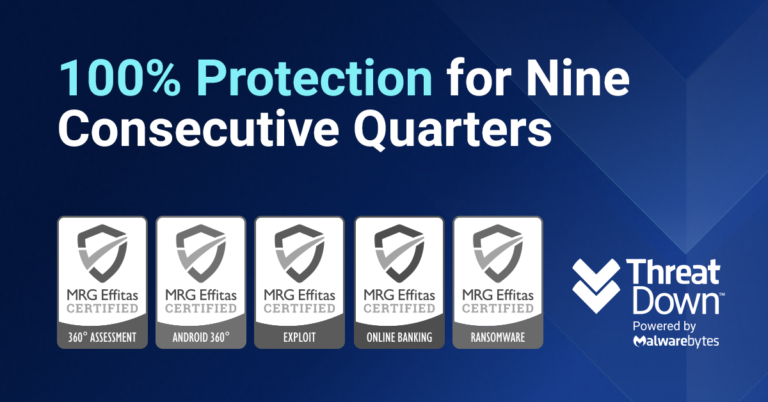
ThreatDown Endpoint Protection (EP) achieved the highest possible score (100%) and received certifications for Level 1, Exploit, Online Banking, and Ransomware in the most recent anti-malware efficacy assessment results for the Q3 2023 evaluation performed by MRG Effitas, a world leader in independent IT research.
These results mark the ninth time in a row ThreatDown has received all certification awards, and is now officially the only vendor to win every single certification and award from Q3 2021 through Q3 2023.
MRG Effitas assesses a product’s ability to meet today’s most pressing threats in-the-wild, such as stopping zero-day malware, ransomware, and exploits—and doing so with speedy performance and low false positives.
After unveiling their new phishing assessment in Q2 2023, MRG Effitas in Q3 2023 began awarding a full-on 360° Phishing Certification to vendors who could take down phishing threats.
ThreatDown blocked 100% of phishing attempts in the In-the-Wild (ITW) Phishing Test. In other words, ThreatDown is the only vendor to consistently receive all 4 award logos and block 100% of phishing attempts.
How we were able to do it: The signature and behavior-based detection techniques and proprietary anti-exploit technology of ThreatDown EP allowed it to detect and autoblock more malware than any other competitor on the Q3 test. In addition, the Web protection layer of our EP blocks access to and from known or suspicious Internet addresses, allowing us to ace the phishing tests.
As an integral foundation layer for ThreatDown Bundles, these results prove that ThreatDown provides reliable and comprehensive protection against a wide range of threats.
Let’s dive into where we prevented more than the rest and how we were able to do it.
100% of phishing attempts blocked
Given the frequency and risks associated with phishing attacks today, it’s clear that modern endpoint security needs to protect against these attacks.
According to Verizon, attackers used phishing for initial access in 15% of data breaches in 2022. CISA also showed that, within the first 10 minutes of receiving a phishing email, 84% of employees took the bait. After successfully compromising a system through phishing, threat actors can further their attacks by dropping ransomware or stealing sensitive data, leading to costly financial and reputational damages.
ThreatDown blocked 100% of phishing attempts in the ITW Phishing Test and was only one of two vendors to score 80% or above in the Phishing Simulator Test.
How we were able to do it: ThreatDown EP, the foundation for ThreatDown Bundles, features a Web protection layer that blocks access to and from known or suspicious Internet addresses.
100% of ransomware blocked
Using a blend of signature and signature-less technologies, the anti-ransomware layer of ThreatDown EP constantly monitors endpoint systems and automatically kills processes associated with ransomware activity.
MRG Effitas tested security products against 65 ransomware samples. In addition, they tested four ransomware simulator samples created in-house, ensuring the security product could only rely on its behavior scanning modules. To test for false positives, a device running ThreatDown EP also ran three benign programs designed to mimic ransomware behavior.
ThreatDown blocked 100 percent of ransomware threats in the MRG Effitas assessment and did so with no false positives, allowing the three benign programs to run. For this we earned the 360° Ransomware Certification.
We were one of the few vendors who earned a 360° Online Banking Certification, which means ThreatDown EP stopped 100% of threats designed to steal financial information and money from victim’s accounts. To outperform the others, our unique detection technology again came into play.
ThreatDown EP blocked 100% of the 16 financial malware samples, the Magecart credit card-skimming attack, and Botnets designed to steal credentials.
100% of zero-day threats blocked
One of the many strong suits of our detection is that it can detect malware that has never been seen before, also called zero-day malware. Again, we were one of the only vendors to detect and block these pernicious threats, which account for 80% of successful breaches.
Built on machine learning (ML) and behavioral analysis techniques, our behavior-based detection enabled ThreatDown EP to detect and block 100% of all zero-day threats. For this, as well as blocking all Botnets, we earned the 360° Level 1 Certification.
100% of exploits blocked
The anti-exploit feature of ThreatDown EP protects organizations from one of the most advanced cyber attacks: zero-day exploits targeting browser and application vulnerabilities.
But don’t take our word for it: MRG Effitas used 8 different exploitation techniques to try and deliver a malicious payload on a device running ThreatDown EP—but they didn’t get very far. Malwarebytes earned the 360° Exploit Certification for autoblocking 100% of Exploit/Fileless attacks, entirely protecting the system from infection.
We were one of the few to earn the 360° Exploit Certification all thanks to our proprietary anti-exploit technology, which wraps vulnerable programs in four defensive layers that prevent an exploit from installing its payload, or even executing initial shellcode.
Consistency is key
If there is one shining take away from this accomplishment, it’s that consistency is key.
You don’t want a security solution that passes rigorous tests like MRG Effitas only some of the time. You want a solution that passes them with flying colors all of the time. Clearly, ThreatDown EP, and by extension our ThreatDown Bundles, is that solution.
For organizations that are concerned their current solution may not be up-to-par, the MRG Effitas assessment has demonstrated that ThreatDown—more consistently than anybody else—has what it takes to keep your business safe from today’s most pressing cyberthreats.
AI technology requires manpower, technical know-how, hours of due diligence…. and A LOT of money. This is why some of the more prominent AI businesses on the market have heavy investments from giant companies. Well, the US Federal Trade Commission (FTC) is investigating large company investments in AI startups.
The FTC is mostly focusing on three instances of multi-billion dollar Investments in AI startups. It’s looking into Microsoft’s investments in OpenAI, Amazon’s investments in anthropic AI, and Google’s investments in anthropic AI. There may be other major investments in other AI startups, but these are the biggest examples.
The FTC is investigating large companies’ investments in AI startups
This might sound a bit sinister, but it’s not as bad as it sounds. The FTC is merely investing these investments in AI startups, so it issued an order to these companies. Mostly, this investigation aims to gain knowledge of the inner workings of these business relationships and how they affect AI moving forward. This is another example of governments wanting to get more involved with AI as the technology continues to grow and become more of a potential hazard. Investigations into these companies will help regulators and lawmakers develop sensible rules around the development of AI technology.
So, the companies under the eye of the FTC are not in trouble. “Our study will shed light on whether investments and partnerships pursued by dominant companies risk distorting innovation and undermining fair competition,” said FTC Chair Lina M. Khan. In fact, Khan also stated in an opinion piece last year that “the expanding adoption of AI risks further locking in the market dominance of large incumbent technology firms.” This is extremely true.
This is a good thing to do, as Microsoft, Amazon, and Google are no strangers to anti-competitive practices. At the end of the day, for some companies, it’s all about making profits. So, it’s very possible that one of these companies could wind up pulling deceptive or cruel practices in order to stay ahead of the competition. This investigation could be the start of some solid rules regarding large companies investing in AI startups.
Starting from the day that they receive this request, the companies will have 45 days to respond. So, each company has a month and a half to respond with all of the key information. Hopefully, this will broaden the FTC’s understanding of AI, and push companies to further develop it safely.
Apple is making big changes in the European Union which will allow, among other things, iPhone users to sideload apps from third-party app stores. From the start, it was the late Steve Jobs‘ intention to prevent iPhone users from sideloading apps on the iPhone for security reasons. Apps from third-party app stores are installed without Apple checking them out to see if they are security risks; apps downloaded from the App Store have been vetted for malware and other malicious behavior although sometimes developers with evil intentions can get an app through.
Apple’s commission for in-app payment processing in the EU App Store will drop to a range of 10%-17%
Developers will also be able to choose alternative payment platforms to handle in-app transactions in the EU across all of Apple’s operating systems including including iOS, iPadOS, macOS, watchOS, and tvOS. The commission that Apple will take on in-app purchases that it processes through its own in-app payment platform, the so-called Apple Tax, will be reduced in the EU from the 15%-30% range seen in the rest of the world, to 10%-17%. Apple won’t see a dime from in-app transactions completed through alternative payment platforms.
[img center inline [[410229]]:”The Apple Tax for EU App Store in-app purchases will drop to a range of 10%-17%”]
The 27 member countries of the EU benefit from the EU’s Digital Markets Act (DMA) which forces Apple to make these changes in this market. Another change being made by Apple will show users a new “choice screen” the first time they open Safari in iOS 17.4 or later. While EU iPhone users can already change their default browser away from Safari, the new “choice page” will bring to their attention that they can choose a default browser and include a list of third-party browsers to help them make that change right away.
Apple makes it clear that it doesn’t like being forced to put up the “choice screen” because it means “that EU users will be confronted with a list of default browsers before they have the opportunity to understand the options available to them. The screen also interrupts EU users’ experience the first time they open Safari intending to navigate to a webpage.”
EU users will be able to pick a third-party default contactless payment app
The company also said, “Inevitably, the new options for developers’ EU apps create new risks to Apple users and their devices. Apple can’t eliminate those risks, but within the DMA’s constraints, the company will take steps to reduce them. These safeguards will be in place when users download iOS 17.4 or later, beginning in March…” One of the changes Apple is making in the EU will bring additional malware protections that will prevent iOS apps from launching if they are discovered to contain malware after being installed on a user’s device.
Changes are coming to iOS in the EU as well. EU iPhone users will be able to choose a third-party contactless payment app to replace Apple Pay and select an alternative app marketplace as their default to replace the App Store.
Apple Fellow Phil Schiller said, “The changes we’re announcing today comply with the Digital Markets Act’s requirements in the European Union, while helping to protect EU users from the unavoidable increased privacy and security threats this regulation brings. Our priority remains creating the best, most secure possible experience for our users in the EU and around the world. Developers can now learn about the new tools and terms available for alternative app distribution and alternative payment processing, new capabilities for alternative browser engines and contactless payments, and more. Importantly, developers can choose to remain on the same business terms in place today if they prefer.”
Apple says that all of these changes will take place in March with the release of iOS 17.4 in the region.
The company now claims that allowing third-party ink cartridges in its printers would expose them to viruses and malware.
Hewlett-Packard (HP) claims to have laptops that effectively block unwelcome snoopers, but why does the company maintain a monopoly over its ink cartridges? Well, HP is reaffirming its monopoly on refillable ink cartridges for printers following a lawsuit for blocking third-party ink with Dynamic Security updates.
The company claims that third-party cartridges can infect users’ PCs with viruses or malware, which can then reach the printer and network. In an interview with CNBC, HP CEO Enrique Lores defended HP’s practice of bricking printers when loaded with third-party ink, based on the company’s 2022 research. It suggests ink cartridge microcontroller chips could be a cyber threat.
The company tasked Bugcrowd researchers to determine it under its bug bounty program in 2022 and learned that HP’s cartridges, which typically use a secure chip for communication with printers, could contain malicious software if sold by third parties.
HP’s chief technologist of print security, Shivaun Albright, stated back then that the hacker could inject code into the device beyond the bounds of the buffer. HP acknowledges that there is no evidence of in-the-wild exploitation of this hack, but given that the chips used in third-party ink cartridges are reprogrammable, they are indeed vulnerable.
However, Ars Technica Senior Security Editor Dan Goodin believes there are no known attacks that can infect printers using hacked ink cartridges. Goodin raised concerns about the potential use of ink cartridges as a cyber threat, but cybersecurity professionals were sceptical.
Hackread.com’s Founder and Editor, Waqas, dismisses the argument that third-party cartridges can compromise a printer with malware as weak and unconvincing. He draws a comparison, stating, “This reminds me of Kellyanne Elizabeth Conway, the Counselor to then-President Donald Trump, who quite convincingly claimed in an interview that she believes microwaves can be hacked and turned into cameras for spying purposes.”
However, Lores’ comments raise concerns about security vulnerabilities as he presented a scenario where a compromised ink cartridge could launch malware onto a connected network. HP claims its chips are secure, implying that its authentication mechanisms are reliable. Still, fearing infection from third-party cartridges may prevent some customers from purchasing ink from HP, despite HP’s claims of chip authenticity.
For your information, HP has been hit with a lawsuit over its Dynamic Security system (PDF), which stops printer operation if an ink cartridge without an HP chip or HP electronic circuitry is installed.
The lawsuit (PDF) seeks class-action certification, alleging that HP customers were not informed that firmware updates issued in late 2022 and early 2023 could result in printer features not working.
The lawsuit seeks monetary damages and an injunction to deter HP from issuing printer updates, which block ink cartridges without an HP chip as compromised ink cartridges can allow malware to invade the connected network.
Printer manufacturers like HP have faced criticism for security flaws, potentially allowing hackers to access sensitive data or control printing functions. Lores emphasized the need for stronger security measures in the printer industry.
“I think for us it is important for us to protect our IP. There is a lot of IP that we’ve built in the inks of the printers, in the printers themselves. And what we are doing is when we identify cartridges that are violating our IP, we stop the printers from work” Lores stated in an interview with CNBC.
Google Pixel users received a nice little treat today in the form of the first Pixel feature drop of 2024. However, Pixel 8 Pro users received some extra sprinkles on top as the device’s built-in thermometer gained a new capability: measuring body temperature.
Thanks to the Google News group on Telegram, we have detailed information and screenshots of the body temperature taking process on the Pixel 8 Pro. Following some app disclaimers, such as the fact that body temperature readings are not intended to self-diagnose a serious medical condition, or to determine if you have hypothermia, you can proceed with a temperature reading by simply placing the phone against your forehead and sweeping it gently towards your temple. First time use of the feature will prompt you to grant the app additional camera permissions.
Before measuring, users will need to first choose from a provided age range of the person whose temperature is being taken. Options are 0-3 months, 3-36 months, or 3 years and older. Results appear as color-coded ranges of either normal, elevated or high temperatures, which can then be logged directly to Fitbit trackers and devices.
Having the information readily available within the Fitbit app will undoubtedly provide users with a comprehensive view of their health measurements. Fitbit users can also choose to manually enter temperature values or use the Pixel 8 Pro‘s sensor.It’s worth noting that the functionality for measuring body temperature is currently only available in the United States. Google’s certification for the feature is currently limited to the United States, and activation is based on the user’s SIM card location. As a result, Pixel 8 Pro users outside of the United States will be unable to use this feature.
The Pixel 8 Pro‘s body temperature measurement capability expands its health-tracking capabilities. However, its limited availability limits its potential influence, highlighting the relevance of regulatory issues in healthcare technology. Hopefully this can change soon, so we can all enjoy our tech regardless of where we are located.
An ongoing campaign of malicious ads has been targeting Chinese-speaking users with lures for popular messaging applications such as Telegram or LINE with the intent of dropping malware. Interestingly, software like Telegram is heavily restricted and was previously banned in China.
Many Google services, including Google search, are also either restricted or heavily censored in mainland China. Having said that, many users will try to circumvent those restrictions by using various tools such as VPNs.
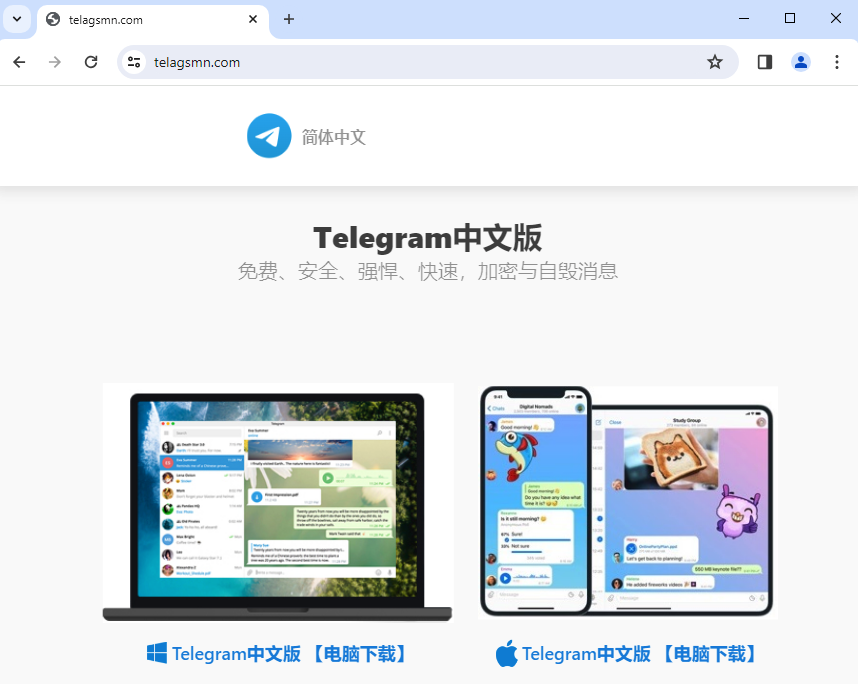
The threat actor is abusing Google advertiser accounts to create malicious ads and pointing them to pages where unsuspecting users will download Remote Administration Trojan (RATs) instead. Such programs gives an attacker full control of a victim’s machine and the ability to drop additional malware.
It may not be a coincidence that the malvertising campaigns are primarily focused on restricted or banned applications. While we don’t know the threat actor’s true intentions, data collection and spying may be one of their motives. In this blog post, we share more information about the malicious ads and payloads we have been able to collect.
Malicious ads
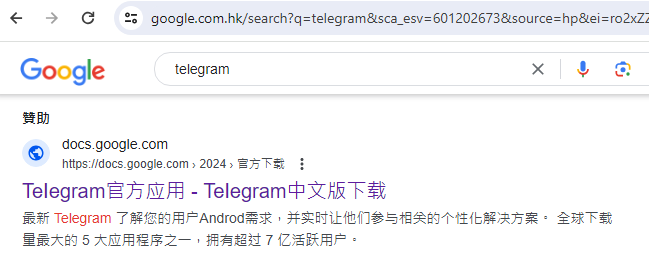
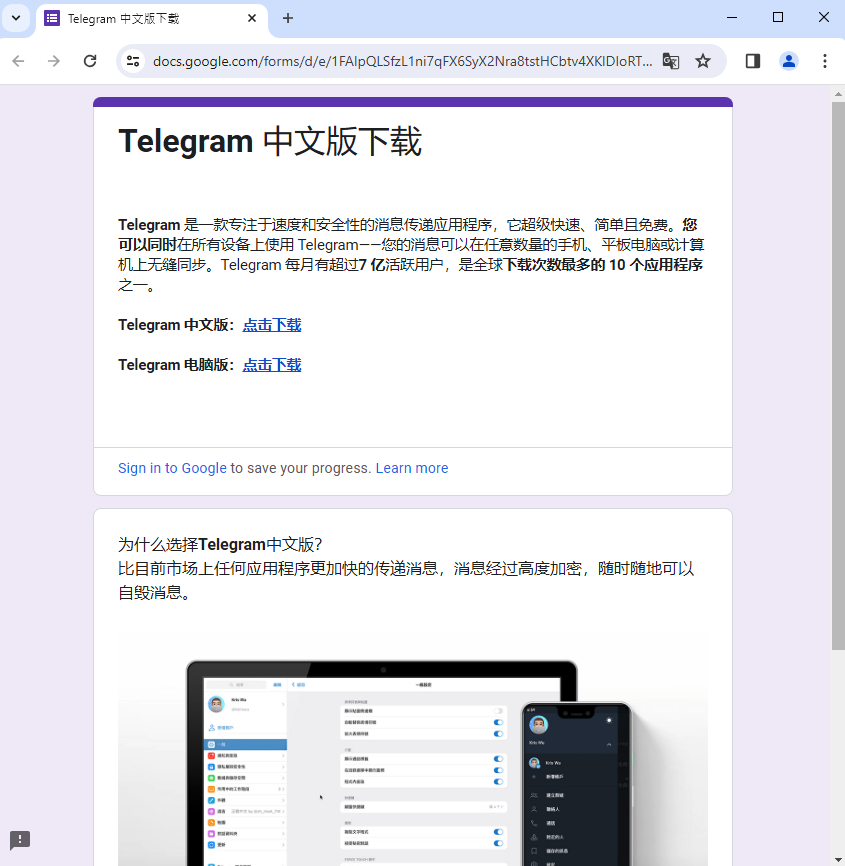
Visitors to google.cn are redirected to google.com.hk where searches are said to be uncensored. Doing a lookup for ‘telegram’ we see a sponsored search result.
The following description is associated with this ad:
TeIegram official application – TeIegram Chinese version download docs.google.com https://docs.google.com › 2024 › Official download Latest Telegram Understand your users Androd needs and engage them with relevant personalized solutions in real time. One of the top 5 most downloaded apps in the world with over 700 million active users.
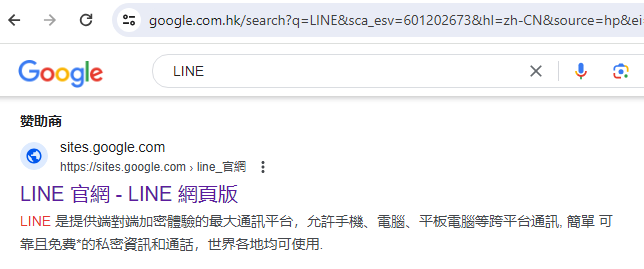
Here is an ad for ‘LINE’
Description:
LINE is the largest communication platform that provides an end-to-end encrypted experience, allowing cross-platform communication across mobile phones, computers, tablets, etc. Simple, reliable, and free* private messages and calls can be used around the world.
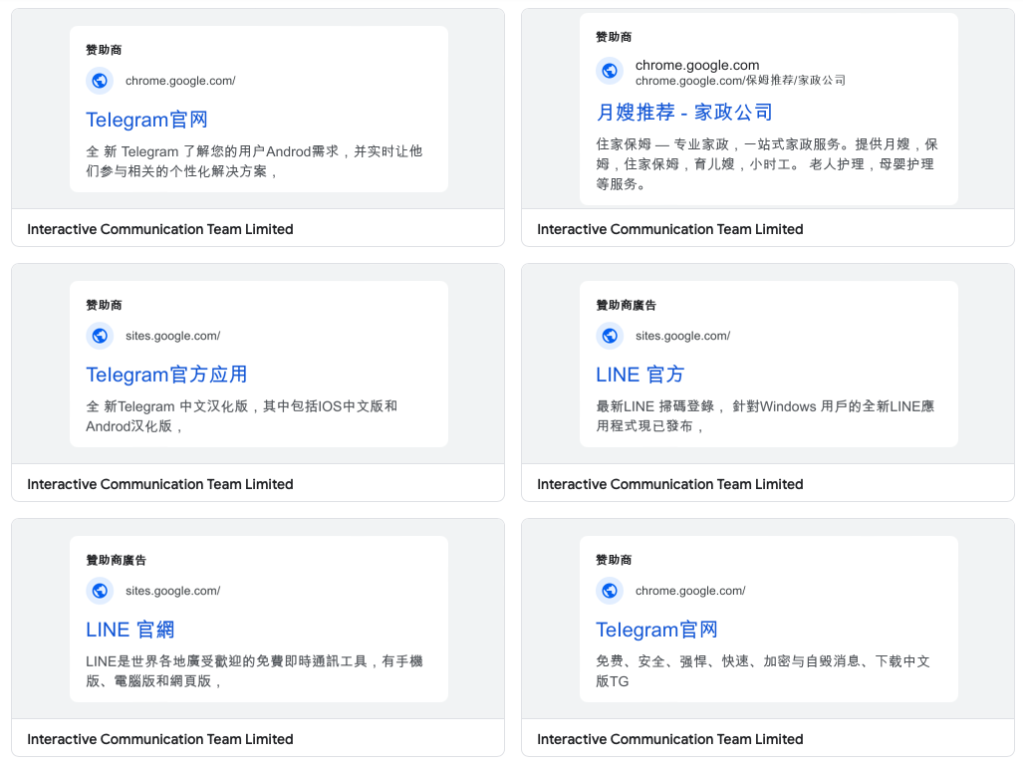
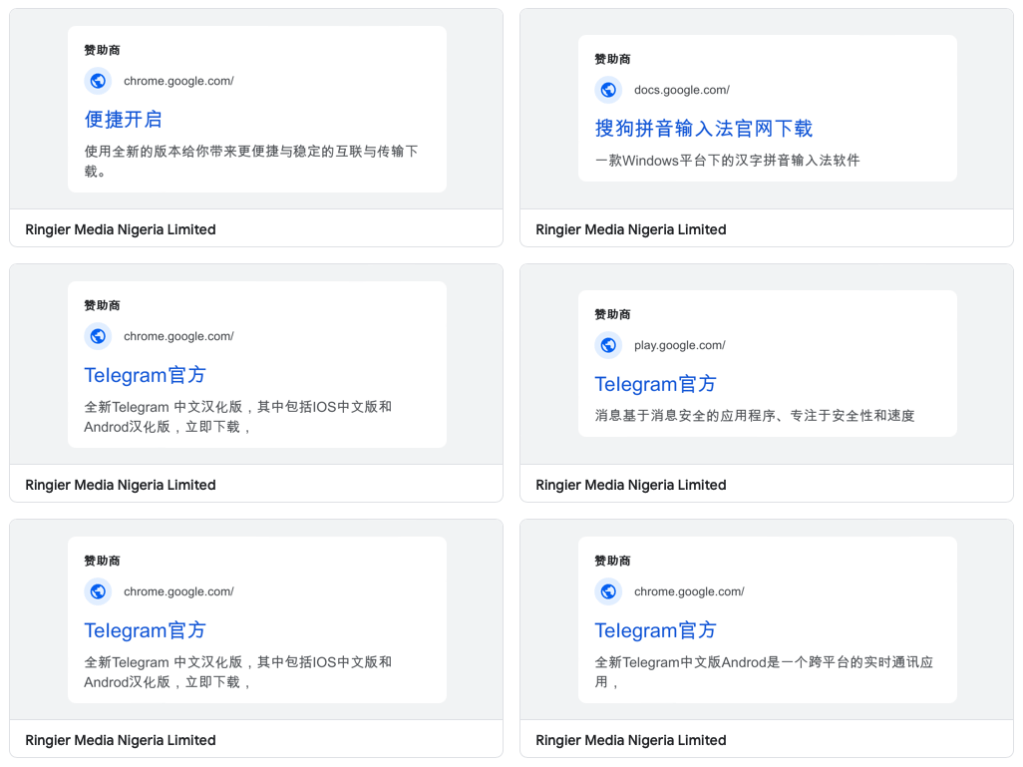
We identified two advertiser accounts behind those ads, both of them being associated with a user profile in Nigeria:
Due to the number of ads for each of these accounts (including many unrelated to these campaigns), we believe they may have been taken over by the threat actors.
Infrastructure
This threat actor seems to rely on Google infrastructure in the form of Google Docs or Google sites. This allows them to insert links for the download or even redirect to other sites they control.
Malware payloads
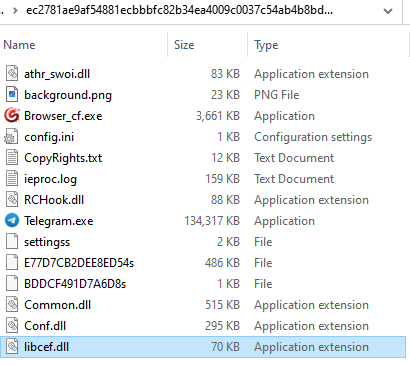
We collected a number of payloads from this campaign, all in MSI format. Several of those used a technique known as DLL side-loading, which consists of combining a legitimate application with a malicious DLL that gets loaded automatically.
In the example above, the DLL is signed with a now revoked certificate from Sharp Brilliance Communication Technology Co., Ltd. which was also recently used to sign a PlugX RAT sample. (PlugX is a RAT from China that also performs DLL side-loading).
Not all dropped malware is new, in fact some were previously used in other campaigns and are variants of Gh0st RAT.
Active threat
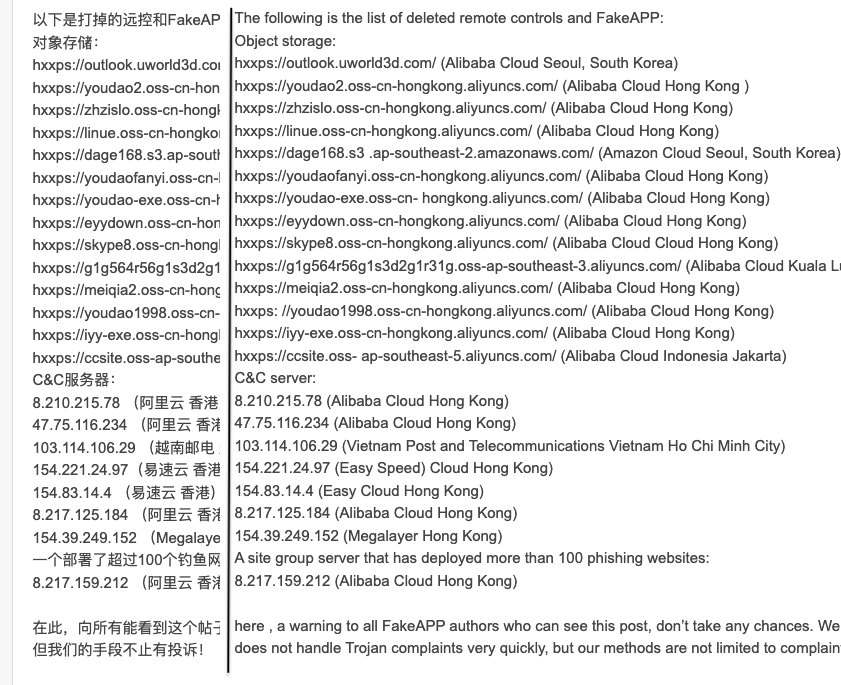
A website and forum (bbs[.]kafan[.]cn) dedicated to security frequented by Chinese users keeps up with malware from these campaigns that they refer to as FakeAPP.
It also appears that the threat actor privileges quantity over quality by constantly pushing new payloads and infrastructure as command and control.
Online ads are an effective way to reach a certain audience, and of course they can be misused as well. People (such as activists) that live in countries where encrypted communication tools are banned or restricted will attempt to bypass these measures. It appears that a threat actor is luring potential victims with such ads.
The payloads are consistent with threats observed in the South Asia region, and we see similar techniques such as DLL side-loading that is quite popular with many RATs. This type of malware is ideal to gather information about someone and silently dropping additional components if and when necessary.
We have notified Google regarding the malicious ads and have reported the supporting infrastructure to the relevant parties.
Malwarebytes detects the malicious payloads upon execution.
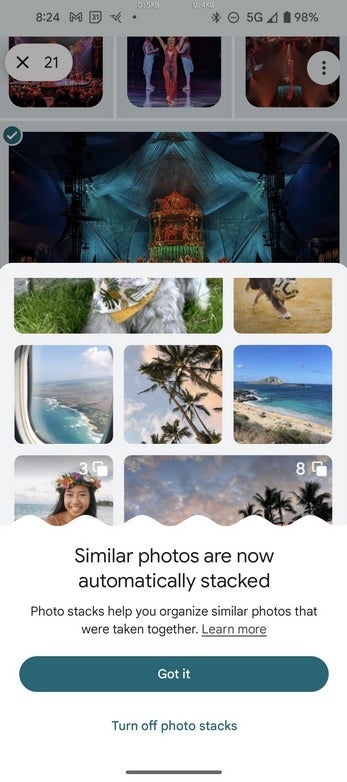
Android and iOS users of the Google Photos app are receiving a new feature called Photo Stacks. According to a tweet from Artem Russakovski (via Forbes), you’ll know when Photo Stacks has been added to your phone. That’s because you will receive a pop-up message explaining that Photo Stacks has been automatically enabled on your handset. You can disable the feature directly from the pop-up or you can go into the app’s settings to disable the feature; we will explain how to do this later in this article.
Photo Stacks are collections of photos that were taken around the same time and are stacked under one thumbnail image. The only visible photo in the stack is the one on top which is the thumbnail for the entire stack. That photo is called the “top pick.” With Photo Stacks, you can avoid the typical scenario of scrolling through images and seeing similar photos one after one after one. That is the sort of thing that occurs if you take several shots in search of the perfect selfie or group photo.
You’ll receive this notification when Photo Stack is added to your phone
Since you only see the “top pick” of a stack, users might find it harder to see a particular version of a photograph that they want to view. Doing this with Photo Stacks enabled will require a user to tap on the stack and go through each photo in the stack. One way to make this a bit easier is to look for a stack with a photo on top that is similar to the one that you’re looking for. Tap the stack to open it, and go through each photograph.
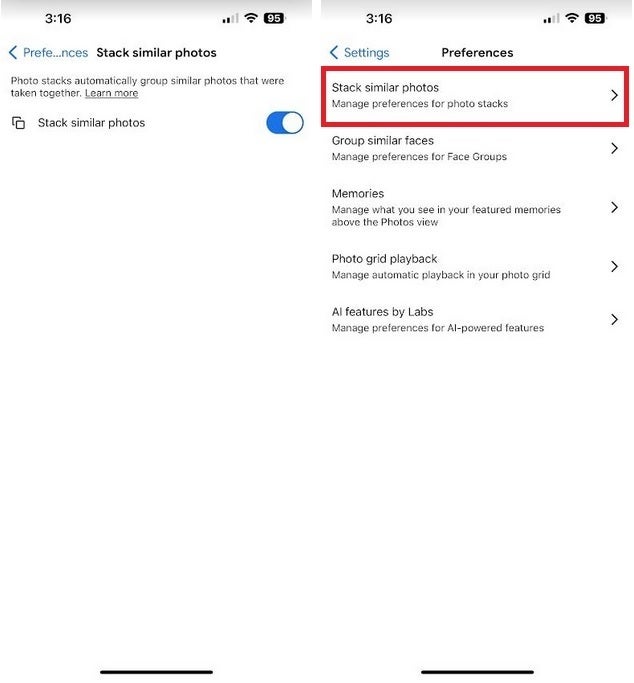
You can disable Photo Stack in the Google Photo app’s settings
If having the Photo Stack enabled becomes too much of a pain in the butt, you can disable the feature by opening the Google Photos app and tapping the profile icon on the upper right corner of the screen. Press Google Photos settings and then Preferences. If you have the feature, you’ll see a listing that reads, “Stack similar photos.” It should be toggled on by default and you can disable it by pressing the toggle for “Stack similar photos.”
Recent updates to the YouTube app for Android have reportedly caused a number of users to experience crashes. While not affecting everyone, reports of issues began to surface approximately a week ago on different different social media platforms, citing an unreliable experience when trying to use the app.The problem presents itself as videos loading, however no descriptions, comments, or linked videos will appear. After a few seconds, the app crashes and closing the app and restarting it simply repeats the process.
Meanwhile, posts on the YouTube subreddit, Google forums, and X/Twitter point to this being an issue that is being addressed on a newer version of the app, which has not yet rolled out to all. It is unknown which is the specific version that fixes the bug, but it appears to be the version currently being served to beta users. It is also unclear which specific version triggered the issue.
Is anyone else in the past few weeks experiencing this really annoying issue with YouTube for Android where it loads the video and starts playing, but none of the UI ever shows up, and then the app throws an ANR (application not responding)? pic.twitter.com/senV8eaWnT
As mentioned by 9to5Google, at this point the only two options available to immediately correct the situation, include going back to an older version of the app or installing the beta version. Although it sounds simple enough, going back to an older version of the app doesn’t necessarily guarantee that you will end up on a version prior to when the issue began, and installing the beta version could prove difficult considering the Android beta program for the YouTube app is always full. Another option could be to sideload the beta version of the app, but that is a practice that is usually not recommended for inexperienced users.
Hopefully, a working version of the Android YouTube app rolls out soon to all the affected users. YouTube is a widely used app and not being able to use it on your Android device could severely impact your smartphone experience.