Splunk Patched Critical Vulnerabilities in Enterprise Security

0
[ad_1]

Several vulnerabilities have been discovered in Splunk Enterprise Security and Splunk User Behavior Analytics (UBA), which existed in several third-party packages.

The third-party package includes Splunk, which includes babel/traverse, handsontable, semver, loader-utils, json5, socket.io-parser, protobuf, and Guava.

However, Splunk has acted swiftly upon these vulnerabilities and patched them accordingly. The severity for these vulnerabilities ranges between 7.1 (High) and 9.8 (Critical).

Document
Free Webinar

Compounding the problem are zero-day vulnerabilities like the MOVEit SQLi, Zimbra XSS, and 300+ such vulnerabilities that get discovered each month. Delays in fixing these vulnerabilities lead to compliance issues, these delay can be minimized with a unique feature on AppTrana that helps you to get “Zero vulnerability report” within 72 hours.

Technical Analysis

According to the reports shared with Cyber Security News, there were 13 vulnerabilities patched as per Splunk’s security advisories.

protobuf package had the highest number of vulnerabilities at 4 compared to other packages. 

The CVEs were CVE-2015-5237 (8.8), CVE-2022-3171 (7.5), CVE-2022-3509 (7.5), CVE-2022-3510 (7.5). With 3 vulnerabilities, loader-utils became the second package with the highest number of vulnerabilities with one critical vulnerability.

The CVEs of loader-utils package vulnerabilities were CVE-2022-37599 (7.5), CVE-2022-37603 (7.5), and CVE-2022-37601 (9.8).

Other third-party packages like babel/traverse, handsontable, semver, json5, socket.io-parser, and Guava had one high severity vulnerability each. The CVEs were as follows.

  • babel/traverse (CVE-2023-45133 – 8.8)
  • handsontable (CVE-2021-23446 – 7.5)
  • semver (CVE-2022-25883 – 7.5)
  • json5 (CVE-2022-46175 – 8.8)
  • socket.io-parser (CVE-2023-32695 – 7.5)
  • Guava (CVE-2023-2976 – 7.1)

Affected Products and Fixed in Version

ProductVersionComponentAffected VersionFix Version
Splunk Enterprise Security (ES)7.3––7.3.0
Splunk Enterprise Security (ES)7.2––7.2.0
Splunk Enterprise Security (ES)7.1–Below 7.1.27.1.2
Splunk User Behavior Analytics (UBA)––Below 5.3.05.3.0
Splunk User Behavior Analytics (UBA)––Below 5.2.15.2.1

It is recommended for users of these products to upgrade to the mentioned versions or higher to prevent these vulnerabilities from getting exploited by threat actors.

Looking for cost-effective penetration testing services? Try Kelltron’s to assess and evaluate the security posture of digital systems – Free Demo


[ad_2]
Source link

Hackers can hijack your Bosch Thermostat and Install Malware

0
[ad_1]

Bitdefender Labs has discovered that the popular Bosch thermostat model BCC100 is vulnerable to cybersecurity threats. This vulnerability could allow a remote attacker to manipulate settings and install malware on the device.

Researchers have discovered vulnerabilities in the Bosch BCC100 thermostat, which could compromise users’ privacy and comfort. The vulnerabilities, discovered by Bitdefender Labs, allow attackers to access thermostat settings and data, manipulate settings remotely, and install malware.

The latest revelations regarding the vulnerable state of IoT devices should not be surprising. From electronic skateboards to coffee machines, from treadmills to security cameras in your room, everything connected to the internet is susceptible to potential threats.

As for the latest development, Bitdefender Labs, creator of the first smart home cybersecurity hub, regularly audits popular IoT hardware for vulnerabilities. Its latest research has revealed vulnerabilities in the Bosch BCC100 thermostat, affecting versions 1.7.0 – HD Version 4.13.22.

Bitdefender researchers discovered the vulnerability on August 29, 2023, but the details of it were only published on January 11, 2024. The vulnerability allows attackers to replace device firmware with a rogue version (CVE-2023-49722). The vulnerability was confirmed and triaged in October 2023, and Bosch started working on a fix immediately. Bitdefender responsibly disclosed the flaw on January 11, 2024.

To understand the flaw, it is essential to know how the BCC100 thermostat works. The thermostat uses two microcontrollers: a Hi-Flying chip (HF-LPT230) for Wi-Fi functionality and an STMicroelectronics chip (STM32F103) for implementing the main logic.

The STM chip lacks networking capabilities and relies on the Wi-Fi chip for communication. The Wi-Fi chip listens on TCP port 8899 on the LAN and, via the UART data bus, it mirrors any message received directly to the main microcontroller.

However, if properly formatted, the microcontroller cannot differentiate between malicious and genuine messages sent by the cloud server. An attacker can exploit this to send commands to the thermostat, including malicious updates.

The thermostat communicates with the connect.boschconnectedcontrol.com server via JSON-encoded payloads over a WebSocket, which are unmasked, and easy to imitate. The device initiates the “device/update” command on port 8899, triggering the thermostat to request details from the cloud server.

Despite an error code, the device accepts a forged response with the firmware update details, including the URL, size, MD5 checksum, and version. The device then requests the cloud server to download the firmware and send it through the WebSocket, ensuring the URL is accessible. Once the device receives the file, it performs the upgrade, finalizing the compromise.

According to Bitdefender Labs’ blog post, users are advised to follow necessary security practices. This includes updating the thermostat firmware, changing the default administrative password, avoiding connecting the thermostat to the internet unnecessarily, and using a firewall to restrict access from unauthorized devices.

Bitdefender Labs emphasized the importance of choosing secure smart home devices and keeping them updated with the latest security patches. This research highlights that even seemingly innocuous smart devices can pose security risks. As the smart home market continues to grow, manufacturers must prioritize security and ensure a safe and reliable connected environment.

  1. The Pros and Cons of Smart Homes
  2. Are Smart Home Devices Invading Your Privacy?
  3. White hat hacker infects smart coffee machine with ransowmare
  4. AXIS A1001 Network Door Controller Flaw Exposes Secure Facilities
  5. Controller-level flaws can let hackers physically damage moving bridges
  6. Power Grids to Airports: TETRA Radio Hacking Risks Global Infrastructure

[ad_2]
Source link

Galaxy S23 & Galaxy A54 get January 2024 update in the US

0
[ad_1]

Samsung‘s Galaxy S23 phones are receiving their first software update of the new year. The company is pushing the January 2024 Android security patch to the devices. The update is available globally, including in the US. The Galaxy A54 is also picking up the latest security update stateside.

Galaxy S23 and Galaxy A54 receive Samsung’s January update in the US

As of this writing, the January 2024 SMR (Security Maintenance Release) is rolling out to the carrier-locked units of the Galaxy S23, Galaxy S23+, and Galaxy S23 Ultra in the US. The devices are getting the update with the firmware build number S91*USQS2BWL7. The new build number for the flagship trio’s global versions is S91*BXXS3BWL3. The update is live at least in Europe. A wider rollout, also covering unlocked units in the US, should follow soon.

Despite varying build numbers, the changelog for this update remains the same globally. Samsung is only pushing the latest security fixes to the Galaxy S23 trio. “The security of your device has been improved,” the changelog for the US and Europe states. This month’s SMR patches 80 vulnerabilities in Galaxy devices, 75 of which are Android OS issues patched by Google. The remaining five are Galaxy-specific vulnerabilities.

These security fixes are also rolling out to the Galaxy A54 in the US. The 2023 premium mid-range phone is receiving the new SMR with firmware version A546USQS6BWL7. Once again, Samsung is first updating carrier-locked units. Hopefully, it won’t keep users with unlocked units waiting for much longer. International versions of the device should also soon pick up Samsung’s January 2024 security update with 80 vulnerability patches.

If you are using any of these Samsung phones, watch out for an update in the coming days. You can manually check for security updates from the Settings app. The January SMR is also available for the past three generations of Galaxy foldables, as well as the Galaxy S23 FE, Galaxy S22 series, Galaxy Note 20 series, Galaxy S21 FE, and Galaxy A52. Availability varies, but it is just a matter of time before Samsung updates all eligible units globally.

One UI 6.1 is on the way for these Samsung phones

The Galaxy S23 series and Galaxy A54 aren’t getting additional goodies with the January update, and that was expected. It hasn’t been long since they picked up the Android 14-based One UI 6.0 update with tons of new features, UI changes, and functional improvements. The devices will also get One UI 6.1 shortly. Based on Android 14, the new One UI version will debut with the Galaxy S24 lineup. The new flagships arrive on January 17.


[ad_2]
Source link

Rabbit R1 is a dedicated AI companion device shown off at CES 2024

0
[ad_1]

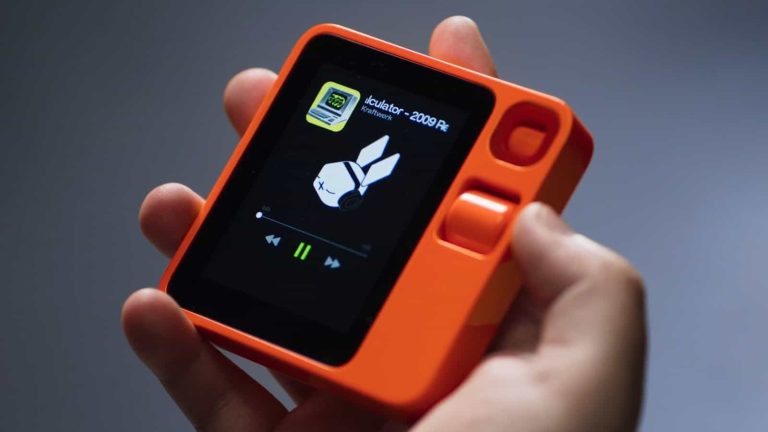
A lot of innovative tech announcements have been leaping in at the ongoing CES 2024 over the last few days. A new AI startup called Rabbit also announced a dedicated AI companion device called Rabbit R1. It doesn’t aim to replace smartphones but can run apps on the user’s behalf. Its primary goal is to act as a bridge between users and their smartphones. Rabbit says that the R1 is quite similar to AI-based voice assistants but the main difference is that it can learn intricate tasks and do them for the user.

Rabbit R1 is a dedicated AI companion device with a retro look

While smartphones and voice assistants can do a lot of tasks, Rabbit CEO Jesse Lyu says that the apps and functions have stripped away their simplicity. The R1 is pretty straightforward and a simple device. It has an Orange-colored retro look that weaves nostalgia. The device is half the size of a smartphone. It features a 2.88-inch touchscreen display, a unique rotatable camera eye, and a side button for navigation and interaction. There are also far-field microphones for voice command input. The physical button is used to talk to the built-in assistant similar to a walkie-talkie.

Although the Rabbit R1 is not a smartphone, under the hood, it is powered by a 2.3GHz MediaTek Helio P35 processor paired with 4GB RAM and 128GB storage. Users can also initiate phone calls with WiFi and cellular connectivity via the SIM card slot.

The R1 runs on the LAM model

Rabbit R1

The Rabbit R1 runs on the company’s Rabbit OS. The software is based on the Large Action Model (LAM) compared to ChatGPT’s large language model. It does not come with built-in apps but instead connects to services to carry out requests. This is because the device is only meant to serve as an assistant and help you get things done. Users need to authorize the R1 to access apps on their behalf. This happens through a web portal called Rabbit Hole where users can log in to their services. Rabbit says that it does not store any user data and authentication happens on the device. Users can unlink accounts and delete stored data at any time.

The Rabbit R1 can control music playback, book a cab, buy groceries, and do some more tasks. The device also comes with a dedicated training mode which allows users to train the AI to get specific tasks done. Lyu demonstrated this by teaching the R1 how to use Photoshop and said that it takes the Rabbit OS 30 seconds to process.

Rabbit R1 is already sold out showing strong interest in the device

The Rabbit R1 carries a price tag of $199 in the US with the pre-orders currently live. It is expected to start shipping in March. The company on January 12 announced that two batches of 10,000 R1 have been sold out. The third batch is now available with expected delivery date between May and June. This shows that the AI companion device has garnered a strong interest.

With the Rabbit R1 and Humane’s AI Pin, it’s likely that we will see new gadgets built around AI.


[ad_2]
Source link

Vivo X Fold 3 could become the lightest book-style foldable

0
[ad_1]

HONOR currently has the lightest book-style foldable smartphone on the market, the HONOR Magic V2. Do note that both glass and vegan leather models are lighter than 240 grams, but the vegan leather model is lighter at 231 grams. With that in mind, it seems like Vivo could take the crown. Based on a new rumor, the Vivo X Fold 3 could become the world’s lightest book-style foldable.

The Vivo X Fold 3 could become the lightest book-style foldable around

This information comes from Digital Chat Station, one of the best-known and most accurate Chinese tipsters. Considering the source, it’s not difficult to believe it. The tipster not only revealed the weight range in his post but also the thickness. Do note that he didn’t specifically mention the Vivo X Fold 3, but he did recently mention that phone and claimed that it will be very light for what it is, so that’s where GizmoChina’s assumption is coming from.

In any case, the Vivo X Fold 3 will weigh 22x grams. In other words, it will weigh under 230 grams, and thus be lighter than the HONOR Magic V2. It will be 5mm thick when unfolded, and 10.5mm thick when folded.

It won’t be thinner than the HONOR Magic V2, though

The thinnest Magic V2 model is 4.7mm thick when unfolded, and 9.9mm when folded. So HONOR’s handset will retain the crown in the thickness department, it seems.

The Vivo X Fold 2 arrived in April last year. We’re not sure if Vivo will wait as long to release its successor, but it’s possible. The Vivo X Fold 3 is either coming towards the end of Q1 or in early Q2 this year.

The phone will likely be fueled by the Snapdragon 8 Gen 3, but nothing has been confirmed thus far. Some rumors even stated that we may get two Vivo X Fold 3 devices this year, a regular one and a ‘Pro’ one.

The Vivo X Fold 3 could remain exclusive to China

Do note that the Vivo X Fold and Vivo X Fold 2 didn’t reach global markets. Both smartphones remained exclusive to China. We’re hoping that will change with the Vivo X Fold 3, but let’s wait and see.


[ad_2]
Source link

Nuclear battery aims to make smartphone charging obsolete

0
[ad_1]

Some of you may think that the title of this article is clickbait, but it’s not. A Chinese company called ‘Betavolt Technology’ is working on a nuclear battery that may make smartphone charging obsolete.

This nuclear battery could make smartphone charging obsolete

The company is actually working on a nuclear battery for various devices, not just smartphones. Various miniature batteries are planned. These batteries could hold a charge for 50, yes FIFTY years.

This company says that it pioneered the “miniaturization of atomic energy batteries”. To give you more insight, Betavolt Technology actually stuffed 63 nuclear isotopes into a module smaller than a coin. That model is called BV100, and it can produce 100 microwatts of electricity.

Furthermore, this nuclear battery can provide a voltage of 3V, and it measures only 15 x 15 x 5mm. If you need more than one, the company says that they can be joined together. So if we’re talking about devices that need more of them.

Betavolt nuclear battery 1

These batteries use radioactive decay to produce electricity

These batteries actually use radioactive decay in order to generate electricity. It’s similar tech to those used in pacemakers and spacecrafts. Companies stayed away from this tech due to radioactive elements, such as plutonium.

In order to appease such concerns, Betavolt opted to build a version of the battery with a diamond semiconductor layer and a decaying nickel isotope. Betavolt Technology claims that there’s absolutely zero radiation leaking out, and that there are no toxic elements in the mix. This approach will also make sure they don’t explode, and they can operate in extreme temperatures from -60 to 120 degrees Celsius.

Betavolt Technology does hope that its batteries could make charging smartphones obsolete. Needless to say, that would be a huge step forward. By 2025 Betavolt Technology wants to make tiny batteries that are capable of producing one watt.

These batteries are about ready for mass production

Do note that the prototype of the company’s battery has graduated to the pilot stage, and could hit mass production soon. The dream could be closer than we thought.


[ad_2]
Source link

WhatsApp to bring additional text formatting tools, including bullets and quotes

0
[ad_1]
WhatsApp is always working on new features, some that we only learn about when the company releases them to the public. However, more often than not we do have information about what’s coming to WhatsApp thanks to the beta program that the app has been running for a very long time.

If you’re not running the beta version of WhatsApp, we have the latest news about what’s expected to come to the app in the not-so-distant future. Thanks to the fine folks at WabetaInfo, we now know that WhatsApp plans to add new text formatting tools.

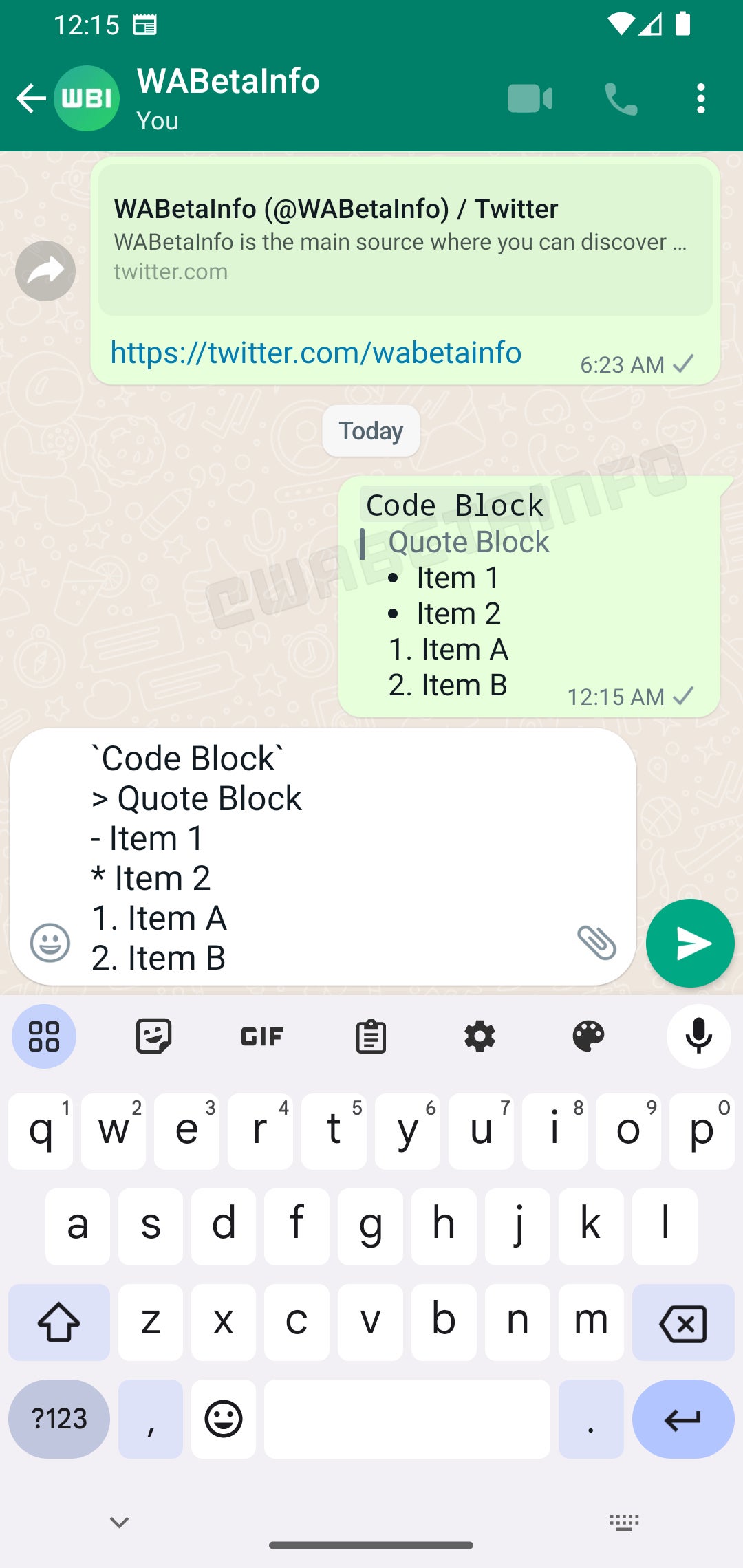
The report mentions additional options such as bullets, code, quote, and lists. As you take advantage of these new options, the text will be formatted as you type in the chat bar.

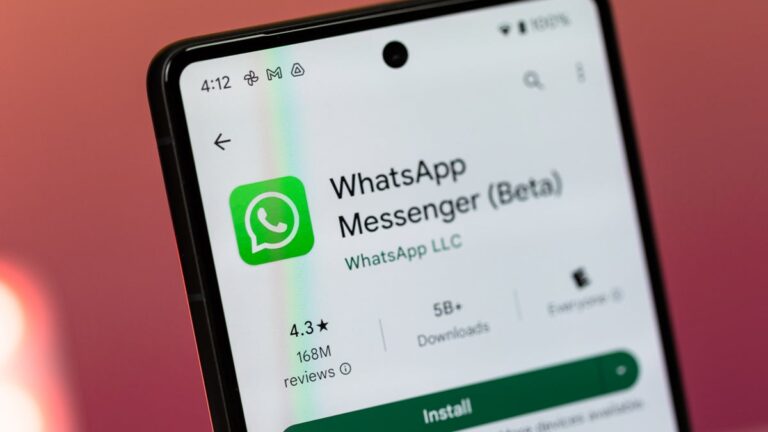
The new text formatting tools have been rolled out in the beta version of WhatsApp, but only on Android. It’s yet unclear if these will be made available on both iOS and Android platforms at launch, nor when exactly WhatsApp will finish testing them.


[ad_2]
Source link

Feast your eyes on the Porsche Design HONOR Magic V2 RSR

0
[ad_1]

HONOR has announced its first product that comes from a partnership with Porsche Design. The device in question is called the Porsche Design HONOR Magic V2 RSR. It was launched in China, alongside the HONOR Magic6 and Magic6 Pro.

The Porsche Design HONOR Magic V2 RSR is official, and it comes as a surprise

The vast majority of us were expecting a Porsche Design HONOR Magic6 Pro to arrive, mainly due to rumors. HONOR did something else entirely, as almost nobody was expecting the HONOR Magic V2 collab.

The HONOR Magic V2 launched last year in China. Soon after its launch, it was shown off at IFA in Berlin. The phone is expected to launch globally soon, and prior to that, this Porsche Design model arrived.

Based on what we can see here, the Porsche Design HONOR Magic V2 RSR is very similar to the regular Magic V2. The difference lies on its back, as it looks different. Not only is the backplate different, but so is the camera island. On top of that, you’ll find the Porsche Design branding back there.

This phone’s backplate is “intricately reminiscent of the hood of a Porsche 911”

This backplate is “intricately reminiscent of the hood of a Porsche 911”, says HONOR. The company also says that it improves the grip of the phone, which is an added improvement, as the glass model is extremely slippery. The phone is available in one color, the Agate Grey, which is the color of a Porsche car.

The two companies also say that they “refined the choice of materials” here. The phone weighs only 234 grams and it’s 9.9mm thick. It comes with the industry’s first Anti-scratch NanoCrystal Shield.

The device has plenty of RAM & storage

The specifications remain unchanged compared to the regular HONOR Magic V2. This variant does top-out RAM and storage, though. It comes with 16GB of LPDDR5X RAM and 1TB of UFS 4.0 flash storage.

The Snapdragon 8 Gen 2 fuels the phone, while a 7.92-inch main display is used. That panel has a resolution of 2156 x 2344, and it’s an OLED display with up to 120Hz refresh rate. The cover display measures 6.43 inches, and it has a resolution of 2376 x 1060. That is also an OLED screen with up to 120Hz when it comes to resolution.

66W wired charging is supported, while three cameras sit on the back

A 5,000mAh battery is included here, while the phone supports 66W wired charging. A charger is included in the box. A 50-megapixel main camera (f/1.9 aperture, OIS, EIS) is backed by a 50-megapixel ultrawide camera (f/2.0 aperture). A 20-megapixel telephoto camera (40x digital zoom) also sits on the back of the phone. A 16-megapixel selfie camera is used here, on both displays.

There are two SIM card slots here, and Android 13 comes pre-installed. HONOR’s MagicOS 7.2 is also a part of the package. IR blaster is included, while the phone supports 5G connectivity and Bluetooth 5.3.

It goes on sale in China today, and it’s quite pricey

The Porsche Design HONOR Magic V2 RSR goes on sale in China today. Its pricing starts at CNY15,999 ($2,252). We’re not sure if the company will release this handset globally, but it’s possible, as the Magic V2 is coming to global markets.


[ad_2]
Source link

This isn’t Monopoly money: Google Play to host more RMG (real-money gaming) apps

0
[ad_1]

More and more RMG apps will find a new home on Google Play, states the latest piece from the Android Developers Blog. RMG stands for real-money gaming and basically, it embodies any online game where money is staked on the outcome.

As 9to5Google reminds us, Google allowed gambling and betting Android apps to appear in the Play Store in 2021 in markets with pre-existing licensing frameworks. “Since then, this app category has continued to flourish with developers creating new RMG experiences for mobile”, Google says and adds:

Google Play will launch the expanded RMG support in June to developers for users in India, Mexico, and Brazil. Later, the plan is to expand to more countries, if everything goes well.

Google Play’s existing developer policies supporting user safety, such as requiring age-gating to limit RMG experiences to adults and requiring developers to use geo-gating to offer RMG apps only where legal, remain unchanged. “We’ll continue to strengthen them”, the blog reads. In addition, Google Play will continue other key user safety and transparency efforts such as “expanded developer verification mechanisms”.

What’s more, there will be a service fee. Previously, the RMG apps had to be free to install and couldn’t use Google Play Billing, but this will change, as Google states: “We are working closely with developers to ensure our new approach reflects the unique economics and various developer earning models of this industry. We will have more to share in the coming months on our new policy and future expansion plans”.


[ad_2]
Source link

Qbot Malware Via FakeUpdates Leads of Malware Attacks

0
[ad_1]

Hackers use Qbot malware for its advanced capabilities, including keylogging, credential theft, and backdoor functionality.

Previously distributed Qakbot malware campaign was capable of monitoring the browsing activities of the infected computer and logs all information related to finance-related websites.

Qbot also enables the threat actors to create a persistent presence on infected systems, along with facilitating:

  • Further malicious activities
  • Potential financial gains

Cybersecurity researchers at Checkpoint recently discovered that threat actors actively use Qbot malware via FakeUpdates, leading to the race for malware attacks.

Document
Free Webinar

Compounding the problem are zero-day vulnerabilities like the MOVEit SQLi, Zimbra XSS, and 300+ such vulnerabilities that get discovered each month. Delays in fixing these vulnerabilities lead to compliance issues, these delay can be minimized with a unique feature on AppTrana that helps you to get “Zero vulnerability report” within 72 hours.

Technical analysis

Four months after Operation Duck Hunt’s takedown, the Qbot malware was revived in December 2023. FakeUpdates topped the Threat Index and was found to be hitting the education sector hard. 

Qbot resurfaces in a phishing attack on the hospitality sector, posing as IRS. Meanwhile, the DLL-triggered Qbot dominated for 10 months before its takedown.

FakeUpdates claims the top spot with a 2% global impact, while Nanocore holds third for six months. However, there are new entries that are from:

Qbot was spotted in the wild in less than 4 months post-infrastructure takedown. This shows that disrupting malware isn’t enough, as threat actors always adapt. 

These are the reasons why researchers in the field of cybersecurity highly encourage firms to perform the following:

  • Implement proactive endpoint security
  • Perform thorough email scrutiny

Besides this, the following vulnerabilities are the most exploited, as they affect organizations globally:

  • Apache Log4j Remote Code Execution (CVE-2021-44228) affects 46% of organizations globally.
  • Web Server Malicious URL Directory Traversal affects 46% of organizations globally. 
  • Zyxel ZyWALL Command Injection (CVE-2023-28771) affects 43% of organizations globally.

Top Malware Families

Here below, we have mentioned all the top malware families:

  • FakeUpdates
  • Formbook
  • Nanocore
  • Remcos
  • AsyncRat
  • AgentTesla
  • Phorpiex
  • NJRat
  • Ramnit
  • Glupteba

Top Exploited Vulnerabilities

Here below, we have mentioned all the top exploited vulnerabilities:-

  • Apache Log4j Remote Code Execution (CVE-2021-44228)
  • Web Servers Malicious URL Directory Traversal (CVE-2010-4598,CVE-2011-2474,CVE-2014-0130,CVE-2014-0780,CVE-2015-0666,CVE-2015-4068,CVE-2015-7254,CVE-2016-4523,CVE-2016-8530,CVE-2017-11512,CVE-2018-3948,CVE-2018-3949,CVE-2019-18952,CVE-2020-5410,CVE-2020-8260)
  • Zyxel ZyWALL Command Injection (CVE-2023-28771)
  • Command Injection Over HTTP (CVE-2021-43936, CVE-2022-24086)
  • PHP Easter Egg Information Disclosure (CVE-2015-2051)
  • MVPower CCTV DVR Remote Code Execution (CVE-2016-20016)
  • WordPress portable-phpMyAdmin Plugin Authentication Bypass (CVE-2012-5469)
  • OpenSSL TLS DTLS Heartbeat Information Disclosure (CVE-2014-0160, CVE-2014-0346)
  • HTTP Headers Remote Code Execution
  • D-Link Multiple Products Remote Code Execution (CVE-2015-2051)

Top Mobile Malware

Here below we have mentioned all the top mobile malware:-

Top-Attacked Industries Globally

Here below, we have mentioned all the top-attacked industries globally:-

  • Education
  • Research
  • Communications
  • Government
  • Military

Looking for cost-effective penetration testing services? Try Kelltron’s to assess and evaluate the security posture of digital systems. Free Demo


[ad_2]
Source link