Podcasts have become the new golden goose for many streaming services. Spotify, Apple, Google, and many other companies are trying to implement podcasts into their services and attract as many, preferably popular, creators.

YouTube is one of the services that has already been pushing podcasts to its consumers as much as possible. To make it easier for creators to reach bigger audiences, YouTube is now rolling out a new feature that will allow podcast creators to upload episodes directly from their RSS feeds.
To start publishing podcasts from an RSS feed, you first need to connect your RSS feed to YouTube. The procedure is simple and requires a few steps described in a guide published by Google on YouTube’s support page:
In YouTube Studio, click Create / New podcast / Submit RSS feed.
Read and accept the RSS Ingestion Tool Terms of Service.
Read the instructions on screen and click Next.
Enter your RSS feed URL and click Next.
Click Send code to verify your account.
Enter the verification code sent to the email address on your RSS feed and click Verify. If you don’t know the email on your RSS feed, contact your hosting provider.
Choose which episodes you want to upload to your podcast on YouTube and click Next. You can choose to upload: All existing episodes; Episodes published since a specific date; Only future episodes.
Review visibility details and click Save.
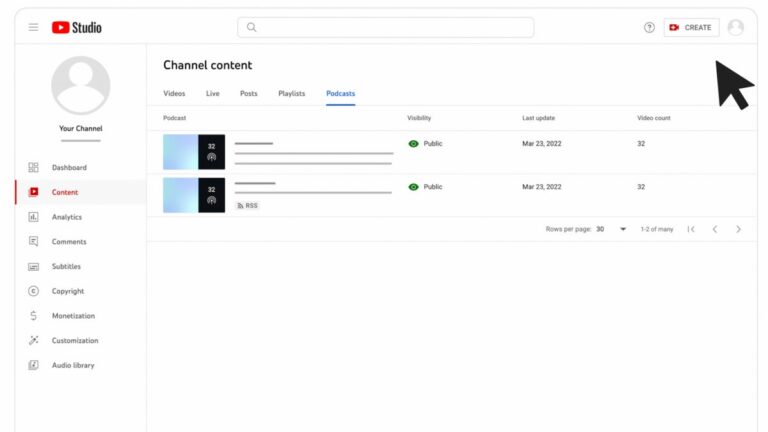
To publish a feed, simply head to Content / Podcasts in YouTube Studio, and under “Video count” you’ll find the Publish button next to your podcast feed. The button only appears when podcast episodes have finished uploading.
The tool allows creators to re-upload an episode, edit podcast details, as well as disconnect an RSS feed from their YouTube podcast.
Bose is reportedly working on new open-ear headphones. The allegedly dubbed Bose Open Ear Clips have surfaced in marketing materials. It gives us a look at the design of the forthcoming offering. To recall, the audio maker launched the Sport Open earbuds three years ago, in 2021.
The Bose Open Ear Clips marketing materials leak out
As the name suggests, the Bose Open Ear Clips have an open-ear design. This means that they don’t obstruct the ear canal completely. The upcoming offering has a G-shaped design that attaches around the user’s ear lobe for a snug fit without having to worry about them falling off. They hang out of the ear and almost look like earrings. The speakers are located near the top of the device.
Bose seems to be focusing on earbuds that don’t isolate the user completely from the outside world. For this, the brand will likely ditch active noise cancellation on the Open Ear Clips.
The Bose Open Ear Clips seem to have a dual-tone design. They are seen with Silver and White color in the leaked marketing renders with the former likely expected to be a large touch control surface. There is Bose branding, L and R markings on the inner side of the device.
The report states that the official name of the Bose Open Ear Clips remains undisclosed. The core specifications of the upcoming offering also remain a mystery. They could debut at the ongoing CES 2024 in Las Vegas which is in full swing. The audio device is expected to launch in the $300 to $500 price range.
The Bose Open Ear Clips are similar to the Huawei FreeClip
Although the Bose Open Ear Clips looks different, it adopts the same open ear design as the Huawei FreeClip that launched last month. Open ear design earbuds could be the next big thing in the TWS segment. They are ideal for people who want to remain aware of their surroundings and those who don’t want their ear canal firmly plugged in for longer periods due to the discomfort caused by earbuds and headphones.
Elon Musk is the wealthiest man on the planet. He is also one of the most successful people in the modern tech space. But he has always been a controversial figure in the media for doing weird things that we usually don’t expect a billionaire to do. However, the latest controversy around Musk can put his reputation at a huge risk. Reports claim Musk has used various drugs in private parties. The action reportedly concerned Tesla and SpaceX leaders and shareholders.
A new report by The Wall Street Journal goes deep into the alleged use of drugs by the billionaire. Last year, it was reported that Musk had taken psychedelic drugs like ketamine to treat his depression. But the latest report alleges that Musk has taken drugs like LSD, cocaine, ecstasy, and psychedelic mushrooms in private parties he attended.
Attendees to such private parties usually sign a nondisclosure agreement (NDA) to not reveal anything they might see. Meanwhile, some attendees claimed they’ve seen Musk using such drugs. Musk has previously used marijuana in the Joe Rogan podcast and even asked for the legalization of Fentanyl. The move led NASA to order a review of SpaceX’s workplace culture.
Moreover, in another incident in 2017, Elon Musk reportedly slurred and rambled for fifteen minutes in a SpaceX meeting in front of the company’s executives and hundreds of employees who were gathered to see SpaceX’s Big Falcon Rocket prototype.
Elon Musk’s use of drugs reportedly concerned executives and board members of Tesla and SpaceX
The report claims Elon Musk has taken several tablets of acid at a party in Los Angeles in 2018. Additionally, he reportedly took magic mushrooms at a party in Mexico in 2019. Musk and his brother Kimbal also used recreational ketamine in 2021 before attending a party in Miami.
Linda Johnson Rice, a former director at Tesla, allegedly decided not to run for re-election at the company after watching Musk’s behavior and his drug use. However, Musk’s lawyer, Alex Spiro, denied all the allegations. He added that his client has “regularly and randomly drug tested at SpaceX and has never failed a test.”
Any case of illegal drug usage is a break of federal contracts and also violates both SpaceX and Tesla corporate regulations. Tesla shareholders and executives are now worried that Musk’s alleged use of drugs could negatively affect the company. Robyn Denholm, chairman of the board of directors of Tesla, reportedly approached Musk’s brother in 2022 over the incidents without citing the word “drugs.”
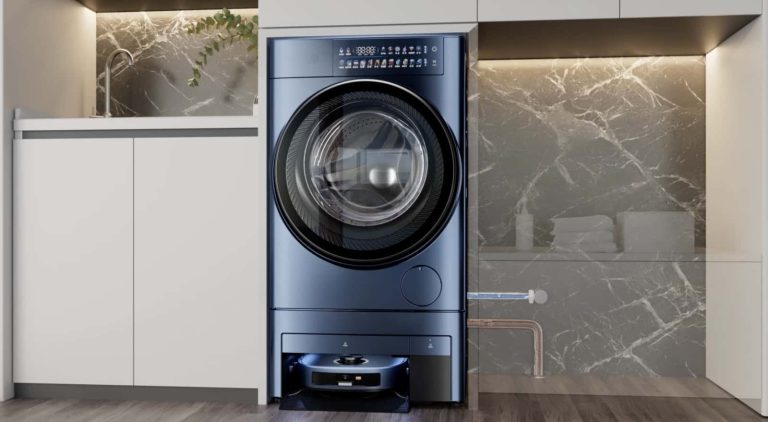
There’s something magical about a device with multiple purposes that you don’t see every day, and that’s what’s happening with the Eureka Dual Washing Bot. This do-it-all machine is actually 4 appliances in 1. At first glance, you might think it’s a washing machine, and you’d be right. It is a washing machine. But it can also dry your clothes in the same drum. Making it a washer and dryer combo. Open up the front-loading door and toss your dirty clothes in, and the Eureka Dual Washing bot will get them nice and clean. Once they’re clean, it dries them for you.
This alone would already be pretty neat but Eureka isn’t stopping there. This machine also acts as the base station for a robot vacuum. And that robot vacuum can also mop your floors in addition to cleaning them of dirt and debris. Eureka’s multi-function appliance isn’t the kind of thing that comes around a whole lot. So when it pops up at CES it’s hard not to stand up and take notice.
Eureka Dual Washing Bot is loaded with features
If it wasn’t enough that the Dual Washing Bot was a 4-in-1 device, it’s also loaded with all kinds of features. Eureka doesn’t talk about them all but it does mention some of the key highlights. For instance, the robot vacuum has a suction power of 5,000 Pa. That’s about half of the suction power of the new Roborock S8 MaxV Ultra we checked out at CES. This puts the robot vacuum in the Dual Washing Bot kind of in the mid-range tier for robot vacuums. At least where the suction power is concerned.
That being said, the utility of the vacuum being able to mop on top of its base station cleaning your clothes is likely to be appealing to a lot of consumers. Having all of these things in one single unit also saves on space. And that’s not usually a bad thing, especially if you live in a smaller home where every bit of extra space counts.
The vacuum’s base station can also self-empty the bin when it’s done cleaning, and there’s enough room to hold all that stuff picked up off your floors for up to two months. What’s more, the washing machine unit uses a single power cord hookup, and it’s connected to your water line to feed the washing machine. This also allows it to refill the water tank in the vacuum for the mopping function. Plus, a second pipe connection can empty the dirty water before the refill. The whole thing is a cohesive unit.
That being said, Eureka doesn’t mention pricing or availability. It is noted though that the Dual Washing Bot is based on the ‘Washbot’ from Eureka’s parent company Midea. The Washbot even looks the same and appears to have all the same features.
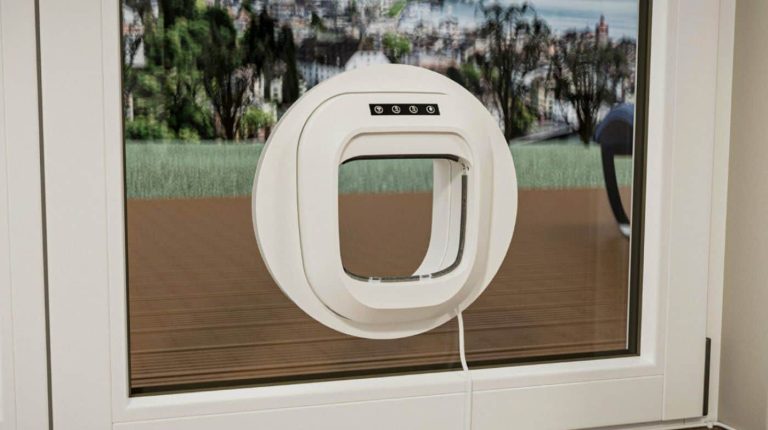
Besides some great wearables such as the AirVision M1 from ASUS or the world’s first “whispering ring“, CES 2024 is also offering an AI-powered smart door for your pet cat. Swiss start-up Flappie has introduced this smart cat door which automatically locks itself if your feline friend tries to bring in prey it caught from the outside.
The innovative cat door is equipped with a motion sensor and night-vision camera on the exterior side, reports Engadget. The smart door uses AI technologies that boast over 90 percent accuracy in identifying prey brought by the cat. Flappie aims to reduce the frequency of such incidents while providing a secure entry point for your pets.
The Flappie app enables you to remotely manage the cat door through your phone
The AI-powered cat door features manual switches on the interior side, allowing users to lock and unlock it at will and deactivate the prey-detection system. Flappie envisions that, over time, pets will accept the fact that they shouldn’t enter carrying something. Once they drop the prey, the door promptly unlocks, allowing them to enter. While acknowledging that clever cats might attempt to outsmart the system by dropping the prey, opening the door, picking it up again, and dashing inside, Flappie emphasizes the practicality and effectiveness of its solution.
To enhance security and personalize access, Flappie‘s cat door incorporates chip detection. It means that the door will be able to allow only your pet with a microchip and not any other animal. The system offers pet owners control through a dedicated app, enabling remote management via smartphones. For those who prefer not to connect the cat door to the internet, manual controls on the door itself provide a convenient alternative.
Flappie plans to launch its AI-powered cat door initially in Switzerland and Germany in the coming spring, with further expansion on the horizon as production scales up. While a US launch is part of Flappie’s roadmap, the company has not disclosed any specific details regarding timing and pricing for the said market.
Yet, a CES newsletter concentrating on Swiss tech companies indicates that Flappie plans to set the price of the AI-powered door at around $399 or offer it for $199 with a two-year $8.90 monthly subscription to the accompanying app, providing access to recorded videos of your pet’s activities.
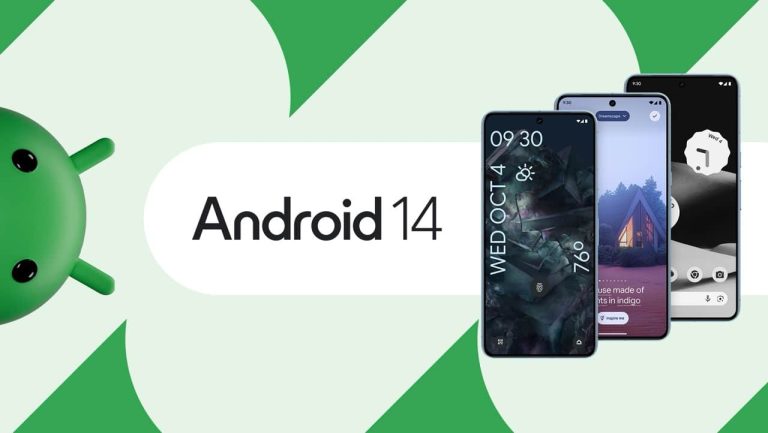
Google is informing users about the latest features and improvements on Android 14 through push notifications after the system update as part of its ‘Android Upgrade Party’ initiative. As Android 14 makes its way to various devices, a series of post-update notifications are rolling out to users, providing them with a comprehensive summary of the changes.
This initiative is part of Google’s “Android Upgrade Party” program, introduced in 2022, which allows device manufacturers to customize and push post-update summaries to users, enhancing their understanding of the newly refreshed operating system. Users receiving the notifications are greeted with a message stating, “Your Android device just got better,” accompanied by the option to embark on a guided tour of the new features or skip it for later exploration. The content of these notifications varies based on the device and the specific features it has received with the Android 14 upgrade.
For instance, a Samsung Galaxy S23 Ultra emphasizes Google app features introduced in the December bundle, such as Google Maps sharing improvements, highlight videos in Google Photos, animated emojis in Google Messages, enhancements to accessibility feature Sound Notifications, and the ability to secure passkeys with custom PINs.
Google’s ‘Android Upgrade Party’ initiative enhances user engagement by offering tours of new features
On the other hand, the notification experience for the Asus Zenfone 10 revolves more around Android itself. The tour for Asus Zenfone 10 users highlights the new monochrome theme, synchronization of health and fitness apps, improved location permission dialogs, flash notifications, the new magnification option in quick settings, and additional hearing device options. The customizability of these notifications allows manufacturers to tailor the information to their devices and user base, making the upgrade experience more engaging and user-friendly.
While these post-update notifications are not entirely new, their increased prevalence with Android 14 suggests a growing adoption of Google’s Upgrade Party initiative. The initiative aims to address the common issue of users not fully appreciating the significance of major Android updates. By providing interactive and informative tours, Google and device manufacturers seek to increase user engagement and ensure a smoother transition to the updated operating system.
Additionally, Google employs other methods, such as notifications from the Pixel Tips app and detailed changelogs, to keep users informed and excited about the latest features. As Android continues to evolve, these efforts underscore the importance of user education and satisfaction in the constantly advancing mobile landscape.
Roborock showed up at CES with a new range of vacuums for this year, and being big fans of their past robot vacuums we wanted to check things out and get hands-on time with the new S8 series, Q Revo series, and Flexi series vacuums.
While not the most advanced, the Flexi series vacuums caught our eye. For one these are push vacuums. So there’s no robotic function, and that sort of product is uncommon from a company that specializes in robot vacuums. These won’t maneuver around your home and clean the floors for you. No, these are regular vacuums that you will manually clean the floors with yourself. It’s not a route many robot vacuum companies go. But Roborock has been offering them and for the first time, Roborock will begin selling its Flexi series vacuums in the US.
This will include the Flex Pro and the Flexi Lite. Both of these feature a really neat lay-flat function that allows you to get into any hard-to-reach areas. Such as under couches, chairs, and tables with ease. These also have a much higher suction power than any of the robot vacuums, naturally, since they have more room for the inside components. Roborock says they have a suction power of 17,000Pa. Which is about 7,000Pa suction power over the maximum of the S8 MaxV Ultra’s 10,000Pa.
You might need to manually push these around, but they certainly won’t compromise on the clean. And the fact that they still have mops for wet cleaning makes them that much better.
Roborock’s new robot vacuums promise to clean every corner
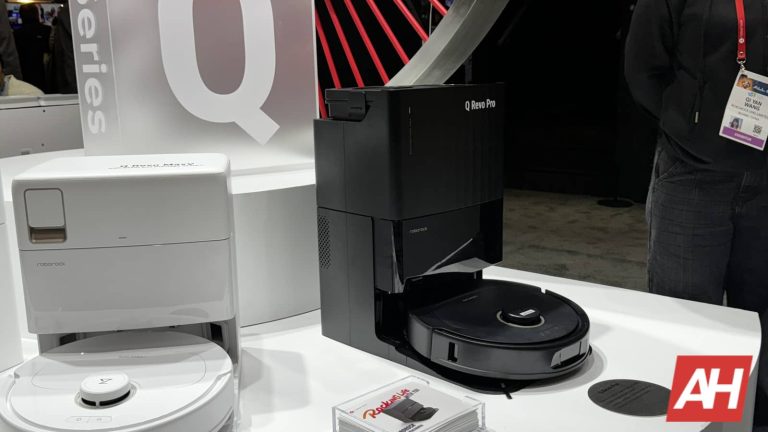
Robot vacuums are great and there are loads out there to choose from. But Roborock is aiming to edge out the competition with some truly impressive features. That’s why we were excited to get some hands-on time with the Roborock S8 series and Q Revo series vacuums. The S8 series vacuums for instance will come with both a FlexiArm side brush and an Extra Edge mop arm. These will work in tandem to ensure every single inch of your floor is clean. Not just the spaces away from pesky corners.
The neat thing about the FlexiArm side brush is that it extends out when the vacuum comes up to a corner and pushes any dirt or debris away from the corner so the vacuum can suck it up. The Extra Edge mop is neat too. This sits towards the backside of the vacuum and mops the floor and the edge of the floor that sits next to the baseboards.
The Q Revo series vacuums are impressive too. These don’t feature the FlexiArm design side brush but they do employ the FlexiArm Design robotic arm for the Extra Edge mopping system. These vacuums also feature two big round mop pads that are attached to these arms, as opposed to a larger single pad on the S8 series. All of these new robot vacuums promise to bring an intense clean to your home. But they also offer something unique from each other.
For example, the S8 series vacuums are more powerful, but the Q Revo series has the larger mop pads on the FlexiArm. The Q Revo series vacuums will also cost hundreds less. Still, all four of them look to be well-equipped to handle your floors. You will be able to purchase all of these in April.
We have seen several high-profile accounts that were taken over on X (formerly Twitter) only to be used for cryptocurrency related promotional activities, like expressing the approval of exchange-traded funds (ETFs).
The latest victim in this line-up is the Securities and Exchange Commission (SEC).
The @SECGov X account was compromised, and an unauthorized post was posted. The SEC has not approved the listing and trading of spot bitcoin exchange-traded products.
— U.S. Securities and Exchange Commission (@SECGov) January 9, 2024
The unauthorized post (which was removed within 30 minutes) looked like this:
The post says:
“Today the SEC grants approval to Bitcoin ETFs for listing on registered national security exchanges.
The approved Bitcoin ETFs will be subject to ongoing surveillance and compliance measures to ensure continued investor protection.”
The hack appears to have been designed to take advantage of anticipation around an imminent annoncement by US regulators about Bitcoin Exchange Traded Funds (ETFs). ETFs are financial products that allow investors to buy commodities like gold or Bitcoin as if they are shares. A spot Bitcoin ETF will buy the cryptocurrency directly, “on the spot”, at its current price, throughout the day. The approval would mark a key milestone for the cryptocurrency market in gaining acceptance to mainstream financial markets.
Even though the false tweet only had a short life-span it caused a $2,000 spike in Bitcoin exchanges rates. Someone knowing this was going to happen could have made a significant profit.
In a statement the SEC said:
“That unauthorized access has been terminated. The SEC will work with law enforcement and our partners across government to investigate the matter and determine appropriate next steps relating to both the unauthorized access and any related misconduct.”
Based on a preliminary probe, X confirmed that the SEC account had been compromised and it found that it was not due to a breach of the social media platform’s systems.
According to X, an unidentified individual was able to obtain control over a phone number associated with the @SECGov account through a third party. This would suggest the compromise was the result of a SIM swapping attack, where an attacker takes control of a phone number by convincing a mobile carrier to transfer the victim’s phone number to a SIM card they own.
With this control they can intercept messages, two-factor authentication (2FA) codes, and eventually reset passwords of the account the number has control over. Although apparently the SEC did not have 2FA enabled for its X account!
Secure your X account
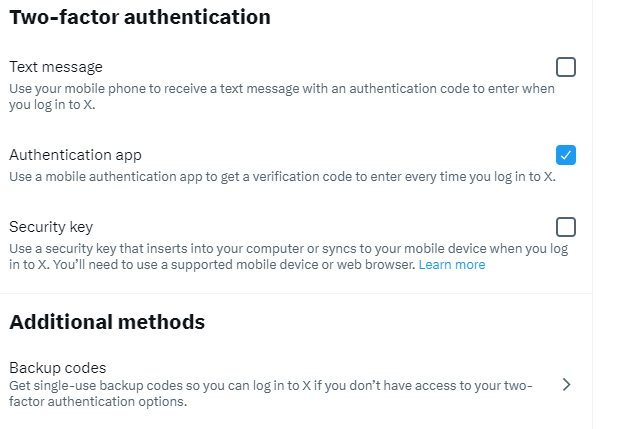
Although any form of 2FA is better than none, all forms of 2FA are not equally secure. SMS-based 2FA is vulnerable to SIM swapping and if you can avoid it, we suggest you do. X offers other options like an authentication app and a security key.
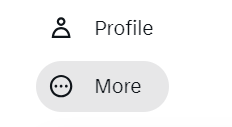
To change your 2FA factor in X click on More
Select Settings and Support > Settings and Privacy > Security and Account access
Click Security > Two-factor authentication and put a checkmark in your preferred option.
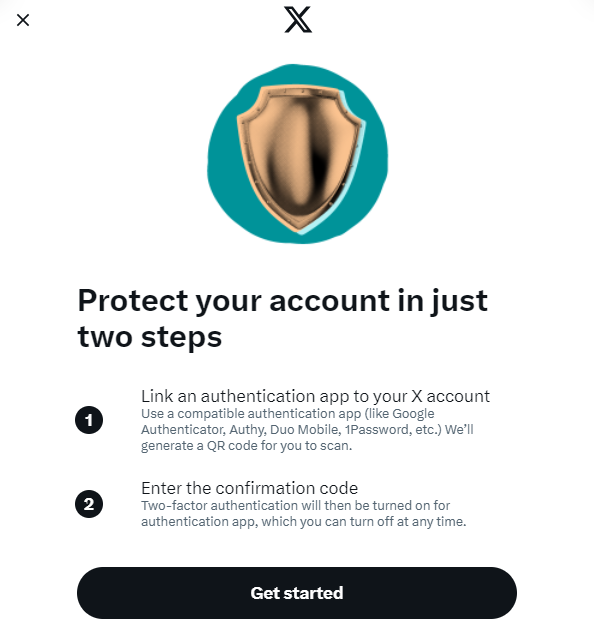
You will be prompted to enter your X password and click Confirm. From there, follow the instructions in the prompts. Since not many people have security keys, I’ll continue with the Authentication app instructions.
Click Get started
Open your preferred authentication app and add the X account to the app. Usually this is as simple as scanning the QR code.
You’ll be prompted to enter the authentication code shown by the app.
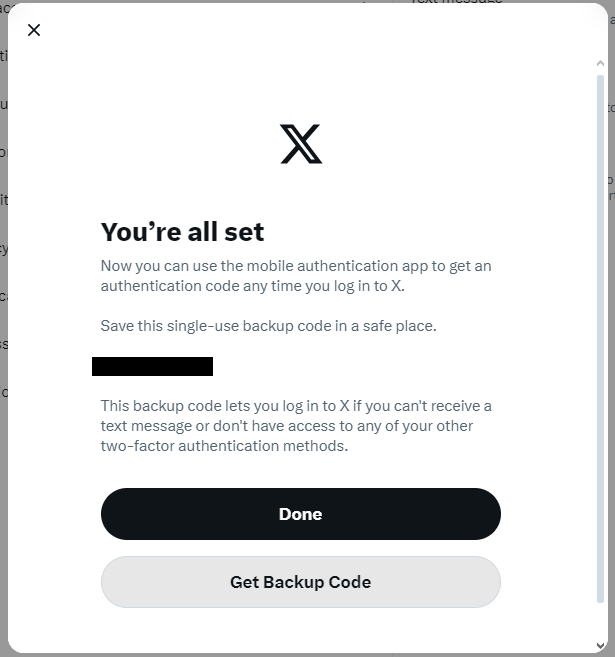
You’re all set. Store the displayed backup code in a safe place in case you need it.
You’ll receive a confirmation mail at the address associated with the account.
And if you see tweets from an account about cryptocurrencies, NFTs, ETFs or other financial news that you would not expect from that account, keep a ten foot pole between you and what they are linking to.
We don’t just report on threats – we help safeguard your entire digital identity
Cybersecurity risks should never spread beyond a headline. Protect your—and your family’s—personal information by using Malwarebytes Identity Theft Protection.
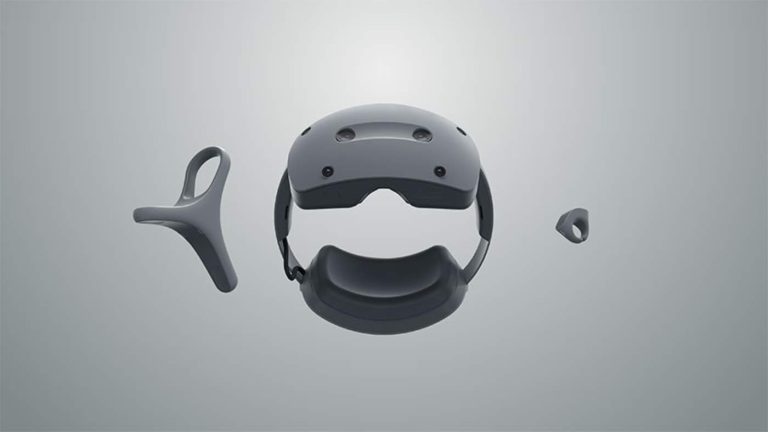
In a surprise announcement during its CES 2024 presentation, Sony revealed a new XR head-mounted display and controllers designed for “spatial content creation.” While lacking an official name, the headset features a matte gray finish, reminiscent of the PSVR2, with two outward-facing cameras at the front. The hardware, targeted at creators and artists, is set to launch later in 2024, with pricing details yet to be disclosed.
The XR headset runs on Qualcomm’s Snapdragon XR2+ Gen 2 chip, eliminating the need for a connected computer. The device boasts dual 4K OLED microdisplays, promising a “crisp viewing experience” and “intuitive interaction for 3D design.” Sony envisions the headset as a tool for professionals, akin to its line of professional-level cameras and devices. The headset incorporates a “video see-through” feature. It equips six cameras and sensors to enable user and space tracking for mixed reality experiences.
This new XR headset from Sony enables spatial content creation with some cool controlling features
Accompanying the XR headset are two controllers: a “ring controller” for manipulating objects and a “pointing controller” for more traditional pointing interactions. Sony envisions creators using both controllers in tandem with traditional input devices like keyboards to craft 3D models in real-time. The company has fine-tuned the headset’s balance with a center of gravity adjustment. You can also flip the display portion up and out of your field of vision. It enables seamless transitions between the virtual and physical worlds.
Sony positions the XR headset more as a creative tool than a direct competitor to Apple’s Vision Pro, targeting spatial content creation similar to Microsoft’s HoloLens. Sony showcased a user manipulating a bipedal robot, controlling its arm through the headset and controllers. The company emphasizes the ability to review and collaborate on work remotely through third-party creative apps.
While the announcement (via The Verge) provided an initial glimpse, further details and hands-on experiences will be available at Sony’s booth during the event.
Microsoft has issued patches for 48 security vulnerabilities in the first Patch Tuesday of 2024. With a relatively low number of patches—and only two of them critical—this makes it a relatively quiet month, which is certainly not the norm in January.
The Common Vulnerabilities and Exposures (CVE) database lists publicly disclosed computer security flaws. The CVE IDs for the two critical vulnerabilities are:
CVE-2024-20674 is a Windows Kerberos security feature bypass vulnerability with a CVSS score of 9.0 out of 10. An authenticated attacker could exploit this vulnerability by establishing a machine-in-the-middle (MITM) attack or other local network spoofing technique, then sending a malicious Kerberos message to the client victim machine to spoof itself as the Kerberos authentication server.
Kerberos is an authentication protocol that is used to verify the identity of a user or host. To make use of this vulnerability the attacker will need to gain access to the restricted network before being able to run an attack. Nevertheless Microsoft thinks exploitation is “more likely,” which means the vulnerability could be exploited as part of an attack chain.
CVE-2024-20700 is a Windows Hyper-V Remote Code Execution (RCE) vulnerability with a CVSS score of 7.5 out of 10. Successful exploitation of this vulnerability might be hard because it requires an attacker to win a race condition and they will need to first gain access to the restricted network before running an attack.
Hyper-V is the Windows hardware virtualization service. It enables users to create and run a software version of a computer, called a virtual machine. Sometimes these virtual machines are attractive targets for cybercriminals. But the advisory is not very clear on the exact circumstances or context that would allow the RCE.
One other vulnerability, classified as important, that might turn out to be of interest, at least for some users, is:
CVE-2024-20677 is a Microsoft Office Remote Code Execution (RCE) vulnerability with a CVSS score of 7.8 out of 10. The security vulnerability exists in FBX that could lead to remote code execution. To mitigate this vulnerability, the ability to insert FBX files has been disabled in Word, Excel, PowerPoint and Outlook for Windows and Mac. Versions of Office that had this feature enabled will no longer have access to it. This includes Office 2019, Office 2021, Office LTSC for Mac 2021, and Microsoft 365.
FBX files are a type of 3D model file created using the Autodesk FBX software. When you try to insert an FBX file into Word, Excel, PowerPoint, and Outlook, you will see the following error: “An error occurred while importing this file.” If you’d like to re-enable this ability, you can find the reasons why you shouldn’t and the method how to do it on this Microsoft Support page.
Other vendors
Other vendors have synchronized their periodic updates with Microsoft. Here are few major ones that you may find in your environment.
We don’t just report on vulnerabilities—we identify them, and prioritize action.