Microsoft to pay $14 million to settle a California discrimination case

0
[ad_1]

Microsoft has agreed to pay over $14 million to settle a case alleging discriminatory practices against some workers in California. The state had accused the Windows maker of discriminating against employers who took protected leave, including parental, disability, pregnancy, and family caretaking leave. The proposed settlement is subject to court approval.

Microsoft to pay over $14 million in a discrimination case settlement

In 2020, the California Civil Rights Department (CRD) launched an investigation into Microsoft over potential violations of state laws, including California’s Fair Employment and Housing Act, the California Family Rights Act, California’s Pregnancy Disability Leave law, Title VII of the Civil Rights Act of 1964, and the Americans with Disabilities Act.

In its complaint, the department claimed that Microsoft employees who used protected leave “faced unlawful retaliation and discrimination in compensation and promotion opportunities.” The company allegedly offered lower bonuses and unfavorable performance reviews to those employees. This “harmed their eligibility for merit increases, stock awards, and promotions.”

The California CRD said Microsoft adhered to these discriminatory practices for several years. It didn’t take sufficient action to prevent such discrimination, affecting the careers of women, people with disabilities, and other employees. Following a lengthy investigation, Microsoft decided to settle the case out of court. It will pay a monetary relief of $14,425,000 and will take proactive steps to prevent future discrimination.

According to an official press release from the CRD, $14,200,000 of the settlement amount will go against covering direct relief for workers. The remaining $225,000 will cover the department’s costs. Microsoft employees who took a protected leave between May 2017 and the date of the court’s settlement approval may receive compensation. Covered workers will receive further information following the court’s approval.

“Whether it’s to look after a newborn child or take care of your own health, workers generally have the right to take time off without worrying about consequences at work,” said CRD Director Kevin Kish. “By allegedly penalizing employees for taking protected forms of leave, Microsoft failed to support workers when they needed to care for themselves or their families.” He than the firm for agreeing to make the necessary changes.

Microsoft will retain an independent consultant for policy recommendations

As part of this settlement, Microsoft will retain an independent consultant for policy and practice recommendations. The tech biggie must ensure that protected leaves don’t affect annual rewards and promotions of employees. The independent consultant will also help workers raise complaints if they feel discriminated against for using protected leave. Last but not least, Microsoft is required to report annually to the CRD  on compliance with the settlement.


[ad_2]
Source link

The Galaxy Z Flip 6 might have an LCD Cover Display

0
[ad_1]

Since the Galaxy S3, Samsung’s flagship phones have primarily used AMOLED displays. It’s pretty much perfected the technology, which makes its devices a must-have if you want a beautiful screen. However, it looks like the company is making a shift. According to a new report, the Galaxy Z Flip 6 could use an LCD cover display.

Right now, we’re getting a ton of leaked information about this phone and its larger sibling, the Galaxy Z Fold 6. While we know pretty much everything there is to know about them, we’re still excited to see what they will offer. We’ll see it soon enough, as Galaxy Unpacked is going down on July 10th. That’s only five days away, so mark your calendars!

The Galaxy Z Flip 6 might have an LCD panel

As always, you’ll want to take this news with a grain of salt. While this information seems official, we still want to keep our guard up until we see it come straight from Samsung.

This information comes from a leaked spec sheet thanks to 9To5Google. The spec sheet was developed by Samsung itself, so it doesn’t dive too much into the weeds about the specifics. It’s mostly to hype up the device and cover the most impressive specs.

However, one section of the sheet shows the specs for the Z Flip 6’s display, and we see that Samsung opted for an LCD panel for the cover display. On the sheet, we see that pretty much everything is the same as last year’s phone. It has the same 3.4-inch size and it has the same 720 x 748 resolution. Also, it looks like it’s going to have the same folder shape to it to fill out more of the front panel. It’s all the company could do to keep from pulling a Motorola and having it encompass the external cameras as well.

Is this really bad?

There are some people who’d find this pretty disappointing. We can’t deny that phones with AMOLED screens have more saturation and better contrast. So, hearing that Samsung decided on LCD technology for the Z Flip 6 sounds like a bummer.

However, it’s not such a bad thing. OLED technology has progressed over the years and gotten better, but so has LCD technology. When OLED tech was still taking over the industry, the differences between it and LCD technology were blatantly obvious. However, LCD is to the point where high-quality panels are pretty much indistinguishable from OLED panels.

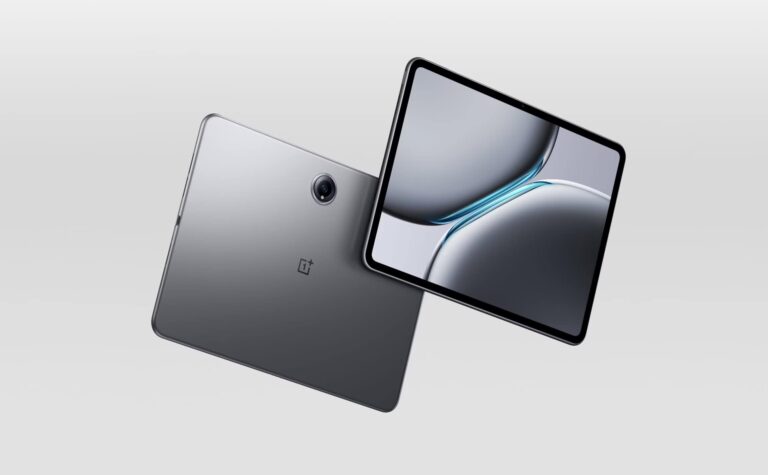
Obviously, the contrast can never be as good, but some panels out there have excellent contrast and colors on par with OLED panels. Some examples are the panels in the OnePlus Nord N300 and OnePlus Pad. Devices as old as the LG G6 also had LCD displays that looked absolutely gorgeous.

Also, we can’t forget about the display in the Galaxy Tab S9 FE+ (Review), another Samsung product. That screen is also beautiful. So, we’re sure that Samsung is going to use a very high-quality panel for its Galaxy Z Flip 6.


[ad_2]
Source link

Empowering online gaming through modern technology

0
[ad_1]

In the dynamic landscape of online gaming, the role of streamers has transcended mere entertainment to become a cornerstone of community engagement, skill development and technological innovation.

Streaming platforms like Twitch, YouTube Gaming and Facebook Gaming have revolutionized how gamers connect, learn, and entertain, leveraging cutting-edge technology to amplify their impact and reach.

While streaming offers unprecedented opportunities for gamers to connect and thrive, it also presents challenges. Content moderation, maintaining viewer engagement, and navigating copyright issues require careful consideration and adaptation to evolving industry standards.

Streamers who excel in these areas often establish enduring relationships with their audience and industry partners, further solidifying their influence.

The Rise of Streamers: Community Builders and Influencers

Streamers, also known as content creators, have emerged as influential figures within the gaming community. Through live broadcasts of their gameplay, interactive chats, and engaging commentary, they foster a sense of camaraderie among viewers worldwide.

These streamers not only entertain but also educate by sharing strategies, reviewing games, and showcasing new content updates in real-time.

One of the most popular topics among streamers in 2024 is Trustly experiences or as the Finns say trustly kokemuksia.

Harnessing Modern Technology: Tools of the Trade

Advancements in technology have been pivotal in shaping the streaming experience. High-definition cameras, professional-grade microphones, and green screen setups enhance production quality, immersing viewers in a visually captivating environment.

Moreover, specialized software like OBS Studio, Streamlabs OBS, and XSplit allows streamers to customize their broadcasts with overlays, alerts and interactive widgets, further enriching viewer engagement.

Modern streaming technology goes beyond passive viewership. Streamers engage their audience through real-time chat interactions, polls and subscriber benefits, transforming viewers into active participants in the gaming experience.

This interactivity not only strengthens community bonds but also provides valuable feedback to streamers, shaping their content and gaming strategies.

Educational Platforms: Learning and Skill Development

Streamers play a crucial role in the educational landscape of gaming. Many streamers host tutorial sessions, dissect gameplay mechanics, and conduct live coaching sessions to help viewers improve their skills.

An interactive learning environment empowers aspiring gamers to hone their abilities and stay abreast of the latest gaming trends and strategies.

Innovation and Collaboration: Pushing Boundaries

Beyond gameplay, streamers drive innovation through collaborations with game developers and hardware manufacturers.

Exclusive previews, beta tests, and sponsored streams allow streamers to showcase new games and hardware innovations firsthand, providing valuable insights to their audience while promoting technological advancements within the industry.

As technology continues to evolve, the role of streamers in online gaming will undoubtedly expand. Virtual reality (VR) integration, augmented reality (AR) enhancements, and advancements in cloud gaming promise to redefine the streaming experience, offering new avenues for creativity and engagement.

Streamers who embrace these innovations will continue to shape the future of gaming, inspiring and connecting communities worldwide.

Looking Ahead: The Future of Streaming in Gaming

In conclusion, streamers represent more than entertainers; they are catalysts for community engagement, technological advancement and educational empowerment within the online gaming sphere.

By leveraging modern technology and embracing innovation, streamers elevate the gaming experience, enriching the lives of gamers and viewers alike.

As the streaming landscape evolves, their influence and impact are poised to grow, shaping the future of gaming in ways yet to be imagined.

Featured image source


[ad_2]
Source link

Ulefone Armor Pad 3 Pro has camping lights built in: Video

0
[ad_1]

The Ulefone Armor Pad 3 Pro is the company’s rugged tablet, and it comes with powerful LED lights. The company refers to them as ‘camping LED lights’, as you can easily use them while you’re camping.

The Ulefone Armor Pad 3 Pro comes with a powerful set of LED lights

That’s not the only use case, of course. Ulefone highlights a few of those in its new promo video, which promotes this particular feature of the tablet. The video is embedded below the article and has a duration of 45 seconds.

As you can see, a set of LED lights is built into each side of the tablet’s back. When you’re holding the device in landscape mode, they’re on the left and right. If it’s held in portrait, they’re up and down.

Each set of LED lights reaches 1,100 lumens of brightness. Needless to say, that’s immensely bright, especially for LED lights on a tablet. This tablet even offers an app for controlling these lights.

The app delivers three brightness levels, high, medium, and low. There are also three distinct lighting modes, continuous light for standard illumination, flashing light for sharp bursts of light, and an SOS mode with a regular blinking pattern for when you need to signal for help.

There is even a physical button on the side to activate these lights directly

The Ulefone Armor Pad 3 Pro also features a physical button on the side, via which you can activate these lights directly. You can also do it via the UI, of course.

Having said that, the tablet itself has a huge 33,280mAh battery. It also offers 66W fast wired charging, in case you lose charge in the middle of the day. Ulefone claims that the tablet is reliable even in temperatures as low as -30℃ thanks to its low-temperature solid battery.

What’s also surprising here is that the Ulefone Armor Pad 3 Pro has an HDMI port on it. You can easily connect it to your TV or some other external device. It also packs in 16GB of RAM, 256GB of expandable storage, and the MediaTek MT8788 octa-core SoC.

Ulefone Armor Pad 3 Pro (more info)


[ad_2]
Source link

Samsung tackles Exynos overheating with PC cooling solution

0
[ad_1]

Samsung may have found a solution to prevent Exynos chips from overheating. According to the Korean media, the firm is developing the heat path block (HPB) packaging technology for its smartphone SoCs. It’s a type of heatsink used on servers and PC processors.

Samsung Exynos chips may use PC cooling tech to prevent overheating

Samsung’s Exynos chips are notorious for their overheating issues. The situation isn’t as bad as it was a few years ago, but the company still has work to do. Its latest Exynos 2400 is widely documented to be running a little hotter than Qualcomm’s equivalent, the Snapdragon 8 Gen 3. It appears the Korean firm has finally found a solution.

A new report from The Elec says Samsung is working on a new chip package technology that attaches a heatsink on top of the chipset. Called FOWLP-HPB (fan-out wafer-level package-heat path block), this technology can effectively prevent chips from overheating. PC and server processors already implement this solution. Chipmakers didn’t use it for smartphone SoCs due to their tiny size. Existing solutions like vapor chambers have been proving enough to keep the temperature in check.

Perhaps minimalizing the HPB solution for smartphone chips was also a challenge. Samsung is seemingly ready to take up the challenge. As the publication notes, the rapid expansion of mobile AI technologies has increased overheating concerns for smartphone processors. On-device AI features often push the chips to their limits, producing more heat. Samsung plans to address this problem with its Exynos chips with the HPB packaging technology derived from PC processors.

The company’s Advanced Package (AVP) team under the chip division is working on this technology. It expects to complete the development by the fourth quarter of 2024 and begin mass production immediately. Samsung aims to use the solution on future Exynos chips to prevent them from overheating. It’s unclear if it will be ready in time for the Exynos 2500. The new chip will power the Galaxy S25 series in some markets. It will also enter mass production sometime in the fourth quarter.

Samsung has another chip packaging technology in the works

Samsung, one of the leading companies in the semiconductor industry, has one more new chip packaging technology in the works, The Elec’s report reveals. Dubbed FOWLP-SIP (system-in-package), it allows mounting multiple dies as a follow-up. The same team is developing this advanced chip technology. It expects to complete the development sometime in the fourth quarter of 2025, possibly in time for the Galaxy S26’s Exynos 2600. More details are awaited.


[ad_2]
Source link

Kimusk’s HappyDoor Executed Via regsvr32 File To Evade Detection

0
[ad_1]

Kimsuky, also known as the Velvet Chollima, Black Banshee, THALLIUM, or Emerald Sleet, is a North Korean state-sponsored advanced cyber espionage group that uses sophisticated methods to target political, economic, and national security interests for various countries.

They are very dangerous on the international cyber stage as they constantly change their approach and think out of the box.

Kimsuky’s malware, “HappyDoor,” was first discovered by AhnLab in 2021 and has been used consistently ever since. Changes were made to the software up until 2024, as it is constantly refined for breaking into data. 

Kimusk’s HappyDoor

The latest version (4.2) includes the date of creation, which is hard-coded, and in its version information, the export DLL name and debug strings say “happy.”

Join our free webinar to learn about combating slow DDoS attacks, a major threat today.

This is what led the cybersecurity analysts at ASEC to name it “HappyDoor.” 

Export DLL name and debug string inside (Source – ASEC)

This shows that the development has continued along with usage, indicating how the malware has remained persistent and evolved over time to become one of the leading cyber security threats of all time.

The Kimsuky threat actor group has been known to spread malware, such as AppleSeed, AlphaSeed, and HappyDoor, using spear phishing emails.

HappyDoor is usually distributed as email attachments and executes alongside legitimate decoy files. Besides this, it also uses unusual execution arguments at the beginning.

Recently, it has been observed that HappyDoor is installed as a main backdoor in some cases.

AhnLab’s TIP forensics report describes these 2024 incidents which indicate how Kimsuky is changing its tactics concerning cybersecurity threats.

List of HappyDoors by date in the version info (Source – ASEC)

First spotted in 2021, HappyDoor malware has seen continuous improvement up to 2024. New versions are sent out by the threat actor monthly with hard-coded version information.

Initially not having any execution arguments, the HappyDoor evolved using “/i” arguments since 4.1 (2023).

The change in version information between the past and the present HappyDoor (2023 – 2024) (Source – ASEC)

The behaviour of this malware changes with these arguments, which include a series of “install*” (later mixed), “init*”, and “run*”. The evolution indicates a continuing development and increasing complexity of the threat.

HappyDoor’s execution flow (Source – ASEC)

The DLL-based malware, HappyDoor, has three stages, installation, initialization, and execution. It gains persistence and steals data by altering registry values, using the task scheduler to create many tasks, and encrypting them as well.

This type of malware carries out several major infostealing operations, such as screen capturing, keystroke recording, and file monitoring.

For authentication, data exfiltration, and backdoor commands it employs encrypted HTTP packets to communicate with C2 servers.

HappyDoor’s communication flow (Source – ASEC)

HappyDoor poses a big risk to system security due to its sophisticated design and wide range of features it has.

In spear-phishing attacks, the Kimsuky group, supported by North Korea, pretends to be academics and distributes malware that installs backdoors.

They use proxy tools alongside other types of malware to remotely control systems, escalate privileges, and steal information. This could put data at risk, including certificate compromises.

As a result of this, organizations must be able to enhance software monitoring, apply security patches as well as keep their systems up-to-date in order to avoid infections while users should avoid downloading unknown attachments or files via email at all costs.

"Is Your System Under Attack? Try Cynet XDR: Automated Detection & Response for Endpoints, Networks, & Users!"- Free Demo


[ad_2]
Source link

Motorola Razr & Razr+ 2023 start getting Android 14… finally

0
[ad_1]

Motorola has finally started rolling out Android 14 to its Razr models from 2023. In other words, the Motorola Razr 2023 and Motorola Razr+ 2023 are now getting the Android 14 update.

Android 14 has started rolling out to the Motorola Razr phones from 2023

A user from the US confirmed that his Motorola Razr received the update, on Reddit. Some other users did the same, while a bunch of others still didn’t get it, but likely will soon. The update is rolling out gradually, of course.

It is worth noting that the update for the Motorola Razr+ 2023 delivers the May 2024 security patch. The same is likely the case with the Motorola Razr 2023 update.

The update weighs around 2.88GB

One of the versions of the update weighs 2.88GB, as you can see in the screenshot included below. This particular one is for the Motorola Razr+ 2023.

Motorola Razr Plus 2023 Android 14 update

In regards to what Motorola included in the changelog, let’s go over it real quick. The company states you’ll get more control over personal data, as in who has access to it. You can grant partial access to images and videos too.

Android 14 will also enable you to see when apps share your location with a third party. You’ll also get notified if someone is tracking you. With this update, you’ll also be able to control your health data in a single place, via Health Connect.

You can use Flash Notifications the way you see fit

Flash Notifications are being added. You can set your phone to flash when you get a new notification. You can also choose between the camera light, screen light, or set both to flash.

The ‘Magnification’ feature has been improved too. You can now pinch to zoom in and out from 100%, and change the magnifier size. On top of that, you can set magnification to stay on when you switch apps.


[ad_2]
Source link

Samsung envisions a foldable phone that doubles as a mini laptop

0
[ad_1]

Samsung, the pioneer of the foldable smartphone industry, could be toying with some unique design ideas for its future foldables. A newly spotted patent application from the company shows a foldable phone with a detachable keyboard. It features a physical QWERTY keyboard that can be attached as needed. The keyboard turns the phone into a mini laptop.

Samsung patents a foldable phone with a detachable keyboard

Spotted by 91Mobiles, Samsung filed this patent application with the China National Intellectual Property Administration (CNIPA) in February 2023. The agency granted the patent at the end of June 2024. It appears to be a design patent for a potential future Galaxy foldable. The device has a fairly large screen with an inward-folding hinge positioned near one of the edges rather than centrally like current foldables.

The idea behind this design is to attach a keyboard to the part with less screen space. This gives you a mini laptop with a full-sized keyboard. The screen space above the keyboard could serve as a trackpad for the mouse. It is a phone version of Samsung’s flagship Android tablets that support a detachable keyboard cover. You can turn the tablet into a laptop when needed. This foldable phone likely drew inspiration from it.

Samsung is already trying hard to refine its foldables with each new generation. The company has the Galaxy Z Fold 6 and Galaxy Z Flip 6 lined up for launch on July 10. The sixth-gen models, particularly the Fold, bring a design evolution that many are saying is a step in the right direction. As the foldable market gets more crowded, these kinds of technological and design evolutions may help companies stand apart.

This product may not be in Samsung’s pipeline just yet

Samsung is the world’s most innovative tech company patent-wise. It has hundreds of thousands of tech patents under its belt. Over the past few months, we have spotted the Korean firm acquiring patents for a rollable phone with a built-in air quality sensor, an electronic face mask with air purification technology, a foldable rollable smartphone, and many other futuristic product designs and tech solutions.

Some of the patented technologies may turn into real-world products, while others will remain on paper. For the time being, this foldable phone with a detachable keyboard seemingly belongs to the latter category. We don’t see Samsung pursuing such a product in the foreseeable future. But a few years down the line, you never know. We will keep you posted on the company’s technological advancements in the foldable industry.


[ad_2]
Source link

Cloudflare Details 1.1.1.1 Service Outage Incident

0
[ad_1]

On June 27, 2024, Cloudflare experienced a disruption of its 1.1.1.1 DNS resolver service.

This several-hour incident was caused by a combination of BGP (Border Gateway Protocol) hijacking and a route leak.

The event led to a noticeable impact on users globally, with some unable to reach the service and others experiencing high latency.

Incident Timeline

The incident began at 18:51 UTC when AS267613 (Eletronet) started announcing the 1.1.1.1/32 prefix to its peers and upstream providers.

This unauthorized announcement caused traffic meant for Cloudflare’s 1.1.1.1 DNS resolver to be misrouted.

Shortly after, at 18:52 UTC, AS262504 (Nova) leaked the 1.1.1.0/24 prefix upstream to AS1031 (Peer-1 Global Internet Exchange).

This leak was further propagated by AS1031, significantly widening the impact of the incident.

Cloudflare’s internal monitoring systems detected the issue at 20:03 UTC, prompting immediate action.

By 20:08 UTC, Cloudflare had disabled a partner peering location with AS267613 and engaged with the network to address the problem.

Join our free webinar to learn about combating slow DDoS attacks, a major threat today.

02:28 UTC resolved the route leak on June 28, 2024, when AS262504 ceased the unauthorized announcements.

However, the impact on users persisted throughout the incident, with some experiencing high latency and others unable to reach the 1.1.1.1 service altogether.

Technical Analysis

BGP Hijacking and Route Leaks

The incident’s root cause was a mix of BGP hijacking and a route leak.

BGP hijacking occurs when a network announces IP prefixes it does not own, causing traffic to be misrouted.

In this case, AS267613 announced the 1.1.1.1/32 prefix, which multiple networks, including at least one Tier 1 provider accepted.

This led to the blackholing of traffic destined for 1.1.1.1.

Route leaks, on the other hand, occur when a network incorrectly announces prefixes it has learned from one provider to another provider.

AS262504 leaked the 1.1.1.0/24 prefix to AS1031, which propagated it further, exacerbating the impact.

The incident affected users in various countries, including Germany and the United States.

Some users could not reach the 1.1.1.1 DNS resolver, while others experienced high latency.

The impact on the overall percentage of users was relatively low, with less than 1% affected in countries like the UK and Germany.

However, the disruption was significant for those who relied on the 1.1.1.1 service for DNS resolution.

To mitigate the impact, Cloudflare disabled peering in multiple locations with AS267613 and engaged with all networks involved in the incident.

This included discussions with at least one Tier 1 transit provider that had accepted the unauthorized blackhole route.

Cloudflare is committed to improving its detection and response mechanisms for similar incidents in the future.

This includes advocating for adopting RPKI (Resource Public Key Infrastructure) for route origin and AS path validation.

RPKI helps limit the spread of hijacked BGP prefixes by allowing IP prefix owners to store and share ownership information securely.

Cloudflare continues to work within the Internet community to encourage adopting best practices for BGP security.

This includes promoting Autonomous System Provider Authorization (ASPA) objects for BGP, which helps prevent route leaks by signing AS paths with a list of authorized provider networks.

The Cloudflare 1.1.1.1 service outage on June 27, 2024, highlighted the vulnerabilities in the current BGP system.

While the actions of external networks were beyond Cloudflare’s control, the company is taking proactive steps to enhance its security measures and reduce the risk of similar incidents in the future.

Users are encouraged to check if their ISPs are enforcing RPKI origin validation.

Cloudflare remains dedicated to providing reliable and secure DNS resolution services and will continue to work towards improving the resilience of its network infrastructure.

"Is Your System Under Attack? Try Cynet XDR: Automated Detection & Response for Endpoints, Networks, & Users!"- Free Demo


[ad_2]
Source link

DXOMARK tested HONOR 200 series cameras, here are the results

0
[ad_1]

As many of you know, we’ve already reviewed the HONOR 200 Pro and were impressed by the phone’s portrait photography prowess. Well, now folks over at DXOMARK got their hands on the HONOR 200 and HONOR 200 Pro and tested the cameras of both smartphones.

Cameras of both HONOR 200 phones got tested by DXOMARK, and the ‘Pro’ did especially well

Before we proceed, do note that these are mid-range phones. These are not high-end devices, so take that into account. Having said that, they are both ranking nicely over at DXOMARK, but the ‘Pro’ model stands out.

It is ranked 33rd in the global camera rankings, however, it’s second in the $400-$600 range. That is a more logical way to look at things when it comes to mid-range phones, of course. Of course, some devices that are 2x or 3x its price have more to offer in the camera department.

In any case, the phone received an overall photo score of 138 and a video score of 134. Bokeh score is 70, Preview is 69, and Zoom 132. In the $400-$600 bracket, it’s second only to the Google Pixel 7, which scored 140 points.

Autofocus, dynamic range, and more were highlighted as its camera strong suits

DXOMARK indicated the phone’s fast and accurate autofocus as one of its strong suits. This is true in all lighting conditions, basically. The exposure was also praised, as was dynamic range. The phone also did a good job of keeping a rather neutral white balance outdoors.

Texture and noise tradeoff was mentioned in outdoor conditions, and well-preserved details on long-range shots.

What about the cons? Well, the phone produced a slightly lower contrast in high dynamic scenes (than expected). Occasional color casts on photos was also a problem, as was slight oversaturation in video.

“Generally low texture-noise compromise in indoor and low-light conditions with some chromatic noise” is another problem, and occasional artifacts (flare, halos, and color quantization).

The HONOR 200 did really well too

The HONOR 200, on the flip side, grabbed the 55th place in global camera rankings, and the 5th place in the $400-$600 bracket. It score 133 points in the photo department, and 121 points in the video department. The total score was 130 points. The phone scored 65 points in the Bokeh department, 61 in Preview, and 124 points in the Zoom department.

If you’d like to take a closer look at both of those tests, they’re linked below.

HONOR 200 Pro camera test (DXOMARK)

HONOR 200 camera test (DXOMARK)


[ad_2]
Source link