Microsoft Disables App Installer After Feature is Abused for Malware

0
[ad_1]

Microsoft has disabled the App Installer feature to protect users and prevent threat actors from maliciously exploiting its products and features.

The ms-appinstaller URI scheme, which allows users to download and install apps directly from websites using the MSIX package installer, is being abused in malicious activities, reports Microsoft Threat Intelligence.

Researchers found that ‘financially motivated’ threat actors use the ms-appinstaller URI scheme for malware distribution, prompting Microsoft to disable the protocol handler by default.

For your information, the ms-appinstaller URI scheme lets websites skip the download-and-install step, directly installing apps with seamless convenience. 

However, the Microsoft Security Response Center (MSRC) found that cyber criminals were abusing the feature through “social engineering and phishing techniques” to get people to download malicious apps via this protocol. 

Reportedly, it is used as an access vector for malware, potentially leading to ransomware distribution. Cybercriminals are selling a malware kit that exploits the MSIX file format and handler. They distribute signed malicious packages through websites and malicious advertisements for popular software.

The threat actors likely chose this vector because it can bypass security measures like Microsoft Defender SmartScreen and browser warnings when downloading executables. The extent of this activity remains unknown. However, multiple threat actors are abusing this feature.

This vector is likely chosen because it can bypass security measures like Microsoft Defender SmartScreen and browser warnings when downloading executables. The extent of this activity remains unknown. However, multiple threat actors are abusing this feature.

According to Mircosoft’s blog post, in mid-November, Microsoft detected Storm-1113’s EugenLoader malware delivered through search advertisements mimicking the Zoom app. When someone accesses a compromised website, a malicious MSIX installer is downloaded along with additional payloads, including malware like Gozi, Redline stealer, IcedID, Smoke Loader, NetSupport Manager, Sectop RAT, and Lumma stealer.

Microsoft Disables App Installer After Feature is Abused for Malware
Figure 1: Malicious Zoom landing page via deceptive search ad – Figure 2: Suspicious App Installer with misleading publisher information (Screenshot credit: Microsoft)

The same month, the cybercriminal group Sangria Tempest used EugenLoader and Carbanak backdoors to deliver malware implants. It also used Google ads to lure users into downloading malicious MSIX packages, leading to the delivery of POWERTRASH, which loads NetSupport and Gracewire, typically associated with Lace Tempest.

In early December, Storm-0569 was observed distributing BATLOADER through SEO poisoning, spoofing legitimate software downloads like Zoom, Tableau, TeamViewer, and AnyDesk.

Around the same time, Storm-1674 delivered fake landing pages through messages on Teams, spoofing Microsoft services like OneDrive and SharePoint. Tenants created by the threat actor lure users into downloading spoofed applications, likely dropping SectopRAT or DarkGate.

The MSRC has released an “important” security update for CVE-2021-43890, which disables the ms-appinstaller URI scheme handler in App Installer build 1.21.3421.0. This means users cannot download and install apps from websites using this protocol.

Instead, the MSIX package is downloaded to a storage device, and users must manually install the app. Microsoft will continue to monitor malicious activity and advises against downloading or installing apps from unknown websites.

To reduce the threat, Microsoft recommends implementing phishing-resistant authentication methods for users, Conditional Access authentication strength for employees and external users for critical apps, and educating Microsoft Teams users to verify external tagging on communication attempts.

  1. Microsoft signed a driver called Netfilter, it contained malware
  2. Microsoft Azure Exploited to Create Undetectable Cryptominer
  3. Microsoft-Signed Drivers Helped Hackers Breach System Defenses
  4. Microsoft Defender Flags Tor Browser as Win32/Malgent!MTB Malware
  5. Microsoft: Chinese Hackers Stole Signing Key to Breach Outlook Accounts

[ad_2]
Source link

China Arrests 4 Who Weaponized ChatGPT for Ransomware Attacks

0
[ad_1]

The individuals confessed to creating variations of ransomware, enhancing the software through the utilization of OpenAI’s ChatGPT, carrying out vulnerability scans, infiltrating networks to secure access, deploying ransomware, and engaging in extortion.

Chinese media has reported the country’s first major step towards countering the use of ChatGPT as four Chinese individuals have been arrested for developing ransomware using ChatGPT. This is the country’s first instance involving the popular yet officially banned chatbot.

The arrests should not come as a surprise, as cybercriminals have been eager to exploit the AI chatbot for malicious purposes. Those who could not exploit it have created their own versions of the malicious ChatGPT, infamously known as WormGPT and FraudGPT.

According to the South China Morning Post (SCMP), the cyber attackers came under the authorities’ radar after an unidentified company in Hangzhou reported a cybercrime. The hackers demanded 20,000 Tether to unblock/restore access to their systems.

In late November 2023, the police arrested two suspects in Beijing and two in Inner Mongolia. The suspects admitted to writing ransomware versions, optimizing the program using the popular chatbot, conducting vulnerability scans, infiltrating networks to gain access and implanting ransomware, and performing extortion.

The use of ChatGPT, a chatbot developed by OpenAI, is prohibited in China as part of Beijing’s initiatives to limit access to foreign generative artificial intelligence products. In response, China has introduced its own version of ChatGPT named Ernie Bot. However, the report does not provide clear information on whether utilizing ChatGPT is subject to legal charges in China.

According to SCMP’s report, three of the detainees were previously implicated in other criminal activities, including spreading misinformation and selling stolen CCTV footage through deep fake technology.

Despite OpenAI blocking internet protocol addresses in China, Hong Kong, and sanctioned regions such as North Korea and Iran, certain users find ways to bypass these restrictions by using VPNs and obtaining phone numbers from supported areas. However, engaging in such circumvention practices may expose users to potential legal consequences.

Legal cases involving the use of generative AI have increased in China due to its mass popularity and potential for crimes. In May 2023, reportedly, a man was detained in Gansu province for allegedly using ChatGPT to spread fake news about a train crash.

  1. Why are Google and Facebook banned in China?
  2. List of Eight Popular websites That are Banned in China
  3. China arrests 11 for infecting 250M devices with Fireball malware
  4. Hackers Claiming to Jailbreak AI Chatbots to Write Phishing Emails
  5. Researchers Leverage ChatGPT to Expose Notorious macOS Malware

[ad_2]
Source link

The 24GB variant of the OnePlus 12 might be exclusive to China

0
[ad_1]

Recent leaks, sourced from the reputable leaker Ishan Agarwal via 91Mobiles, shed light on the storage, RAM, and color options of the OnePlus 12 and OnePlus 12R. OnePlus will release these two devices in the global market on January 23. The leak claims that the 24GB RAM variant of the OnePlus 12 will remain exclusive to the Chinese market.

The OnePlus 12 comes with the Snapdragon 8 Gen 3 chipset, a 6.82″ QHD+ OLED with 4500 nits local peak brightness support, and the 50MP Sony LYT-808 main sensor.

Agarwal specifies two configurations for the Indian market: one with 12GB of RAM and 256GB of storage, and another with 16GB of RAM and 512GB of storage. Interestingly, this mirrors the options available in the Chinese release, with the exception of the absence of a 24GB variant in India. The move aligns OnePlus more closely with competitors like the Google Pixel 8 Pro, which also features 12GB of RAM, while the Samsung Galaxy S23 Ultra continues to commence at 8GB.

The 24GB variant of the OnePlus 12 likely exists to meet specific regional preferences or market dynamics

The forthcoming OnePlus 12R on the other hand, is a more budget-friendly alternative. It introduces two variants. The base model offers 8GB RAM and 128GB storage. However, its higher-tier option brings you 16GB RAM paired with 256GB of storage. In addition to that, the OnePlus 12R will boast last year’s flagship chipset, the Snapdragon 8 Gen 2.

Anticipation for the global launch on January 23 intensifies with these revelations. OnePlus enthusiasts can expect enhanced performance and storage options, aligning the brand more competitively in the flagship smartphone market. The decision to forgo the 24GB tier in certain markets showcases a nuanced approach. It is possibly due to meet specific regional preferences or market dynamics.

Notably, the OnePlus 12 series, including the OnePlus 12R, is confirmed to reach markets across North America and Europe, promising a wider audience access to these upgraded devices. As the release date approaches, tech enthusiasts are eagerly awaiting the official unveiling of the OnePlus 12 series, eager to experience firsthand the advancements and innovations promised by this highly anticipated smartphone lineup.


[ad_2]
Source link

Apple iPhone 15 Pro vs Sony Xperia 5 V

0
[ad_1]

Both Apple and Sony have rather compelling compact smartphones to offer at the moment. We’ll compare those two devices in this article, the Apple iPhone 15 Pro vs Sony Xperia 5 V. Both of these devices are the company’s flagship compact devices. They are overshadowed by their larger siblings, but if you’re not into huge smartphones, these two are quite compelling.

They do look quite different and are rather different in general. That should make this comparison rather interesting, though. As per usual, we’ll first list the specs of both smartphones. Following that, we’ll go over a number of categories and compare them. Those categories include design, display, performance, battery life, cameras, and audio. There’s plenty to talk about here, so let’s get started.

Specs

Apple iPhone 15 Pro vs Sony Xperia 5 V, respectively

Screen size:
6.1-inch Super Retina XDR display with ProMotion (120Hz, HDR10, 2,000 nits)
6.1-inch OLED display (120Hz, 1B colors, HDR10)
Display resolution:
2796 x 1290
2520 x 1080
SoC:
Apple A17 Pro
Qualcomm Snapdragon 8 Gen 2
RAM:
8GB
8GB
Storage:
128GB/256GB/512GB/1TB (NVMe)
128GB/256GB (UFS 3.1)
Rear cameras:
48MP (f/1.78 aperture, second-gen sensor-shift OIS), 12MP (ultrawide, f/2.2 aperture, 120-degree FoV, macro photography), 12MP (telephoto, f/2.8 aperture, 3x optical zoom)
48MP (wide, f/1.9 aperture, Dual Pixel PDAF, OIS), 12MP (ultrawide, f/2.2 aperture, Dual Pixel PDAF)
Front cameras:
12MP (f/1.9 aperture) + TrueDepth
12MP (f/2.0 aperture, 1.25um pixel size)
Battery:
4,355mAh
5,000mAh
Charging:
20W wired, 15W MagSafe wireless, 7.5W Qi wireless, 4.5W reverse wired (charger not included)
30W wired, 15W wireless, 5W reverse wireless (charger not included)
Dimensions:
146.6 x 70.6 x 8.25mm
154 x 68 x 8.6mm
Weight:
187 grams
182 grams
Connectivity:
5G, LTE, NFC, Wi-Fi, USB Type-C, Bluetooth 5.3
Security:
Advanced facial scanning
Side-facing fingerprint scanner
OS:
iOS 17
Android 13
Price:
$999+
$849.99+
Buy:
Apple
Amazon

Apple iPhone 15 Pro vs Sony Xperia 5 V: Design

The moment you lay your eyes on these two devices, you’ll notice how different they are. The iPhone 15 Pro has a pill-shaped display cutout and uniform bezels. The Sony Xperia 5 V doesn’t have a display cutout of any kind, but it does have slightly thicker bezels above and below the display. Considering that the Xperia 5 V has a tall and narrow display aspect ratio (21:9), it has an entirely different shape than the iPhone 15 Pro.

The iPhone 15 Pro has a 19.5:9 display aspect ratio, while the two devices have the same display size. The iPhone 15 Pro is shorter, while it’s also wider than the Xperia 5 V because of all this. The two devices are similar in terms of thickness, but they do feel entirely different in the hand. The display aspect ratios are only half the story, though. Both smartphones have flat sides with slightly curved edges, but the Xperia 5 V also has lines embedded into that frame.

The back sides of both smartphones are flat, but they do look different. The iPhone 15 Pro has a larger camera module with three cameras. The Xperia 5 V packs in two cameras on the back. Both camera islands are placed in the top-left corner. The iPhone 15 Pro corners are more rounded in comparison. Apple’s handset is also slightly heavier at 187 grams, compared to 182 grams of the Xperia 5 V.

They’re both IP68 certified for water and dust resistance. Both of them also feel like quality pieces of tech in the hand, and both are quite slippery too.

Apple iPhone 15 Pro vs Sony Xperia 5 V: Display

The iPhone 15 Pro includes a 6.1-inch 2556 x 1179 LTPO Super Retina XDR OLED display. That display is flat, and it has a 120Hz refresh rate (adaptive). Its maximum brightness is 2,000 nits, while the display aspect ratio is 19.5:9. The Ceramic Shield Glass protects this display. The iPhone 15 Pro has around 88% screen-to-body ratio, and there is a pill-shaped cutout on this display, while the bezels are uniform.

iphone 15 pro max AM AH 16

The Sony Xperia 5 V, on the other hand, has a 6.1-inch fullHD+ (2520 x 1080) display. That is an OLED panel with a 120Hz refresh rate. This is not an LTPO display, by the way. It supports HDR10 content, and it has a 21:9 aspect ratio. That panel is also flat, and the phone has an 83% screen-to-body ratio. The Gorilla Glass Victus 2 sits on top of the display in order to protect it.

Both of these displays do look very good. They are vivid, have deep blacks, and have great viewing angles. They’re sharp enough, and the touch response is also very good. The panel on the iPhone 15 Pro does have one advantage, though… its brightness. It does get noticeably brighter than the Xperia 5 V, even though the Xperia 5 V’s display is bright enough. This may be of importance to you if you spend a lot of time outdoors, especially if there’s plenty of sun outside.

Apple iPhone 15 Pro vs Sony Xperia 5 V: Performance

The Apple A17 Pro fuels the iPhone 15 Pro. That is Apple’s latest and greatest processor at the time of writing this. The phone also includes 8GB of RAM, and NVMe flash storage. The Sony Xperia 5 V, on the flip side, comes with the Snapdragon 8 Gen 2 SoC. It has 8GB of RAM on the inside, and UFS 3.1 flash storage. Both of these processors are quite powerful, but Apple’s has the edge in terms of sheer power.

That chip has the power to run some console games, like the Resident Evil Village. On the other hand, the Snapdragon 8 Gen 2 can run pretty much anything from the Google Play Store without a problem, even the most demanding games. Both smartphones can get quite warm during gaming, though. It remains to be seen how many console-quality games will become available for the iPhone 15 Pro moving forward.

If you’re not a gamer, you’ll be glad to hear that both smartphones shine in regular, everyday scenarios. They can open apps really fast, do great in terms of multitasking, and also shine in multimedia consumption, browsing, and all the other tasks that you can think of. We did not notice any outstanding problems with either phone, especially after a couple of initial software updates.

Apple iPhone 15 Pro vs Sony Xperia 5 V: Battery

The iPhone 15 Pro has a 3,274mAh battery on the inside. The Sony Xperia 5 V, on the other hand, includes a 5,000mAh unit. Apple’s iPhones usually have smaller battery packs, as they need less power to provide similar results, due to how iOS functions. That being said, they both do offer really good battery life, but the Xperia 5 V does have the edge, at least that was the case for us.

Both smartphones are capable of crossing the 7-hour screen-on-time level, presuming gaming is out of the question. The Xperia 5 V didn’t really have a problem going over the 8-hour limit, though, so… it does offer a bit better battery life. However, both of these devices will offer plenty of juice for the vast majority of people. Do note that your mileage may vary, of course, you’ll use these phones differently, with different apps, and different signal strengths.

When it comes to charging, the iPhone 15 Pro supports 20W wired, 15W wireless (MagSafe and Qi2), 7.5W Qi charging, and 4.5W reverse wired charging. The Xperia 5 V, on the other hand, supports 30W wired, 15W wireless, and 5W reverse wireless charging. Do note that neither smartphone includes a charger in the retail box.

Apple iPhone 15 Pro vs Sony Xperia 5 V: Cameras

There are three cameras on the iPhone 15 Pro, and two on the Sony Xperia 5 V. A 48-megapixel main camera (sensor-shift OIS, dual pixel PDAF) sits on the back of the iPhone 15 Pro. A 12-megapixel ultrawide camera (120-degree FoV) is also included, as is a 12-megapixel telephoto camera (3x optical zoom). The Xperia 5 V has a 48-megapixel main camera (OIS, dual pixel PDAF), and a 12-megapixel ultrawide camera.

iphone 15 pro max AM AH 25

You’ll be glad to hear that both of these smartphones try to keep images close to real life, while giving them some pop. They also do a great job at that, although the images do look a bit different, of course. The Xperia 5 V shots are a bit more contrasty, though during the day images from both smartphones do look great. They’re sharp, vivid, and have plenty of details. That goes for ultrawide cameras too, though they’re a level below the main shooters. The iPhone 15 Pro wins the telephoto battle easily, both day and night.

During the night, both phones can capture plenty of detail, though the styles are a bit different. The noise is either minimal or not there at all, and that goes for both phones. They both also handle street lights really well in such conditions. The point-and-shoot video recording is definitely better on the iPhone 15 Pro, but there are so many manual options on the Xperia 5 V (for both images and video).

Audio

You’ll find stereo speakers on both of these devices. Both smartphones do offer really good sound quality from those speakers, and they’re on the same level when it comes to loudness. We did hear better and louder speakers, but not many people will find many complaints here. These are good speakers.

There is an audio jack on the Sony Xperia 5 V, while you will not find one on the Apple iPhone 15 Pro. You can, however, use the iPhone 15 Pro’s Type-C USB port in case you want to connect your headphones via a wired. Both smartphones do offer Bluetooth 5.3, by the way.


[ad_2]
Source link

Two new colors for Xiaomi 14, Watch S3 matching Xiaomi SU7 EV

0
[ad_1]

Xiaomi has added a splash of excitement to its product lineup by introducing two vibrant new colors for its Xiaomi 14 series and Xiaomi Watch S3. The announcement came as a surprise during the recent launch event for Xiaomi’s first electric vehicle, the Xiaomi SU7 EV.

The popular Xiaomi 14 series, known for its impressive Snapdragon 8 Gen 3 and enticing features, originally debuted in four colors: Jade Green, Black, White, and Snow Mountain Pink. Now, Xiaomi enthusiasts can enjoy the addition of “Aqua Blue” and “Verdant Green” to the color palette, perfectly matching the sporty aesthetics of the newly unveiled electric vehicle.

Xiaomi is calling the two new additions to the color palette “Aqua Blue” and “Verdant Green”

The Xiaomi 14 series, launched in October, maintains its sleek design, with the back of the phone being the primary canvas for the new color options. The Aqua Blue variant of the Watch S3 takes a bold approach with a bright bezel that’s hard to miss, while the Verdant Green version subtly adjusts its band color while retaining the same gunmetal chassis. The coordination between the Xiaomi 14 series, Watch S3, and the Xiaomi SU7 EV is not just a visual treat but also showcases Xiaomi’s commitment to creating a cohesive ecosystem for its users.

Despite the introduction of new colors, the Xiaomi 14 will maintain its original price tag of CNY 4,999. The Watch S3, on the other hand, will see a slight increase, priced at CNY 1,099, making it CNY 100 more expensive than the eSIM version. It’s important to note that these new color variants, along with the Xiaomi SU7 EV, will be available exclusively in China.

Xiaomi continues to push boundaries in design and innovation, providing users with not only cutting-edge technology but also a visually appealing and coordinated ecosystem. The addition of Aqua Blue and Verdant Green to the Xiaomi 14 series and Watch S3 offers consumers more choices to express their personal style while embracing the brand’s dynamic and sporty vision.


[ad_2]
Source link

Samsung OneUI 6.1 will have three-layer battery protection

0
[ad_1]

Samsung is gearing up to address battery health with the upcoming One UI 6.1 battery protection update, expected to debut on the Samsung Galaxy S24 series. A recent leak shed light on a new “Battery Protection” feature hidden within the Settings menu. While details about One UI 6.1 remain scarce, it has been revealed that this feature is already available in the current One UI 6.0, based on Android 14.

Users can access it through apps that manually launch app “activities,” such as the “Activity Launcher” app. Named “BatteryProtectionActivity,” this activity unveils a menu offering three levels of battery protection to enhance longevity.

You can find the “Battery Protection” feature in the latest One UI 6.0 patches. It aims to provide users with more control over their device’s battery health. Discovered through app activities, the feature offers three distinct levels of protection catering to different user preferences and habits.

OneUI 6.1 will offer three different layers of battery protection

The first level, “Basic protection,” ensures that the charger does not force the device to remain at 100% charge. It will allow the battery to drop to at least 95% before recharging. This basic safeguard prevents constant charging at maximum capacity and ensures a minimum charge of 95%.

“Adaptive protection,” the second level, implements a pause in fast charging at 80% and slowly charges the device to 100%, based on the user’s typical phone usage habits. This feature is designed to cater to those who charge their phones overnight. It helps reduce the temperature when the battery nears 100%.

For users seeking the highest level of protection, the third level, “Maximum protection,” limits charging to 80%. Once the battery reaches 80%, charging halts until it drops below that threshold. With this setting enabled, 80% becomes the highest charging state the battery will ever reach, which will ensure a better battery life in the long run.

These battery protection options aim to extend the overall lifespan of the device’s battery by preventing prolonged exposure to high charge levels, a known factor in battery degradation. Aside from the battery protection feature, the One UI 6.1 update will also bring a bunch of AI features such as the AI call translate to make the speculated ‘AI Phone’ branding of the Galaxy S24 series justifiable.


[ad_2]
Source link

LG unveiled a bipedal AI-powered robot that can control your smart home gadgets

0
[ad_1]

LG Electronics is set to showcase its AI-powered ‘two-legged’ smart robot at CES 2024. This bipedal robot from LG combines advanced robotic, AI, and multi-modal technologies. This smart home AI agent aims to be an all-encompassing home manager and companion, showcasing LG’s “Zero Labor Home” vision. The robot boasts independent navigation capabilities, engaging verbal interactions, and expressive movements through articulated leg joints.

LG’s smart home robot is equipped with multi-modal AI technology, which merges voice and image recognition with natural language processing. It can comprehend context and intentions, engaging in complex conversations with users. Functioning as a mobile smart home hub, this robot from LG seamlessly connects and controls various smart home appliances and IoT devices. Thanks to LG’s collaboration with Qualcomm Technologies, Inc., the agent incorporates the Qualcomm Robotics RB5 Platform, empowering it with powerful on-device AI features like face and user recognition.

This bipedal robot from LG offers functionalities such as pet monitoring and home security

The AI agent’s built-in camera, speaker, and sensors gather real-time environmental data, including temperature, humidity, and indoor air quality. Leveraging LG’s advanced AI technologies, the agent continuously learns from this data and external information, offering functionalities such as pet monitoring and home security. Users can remotely care for their pets and receive alerts for any unusual activities detected by the AI agent.

The versatility of LG’s smart home AI agent extends to autonomous patrolling of the home, sending notifications about open windows or lights left on. It can also help conserve energy by connecting with smart outlets and turning off unused devices throughout the house. Upon the user’s return home, the AI agent greets them at the front door. It also assesses their emotions through voice and facial analysis, and tailors music or content to suit their mood. Additionally, it provides assistance in daily tasks, offering transportation details, weather updates, personal schedules, and medication reminders.

With its active hub features, LG aims to alleviate users from household chores. Lyu Jae-cheol, the president of LG Electronics Home Appliance & Air Solution Company, emphasized the company’s commitment to helping customers experience a smarter and more enjoyable life at home through its smart home AI agent. Visitors to CES 2024 can witness LG’s latest smart life solutions, including the bipedal robot, at the company’s booth (#16008, Las Vegas Convention Center) from January 9-12.


[ad_2]
Source link

Samsung Galaxy S24 phones leaked in renders again

0
[ad_1]

As the tech world eagerly awaits the grand unveiling of Samsung’s Galaxy S24 series next month, leaks have become the heartbeat of anticipation. Each passing day brings a new leak, counting down to the moment the Korean firm takes wraps off its latest flagship. Today, we have another set of official-looking renders of all three models.

Another leak shows us Galaxy S24 renders

Thanks to a myriad of leaks over the past few weeks, we already know what the Galaxy S24, Galaxy S24+, and Galaxy S24 Ultra look like. The former two models aren’t seeing any notable design change. Samsung is keeping the same core design with minor refinements. The Ultra model, meanwhile, is switching from a curved display to a flat display, making it wider in the process.

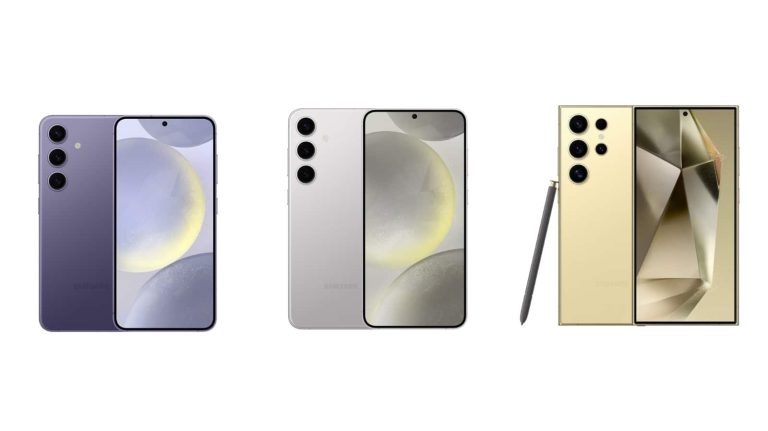
The latest leak reiterates this. As shared by X user @MysteryLupin, the fresh Galaxy S24 renders show the base model in its Amber Yellow color. The Plus model is seen in Marble Gray. The Galaxy S24 Ultra is seen in Marble Gray and Cobalt Violet colors. In addition to these, all three models should also come in Onyx Black. Samsung hasn’t officially announced these colorways but leaks have hardly left anything covered.

There are also rumors about the company selling the Galaxy S24 trio in a few more colors exclusively through its official website. Blue, Green, and Orange may be among these exclusive options, with Samsung potentially adding more later. Unlike the standard colors, they may not be available globally. The Korean behemoth has a habit of keeping those limited to select major markets.

Based on leaks, the violet variant of the Galaxy S24 Ultra will have a gray frame. The other three variants have their frame painted in the same color as their back. The same may apply to the S Pen as well. The violet variants of the Galaxy S24 and Galaxy S24+ do have a violet frame, though. Note that the Ultra features a titanium frame while Samsung is using Armor Aluminum on the other two models.

Samsung pulls back the curtain on its latest flagship in three weeks

This isn’t the first time we have seen the Galaxy S24 trio in leaked renders. However, this is another indication that the official unveiling is approaching fast. We are expecting Samsung to pull back the curtain on its next-gen flagships on January 17, 2024. That is less than three weeks away now. It shouldn’t be long before the company starts sending out media invites for the launch event, allegedly taking place in San Jose, USA.


[ad_2]
Source link

The $5 Billion Loss for Disney, Warner Bros & Paramount in 2023

0
[ad_1]

2023 has been a year of reflection for streaming services. After every studio decided they wanted a piece of the pie and, launched their own streaming service, achieved record growth during the pandemic, most are now starting to scale back or merge. Of course, WarnerMedia and Discovery merged earlier this year, and now there’s talk of the company merging with Paramount. At the same time, others are licensing more of their content to their competitors.

But, according to a new report from the Financial Times, it appears that Disney, Warner Bros Discovery, Comcast, and Paramount have lost more than $5 billion on streaming in 2023. All of which raised prices this year.

It’s reported that Comcast lost the largest amount on Peacock, but the others are also losing significant money. Why? It’s pretty simple. There’s too much content for consumers to consume. And with the current recession, many are tightening their belts and canceling services. Which means lost revenue for these companies. On top of that, content is expensive to make. And we can’t forget about the Actor and Writer strikes from earlier this year. That paused production for a solid six months on a lot of content.

How many streaming services can survive?

Right now, there are over 100 different streaming services available, especially when you count the FAST services, which are free. So you have to wonder, how many can the market keep afloat? Likely not more than 10. We’re going to see more consolidation in the streaming space, as I wrote about earlier this week. The ones I’d expect to see stick around are Netflix, some form of Hulu and Disney+, as well as Max, especially if it merges with Paramount and a few of the FAST services like Tubi TV and Pluto TV.

FAST streamers are really going to take over in 2024. And it’s not hard to see why. It’s free, ad-supported streaming TV, as the acronym points out. Meaning consumers aren’t going to cancel them once money gets a little tight.

Expect more price increases in 2024 as well, particularly on the ad-free tiers. Streamers want you to stick to the ad-supported tiers, as they can make more money off of you that way, and so can the studios that license content to these streamers as the studios do get a cut of that ad revenue, from ads placed alongside their content.


[ad_2]
Source link