The OPPO Find X7 series phones are hardly a secret at this point. We know what the two phones will look like, as we’re waiting for the launch event on January 8. Having said that, the OPPO Find X7 and Find X7 Ultra have just surfaced in real-life images, and also several video clips.
The OPPO Find X7 series appeared in real-life images and video
That being said, if you check out the gallery below, you’ll see real-life images of both phones. The two devices are shown in basically all color options that will be available. They will look almost the same. You can spot the difference by taking a closer look at their cameras. The OPPO Find X7 Ultra will have two telephoto cameras, while the Find X7 will not. So, those are four cameras vs three cameras.
The OPPO Find X7 Ultra will be available in variants with a vegan leather backplate. Well, that material will cover most of the back, but the upper portion will be glass. The OPPO Find X7 will also utilize that design, but there will also be all-glass models available. Those are also shown above (purple and black).
Truth be said, the OPPO Find X7 series looks even better in these real-life images than it did in renders, at least to our eyes. This two-tone finish definitely stands out. Some people may still dislike the camera island, though.
The OPPO Find X7 Ultra won’t have a glass-only variant, it seems
The OPPO Find X7 Ultra will come in black, brown, and dark blue colors, all vegan leather models. On the flip side, the OPPO Find X7 will be available in black (glass), brown (leather), dark blue (leather), and purple (glass).
The OPPO Find X7 is expected to ship with the MediaTek Dimensity 9300 SoC. The OPPO Find X7 Ultra, on the other hand, will be fueled by the Snapdragon 8 Gen 3 processor. The ‘Pro’ model doesn’t seem to be coming. We’re hoping that the OPPO Find X7 series will launch globally, unlike the Find X6 series.
Samsung can’t seem to get hold of Galaxy S24 leaks. Ahead of the rumored debut on January 17, leaks have revealed almost everything we need to know about the devices. There aren’t many hardware upgrades to look forward to but the flagship trio may bring tons of new software features with artificial intelligence (AI) all over them. A fresh leak has uncovered two new features, including a generative AI photo editing tool.
The Samsung Galaxy S24 will feature an AI Photo Editor
X user @MysteryLupin recently shared a photo of what appears to be a slide from an official marketing material for the Galaxy S24 series. It details new features and other highlights of the upcoming flagship lineup. Among those is a feature called Generative Edit. The document explains that the tool uses AI to move or remove objects from an image. AI will generate relevant details based on the surrounding objects to fill the space.
This isn’t the first time we have heard about this feature. Previous leaks also revealed that you can move objects from one photo to another. You can also expand images and remove objects from videos. However, we now have confirmation that the tool doesn’t work offline. It requires an internet connection and a Samsung account. So, it is a cloud-based solution that Samsung has integrated into the Galaxy S24.
From what we know so far, Generative Edit is the company’s answer to Google’s Magic Eraser tool for Pixels. However, this is just one of the many new AI features that Samsung will introduce with the Galaxy S24. The Live Translate feature for calls is one of those. It uses AI to give you translations and transcriptions of audio calls in real-time. Your voice or text response is also translated back to the original language.
Samsung announced this feature while unveiling its generative AI model, Samsung Gauss. A recent report revealed that the feature will work even when speaking with someone using a non-Galaxy device. The Galaxy S24, Galaxy S24+, and Galaxy S24 Ultra will also bring enhancements to low-light zoom photos and videos, likely with the help of AI. Improvements for high-resolution photos (200MP and 50MP) are on the cards too.
The new flagships debut in two weeks
As of this writing, Samsung hasn’t officially announced a launch date for the Galaxy S24 series. However, as said earlier, leaks have revealed that the big unveiling will take place on January 17 in San Jose, USA. The Korean behemoth is expected to start sending out media invites for the Galaxy Unpacked event in the coming days. The phones may go on sale at the end of this month.
There’s a new Telegram update that was released on the last day of 2023, so act fast and install it, as it brings a plethora of new features.
Long story short, there are improved calls with a colorful new design that uses less of your phone’s battery, a new vaporize effect when you delete messages, the largest bot update in Telegram’s history – and more. Let’s check them out one at a time:
Upgraded calls In this update, Telegram has “totally redesigned calls”, adding new animations and shiny backgrounds that change dynamically based on the call’s status: ringing, active or ended. “The new interface requires fewer resources than before, which means it saves battery life and works better on older devices”, claims the Telegram team.
“We’ve also fixed hundreds of bugs and interface glitches – and added some improvements to call quality. More improvements to connection and audio quality are coming in 2024”. Okay, notes taken!
Thanos Snap Effect when deleting messages Remember Thanos and the way he vaporized things? Turns out, he’s now part of Telegram… “Last month we added an experimental vaporize animation on iOS for auto-deleted messages. This impressive (and energy-efficient) animation is now available on both iOS and Android and plays whenever you delete any message”.
Epic Bot update: Reactions and more “We’re closing this year with the largest update to the Bot Platform in Telegram’s history. Among dozens of new features, bots can now react to messages and manage reactions, quotes, and links, send replies to other chats or topics, and much more”, says the Telegram team and adds that bots can also get information about giveaways and boosts in channels where they are admins.
Cyber attacks are evolving rapidly with advancements in technology, as threat actors exploit new vulnerabilities in:-
The rise of the following sophisticated techniques demonstrates a growing level of complexity:-
Ransomware
AI-driven attacks
Supply chain compromises
Moreover, the expansion of Internet of Things (IoT) devices provides new attack surfaces to the threat actors.
Since threat actors are continuously adapting, that’s why the researchers recommend that organizations prioritize cybersecurity measures to mitigate evolving cyber threats.
Here below we have mentioned all the top 10 countries of origin for cyber attacks:-
China: 18.83%
United States: 17.05%
Brazil: 5.63%
India: 5.33%
Germany: 5.10%
Vietnam: 4.23%
Thailand: 2.51%
Russia: 2.46%
Indonesia: 2.41%
Netherlands: 2.20%
Most Common Types of Cyber Attacks in 2023
Here below we have mentioned all the common types of cyber attacks that occurred in 2023:-
Malware
Phishing
Denial-of-Service (DoS) Attacks
Code Injection Attacks
IoT-Based Attacks
Identity-Based Attacks
Supply Chain Attacks
Spoofing
Insider Threats
DNS Tunneling
Now let’s discuss the common types of cyber attacks in 2023:-
Malware
Malware
Malware refers to malicious software designed to harm or exploit computer systems, services, and networks, aiming for data extraction by cybercriminals for financial gain.
It targets various sensitive information like:-
Finances
Healthcare records
Emails
Passwords
Personal identification numbers
Banking details
Credit card numbers
Debit card numbers
Besides this, the malware also targets government and corporate sites as well for the following two key purposes:-
Data theft
Operational disruption
Here below, we have mentioned all the types of malware:-
Viruses
Ransomware
Scareware
Worms
Spyware
Trojans
Adware
Fileless malware
Phishing
Phishing
Phishing attacks trick victims for the attacker’s benefit, and it’s been performed mainly via emails, ranging from simple to complex and not only that even Phishing attacks are:-
Extremely low-cost
Effective
Attackers mimic trusted sources, using bait-like messages to trick victims. Besides this, Phishing attacks lead to:-
Malware
Identity theft
Data loss
Targeting personal information
Targeting business information
Threat actors exploit phishing to access accounts, compromise systems, and initiate major data breaches as well. Phishing often backs harmful actions like on-path and cross-site scripting attacks, usually via email or instant message.
Denial-of-Service (DoS) Attacks
Denial-of-Service (DoS) Attacks
Denial-of-service (DoS) attacks disrupt a device’s normal function to make it unavailable. This happens by flooding it with multiple requests, which causes the denial of service to users.
If the attack comes from various sources like a botnet, then it’s called a DDoS (Distributed denial-of-service) attack. In short, the DoS attacks overload a machine to deny additional requests.
DoS attacks typically fall into 2 categories, and here below, we have mentioned them:-
Buffer overflow attacks
Flood attacks
DoS uses one connection, and DDoS deploys multiple sources, often a botnet; however, the attacks share similarities, as the threat actors use one or many sources of malicious traffic.
Code Injection Attacks
Code Injection Attacks
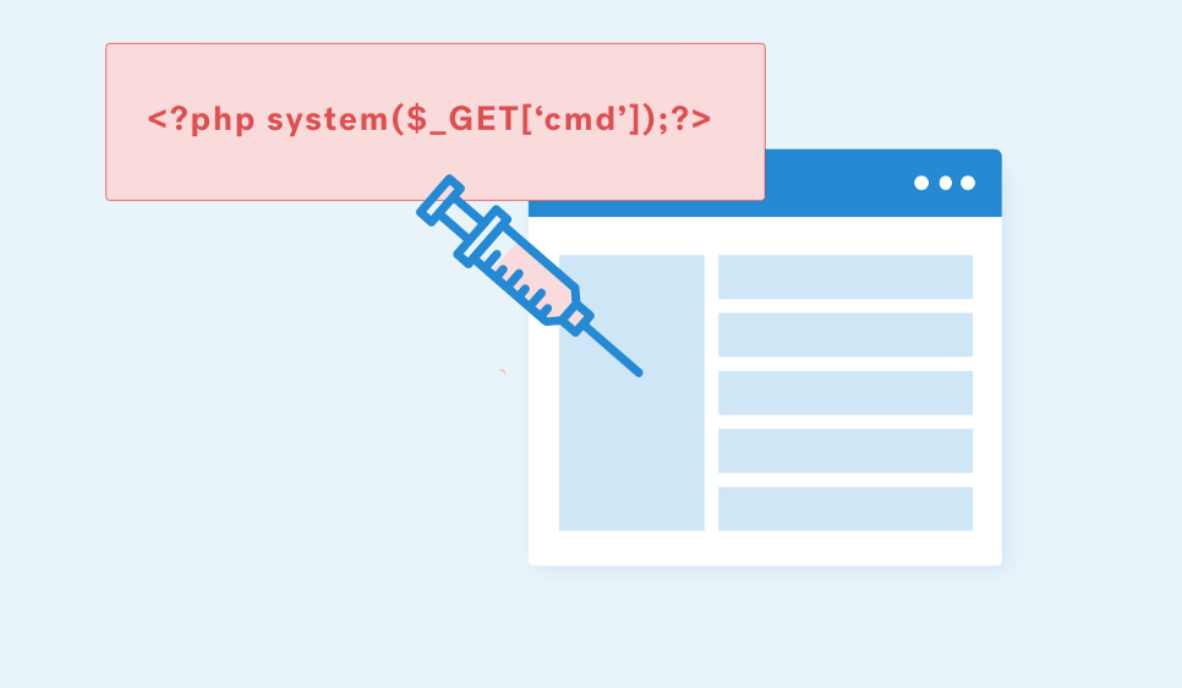
Code Injection involves injecting code into an application, and with the help of this attack, threat actors exploit the poor handling of untrusted data.
Besides this, the lack of proper input/output validation often makes these attacks possible.
Code Injection is unrestricted by injected language functionality, like PHP. In contrast, Command Injection uses existing code to execute commands, often in a shell context.
Vulnerabilities vary in discoverability and exploitation difficulty. While the successful exploits may lead to:-
Confidentiality loss
Integrity loss
Availability loss
Accountability loss
Code Injection involves injecting code into an application, and with the help of this attack, threat actors exploit the poor handling of untrusted data.
Besides this, the lack of proper input/output validation often makes these attacks possible.
Code Injection is unrestricted by injected language functionality, like PHP. In contrast, Command Injection uses existing code to execute commands, often in a shell context.
Vulnerabilities vary in discoverability and exploitation difficulty. While the successful exploits may lead to:-
Confidentiality loss
Integrity loss
Availability loss
Accountability loss
Injection flaws are often found in:-
SQL
LDAP
Xpath
NoSQL queries
OS commands
XML parsers
SMTP headers
Program arguments
IoT-Based Attacks
IoT-Based Attacks
Advancements in the technological world enabled wireless connectivity for several types of smart devices:-
While the Internet of Things (IoT) automates these devices, equipped with sensors to collect and relay data for:-
With the growing use and adaptability of IoT, cyber-attacks are actively targeted on connected devices. Though IoT devices enhance daily tasks but bring cybersecurity risks, especially for less-secured gadgets like-
Here below, we have mentioned all the common reasons why hackers target IoT devices:-
Weak passwords
Unsecured cloud storage
Unpatched software
Insecure network connections
Lack of encryption
Physical tampering
That’s for the secure operation of your IoT devices, it’s always recommended to stay vigilant and take all the necessary security measures.
Identity-Based Attacks
Identity-Based Attacks
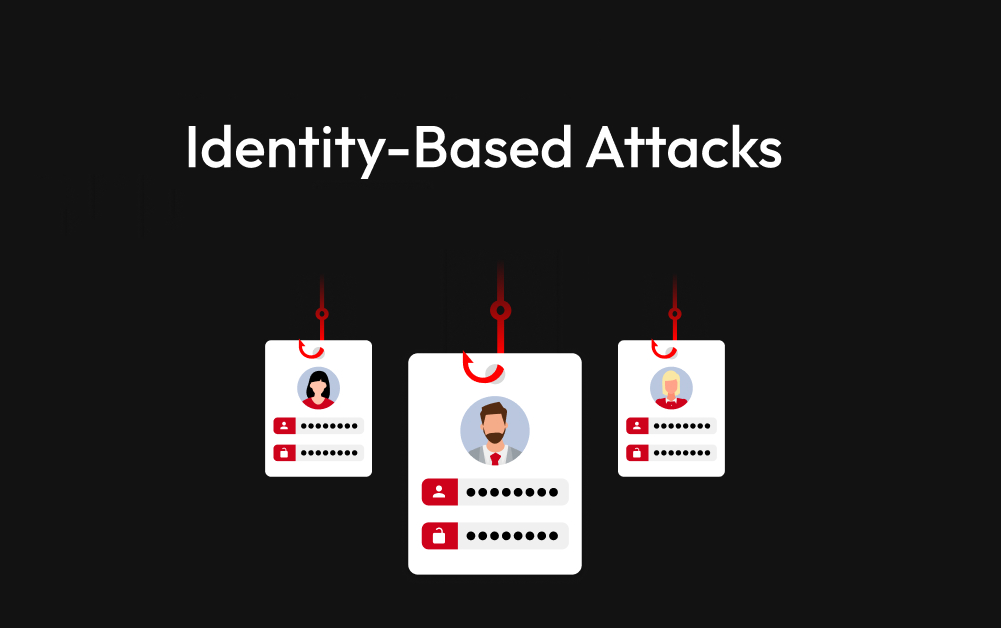
Nowadays, organizations face frequent cyber threats like Identify-based attacks, which are evolving rapidly and becoming:-
These types of attacks are targeted by hackers who are actively looking for personal and sensitive data.
In telecom and beyond, Identity-Based Attacks are rising threats with significant consequences. Organizations must defend against various attacks like:-
Credential stuffing
Password spraying
Phishing
While regular password changes and the implementation of multi-factor authentication (MFA) will surely help to prevent these threats effectively.
In total, there are five types of Identity-Based attacks, and here below we have mentioned them:-
Credential Stuffing
Golden Ticket Attack
Kerberoasting
Man-in-the-Middle MITM Attack
Silver Ticket Attack
Supply Chain Attacks
Supply Chain Attacks
Supply chain attack targets an organization’s weak links, exploiting trust in third-party vendors. It’s an island-hopping attack relevant across industries.
While this attack rising due to new tactics, it tampers with manufacturing processes to cause disruptions by exploiting the flaws in:-
These types of attacks are hard to detect, as they spread through trusted software, affecting organizations with many customers.
A supply chain attack aims to harm by infiltrating and disrupting a weak link in an organization’s system, often by targeting a vulnerable third-party supplier. Identifying the weakest point allows hackers to concentrate on the main target.
Spoofing
Spoofing
Spoofing fakes trusted sources in emails, calls, or websites, even using technical tricks like IP or DNS spoofing. It’s a sneaky way to:-
Snatch personal info
Spread malware
Dodge controls
Launch cyber attacks
So, successful attacks mean infected systems, data breaches, and revenue loss, spoiling an organization’s reputation. Traffic rerouting can flood the networks or even direct the users to malicious sites for the following two key illicit purposes:-
Information theft
Distribution of malware
Spoofing spans communication methods with varying technical expertise. It executes phishing scams to grab sensitive info.
While here below, we have mentioned the types of Spoofing attacks:-
Email Spoofing
Caller ID Spoofing
Website Spoofing
IP Spoofing
ARP Spoofing
DNS Server Spoofing
Insider Threats
Insider Threats
Insider threats arise within an organization involving employees or partners with valid access. Whether intentional or accidental, they endanger the network security, which leads to compromised data integrity.
Besides this, most data breaches result from insider threats, as traditional cybersecurity neglects all the internal risks.
However, the familiarity insiders have with systems and vulnerabilities gives them an exclusive advantage. Tackling insider threats requires equal severity to external threats in cybersecurity strategies.
Here below, we have mentioned all the types of insider threats:-
Malicious Insider
Careless Insider
Negligent insider
Compromised insider
DNS Tunneling
DNS Tunneling
DNS Tunneling encodes program data in DNS queries that enable the control of remote servers.
Besides this, it also demands the following things to fulfill its illicit goals:-
External network access
A compromised system
Control over a domain
Authoritative server for execution
DNS is crucial for internet navigation, as it interprets the domain names to IP addresses. That’s why organizations trust it, and it’s allowed through firewalls.
DNS tunneling exploits this trust and uses DNS requests as a command and control channel for malware. Inbound traffic commands the malware, while outbound exfiltrates data.
The flexibility of DNS allows for carrying sensitive info, making this attack vector simple and effective with various toolkits available.
The HONOR Magic6 Pro design and colors just got confirmed by the company. In addition to that, the phone also surfaced in a render alongside the vanilla HONOR Magic6.
The HONOR Magic6 Pro design gets confirmed by the company
Let’s focus on the official info here first. If you check out the image provided below, you’ll see the official poster of the HONOR Magic6 Pro. There is also a pre-order listing on HONOR Mall, which shares even more details.
As you can see, the HONOR Magic6 Pro will have a triple camera setup on the back. The setup looks familiar, as the HONOR Magic5 Pro had a similar one. The shape of the camera island is different here, and the camera sensors are different in terms of size. The top one is obviously the main one, as the sensor seems to be quite large.
If we had to guess, we’d say that the phone has glass on the back, well, at least this model. That glass has a very interesting imprint, as you can see here. HONOR’s logo is also visible, and all the physical buttons sit on the right-hand side.
Both the phone’s front and back sides are shown
In addition to the official poster, the render of the phone also appeared, showing us both sides of the device. You can check out that image below. It seems like HONOR’s Magic OS 8.0 teaser from the other day really did show us the HONOR Magic6 Pro, as this front side is identical to that one.
The HONOR Magic6 Pro will have a pill-shaped camera cutout on the front, and it will be centered. It will be shorter than the one on the Magic5 Pro, but also seemingly wider. The bezels around the display are extremely thin, and the display itself is curved.
A quad-curved OLED display is also mentioned, as is the Snapdragon 8 Gen 3 SoC. MagicOS 8.0 will come pre-installed on the device, presumably on top of Android 14. The phone will be available in 256GB, 512GB, and 1TB storage options, at least in China. The device will launch in Black, White, Green, Cyan, and Purple colors.
The vanilla HONOR Magic6 will resemble its big brother
In addition to this leak, both the HONOR Magic6 and Magic6 Pro surfaced in renders, side by side. That image is shown below, and it shows white and black models. Sattelite connectivity was also mentioned for the HONOR Magic6 Pro.
The HONOR Magic6 series will launch in China on January 10, alongside Magic OS 8.0. Do note that a Porsche Design variant of the HONOR Magic6 Pro is also coming.
Hackers abuse the ChatGPT name for malicious domains to exploit the credibility associated with the ChatGPT model, deceiving users into trusting fraudulent websites.
Leveraging the model’s reputation enables them to trick individuals into:-
Revealing sensitive information
Downloading malicious content
H2 2023’s ransomware from ESET highlight isn’t typical, as it’s the “MOVEit hack” by the Russian ransomware group Cl0p, and here below, we have mentioned all the other names of Cl0p:-
Lace Tempest
FIN11
TA505
Evil Corp
This ransomware group is well-known for using ransomware in large-scale hacks; this time, their massive campaign used a zero-day vulnerability (CVE-2023-34362) in MOVEit on May 27.
The flaw, held since 2021, enabled unauthorized access, showcasing Cl0p’s evolution beyond traditional ransomware exploits. Recently, the cybersecurity researchers at ESET discovered more than 650,000 malicious domains registered resembling ChatGPT.
Massive Ransomware Attacks
The Russian ransomware group, Cl0p, hit global firms and US agencies in this attack. A notable change is that now they leak data on the open web if the ransom isn’t paid, it’s a tactic shared with the ALPHV ransomware gang.
The FBI notes ransomware evolving with multi-variant attacks like:-
Deployment of multiple ransomware variants
Use of wipers following data theft and encryption
In IoT, cybersecurity researchers find and disable the Mozi botnet with a discovered kill switch.
The Mozi botnet, which has been among the largest in three years, fell suddenly, prompting questions on kill switch use by developers or Chinese authorities.
Besides this, the new threat, Android/Pandora, hits the following types of Android devices for DDoS attacks in the same landscape:-
Smart TVs
TV boxes
Mobile devices
Cybersecurity researchers pinpoint the campaigns hitting ChatGPT users and numerous tries to access shady domains like-
Apart from this, the threats include insecure handling of OpenAI API keys, stressing the need for key privacy protection.
Cybersecurity analysts discovered a significant surge in the use of Android spyware like “SpinOk.” H2 2023 sees a surge in three-year-old JS/Agent and persistent Magecart attacks on unpatched websites.
Moreover, the prevention is possible with better security measures by developers and admins.
Cryptostealers surge with Lumma Stealer, a malware-as-a-service infostealer targeting crypto wallets. But, Bitcoin’s value rises without matching the increased cryptocurrency threats.
All these evolutions in the cybersecurity landscape highlight the diverse threat tactics.
After detecting App Installer abuse for malware distribution for several months, Microsoft disabled the protocol handler by default. The tech giant took this initiative in a bid to protect the customers from further threats.
Microsoft App Installer Disabled By Default
According to a recent blog post, Microsoft has disabled the App Installer (ms-appinstaller) protocol handler by default for its users.
The App Installer – precisely, ms-appinstaller URI (Uniform Resource Identifier) scheme (protocol) – facilitated users in direct installation of apps from the internet. It streamlined app installations, completing the process faster while using minimal disk resources.
Microsoft launched this feature with some newer versions of Windows 10. However, the tech giant had to disable it by default as it detected numerous exploitations of the protocol from different malware groups.
As elaborated, the firm observed the threat actors abusing the current implementation of the ms-appinstaller protocol handler for malware and ransomware distribution. They even detected the hacker groups distributing malware kits tailored to abuse the feature for stealth malware installations. Microsoft named some financially motivated threat actor groups, including the Storm-0569, Storm-1113, Sangria Tempest, and Storm-1674, actively abusing the feature.
Microsoft found the feature abuse and the subsequent malware campaigns to be around since mid-November 2023. The threat actors used various techniques to distribute malware, predominantly relying on social engineering and phishing.
The tech giant observed numerous malicious websites to be distributing the malware by impersonating legit software, such as Zoom, TeamViewer, Tableau and AnyDesk. Whereas, in case of Storm-1674, the threat actors distributed the malicious web page links via Teams to trick users.
After detecting these malware campaigns going around with an exponential rise, the tech giant decided to disable the feature to prevent malware abuse. Hence, Microsoft disabled the ms-appinstaller URI scheme handler by default in App Installer build 1.21.3421.0.
While this move will likely prevent the threat, Microsoft still advised the users to stay vigilant while interacting with web links.
Is it impossible to crack Tesla autopilot? Not for these German researchers who’ve just unveiled ‘Elon Mode’ to exploit the popular autopilot feature.
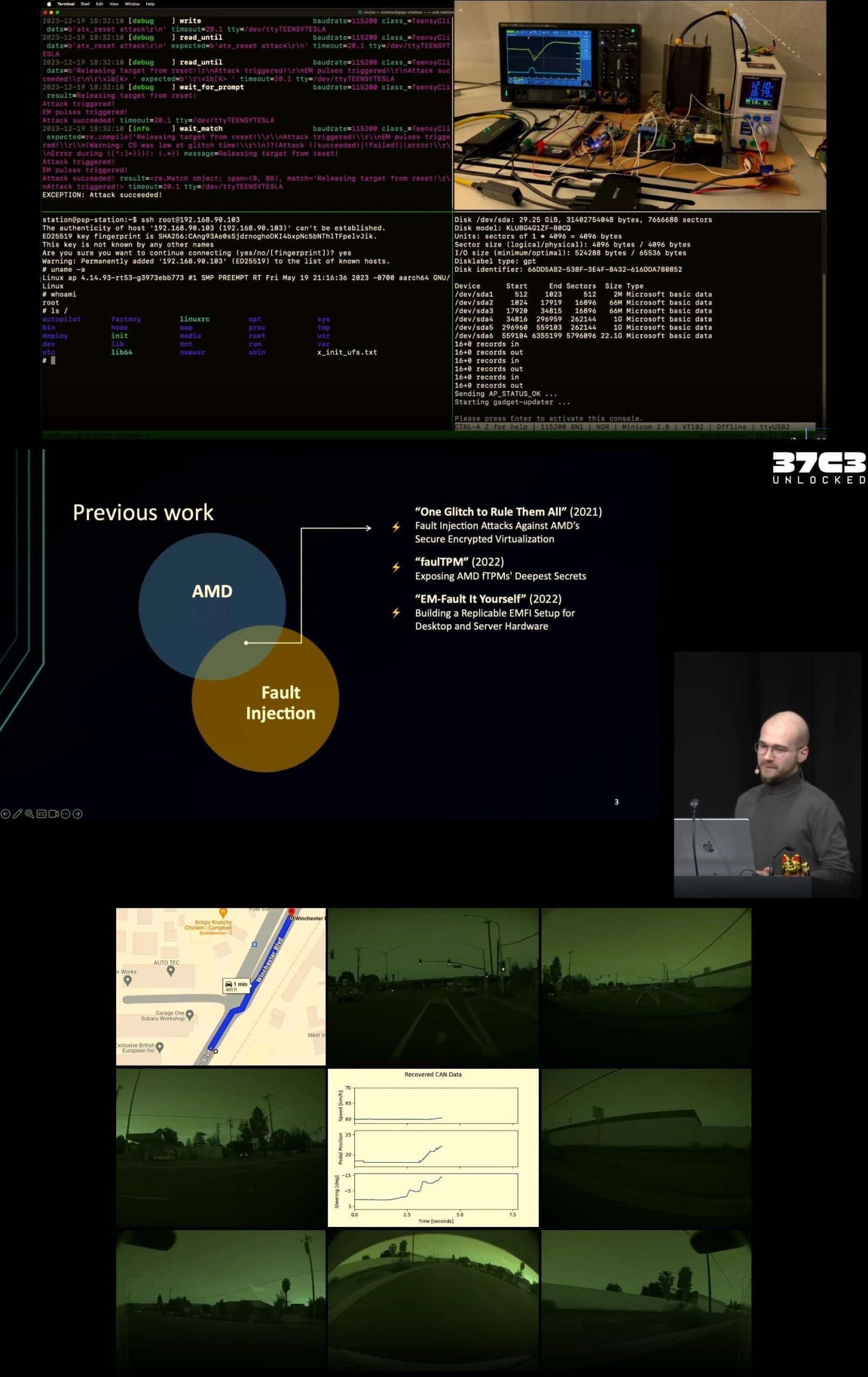
Three cybersecurity researchers from Technische Universität Berlin (Technical University of Berlin/TU Berlin) have successfully hacked Tesla’s autopilot system. Their exploit, achieved with relatively inexpensive equipment, grants access to internal hardware and even unlocks a hidden “Elon mode” with enhanced capabilities.
TU Berlin’s doctoral students Christian Werling, Niclas Kühnapfel, and Hans-Niklas Jacob used tools costing around €600 (£520 – $660) to root the ARM64-based circuit board of Tesla’s autopilot. This allowed them to extract arbitrary code and user data, including cryptographic keys and important system parts. They also accessed a deleted GPS coordinates video as it wasn’t overwritten.
However, the biggest catch was the exposing of the hidden “Elon mode,” which was discovered in June 2023 by a Twitter user (Now X) @greentheonly. This feature is a part of Tesla’s self-driving technology but has never been acknowledged by the company.
For your information, Tesla’s “Elon mode” is a hands-free, full self-driving feature through which vehicles can self-drive without driver input or monitoring. However, as per TU Berlin researchers, this hack could enable premium features for free. They could enable additional performance capabilities and disable safety features through this mode.
It is worth noting that @greentheonly, the cybersecurity researcher, is the same individual who, in May 2020, uncovered sensitive customer data in Tesla car parts being sold on the multinational e-commerce platform eBay.
This isn’t the first time security loopholes have been discovered in Tesla vehicles. Hackread.com has previously reported a Tesla infotainment AMD processor hack that enabled free seat heaters.
For your information, in August 2023, researchers from TU Berlin and Oleg Drokin reported a flaw in Tesla’s Bluetooth system that led to unlocking in-car purchasable features. They gained root access to the MCU-Z infotainment system, allowing them complete control over the vehicle’s operating system and activation and deactivation of its systems.
As per a report from the German news outlet Der Spiegel, this research was conducted in a controlled environment. Der Spiegel’s report reads that manipulating the autopilot of other people’s parked Tesla vehicles is unlikely because such attacks are not feasible outside the laboratory.
Still, this research has confirmed the existence of the yet-rumored “Elon Mode” and may affect consumers’ trust in Tesla’s safety architecture. It exposes autopilot system gaps, raising concerns about potential misuse and ethical implications, emphasizing the need for robust cybersecurity measures.
Watch the presentation
Nevertheless, after informing Tesla, the researchers presented these findings at the Chaos Computer Club congress in Hamburg. Tesla has not released its statement so far. We will update our readers when the company responds.
Researchers have found numerous malware groups actively exploiting a Google Cookie vulnerability for session hijacking. The exploit not only allows access to the target account but also resists disruption by regenerating valid cookies for persistent access.
Google Cookie Exploit Active In The Wild
A recent report from CloudSEK highlights a new Google cookie exploit actively under attack. The exploit allows persistent access to the target Google account while bypassing the existing security measures.
The exploit first surfaced online via a Telegram channel, where the poster “PRISMA” shared details about the vulnerability in an undocumented Google OAuth endpoint “MultiLogin.” The threat actor posted about a zero-day allowing session hijacking and persistent access to the target account. As explained, the exploit allowed cookie regeneration in the event of session disruption, hence garnering significant attention from various threat actors.
While the exact origin of the exploit remained veiled initially, later, another threat actor behind the infamous Lumma infostealer reverse-engineered the script and found the vulnerable MultiLogin endpoint. The attackers then integrated the exploit in the malware with an advanced blackboxing approach.
Following Lumma, various other malware groups also started integrating the said feature in their malware, such as Rhadamanthys, Stealc, Meduza, RisePro, and WhiteSnake.
This ripple effect eventually caught CloudSEK’s attention, which then discovered the vulnerability by reverse-engineering the malware variant. Describing the vulnerable endpoint, the researchers stated in their report,
“The MultiLogin endpoint, as revealed through Chromium’s source code, is an internal mechanism designed for synchronizing Google accounts across services. It facilitates a consistent user experience by ensuring that browser account states align with Google’s authentication cookies.”
CloudSEK has shared a detailed technical analysis of this exploit in their report. These findings highlight the importance of continuous and vigilant monitoring for security vulnerabilities to prevent stealth attack strategies. Besides, the researchers also emphasize the importance of human intelligence sources to keep abreast of the latest threats.
Researchers have devised a new attack strategy, called “Terrapin,” that exploits vulnerabilities in the SSH protocol. While vendors are moving on with mitigating the flaws, it may take some time for the patches to be available worldwide.
Terrapin Attack Breaks SSH Protocol Security
A team of researchers from the Ruhr University Bochum has devised the Terrapin attack as a demonstration of existing vulnerabilities in the SSH protocol.
SSH (Secure Shell) is a trusted encryption protocol for maintaining and protecting network services, providing users with a secure access to the servers. The protocol encrypts the client-server connection over the internet, preventing intrusions.
Given its sense of security, SSH is common across networks globally. It also means that any vulnerabilities in this encryption protocol, if exploited, can impart severe damage. That’s what the researchers have explained in their recent study.
Briefly, the researchers have come up with the Terrapin attack as a means to break the SSH secure channel. The attack works by carefully adjusting the sequence numbers during the SSH handshake, allowing the attacker to access and/or remove messages from the beginning of the client-server connection, leaving no traces behind.
Regarding the real-world application of the Terrapin attack, the researchers stated,
“The attack can be performed in practice, allowing an attacker to downgrade the connection’s security by truncating the extension negotiation message (RFC8308) from the transcript. The truncation can lead to using less secure client authentication algorithms and deactivating specific countermeasures against keystroke timing attacks in OpenSSH 9.5.
An adversary may also use Terrapin to exploit implementation flaws, such as those the researchers discovered in the AsyncSSH. The attacker may sign the victim’s client into another account without traces, gaining MiTM access at the session layer.
The researchers have shared the technical details about the Terrapin attack in their research paper alongside setting up a dedicated web page elaborating on the matter. Besides, the vulnerabilities exploited in this attack have received the following CVE IDs.
CVE-2023-48795: General Protocol Flaw
CVE-2023-46445: Rogue Extension Negotiation Attack in AsyncSSH
CVE-2023-46446: Rogue Session Attack in AsyncSSH
What Next?
Exploiting Terrapin necessarily requires an active MiTM access at the TCP/IP layer for the adversary. Besides, it requires “either ChaCha20-Poly1305, or any CBC cipher in combination with Encrypt-then-MAC as the connection’s encryption mode.”
Although this combination is common across the SSH ecosystem, making at least 70% of the servers vulnerable, admins can mitigate the flaw by temporarily disabling the affected [email protected] encryption and [email protected] MAC algorithms in the SSH server configuration of your SSH server (or client). The researchers advise using unaffected algorithms like AES-GCM.
Nonetheless, admins should consider it a temporary workaround until they receive a permanent patch. The researchers confirm that numerous vendors have upgraded their SSH implementations to support strict key exchange, preventing an adversary from injecting packets during the initial unencrypted handshake. Yet, patching all vulnerable SSH clients and servers globally may take time.
Until then, to help users stay updated about the vulnerability status of their servers, the researchers have released a dedicated Terrapin Scanner tool on GitHub.