Cybersecurity researchers from Kaspersky’s Global Emergency Response Team (GERT) have identified that the NKAbuse malware is actively targeting devices in Colombia, Mexico, and Vietnam.
Kaspersky’s Global Emergency Response Team (GERT) has discovered a new multiplatform malware threat that uses innovative tactics to hijack victims. The malware, dubbed NKAbuse, uses New Kind of Network (NKN) technology, a blockchain-powered peer-to-peer network protocol to spread its infection.
NKAbuse is a Go-based backdoor used as a botnet to target Linux desktops and potentially IoT devices. The malware allows attackers to launch Distributed Denial of Service (DDoS) attacks or fling remote access trojans (RATs).
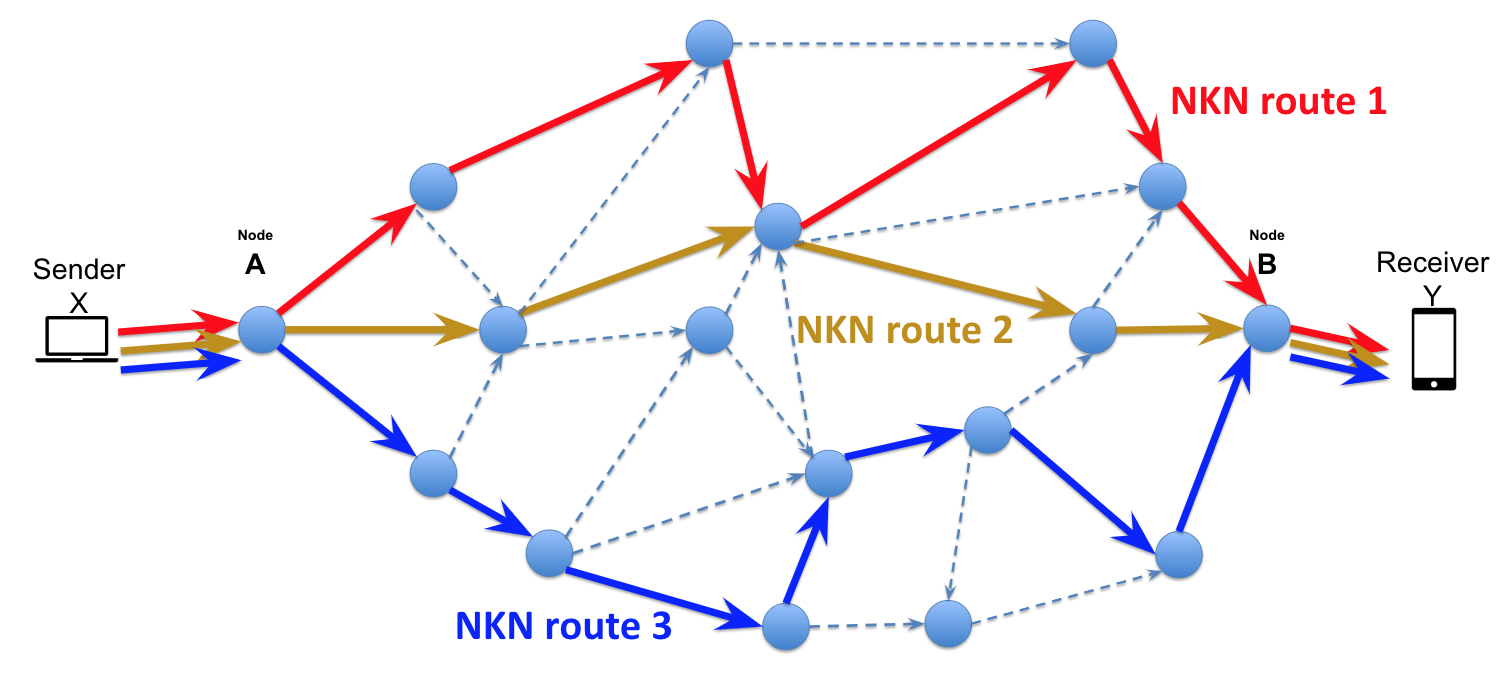
It is worth noting that the backdoor relies on NKN for anonymous yet reliable data exchange. For your information, NKN is an open-source protocol that allows peer-to-peer data exchange over a public blockchain with over 60,000 active nodes. It aims to provide a decentralized alternative to client-to-server methods while preserving speed and privacy.
The botnet can carry out flooding attacks using the 60,000 official nodes and links back to its C2 (command & control) servers. It features an extensive arsenal of DDoS attacks and multiple features to turn into a powerful backdoor or RAT.
The malware implant creates a structure called “Heartbeat” that communicates with the bot master regularly. It stores information about the infected host, including the victim’s PID, IP address, free memory, and current configuration.
Kaspersky researchers uncovered NKAbuse while investigating an incident targeting one of its customers in the finance sector. Further examination revealed that NKAbuse exploits an old Apache Struts 2 vulnerability (tracked as CVE-2017-5638).
The vulnerability, as reported by Hackread.com in December 2017, allows attackers to execute commands on the server using a “shell” header and Bash and then execute a command to download the initial script.
NKAbuse leverages the NKN protocol to communicate with the bot master and send/receive information. It creates a new account and multiclient to simultaneously send/receive data from multiple clients.
The NKN account is initialized with a 64-character string representing the public key and remote address. Once the client is set up, the malware establishes a handler to accept incoming messages, which contains 42 cases, each performing different actions based on the sent code.
NKN data routing diagram (Image: Kaspersky’s GERT)
Researchers observed that attackers exploited the Struts 2 flaw using a publicly available proof of concept exploit. They executed a remote shell script, determining the victim’s operating system and installing a second-stage payload. Using NKAbuse’s amd64 version, the attack achieved persistence through cron jobs.
“This particular implant appears to have been meticulously crafted for integration into a botnet, yet it can adapt to functioning as a backdoor in a specific host and its use of blockchain technology ensures both reliability and anonymity, which indicates the potential for this botnet to expand steadily over time, seemingly devoid of an identifiable central controller.”
Kaspersky’s Global Emergency Response Team (GERT)
NKAbuse has no self-propagation functionality and can target at least eight different architectures, although Linux is the priority. Successful implantation can lead to data compromise, theft, remote administration, persistence, and DDoS attacks.
For now, its operators are focusing on infecting devices in Colombia, Mexico, and Vietnam. However, researchers suspect its potential for expansion over time.
The alleged HONOR Magic6 Porsche Design has surfaced on Weibo in two possible iterations. We’re not sure if either of these two designs will be used, while there’s even a chance both will. Let’s dive in, shall we.
Two possible HONOR Magic6 Porsche Design phones have surfaced
If you check out the images below this paragraph, you’ll see the first design that surfaced. That design is based on a sketch shared by the ‘fixed focus digital’ tipster. You can see both the render and the sketch below.
The camera layout on the back looks similar to what we’ve seen on the HONOR Magic5 lineup. One camera sits a level above the other two, to form a nicely arranged trio of shooters on the back.
The phone has vegan leather on the back, and that backplate is curved towards the sides. There also seem to be some indents on the back. The camera array is part of a two-tone finish of the camera island, and the entire camera island has a circular shape.
One leaked devices has a two-tone vegan leather backplate
The second design that surfaced is visible below this paragraph. This one looks less like the HONOR Magic5 series, but it looks great overall. Many would probably say even better than the first design.
You’ll notice a dual-tone finish on the back, as black and red colors are combined. Vegan Leather is applied on the back, and this phone is more squarish than the previous one.
This camera array is different. The camera island is once again circular, but the cameras are aligned horizontally here. The central camera is obviously the largest, and that is also the main camera.
Do note that both of these designs could be accurate, as one could depict the HONOR Magic6 Porsche Design, and the other Magic6 Pro Porsche Design. Who knows. We still don’t know if one or two Porsche Design phones will be launched.
One of these two designs is probably legit… at least one
There’s a good chance only one of these designs is accurate, though. They are noticeably different, and there’s a greater chance we’ll get only one Porsche Design phone.
The Pixel Repair Mode tool aims to safeguard user privacy during repairs by preventing unauthorized access to device data. With Repair Mode enabled, users can hand over their Pixel phones for repairs. It won’t require time-consuming backup, wipe, and restoration processes. Once the repair is complete, users can easily disable Repair Mode, ensuring a quick and efficient repair experience.
To further empower users in identifying and addressing issues with their Pixel phones, Google is launching the Pixel Diagnostic App. Users can access this app by entering *#*#7287#*#* on the dial pad, allowing them to perform diagnostic tests on their devices both before and after repairs. The app provides various diagnostic tools to check for physical defects, display problems, sensor issues, and connectivity problems. This initiative is a proactive step to ensure users have a properly functioning device post-repair.
Google introduces a tool for swift repairs and efficient device maintenance with Pixel Repair Mode
Google is revamping its repair manuals to make them more user-friendly for technicians and DIYers (DIY or Do it Yourself). The redesigned manuals offer a clear and concise guide for repairing Pixel phones, facilitating efficient and effective repair processes. While currently available for select models such as the Google Pixel Fold, Google Pixel 8, and Google Pixel 8 Pro, Google plans to expand the availability of repair manuals to cover previous and upcoming Pixel devices in the coming months.
In addition to providing tools for individual users, Google is expanding its repair options through partnerships with independent repair providers like uBreakiFix. With over 700 locations across the U.S., users can conveniently access repair services, whether in or out of warranty. Google’s commitment to sustainability, product longevity, and repairability underscores its dedication to offering users a seamless and extended lifespan for their Pixel devices.
As part of its broader initiative to support repairers, whether professional or DIY enthusiasts, Google is making genuine spare parts available through iFixit and introducing repair fixtures and tools from Shyft Global Services. This holistic approach aims to enhance repair accessibility and reduce the environmental impact of device maintenance.
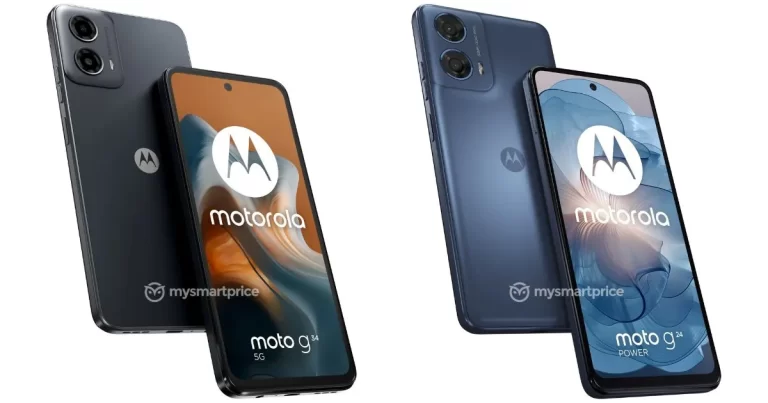
Motorola Moto G24 Power and Moto G34 have surfaced in leaked renders. The high-resolution leaked images give us a look at the upcoming Moto G-series duo. Additionally, the Moto G24 has also been spotted in a 360-degree leaked video. The Moto G34 could arrive as the successor to the G32 that debuted last year because there was no G33 this year. Meanwhile, the Lenovo-owned brand announced the G Power 5G (2023) earlier this year.
Moto G24 Power, G34 spotted in leaked renders
The Moto G24 Power and the Moto G34 look almost similar. Both phones have a boxy design with a power button that appears to double up as a fingerprint scanner. The back panel has a slightly elevated rectangular camera island with curved edges. On the front, the Moto G duo has a centre-aligned punch-hole cutout and a thick bottom chin.
The bottom part of the Moto G24 Power and G34 has a USB-C port and a speaker grille. A 3.5mm headphone jack is located at the top of the G24 Power whereas, on the G34, it is at the bottom.
The Moto G24 Power has a glossy back panel and is seen in Silver and Dark Blue colors. On the other hand, the Moto G34 seems to have a faux leather-like texture and the renders reveal the device in Dark Blue and Light Blue color options. The leaked renders also reveal that the Moto G24 Power and G34 will feature a 50MP camera. The additional sensor is expected to be a 2MP lens.
Moto G24 also surfaces in a 360-degree leaked video
In addition to the leaked renders, the Moto G24 also appeared in a 360-degree video shared by tipster Evan Blass. It looks similar to the G24 Power with a flat frame and a side-mounted fingerprint scanner. The leaked video reveals the smartphone in Green, Black, and Pink color options. The Moto G24 is expected to arrive as the successor to the Moto G23 that went official earlier in January this year.
Samsung has plenty of higher-end devices to offer. The Galaxy S23+ is one of the company’s flagships for 2023, and the Galaxy S23 FE is… well, it’s an odd product. It’s supposed to be a budget flagship, but it’s not really. In any case, in this article, we’ll compare those two phones, the Samsung Galaxy S23 FE vs Samsung Galaxy S23+. They are very similar in size, and design, plus their software builds are also rather similar. There are differences here, worthy of comparing, though.
There is a reason the Galaxy S23+ is a more expensive phone, of course. We’ll first list their specifications, and will then move to compare their designs, displays, performance, battery life, cameras, and audio performance. That being said, let’s get to it, shall we?
Specs
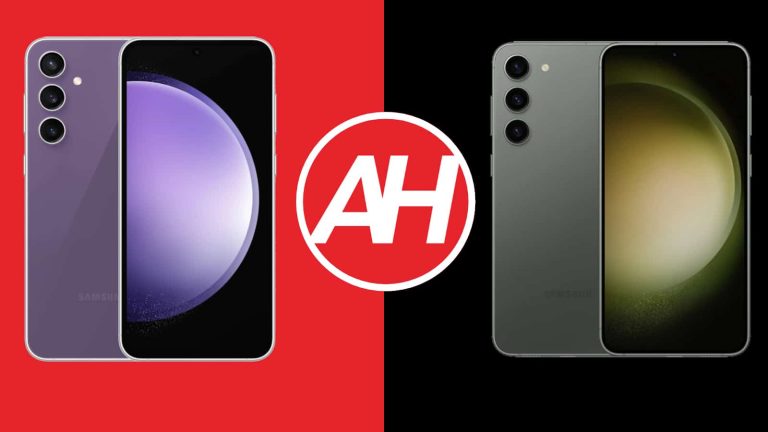
Samsung Galaxy S23 FE vs Samsung Galaxy S23+, respectively
Samsung Galaxy S23 FE vs Samsung Galaxy S23+: Design
When you first lay your eyes on these two phones, you’ll notice a lot of similarities between them. They basically have the same design language. Both phones not only have the same general shape, but they also include a centered display camera hole, and basically the same design on the back side. You’ll notice three vertically-aligned cameras on both phones, which are located in the top-left corner of the back. Each of those cameras is basically its own camera island.
The Galaxy S23+ does have a larger display, and yet it’s somehow both shorter, narrower, and thinner than the Galaxy S23 FE. How’s that possible? Well, the phone has thinner bezels all around, noticeably thinner bezels. That’s one of the cost-cutting moves from Samsung for the Galaxy S23 FE. Another differentiating factor is the position of the LED flash, it’s placed higher up on the back of the Galaxy S23+.
Not only is it a bit more compact, but the Galaxy S23+ is also lighter than the Galaxy S23 FE. It weighs 196 grams, compared to 209 grams of the Galaxy S23 FE. Both phones have that hefty premium feeling, but the Galaxy S23+ is definitely a more pleasant phone to operate. Both of them do come with IP68 certification for water and dust resistance, and both feel like well-built smartphones.
Samsung Galaxy S23 FE vs Samsung Galaxy S23+: Display
The Galaxy S23 FE features a 6.4-inch fullHD+ (2340 x 1080) Dynamic AMOLED 2X display. That panel supports HDR10+ content, and it goes up to 1,450 nits of peak brightness. It has a 19.5:9 aspect ratio, and it’s protected by the Gorilla Glass 5 from Corning. This display is flat, in case you were wondering.
Samsung Galaxy S23 FE front
The Galaxy S23+, on the other hand, also has a flat display. That panel measures 6.6 inches, and it’s a fullHD+ (2340 x 1080) display. This is also a Dynamic AMOLED 2X panel, and it also offers a 120Hz refresh rate, and HDR10+ support. This panel does have a slightly higher peak brightness at 1,750 nits. The display aspect ratio is the same as on the Galaxy S23 FE, but the protection is better. It features the Gorilla Glass Victus 2 protection.
There’s really not much to complain about here, display-wise. Both smartphones are really good in that regard. The displays provide vivid colors, with great viewing angles, and the blacks are also deep. They are both quite sharp, and more than bright enough. Truth be said, the Galaxy S23+ does have the advantage there, but the Galaxy S23 FE’s panel is also very bright, so chances are you won’t have any complaints.
Samsung Galaxy S23 FE vs Samsung Galaxy S23+: Performance
The Galaxy S23 FE is fueled by the Snapdragon 8 Gen 1 SoC. It also includes 8GB of LPDDR5 RAM, and UFS 3.1 flash storage. The Galaxy S23+, on the flip side, is fueled by the Snapdragon 8 Gen 2 for Galaxy processor. It includes 8GB of LPDDR5X RAM, and UFS 4.0 flash storage. The Galaxy S23+ is more powerful on paper, no matter how you spin it. Not only does it have a more powerful processor, but it has faster and more power efficient RAM and storage modules.
In regular, everyday tasks, both perform admirably. The Galaxy S23+ is a bit faster in direct comparison, which becomes more obvious when it comes to launching apps and multitasking. Both are fairly fast, though, and perform really well. Where you’ll see the difference is in gaming. The Galaxy S23 FE does get very hot during gaming, even when it comes to more casual games. Our unit did get too hot even, to the point it was not as comfortable to hold. That’s not the case with the Galaxy S23+. That handset can handle even the most demanding of games, and not get too hot to handle.
Samsung Galaxy S23 FE vs Samsung Galaxy S23+: Battery
There is a 4,500mAh battery included inside the Galaxy S23 FE, while a 4,700mAh pack sits inside the Galaxy S23+. The Galaxy S23+ does include a larger display, hence the higher battery capacity. The end result is very similar, though. In fact, from what we’ve seen, the Galaxy S23 FE can provide even better battery life than the Galaxy S23+, though not by much. They’re on the same playing field.
The Galaxy S23 FE was able to go over the 8-hour screen-on-time mark, even with a bit of gaming thrown into the mix. The Galaxy S23+ lingered around 7-7.5 hours of screen-on-time before it shut down. Your mileage may vary, though, of course. There are simply too many factors to consider, ranging from different signal strengths, to different usage patterns, and different apps being used.
The Galaxy S23+ has the advantage in the charging department. It supports 45W wired charging, in addition to 15W wireless charging, and 4.5W reverse wireless charging. The Galaxy S23 FE, on the other hand, supports 25W wired charging, and 15W wireless charging. The Galaxy S23+ does charge a bit faster via a wire. Neither phone comes with a charger in the box, though.
Samsung Galaxy S23 FE vs Samsung Galaxy S23+: Cameras
These two phones seemingly have the same main and ultrawide cameras, but that’s not the case. Different sensors are being used here, the Galaxy S23+ does have the advantage from the hardware standpoint. The Galaxy S23 FE includes a 50-megapixel main camera, a 12-megapixel ultrawide unit (123-degree FoV), and an 8-megapixel telephoto camera (3x optical zoom). On the flip side, the Galaxy S23+ features a 50-megapixel main unit, a 12-megapixel ultrawide camera (120-degree FoV), and a 10-megapixel telephoto camera (3x optical zoom).
Samsung Galaxy S23+ cameras
While both phones are capable of providing really good shots in good lighting, the Galaxy S23+’s advantage becomes obvious in lower light. It provides brighter and more detailed images, in basically every such scenario. The same goes for its ultrawide camera too, as it trumps the Galaxy S23 FE’s offering basically every single time. The color science is similar, though, and both phones do perform well in HDR conditions.
What about the telephoto cameras? Well, that’s something the Galaxy S23+ does better too. The images do end up looking a bit sharper, while we’ve also noticed that the exposure is a bit better on top of it. Don’t get me wrong, though, the Galaxy S23 FE can do a good job, camera-wise, but the Galaxy S23+ is simply better in pretty much every way.
Audio
Both smartphones do include stereo speakers. What was quite surprising for us was the fact that the Galaxy S23 FE speakers are louder in comparison. The difference is not big, but it’s noticeable. The quality of the output is fairly similar, across the spectrum.
Neither of the two phones includes an audio jack. You can always use their Type-C ports, but you’ll need a dongle. Alternatively, Bluetooth 5.3 is available on both phones for wireless audio connections.
Motorola Razr+ users are not receiving software updates and their devices are stuck on the launch software version. Multiple users have complained about the issue on Lenovo’s forum page. Scarily, the thread was started in August this year and continues till today, indicating that Razr+ units haven’t received an update for months.
Motorola Razr+ not getting software updates for months
A recent report revealed that the Motorola Razr+ received an update with build number T2TZ33.18-75-9 including November 2023 security patch. However, this seems to be just one of those units that received updates. Other users have not been very lucky. A user took to Reddit to share that their Razr 40 Ultra (as called in some regions) was stuck on the May 1st security patch for the longest time but has now received the November update. The device updated several times in a row.
Several users who have been affected by the delayed software update also blasted at Motorola on the Lenovo forum saying that their software support is a mess. The company is working on fixing the issue for months going by the responses from Motorola support.
Some Motorola Razr+ users had to download the Rescue and Smart Assistant to obtain the software updates for their devices. Unfortunately it is only limited to Windows and not available on Linux and Mac. Using RSA automatically deletes the device data and returns it to factory settings. Hence, it is not a recommended method over OTA for updating the software to the latest version.
Motorola Razr+ is eligible for three OS updates
The Motorola Razr+ (review) debuted earlier this year with pre-installed Android 13 out of the box. It is eligible for three years of OS updates till Android 17. However, with the delayed updates, it is unclear when the clamshell foldable phone will receive the Android 14 version.
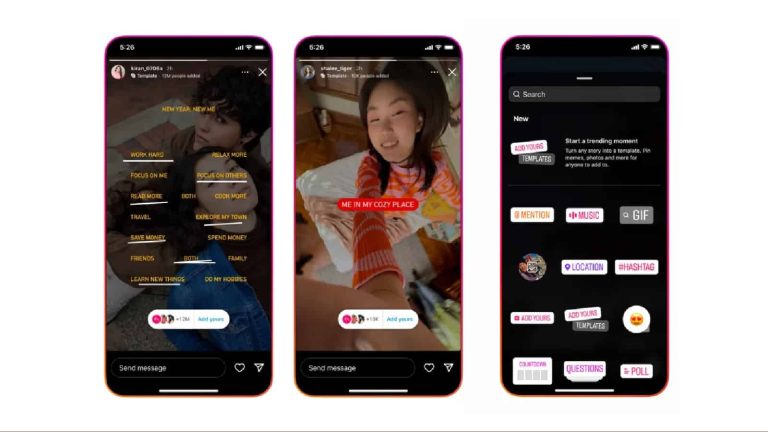
You just saw an amazing Story on Instagram, and you want to make your own spin on it! This happens to us, but it’d be tedious trying to copy the format of that Story just to make your own. Well, Instagram has a new feature that you’d like if this happens to you. Instagram just launched the new Story templates, and this will let users riff on other users’ Stories.
Instagram is full of Stories, and people put a ton of effort into making them as interesting as possible. There are so many tools out there for your stories to attract a ton of viewers on the app. We’re talking about effects, filters, pictures, stickers, location tags, and much more. If you came up with a winning formula for an award-winning Story, you’re likely to want to share it. That’s where this new feature comes in.
Instagram Story templates make Stories more communal
This new feature comes just after the company let people post short looping video notes. Story templates sound like a feature that you can use for personal use. It sounds like you’ll save a template so that you can drag and drop assets and call it a day. However, the intention is more communal. You’re making these templates so that other people can make their stories based on it. It’s so that you can see what other people do with your inspiration.
Instagram calls these “Add Yours Templates”, as you’re able to add your own spin to the templates that you see on the app. When you see a Story template that you like, you can add your own images, text, and GIFs to it.
How to add your own template
If you want to be the co-author of someone else’s Stories, it’s easy to make your own template. Go ahead and start creating a story. Add whatever assets you want like images, text, or GIFs. Once you have everything placed as you want, tap on the Sticker button on the top right of your story.
On the top row of options, you’ll see the “Add Yours” button. This will have you enter a prompt for your story. Basically, what’s your story about? After that, you’ll finalize your Story and post it. Other people who see your story will be able to use your template and add their own spin on it.
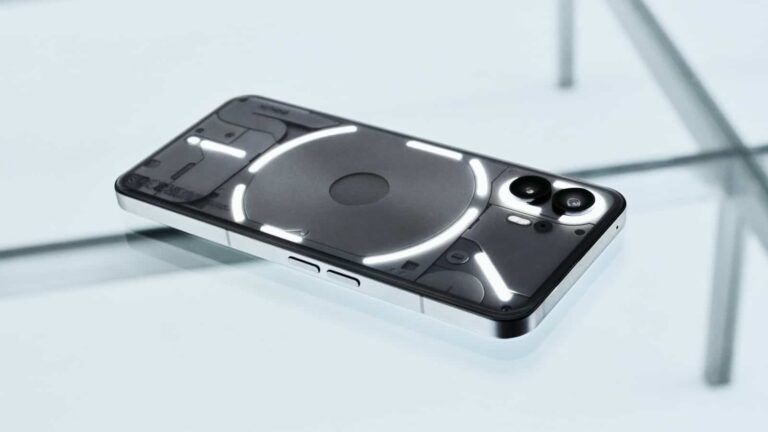
Nothing is gearing up to release the stable version of Android 14-based Nothing OS 2.5 for its Nothing Phone (2) in the coming days, following the successive release of Nothing OS 2.5 Closed Beta and a couple of Open Beta 2 builds. The company aims to bring a host of improvements and features to enhance the user experience.
The upcoming Nothing OS 2.5 brings a slew of changes and enhancements. It starts with a redesigned Home Screen and Lock Screen interface that provides users with even more customization options. Notable additions include several new wallpaper effects that contribute to a cleaner and more tidy appearance on the home screen. The Glyph Interface, a distinctive feature of Nothing’s design, undergoes a major change, with improved Flip to Glyph logic and direct access to the Glyph Timer from the lock screen. The Glyph Timer also supports time presets for quick duration settings.
In terms of gestures, Nothing OS 2.5 introduces a customizable double-press power button for quick access to selected features. Additional Lock Screen shortcut options include Do Not Disturb, Mute, QR code scanner, and video camera. Users can now perform a three-finger swipe gesture for rapid screenshot capture, and a new screenshot editor and menu offer advanced editing features and quick deletions.
Nothing OS 2.5 brings a redesigned interface, enhanced customization, and feature-rich gestures
The update also brings improvements to the Weather app experience, enhancing weather alert notifications. Predictive back animation and a refreshed back gesture arrow visual are aligned with Nothing’s distinct style. Users gain separate settings for ringtone and notification sound volumes, featuring an updated control interface. The Quick Settings layout receives an update, offering support for more device icons.
The Camera app sees stability improvements, ensuring a smoother and reliable user experience. Overall system stability is enhanced, providing users with a more reliable and consistent performance.
Nothing Phone (2) users can expect the official rollout of Nothing OS 2.5 in the next few days. To check for updates manually, users can navigate to Phone Settings > System > System Update. Additionally, Nothing Phone (1) will receive its first Open Beta build before the end of the year, following its current status on the Nothing OS 2.5 Closed Beta build.
Google has announced that it will start rolling its Chrome web browser’s new Tracking Protection feature from January of 2024. Tracking Protection is part of Google’s Privacy Sandbox initiative to phase out third-party cookies. The Tracking Protection feature aims to disable third-party cookies completely in the second half of 2024.
Third-party cookies, often referred to as non-essential cookies, can be used to track visitors as they move from one website to another, with the purpose of creating profiles for personalized ads. But other website features, like authentication and fraud prevention can also depend on them.
Starting January 4, Google says it will select one percent of Chrome users on desktop and Android at random, and that group will get the option to use the Tracking Protection feature. The chosen users will receive a notification about it when they open Chrome.
The selected Chrome users can do some testing to establish the impact of blocking third-party cookies on their browsing experience. For example, when Tracking Protection is enabled, some websites may not load correctly, so users will also have the option to temporarily re-enable third-party cookies for that specific website.
One significant difference with the existing (largely useless) “Do Not Track” feature is that websites do not have a choice about whether to cooperate with Tracking Protection. Do Not Track is a signal sent by the browser that asks websites to play nicely and not track it. It isn’t effective and there is no way to determine if it’s having the desired effect or not.
Other initiatives by Google in this direction include hiding your IP address. An IP address is the next best thing for tracking users across the internet. Although the IP address is often not limited to one system, they are very often bound to one household. Google’s IP Protection proposal wants to use proxies to hide users’ IP addresses.
It remains to be seen how fruitful these initiatives will be. A few years ago (March 2021), Google ran some tests with a program called Federated Learning of Cohorts (FLoC) which was also intended to replace third-party cookies. But the technology was criticized on privacy grounds and on January 25, 2022, Google officially announced it had ended development of FLoC technologies.
FLoC was replaced by the Topics API, another Privacy Sandbox mechanism designed to preserve privacy while allowing a browser to share information with third parties about a user’s interests.
Meanwhile, regulators are monitoring the tech giant’s initiatives to ensure they don’t give the company an unfair advantage in selling its own ads.
We don’t just report on threats—we remove them
Cybersecurity risks should never spread beyond a headline. Keep threats off your devices by downloading Malwarebytes today.
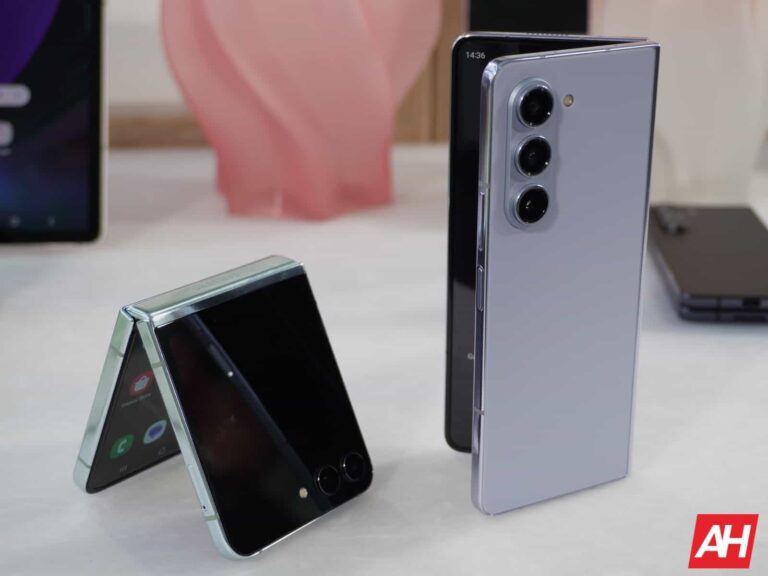
A few more Samsung Galaxy devices are receiving the December security update in the US. The Galaxy Z Fold 5, Galaxy Z Flip 5, and Galaxy S20 series are getting the latest SMR (Security Maintenance Release) stateside. The two foldables have already picked up the update in international markets. The 2020 S-series flagships, meanwhile, are starting the journey in North America.
Galaxy Z Fold 5 and Flip 5 get the December update in the US
Samsung recently released the December SMR for the Galaxy Z Fold 5 and Galaxy Z Flip 5 in several European and Asia countries. We now have confirmation that the update has reached the US versions of the two foldables. Both carrier-locked and unlocked variants of the duo are picking up the latest security patch stateside. It won’t be long before the update reaches all eligible units across the nation.
The latest update for the Galaxy Z Fold 5 comes with the firmware build numbers F946USQS1BWKI (carrier-locked) and F946U1UES1BWKI (unlocked) in the US. Those for the Galaxy Z Flip 5 are F731USQS1BWKI and F731U1UES1BWKI, respectively. The changelog on Samsung’s official update tracker for the foldable duo confirms that the latest release is all about this month’s security fixes. The phones recently received Android 14.
The December SMR for the Galaxy S20, Galaxy S20+, and Galaxy S20 Ultra also doesn’t bring anything more than the latest security patches. First reported by Sammyfans, the update introduces firmware version G98*USQS8HWK1 to the 2020 flagship trio. These phones aren’t eligible for Android 14 or any other major feature updates. They will only get security updates. A global rollout of this month’s SMR may begin anytime now.
As far as the content of the December security release is concerned, Samsung has fixed more than 60 vulnerabilities. To be precise, most of those are Android OS patches from Google. The Android maker fixed seven critical security issues this month along with dozens of high-severity vulnerabilities. You can go to Settings > Software update > Download and install to check for new updates on your Galaxy device.
More devices will receive these security fixes soon
Samsung will continue to release the December SMR for more eligible devices in the coming days. The company is also readying the Android 14-based One UI 6.0 update for more Galaxy phones and tablets, including the Galaxy Z Flip 4 and Galaxy Z Fold 4. They may receive the latest security patch bundled with the impending big update. We will let you know when the rollout begins.