Toyota Financial Services (TFS) notifies customers after a data breach that exposed personal and sensitive financial information.
In a limited number of locations, including Toyota Kreditbank GmbH in Germany, Toyota Financial Services Europe & Africa has discovered unauthorized activity on its systems, as it announced on November 16.
“Due to an attack on the systems, unauthorized persons gained access to personal data. Affected customers have now been informed. Toyota Kreditbank’s systems have been gradually restarted since December 1st”, the company said.
Toyota Motor Corporation’s finance division is known as Toyota Financial Services (TFS). As a Toyota subsidiary, it offers a variety of financial services to Toyota dealers and customers all around the world. TFS provides a range of financial goods, such as leases, insurance policies, and auto loans.
TFS aims to assist Toyota customers with financing their automobiles and to make it easier for customers to buy or lease Toyota cars.
Overview of the Ransomware Attack
Data from Toyota Financial Services was allegedly taken by the ‘Medusa ransomware gang’. The group offered the business ten days to provide the $8 million ransom.
The Medusa gang made claims on their leak site today, November 16, including screenshots of multiple documents confirming the hack’s authenticity and listed stolen sample data.
The files contain several spreadsheets, financial documents, staff email addresses, and scans of a Serbian passport.
One document, in particular, contains un-hashed account passwords and usernames for several types of production and development environments, and much more were all included.
Medusa gang made claims on their leak site
The leak site features a countdown to the full data release date of November 26, which is in ten days. The gang will extend the deadline by one day for US$10,000.
The company took a few systems offline to look into this activity and lower risk. They have also started collaborating with law enforcement. They have begun getting their systems back online in the majority of countries.
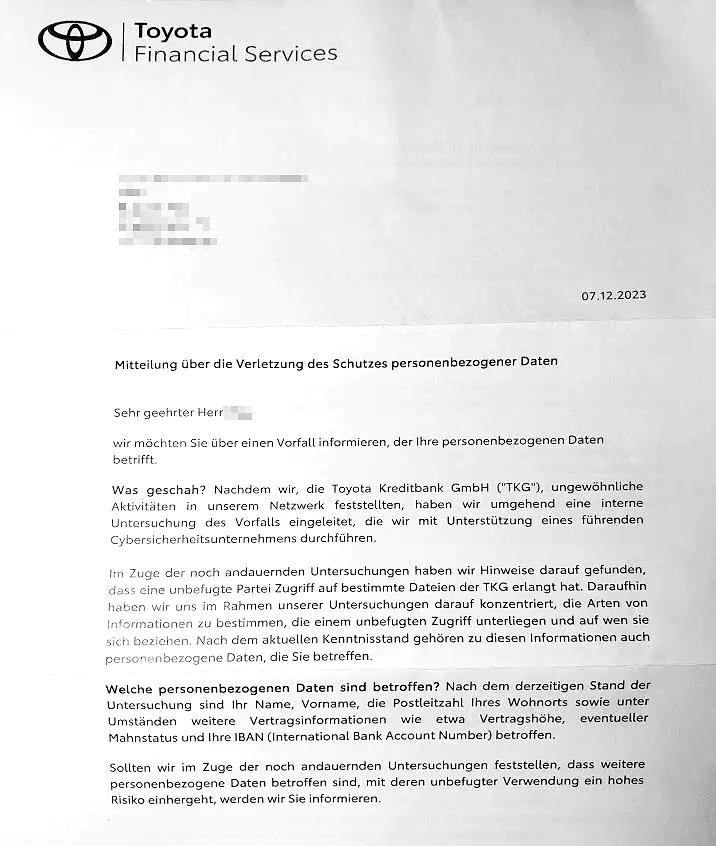
German media source Heise received the Toyota data breach notification that was delivered to German customers.
Threat actors were able to obtain the following information such as:
Full names,
Residence addresses,
Contract information,
Lease-purchase details
IBAN (International Bank Account Number)
Notifying customers of a data breach
Toyota also reported the security violation to North Rhine-Westphalia’s data protection officer.
Cyber security analyst Kevin Beaumont pointed out that Toyota systems that are reachable online are susceptible to the “Citrix Bleed” vulnerability, which was disclosed late last month and has already impacted numerous major businesses and government agencies.
Recommendation
German customers of Toyota Financial Services are advised to exercise caution and get in touch with their bank to implement extra security measures. They ought to keep an eye out for strange activity and get a current credit report from Schufa.
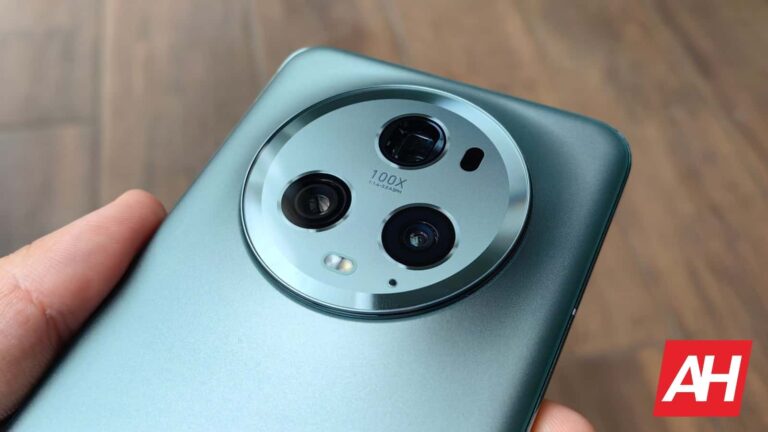
A well-known tipster has just detailed the camera setup on the HONOR Magic6 series, and it’s powerful on paper, but also different. Do note that he did not specify the model, though we’re likely looking at the Magic6 Pro camera setup. The vanilla model likely won’t have the same cameras on the back.
The HONOR Magic6 will feature powerful cameras, which just got detailed
In any case, this information comes from Digital Chat Station, one of China’s most prominent tipsters. He says that the phone will include an OmniVision OV50H camera sensor. An OV50K sensor, and a 160-megapixel periscope zoom camera.
Having said that, the OmniVision OV50H sensor is a 1/1.3-inch camera sensor, while the OV50K will likely also be a 1/1.3-inch sensor, despite the fact some rumors pointed to a 1-inch sensor. It remains to be seen, however.
The OmniVision OV50K camera sensor is set to utilize LOFIC tech
In any case, the OV50K will utilize the LOFIC tech, which stands for ‘Lateral Overflow Integration Capacitor-based CMOS’. In other words, this will be a stacked sensor, similar to what Sony offers with its LYTIA lineup.
HONOR seems to be planning to go in the opposite direction of most other flagship smartphones. It will rely on OmniVision sensors, instead of Sony’s camera sensors. It remains to be seen if that will pay off for the company.
The tipster also mentioned that HONOR will utilize a ToF sensor, to be able to offer facial scanning. That is why the HONOR Magic6 series will have a pill-shaped cutout on the screen. It needs to accommodate both the front-facing camera, and a ToF sensor.
The Snapdragon 8 Gen 3 will fuel the most powerful phone in the series
Samsung‘s display manufacturing division, called Samsung Display, has reportedly reorganized itself to focus on next-gen display solutions for Apple, one of its biggest clients. The reorganization will enable the firm to dedicate resources to developing folding OLED panels for Apple’s possible foldable iPhones in the future. The iPhone maker is expected to enter the foldable market in a year or two.
Samsung reorganizes its display division in anticipation of foldable iPhones
Samsung Display is one of the biggest display manufacturing companies around the world. It makes OLED panels for all sorts of gadgets, including smartphones, smartwatches, tablets, laptops, monitors, and TVs. The firm is also working on MicroLED displays for AR devices. Along with its sister firm Samsung, the company supplies its display solutions to Apple and many others. It was the biggest supplier of OLED panels for the iPhone 15 series.
The firm has a special internal business unit dedicated to Apple, which is understandable considering the iPhone maker’s size. Allegedly called the “A Business Team,” the unit focuses on the current and future display needs of Apple. Samsung Display recently reorganized itself to strengthen this team so it can better respond to Apple’s foldable display needs in a few years, Korean publication The Elec reports.
As part of this reorganization, Samsung Display has appointed its Vice President Choi Kwon-young, who was the head of the planning team at the headquarters, as the head of the A Business Team. The company is seemingly anticipating fierce competition in Apple’s display supply chain in the coming years as the Cupertino giant prepares to enter the foldable scene. The first foldable iPhone may arrive in 2025 at the earliest.
Samsung Display’s reorganization will also allow it to efficiently allocate resources to various other internal teams such as the small display division (smartphones and watches), medium display division (tablets), and IT display division (laptops and monitors). It will help strengthen the microdisplay team too. The company is looking for new avenues of growth amid growing competition.
LG has also created a display team dedicated to Apple
Samsung isn’t the only display firm that values Apple highly. Its compatriot LG, which is another major supplier of iPhone displays, is making similar moves in anticipation of foldable iPhones. It has reportedly established a strategic customer (SC) division focused on Apple’s display needs. LG Display’s Executive Director Choi Hyun-cheol, who was in charge of the small display business, leads the new team.
As if password authentication’s coffin needed any more nails, researchers in the UK have discovered yet another way to hammer one in. The technique, developed at Durham University, the University of Surrey, and Royal Holloway University of London, builds on previous work to produce a more accurate way to guess your password by listening to the sound of you typing it on your keyboard.
The slight differences in the sounds each key makes is an unintentional leak of information, known as a “side channel”. Computers typically have lots of side channels, such as noises, heat, and changes in electromagnetic emissions, which can be hoovered up and analysed by adversaries to learn more about what’s happening on the computer.
Side channel research can get a little far-fetched and impractical at times but it serves a useful purpose in improving our knowledge about what’s possible. However, this research is firmly rooted in the possible, starting with the decision to monitor sound, rather than something more exotic.
The ubiquity of keyboard acoustic emanations makes them not only a readily available attack vector, but also prompts victims to underestimate (and therefore not try to hide) their output. For example, when typing a password, people will regularly hide their screen but will do little to obfuscate their keyboard’s sound.
The researchers also used real-world attack scenarios, such as snooping on a laptop keyboard using the microphone on a smartphone in the same room, and by capturing the sound on a Zoom call.
As it is in so much cybersecurity research, Artificial Intelligence is centre stage. The new password-busting technique uses Deep Learning (a form of AI that mimics the learning process of the human brain) to determine which of a keyboard’s 36 keys are being pressed. The algorithm was taught using 25 presses on each key of an Apple laptop using different fingers and different pressures. The sounds from the key presses were processed extensively before being turned into images, and then fed into a deep learning algorithm used for image classification.
Did it work? Yes, even over Zoom.
The method presented in this paper achieved a top-1 classification accuracy of 95% on phone-recorded laptop keystrokes, representing improved results for classifiers not utilising language models and the second best accuracy seen across all surveyed literature. When implemented on the Zoom-recorded data, the method resulted in 93% accuracy, an improved result for classifiers using such applications as attack vectors.
Research like this always begs the question, should you be worried about this? Most people have far more basic password problems to concern themselves with before fixing their noisy keyboards. However, all targets of cybercrime are not created equal, and there are nation state agencies willing to spend millions to compromise specific people. It is not difficult to imagine an intelligence agency using a technique like this, and it isn’t too far fetched for industrial espionage either.
As the reseachers point out, a deep learning engine trained on one laptop could probably guess passwords on other laptops of the same model, meaning “a successful attack on a single laptop could prove viable on a large number of devices.” A hint that techniques like this could even be commodified one day.
If you are concerned about this it’s worth noting that entering a password with a password manager makes almost no sound. However, if you think you’re genuinely at risk from techniques like this you should be looking beyond passwords at things like passkeys anyway.
We don’t just report on threats—we remove them
Cybersecurity risks should never spread beyond a headline. Keep threats off your devices by downloading Malwarebytes today.
With just over a month remaining before the official unveiling, Galaxy S24 leaks are starting to come thick and fast. While there isn’t much left to know, a fresh leak has created confusion among fans eagerly waiting for the new Samsung flagships. It says the Ultra model still has a 10x zoom camera, which was previously said to have been replaced with a 5x lens. From what it looks like, the report is incorrect. The 10x lens appears gone for once and all.
Galaxy S24 Ultra probably doesn’t have a 10x zoom camera
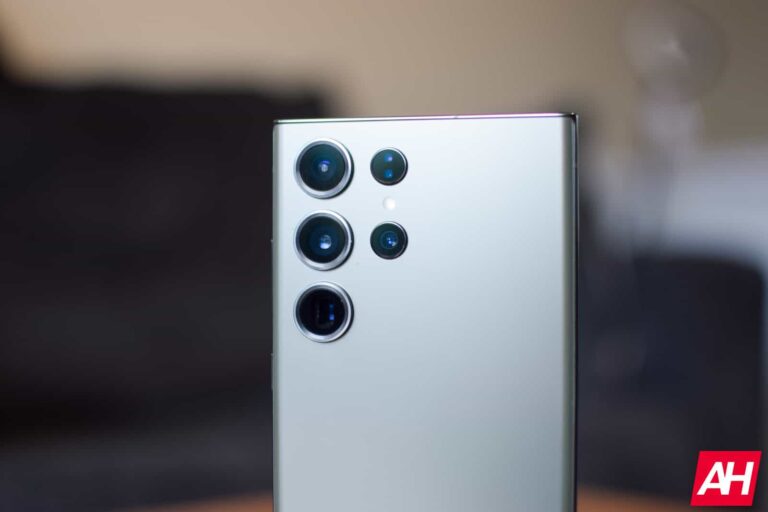
For the past few years, Samsung’s Ultra flagships have featured two dedicated zoom cameras—one with 3x optical zoom and one with 10x optical zoom. Based on leaks, the company is changing the configuration next year. The Galaxy S24 Ultra will have 5x and 3x zoom cameras with 50MP and 10MP sensors, respectively (both 10MP on the Galaxy S23 Ultra). Samsung is focusing on software improvements for better image quality.
Pretty much every Galaxy S24 leak in recent months said the same thing, that the Galaxy S24 Ultra doesn’t have a 10x optical zoom camera. However, reputed Korean publication The Elec recently reported that the phone features a 10MP 10x zoom camera and a 50MP 5x zoom camera. This led to speculations that Samsung may have changed its mind at the last minute and is instead replacing the 3x lens and upgrading the sensor for the other zoom camera.
That may not be the case, though. The publication may have got it wrong. Noted X tipster Revegnus states that the report is incorrect and that the Galaxy S24 Ultra doesn’t have a 10x zoom camera. As reported before, it features a combination of a 50MP 5x lens and a 10MP 3x lens. Other cameras include a 200MP primary rear shooter, a 12MP ultrawide lens, and a 12MP selfie camera.
The phone may let you capture 8K videos at 5x optical zoom
Samsung is reportedly using a higher-resolution telephoto camera with less optical zoom on the Galaxy S24 Ultra to improve the image quality. There are already reports that this change will enable seamless 4K video recording at 60fps. A new rumor says you can capture 8K videos at 5x optical zoom.
The Galaxy S23 Ultra already lets you zoom in when recording 8K videos. However, it’s all digital zoom. The switch to a 5x telephoto lens may allow the next-gen Samsung flagship to use optical zoom for 8K videos. You may even get optical zoom for 5x portrait shots. Other rumored features include improved stabilization during bright and low-light conditions and AI Object Aware Engine for front and rear cameras. The Galaxy S24 series debuts in January.
Over 90,000 websites are currently at risk due to a vulnerability found in the WordPress Backup Migration Plugin. This vulnerability has enabled unauthenticated remote code execution, making it possible for potential attackers to gain access to these websites.
A group of researchers from Nex Team discovered the vulnerability while participating in the Wordfence Bug Bounty program.
It’s worth noting that the CVE-2023-6553 vulnerability, which allows for remote code execution, has been assigned a critical severity score of 9.8.
This vulnerability allows arbitrary PHP code to be injected and executed by unauthenticated threat actors on WordPress sites that use this plugin.
WordPress plugin flaw
The Backup Migration plugin for WordPress has a vulnerability in all versions up to and including 1.3.7, which allows attackers to execute remote code.
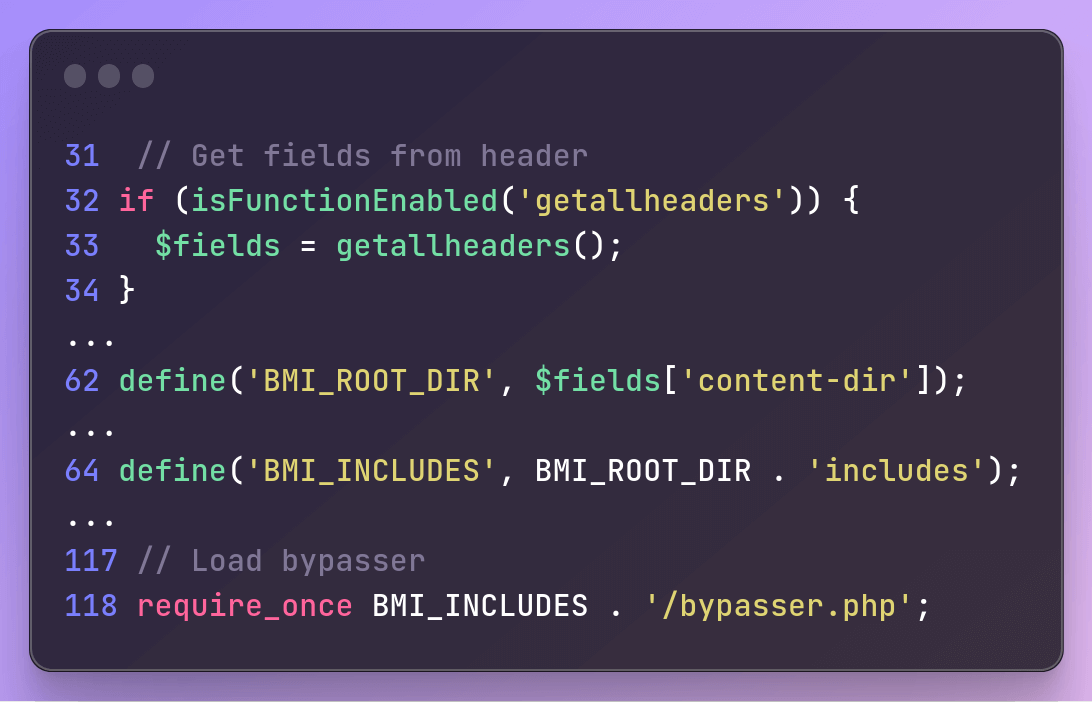
The vulnerability is present in the /includes/backup-heart.php file, making it possible for attackers to gain unauthorized access to sensitive data and execute malicious code on the website.
Suppose an attacker gains control of a target computer through some vulnerability and gains the power to execute commands on that remote computer. In that case, this process is called Remote Code Execution (RCE).
This indicates that BMI_ROOT_DIR is modifiable by the user. Threat actors can use this vulnerability to insert malicious PHP code into requests and run arbitrary commands on the underlying server under the WordPress instance’s security context.
After the incident, a new version, 1.3.8, was released that included a patch to address the issue.
It is recommended to update the plugin to the latest version as soon as possible to prevent exploitation of this vulnerability.
Early adopters of OnePlus’ new flagship are not having a fun time, at least some of them. The OnePlus 12 buyers have reported various problems with the phone’s build, including a bug, hair, and excessive glue. Yes, you read it right.
Before we get further down this rabbit hole, do note that the phone launched in China only, for now. The global launch will happen next month, on January 23, according to the company’s executive.
The OnePlus 12 quality control problems are piling up
This device seemed to be almost perfect when launched, on paper, but it seems like various issues popped up. Chinese users have been reporting problems via Weibo, and they’re mostly related to quality control issues.
A user who reported this was worried about water resistance, but OnePlus told him there was nothing to worry about. The problems don’t end there, though.
Someone actually found hair and a real bug inside the back glass
Another user actually found both hair and a real bug inside the back glass on its unit. We don’t really need to get into explaining why that’s worrisome, of course, and gross at the same time. He shared the images below.
Some users also noticed that OnePlus has used excessive glue around the camera housing on their units. You can see the reported images in the gallery below.
Redmi’s General Manager, Lu Weibing, took this opportunity to throw shade at OnePlus. That’s not surprising, though the problems may not be as widespread as it seems. The issue with hair and a bug is mind-boggling, though.
We do hope that OnePlus will sort out its quality control problems before global units come knocking. This phone does look outstanding on paper, and with the right price, it could be a real winner for OnePlus. Let’s see if OnePlus will comment on these issues or not.
Cloud security is becoming a central part of any organization’s cybersecurity strategy. However, in most organizations, the teams managing cloud operations work separately from those that manage security. CloudSecOps is setting out to change that.
CloudSecOps is about integrating security into every aspect of cloud operations. It’s about infusing a security-first mindset into the entire lifecycle of cloud operations, from the planning and building stages to the deployment and monitoring phases. The goal is to ensure that security is not an afterthought but an integral part of the cloud operations strategy.
CloudOps is a significant shift in the way organizations approach cloud security. It emphasizes the need for a proactive, rather than reactive, approach to security. With CloudSecOps, organizations can achieve a high level of security in the cloud without compromising on speed, flexibility, or scalability.
Evolution of CloudSecOps
The concept of CloudSecOps has evolved from a need to tackle the unique security challenges posed by the digital transformation. As organizations began to migrate their operations to the cloud, they quickly realized that traditional security measures were not sufficient. Cloud environments are dynamic and complex, requiring a different approach to security.
CloudSecOps emerged as a response to this need. It brought together the principles of DevOps, which emphasizes speed and agility, with those of cybersecurity, which prioritizes risk management and data protection. The result is a new, holistic approach to cloud security that is both agile and robust.
The emergence of CloudSecOps also reflects the growing awareness of the importance of security in the cloud. It’s no longer enough to just have a secure infrastructure. Organizations need to adopt a security-first mindset and ensure that their cloud operations are built around robust security principles.
The Principles of CloudSecOps
Integrated Security in Cloud Operations
Continuous Monitoring and Compliance
Proactive Risk Management
Integrated Security in Cloud Operations
One of the key principles of CloudSecOps is integrating security into every aspect of cloud operations. This means that security should be a core component of the cloud strategy, not just an add-on feature.
In practice, integrated security involves embedding security controls into the cloud infrastructure and applications. It also involves incorporating security considerations into the decision-making process and ensuring that all members of the organization understand the importance of security.
Integrated security provides numerous benefits. It can help prevent security breaches, reduce the risk of data loss, and enhance the organization’s overall security posture. Moreover, it can also lead to cost savings, preventing costly security incidents and reducing the need for remediation efforts.
Continuous Monitoring and Compliance
Continuous monitoring and compliance are other crucial principles of CloudSecOps. This involves regularly checking the cloud environment for any signs of potential security threats and ensuring that all cloud operations comply with relevant regulations and standards.
Monitoring and compliance can be achieved through various means, including automated tools and manual checks. The goal is to detect and respond to any potential security issues as quickly as possible before they cause any damage.
Compliance is also a key aspect of CloudSecOps. This involves ensuring all cloud operations adhere to the applicable regulations and standards, such as GDPR or HIPAA. Compliance can help to avoid legal issues, protect the organization’s reputation, and ensure that customers’ data is handled responsibly.
Proactive Risk Management
Proactive risk management is the third key principle of CloudSecOps. This involves identifying and mitigating potential security risks before they can cause any harm.
Risk management in CloudSecOps involves several steps. First, the organization must identify potential risks in its cloud operations. This can be done through risk assessments, audits, and threat modeling. Once the risks have been identified, the organization can then take steps to mitigate them. This may involve implementing security controls, developing contingency plans, or training staff to handle potential threats.
Intrusion Detection and Prevention Systems (IDPS)
Security Information and Event Management (SIEM)
Cloud Access Security Brokers (CASBs)
Configuration Management and Compliance Tools
Intrusion Detection and Prevention Systems (IDPS)
Intrusion Detection and Prevention Systems (IDPS) are critical tools in CloudSecOps. These systems monitor the network for suspicious activity and take action to prevent potential security breaches.
IDPS tools analyze the network traffic and identify any patterns that may indicate a security threat. If a threat is detected, the system can take action to block the attack, alert the security team, or take other appropriate measures.
Security Information and Event Management (SIEM)
Security Information and Event Management (SIEM) is another important tool in CloudSecOps. SIEM tools collect and analyze security-related data from various sources and provide a consolidated view of the organization’s security status.
SIEM tools can help to detect potential security threats, manage incident responses, and ensure compliance with regulations. They can also provide valuable insights into the organization’s security posture and help identify potential areas of improvement.
Cloud Access Security Brokers (CASBs)
Cloud Access Security Brokers (CASBs) are a security tool that provides visibility and control over cloud services. CASBs can help to enforce security policies, prevent data leakage, and protect against threats in the cloud environment.
CASBs work between the organization and the cloud service provider, monitoring all traffic and enforcing security policies. They can help to ensure that all cloud activities are secure and compliant with regulations.
Configuration Management and Compliance Tools
Configuration management and compliance tools are essential for maintaining secure and compliant cloud operations. These tools can help to automate the management of cloud resources and ensure that they are configured according to security best practices.
Configuration management tools can also help enforce compliance with regulations and standards. They can monitor the cloud environment for any changes and alert the security team if non-compliant configurations are detected.
CloudSecOps Best Practices
Implement a Strong IAM Policy
Integrate Security into CI/CD Pipelines (DevSecOps)
Incident Response and Disaster Recovery Planning
Manage Third-Party Risks
Continuous Monitoring and Compliance
Implement a Strong IAM Policy
Implementing a robust IAM policy is the cornerstone of any CloudSecOps strategy. It involves setting up appropriate permissions and roles for each user to prevent unauthorized access to your cloud resources. Through an effective IAM policy, you can ensure that only the right individuals have access to the right resources at the right times.
A robust IAM policy begins with careful planning. It’s essential to identify all the stakeholders who need access to your cloud resources and understand their roles and responsibilities. Once you’ve mapped out these requirements, you can design your IAM policy around them. IAM tools in the market today provide granular controls, allowing you to customize permissions based on specific needs and roles.
Another critical aspect of implementing a strong IAM policy is regular auditing. It helps you identify any anomalies or potential security threats. Regular audits also ensure your IAM policy stays updated as your organization evolves.
Integrate Security into CI/CD Pipelines (DevSecOps)
Integrating security into your CI/CD pipelines, also known as DevSecOps, is another critical practice in CloudSecOps. It involves baking security into every stage of the software development lifecycle – from design and development to deployment and maintenance. The objective is to catch and fix security issues early on before they become significant vulnerabilities.
DevSecOps begins with a shift in mindset. Instead of treating security as an afterthought, it should be an integral part of the development process. It requires developers to think like security personnel, and security teams to understand the development process. This mutual understanding fosters a collaborative environment where security becomes everyone’s responsibility.
Tools and automation play a significant role in DevSecOps. Automated security scans can detect vulnerabilities in the codebase, while continuous integration tools can help integrate these scans into the development process. These tools streamline the process and ensure consistent and efficient security practices.
Incident Response and Disaster Recovery Planning
Despite your best efforts, incidents and disasters can happen. That’s why an effective CloudSecOps strategy must include incident response and disaster recovery planning. These plans outline the steps to be taken when a security incident occurs or a disaster strikes, minimizing the impact on your operations and ensuring a swift return to normalcy.
Incident response planning begins with identifying potential incidents that could impact your cloud operations. This could include a range of scenarios, from data breaches and cyberattacks to natural disasters and system failures. Once you’ve identified these scenarios, you can develop detailed response plans for each one.
On the other hand, disaster recovery planning focuses on restoring your operations in the event of a major disruption. This involves creating a detailed strategy that outlines how to recover data, restore systems, and resume operations. It also requires regular testing to ensure the plan’s effectiveness and make necessary adjustments.
Manage Third-Party Risks
In the era of cloud computing, many organizations rely on third-party services for various aspects of their operations. While these services offer numerous benefits, they also present potential security risks. Therefore, managing third-party risks is a critical aspect of CloudSecOps.
Managing third-party risks requires a comprehensive approach. It begins with due diligence during the vendor selection process. This involves assessing potential vendors’ security practices, compliance with industry standards, and their record in handling security incidents.
Once a vendor is selected, ongoing monitoring is essential. This includes regularly reviewing the vendor’s performance, ensuring they comply with the agreed-upon security practices, and addressing any issues promptly. In some cases, it may also involve conducting regular audits to verify their compliance.
Continuous Monitoring and Compliance
Continuous monitoring and compliance are fundamental to maintaining the security and integrity of your cloud operations. It involves tracking your cloud environment’s activities, identifying potential threats, and ensuring continuous compliance with industry standards and regulations.
Continuous monitoring provides real-time visibility into your cloud operations. It enables you to detect anomalies, investigate potential threats, and respond promptly. This proactive approach minimizes the risk of security incidents and helps maintain operational efficiency.
Compliance, on the other hand, ensures that your cloud operations adhere to relevant industry standards and regulations. This involves regular audits to verify your compliance, updating your practices as regulations evolve, and addressing any compliance issues promptly.
Conclusion
In conclusion, CloudSecOps is a critical aspect of today’s digital landscape. With cyber threats becoming more sophisticated, adopting CloudSecOps best practices can significantly enhance your organization’s security posture. Whether it’s implementing a robust IAM policy, integrating security into your CI/CD pipelines, planning for incident response and disaster recovery, managing third-party risks, or maintaining continuous monitoring and compliance, each practice plays a vital role in safeguarding your cloud operations.
WhatsApp frequently introduces new features and fine-tunes existing ones to enhance the user experience. After adding support for HD photos and videos in chats, it was recently spotted working on HD status updates. The app has another quality-of-life improvement in the pipeline for its Status feature, which is equivalent to Stories on Instagram. A new reply bar simplifies how you respond to status updates posted by your friends.
WhatsApp is adding a reply bar to status updates
Currently, status updates on WhatsApp feature a tiny “Reply” button at the bottom, along with an arrow pointing up. You can tap on this button or swipe up on the screen to respond with an emoji or a full-length message. While this is a fairly seamless experience, the Meta-owned messaging app is making it more intuitive with a persistent reply bar, something already found on Instagram stories.
With the upcoming WhatsApp update, a pill-shaped horizontal bar appears at the bottom of status updates with the text “Reply” overlayed. Tapping it will open up the regular message compose box. The persistent bar covers almost the entire width of the screen, making it easier to send a reply quickly. You don’t need to swipe up or precisely tap on the tiny centered button, though the swipe gesture shouldn’t be going away.
The addition of a reply bar doesn’t change how WhatsApp currently shows eight emoji reactions on the screen when responding to status updates. They appear above the compose box and don’t go away even as you start typing your response. Instagram also shows six emoji reaction shortcuts but they disappear as soon as you type something on the reply bar.
WhatsApp has already begun public testing of this update
The latest change on WhatsApp was spotted by the ever-reliable WhatsApp insiders at WABetaInfo. The publication reports that the reply bar for status updates is already available to beta users with WhatsApp beta version 2.23.26.3 for Android and 23.15.10.72 for iOS. If everything goes as planned, an official public rollout of the new feature may follow in the coming weeks.
If you want to try it out early on your Android smartphone, you can sign up for WhatsApp’s beta program. Once you have joined the program, install the beta version of WhatsApp from the Google Play Store. Note that some in-development features may not be available to all beta users simultaneously. The beta app may also be unstable and buggy. Stay tuned for the official release of the reply bar for status updates on WhatsApp.
The Nubia Z60 Ultra is coming, while its design and launch date just got revealed. On top of that, the phone got compared to the iPhone 15 Pro in a video. Well, their displays and sizes got compared.
The Nubia Z60 Ultra design & launch date have been confirmed
Let’s start with the launch date. The Nubia Z60 Ultra will become official on December 19, in China. The launch event will kick off at 2 PM local time. That translates to 8 AM CET, 7 AM BST, 2 AM EST, 11 PM PST (December 18).
Having said that, let’s talk about the phone’s design. If you check out the gallery below, you’ll be able to see the device, both its front and back. The Nubia Z60 Ultra will include very thin bezels around the display, and no display camera hole or anything of the sort.
The phone will feature an under-display camera
The device will include an under-display camera, so the camera will be hidden. The phone will offer a boxy design, with flat sides all around. Its power/lock key will be red-colored, while the volume up and down buttons will not, and will sit above the power key.
Something you’ll also easily notice is the odd-looking camera module on the back. The phone will seemingly include three cameras, but there’s a lot going on here. Each of those three cameras has its own unique look, kind of.
All three rear-facing camera will offer OIS support
The Nubia Z60 Ultra is tipped to use a 50-megapixel main camera (f/1.8 aperture, 1/1.56-inch sensor size), a 50-megapixel ultrawide unit, and a 64-megapixel telephoto camera. We still don’t have all the specs, though. What we do know, however, is that all three cameras will utilize OIS.
Now, in the images provided above, you can also notice that the phone will be available in black and gray colors. In addition to that, that fun-looking blue color will be on offer too, with some sort of a pattern on the back. It sure looks unique.
The Snapdragon 8 Gen 3 is set to fuel this smartphone
The Snapdragon 8 Gen 3 will fuel the Nubia Z60 Ultra. The phone will include LPDDR5X RAM and UFS 4.0 flash storage. It will also be IP68 certified for water and dust resistance.
If you check out the video below, you’ll see the phone’s design compared to the iPhone 15 Pro… to a degree.