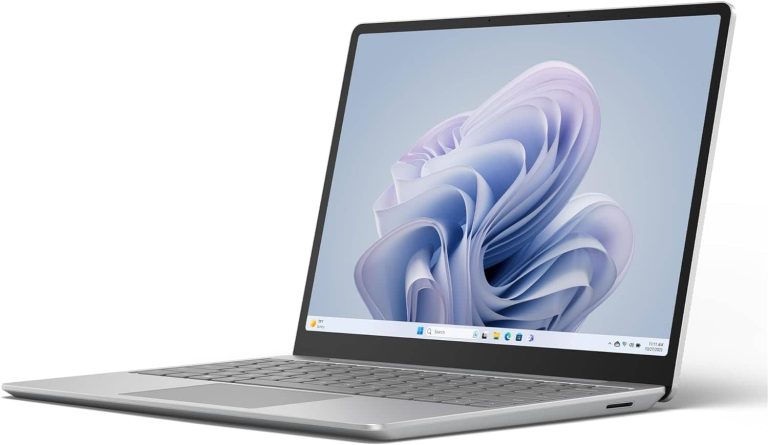
In case you haven’t realized, Christmas is upon us (well, it has been upon us for the past two months), and it’s time to start thinking about Christmas presents for your loved ones. Or, you can capitalize on Black Friday deals for yourself. Speaking of, the Microsoft Surface Laptop Go 3 is now $200 off. This brings the price down to a reasonable $599.
December is around the corner and it’s soon going to be time for midterms. Thus, you’re going to need a lightweight and affordable computer to get your schoolwork done efficiently. Maybe, rather, you want a lightweight computer for your desk job. Whatever the case, the Surface laptop Go 3 is a great option for you. This is the newest in the line of Microsoft Surface Go laptops, and it comes with Windows 11 out of the box. This way, you know that you’re going to have a smooth and optimized experience.
The main thing about this laptop is how lightweight and portable it is. You can toss it in a bag and carry it with you to the coffee shop, office, bedroom, etc. You won’t have to worry about it weighing down your bag or cluttering your desk. It fits comfortably into your work life.
The Surface Laptop Go 3 doesn’t quite come with the beefiest specs, but it’s not all about the specs. You have enough processing power and enough storage to complement your work life. With the 256GB of storage, you can store all of your files and have room to spare. Also, it comes with a decent assortment of ports like a USB-A port, a USB-C port, and a headphone jack.
If you have a desktop at home, then this laptop can be the portable companion to it. It’s a great laptop for its price, and the discount only makes it that much better.
After a recent revamp that removed the top search bar from the app, Google Messages was set to receive another UI tweak that would make it easier for users to send photos. As reported last month, this update would introduce a camera icon directly on the Messages home screen, streamlining the process of sending photos. This UI change is now rolling out widely.
Previously, sending photos using Google Messages involved either accessing the conversation and attaching the photo from the “Add” button or capturing the photo separately in the camera app and then selecting it from the conversation. Now, the easy-to-access camera icon lets you start the process of sending a photo from the beginning, if your intent is to capture and send a quick photo instead of forwarding one from the camera roll.
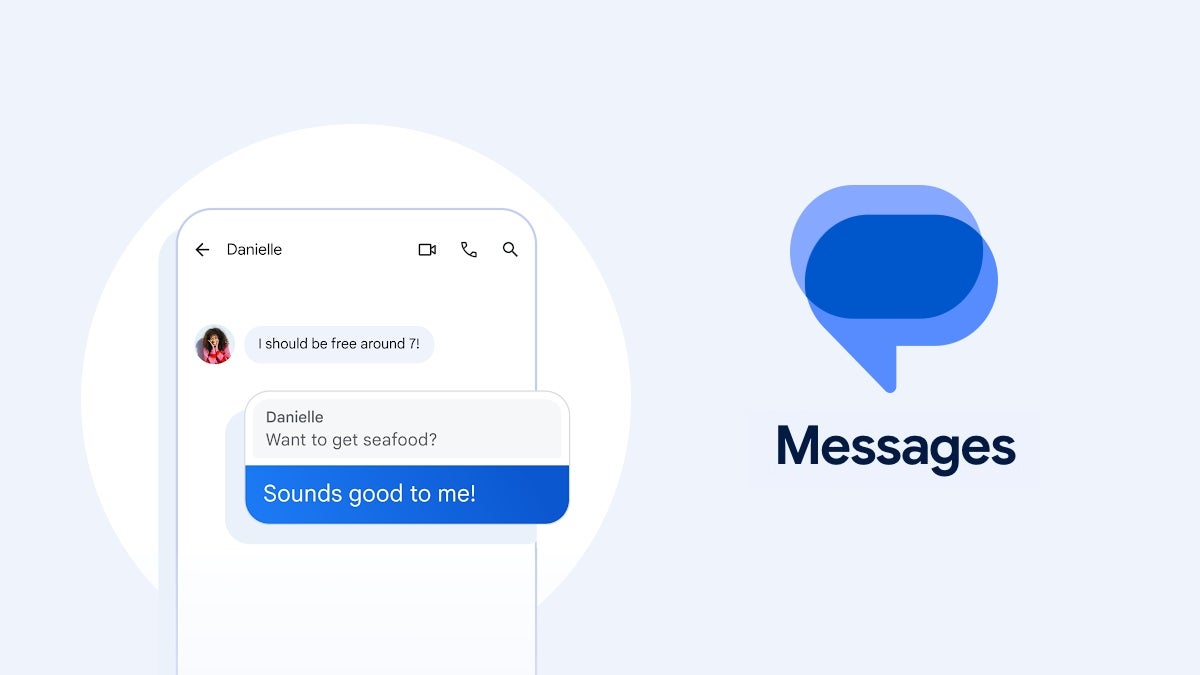
New photo send workflow in Google Messages by using the camera icon shortcut
As you can see in the screenshots above, the camera icon is placed adjacent to the search icon on the top right of the app. Tapping on it, opens the camera app UI and viewfinder, allowing you to capture a quick photo. Once the photo has been taken, Messages then prompts you to select a recipient and attaches the photo in a new message to the chosen recipient — while still giving you the control to add additional text and send at your leisure.
The camera shortcut was previously in a limited rollout phase, with only a small group of Google Messages users having access to it. That said, while the old method was relatively straightforward, this new shortcut strives to make the process even more effortless — facilitating seamless photo sharing.
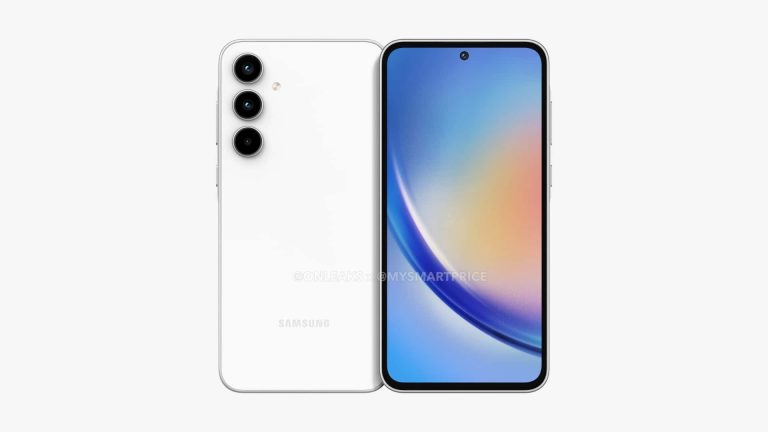
Samsung has several A-series budget and mid-range phones in the pipeline. We exclusively revealed the official renders and specs of the Galaxy A25 5G earlier this month, while the Galaxy A15 5G also showed up in leaked renders recently. The Galaxy A35 5G is now following suit. MySmartPrice teamed up with noted leakster OnLeaks to give us high-resolution renders, a 360-degree video, and dimensions of the upcoming Samsung smartphone.
Galaxy A35 5G shows up in leaked renders
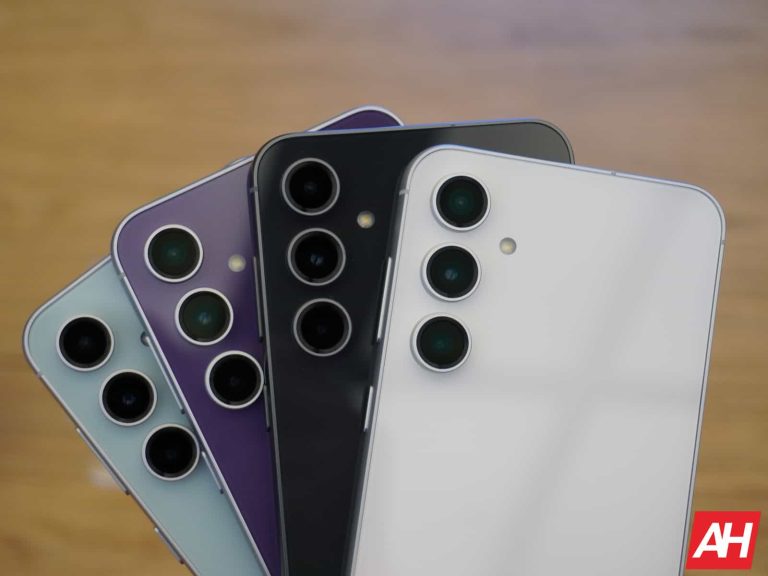
You might have noticed that all Samsung phones launched in 2023 look identical from the back. The Korean firm has kept the camera design consistent across the Galaxy family this year. From the entry-level Galaxy A14 5G to the Galaxy S23 flagships, all feature a vertical camera array with no bumps. The company has created a brand identity for Galaxy devices with a consistent design.
As expected, it is keeping things unchanged for next year. The Galaxy S24 series will feature a similar rear design, and so will the Galaxy A25 5G and Galaxy A15 5G. It’s no different for the Galaxy A35 5G. However, the latter is seeing a minor redesign on the front, as compared to its predecessor. Samsung has equipped it with a punch-hole display instead of a notched one. This makes the device look more premium.
Additionally, we see that the Galaxy A35 5G has its right edge slightly raised around the area where the power and volume buttons sit. The Galaxy A34 5G has completely flat edges. Interestingly, we have noticed a similar design on the Galaxy A25 5G and Galaxy A15 5G too but not on the Galaxy S24 series. This may be Samsung’s way of differentiating A-series models from S-series flagships.
The Galaxy A35 5G’s speaker grille, meanwhile, matches that of the Galaxy S24 Ultra. Instead of multiple holes, Samsung has cut a single long strip akin to a coin slot. We can also see a USB-C port and a microphone hole at the bottom, while a second microphone hole and the SIM tray sit at the top. The left edge is clean with no holes, ports, slots, or buttons.
A camera upgrade may be on the cards
The upcoming mid-range Samsung smartphone will reportedly measure 161.6 x 77.9 x 8.2mm in dimension, with the raised edge measuring an additional 0.6mm. Considering this, we should be looking at a 6.6-inch flat display here. Since we don’t see a side-mounted fingerprint scanner on the phone, Samsung must have opted for an under-display optical solution.
While the rest of the specs are under wraps, a rumor surfaced in September saying that the Galaxy A35 5G will feature a 50MP primary rear camera. If true, it should bring notable improvements to photo and video quality. The Galaxy A34 5G’s 48MP camera is an older sensor, while the rumored 50MP sensor for the next-gen model is much newer. More details about the phone should surface in the coming weeks.
As of today, Black Friday is less than two days away. Which means that Black Friday deals are flying fast and furious right now. You can start shopping these deals now and beat the rush. Because we all know that while most Black Friday deals are available online, not every retailers website can handle all the traffic on Thursday and Friday.
Just like every year since 2012, we are here to help you get the best deals you possibly can this Black Friday (and Cyber Monday). In this post, we have rounded up the very best deals that you can get this Black Friday. Below, you’ll see a number of categories that you can choose from, just click on one and be taken directly to that category. It’s just that easy!
Black Friday Deals
Best Black Friday Deals
These are the best Black Friday Deals that you can grab right now. Many of these are at all-time lows, and they will not last very long.
Google Pixel 8 Pro
This is the latest and greatest from Google, with plenty of AI, camera smarts and the latest version of Android. Pixel 8 Pro comes with a stunning 6.7-inch QHD+ display with a 120Hz refresh rate and it gets insanely bright at up to 2,400 nits. When we reviewed the Pixel 8 Pro last month, we called it the “Smartest Android Phone”, and that’s because of the very many features powered by Artificial Intelligence. That includes the ability to use Google Assistant to summarize webpages, using generative AI for photos and so much more. Of course, we cannot forget that the Pixel 8 Pro does come with seven years of updates from Google. That means that it is going to get updated to Android 21, which is mindblowing.
The Fitbit Charge 6 is the latest fitness tracker from the company – now owned by Google. It offers all of the usual fitness features that you’d expect to see in a Fitbit. And that includes a seven-day battery life, which is what really sets this apart from other smartwatches and fitness trackers on the market today.
This TV isn’t super special, it’s not QLED or OLED, instead it’s an LED panel which still looks really good. The point of this TV is to get a huge TV at a low price. This is a massive 75-inch TV that you can get for under $600 which is really incredible.
Samsung’s Galaxy S23 Ultra is the phone of the year, by most accounts, and right now you can pick it up for just $899. That’s $300 off of its regular price, and that does bring it down to an all-time low price.
The Galaxy S23 Ultra has a lot going for it, including some really impressive battery life, a stunning 6.8-inch QHD+ display, and the Snapdragon 8 Gen 2 for Galaxy inside powering the phone. Samsung also includes a stunning set of cameras here. With a 200-megapixel main camera that will take some amazing photos, along with two telephoto cameras that are 3x and 10x. Giving you up to 100x digital zoom. We can’t forget about the ultrawide camera that is also capable of macro shots. And now you can pick it up for under $900.
The Roborock S8 Pro Ultra is by far my favorite robot vacuum of 2023. And right now for Black Friday it is down to its all-time lowest price. So there’s never been a better time to pick one up. This robot vacuum is pricey, but it does just about everything for you. This includes having a way to empty the dustbin every time it docks. As well as cleaning the mopping pad, and refilling the water reservoir. In fact, Roborock’s vacuums can also use actual soap. So it’s really cleaning your floors instead of using cold water to clean them. Like I said, this one is pricey, but definitely worth the price.
These are all really great stocking stuffers, and gifts for your coworkers, or extended family. Those that you don’t want to spend an arm and a leg on, but still get them a really nice gift.
Streaming Deals
Black Friday is really the only time of the year that we see some really great streaming deals on a slew of streaming services. This includes Hulu, Paramount, Max, Peacock and more.
Hulu – 12 months for $0.99 per month (new and returning subscribers)
Paramount Plus – $1.99 per month for 3 months, or $3.99 per month for 3 months with SHOWTIME (new and returning subscribers)
Peacock – 12 months for $1.99 per month, or $19.99 for the whole year (new subscribers only)
Max – $2.99 per month for 6 months (new and returning subscribers)
STARZ – $3 per month for first 3 months (new and returning subscribers)
Samsung Galaxy S23 Ultra
Phones & Tablets Deals
For Black Friday this year, there are a ton of really great phone and tablet deals available, our favorites include the Galaxy S23 Ultra which is now at an all-time low. And for tablets, the Galaxy Tab S9 Plus is an incredible offer especially with that OLED display in tow.
TV and Soundbar Deals
Get a new TV in time for College Football’s Bowl season. Who doesn’t want to watch Georgia win their third-straight National Title on an upgraded TV?
You’re going to be spending a lot of time with your family over the next month, and not all of us really want to talk to them. So for Black Friday, you can pick up some new games and consoles at decent prices.
Laptop Deals
Save big on some of the best laptops that were released in 2023, and even a few older ones.
Put that vacuum down and let the robot do it for you. They are supposed to be taking over the world anyways.
Apple Watch
Smartwatch & Wearables Deals
Whether you want to tell time, get notifications on your wrist or improve your health, a smartwatch or wearable is a really good gift, not at cheaper prices.
Apple Device Deals
Get something good for your Apple-loving family and friends this holiday season, now at Black Friday prices.
When is Black Friday?
Black Friday officially starts on November 24, 2023. But as we all know, Retailers like Amazon, Best Buy, Walmart and many more, opt to start their Black Friday deals well before that date. In fact, Amazon started its Black Friday sale in earnest on November 17, 2023.
When is Cyber Monday 2023?
Cyber Monday is always the Monday after Black Friday, and this year, that happens to fall on November 27, 2023. Cyber Monday often times appears to be an after-thought, since Black Friday was just a couple of days before Cyber Monday.
How did AndroidHeadlines choose these deals?
These deals had to fit one of two questions we ask ourselves. That is, is this a deal that we want to buy ourselves? The second is, is this an all-time low price, or something that rarely goes on sale? If the answer is yes to either of those questions, then we list it as a deal. Just like all of you out there, we here at AndroidHeadlines like to save some cash on everyday items, and some items to splurge on, like a new robot vacuum.
Open AI, one of the leading companies in generative AI today, has been dealing with a headwind of drama. While that saga is ongoing, the company Anthropic, has been making some improvements to its ChatGPT competitor. The company unveiled Claude 2.1, the next generation over Claude 2.0. This seemingly iterative update brings some massive improvements to the AI chatbot, according to a new report. This could be the company’s chance to leapfrog OpenAI while that company is stumbling back onto its feet.
If you’re curious about what’s going on at OpenAI, you can read about it and our editorial, OpenAI Situation: What’s Going On. It shows a timeline of the drama currently going on with the company.
Anthropic just unveiled Claude 2.1, and it brings some massive improvements
One major subject in AI chatbots is the number of tokens that can be processed. A token is a snippet of a word that the chatbot can analyze and understand. Every time you type into a chatbot text box, you use up a few of the tokens that the chatbot can understand.
Chatbots, just like human beings, can only process is certain amount of information at a time. According to the company, Claude 2.1 can now understand up to 200,000 tokens. That equates to about 150,000 words. So, if you want to do so, you can paste an entire novel (well, a short novel) into Claude, and you can ask a question based on every bit of information present in that novel.
This is extremely handy if you need it to analyze long and complicated documents. Most likely, your queries won’t typically contain 150,000 words. However, the important thing is having the option to.
Claude 2.1 doesn’t only improve on what information you put in, but it also improves what information comes out. Hallucinations are a major issue for AI chatbots. When a chatbot hallucinates, it gives you a wrong answer by creating the information seemingly out of nowhere.
Well, Claude 2.1, according to the company, cuts the number of hallucinations in half compared to Claude 2.0. As with every chatbot, it’s always recommended that you double-check the information generated. Claude 2.1 is twice as likely to tell you that it does not know an answer rather than just hallucinate one. Along with that, the chatbot is able to deliver 30% more accurate answers.
Anthropic does warn users that longer and more complicated queries will require more processing time from the chatbot. With the increase in tokens, people are likely to use much longer queries. It may take the chatbot several minutes to process a single response. So, if you upload an entire case document and ask Claude to analyze it, don’t refresh the page if it’s still processing after a few minutes.
There are also some new developer tools coming to Claude
If you use this chatbot for more robust reasons, the company has some useful tools that will help you with your developer needs. Starting off, there is a new workbench console available to devs. According to the company, it will let them tweak their prompts in a “playground style experience and access new model settings to optimize behavior.”
Another feature is called Tool Use, and it lets Claude “integrate with users’ existing processes, products, and APIs.” It will be able to use services and tools from other sources to create an all-around useful experience. These tools are in beta testing, so, you should expect some bugs and instability with these features. However, that’s just par for the course. In any case, it’s always recommended that you give the company the proper feedback to help improve this.
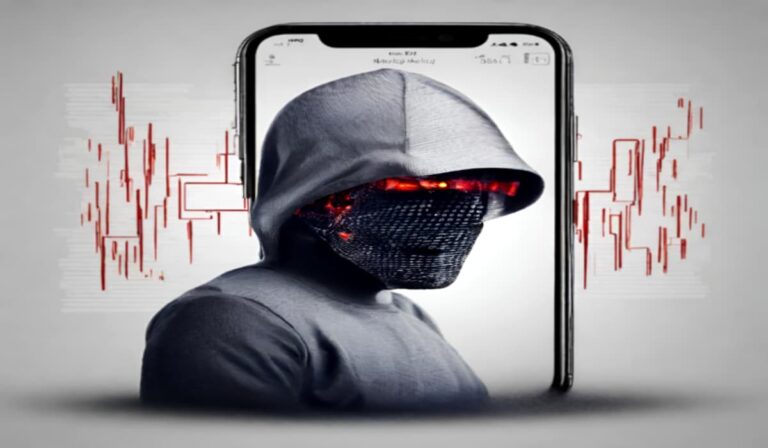
Callback phishing messages come as unclickable images, creating a sense of urgency and providing a phone number.
The Federal Bureau of Investigation (FBI) has released an advisory for industry awareness after observing a rise in the exploitation of vulnerabilities in “vendor-controlled remote access to casino servers, third-party vendors and services.” The advisory also highlighted emerging ransomware initial access trends
Ransomware actors are reportedly targeting “smaller, tribal casinos” via gaming vendors to encrypt servers and compromise sensitive PII (personally identifiable information) of employees and patrons. To elevate network permissions, adversaries use legitimate system management tools. In this regard, the bureau pointed out Silent Ransom Group’s (SRG) activities.
As per the FBI’s advisory(PDF), this group, also known as Luna Moth, has been conducting callback phishing attacks. The attack involves tricking victims into clicking phishing links disguised as urgent account notifications.
When the victim calls the phone number, the ransomware operators instruct them to download legitimate system management tools through an email link. The group then uses these tools to install other legitimate but repurposed tools to perform malicious activities. SRG compromises local files and network-shared drives to exfiltrate data and then demands a ransom.
Knowbe4’s data-driven defence evangelist, Roger Grimes, has explainedhow callback phishing works in a detailed blog post, explaining that it is a “cunning form of phishing.” In this tactic, the attackers use phone numbers instead of URLs to trick unsuspecting victims, which makes it different from conventional phishing scams.
Callback phishing messages come as unclickable images, creating a sense of urgency and providing a phone number. Recipients are urged to call on the number, and are connected to overseas call centers or, as pointed out by the FBI, may lead to the attacker’s call center.
“The ultimate goal of callback phishing, whether perpetrated by ransomware groups or generic scammers, is to persuade the victim to install malicious software,” Grimes noted.
Advanced callback techniques don’t rely on custom backdoors or trojans anymore. Attackers now use semi-legitimate or legitimate remote access programs often used by admins and users to manage computers. Once exploited, these programs allow remote attackers to install additional malicious software, scripts, and screen monitoring capabilities.
In generic callback scams, scammers lure victims into transferring money, which the attackers steal. Such scams are gaining traction because they can evade anti-phishing content filters. After all, these appear as a single image, so text-based analysis becomes ineffective.
“With callback phishing, the entire message is one big picture. Many anti-phishing content filters cannot “read” the text on the picture.”
“Second, none of the anti-phishing content filters will read the phone number and then be able to determine if it is malicious or not…. So, basically, the entire phishing scam comes in as a single picture file, containing few to no clues about whether the request is malicious.”
The FBI suggests that users and organizations should regularly maintain offline data backups and ensure it is encrypted and immutable so that it cannot be altered or deleted. Moreover, periodic reviewing of the security posture of third-party vendors and external software/hardware is crucial to protect data from being exploited in suspicious activities.
Organizations can ALSO protect themselves from the SRG by implementing the following security measures:
Keep data backups offline and encrypted
Regularly update software and operating systems
Have a plan for responding to ransomware attacks
Implement strong password policies and multi-factor authentication
Educate employees about callback phishing attacks and how to avoid them
The past couple of years haven’t been kind to the smartphone industry. Economic uncertainties and other factors have affected sales globally. Quarterly shipments hit a decade-low in Q3 2023. However, a rebound may be on the cards now. According to market research firm Counterpoint, global smartphone sales grew five percent year-on-year (YoY) in October, the first YoY growth in more than two years.
Smartphone sales returned to growth in October after a two-year decline
Counterpoint’s study reveals that the global smartphone market last posted a YoY growth in shipments in June 2021. The growth was a result of increased demand as the industry recovered from an unprecedented slowdown a year earlier due to the coronavirus pandemic. However, the industry suffered from a component shortage in the second half of 2021 through to 2022.
The economic implications of the Russia-Ukraine conflict and the US-China trade war, as well as longer replacement cycles, mean smartphone shipments dropped more than 15 percent YoY in June last year. The arrival of the iPhone 14 series helped the graph rebound in September 2022 but that wasn’t enough for a positive growth. The rebound was temporary too, as a 15 percent shipment decline was observed again at the end of last year.
The market continued to see a YoY decline in shipments for the first nine months of 2023 too. Finally, after a streak of 27 consecutive months of YoY declines, Counterpoint reported a shipment growth in October this year. The firm attributed this growth to higher demand in emerging markets such as the Middle East and Africa (MEA) region. Huawei’s comeback in China and festive season sales in India helped too.
Since developed markets have a higher smartphone saturation, growth is slower in those markets. Counterpoint adds that a delayed launch of the iPhone 15 series also contributed to the shipment growth last month. The latest iPhones debuted a week later than the 2022 lineup, so the full effect of their sales was felt in October. The research firm expects the strong show in October to result in a positive YoY growth in Q4 2023.
Samsung is launching the Galaxy S24 series early next year
While Apple released the iPhone 15 series a week late, Samsung is unveiling the Galaxy S24 series a couple of weeks earlier than the Galaxy S23. Rumors say the company will debut the new flagships on January 17, 2024, with sales beginning on January 30. The 2023 models were launched on February 1 and hit the market on February 17. If the devices see strong demand, the market may post a YoY growth in Q1 2024.
If you use YouTube Music for music streaming, then you should be getting the new AI-powered cover generator soon. A few days ago, an update to the streaming app brought this new feature to users. With it, users can further personalize their playlists to suit their taste or mood by just being creative with their thoughts.
This isn’t the first AI-generative feature that Google has rolled out to users in recent times. In comparison, this feature is quite similar to the Google AI wallpaper generator feature on Pixel devices. Just like this other feature, the new entry in YouTube Music app helps generate artwork by using prompts or instructions that the user provides.
After users curate their playlists on the app, they will then need to provide a cover image. With this new feature, they can get creative and dictate in detail how they want the cover image to look. YouTube Music’s new generative AI tool will then use the user’s description to design a cover image for the playlist.
YouTube Music’s new AI-powered cover generator brings some fun to the playlist-creation process
Creating a good music playlist involves a good measure of creativity and taste. The same could be said when it comes to picking a good music playlist cover. The cover image should reflect the mood that the playlist dwells on, and most of the time, users have a hard time finding good playlist cover images.
The users usually have an idea of what they want the playlist cover to look like, but have a hard time getting the right image. Well, YouTube Music is bringing that struggle to an end as they are giving users the tools to explore their creative side. As long as they have a clear idea of the playlist cover image in mind, the new AI-powered cover generator will bring it to reality.
There are over 33 settings or categories that users can choose from when creating an AI-generated playlist cover image. Considering the wide range of categories, it’ll be easy for users to find a category their playlist fits into. After selecting the category, they can then proceed to describe the cover image in mind to the AI generator.
These created cover images are only accessible on the YouTube Music app, and only those the user shares his playlist with can access the image. You can head over to the Google Play Store and update your YouTube Music app to start enjoying this new AI-generative feature.
It’s that time of year, the time to pick up an incredible phone at an incredible discount. The phone I’m referring to is the Motorola Edge 2023. This is the latest premium mid-ranger from the American company, and it’s a whopping $250 off for Black Friday. This brings the price from $599 down to just $349.
I had the honor of reviewing this phone, and let me tell you, it’s well worth it to pick it up. You can read my Moto Edge 2023 review to get the full scope of why this phone is so great. If you’re impatient, then let me explain some of the key aspects of this phone.
First things first, that display is absolutely gorgeous! If you’re planning on watching a ton of movies, TV shows, and other types of videos, you will not be disappointed. All of the colors this display produces are bright, punchy, and warm. This is a beautiful OLED panel that gets plenty bright in the direct sunlight. Motorola really upped its game when it came to the displays on its phones.
Moving on down to the speakers, Motorola was not holding any punches. The dual speakers on this phone sound extraordinary. Everything from the low-end to the high-end sounds crisp, clear, and well-balanced. The sound they produce is very wide and full of depth, and I can honestly say that these are the best speakers on a phone I’ve tested.
The overall performance of this phone is incredibly smooth. I used the phone for a while and I’ve yet to see it struggle with anything that I threw at it. The only area that could be better is in the gaming. Top-tier games will slow it down.
Overall, this is an absolutely amazing phone that you should definitely pick up.
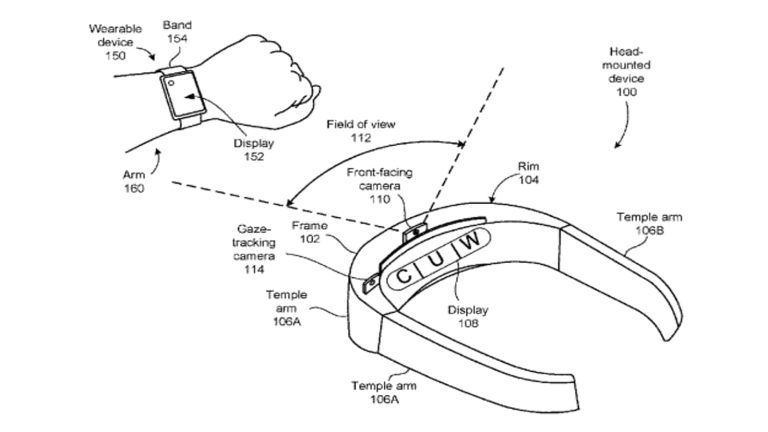
New Google Glass 3 patent shows how the AR glasses will be able to connect with, and control the Pixel Watch. From this patent, Google shows how it intends the camera technology to achieve this control ability. If this new patent is put to use on any of Google’s AR or VR products, it’ll be a functional tool for most Pixel Watch users.
The patent we’re talking about here shows that Google could bring more functional tools to the camera technology on its coming AR product. This camera will not only be useful while recording videos or taking pictures but also for controlling the Pixel Watch. To achieve this, the camera detects when its user is looking at their Pixel Watch and then seamlessly connects with the watch’s screen.
With the connection in place, the user can then perform some controls using the AR glass’ display. These controls include selecting apps, touchscreen gesture controls, and so much more. The user will be in control of all this (with the help of the Google Glass 3 camera), hence he won’t need to reach out and touch his watch’s display.
The recent Google Glass 3 camera patent is a bit bizarre but quite impressive
One big question that most potential users of this technology will ask is how the connection between the watch and the AR camera will work. Some netizens might wonder if this technology also comes with mind-reading abilities to tell exactly what the user wants to do. Well, it’s all about gesture controls as the communication between the AR product’s camera and the watch’s display will rely on user’s gestures.
Google explains that these controls only kick in when the user focuses on the watch’s display. The cameras on the Google Glass 3 will feature gaze-tracking technology to tell where the user is looking. With this, the camera will be able to tell the app icon or control button the user is looking at on the watch’s display.
Once the camera can establish a connection between the watch and the AR glasses, information from the watch will then move to the screen of the smart glasses. From here, users can access information from the Pixel Watch directly, and see it projected in front of their eyes. All controls that users make from AR glasses at that point rely on gesture input from the user.