Black Friday is generally a time where a lot of streaming services will offer big discounts, to get you on-board with the service. We’ve seen some big discounts from streamers like Hulu, Disney+ and even Peacock in recent years. However, generally these deals only last for a day or two, so you’ve got to be quick with it. Or you might miss out.
So in this post, we’ll be rounding up the very best streaming deals for 2023. We will be updating this post as we get through Black Friday and Cyber Monday with additional streaming deals as they become available.
Hulu has brought back their annual Black Friday deal, where you can sign up for a year of Hulu (with ads) for only 99 cents each month. That’s a $7 savings per month for your first year. Keep in mind that after the year is up, you’ll automatically be renewed at the regular price – that’s $7.99 per month.
This deal is available for those that are new and returning subscribers. Reading the fine print, you are eligible if you cancelled Hulu at least a month ago.
Finally, this deal is available now through November 28, 2023. That’s the day after Cyber Monday, so you’ve got a bit of time to grab this deal, thankfully.
For Black Friday, MAX is also looking to court some new subscribers, by offering its service for just $2.99 per month for the first 6 months. Like Hulu, that is a $7 savings per month and this is for the ad-supported plan. This is also available for new and returning subscribers, but MAX does not mention how long you need to have been away from MAX to be able to return for this deal.
This deal ends on Cyber Monday – November 27, 2023. And you’ll be able to watch the new Barbie movie for less with this deal. It’s not yet on the service, but it is “coming soon”.
Paramount+ has also brought back their insanely popular Black Friday deal, where you can get your first three months of the service for just $1.99 per month. That will save you $4 per month, and yes this is also the ad-supported plan. It does also offer you the ability to bundle Paramount+ and Showtime for $3.99 per month, which is an insanely good deal. Considering it is normally $11.99 per month.
This deal is going to be available until December 3, 2023, making it a much longer one, that you can sign up for a bit later on.
Elon Musk’s endorsement of an anti-Semitic post caused Apple to pause advertising on X, sources told Axios. The iPhone maker has been one of the biggest advertisers on X, and it remains to be seen when it resumes ad campaigns on the platform.
The controversy started on Wednesday when Elon Musk endorsed an X post claiming Jewish communities support “dialectical hatred against whites.” In response to the post, Musk said, “You have said the actual truth.” Following the move, 164 Jewish rabbis and activists called Big Tech companies to stop advertising on X. The critics also asked Apple and Google to remove the X app from their stores.
Elon Musk’s response to an anti-Semitic post makes Apple stop advertising on X
Apple has already complained its ads appear next to the far-right content. Yet, the company needs to clarify the real reason behind halting advertising on X. As per a report by nonprofit Media Matters for America, Apple, IBM, Amazon, and Oracle ads have appeared alongside far-right content on X.
In response, X CEO Linda Yaccarino said on Thursday that the company has been “extremely clear about our efforts to combat antisemitism and discrimination.” She added, “There’s no place for it anywhere in the world — it’s ugly and wrong. Full stop.”
Musk’s response to that anti-Semitic post also prompted the White House to react. White House spokesperson Andrew Bates said in a statement, “It is unacceptable to repeat the hideous lie behind the most fatal act of Antisemitism in American history at any time, let alone one month after the deadliest day for the Jewish people since the Holocaust.”
While X hasn’t yet responded to Apple’s decision, a platform’s executive noted they did a “sweep” on accounts, and errant accounts are not monetizable anymore. The executive added that X does not “intentionally” place brand ads next to far-right content and doesn’t support this type of content by ad placement. X also made the headlines last month after it monetized an account with a history of mocking a child’s suicide.
Besides Apple, Lions Gate Entertainment is another company that stopped advertising on X. Elon Musk’s move could make more advertisers pull out from the platform, putting X ad revenues in a critical situation.
An in-depth analysis by SafetyDetectives has now revealed the vaccination records to be legitimate and stolen or scraped as a result of an information disclosure vulnerability.
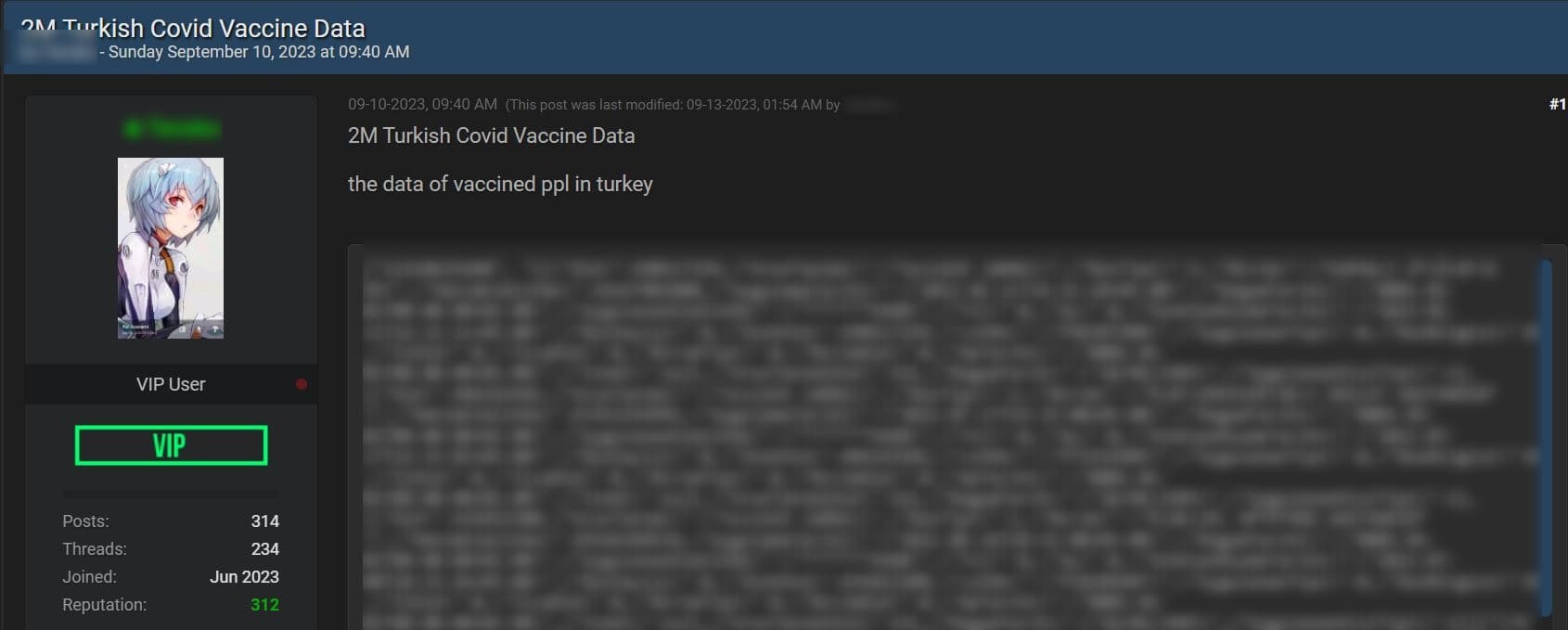
SafetyDetectives cybersecurity researchers have identified a data breach in which a threat actor has leaked the personal details of over 2 million Turkish citizens. The leak is related to vaccination data from 2015 to 2023.
It’s worth noting that the database has been leaked on the same forum where, just a couple of weeks ago, another threat actor leaked a scraped LinkedIn database with 35 million user data. The same forum saw the leak of two scraped databases from chess.com on November 10 and November 12, 2023.
According to the report shared by SafetyDetectives with Hackread.com ahead of publication on Monday, although the data was leaked on the forum on September 10, 2023; researchers believe that the leak took place on April 4, 2023.
The researchers are certain that the data was likely extracted by leveraging an information disclosure vulnerability. Their analysis has revealed the data to be authentic and includes the following information:
Birth dates
Doctors’ full TCKNs
Dates of vaccinations
Vaccine types received by individuals
Other vaccination and supply chain details
Hospitals where vaccinations were performed
Dose numbers of specific vaccinations across the country
Patients’ partial Turkish Identification Numbers (TCKNs for short)
“Patients’ TCKNs were partially redacted, while doctors’ TCKNs were displayed in full indicating that the data could possibly have been scraped from an online platform or service used by Turkish healthcare providers or the Ministry of Health,“ SafetyDetectives Cybersecurity Team explained in a blog post.
“There were a total of 125,000 listed TCKNs for doctors. Considering Turkey had over 183,000 physicians in 2021, this suggests the breach might have exposed the personally identifiable information (PII) of around 70% of the doctors in the country,” the team added.
The data leak is concerning as there is another database on the same forum containing the personal data of over 49 million Turkish citizens including physical addresses. Although this database was originally leaked in 2016, it has been circulating and resurfacing on different hacker forums, especially on Telegram.
Threat actors can utilize both databases for various malicious purposes, including identity theft. The data can also be used to physically track and threaten people.
Turkey is not the only country to have its vaccine records leaked online. India also faced a similar situation when the COVID antigen test results of 1.7 million Indians and foreign nationals were leaked online. The database was only secured when Hackread.com reported the incident to Indian CERT in September 2022.
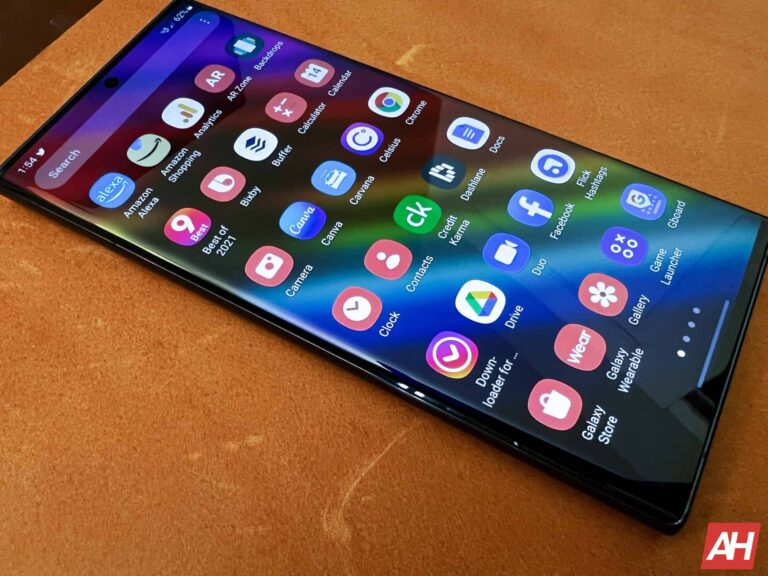
Samsung‘s Galaxy S20 series may not be eligible for the Android 14 update but the 2020 flagships are still receiving monthly security patches. The company has just released the November security update for the phones. It patches more than 60 vulnerabilities.
The Galaxy S20 series gets the November security update
As of this writing, Samsung is pushing the November SMR (Security Maintenance Release) to the Galaxy S20, Galaxy S20+, and Galaxy S20 Ultra in Taiwan. The phones are picking up the update with the firmware build number G98*0ZHS7HWK1. It appears to be just a security patch with no additional goodies. Since the lineup is still receiving security updates every month, the latest release should soon reach more markets, including the US.
This month’s security release from Samsung patches 65 vulnerabilities. About 50 of those are Android OS patches coming from Google and partners. The Android maker confirmed five vulnerabilities as critical security flaws, potentially allowing an attacker to remotely take control of an affected device. The remaining 15-odd fixes come directly from Samsung. These vulnerabilities don’t exist on Android devices from other manufacturers.
If you’re using a Galaxy S20 phone, you will receive these security fixes with the latest update in the coming weeks. You can wait for a notification about the OTA (over-the-air) release or manually check for updates from the Settings app. Under the Software update menu, tap on Download and Install to see if an update is available. If you don’t see any updates today, wait a few days and check again.
No Android 14 for your aging Samsung flagship
Your Galaxy S20 may be working fine but it will no longer receive feature updates from Samsung. Debuted in early 2020, the lineup shipped with Android 10 onboard. The Korean firm only offered three major Android OS updates for its flagships back then (four updates for the Galaxy S22 series and newer models). The Galaxy S20 phones have already received those three updates—Android 11, Android 12, and Android 13.
Going forward, the devices will only get security patches. As you can see on Samsung’s official website, the 2020 flagships are still eligible for monthly security releases. The updates will come at least until February 2024. Whether the Korean behemoth decides to update the Galaxy S20 series beyond four years, only time will tell. Meanwhile, if you are looking to upgrade to a new Samsung phone, the company has the Galaxy S24 series coming early next year.
Samsung is looking to expand its new semiconductor factory in Taylor, Texas. According to the Korean media, the company plans to add another building to the under-construction site. The new building will have a floor size of around 2.7 million square feet (over 250,000 square meters or 61 acres). The firm is making this move after securing “a series of AI chip deals,” a report from Korea JoongAng Daily says.
Samsung to add a new building to its Taylor chip factory
The Korean company is one of the leading semiconductor foundries in the world. It is second only to TSMC. In November 2021, the firm announced plans to construct a new chip factory in Taylor, about 25 miles away from its existing plant in Austin, Texas, which has been operational since 1996. It has committed an investment of $17 billion for this factory where it will manufacture advanced semiconductors.
In July 2022, the Korean media reported that Samsung is looking to expand the area of the site by 14 percent, adding about 177 acres of land to the investment zone. While it’s unclear whether it received approval for this expansion from the local government, a new report says the company will construct one more factory building within the site, which should be operational next year.
The report adds that the city of Taylor has already appointed a local engineering company to review and inspect the development of the new factory, tentatively named “Samsung Fabrication Plant 2.” The city previously agreed to designate resources and expedite the review, approval, and inspection of Samsung’s construction works at the site so the factories can be operational as early as possible.
This planned expansion, coupled with rising material costs, would reportedly add $8 billion more to Samsung’s investment amount at the site. The total initial investment would rise to $25 billion. It has pledged to invest a whopping $192 billion in the state of Texas over the next 20 years. This plan involves the construction of 11 more chip plants in the state. The company has already applied for tax breaks and other incentives from the government.
Samsung may be cashing in on the AI revolution
Artificial Intelligence or AI may have been around for years but the field is seeing an unprecedented interest lately. The arrival of ChatGPT late last year has led to a whole new market for generative AI. All tech companies—big and small—are rushing to launch new AI products or enhance existing products with AI.
Samsung appears to be cashing in on this revolution. While it declined to comment on the report about the expansion plans of its Taylor semiconductor factory, the new report says the company has landed several AI chip deals. It remains to be seen whether this helps the Korean behemoth get closer to TSMC in the foundry market.
Fresh off the news that Apple will be adding RCS support to its Messages app, the Google Messages app on Android is also making some improvements and getting new features. The latest round of leaks show that that Google Messages will not only be getting noise cancellation, but also markdown text support.
For those not familiar, Markdown is a lightweight markup language that is commonly used for writing online content. It is easy to learn and use, and it can be a great way to add formatting to your texts without having to use any special software.
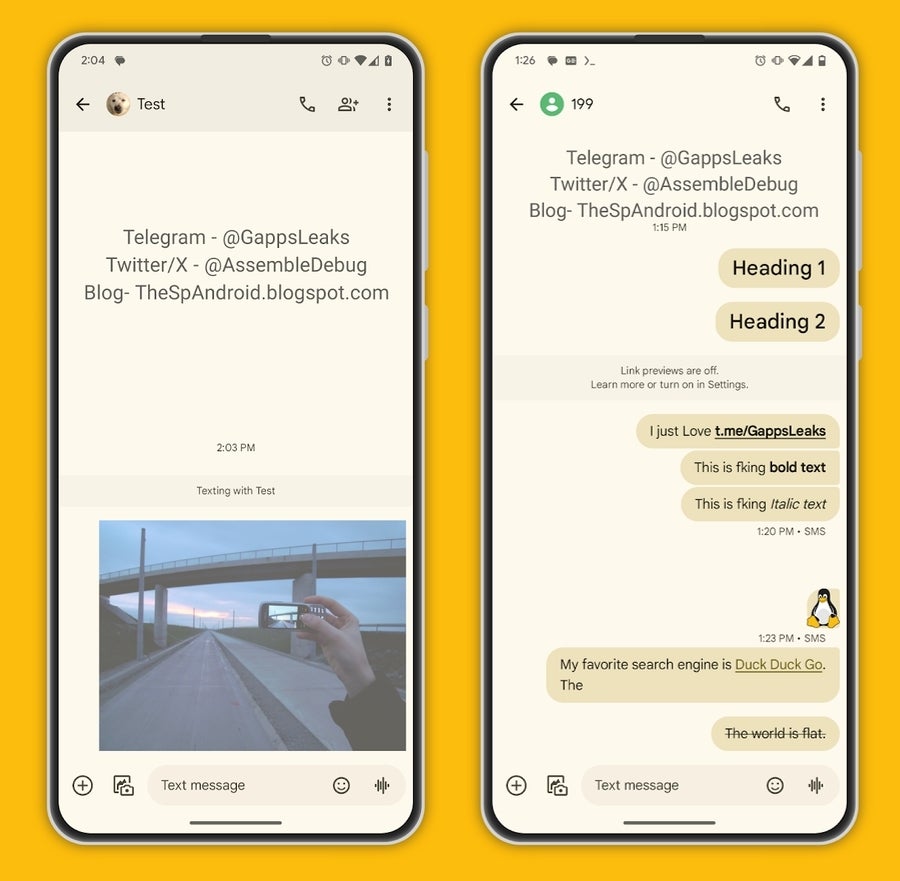
Now, as spotted by AssembleDebug on The SPAndroid, it appears that this formatting feature will be coming to Google Messages soon. This means that Android users using the default messaging app, will soon be able to add bold, italic, strikethrough, and other formatting elements to their messages by using simple punctuation marks.
Markdown text in Google Messages App | Source – TheSPAndroid
One of the key benefits of using markdown formatting, besides it being a simple and easy way to make your texts more visually pleasing, is that it can help to emphasize important points in your messages. This can be achieved by enclosing your text within the markdown syntax, which can be double asterisks (**) to make your text bold, and single asterisks or underscores (_) to italicize, among others.
Unfortunately, in AssembleDebug’s testing, not all markdown syntax worked. For example, lists, tables, and quotes are not supported, but the basic ones such as headings, bold, italics, and strikethrough appeared to work. Additionally, the feature was found to work for both SMS and RCS chat, so it’s good to know that no one will be left out.
This new feature is currently available in the beta version of Google Messages, but had to be enabled via flags, thus it is not yet available to the public. However, it is expected to be rolled out to all users soon as it exits beta.
LummaC2 v4.0, an advanced malware, steals data and evades detection by employing trigonometry to distinguish human users from automated analysis tools.
Security assessment platform provider Outpost24’s threat intelligence team KrakenLabs has uncovered a new technique that malware developers are using to evade detection in sandbox environments.
This technique involves using trigonometry to analyze cursor movements and detect human behaviour, thus enabling the malware to distinguish between real users and automated analysis tools.
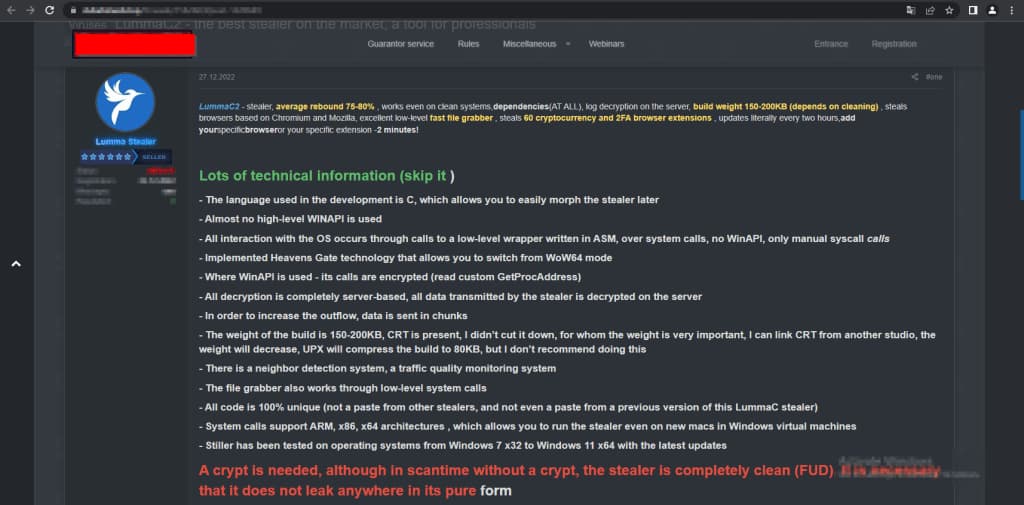
In the company’s blog post, researchers noted that an information stealer, LummaC2 v4.0, uses this new anti-sandbox technique to avoid detonation if it doesn’t detect human mouse activity.
LummaC2 v4.0 is written in C language. This infostealer has undergone significant updates since it was released in December 2022, including the implementation of Control Flow Flattening obfuscation (which makes code difficult to understand/analyze), strings encryption using XOR instead of adding junk strings (to make it harder to reverse engineer the malware or understand its functionality), and the anti-sandbox technique (that delays the malware’s execution until detecting mouse activity).
LummaC2 v4.0 also supports dynamic configuration files extracted from its C2 server to receive instructions on adapting to different situations. It uses a crypter for all builds, which adds a new layer of protection to the malware. These changes indicate that malware developers are focusing on evading detection and analysis.
A 2022 post by LummaC2 author (Image credit: Outpost24)
Researchers identified that LummaC2 v4.0 stealer uses trigonometry to assess cursor movements to detect human behaviour before activation. This is a novel anti-sandbox technique in which the malware captures the cursor’s initial position using the GetCursorPos() function and waits for 300 milliseconds to check for cursor movements.
If the position changes, the malware captures five additional positions with a delay of 50 milliseconds between each capture. It then ensures that each captured position is different from its preceding one.
This prevents the malware from activating itself in sandbox environments as these mimic static cursor positions. Trigonometric calculations allow the malware to analyze the captured cursor positions and detect patterns of human behaviour, etc.
Moreover, the threat actor selling LummaC2 v4.0 discourages distributing unaltered malware samples to maintain control over its usage and avoid widespread detection.
Anti-analysis techniques have become a persistent threat to cybersecurity, and this novel anti-sandbox technique poses a significant challenge for security analysis tools because it targets the limitations of automated mouse emulation.
Organizations should implement robust sandboxing solutions and employ advanced analysis techniques to detect/analyze obfuscated malware like LummaC2 v4.0 effectively.
Samsung is widely rolling out the Android 14 update for the Galaxy S22 series. The big update, which brings One UI 6.0 to the phones, is now available for everyone in Europe. A global rollout should be just around the corner. The company should soon update other Galaxy devices too.
Android 14 widely available for the Galaxy S22 series in Europe
A few days back, Samsung released the Android 14-based One UI 6.0 update for the Galaxy S22, Galaxy S22+, and Galaxy S22 Ultra in a few European countries. However, the update was only available for users who participated in the company’s One UI 6.0 beta program. Those with a Galaxy S22 phone running One UI 5.1/Android 13 were out of luck.
Thankfully, Samsung didn’t keep them waiting for long. The big update is now available for all Galaxy S22 users in Europe. It’s the same firmware build number (S90*BXXUDWK4) that beta users received. However, as usual, the OTA (over the air) update file is much bigger for those updating from Android 13. According to SamMobile, which first reported this rollout, One UI 6.0 for the 2022 Samsung flagships weighs over 3.1GB.
The Korean behemoth is expected to release this update in other markets soon, including the US. Along with the new features and improvements that are part and parcel of Android 14 and One UI 6.0, the new firmware release for the Galaxy S22 series also brings the November security patch containing over 60 vulnerability fixes. The phones have already received the latest security fixes in the US, so nothing new on this front for users stateside.
However, the security fixes are of little interest here. One UI 6.0 has a lot to be excited about. Samsung has made some visual changes with a UI overhaul that includes a revamped notification panel, Quick Settings, and more. Additionally, the big update brings new camera features, more powerful photo and video editing tools, enhanced security, and many other goodies.
The 2022 Samsung flagships will get two more Android OS updates
Samsung launched the Galaxy S22 series nearly 2022 with Android 12 onboard. Android 14 is the second major Android OS update for the lineup. The phones are eligible for two more of them (covered under Samsung’s updated support policy that offers four major updates). So the devices will receive Android 15 and Android 16 as well. If you’re using any of the three models, you can check for updates from the Settings app. Go to the Software update menu and tap on Download and install.
Do you ever dream about Inbox Zero? If you’re unsure what this is, Inbox Zero is basically a methodology of managing your email inbox in such a way that it’s either always completely empty or close to empty. It can be a freeing feeling to have an inbox that has zero emails in it. And by achieving this it can be a whole lot easier to manage the inbox going forward. Because you have less emails to read and can more closely look at every one of them as they come in.
This of course gets a little harder to do if you don’t manage it consistently. And it’s even harder when you get bombarded by spam emails. Unfortunately it’s almost impossible to prevent spam emails these days. But there are ways that you can lessen them and hopefully prevent from getting too many of them in the future. So how do you stop getting spam email?
Well the process isn’t as simple as you may think. It’s not an overly difficult task but it can take some time and a little effort on your part. That being said, the fine folks at Incogni can also help with this process. First though, if you want to know how to stop getting spam email then you need to know how you can end up getting them in the first place. Obviously you aren’t giving your email address out to the individuals who are sending the spam. Or at least that’s likely the case for most people. So what gives?
How you end up with spam email
If you’re getting spam emails then the biggest reason why this is happening is because your personal information is being sold or traded online. Your personal information ends up online through various means and this information can include your email address among other stuff like your actual physical address, full name, work history, phone number and more.
People known as data brokers then gather that information from places like publicly available sources, social media, or through purchasing that information from other websites that you gave it to. It then sells that information to a number of different entities. And this can include organizations that will send you spam emails.
Why are spam emails such a big deal?
Aside from them being incredibly annoying to deal with spam emails are often a hotbed for phishing scams. And phishing scams can lead to more spam emails from other sources, or it can lead to more dangerous situations like identity theft or loss of financials.
Spam emails can also be a source for installing malware. You get a spam email, you open it up, and without thinking you click the embedded link. Not knowing that the link was simply a delivery system for malware. And if that malware was designed to log information you punch into your computer, then there’s a high risk of having your passwords captured along with other identifying details. This leads to any number of scenarios but a common one is losing money from your bank or in some of the more severe cases, identity theft.
So, yes. Sure spam emails are annoying. If by some sheer stroke of luck none of the spam emails you may have are tied to phishing scams or other similar nefarious purposes, then they at best cause you a headache as you deal with their notifications or go through and delete them. But at worst they can do real, long-lasting damage.
How to stop getting spam email
For starters there are some preventative measure you can take on your own. When you get spam emails in your email inbox, there’s a good chance that, depending on the email service you use, those will be recognized as spam and go straight to the spam folder. That doesn’t get them out of your inbox though. And it won’t stop some people from going in there and checking some or all of them.
Mark emails as spam
For the emails that don’t get caught and aren’t marked as spam, there are some things you will want to do. If you’re certain it’s spam then the first thing you should do is mark it as spam. This way the email will learn that emails from that particular sender are spam and will eventually begin sending all future emails from them to the spam folder directly. This cuts out one step that you have to do yourself. From there you can simply delete them. And if you can continue to get spam from those same addresses or ones that are similar, then you can block those senders. Which can also help prevent future spam.
Unsubscribe from mailing lists
You might also want to consider unsubscribing from certain mailing lists. Perhaps you wanted emails from a specific mailing list at one point. But maybe you no longer want them. They might not be spam but them constantly coming in can feel like spam. And the only way to stop these sometimes is to unsubscribe. There’s also the possibility that those mailing lists may no longer be coming from the intended user. Maybe the mailing list is defunct or was purchased for the intention of spamming people subscribed to it.
Remove your information from the internet
Lastly, you should remove your information from the internet and from data broker lists. Remember the data brokers? Those pesky people who scour the internet for people’s personal information and then sell it off for money? You definitely don’t want them having your information. Because it can and often does lead to spam emails. Once again, this is where Incogni can help.
Let Incogni help you remove your information from the internet
Incogni was started by the people at Surfshark (yep, the VPN company) because they noticed that there was a growing problem with data brokers buying, selling, and trading people’s personal information without express consent.
Incogni is also a subscription service. They deal with data brokers and people search sites on your behalf. And get your personal information taken off the internet. Brokers can reacquire your information later through the same methods as before. But as long as your subscription is active you have nothing to worry about. Because Incogni will periodically check broker sites and people search sites to ensure your information stays off of them.
Researchers have found numerous security vulnerabilities in Google Workspace that risk breaches. While the vulnerabilities pose a serious threat to the users, Google denies fixing the bugs as they do not match with Google’s threat model.
Numerous Vulnerabilities Found In Google Workspace
Bitdefender researchers spotted multiple security weaknesses in the Google Workspace. As elaborated, the researchers found these vulnerabilities when analyzing Google Workspace and Google Cloud Platform while developing their XDR sensor.
Exploiting these vulnerabilities lets an adversary to gain network-wide access by compromising a single target account. In worst-case exploits, attackers may even wage a ransomware attack, moving laterally on the network and infecting systems with the Google Credential Provider for Windows (GCPW) installed.
Besides, such exploitations may also allow decrypting and stealing stored passwords, and gain access to the cloud platform with custom permissions, moving “beyond the Google ecosystem.”
The vulnerability exists because the GCPW uses “Google Accounts and ID Administration” (GAIA) service accounts to validate Google Workspace credentials. Since this account is created with escalated privileges, any exploitations involving this service pose a serious threat.
Bitdefender has explained the different exploitation scenarios in detail in their post.
Google Says No Plans To Patch
Upon discovering Google Workspace vulnerabilities, Bitdefender reported the matter to Google officials. However, given that the exploits require an attacker to compromise a local machine, Google refused to address the vulnerabilities as they lie outside of their threat model.
Nonetheless, Bitdefender disclosed the weaknesses publicly to aware users following the responsible bug disclosure. As they highlighted, while local exploits may lie outside Google’s threat model, they still remain a serious issue demanding attention. That’s because the threat actors keep looking for such vulnerabilities to perform large-scale attacks.
Recently, another security researcher highlighted a similar issue that Google chose not to address. While those vulnerabilities didn’t precisely threaten Google, they risked the users of other apps built on the vulnerable Google Electron software, including PureVPN, Slack, and others.