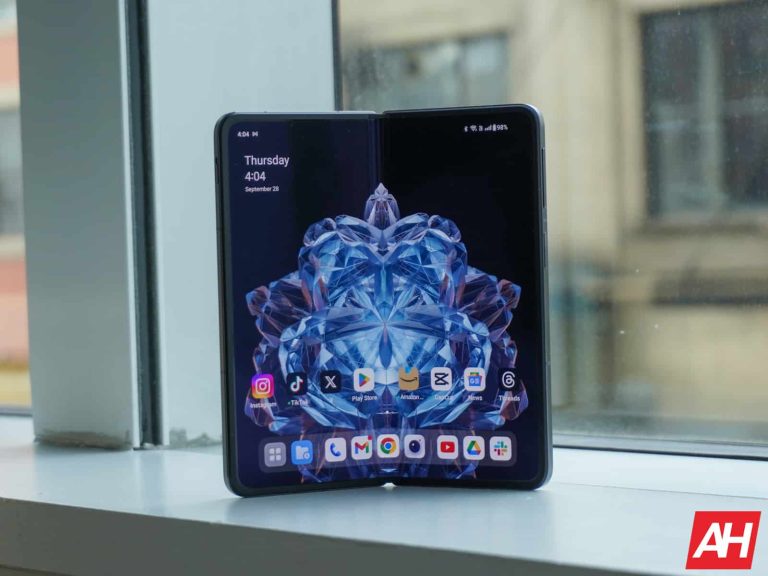
The OnePlus Open, the company’s technically first foldable smartphone, is getting a new update. This update brings various camera improvements, eSIM support, and more changes to the OnePlus Open.
A new update bring camera improvements & eSIM function to the OnePlus Open
It is marked as v13.2.0.116, and it seems to be rolling out as we speak. As per usual, the rollout is happening OTA (Over-The-Air), and your phone will let you know once it’s available. You can always manually check, though, of course.
The update itself weighs 301MB in size, so it’s not all that big, but still, make sure you have enough battery charge to push it through. Make sure you have at least 30% in the tank, the OnePlus Open may not even allow you to update if you have less than that.
In any case, let’s start with ‘System’ changes, as the company’s changelog is separated into three parts. OnePlus notes that this update improves both system stability and system performance.
The company also fixed a slow response issue that sometimes occurred in WeChat. Not many of you use it, but it was an issue upon tapping and holding onto a friend’s profile photo on the cover screen.
A problem with the ‘Eraser’ tool has also been fixed
This update also fixes an issue with the Eraser tool in Photos. At times, it refused to respond to taps. That should no longer happen.
The ‘Communications’ section has only one change, actually. That change is the addition of eSIM support. It was not available out of the box, but you can not utilize it.
In terms of the ‘Camera’ changes, two entries can be found in the changelog. The first one says that the update increases the clarity of photos taken at higher zoom ratios with the telephoto camera.
The second entry says that the update improves the tone and color accuracy of photos taken in the ‘Photo’ and ‘Pro’ modes.
So, it’s time to get you or a loved one a new computer. Well, what better time than the holiday season? Now is the time of year when people are doing all of their Christmas shopping, and so it might be the perfect opportunity to get a new computer for the tech-savvy individual in your life. Here’s a handy gift guide to show you some of the Chromebooks and computers that you can pick up for yourself or that special someone.
This list was chosen based on certain stand-out aspects of these devices. If you’re not a fan of the main entries, don’t worry, we have some honorary mentions that might actually pique your interest even more. They offer more variety to your available options. So, let’s dive into this gift guide and see what should be your next new computer.
Most Affordable computer: 15.6-Inch Acer Aspire 3
This is for people who want decent power on a budget
Sometimes, you’re not able to afford the most expensive or powerful laptops on the market. Sometimes, you have to settle for more modest hardware. There’s nothing wrong with that, as people’s needs differ. Maybe you don’t need an extremely powerful laptop; maybe you just need a simple computer to get you through the day. Well, the Acer Inspire 3 could be exactly what you’re looking for.
Maybe you’re not designing extremely intricate graphics, animating short films, or doing intense video editing. Maybe you just need to write or communicate with clients. If your needs are light, then this computer will fit them perfectly. It has just enough power to do simple tasks. It’s running Windows 11 out of the box, so you’re going to be getting the most up-to-date Windows Experience on the market.
If your occupation doesn’t create too many large files, then the 128GB of storage will be perfect for you. You’re able to save many of your files, download several programs, and store your media without needing to worry about running low on space. It’s a good amount of storage for most people who do light work.
Since we’re not talking about extremely powerful hardware, you can bet that the battery life will be really nice. It uses a power-efficient chip, so you’ll be able to make it through your workday without reaching for your charger. Good battery life is one of the most important features of any laptop.
If you want to use this computer to watch media like movies or TV shows, then you will have no issue doing so. The Acer Aspire 3 comes with a decently sharp display, which will give you a nice viewing experience.
If you’re a person who just needs the essentials to get you through your day, then there’s no point in spending over $1,000 on an extremely powerful computer. Sometimes, it helps just to pay a cool $200 for a computer that satisfies your needs. Most of the time, premium laptops have way more power than we really need. When it comes to finding a computer with just enough muscle, you should look into the Lenovo IdeaPad 1i. This is a 14-inch computer that is sleek and thin enough to fit into any cramped setup. It’s the perfect laptop to get if you are constantly traveling.
In terms of the power, to be completely honest, there’s not too much horsepower under the hood. However, not everyone needs extremely powerful specs. Some people just need a computer to do some simple tasks. Do you want to just sit back and watch some videos? Are you a writer who needs a smaller device to write on? Do you have a child who needs access to a basic computer? If so, then this computer will serve you just well.
The Lenovo IdeaPad 1i comes with Windows 11 pre-installed. The operating system was loaded onto the device, so you should expect a pretty smooth and optimized experience. Also, you’ll have access to all of the latest updates from Microsoft over the next couple of years. This is truly the computer to get if you need a smaller device to do the simple things.
The best option when you need a small computer with a lot of power
If you’re a person who’s in the Samsung ecosystem of products, then this might be the perfect computer for you. The Samsung Galaxy Book3 Pro is the most powerful laptop from the company to date. Since it’s the pro version, it’s well-suited for any professional who is looking to get a ton of work done. This should come as no surprise, as Samsung typically makes devices for power users.
One thing that makes this computer stand out is the host of Galaxy-centric optimizations. Samsung customizes the Windows operating system to create that unique Galaxy flare that you see with its phones. So, if you wind up using this computer, you’ll feel right at home with it and your other Galaxy devices. However, these optimizations are not only skin deep. The software in the computer has been optimized to integrate seamlessly with your Galaxy devices. This means quick sharing and other useful integrations.
However, power isn’t restricted to one operating system. You will more than enjoy the computer even if you are not a Samsung Galaxy device user. It’s plenty powerful to handle all of the work-heavy tasks that you can throw at it. If you are a video editor, animator, artist, content creator, etc., you will not have any trouble getting your work finished. It comes equipped with some of the best hardware on the market, and Samsung optimized it perfectly. This means that you’re going to get a wonderful experience.
Moving on to the battery, you’ll have plenty of battery power to get you through your workday. Samsung equipped this computer with a large battery that should get you well over 10 hours of battery life. And, if you do happen to find yourself in a jam, charging this computer is a breeze. It charges extremely fast, so you won’t be out of the game for long.
Sure, you’re perfectly capable of working with a large bulky computer, but not every situation calls for a computer like that. Sometimes, you need a device that’s compact enough to fit in a tight setup. Maybe you have to write on the train or in a crowded coffee shop. You’ll need a laptop that’s compact enough so you’re not taking up too much space. This is where the Asus Zenbook 14 comes in.
Asus is one of the top computer companies in the industry, so you know that it’s capable of making a compact laptop that delivers a powerful experience. Well, that laptop takes the form of the Zenbook 14. As the name suggests, this is a 14-inch laptop. It’s definitely smaller than most of the other professional laptops out there. However, that does not mean that it’s not powerful enough for your needs.
It employs some decently powerful hardware, so you won’t be missing out on that much power when you’re trying to jot down that report on the bus. In fact, it is still using some of the best equipment on the market, so you’re going to be getting a powerful experience. You won’t be missing out on much power.
Another great aspect of this computer is the display. While this is a smaller laptop, Asus made sure to fit it with a great display. So, if you want to use this as your main media-watching device, you will have no issue doing so. It’s a beautiful display that will make all of the content you’re watching just pop. This is a computer that does it all, and it does so while remaining compact and small.
HP is able to offer a capable 2-in-1 experience at an affordable price
When it comes to achieving productivity, sometimes, you need more than one device. This is where the 2-in-1 computer comes in. This is a combination between a computer and a tablet, and it’s become a pretty popular genre in the computer market. There are several 2-in-1 computers available, but HP has a great option to consider. It’s simply named The Pavilion 2-in-1, and it is a 14-inch computer. This means that it comes in a pretty compact size, and that’s important if you’re going to be using this as a tablet.
The Pavilion 2-in-1 is plenty powerful enough to handle most professional tasks. It has good hardware, and it should be just enough for most power users. It’s perfect for people who are writers or video content creators.
When in computer mode, you’ll use it like any other laptop. However, just switch it into tablet mode; take the display and rotate it all the way back so that it wraps around and faces upward. Then, you’ll be able to use your fingers to interact with a screen as though you’re using a tablet. If you need to do something like take a handwritten note or sign a document, it’s simple. The display is touch-sensitive, so you can use either your finger or a stylus to interact with the screen.
When it comes to the battery power, HP fitted this computer with a sizable battery, and it should last you most of the day on a single charge.
Overall, this is a quality device that you should look into if you want a great two-in-one experience. It’s a great computer, and it comes at a reasonable price at under $700.
This is from the series of devices that established the 2-in-1 computer
A list of the best computers to buy would not be complete without one of Microsoft’s surface devices. These are some of the most versatile and useful computers on the market, and they’re the perfect devices to get if you or your loved one is a true power user. Not only are these powerful devices, but they basically established the 2-in-1 computer genre. So, they are perfectly optimized to seamlessly switch between computer and tablet mode.
The Surface Pro 9 is the latest in this line of devices, and it does well to justify its hefty price. Indeed, this is a top-of-the-line device for people who need top-of-the-line performance. Microsoft gives its Surface line of computers some of the best hardware on the market, and it supports its devices with software updates for several years. So, if you’re the kind of person who likes to keep the devices for extended periods of time, then this computer is truly for you.
Since this is such a well-optimized 2-in-1 computer switching between modes is simple and seamless. This should come as no surprise, seeing as both the hardware and the software have been developed by Microsoft.
Now, when it comes to interacting with the screen, you have a few options. You can use your finger or, you could use the included stylus. The included Stylus is, of course, very much optimized for the device, so you will get an extremely smooth fluid experience using it. If you want to take handwritten notes, sign documents, or draw on this tablet, it’s as easy as just doing it. Since the stylus was built specifically for the computer, you’ll have no issue whatsoever using it. That’s one of the reasons why this series of computers is great
One of the best Chromebooks you can get on the market
Along with its Windows computers, Samsung also has its line of Chromebooks as well. These lean more toward the premium side of the spectrum. With its Chromebooks, Samsung definitely showed what a company can do with the operating system. The second generation of its Chromebooks is still one of the best options out there for premium Chromebooks. It packs the power and the sheer productivity potential to truly make you a work powerhouse.
We’re all familiar with some of the limitations of Chrome OS, and this is why several companies use very limited hardware for their Chromebooks. This eventually leads to slow performance over time. In the case of the Galaxy Chromebook 2, Samsung uses more premium equipment and hardware. This means that you’ll be able to get top-notch performance from this computer.
Chrome OS has gotten more advanced over the years, and most manufacturers continue to use lower-performing hardware in their Chromebooks. In the case of Samsung, the company opted to prioritize performance with better hardware. This means that you’ll be able to use your computer for much longer before it starts to slow down.
Now, since this is a Samsung device we are talking about, you know that it’s going to come with a fantastic display. The display on this computer might not be the best the company has churned out, but it is still a fantastic display. You’ll easily be able to use it as your primary viewing device if you decide to turn on some movies and pass the time after work.
This, along with the amazing speakers that Samsung put into this computer will give you a great media-watching experience along with a great productivity experience. It’s definitely one of the best Chromebooks you can find on the market.
Honorary Mention: ASUS Chromebook Plus CX34 Laptop
If you’re looking for an all-around great Chromebook, this is the one to get
Asus is no stranger to making Chromebooks, and the company makes some really compelling options. The Asus Chromebook Plus represents one of the company’s more powerful offerings. It has a mix of capable hardware and optimizations to ensure that you have a smooth experience for not too much money. If you’re shopping on a budget for Christmas, then this is definitely the path to go down.
This computer has a compact 14-inch screen, so you’ll be able to take it with you when you need to work abroad. Its sleek and lightweight design only makes it better. This is truly the kind of computer you would want to take with you if you don’t want to be bogged down by any heavy hardware.
This Chromebook comes with enough power under the hood and enough RAM to give you decently smooth performance. It won’t exactly be a rocket, but you will still be more than capable of getting all of your work done. When it comes to storage, you have more than enough space to keep all of your files. This is just an all-around well-performing and great Chromebook that you should get for someone who’s into doing light work.
If most of your work is web-based, or you’re a writer or do other forms of light work, then this Chromebook is made especially for you. Also, if you prioritize longevity, the Asus Chromebook Plus should be able to last you throughout your work session depending on what you’re doing. It may be able to last you up to 10 hours on a single charge. That’s more than a typical workday for most people which is always great. You never want your computer to run out of battery on you if you have to work away from an outlet.
MacBooks are some of the most powerful solutions for productivity-focused people and creators. The optimization between hardware and software just makes for an incredible experience all around. Also, you can’t forget about Apple’s incredible hardware. This year, Apple announced the 2023 MacBook Pro, so it’s the smoothest-performing and most feature-rich MacBook yet.
This computer uses the latest hardware from Apple, which includes the latest chip. Without diving too much into the specs, it’s very powerful. If you’re a person who’s looking to get some serious work done, then this should definitely be under your radar. So, whether you’re a writer, engineer, designer, composer, animator, or any other professional, you can be sure that you will get a top-notch performance and an all-around spectacular experience.
Are you a person who creates a ton of large files while you’re working? Well, you won’t need to worry too much with this computer, as it has enough SSD storage to keep all the files you need. Being able to store all of your files is one of the most important parts of being a creator.
When it comes to the viewing experience, you can also bet that everything will be top-notch. This computer has a compact 14.2-inch display, and it uses Apple’s beautiful Retina display technology. Basically, it’s a very sharp and beautiful display that you will want to use to watch movies and TV shows.
A Powerful computer is useless without good battery life, and this computer has a big enough battery to get you through your workday on a single charge. It’s rated to last up to 22 hours on a single charge, but your results will vary.
This is just an all-around amazing and productivity-focused computer. It’s well worth the money if you’re looking to find your ideal and professional device.
Honorary Mention: Apple 2023 MacBook Air Laptop with M2 chip
Redefining what a thin computer can do
If you’re looking for an incredibly powerful computer that doesn’t weigh down your setup, then you’re going to want to look into getting a 2023 MacBook Air. The MacBook Air line really redefined what a thin laptop could do, and the company continued this tradition with this computer.
This is an extremely thin and light computer with enough muscle to power your professional work life. Obviously, the most notable feature of this computer is how thin it is. So, you won’t need to worry about it weighing down your bag when you are traveling. If you’re a person who’s always on the go, then this might be the perfect computer for you. It’s excellent when it comes to traveling.
This computer has a sizable 15.3-inch display, and it uses Apple’s liquid-Retina display technology. All in all, this is an incredibly gorgeous display that you will want to use to watch all sorts of media. Why not put on a video while you are working? It will look fantastic!
In terms of the processing power, it’s using last year’s M2 Chip. Honestly, that’s not a bad thing. This computer will run perfectly smoothly and power everything that you are doing. Whatever your profession, whether you are into 3D animation, music production, software design, etc., you’ll have an incredibly smooth experience. This MacBook is still one of the most powerful laptops for how thin it is.
In terms of battery power, the incredibly efficient chip will help keep the laptop powered throughout most of the day. So, you don’t have to worry about reaching for your charger anytime soon. This is a very affordable MacBook, and it’s definitely for you if you want a powerful computer in a lightweight package.
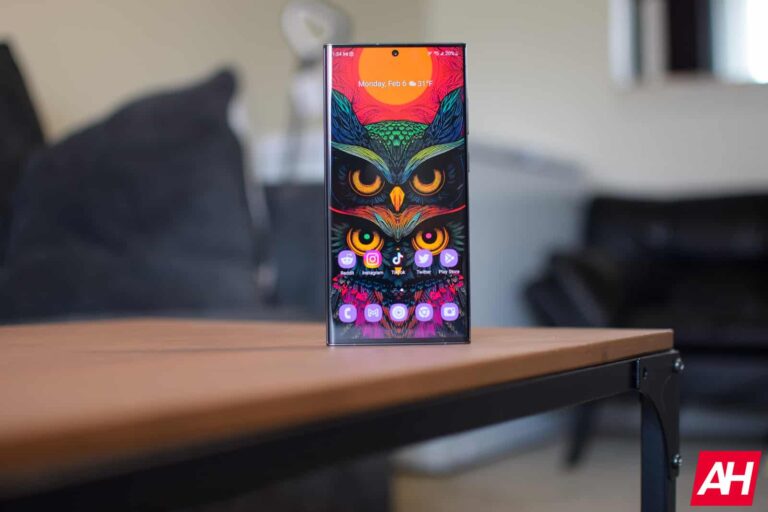
Today, Amazon is discounting the Galaxy S23 Ultra, making it just $899. That’s $300 off of its regular price. That is an all-time low if you don’t count the prices available for trade-ins and signing up for wireless service. Just buying the phone unlocked, this is the cheapest price we’ve seen, and you definitely should jump on this.
The Samsung Galaxy S23 Ultra was heralded as the best phone of 2023, until the Pixel 8 came out. And some would still say the Galaxy S23 Ultra beats it in two key areas – battery life and the camera. Which is true in my experience. I carried the Galaxy S23 Ultra around for the majority of this year, and I absolutely loved this phone. Other than the size, everything about it was great.
Keep in mind that this phone does have a 6.8-inch QHD+ 120Hz display. It’s also powered by the Snapdragon 8 Gen 2 for Galaxy, which is basically the same chipset as other phones on the market, but slightly overclocked. This gives you better performance, but only slightly. There’s also 256GB of storage at this price, which is quite impressive. Especially since most phones still start at 128GB.
One of the bright spots for the Galaxy S23 Ultra is indeed the camera. Samsung has opted to use two telephoto sensors here, so there’s four cameras total on the back. There’s a 3x telephoto and a 10x telephoto. These offer some really great zoom shots, especially with it being able to do up to 100x digital zoom. Not to mention that 200-megapixel main camera sensor, which can take some incredibly detailed shots. I took this phone with me on many trips this year, including going to New York City, where I took photos from my hotel room in Brooklyn of Manhattan, and got some incredible shots at 10x.
Battery life is the other strength of the Galaxy S23 Ultra. It is able to last a full day on a charge and still have around 40% left. Most days, this phone lasted me two days on a charge, which is not something that Samsung flagship phones are typically capable of. If you’re a heavy user, then this is definitely the phone for you.
Google’s Search Generative Experience (SGE) is set to introduce a novel way to shop for clothing, enhancing the visual search experience for users. The new feature, slated to roll out in the US this December, enables users to generate photorealistic images based on textual descriptions of desired clothing items.
Imagine searching for a “colorful, patterned puffer jacket” and not finding the perfect match through text alone. With the new SGE capability, users can click on a “Generate images” button, initiating the creation of visually accurate, generated images that align with their vision. Google emphasizes that a significant portion of apparel queries comprise five words or more, highlighting the need for a more nuanced and visual search experience.
Users can further customize their generated designs through text prompts, allowing for dynamic adjustments. For instance, a user can modify their search to find a “colorful metallic jacket instead of patterned.” Once satisfied with the generated images, users can scroll down to discover similar shoppable products, seamlessly bridging the gap between imagination and reality.
Building upon the image generation feature introduced last month and leveraging the vast data within its Shopping Graph containing 35 billion listings, Google aims to redefine how users interact with visual search for clothing items. The SGE clothing feature (via 9to5Google) promises an innovative and intuitive way to explore fashion preferences and discover relevant products.
Google SGE will also help you come up with gift ideas that make sense to the receiver
In addition to helping you choose clothes, Google’s SGE is expanding its horizons. Users searching for gift ideas will now encounter a diverse range of subcategories to explore. For instance, a search for “great gifts for home cooks” will yield a curated selection of specialty tools, artisanal ingredients, culinary subscriptions, and even experiences like cooking classes. The ability to fine-tune prompts, such as “great gifts for home cooks who love pasta,” adds a layer of specificity to the search experience.
Furthermore, the virtual try-on tool powered by generative AI has expanded to include men’s tops, broadening its scope after initially launching with women’s clothing in June. Users can now explore a variety of men’s tops from brands like Abercrombie, Banana Republic, JCrew, and Under Armour. With 40 models representing diverse characteristics, this tool facilitates a more confident decision-making process by showcasing clothing on real individuals with varying skin tones, body shapes, heights, and sizes.
U.S. citizens are shelling out an extra 5% for their mobile phone bills compared to last year. While this may seem like a small increase, it translates into billions of dollars more in revenue for mobile carriers. There could be ample reasons behind it, including the hike in career plans.
Americans collectively spent about $9 billion extra
A new study from doxoINSIGHTS outlines how much Americans spent on mobile phone bills this year. It found that the average American spent an average of $119 per month on mobile phone bills this year, up from $113 last year. This means a yearly average of $1,342, a 5% increase from last year’s $1,275.
Americans collectively spend a whopping $175 billion on mobile carrier services each year. And while a 5% increase might not seem like much, it translates into an additional $8.75 billion in revenue for these companies. Whether this increase in revenue reflects an improvement in service quality is a matter of debate. Nevertheless, the financial gains for mobile carriers are undeniable.
The report is based on an analysis of anonymized bill pay data from over 8 million consumers. This data shows that 94% of American households pay a mobile phone bill.
California has the biggest mobile phone market size, followed by Texas and New York
The report lists that California has the biggest market size in terms of mobile phones, closely followed by Texas and New York. Moreover, states like Hawaii ($165), West Virginia ($143) and Wyoming ($142) have the most expensive phone bills. Meanwhile, Nebraska ($105), Florida ($107), and Arkansas ($104) have the most affordable phone bills.
In terms of cities, Boston ($211) leads the chart as being the most expensive “largest” city for mobile phone bills, closely followed by Kansas City ($143) and San Diego ($131). Indianapolis ($89), Tucson ($89), and Minneapolis ($89) remain the most affordable cities in the U.S. for mobile phone bills. The report adds that mobile phone bills account for about 2% of annual household spending in the United States.
In recent years, the Federal Communications Commission (FCC) has tightened its grip on ISPs to keep them accountable for the Internet services they provide to American citizens. One of the plans the agency strictly follows is to ensure ISPs offer broadband services to customers, regardless of their “income level, race, ethnicity, color, religion or national origin.”
The notion of “digital discrimination” started two years ago after adopting the Bipartisan Infrastructure Law. The bill, dubbed Internet for All, has a $45 billion budget and aims to provide high-speed broadband internet access to every US citizen by 2030. As a part of the legislation, the FCC is now investigating the provisions of digital discrimination to penalize errant ISPs.
The FCC is checking ISPs over discriminating against poor areas
The agency looks into different factors, including pricing, network upgrades, and maintenance procedures. Then, it decides whether an ISP prioritizes more affluent areas and discriminates against poor neighborhoods. While ISPs and carriers always denied the allegation of discrimination, the Associated Press reported that some low-income regions of the US receive lower Internet speed despite paying the same price as richer areas.
The FCC might even check companies like AT&T and Comcast if their actions “differentially impact consumers’ access to broadband.” Meanwhile, the agency also considers technical and economic challenges that might prevent a particular company from providing its customers equal access to high-speed broadband Internet.
While FCC Chairwoman Jessica Rosenworcel said the agency would “accept genuine reasons of technical and economic feasibility as valid reasons,” critics argue that the new rules might penalize companies for unintentional discrimination and affect investments. The FCC already adopted the new rules in a 3-2 vote.
The agency also updated its procedures for SIM swapping and port-out scams. As per the new rules, wireless providers must immediately notify customers of any SIM change or a port-out for their account and phone number. This could help users protect their accounts against bad actors.
Additionally, the FCC voted to investigate how AI could impact robocalls. While AI could be used against robocalls, the scammers might turn it into a tool to defraud people more easily. Finally, the agency obligates mobile providers to split phone lines from family plans for victims of domestic violence if the abuser owns the account. Moreover, service providers should remove the calls and text records to domestic violence hotlines from subscribers’ logs.
Traditional approaches to endpoint security today have a three-fold complexity problem—with big consequences.
First, complexity in deployment causes long delays in protection, directly impacting ROI and leaving organizations vulnerable to breaches. In fact, almost 10 percent of small security teams cite such complexity as a primary reason for deployment setbacks. (Global Surveyz, 2022)
Second, lack of integrated security tools can lead security teams to overcompensate by buying and operating additional security platforms. This complexity multiplies operational overhead and creates gaps in security.
Dealing with day-to-day complexity with endpoint security is a third challenge. A survey of 200 CISOs by Global Surveyz found that nearly half (45 percent) of small IT teams flag issues like excessive alerts and multiple dashboards as chief product concerns, culminating in alert fatigue and drops in productivity.
To save time, money, and to stop more threats, it’s clear IT teams need an approach to endpoint security that resists complexity—a suite that’s easy to implement, cost-effective, and straightforward to operate.
Enter: ThreatDown bundles
ThreatDown combines the technologies and services that resource constrained IT teams need into four streamlined, cost-effective bundles that take down threats, take down complexity and take down costs:
ThreatDown Core Bundle: Next-gen AV and threat surface reduction. A simple yet superior solution integrating award-winning endpoint protection technologies.
ThreatDown Advanced Bundle: Everything included in core plus Managed Threat Hunting and Ransomware Rollback. Tailored for smaller security teams with limited resources.
ThreatDown Elite Bundle: Everything in Advanced plus 24/7/365 expert monitoring and response by Malwarebytes MDR analysts. Purpose-built for organizations with small (to non-existent) security teams that lack the resources to address all security alerts.
ThreatDown Ultimate Bundle: Everything in Elite plus protection from whole categories of malicious websites. Perfect for teams looking for a one-and-done shortcut to cybersecurity done right.
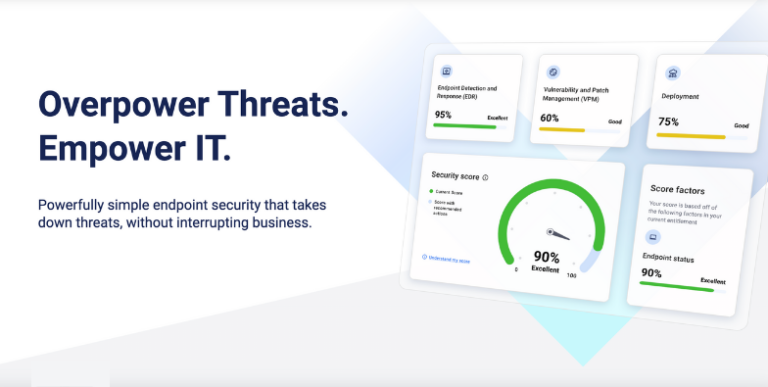
Each bundle comes with ThreatDownSecurity Advisor, which analyzes an organization’s cybersecurity health—such as by assessment of current inventory and which assets are vulnerable—and generates a score based off what it finds, illuminating gaps in defenses and providing actionable recommendations for improvements that can be made in minutes.
ThreatDown Nebula dashboard view. Security Advisor enables organizations to visualize and improve their organization’s security posture in just a few minutes.
1. Seamless Deployment
With the average deployment timeline for traditional EDRs stretching up to 18 months for small security teams, the need for a swifter solution is clear.
Simply put, smaller teams just can’t afford extensive learning curves, which perhaps is why, from a financial standpoint, they prioritize implementation costs (50 percent) in their endpoint security more than anything else. (Global Surveyz)
ThreatDown EDR, the cornerstone of every ThreatDown bundle excluding Core, takes the complexity out of endpoint security deployment as evidenced by an average time to become fully operational that is two times shorter than the industry average.
Cloud-hosted on the Nebula platform, ThreatDown bundle core technology can deploy within minutes and has won multiple G2 awards for its unique combination of rapid time to go live and time to ROI, all delivered via an agent deployed with a small footprint.
2. All-In-One Integration
Managing too many platforms is challenging. Each additional security tool requires its own set of configurations, updates, and management protocols, ultimately translating to longer response times, inefficient workflows, and an inability to have a unified view of the threat landscape.
According to Global Surveyz, 77 percent of small security teams ranked a ‘one-stop’ product with the ‘most integrated’ features as one of their top considerations when choosing a new security technology. In addition, 80 percent of CISOs recognize vendor consolidation as an avenue for more efficient security.
And, once you consider that over 5 percent of breaches in 2022 came from known vulnerabilities that had yet to be patched—and that the average cost of those breaches was $4.17 million—it goes without saying that Vulnerability and Patch Management needs to be part of any all-in-one security solution today.
By combining Endpoint Protection (EP), EDR, an award-winning Vulnerability and Patch Management solution, and more, ThreatDown Advanced, Elite, and Ultimate bundles give IT teams the ‘one-stop’ product they need to streamline detection and response through a single pane of glass.
Patch Management in ThreatDown Nebula.
3. Increased Protection
ThreatDown bundles don’t just simplify the deployment and administration of endpoint security; they simplify the take down of threats as well.
Traditional EDR is inherently exhausting. Without additional context, alerts become just too ambiguous to be actionable, meaning IT teams inevitably end up over-prioritizing less urgent threats while also overlooking severe ones—increasing their risk of a breach.
Starting with ThreatDown Advanced, organizations get access to next-level alert prioritization and threat protection with Managed Threat Hunting (MTH). For customers looking for 24x7x365 cybersecurity protection with proactive alert investigation and threat hunting, ThreatDown Elite and Ultimate offer Managed Detection and Response (MDR) services.
With ThreatDown bundles, organizations no longer need an advanced cybersecurity model and a well-staffed security operations center (SOC) to take down threats. Through a combination of superior EDR technology and human-delivered security, ThreatDown empowers organizations to keep up with the volume of EDR alerts and respond to threats on the fly.
ThreatDown MDR workflow.
Try ThreatDown bundles today
For IT teams plagued by the triad of complex deployment, scattered tooling, and excessive alert noise, ThreatDown bundles emerge as a superior solution that caters to the needs of today’s security teams.
Discover the difference with ThreatDown Bundles and elevate your organization’s defense against cyber threats. Get in touch for a free trial and experience the benefits of a simplified, yet robust, security framework.
Pixel phone’s seamless updates have reportedly been made much faster with the Android 14 QPR2 Beta 1 update. For those unfamiliar, a seamless update is a Pixel-exclusive method of updating the software. It allows you to continue using your Pixel phone while it installs the update. This is in contrast to traditional software updates, which require you to stop using your phone to install the update and can take several minutes to complete.
Seamless updates have long been a distinctive feature on Google’s Pixel phones, offering users the convenience of installing updates without disrupting their device usage.
The concept of seamless updates relies on the presence of two system partitions on Pixel phones. When a seamless update is initiated, the new software is installed on the inactive partition. Subsequently, the phone reboots, seamlessly transitioning to the updated partition.
Seamless updates now take less time for the reboot
While seamless updates have been a staple feature since the Nexus days, recent user feedback indicates that Google is actively working to enhance its speed. Traditionally, seamless updates on Pixel phones could take up to 30 minutes to complete. Despite this duration, users appreciated the benefit of being able to use their phones throughout the update process, except for a single reboot. This not only extended usability but also ensured a safer update process.
Now reports suggest that Google has significantly reduced the reboot time of seamless updates. Users testing the latest Android 14 updates, particularly the QPR2 Beta 1, have reported a substantial improvement in installation speed. Some users have experienced installation times as short as 10 minutes, a significant reduction from the previous average duration. Even the “optimizing” step, notorious for consuming the bulk of install times, reportedly took only 2.5 minutes on a Pixel Fold.
This acceleration in seamless updates aligns with earlier observations of Google actively working to reduce the rebooting time.
Google is one of the companies leading the AI race, and Sundar Pichai, the company’s CEO, is at the helm. When talking to Bloomberg’s Emily Chang at APEC (Asian Pacific Economic Cooperation) he talked about potential global impacts of AI technology. During the interview, Pichai compared AI technology to climate change, according to a report.
Why did Sundar Pichai compare AI to climate change?
This seems like a pretty tough comparison. One is the next frontier in technology, and the other is a global phenomenon. Well, it all comes down to responsibility. During the interview, he said that AI’s effects will be felt all over the world. “AI advances will get out to all the countries and so it’s naturally the kind of technology that — I don’t think there’s any unilateral safety to be had.”
That statement is true. At the moment, only the richest countries are affected, as they have access to more technology. Less wealthy countries don’t feel AI’s effects quite as much. However, we expect that to change as the technology becomes more accessible.
What does this have to do with Pichai’s statement? He said that AI technology will be felt worldwide; what else is felt worldwide? Climate change. “In some ways, [AI’s] like climate change and the planet,” he said. “We all share a planet. I think that’s true for AI.” So, the responsibility to make AI safe is a responsibility that every country has. This is why countries need to come together to develop safety guidelines for AI rather than racing to beat out the competition.
Thankfully, we’re seeing efforts
The worst thing that we can do is turn AI into another rat race we need to lead. This could have tremendous consequences. AI is like fire at this point; it could either be constructive or destructive depending on how we use it.
Thankfully, countries are working together to work on guardrails for AI. On Thursday, President Joe Biden reached an agreement with Xi Jinping to discuss AI and its potential effects. Sundar Pichai is right in that we need to develop AI guardrails together. AI technology is only going to get more powerful. If we’re not careful, then it could have some massive consequences.
One big difference between iOS and Android is that the latter operating system will allow users to sideload apps on their devices while iOS doesn’t. When you sideload an app, you are installing it from a third-party app store and Apple doesn’t allow this because it is unable to vet apps that come from outside of the App Store thus increasing the possibility that you might install malware on your iPhone.
Those who complain about iOS being a “walled garden” should understand why Apple doesn’t allow sideloading. However, many of you might feel that you’re old enough to decide whether to take the risk of installing code designed to steal the login to your banking and financial apps. Nonetheless, the three letters that keep Apple CEO Tim Cook up all night, DMA (the EU’s Digital Markets Act) could force Apple to allow sideloading, at least in the 27 EU member countries.
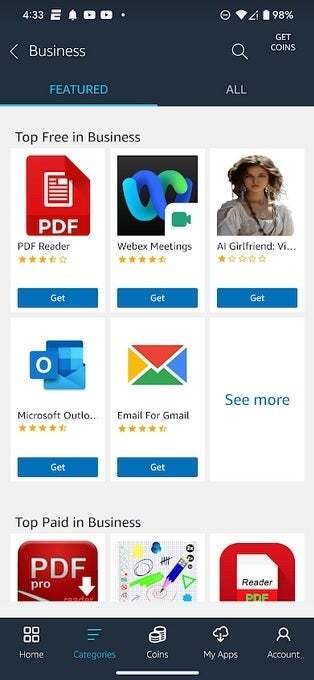
Android users can sideload apps from the Amazon Appstore
As for Android, to paraphrase the iconic Dr. Ian Malcom (played splendidly by Jeff Goldblum) in Jurassic Park, just because you can sideload apps on Android it doesn’t mean that you should sideload apps on Android. According to News18.com, those words of wisdom come from none other than Sundar Pichai, the CEO of both Alphabet and Google. This past Tuesday, during the U.S. via Google trial, Pichai was testifying and said (under oath, we should point out) that he tells Android users not to sideload apps on their phones.
Pichai said (and may I remind you that he’s under oath), “We don’t want to allow you to completely compromise your phone. It can install malware on your phone. It can really compromise your safety, very significantly.” This, of course, is the reason Apple gives for not allowing sideloading on iOS. Some might say that the difference is that Google is treating Android users as adults capable of making up their own minds.
On the other hand, tech-naive users who might not be familiar with the concept of sideloading or understand what malware can do to their bank account, might be happy to know that Apple is keeping iPhone users from making an unwittingly dangerous choice. This was the late Steve Jobs‘ main concern about the App Store from day one. Considering that apps these days can pass a scan only to be loaded with malware via an update, your best bet is to avoid installing apps from developers that you’re not familiar with.