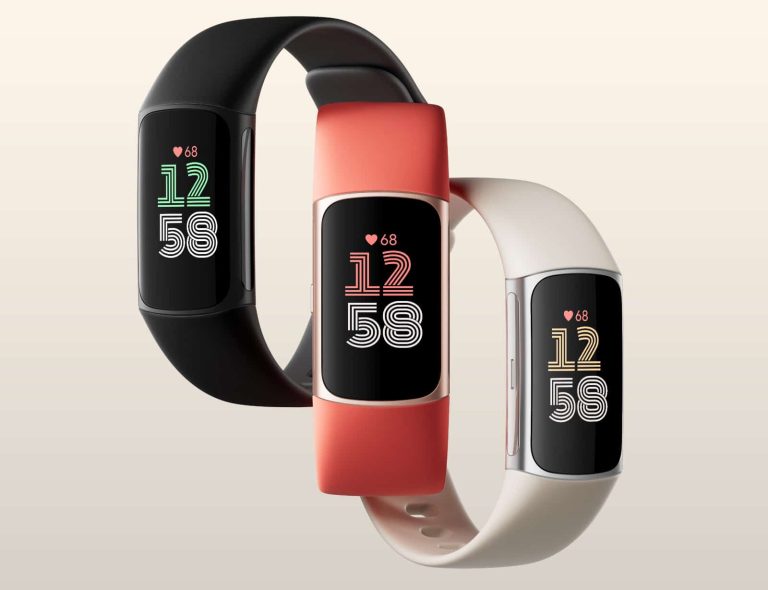
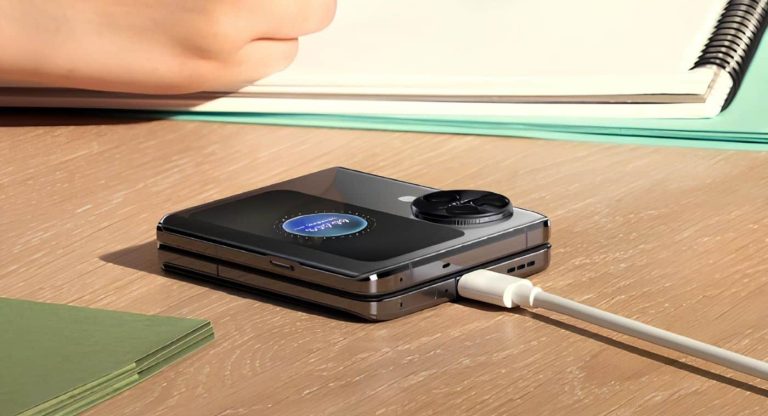
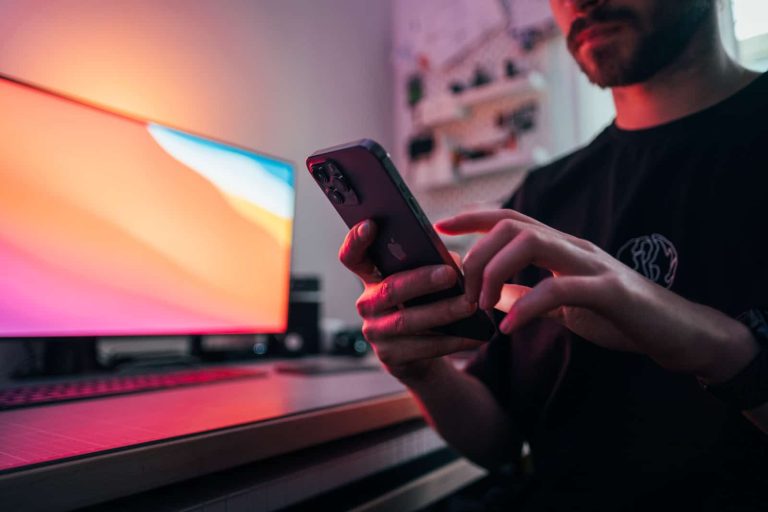
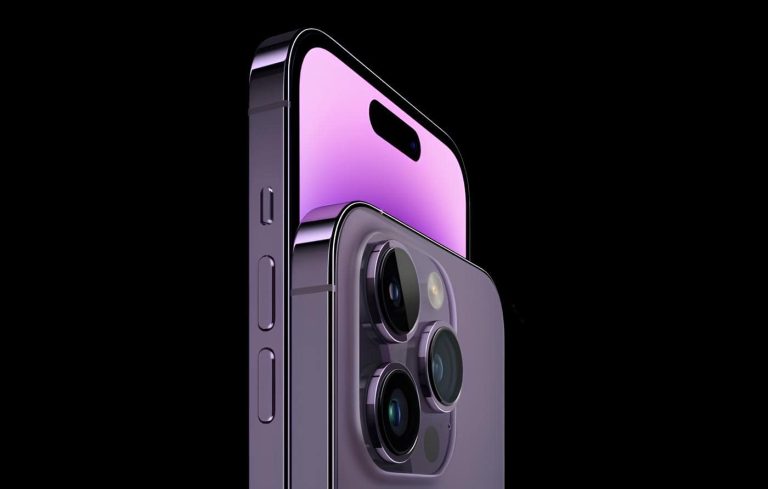
In early 2021, Google completed its acquisition of Fitbit, signaling a significant shift in the wearables industry. The Senior VP of Devices and Services at Google expressed optimism, stating that the collaboration could “make health and wellness more accessible to more people.” However, less than three years later, Google has taken a surprising turn by removing Fitbit products from 29 out of 51 countries where they were initially available. This decision, reducing accessibility by over 50%, contradicts Google’s earlier commitment to enhancing health and wellness globally.
Fitbit products removed from 29 countries
The affected countries include Mexico, all Latin American countries, Hong Kong, Korea, Malaysia, the Philippines, Thailand, Croatia, the Czech Republic, Estonia, Hungary, Latvia, Lithuania, Luxembourg, Poland, Portugal, Romania, Slovakia, and South Africa.
In response to inquiries, Google explained to Tech Central in South Africa that the decision was made “to align our hardware portfolio to map closer to Pixel’s regional availability.” This rationale was reiterated in a statement to Android Authority, emphasizing the strategic realignment of the hardware portfolio with Pixel’s regional presence.
Fitbit, a brand synonymous with wearables since 2007, has undergone substantial changes in recent months
Some markets have seen all Fitbit products removed, and others have seen their favorite premium features discontinued. The shift highlights Google’s aim to integrate Fitbit products with Pixel’s regional availability. It also leaves longtime Fitbit users in certain countries without access to the products they’ve grown to love.
The wearables industry has experienced significant growth over the last decade, with several major players entering the market. When a company makes such a decisive move, removing a product from more than half of its markets, there is usually a well-thought-out plan behind it. While it remains unclear whether the market performance of Fitbit products was declining in specific countries, Google’s intention to align Fitbit products with Pixel’s regional availability is evident.
Google has a very competitive wearables lineup, with both Fitbit and the Pixel Watch products. The Pixel Watch, particularly, has flourished since Google’s acquisition of Fitbit, incorporating many of Fitbit’s core functions alongside Wear OS. While Fitbit has seen improvements in certain areas, it falls short of the advancements seen in the Pixel Watch.
The decision to remove Fitbit products from over 50% of its markets raises intriguing questions. Particularly in regard to Google’s future strategies for its wearables lineup. As the industry evolves, it will be fascinating to observe how Google navigates and shapes the future of its wearables ecosystem.
In the ever-evolving world of foldable smartphones, Oppo has made a bold claim about the durability of its Find N3 series foldables. The company claims its Find N3 Flip and Find N3 to be TUV Rheinland certified for an impressive 1 million folds.
This assertion challenges the competition, particularly Samsung’s fifth-generation Z Flip and Fold devices, at least on paper. The 200,000 fold rating suggests quite a bit of difference in durability compared to OPPO’s offerings. Numbers are numbers, but this is what people can see and compare with.
Oppo claims 1M folds certification, surpassing its previous hunch on Find N3 Flip
The reasons behind this rating adjustment remain shrouded in mystery. The methods of testing could have been changed, yielding a better result. But no specific details have been provided by the company. It might be possible that OPPO was keeping the numbers a bit conservative, and later the device performed better in a standardized test.
In contrast, Samsung utilizes a different certification body, collaborating with ,Bureau Veritas, which officially rated the Galaxy Z Flip 5 for 200,000 folds.
Oppo’s Find N3 series boasts a significantly higher fold certification than Samsung’s foldable lineup. However, practical durability may differ due to various factors. For instance, Samsung’s Galaxy Z Flip 5 and Galaxy Z Fold 5 feature an IPX8 water-resistance rating, ensuring protection against submersion in water. In contrast, Oppo’s foldables hold only splash resistance, or in other words, they are rated at IPX4.
An important factor to take into account is that the tests are conducted almost non-stop. As a result, it does not measure the natural deterioration process that would take place in the hinge components during the next 2-3 years of usage in the presence of foreign objects. In this context, superior ingress protection (IP rating) could potentially offer advantages, particularly favoring the Galaxy foldable.
OPPO is putting a lot of emphasis on numbers. But only time will reveal whether its Find N3 series can indeed outperform Samsung’s fifth-generation Galaxy foldables in real-world usage.
If you have ever wondered what the most popular mobile games are, then the 2023 Mobile Gaming Index from Uswitch is here for you. This report provides gamers with insight into the gaming world and all the trending options among mobile players. If you are a gamer, the statistics provided in this report will be of much concern to you, as you want to know what the majority enjoy playing.
On the report are about seven categories of the most popular games from 2023. The rating on the popularity of games in one category come from two standpoints, one being critics and the other being actual players. Both parties have different things they look out for while looking at the games on this list.
For gamers, they are just out for what to play and enjoy playing, but critics are a different category of people entirely. The critics rate games, digging up for the pros and cons of these games, to give potential players a clear idea of what they are getting into. Here are the details that you need from the 2023 Mobile Gaming Index as provided by Uswitch.
Details on Uswitch’s 2023 Mobile Gaming Index reports on the best games out there
The first category on the 2023 Mobile Gaming Index list of best games among gamers is “the world’s most popular mobile games.” Topping this list here is Subway Surfers with over 63.64 million annual searches. Following this is Genshin Impact, Stumble Guys, Geometry Dash, and PUBG Mobile.
For the second category, which is the most popular game on Instagram, PUBG Mobile takes the lead. With over 14 million posts, this FPS game is the most popular among the Instagram gaming community. Other games on the top five list here are Pokémon GO, Genshin Impact, Clash of Clans, and Call of Duty: Mobile.
On TikTok, PUBG Mobile leads the pack again with over 321 billion views on posts regarding this game. Now that’s massive, already some might feel that PUBG Mobile is the best FPS mobile game out there. Genshin Impact, Clash Royale, Brawl Stars, and Stumble Guys are just some games on this list as well.
The highest-rated mobile game among critics is Plants vs Zombies, but gamers say it’s Bejeweled Stars. As for the most storage-intensive mobile game, the award goes to Fantasian which consumes 4.5GB just for download. On a global scale, the highest-grossing mobile game is Honor of Kings, with a whopping $1.36 billion in revenue.
For developers, the top-grossing for iOS is Shenzhen Tencent Tianyou Technology Ltd, with $521 million in revenue. On the Android side, gamers King (Candy Crush developers) takes the crown with $50.9 million in revenue. For the highest-rated phones for gaming, Samsung takes the top spot, with the Galaxy S23 Ultra on top.
Apple is currently working on its in-house ISP (Image Signal Processor) to improve its imaging and video capabilities even further. This in-house designed camera component is expected to enter mass production in the second half of 2026. And again, Apple will fabricate these self-designed chips from TSMC.
But what is the role of the ISP in the first place? ISP is a specialized chip that is responsible for processing the raw image data captured by the camera sensor in a smartphone. This chip performs a variety of tasks, including demosaicing, noise reduction, maintaining the white balance and exposure, image sharpening, and more.
If it feels a bit technical, in general words, the image signal processor in your phone helps improve the image quality in low-light conditions, maintain the lights and shadows, help keep your subject in focus, and also enhance video recording.
The implications of the switch to Apple’s in-house ISP for future iPhone cameras
In terms of video, Apple has already managed to tune Sony’s ISP to manage things like exposure shifts better than most Android manufacturers. But honestly, the imaging capabilities of an iPhone don’t always tell the same story.
There will always be an Android device that takes the lead in a particular category when compared to the latest iPhone. For example, consider the dynamic range of Google’s Pixel devices’ cameras or the low-light imaging performance of some Huawei devices.
In any case, things finally may take a turn for the iPhone’s imaging capabilities. iPhones are great when you want a mostly perfect and all-rounder camera system. And, with Apple’s self-designed ISP, iPhones might even take the crown of being best, in those niche scenarios like the ‘best camera for low light’ or the ‘best dynamic range ever on a phone’ and so on.
Tipster Revegnus on X reported about Apple’s under-the-hood efforts on its camera system and, if done right, the future iPhones might bring a change in some words inside the ‘best camera’ category.
The beauty of Android is that you can find some amazing phones at some pretty low prices. Sure, you can go for the top phones on the market that cost more than $1,000. However, there’s always the chance that the life-changing phone you’re looking for is sitting at half of that price. In fact, some of the best Android phones are actually under $500.
That’s true! You’re looking for a phone that looks nice, has a pretty screen, sports some amazing speakers, or runs smoothly, right? Well, you don’t have to set your sights so high. There are phones out that show you that you don’t need the latest Galaxy S phone. So, here’s a guide to show you what great Android phones that you can buy for under $500.
Best phone under $100: TCL 40 XE
This is for you if you’re funds are low, but not your expectations
So, you’re looking for a phone that’s affordable enough not to burn a hole in your wallet; however, you still want a smartphone experience that’s not absolutely terrible. That’s a tough thing to ask for, but companies like TCL have your back. This company has the Verizon-exclusive TCL 40 XE 5G. This Verizon-exclusive phone comes in at only $99.99. At $99, most barely expect it to turn on, let alone provide a good experience. However, TCL has a way of making phones that are insanely good for their prices.
What makes this phone worth more than its price? It’s the all-around experience. Most phones in this price range are doomed to have a consistently slow and laggy experience. This phone, on the other hand, doesn’t have that issue. You’re able to use this phone perfectly fine without lag or stutters. You can check out our TCL 40 XE Review right here. During our testing, we found that there was only the occasional dropped frame in the software, and that wasn’t bad at all. You’ll be able to use this phone as you would any phone, and you won’t have to worry about a laggy UI.
But, the best thing about this phone is what you’re using to see the UI; the display. TCL makes its own high-quality displays, and it’s not shy about trickling it down to its phones. Not only is this a pretty display, but the company’s NXTVISION technology gives the videos and games you’re enjoying a nice boost. You’ll see more juicy colors and more contrast.
You’re getting a solid smartphone experience with an amazing display for only $100. This makes it one of the best phones on the market that you can get for that price. If you’re a Verizon customer, you should consider it.
TCL was able to deliver a phone that breaks boundaries, not the bank
If you’re looking for a high-reaching phone at a low price, then TCL is the company that you should look to. TCL has a way of making great phones that offer a solid overall experience without coming close to that $500 mark, and the TCL 40 X 5G is one of them.
The experience with this phone begins the second you pick it up. You’re instantly met with the feeling that this phone was built to last, and it is. We’re not talking about a rugged phone, but it’s much more sturdy than its price suggests. It can take drops and years of abuse and keep going, which is the true meaning of value. Gone are the days when an affordable phone meant a cheap phone.
The screen is probably the best part of the whole experience. TCL is a TV company, so it knows how to masterfully create a screen for its phones. The TCL 40 X 5G has a great display for the price. It’s not the sharpest, but it’s more than enough to make the content you’re watching look amazing. It uses technology that boosts the colors and contrast of videos and games, so you can enjoy your favorite visual media with an HDR experience.
There’s no point in having a nice screen if everything you’re looking at is slow. The TCL 40 X 5G runs smoothly. You don’t want a slow and laggy phone, no matter how cheap it is. There will be times when you notice some stutters, but the overall experience is really smooth.
You’re getting a phone with a smooth experience, an amazing display, the latest software from TCL, and a solid design. This is all for a mere $200. This is why this phone gives you the best bang for your buck. Read our TCL 40 X 5G Review for more information.
This is a phone for people who love to tinker with their software
Buying an affordable phone doesn’t mean that you have to settle for fewer features. Most cheaper phones have what is called “Stock Android”. Think of it as the most basic version of the software. But, what if you’re looking for a ton of fun and exciting features? You want to personalize your phone to your liking; you want something fresh and new. Well, it’s time to take a breath of Oxygen.
The OnePlus Nord N30 uses what’s called OxygenOS. Without getting too far into the details, this is a version of Android that has a ton of great and fun software features. You can change the shape of your app icons and even dial in how rounded the corners are on the icons. You can swipe from the edge of the display to compress all of the apps to the bottom when you can’t reach the top of your screen. How about being able to pop apps out into floating windows? That’s only a handful of the fun things you can do with the software on this phone.
The software experience is one part, but OnePlus truly made an amazing all-around phone that you’ll enjoy. It’s just so good in several ways, and you can read our OnePlus Nord N30 Review to know more.
However, here’s the gist of it. Using this phone is just a generally great experience. You’ll love it if you love watching movies and TV shows because the screen and speakers are just amazing. Maybe you just value smooth performance. Well, this phone is a powerful performer as well, just gliding through the software. This smooth performance also translates into the gaming department.
OnePlus made a phone that should cost much more than its price. However, this phone can be had for the price of $299.
This phone has such an optimized stylus experience
Motorola is one of the few companies making phones with built-in styluses. It’s also one of the very companies offering their phones for less than $1,000. The company has honed and perfected the stylus experience of its phones over the years, and the company delivered the most advanced model earlier this year.
The Moto G Stylus (2023) is the phone to get if you’re looking for a powerful stylus experience without paying the “Samsung Premium”. What makes this phone to get over other phones? Well, we can talk about the specs all we want, but those aren’t important. What matters is the optimization. When you take the stylus out of the silo, you’re instantly greeted with a toolbar of the tools you can use. Do you need to take a quick screenshot? That’s in the toolbar. Do you need to record a part of your screen? That option’s also there.
Motorola has taken Android and morphed it around the stylus experience. You can handwrite notes, sign documents, and draw with it. You’re even able to take a note on the screen when the phone is locked. Also, you don’t even have to download 3rd-party software to do it. This functionality and utility are built right into the phone.
Along with the powerful stylus experience. This is a capable phone. Everything about the phone just comes together in this amazing harmony. You’ll love watching movies on the display, listening to music with the speaker, navigating the software, and gaming with the smooth performance. Not to mention, this is a stunning-looking device. The Motorola G Stylus 2023 is just an all-around amazing handset that you’ll love if you’re in the market for a phone with a built-in stylus. Who says that only premium phones can have a great stylus experience?
You’re sure to get a cinema-like experience with this phone
If you’re looking for a phone with a great display, then you’ll want to go with a Samsung phone. Samsung is the “Display company”, and the company is not shy about decking out its cheaper phones with beautiful displays. In the case of the Galaxy A54, the display is a window to an equally beautiful smartphone experience. Using Samsung’s One UI software, you’re getting a powerful user experience.
Samsung has mastered the smartphone experience over the years, and it’s been able to optimize its software for less expensive phones. The Galaxy A54 is the next just a step behind the more expensive Galaxy S23, but you don’t feel it. The moment you pick up the phone, you’ll be hit with the feeling that you’re holding a premium flagship. It feels so sturdy that you know it can take a tumble and keep going. Not only that, but it also has the look of a true flagship.
Now, you’re likely going to want to use this phone for all of your movies and TV-watching. Well, that’s a good choice because Samsung gave this phone an amazing display. It’s one of the prettiest displays on a device of this price. You’re going to love watching all kinds of content and viewing your photos on this screen.
There’s almost no point in having a beautiful display if you can’t view it when you’re outside. So, along with being nice, the screen on this phone is very bright. Viewing it when outside is not an issue whatsoever.
The Galaxy A54 has so much going for it in the screen department. Not only that, but it’s also just a generally great phone, and it gives you a full-fledged Samsung Galaxy experience for an affordable price. It’s worth the price of $449 and so much more.
This is proof that a pro camera experience isn’t reserved for expensive phones
Sony’s Xperia line of phones has long left the average consumer market with the top-tier handsets costing nearly $2000. However, the company decided to bring the Xperia formula down to a more affordable price point. The Xperia 10 V is the phone to get if you’re tired of missing out on the Sony experience.
Just about every smartphone’s camera is meant to give you a great point-and-shoot experience. This phone gives you a good experience, it’s more focused on giving you more control. When you’re using the camera, you can go to the manual camera mode. This is a mode for people who like to adjust their camera settings and craft the photo specifically to their liking.
The Sony Xperia 10 V is a great phone for you or a loved one who’s looking to get into photography but doesn’t have the funds for an expensive camera. Good cameras cost a lot of money and most cheaper cameras produce photos so bad that they’re not even worth it. The Xperia 10 V is an excellent middle ground between affordability and great camera performance.
What else makes this phone great? Well, this phone offers a great software experience through and through. The phone comes with a pretty pure version of Android, but Sony added some bits and pieces of its own influence to give it a unique flair. So, you’ll have a customized version of Android that performs great.
Aside from the camera, the best aspect of this phone is the battery life. On a single charge, you’re able to get more than a day and a half of light to moderate usage. If you’re going to be using the camera a lot, then you’ll still be able to get a full day out of this phone on a single charge.
This is a phone that can outlast your long workday
We’re all talking about the most powerful phones on the market with the best specs, but what’s more important than power is duration. Motorola is a master at crafting phones with excellent battery life, and it’s a shining example that you don’t need to pay a ton of money for that luxury. The Moto G Power 2023 is the latest in the line of phones that can power your day and then some.
This is the latest version of the phone, so you know that you’re getting an up-to-date experience. You’re not going to be missing out on powerful software features provided by Motorola. The company has a pretty pure take on Android, but it adds its own special flair to the software. So, you will have access to some of the features that make Motorola phones great. All of these features are wrapped up in a phone that offers a great experience from the moment you power it on.
Speaking of power, this phone can remain powered on for quite some time. Since it’s in the Moto G Power series, this phone is meant to give you some of the best battery life of any phone in this price range. The Moto G Power 2023 comes with a large battery. It’s the same battery size that much more expensive flagship phones use, so you know we’re talking about some size.
If you’re a casual user, and you use your phone for mostly light tasks, then you shouldn’t have too much trouble getting two days of battery life on a single charge. If you’re a heavier smartphone user, you will still be able to get about a day and a half on a full charge. This phone is for people who value longevity over the best specs on the market.
A phone that can take whatever you can throw at it
If you’re looking to save money on a phone, you shouldn’t have to skimp on the durability. While you’re buying a cheaper phone, you’ll still want to make sure that you’re able to keep it for a good amount of time. That’s where the Nokia XR21 comes in. The company brought this phone with the goal of providing an affordable phone that will last you through years of abuse.
The Nokia XR212 is a phone that brings some decent power along with its durability. It has good hardware, so you’ll get a smooth smartphone experience overall. You’ll be able to download all of your favorite apps and use them with no issues. The same thing mostly goes for gaming; you’re able to play most of the games on the Google Play Store smoothly, with some of the more graphically intensive games giving it trouble.
But the main selling point of this phone is its durability. The Nokia XR21 is a rugged phone through and through. It’s not made from fragile premium materials like most flagship phones. Rather, once you pick up the phone and you feel the heavy-duty materials, you’ll know that it’s a phone meant to be taken on the job.
The screen won’t shatter when it’s dropped, and the chassis is tough enough to protect the insides. You can drop the phone time after time, and it won’t show any signs of damage. That’s thanks to the MIL-STD-810 durability rating. That’s a standard held by military-grade equipment.
Aside from that, this phone can survive being under the water as well. It’s strong enough to even withstand a pressure washer, so getting caught in the rain or dropping it in some water will not phase this phone at all. It’s a phone that you won’t need a case for.
If you’re a gamer, you don’t have to spend a ton just for a decent gaming phone
Sure, any smartphone that comes out has the capacity to play games, but there’s a subset of phones that are the best suited to play these games. There are a bunch of gaming phones out there on the market that promise an epic gaming experience, but they’re usually very expensive. Well, if you’re interested in saving money, then you should look into getting a Poco X5 Pro.
This is from a brand that’s known for delivering amazing smartphones at lower prices, and this phone is no exception. It’s a phone to get if you’re a true gamer who wants the most from their phone. At $295, you wouldn’t expect a good experience, but price isn’t everything.
The company fitted this phone with some amazing hardware, so it will just fly through everything that you throw at it. Whether you’re gaming, watching videos, or just scrolling through social media. You’ll get a smooth experience throughout every moment you’re using it. You can’t have a great gaming phone if it can’t do the basics.
Speaking about gaming, this phone uses hardware that’s great for gaming, so you’ll be able to tackle most of the titles that are available on the Play Store. It’s good enough to tackle many of the graphically intensive games that have been slowing down phones over the years. Being a cheaper phone, there are some titles that will cause it to chug, but you can always crank down the graphical settings.
Aside from that, this phone has a beautiful screen to view the games through. It’s bright, colorful, and pixel-packed. If you’re playing Genshin Impact on this phone, it will look stunning. This is all wrapped up in an extremely affordable and good-looking package. Taking the price and performance of the Poco X5 Pro, it’s a no-brainer.
If you’re looking for the best point-and-shoot experience, look no further
Google offers the purest Android experience on any phone on the market and it offers the best camera performance of any phone in this price range. The Google Pixel 7a is a shining example of Google’s commitment to bringing its amazing optimized Android experience to lower price points.
When you’re using this phone, you know that you’re covered by Google. This phone is going to be getting all of the newest software updates and features for the next couple of years. When there’s some shiny new update, you’ll be one of the first to get it. You don’t have to shell out for a more expensive Pixel 7 or Pixel 8 in order to do so.
Using this phone, you wouldn’t know that it’s a cheaper device. You won’t see any stutters or hiccups in the software whatsoever. This is because Google used the same chip that’s in the Pixel 7 Pro inside of the Pixel 7a. This means that everything you do on the phone will be perfectly smooth. All of your apps will run smoothly and you’ll have a great time gaming.
The main reason you’ll want this phone is the camera. Google makes it extremely easy to take your phone out and snap a quick photo. Every photo you take with this phone is going to be amazing. Google has honed its software to give you consistently amazing and detailed photos. You don’t even have to mess around with settings. All you have to do is take your phone out and shoot the picture.
If you’re looking to be a photographer or you just produce mesmerizing photos, then you won’t regret picking up this phone for its super cheap price. It could be for you or it could also be an excellent gift for a loved one.
Amazon has long employed customized versions of Android to power its diverse range of products. These include Fire TVs, smart displays, and more. However, after a report has emerged, this might be coming to an end. First reported by Lowpass, Amazon might be working on a new operating system. It is dubbed “Vega”, and Amazon is likely to Android for this new OS on most of its devices.
Be it Fire Tablet, Fire TV, and more, Amazon has built most of its hardware on the back of Android, specifically by using AOSP (Android Open Source Program) to “fork” the OS to skip out on Google services and heavily customize the platform as per its preference. Basically, Forking means to customize the Android’s code with some special features or modifying the pre-existing features.
Amazon has “mostly” developed the Vega OS for Fire devices
Lowpass report says that Amazon has been working on this transition since around 2017. There has been a dedicated team for the development and a significant portion of the work has already been done. Fire TVs could probably be the first devices to come out with Vega OS. The report also suggests undergoing testing on Fire TV devices. Hence, Amazon is set to ship new hardware featuring the Vega OS as early as next year.
It remains uncertain if this change will extend to Amazon’s Fire Tablets, which heavily rely on native Android apps. However, it seems to be a logical step for Amazon to integrate the new OS into its ecosystem of products.
Android-powered Amazon tablets haven’t received updates in a while
Amazon generally lags well behind on Android versions, even with its latest Amazon tablets. Take, the Amazon Fire Max 11, for an example. The 11-inch tablet was released in 2023, and the latest OS it runs is three-year-old Android 11-powered Fire OS 8. Meanwhile, Google last month has already released Android 14, and key smartphone makers have refreshed their devices with the latest OS.
Smartwatches and fitness trackers can be an essential part of your everyday life and especially so if you’re trying to stay active and healthy or working your way towards a healthier you. They’re also great for just having a convenient tool on your wrist to have at your fingertips. As you can use them for getting smartphone alerts, or just to have a handy digital assistant available whenever you need to ask a question.
There are lots of different smartwatches and fitness trackers out there and with the holidays coming up you might be looking for one of these items for a gift for your loved ones. And if that’s the case this guide is here to help you narrow down your choices to make the buying process easier for you. We’ve selected five of the best smartwatches and fitness trackers out there with varying price ranges and features to fit every budget.
You’ll even find a couple of honorable mentions on the list. Because there are so many good options and some were just too hard to leave out of our selections. With that said, have a look below to find what we feel are the best smartwatches and fitness trackers you can buy right now.
Best Smartwatch for Android Users: Samsung Galaxy Watch 6 Classic
Samsung Galaxy Watch 6 Classic
A supremely stylish smartwatch with a comprehensive list of features
The Galaxy Watch 6 Classic is Samsung’s latest iteration of the long-running Galaxy Watch lineup and it once again claims the top spot for best Android smartwatch. Offering the best style with the leniency of supporting standard watch bands to give users a large number of ways to personalize the watch look. It’s been my favorite smartwatch of the year so far and it’s certainly Samsung’s best smartwatch to date. That isn’t to say it’s completely perfect in every single way. Battery life could still use some improvement. But I’ve found that it’s better than most other smartwatches I’ve tried that are similar and it’s reasonably priced at $399.
Outside of battery life the Galaxy Watch 6 Classic shines in a lot of ways. Perhaps most notably at least for those familiar with the Galaxy Watch lineup, is the rotating bezel. This makes navigating the watch UI an absolute breeze. All you have to do is twist the bezel to navigate the menus left or right or up and down depending on the screen you’re on. This will allow you to touch the screen a whole lot less so you don’t gunk it up with fingerprints.
That might not bother some users as smartwatches are touchscreen devices and they were meant to be used with a touchscreen after all. But if you’re like me you hate fingerprints and smudges on your displays. And seeing as smartwatches generally do have touchscreens it’s kind of impossible to avoid them entirely. I have found though that using the bezel cuts down on them a noticeable amount. And it’s just more fun to use the rotating bezel to fly through the menus as opposed to swiping.
When it comes to specs the Galaxy Watch 6 Classic has a 1.5-inch display and it comes in 43mm and 47mm sizes. Whether you prefer smartwatches that are smaller or larger, the Galaxy Watch 6 Classic has you covered. It also has a 425mAh battery which as mentioned before could be better but it’s by no means terrible. The Galaxy Watch 6 Classic is also one of only a few smartwatches that run on Wear OS 4. Which does actually help with battery life and performance. Overall usefulness of the Galaxy Watch 6 Classic is pretty high up there because it’s capable of so many things.
Aside from the rotating bezel, the overall style and comfort of the Galaxy Watch 6 Classic is tough to beat. I’ve been able to wear it all day without it feeling uncomfortable. The same can’t be said for many smartwatches I’ve tried in the past. Part of that is due to the design of the watch case as it just feels unobtrusive against your wrist. But it also has a large part to do with the type of bands you use. And the nice thing about the Galaxy Watch 6 Classic is that it has a very wide variety of band options.
Simply because it supports a standard 20mm band. Samsung offers plenty of these but you can also find loads of them on Amazon, or even places like Fossil. In addition to this potentially changing up the comfort level it also lets you personalize the watch style with a band you like more. Plus it gives you more options in what to wear should you want to switch things up for various occasions. Overall you’ll be hard-pressed to find a better smartwatch for Android users. And whatever you want a smartwatch for, whether it’s sleep tracking, workout tracking, smartphone notifications, and just generally having a way to be hands-free with smartphone features, you’ll get it with this watch.
If you’re looking for something a little different than what Samsung offers then consider the Pixel Watch 2. Not only is this an excellent smartwatch for Pixel owners, it’s a bit smaller in size. And this might be to your personal preference as not everyone likes large watches. Like the Galaxy Watch 6 Classic the Pixel Watch 2 runs on Wear OS 4. So it benefits from improved battery life and performance. It’s also a pretty stylish watch in its own right. And at a base cost of $349 it’s even a bit cheaper than the Galaxy Watch 6 Classic. It’s a solid smartwatch option and a close second to Samsung’s latest.
Best Smartwatch for iOS Users: Apple Watch Series 9
Apple Watch Series 9
Innovative features like Double Tap make this the quintessential smartwatch for iPhone users
As an iPhone user you aren’t limited to the Apple Watch if you want to use a smartwatch. But you will get the most out of your smartwatch experience if you go with an Apple Watch. With that said, the Apple Watch Series 9 is our pick for the best smartwatch for iOS users. While it looks identical to the Apple Watch Series 8 it has internal upgrades and improvements that do add quite a lot to the overall experience. And these definitely make using the watch feel a lot more convenient too.
One of the most notable improvements is of course Double Tap. This is a new feature that Apple introduced alongside the announcement for the Watch Series 9. And it’s a gesture you can use by tapping your thumb and your index finger together twice. In doing so, you can initiate a number of different actions. Ones that you would normally have to tap the screen for. Double Tap is intended to be a hands-free feature. Where you can still use the watch even if you can’t interact with the touchscreen.
It’s perfect for when you’re shopping or doing anything around the house where you might have your hands full. You can use Double Tap to do a number of different things including scrolling through your widgets. As well as answering a phone call, pausing and playing media, snoozing your alarms, ending timers, and snapping a photo using your linked iPhone’s camera. Basically, it does a lot and it’s one of the main reasons to get this watch over others.
Another under the hood improvement with the Watch Series 9 is the on-device Siri request processing. See, with the Apple Watch Series 8 and before Siri had to process requests you made with the help of the internet. You’d ask Siri to set an alarm and it would need the internet to process your request. And a few seconds later you’d see your alarm set. Now that a good portion of requests are processed on the watch and without the internet, processing happens almost instantly.
This only works for requests where Siri doesn’t need to ask the internet to get an answer. For example, if you ask Siri how many miles it is from one location to another, it’ll need to use the internet to process that request. But if you’re asking it to set an alarm, start a workout, or dictate a message, all of that happens on the watch now thanks to the S9 chip. Speaking of dictation, Siri can now dictate messages faster as well. So sending messages overall is a much quicker process than it used to be.
You’ll get a lot of the same things here as you do on the Apple Watch Series 9. Only with the added benefits of the Ultra. Such as the Action button, the longer battery life, the larger 49mm watch face and more. Because it also uses the S9 chip you get the on-device Siri request processing too. Not to mention the Double Tap feature, among other things. It also has two exclusive watch faces – Modular Ultra and Wayfinder. These can go into a Night Mode setting and turn the faces red when the sensors detect it’s dark outside.
What you love about Fitbit with the smarts of Google
Our pick for the best overall Fitness tracker is Fitbit’s new Charge 6, released a little earlier this Fall. The Charge 6 is Fitbit’s latest tracker to hit the market. And this is another one of those devices that doesn’t look terribly different from its predecessor. But it does have more features and some changes that take place under the hood. So while it may look pretty similar it’s definitely going to give you a different experience than the Charge 5. Not to mention an improved experience thanks to those internal upgrades.
We can’t talk about the Charge 6 without mentioning that it’s now been Goog-lified. To put it more simply it has new Google features that no other Fitbit tracker has. This includes features like Google Wallet and Google Maps. Allowing you to get directions to a new cafe you were meaning to check out and then pay with Google Wallet on the tracker once you get there. You now also sign in with your Google account when setting up the tracker which kind of simplifies things.
Since you no longer need a Fitbit account to use the app you have one less account you need to worry about. And we’d mark that down as a nice convenience factor. Fitbit has also added 20 new workout modes to the tracker. This is going to make it so you can do more activities where the Charge 6 will be able to track those kinds of exercises or workouts. It’s also possible now to sync the device with certain workout machines. Which could be of use to you if you have the compatible equipment.
Outside of some of the new changes Fitbit has kept all of the things users loved about past trackers. Such as 7-day battery life, continuous heart rate tracking, advanced sleep tracking features, and of course smartphone notifications. The Charge 6 will run you about $159.95 and is available in three different colors. Black, gold, and silver. With their own unique band colors that include obsidian, coral, and porcelain.
Part fitness tracker and part smartwatch, the Amazfit GTR 4 is Amazfit’s latest device in the GTR lineup and comes in at around $200. It offers an array of features that aim to enhance your fitness experience. This includes but isn’t limited to the “PAI Points” system that trades tracking steps for tracking moderate activity. Which is set at a weekly goal of 150 minutes while trying to maintain a PAI score of 100. The watch also features multi-band GPS tracking and Alexa built-in, with a big, bright, and round OLED screen to make sure you can see everything nice and easy.
Best Budget Fitness Tracker: Xiaomi Smart Band 7 Pro
Xiaomi Smart Band 7 Pro
Xiaomi has managed to stuff a lot of useful features into an affordable tracker
As a brand Xiaomi is well-known for delivering budget devices and it’s made plenty of fitness trackers for close to the last decade. So it shouldn’t be surprising that we’re picking Xiaomi’s Smart Band 7 Pro as our best budget fitness tracker. If you’re looking to grab a fitness tracker for a gift this year that won’t cost too much, you definitely have options. But you should definitely consider the Smart Band 7 Pro over any others that are available in a similar price range. At $84.50 over on Amazon, the cost sits under $100 and you get a surprising amount of features for being in that price range.
First up is the Band 7 Pro’s large display. For one it’s an AMOLED panel. And that’s already a good start. But beyond that the size of the display is 1.64-inches. Which is noticeably bigger than almost any other fitness tracker on the market. It’s not just taller either. It’s considerably wider than other trackers out there as well. For comparison, the display on the Fitbit Charge 6 is only 1.04-inches. It doesn’t seem like much.
But having a display that big on a tracker makes a huge difference and you’ll start to notice the more that you use it. This is almost always the reason that interacting with fitness tracker displays can be a pain. They’re small. But what is commonly an annoyance becomes less so thanks to a larger screen. For the Xiaomi Smart Band 7 Pro, this will make reading notifications much easier. Though it will mostly be of use when you lift your wrist to glance down at health metrics during workouts. Think about all those times you might have done this. Only to have to look several times or squint to see what you were looking for. This should help with that.
One downside of a larger display is often the impact it has on battery life. But that shouldn’t be much of a problem with the Smart Band 7 Pro because in our testing it can last around 8-10 days on a single charge. Most fitness trackers will last for quite a long time compared to smartwatches. But even Fitbit’s trackers only last for up to a week where the Smart Band 7 Pro can last for closer to two. If battery life is your absolute main concern with a tracker, this might be a better option. Since you’ll have to charge it less, that means you can wear it more. And that will allow you to benefit from the features more. An important detail if you plan to wear this to bed for sleep tracking purposes.
The regular list of expected features for a fitness tracker are all here. Smartphone notifications, workout tracking, the ability to set alarms, you name it. What’s not so common at this price is built-in GPS. And that’s something the Smart Band 7 Pro offers.
You’ll be hard-pressed to find a better option for a budget tracker at the $50 mark. While the Band 7 Pro is our pick for the best budget tracker overall, it is nearly double the price of Amazfit’s Band 7. And when you have to factor in cost, $50 is not a lot for a fitness tracker. The really impressive thing isn’t just the price though. It’s that Amazfit packs so much into a tracker that costs just $50.
With an AMOLED display that’s 1.47-inches it’s almost as big as the Band 7 Pro. It can track 120 different sport modes and track blood oxygen, heart rate, and stress levels with a single tap. Surprisingly, it even has over 50 watch faces so you can customize the look of the tracker. In short, the Band 7 from Amazfit is proof that you can get a quality tracker for a low price these days.
A small but mighty fitness tracker that fits seamlessly into your life
Most fitness trackers, even these days after years of the product category being on the market, are still worn on your wrist. And it does make sense for that to be the case. As there’s a lot you can do with the sensors if they sit there. Not to mention it’s just a logical place to put a display you might look at. Especially when watches have been wrist-worn for so long. But fitness trackers don’t have to be worn on the wrist and not all of them are. There are in fact some you can wear elsewhere. Case in point, our pick for the best non-wrist tracker. Which is the Oura Ring.
If you hate wearing watches or other wrist accessories for too long, then it’s unlikely that you would benefit from having a fitness tracker you wear on the wrist. But that shouldn’t lock you out of having some of the same benefits as those who like wrist-worn trackers. And that’s where the Oura Ring comes in. This ring tracker can feel less obtrusive. Plus, its incredibly small size (it’s a ring after all) makes it easy to stay out your way.
Of course there are some disadvantages to not having a tracker with a display. You can’t interact with metrics or other features on the device itself. But then again if you’re going for a tracker like this one that probably doesn’t matter to you. Aside from not having a display the Oura Ring is a surprisingly capable tracker. It’s a little pricey at $299 but not the most expensive tracker out there. And for that money you get a device that can track your blood oxygen levels, heart rate, heart rate variability and more. There’s even a feature for tracking period predictions and an updated sleep stage algorithm.
Outside of tracking features, the Oura Ring is about as durable as trackers come. It’s made of titanium and it’s water resistant. And because there’s no display there’s essentially no fear of breaking or cracking something that’s going to hinder you using it. All of the sensors are on the inside of the ring. And since the inside of the ring is touching the skin of your finger the sensors are all covered up when worn.
With that in mind we’d venture to say it’s the most durable tracker on this list. And if durability is a factor for you then you can’t go wrong with the Oura Ring. It’s durable, lightweight, and simple in terms of user experience as you don’t have a screen to interact with. You simply pair it with the app on your phone and complete a first-time use setup Then from then on you just put it on and take it off when it needs a charge. Then rinse and repeat. It doesn’t really get much simpler than that.
While the Inspire 3 can be worn on the wrist, Fitbit actually offers a very nice clip accessory for it that lets you wear the tracker on your waist or anywhere else you can clip it during use. So it’s our honorable mention for a non-wrist tracker. And at $99.95 it’s affordable. In terms of features it has a decently sized full color display and tracks things like heart rate, SpO2, menstrual cycles, stress, and more. Plus it connects to the overhauled Fitbit app and has a battery life of up to 10 days. The nice thing too is that you have the versatility to wear it on your wrist at some point if you want to. But as long as you pick up the clip accessory you won’t have to.
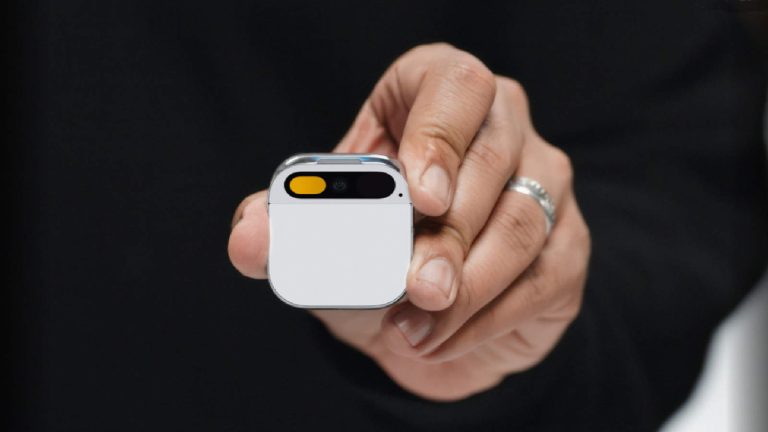
Recently, we’ve been following rumors surrounding one of the first generative AI-focused hardware devices. Called the Humane AI Pin, this device is now official. The founders of the company just gave a short and sweet announcement of the device.
In case you don’t know what the AI Pin is, it’s a small AI-powered device that attaches to your clothes. The device is able to scan objects in the real world and use what it scans as input. It also has a microphone that allows you to talk to it and ask it questions. Think of it like attaching ChatGPT to your shirt.
The AI Pin has access to a suite of AI services stored on the cloud, and this gives the device a seamless AI-powered experience. So, instead of going to a specific app to do a certain task, all you have to do is ask the AI PIn whatever you want, and it will automatically choose the AI service and perform the task you asked.
The AI Pin comes with an onboard battery; however, the pin attaches magnetically to an external battery that the company calls a Battery Booster. This will charge the internal battery, thus adding to the longevity. When you get your pack, it will come with two battery Boosters.
The AI Pin is now official
After several months of waiting, the AI Pin was finally made official, and the company shared some details about the device. It uses a Snapdragon processor, but the company didn’t reveal which one.
If you’re thinking about the price of this device, it’s a reasonable $699. In the pack, you’ll get the device with several components. The pack includes the AI Pin (shocker), two Battery Boosters, a wireless charging pad, a cable, a wall adapter, and a charging case. The charging case works just like a charging case for a pair of TWS headphones.
If you’ve been following the rumors, you may have heard about the $24/month monthly subscription. Well, it turns out to be true, and it grants you unlimited talk/text/data through T-Mobile, cloud storage, and several other perks.
If you’re sold on this device, then you’ll want to check out the link below.
An interesting piece of information has come out of the Discovery process for the Epic v. Google trial that started earlier this month. Epic, as you might know, is suing Google claiming that the latter’s Play Store is a monopoly. Google, like Apple, takes a percentage of the revenue collected for in-app purchases. Originally pegged at the same 30% as the so-called Apple Tax, two years ago Google reduced the “tax” on the first million dollars of revenue to 15% reverting to 30% once that threshold was crossed.
Epic decided to offer its V-bucks in-game currency for its big hit Fortnite bypassing Apple and Google’s in-app payment process thus eliminating the fees it would have to pay Apple and Google. Both tech firms responded by booting Fortnite and Epic out of their respective app storefronts. Epic sued Apple mostly to no avail, and now the game developer has its day in court against Google.
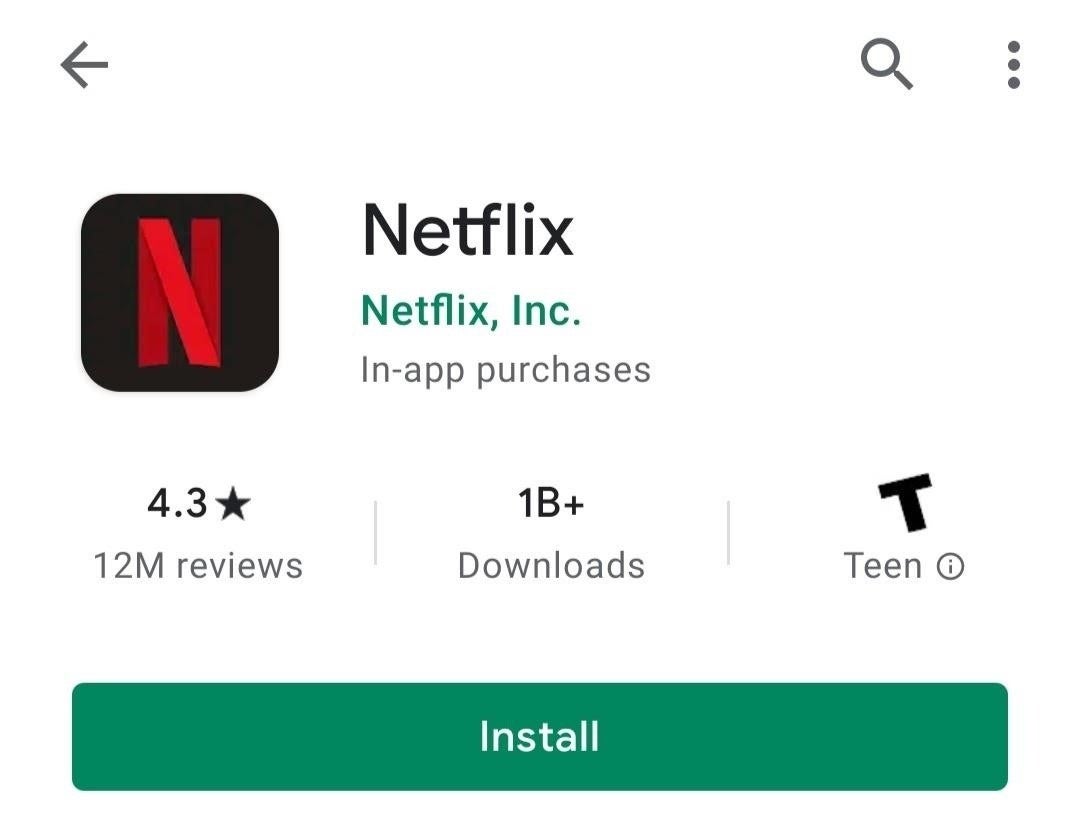
Epic, as you might expect, wasn’t the only company to complain about the payments that they had to make to Apple and Google. Spotify and Netflix both also complained about the “commissions” they paid. Android users can no longer subscribe to Netflix from the Android app. According to The Verge, a 2022 video deposition of Netflix VP of Business Development Paul Perryman revealed that Netflix paid Google 15% of in-app subscription revenue before Netflix decided to stop offering it as an option to subscribers.
Android subscribers cannot subscribe to Netflix directly from the app
Perryman also said that before Google took away the ability of Netflix to offer its own in-app payment processing, Netflix was paying Google only 3% of subscription revenue. Evidence shown in court yesterday included testimony showing that before Google took away alternate forms of subscription payment options from Netflix, it offered the company a special deal that would drop the percentage of in-app revenue that Google would receive down to 10%.
The reduction in the percentage taken by Google would be allowed if Netflix joined Google Play Billing (GPB) on its own. A Netflix document stated that Google offered to make Netflix a “platform development partner.” The document said that Netflix was the only company being offered this partnership.
Netflix executive Perryman testified under oath that the deal, offered in September 2017, would “Bring revshare to 10% on the condition that Netflix have a full commitment to GPB globally.” But Netflix turned it down because even after paying 10%, the video streaming firm forecasted that it would lose money. A Netflix internal document noted, “Assuming all Android in-app signups came through GPB, Netflix would lose ~$250M USD on 1 year of signups, even when accounting for the incremental uplift.”
Today, Netflix simply tells those Android users who download the Netflix app to subscribe to the service via the mobile browser on their devices. As a result, it currently pays Google 0% of its revenue although Android users can not sign up directly from the app. As for Android users, it’s a small inconvenience that probably wouldn’t stop most people from signing up for a subscription.
The ransomware attack caused the US arm of the Industrial and Commercial Bank of China (ICBC) to resort to unconventional USB stick transactions.
China’s largest bank, the Industrial and Commercial Bank of China (ICBC), has reportedly become a victim of a ransomware attack. The ICBC is the world’s largest bank in terms of assets. According to Bloomberg, the Russia-linked LockBit ransomware gang is responsible for the attack.
This gang offers ransomware-as-a-service and has been involved in many incidents targeting high-profile organizations, including the IT giant Accenture, Boeing, Bangkok Airways, the UK’s Royal Mail, German firm Continental, etc.
Ironically, the cyberattack on ICBC occurred just a week after the US announced an alliance of 40 countries to combat ransomware threats, emphasizing a stance against paying ransom to threat actors.
It is worth noting that the US trading arm of the ICBC has been targeted in the attack, forcing it to conduct trades within Manhattan through messengers carrying USB flash drives. The incident recalls the events of 2018 when employees at two municipalities in Alaska were forced to resort to using typewriters following a massive ransomware attack.
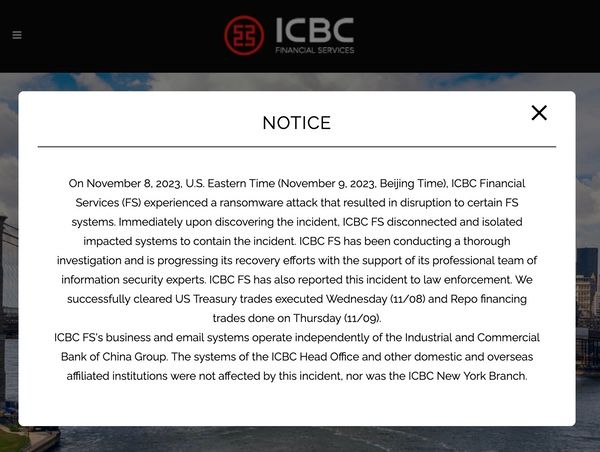
A message was posted on the ICBC Financial Services website, revealing that its systems were disrupted on 8 November 2023. The bank intends to conduct a thorough investigation to determine the root cause of the security incident. Relevant authorities have been informed as well.
ICBC’s statement
After the attack, the bank could not clear pending US Treasury trades because the concerned entities got disconnected from the impacted systems, forcing the bank to send them settlement details via USB sticks. The company quickly isolated the systems from ICBS’s head office. However, the bank’s overseas units weren’t impacted.
It is suspected that the attackers may have exploited the Citrix Bleed vulnerability (CVE-2023-4966). Security researcher Kevin Beaumont states that the ICBC may not have patched the flaw in its Citrix NetScaler Gateway appliance.
A patch for the flaw was released by Citrix last month. It is a serious vulnerability, given that hackers/ransomware gangs can easily exploit it to bypass authentication and break into corporate systems. This vulnerability has been exploited several times recently in attacks against unpatched government and corporate networks.
According to Bloomberg’s report, the incident has disrupted the US Treasury market. A statement from the Securities Industry and Financial Markets Association on Thursday revealed that the bank was targeted by ransomware software, preventing it from settling treasury trades on behalf of other market participants, which can drastically impact US Treasuries’ liquidity.
Regarding this incident, KnowBe4’s Data-Driven Defense Evangelist, Roger Grimes, shared with Hackread.com that such incidents can financially benefit the perpetrators.
“Incidents like this, where there’s “real” money involved, often don’t work out long-term for the ransomware gang involved. The authorities not only get involved but there’s big pressure for people to be arrested and the gang shut down.”
“I’m surprised the ransomware gang went ahead with the exploitation. Perhaps they didn’t realize what they had and what they would be interrupting. But the Chinese certainly have their own great hackers they can use as an offensive resource, and the US authorities are pretty good at identifying culprits and dishing out pain when the money involved is enough. This is one of those cases,” Grimes noted.
The incident highlights the growing risk of cyberattacks on financial institutions, and the importance of having robust cybersecurity measures in place.