Samsung SmartThings adds EV Charger integration with EvLoop

0
[ad_1]

Samsung has partnered with EV (electric vehicle) charging network EvLoop for its first-ever EV charger integration into SmartThings. This integration will allow users to monitor and manage charging their electric cars using their smartphones, tablets, watches, or other SMartThings-compatible devices such as TVs and refrigerators.

Samsung SmartThings gets an EV charger integration

SmartThings is Samsung’s biggest smart home platform and is at the heart of Samsung’s vision and efforts toward a connected world. With almost 300 million users, the platform is the largest globally. It lets users control and manage their smart home products, including lights, thermostats, TVs, security cameras, speakers, door locks, and more.

It is a comprehensive smart home ecosystem with support for multiple communication protocols, ensuring interoperability with products from various brands. The SmartThings app is available for Android, iOS, and other operating systems across a wide range of device categories. Features like automation, voice control, and geofencing make it a robust system.

Samsung is always working on expanding its feature set. These efforts have led to SmartThings integration for cars, allowing users to manage their smart vehicles remotely. The Korean firm is now bringing another important feature to the platform, particularly for those with an electric vehicle. With EvLoop integration, SmartThings users can better manage charging their cars.

According to Samsung, this EV charger integration will allow users to track the energy consumed by their electric vehicles. The automation feature offered by SmartThings will enable them to efficiently manage charging the cars during non-peak hours. “Consumers benefit from cost savings, and the electricity grid is improved during high-use events,” Mark Benson, the Head of SmartThings US, said.

EvLoop offers a wide range of charging solutions for electric vehicles. Its EV Flex is an affordable option best suited for home usage. The EV Flex Lite adds a remote maintenance function, while the EV Flex Level 2 is a more robust charging station featuring multiple mounting options. EvLoop also has a mobile app that lets users locate charging stations, monitor the charging status, and pay for charging.

SmartThings Find, a Samsung service designed to locate misplaced or lost Galaxy phones, tablets, watches, earbuds, and object trackers through a crowd-sourced network of Galaxy devices, also lets you locate your car in a parking lot. The service recently crossed 300 million registered devices, each one of which helps the other in finding lost products. It also lets you detect if an unknown or unauthorized object tracker is following you.


[ad_2]
Source link

Hackers Actively Exploiting Big-IP and Citrix Vulnerabilities

0
[ad_1]

Experts issued security alerts concerning the ongoing exploitation of Big-IP (CVE-2023-46747, CVE-2023-46748) and Citrix (CVE-2023-4966) vulnerabilities.

The publicly available Proof of Concepts (POCs) for these vulnerabilities were rapidly circulated in cybercrime forums.

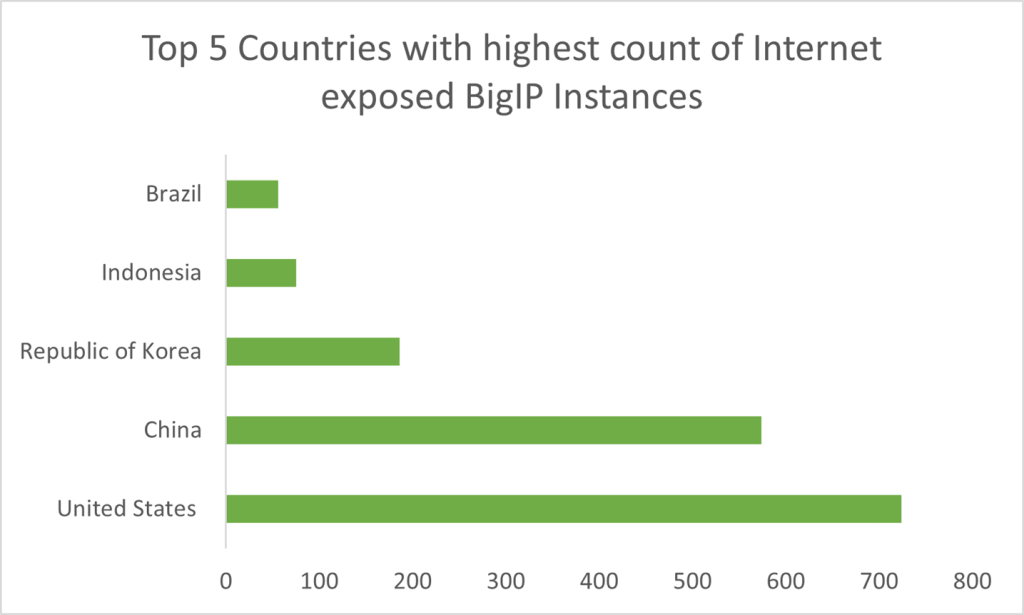
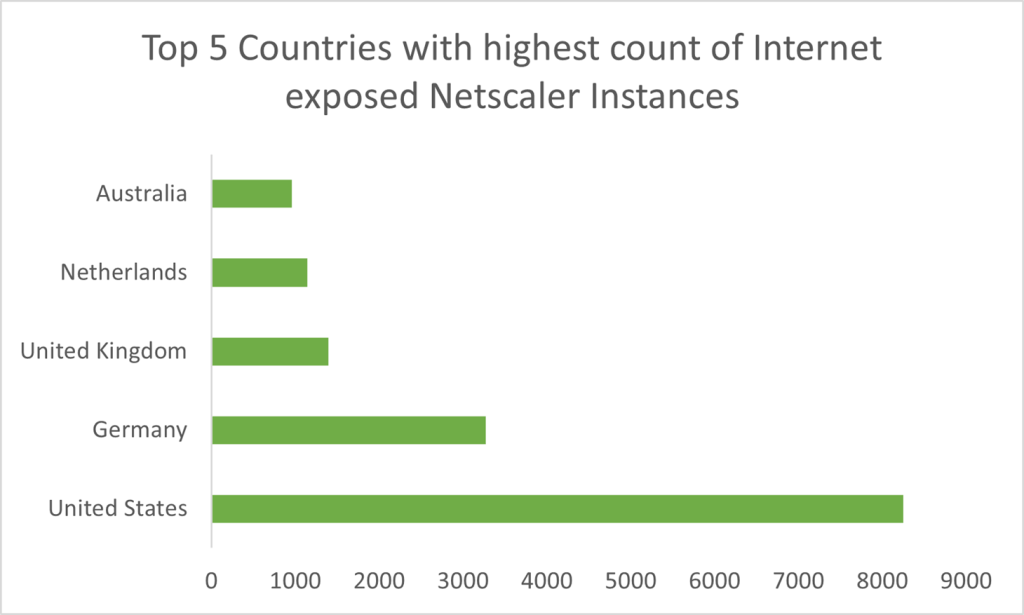
Over 20,000 “Netscaler” instances and 1,000 “Big IP” instances are available online.

These systems might be attractive targets for attackers and might be exposed to current security flaws, according to Cyble researchers.

Details of the BIG IP Vulnerabilities:

The vulnerability, identified as CVE-2023-46747, allows an attacker having network access to the BIG-IP system over the management port and/or self-IP addresses to execute arbitrary system instructions.

Undisclosed requests could bypass configuration utility authentication.

The next vulnerability is tracked as CVE-2023-46748 in the BIG-IP Configuration utility. It allows an authenticated attacker to execute arbitrary system commands if they have network access to the Configuration utility through the BIG-IP management port or self-IP addresses.

BIG-IP
Top 5 Countries with the highest count of Internet-exposed BIG-IP Instances

F5 BIG-IP Virtual Edition is linked to CVE-2023-46747 and CVE-2023-46748. F5 has identified threat actors as using the CVE-2023-46747 vulnerability to launch attacks that take advantage of CVE-2023-46748.

Praetorian Labs security professionals found these vulnerabilities and made the information public on October 26, 2023.

They discovered an authentication bypass flaw that had the ability to result in a full compromise of F5 systems with an exposed Traffic Management User Interface (TMUI).

BIG-IP Versions Known to be Vulnerable:

  • 17.1.0
  • 16.1.0 – 16.1.4
  • 15.1.0 – 15.1.10
  • 14.1.0 – 14.1.5
  • 13.1.0 – 13.1.5
Document
Protect Your Storage With SafeGuard

StorageGuard scans, detects, and fixes security misconfigurations and vulnerabilities across hundreds of storage and backup devices.

Mitigation

To mitigate this issue, you can run the script provided in the F5 advisory for BIG-IP versions 14.1.0 and later.

Citrix Vulnerability

With a critical CVSS score of 9.4, CVE-2023-4966 is categorized as a “sensitive information disclosure” vulnerability. Its elevated score for an information disclosure vulnerability makes it noteworthy.

NetScaler
Top 5 Countries with the highest count of Internet-exposed NetScaler Instances

Researchers at Assetnote examined and documented the exploitation of CVE-2023-4966.

Vulnerable Software Version(s)

  • NetScaler ADC and NetScaler Gateway 14.1 before 14.1-8.50
  • NetScaler ADC and NetScaler Gateway 13.1 before 13.1-49.15
  • NetScaler ADC and NetScaler Gateway 13.0 before 13.0-92.19
  • NetScaler ADC 13.1-FIPS before 13.1-37.164
  • NetScaler ADC 12.1-FIPS before 12.1-55.300
  • NetScaler ADC 12.1-NDcPP before 12.1-55.300

Mitigation

Customers of NetScaler ADC and NetScaler Gateway are strongly encouraged by Citrix to install the appropriate upgraded versions of these products as soon as possible:

  • NetScaler ADC and NetScaler Gateway 14.1-8.50 and later releases
  • NetScaler ADC and NetScaler Gateway 13.1-49.15  and later releases of 13.1
  • NetScaler ADC and NetScaler Gateway 13.0-92.19 and later releases of 13.0 
  • NetScaler ADC 13.1-FIPS 13.1-37.164 and later releases of 13.1-FIPS 
  • NetScaler ADC 12.1-FIPS 12.1-55.300 and later releases of 12.1-FIPS 
  • NetScaler ADC 12.1-NDcPP 12.1-55.300 and later releases of 12.1-NDcPP

Since attackers are currently targeting the vulnerabilities, it is recommended that mitigations be applied as soon as possible.

Patch Manager Plus, the one-stop solution for automated updates of over 850 third-party applications: Try Free Trial.


[ad_2]
Source link

Cheaper Samsung foldable could shock us with its price tag

0
[ad_1]

A couple of days ago, TrendForce reported that Samsung is aiming to start releasing cheaper foldables next year. Well, the very first cheaper iteration of a Samsung foldable smartphone could shock us with its price tag.

The price tag of a cheaper foldable from Samsung could be quite shocking

According to info released by Revegnus, a tipster, the company’s upcoming foldable smartphone will cost somewhere between $400 and $500. Needless to say, that’s surprising, and very aggressive pricing by Samsung.

It actually seems hard to believe, but… it’s possible. The Motorola Razr 40 is currently discounted to $499.99 on Amazon, for example. It usually costs $699.99. So, achieving that price point is possible.

The Motorola Razr 40 is a clamshell foldable, and the phone Revegnus is talking about here probably is too. It’s hard to believe a book-style foldable will cost between $400 and $500, but Samsung could yet surprise us.

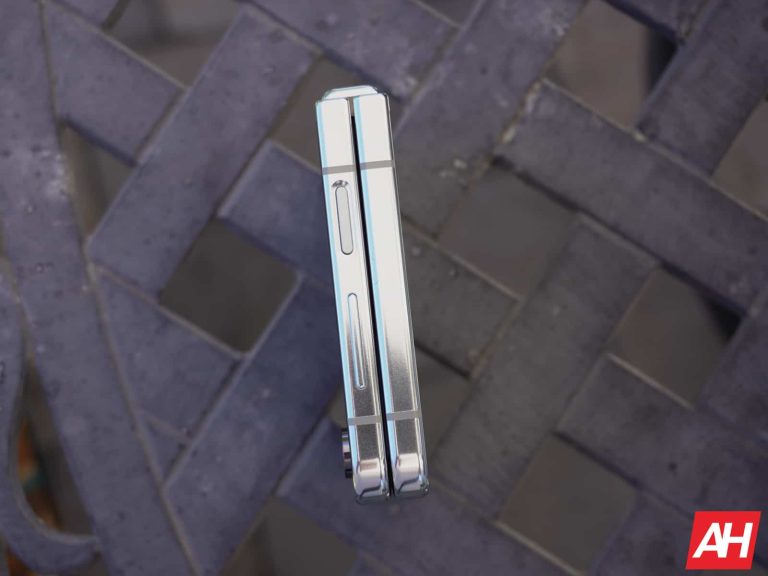
The Samsung Galaxy Z Flip 5 is currently the cheapest current-gen foldable from Samsung. It’s priced at $799.99 as we speak, on Amazon, as it’s discounted. That is a flagship-grade phone, though.

Samsung will need to cut corners in order to meet this price

Samsung will, obviously, have to make a number of changes to reach that lower price tag. We’ll see cutting costs take place, let’s just hope that the company will cut costs in the right places.

Presuming we’re talking about a clamshell device here, it will likely either not have a cover display, or have a very small one. Chances are that the latter is true, but we’ll see.

You can expect an inferior chip to the Galaxy Z Flip 5 to be used, of course. Samsung will go for a more budget-oriented chip, a mid-range offering of some sort. We may even have to deal with some display concessions, who knows. That device is a mystery at this point, but we’ll likely get more information soon.


[ad_2]
Source link

BlueNoroff Hackers Attacking Apple Users with New Malware

0
[ad_1]

A new malware variant is distributed by BlueNordoff APT group, a financially motivated threat group targeting cryptocurrency exchanges, venture capital firms, and banks.

This new campaign has similar characteristics to their RustBucket campaign.

BlueNoroff was first discovered in early 2014 during the beginning of North Korea’s Cyber efforts for financial gain to support their military operations, nuclear operations, and other vital resources.

Jamf Threat Labs discovery

The recent campaign by the BlueNoroff APT group was found to have a Mach-O universal binary that communicates with a domain that was classified as malicious by Jamf. Additionally, the executable was completely undetected in VirusTotal.

BlueNoroff Hackers Apple Users
VirusTotal report Source: Jamf

The standalone binary was named as “ProcessRequest” which communicates with the domain swissborg[.]blog.

There was a legitimate cryptocurrency exchange that goes under the similar domain name swissborg[.]com. In addition to this, they also have a blog under the path swissborg[.]com/blog.

swissborg[.]blog was found to be registered on May 31, 2023, and resolves to 104.168.214[.]151 IP address.

Moreover, there were several URLs found to be communicating with the malware. To evade detection, the malware splits the Command and Control URL into two separate strings and merges them.

Document
Protect Your Storage With SafeGuard

StorageGuard scans, detects, and fixes security misconfigurations and vulnerabilities across hundreds of storage and backup devices.

Malware Analysis

The new malware variant is written in Objective-C and operates as a simple remote shell that executes commands from the threat actor’s server.

However, this malware was used at a later stage. However, the initial access to compromised systems remains unknown.

When executed, the malware sends a POST message to the hXXp://swissborg.blog/zxcv/bnm by calling the sendRequest function.

It also uses the operatingSystemVersionString function to find the macOS version. The malware also detects the CFNetwork framework version, DarwinVersion, and many other vital information.

The malware uses the system() function for command execution and logs the C2 server response through NSLog for queuing commands for execution.

A complete report about this threat group and the malware has been published by malware, which provides additional information regarding the SHA value, source code, RustBucket campaign, and additional information.

IoCs

79337ccda23c67f8cfd9f43a6d3cf05fd01d1588 - Universal Binarye2af7a895aef936c2761289acafe564b4dc7ba4e - Intel
8dc95be0cf52c64e3d6c519e356b0c3f0d729bd4 - Arm
588d84953ae992c5de61d3774ce86e710ed42d29 - Universal Binary 
bc33f1a6c345e0452056ec08d25611b85c350b2e - Intel
677b119edfa1335b6eb9b7307b034bee512dbc1a - Arm
swissborg[.]blog - C2 Domain

Patch Manager Plus, the one-stop solution for automated updates of over 850 third-party applications: Try Free Trial.


[ad_2]
Source link

Vivo X100 & Vivo X100 Pro cameras detailed ahead of launch

0
[ad_1]

The Vivo X100 series will become official on November 13, on Monday. Plenty of info about the two phones already surfaced, and a tipster now shared more camera-related stuff. Ishan Agarwal just detailed the Vivo X100 and Vivo X100 Pro cameras.

The Vivo X100 & Vivo X100 Pro cameras get detailed in a new leak

The tipster shared the info via X, and you can even see the design difference between the two phones thanks to the GIF below. The one with the smaller camera oreo is the Vivo X100. The Vivo X100 Pro will clearly have larger camera sensors.

Speaking of which, the tipster claims that the Vivo X100 will feature a 50-megapixel main camera (f/1.6 aperture lens, OIS), a 50-megapixel ultrawide unit (f/2.0 aperture), and a 64-megapixel telephoto camera (3x optical zoom, f/2.6 aperture lens, OIS).

The ‘Pro’ model will have a more powerful camera setup, of course

The Vivo X100 Pro, on the other hand, is said to include a 50-megapixel main camera (f/1.75 aperture lens, OIS), a 50-megapixel ultrawide unit (f/2.0 aperture lens), and a 50-megapixel periscope telephoto camera (4.3x optical zoom, f/2.5 aperture, OIS). The phone will be able to record 8K content.

Too bad we still don’t know the exact camera sensors for both devices. The Vivo X100 Pro is tipped to utilize the Sony IMX989 camera sensor, the same one its predecessor used.

Now, it remains to be seen what SoCs will these two smartphones utilize. The MediaTek Dimensity 9300 was mentioned, and the same goes for the Qualcomm Snapdragon 8 Gen 3 processor.

The Vivo X100 Pro+ is also expected to launch

Another thing to note is that the Vivo X100 Pro+ could also be announced as part of the series. Vivo announced three devices as part of the Vivo X90 series, so… the same could happen here, actually.

We won’t have to wait long to find out, as all devices will drop on Monday.


[ad_2]
Source link

Omegle shuts down after 14 years amidst abuse lawsuits

0
[ad_1]

During the COVID-19 pandemic, when everyone was in their homes, Omegle made a name for itself by allowing people from different countries to meet and talk with each other. However, as its popularity exploded, the platform fell victim to abuse by bad actors and predators, leading to heinous crimes. Now, after a slew of lawsuits, Omegle is finally shutting down.

According to founder Leif Brooks, the platform which he envisioned for connecting users in online chats with strangers quickly turned into a nightmare as numerous reports surfaced about sexual and predatory behaviour. In 2021, a woman filed a lawsuit against Omegle, claiming that the website matched her with a pedophile during her teenage years, resulting in three years of coerced explicit photo exchanges. Similarly, the Federal Court convicted two men last year for allegedly forcing children on Omegle and other websites into sexual acts and sharing explicit photos.

“Unfortunately, what is right doesn’t always prevail. As much as I wish circumstances were different, the stress and expense of this fight – coupled with the existing stress and expense of operating Omegle and fighting its misuse – are simply too much. Operating Omegle is no longer sustainable, financially nor psychologically,” reads the company’s blog post.

Finding justice for the victims

In his note, Brooks highlighted that he will continue to work with law enforcement to prosecute wrongdoers. And although he argued about the website’s efforts to collect evidence and cooperate with authorities, Brooks acknowledged that this battle would have only ended with Omegle shutting down.

“It’s a never-ending battle that must be fought and re-fought every day, and even if you do the very best job, you may make a sizable dent, but you won’t “win” in any absolute sense of that word,” says Brooks.

However, the controversy surrounding Omegle extends to broader concerns about the adverse effects of social media platforms on children’s mental health. As a result, it becomes the responsibility of both tech companies and the regulatory bodies to come together and implement strict measures.


[ad_2]
Source link

Apple might integrate AI into iPhone 16 to rival Galaxy S24

0
[ad_1]

Artificial intelligence is making its way to smartphones and unlike the saying “slowly but surely,” it is advancing rapidly and surely. Just recently, Samsung announced its new generative AI model, Samsung Gauss, which will power AI features such as the on-device phone call live translation feature in the upcoming flagship Galaxy S24. Last month, Google launched its latest Pixel 8 and Pixel 8 Pro with a focus on AI. Now, rumors suggest that Apple is also joining the AI trend. Well-known tipster Revegnus shared on X (via Android Authority) that Apple intends to overhaul its virtual assistant, Siri, leveraging its in-house Large Language Model (LLM). Allegedly, the Cupertino tech giant is gearing up to transform Siri into “Apple’s most powerful killer AI app.”

The tipster reveals that Apple is actively engaged in the development of this significant Siri enhancement. The first product resulting from this effort is anticipated to be revealed at WWDC 2024. The plan is to make it a standard feature on iPhone 16 models and beyond.If the claim is true, we might witness the AI-powered Siri at WWDC 2024, expected to be held in June next year. Earlier reports from Bloomberg’s Mark Gurman, a go-to source for Apple information, suggested that the improved Siri would be ready only by 2025.

But this recent leak accelerates the timeline by a whole year, possibly influenced by the fact Apple’s primary competitor, Samsung, has recently revealed its AI model.

With Samsung gearing up for a significant AI showcase on the Galaxy S24 series, Apple will undoubtedly require additional AI features on iPhones to stay competitive.

A while back, Tim Cook himself stated that Apple is working on generative AI and has been working on it for years. Previous rumors also support the idea of future generative AI integration into Apple’s products, with one suggesting that Apple might integrate ChatGPT-like features on the iPhone with the next iOS18.


[ad_2]
Source link

Russian Hackers Hijacked Power Station Circuit Breakers

0
[ad_1]

In a recent and alarming development, the notorious Russia-linked threat actor Sandworm executed a sophisticated cyber-physical attack targeting a critical infrastructure organization in Ukraine. 

The incident, responded to by cybersecurity firm Mandiant, unfolded as a multi-event assault, showcasing a novel technique to impact Industrial control systems (ICS) and operational technology (OT).

Unraveling Russia’s Cyber-Physical Capabilities

The attack, spanning from June to October 2022, demonstrated a significant evolution in Russia’s cyber-physical attack capabilities, notably visible since the invasion of Ukraine. 

Sandworm, known for its allegiance to Russia’s Main Intelligence Directorate (GRU), has historically focused on disruptive and destructive campaigns, particularly in Ukraine.

The unique aspect of this attack involved Sandworm’s utilization of living-off-the-land (LotL) techniques at the OT level, initially causing an unplanned power outage in conjunction with missile strikes across Ukraine. 

The threat actor further demonstrated its adaptability by deploying a new variant of the CADDYWIPER malware in the victim’s IT environment.

Mandiant’s analysis revealed the complexity of the attack, highlighting Sandworm’s ability to recognize novel OT threat vectors, develop new capabilities, and exploit various OT infrastructures. 

The threat actor’s deployment of LotL techniques indicated a streamlined approach, reducing the time and resources required for the cyber-physical assault.

Document
Protect Your Storage With SafeGuard

StorageGuard scans, detects, and fixes security misconfigurations and vulnerabilities across hundreds of storage and backup devices.

Concerns Over Sandworm’s Adaptive Capabilities

Despite being unable to pinpoint the initial intrusion point, Mandiant suggested that the OT component of the attack may have been developed in as little as two months. 

This raises concerns about Sandworm’s capability to rapidly adapt and deploy similar attacks against diverse OT systems worldwide.

Sandworm’s global threat activity, coupled with its novel OT capabilities, prompted a call to action for OT asset owners worldwide. 

Mandiant provided detailed guidance, including detection methods, hunting strategies, and recommendations for hardening systems against such threats.

The attack’s timing, coinciding with Russian kinetic operations, suggested a strategic synchronization, indicating that the threat actor may have been waiting for a specific moment to deploy its capabilities. 

As observed in this incident, the evolution of Sandworm’s tactics offers insights into Russia’s ongoing investment in OT-oriented offensive cyber capabilities.

In conclusion, this Sandworm attack serves as a stark reminder of the escalating cyber threats faced by critical infrastructure globally. 

The continuous evolution of cyber adversaries necessitates a proactive approach from governments, organizations, and asset owners to secure and safeguard vital systems against such sophisticated attacks.

Patch Manager Plus, the one-stop solution for automated updates of over 850 third-party applications: Try Free Trial.


[ad_2]
Source link

Nothing pushes second Android 14 beta update to Phone (2)

0
[ad_1]

Nothing has released the second Android 14 beta update for the Nothing Phone (2). The latest beta build for the new Android version, which brings Nothing OS 2.5 to the company’s smartphones, introduced a host of new features and improvements. The stable release is expected in early 2024.

The Nothing Phone (2) gets Android 14 Open Beta 2

Last month, Nothing launched an open beta program for public testing of its Android 14-based Nothing OS 2.5. As expected, the Nothing Phone (2) was prioritized over the first-gen model, though the company promised to add the latter to the beta program before the end of 2023. While that hasn’t happened yet, the newer model is now getting Beta 2.

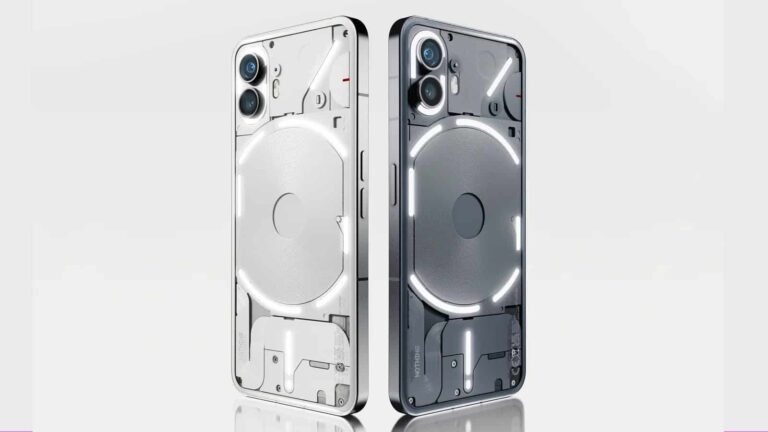
According to the official announcement, the latest beta build brings several new features for the Glyph Interface. Nothing has added Google Calendar integration to the flashy LED system on the phone’s back. It will notify you of upcoming events with a 5-minute countdown. The Glyph Timer now supports time presets and can be opened directly from the lock screen, without unlocking the device.

The Glyph Timer pop-up window also supports tap-to-open and works with the Quick Settings widget. Last but not least, Android 14 Open Beta 2 for the Nothing Phone (2) brings a new Glyph animation for NFC. As for functional improvements, Nothing says all of its first-party apps now support Android 14’s Predictive Back. The double-press gesture for the power button adds more options.

Additionally, Nothing has improved the reliability of the three-finger swipe gesture and updated status bar icons. It has also fixed some bugs present in Beta 1 and improved system UI elements for more reliable functioning. Overall, Android 14 Open Beta 2 is a relatively big update that will breathe new life into your Nothing OS experience. Hopefully, the Nothing Phone (1) will get this update soon.

Enroll in the beta program to try the new features

Users who enrolled their Nothing Phone (2) in the beta program and have already installed Beta 1 will receive the latest update over the air (OTA) within the next few days. To check for it, you can go to Settings > System > System Update. However, if you haven’t joined the beta program yet, you have to sideload this APK first (since it is provided by Nothing, it should be safe).

Once you have installed the APK, navigate to Settings > System > Update to Beta version and tap on “Check for new version.” Now, follow the on-screen instructions to install Nothing OS 2.5 Beta. You will get Beta 2 will all the content of Beta 1. Note that beta software may be unstable and may require a factory reset, so it’s a good idea to back up important data beforehand. Stay tuned for information on Android 14 beta for the Nothing Phone (1).


[ad_2]
Source link

Siri revamp is coming with tons of AI integrations & features

0
[ad_1]

A tipster recently posted that Apple is working on a Siri revamp. This means that the tech giant is working hard to improve the abilities of this voice assistant. This improvement goes beyond just the design and user interface of the voice assistant but its functions and abilities.

To bring this revamp to life, the tipster points out that Apple is using LLM technology (large language models). These learning models are pre-trained on vast amounts of data to be able to better cater for the needs of the end users. This is an AI technology that a lot of big tech companies use to train their various models because of its flexibility and ability to handle tons of data at the same time.

While there is no official statement on this revamping of Apple’s voice assistant, the tipster points to its coming launch. According to the tipster, the revamped model of Apple’s voice assistant will be made available to the public next year. Precisely, this unveiling will take place during the WWDC 2024 event that will take place in the second quarter of the year.

What can users expect with the coming Siri revamp and how will it affect usage

In the words of the tech tipster via his X page, he says that Apple is working “to completely revamp Siri.” This move aims to integrate AI features into the app, hence making it a better virtual assistant. The tech giant is already working on this goal, but it won’t be available for all Apple devices.

Apple isn’t the only company that’s bringing AI features to its users on their devices. The likes of Google and Samsung are also improving upon or currently developing these AI features on their devices. Qualcomm, a leader in the smartphone chip manufacturing industry, is also working on its own AI feature embedded in future chips.

Google, on its part, has been adding AI capabilities to its chips ever since the Pixel 6 series. The Mountain View tech giant has been improving upon these AI features and showing them off in areas such as photography and machine learning. Samsung is currently in full throttle on plans to integrate AI capabilities into their coming devices.

So Apple isn’t alone on this move to bring AI to its devices with a complete Siri revamp. However, to make this possible, they’ll need to first integrate AI capabilities into the Bionic chips. This integration might kick off with the Apple iPhone 16 series, where users will start noticing this complete Siri revamp.

Not only will these AI features be available on Siri but also via cloud integration. With this coming revamp, Siri will get better at carrying out tasks and instructions given to it by the user. At this moment, netizens should take this report with a pinch of salt, as there are no official statements on Apple’s intentions regarding this matter.


[ad_2]
Source link