The question of whether Instagram would prioritize long-form content has been a hot topic for a while. Now, Adam Mosseri, the head of Instagram, has put those discussions to rest. He’s made it clear that Instagram will continue to place its focus on short videos rather than shifting gears towards longer content.
Instagram will focus on its core function of connecting people with friends
With platforms like Facebook and TikTok prioritizing both long-form and short-form content, there’s always been a debate about when or even if Instagram will start focusing on long-form videos. The debate quieted down for a while when the company released IGTV, where you could post long videos. However, the app was shut down in 2022 with the explanation that the company wanted to focus on Reels. And it seems Instagram is still committed to that decision.
In response to a creator question about whether the platform will support long-form videos, Adam Mosseri stated that the core purpose of Instagram is to connect users with their friends and help them explore content they enjoy, typically through short videos. He further explained that connecting with friends and exploring short videos go hand-in-hand. According to him, users are more likely to share a short video they like with a friend who might also enjoy it, compared to a long-form video.
Instagram currently allows you to upload an hour-long in-feed video
It’s not that you can’t upload long-form videos on Instagram. In fact, you can upload videos up to an hour long to your Instagram feed. However, if you want to upload a video longer than that, you will need to use the built-in Instagram editing tools to crop the video. Alternatively, you also have the option to upload them as a carousel post in segments.
It will be interesting to see how long Instagram continues to focus on short videos, especially as competitors like TikTok are continuously working on increasing the maximum duration of videos allowed on their platform. Recently, they have increased the limit to one hour. Will Instagram follow suit and allow even longer videos in feeds? Only time will tell!
Millions of Legal Documents Exposed Online! Sensitive data leak raises security concerns for the legal industry. Learn how this breach could impact you and what legal service providers can do to protect your information.
Independent cybersecurity researcher Jeremiah Fowler discovered a non-password-protected unsecured database containing 38.6 million records belonging to California-based legal support services company Rapid Legal.
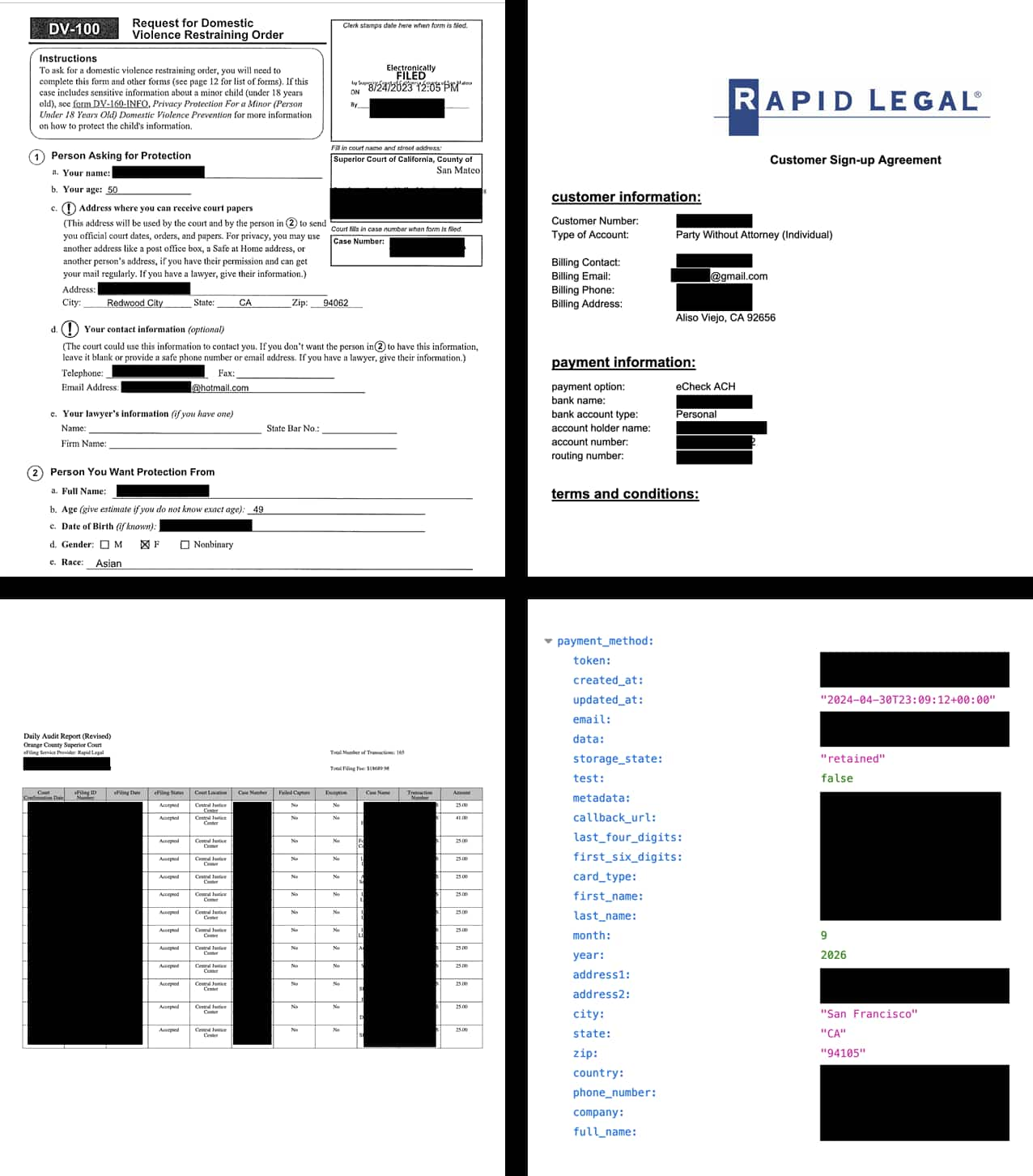
Fowler reported the findings to vpnMentor, according to which the database was left exposed to public access without any password or other mode of security authentication. The information accessed by the researcher contained court documents, service agreements, and payment information, including partial credit card details and PII (personally identifiable information) amounting to around 38TB of data and 38,648,733 records in total.
Further investigation revealed references and links to an additional storage repository, Legal Connect, which contained 89,745 records and a total size of 249.9 GB. For your information, Legal Connect is a back-end technology provider whereas RapidLegal provides filing services to customers and partner affiliates. Both companies appear to “share the same corporate leadership” and are connected, Fowler explained in his report.
The documents ranged from 2009 to 2024 and contained case documents, filed documents, notices, receipts, declarations, exhibit evidence, judgments, and other relevant case files. The service has allowed over 32,000 law firms to file or transmit over 7 million orders and 11 million legal documents to and from various court systems
Such a massive data leak can have devastating consequences for those affected. A folder titled Payments contained 737,389 files in .jsn format, including sensitive data like names, addresses, and the last four digits of credit card numbers.
Some records also contained merchant tokens, gateway data, and issuer authorization codes. These files are used for logging online payments and organizing transaction details, and adversaries can combine the data with other personal data for fraud or targeted phishing attacks.
Also exposed were .pfx files with server names or partner services, using Legal Connect’s technology, possibly containing private keys and certificates used in secure or encrypted communications. In addition, the database contained an estimated 146,000 signed customer service agreements. The data could be used for targeted phishing attacks, harassment, malware, spam emails, or other fraudulent activities.
Screenshot from the leaked records (Screenshot: Jeremiah Fowler – vpnMentor)
The databases were secured from public access on the same day Fowler sent a responsible disclosure notice. Fowler claims that there is no evidence of customer payment data being at risk or an imminent threat of fraudulent activity.
The leak of sensitive data in legal service companies goes on to show the need for a comprehensive approach to data security, including robust access controls, regular security audits, employee training on cybersecurity best practices, data encryption, and a well-defined breach response plan. These measures limit data access, identify vulnerabilities, educate employees on phishing awareness, and ensure data security during transit.
Samsung is only hours away from unveiling the Galaxy Z Fold 6 and Galaxy Z Flip 6. Its sixth-gen foldables bring a handful of notable upgrades over the 2023 lineup. However, unlike in the past, the industry is equally excited about software prowess as hardware upgrades. This is all thanks to the new AI features Samsung has developed. A market study says AI will help improve sales of the new Galaxy foldables.
Galaxy Z Fold 6 and Flip 6 sales to grow about 30% thanks to AI
Leading market research firm Counterpoint says Samsung’s Galaxy Z Fold 6 and Galaxy Z Flip 6 sales could grow by 30% compared to the fifth-gen models. The updated Galaxy AI suite, which includes AI features introduced with the Galaxy S24 series and some new tools, will be a key sales driver. If the company achieves sales growth anywhere close to that figure, we are staring at record-high sales of Galaxy foldables.
The firm further adds that Samsung’s continued investment in mobile AI features and experiences will help it register a CAGR (compound annual growth rate) of 18% in the foldable smartphone segment over the next four years. The Korean firm is estimated to capture 35% of the global foldable market by 2028. These investments might allow it to remain a global leader in the rapidly expanding market.
It is worth noting that Galaxy AI also helped Samsung sell more Galaxy S24 phones. A survey revealed that many people purchased the new Galaxy flagships over competing products for their AI features. The company would be looking to replicate the success in the foldable segment. AI might be a key differentiator for the Galaxy Z Fold 6 and Flip 6 against their rivals, most of which are playing the hardware game.
The new foldables will debut several new AI features
The report doesn’t specify the new AI features Samsung will introduce with the Galaxy Z Fold 6 and Galaxy Z Flip 6. However, leaks have already spilled beans on a few tools. Among those is a sketch-to-drawing tool that lets you quickly turn rough sketches into a proper drawing or image. Tipster Ice Universe has been frequently talking about it on X, calling it the best AI feature on mobile devices yet.
The tipster also recently shared a sample of this tool. As you can see below, it turned that rough drawing of a butterfly over a finger into a realistic butterfly. It looks like a real butterfly is sitting on the finger. Hopefully, Samsung has readied many more such impressive AI features for the Galaxy Z Fold 6 and Galaxy Z Flip 6. Some of those features may trickle down to older foldables and flagships later.
Scammers no longer need to possess technical expertise or devise intricate fraud schemes.
The rise of Fraud-as-a-Service (FaaS) has revolutionized scam execution, making it easier for even inexperienced fraudsters to prey on unsuspecting victims.
This article delves into the workings of a sophisticated scam gang specializing in classifieds-website scams.
It highlights the gang’s roles and tools and how individuals can protect themselves from falling victim to these schemes.
The Anatomy of a Scam Gang
According to a report by Kaspersky, at the heart of every scam gang is a well-organized structure, with each member playing a crucial role in executing fraudulent activities.
The gang’s key person is the founder or topic starter, who oversees the entire operation.
This individual manages a team that includes the following:
Coders: Responsible for developing and maintaining Telegram channels, chats, and bots that facilitate the scam.
Refunders: Posing as fake support agents, they handle any issues that arise during the scam.
Carders: Tasked with withdrawing money from the victim’s bank account.
Workers: These individuals find ads, respond, and persuade victims to open phishing links.
Additional roles, such as marketers, motivators, and mentors, are included in more sophisticated operations.
These members run promotional campaigns, provide moral support, and train workers.
Communication within the gang primarily occurs through private groups and chats on Telegram, with the channel we investigated boasting around 15,000 members.
Of these, only five were mentors, while the majority were workers—pawns in the grand scheme of the scam.
A bot creates links for two types of scam at a time: seller scam (2.0) and buyer scam (1.0)
The Telegram Bot: A Scammer’s Best Friend
The Telegram bot is one of the most powerful tools at the disposal of these scam gangs.
These bots automate much of the scamming process, making it easier for workers to execute their tasks efficiently.
For instance, a Telegram bot we discovered can generate up to 48 unique, personalized phishing ads at a time in four languages for six different classified websites.
The bot simultaneously creates links for two types of scams: seller scam (2.0) and buyer scam (1.0).
The bot tells the worker everything the victim does — in detail
Once the phishing links are generated, workers use the bot to send them to the victim’s email, instant messaging account, or SMS inbox.
When a victim opens a phishing link, the bot sends a notification saying “Mammoth online,” indicating that the scam will likely succeed.
The bot provides real-time updates on the victim’s actions, allowing the worker to track the scam’s progress.
If the victim takes the bait and makes a payment, the bot calculates the worker’s share of the proceeds and identifies the carder who will withdraw the funds.
The Lucrative World of Scam Gangs
The financial rewards for scam gangs can be substantial.
Workers, who are the gang’s primary earners, pay commissions to the mastermind, mentor, and carder and are refunded.
According to internal chat logs, the gang we investigated earned over two million US dollars between August 2023 and June 2024.
However, these figures are self-reported and may be inflated to motivate workers.
A bad day for the scammers — but a happy one for the whole humanity
Despite the potential for high earnings, scam gangs face limitations imposed by banking regulations.
For example, the gang operating out of Switzerland is restricted by local banking rules, which prevent them from stealing more than 15,000 Swiss francs (approximately 16,700 US dollars) at a time.
Workers also have a minimum withdrawal amount, typically not bothering with cards with less than 300 Swiss francs (333 US dollars) in the associated account.
Protecting Yourself from Turnkey Phishing
Turnkey phishing, facilitated by FaaS, poses a significant threat to individuals.
However, the protection measures remain consistent with those for other types of phishing.
Here are some tips to safeguard yourself:
Use reliable security software to prevent following phishing links.
Follow safe online selling rules to avoid falling for scams.
Restrict communication with buyers and sellers on classified sites to protect your details.
Use virtual cards with transaction limits for online purchases, and avoid storing significant amounts in linked accounts.
Stay informed about the latest scams to recognize and avoid them.
By staying vigilant and adopting these protective measures, individuals can reduce their risk of becoming victims of turnkey phishing scams.
"Is Your System Under Attack? Try Cynet XDR: Automated Detection & Response for Endpoints, Networks, & Users!"- Free Demo
When it comes to choosing a gaming tablet, the debate between Apple and Android devices is fiercely contested. Each platform offers its unique strengths, catering to different preferences and gaming needs. For gamers, the choice often boils down to the device’s performance, available gaming titles, ecosystem integration, and innovative features like security enhancements.
Integration and Connectivity
Apple devices excel in ecosystem integration. If you own other Apple products, an iPad can seamlessly connect with them, enhancing your gaming experience. Features like Handoff, Universal Clipboard, and AirPlay are tailored to keep all Apple devices working together efficiently.
However, Android tablets offer strong connectivity features, often supporting multiple user accounts and deeper customization options. For gamers who enjoy tweaking their devices or using them for various purposes beyond gaming, Android tablets can be more accommodating.
Security and Innovation
Security is paramount in the digital age, and iGaming platforms have taken significant steps to enhance user safety. For instance, casinos with Inclave login utilize advanced biometric technologies to secure their gaming platforms. This security feature, often found in mobile devices, uses facial recognition and fingerprint scanning to ensure that only you can access your gaming accounts, making platforms like these notably secure and trustworthy.
Apple and Android devices both support these technologies, although implementation and performance can vary between devices. Apple generally offers more robust security updates and system-wide improvements, which can be critical for protecting personal information while gaming online. In contrast, Android offers more flexibility in security apps and customization, which can be advantageous for tech-savvy users who prefer to set up their security measures.
Performance and Hardware
Apple tablets, particularly the iPad Pro series, are renowned for their powerful processors and smooth performance. Apple’s proprietary chips, like the A-series processors, are optimized for high performance, which is crucial for gaming. These tablets also boast high-resolution Retina displays that render games with stunning clarity and detail, providing an immersive gaming experience.
On the other hand, Android tablets offer a wide range of options with varying performance levels. High-end models like the Samsung Galaxy Tab S9 feature powerful processors that rival the iPad in gaming performance. However, the diversity in Android devices means that there are also more affordable options with decent performance, catering to a broader market.
Gaming Ecosystem and Availability
Apple’s App Store has a reputation for strict control over app quality and security, which generally results in a selection of well-curated games that are optimized for iOS devices. This can be a bit tricky for iGamers who may prefer real money online casinos that don’t follow Know Your Customer (KYC) procedures or that accept cryptocurrencies, as these may not be offered on Apple. Nevertheless, the Apple ecosystem is often praised for its exclusivity and the availability of early releases or iOS-only titles, which can be a significant draw for gamers looking for premium and unique gaming experiences.
On the other hand, Android tablets, with access to Google Play and other third-party app stores, offer a more extensive range of games, including many free and indie titles not available on iOS. This openness can be a double-edged sword, as it sometimes leads to a proliferation of lower-quality games. However, for users seeking variety and customization in their gaming experience, Android tablets provide more flexibility.
In collaboration with international partners, the U.S. Federal Bureau of Investigation (FBI) and the Cyber National Mission Force (CNMF) have successfully disrupted a sophisticated AI-powered bot farm operated by Russian state-sponsored hackers.
The bot farm, known as Meliorator, was used to disseminate disinformation and influence public opinion across various countries, including the United States.
This article delves into the operation details, the Meliorator tool’s capabilities, and the implications for global cybersecurity.
The Operation: A Joint Effort
According to the IC3 report, the operation was a coordinated effort involving multiple agencies and countries.
The FBI and CNMF worked alongside the Netherlands General Intelligence and Security Service (AIVD), Netherlands Military Intelligence and Security Service (MIVD), the Netherlands Police (DNP), and the Canadian Centre for Cyber Security (CCCS).
This collaboration highlights the importance of international cooperation in combating cyber threats.
Key Players
FBI and CNMF: Led the operation and provided technical expertise.
AIVD and MIVD: Contributed intelligence and operational support.
DNP: Assisted with law enforcement actions.
CCCS: Offered cybersecurity expertise and resources.
Meliorator is an advanced AI-enabled software package designed to create and manage fictitious online personas en masse.
These personas propagated disinformation and influenced public opinion on social media platforms, primarily X (formerly Twitter).
Capabilities of Meliorator
Creating Authentic Personas: Meliorator could generate realistic social media profiles, complete with profile photos, biographical data, and political leanings.
Deploying Content: The tool allowed these personas to generate original posts, follow other users, like, comment, repost, and obtain followers.
Mirroring Disinformation: The bots could replicate and amplify disinformation from other sources.
Formulating Messages: The AI could craft messages based on the bot’s specific archetype, ensuring the content was tailored to the target audience.
Obfuscation Techniques
The developers of Meliorator implemented several sophisticated techniques to avoid detection and bypass security measures.
The tool used a backend code to auto-assign proxy IP addresses based on the assumed location of the bot persona.
This made it difficult to trace the origin of the activity.
Technical Details
Meliorator could bypass dual-factor authentication by intercepting and responding to verification codes sent by X.
This allowed the bots to operate without interruption.
The developers changed the user agent string to make the bot activity appear legitimate.
This included setting the activity to use a remote debugging port to obfuscate the task further.
The Impact of Meliorator
The use of Meliorator by Russian state-sponsored actors had significant implications for global cybersecurity and information integrity.
The tool was used to spread disinformation about various countries, including the United States, Poland, Germany, the Netherlands, Spain, Ukraine, and Israel.
The bots created by Meliorator were used to influence public opinion by spreading false narratives and amplifying existing disinformation.
This could potentially exacerbate social and political tensions in the targeted countries.
Although Meliorator was initially identified on X, the analysis indicated that the developers intended to expand its functionality to other social media platforms, including Facebook and Instagram.
This posed a broader threat to the integrity of online information.
Mitigations and Recommendations
In response to Meliorator’s disruption, the authoring organizations have issued several recommendations to social media companies on how to reduce the impact of similar disinformation campaigns in the future.
Social media platforms are encouraged to implement processes to validate that real humans create and operate accounts.
This could involve guidelines similar to the financial industry’s Know Your Customer (KYC) practices.
Platforms should review and upgrade their authentication and verification processes to prevent unauthorized access by bots.
User accounts should be secure by default, with settings such as multi-factor authentication (MFA) and privacy protections enabled by default.
The disruption of Meliorator is a significant victory in the ongoing battle against cyber threats.
However, it also highlights the evolving nature of these threats and the need for continuous vigilance and innovation in cybersecurity practices.
The success of this operation underscores the importance of international cooperation in combating cyber threats.
As cyber threats continue to evolve, so too must the strategies and collaborations used to counter them.
Advancements in AI
The use of AI in tools like Meliorator demonstrates both the potential and the risks associated with AI technology.
While AI can be a powerful tool for good, malicious actors can also weaponize it. This duality necessitates a balanced approach to AI development and regulation.
The disruption of the AI-powered Russian state-sponsored hackers’ bot farm, Meliorator, marks a significant achievement in the fight against disinformation and cyber threats.
The operation, led by the FBI and CNMF in collaboration with international partners, showcases the power of coordinated efforts in addressing global cybersecurity challenges.
As technology continues to advance, so must our strategies to protect the integrity of information and maintain public trust.
"Is Your System Under Attack? Try Cynet XDR: Automated Detection & Response for Endpoints, Networks, & Users!"- Free Demo
The Samsung Galaxy S25+ will launch after all, Samsung didn’t ditch the phone. Considering this is the case, we’d like to issue an apology regarding the article that was published on the site about a week ago, as an exclusive.
The Galaxy S25+ is coming after all, it will launch alongside the Galaxy S25 & Galaxy S25 Ultra
In that article, Erencan Yılmaz, who was writing for us at the time (he no longer is), both acquired information for that article and wrote it. It turns out he was wrong, as he just published completely different information on GizmoChina.
He based the initial information on model numbers he spotted in the GSMA database. At the time, the Galaxy S25+ was nowhere to be found, but that’s no longer the case. The phone surfaced in the database, later than its siblings.
It’s painfully obvious that the device is alive and well at this point, and that it will launch alongside the Galaxy S25 and Galaxy S25 Ultra, as initially expected. Samsung is sticking to a flagship smartphone series consisting of three smartphones.
We apologize for allowing Erencan’s inaccurate information to end up on Android Headlines in the form of exclusive information. We will do our best to avoid such issues moving forward, as that’s way below our standard.
Chances are we’ll see all three Galaxy S25 smartphones launch in January next year
By the looks of it, the Galaxy S25 series will launch in January next year, about a year after the Galaxy S24 series. Do note that this is just an assumption at this point in time, as Samsung hasn’t confirmed anything just yet.
One thing is for sure now, all three Galaxy S25 phones are coming. All three will become official at the same time. There is still a chance Samsung will move the launch date to February, or something like that, but chances are the company will stick to January, we’ll have to wait and see.
A group of threat actors has claimed responsibility for breaching the database of fast-food giant KFC.
The announcement was made via a post on the social media platform X by the user @MonThreat, who is known for disseminating information about cybersecurity incidents.
The claim has sent shockwaves through the cybersecurity community and raised concerns about the potential impact on KFC’s customers and operations.
Details of the Breach
According to the post, the threat actors allege they have gained unauthorized access to KFC’s database, which contains sensitive customer information, including names, addresses, phone numbers, and payment details.
The exact method of the breach has not been disclosed, but the threat actors have hinted at exploiting a vulnerability in KFC’s online ordering system.
The post has sparked a flurry of activity among cybersecurity experts who are now working to verify the claim’s authenticity.
This breach could have significant implications for KFC’s reputation and customer trust if confirmed.
The company has yet to release an official statement regarding the alleged breach.
Implications and Response
The potential fallout from this breach could be extensive.
Customers may face identity theft and financial fraud risks if their personal information has been compromised.
Additionally, KFC could be subject to regulatory scrutiny and potential fines if it is found that it failed to protect customer data adequately.
Responding to the allegations, cybersecurity firms and independent analysts urge KFC to conduct a thorough investigation and implement more robust security measures to prevent future breaches.
Customers are also advised to monitor their financial statements and be vigilant for any signs of suspicious activity.
As the situation develops, KFC must maintain transparency with its customers and stakeholders.
Prompt and effective communication will be key in managing the crisis and mitigating the damage.
The incident is a stark reminder of the ever-present threat of cyberattacks and the importance of robust cybersecurity practices in protecting sensitive information.
"Is Your System Under Attack? Try Cynet XDR: Automated Detection & Response for Endpoints, Networks, & Users!"- Free Demo
How the Digital Revolution Transformed Sports Betting
The advent of the internet has revolutionized many industries, and sports betting is no exception. What was once an activity confined to physical sportsbooks and local bookies has now become a widespread digital phenomenon. Online sports betting has opened up new avenues for enthusiasts, providing unprecedented convenience and variety. Online bookmakers such as mo.codes are shaping the industry in a positive direction.
This article explores how online sports betting has evolved, the factors contributing to its popularity, and its impact on the sports industry.
The origins of sports betting can be traced back centuries, but it wasn’t until the late 1990s that the first online sportsbooks began to emerge. With the rapid growth of the internet, these platforms quickly gained traction, offering bettors the ability to place wagers from the comfort of their homes. The convenience factor cannot be overstated; no longer did bettors need to travel to a physical location or rely on telephone lines. Instead, they could access a wide range of betting markets with just a few clicks.
Endless opportunities is key to the success
One of the primary drivers behind the popularity of online sports betting is the sheer variety of options available. Traditional sportsbooks often limited their offerings to major sports like football, basketball, and horse racing. In contrast, online platforms cater to a global audience, providing markets for a plethora of sports, including niche and emerging ones. This diversity has attracted a broader audience, from casual bettors to dedicated sports aficionados.
Moreover, online sportsbooks offer innovative features that enhance the betting experience. Live betting, for instance, allows users to place wagers in real-time as events unfold, adding an extra layer of excitement. Advanced statistics, live streaming, and comprehensive analysis tools are also readily available, helping bettors make informed decisions. These technological advancements have not only made betting more accessible but also more engaging.
The financial impact of online sports betting is significant. According to recent studies, the global online gambling market is expected to reach hundreds of billions of dollars in the coming years. This surge in revenue has led to increased investment in sports leagues and teams, sponsorship deals, and improved broadcasting quality. The relationship between sports and betting has become symbiotic, with each industry benefiting from the other’s growth.
New market challenges lawmakers
However, the rise of online sports betting is not without its challenges. Regulatory frameworks vary widely across different jurisdictions, with some countries embracing the industry while others impose strict restrictions or outright bans. Ensuring the integrity of sports events and preventing match-fixing is a constant concern. Additionally, the ease of access to online betting raises potential issues related to gambling addiction and responsible gaming practices.
Despite these challenges, the future of online sports betting looks promising. Technological advancements, such as blockchain and artificial intelligence, are poised to further revolutionize the industry. Blockchain technology can enhance transparency and security, while AI can provide personalized betting experiences and improved risk management. As these innovations continue to develop, they will likely shape the next phase of online sports betting.
In conclusion, the rise of online sports betting represents a new era for enthusiasts. The convenience, variety, and technological enhancements offered by digital platforms have transformed the way people engage with sports betting. While challenges remain, the industry’s growth shows no signs of slowing down, promising an exciting future for both bettors and the sports industry as a whole.
Cybersecurity experts have identified a new malware strain, dubbed “XFiles Stealer,” which is actively targeting Windows users to steal passwords and other sensitive information.
The discovery was made public by MonThreat, a prominent cybersecurity research group, via their official social media channel on X.
🚨XFiles Stealer New Version Announced
XFiles Stealer, written in C programming language, has been announced on a dark web forum with new updates. Xfiles runs on machines from Windows 7 to Windows 11. It collects browser data, cookies, passwords, autofills, credit cards and… pic.twitter.com/DALvb0t441
According to their analysis, this sophisticated malware poses a threat to individual users and organizations alike.
How XFiles Stealer Operates
X-Files Stealer is designed to infiltrate Windows systems through various vectors, including phishing emails, malicious downloads, and compromised websites.
Once installed, the malware operates stealthily, evading detection by traditional antivirus software.
It primarily focuses on extracting passwords stored in web browsers, email clients, and other applications.
The stolen data is then transmitted to remote servers controlled by cybercriminals, who can use it for identity theft, financial fraud, and other malicious activities.
MonThreat’s analysis reveals that XFiles Stealer employs advanced techniques such as code obfuscation and encryption to avoid detection.
It also can update itself, making it a persistent threat that can adapt to new security measures.
Protecting Yourself from XFiles Stealer
Given the sophisticated nature of XFiles Stealer, cybersecurity experts recommend several measures to protect against this and similar threats.
Firstly, users should ensure their operating systems and software are up-to-date with the latest security patches.
Additionally, employing robust antivirus solutions with real-time protection can help detect and block malware before it can cause harm.
Users are also advised to exercise caution when opening emails from unknown senders or downloading files from untrusted sources.
Enabling multi-factor authentication (MFA) for online accounts can provide an extra layer of security, making it more difficult for cybercriminals to gain unauthorized access even if passwords are compromised.
As the digital landscape continues to evolve, staying informed about emerging threats like XFiles Stealer is crucial.
By taking proactive steps to secure their systems, users can mitigate the risks posed by this dangerous malware and protect their sensitive information from falling into the wrong hands.
"Is Your System Under Attack? Try Cynet XDR: Automated Detection & Response for Endpoints, Networks, & Users!"- Free Demo