Those who have claimed responsibility for the Ticketmaster data breach say they’ve stolen 440,000 tickets for Taylor Swift’s Eras Tour, and as proof have leaked 170k ticket barcodes. However, those barcodes are long gone, as a Ticketmaster spokesperson said:
“Ticketmaster’s SafeTix technology protects tickets by automatically refreshing a new and unique barcode every few seconds so it cannot be stolen or copied.”
The rotating barcodes that change every few seconds is a core feature that protects against “scalpers” who buy tickets from licensed sellers and then resell them at—often—huge profits. You could compare this to the “rolling code” method that most car manufacturers use to prevent car thieves from using a Flipper-Zero to steal your car. You can record and retransmit the code sent by a key fob but that exact same code will no longer work.
From past experience we can say that scalpers are usually one step ahead of the ticket platforms.
Only yesterday, the tech journalists at 404 Media reported about a lawsuit filed in California by concert giant AXS which gives readers some insight into an ongoing legal and technological battle between ticket scalpers and platforms like Ticketmaster and AXS.
404 explains that by reverse engineering the process that ticket platforms use, scalpers can generate valid tickets which they can then sell through their own platforms.
In the lawsuit, AXS says that scalpers are selling counterfeit tickets to unsuspecting customers. However, from the buyer’s standpoint—exaggerated price aside—if you paid for them and they get you in the venue, what’s the difference?
But the point is, the struggle between ticket platforms and scalpers is an arms race in which each side keeps coming up with new methods, and there is now way for the average customer to tell who is currently ahead. So buying these tickets poses a risk of losing your money.
The Ticketmaster spokesperson said:
“This is just one of many fraud protections we implement to keep tickets safe and secure.”
Unfortunately, the customer and card details of one million Ticketmaster users were not that safe and secure: The cybercriminals released that data when Ticketmaster refused to pay the ransom for the allegedly 560 million Live Nation/Ticketmaster users they managed to steal.
Either way. Be careful when buying tickets and when receiving emails about free concert tickets. They could turn out to be costly.
Malwarebytes has a free tool for you to check how much of your personal data has been exposed online. Submit your email address (it’s best to give the one you most frequently use) to our free Digital Footprint scan and we’ll give you a report and recommendations.
We don’t just report on threats – we help safeguard your entire digital identity
Cybersecurity risks should never spread beyond a headline. Protect your—and your family’s—personal information by using identity protection.
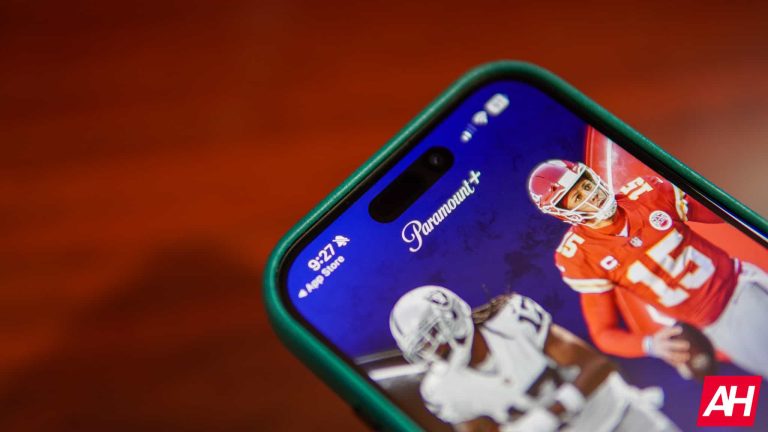
The modern streaming service landscape is no stranger to mergers and acquisitions. We’ve seen so many over the past couple of years, and it doesn’t seem to be stopping. According to a new report, Paramount and Skydance are officially merging, and this will lead Paramount to be a tech-media company.
Paramount+ is the company’s streaming service, and it has a ton of shows and movies from companies like Nickelodeon, Comedy Central, BET, etc. You also can’t forget about popular Paramount movie franchises like Top Gun, Transformers, Sonic The Hedgehog, Star Trek, and so on. Plans for this service start at $5.99/month. That plan comes with ads, so you’ll need to keep that in mind.
Paramount is merging with Skydance Media
We’ve been following stories about companies looking to merge with the media giant Paramount. While Paramount+ has been gaining in popularity since its launch, the streaming service has been struggling to break even. This is typical, as running a streaming service is not cheap, especially a streaming service with original content. So, it’s been a financial loss for the company since the first sign-up. Unfortunately, Paramount had to lay off more than 800 workers earlier this year.
As such, this merger is necessary to help Paramount+ turn a profit. According to the report, Skydance is paying $2.4 billion to acquire National Amusements. This is the company that has a controlling stake in Paramount. So, Skydance is buying the farm and animals along with it.
Along with this move, Paramount is getting a new head, David Ellison. He is charting the path to success for Paramount, and this includes improving the technology behind Paramount+. For starters, he wants to revamp the recommendations algorithm that curates content to people. That should, ostensibly, keep people invested in the service.
Cutting back
That’s not all, as Ellison will work on cutting costs and increasing efficiency. When a company says something like that, it usually means laying off another boatload of workers. This is just speculation, however. It’s just hard to think otherwise with the way that things have been going over the past couple of years.
Along with that, Jeff Shell, the head of the new combined company, told The Times that the company is open to reaching out to other companies for bundled deals. That could be a great move, as there are just too many services out there, and far too many of them are hiking up their prices. Tying them together with bundle deals means that companies will get them at a lower price.
If you’re a Paramount+ subscriber, you shouldn’t expect any sweeping changes in the near future. The deal won’t even be finalized until next year. There’s no telling if there will be some changes after the deal’s been finalized.
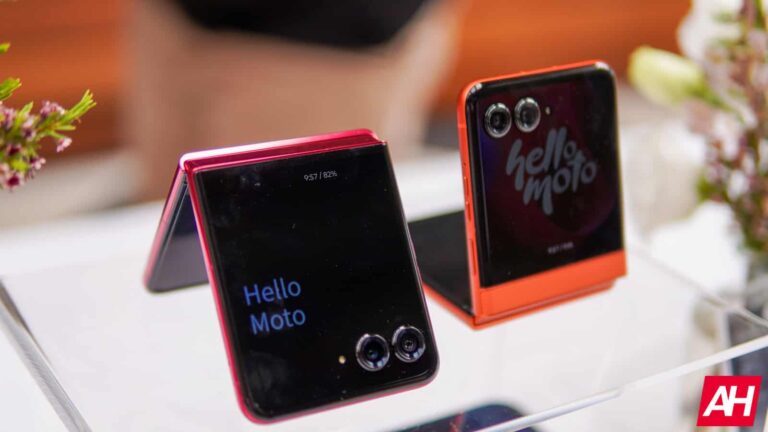
I don’t like flip phones. But I love the Motorola Razr+ (2024).
You probably have a puzzled look on your face after those first two sentences, but it’s true. I’ve used various flip phones over the years, mostly from Samsung. And I just don’t like them. I find that I need to open it several times a day to mindlessly scroll through social media or just play on my phone. Battery life is generally not all that great, and neither are the cameras. But somehow, Motorola has changed all of that for me with the Razr+ (2024).
Last year, with the Razr+ (2023), I absolutely loved using the external display. But this year, Motorola was able to make it even larger, somehow. Which makes it easier to mindlessly scroll through Twitter (sorry, X) while walking down the streets of Brooklyn. I can still play some of Google’s Game Snacks on the front screen, too, making it quicker to pass the time on the subway, and I can even use the rear cameras for a selfie or two.
I didn’t expect to like having an external display this large this much. I’ve used it before on other flip phones like the Galaxy Z Flip 5 but it’s limited to only a few apps. While Motorola is allowing all apps to work on the external display. OPPO also has a pretty large external display on its Find N3 Flip which is more or less the same aspect ratio as a regular phone display. That’s cool and all, but is tough to really use.
But how does the rest of the phone stack up? Because that external display is cool and all, but it means nothing if battery life isn’t great, performance is poor, or the cameras suck. Let’s find out in our full review.
Motorola Razr+ (2024) Review: Design and Build Quality
The build quality of Motorola phones has never really been an issue. While not all of their phones look the prettiest, they do use an industrial design that helps them withstand basically anything. And that’s true here with the Razr+. It’s an industrial design that actually looks pretty. As mentioned in the disclaimer, I do have the Peach Fuzz variant, which has a faux leather back that is peach fuzz colored, while the frame is more of a bronze-gold color. Honestly, it’s a really cool look.
This year, Motorola says that the hinge on the Razr+ is about 30% smaller compared to last year’s model. Honestly, I didn’t really notice it until I put it side-by-side with the Razr+ (2023), and it sure is much smaller. It also feels and looks more sturdy than its predecessor. Though, we’ll find out in a year if that’s true.
Razr+ (2023) vs Razr+ (2024)
One design choice that always puzzles me with phone makers, is making the cheaper model have a matte finish on the sides, while the more expensive phone is glossy. Google has done it, Apple did it for years, and now Motorola is doing it with the Razr+. Luckily with this Peach Fuzz color, it does not get as nasty from fingerprints as others that have glossy side rails.
Another design choice that I love, however, is the choice of material for the back. Last year, Motorola did offer one Razr+ with a vegan leather backing which was the Viva Magenta color that was exclusive to T-Mobile. I asked for that as a review unit, but got the black one instead. This year, all Razr+ models have either a faux leather back or a faux suede back. And to be honest, that faux suede back is really nice, and I hope it holds up better than Apple’s FineWoven cases. The Peach Fuzz faux leather backing here is really nice and provides a good grip for the phone to keep it in your hand. It also feels much more comfortable to hold than a glass-backed phone.
The hardware looks and feels great on the Motorola Razr+ (2024); I’d even say it’s some of the best-looking and feeling hardware on any flip phone available today.
Motorola Razr+ (2024) Review: Display
Like a lot of foldables, the Razr+ does feature two displays. There’s the external display and then the folding internal display. Let’s talk about that external display first. Which is a 4-inch 1272×1080 resolution display that can get up to 2400 nits of peak brightness. Let me just tell you right now, it gets plenty bright in direct sunlight. I’ve used this external display so often outside in direct sunlight without a single problem with visibility. It’s also crisp and clear, with a crazy fast 165Hz refresh rate.
I’ve quite enjoyed using this external display, as the colors are very vibrant, and the display is bright. Not to mention Motorola lets all Android apps run on this external display.
Now for the folding display, that’s a 6.9-inch 2640×1080 resolution display, which also goes up to 165Hz and is dynamic. It also has an incredible peak brightness of 3,000 nits. Much like the external display, I also had no trouble at all seeing this display outside in direct sunlight. With foldable displays, peak brightness is even more important because the display is plastic, and naturally, it is very reflective. So that extra brightness really helps with being able to see it under bright light.
Something that Motorola, OnePlus, OPPO, and others have been able to do, but Samsung can’t yet, is to ship a foldable phone without a crease in the display. That’s one of my biggest pet peeves with foldable phones, but Motorola has once again shipped a display that doesn’t have a crease. You can see a little bit of a dip in the middle, but it’s far less noticeable than what Samsung is doing. If you think that will increase over time, let me stop you right there because the 2023 model looks almost identical to the new 2024 model in terms of display crease.
Now it’s time for some testing. As we do with each phone, we take a lux light meter and measure the brightness of the display. To do this, we get a plain white picture to fill the entire screen, shine a flashlight at the light sensor, and turn out all the lights in the room. This provides us with the brightest environment possible without having an actual lab. So, of course, the results aren’t going to be spot on for what Motorola touts as the peak brightness – as that is only for the very extreme cases. But for the front display, we got 1,100 nits, and the internal display peaked at about 1,654 nits. Still plenty bright for a not-extreme situation.
Motorola Razr+ (2024) Review: Performance
The Razr+ actually received a pretty big upgrade this year, in the performance department. The previous Razr+ had the Snapdragon 8+ Gen 1 inside, which was over a year old at the time of release. Now, Motorola has moved to the Snapdragon 8 Gen 3 with the Razr+ (2024). This has resulted in much better performance compared to last year’s model, and it is immediately noticeable.
In day-to-day tasks, the performance of the Razr+ is pretty impressive, for a flip phone. Oftentimes, flip phones will underclock the processor to keep things cooler and conserve battery life. But not with the Razr+. Here, we’re getting speedy and snappy performance in just about everything from playing games, to doomscrolling on Twitter, and even running benchmarks.
Of course, having 12GB of RAM inside also helps with performance. This particular model has 12GB of RAM and 256GB of storage, which is quite good for this price point. I’ve had no complaints at all when it comes to performance, in fact the phone doesn’t really even get hot, other than playing games for a long period of time, or running some demanding benchmarks.
The Benchmarks
Speaking of benchmarks, let’s check those out now. As usual, we ran a slew of benchmarks on the Razr+ that will test all sorts of aspects of the phone. The first one here is Geekbench 6.
With Geekbench 6, it is testing the CPU speed of the single-core and the multi-core, as well as the GPU. On the CPU test, it scored 1977 in single-core and 5031 in multi-core. Now we are comparing this with the OnePlus 12 (also a Snapdragon 8 Gen 3 device) and the Pixel 8 Pro with the Tensor G3. The Razr beat both pretty handily, especially in the single-core.
Moving onto the GPU test, the Razr+ scored 9,151. That’s more than double that of the Pixel 8 Pro, but quite a bit lower than the OnePlus 12. The only thing I can think of as to why it’s so much lower than the OnePlus 12 is because of its incredible cooling OnePlus has added. And we’ll see more evidence of that in the next benchmark.
Now let’s talk about 3D Mark Wildlife Extreme Stress Test. This is a pretty extreme benchmark that will drive the temperature of the Razr+ to about the hottest it’ll ever be. This runs a 60-second loop 20 times. Giving us a Best Loop score, a Lowest Loop Score and then a stability percentage from those scores. The Razr+ actually performed significantly lower than the OnePlus 12, but right in line with other Snapdragon 8 Gen 3 devices we’ve benchmarked lately.
The Razr+ earned a 3,046 score for its best loop, and it’s lowest loop was 1,626. That gives us a stability score of 50.8%. That’s not too shabby, but when compared to the OnePlus 12, it’s very low. As the OnePlus 12 had a best loop of 17,047 and a lowest loop of 8,669. However other Snapdragon 8 Gen 3 devices like the HONOR Magic6 Pro, scored a best loop of 5,054, and a lowest loop of 3,492. That’s much closer to the Razr+.
The last benchmark we run here is a video test. Essentially, we load up the same 60-second video into Capcut and then export it at 1080p30. We time how long it takes to export, which tends to vary quite a bit among all of these devices. The Razr+ was able to export it in 18.25 seconds. That’s twice as long as the OnePlus 12 but less than half as long as the Pixel 8 Pro, which had a time of 40.05 (still the longest time for phones we’ve tested).
The Thermals
Now let’s move on to the thermals. We have three separate tests that we perform here to test out the thermals of the Razr+. Which includes taking the temperature of the phone after running the 3D Mark Wildlife Extreme Stress Test. As mentioned already, this is the most taxing thing on any phone, and we’ve never had any other thermal test beat this one, in terms of the temperature.
So, after running the 3D Mark Wildlife Extreme Stress Test, we checked the temperature, and it registered at 112.4 degrees Fahrenheit. That puts it right in striking distance of most other phones we’ve tested. Most were between 110 and 115 degrees, with the exception of book-style foldables like the HONOR Magic V2 RSR.
The next thermal test we run is with Genshin Impact. With this test, we play Genshin Impact at the highest settings and with the screen brightness at the highest, for an hour. This is a pretty demanding title and it’s pretty representative of real world use. After an hour, the Razr+ registered a temperature of 98.6 degrees. Again, pretty similar to most other phones we’ve tested.
Finally, we do a camera test. Basically, we are recording video in 4K30 (we’d do 4K60, but not every phone has that option), as that tends to heat up phones quite a bit. We take a temperature reading at 5 minutes in and again at 10 minutes. At 5 minutes, the Razr+ registered a temperature of 98.8 degrees Fahrenheit, and at 10 minutes, it rose to 104.3 degrees.
These thermals are pretty good, especially for a flip phone, where there’s not that much room for the processor to really breathe and dissipate heat.
Motorola Razr+ (2024) Review: Battery Life
When it comes to battery life on flip-style foldables, it’s generally not that great. It’s average at best. But last year, with the Razr+ (2023), Motorola did a good job of fitting in a larger battery and a more energy-efficient processor. Which resulted in pretty good battery life for a flip phone. This year, Motorola has somehow fit an even larger battery, 4,000mAh, which is enough to last you all day.
In the almost two weeks that I’ve been using this phone, I’ve been able to get through a full day and then some on a single charge. Now, a good bit of that is due to the fact that I can do so much on the outside screen. Obviously, that uses less power than the main folding display. But still, getting through a roughly 16-hour day and still having around 20-30% off is not bad. Sure, there are other phones that could do better, like the OnePlus 12 or Samsung Galaxy S24 Ultra, but neither of those are folding phones.
Benchmarks
Similar to our performance benchmarks, we also run benchmarks on the battery. Essentially, what we do is charge the phone to 100% overnight – to ensure it is at complete full charge. Then unplug it, turn the brightness all the way up, and play a 24-hour-long YouTube video until the phone dies. We tend to try to record the time at 1% before it actually shuts off, but that doesn’t always happen.
With the Razr+ (2024), it had a time of 15 hours and 45 minutes. That is, surprisingly, better than the Google Pixel 8 Pro. But about three hours shorter than the OnePlus 12. Which is not surprising given the much larger battery on that phone. This is the first flip-style phone we’ve done this test on, so there are no real apples-to-apples comparisons here yet.
When it comes to charging, Motorola quotes 45W wired charging and 15W wireless charging. Though, they do not include a charger in the box. So, using the same charger we use on every other phone, we charged from 0% up to 100%, and it took a little over an hour. That’s faster than the Pixel 8 Pro but much slower than the OnePlus 12. Don’t forget, OnePlus is doing 100W charging which is much, much faster.
Overall, the battery and charging did perform quite well on this phone. It definitely isn’t a problem for Motorola, at least with the Razr+.
Motorola Razr+ (2024) Review: Software
The Razr+ (2024) did launch with Android 14, and Motorola has promised three years of OS upgrades and four years of security updates for the Razr+ (2024). However, we do need to mention that it took Motorola until last week to start rolling out Android 14 to last year’s Razr models. That’s a solid 9 months after Android 14 actually launched. So, if you’re looking to grab the Razr+ (2024), keep in mind that you won’t be getting Android 15 anytime soon. This is an area where Google and Samsung still reign supreme.
Other than that, the software on the Razr+ (2024) is amazing. It’s still a mostly stock Android approach like Motorola has been doing for years. There are some aspects that are customized, like the control center. By default, you can opt to keep the same control center that Pixel devices have. You can also choose the “modern style” that Motorola has created. This is more in line with what a lot of Chinese OEMs offer. Where swiping down on the left side is your notifications, and swiping on the right is your control center, with a lot more controls available. I prefer this modern style, as you have access to a lot more controls, which makes it much easier. That’s always been one of my main critiques of the Android control center since its most recent redesign.
Motorola has kept a lot of the popular Stock Android features here including Material You icons, and even the ability to design your own wallpapers with Generative AI. The software is all around pretty good. I have very few complaints with the software, and with the Snapdragon 8 Gen 3 inside, it does a good job of keeping up too.
Moto AI brings some pretty useful features to Razr. Motorola is focusing on using AI to improve the user experience rather than just making features to make them. As expected, Moto AI is powered by Google Gemini, and other AI features also use Google Cloud. Motorola is using AI to improve your photos, providing unique ways to customize your device, and much more. Razr+ (2024) owners will get three months of Gemini Advanced through the 2TB Google One Storage plan for free.
Motorola’s External Display Software is top-notch
Last year, Motorola debuted the largest external display on a flip phone. And it allowed users to run virtually any app on that screen. This included also making full-screen widgets. This was pretty cool, and some tried to copy it (namely Samsung), but pretty much failed. Motorola opening up the external display to all Android apps was a big deal, and you really don’t realize how big of a deal until you use the phone.
When I tell you I use the external display more than the internal display, I’m not joking. Especially for wasting time on my phone. Being able to open up Twitter on the external screen, Instagram, or Threads, and just mindlessly scroll while going somewhere is really useful. Not only that, but Google’s Game Snacks are also available here, which provides some surprisingly addictive games that you can play on the front display.
Motorola also has full-screen pages for things like the Dialer, Weather, Spotify and more. Making it insanely easy to find out the weather, or control your Spotify playback. Now if that didn’t sell you on this external display, here’s one more thing. Google Gemini is available on the external display. It is a bit tough to type to Gemini, but it is there. And to be honest, this has made me use Gemini a whole lot more than I expected.
Right now, I have to say that Motorola is killing the game in terms of the usability of an external display. Having used the Galaxy Z Flip 5 and the OPPO Find N3 Flip, both are far inferior to what Motorola is offering right now.
Motorola Razr+ (2024) Review: Cameras
One of the weak spots for Motorola over the years has been its camera. In fact, as long as I can remember, Motorola smartphones have had pretty bad or decent cameras. While they have improved over the years, so has everyone else, leaving Motorola at just “decent” or “good” cameras and not at “great”. But I think that might change this year.
Motorola decided to ditch the ultrawide camera on the Razr+ (2024) this year and instead opted for a telephoto 2x camera. So we have two 50-megapixel cameras on the outside of the Razr+ (2024), which are also big upgrades over last year. So now we’re seeing more detail thanks to the higher mexapixel sensors, and now we have a proper zoom lens, even if it is only 2x. On top of that, we also have AI included to process these photos. And let me say, you can see the difference.
Just about every time I snapped a photo with the Razr+ (2024), I was impressed with it. After having used the Razr+ (2023) for a couple weeks before the new one launched, I kinda knew what to expect from Motorola. But it’s still blowing me away. I will say, it’s not the best cameras on a phone, but perhaps the best on a flip phone.
After the briefing in New York City, Motorola gave me my review units of both Razr models, and from there I immediately started using it and taking pictures with the Razr+ (2024). So in the gallery below, you will see camera shots from all over New York City, as well as the Airport and some from Ann Arbor.
The pictures taken in Grand Central Station are some of my favorite. Typically, those lights would be pretty blown out, but the detail on them are incredible. This comes down to the processing. After I took each photo, I tapped on it to see what it looked like. It was okay, but once the processing was done, it was 100x better. In fact, there’s a picture a lamp from my hotel, where you can actually see the lightbulb and it’s pretty sharp. That’s not something you see often with phone cameras.
Motorola is using AI here, but it’s not overdoing it, which is important. Some photos at night, or at golden hour you can see the processing a bit more with some added noise. But I have to say even these photos look really good. Including the 2x zoom photos.
The bottom line is Motorola’s cameras no longer suck. They aren’t going to replace your DSLR, and likely won’t replace the camera I use at events (the OnePlus Open or iPhone 15 Pro), but I’m not afraid to use this camera to get some good pictures.
Should you buy the Motorola Razr+ (2024)?
The Motorola Razr+ (2024) is a great flip phone, and it’s coming out at a time when we are expecting some other great flip-style folding phones to launch, like the Galaxy Z Flip 6 (and Fold 6), as well as a flip phone from HONOR and OPPO in the next few months. So we’ll have to revisit this review in a few weeks or months and see if it still stands up as well to the competition. But as of right now, this is the best flip phone available.
You should buy the Motorola Razr+ (2024) if:
You want a flip phone with good cameras and battery life.
You have small pockets and want a phone that can fit in them.
You have nostalgia for the Razr from 20 years ago.
The brand new Razr (2024) and Razr+ (2024) are finally going up for pre-order tomorrow in North America. On July 10, you will be able to pre-order both models in the US and the Razr+ (2024) in Canada.
The Razr+ will be available for pre-order at T-Mobile, AT&T, motorola.com, Amazon and Best Buy, with the device going on sale on July 24. The MSRP for the Razr+ (2024) remains $999, the same as last year despite some pretty major upgrades across the board. In Canada, the Razr+ (2024) goes up for pre-order on July 10, and is available on July 24 with an MSRP of $1,299.
Those that are T-Mobile customers, or looking to switch to T-Mobile, can get a free Razr+ when adding a line or switching to T-Mobile’s Go5G Plus or Go5G Next plan. Over on AT&T, you can get a Razr+ (2024) for $5.99 per month, without a trade-in.
Motorola’s Razr remains an incredible value at $699
Moving onto the Razr (2024), this one will cost $699, but of course, there will be plenty of promos to get it for even less. Pre-orders will be available at T-Mobile, motorola.com, Amazon and Best Buy. The device will be available universally unlocked on July 24 at motorola.com, Amazon, and Best Buy. It will also come to T-Mobile, Consumer Cellular, and Xfinity Mobile on July 24. Along with Cricket, Spectrum Mobile, Straight Talk, Total by Verizon, Visible, Google Fi Wireless, Optimum Mobile, and US Cellular on July 25. Boost Mobile will get the Razr (2024) later this Summer.
Cricket will be offering the Razr (2024) for as low as $199. Meanwhile, T-Mobile customers can get it for free when adding a line or switching to T-Mobile’s Go5G Plus and Go5G Next Plan.
Surprisingly, the Motorola Razr (2024) won’t be available in Canada, at least not yet. While neither device will be available at Verizon, both will support Verizon’s network. However, keep in mind that these do not support mmWave, so if you opt to use it on Verizon, you won’t get the fastest speeds, unfortunately.
As you may know, AI is an expensive business. It costs tons of money to secure GPUs, develop tools, and maintain them. One of the biggest costs is training the AI models powering our AI world. According to Anthropic AI’s CEO, training AI models is getting more expensive.
Any person looking to develop their own AI startup will need to come to terms with the fact that they’ll need millions, if not billions, just to get off the ground. This is because developing an AI model is no cheap affair.
Unless you haven’t gone to the grocery store or tried to buy anything in the last couple of years, you’d know that prices are going up! Well, training AI models is not very different. Right now, companies like Google, OpenAI, Anthropic, Perplexity, Meta, xAI, etc. are pouring money into training their latest and greatest models. While we don’t know how much money each company is shelling out, we can guess that they’re paying in the range of hundreds of millions of dollars.
Amodei said during the podcast that models that cost $1 billion to train are coming. According to him, this shouldn’t take more than a few years to happen. He even mentioned models that cost $10 billion or even $100 billion to train. “Right now, 100 million. There are models in training today that are more like a billion… I think if we go to ten or a hundred billion, and I think that will happen in 2025, 2026, maybe 2027,” he said, “we’ll be able to get models that are better than most humans at most things.”
What does this mean for AI in general? It could mean general AI. Right now, companies are racing to achieve AGI (Artificial General Intelligence). This is an AI that’s smarter than a human being in all respects. Most industry experts believe that we’ll be able to reach AGI within the next decade. When that happens, we can only imagine how much money it will cost to train and maintain it.
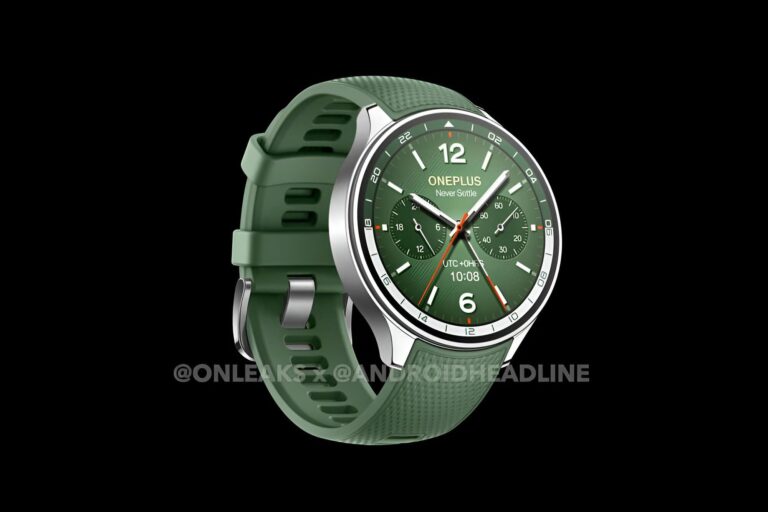
The OnePlus Watch 2R specs confirm OnePlus is looking to rebrand its existing product… kind of
The OnePlus Watch 2R launched in China under the OnePlus Watch 2 name. Yes, the OnePlus Watch 2 launched globally earlier this year, but it never arrived to China. No, the two smartwatches are not the same, not at all.
However, the Chinese variant of the OnePlus Watch 2 and the OnePlus Watch 2R will be the same products, basically… other than their software. This is a bit confusing, we really don’t know why OnePlus went down this road, but… there you go.
Now, we assumed that the two devices are the same based on their designs, and the specs that just leaked only confirmed that. These specifications come from Ishan Agarwal, a well-known tipster.
A 1.43-inch round display will be included, along with two chips
The OnePlus Watch 2R will feature a 1.43-inch round AMOLED display. Its brightness will go up to 1,000 nits in HBM. The Snapdragon W5 and BES2700 chips will be included here, and fuel this watch.
The device will offer 2GB of RAM and 32GB of internal storage. It will be IP68 certified, and it will also have a 2.5ATM rating. So, yes, you will be able to go diving with it, up to a certain level.
The watch will offer up to 100 hours of battery life, and VOOC charging will be on offer too. Dual-frequency GPS will also be on offer. OnePlus will include over 100 sports modes in this watch.
In regards to health and fitness tracking, a heart rate sensor will be included. The watch will also be able to track your stress levels and monitor your sleep patterns.
The OnePlus Watch 2R will launch in Forest Green and Gunmetal Gray colors. Those two colors are called Nebula Green and Meteorite Black in China.
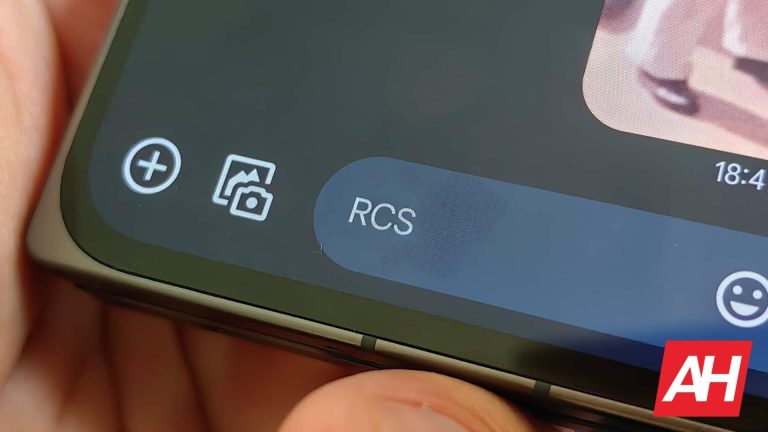
GSMA, the association responsible for maintaining a standard global mobile communication system, has announced a major update for RCS (Rich Communication Services). Universal Profile 2.7 of RCS brings “Extended Messaging” features to enable more engaging messaging experiences. The update should significantly improve Android and iPhone interoperability of the next-gen mobile messaging standard.
The latest RCS update standardizes messaging between Android and iPhone
Finalized in June, GSMA recently publicized Universal Profile 2.7 of RCS. This update adds several modern features to your standard text messaging. Like WhatsApp, Telegram, and many other messaging apps, RCS-based chats on your phone will properly show replies and emoji reactions to messages. Currently, if you react to a message with an emoji, it is sent as an SMS text. It is the standard behavior on the iOS Messages app and Google Messages for Android.
The official specification published by GSMA also mentions custom reactions. These can be an existing or generated image like a Live Sticker, Genmoji, or Photomoji. Additionally, this RCS update will fix the reply problem on iOS. The current version of RCS on iOS 18 does not support inline/threaded replies from Android users. Android-to-Android conversations don’t have the issue. Replies note the message you were referencing, like on messaging apps.
The updated RCS standard also supports editing and deleting of messages after they are sent. If you want to fix a typo or entirely recall the message you just sent, you have both options. There will probably be a time limit for these actions, though. Once it’s elapsed, you cannot edit or delete a sent message in a conversation for both parties. “An RCS client shall provide an option to recall an RCS message shortly after they sent that message,” the official specification states.
Enhanced spam protection & more improvements
This RCS update will offer better spam protection than before. GSMA is extending spam reporting to one-to-one chats. “The Spam Report Message allows a client to report an RCS user as a spammer or as an identifier involved in fraud, sending inappropriate content, or other inappropriate behavior,” the Association explains. These spam reports will go to the application server and be processed accordingly to “take unilateral blocking action.”
Overall, this update will modernize RCS messaging so you don’t have to rely on third-party apps. It will also improve the messaging experience between Android and iPhone. Apple recently added RCS support to iOS, so it’s still a new thing for iOS users. The feature is currently in beta and will be available publicly with the iOS 18 update later this year. As they say, “Better late than never.” Hopefully, Google and Apple will adopt the updated RCS standard quickly.
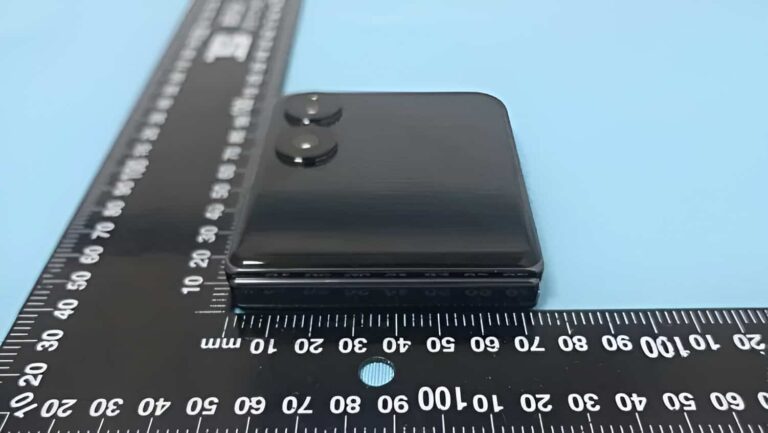
The Xiaomi MIX Flip design has just been confirmed by a certification listing. The phone got certified by the NCC in Taiwan, and as part of it, the device’s design got revealed via live images.
The Xiaomi MIX Flip design has just been confirmed thanks to a certification listing
The phone will have two vertically aligned cameras on the back. They’ll sit in the top-left corner when the phone is unfolded, and in the bottom-right when it’s folded. Each of those two cameras is its own island, they’re not a part of a joint module or anything like that.
You can also see that the cover display has some curves on the very edges. The two cameras on the back do protrude quite a bit. Unfortunately, we can’t see the outline of the cover display in these images, as the images are not the best they could be. It’s likely that the display is large, and that the cameras cut into it, though. We’ll have to wait and see.
A display camera hole will sit on the main, foldable display. It will be centered at the top of the display, as expected. The design of the phone overall is quite minimalistic. This black variant looks very stealthy.
Two batteries will be included, and 67W charging supported
This listing also confirms that the phone will have a dual battery setup. It will include a 1,145mAh pack and a 3,595mAh battery pack. The Xiaomi MIX Flip will also support 67W wired charging. We’re not sure about wireless charging at this point.
The Xiaomi MIX Flip will become the company’s very first flip phone foldable. The Xiaomi MIX Fold series is focused on book-style foldables, but this one will be the first of its kind from Xiaomi.
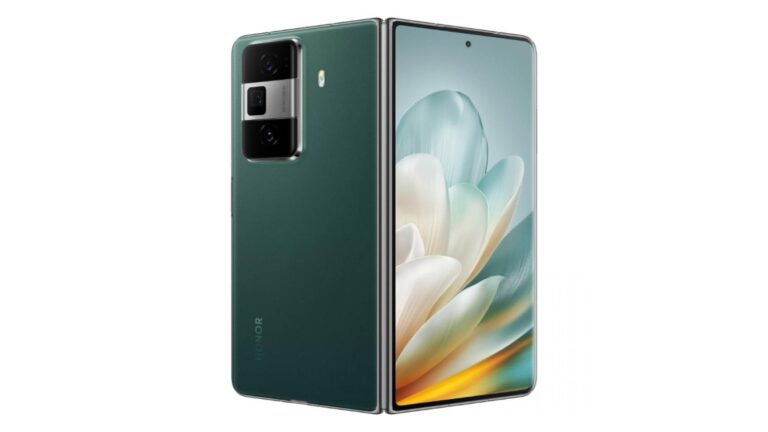
If you take a look at the gallery below, you’ll see the Magic Vs3 in the flesh. Black, Green, and White colors are shown here. The camera island looks entirely different compared to the Magic V3. The rest of the phone, as far as we can tell, is very similar, though.
Unfortunately, however, we don’t know the phone’s thickness or weight. It is expected to be a bit thicker and heavier than the Magic V3, though. Why? Well, because this is expected to be a more affordable variant of the Magic V3.
A periscope telephoto camera will also be included, which is a bit surprising
What we do know is that three cameras will be included on the back of the phone. One of those cameras will be a periscope telephoto camera, which is a bit surprising. The Magic V3 will get it, and the Magic V2 won’t offer it. So considering this is supposed to be a more affordable variant of the Magic V3, it is a bit surprising… but in a good way.
We also know that the Magic Vs3 will come in three storage options. 256GB, 512GB, and 1TB storage flavors will be on offer. That is basically it as far as our knowledge about this phone goes.
We’re only three days away from the phone’s launch event, however. July 12 is right around the corner, and everything will be revealed. The HONOR Magic V3 will take the spotlight, but the Magic Vs3 is worth a look too.
Hackers remotely execute malicious code on a compromised device or server by exploiting the Universal Code Execution vulnerability.
Through this vulnerability, threat actors can inject codes into server-side interpreter languages such as Java, Python, and PHP.
Hacking into this security flaw can steal information, divert money to other accounts, perform surveillance, and even severely affect some organizations.
Cybersecurity analyst Eugene Lim at SpaceRaccoon recently discovered that millions of users are at risk due to the Unniversal Code Execution.
Universal Code Execution Vulnerability
Chaining messaging APIs in browsers and extensions allows hackers to exploit the Universal Code Execution Vulnerability, breaking the Same Origin Policy as well as the browser sandbox.
Attackers can use content scripts and background script vulnerabilities to execute malicious code across any webpage potentially.
The study unveils two new vulnerabilities affecting millions of users and proposes a way for extensive detection of such vulnerabilities using dataset queries and static code analysis.
Browser extension design is vulnerable, and malicious web pages can evade the Same Origin Policy.
In other words, content scripts injected with wildcard patterns and taking advantage of the trust between background scripts and content can steal sensitive information from third-party websites.
For instance, “Extension A” injects scripts on all pages though it is supposed to be for one site only, moreover, it requests access to cookies from various origins.
For this reason, this vulnerability allows an attacker to obtain session cookies from whitelisted domains, leading to the breaking of same-origin policy and ultimately compromising user security on these websites.
This research is about how browser extensions can achieve “universal code execution” by chaining different messaging APIs.
The attack vector combines content scripts with wildcard characters, background scripts, and native messaging capabilities.
Exploiting weaknesses within this chain allows attackers to bypass the Same Origin Policy and execute malicious code on the host system.
The study targets high-profile extensions, especially those involving PKI (Public Key Infrastructure) smart card functions.
Researchers found vulnerable extensions through a combination of dataset queries and static code analysis, one of which had 2 million users, allowing arbitrary loading of DLLs.
This highlights the need for better security processes during browser extension development and implementation, especially when dealing with native messaging capabilities.
"Is Your System Under Attack? Try Cynet XDR: Automated Detection & Response for Endpoints, Networks, & Users!"- Free Demo






.webp)