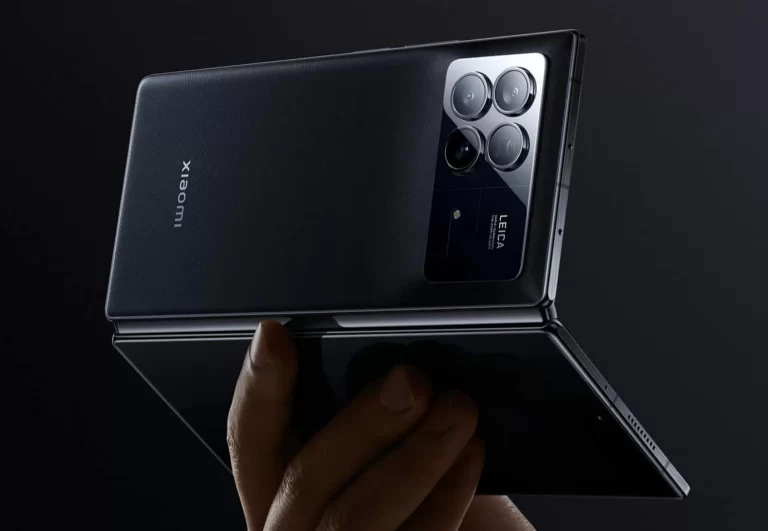
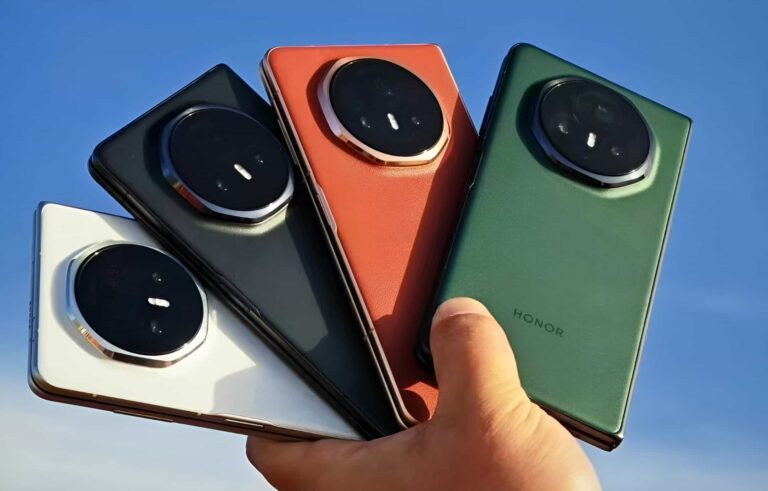
HONOR has just introduced AI Defocus Eye Protection and AI Deepfake Detection. The company claims that this is the industry’s first. This was introduced at MWC Shanghai, in case you were wondering.
HONOR has announced AI Defocus Eye Protection & AI Deepfake Detection features
The company did reach out in order to offer a bit more information on both of these. The AI Defocus Eye Protection tech is supposed to transform smartphone displays into ‘defocus glasses’ in order to provide vision relief for the first time.
HONOR says that this tech has been shown to decrease users’ transient myopia by “13 degrees on average after reading for 25 minutes, with some users experiencing a maximum reduction of 75 degrees”.
On the flip side, the AI Deepfake Detection authenticates users’ faces during video calls to make sure you’re not talking to a deepfake instead. This is a neat security feature, a useful one, considering the times we live in.
HONOR says that its AI Deepfake Detection has been trained through “a large dataset of videos and images related to online scams, “enabling the AI to perform identification, screening, and comparison within three seconds”.
The company’s CEO says that AI is “revolutionizing our lives”
George Zhao, the CEO of HONOR, said the following: AI is revolutionizing our lives and driving the smartphone industry forward, but much of the industry has focused on cloud-based AI, which is just a part of the puzzle. On-device AI, which is run on smartphones that understand us better than any other devices, is uniquely positioned to deliver services that are tailored to us and our preferences”.
Features like these are always useful to have, needless to say. They can benefit users, that’s the whole point of AI. HONOR has been utilizing AI in interesting ways already. It remains to be seen what we’ll get in the future.
We still don’t know when will these two AI features become available on the company’s phones. We also don’t know which phones will they be available on.
Datacenter proxies have grown in importance as a tool for businesses looking to differentiate themselves in a competitive market. However, navigating the complexities of their integration in a business setting can be challenging. Despite the obvious complexities of datacenter proxies, efficiently integrating them can allow companies to obtain an edge over the competition by being able to pull massive data sets from the internet. This article provides insights into the benefits of leveraging datacenter proxies to enhance your business operations.
What is a datacenter proxy?
A datacenter proxy, like any other proxy, is a gateway that connects a device to the internet and the website being browsed. When a device connects to the internet, the gateway software substitutes its IP address with one temporarily leased from a data center. By doing so, the proxy user gains a high level of anonymity and can even change how they seem on whatever page they visit.
Datacenter proxies differ from residential and mobile proxies in terms of physical presence. All proxy services replace or obscure an original IP address with another IP; however, unlike a physical residence or a number from a cloud of mobile IPs, a datacenter proxy’s IPs originate from a data center containing several servers. In many instances, this means datacenter proxies run faster and with lower latency. This type of proxy, which assumes the IP address of a data center, effectively makes users seem as if they are connecting from an altogether different location.
How do datacenter proxies work?
A datacenter proxy functions similarly to any other proxy. Let’s break down how they work:
– The user purchases and installs the proxy’s gateway software on their device.
– When accessing the internet, the device connects to the data center and receives an IP address from one of their servers.
– The new IP address allows users to visit their site anonymously.
This method can be used on almost any device with the software installed. Some companies provide this service for free, but the majority operate on a paid membership basis or by offering to lease addresses in bulk for users that require many IPs.
What are data center proxies used for?
Datacenter proxies typically provide internet anonymity at high speeds and low cost, and they have a wide range of uses. While these proxies give anonymity, they are not unlawful or intrinsically dangerous. However, practically all possible uses entail masking identifiable data in order to bypass a domain’s existing safety protocols. Applications of datacenter proxies include:
– Market research
Many organizations will employ a datacenter proxy to run market research tools, typically web scrapers. These programs visit certain websites and scan and copy information for analysis. Common data scraping tasks include comparing the costs of a single commodity across multiple markets, finding news articles, and tracking changes on rival websites.
– Accessing geo-restricted websites
Certain websites and services only allow users from specific locations to view their content. An easy workaround is to lease an IP address from a datacenter proxy located within the authorized region. Datacenter proxies should correctly mask a user’s IP address, so a user that was blocked from a website may be able to access it again. This is a lawful strategy that people can employ to manage multiple social media accounts under the same IP address.
– Protect against possible cyber threats
By masking internet activity, datacenter proxies protect against possible cyber threats. Gathering and interpreting data is a frequent activity for companies. Datacenter proxies are crucial for enterprises handling large amounts of data because of the protection they bring to this endeavor.
Businesses need trustworthy proxies now more than ever as they collect and evaluate bigger data sets to make informed decisions. Because of their faster speeds, increased anonymity, and optimal data throughput, datacenter proxies outperform residential IPs when it comes to scraping.
Boost your data collection efforts
Progress in today’s data-rich environment depends on proficient data collection and processing. To fully realize the potential of big data and advance your company, datacenter proxies are a crucial tool. They create a strong basis for data-driven decision-making that ensures future growth by providing unparalleled speed, security, and flexibility. Companies can also improve their goods and services by gathering input, client testimonials, and behavioral patterns. Innovative solutions will be made possible by increased customer satisfaction and loyalty.
Final thoughts
Begin your data-driven journey right now and connect with others who have harnessed the power of proxy datacenter solutions to elevate their pursuits. As you embark on your business journey, monitor, learn, address, and respond to all challenges that arise. Remember, with the right proxy companions, no insight is out of reach.
The Android app update brings support for the new Beats Solo Buds and the Beats Pill.
The Beats app lets Android users easily pair and manage all their Beats accessories. It offers controls for Sound Profiles, Equalization, Noise Cancellation, real-time location tracking, and more.For example, with the Beats app, you can select your preferred listening mode on your headphones or earphones. Activate Noise Cancellation to block out external noise, or switch to Transparency mode to stay aware of what’s happening around you.
You can also use the Beats app to connect a second Pill speaker to boost your sound. Or, for an even cooler experience, set one speaker to play the left audio channel and the other to play the right, giving you true stereo sound.
It’s worth noting that the Beats app on Android allows users to install new firmware updates for Beats accessories as they become available, unlike iOS, which doesn’t offer a way to trigger firmware updates for Beats accessories manually. iPhone and iPad users have to wait for the system to automatically download and install updates, similar to how firmware updates are handled for AirPods.
The newly enhanced Beats Pill is now available for $149.99, featuring three vibrant color options. This price is significantly lower than the original $199 price tag of the first-generation Beats Pill from 2012. And it’s not often that Apple enhances the battery life and overall performance of a popular product, all while reducing its starting price.
With the increasing demand for speakers driving steady industry growth, it’s no wonder a new version of the Beats Pill has surfaced, as it is the sole wireless speaker in the Apple-owned company lineup – for now, at least.
In May 2014, Apple made headlines by acquiring Beats Electronics for $3 billion, marking it as its priciest acquisition at the time.
Microsoft has announced the general availability of Copilot for Security threat intelligence embedded experience in the Defender XDR portal.
This AI-powered tool aims to revolutionize the way organizations access, operate on, and integrate Microsoft’s threat intelligence data.
Enhancing Threat Intelligence with Copilot
Microsoft Copilot for Security enables customers to access and utilize Microsoft’s threat intelligence through natural language prompts.
These prompts allow users to ask critical questions about the data and content provided by Microsoft Defender Threat Intelligence (MDTI) and Threat Analytics.
The answers returned are always up-to-date, including information on indicators of compromise (IoCs), intelligence articles, intel profiles, and guidance.
The embedded experience on the right-hand side of the Defender XDR portal has an open prompt bar and a guided experience with three pre-populated prompts.
The embedded experience, located on the right-hand side of the Defender XDR portal, offers an open prompt bar and a guided experience with three pre-populated prompts.
This feature empowers different security personas to defend against threats at machine speed and scale.
Key Capabilities of the Threat Intelligence Embedded Experience
The Copilot threat intelligence embedded experience in Defender XDR acts as a research assistant, pulling, contextualizing, and summarizing relevant intelligence at machine speed.
Customers can evaluate artifacts and correlate MDTI and Threat Analytics content with other security information from Defender XDR to assess vulnerabilities and understand the scope of an attack.
The first pre-populated prompt returns and summarizes intelligence most relevant to your organization.
By clicking on the pre-populated prompt “Give me an overview of the latest threats to my organization,” Copilot returns the latest Intel Profiles and Activity Snapshots, which contain mentions of vulnerabilities, tactics, techniques, and procedures (TTPs) related to the organization’s infrastructure, industry, and region.
Prioritizing Threats and Understanding Risk
Copilot queries Threat Analytics and MDTI to deliver the most relevant intelligence based on an organization’s exposures and vulnerabilities across their attack surface.
By clicking the pre-populated prompt “Which threats should I focus on based on their exposure score,” customers can quickly retrieve information on indicators, such as IP addresses and domains, to enrich artifacts and understand the risk they pose.
The second pre-populated prompt returns the most critical threat intelligence
Furthermore, Copilot can reason over vulnerability intelligence in MDTI and Threat Analytics to deliver a customized, prioritized list based on a customer’s unique security posture.
By clicking on the pre-populated prompt “Which threat actors are targeting infrastructure in my industry?” Copilot returns summaries of the top threat actors implicated in attacks involving the customer’s industry.
The third pre-populated prompt offers intelligence relevant to your organization based on industry and other factors.
The launch of Copilot for Security threat intelligence in Defender XDR marks a significant step forward in Microsoft’s commitment to providing cutting-edge cybersecurity solutions.
With its AI-driven capabilities and user-friendly interface, Copilot empowers organizations to stay ahead of the ever-evolving threat landscape and protect their critical assets more effectively.
FreeWebinar! 3 Security Trends to Maximize MSP Growth -> Register For Free
A critical security vulnerability, CVE-2024-5806, has been identified in MOVEit Transfer, a widely used managed file transfer software. The vulnerability poses significant risks to organizations relying on the software for secure data transfers.
The vulnerability is rooted in improper validation of user-supplied input during the authentication process. It can be exploited by sending specially crafted requests to the MOVEit Transfer server, bypassing authentication checks, and gaining administrative access.
The affected versions include MOVEit Transfer 2023.0.0 to 2023.0.10, 2023.1.0 to 2023.1.5, and 2024.0.0 to 2024.0.1.
Very shortly after vulnerability details were published today we started observing Progress MOVEit Transfer CVE-2024-5806 POST /guestaccess.aspx exploit attempts. If you run MOVEit & have not patched yet – please do so now: https://t.co/AenLgqg1wM
— The Shadowserver Foundation (@Shadowserver) June 25, 2024
Progress strongly urges all MOVEit Transfer customers using the affected versions to immediately upgrade to the latest patched version. The patched versions are as follows:
MOVEit Transfer 2023.0.11
MOVEit Transfer 2023.1.6
MOVEit Transfer 2024.0.2
Researchers at Rapid7 confirmed they could reproduce the exploit and achieve an authentication bypass against vulnerable, unpatched versions of MOVEit Transfer and MOVEit Gateway.
FreeWebinar! 3 Security Trends to Maximize MSP Growth -> Register For Free
Impact and Mitigation
The Improper Authentication vulnerability in MOVEit Transfer’s SFTP module can allow attackers to bypass authentication mechanisms and gain unauthorized access to the system. This could potentially lead to data breaches, theft of sensitive information, and other malicious activities.
Researchers at watchTowr initially disclosed the vulnerability and published a detailed technical analysis.
To mitigate the risk, customers are advised to upgrade to the patched versions of MOVEit Transfer using the full installer. The upgrade process will cause a system outage while running.
This vulnerability does not affect MOVEit Cloud customers, as the patch has already been deployed to the cloud infrastructure. Additionally, MOVEit Cloud is safeguarded against third-party vulnerability through strict access controls on the underlying infrastructure.
To mitigate the third-party vulnerability, Progress recommends the following steps:
Verify that public inbound RDP access to MOVEit Transfer servers is blocked.
Limit outbound access from MOVEit Transfer servers to only known trusted endpoints.
Progress will make the third-party vendor’s fix available to MOVEit Transfer customers once released.
Progress has acknowledged the severity of CVE-2024-5806 and is working closely with customers to ensure the vulnerability is addressed swiftly. The company has also provided detailed guidance on applying the patch and securing affected systems.
Progress encourages customers to sign up for the Progress Alert and Notification Service (PANS) to receive email notifications for future product and security updates. Customers can log into the Progress Community Portal to subscribe to PANS.
Customers can refer to Progress’s FAQ page for information and frequently asked questions about Progress Alert Notifications.
The Medusa banking trojan has returned to Android after a year off researchers’ radar screens. According to BleepingComputer, new campaigns have been spotted in the U.S., France, Italy, Canada, Spain, the United Kingdom, and Turkey. The new activity started back in May and is potentially serious because the malware can initiate unapproved transactions from infected phones.
Medusa also can track the keys you type, control the screen, and manipulate text messages. Medusa will also capture screenshots and place overlays across the full screen in order to trick potential victims. As BleepingComputer says, “Overall, the Medusa mobile banking trojan operation appears to expand its targeting scope and be getting stealthier, laying the ground for more massive deployment and higher number of victim counts.” The current campaigns are targeting users of the best Android phones in the aforementioned countries.
Making matters worse, the new version of Medusa is a lighter, more compact version that requires fewer permissions to wreak havoc. According to online fraud management company Cleafy, those who wrote Medusa removed 17 commands from the previous version of the malware and added five. The apps used to drop the malware onto Android phones include a fake Chrome browser, a 5G connectivity app, and a streaming app called 4K Sports. If you have any of these apps on your phone, delete them immediately.
Medusa uses full-screen overlays to trick the victim into thinking his phone is off. Image credit-Cleafy
Luckily, none of the dropper apps used to distribute the malware have been spotted in the Google Play Store; one could make the case that Medusa was allowed to drain financial accounts of Android users because Android allows users to sideload apps. But more worrisome is that Cleafy sees more cybercriminals joining this Android malware-as-a-service (MaaS) operation allowing newer and harder-to-detect ways to distribute the malware to be discovered and created. An MaaS operation is one in which the hacker pays a fee for using the trojan
And when you think about the ways that Medusa can take a screenshot of your phone, read your typing keytaps, or use overlays on the screen to trick you into typing your password where one doesn’t really belong, this is a serious threat that security firms need to continue to monitor. An overlay can also turn your phone’s screen black leaving you thinking that your phone is off while nefarious actions are taking place in the background.
The first thing you can do to help yourself is to stop sideloading apps. Even though Google hasn’t always been able to protect the Play Store from malware, your chances of becoming a victim to a trojan like Medusa expand when you sideload apps on your Android device.
Motorola has announced its newest set of Razr flip phones – the Razr and Razr+. This year, Motorola is touting that it has the largest external display on any flip phone, with a massive 4-inch display on the Razr+ and a 3.6-inch external display on the Razr. That’s pretty incredible, and it also means you’ll almost never need to actually open the phone since Android apps work on the external display. Something that Samsung’s Galaxy Z Flip 5 still can’t do.
On top of the massive external display, Motorola has also upgraded the cameras. Both Razr phones sport the exact same primary camera, which is now a 50-megapixel camera with a larger sensor compared to last year’s 64-megapixel. The Razr also sports a 13-megapixel ultrawide and macro sensor, while the Razr+ sports a 50-megapixel telephoto sensor that is capable of doing 2x optical zoom. On the front, both phones sport a 32-megapixel front-facing camera.
The other major change that Motorola made this year was a larger battery on the Razr+. The Razr+ goes from a 3,800mAh capacity battery to a 4,000mAh capacity battery. That is not a huge change – only about 5% more capacity. But that does bring the Razr+ above that 4,000mAh capacity threshold that even Samsung hasn’t been able to cross on the flip phone side yet.
Motorola Razr+ is the first flip phone with Snapdragon 8s Gen 3
During our briefing ahead of today’s announcement, Motorola made a point to claim that the Razr+ is going to be the first flip to launch with the Snapdragon 8s Gen 3. Only a handful of phones have launched with this new processor so far, and we expect that the Galaxy Z Flip 6 will use it next month. However, that is actually a pretty big upgrade for the Razr+ this year, considering last year’s model used the older Snapdragon 8+ Gen 1, all for the same price.
Motorola is offering the Razr in 8GB with 256GB of storage, starting at $699, while the Razr+ is being offered with 12GB of RAM and 256GB of storage for $999. With Samsung’s reported price increase, the Razr and Razr+ are even more impressive. Considering Galaxy Z Flip 5 does use 8GB of RAM and not 12GB. Though, that could all change in a couple of weeks.
For those of us in the US, it is great to see Motorola bringing some really good competition to the Samsung Galaxy Z Flip 5 (and soon the Flip 6), which is sorely needed. I’ve had the Motorola Razr+ (and Razr) for only a few hours, but so far, it looks to be way better than what Samsung is offering.
Motorola will be selling the Razr for $699 here in the US in three colors: Beach Sand, Coala Gray, and Spritz Orange. The Razr+ is going to be priced at $999 and available in four colors: Midnight Blue, Spring Green, Peach Fuzz, and the iconic Razr Pink color is back. These are the same prices as last year’s Razr and Razr+.
An MS-DOS emulator is probably not the main desire of users of iOS devices. However, if you ever want to experience this classic OS on your iPhone, Apple won’t make things easy for you. Apparently, the policy that allows retro game emulators in the App Store does not contemplate operating system emulators.
For a few months now, Apple has allowed retro game emulators on the App Store. However, the measure mainly aims to bring retro gaming to the company’s mobile devices. For example, users can enjoy PS1 games through the Gamma emulator. You can also access classic Nintendo console games thanks to the Delta emulator.
Apple rejected an MS-DOS and a Windows emulator for iOS
That said, there are developers who have worked on emulators of MS-DOS, the classic operating system. Although technically, MS-DOS does not count as a classic console, running it allows you to enjoy games that were developed for it. However, this argument does not convince Apple, which is not allowing iDOS 3 (an MS-DOS emulator) in the iOS App Store.
According to the developer of iDOS 3, Apple spent up to two months evaluating their app, only to reject it in the end. The company adhered to Section 4.7 of its App Review Guidelines to do so. This section of the guidelines says that Apple will not approve MS-DOS emulators or Windows OS emulators. This not only affects iDOS 3 but also UTM SE or any other of the same nature.
Only game emulators are allowed
According to the iDOS 3 developer, Apple’s response said that “only emulators of retro game consoles are compatible per guideline 4.7.” On the other hand, the UTM SE developer received a “PC is not a console” response. So, although operating system emulators also allow you to run games developed for them, Apple does not consider them to qualify as retro gaming emulators. It seems that this potential “loophole” is closed for the moment.
Although Apple establishes these conditions, it remains to be seen if the EU says anything about them. The Cupertino giant has been constantly struggling with the DMA regulation. For instance, the company claims that the DMA caused a delay in the Apple Intelligence rollout in the EU. Meanwhile, OS emulators for iOS are available in AltStore.
This time around we’re comparing two sister flagships, the OnePlus 12 vs Vivo X100 Ultra. Why do we say sister flagships? Well, these two phones come from sister companies, both of which are under the BBK Electronics umbrella. These two devices do look similar from the front, but there are a number of differences here that we’ll talk about. There are some similarities, but also a lot of differences.
As per usual, we will kick things off by listing the specifications of both devices. Following that, we’ll compare their designs, display, performance, battery life, cameras, and audio output. Both of these devices are large flagship offerings, and both of them are compelling in their own regard. With that being said, let’s get down to it.
If you look at these two phones from the front, you’ll notice how similar they are. Both phones offer the so-called ‘glass sandwich’ designs. Their front and back sides are curved towards the sides, into the frame. The side frame is thin on both phones due to that fact, it’s not flat. Both phones are made out of aluminum and glass, by the way. You will notice a curved display on the front, with a centered display camera hole.
The bezels around the two displays are very thin, while physical buttons sit on the right-hand side of both devices. The OnePlus 12 also has the alert slider switch on the left-hand side. The OnePlus 12 includes a circular camera island in the top-left corner. The Vivo X100 Ultra has an even larger camera oreo which is centered in the upper portion of the phone’s backplate. Both devices do offer three rear-facing cameras.
The two devices are almost identical in terms of height and width, the difference is less than 1mm. They are exactly the same when it comes to thickness. The Vivo X100 Ultra is 9 grams heavier than the OnePlus 12. Both devices do offer water and dust resistance, but the Vivo X100 Ultra is a bit better in that regard. It offers an IP68 certification, compared to an IP65 rating on the OnePlus 12. Both devices are very slippery, which is not surprising considering their glass + metal design. Using a case is recommended. The build quality is really good on both sides, though.
OnePlus 12 vs Vivo X100 Ultra: Display
The OnePlus 12 includes a 6.82-inch QHD+ (3168 x 1440) LTPO AMOLED display. That panel is curved, and it has an adaptive refresh rate. It can project up to 1 billion colors and supports Dolby Vision too. HDR10+ content is supported here, while the peak brightness is 4,500 nits, in theory. The screen-to-body ratio of the OnePlus 12 is around 90%, while the display is protected by the Gorilla Glass Victus 2.
The Vivo X100 Ultra, on the flip side, has a 6.78-inch 3200 x 1440 LTPO AMOLED display. That panel is also curved, and it has an adaptive refresh rate of up to 120Hz. It can project up to 1 billion colors, and it also supports Dolby Vision. HDR content is supported too, while the peak brightness of this panel is 3,000 nits. The display aspect ratio is 20:9, while the screen-to-body ratio is set at around 89%. The display protection is unknown.
Both of these panels are outstanding. They’re not only vivid and bright but have great viewing angles too. The blacks are deep as you’d expect them to be, while the touch response is also very good. Both displays do get more than bright enough, even in direct sunlight. We don’t really know what sort of display protection the Vivo X100 Ultra offers, so you may want to keep the screen protector on. The OnePlus 12 is well-equipped in that regard.
OnePlus 12 vs Vivo X100 Ultra: Performance
The Snapdragon 8 Gen 3 SoC fuels both of these smartphones. That is Qualcomm’s most powerful processor, it is a 4nm chip. Both devices also offer up to 16GB of LPDDR5X RAM and utilize UFS 4.0 flash storage. Neither company skimped out on the performance-related components, which is always good to see. Great hardware only gets you so far, though. The question is, do both of these devices offer good performance?
The answer is yes, they do, very much so. Do note that the Vivo X100 Ultra does not come with Google Play Services out of the box, though. You’ll need to install the Google Play Store manually if you decide to import this phone, as it’s not sold outside of China. Both phones do offer great performance, across the board. They do great in terms of regular, everyday tasks, such as opening apps, consuming multimedia, image editing, browsing, etc. The same can be said for the gaming aspect, though.
With less demanding games, they do a fantastic job, but very demanding games are not a problem either. Both of these phones can easily run Genshin Impact and other truly graphically-demanding titles. They will get quite warm after a while, but that won’t affect the gameplay. The OnePlus 12 in particular has a great cooling system, so that’s always a good thing. The bottom line is, don’t worry about the performance here, both of these phones are up to the task.
OnePlus 12 vs Vivo X100 Ultra: Battery
There is a 5,400mAh battery included inside the OnePlus 12. The Vivo X100 Ultra, on the flip side, has a 5,500mAh battery on the inside. You’ll be glad to know that both of these devices offer great battery life. They offer some of the best battery life numbers out of any flagship from this generation, actually. Getting over 7 hours of screen-on-time is not a problem, and some of you could even go over the 8-hour mark. Gaming and other demanding processes could affect that, though, of course.
Even if you’re a demanding user, these two phones will do the trick. The battery life is that good. Yes, those large battery packs do help the matter, but both phones are also well-optimized. Even if you end up draining them sooner than you’d hope, however, you’ll be able to easily amend that as they both offer fast charging. Speaking of which, let’s see what exactly do they offer in that regard.
The OnePlus 12 supports 100W wired (80W in the US), 80W wireless, and 10W reverse wireless charging. The Vivo X100 Ultra, on the flip side, supports 80W wired, 30W wireless, and reverse wired charging. It is worth noting that both devices ship with chargers in the box too. So you’ll be ready to go. In regards to wired charging, they’re both blazing fast, while the OnePlus 12 has the advantage in terms of wireless charging, if that’s what you prefer.
OnePlus 12 vs Vivo X100 Ultra: Cameras
The OnePlus 12 has a 50-megapixel main camera, a 48-megapixel ultrawide unit (114-degree FoV), and a 64-megapixel periscope telephoto camera (3x optical zoom). The Vivo X100 Ultra, on the flip side, includes a 50-megapixel main camera (1-inch type sensor, gimbal OIS), a 50-megapixel ultrawide camera (116-degree FoV), and a 200-megapixel periscope telephoto camera (3.7x optical zoom, macro). OnePlus’ handset is backed by Hasselblad, while the Vivo X100 Ultra has ZEISS support.
Technically speaking, the Vivo X100 Ultra has a more powerful camera setup. It has a 1-inch main camera sensor, not to mention an immensely capable periscope telephoto camera. They both do a great job, though. They both provide great-looking photos during the day, though the ones from the OnePlus 12 are a bit more contrasty. Images from the Vivo X100 Ultra tend to look more processed at times, not in a bad way, though. Secondary cameras do a good job of keeping up with the color profile of the two main cameras here
The Vivo X100 Ultra takes the cake when it comes to high-zoom images. It also does a better job with portrait shots, and macro photography as well. That periscope telephoto camera is immensely powerful. Both ultrawide cameras are great during the day. When the light goes away, both main cameras do a great job. The images from the OnePlus 12 do end up looking more contrasty in such conditions too, though. The Vivo X100 Ultra does a better job of fighting light flares in low light. Both of these smartphones do a great job when it comes to photography.
Audio
You’ll find a set of stereo speakers on both of these smartphones. They are actually very similar in terms of loudness too. They’re not the loudest speakers we’ve used, not even close. They are, however, well-balanced and offer good sound output.
Neither phone includes an audio jack, unfortunately. You can, however, use their Type-C ports if you’d like to connect your wired headphones. If you prefer wireless connectivity, you’ll realize that Bluetooth 5.4 is available on both devices.
In the ever-evolving realm of high-fidelity audio, where the pursuit of sonic perfection often comes with a hefty price tag, Schiit Audio stands as a beacon of defiance. This California-based company, known for its irreverent attitude and commitment to delivering exceptional value, has consistently challenged the conventions of the audiophile world. Their latest creation, the Schiit Jotunheim 2, named after the mythical land of giants in Norse mythology, embodies this philosophy, and we’re here to review it. It’s a versatile amp/DAC combo that promises to deliver a sonic punch worthy of its namesake, all without breaking the bank.
In this comprehensive review, we’ll delve deep into the heart of the Jotunheim 2, exploring its design, features, and most importantly, its sound quality. We’ll leave no stone unturned in our quest to uncover whether this device truly lives up to the hype and whether it’s the right tool to unlock the full potential of your headphone listening experience. Prepare to be immersed in a symphony of power, precision, and sonic excellence.
Table of contents
Schiit Jotunheim 2 Review: Hardware and Design
Opening the box of a Schiit Audio product is an experience unlike most others in the high-end audio realm. Eschewing extravagant packaging and superfluous accessories, Schiit focuses on what truly matters: the product itself. The Jotunheim 2 arrives in a simple, unassuming cardboard box adorned with the company’s minimalist logo. Inside, you’ll find the amp/DAC unit, a power cable, and a concise manual. It’s a refreshing change of pace from the over-the-top presentations that often accompany high-priced audio gear, serving as a subtle reminder that the true value lies in the product’s performance, not its presentation.
Upon first glance, the Jotunheim 2 exudes an understated elegance that’s characteristic of Schiit’s design philosophy. The chassis is constructed from silver or black aluminum, a material that not only offers durability but also serves a functional purpose by effectively dissipating heat generated during operation. This thoughtful design choice ensures optimal performance and longevity, even during extended listening sessions. The amp/DAC’s dimensions, measuring 9 inches wide, 6 inches deep, and 2 inches tall, make it a perfect fit for most desktop setups. Its weight, a substantial 6 pounds, further reinforces the notion of a robust build quality that can withstand the rigors of daily use.
Design and first Impressions: A marriage of form and function
The Jotunheim 2’s design language follows Schitt’s well-established aesthetic: clean lines, sturdy construction, and an air of minimalist sophistication. While some may yearn for a more visually striking exterior, the Jotunheim 2’s unassuming appearance is a deliberate choice that allows the focus to shift towards its exceptional functionality and sonic prowess. The silver aluminum chassis, while understated, possesses an undeniable elegance that grows on you over time. It’s a device that doesn’t scream for attention, but rather subtly commands respect with its solid presence.
The front panel is refreshingly uncluttered, allowing for intuitive operation. A large, centrally located volume knob beckons you to take control of your listening experience. Its smooth rotation and precise feel offer a tactile satisfaction that’s often lacking in digital controls. Flanking the volume knob are two smaller switches, one for selecting the input source and another for adjusting the gain. These switches are clearly labeled and click into place with reassuring tactile feedback, further enhancing the overall user experience.
Schiit Jotunheim 2 Review: Connectivity
The rear panel of the Jotunheim 2 reveals a comprehensive array of inputs and outputs, catering to a wide range of setups and configurations. Balanced XLR and single-ended RCA inputs provide flexibility for connecting various sources, while balanced and single-ended headphone outputs ensure compatibility with different types of headphones. The switchable balanced/single-ended line-level output further expands the Jotunheim 2’s functionality, allowing it to serve as a preamplifier in a larger audio system.
One of the most intriguing aspects of the Jotunheim 2’s design is its modularity. The amp can be configured with an optional ESS Sabre DAC module or a passive phono stage, adding another layer of versatility to an already impressive feature set. The DAC module, while not the latest model on the market, offers a substantial improvement. It delivers a cleaner, more detailed sound that allows you to fully appreciate the nuances of your music.
The passive phono stage, meanwhile, caters to vinyl enthusiasts, providing a convenient way to connect a turntable directly to the Jotunheim 2. While not as feature-rich as a dedicated phono preamp, it’s a surprisingly capable performer that delivers respectable sound quality for its price. It’s worth noting that the passive phono stage requires a high-output moving magnet (MM) cartridge for optimal performance, so keep that in mind if you’re considering adding this module to your setup.
Schiit Jotunheim 2 Review: Sound
While the Jotunheim 2’s sonic prowess speaks for itself, understanding its technical underpinnings can deepen our appreciation for its capabilities and performance. Schiit Audio, known for its transparency, provides a wealth of technical specifications and measurements, allowing us to peek behind the curtain and see what makes this amp/DAC tick.
Amplifier: Power and precision
The Jotunheim 2’s amplifier section is a marvel of engineering, delivering ample power to drive even the most demanding headphones with ease. In balanced mode, it boasts an impressive output of 7.5W RMS per channel into 16 ohms, which gradually decreases to 600mW RMS per channel into 600 ohms. In single-ended mode, the output is slightly lower, ranging from 2.4mW RMS per channel into 16 ohms to 165mW RMS per channel into 600 ohms. This wide range of power output ensures that the Jotunheim 2 can handle virtually any headphone on the market, from sensitive in-ear monitors to power-hungry planar magnetics like the HiFiMan Susvara’s.
But power isn’t everything; control is equally important. The Jotunheim 2’s low output impedance, measuring less than 0.1 ohms at either gain setting, ensures a tight grip on your headphones, resulting in a clean, detailed sound with minimal distortion. This is particularly crucial when driving low-impedance headphones, which can be prone to distortion if not properly controlled.
The amp’s performance measurements are impressive
The amp’s performance measurements are equally impressive. Total harmonic distortion (THD) is vanishingly low, measuring less than 0.00015% in balanced mode and less than 0.006% in single-ended mode, both at 1kHz. This means that the Jotunheim 2 introduces virtually no distortion of its own, allowing the music to shine through with pristine clarity.
Intermodulation distortion (IMD), another measure of amplifier linearity, is also exceptionally low, measuring less than 0.0002% in balanced mode and less than 0.007% in single-ended mode. This ensures that the Jotunheim 2 faithfully reproduces complex musical passages without introducing any unwanted artifacts or coloration. Now that’s what an amp should do, not interfere with the sound, Rather it should amplify not alter.
The amp‘s signal-to-noise ratio (SNR) is another area where it excels. In balanced mode, the SNR exceeds 123dB, while in single-ended mode, it’s still a very respectable 102dB. This high SNR ensures that the music signal remains clean and free from noise, even at low listening levels.
The Jotunheim 2 also features a unique current-feedback topology called Nexus™. This topology is designed to provide a wide bandwidth and fast transient response, resulting in a sound that’s both detailed and dynamic. It’s also inherently differential, meaning it works equally well with both balanced and single-ended sources.
DAC: Digital delights
The optional ESS Sabre ES9028Q2M DAC module is a popular choice among audiophiles, and for good reason. It’s known for its exceptional detail retrieval, low noise floor, and natural sound signature. When combined with the Jotunheim 2’s powerful amplifier section, the DAC module elevates the amp’s performance to new heights, delivering a digital audio experience that’s truly captivating.
The DAC module supports a wide range of sample rates and bit depths, ensuring compatibility with high-resolution audio files. It also features Schiit’s proprietary Unison USB™ input, which is designed to provide a jitter-free signal for optimal sound quality.
In our tests, the DAC module delivered a clean, detailed sound with excellent imaging and soundstage. It was particularly impressive with well-recorded acoustic music, where the natural timbre of instruments and voices shone through. The DAC module also excelled at revealing subtle details in the music, such as the reverb tails in a concert hall recording or the subtle nuances of a vocal performance.
Phono stage: A vinyl lover’s dream
The Jotunheim 2’s optional passive phono stage is a surprising and welcome feature for vinyl enthusiasts. While not as feature-rich as a dedicated phono preamp, it’s surprisingly capable, delivering respectable sound quality that belies its modest price. The phono stage boasts a gain of 42dB, which is sufficient for most moving magnet (MM) cartridges. It also features a fully passive RIAA network with AD8599 gain stages and PET film capacitors, ensuring accurate equalization and low distortion. In our tests, the phono stage delivered a warm, detailed sound that captured the essence of our vinyl collection. It was particularly impressive with jazz and classical recordings, where the natural timbre of instruments and voices shone through.
The Nexus gain stage: Schiit’s secret sauce
At the heart of the Jotunheim 2 lies Schiit’s proprietary Nexus gain stage, a technological marvel that sets this amplifier apart from the competition. This fully discrete differential current-feedback topology might sound like a mouthful, but it essentially translates to a cleaner, more dynamic sound with minimal distortion. In simpler terms, the Nexus gain stage ensures that your music is amplified with exceptional fidelity, preserving every nuance and detail of the original recording.
The Nexus gain stage is a testament to Schiit’s commitment to engineering excellence. It’s a complex circuit that requires careful design and meticulous implementation. The result is an amplifier that delivers a powerful and nuanced sound that’s both engaging and transparent.
Continuity S output stage: Smooth and effortless power delivery
Complementing the Nexus gain stage is the Continuity S output stage, another proprietary Schiit technology. This output stage is designed to deliver power to your headphones in a smooth, effortless manner, regardless of their impedance. We were particularly impressed with the Jotunheim 2’s ability to control the low frequencies even when driving demanding planar magnetic headphones. The bass remained tight and punchy, with no signs of distortion or muddiness, even at high volumes. This is a testament to the amp’s robust power supply and carefully tuned output stage.
Relay-switched input, gain, and output: A commitment to signal integrity
Schiit Audio takes signal integrity very seriously, and the Jotunheim 2 is a prime example of this commitment. The amp features relay-switched input, gain, and output sections, which minimize signal degradation and ensure that the music you hear is as pure and unadulterated as possible. This attention to detail might seem excessive to some, but for audiophiles who value the utmost fidelity, it’s a crucial aspect that sets the Jotunheim 2 apart from many of its competitors.
The relay-switched input allows you to seamlessly switch between different sources without any pops or clicks, ensuring a smooth and uninterrupted listening experience. The relay-switched gain provides two distinct gain settings – low and high – allowing you to tailor the amp’s output to match the sensitivity of your headphones. Additionally, the relay-switched output also ensures that the signal path to your headphones is as clean and direct as possible.
Versatility & Customization: Tailor the Jotunheim 2 to your needs
The Jotunheim 2’s versatility extends beyond its wide array of inputs and outputs. It’s also incredibly flexible when it comes to customization. The amp’s gain can be adjusted to match the sensitivity of your headphones, ensuring optimal performance for a wide range of models. The DAC module can be bypassed if you prefer to use an external DAC, and the phono stage can be added or removed as needed.
This modularity allows you to tailor the Jotunheim 2 to your specific needs and preferences, ensuring that it fits seamlessly into your existing audio setup. Whether you’re a headphone enthusiast with a diverse collection or a vinyl lover looking for a convenient all-in-one solution, the Jotunheim 2 can adapt to your needs.
A symphony of sound: The Jotunheim 2’s sonic performance
The true magic of the Jotunheim 2 lies not in its sleek design or impressive technical specifications, but in the symphony of sound it conjures. Prepare to embark on a sonic journey that will leave you enthralled, as we delve into the nuances of the Jotunheim 2’s sonic performance.
The soundstage: A grand hall of sonic immersion
One of the most striking aspects of the Jotunheim 2’s sonic prowess is its ability to create an expansive and immersive soundstage. It’s as if you’ve stepped into a grand concert hall, where each instrument occupies its own distinct space, and the music unfolds with breathtaking realism. The soundstage is both wide and deep, allowing you to pinpoint the precise location of each instrument and vocalist within the mix.
This expansive soundstage is particularly evident when listening to orchestral music. The Jotunheim 2 paints a vivid sonic picture, with strings soaring to the left, brass instruments blaring from the right, and percussion reverberating from the back of the stage. It’s a truly captivating experience that draws you into the heart of the performance. But the Jotunheim 2’s soundstage isn’t limited to classical music. It shines equally brightly with other genres, from rock and jazz to electronic and hip-hop. The amp’s ability to create a sense of space and depth adds a new dimension to your music, making it feel more alive and engaging.
Detail retrieval: A sonic microscope
The Jotunheim 2 is not just about creating a vast soundstage; it’s also about revealing the subtle details that often go unnoticed with lesser equipment. I was consistently impressed with the amp’s ability to uncover nuances in familiar recordings as if I were hearing them for the first time. The gentle decay of a cymbal, the delicate vibrato of a violin string, the subtle breath of a vocalist – these are the details that bring music to life, and the Jotunheim 2 presents them with remarkable clarity and precision.
This detail retrieval is particularly evident in the midrange, where vocals and instruments are rendered with exceptional clarity and definition. Each note is distinct and well-defined, allowing you to appreciate the subtle nuances of the performance. Whether it’s the growl of a saxophone or the rasp of a distorted guitar, the Jotunheim 2 captures it all with stunning realism.
The amp’s ability to handle complex musical passages is equally impressive. Even with dense orchestral arrangements or intricate jazz compositions, the Jotunheim 2 never feels congested or overwhelmed. Instead, it maintains a remarkable sense of composure, allowing each instrument to shine through with clarity and definition.
Dynamics & Impact: A sonic rollercoaster
The Jotunheim 2’s power and control translate into a dynamic and impactful listening experience. The music feels alive, with a sense of energy and immediacy that draws you in and keeps you engaged. Whether you’re listening to the delicate plucking of a harp or the thundering roar of a drum kit, the Jotunheim 2 faithfully reproduces every nuance with remarkable precision.
The amp’s low output impedance ensures that it can drive a wide range of headphones with authority and control. Even demanding planar magnetic headphones, which are notorious for requiring ample power to reach their full potential, are no match for the Jotunheim 2’s muscular output except the Mod House Tungsten’s. The result is a sound that’s both powerful and controlled, with deep, impactful bass, lush midrange, and sparkling highs.
The Jotunheim 2’s dynamic range is also impressive. It can effortlessly handle the quietest passages and the loudest crescendos without any signs of strain or distortion. This makes for a thrilling listening experience, where you can feel the full emotional impact of the music.
Genre versatility: A sonic chameleon
One of the most remarkable aspects of the Jotunheim 2 is its versatility across different musical genres. Thanks to its neutral sound signature, it doesn’t favor any particular genre over another. Whether you’re a fan of rock, jazz, classical, electronic, hip hop, alternative or anything in between, the Jotunheim 2 will faithfully reproduce your music with remarkable accuracy and detail.
I found that the Jotunheim 2 particularly shines with genres that benefit from a wide soundstage and precise imaging, such as classical music and jazz. However, it’s equally adept at handling the raw energy of classic rock music or the intricate textures of electronic house music. The amp’s ability to adapt to different musical styles is a testament to its well-balanced design and technical prowess.
Schiit Jotunheim 2: Should you buy it?
After months of rigorous testing and countless hours of listening, the Schiit Jotunheim 2 has left an indelible mark on my ears. It’s a testament to Schiit Audio’s unwavering commitment to delivering exceptional value and performance without the exorbitant price tags that often plague the high-end audio world.
The Jotunheim 2 is not just an amp and DAC; it’s a versatile powerhouse that punches well above its weight class. It’s a sonic chameleon that effortlessly adapts to different music genres, a detail-retrieving machine that unveils hidden nuances in your music, and a powerhouse that can drive even the most demanding headphones with authority and finesse!
But is the Jotunheim 2 the right amp/DAC for you? Let’s break down its strengths, weaknesses, and who it might be the perfect fit for.
The Value Proposition: A Giant-Killer Indeed
In the world of high-fidelity audio, the phrase “you get what you pay for” is often thrown around. However, the Jotunheim 2 defies this convention. It delivers a level of performance that rivals or even surpasses amplifiers and DACs costing several times its price. This exceptional value proposition is one of the Jotunheim 2’s most compelling features, making it an attractive option for both budget-minded audiophiles and those who simply want high-quality audio equipment.
We were consistently impressed with the Jotunheim 2’s ability to reveal subtle details in our music, breathing new life into familiar tracks and uncovering sounds we had never noticed before. The amp’s power and versatility are equally remarkable, allowing us to effortlessly drive a wide range of high-end headphones and connect to various sources without compromising on sound quality.
The modular design of the Jotunheim 2 is another aspect that adds to its value proposition, it looks classy and beautiful while contemporary. The ability to add an ESS Sabre DAC or a passive phono stage provides users with the flexibility to customize the Jotunheim 2 to their specific needs and preferences. While the stock Jotunheim 2 is already a capable performer, the addition of these modules opens up even more possibilities for sonic exploration.
Reasons to consider the Schiit Jotunheim 2:
…the Jotunheim 2 offers audiophile-grade performance at a fraction of the cost of many competitors, making it an excellent choice for those who are looking for exceptional value without sacrificing quality. …the Jotunheim 2’s flexibility and power make it an ideal choice for those with a variety of headphones, from sensitive in-ear monitors to power-hungry planar magnetics. …its optional passive phono stage adds a welcome layer of convenience for vinyl enthusiasts, allowing them to connect their turntable directly to the Jotunheim 2. …the Jotunheim 2’s clean lines and compact size make it a perfect addition to any desktop setup. …its powerful headphone output and clean sound signature are well-suited for gaming and content creation.
Reasons to look elsewhere:
…the Jotunheim 2’s minimalist design might not appeal to those who prioritize flashy aesthetics over functionality. …while the ES9028Q2M DAC is a solid performer, there are newer and more advanced DACs on the market. If you’re a hardcore audiophile who demands the absolute latest tech in digital-to-analog conversion, you might want to explore other options.
Wrap-up
The Schiit Jotunheim 2 is a remarkable piece of audio equipment that embodies Schiit Audio’s commitment to delivering exceptional performance and value. It’s a versatile, powerful, and easy-to-use device that will undoubtedly elevate your headphone listening experience.
Despite its minor shortcomings, the Jotunheim 2 is a testament to Schiit Audio’s ability to innovate and deliver high-quality audio gear at accessible prices. It’s a modern classic that deserves a place on any audio enthusiast’s desk. Whether you’re a seasoned audiophile or a newcomer to the world of high-fidelity audio, the Jotunheim 2 is a worthy investment that will bring your music to life with clarity, detail, and power.
In conclusion, the Schiit Jotunheim 2 is a triumph of engineering and a testament to Schiit’s unwavering commitment to delivering exceptional value in the high-fidelity audio space. Its super-sonic performance, versatility, and price point make it a compelling choice for anyone looking to take their headphone listening experience to the next level. It’s a true giant killer that punches well above its weight class, delivering an exceptional audio experience that’s as powerful and majestic as its namesake.