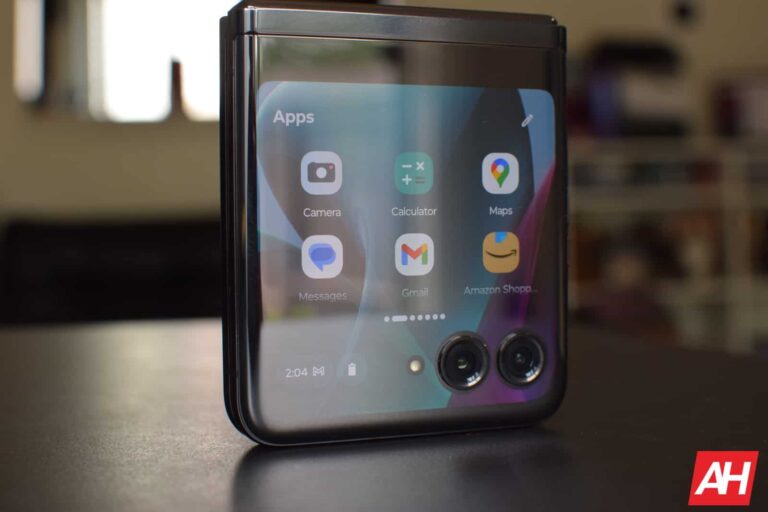
Motorola has finally started rolling out Android 14 to its Razr models from 2023. In other words, the Motorola Razr 2023 and Motorola Razr+ 2023 are now getting the Android 14 update.
Android 14 has started rolling out to the Motorola Razr phones from 2023
It is worth noting that the update for the Motorola Razr+ 2023 delivers the May 2024 security patch. The same is likely the case with the Motorola Razr 2023 update.
The update weighs around 2.88GB
One of the versions of the update weighs 2.88GB, as you can see in the screenshot included below. This particular one is for the Motorola Razr+ 2023.
In regards to what Motorola included in the changelog, let’s go over it real quick. The company states you’ll get more control over personal data, as in who has access to it. You can grant partial access to images and videos too.
Android 14 will also enable you to see when apps share your location with a third party. You’ll also get notified if someone is tracking you. With this update, you’ll also be able to control your health data in a single place, via Health Connect.
You can use Flash Notifications the way you see fit
Flash Notifications are being added. You can set your phone to flash when you get a new notification. You can also choose between the camera light, screen light, or set both to flash.
The ‘Magnification’ feature has been improved too. You can now pinch to zoom in and out from 100%, and change the magnifier size. On top of that, you can set magnification to stay on when you switch apps.
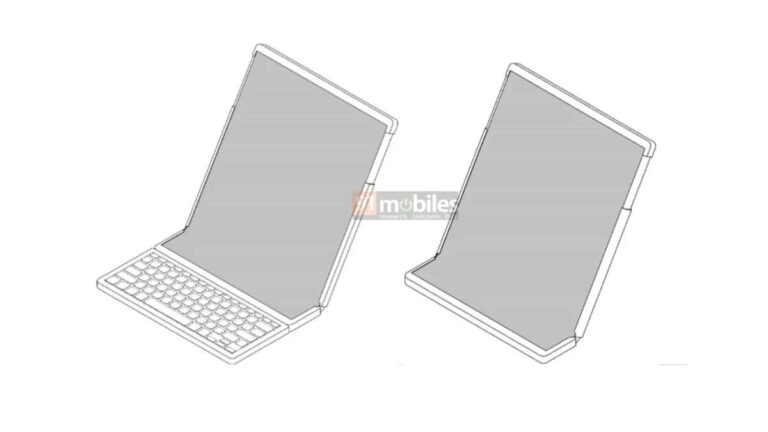
Samsung, the pioneer of the foldable smartphone industry, could be toying with some unique design ideas for its future foldables. A newly spotted patent application from the company shows a foldable phone with a detachable keyboard. It features a physical QWERTY keyboard that can be attached as needed. The keyboard turns the phone into a mini laptop.
Samsung patents a foldable phone with a detachable keyboard
Spotted by 91Mobiles, Samsung filed this patent application with the China National Intellectual Property Administration (CNIPA) in February 2023. The agency granted the patent at the end of June 2024. It appears to be a design patent for a potential future Galaxy foldable. The device has a fairly large screen with an inward-folding hinge positioned near one of the edges rather than centrally like current foldables.
The idea behind this design is to attach a keyboard to the part with less screen space. This gives you a mini laptop with a full-sized keyboard. The screen space above the keyboard could serve as a trackpad for the mouse. It is a phone version of Samsung’s flagship Android tablets that support a detachable keyboard cover. You can turn the tablet into a laptop when needed. This foldable phone likely drew inspiration from it.
Samsung is already trying hard to refine its foldables with each new generation. The company has the Galaxy Z Fold 6 and Galaxy Z Flip 6 lined up for launch on July 10. The sixth-gen models, particularly the Fold, bring a design evolution that many are saying is a step in the right direction. As the foldable market gets more crowded, these kinds of technological and design evolutions may help companies stand apart.
This product may not be in Samsung’s pipeline just yet
Samsung is the world’s most innovative tech company patent-wise. It has hundreds of thousands of tech patents under its belt. Over the past few months, we have spotted the Korean firm acquiring patents for a rollable phone with a built-in air quality sensor, an electronic face mask with air purification technology, a foldable rollable smartphone, and many other futuristic product designs and tech solutions.
Some of the patented technologies may turn into real-world products, while others will remain on paper. For the time being, this foldable phone with a detachable keyboard seemingly belongs to the latter category. We don’t see Samsung pursuing such a product in the foreseeable future. But a few years down the line, you never know. We will keep you posted on the company’s technological advancements in the foldable industry.
02:28 UTC resolved the route leak on June 28, 2024, when AS262504 ceased the unauthorized announcements.
However, the impact on users persisted throughout the incident, with some experiencing high latency and others unable to reach the 1.1.1.1 service altogether.
Technical Analysis
BGP Hijacking and Route Leaks
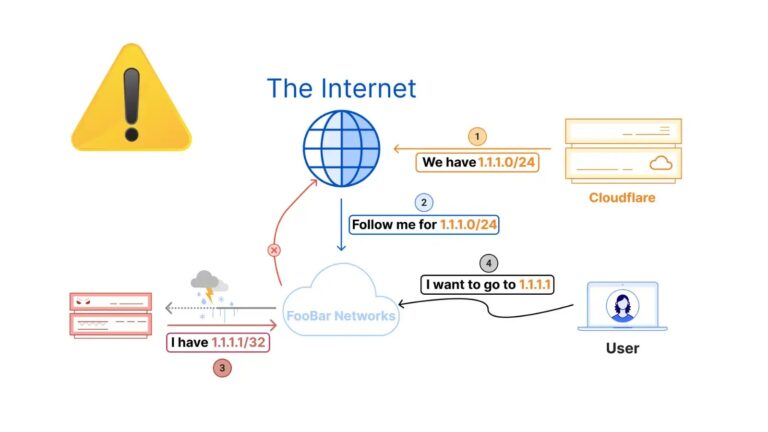
The incident’s root cause was a mix of BGP hijacking and a route leak.
BGP hijacking occurs when a network announces IP prefixes it does not own, causing traffic to be misrouted.
In this case, AS267613 announced the 1.1.1.1/32 prefix, which multiple networks, including at least one Tier 1 provider accepted.
This led to the blackholing of traffic destined for 1.1.1.1.
Route leaks, on the other hand, occur when a network incorrectly announces prefixes it has learned from one provider to another provider.
AS262504 leaked the 1.1.1.0/24 prefix to AS1031, which propagated it further, exacerbating the impact.
The incident affected users in various countries, including Germany and the United States.
Some users could not reach the 1.1.1.1 DNS resolver, while others experienced high latency.
The impact on the overall percentage of users was relatively low, with less than 1% affected in countries like the UK and Germany.
However, the disruption was significant for those who relied on the 1.1.1.1 service for DNS resolution.
To mitigate the impact, Cloudflare disabled peering in multiple locations with AS267613 and engaged with all networks involved in the incident.
This included discussions with at least one Tier 1 transit provider that had accepted the unauthorized blackhole route.
Cloudflare is committed to improving its detection and response mechanisms for similar incidents in the future.
This includes advocating for adopting RPKI (Resource Public Key Infrastructure) for route origin and AS path validation.
RPKI helps limit the spread of hijacked BGP prefixes by allowing IP prefix owners to store and share ownership information securely.
Cloudflare continues to work within the Internet community to encourage adopting best practices for BGP security.
This includes promoting Autonomous System Provider Authorization (ASPA) objects for BGP, which helps prevent route leaks by signing AS paths with a list of authorized provider networks.
The Cloudflare 1.1.1.1 service outage on June 27, 2024, highlighted the vulnerabilities in the current BGP system.
While the actions of external networks were beyond Cloudflare’s control, the company is taking proactive steps to enhance its security measures and reduce the risk of similar incidents in the future.
Users are encouraged to check if their ISPs are enforcing RPKI origin validation.
Cloudflare remains dedicated to providing reliable and secure DNS resolution services and will continue to work towards improving the resilience of its network infrastructure.
"Is Your System Under Attack? Try Cynet XDR: Automated Detection & Response for Endpoints, Networks, & Users!"- Free Demo
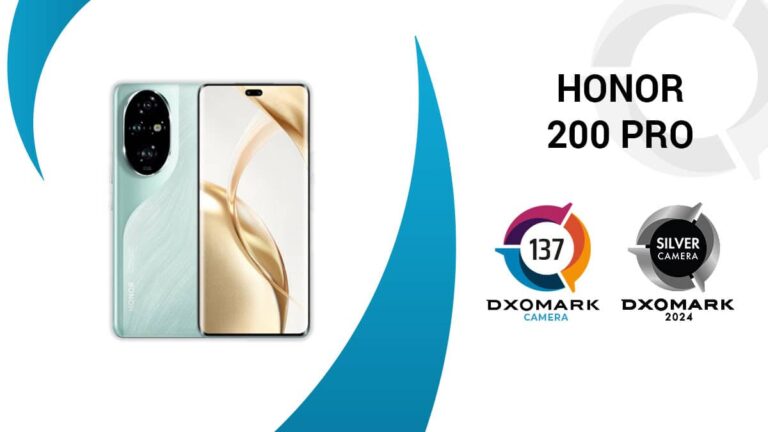
As many of you know, we’ve already reviewed the HONOR 200 Pro and were impressed by the phone’s portrait photography prowess. Well, now folks over at DXOMARK got their hands on the HONOR 200 and HONOR 200 Pro and tested the cameras of both smartphones.
Cameras of both HONOR 200 phones got tested by DXOMARK, and the ‘Pro’ did especially well
Before we proceed, do note that these are mid-range phones. These are not high-end devices, so take that into account. Having said that, they are both ranking nicely over at DXOMARK, but the ‘Pro’ model stands out.
It is ranked 33rd in the global camera rankings, however, it’s second in the $400-$600 range. That is a more logical way to look at things when it comes to mid-range phones, of course. Of course, some devices that are 2x or 3x its price have more to offer in the camera department.
In any case, the phone received an overall photo score of 138 and a video score of 134. Bokeh score is 70, Preview is 69, and Zoom 132. In the $400-$600 bracket, it’s second only to the Google Pixel 7, which scored 140 points.
Autofocus, dynamic range, and more were highlighted as its camera strong suits
DXOMARK indicated the phone’s fast and accurate autofocus as one of its strong suits. This is true in all lighting conditions, basically. The exposure was also praised, as was dynamic range. The phone also did a good job of keeping a rather neutral white balance outdoors.
Texture and noise tradeoff was mentioned in outdoor conditions, and well-preserved details on long-range shots.
What about the cons? Well, the phone produced a slightly lower contrast in high dynamic scenes (than expected). Occasional color casts on photos was also a problem, as was slight oversaturation in video.
“Generally low texture-noise compromise in indoor and low-light conditions with some chromatic noise” is another problem, and occasional artifacts (flare, halos, and color quantization).
The HONOR 200 did really well too
The HONOR 200, on the flip side, grabbed the 55th place in global camera rankings, and the 5th place in the $400-$600 bracket. It score 133 points in the photo department, and 121 points in the video department. The total score was 130 points. The phone scored 65 points in the Bokeh department, 61 in Preview, and 124 points in the Zoom department.
If you’d like to take a closer look at both of those tests, they’re linked below.
Active since 2015, Mekotio is a Latin American banking trojan specifically designed to target financial data in regions like Brazil, Chile, Mexico, Spain, and Peru. It exhibits links to the recently disrupted Grandoreiro malware, both likely originating from the same source.
Mekotio utilizes phishing emails as its primary infection vector. These emails incorporate social engineering tactics to manipulate users into interacting with malicious links or opening attachments.
Once compromised, a system employs various techniques to steal banking credentials, including logging keystrokes, capturing screenshots, and pilfering clipboard data.
Mekotio uses persistence mechanisms to guarantee its presence on the infected machine.
Mekotio attack chain
A banking trojan targets users through phishing emails disguised as tax agency notifications, which contain ZIP attachments or malicious links.
Once a user interacts, a PDF attachment opens a malicious link that downloads and executes Mekotio, and upon execution, it gathers system information and connects to a command-and-control server for instructions and tasks.
Mekotio targets financial information after gaining access to a system, and utilizes phishing tactics to steal credentials through fake login pop-ups designed to mimic legitimate banking websites.
Mekotio has keylogging, screenshot capture, and clipboard data theft functionalities to gather even more sensitive data.
The malware also implements persistence mechanisms to maintain its foothold by adding itself to startup programs or creating scheduled tasks.
Banking trojans exploit user trust by mimicking legitimate banking websites, and once a user interacts with the malicious content, the malware steals login credentials and injects them into a real banking website.
The attackers’ command-and-control (C&C) server, which serves as a central hub and receives the stolen credentials and potentially additional malware instructions, then exfiltrates this information back to it.
With this stolen banking information, attackers can perform unauthorized actions on the victim’s account, such as initiating fraudulent transactions.
Users can employ email security practices to mitigate email-borne threats, which include sender verification through email address scrutiny, grammar and spelling checks, and subject line analysis, while links and attachments should be avoided unless the sender is confirmed.
If suspicious, contact the sender via known channels to confirm the email’s legitimacy. Organizations should utilize up-to-date spam filters and security software, and users should report phishing attempts.
According to Trend Micro, it is essential to provide employees with regular security awareness training in order to instill in them an understanding of phishing and social engineering techniques.
"Is Your System Under Attack? Try Cynet XDR: Automated Detection & Response for Endpoints, Networks, & Users!"- Free Demo
According to some new information shared by a trusted source, the OnePlus 13 will include a much larger battery than its predecessor. This information comes from Digital Chat Station, a well-known tipster.
The OnePlus 13 to include a larger battery, much larger
He went to Twitter to kind of confirm that the OnePlus 13 will include a 6,100mAh or a 6,200mAh battery. He did not specifically mention the model, but based on everything he wrote, everything points to the OnePlus 13.
The OnePlus 12 included a 5,400mAh battery pack. That was a large battery and ensured that the phone provides great battery life. Well, the one in the OnePlus 13 will offer a lot more capacity, it seems, so we’re having great expectations for that phone’s battery life.
In one of the tipster’s posts, he also talked about a 6,500mAh battery. It seems like Both OPPO and OnePlus are preparing a phone with a 6,500mAh battery. That could be the OnePlus Ace 4 Pro, which will launch in mid-2025.
The phone will launch this year, but its global variant could arrive in January 2025
The OnePlus 13 is coming later this year. Its global launch may have to wait until January next year, though, nothing is confirmed yet. We still don’t know what will the device look like, but a redesign is tipped.
What we do know is what specs to expect, as they leaked recently, from the same source that brought us the battery info. Based on that info, the phone will be fueled by the Snapdragon 8 Gen 4 chip, as expected. That processor is coming in October, by the way.
The phone will feature a 2K “iso-depth micro-curved display”. It will likely be a 6.8-inch panel once again. 100W wired charging has been tipped, and wireless charging will be on offer too, probably 50W wireless charging, the same as its predecessor.
You can expect to see three cameras on the back once again. Three 50-megapixel units will be in use, and hopefully, the main one will be of a 1-inch type. Hasselblad will once again be a part of the package. The OnePlus 13 will be IP68/IP69 certified, which is an improvement.
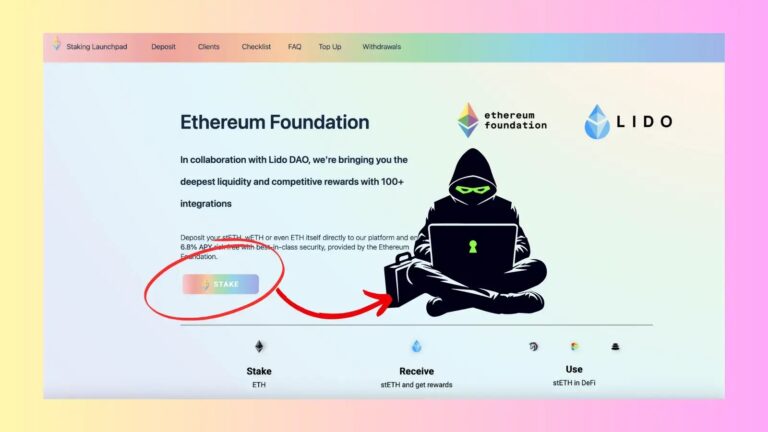
In a recent cyberattack, hackers successfully compromised Ethereum’s mailing list, attempting to drain users’ crypto funds through a sophisticated phishing campaign.
The breach has raised significant concerns within the cryptocurrency community, prompting immediate action from Ethereum’s internal security team.
A phishing email was sent out to 35,794 email addresses by [email protected] with the following content
The Attack Unfolds
The attack was executed through a malicious website that ran a crypto drainer in the background.
Users who initiated their wallets and signed the transaction requested by the website found their wallets drained of funds.
The attackers managed to import a large email list into Ethereum’s mailing list platform and used it to launch the phishing campaign.
Ethereum’s internal security team quickly identified the breach and launched an investigation to determine the scope and impact of the attack.
Initial findings revealed that the threat actor had exported 3,759 email addresses from the blog mailing list, including 81 addresses previously unknown to the attacker.
Upon discovering the breach, Ethereum’s security team swiftly mitigated the damage and prevented further attacks.
The initial steps included:
Preventing Further Emails: The threat actor was blocked from sending additional emails through the compromised mailing list.
Public Notifications: Notifications were sent out via Twitter and email, warning users not to click on the malicious link.
Closing Access Paths: The malicious access path used by the threat actor to gain entry into the mailing list provider was shut down.
Blacklisting Malicious Links: The malicious link was submitted to various blacklists and subsequently blocked by the majority of web3 wallet providers and Cloudflare.
Despite the severity of the breach, Ethereum’s investigation showed that no victims lost funds during this campaign.
On-chain transaction analysis indicated that the malicious domain was blocked before significant damage occurred.
Ongoing Investigation and Future Measures
As the investigation continues, Ethereum has taken additional measures to enhance security and prevent future incidents.
These steps include migrating mail services to other providers to reduce the risk of similar attacks.
The company is also working closely with external security teams to further address and investigate the incident.
In a statement, Ethereum expressed deep regret over the incident and reassured users that they are working diligently to resolve the issue.
“We are deeply sorry that this incident occurred,” the statement read.
“We are working diligently with both our internal security team as well as external security teams to help address further and investigate this incident.”
The attack on Ethereum’s mailing list highlights the ongoing challenges and vulnerabilities in the cryptocurrency space.
As digital assets grow in popularity, the need for robust security measures becomes increasingly critical.
Ethereum’s swift response and transparency in handling the breach serve as a reminder of the importance of vigilance and proactive security practices in the ever-evolving world of cryptocurrencies.
"Is Your System Under Attack? Try Cynet XDR: Automated Detection & Response for Endpoints, Networks, & Users!"- Free Demo
The OnePlus Nord 4 design & colors get confirmed via promo image
Why do I say properly confirmed when we’ve already seen a real-life image? Well, in all honesty, that real-life image looks more like a prototype of the device, as that specific combo looks very weird.
The image you can check out below, however, reveals a much more aesthetically appealing device. You can see three different combinations here. Silver is combined with green, white with silver, and black with dark gray.
OnePlus opted for a two-tone design this time around, and the phone does look quite appealing, at least in this promo image. Its sides are flat, while a flat display sits on the front with a centered display camera hole. The bezels are quite thin too.
All of its physical buttons are located on the right side. The thing is, there is an alert slider on the left. The phone does seem to have an IR blaster at the top too, though we can’t be sure.
OnePlus opted for a two-tone design this time around
You’ll notice that the top one-quarter of the phone’s back is reserved for one design language, and the three bottom quarters reveal something else entirely. Based on OnePlus’ invite, the bottom part of the backplate is actually metal-clad. The top portion is covered by glass.
Two horizontally-aligned cameras sit in the top-left corner, with an LED flash next to them (top-right corner). OnePlus’ logo is centered on the phone’s back.
The OnePlus Nord 4 will become official on July 16. The launch event will be held in Milan, Italy, and it will kick off at 3 PM CEST / 9 AM EST / 6 AM PST / 2 PM BST.
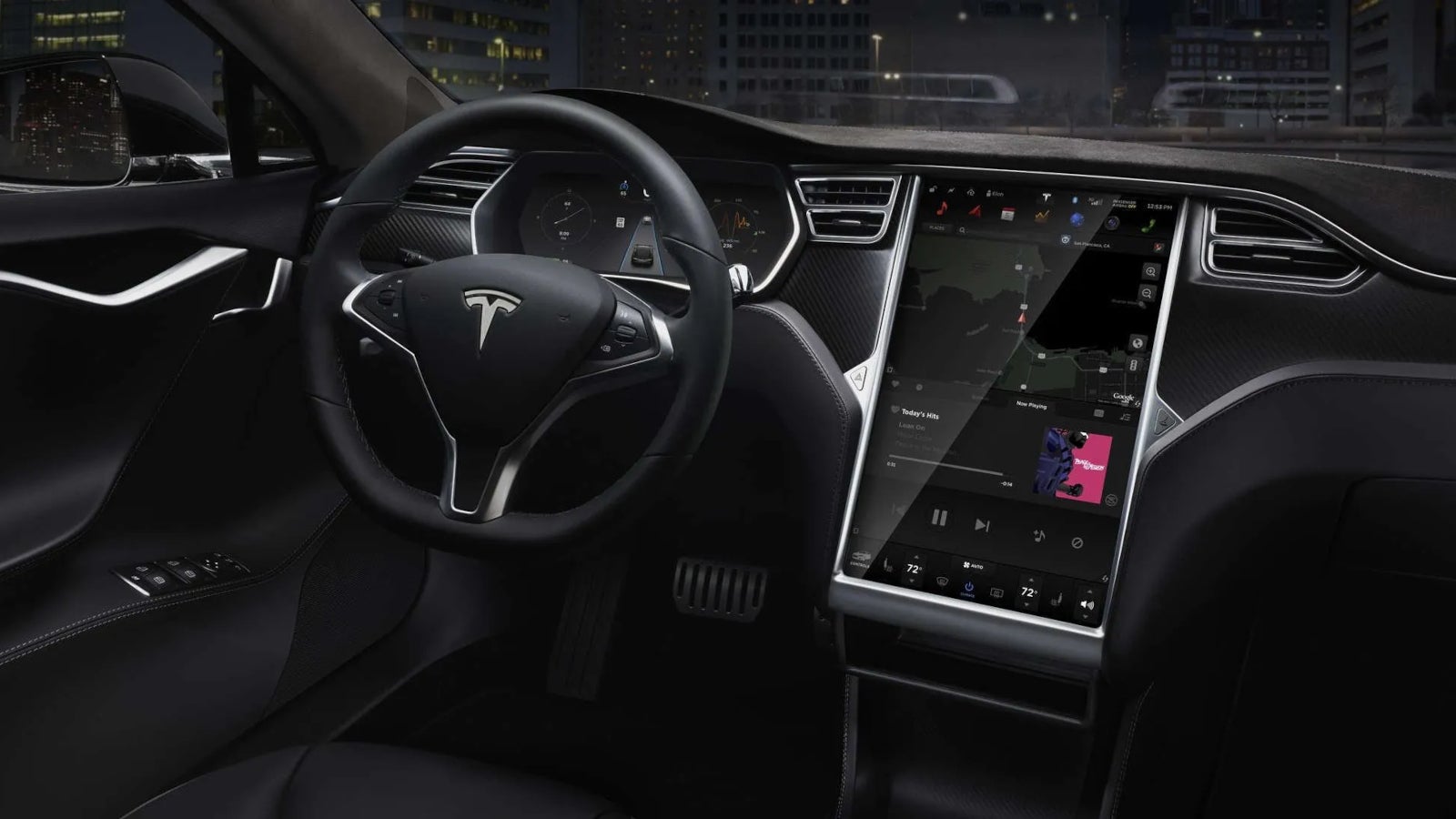
Tesla managed to ink many partnerships with important software developers to have their apps ported to its cars. As people spend more and more time in their cars, the technology inside vehicles has advanced to allow drivers to connect to the other ecosystem they typically use while outside their cars.Android, iOS, Windows, and Mac OS are just some of the operating systems that provide access to various apps and services. However, Elon Musk-owned Tesla is not using any of the ecosystems related to these operating systems like Android Auto and Apple CarPlay.
But that doesn’t seem to be an issue for the Tesla OS, which already offers Tesla drivers access to almost all the important apps and services that the other operating systems offer.
Unfortunately, there were two services that were missing until recently, Amazon Music and YouTube Music. But that’s about to change as Not a Tesla App (via Android Authority) reports that both music streaming services are coming to Tesla EVs.
Apparently, several Tesla models are getting a new update, which adds support for Amazon Music and YouTube Music among other things. Specifically, the Tesla S, Tesla 3, Tesla X, and Tesla Y are eligible for this update, which is expected to be rolled out very soon.
Although Tesla drivers could access YouTube Music in their cars by connecting their phones via Bluetooth, the experience is limited because it misses many features that are otherwise available in the native app.
More importantly, YouTube Music allows users to build and listen to their own playlists without having to pay a subscription like other music streaming services. This means that Tesla drivers will save a lot of money if they’re already subscribed to a different music streaming service (i.e. Spotify).
The bad news is we have no idea when the new update will drop, but we suspect it won’t be long now since the changelog has been leaked.
HONOR has officially revealed and shown us the Magic V3 color options. As many of you know, the Magic V3 is the company’s upcoming book-style foldable. This one will be even thinner and lighter than last year’s model, allegedly. More on that later.
The HONOR Magic V3 color options have been shown by the company
Let’s focus on the colors first. If you take a look at the gallery below the article, you’ll see all four color options. HONOR says that these colors are inspired by nature. Three out of four of these variants have glass panels, while the fourth one has vegan leather on the back.
To be more accurate, black, green, and white models have glass on the back. The first two devices have a frosted matte backplate, while the white model has an interesting pattern on the back, and the look will change based on how the light hits the device.
The ‘dark orange’ model comes with a vegan leather backplate and gold accents. We’ve seen that variant before, as it was the first model that HONOR revealed. That model will also be the lightest, as vegan leather is lighter than glass.
You can see a camera setup similar to the one on the HONOR Magic6 Pro, at least in terms of camera placement. It remains to be seen what cameras exactly will be used by HONOR. One thing is for sure, the top camera will be a periscope telephoto unit.
The device will be both thinner & lighter than the Magic V2
The HONOR Magic V3 will measure only 9.Xmm when folded. It will be thinner than even its predecessor, the Magic V2. It will weigh 22X grams, so it’ll be lighter too. The HONOR Magic V2 models measured 231 and 237 grams, depending on the model.
The device will be fueled by the Snapdragon 8 Gen 3, and its launch date has been announced already. The device is coming on July 12, and it will launch alongside the Magic Vs3, and a couple of other devices.