iPhone SE 4 tipped to offer A15 SoC, Face ID & more

0
[ad_1]

While Apple fans are fighting to get their hands on iPhone 15 models, more specs of the iPhone SE 4 have leaked. X user Nithin Prasad suggests that the new smaller iPhone will be a massive upgrade compared to its predecessor. The tipster has revealed the display,  SoC, camera, security, and design specs of the SE 4.

The iPhone SE 4 could flaunt a design similar to the iPhone XR

According to the source, the upcoming Apple iPhone SE 4 will feature a design similar to the iPhone XR model. If it happens to be true, then you can expect a rectangular body fitted with a nearly bezel-less display. On top of the screen, the handset will sport the Face ID security system, suggests the tipster.

Notably, the iPhone SE 4 will be a massive upgrade compared to the SE 3, which has the old-generation Touch ID sensor and huge bezels. Furthermore, the source claims that the next-gen iPhone SE model will have a much bigger 6.1-inch display. The phone will utilize an LTPS OLED screen panel that will offer a maximum refresh rate of 60Hz. To compare, the iPhone SE 3 has a much smaller 4.7-inch IPS LCD screen.

The iPhone SE 4 will retain the A15 Bionic chipset

The tipster claims that the next-gen iPhone SE model will be featuring the A15 Bionic chipset under the helm. Notably, this is the same 5nm fabrication process-based chipset that powers the iPhone SE 3, which was released in 2022. If it’s true, then we will be getting a Hexa-Core CPU with a maximum clock speed of up to 3.22GHz.

In addition, the source claims that the next-gen iPhone SE model will be coming with enhanced photography capabilities. So, we can expect a better camera module than the OIS and 4K recording-equipped 12MP sensor found on the SE 3. Lastly, the tipster indicates that the iPhone SE 4 will have a Type-C port for charging. It will be an upgrade over the Lightning port found on the last-gen iPhone SE model.

The iPhone SE 4 could flaunt an in-house upgraded 5G modem

According to previous reports, the SE 4 could be arriving with an upgraded 5G modem. The new 5G technology onboard the device will likely support more 5G bands. If the reports are true, the next-end low-cost iPhone could be the first model with the brand’s first in-house modem chip.

As far as the launch date is concerned, the iPhone SE 4 could be released at some point in 2025. With upgrades in the display, camera, and connectivity department, the new iPhone SE is expected to be pricier than the previous-gen offering.


[ad_2]
Source link

Mixin Network Halts Services After $200M Crypto Hack

0
[ad_1]

Another day, another crypto hack making cybercriminals multi-millionaires in no time, while leaving unsuspecting crypto investors without funds.

Mixin Network has temporarily suspended its deposit and withdrawal services after cybercriminals targeted the decentralized wallet service. The network, reportedly, has lost $200 million in funds.

Mixin is a Hong Kong-based crypto firm that offers layer-2 protocol-like service to encourage cheaper and more efficient cross-chain transfers.

The network posted its announcement on X (formerly Twitter), stating that on September 23, 2023, its cloud service provider’s database was hacked early Saturday morning, resulting in a loss of approx. US$200 million.

“In the early morning of September 23…the database of Mixin Network’s cloud service provider was attacked by hackers, resulting in the loss of some assets on the mainnet. The funds involved are approximately US$200 million,” Mixin Network’s post on X read.

Mixin Network Halts Services After $200M Crypto Hack

The network’s token, XIN, fell considerably (around 8% down) after this confirmation. According to its website, Mixin Network attracts 100,000 daily users and has over $1 billion in assets. Moreover, the network reported 663,489 unique transactions of BTC and 179,647 of ETH during July.

Mixin Network contacted blockchain security firm SlowMist and Google to launch an investigation into the hacking. It will reopen the services after confirming that the vulnerabilities are fixed.

However, the network explained that transfers will remain unaffected during this time. The vulnerability was disclosed today by Mixin Network founder Feng Xiaodong in a livestream in which he explained that they can only confirm that half of the assets are at least safe.

“We will try our best to minimize the losses and deeply apologize for this,” the network stated while assuring its users to provide a solution regarding what it intends to do about their lost assets.

SlowMist also posted a statement to confirm the attack on the cloud service provider: “🚨SlowMist Security Alert🚨 – On September 23, the Mixin Network cloud service provider database was attacked, and the amount of funds involved was ~ $200M. SlowMist is assisting in the investigation. Please wait for @MixinKernel updates for more information.”

Chainalysis, a leading blockchain data platform, has found that in 2022 alone, $3.8 billion worth of cryptocurrency was stolen, making it the worst year ever for the community.

Recently, Hackread reported the hacking of the world’s largest Australian cryptocurrency casino, Stake, which lost $41 million worth of cryptocurrency. The incident happened on September 4, 2023, and was caused due to a leaked private key.

  1. 6 of the Best Crypto Bug Bounty Programs
  2. We Need Smarter Smart Contracts To Prevent DeFi Hacks
  3. ETH Founder Vitalik Buterin’s X (Twitter) Hacked, $700k Stolen
  4. NY Couple Pleads Guilty to $4.5B Bitcoin Theft in Bitfinex Hack
  5. Billionaire Mark Cuban Falls Victim to Crypto Hack, Loses $900K

[ad_2]
Source link

Samsung on track to ship 10 Million Foldables in 2023

0
[ad_1]

Samsung is on track to hit a pretty important milestone for themselves. Which is, shipping 10 million (or more) foldables in a single calendar year. That would be a huge feat for Samsung, especially since Foldables have still not quite taken over as much as they would like. Samsung was hoping Foldables could exceed the sales of the Galaxy Note series, that’s not happening yet. But this is a step in the right direction.

Analysts were expecting that Samsung would order enough components to build 12-13 million Galaxy Z Flip 5 and Fold 5 models. It looks like Samsung is actually about a million short. But that’s still well above the 10 million milestone.

As far as sales are concerned, it looks like the Galaxy Z Flip 5 would account for about 60-65% of foldable sales, while the Galaxy Z Fold 5 would account for about 30-35% of all of Samsung’s foldable sales. Meaning that about 5-10% would be from older foldables.

Samsung could launch the Galaxy S24 earlier, to capitalize on this market

Samsung has continued to launch its Galaxy S series earlier and earlier each year. And for 2024, it could be the earliest yet. With it actually launching in January. And this is partly fueled by the rumors that Samsung could start mass production of the Galaxy S24 series starting in October.

Normally, Samsung would send out invites for Unpacked at CES, and have the event happen later in January or early February. With the devices being on sale about a week or two later. This coming year, Samsung could opt to do Unpacked shortly after CES and putting the devices out even earlier than ever.

We still have a few more months until Samsung actually sends out invites for Unpacked, and even longer until the phone is actually announced. Which means we’re going to be seeing plenty of rumors and leaks coming in the next few months.


[ad_2]
Source link

ChatGPT is getting a voice!

0
[ad_1]

When you’re talking to ChatGPT, you’re used to hearing two sounds; the clicky-clack of your fingers on the key and your gasps of disbelief of how smart GPT is. However, that’s going to change. According to an announcement from OpenAI, ChatGPT will soon get voice responses.

ChatGPT might have some serious competition soon, as Google is planning on releasing Gemini. This is the company’s massive multi-modal LLM that’s the equivalent of GPT-4. It’s expected to be much more powerful than Bard, and it could even give GPT-4 a run for its money.

ChatGPT is getting voice responses

This feature seems like a long time coming, as none of the other major companies have done this. When you use a chatbot like ChatGPT, Bard, My AI, Bing AI, or any of the others out there, you’re met with a text response. There’s nothing wrong with that, however, responses are rather lengthy at times. Sometimes, it’s just too much to read.

With this new update, you’ll hear an AI-generated voice read back your responses. The company will offer you the choice of several different voices that you can assign. You can hear examples in the original announcement.

From the examples, the voices sound very high-quality. You can even hear one speaker breathing in just to add some realism.

That’s not all; this conversation will go both ways. You’ll be able to speak directly to ChatGPT using your microphone. This will make it seem like a direct conversation.

Images

Along with accepting audio input, ChatGPT will also accept images as input. You’ll be able to get responses based on the images that you upload. The chatbot will ascertain information about the image just like a human being looking at an image. If you want to focus on a single portion of the image, you can use the drawing tool in the Android/iOS app to circle the specific part.

If you’re excited about these new features, they’re going to be rolling out soon. However, you can only use them if you’re on the ChatGPT+ or ChatGPT Enterprise plan.


[ad_2]
Source link

BIND DNS system Flaws Let Attacker Launch DoS Attacks

0
[ad_1]

In a recent disclosure, BIND 9, a widely-used DNS (Domain Name System) server software, has been found vulnerable to two critical security flaws, labeled CVE-2023-4236 and CVE-2023-3341. 

These vulnerabilities, if exploited, could have serious consequences, making it imperative for users to take swift action.

CVE-2023-4236: DNS-over-TLS Query Load Vulnerability

This vulnerability arises from a flaw in the networking code responsible for handling DNS-over-TLS queries in BIND 9. 

Under high DNS-over-TLS query load, an internal data structure is incorrectly reused, leading to an assertion failure. Consequently, a vulnerable named instance may terminate unexpectedly.

Thankfully, this flaw does not affect DNS-over-HTTPS code, as it employs a distinct TLS implementation. However, for those relying on DNS-over-TLS, the impact can be severe.

Document
FREE Demo

Implementing AI-Powered Email security solutions “Trustifi” can secure your business from today’s most dangerous email threats, such as Email Tracking, Blocking, Modifying, Phishing, Account Take Over, Business Email Compromise, Malware & Ransomware

CVE-2023-3341: Control Channel Stack Exhaustion

The second critical vulnerability, CVE-2023-3341, relates to the control channel code within BIND 9. 

This flaw allows attackers to exploit a stack exhaustion issue by sending specially crafted messages over the control channel. 

This can lead to names unexpectedly terminating, causing potential disruption.

Notably, the attack is effective in environments with limited stack memory available to each process or thread, making it difficult to predict its impact.

For users of BIND 9, immediate action is necessary to address these vulnerabilities. ISC (Internet Systems Consortium), the organization behind BIND, has provided solutions to mitigate these risks.

For CVE-2023-4236:

– Upgrade to BIND 9.18.19 or BIND Supported Preview Edition 9.18.19-S1.

– Consider disabling DNS-over-TLS connections if not required.

For CVE-2023-3341:

– Upgrade to BIND 9.16.44, 9.18.19, or 9.19.17, depending on your current version.

– Ensure that control-channel connections are limited to trusted IP ranges when enabling remote access.

No active exploits have been reported for these vulnerabilities. However, proactive measures are crucial to safeguard your systems against potential threats.

ISC extends its gratitude to the individuals who responsibly reported these vulnerabilities. 

Robert Story from the USC/ISI DNS root server operations team brought CVE-2023-4236 to ISC’s attention, while Eric Sesterhenn from X41 D-Sec GmbH identified CVE-2023-3341.

Keep informed about the latest Cyber Security News by following us on Google News, Linkedin, Twitter, and Facebook.


[ad_2]
Source link

A New Backdoor Linked to Stealth Falcon APT in the Middle East

0
[ad_1]

ESET warns that Deadglyph is a highly sophisticated backdoor that is mixed with different programming languages to add an extra layer of complexity.

The Middle East has once again found itself in the crosshairs of a new cybersecurity threat. Recent findings by experts at ESET Research have unveiled a highly sophisticated and previously unknown cyber-espionage tool they’ve dubbed “Deadglyph.”

This discovery is a significant development in the world of cybersecurity, as it’s the first time this secretive threat has been publicly analyzed. Even more concerning, Deadglyph has been traced back to the Stealth Falcon APT group, notorious for its cyber-espionage campaigns in the Middle East.

What is Deadglyph?

Deadglyph gets its name from distinctive artifacts found within the malicious software. These artifacts, such as “0xDEADB001,” and the use of homoglyph attacks (where similar-looking characters replace regular ones) indicate a high level of sophistication behind its design. It’s important to note that this isn’t your typical cyber threat; it’s a highly advanced and covert tool.

Unusual Architecture Raises Concerns

One of the standout features of Deadglyph is its unique architecture. Unlike most malware that relies on a single programming language, Deadglyph uses a combination of two: an x64 binary and a .NET assembly. This is quite unusual and suggests that the creators went to great lengths to make it harder to analyze. Mixing different programming languages also adds an extra layer of complexity.

What sets Deadglyph apart is that it doesn’t come with pre-set commands like traditional malware. Instead, it fetches its instructions from a remote server, giving it a flexible and adaptable nature.

The Stealth Falcon APT Group

The experts at ESET Research have connected Deadglyph to the Stealth Falcon APT group. This group has been active since 2012 and is believed to have ties to the United Arab Emirates. Its primary targets include political activists, journalists, and dissidents in the Middle East. The group’s activities were first exposed by Citizen Lab in 2016.

There are suggestions that Stealth Falcon and another group called Project Raven are one and the same, as they seem to have overlapping targets and tactics. The revelation of Deadglyph adds another layer of complexity to this enigmatic group’s toolkit.

Breaking Down Deadglyph’s Operation

Deadglyph’s operation is a complex chain of events. It starts with a registry shellcode loader that’s used to load shellcode from the Windows registry. This shellcode, in turn, loads the main part of Deadglyph, known as the Executor. What’s unique is that only the initial loader exists as a file on the victim’s computer; the rest remains encrypted within a registry entry.

While the exact method of infection isn’t clear, it’s suspected that an installer component plays a role in getting the malicious code onto a victim’s system.

The Role of the Orchestrator

The Orchestrator, written in .NET, is the central component of Deadglyph. Its primary job is to communicate with a remote server and execute commands, often with the help of the Executor. The Orchestrator is highly obfuscated, making it even more challenging to analyze. In essence, it acts as the control center for Deadglyph’s operations.

Communication and Commands

According to ESET’s report, Deadglyph uses two embedded modules, Timer and Network, for communication with its remote server. These modules are obfuscated as well. The Timer module executes tasks at set intervals, while the Network module handles communication with the server. Deadglyph also has the ability to uninstall itself if it loses contact with the server for an extended period.

Modules: The Heart of Deadglyph

Deadglyph’s core capabilities are delivered through additional modules obtained from the server. ESET researchers managed to obtain three such modules, shedding light on Deadglyph’s potential. However, it’s believed that there could be as many as fourteen modules in total, each adding unique functionality.

  • Process Creator (Module 0x69): This module can execute specific commands as new processes and provide the results back to Deadglyph’s control center.
  • Info Collector (Module 0x6C): This module gathers extensive information about the infected system, including operating system details, installed software, network adapters, and more.
  • File Reader (Module 0x64): This module reads specified files and shares their contents, with an option to delete the files afterward.

Multistage Shellcode Downloader Chain

While investigating Deadglyph, ESET researchers stumbled upon a complex multistage shellcode downloader chain. This chain is believed to be used in the installation process of Deadglyph and shares similarities with the main threat.

The chain involves multiple stages, starting with a CPL file designed to download shellcode. This shellcode is then injected into a host process, ultimately leading to the loading of a .NET assembly that serves as a shellcode downloader.

Deadglyph: A New Backdoor Linked to Stealth Falcon APT in the Middle East

In Conclusion: A Disturbingly Complex Threat

The discovery of Deadglyph shines a spotlight on the ever-evolving tactics of APT groups, particularly those targeting the Middle East. Its intricate architecture, dynamic modules, and counter-detection mechanisms make it a formidable digital threat. Organizations and individuals in the region need to remain vigilant and ensure their cybersecurity measures are up to the task of defending against such advanced threats.

Chinese APT Flax Typhoon uses legit tools for cyber espionage

Chinese APT Slid Fake Signal, Telegram Apps onto Official App Stores


[ad_2]
Source link

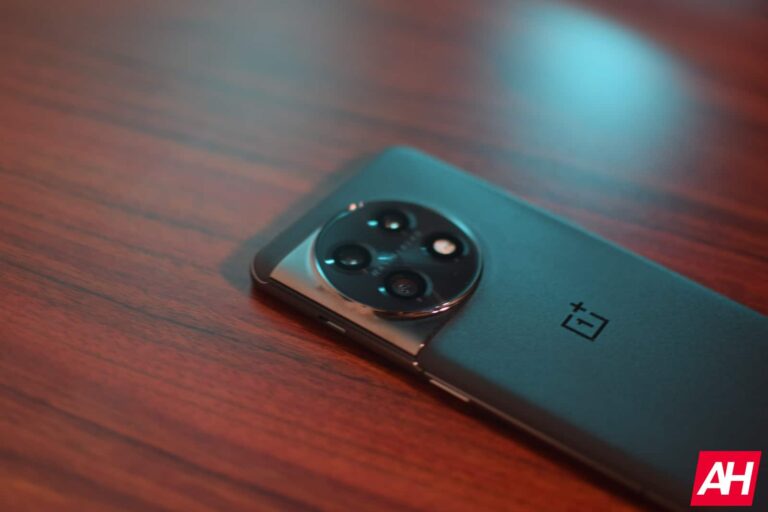
The OxygenOS beta just landed on the OnePlus 11

0
[ad_1]

It’s Android season! The next Pixel phone is right around the corner, and we’re all getting ready for the launch of the next version of Android. In this case, we’re talking about Android 14 U. While that’s going on, third-party companies are gearing up to test it out for their phone. According to OnePlus (via Android Central), the company just launched the OxygenOS 14 beta for the OnePlus 11.

OnePlus is an early adopter of Android 14. Right now, one of the only other companies already testing out the latest version of Android is Samsung with One UI 6.0. OnePlus’ implementation promises to bring some notable differences to the look and functionality of the software.

The OxygenOS 14 beta just landed on the OnePlus 11

This is going to be the latest upgrade to the OnePlus ecosystem of devices. So, what’s changing? There aren’t many changes in the way of visual updates. They mostly exist as features and app updates.

The Notes app is getting a notable upgrade, and it’ll be called Notes 2.0. The update will bring different formatting tools for your text. You’ll be able to change the size of the text and use different fonts. There’s also a “Smart categorization” feature that will make it easier to find and edit your notes.

Security

Moving on to the next feature, this one shows OnePlus’ focus on security. There’s a Security and privacy section. It’s a one-stop shop to check up on the app’s security status. If there are any areas of our phone’s software that aren’t secure, the app will let you know.

Aside from that, the software will bring the new Device Security Engine 3.0. This will bring an additional layer of security to the background to protect your phone from malware and hackers.

Go Green AOD

If you’re thinking of going green, then there’s a new feature for you. OnePlus is calling these the Go Green AODs. These are nature-inspired Always On Displays that will change based on how many steps you take. This will inspire you to walk more places rather than driving.

Other features

The File Dock feature will let you take a file and dock it onto the side panel. Then, when you need to use it in an app, you’ll be able to easily access it.

There’s a feature that will let you cut subjects out of photos in case. If you need to blur out anything in the image, there’s the Auto Pixelate 2.0 feature.

When OxygenOS 14 officially lands, it will make it onto all main OnePlus phones as old as the OnePlus 8T. As for the Nord phones, it will be available on devices as old as the Nord 2T. Lastly, it will make it to the OnePlus Pad.


[ad_2]
Source link

Don’t like Windows 11, but you love the wallpapers? You can download them

0
[ad_1]

Windows 11 has been out for just about two years, and the new software definitely has its fans. However, there are those who can’t or won’t get the software for their computer. This doesn’t mean that they can’t enjoy Windows 11’s aesthetics. You can download the Windows 11 wallpapers, according to XDA Developers.

Since Windows 11 has been out for some time, many of the computers launching nowadays come with the software loaded onto them. In fact, if you’re looking for an affordable computer with the latest Windows software, you should look at the recently announced Surface Laptop Go 3.

This is the latest mid-range laptop coming from Microsoft. It has the Intel Core i5 processor, up to 16GB of RAM, and 512GB of storage. It’s a nice computer if you’re looking to do light to moderate work. The computer starts at $799, and it’s going to launch in early October.

You can download the Windows 11 wallpapers

When Microsoft launched Windows 11, it brought with it the stunning aesthetic that pervades the software. We’re all familiar with the blue default wallpaper that looks like a piece of modern art. It has both a light and dark mode version. It’s the go-to wallpaper for people who want to keep things simple.

These wallpapers and others are available to download from the link below.

Download the Windows 11 wallpapers

When you click on the link, you’ll be taken to a Mega page with three folders. The first folder has five wallpapers for the lock screen. These are all pretty abstract with the exception of the sunset. The Touch Keypad folder has eight wallpapers that are equally as abstract.

Moving down to the Wallpapers folder, this is where the bulk of the content is. There are five folders within this folder with wallpapers for different themes. You can pick through the wallpaper or just download the entire set. Altogether, you’re looking at a 25.1MB download.

All of the wallpapers are high-quality and they’ll give your computer the classic aesthetic. However, they don’t have to be confined to your computer; you can use them on your phone or tablet if you want.


[ad_2]
Source link

This Google Pixel Watch 2 Feature Leak has some Bad News

0
[ad_1]

The Google Pixel Watch 2, along with the Pixel 8 and Pixel 8 Pro, are all set to be announced on October 4. But just about every detail has leaked out for the phones, and now we’re seeing a lot more about the Pixel Watch 2.

Thanks to 91Mobiles, we now know all of the new features coming to the Pixel Watch 2 this year, and that includes one feature that’s going to be rather disappointing.

On the Pixel Watch 2, Google is using a new heart rate sensor. This is supposedly the Fitbit multi-path heart rate sensor, that is going to be more accurate and offer robust heart-rate measurements, even during vigorous exercise.

Google is also adding Fitbit’s stress management system to the Pixel Watch 2. This uses body-response tracking to detect stress in the user’s body. Google is also using body-response tracking inputs from cEDA, heart-rate variability, heart rate and skin temperature to help reduce stress.

Of course, fitness and workout tracking is still a big deal on the Pixel Watch 2. And this year, it’ll be able to record seven common workouts on the Pixel Watch 2, automatically. This includes running and outdoor cycling. There’s also some new safety features, including a “Safety Check” which will allow users to schedule a timer for certain situations, and once the timer is up, the watch will prompt the user to confirm if they’re okay or if they’d like to start sharing their location or contact emergency services.

There’s some pretty bad news about battery life

One of the major knocks on the Pixel Watch last year was the battery life. Even from my time using it, I was often times having to charge it twice a day. Despite Google saying you should get 24 hours of battery life out of it. Well, Google is saying the Pixel Watch 2 is getting 24 hours of battery life again.

However, one thing that is different here, is that Google is saying “with always-on display”. That was not included in the 24-hour metric last year. So we might see better battery life than last year, if you turn off the always-on display. But don’t expect it to be much better, or on the same path as what the Galaxy Watch 6 offers.


[ad_2]
Source link

Leave it to Meta to make a ‘Sassy’ AI chatbot

0
[ad_1]

The generative AI bug is spreading, and no tech company is immune to it. This goes for Facebook owner Meta, as the tech giant is developing its own AI products to compete with the likes of Google and OpenAI. According to The Journal (via The Verge), Meta is developing what it calls Gen AI Personas, and one of them will be geared to a younger audience.

It was only a matter of time before Meta jumped on the AI train. The craze really took off when OpenAI introduced ChatGPT. Now, that’s pretty much the standard set for a chatbot. Since then, Google has released Bard which is a ChatGPT competitor. We were all waiting for Meta to come up with something as well. It’s finally happened, the company just needed to return from the Metaverse to work on its AI.

Meta is developing AI personas

Meta seems to be going in a bit of a different direction with its AI venture. Rather than focusing on one chatbot, the company is making “dozens”. They’ll all be geared towards different demographics. For example, Journal told The Verge that the company is going to make a “sassy” robot persona. It’s going to be inspired by Bender from Futurama, and you can expect it to deliver some sassy responses. Another persona is based on the Dr. Suess character Alvin the Alien. This is a very curious and inquisitive character.

Meta is even working on a way for celebrities to make their own chatbots for their fans. So, these could be personalized chatbots based on the celebrities to make it feel like you’re talking right to them. We’ll have to see how that works. When this launch, we expect celebrities (well, people hired by the celebrities, actually) to flood the market with these chatbots.

Meta isn’t only making AI personas for fun. The report also states that the company could be working on a more professional chatbot that will help with “coding and other tasks”.

We’ll just need to wait to see what the company will offer with its AI venture.


[ad_2]
Source link