The Rafel RAT is an advanced Android-targeting Remote Access Trojan which poses a great cybersecurity danger.
This malicious program has become popular due to its prominence for breaking into device security and taking away confidential details.
Knowing the origin of Rafel RAT, the tactics it uses to perpetrate crimes, and its main attributes is vital for individuals and organizations to have successful counter-strategies against this evolving danger in the mobile space.
Cybersecurity researchers at Zimperium recently discovered that Rafel RAT has been actively attacking Android devices to gain unauthorized access.
"Is Your System Under Attack? Try Cynet XDR: Automated Detection & Response for Endpoints, Networks, & Users!"- Free Demo
Rafel RAT Attacking Android Devices
The Rafel RAT, which is being sold in the darknet forums, is a highly advanced Remote Access Trojan whose purpose is to provide threat actors with unauthorized access to other people’s devices.
Additionally, it can be used by all hackers who are either skilled or unskilled, as they can easily learn it and operate its user-friendly interface.
Rafel RAT was developed as an affordable and efficient hacking tool and has since become one of the most well-known pieces of malware in the cybersecurity area due to its sophisticated functions and capability for launching threats on compromised devices that may be exploited by numerous threat actors.
Here below, we have mentioned all the capabilities of Rafel RAT:-
Rafel RAT infiltrates devices through phishing, malicious attachments, or compromised apps.
It installs covertly, mimicking legitimate applications, and establishes a connection with a command and control server.
Once active, Rafel RAT can steal data, monitor user activity, and control device hardware for surveillance purposes.
Rafel RAT exfiltrates sensitive data from infected Android devices, including contacts, messages, and login credentials.
It provides attackers with remote access for device manipulation and command execution.
The Zimperium report cites the increasing danger of mobile devices, specifically Android, becoming a key part of one’s personal life and work. The example of Rafel RAT demonstrates this danger.
This ease of use and advanced features make it a big risk, and consequently, strong mobile security solutions are needed.
Appreciating how Rafel RAT works is vital to developing defenses against this kind of threat or similar threats.
Recommendations
Here below we have mentioned all the recommendations:-
Implement robust endpoint protection.
Users need to remain vigilant and educated about the risks of downloading apps from untrusted sources.
Regular updates and patches need to be implemented.
A change is coming to Netflix subscription plans in some markets starting on July 13th. That’s when the video streamer’s $11.99 ad-free plan will be discontinued in two countries. This is the cheapest ad-free subscription option that Netflix offers and eliminating it will force subscribers to move to one of three plans. These subscribers can choose the $6.99 per month plan that subjects them to viewing ads, or they can sign up for one of two ad-free plans that are available. There is an ad-free plan that costs $15.49 per month and a plan that offers ad-free 4K streams for $22.99 per month (more on this later).
A photo posted on a social media site shows that a Netflix subscriber, even though he still has a valid subscription for a couple of weeks, is not being allowed to use the platform until he subscribes to another plan. While this user was trying to view content on Netflix, he sees a sign on his television that said, “Your last day to watch Netflix is July 13. Choose a new plan to keep watching.” Underneath that heading Netflix writes, “Your Basic Plan has been discontinued, but you can easily switch to a new one. Plans start at $5.99 with upgraded features.”
This is unfair to the subscriber who is being forced to decide which plan to subscribe to right away if he wants to enjoy the remainder of the subscription that he pays for monthly. On Reddit, several people called out Netflix for doing something that they felt bordered on illegal. “There’s no option to continue watching without selecting a new plan,” one Netflix subscriber said on Reddit. Still, this shouldn’t be too surprising to Netflix subscribers since the company said this past January that it would push customers to less-expensive or more-expensive plans.
Those receiving the notice telling them that their current plan expires on July 13th can choose from one of three aforementioned options. Standard with ads is $6.99 per month and features Full HD (FHD) resolution streams with no more than two devices allowed to stream at once. This plan supports downloads and up to two devices can download content.
Ad-free options include Standard for $15.49 per month which has all of the same features as the Standard with ads plan, but without ads. The Premium plan is $22.99 per month and streams in Ultra HD resolution. Four devices can stream at once and up to six devices can download content for viewing when offline.
The notices about the discontinuation of the Basic plan is being seen by Netflix subscribers in Canada and the U.K. with U.S. users expected to be targeted soon. American Netflix subscribers should remember the saying, “To be forewarned is forearmed.”
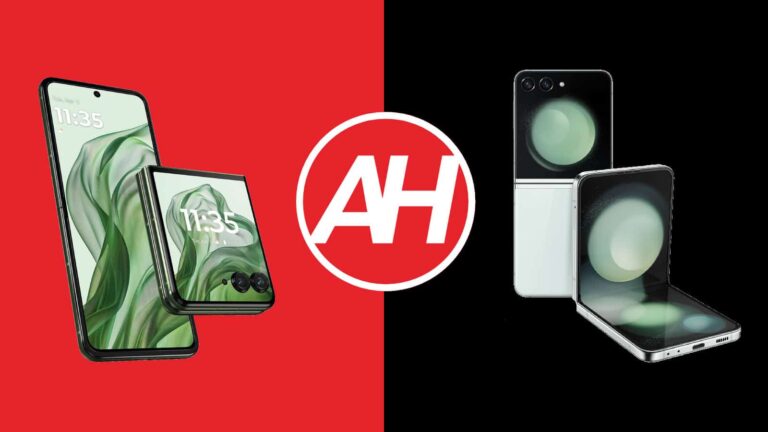
Motorola has announced its new clamshell foldable smartphones recently. The Razr 2024 or Razr 50 series arrived, depending on where you live. It’s the Razr 2024 in the US, and Razr 50 basically everywhere else. In this article, we’ll compare the Motorola Razr+ 2024 vs Samsung Galaxy Z Flip 5. Motorola’s new flagship flip phone vs the most popular flip phone in the world at the moment. We’ll also refer to the new Razr phones as the Razr+ 2024 from now on.
These two smartphones do look quite similar, actually. Last year Motorola brought its Razr smartphones closer to the ‘Galaxy Z Flip’ series in terms of design. The same design direction is being used this year too. There are differences between them, though, of course. We will kick things off by listing their specs, and will then move to compare them across a number of categories. This will hopefully help you make a purchasing decision, just remember that the Galaxy Z Flip 6 is coming later this month.
Specs
Motorola Razr+ 2024 vs Samsung Galaxy Z Flip 5, respectively
– Screen size (main): 6.9-inch fullHD+ foldable LTPO AMOLED (165Hz, HDR10+, 3,000 nits) 6.7-inch fullHD+ foldable LTPO Dynamic AMOLED 2X (120Hz, HDR10+, 1,750 nits) – Screen size (cover): 4-inch LTPO AMOLED (165Hz) 3.4-inch Super AMOLED (60Hz) – Display resolution (main): 2640 x 1080 – Display resolution (cover): 1080 x 1272 720 x 748 – SoC: Qualcomm Snapdragon 8s Gen 3 Qualcomm Snapdragon 8 Gen 2 – RAM: 12GB (LPDDR5X) 8GB (LPDDR5X) – Storage: 256GB (UFS 4.0) 256GB/512GB (UFS 4.0) – Rear cameras: 50MP (wide, f/1.7 aperture, 24mm lens, 0.8um pixel size, OIS, PDAF), 50MP (telephoto, f/2.0 aperture, 0.64um pixel size, PDAF, 2x optical zoom) 12MP (wide, f/1.8 aperture, 24mm lens, 1/1.76-inch sensor, 1.8um pixel size, dual pixel PDAF, OIS), 12MP (ultrawide, f/2.2 aperture, 123-degree FoV, 1.12um pixel size) – Front cameras: 10MP (wide, f/2.2 aperture, 23mm lens, 1.22um pixel size) – Battery: 4,000mAh 3,700mAh – Charging: 45W wired, 15W wireless, 5W reverse wired (no charger) 25W wired, 15W wireless, 4.5W reverse wireless (no charger) – Dimensions (unfolded): 171.4 x 74 x 7.1 mm 165.1 x 71.9 x 6.9 mm – Dimensions (folded): 88.1 x 74 x 15.3 mm 85.1 x 71.9 x 15.1 mm – Weight: 189 grams 187 grams – Connectivity: 5G, LTE, NFC, Wi-Fi, USB Type-C, Bluetooth 5.4/5.3 – Security: Side-facing fingerprint scanner – OS: Android 14 Android 13 with One UI 6.1 (upgradable) – Price: $999 $999 – Buy: Motorola Razr+ 2024 (Best Buy) Samsung Galaxy Z Flip 5 (Best Buy)
Motorola Razr+ 2024 vs Samsung Galaxy Z Flip 5: Design
Both of these smartphones have a flat foldable display with very thin bezels around it. They also include a centered display camera hole up top. The physical buttons on both smartphones sit on the right-hand side. It’s also worth noting that the power/lock button doubles as a fingerprint scanner on both devices. Both phones use aluminum for their frame, but their backplates are different. Motorola’s handset uses silicone polymer aka vegan leather, and Samsung’s has glass on the back.
Having said that, even their cover displays have plenty of similarities. The camera layout is the same, and the same goes for the LED flash. They’re horizontally aligned in the top-left corner. Those sensors cut into the cover display on both smartphones. Both phones have large cover displays, with thin bezels around them. We’ll talk more about those in the next section. The frame around the Galaxy Z Flip 5 is flat, while that’s not the case on the Razr+ 2024. It’s slightly curved.
The Motorola Razr+ 2024 is a bit taller and wider than the Galaxy Z Flip 5. That’s not surprising, however, as Motorola’s handset has a larger main display than the Galaxy Z Flip 5. The cover panel is also larger, but the main one dictates the size of the phone a lot more. The Motorola Razr+ 2024 is noticeably taller and wider, while the two phones are almost identical in terms of thickness. They’re also almost the same when it comes to weight, there’s a 2-gram difference. That’s not the difference you’ll feel in the hand. Do note that both devices are also IPX8 certified for water resistance.
Motorola Razr+ 2024 vs Samsung Galaxy Z Flip 5: Display
The Motorola Razr+ 2024 features a 6.9-inch fullHD+ (2640 x 1080) Foldable LTPO AMOLED display. That panel can project up to 1 billion colors and supports Dolby Vision too. It has a refresh rate of up to 165Hz and supports HDR10+ content. The peak brightness of this display is 3,000 nits. The screen-to-body ratio is around 85%. The cover display measures 4 inches and offers a resolution of 1080 x 1272. That is also an LTPO AMOLED display which can project up to 1 billion colors. Dolby Vision is supported, and this panel also offers a 165Hz refresh rate. HDR10+ content is supported here too, while the display can go up to 2,400 nits of brightness. It’s protected by the Gorilla Glass Victus.
Samsung Galaxy Z Flip 5
The Samsung Galaxy Z Flip 5, on the other hand, has a 6.7-inch fullHD+ (2640 x 1080) Foldable Dynamic AMOLED 2X display. That panel’s refresh rate goes up to 120Hz, and HDR10+ content is supported. The peak brightness here is 1,750 nits. The screen-to-body ratio on this display is around 86%. The cover display measures 3.4 inches, and it’s a Super AMOLED panel. Its resolution is 720 x 748, while the Gorilla Glass Victus 2 protects this display. The refresh rate here is “only” 60Hz.
There’s really not much to complain about either of these two displays. They’re both vivid, and sharp, and offer great viewing angles. The Motorola Razr+ 2024’s panel does get a bit brighter, and it also technically has a higher refresh rate, but not at all times, only with specific content. Both displays do offer good touch response, and both have those inky blacks OLED users love. Their cover displays are also very good, though that’s an area where some of you may notice a higher refresh rate on Motorola’s handset. Other than that, they’re basically on par. We don’t have any special complaints on either one, though once again, the panel on the Motorola Razr+ 2024 does get a bit brighter.
Motorola Razr+ 2024 vs Samsung Galaxy Z Flip 5: Performance
The Motorola Razr+ 2024 is fueled by the Snapdragon 8s Gen 3 CPU. That is not the most powerful chip from Qualcomm, but it’s close to it. The Galaxy Z Flip 5, on the flip side, comes with the Snapdragon 8 Gen 2 chip. Both of those are 4nm processors, by the way. Motorola’s handset includes 12GB of LPDDR5X RAM, and it utilizes 256GB of UFS 4.0 flash storage. The Galaxy Z Flip 5 ships with 8GB of LPDDR5X RAM and up to 512GB of UFS 4.0 flash storage.
Having said that, these two chips are both quite powerful. The two phones also have some of the best RAM and storage solutions out there. Truth be said, Motorola’s handset does come with more RAM. Is there a big difference in their performance, though? Well, in short, no, not really. They’re both very snappy across the board, which is not surprising considering their internals. Sure, their software is different due to different skins, but still, both are on the same level in terms of performance.
They were able to open apps really fast, multitasking really well, and run basically anything. Jumping between apps is not a problem, neither is browsing, multimedia consumption, or anything else you can think of. Yes, you can easily play games on these phones too. Do note that their display aspect ratios are tall and wide, however, so take that into account. Playing games is a smooth ordeal, though both phones can get quite warm after prolonged gaming sessions. We did not notice any problems with gaming performance, though. These two devices are on the same level in terms of performance.
Motorola Razr+ 2024 vs Samsung Galaxy Z Flip 5: Battery
The Motorola Razr+ 2024 includes a 4,000mAh battery, while the Galaxy Z Flip 5 has a 3,700mAh battery pack. Yes, Motorola’s handset does have a slightly larger battery, but it also has a slightly larger display. Is the battery life on the same level, though? Well, no, not really. The Motorola Razr+ 2024 did a better job for us, noticeably better. Let’s say that it offers around 25% better battery life than the Galaxy Z Flip 5, that was, at least, our experience with the device.
Do note that this goes for battery life in general. In one aspect, the Galaxy Z Flip 5 did a better job. We’ve noticed that, for some reason, it drains less battery during voice calls. Everything else goes into the favor of Motorola’s handset. Getting over 7 hours of screen-on-time is possible on the Motorola Razr+ 2024 while going that high with the Galaxy Z Flip 5 is… well, difficult. At times we get barely 6 hours of screen-on-time on the Galaxy Z Flip 5. It all depends on what you do on your phone, of course, so your mileage will vary.
The Motorola Razr+ 2024 beats the Galaxy Z Flip 5 in the charging department too, at least as far as wired charging goes. It supports 45W wired charging, compared to 25W wired charging on the Galaxy Z Flip 5. It does charge faster. Both phones support 15W wireless charging. Motorola’s handset also supports 5W reverse wired charging, while the Galaxy Z Flip 5 supports 4.5W reverse wireless charging. So if you plan to use a phone to charge your truly wireless earbuds, the Galaxy Z Flip 5 is the way to go. Neither phone includes a charger in the box, by the way.
Motorola Razr+ 2024 vs Samsung Galaxy Z Flip 5: Cameras
Both of these phones have two cameras on the back, and one on the main display. The Motorola Razr+ 2024 has a 50-megapixel main camera, and a 50-megapixel telephoto unit (2x optical zoom). The Samsung Galaxy Z Flip 5 includes a 12-megapixel main camera, and a 12-megapixel ultrawide unit (123-degree FoV). Neither device offers a variable aperture nor a 1-inch type sensor.
Motorola Razr+ 2024
Neither of these two phones is camera-centric. That much is obvious. However, they both do a good job in the camera department. The Motorola Razr+ 2024 does bring a considerable improvement compared to last year’s model. The camera hardware is better, and so are the results. When we compare the two devices head-to-head, the images from the Galaxy Z Flip 5 do end up looking more processed. In fact, the images can look a bit oversaturated at times. There is also more details on the Motorola Razr+ 2024 photos, though you may have to pixel peep in order to notice. The images do look more realistic from Motorola’s phone.
When it comes to low light, both phones do a good job, though not at the level of flagship camera smartphones. The exposure is good on both, while the Galaxy Z Flip 5 has a tendency to offer a bit more brightness in low-light scenarios, for better or worse. Sharpening can be seen on both phones, especially in darker areas. It’s easier to spot on the Galaxy Z Flip 5, however, and more common too, which is not surprising considering the sensor difference. Generally, the photos do look good from both, as long as you’re not expecting outstanding performance in low light. You may want to stick to their main cameras in such conditions, though.
Audio
Both of these smartphones do offer stereo speakers, but there is a difference, a considerable one. The speakers on the Motorola Razr+ 2024 are considerably louder in comparison. We did not expect such a noticeable difference. The ones on the Galaxy Z Flip 5 are not particularly dim, but you will notice this difference, that’s for sure. The sound balance is good from both sets, however.
You will not find an audio jack on either of the two phones, unfortunately. They do have Type-C ports, so you can use those for wired connections. Alternatively, you can opt to go for wireless connectivity. The Motorola Razr+ 2024 supports Bluetooth 5.4, while the Galaxy Z Flip 5 comes with Bluetooth 5.3 support.
Google has started rolling out the Android 14’s July 2024 security patch update for the Pixel smartphones. The new Android 14 security upgrade is now live for several Pixel series handsets, apart from the Pixel Watch wearable. The new July 2024 security patch for the Pixels has just started rolling out, so it could take some time to reach all devices.
The July 2024 security patch for Pixels also improves camera and system stability
Google hasn’t yet released the complete change log of the July 2024 security patch for the Pixel devices. It reportedly resolves many security issues for the Pixel 8, Pixel Fold, Pixel Tablet, Pixel 7, Pixel 6, and Pixel 5a. Notably, the new firmware for the Pixel 8 series has its own .005 build. The other devices are on the .004 build this month.
Notably, Verizon has released some details regarding the latest firmware for the users of the Pixel 8a on its network. The support page on the telco’s website suggests that the new update improves camera and system stability. The Pixel 8a units on Verizon’s network have started receiving the new “AP2A.240705.005” software version. We expect Google to release the full change log of the July 2024 security patch update for the Pixels very soon.
The same update is also live for the Google Pixel Watch series
Apart from the new Pixel phones and the tablet, the July 2024 security update is also rolling out to the Pixel Watch. The update doesn’t bring many notable new features and primarily focuses on patching any security issues. As of now, it isn’t clear if the new firmware addresses the issues regarding the excessive battery drain and restart problems.
Android 15 Beta 3.1 update also starts rolling out with fixes for Pixels
In the meantime, Google has also released the Android 15 Beta 3.1 update for the Pixel phones. It is a minor firmware upgrade that focuses on fixing some bugs related to the lock screen. The new update solves the annoying lock screen authentication bug on the Pixel products.
The new firmware is recognized by the build number “AP31.240517.031”. It is available to download from the official Google repositories. It should start rolling out over the air in the coming days.
Samsung’s plans for its upcoming Galaxy S25 series are starting to take shape. It appears the company might be ditching the “Plus” model for 2025. We know Samsung is actively developing the S25 series, with work already underway for the Galaxy S25 Ultra. Our database has revealed details on Samsung’s upcoming devices, revealing the existence of regular Galaxy S25 and Galaxy S25 Ultra, but the S25+ model is notably missing, suggesting Samsung actually ditched the S25+.
The Galaxy S25 series will include two models: Galaxy S25 and S25 Ultra
The Galaxy S25 series is now surfacing. Galaxy S25 is available with the model number SM-S931B/DS in our IMEI database. Galaxy S25 Ultra appears under SM-S938B, SM-S938U, SM-S938N, and SM-S9380 model numbers—where “B” stands for Global, “U” for USA, and “N” for South Korea. Samsung has been usually releasing three models within its Galaxy Slineup since 2021: the regular model, the Plus model, and the Ultra model.
However, our findings on our database reveal 2025 will mark a departure from this tradition. In July 2023, the leaks revealed that Galaxy S24, Galaxy S24+, and Galaxy S24 Ultra were already known to be part of the lineup. Following the leaks, the Galaxy S24 series was indeed officially introduced in January 2024 with three models. We have only two devices among the Galaxy S25 series in our database. We expect that Samsung will launch the Galaxy S25 series in January 2025.
Why did Samsung abandon the Galaxy S25+?
Samsung’s decision to move away from the Plus model isn’t actually a major concern, as previous Plus models have struggled to meet sales expectations. So people are not a fan of the Plus model. In 2020, Samsung introduced the Galaxy S20 and S20+ alongside the Galaxy Note 20 and Note 20 Ultra. That’s actually following a similar strategy in 2019 with the Galaxy S10, Galaxy S10+, Galaxy Note10, and Galaxy Note10+. Samsung used to unveil 4 models in each year. In 2021, Samsung streamlined its lineup to just three models— Galaxy S21, Galaxy S21 Plus, and Galaxy S21 Ultra. They kept the beloved S Pen exclusively for the Ultra model.
Eliminating the Plus model could also simplify Samsung’s lineup and reduce redundancy. In recent years, the difference between Plus and regular models have narrowed. The main differences being battery capacity and screen resolution. For instance, Galaxy S24 and Galaxy S24+ share the same camera specs, making the Plus model less appealing for the price difference. Dropping the Plus model could also be a strategic move to push more consumers towards higher-end Ultra variant. Samsung actually might be hoping that by eliminating the Plus option, they can entice more buyers to invest in the feature-packed Ultra model.
Expected Features & Launch Date
While Galaxy S25 hasn’t launched yet, numerous details have already surfaced online. Regular Galaxy S25 won’t feature a major camera upgrade. S25 is expected to come with a 50 MP main camera and a 12 MP selfie shooter. The selfie camera on Galaxy S25 remains the same as Galaxy S23 and Galaxy S24. If you need a better camera, you might consider buying S25 Ultra. S25 Ultra will feature a 200 MP main camera, a 50 MP ultra-wide-angle camera, and a 50 MP 3x telephoto camera, along with an additional 50 MP 5x telephoto camera.
Earlier details shared by The Financial News suggested that Samsung plans to offer MediaTek chipsets in the Galaxy S series. This means the Galaxy S25 series could come with Snapdragon 8 Gen 4, Exynos 2500, and possibly a MediaTek chipset. Galaxy S25 Ultra will likely come with batteries bearing model numbers EB-BS938ABE and EB-BS938ABY, possibly featuring a 5000 mAh battery capacity. We expect Galaxy S25 to have a 4000 mAh battery. Lastly, Samsung will officially launch the new Galaxy S25 series in January.
The upcoming Android 15 OS update will bring support for a much-awaited audio sharing feature for Android devices. The new functionality will make sharing audio between multiple devices much easier. The new major feature will be based on a new technology called Auracast, which was established by Bluetooth SIG (Special Interest Group).
We already know that it supports the latest Pixel 8 series of smartphones. However, there’s bad news for the recently launched Pixel 8a owners as the phone might not support Android 15’s audio sharing feature. According to Android expert Mishaal Rahman, the code within the Android Open Source Project indicates that Android 15’s new functionality will not work on the Pixel 8a or older Pixel devices.
Android 15’s audio sharing might not work on the Pixel 8a or older Pixel devices
According to the source, while the Pixel 8a supports Bluetooth LE Audio, it might not offer the upcoming audio sharing feature. Even, the Pixel 7 series of devices also support this technology. However, they might share the same fate as the Pixel 8a. It appears that Google doesn’t seem to have any plans to “enable the requisite broadcasting rules” on these Pixels yet.
As far as the latest Pixel 8 and Pixel 8 Pro are concerned, they will let you share content across multiple audio devices at the same time. Android 15 will certainly bring the Auracast functionality to more and more devices in near future.
The latest Android 15 betas don’t have support for the feature on the Pixel 8a
The source claims that he was able to enable LE Audio broadcast support on his Pixel 8 Pro. The support for this functionality was already there, and he just had to enable it by modifying the code. Google hasn’t yet enabled this system property by default on any Pixel phones right now, including the Pixel 8 Pro. However, as far as the Pixel 8a is concerned, the firmware is missing the conditional statements to enable audio sharing.
As of now, it looks like the Pixel 8a or the older Pixel devices might miss out on the audio sharing feature. However, there’s a possibility that the search engine giant could include support for it in the final build of Android 15. Only time will tell.
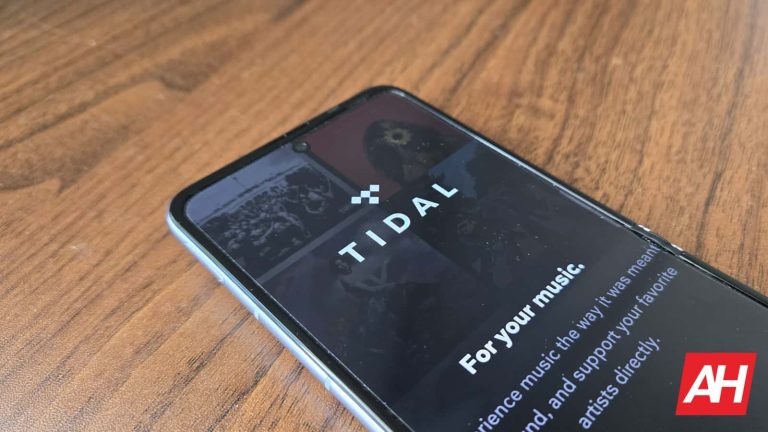
The road to being an audiophile is paved with money…. A LOT of money. You have to shell out for expensive equipment like DACs, amps, audio streamers, fancy microphones, thousand-dollar headphones, etc. Before you start selling organs to afford all of that, the first step is to find the right streaming service. Tidal is one of them. What is Tidal?
That’s what we’re here to explain. If you have questions about this service and what it has to offer, then you’ve come to the right place.
Since Tidal is an ever-evolving platform, we can expect changes to happen as time goes on. As such, we’ll update this piece as the platform makes changes. So, be sure to check back every now and then to see what’s new with this service.
What is Tidal?
Tidal is a music streaming service that gives you on-demand access to millions of music tracks. What makes Tidal stand out is its focus on streaming high-quality audio.
What most people don’t know is that several music streaming services don’t offer high-quality music streaming. That’s the case for YouTube Music and Spotify. So, if you’re a person who likes their ears, then you might not enjoy these services. Services like Apple Music and Amazon Music HD offer the ability to stream high-quality music.
However, Tidal has a primary focus on delivering high-quality music rather than offering you a limited collection of high-quality audio tracks. So, it’s the go-to service for people who want bit-perfect audio.
Does Tidal cost money?
It’s a high-quality music streaming service, so that’s a no-brainer. There are three payment tiers to choose from. These prices are for the U.S. market. Prices will vary depending on your region.
The standard single-user payment tier costs $10.99/month + tax. There’s also the option to add the DJ Extension (an additional $9/month). This will give users access to the individual stems for tracks to use for DJing. So, if you’re DJ, then you’ll love that.
The next payment tier is the Family plan. This costs $16.99/month. You’re able to share your account with up to five additional users. With this payment tier, you’ll also gain access to clean playlists and curated content for kids.
Lastly, there’s the Student tier which costs $4.99/month. You get the same perks as the single-user tier. With this one, you’ll also gain access to curated study playlists.
Is there a free tier?
Unfortunately, no. If you want access to the platform at all, you’ll need to pay for a subscription.
How many tracks does Tidal have?
The platform boasts more than 110 million tracks. If you’re looking to hear the latest and greatest music from today’s top artists, then you shouldn’t have to worry. On the other hand, if you’re looking for more obscure music, then you might have some trouble. For example, the selection of classical music isn’t quite the best.
What audio formats does Tidal support?
Currently, Tidal supports both FLAC and MQA lossless platforms. These guarantee some of the best audio quality. However, there are a few things to note.
Firstly, not every track will be completely lossless. There’s a chance that some of the tracks might have been mastered and compressed by the platform. Also, it’s important to know that the platform automatically compresses music when streaming through Bluetooth.
Second, As of the writing of this article, Tidal supports both FLAC and MQA files. However, on July 24th, 2024, the company will no longer support MQA files. FLAC will be the platform’s primary lossless format. There are FLAC copies of most of the MQA files on the platform. However, users might find some of their favorite files gone.
Along with MQA files, the company is also getting rid of Sony’s 360 Reality audio. This standard will be replaced with Dolby Atmos.
How can I tell what audio quality I’m listening to?
While you’re able to set the default audio quality across the platform, you’re able to see the quality of each track you’re listening to. Each track comes with a badge telling you the quality.
If you’re using the app, you’ll see it right under the timeline; if you’re on the website or desktop client, it will be on the right side of the screen right next to the volume. It will tell you the audio quality (Low, High, or Max) and it will tell you what format it’s in (FLAC or MQA). When you tap/click on the badge, you’ll see a little popup appear with the option to choose the audio quality.
Changing the quality across the platform
If you want to change the quality of the entire platform, you’ll need to go to the system settings. In the app, tap on the gear icon in the top right corner. On the resulting page, tap on the Audio & playback button. This will bring up the settings page for the audio quality.
You’ll be able to choose the maximum audio quality for when you’re streaming via mobile data and through Wi-Fi.
For desktop, click on the three-dot menu right next to your profile name. Click on the Settings button in the dropdown menu, and you’ll see the general settings page pop up. Up top, you’ll be able to choose your audio quality there.
Audio quality
Tidal is a platform all about audio quality. While most platforms only offer audio quality that’s good enough, Tidal has a range of standards to choose from. There are three audio settings to choose from.
Low gives you the most modest quality, and it’s best for people who want to save on data. Low is a special setting, as it gives you the choice between different bit rates. When you choose Low, you’ll be able to choose between 96kbps and 320kbps. The former is the best option if you don’t want to run out of your data.
High gives you CD-quality audio at 16-bit, 44.1kHz. You’re getting a bit rate of 1,411.2kbps. It’s more than 4x the quality of 320kbps and 14.7x the quality of 96kbps. This is what you’ll choose if you want the best of both worlds between audio quality and data savings.
Max is the highest quality. As you can guess, this is the highest and most data-hungry setting. You won’t want to use it if you’re on a limited plan. With it, you’re getting audio at 24-bit, 192kHz (9216kbps).
Remember, if you’re using Bluetooth headphones, the audio will be compressed, so you won’t be hearing bit-perfect audio.
Android has an audio quality limitation. Does Tidal get past it?
As many people might not know, Android has a pretty bad audio limitation. While iPhones cap out at a sample rate of 192kHz, the Android operating system caps out at 48kHz. All of the audio you hear is just 44.1kHz content resampled to 48kHz. As such, there’s not much point in listening to higher-quality music.
Fortunately, there are exceptions. Very fortunately, Tidal is one of them. This app gets past that audio limitation.
Can you download tracks using Tidal?
Yes. As always, you’ll need to connect to the internet every once in a while so that the platform can check if you’re still subscribed.
How to download tracks
This is a little counterintuitive. There’s no direct way to download a track on the platform. If you’re looking for a straightforward Download button, you’ll only see it for albums.
If you want to download individual tracks, it’ll take a few steps. Firstly, you need to go to a track and tap on the heart icon to add it to your collection.
Then, tap on the profile icon on the right side of the bottom bar. This will take you to your collection. Tap on the Tracks button to go to your saved tracks. Right under the Shuffle button, you’ll want to flip the toggle to have the tracks download automatically when added to your collection.
As you can tell, this will be inconvenient for people who don’t want to have a collection and a library of downloaded content. However, that’s just how it goes.
What other content is there besides music?
Tidal isn’t a be-all-end-all platform, so you won’t have access to podcasts and audiobooks. However, Tidal does let you view videos. You’ll see music videos from all the top artists. You’ll also see music videos of old classics.
What are radio stations?
If you’re listening to Tidal, you’re likely to have your own collection of music that you go back to from time to time. However, there are times when you want to let fate take the wheel. This is where radio stations come in.
These are randomly curated playlists full of a mix based on your listening habits. When you listen to a track, Tidal will find other songs similar to that one and create a radio station based on it. On your home screen, you’ll see a carousel of radio stations based on the most recent tracks you listened to.
Tidal will also develop radio stations based on the artists you listen to. Those stations won’t only be filled with music from that artist. They will also have music from other artists.
Since these are just like typical playlists, you’re allowed to skip tracks and pick and choose which ones to hear. You’re also able to add radio stations to your collection and download them. When you add them to your collection, you’ll see them under the Mixes & Radio section.
How do you manage playlists?
Just like other music streaming services, you’re able to make and manage playlists on Tidal. The process of creating a playlist is simple. If you’re using the mobile app, go to a track, album, or radio station. Then, tap on the three-dot button to bring up the menu.
There, tap on the Add to playlist button. On the resulting page, tap on the Create playlist button to name your new playlist.
On desktop, the three-dot menu will be on the right side of the track you want to add. The process is the same after that.
Editing your playlist
If you want to make changes to your playlists, it’s easy to do so. On the mobile app, go to your collection and tap on the Playlists button. Tap on the playlist you want to edit and you’ll be taken to its info page. Right under the Play button, you’ll see the Edit Playlist button.
When you do that, you’ll see the UI change to the editor. You’re able to select multiple tracks by tapping on the circles on the left of each track. When you select a track, you’ll see a small panel appear at the bottom of the screen. Tap on the Remove button to delete them from the playlist and tap on the three-dot menu if you want to either add them to another playlist or move them to another playlist.
On desktop, click on the Playlists button on the left side panel and click on the playlist you want to edit. There’s an Edit playlist button on the right side of the screen on level with the Play and Shuffle button. However, clicking that won’t let you select and move tracks. You’ll only want to click on it if you want to change the name, write a description, or change the visibility.
If you want to move tracks, you’ll just need to click on them. Hover over the track and click on it anywhere that’s not the Play button. This will highlight it. Drag it to move.
Tidal is one of the few (VERY few) streaming services that allow you to move multiple tracks at once. Selecting multiple tracks is just like anything else. If you want to select multiple consecutive tracks, click on the first track and click the last track in the selection range while holding the Shift key. So, if you want to move tracks 1 through 5, click on #1 then click on #5 while holding the Shift key.
If the tracks you want to select aren’t next to one another, click on all of the tracks you want to select while holding the Control/Command key. When you do that, just drag and drop to the position in the playlist you want them to go.
Playlist visibility
Tidal gives you the option to either make your playlist public or private. If you want other people to see and listen to your playlist, then you’ll mark it public. However, if you only want it to be visible to you, then you can mark it private.
Your playlists are set to private by default. If you want them public, you have the option to make them public when creating them. Just flip the toggle on the playlist creation screen.
If you want to change the visibility after the fact, it’s easy to do. Using the mobile app, go to the playlist and tap on the Private button right under the Shuffle button. The app will ask you to confirm that you want to make the playlist public.
On desktop, go to the playlist and click on the Edit button. After that, click on the toggle under the name text field.
Last month, there were rumors that WhatsApp is working on a new feature that will allow you to make AI-generated profile photos. The company is now getting closer to launching the new functionality for the popular instant messaging app. According to a report by WABetaInfo, WhatsApp will soon let users use different Meta AI language models for their AI-generated images.
WhatsApp’s support for different Meta AI language models was spotted in the latest beta version
According to the source, WhatsApp users can soon choose between two different Meta AI Llama LLM models for their AI-generated photos. The publication has found references to the two different models in the latest beta version of WhatsApp for Android. The report has found the new functionality in the 2.24.14.13 beta version of the app.
This feature will allow you to generate images of yourself using Meta AI. This functionality will be available in a future public version of the app. The feature seems to be under development, so it’s still not ready for beta testers. However, WABetaInfo discovered a preview of the new functionality in the latest beta version of the app.
In the new feature, the users will be able to choose between the default Llama 3-70B model for faster and simpler prompts. There will also be an option to choose the Llama 3-405B LLM model, which will handle more complex queries.
After training Meta AI, you can “Imagine yourself as anything” for a perfect AI photo
The screenshots shared by the source suggest that to use the new AI-generated profile feature the users will need to provide a set of photos to train Meta AI. Users must first take a single set of pictures, which Meta AI will then utilize to generate AI images. The photos captured in the setup process will be analyzed to create the AI images with accuracy. The users will have complete control over the functionality, as they will be able to delete their setup photos at any time.
Once done with the setup process, users can type “Imagine me” in Meta AI conversations to create AI images of themselves. Notably, this feature will also be available in individual and group chats. You will be able to type “@Meta AI imagine me” in these chats to generate your AI images. You can “Imagine yourself as anything” using the upcoming feature.
WhatsApp is currently testing the upcoming AI-generated profile photo feature. It is expected to be available globally in the upcoming WhatsApp updates. We will let you know as soon as it becomes widely available, so stay tuned for regular updates.
TeamViewer, the renowned remote access software company, has officially confirmed that the recent cyberattack on its internal corporate IT environment was orchestrated by the Russian state-sponsored hacking group APT29, known as Midnight Blizzard or Cozy Bear.
The attack, detected on June 26, 2024, has been attributed to the same group implicated in several high-profile cyber incidents, including the 2020 SolarWinds hack and the 2016 Democratic National Committee breach.
In a series of statements released on their Trust Center, TeamViewer detailed the timeline and nature of the breach.
The company’s security team identified suspicious activity tied to the credentials of a standard employee account within their corporate IT environment.
Incident & Response
Immediate incident response measures were enacted, and investigations commenced in collaboration with globally renowned cybersecurity experts and relevant authorities.
TeamViewer has emphasized that the breach was contained within its corporate IT environment and did not extend to its product environment, connectivity platform, or any customer data.
The investigation, supported by continuous security monitoring and external incident response teams, led to the attribution of the attack to APT29.
This group, allegedly linked to Russia’s Foreign Intelligence Service (SVR), is known for its sophisticated cyber-espionage campaigns targeting government, military, and technology sectors worldwide.
TeamViewer has reiterated its commitment to transparency and security. “Security is of utmost importance for us, it is deeply rooted in our DNA,” the company stated.
They assured stakeholders that the product environment remains secure and that there is no evidence of compromised customer data.
The company continues working closely with cybersecurity experts and authorities to investigate further and mitigate potential risks.
The cybersecurity community has responded with heightened vigilance. Experts have advised organizations using TeamViewer to review their security measures and monitor for any unusual activity.
Matt Hull, global head of threat intelligence at NCC Group, recommended removing TeamViewer software as a precaution until more details about the compromise are known.
TeamViewer’s prompt response and transparent communication have been crucial in managing the incident and maintaining stakeholder trust.
For a change, Google rolled out the July security patch to the Pixel Watch lineup before Pixel phones. While both watches have already received the update, it has yet to arrive on phones, including foldables. In the meantime, the company has published the content of the July 2024 security update for Pixels and other Android products. Samsung has also revealed the Galaxy-specific patches it will bundle with the July patch.
Google’s July 2024 Android security update patches 27 vulnerabilities
Every month, Google releases a new security patch for Android devices. It contains fixes for various bugs and security flaws in Android OS components and other partner components in Android OS. Device makers roll out these patches to their eligible products, often adding fixes for vulnerabilities exclusive to their devices. It’s no different this month. Google’s July 2024 ASB (Android Security Bulletin) fixes 27 security issues in Android products.
Among those are four critical vulnerabilities potentially causing severe damage to affected devices if threat experts exploited the flaws. According to Google, the most severe issues patched this month “could lead to local escalation of privilege with no additional execution privileges needed.” The rest are all high-severity vulnerabilities affecting Android versions from 12 to 14, including Android 12L, a special build for foldables and tablets.
As usual, Google has grouped these patches under two different security patch levels: 2024-07-01 and 2024-07-05. Vendors can roll out either patch level to their Android devices. Samsung, the biggest name in the Android smartphone space, always pushes the former build. Its updates also contain dozens of additional security fixes. Called Samsung Vulnerabilities and Exposures (SVE) items, these issues don’t exist on Android products from other brands.
Samsung’s updated security bulletin says the July SMR (Security Maintenance Release) for Galaxy devices contains 33 SVE patches. These include at least two critical vulnerabilities allowing remote attackers to execute arbitrary code with system privilege with the help of user interaction. This month’s security update for Galaxy devices also patches two high-severity Samsung Semiconductor issues. These issues exist on Exynos-powered devices.
These patches will soon reach millions of Android devices
Google, Samsung, and other brands will soon start pushing the July security update to their respective Android products. The exact number of patches will vary by device—not every Galaxy device is vulnerable to all 62 issues discussed above. Watch out for an update on your Android phone, tablet, or Wear OS smartwatch in the coming days. Most devices allow you to manually check for updates from the Settings app.