FBI confirms Barracuda patch is not effective for exploited ESG appliances

0
[ad_1]

The FBI repeats the warning by Barracuda that all ESG appliances should immediately be replaced because the patch was ineffective.

In an FBI Flash about a Barracuda ESG vulnerability, listed as CVE-2023-2868, the FBI has stated that the patches released by Barracuda in response to this CVE were ineffective for anyone previously infected. Although both Barracude and Mandiant have already made this determination, the agency says it has “independently verified” it.

As we explained in an earlier post, the zero-day vulnerability was reportedly used in targeted attacks for months before the patch was issued, by a group that allegedly has ties to China.

On May 23, 2023, Barracuda posted that “a security patch to eliminate the vulnerability was applied to all ESG appliances worldwide on Saturday, May 20, 2023.” The patch was followed by another on May 21, and users with impacted appliances were reportedly “notified via the ESG user interface of actions to take.”

On June 6, 2023, Barracuda sent out an action notice informing customers that impacted ESG appliances must be replaced immediately, signalling that patching alone would not suffice on an already-infected device.

Compromised ESG appliances must be immediately replaced regardless of patch version level. Only a subset of ESG appliances have shown any known indicators of compromise, and are identified by a message in the appliance User Interface.

On July 28, the company explained that SUBMARINE malware was found on infected devices that had been patched

This additional malware was utilized by the threat actor in response to Barracuda’s remediation actions in an attempt to create persistent access on customer ESG appliances. This malware appeared on a very small number of already compromised ESG appliances.

In a blog post today, Mandiant confirmed that the patches appear to be effective, saying that since Barracuda released its patches, “Mandiant and Barracuda have not identified evidence of successful exploitation of CVE-2023-2868 resulting in any newly compromised physical or virtual ESG appliances.” The company goes on to reiterate that compromised organizations should replace their appliances:

…a limited number of previously impacted victims remain at risk due to this campaign … Mandiant’s recommendations remain unchanged — victims impacted by this campaign should contact Barracuda support and replace the compromised appliance.

The FBI has now independently verified the same findings.

the FBI has independently verified that all exploited ESG appliances, even those with patches pushed out by Barracuda, remain at risk for continued computer network compromise from suspected PRC cyber actors exploiting this vulnerability.

The flaw in Barracuda’s appliance is a remote command injection vulnerability which exists in the Barracuda Email Security Gateway (appliance form factor only). The vulnerability stems from incomplete input validation of file names contained in .tar file attachments. As a consequence, a remote attacker could specifically format these file names in a way that results in remotely executing a system command through Perl’s qx operator, with the privileges of the Email Security Gateway product.

According to the FBI, the cybercriminals utilized this vulnerability to insert malicious payloads onto the ESG appliance with a variety of capabilities that enabled persistent access, email scanning, credential harvesting, and data exfiltration.

The Cybersecurity and Infrastructure Security Agency (CISA) has published four malware analysis reports based on malware variants associated with the exploitation of this vulnerability in Barracuda ESG appliances.

The CISA reports address:

In these reports and the FBI Flash you can find a host of Indicators of Compromise that are certainly worth pursuing if you have or had the Barracuda ESG appliance in your environment between October 2022 and now.

The FBI recommends that customers who used enterprise privileged credentials for management of their Barracuda appliances (such as Active Directory Domain Admin) should immediately take incident investigation steps to verify the use and behavior of any credentials used on their devices. Investigation steps may include:

  • Review email logs to identify the initial point of exposure
  • Revoke and rotate all domain-based and local credentials that were on the ESG at the time of compromise
  • Revoke and reissue all certificates that were on the ESG at the time of compromise
  • Monitor entire network for the use of credentials that were on the ESG at the time of compromise
  • Review network logs for signs of data exfiltration and lateral movement
  • Capture forensic image of the appliance and conduct a forensic analysis

We don’t just report on vulnerabilities—we identify them, and prioritize action.

Cybersecurity risks should never spread beyond a headline. Keep vulnerabilities in tow by using Malwarebytes Vulnerability and Patch Management.


[ad_2]
Source link

Google Pixel Pass has officially been shut down

0
[ad_1]

Google’s Pixel Pass service is dead. If you’re not sure what Pixel Pass was, it was a subscription service Google offered that allowed people to split up the payments of their phone over a two-year period. Just like installment plans from Verizon, AT&T, and T-Mobile, the Pixel Pass portioned out your payments monthly.

This was an easy way for people to upgrade to the latest Pixel smartphone. But the opportunity to do so is no longer available. Google doesn’t have an official announcement for this. Instead, the discontinuation of the service went under the radar and is only brought up on the support page (spotted by Droid Life) for it. Google says new subscribers won’t be able to sign up for Pixel Pass going forward. However, those who already have an active Pixel Pass subscription will continue to use the service as normal. At least until the subscription ends two years from the purchase of the phone.

Pixel Pass is dead as of August 29, 2023

The service is officially ending today. So as mentioned above, there’s no way for people to sign up for a new membership and you can’t renew an active one.

It is possible that Google chose to end Pixel Pass because it wasn’t really being utilized. Or perhaps not to the extent Google was hoping. Google doesn’t offer up much information as to the reasoning for the shutdown either. One might assume Google has a replacement in the works. It will after all be launching the Pixel 8 series phones later this year. And their unveiling would make for a good time to reveal an alternative to Pixel Pass.

For the time being though, there is no real alternative directly from Google. That doesn’t mean there’s no way to avoid paying for a new Pixel phone up front. As Google still offers its trade-in programs that could help bring the price of the phone down. At the end of the day, you can still get a new Pixel device. It just might cost you more up front.


[ad_2]
Source link

Microsoft’s president says that AI needs ‘Human control’

0
[ad_1]

Right now, we’re still just learning about what potential impacts AI could have on humanity going forward. It’s all speculation and crystal balls at this point, but several figures in the tech industry are concerned that the technology, if left off the leash, will have a negative effect. In an exclusive interview with CNBC, Brad Smith, Microsoft’s president, stated that AI technology needs human control.

Brad Smith shares his views on AI

AI technology is fast growing, and it’s gained the ability to create from thin air. It can generate text, pictures, and music. It’s able to do everything from giving you life advice to writing you a poem to giving you a recipe. It’s getting to the point where it’s smart enough to operate with no human intervention.

However, Brad Smith stated that, “We have to ensure that AI remains subject to human control.”, in the interview, “… we need to ensure that we have humans in control, that we can slow things down or turn things off.”

This is a sentiment that many people in the tech industry agree with. Every sort of technology needs a failsafe. There needs to be someone to hit the brakes if something goes sideways. It’s tempting to sit back and let the AI complete tasks for you, but that’s not the point of AI.

Responsible AI developers want the technology to be used to assist people, not relieve them of duty. It can help with executive functions, but there still needs to be a human being overlooking what it’s doing. This is why Microsoft calls it AI chatbot Co-pilot.

This is just another example showing that AI could be a ticking time bomb without the proper regulation. Generative AI is being implemented into so many corners of our modern-day technology. Right now, it may seem like a cash grab for most companies, but it could turn into a huge problem if left unattended.


[ad_2]
Source link

Samsung Galaxy Z Fold 3 & Galaxy Z Flip 3 get One UI 5.1.1 update

0
[ad_1]

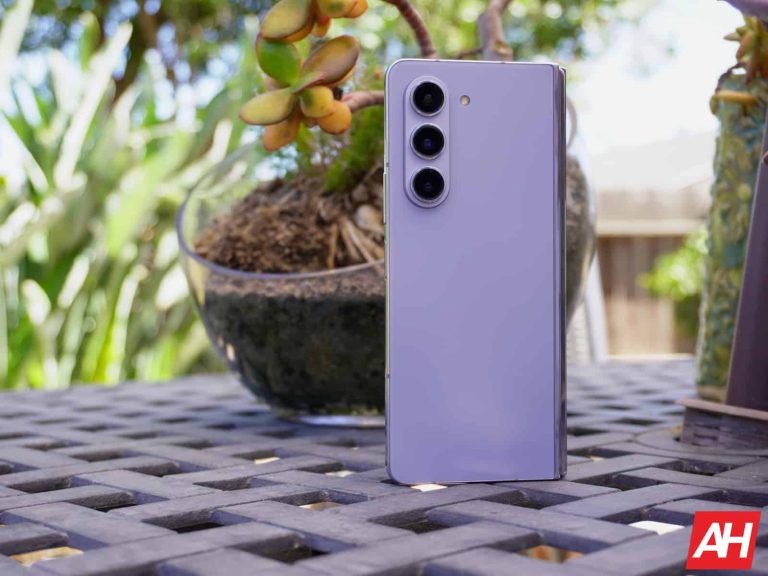
Samsung has released the One UI 5.1.1 update for the Galaxy Z Fold 3 and Galaxy Z Flip 3. The rollout began recently and is currently limited to select countries in Europe and Asia, SamMobile reports. Users in other markets, including the US, can expect to receive this update soon.

One UI 5.11 debuted with the Galaxy Z Fold 5, Galaxy Z Flip 5, and Galaxy Tab S9 series last month. The latest iteration of Samsung’s custom Android software brings a host of new features and functional improvements to the new foldables and tablets. The company is now pushing compatible features to older models.

With this update, your Galaxy Z Fold 3 or Galaxy Z Flip 3 will offer better app previews on the Recents screen. Switching between pop-up view and split screen is also getting easier. If you have snapped pop-up views to the edge of the screen, restoring them will be a breeze too. Moving files between two apps can now be done with a drag and drop with two hands. Additionally, One UI 5.1.1 brings new health and camera features to the foldable duo.

If you are using a Galaxy Z Fold 3 or Galaxy Z Flip 3 in Europe or Asia, you will receive these features with the One UI 5.1.1 update that carriers firmware build numbers F926BXXU5FWH5 and F711BXXU6FWH3, respectively. The build numbers may vary in other markets, but the changelog will remain the same. As usual, you can check for new updates from the Settings app. Since it’s a major update, the OTA (over the air) package will be huge.

Samsung will push the One UI 5.1.1 update to more Galaxy devices

Samsung began pushing the One UI 5.1.1 update to eligible Galaxy devices about two weeks back. The Galaxy Z Fold 4 and the Galaxy Tab S8 series picked up the update first, followed by the Galaxy Z Flip 4 and the Galaxy Tab S7 series. The Galaxy Z Fold 3 and Galaxy Z Flip 3 have now joined this list.

In the coming weeks, One UI 5.1.1 will reach more Galaxy devices. Samsung has confirmed that the new One UI version will also be available for the Galaxy Z Fold 2, Galaxy Z Flip, Galaxy Tab S6 Lite, Galaxy Tab A8, Galaxy Tab A7 Lite, Galaxy Tab Active 3, and Galaxy Tab Active 4. A few new features may be missing on some of these devices, but they will get the majority of the changes. We will let you know when the updates roll out.


[ad_2]
Source link

Exynos 2400-powered Galaxy S24 is “100%” coming to Europe

0
[ad_1]

Samsung‘s in-house Exynos chipsets are making a return to its flagship smartphones next year. The Galaxy S24 series will ship with the Exynos 2400 in some markets. Noted tipster Ice Universe claims that Europe is “100%” guaranteed to get the new Exynos chip.

The tipster recently took to X (formerly Twitter) to reveal the clock speeds of the Exynos 2400 CPUs. They say the chipset will have a quad-cluster CPU arrangement with a peak speed of 3.16GHz. It features one ARM v9.2 Cortex-X4 prime CPU core operating at the highest possible speed. Samsung has clocked the two Cortex-A720 cores mid-cores at 2.9GHz, three more Cortex-A720 cores at 2.6GHz, and four Cortex-A520 efficiency cores at 1.95GHz.

If you have been keeping the count, we have mentioned ten CPU cores here. That’s because the Exynos 2400 will be a deca-core chipset from Samsung. Earlier rumors have hinted at a lower base frequency (1.8GHz), though other reported speeds have been similar. Ice Universe says they are “100% sure” about this CPU setup and the speeds of the upcoming Exynos processor. Their track record of Samsung leaks suggests they are correct.

The Exynos 2400 isn’t all about a CPU overhaul, though. Samsung will pair the CPU with Xclipse 940, a new AMD RDNA2-based custom GPU. It’s said to have twice as many graphics computing units as the Xclipse 920 GPU found in Exynos 2200. The new chip will also bring enhanced AI (artificial intelligence) capabilities, improved 5G modem, improved ISP, and more upgrades. There are rumors about a two-way satellite communication system as well.

The Exynos 2400-powered Galaxy S24 may not be limited to Europe

European users may not be the only ones getting the Galaxy S24 with the Exynos 2400 SoC. Samsung is also expected to ship the new flagships with its in-house chipset in parts of Asia, Africa, and Latin America. The US, China, South Korea, and a few other markets should get Qualcomm’s Snapdragon 8 Gen 3. Like this year, Samsung will use an overclocked version of the latest Qualcomm chipset in the Galaxy S24 series as well.

It’s an octa-core chip featuring one Cortex-X4 CPU core clocked at 3.30GHz, three Cortex-A720 cores at 3.15GHz, two Cortex-A720 cores at 2.96GHz, and two Cortex-A520 cores at 2.27GHz. Time will tell whether the Exynos 2400 can match or surpass the Snapdragon 8 Gen 3’s performance. Samsung might have a tough time selling the new flagships with an inferior Exynos processor. The Galaxy S24 series launches in early 2024.


[ad_2]
Source link

AYANEO announces the KUN handheld with an 8.4-inch 1600p display

0
[ad_1]

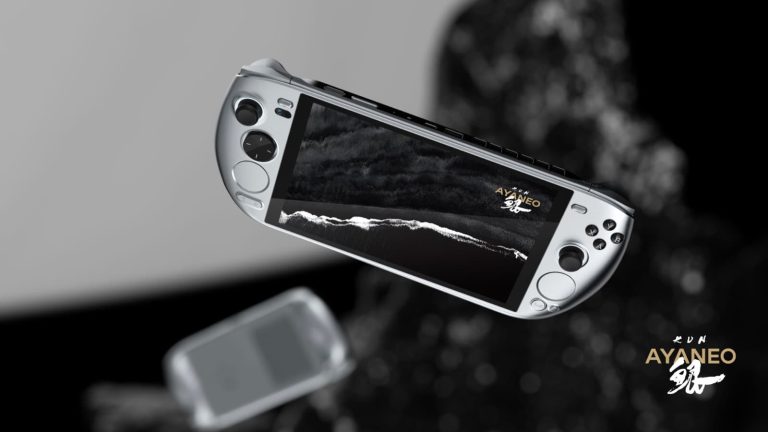
AYANEO is back with another new handheld gaming device called the KUN and it’s prepared to take on competitors by storm. AYANEO of course is no stranger to the handheld gaming market as it’s hardly a newcomer. It was putting out handheld gaming PCs before the Steam Deck arrived.

It does also however seem to launch more devices in this space than anyone else. And the KUN is the latest offering. On paper, the KUN seems like it’ll provide gamers with what might be the most powerful experience AYANEO has offered so far.  For starters it boasts an 8.4-inch 1600p HD display. That’s 1.4-inches more screen space than you’re going to get with both the Steam Deck and the ROG Ally. Which are AYANEO’s two biggest competitors.

It’s also powered by an AMD Ryzen 7 7840U flagship processor with support for 54W TDP. Plus it’s packing a 75Wh battery and our personal favorite, Hall Sensing joysticks and Hall triggers. Which means no stick drift. It’s certainly going to be one of the more powerful handhelds.

The AYANEO KUN handheld is powerful and costly

AYANEO KUN Gaming Handheld (2)

AYANEO may very well have a winner on its hands here. But that shouldn’t be surprising given all the nice specs. All that comes at a cost of course.

That being said, AYANEO is also targeting a very different consumer. At a base price of $1,209, it sits far above the options from Valve and ASUS in terms of cost. And that’s just the base model that comes with 16GB of RAM and 512GB of storage. If you want double the RAM and double the storage the price goes up to $1,319. And it goes all the way up to $1,949 for the 64GB + 4TB model.

But this isn’t supposed to win over the people looking for something like a base model Steam Deck at a price of $399. This is a device for those who want top notch performance and gameplay experiences in a handheld and are willing to pay for it. For additional features, the KUN is pretty jampacked. It’s got a floating eight-directional d-pad, four mappable back buttons (which are new), two large touch pads, and dual stereo speakers. There’s a lot to like.

So while not inexpensive by any means, the KUN is poised to be a great way to play games on the go. AYANEO says the KUN will go up for crowdfunding on Indiegogo on September 5.


[ad_2]
Source link

Samsung Galaxy Buds2 Pro get new Auracast features on smart TVs

0
[ad_1]

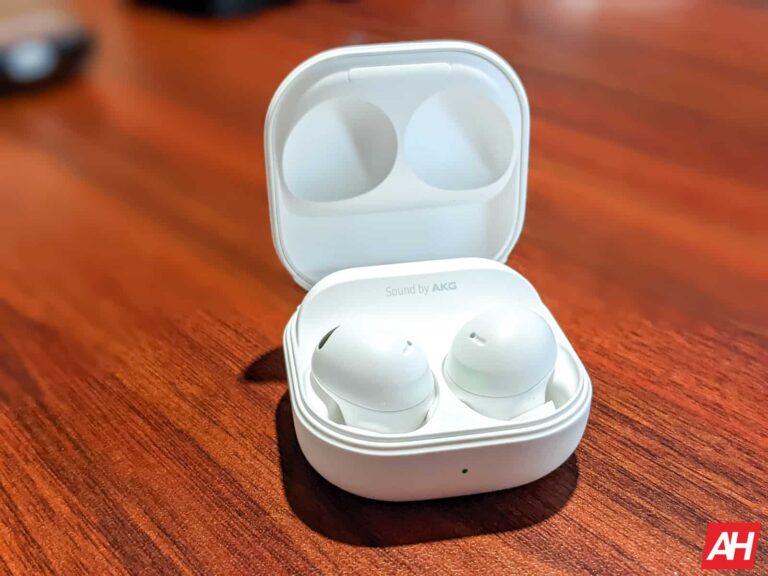
Samsung‘s Galaxy Buds2 Pro are already an impressive pair of true wireless earbuds, but they’re getting even better now with the addition of new Auracast features.

Today Samsung has announced that it’s adding Auracast to the Galaxy Buds2 Pro and select Samsung smart TVs for improved audio experiences. The implications of this could be pretty groundbreaking if utilized properly and made more widely available for outside of personal home use. “Auracast opens a variety of potential use cases and possibilities for further device applications. From augmented or assistive listening in a theater or lecture hall for those who want hear better, to sharing a playlist from your smartphone while on a run with friends, and even multi-language support without translation devices by sending different language interpretations via different channels,” Samsung says.

But while those potential use cases are exciting to think about, that’s not what users will have access to. What Samsung is making available to users is still exciting though.

Samsung will push the Auracast update to Galaxy Buds2 Pro in September

The update is due to hit user devices next month. Although Samsung doesn’t give a specific time window. The update, which is going to start rolling out to 2023 models of the NEO QLED 8K TV and the Micro LED TVs, will allow users to share audio with more people. Currently, if you want to connect more than one set of Galaxy Buds2 Pro to your compatible TVs, you’re limited to just two sets. Now Samsung will let you connect more. Making it a more viable option for watching TV or movies with friends and family.

An important note though is that Samsung doesn’t say how many pairs of buds can be connected exactly. What it does say is that the number you can connect may be determined by things like distance and obstruction. It’ll also now be possible to use the Samsung Galaxy Buds2 Pro as a “shared radio station.” Users could find something they want to listen to and then hit play. Then broadcast that audio to other smart devices around the home. So long as those devices are capable of playing audio.


[ad_2]
Source link

Samsung confirms Galaxy Z Fold 5 Thom Browne Edition launch

0
[ad_1]

Samsung has announced a launch date for the Galaxy Z Fold 5 Thom Browne Edition. The limited edition foldable will debut next Thursday, September 7. The company revealed the date through a teaser on X (formerly Twitter). It described the phone as “a unique vision of innovation, at its most elegant.” It added that the device will be “as striking as it is inviting.”

That’s all Samsung has said about the Galaxy Z Fold 5 Thom Browne Edition so far. Last week, the company posted a short teaser video for the phone on X, asking fans to “take a seat at the Thom Browne table for a celebration of a new experience in design and innovation.” It featured a piece of Fold-shaped cardboard with the New York City-based fashion designer’s iconic red, blue, and white stripes.

The latest teaser, meanwhile, shows the Galaxy Z Fold 5 in black. Samsung likely doesn’t want to reveal the Thom Browne-themed external customizations ahead of the limited edition foldable’s official unveiling next week. If history is any indication, the back panel should feature the iconic Americana stripes. Samsung has launched Thom Browne Editions of the Galaxy Z Flip, Galaxy Z Fold 2, Galaxy Z Flip 3, and Galaxy Z Fold 3 in the past.

The Korean firm didn’t team up with the fashion designer for its fourth-gen foldables last year. So there were no speculations of the Galaxy Z Fold 5 or the Galaxy Z Flip 5 getting Thom Browne-themed customizations. However, Samsung has other ideas. It kept mum initially but has now confirmed a limited edition variant of the Fold model. The Flip model may get similar treatments later, possibly in partnership with some other brand or individual.


The Galaxy Z Fold 5 Thom Browne Edition may come in a bundle

Samsung’s limited edition Galaxy smartphones usually come in a bundle. It includes other products like smartwatches, TWS earbuds, S Pen (for supported models), and charging hubs in the same package, often with similarly customized exteriors. The company may do the same for the Galaxy Z Fold 5 Thom Browne Edition. We will get a confirmation soon.

Of course, it will be the same Galaxy Z Fold 5 that you can already buy from Samsung and other retail channels. The only difference will be its colors and other external customizations. The same goes for other products in the bundle as well. With all the extra efforts put into pulling it off, the limited edition device will cost more than the standard version. The regular Galaxy Z Fold 5 starts at $1,800.


[ad_2]
Source link

Major news and media outlets are blocking ChatGPT

0
[ad_1]

We’ve seen the chilling headlines: “Another company laid off a huge chunk of its staff and started using AI instead”. This is the sad reality that we have to face, but there’s hope out there. Several news outlets and media companies are actually blocking OpenAI’s ChatGPT from accessing the information on their sites.

This news comes from CNN, and CNN’s Oliver Darcy described this accurately as a Cold War. It makes sense; there’s a lot of tension hovering around AI and the potential future. AI companies are building up their arsenal of potentially deadly weapons, and those opposed are mounting their defense.

Major news outlets are blocking ChatGPT

It’s reassuring to know that not all companies are all in on this new AI revolution. Notable news outlets such as CNN, Insider, The New York Times, Reuters, Bloomberg, The Washington Post, ESPN, Axios, ABC News, The Gothamist, and The Atlantic have blocked ChatGPT’s crawlers from accessing their content. This also includes publishers such as Vox Media, Condé Nast, and Hearst.

The list doesn’t stop there. Disney is also opposed to ChatGPT accessing its content. This shows that there’s a long list of companies that are on the offense against ChatGPT and the like.

It’s a matter of morality and legality

Danielle Coffeey, President and chief executive of the News Media Alliance spoke about why these companies are resistant to forking over their content. It’s not only because generative AI proves to be a threat to the news industry. Long-standing news outlets “are on solid legal ground when it comes to copyright protections.”

Of course, if you’re a major news organization, and you’ve put out groundbreaking news stories, you’d want to protect your content. Generative AI does threaten to put writers out of their jobs. It’d be a pretty sour blow to end up training the very AI that’s threatening jobs for writers.

At this moment, we’re not sure about what will happen next as AI progresses. However, it’s nice to know that not everyone purchased a ticket to the AI hype train.


[ad_2]
Source link

Meta took down more than 7,000 fake accounts related to pro-China propaganda

0
[ad_1]

Fake accounts on social media aren’t something new. Most likely, many of us have come across at least one fake account during our time on social media. Facebook reportedly holds the largest number of fake accounts compared to any other social network in the world. However, it appears that Meta has managed to eliminate at least some of them. Meta shared details (via Engadget) about a network of fake accounts that had spread pro-China propaganda on Facebook. The company mentions that the takedowns were tied to “individuals associated with Chinese law enforcement” who also ran similar fake accounts on other platforms.

The company often shares updates about taking down fake accounts that are up to no good, but what Meta’s security researchers found this time is pretty big. Meta got rid of 7,704 Facebook accounts, 954 Pages, 15 Groups, and 15 Instagram accounts, making it one of the largest networks of fake accounts ever discovered by the company.

Meta found several groups of fake accounts from various parts of China. The way the groups acted, made it seem like they might have been working together from a shared place, maybe an office. Each group had a specific schedule, being most active in the morning and afternoon. They took breaks for lunch and dinner and then had another burst of activity in the evening, so basically, they had a full-time job.

Ben Nimmo, who’s in charge of global threat intelligence at Meta, calls this move “the most prolific covert influence operation that we know of in the world today.” He also points out that the people running these accounts were also busy on X, Reddit, YouTube, TikTok, and Pinterest.

As per Meta, the fake accounts aimed to share pro-China messages, including positive commentary about China, criticisms of the US, and Western foreign policies. The company did verify that it discovered proof connecting these fake accounts to an earlier pro-China operation cleverly called Spamouflage that showed up in 2019.

In addition, the company also shared that it stopped numerous malicious domains and efforts to create fake accounts and Pages linked to the Russian Doppelganger operation, which aims to mimic official news and government websites to spread false articles undermining support for Ukraine. This operation has broadened its scope from France, Germany, and Ukraine to the US and Israel.

[ad_2]
Source link