New Samsung patent potentially reveals the future of Flip phones

0
[ad_1]

Samsung may be exploring ways to improve its foldable smartphones. A newly spotted patent application from the Korean company shows a unique out-folding Flip phone with only one screen. This approach could help reduce the manufacturing cost, thus making future foldables cheaper.

Samsung patent shows a unique out-folding Flip phone for the future

Samsung has been religiously making foldable smartphones since 2019. It will soon unveil its sixth-gen models, the Galaxy Z Fold 6 and Galaxy Z Flip 6. According to rumors, the new foldables will be costlier than the 2023 models. This is despite the Korean conglomerate keeping most of the hardware specs unchanged. The Flip model may get a camera upgrade while the Fold may switch to a titanium frame. There aren’t many other major upgrades to talk about.

This suggests Samsung cannot make its foldables cheaper than they already are. In fact, as material costs rise, the devices will see a price increase. The rumored Galaxy Z Fold 6 Slim, aka Samsung W25, may come cheaper but it reportedly lacks S Pen support and may miss out on a titanium frame. The company would be exploring ways to reduce the prices without compromising on specs and quality, and this patent may be an example of what it could do.

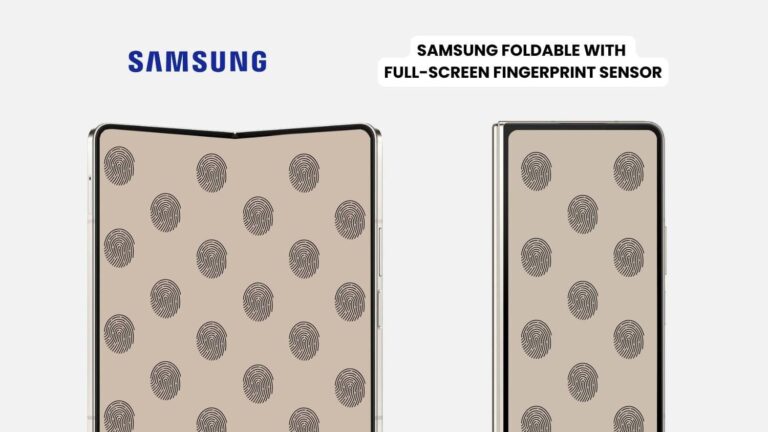
Discovered by tech leaker David Kowalski (@xleaks7 on X), the patent describes a clamshell foldable with an out-folding mechanism. It features a single tall screen that breaks into two rectangular screens on either side when the device is folded. This design eliminates the need for a cover display on the outside of the phone. TheNerdStash created some images of the device using sketches from the patent documents. You can see the images below.

Samsung Galaxy Flip foldable phone design patent 1

This could be a glimpse at the future of foldables

The design shown in this patent doesn’t look smooth or ready for commercial production. Of course, it’s just a patent and doesn’t necessarily show a product that’s being actively developed. However, it could be a glimpse at the future of Samsung Flip phones. Since it doesn’t require two separate displays, Samsung may see this design as the right approach for making foldables cheaper while still giving users everything they want from these devices.

That said, folding screens are made of plastic and can be easily scratched even with your fingernails. An out-folding mechanism continuously exposes the display to the outside world, even when in your pocket or handbag, increasing scratch risks. Companies first need to make flexible displays more durable before this type of foldable design can be mainstream. For the time being, a dual-screen approach might be the best solution. Stay tuned for the official launch of the Galaxy Z Fold 6 and Galaxy Z Flip 6.


[ad_2]
Source link

T-Mobile says it wasn’t hacked and the customer data is safe

0
[ad_1]

T-Mobile has denied claims of any data breach of its systems, which allegedly took place earlier this month. As per a report by Beeping Computer, T-Mobile made a statement that its systems weren’t compromised and no source code was stolen. A threat actor who goes by the name IntelBroker claimed to have hacked T-Mobile servers this month. T-Mobile has denied the claimed breach and says its customer data is safe.

T-Mobile says its customer data is safe

The telecom operator told Beeping Computer that its systems weren’t hacked in the alleged breach earlier this month. Besides, the company is already actively investigating a claim of a data breach at a third-party service provider. The carrier says that any claims of selling source code or customer data by the bad actor are false.

The statement comes after the threat actor IntelBroker claimed to have breached T-Mobile this month

T-Mobile released the statement after IntelBroker claimed to have breached the company’s servers in June 2024.  Linked to several breaches at various major tech companies in the past, IntelBroker is a well-known threat actor. To prove the T-Mobile data breach is authentic, the bad actor posted various screenshots.

The screenshots showed that the breacher had access to a T-Mobile Confluence server with administrative privileges. Furthermore, they show access to the telco’s internal Slack channels for developers. IntelBroker says that the T-Mobile data he is selling includes “Source code, SQL files, Images, Terraform data, t-mobile.com certifications, and Siloprograms”.

Beeping Computer was told by a source that the data being sold by the breacher “is actually older screenshots of T-Mobile’s infrastructure posted to a third-party vendor’s servers, where it was stolen”. The company’s statement mentions that it is already actively investigating claims of breaches at a third-party service provider.

Notably, T-Mobile has dealt with multiple cybersecurity issues in the past few years. One of the biggest breaches the company faced took place in January 2023. At the time, the perpetrators stole the personal data of 37 million T-Mobile users.


[ad_2]
Source link

Optimizing Teams for AI and Cybersecurity

0
[ad_1]

2024 is rapidly shaping up to be a defining year in generative AI. While 2023 saw its emergence as a potent new technology, business leaders are now grappling with how to best leverage its transformative power to grow efficiency, security, and revenue. With the near-universal integration of AI into global technology, the need for AI-ready cybersecurity teams is more critical than ever. INE Security, a leading global cybersecurity training and cybersecurity certification provider, predicts large language model (LLM) applications like chatbots and AI-drive virtual assistants will be at particular risk. 

“AI systems are invaluable, enabling us to process vast amounts of data with unmatched speed and accuracy, detect anomalies, predict threats, and respond to incidents in real-time. But these revolutionary technologies are also empowering attackers, leveling the playing field in unprecedented ways,” said Lindsey Rinehard, COO and Head of AI Integration at INE Security. “As automated attacks increase, our defense strategies must also be automated and intelligent. The accelerating arms race between cyber attackers and defenders underscores the vital need for ongoing training and development for cybersecurity teams.” 

According to the IBM X-Force Threat Intelligence Index 2024, cybercriminals mentioned AI and GPT in over 800,000 posts in illicit markets and dark web forums last year. Training and preparation for AI in infosec are no longer optional: organizations must deploy employee training for AI and cybersecurity to maintain effectiveness and stay ahead of attackers. 

Strategies to Optimize Teams for AI and Cybersecurity

1. Incorporate Structured Team Training Programs

The first step in building an AI-ready cybersecurity team is to implement structured training programs that focus on both foundational cybersecurity principles and advanced AI applications. These programs should offer certifications and courses from recognized institutions and industry leaders to ensure they meet high standards. For example, courses offered by INE Security provide comprehensive training that covers both traditional cybersecurity skills and newer AI-based tools. The ideal training program will include:

  • Skills Gap Analysis: Conduct an analysis to identify where the team’s capabilities may be an area of improvement, particularly concerning AI integration.
  • Tailored Curriculum Development: A training curriculum that addresses identified cybersecurity skills gaps, incorporating both core cybersecurity principles and advanced AI applications.
  • Blended Learning Approach: A mix of online courses, hands-on labs, and real-world scenario simulations to accommodate different learning styles and enhance practical application skills.

2. Promote a Culture of Learning

Building a culture that encourages ongoing learning and curiosity is equally important. Google, for instance, fosters a learning culture where employees are encouraged to spend 20% of their time on learning new skills or on side projects, many of which involve AI and cybersecurity innovations. This not only keeps their skills fresh but also helps in retaining talent and fostering a proactive approach to security challenges.

To effectively implement a culture of learning that supports the development of AI-ready cybersecurity teams, organizations can adopt several strategies:

  • Provide Access to Resources: Offer subscriptions to leading industry publications, access to specialized online courses, and entry to relevant conferences and seminars that focus on AI and cybersecurity.
  • Reward Continuous Learning: Establish a rewards system that recognizes and incentivizes team members who actively engage in learning new skills or who earn new certifications, particularly those that integrate AI technologies with cybersecurity practices.
  • Create Innovation Labs: Set up dedicated spaces or times when employees can experiment with new technologies or develop new solutions independently of their regular tasks. This can help stimulate creative thinking and practical application of learned skills.

3. Leverage Simulation-Based Learning

Simulation-based learning tools like cyber ranges provide hands-on experience in dealing with real-world cybersecurity scenarios and help users learn how to use AI. Cyber ranges provide a simulated environment where professionals can safely engage with and respond to real-world cyber threats using AI tools, without the risk of impacting actual operations (this hands-on lab from INE Security is a great example). This practical exposure is crucial for understanding how AI can be integrated into cybersecurity practices to detect, analyze, and mitigate threats. By training in a cyber range, team members can develop and refine their skills in a controlled yet realistic setting, which improves their ability to effectively utilize AI in live environments. The hands-on experience also helps in bridging the gap between theoretical knowledge and practical application, enhancing the team’s overall readiness and responsiveness to emerging cyber threats.

To effectively leverage cyber ranges for building an AI-ready cybersecurity team, consider implementing the following strategies:

  • Regular Tabletop Exercise: Incorporate regular sessions within the cyber range into the team’s training schedule. This ensures consistent practice and skill refinement in handling AI-driven security scenarios.
  • Scenario Variety: Develop a variety of threat scenarios that reflect the latest AI-driven attack techniques and the most common threats specific to the organization’s industry. This variety helps prepare the team for a wide range of potential real-world situations.
  • Cross-Functional Exercises: Include team members from various functional areas in cyber range sessions to foster a comprehensive understanding of how AI impacts different aspects of cybersecurity across the organization.
  • Post-Exercise Reviews: Conduct debriefing sessions after each cyber range exercise to discuss what was learned and how it can be applied. This reinforces the lessons and integrates them into everyday practices.

4. Encouraging Participation in Hackathons and Competitions

Participation in hackathons and cybersecurity competitions can also play a crucial role in continuous learning. These events challenge participants to solve complex problems with innovative solutions, often under time constraints. They are excellent for learning new skills, testing existing ones, and keeping up with the latest cybersecurity and AI technologies.

To effectively implement a strategy that encourages participation in hackathons and competitions, organizations can adopt the following approaches:

  • Promote Awareness: Regularly inform team members about upcoming hackathons and competitions through internal newsletters, meetings, or dedicated communication channels. Highlight the benefits of participation, such as skill enhancement and potential recognition.
  • Incentivize Participation: Offer incentives such as bonuses, extra vacation days, or public recognition within the organization for those who participate and especially for those who perform well in these events.
  • Post-Event Learning Sessions: After each event, hold a session where participants can share their experiences, learnings, and new techniques discovered during the competition. This helps disseminate new knowledge across the entire team, enriching the organization’s skill base.

Conclusion

The integration of AI into cybersecurity is not just an enhancement of existing frameworks; it is a fundamental shift that requires a new kind of expertise. Continuous learning is critical for cybersecurity professionals to remain effective in their roles as defenders of digital assets. By embracing a culture of ongoing education and utilizing advanced training tools and techniques, cybersecurity teams can develop the resilience and adaptability needed to stay one step ahead of attackers in this fast-paced digital world.

As the landscape of cyber threats continues to evolve, so too must the capabilities of those tasked with protecting against them. An investment in continuous learning is an investment in the future security of our digital lives.

To learn more about INE Security’s cybersecurity training and certifications, click here

About INE Security:

INE Security is the premier provider of online networking and cybersecurity training and certification. Harnessing the world’s most powerful hands-on lab platform, cutting-edge technology, global video distribution network, and world-class instructors, INE Security is the top training choice for Fortune 500 companies worldwide for cybersecurity training in business, and for IT professionals looking to advance their careers. INE Security’s suite of learning paths offers an incomparable depth of expertise across cybersecurity and is committed to delivering advanced technical training while also lowering the barriers worldwide for those looking to enter and excel in an IT career.

Contact

Kathryn Brown
INE Security
[email protected]


[ad_2]
Source link

Galaxy S24 won’t get One UI 6.1.1, but a big update is on the way

0
[ad_1]

Over the past few weeks, you may have come across numerous media reports and social media posts saying Samsung will update the Galaxy S24 series to One UI 6.1.1. No, it won’t. But fret not, a major update is still on the cards for the new flagships. Just that it won’t be called One UI 6.1.1 but simply One UI 6.1. It will bring most of the new AI features introduced with the upcoming One UI version along with some camera fixes.

Galaxy S24 will get a major update without a change in One UI version

Samsung’s major Android OS updates for Galaxy devices come with a new version of One UI. Android 14 brought One UI 6.0, Android 13 brought One UI 5.0, and so on. The company follows up with another One UI update with the launch of new Galaxy S flagships. For example, the Galaxy S24 introduced One UI 6.1, and the Galaxy S23 before it introduced One UI 5.1. A third One UI update (x.1.1) arrives with the new foldables in mid-year.

Continuing this trend, Samsung will introduce One UI 6.1.1 with the Galaxy Z Fold 6 and Galaxy Z Flip 6 next month. This update has always been exclusive to foldables and tablets, so the new One UI version shouldn’t make it into the Galaxy S24 and other non-foldable smartphones. However, recent developments suggested it won’t be the case. Multiple sources said Samsung is readying One UI 6.1.1 for the Galaxy S24 series.

All of those reports were half-true. While Samsung is preparing to roll out a major update to the new flagships (probably also to the Galaxy S23 and other models), it won’t arrive as One UI 6.1.1. The new One UI version will remain exclusive to foldables and tablets. The update for other devices will keep the One UI version unchanged at 6.1. It will bundle the new AI features and other improvements introduced with the foldables.

Samsung has started developing this big update

Samsung has already started developing the next big update for the Galaxy S24 and Galaxy S23 series. Spotted by X user @tarunvats33, the test firmware for the new flagships has the build number S9*8BXXU2AXF3. The fourth letter from the last (A) confirms the One UI version will remain unchanged. The factory firmware version of every Galaxy device has “A” in that place. It changes to B, C, D,… with each One UI version upgrade.

X tipster Ice Universe has also confirmed this, saying that they previously referred to this update as One UI 6.1.1 because of its size and scope. Moreover, it’s arriving around the same time as One UI 6.1.1 and contains features from the new build. The tipster previously revealed the new AI features Samsung is working on. They recently confirmed another new AI tool that can paint your portrait photos in various styles. Stay tuned for the official rollout.


[ad_2]
Source link

Fitbit app settings are getting a Material You makeover

0
[ad_1]

Image credit — PhoneArena

Fitbit continues its efforts to modernize its mobile app with a new Material You design for the settings page on Android devices. This update, spotted in version 4.19 of the app, brings a cleaner look and feel, incorporating icons for each setting and using Material 3 toggles for a more consistent user experience.


Navigating the app has become a bit easier, thanks to the introduction of a shortcut to the Fitbit Premium subscription status right at the top. The “App settings” section now neatly groups together Date, time & units, Push notifications, and Email notifications, simplifying the process of managing these preferences. The “Social & sharing” section, however, remains unchanged from previous versions.

Fitbit app’s Settings section before (Image credit — 9to5Google) versus after Material You makeover (Image credit — PhoneArena)

In the “Preferences” section, users will find the usual settings for Activity, Exercise, Sleep, Stress management, Nutrition & weight, and Heart rate. Notably, a new Mindfulness setting has been added, providing a quick way to set a goal for the amount of days a week that you want to participate in sessions to improve your mental well-being.

However, some parts of the app remain unchanged, and thus the redesign appears incomplete. Subsections of the settings page, such as Daily Activity, Exercise, and Sleep Goals, haven’t received the Material You treatment just yet and hold on to the old design.

Some sections of the app’s settings remain unchanged from the old design | Image credit — PhoneArena

This redesign is part of Fitbit’s ongoing efforts to enhance the mobile app experience since last September. While the company hasn’t announced a specific timeline for updating the remaining sections, it’s clear that Fitbit is committed to bringing a fresh, modern look to the entire app. It’s worth noting that this Material You update is currently exclusive to Android devices, so iOS users will have to wait a bit longer to see these changes.

[ad_2]
Source link

Hacker Leaks Data of 33,000 Accenture Employees in Third-Party Breach

0
[ad_1]

A hacker is claiming to have extracted contact details of 33,000 current and former employees of the IT giant Accenture in a breach that involves a third-party firm.

A hacker known as “888” has recently leaked a file containing the contact and personal details of 32,828 individuals, whom the hacker claims to be current and former employees of Accenture. Accenture, headquartered in Dublin, Ireland, is a global professional services company specializing in IT services and consulting, operating in more than 120 countries.

On Wednesday, June 19, 2024, the data was posted on the infamous Breach Forums, comprising full names and email addresses. Following a quick background check conducted by Hackread.com, the authenticity of the leaked information appears to be confirmed.

Hacker Leaks Data of 33,000 Accenture Employees in Third-Party Breach
888’s post on the forum (Screenshot: Hackread.com)

The good news is that there are no passwords involved in the leak. According to the hacker’s post on the forum, the data was obtained through a third-party data breach occurring in June of this year. Notably, “888” has gained prominence on Breach Forums for previously leaking employee details from major corporations.

  • Nestle
  • Heineken
  • Decathlon
  • Riyadh Airport

and more…

Third-party data breaches have emerged as significant cybersecurity threats today. Recent high-profile incidents such as Ticketmaster, American Express, Tech in Asia, and Santander Bank have cybersecurity incidents due to vulnerabilities in third-party platforms.

Hackread.com has contacted Accenture for comment on the matter. Meanwhile, employees of the company should watch out for phishing emails and identity theft scams, as the leaked data could potentially be used to create fraudulent profiles, leveraging information readily available on platforms like LinkedIn.

Stay updated for further developments on this issue.

  1. Dell Discloses Data Breach As Hacker Sells 49 Million User Data
  2. Insurance Giant ‘Globe Life’ Data Breach Impacting Policyholders
  3. ShinyHunters Hacks Santander Bank: 30 Million Users Data for Sale
  4. Location Tracker Firm Tile Hit by Data Breach, Internal Tools Accessed
  5. AMD Data Breach: IntelBroker Claims Theft of Employee and Product Info

[ad_2]
Source link

New OnePlus Nord phone shown from all sides in both color options

0
[ad_1]

OnePlus will announce a new Nord phone soon, and a new leak shows us the device from all sides, in both color options. These seem to be official renders of the device, and come from Arsene Lupin, a tipster.

New OnePlus Nord phone has just surfaced in both colors, and all of its sides are shown

The device in question is the OnePlus Nord CE 4 Lite. The phone will arrive in blue and gray color options. They’ll officially be called the ‘Mega Blue’ and ‘Super Silver’ colors, believe it or not.

Now, if you check out the gallery below the article, you’ll be able to see both variants. As you can see, the device will include a flat display. The bezels around it will be rather thin, but they won’t be uniform.

A centered display camera hole will be placed up top. All the physical buttons will sit on the right-hand side of the phone. The back side of the phone will also be flat, just like the front. The phone’s frame will be flat all around.

It will have two cameras on the back, while an audio jack will be included on the phone too

You will notice a dual camera setup on the back of this phone. Those two cameras are a part of the same camera island, and they’re vertically aligned. That camera island sits in the top-left corner of the phone’s back. Those cameras do protrude on the back.

OnePlus’ logo is easily noticeable on the back of the phone. At the bottom, you’ll spot the phone’s loudspeaker, a Type-C charging port, a microphone, and an audio jack.

The device will become official soon. We thought that June 18 is the launch date, but OnePlus only shared an image of the device, pre-announced it, kind of. The launch will occur on June 24, so in a couple of days.

This will be a budget smartphone, though, so keep that in mind. It won’t have top-end specs or anything like that.


[ad_2]
Source link

TikTok challenges Swifties to collect digital beads for a digital friendship bracelet

0
[ad_1]

Do you like TikTok? Do you like Taylor Swift? You’d be happy to hear that TikTok unveils challenges celebrating Taylor Swift: look out for the #TSTheErasTour hashtag.

Honoring her The Eras Tour, this update allows Swifties (that’s the word for hardcore Taylor Swift fans) to win album-branded profile frames and collect digital friendship beads to craft the ultimate friendship bracelet.

Every week, fans can complete new album-themed tasks to earn themed-profile frames and digital beads for their in-app friendship bracelets. Those who complete all 11 weeks of tasks will receive a special final Swiftie profile frame.

I wonder if TikTok would launch such a challenge for, let’s say, a melodic band like Slayer. What would the challenges look like? Oh well, back to Taylor Swift.

The new in-app experience will also include video highlights from each Taylor Swift tour stop and a playlist tied to each week’s album theme.

Fans can access the #TSTheErasTour by clicking the anchor alongside Taylor Swift content on TikTok or interacting with the search banners when searching terms like #TSTheErasTour. Digital friendship bracelet beads and profile frame collections can be viewed on the in-app experience homepage, with task achievements appearing as pop-up messages.

In April, TikTok launched THE TORTURED POETS DEPARTMENT in-app experience, encouraging fans to celebrate THE TORTURED POETS DEPARTMENT (Swift’s latest studio album) on TikTok. Over 3.2 million creator videos have used #TheTorturedPoetsDepartment hashtag. Taylor Swift-related hashtags continue to see high engagement, with #SwiftTok growing to over 2.6 million video creations and #TaylorsVersion amassing more than 2.1 million videos.


[ad_2]
Source link

Samsung’s Galaxy Ring faces competition from Circular Ring Slim

0
[ad_1]

Circular, the fitness and health tracking startup making smart rings, has launched a new model. The Ring Slim (2024) is an upgraded version of the same ring that debuted in November 2023. It boasts improved battery life, stronger build quality, and new health features. The wearable will take on Samsung‘s Galaxy Ring.

Circular launches Ring Slim (2024) just before Samsung’s Galaxy Ring

Smart rings are set to take over from smartwatches, offering all the health-tracking benefits in a much smaller package. You get a longer battery life and a free wrist for traditional timepieces and other accessories. Although you need a phone to check your health stats from the ring, let’s face it, most of us are on our phones more than enough anyway.

Oura is currently the biggest name in this industry, which is still in a nascent stage. Circular is another name that comes to mind when we mention smart rings. The firm has been around for several years now and just launched its most advanced offering. The new Ring Slim reportedly addresses all the issues users reported with last year’s original version.

Circular Ring Slim 2024 1

For starters, it features an IP68 rating for dust and water resistance, so you can wear the ring worry-free during workouts, swimming sessions, or your morning run under light rain. It can also withstand a dip in water for some time. Circular has also improved the scratch-resistant coating on its surface. It shouldn’t catch scuffs and scratches as easily as the original Ring Slim.

The upgraded version comes with a bundled compact USB-C charger that can charge the ring directly from your phone. It isn’t like you need to charge the wearable often, though. Despite being the world’s thinnest (2.2mm) and lightest smart ring (2 grams), Circular’s Ring Slim can last up to two days on a single charge. When used in Eco mode, the company claims a runtime of up to six days.

Circular Ring Slim 2024 2

The new Ring Slim features an upgraded sleep algorithm to accurately measure and monitor your heart rate, SpO2 levels, temperature, and breathing rate while sleeping. This gives you a deeper sleep analysis, with Circular claiming a 79% accuracy in recognizing sleep disorders. The firm has also added a new Sport algorithm for heart rate monitoring. It is tailored for sporting activities.

Samsung may launch its first-gen model next month

Circular’s new smart ring comes just weeks before the rumored launch of Samsung’s first-gen Galaxy Ring. Rumors suggest the Korean firm will price its ring at $300 and above. If true, Circular marginally undercuts it. The Slim Ring (2024) costs $281/€259/£226 and doesn’t require any additional subscription. Meaning that you get access to all health features with the ring. It’s unclear if Samsung will keep any Galaxy Ring feature behind a paywall.

Circular Ring Slim 2024 4


[ad_2]
Source link

TikTok facing fresh lawsuit in US over children’s privacy

0
[ad_1]

The Federal Trade Commission (FTC) has announced it’s referred a complaint against TikTok and parent company ByteDance to the Department of Justice.

The investigation originally focused on Musical.ly which was acquired by ByteDance on November 10, 2017, and merged it into TikTok.

The FTC started a compliance review of Musical.ly following a 2019 settlement with the company for violations of the Children’s Online Privacy Protection Act (COPPA). In the settlement, Musical.ly received a fine of $5.7m for collecting personal information from children without parental consent.

One of the main concerns was that Musical.ly did not ask the user’s age and later failed to go back and request age information for people who already had accounts.

COPPA requires sites and services like Musical.ly and TikTok – among other things – to get parental consent before collecting personal information from children under 13.

Musical.ly also failed to deal with complaints properly. The FTC found that—in just a two-week period in September 2016—the company received over 300 complaints from parents asking Musical.ly to delete their child’s account. However, under COPPA it’s not enough just to delete existing accounts, companies have to remove the kids’ videos and profiles from the company’s servers; Musical.ly failed to do this.

In 2022, TikTok itself faced a $28m fine for failing to protect children’s privacy after an investigation of a possible breach of the UK’s data protection laws.

In the US, TikTok agreed to pay $92 million in 2021 to settle dozens of lawsuits alleging that it harvested personal data from users, including information using facial recognition technology, without consent, and shared the data with third parties.

The FTC states that during the investigation it uncovered reasons to believe that “defendants are violating or are about to violate the law and that a proceeding is in the public interest.”

The FTC also said it usually doesn’t publicize the referral of complaints but feels it is in the public interest to do so now.

TikTok has been in the crosshairs of privacy and security professionals and politicians for years.

In June 2022,  the FCC (Federal Communications Commission), called on the CEOs of Apple and Google to remove TikTok from their app stores considering it an unacceptable national security risk because of its Chinese ownership.

In 2023, General Paul Nakasone, Director of the National Security Agency (NSA) referred to TikTok as a loaded gun in the hands of America’s TikTok-addicted youth.

Recently, we reported about the take-over of some high-profile TikTok accounts just by opening a Direct Message.

And the clock is ticking when it comes to TikTok’s presence in the US, after the US Senate has approved a bill that would effectively ban TikTok from the US unless Chinese owner ByteDance gives up its share of the still immensely popular app.

Somehow we don’t think we’ve heard the last of this.

Malwarebytes has a new free tool for you to check how much of your personal data has been exposed online. Submit your email address (it’s best to give the one you most frequently use) to our free Digital Footprint scan and we’ll give you a report and recommendations.


[ad_2]
Source link