UPDATE: Initially, only one Motorola Moto G85 live image was shared, along with specifications and renders, but three more have been added shortly after publishing (from the same source). If you check out the gallery below, you’ll see some additional images provided by TENAA, giving us a great look at the phone itself.
ORIGINAL ARTICLE: A ton of Motorola Moto G85 information has surfaced online, including the phone’s specifications, renders, and even a live image. Let’s kick things off with the live image, as it’s a part of a certification.
The Motorola Moto G85 specifications, renders & live image appear
The phone was certified by TENAA in China. That is basically China’s equivalent to the FCC. That certification did not share a lot of info on its own, but it did share a live image of the phone. You can check it out below.
This image shows the front side of the phone, so it doesn’t show us all that much. We can see that a display camera hole will be centered up top, though. We also know that the display will be curved and that all of its physical buttons will sit on the right-hand side. The corners are slightly rounded.
Now, a tipster, Sudhanshu Ambhore, shared a ton of renders of the phone, in several images. You can check out all of those images in the gallery below. Those images should fill in the gaps in regard to the device’s design.
The device will have thin bezels, albeit not uniform
You can see that the bezels will be quite thin. The back side will be curved towards the sides, and likely proportional to the front side of the phone. Two cameras are located in the top-left corner and a part of the same camera island.
That camera island blends nicely with the phone’s backplate. It does protrude, though. Motorola’s logo sits in its usual place, in the middle of the phone’s backplate. Based on these renders, the Motorola Moto G85 is coming in purple, yellow and dark gray colors.
The tipster did share a ton of specs too. The device will be fueled by the Snapdragon 6s Gen 3 chip. It will include a 6.67-inch fullHD+ (2400 x 1080) OLED display with a 120Hz refresh rate.
Two rear cameras and a 5,000mAh battery will be a part of the package
A 50-megapixel main camera (Sony’s IMX882 sensor, f/1.79 aperture, 1.6um pixel size, OIS, PDAF) will be located on the back. The same goes for an 8-megapixel ultrawide camera (f/2.2 aperture, 118.6-degree FoV, 1.12um pixel size). On the front, you’ll find a 32-megapixel camera (f/2.45 aperture, 0.7um pixel size).
A 5,000mAh battery will power the device, while 30W wired charging will be supported. Motorola plans to offer both 8GB and 12GB RAM variants of the device. Both of those will come with 256GB of storage.
Android 14 will come pre-installed on the device. Stereo speakers will also be a part of the package, as will two microphones. The Moto G85 will measure 161.91 x 73.06 x 7.59mm, while it will weigh 171 grams.
The European Union (EU) is seeking to scan your messages, including encrypted ones, to detect and stop child sex abuse material (CSAM). The proposed chat control legislation will undergo a vote in the EU Council later today. If the controversial new legislation passes this voting round, it will move forward in the Council’s law-making process.
EU wants to scan your encrypted messages for child safety
In this AI-powered digital world, child safety is one of the major concerns for lawmakers and parents alike. While internet platforms have placed various rules and regulations to make children safer online, these systems aren’t foolproof. The EU believes it can develop a more effective measure—scanning private messages to prevent the spread of CSAM.
Introduced in May 2022, this controversial regulation aims to implement an “upload moderation” system. Service providers must install a “vetted” monitoring technology that scans all your digital messages. It will check for potential child sex abuse material in images, videos, and links you share. Users will be asked to allow permission to scan their messages. You cannot share media files and links if you don’t allow permission.
Interestingly, the European lawmakers who drafted this regulation made arguments both in favor of and against end-to-end encryption (E2EE). The proposed law says E2EE “is a necessary means of protecting fundamental rights.” However, it also states that encrypting messages could inadvertently make messaging apps “secure zones where child sexual abuse material can be shared or disseminated.”
The regulation doesn’t ask service providers to lift E2EE in Europe. Instead, it wants a backdoor that allows scanning of the message before it is encrypted. This new moderation system leaves messages open for scanning without compromising the layer of privacy offered by end-to-end encryption. E2EE doesn’t allow anyone apart from the sender and receiver to read the message, not even the messaging platform and governments.
Industry players have opposed this regulation
Before the regulation goes into the voting round later today, several privacy advocates and industry players have expressed concerns over it. Organizations including the Electronic Frontier Foundation, theCenter for Democracy & Technology, and Mozilla have signed a joint statement urging the EU to reject the law. Many European Parliament members have also opposed the proposed law.
Encrypted messaging platform Signal plans to exit Europe if this law is passed. “We will leave the EU market rather than undermine our privacy guarantees,” said Signal President Meredith Whittaker. “This proposal—if passed and enforced against us—would require us to make this choice. It’s surveillance wine in safety bottles.” It remains to be seen what the EU Council decides. It won’t be a long wait, so stay tuned.
A threat actor has claimed responsibility for breaching the systems of Jollibee Foods Corporation, the Philippines’ largest fast-food chain.
Deepwebkonek, a company known for sharing information related to cyber threats and breaches, made the announcement via a post on the social media platform Twitter.
Earlier today, the Deep Web Konek Team was notified that an alleged data breach involving Jollibee, the Filipino fast-food giant, has been posted on a cybercrime forum. The post, authored by Sp1d3r, claims to possess personal data of 32M customers and 650M records. pic.twitter.com/3GJNpPRwma
The post has since garnered significant attention and alleges that sensitive customer data, including personal information and payment details, has been compromised.
The threat actor claims to have accessed Jollibee’s internal systems and exfiltrated a substantial amount of data.
While the exact volume of the data breach remains unclear, the potential impact on millions of customers is a cause for concern.
Jollibee Foods Corporation has yet to release an official statement regarding the breach.
However, cybersecurity experts are urging customers to monitor their financial accounts for any unusual activity and to change their passwords as a precautionary measure.
The company is expected to conduct a thorough investigation to determine the extent of the breach and to implement measures to prevent future incidents.
Expert Opinions and Reactions
Cybersecurity analysts have weighed in on the situation, highlighting the growing threat of cyberattacks on major corporations.
“This incident underscores the importance of robust cybersecurity measures,” said Dr. Maria Santos, a cybersecurity expert at the University of the Philippines.
“Companies must invest in advanced security protocols and regular audits to safeguard their systems against increasingly sophisticated threat actors.”
Customers have expressed their concerns on social media, with many calling for greater transparency from Jollibee regarding the breach.
“We deserve to know how this happened and what steps are being taken to protect our data,” tweeted one user.
As the investigation unfolds, Jollibee Foods Corporation must restore customer trust and ensure the security of its systems.
The breach is a stark reminder of the vulnerabilities that even the largest and most established companies face in the digital age.
Customers are advised to stay vigilant and to follow any guidance provided by Jollibee and cybersecurity professionals.
FreeWebinar! 3 Security Trends to Maximize MSP Growth -> Register For Free
The HONOR Magic V2 was a stunning phone. It was, and in some aspects still is, the thinnest and lightest book-style foldable on the market. HONOR is looking to improve things with its successor, though. The HONOR Magic V3 info surfaced, and it looks promising.
The HONOR Magic V3 looks promising based on the newly-surfaced info
The device was certified in China. To be more exact, it got certified by the 3C authority. In addition to that, a tipster shared some additional information about the device.
So, what do we know thus far? The phone is said to be fueled by the Snapdragon 8 Gen 3 SoC, as expected. HONOR will use the most powerful Snapdragon chip available. In addition to that, the phone will support 66W wired charging. So, the same as the HONOR Magic V2. We’re not sure about wireless charging, but its predecessor did not offer it.
It was also revealed that the phone will support satellite connectivity. That could be limited to China only. It almost surely will, actually. The HONOR Magic V3 is, however, expected to reach global markets.
It will offer “thin and light” design
The tipster also said that the phone will offer “thin and light design”, which is a given considering its predecessor. It’s hard to imagine a thinner and lighter book-style foldable than the Magic V2, but HONOR will surely try to make it happen.
The source also said that “upgraded displays” are coming, without providing specific info. The Magic V2 had great displays, so it remains to be seen what he meant. Perhaps he meant display protection or something like that.
The HONOR Magic V2 arrived back in July last year. Towards the end of July, to be accurate. It launched in China first, and it took HONOR quite some time to bring it to global markets. Well, we’re expecting the Magic V3 to arrive around the same time this year.
We do hope that HONOR will bring it to global markets sooner this time around, however.
Users who have been enjoying YouTube Premium at a discounted rate through the use of VPNs are now facing cancellations, as Google is reportedly cracking down on this practice. A recent Reddit thread revealed that numerous subscribers, who had been using VPNs to access lower-priced subscriptions in countries like Ukraine, had their memberships abruptly terminated.This move by Google appears to be an effort to enforce regional pricing policies for YouTube Premium. The service offers varying rates for different markets based on local economic conditions and consumer expectations. By utilizing VPNs to mask their location, users were able to bypass these regional restrictions and subscribe at significantly lower prices. According to this report, while some users have reported success in contacting customer service and reinstating their memberships, others have been informed that their cancellations are due to a change in location. Furthermore, they were advised that they need to re-subscribe using a local payment method and address to access the appropriate pricing for their region.
YouTube Premium cancellation email sent to Redditor Alopez1024 reportedly for using a VPN to subscribe
It’s worth noting that this crackdown is not just limited to Ukraine. Users from various countries who have been utilizing VPNs to access cheaper YouTube Premium subscriptions have also reported cancellations. This suggests a broader effort by Google to ensure fair pricing across different markets and prevent users from exploiting regional pricing differences.For those who have been affected by these cancellations, the options are limited. They can either re-subscribe using their actual location and payment details, which will likely result in a higher monthly fee, or explore alternative ad-blocking solutions which also goes against YouTube’s terms of service.
This situation highlights the ongoing cat-and-mouse game between companies like Google and users who seek ways to access services at lower costs. While VPNs can offer various benefits, such as increased privacy and security, using them to circumvent regional pricing policies raises some concerns.
It is important to note, however, that it has not been confirmed by Google that this is what is actually happening. Regardless, we advise caution on the use of workarounds to access YouTube Premium benefits in order to avoid issues with your account.
Threat actors exploit Linux systems because they are prevalent in organizations that host servers, databases, and other important resources.
Exploiting vulnerabilities in Linux systems allows attackers to gain access to sensitive data, disrupt services, or deploy malware.
Besides this, the open-source nature of Linux can sometimes expose the security flaws that hackers can exploit.
Cybersecurity analysts at Avast recently identified that the Diamorphine rootkit is actively exploiting Linux systems in the wild.
Free Webinar on API vulnerability scanning for OWASP API Top 10 vulnerabilities -> Book Your Spot
Diamorphine Rootkit Linux Systems
Code reuse makes it possible to find new viruses more effectively and trace old ones. Diamorphine has become a popular Linux rootkit that may be used in many kernel versions with different architectures.
Another variant, which had not been identified yet, was discovered in March 2024. It pretended to be an x_tables module for kernel 5.19.17.
Avast analysis showed that Diamorphine has some core attributes, including process hiding, module hiding, root escalation, and other payloads.
A few additions are breaking Diamorphine via xx_tables messages and sending magical packets to run arbitrary OS commands.
xx_tables messages
To test this Diamorphine variant impersonating Netfilter’s x_tables module for kernel 5.19.17, Ubuntu 22.04 (Jammy) is a suitable distribution matching the symbol versions.
It creates the xx_tables device for user-kernel communication, with the “g” function handling write operations by copying data from userspace via copy_from_user.
If “exit” is sent, exit_function restores the system and unloads the module.
New functionality supports IPv4/IPv6 “magic packets” containing encrypted strings like “whitehat.” These packets trigger the execution of arbitrary commands extracted from them after passing netfilter_hook_function checks in nested a,b,c,d,e,f calls.
Here below, we have mentioned all the functions that are performed by the exit_ function:-
It destroys the device created by the rootkit.
It destroys the struct class that was used for creating the device.
Deletes the cdev (character device) that was created.
Unregisters the chrdev_region.
Unregisters the Netfilter hooks implementing the “magic packets“.
Finally, it replaces the pointers with the original functions in the system_calls table.
New undetected Linux kernel rootkits implementing “magic packet” functionality for arbitrary command execution, such as Syslogk, AntiUnhide, Chicken, and this updated Diamorphine variant, continue to be discovered.
The latest Diamorphine adds a device interface to unload the rootkit module and “magic packet” handling to trigger the execution of any commands on the compromised system.
Ongoing collaboration aims to provide the highest protection against these stealthy kernel-level threats.
Recommendations
Here below, we have mentioned all the provided recommendations:-
Stay vigilant for new kernel rootkits that are utilizing “magic packets” in order to implement remote code execution.
Stay up-to-date with new rootkit versions that introduce harmful functionalities such as offload interfaces and packet command triggers.
Prefer solid prevention strategy against kernel threats through collaborative security work and advanced detection.
Strengthen your systems’ defenses to protect them from hidden kernel-level malware and illegal entry.
Establish tough network surveillance and filtering for possible communication using a “magic packet” by a rootkit.
FreeWebinar! 3 Security Trends to Maximize MSP Growth -> Register For Free
After the whole “redesigned app” debacle, Sonos achieved the incredible feat of angering its customers a second time in less than two months. The audio company recently updated its privacy policy and removed an important line, which was a promise that the company would not sell the personal information of its customers.What makes this even worse for Sonos is that the line has only been removed from the updated US policy, so if you live in another country, chances are that your personal information is safe (for now at least).
The change was spotted by repair technician and consumer privacy advocate Louis Rossmann (via The Verge), who noticed that the following line is now missing from the US privacy policy: “Sonos does not and will not sell personal information about our customers.”
Certain data practices described throughout this Privacy Statement may constitute a “sale” or “sharing” of data under California and/or other US state laws. See the below CA Addendum for more information applicable to CA residents. We want you to understand that information about our customers is an important part of our business. We only disclose your data as described in this Statement.
Strangely enough, this change puts the app’s new design in a new light. Many of the app’s offline features have been removed and just about every new and current feature seems to be tracked via Sonos’ cloud platform.
It looks like Sonos is trying to get as much personal data as possible and sell it to the highest bidder, at least in the US where legislation is more permissive when it comes to these things.
Sonos hasn’t yet commented on the updated privacy policy yet, but we’ll keep you updated in case the company rolls back the changes.
Threat actors have claimed responsibility for a significant data breach involving Accenture, one of the world’s leading consulting firms.
The news broke on Twitter, with the account DarkWebInformer posting a detailed status update on the incident.
According to the post, the breach allegedly involves sensitive employee data, raising concerns about the potential impact on both the company and its workforce.
🚨MAJOR DATA BREACH🚨888 has allegedly leaked data belonging to Accenture. Revenue: $64.5 Billion
In June 2024, Accenture suffered a data breach from a third party that exposed 32,826 employees/former employees.
— Dark Web Informer (@DarkWebInformer) June 19, 2024
Details of the Breach
The DarkWebInformer tweet, which has since garnered significant attention, suggests that the compromised data includes the personal information of Accenture employees.
While the exact nature of the data has not been fully disclosed, it is believed to encompass names, contact details, and possibly more sensitive information such as social security numbers and financial details.
The threat actors have reportedly posted data samples on dark web forums, further substantiating their claims.
Accenture has yet to release an official statement regarding the breach.
However, cybersecurity experts are urging the company to conduct a thorough investigation and to notify affected employees promptly.
The potential ramifications of such a breach are extensive, including identity theft, financial fraud, and other malicious activities targeting compromised individuals.
Industry Reactions and Next Steps
The cybersecurity community has reacted swiftly to the news, with many experts emphasizing the importance of robust security measures and timely incident response.
“This incident underscores the critical need for companies to invest in advanced cybersecurity protocols and to remain vigilant against evolving threats,” said Jane Doe, a cybersecurity analyst at SecureTech Solutions.
Accenture is expected to collaborate with law enforcement and cybersecurity firms to mitigate the breach’s impact and prevent future incidents.
In the meantime, employees are advised to monitor their accounts for any unusual activity and to take preventive measures such as changing passwords and enabling multi-factor authentication.
As the situation develops, stakeholders will closely watch Accenture’s response and its broader implications for the consulting industry.
The breach is a stark reminder of the persistent and evolving nature of cyber threats in today’s digital landscape.
FreeWebinar! 3 Security Trends to Maximize MSP Growth -> Register For Free
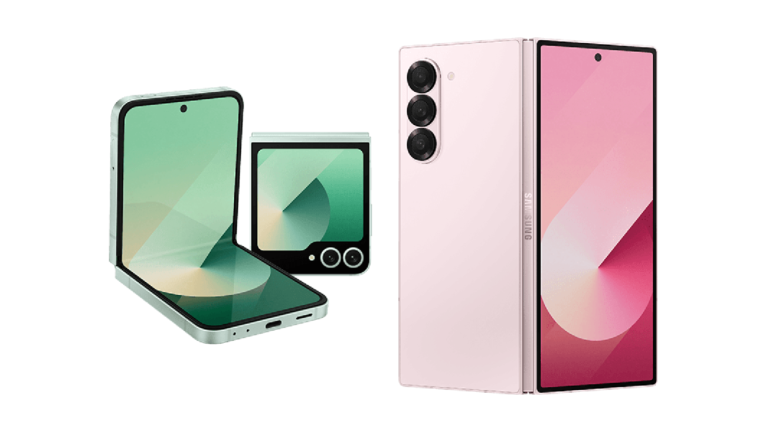
Were you waiting for a bigger cover display for the Galaxy Z Fold 6? A recent leak suggests that you could be disappointed. It seems that the device will keep its screen dimensions practically unchanged. It would also inherit most of the tech specs from its predecessor, the Galaxy Z Fold 5.
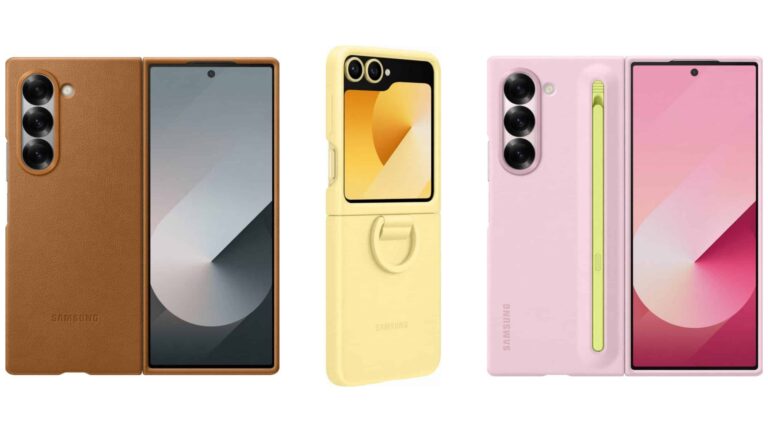
Leaked Galaxy Z Fold 6 case shows a cover display size practically unchanged
Thinborne, a case manufacturer, posted an image on X/Twitter with the hashtag #fold6. The hashtag indicates that it is a cover case for Samsung’s future foldable. The image also confirms that the secondary screen of the device would have a size very similar to that of the current generation. Still, there will be a slight difference: the aspect ratio. It seems that the cover display of the Galaxy Z Fold 6 will be a little wider than that of its predecessor.
That said, the size would be practically the same. Even the foldable inner screen would maintain the same size as that of the Z Fold 5. This screen would also opt for a slightly different aspect ratio. Now it would be a little wider and less tall than before.
Slightly different aspect ratio and sharper corners
The company would also sharpen the corners of the device. This would give the foldable a more elegant appearance, although it could make it more uncomfortable to hold. There have already been complaints regarding the sharp corners of the Galaxy S24 Ultra. There are some people for whom the corners of the device “dig” into their hands, causing discomfort. On the other hand, Samsung would make the phone 15 grams lighter and implement a titanium frame.
However, in general, everything indicates that the design of the Galaxy Z Fold 6 will aim for continuity. The same thing would occur with the tech specs section. Samsung would simply add a few fundamental incremental improvements. This includes more processing power and a new version of One UI. That said, the rest of the specifications would be practically identical to those of the current Z Fold 5.
The biggest changes may be reserved for an “Ultra” model
Previous leaks suggested that Samsung would also be working on an “Ultra” model. So, the most notable improvements would come from this device. However, some sources claim that the Galaxy Z Fold 6 Ultra will not reach the global market. The company would only sell it in South Korea and China. Additionally, although the vanilla Z Fold 6 does not include major improvements, it is said to cost at least $100 more than the previous model.
This time around, we’re comparing the Huawei Pura 70 Ultra vs Vivo X100 Pro. Yes, the Vivo X100 Ultra did launch, in this particular case, we’re comparing two phones that are available outside of China, in global variants. Both of these are, the Vivo X100 Ultra is not. Having said that, the Vivo X100 Pro is also a top-end flagship, and not that much behind the ‘Ultra’ model, not at all.
Do note that while both of these phones do come in global variants, the Huawei Pura 70 Ultra does not ship with Google services. It comes with Huawei’s very own services, so without the Google Play Store. There are ways to use Google apps, though, but we won’t get into that. Both of these phones are large and powerful flagships, and it will be interesting to compare them, considering how different they are.
Specs
Huawei Pura 70 Ultra vs Vivo X100 Pro, respectively
The Huawei Pura 70 Ultra combines aluminum and vegan leather, while the Vivo X100 Pro is made out of aluminum and glass. Huawei’s handset has a flat display with a centered display camera hole. The Vivo X100 Pro has a curved display with a centered display camera hole. The thing is, the Huawei Pura 70 Ultra has quad-curved glass on top of its display, so the feeling of using its display is rather interesting.
Speaking of which, the backplate on both phones is proportional to the front. That means you’re getting a quad-curved back side on the Huawei Pura 70 Ultra. That makes the phone very comfortable to use, and vegan leather is only helping things and adds grip to the table. Huawei’s flagship is more comfortable to use, and less slippery than the Vivo X100 Pro, that’s for sure. The Vivo X100 Pro’s backplate curves towards the sides. Both devices have physical keys on the right-hand side only.
The Huawei Pura 70 Ultra’s corners are a bit more rounded in comparison. Its rear camera island sure does look interesting, and it’s located in the top-left corner. The Vivo X100 Pro is centered on the phone’s backplate, in its top portion. There are three cameras included on the back of both smartphones. The Vivo X100 Pro also has the benefit of ZEISS’ expertise and lens coating.
The Vivo X100 Pro is slightly taller in comparison, while the two phones are basically the same in terms of width. The Vivo X100 Pro is ever so slightly thicker. The weight is about the same in comparison. You’ll also be glad to hear that both smartphones offer an IP68 certification for water and dust resistance.
Huawei Pura 70 Ultra vs Vivo X100 Pro: Display
The Huawei Pura 70 Ultra includes a 6.8-inch 2844 x 1260 LTPO OLED display. That panel is flat, and it has an adaptive refresh rate of up to 120Hz. It can project up to 1 billion colors and supports HDR content. The peak brightness of this panel is at 2,500 nits. The screen-to-body ratio here is around 89%. The Huawei Pura 70 Ultra’s display is protected by the Kunlun Glass (Basalt-tempered).
Huawei Pura 70 Ultra
On the other hand, the Vivo X100 Pro has a 6.78-inch 2800 x 1260 LTPO AMOLED display. That display is curved, and it can project up to 1 billion colors. Its refresh rate goes up to 120Hz, while HDR10+ content is supported. The peak brightness of this panel is 3,000 nits. The display aspect ratio is 20:9, while the screen-to-body ratio is around 90%. The Vivo X100 Pro has a more modest screen protection than the Pura 70 Ultra.
Both of these displays are great. They’re both extremely sharp and very vivid. The viewing angles are excellent, while the blacks are deep, as you’d expect them to be. Touch response is also very good on both phones. You’ll also realize that both displays get more than bright enough in all conditions. The Huawei Pura 70 Ultra does come with better display protection, though.
Huawei Pura 70 Ultra vs Vivo X100 Pro: Performance
Huawei’s handset is fueled by the Kirin 9010 SoC. That is Huawei’s very own 7nm processor. The device is also equipped with 16GB of LPDDR5X RAM, and up to 1TB of storage. The Vivo X100 Pro, on the flip side, is fueled by the MediaTek Dimensity 9300 SoC. That is a 4nm processor. The Vivo X100 Pro comes with up to 16GB of LPDDR5X RAM and up to 1TB of UFS 4.0 storage.
The chip inside the Vivo X100 Pro is considerably more powerful, no doubt about that. Huawei had to be creative considering the US ban and everything. When using the devices, however, you’d never know how much more powerful the MediaTek Dimensity 9300 is. Huawei did a great job of optimizing the Huawei Pura 70 Ultra and the included chip. Both phones are very snappy during day-to-day performance. That goes for everything ranging from opening and jumping between apps to consuming multimedia, browsing, and processing images.
Where you will notice the difference is in gaming. The Vivo X100 Pro will be more capable with truly demanding games, even though the Huawei Pura 70 Ultra can also run games without a problem. You may want to avoid truly graphically-demanding titles, however. For the vast majority of people, however, the performance will be similar. Benchmarks will say something completely different, but if you’re not a gamer, you’ll be just fine with either phone, as far as performance goes.
Huawei Pura 70 Ultra vs Vivo X100 Pro: Battery
The Huawei Pura 70 Ultra includes a 5,200mAh battery. The Vivo X100 Pro, on the other hand, comes with a 5,400mAh unit. Do note that both smartphones offer really good battery life, but the Vivo X100 Pro does stand out a bit more. That was, at least, the case for us. You can get over 7 hours of screen-on-time on both smartphones if you’re just a little bit careful. We were able to push the Vivo X100 Pro past the 8-hour screen-on-time mark a couple of times too.
Do note that you will never be able to reach those numbers if you’re a gamer, though, or if you’re really hammering your devices. With general use, however, it’s possible. Another thing worth noting is that we were connected to WiFi most of the time, though 5G was thrown into the mix as well. Your mileage may vary, though, of course. You’ll have different use conditions, in a number of ways. The bottom line is, however, both phones do offer good battery life.
The Huawei Pura 70 Ultra offers 100W wired, 80W wireless, 20W reverse wireless, and 18W reverse wired charging support. It also comes with a charger in the box. The Vivo X100 Pro, on the other hand, supports 100W wired, 50W wireless, and 10W reverse wired charging. It also comes with a charger. Huawei’s flagship is one of the most versatile smartphones in the market when it comes to charging, if not the most versatile one. The Vivo X100 Pro is also well-covered in the charging department, however, and both phones support immensely fast charging.
Huawei Pura 70 Ultra vs Vivo X100 Pro: Cameras
Both phones do include three cameras on the back, but they’re different, of course. The Huawei Pura 70 Ultra comes with a 50-megapixel main camera (1-inch type sensor, variable aperture, sensor-shift OIS, retractable lens), a 40-megapixel ultrawide unit, and a 50-megapixel periscope telephoto camera (3.5x optical zoom). The Vivo X100 Pro, on the other hand, includes a 50-megapixel main camera (1-inch type sensor), a 50-megapixel ultrawide unit (119-degree FoV), and a 50-megapixel periscope telephoto camera (4.3x optical zoom).
Vivo X100 Pro
These two devices are amongst the best camera smartphones in the market at the moment. They do provide different photos, but both are great across the board. The Vivo X100 Pro photos will look a bit more processed, especially in some situations. Both phones do provide plenty of detail, though, and pull towards warmer colors. The Huawei Pura 70 Ultra manages to keep things closer to real life, however. Their secondary cameras are just as impressive. The telephoto performance is a tossup. We’d give the portrait shots to the Vivo X100 Pro, while the Huawei Pura 70 Ultra wins in the macro department. The ultrawide shooters are both great and do a good job of keeping up with the main camera color science.
In low light, the Huawei Pura 70 Ultra does a better job of balancing images. The shots from the Vivo X100 Pro also look great, but a bit more unrealistic, even though some of you may prefer that look, to be quite honest. Both phones do a great job of keeping light sources in check. You can’t go wrong with either one of these two cameras, to be quite honest.
Audio
Both phones do include stereo speakers, but their loudness is quite different. The speakers from the Vivo X100 Pro are noticeably louder, in all honesty, even though both phones provide a well-balanced sound. The Huawei Pura 70 Ultra speakers are not dim, but they’re not as loud as we would have liked.
In regards to audio ports, well, neither phone includes one. You can always take advantage of the Type-C port that both of these phones include. You’ll need a dongle, though. If you prefer wireless audio, however, the Huawei Pura 70 Ultra supports Bluetooth 5.2, while the Vivo X100 Pro comes with Bluetooth 5.4.