Bharat Sanchar Nigam Limited (BSNL), India’s state-owned telecommunications provider, has suffered a major data breach orchestrated by a threat actor known as “kiberphant0m”.
The cyberattack has compromised over 278GB of sensitive data, putting millions of users at risk of SIM card cloning, identity theft, and financial fraud.
The breached data includes critical information such as International Mobile Subscriber Identity (IMSI) numbers, SIM card details, Home Location Register (HLR) data, DP Card Data, DP Security Key Data, and snapshots of BSNL’s SOLARIS servers.
According to a report by digital risk management firm Athentian Tech, the compromised data includes international mobile subscriber identity (IMSI) numbers, SIM card details, home location register (HLR) data, and critical security keys.
Free Webinar on API vulnerability scanning for OWASP API Top 10 vulnerabilities -> Book Your Spot
This extensive operational data could enable sophisticated attacks targeting not only BSNL but also interconnected systems and networks, posing significant national security risks.
Kanishk Gaur, CEO of Athentian Tech, toldThe Economic Times that the compromised data is being sold on the dark web for $5,000. Gaur emphasized the complexity and critical nature of the breached data, which goes beyond typical user information and targets the core of BSNL’s operational systems.
This high price tag underscores the data’s value due to its sensitive nature and broad scope, surpassing typical user information and targeting BSNL’s core operations.
This incident marks the second data breach BSNL has experienced in the past six months. In December 2023, a threat actor known as “Perell” released a dataset containing 32,000 lines of sensitive information about BSNL’s fibre and landline users.
Potential risks include:
SIM cloning and identity theft: Attackers can create duplicate SIM cards to intercept communications, access bank accounts, and commit fraud.
Financial losses: Bypassing security measures on financial accounts could lead to significant user losses.
Service disruptions: Unauthorized access to telecom operations may cause outages and degrade performance.
National security threats: The breach could undermine infrastructure stability and set a precedent for attacks on critical systems.
Experts urge BSNL to promptly investigate and contain the breach, secure network endpoints, audit access logs, and implement enhanced security measures.
Users are advised to monitor accounts for unusual activity, enable two-factor authentication, and remain vigilant against phishing and social engineering attacks.
This incident marks the second data breach for BSNL within six months, raising serious concerns about the company’s data security practices and the potential consequences for its users and national security.
FreeWebinar! 3 Security Trends to Maximize MSP Growth -> Register For Free
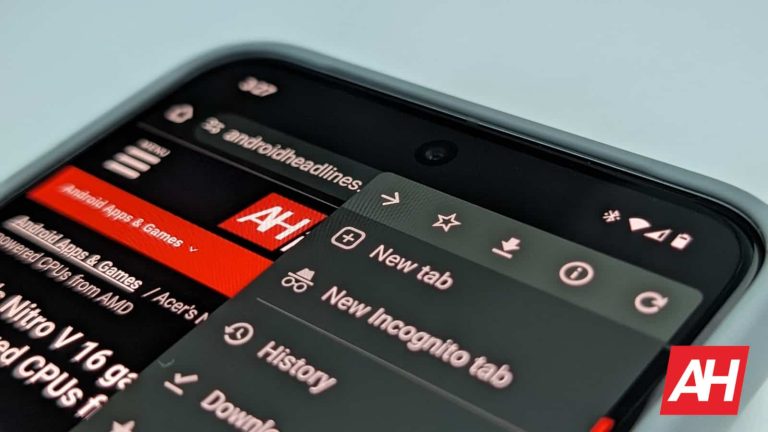
Today, Google announced five new Chrome features that aim to take the mobile search experience on Android and iOS to the next level. Notably, the latest update to Google Chrome brings new shortcut suggestions, better navigation across websites with the help of the redesigned address bar, and more.
Google boosts mobile search experience with Chrome’s new shortcut suggestions, redesigned address bar & more
Firstly, Google brings new Chrome Actions that save your time by allowing you to quickly engage with local businesses. Now, when you search for a business on Chrome, say a restaurant, you’ll see new shortcut button suggestions. You can use it to call the business, get its directions, or even read public reviews about it. This Chrome feature is now available on Android and will come to iOS later this fall.
Next up, a redesigned Chrome address bar is coming to iPads and Android tablets. Thanks to the new design, you can take advantage of large screen sizes. Plus, it is in line with the Material You design. Now, when you use the address bar, the website you’re currently browsing appears just below. So, if you want to return to it, you can do so without any hassle.
Google also brings new shortcut suggestions in the address bar of Chrome on both Android and iOS. The new feature gives your address bar a personalized touch. It allows you to revisit websites based on your usual typing habits. For example, let’s say you usually type “schedules” to check the time of your City Metro by visiting a particular website. With the new feature, Chrome will prioritize and show that suggestion when you start typing a similar search query in the address bar as seen below.
Trending searches are now available for iOS users, too
Aside from new shortcut suggestions, Google is also bringing trending searches in Chrome for iOS users. Not to forget, this feature is already available on Android. For those uninitiated, trending searches are usually displayed below the Chrome address bar when you tap it from the New Tab page.
Finally, a new feature called Live Sports Cards is now available in Chrome’s Discover Feed on the New Tab page. These cards will offer Android and iOS users automatic updates about their favorite sports team’s live scores and highlights. Therefore, you are always updated with the latest news about your favorite sports and teams you love. All in all, Google, as always, is trying to make the Chrome app better by adding new features to elevate the web browsing experience for users on smartphones and tablets.
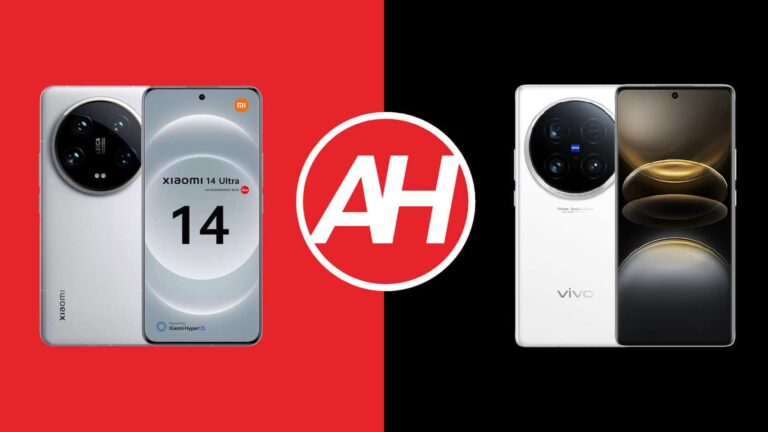
Two ‘Ultra’ smartphones are going at it this time around. We’ll be comparing the Xiaomi 14 Ultra vs Vivo X100 Ultra. Both of these smartphones launched in the first half of this year. They are both large and utilize Qualcomm’s most powerful processor. So, in that regard, they’re the same. There are, of course, a number of differences between them, as these are two entirely different companies we’re looking at.
We will first list their specifications, and will then move to compare them in some other aspects. We’ll compare their designs, displays, performance, battery life, cameras, and audio. Before we begin, however, do note that the Vivo X100 Ultra did not launch in a global variant. It arrived only in China, so if you import it, you’ll have to install the Google Play Store manually. That’s not much of an issue, but it’s worth noting, as the software is made for China. With that being said, let’s get to it.
Both of these smartphones have a frame made out of aluminum. The Xiaomi 14 Ultra also comes in a titanium variant in China. On the back, you’ll find glass in the case of the Vivo X100 Ultra, while Xiaomi has vegan leather aka eco leather on the back, at least as far as its global variant is concerned. The Xiaomi 14 Ultra has a slightly curved display and a centered display camera hole. The display on the Vivo X100 Ultra is also curved, and a centered display camera hole is included here too. Both smartphones have very thin bezels around them.
You will notice that physical keys are located on the right-hand side of both smartphones. They even have a similar place on that side. The Xiaomi 14 Ultra has flat sides, for the most part, while that’s not the case with the Vivo X100 Ultra. If we flip them around, you’ll notice that both phones have a large camera island on the back. They have a camera oreo centered in the upper portion of the back. Those two camera islands are even similar in terms of size, and they both protrude quite a bit.
The Vivo X100 Ultra is a bit taller than the Xiaomi 14 Ultra, while the two phones are almost the same in terms of width. They’re exactly the same when the thickness is concerned. The Xiaomi 14 Ultra is lighter than the Vivo X100 Ultra, at least as far as its global variant is concerned. Both smartphones are IP68 certified for water and dust resistance. The global variant of the Xiaomi 14 Ultra does offer a bit more grip thanks to the vegan leather that it has on the back. Both phones do feel quite substantial in the hand, and are well-built.
Xiaomi 14 Ultra vs Vivo X100 Ultra: Display
The Xiaomi 14 Ultra has a 6.73-inch QHD+ (3200 x 1440) LTPO AMOLED display. This panel is curved, and it has an adaptive refresh rate of up to 120Hz. Dolby Vision is supported here, and the same goes for HDR10+ content. This panel goes up to 3,000 nits of brightness, and it has a 20:9 display aspect ratio. The screen-to-body ratio is around 89%, while the Xiaomi Shield Glass protects this display.
The Vivo X100 Ultra, on the flip side, has a 6.78-inch QHD+ (3200 x 1440) LTPO AMOLED display. This panel is also curved, and it can project up to 1 billion colors. We’re looking at an adaptive refresh rate of up to 120Hz, while Dolby Vision is supported here too. HDR content is supported too, while the peak brightness is set at 3,000 nits. The display aspect ratio is 20:9, while the screen-to-body ratio is at around 89%. The display protection here is unknown.
As you can see, both of these displays look really great on paper. What are they like in actual use? Well, great, basically. They’re both immensely sharp, and they are also quite vivid. The viewing angles on both panels are great, and the touch response is really good too. The blacks are deep, as you’d expect them to be on OLED panels. Both displays get bright enough in all situations, and there’s really nothing to complain about here. They’re not even too curved or anything like that. You’ll be happy with either one of these two panels.
Xiaomi 14 Ultra vs Vivo X100 Ultra: Performance
The Snapdragon 8 Gen 3 fuels both of these smartphones. That is Qualcomm’s most powerful processor, so they’re well-covered in that regard. Both phones also offer up to 16GB of LPDDR5X RAM, not to mention that UFS 4.0 flash storage is used for both of them. Neither company skimped out on performance-related hardware, which is always nice to see, of course. That is especially true considering these are rather pricey flagship phones.
Does all that powerful hardware mean that they both offer great performance? Well, in this case, yes, it does. Both of these phones do a wonderful job day-to-day. They open apps really fast, do a great job with multitasking, consuming multimedia is a joy, they can easily process images and videos, and so on. There’s really nothing of the sort that can bog them down, and you’d really be hard-pressed to make either phone stumble.
What about gaming? Well, they do a really great job in that aspect too. Both devices can run even the most demanding games provided on the Google Play Store without a problem. Genshin Impact is always a good example, and the performance is basically the same as some of the competition offers… great. Yes, both phones will get warm during intense gaming sessions, but never too hot, nor will that affect their performance. You’ll be well-covered in the performance department with either device.
Xiaomi 14 Ultra vs Vivo X100 Ultra: Battery
There is a 5,000mAh battery included inside the Xiaomi 14 Ultra. That is true for the global model, the Chinese variant comes with a 5,300mAh battery pack. The Vivo X100 Ultra, on the other hand, has a 5,500mAh battery included. The Xiaomi 14 Ultra does provide a really good battery life, but it cannot compete with the Vivo X100 Ultra in that regard. Vivo’s handset does fly higher in that regard.
Getting 7 hours of screen-on-time is not a problem on the Xiaomi 14 Ultra, as long as you’re not gaming a lot or something of the sort. The same goes for the Vivo X100 Ultra, but that phone does add to that too. Getting even to 8 hours of screen-on-time is a possibility. That large battery does make a difference, at least to a degree. The good news is, even if you do end up draining either of the two devices ahead of time, they do offer fast charging.
The Xiaomi 14 Ultra supports 90W wired, 80W wireless, and 10W reverse wireless charging. The Vivo X100 Ultra, on the other hand, supports 80W wired, 30W wireless, and reverse wired charging too. So, both phones will charge immensely fast via a wire, while the Xiaomi 14 Ultra does have the advantage in terms of wireless charging speed. Both of them also come with chargers included in the retail box.
Xiaomi 14 Ultra vs Vivo X100 Ultra: Cameras
The Xiaomi 14 Ultra has four cameras on the back, while the Vivo X100 Ultra has three. You’ll find a 50-megapixel main camera (variable aperture, 1-inch type sensor), a 50-megapixel ultrawide camera (122-degree FoV), a 50-megapixel telephoto camera (3.2x optical zoom), and a 50-megapixel periscope telephoto camera (5x optical zoom) on the back of the Xiaomi 14 Ultra. The Vivo X100 Ultra includes a 50-megapixel main camera (1-inch type sensor, gimbal OIS), a 50-megapixel ultrawide unit (116-degree FoV), and a 200-megapixel periscope telephoto camera (3.7x optical zoom).
The images these two phones provide are different, but both devices do a fantastic job. The ones from the Vivo X100 Ultra pull a bit more toward warmer tones. Both phones provide very detailed images during the day, which handle HDR conditions without a problem. They also do a fantastic job in low light, as far as the main cameras are concerned. The Vivo X100 Ultra does light up the scene a bit more, while the Xiaomi 14 Ultra images in low light tend to look closer to real life.
Their secondary cameras do a great job too, both during the day and in nighttime. The difference is noticeable, however, that especially goes for low light scenes. Many of you will want to stick to main units for low light photography. High-zoom shots are a tossup between the two phones, but the Vivo X100 Ultra does a better job with portraits. Both phones do a fantastic job when it comes to macro photography, however. It’s worth noting that Xiaomi’s handset is backed by Leica, while Vivo is partnered up with ZEISS.
Audio
Both of these smartphones feature stereo speakers. Those speakers are good on both ends, but the ones on the Xiaomi 14 Ultra are a bit louder. The difference is not that big, however, and both sets deliver very good sound quality.
You will not find an audio jack on either phone. They do have Type-C ports, so you can always use those to hook up your wired headphones. If you’d like to go wireless, both phones are equipped with Bluetooth 5.4.
Why is that? Well, Huawei has no way of getting those tools due to the US ban. Huawei is prevented from making chips more modern than 5nm ones, which is a problem. This is Huawei’s way of trying to jump over that obstacle.
Huawei invested quite a bit of money into R&D for advanced chipmaking machinery
The company actually invested in an R&D facility whose purpose is to develop advanced machinery Huawei needs. That R&D center is being constructed near Shanghai.
SMIC and Hua Hong, Huawei’s chip-making partners, cannot get the tools needed to make processors on the 14nm FinFET and 16nm FinFET processes. They can only grab 28nm lithography systems, which are dated at this point.
ASML is allegedly holding 90% of the market
Huawei not only invested this money in order to help itself, but to break ASML’s monopoly, it seems. 90% of the market is reportedly controlled by ASML, and Huawei sees this as an opportunity to get a piece of the pie too and bring some balance to the table.
The area on which Huawei is building this factory is equivalent to 224 football fields and will employ over 35,000 employees. Needless to say, it’s quite massive. Huawei is also looking for top talent in the field of semiconductors and is ready to pay well.
Needless to say, however, this will take time. Huawei needs advanced chips as soon as possible, and building this factory plus conducting R&D and utilizing it in actual products will take quite a bit of time.
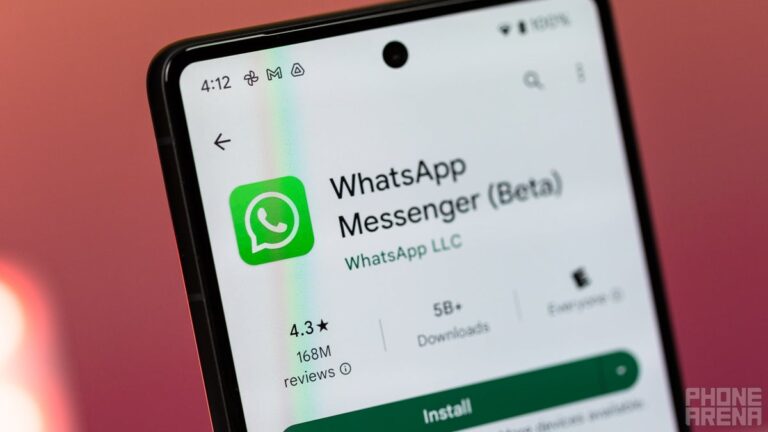
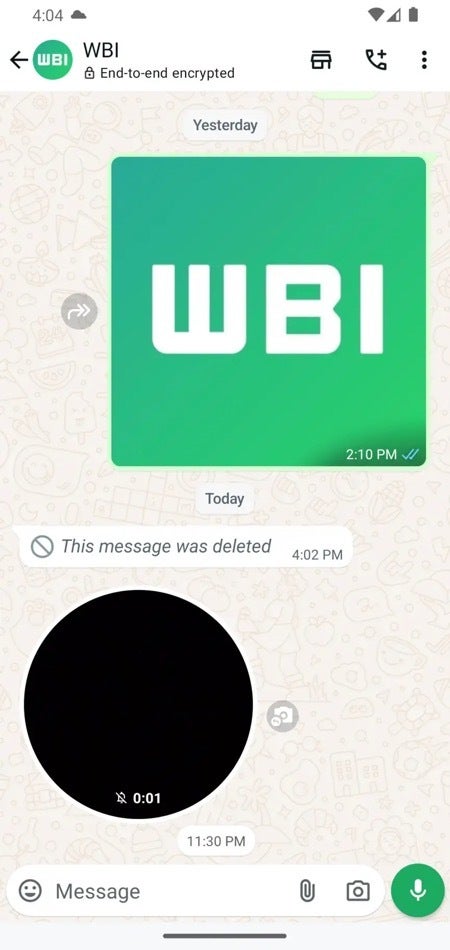
WhatsApp, the popular messaging app, continues to evolve its features to enhance user experience. In its latest beta update for Android (2.24.14.5), WhatsApp is introducing a new shortcut that streamlines the process of replying to video messages. This update is a significant step towards making video communication more seamless and intuitive within the app.The new shortcut appears as a small button next to video messages in chats. Tapping this button instantly opens the video recorder, allowing users to create and send their video response without any additional steps. This eliminates the previous need to navigate through menus or use specific gestures, saving users time and effort.
New shortcut appearing next to a video message allowing for a quick reply | Image credit — WABetaInfo
While this feature is currently rolling out to beta testers, it’s expected to be available to all users soon. WhatsApp has been actively improving its video messaging capabilities, and this update is another example of its efforts to providing a user-friendly experience.
The quick reply shortcut complements other recent enhancements, such as the ability to forward video messages and improvements to video message quality. The growing demand for video-based interactions seems to be driving WhatsApp to position itself as a platform for both text and video messaging.
For users who frequently exchange video messages, this new shortcut will undoubtedly be a welcome addition. It not only simplifies the reply process but also encourages more spontaneous and dynamic conversations.
As it is for now a beta feature, it’s currently not available to all WhatsApp users. However, it is expected that the feature will roll out to even more users in the coming days or weeks until it eventually reaches the stable build.
As a WhatsApp users, I am definitely looking forward to trying this out. Unfortunately, getting access to the beta version of WhatsApp via the Play Store is next to impossible these days, as there is almost always a waiting list. Thankfully, it doesn’t look like we have a lot longer to wait to get this on the official version of the app.
Google has introduced a much-awaited functionality for the Google Wallet service. The popular digital wallet on Android devices now works as a hotel key. Google Wallet has gained support for hotel keys just in time for the summertime. The new feature makes the hotel experience of travelers a bit less of a hassle. They can now directly use their phones to open their hotel rooms, without requiring a physical hotel key.
Google Wallet finally gets support for hotel key functionality
Google has quietly added the support for the hotel keys functionality for Google Wallet. First spotted by 9to5google, the company has updated the support pages for Google Wallet with details of the new feature. You can now save and store keys at hotels that support this functionality in your Google Wallet. Notably, Apple Wallet already launched this feature way back in 2021 for the iPhone and Apple Watch.
Users can save and use their keys at hotels where the new feature is supported
According to Google Wallet’s support pages, users can now save and use their keys at hotels where the new feature is supported. Once keys are stored in your Google Wallet on your Android phone, you can “safely and securely use your keys to access your Hotels, guestrooms and key card-protected common areas like gyms, pools, and elevators throughout the duration of your stay”, mention the support pages.
Registering a key to your Google Wallet is quite similar to adding a credit or debit card. You can first visit your hotel’s website, or app, or follow email instructions. Then click on the “Add to Google Wallet” option, which should be next to the reservation confirmation page on the aforementioned options. If the “Add to Google Wallet” option isn’t visible, then the hotel may not have support for this feature.
Once the hotel key is added, you can wake up and unlock your smartphone first. Then, proceed to hold the back of your phone near the door handles to open rooms or other allocated areas of the hotel premises. The support pages also mention that some hotels may allow you to use your digital hotel key without unlocking your phone.
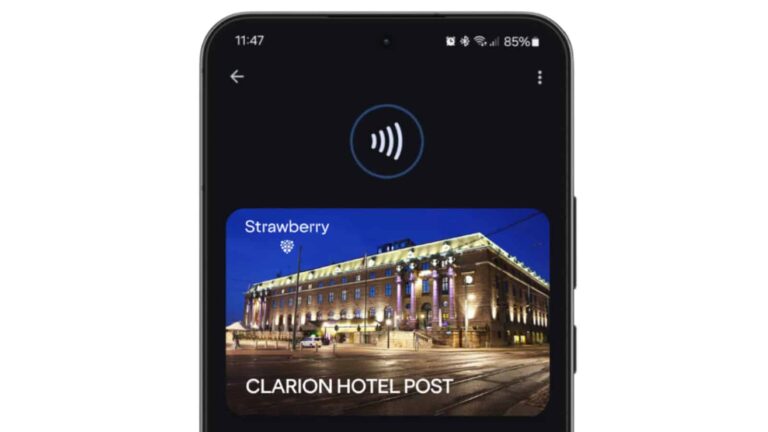
As of now, only a very few hotels support Google Wallet’s new hotel key feature. The Clarion Hotel Post in Gothenburg, Sweden is one of the first hotels to support this functionality. Hopefully, Google is collaborating with major hotel chains to expand the availability of the new feature in the coming weeks.
Waze, the popular Google-owned navigation app, is now offering a new driving experience based on the movie “Despicable Me 4,” which will be released in theaters on July 3rd. The Minions, the beloved characters from the franchise, are taking over the app and will be providing custom navigation instructions with their trademark humor and chaotic energy.There are two different moods to choose from: “Despicable” and “Mega Despicable.” In “Despicable” mode, users can expect to hear the Minions grumbling if they encounter traffic, while in “Mega Despicable” mode, the Minions will react more dramatically, perhaps even screaming to suggest taking a different route. Users will also have the option to change their vehicle icon in the app to Gru’s famous car, the Gru-Mobile.
You can now be a Minion on the road with Waze | App screenshots credit — PhoneArena
This new feature is available worldwide and offers voice navigation in English, Spanish, and Portuguese. To access this experience, users need to make sure they have the latest version of the Waze app. Once updated, they can find the “Despicable Me 4” banner in the app’s left menu or activate it directly.
It’s worth noting that this feature is optional, and users can choose to disable it if they prefer the standard Waze experience. Additionally, the voice navigation feature is currently only available in the aforementioned languages, so users who speak other languages may not be able to fully experience the Minions’ dialogue.
More Fun on the Road with Waze
Waze isn’t new to offering fun and themed driving experiences. The app frequently adds new celebrity voices and other unique features to enhance the driving experience. This latest collaboration with “Despicable Me 4” is just one example of how Waze continues to innovate and provide users with enjoyable and personalized navigation options.Waze has always been known for its focus on community and user engagement. This “Despicable Me 4” collaboration is another example of how the app listens to its users and provides features that align with their interests. This particular feature is a fun and engaging way for fans of the “Despicable Me” franchise to celebrate the upcoming movie and add a touch of humor to their daily commute. Think of it as the “fun” version of Google Maps.
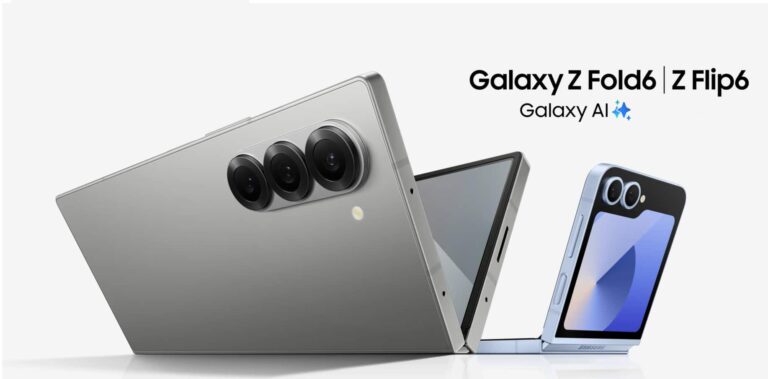
Samsung‘s Galaxy Z Fold 6 and Galaxy Z Flip 6 have leaked in almost every way imaginable, and now you can add a leak that includes official Samsung case images to that list. Samsung is expected to officially announce the Galaxy Z Fold 6 and the Galaxy Z Flip 6 at its upcoming Galaxy Unpacked event on July 10. The company has officially confirmed the upcoming event. In fact, the official event announcement even contains a teaser image and animation about what devices will appear.
Clearly, it’ll be Samsung’s next-generation foldable phones. Samsung hasn’t officially shown these devices off yet but that doesn’t matter much. They’ve both been leaked a fair number of times by now making the design known to the public In the latest leak, both phones are shown inside of a series of Samsung’s official cases.
The Galaxy Z Fold 6 and Galax Z Flip 6 leak in official case images
Spotted by 9To5Google, these images show off each of the two devices in a series of different case options. The images were leaked by @MysteryLupin on X, though not like you would normally think. Usually with these kinds of leaks, the images are posted directly to X in a thread. This time around, the images were uploaded to a PostImage page, with the page being shared on X in a sort of mysterious tweet.
The images can be seen below and while you can’t see the actual backs of the phones, you can still see plenty. The rear camera array on the Galaxy Z Fold 6 is a dead match for the previously leaked images of the device. As are the cover display cameras on the Galaxy Z Flip 6. More importantly, though, you get an idea of what Samsung plans to offer with these official accessories. One case looks to offer a kickstand in addition to a hand grip. Meanwhile, another will have just the hand grip.
There’s also a Slim S Pen case again. So you have a place to store the S Pen should you get one. As for the Galaxy Z Flip 6, there’s only one case option shown. However, it is shown in a few different colors. It’s also got a ring attachment. You should be able to slip your finger through this or use it to clip the phone to something.
There’s no information cost just yet
It’s unclear exactly what these cases will cost. But they’re official from Samsung so they probably won’t be dirt cheap. More likely they’ll be at least $50. If you look at the S Pen Case for the Galaxy Z Fold 5, it’s currently available from Samsung for $100. It’s also on sale for $80 at Best Buy. So expect prices for these new cases to be close to the prices on the previous models.
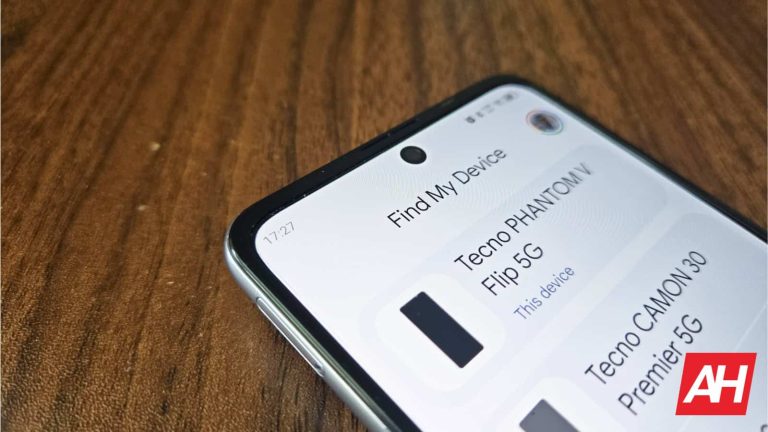
Google has been rolling out its enhanced Find My Device network across the globe in a gradual manner over the past few months. Over time, the search titan has also been improving features of the network. The company is already tipped to make it easier to remotely lock your Android device using the Find My Device network.
Find My Device network will become more reliable with upcoming improvements
In the past few weeks, users of Find My Device-compatible trackers like Pebblebee Tag have reported tracking issues with their devices. Google’s crowdsourced tracking networking reportedly doesn’t always work or offer proper tracking. However, the company has allegedly acknowledged the problem. According to Android expert Mishaal Rahman, Google’s Find My Device network will soon be more reliable, thanks to the upcoming improvements.
In a statement shared by Rahmaan, Google notes that it will soon be enhancing the Find My Device network. The upcoming updates will improve the speed and ability of the network, which will offer enhanced tracking of lost items. Besides, the company said that the network’s reliability will improve gradually over time as more and more devices join it.
Google is advising users to change network’s settings for improved tracking of lost items
As more devices continue to support the Find My Device network, it will provide improved tracking of lost items. Google is also suggesting Bluetooth tag owners change their Find My Device network setting to “With network in all areas”. This will help improve the network’s lost device findability capabilities in lower-traffic areas.
By default, this setting is set to “With network in high-traffic areas only”. This helps users track their lost or tracker-tagged devices using recent locations in busy areas like airports and footpaths. As per the company’s statement, the new updates to the Find My Device network will be rolled out in the coming weeks.
Google is taking significant steps to improve the reliability of its Find My Device network, acknowledging recent performance concerns highlighted in tests with trackers like the ones offered by Chipolo and Pebblebee. In the statement seen below, the tech giant confirmed that it is actively rolling out enhancements aimed at boosting the speed and accuracy of locating lost items through this network.
Google is working to make the Android Find My Device network more reliable at locating lost items!
A spokesperson for the company shared in a statement with me that they’re “actively working to roll out enhancements” to the network over the coming weeks that’ll improve the… pic.twitter.com/Dmokrc9fPk
While these improvements are in progress, Google recommends users proactively optimize their tracker’s performance by adjusting a specific setting. Navigate to the Find My Device section within your Security & privacy settings and select the ‘Find your offline devices’ option. Switching the setting to ‘With network in all areas’ can help improve the network’s ability to pinpoint lost items, particularly in areas with lower user traffic.Despite this setting adjustment, it’s important to note that the most significant improvements in location accuracy and speed are expected to become noticeable only after Google’s broader network enhancements are fully implemented in the coming weeks.
For those who haven’t yet invested in a tracker compatible with Google’s enhanced Find My Device network, the recently announced Moto Tag presents an appealing alternative. This tracker boasts a built-in UWB (Ultra-Wideband) chip, a feature that enables precise location tracking when communicating with other UWB-enabled devices. Notably, this advanced technology is not currently available in other Bluetooth trackers like the Chipolo and Pebblebee models, even those with similar price points.
The combination of Google’s ongoing network improvements and the introduction of innovative trackers like the Moto Tag signals a promising future for the Find My Device ecosystem. Users can anticipate soon having an increasingly reliable and efficient experience in locating their misplaced belongings.